Africa Business

'Fragile situation' as Libya anger boils over living conditions

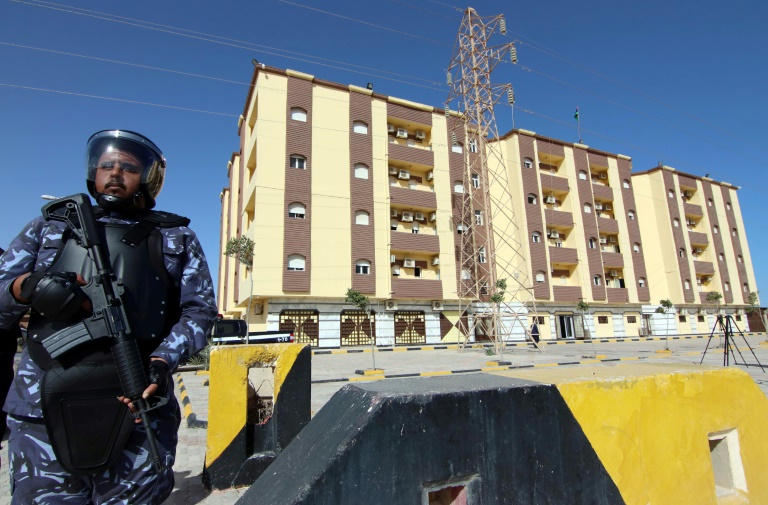
Libya’s rival leaders were under growing street pressure Saturday after protesters stormed parliament as anger exploded over deteriorating living conditions and political deadlock.

Libyans, many impoverished after a decade of turmoil and sweltering in the soaring summer heat, have been enduring fuel shortages and power cuts of up to 18 hours a day even as their country sits atop Africa’s largest proven oil reserves.

Libya has been mired in chaos and repeated rounds of conflict since a NATO-backed uprising toppled and killed dictator Moamer Kadhafi in 2011.

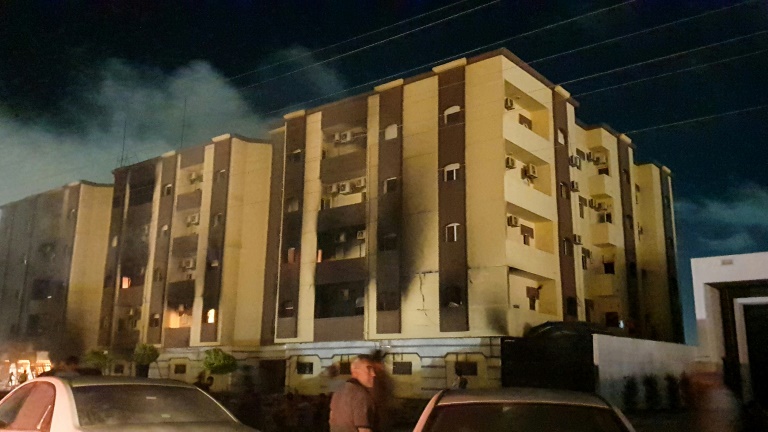
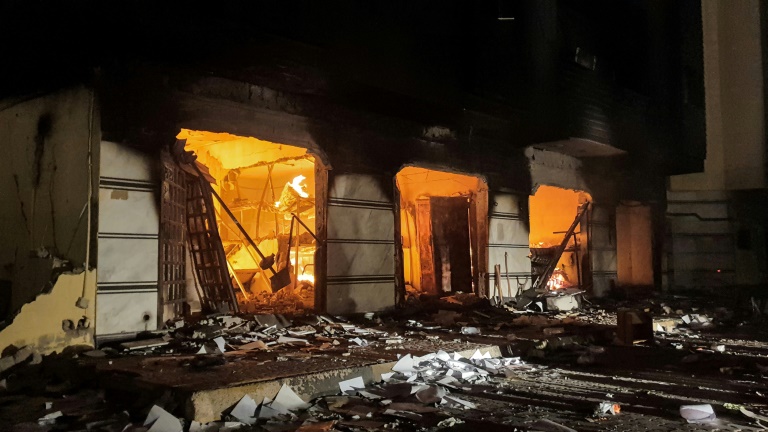
Protesters stormed the seat of the House of Representatives in the eastern city of Tobruk on Friday night, ransacking its offices and torching part of the building.

In both the main eastern city of Benghazi — the cradle of the 2011 uprising — and the capital Tripoli, thousands took to the streets to chants of “We want the lights to work”.

Some brandished the green flags of the former Kadhafi regime.

Calm appeared to have returned to Tobruk on Saturday, though there were calls on social media for more protests in the evening.

The UN’s top Libya envoy Stephanie Williams said that “riots and acts of vandalism” were “totally unacceptable”.

“It is absolutely vital that calm is maintained, responsible Libyan leadership demonstrated and restraint exercised by all,” she tweeted.

UN-mediated talks in Geneva this week aimed at breaking the deadlock between rival Libyan institutions failed to resolve key differences.

– ‘Extremely painful’ year –

Presidential and parliamentary elections, originally set for December last year, were meant to cap a UN-led peace process following the end of the last major round of violence in 2020. 

But voting never took place due to several contentious candidacies and deep disagreements over the polls’ legal basis between the rival power centres in east and west.

In Tripoli on Friday, hundreds came out to demand elections, fresh political leadership and an end to the chronic power cuts.

The sudden eruption of unrest appeared to be spreading to other areas of the country, with Libyan media showing images of protesters in the oasis city of Sebha, deep in the Sahara desert, torching an official building.

A local journalist said protesters in Libya’s third city Misrata were blocking roads after setting fire to a municipal building on Friday night.

Interim prime minister Abdulhamid Dbeibah leads a Tripoli-based administration while former interior minister Fathi Bashagha draws support from the Tobruk-based House of Representatives and eastern military strongman Khalifa Haftar.

“For more than a year, the overwhelming majority of diplomatic and mediation efforts around Libya have been monopolised by the idea of elections, which won’t happen for at least two years, given the failure of the Geneva negotiations,” Libya expert Jalel Harchaoui told AFP.

This year “has been extremely painful for Libyans” because the country “imports almost all its food and the Ukraine war has hit consumer prices”, Harchaoui said.

– ‘Fragile situation’ –

Libya’s energy sector, which during the Kadhafi era financed a generous welfare state, has also fallen victim to political divisions, with a wave of forced closures of oil facilities since April.

Supporters of the eastern-based administration have shut off the oil taps as leverage in their efforts to secure a transfer of power to Bashagha, whose attempt to take up office in Tripoli in May ended in a swift withdrawal.

Libya’s National Oil Corporation has announced losses of more than $3.5 billion from the closures and a drop in gas output, which has a knock-on effect on the power grid.

“There is kleptocracy and systematic corruption in the east as in the west, as the fancy cars and villas of the elite constantly remind the public,” Harchaoui said, accusing militias from both camps of carrying out “massive” fuel trafficking.

Recent weeks have seen repeated skirmishes between armed groups in Tripoli, prompting fears of a return to full-scale conflict.

The European Union’s envoy to Libya, Jose Sabadell, said Friday’s events “confirm people want change through elections”.

But he urged peaceful protests, adding that “special restraint is necessary given the fragile situation”.
'Fragile situation' as Libya anger boils over living conditions

Libya’s rival leaders were under growing street pressure Saturday after protesters stormed parliament as anger exploded over deteriorating living conditions and political deadlock.

Libyans, many impoverished after a decade of turmoil and sweltering in the soaring summer heat, have been enduring power cuts of up to 18 hours a day, fuel shortages, and crumbling services and infrastructure, even as their country sits atop Africa’s largest proven oil reserves.

Libya has been mired in chaos and repeated rounds of conflict since a NATO-backed uprising toppled and killed dictator Moamer Kadhafi in 2011.

Protesters stormed the seat of the House of Representatives in the eastern city of Tobruk on Friday night, ransacking its offices and torching part of the building. 

In both the main eastern city of Benghazi — the cradle of the 2011 uprising — and the capital Tripoli, thousands took to the streets to chants of “We want the lights to work”.

Some brandished the green flags of the former Kadhafi regime.

The UN’s top Libya envoy Stephanie Williams said Saturday that “riots and acts of vandalism” were “totally unacceptable”.

“It is absolutely vital that calm is maintained, responsible Libyan leadership demonstrated and restraint exercised by all,” she tweeted.

UN-mediated talks in Geneva this week aimed at breaking the deadlock between rival Libyan institutions failed to resolve key differences.

– ‘Extremely painful’ year –

Presidential and parliamentary elections, originally set for December last year, were meant to cap a UN-led peace process following the end of the last major round of violence in 2020. 

But voting never took place due to several contentious candidacies and deep disagreements over the polls’ legal basis between the rival power centres in east and west.

In Tripoli on Friday, hundreds came out to demand elections, fresh political leadership and an end to the chronic power cuts.

The sudden eruption of unrest appeared to be spreading to other areas of the country, with Libyan media showing images of protesters in the oasis city of Sebha, deep in the Sahara desert, torching an official building.

Interim prime minister Abdulhamid Dbeibah leads a Tripoli-based administration while former interior minister Fathi Bashagha draws support from the Tobruk-based House of Representatives and eastern military strongman Khalifa Haftar.

“For more than a year, the overwhelming majority of diplomatic and mediation efforts around Libya have been monopolised by the idea of elections, which won’t happen for at least two years, given the failure of the Geneva negotiations,” Libya expert Jalel Harchaoui told AFP.

This year “has been extremely painful for Libyans” because the country “imports almost all its food and the Ukraine war has hit consumer prices”, Harchaoui said, adding that the economy “should probably have been the real top priority”.

– ‘Fragile situation’ –

Libya’s energy sector, which during the Kadhafi era financed a generous welfare state, has also fallen victim to political divisions, with a wave of forced closures of oil facilities since April.

Supporters of the eastern-based administration have shut off the oil taps as leverage in their efforts to secure a transfer of power to Bashagha, whose attempt to take up office in Tripoli in May ended in a swift withdrawal.

Libya’s National Oil Corporation has announced losses of more than $3.5 billion from the closures and a drop in gas output, which has a knock-on effect on the power grid.

“There is kleptocracy and systematic corruption in the east as in the west, as the fancy cars and villas of the elite constantly remind the public,” Harchaoui said, accusing militias from both camps of carrying out “massive” fuel trafficking.

Recent weeks have seen repeated skirmishes between armed groups in Tripoli, prompting fears of a return to full-scale conflict.

The European Union’s envoy to Libya, Jose Sabadell, said Friday’s events “confirm people want change through elections”.

But he urged peaceful protests, adding that “special restraint is necessary given the fragile situation”.
Libyan protesters storm, set fire to parliament in Tobruk

Protesters stormed Libya’s parliament in the eastern city of Tobruk on Friday and set parts of it ablaze, venting their anger at deteriorating living conditions and months of political deadlock.

Black smoke billowed as men burned tyres and torched cars after one protester had smashed through the compound’s gate with a bulldozer and others attacked the walls with construction tools, local media reported.

The building was empty, as Friday falls on the weekend in Libya.

Libya’s House of Representatives has been based in Tobruk, more than 1,000 kilometres (600 miles) east of the capital Tripoli, since an east-west schism in 2014 that came three years after a mass popular revolution toppled dictator Moamer Kadhafi.

A separate legislature, formally known as the High Council of State, is based in Tripoli as the oil-rich North African country remains divided between rival administrations vying for control.

Libya, sweltering in summer heat, has endured days of power cuts — a situation worsened by the blockade of key oil facilities amid the entrenched political rivalries.

“We want the lights to work,” chanted protesters, some of whom were brandishing the green flags of the Kadhafi regime.

The parliament condemned the “acts of vandalism and the burning” of its headquarters.

The interim prime minister of the Tripoli-based government, Abdulhamid Dbeibah, meanwhile voiced support for the protesters’ concerns in a Twitter message.

– Political stalemate –

The two governments have been vying for power in Libya for months: the one based in Tripoli, led by Dbeibah, and another headed by former interior minister Fathi Bashagha, appointed by the parliament and supported by eastern-based strongman Khalifa Haftar.

Presidential and parliamentary elections, originally set for last December, were meant to cap a UN-led peace process following the end of the last major round of violence in 2020.

But the vote was never held due to several contentious candidacies and deep disagreements over the polls’ legal basis between the rival power centres.

The United Nations said Thursday that talks between the rival Libyan institutions aimed at breaking the deadlock had failed to resolve key differences.

Parliament speaker Aguila Saleh and High Council of State president Khaled al-Mishri met at the UN in Geneva for three days of talks to discuss a draft constitutional framework for elections.

While some progress was made, it was not enough to move forward towards elections, with the two sides still at odds over who could stand in a presidential vote, said the UN’s top Libya envoy Stephanie Williams.

– ‘Escalating quickly’ –

The prospect of elections appears as distant as ever since the parliament appointed Bashagha, arguing that Dbeibah’s mandate had expired.

After Bashagha failed to enter Tripoli in May, the rival administration has taken up office further east in Sirte, Kadhafi’s coastal hometown.

Recent weeks have seen repeated skirmishes between armed groups in Tripoli, prompting fears of a return to full-scale conflict.

Demonstrators rallied in other cities on Friday including Tripoli, where protesters held up crossed-out images of both Dbeibah and Bashagha.

“Popular protests have erupted across Libya in exasperation at a collapsing quality of life, the entire political class who manufactured it, and the UN who indulged them over delivering promised change,” tweeted Tarek Megerisi of the European Council on Foreign Relations.

“Things are escalating quickly and the response will define Libya’s summer.”

Libya’s National Oil Corporation announced on Thursday losses of more than $3.5 billion from closures and declared force majeure on some sites, a measure freeing it of contractual obligations due to circumstances beyond its control.

The NOC said output “dropped sharply” and exports had fallen to 365,000-409,000 barrels per day, a loss of 865,000 bpd compared with the average before April.

Eastern-based strongman Haftar’s forces control major oil facilities.

A drop in gas production has contributed to Libya’s chronic power cuts which can last around 12 hours a day.

rb/ezz/fz/dv

Independent Algeria turns 60, but colonial-era wounds remain

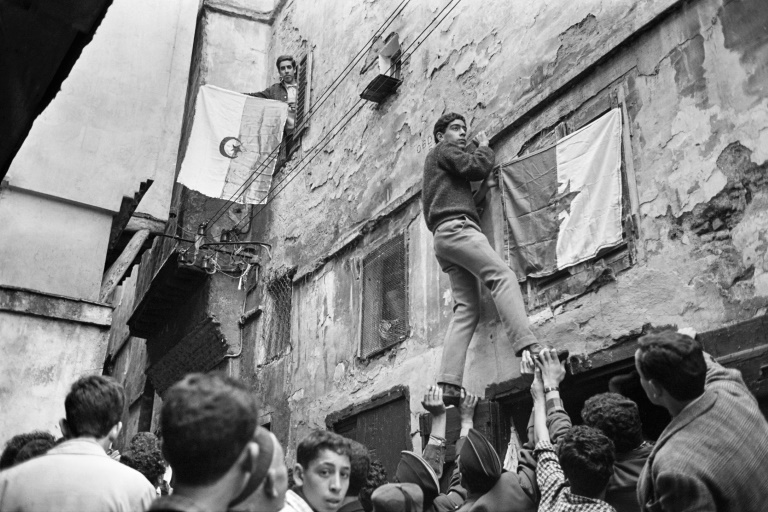
Algeria marks 60 years of independence from France on Tuesday, but rival narratives over atrocities committed during more than a century of colonial rule still trigger bitter diplomatic tensions.

The North African country won its independence following a gruelling eight-year war which ended with the signing in March 1962 of the Evian Accords.

On July 5 of the same year, days after 99.72 percent voted for independence in a referendum, Algeria finally broke free from colonial rule — but memories of the 132-year occupation continue to mar its ties with France.

The country’s authorities are planning to mark the anniversary with pomp and ceremony, capped by a vast military parade in Algiers, the first of its kind in 33 years.

A show is also planned at the capital’s opera house that “retraces the long history of Algeria”, said the minister for independence fighters, Laid Rebiga.

The government has even commissioned a logo — a circle of 60 stars containing military figures and equipment — to mark “a glorious history and a new era”.

Algeria’s war of independence left hundreds of thousands of dead and, despite a string of gestures by French President Emmanuel Macron, a crisis late last year underlined how spiky the issue remains six decades on.

Macron reportedly questioned whether Algeria had existed as a nation before the French invasion and accused its “political-military system” of rewriting history and fomenting “hatred towards France”.

Algeria withdrew its ambassador in response.

“Relations between the power system in Algeria and ‘official France’ have been punctuated by crises and pseudo-reconciliations since independence,” said Athmane Mazouz, head of Algeria’s secularist opposition party RCD.

“At this point, all bets are off on whether they can establish better ties.” 

– ‘Take heat out of debate’ –

France has ruled out any form of apology for the colonial period. But Macron has also made a number of gestures aimed at mending ties with the former colony. 

Visiting Algiers during his first presidential campaign in February 2017, he described colonisation as a “crime against humanity”.

He has since acknowledged the French army was behind the death of Algerian nationalist lawyer Ali Boumendjel and anti-colonialist French mathematician Maurice Audin.

France has returned the skulls of 19th century Algerian resistance fighters and opened state archives on the Algerian war.

And the two sides appear to have moved on from the latest crisis. Macron and his Algerian counterpart Abdelmadjid Tebboune confirmed in a June 18 phone call their desire to “deepen” relations.

Tebboune even congratulated Macron on his “brilliant” re-election and invited him to visit Algeria.

Historian Amar Mohand-Amer said it was time for “a quick return to a normal situation”.

“Sixty years after independence, isn’t it time we took the heat out of this debate?”

– ‘Unstable geopolitics’ –

Mohand-Amer pointed out that the anniversary celebrations come at a time of raised tensions in the wider region around Algeria.

The country cut ties with regional arch-rival Morocco last August, accusing it of “hostile acts”.

In early June, Algiers suspended a two-decade-old cooperation pact with Madrid after Spain backed Morocco’s stance in the long-running dispute over Western Sahara.

To the east, in war-scarred Libya, the emergence of two rival governments has raised fears of a return to armed conflict after a two-year truce.

And to the south, Mali is in crisis after army officers, disgruntled at the government’s failure to roll back a jihadist uprising, ousted president Ibrahim Boubacar Keita in 2020.

“The very unstable regional geopolitics demand strong positions in the mid to long term and the consolidation of political and economic relations” between Algeria and France, Mohand-Amer said.

But the historian fears that Macron’s move towards reconciliation could face a major test due to gains by extreme right leader Marine Le Pen’s party the Rassemblement National in June elections.

Le Pen said in March that colonialism had “contributed to Algeria’s development” and accused Macron of “spending his life apologising without asking anything in return from an Algerian government that continues to insult France”.

Mohand-Amer warned that “the French far right will transform this mandate into a big battlefield of memories, where revisionism and the falsification of history will be omnipresent.”

Protesters rally in Spain, Morocco over migrant deaths

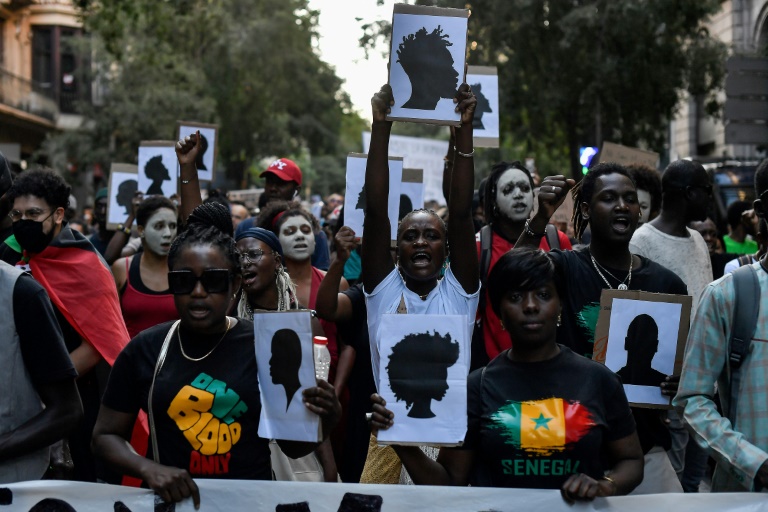
Demonstrators held rallies in several Spanish cities and in Rabat late Friday to protest over the deaths of 23 African migrants who died in a crush trying to enter the Spanish enclave of Melilla in northern Morocco.

Thousands of protesters gathered in Barcelona, Malaga, Vigo and San Sebastian and in Melilla itself to denounce migration policies and the “militarisation of borders”.

In the Moroccan capital, a few dozen representatives of the Collective of Sub-Saharan Communities in Morocco and associations helping migrants demonstrated in front of parliament calling for Rabat to “stop playing the role of EU policeman”.

“We demand an end to the migration policy funded by the European Union, the opening of an independent investigation and the return of the bodies to the families,” activist Mamadou Diallo told AFP. 

“The Europeans colonised us and took everything from us to develop. Today, if we go to them, it means that we have the right to leave,” he said.

Moroccan prosecutors have initiated proceedings against 65 migrants, mostly Sudanese, accused of having taken part in the mass attempt to enter Melilla from Morocco a week ago. 

At least 23 migrants died when around 2,000, mostly from sub-Saharan Africa, tried to break through the fence into the Spanish enclave, according to Moroccan authorities, while NGOs say at least 37 lost their lives.

The death toll was by far the worst recorded in years of attempts by migrants to cross into Spain’s Ceuta and Melilla enclaves, which have the EU’s only land borders with Africa, making them a magnet for those desperate to escape grinding poverty and hunger.

– ‘Borders kill’ –

The tragedy has provoked international indignation, including an unusually strong response from the United Nations, and the opening of investigations by Spain and Morocco.

In Madrid, several hundred people took up the slogans of the “Black Lives Matter” movement and chanted “No human being is illegal!” and held up signs that read: “Borders kill.”

“This country makes me ashamed,” said Carmen Reco, 77, attending the protest after this “injustice which resulted in the murder of migrants because they were trying to enter Spain”.

Renzo Rupay, who works in transport, said he was shocked by “the images of the border”.

“I too am a migrant, arrived with a child’s travel papers. Not everyone has the possibility of arriving legally in Spain,” the 28-year-old said.

“It’s not normal that so many people die. We’re talking about human lives, people fleeing war and we kill them at the border,” said Eva Ruiz, a 24-year-old student.

According to Rabat, the victims died “in jostling and falling” from the top of the metal gate that separates Morocco from Melilla during an attempt to storm the border “marked by the use of very violent methods on the part of migrants”. 

But images quickly emerged that “show bodies strewn on the ground in pools of blood, Moroccan security forces kicking and beating people, and Spanish Guardia Civil launching teargas at men clinging to fences,” according to Human Rights Watch.

The migrant rush in Melilla came after Madrid and Rabat normalised their diplomatic relations following an almost year-long crisis centred on the disputed Western Sahara territory.

For Spain, the main objective of the diplomatic thaw was to ensure Morocco’s cooperation in controlling illegal immigration.

Libyan protesters storm parliament building in Tobruk

Protesters stormed Libya’s parliament building in the eastern city of Tobruk on Friday, demonstrating against deteriorating living conditions and political deadlock, Libyan media reported.

Several television channels said that protesters had managed to penetrate the building and committed acts of vandalism, while media outlets showed images of thick columns of black smoke coming from its perimeter as angry young demonstrators burned tyres.

Other media reports said part of the building had been burned.

The parliament building was empty, as Friday falls on the weekend in Libya.

Libya’s parliament, or House of Representatives, has been based in Tobruk, hundreds of kilometres (miles) east of the capital Tripoli, since an east-west schism in 2014 following the revolt that toppled dictator Moamer Kadhafi three years earlier.

A rival body, formally known as the High Council of State, is based in Tripoli.

Images Friday showed that a protester driving a bulldozer had managed to smash through part of a gate, allowing other demonstrators to enter more easily, while cars of officials were set on fire.

Later, protesters began to break through the building’s walls with construction equipment.

Others, some brandishing the green flags of the Kadhafi regime, threw office documents into the air.

While recognising “the right of citizens to demonstrate peacefully”, parliament condemned “acts of vandalism and the burning” of its headquarters.

The interim prime minister of the Tripoli-based government, Abdulhamid Dbeibah, said on Twitter that he would add his voice to those of the protesters and called for the holding of elections.

Libya has endured several days of power cuts, worsened by the blockade of several oil facilities against the backdrop of political rivalries.

“We want the lights to work,” protesters chanted.

– Talks fail to resolve stalemate –

Two governments have been vying for power for months: one based in Tripoli, led by Dbeibah, and another headed by former interior minister Fathi Bashagha, appointed by the parliament and supported by eastern-based strongman Khalifa Haftar.

“I call on my parliamentary colleagues as well as members of the High Council of State to collectively resign to respect the will of the Libyan people and preserve Libya’s stability,” lawmaker Ziad Dgheim, was quoted as saying by Libyan channel Al-Ahrar on Friday.

Lawmaker Balkheir Alshaab said: “We must recognise our failure and immediately withdraw from the political scene.”

Presidential and parliamentary elections, originally set for December last year, were meant to cap a UN-led peace process following the end of the last major round of violence in 2020. 

But the vote never took place due to several contentious candidacies and deep disagreements over the polls’ legal basis between rival power centres in the east and west.

The United Nations said Thursday that talks between the rival Libyan institutions aimed at breaking the deadlock had failed to resolve key differences.

Parliament speaker Aguila Saleh and High Council of State president Khaled al-Mishri met at the UN in Geneva for three days of talks to discuss a draft constitutional framework for elections.

While some progress was made, it was not enough to move forward towards elections, with the two sides still at odds over who can stand in presidential elections, said the UN’s top Libya envoy Stephanie Williams, who facilitated the talks.

– ‘Escalating quickly’ –

The prospect of elections appears as distant as ever since the HoR, elected in 2014, appointed Bashagha, arguing that Dbeibah’s mandate had expired.

After Bashagha failed to enter Tripoli in an armed standoff in May, the rival administration has taken up office further east in Sirte, Kadhafi’s hometown.

Recent weeks have seen repeated skirmishes between armed groups in Tripoli, prompting fears of a return to full-scale conflict.

Protests took place in other Libyan cities on Friday including Tripoli, where protesters held images of Dbeibah and Bashagha crossed out.

“Popular protests have erupted across Libya in exasperation at a collapsing quality of life, the entire political class who manufactured it, and the UN who indulged them over delivering promised change,” tweeted analyst Tarek Megerisi of the European Council on Foreign Relations.

“Things are escalating quickly and the response will define Libya’s summer,” he added. 

Libya’s National Oil Corporation said Monday that a blockade at oil installations in the central coastal region of Sirte meant it may declare force majeur, a measure freeing it of contractual obligations due to circumstances beyond its control.

A blockade of two major oil export terminals and several oilfields began in April.

Eastern-based strongman Haftar’s forces control major oil facilities.

A drop in gas production contributed to chronic power cuts, which can last around 12 hours a day. 

EU's Takuba anti-terror force quits junta-controlled Mali

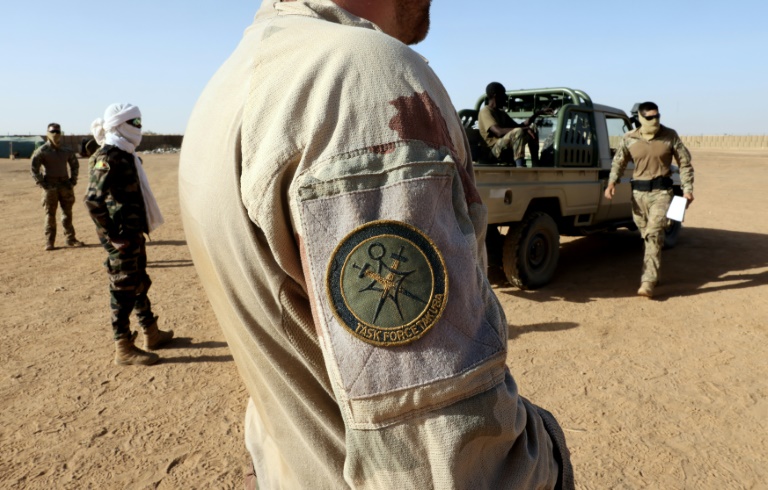
The French-led Takuba task force of EU special forces has officially ceased operating in Mali, France announced Friday, ending a year-long anti-jihadist effort that soured after two military coups overthrew the civilian government.

Takuba, operating with France’s Barkhane mission, was set up after President Emmanuel Macron sought more help from European allies for the anti-terror campaign in the Sahel.

French army spokesman General Pascal Ianni told journalists that Barkhane and Takuba had showed what “Europeans can accomplish together in complicated security environments”, with on-the-ground experience that would be critical for future joint operations.

But “the reorganisation of the French military presence in the Sahel… led to the end of operations for Takuba in Mali as of June 30,” he said. 

Announced in late 2019, Takuba at its peak brought together nearly 900 elite troops from nine of France’s allies — Belgium, the Czech Republic, Denmark, Estonia, Hungary, Italy, the Netherlands, Portugal and Sweden.

Alongside the Barkhane force that at one point reached 5,100 soldiers, Takuba aimed to train and reinforce local armies trying to counter bloody insurgencies linked to Al-Qaeda or the Islamic State group.

But despite tactical successes such as the killings of some top jihadist leaders, the governments of the so-called G5 Sahel nations — Burkina Faso, Chad, Mali, Mauritania and Niger — have struggled to curtail the attacks against both military and civilian targets.

In Mali in particular, military coups in August 2020 and May 2021 resulted in diplomatic tensions with France.

The deterioration accelerated when the ruling junta in Bamako developed closer ties with Moscow, bringing in military personnel that France says are mercenaries from Russia’s Wagner group.

Macron in February announced a full pullout of both Barkhane and Takuba from Mali, but said French forces would remain in the Sahel in a new configuration.

Since then IS-linked jihadists, whose power was once thought to be waning in the Sahel, have expanded their reach while carrying out an unprecedented series of civilian massacres.

Mali remains supported by a United Nations peacekeeping mission, MINUSMA, which has some 13,000 soldiers and nearly 2,000 police.

MINUSMA on Friday said one of its civilian workers, a Malian generator technician, was killed by unidentified armed men on Thursday.

The mission called the attack, which occurred in Menaka in northeast Mali, a “cowardly and barbaric act”.

MINUSMA’s mandate was renewed on Wednesday for a further year by the Security Council.

However, the force no longer has French air support, the offer of which was rejected by Mali.

Germany signs deal to return Benin bronzes to Nigeria

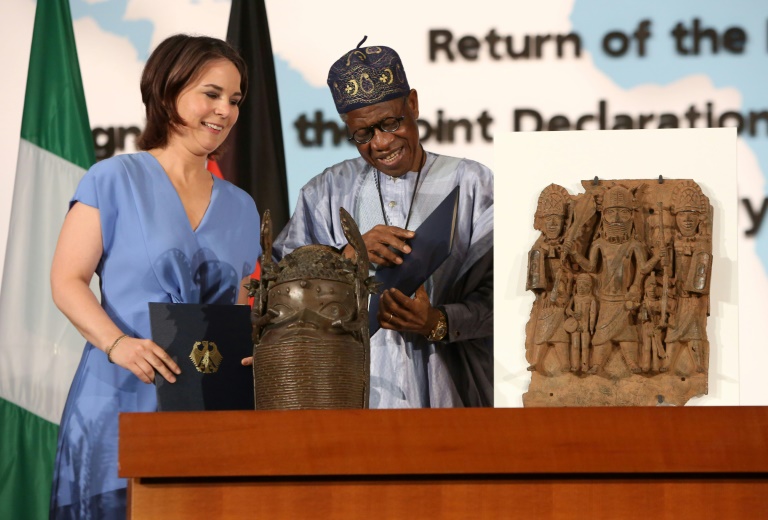
Germany signed an agreement on Friday to begin sending hundreds of Benin bronzes back to what is now Nigeria, rubber-stamping the biggest effort yet by a European country to return the looted artworks.

Foreign Minister Annalena Baerbock and Culture Minister Claudia Roth signed the deal with their Nigerian counterparts in Berlin after Germany first announced that it would begin returning the bronzes last year.

The first two artworks — the head of a king and a plaque depicting three warriors — were on Friday handed over to representatives from Nigeria.

“Today we have reason to celebrate, because we have reached a historic agreement — the Benin bronzes are returning home,” Baerbock said. 

“These pieces are not only magnificent artefacts — they are some of Africa’s greatest treasures. But they are also telling a story of colonial violence,” she said.

Thousands of Benin bronzes, metal plaques and sculptures that once decorated the royal palace of the Kingdom of Benin are now scattered around European museums after being looted by the British at the end of the 19th century.

Germany has around 1,100 of the 16th- to 18th-century artefacts, split between some 20 museums.

The biggest collection is held by the Ethnological Museum in Berlin, which has 440 — considered the most important collection outside London’s British Museum.

Negotiations are still ongoing as to which of the bronzes held by the Ethnological Museum will be returned to Nigeria, and which will remain in Berlin on loan.

Nigeria has been negotiating the return of Benin bronzes from several European countries and plans to build a museum in Benin City in southern Edo state, where it hopes to house them.

France in November handed back 26 of the treasures, while two were returned by Britain earlier this year, with talks ongoing for more to follow.

Nigeria’s Minister of Culture, Lai Mohammed, thanked Germany for having “taken the lead in correcting the wrongs of the past”, hailing “the dawn of a new era of cooperation”.

“This will go down as one of the most important days in the celebration of African cultural heritage,” Foreign Minister Zubairu Dada added.

Angola's dos Santos 'critical' after cardiac arrest: family

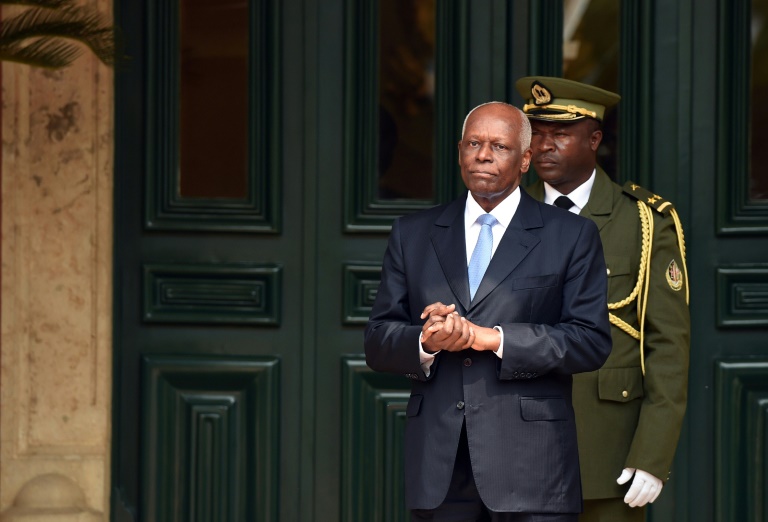
Angola’s ailing former president Jose Eduardo dos Santos is in a “critical and delicate” condition after suffering a cardiac arrest last week, his family said on Friday.

In its first statement since news broke a week ago about the hospitalisation of the 79-year-old, the family revealed he suffered a “cardiorespiratory arrest” on June 23.

He was taken to a Barcelona hospital where he was admitted to the intensive care unit.

“His clinical condition is critical and delicate,” said the family, adding doctors are “monitoring his health and the neurological complications that resulted from the cardiac arrest”. 

The family said he has been undergoing additional tests and that it continuously follows the development of his health condition.

Angolan Foreign Minister Tete Antonio visited the president at the health unit a day earlier. He told Angola’s national radio station that the government would assume all the costs of dos Santos’s treatment. 

Dos Santos was the leader of the Portuguese-speaking, oil-rich state of Angola for 38 years, until he stepped down in September 2017. 

Dos Santos, who was born in the slums of Luanda, was one of Africa’s longest-serving leaders, using his nation’s oil wealth to turn one of his children into a billionaire while leaving his people among the poorest on the planet.

strs-sn/ub/giv/imm

White rhinos return to Mozambique park after 40 years

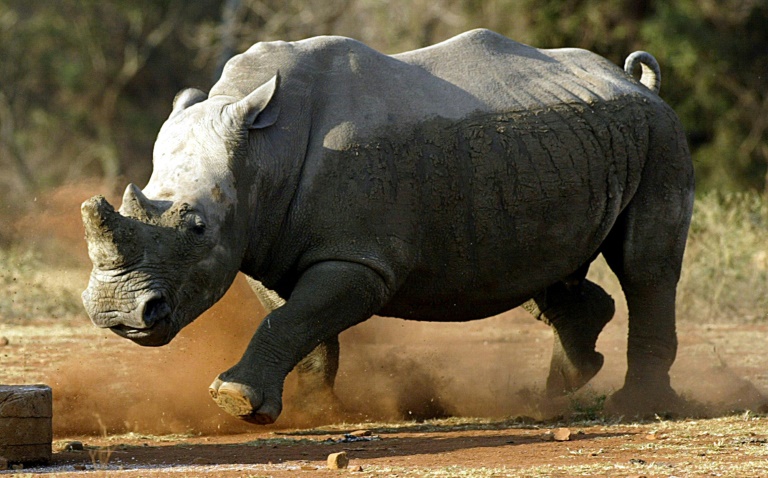
A Mozambican park welcomed its first white rhinos in 40 years on Friday after 19 of the threatened animals completed a 1,600-kilometre (thousand-mile) truck ride from South Africa, conservationists said.

The rhinos were reintroduced to Zinave National Park in southern Mozambique under an initiative to restore wildlife and boost the local economy.

Wildlife in the 4,000-square-kilometre (1,500-square-mile) haven was decimated by Mozambique’s decades-long civil war, which ended in 1992, and by poaching.

“The return of the rhino allows for Zinave to be introduced as a new and exciting tourism destination in Mozambique,” said Werner Myburgh, head of Peace Parks Foundation (PPF), the conservation group that led the project.

Zinave is now the only national park in Mozambique to house all “Big Five” African game animals — elephant, rhino, lion, leopard and buffalo — Myburgh said in a statement.

Since 2015, 2,400 animals from 14 species have been released into the reserve.

The rhinoceroses were hauled to Zinave from neighbouring South Africa over several days in June, in what the PPF said was the longest-ever transfer of rhinos by road.

On Friday, some of the animals were released from their enclosures into a sanctuary featuring extra security to protect them from poachers.

The ceremony was attended by President Filipe Nyusi and Environment Minister Ivete Maibaze.

“The protection of biodiversity is a universal imperative and together we will continue to fight for the preservation of our natural heritage,” said Nyusi.

“Only then will future generations be able to enjoy the benefits of nature and join our mission of preserving our natural resources.”

The white rhinoceros is classified as near-threatened by the International Union for Conservation of Nature (IUCN) while its cousin, the African black rhino, is listed as critically endangered.

The PPF said it planned to more than double the park’s rhino population over the next three years, adding more from both species.

Close Bitnami banner
Bitnami