Africa Business

Sudan protesters rally against coup leaders, day after nine killed

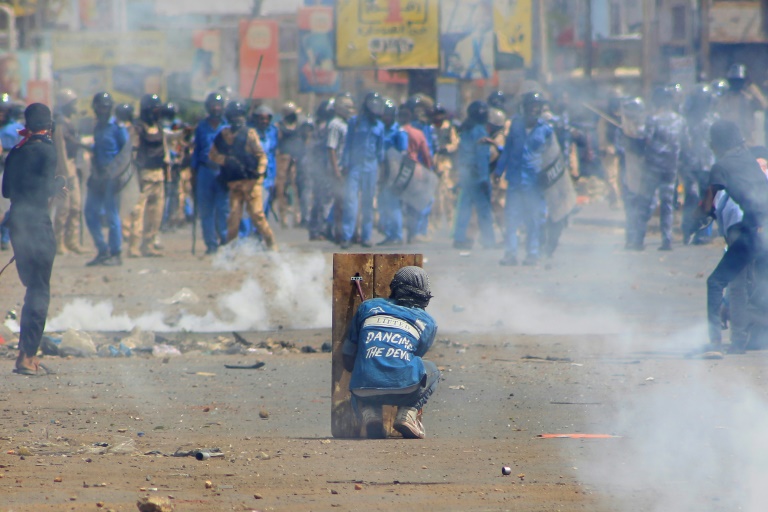
Sudanese protesters rallied again Friday, drawing tear gas from the security forces a day after a mass demonstration joined by tens of thousands was met with the deadliest violence so far this year.

Hundreds of activists massed near the presidential palace in the capital Khartoum, after at least nine people were killed during Thursday’s protests against a military takeover led by army chief Abdel Fattah al-Burhan last October.

The international community has condemned the bloodshed, with the United Nations’ rights chief urging an independent probe.

“The people want to bring down Burhan,” some protesters chanted while others, carrying photos of people killed in months of protest-related violence, yelled: “We call for retribution!”

“Our protest is spontaneous and in reaction to yesterday’s (Thursday’s) violence,” demonstrator Shawqi Abdelazim told AFP in Khartoum.

The death toll from protest-related violence has reached 113 since last year’s coup, with the latest fatality recorded Friday when a demonstrator died from wounds sustained at a June 24 rally, according to pro-democracy medics.

Protesters set up barricades and set ablaze car tyres in North Khartoum, while others tried to march on the presidential palace from the city centre, AFP correspondents reported.

Security forces fired tear gas to disperse protesters marching towards the palace and several people were injured, an AFP correspondent said.

– ‘Violence needs to end’ –

The protesters demand the restoration of the transition to civilian rule that was launched after the 2019 ouster of veteran president Omar al-Bashir but has since been derailed.

UN rights chief Michelle Bachelet voiced alarm at Thursday’s violence, in which a minor also died.

“I call on authorities to conduct an independent, transparent, thorough, and impartial investigation into the response by the security forces in accordance with relevant international standards,” she said in a statement.

“Victims, survivors, and their families have a right to truth, justice and reparations,” she added.

The US State Department’s Bureau for African Affairs said that “tens of thousands of Sudanese took to the street… to demand democracy. We support their aspirations.”

“We condemn in the strongest terms the use of live fire by security forces against civilians. We offer our condolences to those who lost family members,” it added on Twitter.

The “violence needs to end”, demanded UN special representative Volker Perthes.

The British embassy in Khartoum said it was “appalled” by Thursday’s killings and also called for a probe. 

“Impunity and killing must stop,” it said. 

Sudan’s police accused protesters of wounding 96 police and 129 military officers, “some critically”, on Thursday, as well as damaging vehicles and starting fires.

– ‘Lack of accountability’ –

Last year’s coup plunged Sudan into deepening political and economic turmoil which has seen rising consumer prices and life-threatening food shortages.

It has also sparked near-weekly protests and exacerbated ethnic clashes. 

The United Nations, the African Union and regional bloc IGAD have tried to facilitate talks between the generals and civilians, but mediation efforts have been boycotted by the main civilian factions.

On Friday, the three international bodies jointly condemned the violence and “the use of excessive force by security forces and lack of accountability for such actions, despite repeated commitments by authorities”.

Norway’s ambassador to Sudan condemned reports of “torture, sexual violence and inhumane treatment”.

“We request lawyers’ access to detainees and their access to health,” ambassador Therese Loken Gheziel wrote on Twitter. “Protection from torture is indispensable”.

The protests on Thursday came on the anniversary of a 1989 coup that toppled Sudan’s last elected civilian government and ushered in three decades of iron-fisted rule by Islamist-backed Bashir.

It was also the anniversary of 2019 protests demanding that the generals who had ousted Bashir in a palace coup earlier that year cede power to civilians.

Those protests led to the formation of the civilian-military transitional government that was toppled in last year’s coup.
S.Leone slashes 'zeros of shame' from banknotes

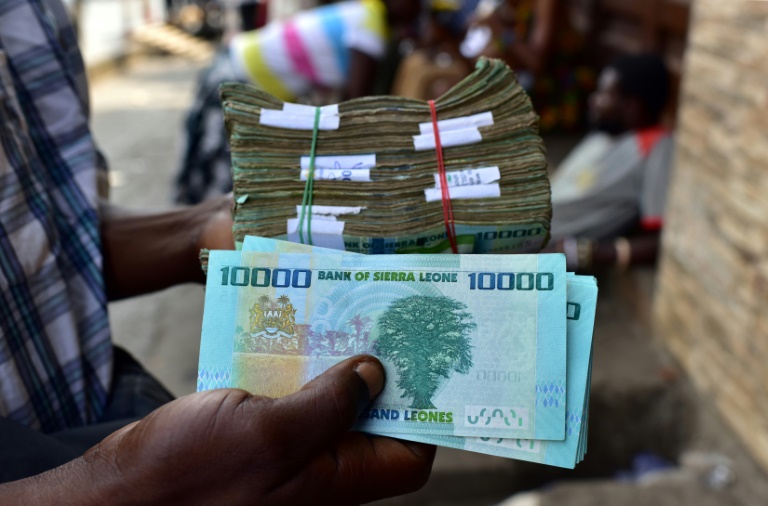
Sierra Leone on Friday introduced a new family of banknotes, stripping three zeros off the leone, in a bid to restore confidence in the inflation-hit national currency.

The Bank of Sierra Leone announced the move last August, insisting the public’s purchasing power would not be affected by the change.

“We have removed three zeros from our banknotes but the money yesterday is the same value as today,” President Julius Maada Bio said at ceremonies at the central bank where the new bills were unveiled.

A note of 10 new leones is the equivalent of a note of 10,000 old leones, which changes hands for around 75 US cents.

Year-on-year inflation in the West African state was 24.87 percent in May, according to the national statistics agency.

Rising prices had driven the printing of banknotes, resulting in a mountain of paper money that is costly to sustain and unwieldly for the public.

Shoppers need huge quantities of banknotes for the simplest transactions, and unscrupulous bank tellers sometimes pilfer notes from sealed bundles of bills.

“We are removing the ‘zeros of shame’ to get the currency properly aligned,” Morlai Bangura, a central bank director, told AFP earlier in the week.

He said the bank had begun distributing the new paper notes to commercial banks last week.

On Friday, customers braving the rain queued at commercial banks to swap their old banknotes for new ones.

“The changing of our currency is necessary — we were used to carrying bags to the bank to withdraw our money, but not anymore,” Alice Frazer, 70, said after exchanging her notes at the Sierra Leone Commercial Bank, a state-owned bank in central Freetown.

The new banknotes have a similar design to the old ones but are smaller in size.

“Our current currency is too big to fit into a wallet and we spend too much money printing oversized banknotes,” Kelfala Murana Kallon, the central bank governor, told reporters last August as he announced the move.

The central bank declined to comment on the cost of the operation.

Sierra Leone’s eight million people live in one of the poorest nations in the world, ranking 182 out of 189 countries in the UN’s Human Development Index.

Its economy, heavily dependent on minerals, was devastated by a civil war that ran from 1991-2002 and left about 120,000 dead.

Efforts at rebuilding were set back by an Ebola epidemic in 2014-2016, a fall in world commodity prices and the coronavirus epidemic — all of which have disrupted trade and investment and hit exports.

Sierra Leoneans will be able to use both the old and new notes during a transition period until September 30. 

From October 1, the old currency will cease to be legal tender.

The public will be able to swap the old currency for the new one until November 15, Kallon said in a statement.

Nearly 33,000 children flee Mozambique violence

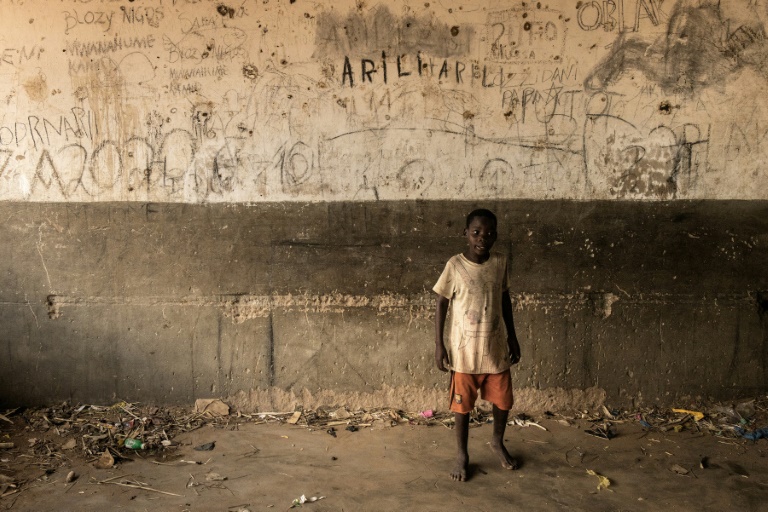
A new wave of violence in jihadist-hit northern Mozambique uprooted nearly 33,000 children last month, the UN reported Friday.

June saw a surge in attacks in Cabo Delgado province, where jihadists launched a bloody insurgency in 2017, sparking a regional military mission last year that had restored a sense of security.

Statistics released by the International Organization for Migration (IOM) showed that 60,141 people, including 32,978 children, fled their homes in June.

The IOM said close to 785,000 people had now been displaced since 2017.

The June figure was the highest monthly tally for children in the history of the crisis, it said.

Brechtje van Lith, Save the Children’s country director in Mozambique said people were running out of options for shelter.

“This is not the first time they are going through this -– many are experiencing violence for the umpteenth time with no end in sight,” she said in a statement.

The British charity said it was worried about mental health among those had fled.

“Many of them have lost loved ones or witnessed horrors that no child or adult should ever need to see,” said van Lith.

The UN children’s agency UNICEF told AFP it was “very concerned” for children in Cabo Delgado following the recent displacements. 

Dozens of people were killed in June, according  to the conflict watchdog ACLED, which lists nearly 4,100 fatalities since the insurgency broke out in October 2017.

Some 3,100 troops from several African countries deployed in Cabo Delgado last June and retook control over much of the territory.

Diplomatic and humanitarian officials say the insurgents have since split into three groups.

“The pattern of insurgent activity is increasingly characterized by hit-and-run raids on remote, vulnerable targets across multiple districts, most likely with the intention of stretching the security forces’ resources,” said ACLED’s conflict observatory, Cabo Ligado.

West African states review post-coup sanctions at key summit

West African leaders on Sunday will weigh the future of sanctions imposed against three countries where the military have seized power, sparking concern for stability in one of the world’s most coup-prone regions.

The Economic Community of West African States (ECOWAS) has slapped tough economic and financial sanctions on Mali and less severe penalties on Burkina Faso and Guinea.

In a one-day summit in the Ghanaian capital Accra, ECOWAS will decide whether these measures should be maintained, strengthened or lifted.

At the core of their talks will be the bloc’s demand that the juntas set an early timetable for returning to their barracks.

Mali, a poor, landlocked country in the grip of a decade-long jihadist conflict, has been under a trade and financial embargo since January, a move that has badly strained its economy.

Burkina Faso — another Sahel country caught up in jihadist turmoil — and Guinea have so far only been suspended from the bodies of the 15-nation bloc. 

The three states underwent four coups in 18 months: two in Mali in August 2020 and May 2021, one in Guinea in September 2021 and one in Burkina Faso in January this year.

Alarmed by the risk of contagion, ECOWAS has stepped up top-level meetings and piled pressure on military rulers to accelerate the return of civilian leadership.

On June 4, the bloc avoided ruling on sanctions and instead gave itself another month to negotiate.

– Mali ‘progress’ –

Bitter talks between ECOWAS and Mali’s junta have been underway for months.

An ECOWAS mediator, former Nigerian president Goodluck Jonathan, on Friday visited Mali’s capital Bamako, part of a string of recent trips to try to secure a deal.

A source close to Jonathan told AFP that “Mali has made enormous progress.”

Though there are still “some adjustments to be made,” the Malian junta “is doing a good job” on the issue, the source added.

The junta in January had triggered the sanctions by unveiling a scheme to rule for five years.

But on Wednesday, the authorities in Bamako approved a plan to hold presidential elections in February 2024, preceded by a referendum on a revised constitution in March 2023 and legislative elections in late 2023.

On June 17, the authorities approved a new electoral law, something that is also likely be viewed positively by ECOWAS.

However, a potential sticking point is that the legislation allows military candidates to contest the presidential ballot.

– Burkina and Guinea –

In Burkina Faso, ECOWAS is concerned about the 36-month transition period the military rulers announced.

But it has appointed a high-powered mediator, former Niger president Mahamadou Issoufou, and a diplomat from the region told AFP, “we are on the path to compromise.”

Issoufou was expected in the capital Ouagadougou ahead of the summit.

In an apparent show of compromise with ECOWAS, Burkina’s junta has drawn up a document that it gave to the country’s political parties on Wednesday.

It proposes a constitutional referendum on December 24, 2024 and legislative and presidential elections on February 25, 2025.

“(It) focuses on two aspects — restoring security and organising elections for the return of normal constitutional order,” Prime Minister Albert Ouedraogo said.

The situation seems more complex in Guinea, another fragile state but — unlike Mali and Burkina Faso — not mired in a jihadist crisis.

The Guinean junta has refused an ECOWAS mediator and announced a 36-month transition period, a timeline that current African Union chairman and Senegalese President Macky Sall has described as “unthinkable.”

“ECOWAS will have to take measures,” Sall said.

The bloc had at the last summit urged Guinean leaders to establish a framework for dialogue with political actors and civil society. 

On Monday, the post-coup prime minister, Mohamed Beavogui, met with some political parties and civil society groups for initial discussions.

Sudan protesters rally against coup leaders, day after nine killed

Sudanese protesters rallied again Friday, drawing tear gas from the security forces, a day after a mass demonstration joined by tens of thousands was met with the deadliest violence so far this year.

Hundreds of activists massed near the presidential palace in the capital Khartoum, after at least nine people were killed during Thursday’s protests against a military takeover led by army chief Abdel Fattah al-Burhan last October.

“The people want to bring down Burhan,” some protesters chanted while others, carrying photos of people killed in months of protest-related violence, yelled: “We call for retribution!”

The death toll from protest-related violence has reached 113 since the coup, with the latest fatality recorded Friday when a demonstrator died from wounds sustained at a June 24 rally, according to pro-democracy medics.

Protesters set up barricades and set ablaze car tyres in North Khartoum, while others tried to march on the presidential palace from the city centre, AFP correspondents reported.

Security forces fired tear gas to disperse protesters marching towards the palace and several people were injured, an AFP correspondent said.

The protesters demand the restoration of the transition to civilian rule, that was launched shortly after the 2019 ouster of veteran president Omar al-Bashir but has since been derailed. 

The latest crackdown defied calls for calm from the international community.

“Tens of thousands of Sudanese took to the street… to demand democracy. We support their aspirations,” said the US State Department’s Bureau for African Affairs on Twitter.

“We condemn in the strongest terms the use of live fire by security forces against civilians. We offer our condolences to those who lost family members.”

The “violence needs to end”, demanded UN special representative Volker Perthes.

The British embassy in Khartoum said it was “appalled” by Thursday’s killings and called for a probe. 

“Impunity and killing must stop,” it said. 

Sudan’s police accused protesters of wounding 96 police and 129 military officers, “some critically”, on Thursday, as well as damaging vehicles and starting fires.

– ‘Excessive force’ –

Last year’s coup plunged Sudan into deepening political and economic turmoil, which has seen rising consumer prices and life-threatening food shortages.

It has also sparked near-weekly protests and exacerbated ethnic clashes. 

The United Nations, the African Union and regional bloc IGAD have tried to facilitate talks between the generals and civilians, but mediation efforts have been boycotted by the main civilian factions.

On Friday, the three international bodies jointly condemned the violence and “the use of excessive force by security forces and lack of accountability for such actions, despite repeated commitments by authorities”.

Norway’s ambassador to Sudan condemned reports of “torture, sexual violence and inhumane treatment”.

“We request lawyers’ access to detainees and their access to health,” ambassador Therese Loken Gheziel wrote on Twitter. “Protection from torture is indispensable”.

The protests on Thursday came on the anniversary of a 1989 coup that toppled Sudan’s last elected civilian government and ushered in three decades of iron-fisted rule by Islamist-backed Bashir.

It was also the anniversary of 2019 protests demanding that the generals who had ousted Bashir in a palace coup earlier that year cede power to civilians.

Those protests led to the formation of the civilian-military transitional government that was toppled in last year’s coup.
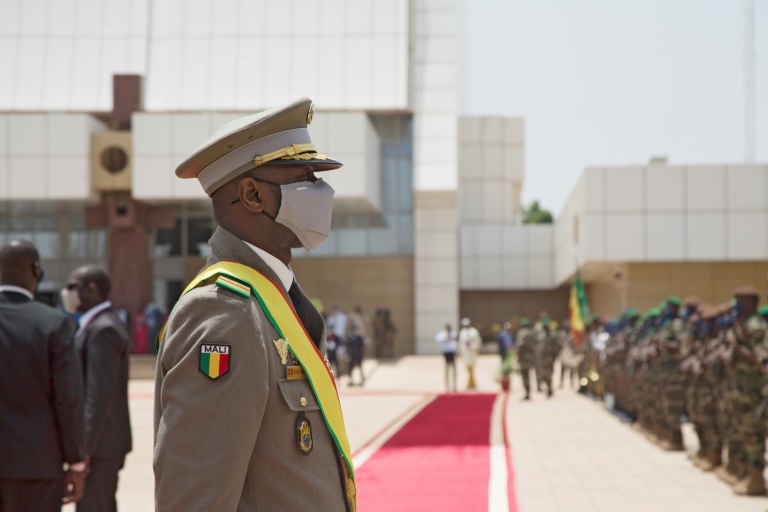
US warns of jihadists and Russian forces as Africa war games end

The United States’ top general for Africa has warned of “violent extremism” and the threat of Russian mercenaries in the Sahel region, speaking as war games wrapped up in Morocco.

“We are seeing the rise of violent extremism in Western Africa, predominantly in the Sahel region,” said General Stephen J. Townsend, commander of the US Africa Command (AFRICOM).

The Sahel region is a vast territory stretching across the south of Africa’s Sahara Desert, incorporating countries such as Burkina Faso, Chad, Mali, Mauritania and Niger.

“We are seeing the arrival of malign actors, and specifically I am thinking of Russian mercenaries from Wagner,” Townsend told AFP in the North African nation on Thursday, at the conclusion of a four-week long “African Lion” international military exercise.

“This training is not specifically oriented on those problems, but it will help all of our armed forces if we are called to combat this kind of problem in the future,” Townsend said.

Islamic State-linked jihadists, whose power was once thought to be waning in the Sahel, have recently expanded their reach and marking their presence with an unprecedented series of civilian massacres.

Mali has been especially hard hit, a former French colony where the strategic landscape has changed dramatically following two coups in August 2020 and May 2021.

Bamako developed closer ties with Moscow, bringing in military personnel that France says are mercenaries from Russia’s Wagner group.

– Air, sea and land assault practice –

AFRICOM, which is based in the German city of Stuttgart, is responsible for US military operations across Africa.

More than 7,500 personnel from a dozen countries took part in the “African Lion” exercises, running from June 6 to 30, with operations in Morocco, Ghana, Senegal and Tunisia.

As well as US troops and officers from the host nations, soldiers from Brazil, Britain, Chad, France, Italy and the Netherlands took part.

The Moroccan leg of the games were attended by military observers from NATO, the African Union and nearly 30 “partner countries”, including for the first time Israel.

Exercises included land, airborne and maritime manoeuvres, preparation for nuclear biological and chemical decontamination, as well as providing medical and humanitarian aid.

On Thursday, at Cap Draa in the dusty deserts of southern Morocco some 700 kilometres (435 miles) south of Rabat, troops simulated a joint land and air attack against enemy columns in a live fire exercise.

Overhead, F-16 warplanes and Apache attack helicopters roared across the skies.

Through the sand, M1 Abrams tanks and AMX-10 RC wheeled armoured reconnaissance vehicles ploughed across the dunes, accompanied by HIMARS multiple rocket launchers firing salvoes.

Plumes of smoke rose up high after live fire artillery barrages, with the dust whipped up by fierce winds from the Atlantic Ocean.

– ‘To defend our common interest’ –

But Townsend was keen to stress the operations were “hypothetical” war games, an “exercise scenario that is completely made up”, and not targeting any nation.

The exercise comes amid heightened tensions between Rabat and Algiers over the disputed Western Sahara.

Former US president Donald Trump recognised Moroccan sovereignty over the territory in 2020 in return for Rabat re-establishing ties with Israel, and Algeria responded months later by breaking ties with Morocco.

Exercises took place close to the border with Western Sahara and Sahrawi refugee camps where the Algerian-backed Polisario Front independence movement is based.

Townsend said the exercise was “not focused on Algeria at all”, but was about “increasing our skill as armies” to work together.

“What we are seeing played out in NATO and Ukraine today shows the value of strong allies and partners working together to defend our common interest,” he added.

The conflict in Ukraine dominated the NATO summit in Madrid this week, where US President Joe Biden announced a boost of US military in Europe, including on its “southern flank” in Spain and Italy, across the Mediterranean Sea from North Africa.

Sudan protesters rally against coup leaders, day after nine killed

Sudanese protesters rallied again Friday and security forces fired tear gas at them, a day after a mass demonstration drawing tens of thousands was met with the deadliest violence so far this year.

Hundreds of activists massed near the presidential palace in the capital Khartoum, after at least nine people were killed during Thursday’s rallies against a military takeover led by army chief Abdel Fattah al-Burhan last October.

“The people want to bring down Burhan,” some protesters chanted while others, carrying photos of people killed in months of protest-related violence, yelled: “We call for retribution!”

The death toll from protest-related violence has reached 113 since the coup, with the latest fatality reported Friday after a demonstrator died from wounds sustained at a June 24 rally, according to pro-democracy medics.

The activists demand the restoration of the transition to civilian rule, that was launched shortly after the 2019 ouster of veteran president Omar al-Bashir but which has been derailed since. 

The latest crackdown defied calls for calm from the international community.

“Tens of thousands of Sudanese took to the street today to demand democracy. We support their aspirations,” said the US State Department’s Bureau for African Affairs on Twitter.

“We condemn in the strongest terms the use of live fire by security forces against civilians. We offer our condolences to those who lost family members.”

The “violence needs to end,” demanded UN special representative Volker Perthes.

Sudan’s police meanwhile accused protesters of wounding 96 police and 129 military officers, “some critically”, on Thursday, as well as damaging vehicles and starting fires.

– ‘Excessive force’ –

Last year’s coup plunged Sudan into deepening political and economic turmoil, which has seen rising consumer prices and life-threatening food shortages.

It has also sparked near-weekly protests, as well as ethnic clashes. 

The United Nations, the African Union and regional bloc IGAD have tried to facilitate talks between the generals and civilians, but mediation efforts have been boycotted by the main civilian factions.

On Friday, the three bodies jointly condemned the violence and “the use of excessive force by security forces and lack of accountability for such actions, despite repeated commitments by authorities”.

Norway’s ambassador to Sudan also condemned reports of “torture, sexual violence and inhumane treatment”.

“We request lawyers’ access to detainees and their access to health,” ambassador Therese Loken Gheziel wrote on Twitter. “Protection from torture is indispensable”.

The protests on Thursday came on the anniversary of a 1989 coup that toppled Sudan’s last elected civilian government and ushered in three decades of iron-fisted rule by Islamist-backed Bashir.

It was also the anniversary of 2019 protests demanding that the generals who had ousted Bashir in a palace coup earlier that year cede power to civilians.

Those protests led to the formation of the civilian-military transitional government that was toppled in last year’s coup.
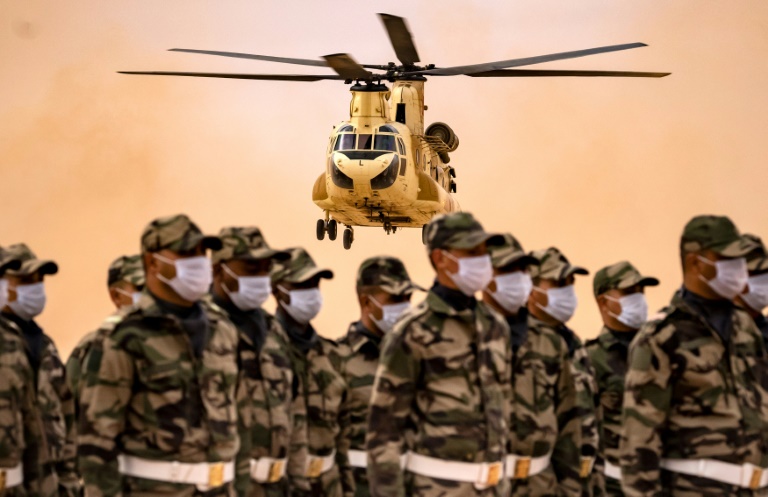
Nearly 30,000 children fled Mozambique violence in June: charity

A new wave of violence in jihadist-hit northern Mozambique uprooted close to 30,000 children in June, the highest monthly figure in the long-running crisis, a British charity reported Friday.

June saw a surge in attacks in Cabo Delgado province, where jihadists launched a bloody insurgency in 2017, sparking a regional military mission last year that had restored a sense of security.

At least 53 people were killed in several districts, forcing more than 50,000 adults and children to flee their homes, the charity Save the Children said.

“This has been the worst month for families and children in Cabo Delgado in a year,” Brechtje van Lith, its country director for Mozambique, said in a statement

She said people fleeing the violence, which has displaced more than 700,000 so far, were running out of options for shelter. 

“And yet this is not the first time they are going through this -– many are experiencing violence for the umpteenth time with no end in sight,” she said.

The charity sounded the alarm about mental health.

“Many of them have lost loved ones or witnessed horrors that no child or adult should ever need to see,” she said.

Nearly 4,100 people have been killed in Mozambique since 2017, according to the conflict watchdog ACLED.

Some 3,100 troops from several African countries deployed in Cabo Delgado last June and retook control over much of the territory.

Diplomatic and humanitarian officials say the insurgents have since split into three groups.

S.Leone slashes 'zeros of shame' from banknotes

Sierra Leone on Friday was to introduce a new family of banknotes, stripping three zeros off the leone, in a bid to restore confidence in the inflation-hit national currency.

The Bank of Sierra Leone announced the move last August, insisting that the public’s purchasing power would not be affected by the change.

A note of 10 new leones will have the same value as a note of 10,000 old leones, the equivalent of just under one US dollar ($0.75).

The official launch was due to take place Friday at ceremonies where the new banknotes will be unveiled.

“We are removing the ‘zeros of shame’ to get the currency properly aligned,” Morlai Bangura, a central bank director, told AFP.

He said the bank had begun distributing the new notes to commercial banks last week.

Year-on-year inflation in the West African country was 24.87 percent in May, according to country’s statistics agency.

Rising prices have driven the printing of banknotes, resulting in a mountain of paper money that is costly to sustain and unwieldly for the public.

Shoppers need huge quantities of banknotes for the simplest transactions, and unscrupulous bank tellers sometimes pilfer notes out of sealed bundles of bills.

“Our current currency is too big to fit into a wallet and we spend too much money printing oversized banknotes,” Kelfala Murana Kallon, the bank’s governor, told reporters last August as he announced the move.

The central bank declined to comment on the cost of the operation.

“Our economy is not doing well — the cost of rice, flour and sugar are going up daily,” said Abubakr Kamara, a restaurant owner in Central Freetown, at the time of the announcement.

Sierra Leone’s eight million people live in one of the poorest nations in the world, ranking 182 out of 189 countries in the UN’s Human Development Index.

Its economy, heavily dependent on minerals, was devastated by a civil war that ran from 1991-2002 and left about 120,000 dead.

Efforts at rebuilding were set back by an Ebola epidemic in 2014-2016, a fall in world commodity prices and the coronavirus epidemic — all of which have disrupted trade and investment and hit exports.

Sierra Leoneans will be able to use both the old and new notes during a transition period until September 30. 

From October 1, the old currency will cease to be legal tender.

The public will be able to swap the old currency for the new one until November 15, Kallon said in a statement.

Ethiopia border dispute fuels wider tensions

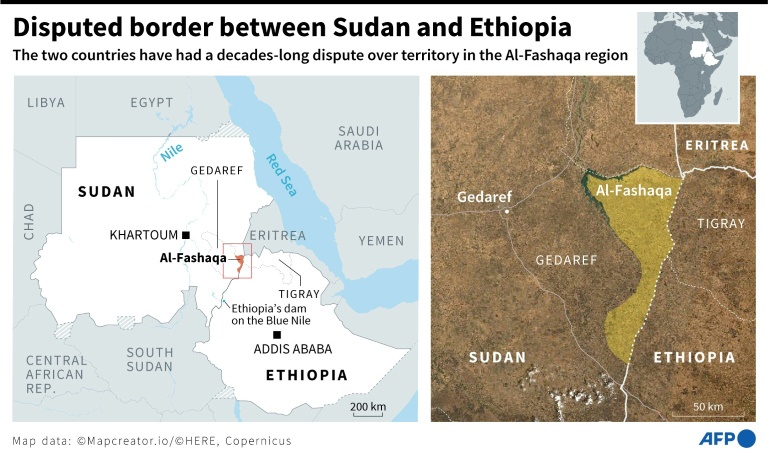
Allegations that Ethiopian forces captured and killed Sudanese troops in a contested area along their border — charges denied by Addis Ababa — have revived a decades-old dispute over the fertile land.

The brinkmanship over Al-Fashaqa has alarmed regional leaders and fed into wider tensions between the rival powers of Sudan and Ethiopia over land and water in the Horn of Africa.

– Deadly dispute –

Khartoum announced on Monday it would recall its ambassador to Addis Ababa after accusing Ethiopia’s army of executing seven Sudanese soldiers and a civilian during a clash in Al-Fashaqa last week.

Sudan said the soldiers were “kidnapped from Sudanese territories” on June 22, taken into Ethiopia, and later “killed and their bodies publicly maimed”.

During a visit to the contested zone claimed by both countries, Sudan’s military leader Abdel Fattah al-Burhan instructed soldiers “to not allow any new movements or encroachments” on their soil.

The army, which has been in power since a coup in October 2021, vowed that the “perfidious act will not pass”.

Ethiopia’s army hit back, denying any role whatsoever in the killings, and vowing to drive Sudanese forces off any seized land if ordered.

Addis Ababa said the casualties resulted from a skirmish with a local militia and accused Sudanese forces of violating Ethiopian territory.

As the sabre-rattling intensified, the African Union and a grouping of regional leaders called for cool heads to prevail.

Ethiopian Prime Minister Abiy Ahmed issued an appeal in Arabic for calm and restraint “for the sake of our shared interests and good-neighbourliness”.

It is far from the first bloody incident in the restive strip of fertile land along the shared border. 

In November, Sudan’s armed forces said six soldiers were killed in an attack by armed groups and militias linked to the Ethiopian military in Al-Fashaqa, allegations Addis Ababa again denied.

– Blood and soil –

Arguments over Al-Fashaqa, between two rivers where Ethiopia’s Amhara and Tigray regions meet Sudan’s Gedaref state, date back to colonial times.

Al-Fashaqa covers some 12,000 square kilometres (4,630 square miles), but analysts point to a flashpoint zone directly along the border, covering some 250 square kilometres (just under 100 square miles).

Treaties signed over a century ago during the colonial era drew the international boundary east of Al-Fashaqa, giving the land to Sudan.

But in the intervening decades, thousands of Ethiopian farmers have grown crops there during the rainy season, despite being periodically expelled by Sudanese forces.

Relations between Khartoum and Addis Ababa nosedived in 1995 after a failed attempt to assassinate Egypt’s then-president Hosni Mubarak while he visited Addis Ababa.

Ethiopia blamed Sudan for the attack and sent forces into Al-Fashaqa.

Since then, thousands of Ethiopian farmers have settled in the area, farming and paying taxes to Ethiopia.

Talks between Khartoum and Addis Ababa over the years have never produced a final deal on a border.

– War and water –

Al-Fashaqa borders Ethiopia’s troubled Tigray region, where deadly conflict erupted in November 2020 between federal forces and the Tigray People’s Liberation Front (TPLF).

The fighting sent tens of thousands of Ethiopian refugees fleeing into Sudan, exacerbating tensions between the two states.

Abiy has leaned heavily on security forces from his country’s Amhara region during the fighting, which has reached a stalemate as diplomats push for peace talks.

Many Amhara officials view Al-Fashaqa as rightfully theirs, and some analysts fear Abiy will struggle to rein in their territorial ambitions.

Sudan and Ethiopia both face daunting domestic economic and political challenges.

Aside from Tigray, Ethiopia faces internal unrest including in the Benishangul-Gumuz and Oromia regions.

Sudan has been under military control since October when Burhan took power in a coup, and mass street protests demanding a path to civilian rule have been violently broken up.

The border dispute over farming land also stirs anxieties over resources between the rivals, particularly stoked by Ethiopia’s mega dam on the Blue Nile.

Sudan believe the Grand Ethiopian Renaissance Dam threatens its water supply and along with Egypt, another downstream country, is pushing for a binding deal over its filling and operation.

Ethiopia has resisted pressure, and in February said it had begun producing electricity at the dam.

Close Bitnami banner
Bitnami