Africa Business

EU's Takuba anti-terror force quits junta-controlled Mali

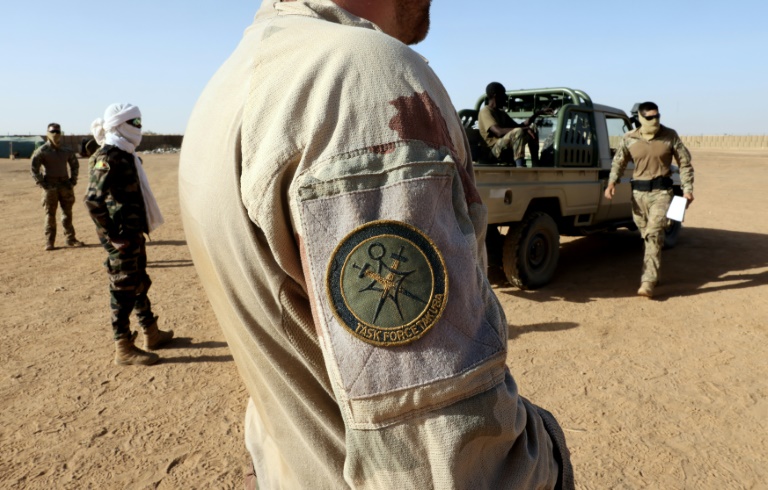
The French-led Takuba task force of EU special forces has officially ceased operating in Mali, France announced Friday, ending a year-long anti-jihadist effort that soured after two military coups overthrew the civilian government.

Takuba, operating with France’s Barkhane mission, was set up after President Emmanuel Macron sought more help from European allies for the anti-terror campaign in the Sahel.

French army spokesman General Pascal Ianni told journalists that Barkhane and Takuba had showed what “Europeans can accomplish together in complicated security environments,” with on-the-ground experience that would be critical for future joint operations.

But “the reorganisation of the French military presence in the Sahel… led to the end of operations for Takuba in Mali as of June 30,” he said. 

Announced in late 2019, Takuba at its peak brought together nearly 900 elite troops from nine of France’s allies — Belgium, the Czech Republic, Denmark, Estonia, Hungary, Italy, the Netherlands, Portugal and Sweden.

Alongside the Barkhane force that at one point reached 5,100 soldiers, Takuba aimed to train and reinforce local armies trying to counter bloody insurgencies linked to Al-Qaeda or the Islamic State group.

But despite tactical successes such as the killings of some top jihadist leaders, the governments of the so-called G5 Sahel nations — Burkina Faso, Chad, Mali, Mauritania and Niger — have struggled to curtail the attacks against both military and civilian targets.

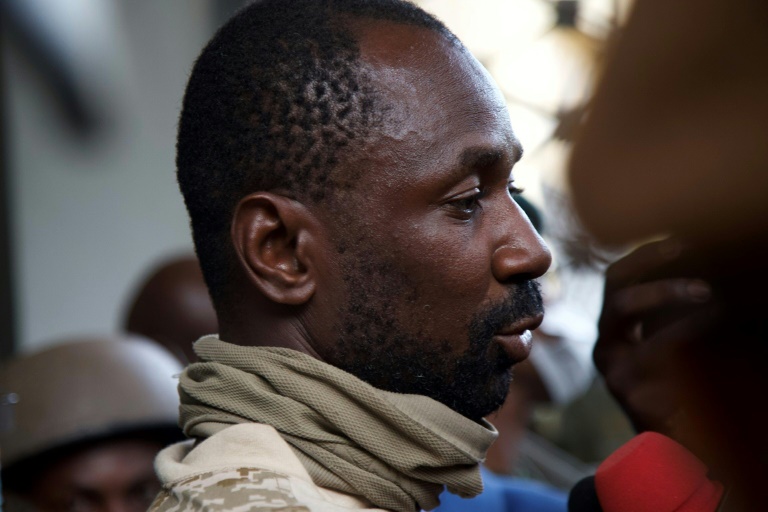
In Mali in particular, two military coups in August 2020 and May 2021 resulted in diplomatic tensions with France.

The deterioration accelerated when the ruling junta in Bamako developed closer ties with Moscow, bringing in military personnel that France says are mercenaries form Russia’s Wagner group.

Macron in February announced a full pullout of both Barkhane and Takuba from Mali, but said French forces would remain in the Sahel in a new configuration.

Since then IS-linked jihadists, whose power was once thought to be waning in the Sahel, have expanded their reach while carrying out an unprecedented series of civilian massacres.

Mali remains supported by a United Nations peacekeeping mission, MINUSMA, which has some 13,000 soldiers and nearly 2,000 police.

MINUSMA’s mandate was renewed on Wednesday for a further year by the Security Council.

However, the force no longer has French air support, the offer of which was rejected by Mali.
Nine protesters killed in Sudan anti-coup mass rallies

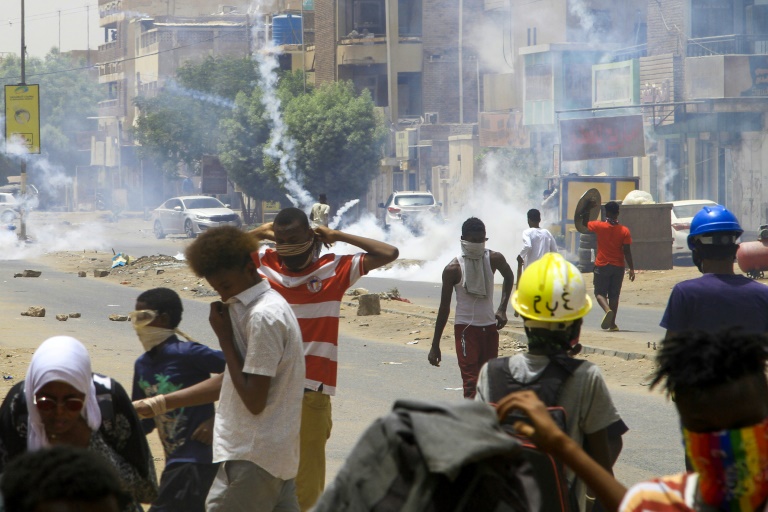
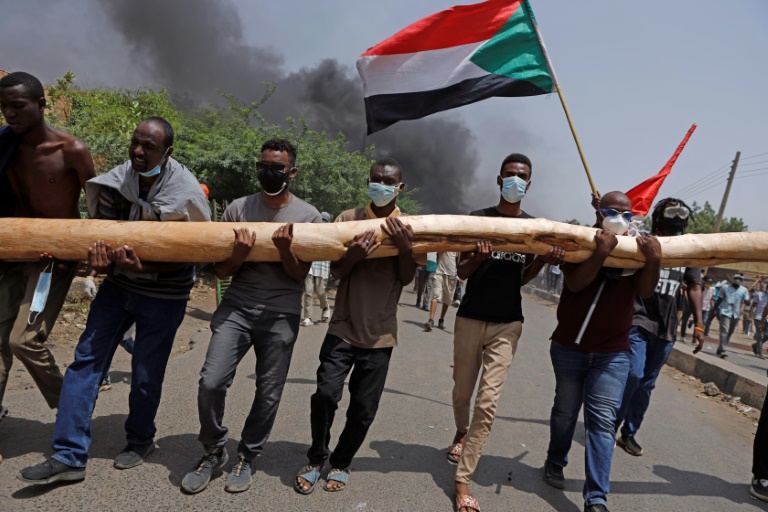
At least nine Sudanese demonstrators were killed Thursday as security forces sought to quash mass rallies of protesters demanding an end to military rule, pro-democracy medics said.

In one of the most violent days this year in an ongoing crackdown on the anti-coup movement, AFP correspondents reported security forces firing tear gas and stun grenades to disperse tens of thousands of protesters.

“Even if we die, the military will not rule us,” protesters chanted, urging the reversal of an October military coup by army chief Abdel Fattah al-Burhan that prompted foreign governments to slash aid, deepening a chronic economic crisis.

At least seven of the nine killed were shot in the chest or the head, the Central Committee of Sudan Doctors said, raising the overall death toll to 112 from protest-related violence since October.

One of them was a minor, the doctors said, killed by “a bullet in the chest”.

“Down with Burhan’s rule,” crowds chanted, with protests and violence flaring in both the capital Khartoum and its suburbs, including the twin city of Omdurman, on the other side of the Nile river.

Security forces fired powerful water cannons, as protesters set fire to tyres.

Medics also reported “several attempts to storm hospitals in Khartoum,” with security forces firing tear gas into one hospital, where some of those injured during the protests had been taken.

Protests in Khartoum were larger than normal and, beyond the capital, demonstrations also took place in Wad Madani in the south, the western Darfur region, the eastern states of Kassala and Gedaref as well as the city of Port Sudan, witnesses said.

Internet and phone lines had been disrupted since the early hours of Thursday, a measure the Sudanese authorities often impose to prevent mass gatherings.

By Thursday evening, communications were partially restored.

Security was tight in Khartoum despite the recent lifting of a state of emergency imposed after the coup.

Troops and police blocked roads leading to both army headquarters and the presidential palace, witnesses said. Shops around the capital were largely shuttered.

– ‘Violence needs to end’ –

Demonstrations continued in Omdurman as night fell with crowds trying to remove security barricades in a bid to cross bridges to reach Khartoum, witnesses said.

Thursday’s rallies showed a “change in the balance of power in favour of the mass movement and its goals of seizing complete civil authority and defeating the coup,” said the Forces for Freedom and Change, an alliance of civilian groups whose leaders were ousted in the coup.

UN special representative Volker Perthes said Thursday that the “violence needs to end”, while the US embassy in Khartoum urged restraint and “the protection of civilians so that no more lives are lost”.

The latest protests come on the anniversary of a previous coup in 1989 that toppled the country’s last elected civilian government and ushered in three decades of iron-fisted rule by Islamist-backed General Omar al-Bashir.

It is also the anniversary of 2019 protests demanding that the generals, who had ousted Bashir in a palace coup earlier that year, cede power to civilians.

Those protests led to the formation of the mixed civilian-military transitional government which was toppled in last year’s coup.

Sudan has been roiled by near-weekly protests as the country’s economic woes have deepened since Burhan seized power last year.

Alongside the African Union and regional bloc IGAD, the United Nations has been attempting to facilitate talks between the generals and civilians, but they have been boycotted by the main civilian factions.

The UN has warned that the deepening economic and political crisis has pushed one-third of the country’s population of more than 40 million towards life-threatening food shortages.

Nine anti-coup protesters killed in Sudan mass rallies

At least nine Sudanese demonstrators were killed Thursday as security forces sought to quash mass rallies of protesters demanding an end to military rule, pro-democracy medics said.

In one of the most violent days this year in an ongoing crackdown on the anti-coup movement, AFP correspondents reported security forces firing tear gas and stun grenades to disperse tens of thousands of protesters.

“Even if we die, the military will not rule us,” protesters chanted, urging the reversal of an October military coup by army chief Abdel Fattah al-Burhan that prompted foreign governments to slash aid, deepening a chronic economic crisis.

At least seven of the nine killed were shot in the chest or the head, the Central Committee of Sudan Doctors said, raising the overall death toll to 111 from protest-related violence since October.

One of them was a minor, the doctors said, killed by “a bullet in the chest”.

“Down with Burhan’s rule,” crowds chanted, with protests and violence flaring in both the capital Khartoum and its suburbs, including the twin city of Omdurman, on the other side of the Nile river.

Security forces fired powerful water cannons, as protesters set fire to tyres.

Medics also reported “several attempts to storm hospitals in Khartoum,” with security forces firing tear gas into one hospital, where some of those injured during the protests had been taken.

Protests in Khartoum were larger than normal, and beyond the capital, demonstrations also took place in Wad Madani in the south, the western Darfur region, the eastern states of Kassala and Gedaref as well as the city of Port Sudan, witnesses said.

Internet and phone lines had been disrupted since the early hours of Thursday, a measure the Sudanese authorities often impose to prevent mass gatherings.

By Thursday evening, communications were partially restored.

Security was tight in Khartoum despite the recent lifting of a state of emergency imposed after the coup.

Troops and police blocked roads leading to both army headquarters and the presidential palace, witnesses said. Shops around the capital were largely shuttered.

– ‘Violence needs to end’ –

Demonstrations continued in Omdurman as night fell with crowds trying to remove security barricades in a bid to cross bridges to reach Khartoum, witnesses said.

Thursday’s rallies showed a “change in the balance of power in favour of the mass movement and its goals of seizing complete civil authority and defeating the coup,” said the Forces for Freedom and Change, an alliance of civilian groups whose leaders were ousted in the coup.

UN special representative Volker Perthes said Thursday that “violence needs to end”, while the US embassy in Khartoum urged restraint and “the protection of civilians so that no more lives are lost”.

The latest protests come on the anniversary of a previous coup in 1989, that toppled the country’s last elected civilian government and ushered in three decades of iron-fisted rule by Islamist-backed General Omar al-Bashir.

It is also the anniversary of 2019 protests demanding that the generals, who had ousted Bashir in a palace coup earlier that year, cede power to civilians.

Those protests led to the formation of the mixed civilian-military transitional government which was toppled in last year’s coup.

Sudan has been roiled by near-weekly protests as the country’s economic woes have deepened since Burhan seized power last year.

Alongside the African Union and regional bloc IGAD, the United Nations has been attempting to facilitate talks between the generals and civilians, but they have been boycotted by the main civilian factions.

The UN has warned that the deepening economic and political crisis has pushed one-third of the country’s population of more than 40 million towards life-threatening food shortages.

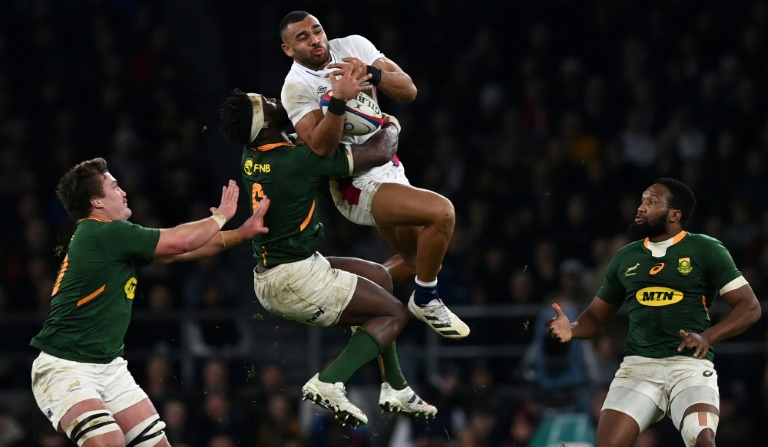
Champions South Africa begin World Cup countdown against lowly Wales

Siya Kolisi-captained South Africa begin on Saturday against Wales in Pretoria a 16-match countdown before defending the Rugby World Cup title in France next September.  

The Springboks play Wales, New Zealand, Australia and Argentina three times each and Ireland, France, Italy and England once, and there is the possibility of two warm-up matches next year. 

Tests on consecutive Saturdays against Wales in Pretoria, Bloemfontein and Cape Town get the ball rolling, to be followed in August and September by three home and three away Rugby Championship games.

A format change means the Springboks will face their greatest rivals, New Zealand, twice in South Africa, before tackling Australia twice away.  

Only the matches against Argentina follow the traditional southern hemisphere championship pattern of home and away fixtures.

In November, a daunting tour sees the world champions confronting Ireland, France and England within four weekends. A visit to Italy completes the schedule. 

The 2023 Rugby Championship will be reduced from six rounds to three because of the World Cup and there have been unconfirmed reports of South Africa playing two other Tests.

South Africa are grouped with Ireland, Scotland, Romania and an Asia/Pacific qualifier in France and the section winners and runners-up advance to the quarter-finals.

The Springboks play for the first time this year, and for the first time in front of a home crowd since 2019, after a mixed previous season in which they won eight Tests and lost five.

A series win over the British and Irish Lions in Cape Town and a last-gasp victory over New Zealand in the Australian Gold Coast were the highlights.

The low point for World Cup-winning skipper Kolisi and his green and gold teammates was suffering a 13-point drubbing by Australia in Brisbane.

– Highly competitive –

While No. 1 ranked South Africa were highly competitive in 12 of 13 Tests, Wales have plummeted to ninth place after only four victories in the last 12 matches under New Zealand-born coach Wayne Pivac.

The most humiliating defeat was at home to perennial strugglers Italy four months ago in a Six Nations Championship where Wales won just once in five outings. 

Add to that sorry tale the fact that Wales have lost all 10 Tests in South Africa, including a 96-13 thrashing in Pretoria 24 years ago, and the odds seem to be stacked against them this month.

Loftus Versfeld stadium, where the first Test takes place, has been a particularly unhappy venue for the Welsh as they conceded 186 points in three Tests there — a match average of 62.

But despite the seeming imbalance, Springboks coach Jacques Nienaber is stressing caution and Pivac is hopeful on the eve of the first international. 

“I believe it will be a tightly contested series,” said Nienaber. “Wales are in the same desperate state that we were four years ago.

“We were the laughing stock of rugby at the beginning of 2018 and less than two years later we were world champions.

“I know what it feels like to be down and Wales will want to copy us and soar. When I met Wayne (Pivac) some time ago he told me they were desperate for a series win in South Africa.”

Pivac said: “I think everybody knows what we are coming into, we know Wales have lost all 10 Tests in South Africa, but we believe we can succeed here.

“It is a massive challenge tackling the world champions in their backyard with two of the Tests at altitude. It is going to be a good test for us and will show us exactly where we stand.”

The tourists will wear black armbands in memory of legendary Wales fly-half Phil Bennett, who died last month aged 73.

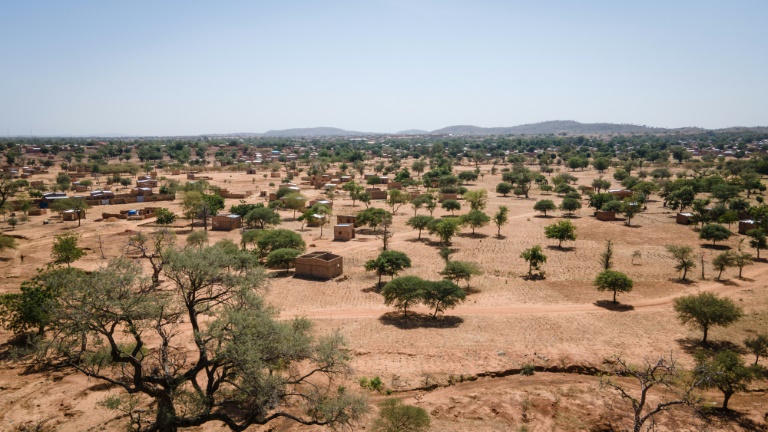
Gunmen blow up bridge on key road in Burkina Faso

Gunmen in Burkina Faso have blown up a bridge on a main road connecting the capital to the north of the country, a security source said Thursday.

The incident in the night of Wednesday to Thursday comes as Burkina Faso battles a deadly jihadist insurgency that has seen extremists block access to several thoroughfares and towns in the north and east of the country.

The blast hit a bridge on the road connecting the towns of Kaya and Dori, the security source said.

“The Nare bridge has suffered grave damage after being blown up by unidentified armed men,” the source said.

“A long line of trucks has formed since this morning on either side of the sabotaged structure,” he added.

“But everything is being done to ensure they can cross” and security forces have been deployed to the area.

A resident in Kaya, who asked to remain anonymous, said trucks that had left his town hoping to reach Dori had had to turn back.

“Travellers had to cross on foot then get into vehicles on the other side” to continue their journey onwards, he said.

Jihadists have already succeeded in preventing access to another key axis in the north of the country, running from the town of Ouahigouya eastwards to Dori. A road joining it from Kongoussi to the south is also under their control.

The town of Titao on the first road, as well as the eastern district of Madjoari are also under de-facto jihadist blockade.

Political analyst Drissa Traore said it was all part of a “skillfully orchestrated plan by the terrorist groups”.

They want “to isolate communities and scupper attempts to bring these districts supplies on the one hand, and on the other make it difficult for these areas to be evacuated to make way for any military operation” against them, he said.

One of the world’s poorest countries, Burkina Faso has been shaken by jihadist raids since 2015, with the movements linked to Al-Qaeda and the Islamic State group.

More than 2,000 people have been killed and 1.8 million displaced.

The authorities in Burkina Faso only control 60 percent of the country, West Africa’s mediator for the country said earlier this month.

Lieutenant Colonel Paul-Henri Sandaogo Damiba overthrew elected president Roch Marc Christian Kabore in January after unrest over his predecessor’s alleged inability to quell the jihadist violence.

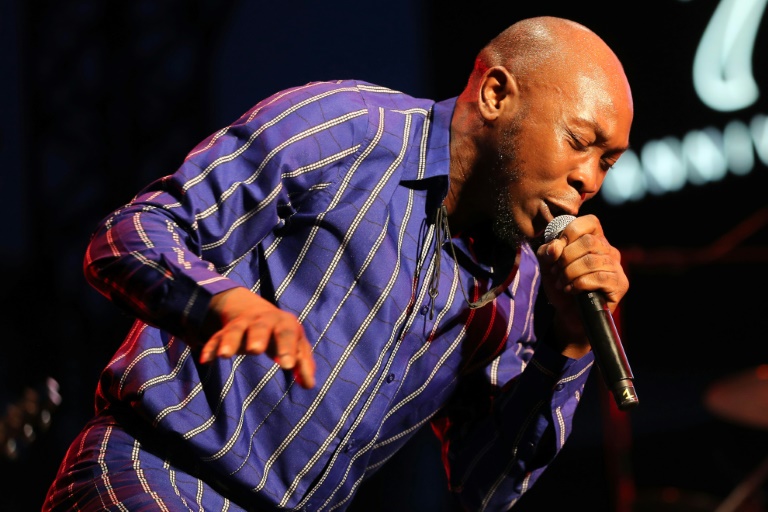
Fela Kuti's son cancels Morocco gig over migrant deaths

Seun Kuti, son of Afrobeat legend Fela Kuti, has cancelled a concert in Morocco to mourn last week’s tragedy on the border of Spain’s Melilla enclave in which at least 23 African migrants died.

Saxophonist and singer Kuti had been set to play on Saturday at the Jazzablanca festival in the Moroccan port city of Casablanca.

But in a video on Instagram, he announced “with great sadness” that he and his band would not be attending.

“It pains me to say that my spirit has been completely broken and shattered” by last Friday’s events, he said.

“It is impossible for me in good faith and in good conscience to get on stage and party and have a good time when so many Africans have lost their lives. Somebody has to mourn them.”

Friday’s incident was the deadliest in years of attempts by migrants, mostly from southern African countries, to cross the heavily fortified border, one of the EU’s only land borders with Africa.

The UN has accused both Moroccan and Spanish authorities of using “excessive force” against migrants, and demanded an investigation.

Spanish media and videos online showed footage of people on the ground, some with bloodied hands and torn clothes.

Jazzablanca confirmed to AFP that Kuti’s concert had been cancelled due to “a personal decision by the artist”.

Ethiopian jazz legend Mulatu Astatke, Brazilian singer-songwriter and politician Gilberto Gil and Israeli folk rock artist Asaf Avidan are still on the programme.

Six anti-coup protesters killed in Sudan mass rallies

At least six Sudanese demonstrators were killed Thursday as security forces sought to quash mass rallies of protesters demanding an end to military rule, pro-democracy medics said.

In one of the most violent days this year in an ongoing crackdown on the anti-coup movement, AFP correspondents reported security forces firing tear gas and stun grenades to disperse tens of thousands of protesters.

“Even if we die, the military will not rule us,” protesters chanted, urging the reversal of an October military coup by army chief Abdel Fattah al-Burhan that prompted foreign governments to slash aid, deepening a chronic economic crisis.

At least four of the six killed were shot, two in the chest, another in the head, and one in the back, the medics said, raising the overall death toll to 109 from protest-related violence since October.

“Down with Burhan’s rule,” crowds chanted, with protests and violence flaring in both the capital Khartoum and its suburbs, including the twin city of Omdurman.

Medics also reported “several attempts to storm hospitals in Khartoum,” with security forces firing tear gas into one hospital, where some of those injured during the protests had been taken.

An AFP correspondent said internet and phone lines had been disrupted since the early hours of Thursday, a measure the Sudanese authorities often impose to prevent mass gatherings.

Security was tight in Khartoum despite the recent lifting of a state of emergency imposed after the coup.

Troops and police blocked roads leading to both army headquarters and the presidential palace, witnesses said. Shops around the capital were largely shuttered.

Activists have been calling for “million-strong” rallies.

– ‘Violence needs to end’ –

UN special representative Volker Perthes said Thursday that “violence needs to end”, while the US embassy in Khartoum urged restraint and “the protection of civilians so that no more lives are lost”.

Sudan’s foreign ministry has repeatedly criticised the UN envoy’s comments, saying they were built on “assumptions” and “contradict his role as facilitator” in troubled talks on ending Sudan’s political crisis.

The latest protests come on the anniversary of a previous coup in 1989, that toppled the country’s last elected civilian government and ushered in three decades of iron-fisted rule by Islamist-backed General Omar al-Bashir.

They also come on the anniversary of 2019 protests demanding that the generals, who had ousted Bashir in a palace coup earlier that year, cede power to civilians.

Those protests led to the formation of the mixed civilian-military transitional government which was toppled in last year’s coup.

Sudan has been roiled by near-weekly protests as the country’s economic woes have deepened since Burhan seized power last year.

“June 30 is our way to bring down the coup and block the path of any fake alternatives,” said the Forces for Freedom and Change, an alliance of civilian groups whose leaders were ousted in the coup.

Alongside the African Union and east African bloc IGAD, the United Nations has been attempting to broker talks between the generals and civilians, but they have been boycotted by all the main civilian factions.

The UN has warned that the deepening economic and political crisis has pushed one third of the country’s population of more than 40 million towards life-threatening food shortages.

Post-coup Mali sets timetable for vote ahead of key summit

Mali’s government has adopted a timetable for staging elections, in a move just days ahead of a regional summit to mull the future of sanctions against the junta-dominated country.

Official documents seen by AFP Thursday said presidential elections would be held in February 2024, preceded by a referendum on a revised constitution in March 2023.

Local elections will be held in June 2023 followed by a legislative ballot between October and November the same year, the documents said.

The decision was made at a government meeting on Wednesday night after the draft was given to political parties and civil society groups.

“Our authorities are setting down further signals for a return to constitutional order,” government spokesman Colonel Abdoulaye Maiga, who is also minister of territorial administration, said on state TV.

“The government believes that this timetable is realistic.”

The timetable is a key issue in the confrontation between Mali and the Economic Community of West African States (ECOWAS).

Colonels disgruntled at the government’s failure to roll back a bloody jihadist uprising ousted Mali’s elected president, Ibrahim Boubacar Keita, in August 2020.

Mali’s neighbours in West Africa, a region deeply prone to coups, have clamoured for an early restoration of civilian rule.

On January 9, ECOWAS imposed tough trade and financial sanctions for perceived foot-dragging on meeting this demand. 

Its leaders will meet Sunday in Ghana’s capital Accra to decide on the future of these measures.

In early June, the junta issued a decree saying that it would rule until March 2024.

The move was announced unilaterally, even as negotiations with the 15-nation bloc were continuing.

An ECOWAS mediator, former Nigerian president Goodluck Jonathan, has made a string of trips to Bamako to try to secure a compromise. 

His last stay was on June 23 and June 24.

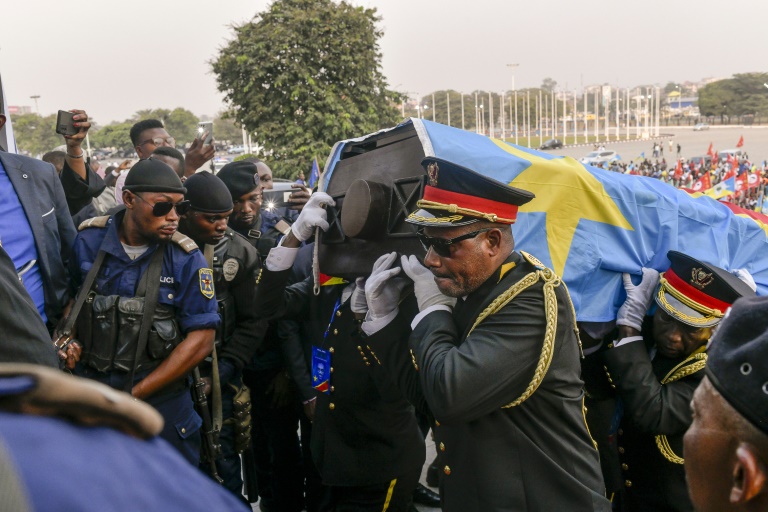
DR Congo inters Lumumba remains after nationwide pilgrimage

The scant remains of DR Congo’s fiery independence hero Patrice Lumumba were interred on Thursday after a nine-day homage that stirred traumatic memories and national pride.

“Sleep in peace now,” President Felix Tshisekedi said.

Hailing Lumumba as “our national hero,” Tshisekedi declared: “May the land of our ancestors be sweet and mild to you.”

A single gold-crowned tooth, returned by Belgium, is all that remains of the young nationalist.

He was murdered in January 1961 at the age of 35, just months after becoming Congo’s first post-colonial prime minister.

In a solemn ceremony coinciding with the country’s 62nd anniversary, the remains were interred in a mausoleum beneath a statue of Lumumba on an avenue in the capital Kinshasa that also bears his name.

Didier Shonda, 24, told AFP that he had come from Lumumba’s home region of Sankuru for the ceremony.

With the return of the remains “his spirit will no longer wander,” said Shonda.

“We now know where to come to replenish our resources to totally free our country and the youth of Africa.”

– Radical –

Lumumba was among the vanguard of pan-African leaders who led the charge to end colonialism in the late 1950s.

He rose to prominence in 1958 when he launched a political party, the Congolese National Movement (MNC), which called for independence and a secular Congolese state.

He stunned Belgium with a speech on independence day on June 30, 1960 that was attended by the country’s monarch, King Baudouin.

In it, he accused the exiting colonial masters of racism and “humiliating slavery.”

“We experienced the slurs, the insults, the beatings that we had to undergo morning, noon and evening, because we were negroes,” he declared.

Just 75 days later, Lumumba was forced out by a coup fomented with the help of Belgium and the CIA, which also opposed the support he had requested from the Soviet Union.

In January 1961, Lumumba was handed over to the authorities in mineral-rich southeast Katanga province, which had seceded from the fledgling nation months earlier with Belgium’s support.

He was shot dead and his body was dissolved in acid, but a Belgian police officer involved in the killing kept one of his teeth as a trophy.

In 2016, the Belgian authorities seized the relic from his daughter.

After a long campaign by Lumumba’s family, Belgium returned the tooth on June 20, a move that followed a visit of reconciliation by Baudouin’s nephew and successor, King Philippe.

– Pilgrimage –

The remains were taken to Lumumba’s home area of Sankuru in the centre of the country, to his political stronghold of Kisangani in the northeast and finally to the place where he was murdered before being flown to Kinshasa.

Five former prime ministers joined a funeral vigil on Thursday alongside current government chief Jean-Michel Sama Lukonde.

“The figure of Patrice Lumumba is a prime symbol of national unity, transcending political differences,” said Evariste Mabi, a premier in the 1980s under Lumumba’s nemesis, dictator Mobutu Sese Seko.

“(He) embodies the people’s successful struggle for freedom.”

Belgium’s rule over what is now the Democratic Republic of Congo was one of the harshest imposed by the European powers that ruled most of Africa in the late 19th and 20th centuries.

King Leopold II governed the vast country — a swathe of central Africa the size of continental western Europe — as his personal property between 1885 and 1908, before it became a Belgian colony. 

Historians say millions were killed, mutilated or died of disease as they were forced to collect rubber under his rule. The land was also pillaged for its mineral wealth, timber and ivory. 

Tshisekedi thanked Lumumba’s family for their campaign but also singled out “the Belgian people and authorities” for praise.

“They have helped the restoration of truth… after years of denial,” he said. 

“It’s only after telling the truth, after establishing responsibilities, that we, Congolese and Belgians, can jointly enter the phase of forgiveness, justice and genuine and final reconciliation.”

Five Sudan protesters killed in mass rallies against army rule

At least five Sudanese demonstrators were killed Thursday as security forces sought to quash mass rallies of protesters demanding an end to military rule, pro-democracy medics reported.

In one of the most violent days this year amid an ongoing crackdown on the anti-coup movement, AFP correspondents reported security forces firing tear gas and stun grenades to disperse tens of thousands of protesters.

“Even if we die, the military will not rule us,” protesters chanted, urging the reversal of an October military coup by army chief Abdel Fattah al-Burhan, that prompted foreign governments to slash aid, deepening a chronic economic crisis.

Two of the four were shot dead by “bullets to the chest”, and another by “a bullet to the head”, the medics said, reporting the deaths on Thursday took the toll to 108 from months of protest-related violence.

“Down with Burhan’s rule,” crowds chanted, with protests and violence flaring in both the capital Khartoum and its suburbs, including the twin city of Omdurman.

Medics also reported “several attempts to storm hospitals in Khartoum,” with security forces firing tear gas into one hospital, where some of those injured during the protests had been taken.

An AFP correspondent said internet and phone lines had been disrupted since the early hours of Thursday, a measure the Sudanese authorities often impose to prevent mass gatherings.

Security was tight in Khartoum despite the recent lifting of a state of emergency imposed after the coup.

Troops and police blocked roads leading to both army headquarters and the presidential palace, witnesses said. Shops around the capital were largely shuttered.

Activists have been calling for “million-strong” rallies.

– ‘Violence needs to end’ –

UN special representative Volker Perthes said Thursday that “violence needs to end”, while the US embassy in Khartoum urged restraint and “the protection of civilians so that no more lives are lost”.

Sudan’s foreign ministry has repeatedly criticised the UN envoy’s comments, saying they were built on “assumptions” and “contradict his role as facilitator” in troubled talks on ending Sudan’s political crisis.

The latest protests come on the anniversary of a previous coup in 1989, that toppled the country’s last elected civilian government and ushered in three decades of iron-fisted rule by Islamist-backed general Omar al-Bashir.

They also come on the anniversary of 2019 protests demanding that the generals, who had ousted Bashir in a palace coup earlier that year, cede power to civilians.

Those protests led to the formation of the mixed civilian-military transitional government which was toppled in last year’s coup.

Sudan has been roiled by near-weekly protests as the country’s economic woes have deepened since Burhan seized power last year.

“June 30 is our way to bring down the coup and block the path of any fake alternatives,” said the Forces for Freedom and Change, an alliance of civilian groups whose leaders were ousted in the coup.

Alongside the African Union and east African bloc IGAD, the United Nations has been attempting to broker talks between the generals and civilians, but they have been boycotted by all the main civilian factions.

The UN has warned that the deepening economic and political crisis has pushed one third of the country’s population of more than 40 million towards life-threatening food shortages.

Close Bitnami banner
Bitnami