Africa Business

Civilian casualties escalate in war on Sahel jihadists

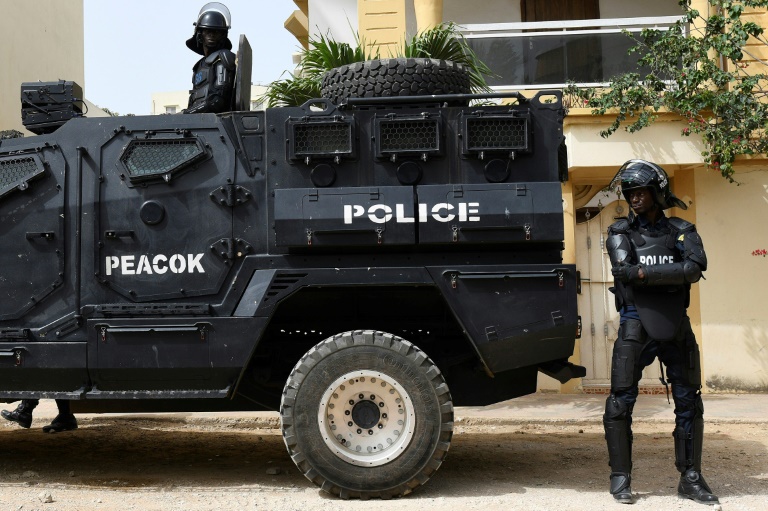
Conflicts involving jihadists in the Sahel are causing more and more deaths each year, a huge number of them civilian casualties, statistics show.

Since the beginning of 2022, 2,057 civilians have been killed in Mali as well as neighbouring Niger and Burkina Faso, according to figures compiled by the Armed Conflict Location and Event Data Project (ACLED), a non-governmental organisation.

That is already more than the 2,021 civilians killed in the three countries in the whole of last year.

“Our families are dying by the hundreds, and it feels like no one is interested,” a Malian from the northeastern Menaka region, a scene of recent bloodshed, told AFP in the capital.

“When it happens in the north of Mali in the desert, there often isn’t a press release from the state,” he said, requesting to remain anonymous for his safety. “So we bury them and move on.”

Each month brings its share of attacks.

Of those documented, this month, 132 people were killed at Diallassagou in central Mali and 86 villagers perished in Seytenga in Burkina Faso.

In May, about 50 people lost their lives in Madjoari, in eastern Burkina Faso, according to the authorities.

In March, the army massacred about 300 people by summary execution in Moura in central Mali, according to rights group Human Rights Watch. The government soldiers were accompanied by foreigners identified by several sources as Russians.

The defence ministry in Bamako announced on April 1 that 203 “armed terrorists” were killed in Moura and 51 others arrested, with many weapons seized.

– ‘Indifference’ –

ACLED has registered 11,276 civilian deaths overall in the three countries since jihadist violence began in 2012.

Between 2012 and 2017, civilian deaths in the Sahel were reported in the hundreds. The toll suddenly accelerated, it says, to exceed 1,000 deaths in 2018 and 2,000 in 2019.

Mahamadou Abdourahamani, the coordinator in Niger of the African Security Sector Network (ASSN), says an increase in massacres has “doubled the number of victims in the last two years” in the Sahel.

“Civilians are dying amid general indifference — even though there are more and more of them,” said a Malian human rights activist who asked not to be named.

The geographic scope of the violence too is expanding.

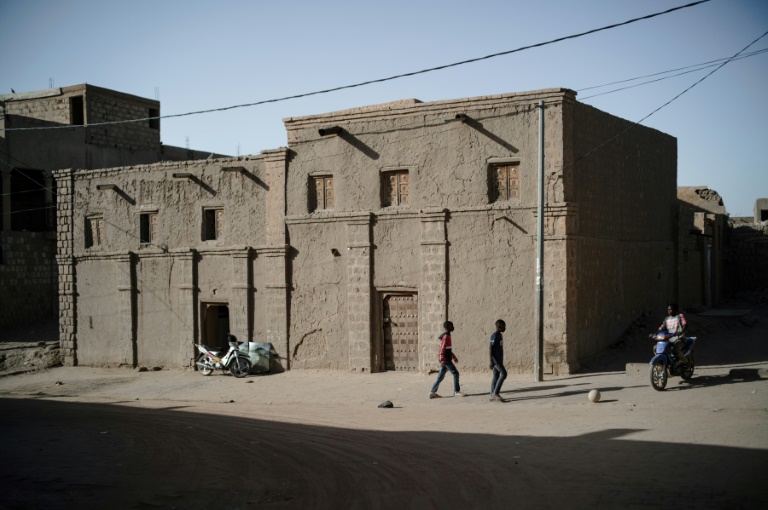
Attacks were confined to northern Mali at the start of the conflict, but then reached the centre and crossed over into Burkina Faso and Niger.

Today, they are spreading to southern Mali, noted Bokar Sangare, editor of Malian news site Benbere.

Coastal nations of the Gulf of Guinea are also at risk. Early in May, authorities in Togo acknowledged a first “official” jihadist attack that killed eight soldiers in the north, near the Burkinabe border.

Observers consider the main players across the Sahel to be national armies, foreign troops and their foes in the nebula of Al-Qaeda associates and the so-called Islamic State in the Greater Sahara.

The ISGS operates mainly in the border regions of Mali, Niger and Burkina Faso and “has always held a strategy of violence against the population to establish its domination”, Sangare said.

Many observers attribute the recent Seytenga massacre in Burkina Faso to the jihadist group, although responsibility was still unclaimed as of Monday.

They barged into homes to “execute people”, survivors told AFP a few days later. “They shot those who tried to flee.”

– ‘All-military strategy’ –

But killings attributed to the armed forces “started up again dramatically from the start of 2022”, the Citizens’ Coalition for the Sahel, a body of west African NGOs allied with mostly European partners, noted recently.

Despite years of military intervention, participants including individual states, foreign armies and the United Nations have been unable to stop violence against civilians.

Observers cite several reasons for concern, including an “all-military strategy” in response to jihadist expansion, and states finding it difficult to control vast rural areas where jihadists proliferate.

Paris has meanwhile begun the withdrawal from Mali of Operation Barkhane, a French-led counterterrorism intervention launched in 2014. Relations between France and Mali soured fast after a military coup in Bamako in May 2021.

UN Secretary General Antonio Guterres in early June warned that the departure of French forces would “probably create a vacuum in certain regions, which risks being exploited by armed terrorist groups” with “consequences on the protection of civilians”.

But the Centre for Strategic and International Studies has said it thinks it is “unlikely that France, or other key Western partners, will end their military presence or counterterrorism efforts in the Sahel and across West Africa.”
UN Ethiopia investigators seek unhindered access

UN investigators probing alleged rights violations in Ethiopia on Thursday said they wanted a planned visit to Addis Ababa to pave the way to wider access as they voiced alarm over “ongoing atrocities”.

The United Nations set up a three-member panel of rights experts in December with a renewable one-year mandate to investigate abuses since the conflict broke out in November 2020.

The authorities have accepted a visit to Addis Ababa, and commission member Steven Ratner told AFP he hoped this would take place in the second half of July.

But he said the goal was to get “unhindered access” to other regions.

Panel chair Kaari Betty Murungi said members were “alarmed that violations and abuses… appear to be perpetrated with impunity even now by various parties to the conflict.”

“The commission emphasises the responsibility of the government of Ethiopia to bring to an end such violations on its territory and bring those responsible to justice,” she said.

Fighting erupted in the northern region of Tigray when Ethiopian Prime Minister Abiy Ahmed sent in troops to topple the Tigray People’s Liberation Front (TPLF).

He said he acted in response to rebel attacks on army camps. 

Untold numbers of people have died in the region, as well as the neighbouring regions of Afar and Amhara.

Millions are also in the grip of a humanitarian crisis, with many in Tigray on the brink of famine and the region without basic services such as electricity and communications.

– ‘Atrocities’ –

“We are extremely alarmed by ongoing atrocities against civilians, including events reported in the Oromia region,” Murungi said.

The commission is probing alleged violations by all parties to the conflict.

An earlier joint investigation by the UN rights office and Ethiopia’s Human Rights Commission determined that possible war crimes and crimes against humanity had been committed by all sides.

Murungi, a Kenyan High Court lawyer, is joined on the panel by US law professor Ratner and Radhika Coomaraswamy, the former chair of the Sri Lanka Human Rights Commission.

The investigators met with Ethiopia’s justice minister in May and requested access to the country.

“The Ethiopian government has responded to our request to visit Addis Ababa positively,” Murungi said.

“We are hopeful that the consultations in Addis Ababa will result in access for our investigators to sites of violations to be identified, and to survivors, victims and witnesses.” 

Although Ethiopia rejected the commission’s creation, it says it has since started talks with the experts.

Its representative in Geneva, Zenebe Kebede Korcho, said if Ethiopia’s serious reservations were taken into account, there could be “practical ways of reaching a common understanding”.

He said the country was “turning a page” and the government was seeking a “peaceful end to the conflict”.

Thousands in Khartoum rally against military rule, authorities fire teargas

Security forces fired tear gas and stun grenades as thousands of anti-coup protesters took to the streets of the Sudanese capital Khartoum and its suburbs Thursday demanding an end to military rule, AFP correspondents said.

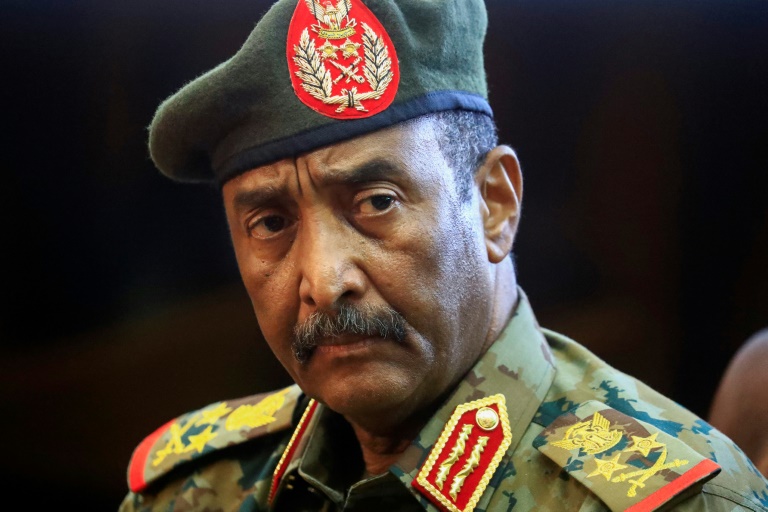
“Down with Burhan’s rule,” protesters chanted in north Khartoum, urging the reversal of an October military coup by army chief Abdel Fattah al-Burhan that prompted foreign governments to slash aid, deepening a chronic economic crisis.

“Even if we die, the military will not rule us,” they cried.

Pro-democracy medics said one demonstrator was shot dead “by a bullet in the chest” Wednesday night, in small-scale protests in the run-up to the main rallies.

More than 100 people have been killed in protest-related violence, according to UN figures, as the military has cracked down on the anti-coup movement over the past eight months.

An AFP correspondent said internet and phone lines had been disrupted since the early hours of Thursday, a measure the Sudanese authorities often impose to prevent mass gatherings.

Security was tight in Khartoum despite the recent lifting of a state of emergency imposed after the coup.

Troops and police blocked off roads leading to both army headquarters and the presidential palace, witnesses said. 

Shops around the capital were largely shuttered. 

Activists have been calling for “million-strong” rallies.

UN special representative Volker Perthes said Thursday that “violence needs to end”, while the US embassy in Khartoum urged restraint and “the protection of civilians so that no more lives are lost”.

– Multiple anniversaries –

Sudan’s foreign ministry has repeatedly criticised the UN envoy’s comments, saying they were built on “assumptions” and “contradict his role as facilitator” in troubled talks on ending Sudan’s political crisis.

The latest protests come on the anniversary of a previous coup in 1989 that toppled the country’s last elected civilian government and ushered in three decades of iron-fisted rule by Islamist-backed general Omar al-Bashir.

They also come on the anniversary of 2019 protests demanding that the generals, who had ousted Bashir in a palace coup earlier that year, cede power to civilians.

Those protests led to the formation of the mixed civilian-military transitional government which was toppled in last year’s coup.

Sudan has been roiled by near-weekly protests as the country’s economic woes have deepened since Burhan seized power last year.

“June 30 is our way to bring down the coup and block the path of any fake alternatives,” said the Forces for Freedom and Change, an alliance of civilian groups whose leaders were ousted in the coup.

Alongside the African Union and east African bloc IGAD, the United Nations has been attempting to broker talks between the generals and civilians, but they have been boycotted by all the main civilian factions.

The UN has warned that the deepening economic and political crisis has pushed one third of the country’s population of more than 40 million towards life-threatening food shortages.

UN Ethiopia investigators get green light to visit capital

UN investigators probing alleged human rights violations by Ethiopia in its northern conflict said Thursday they had been given the green light to visit the capital Addis Ababa but called for wider access.

The UN in December set up a three-member panel of rights experts with a renewable one-year mandate to investigate abuses committed since the conflict broke out in November 2020.

“The commission is alarmed that violations and abuses of international human rights (and) humanitarian and refugee law — the subject matter of our inquiry — appear to be perpetrated with impunity even now by various parties to the conflict,” the commission’s chair, Kaari Betty Murungi, told the council.

“The commission emphasises the responsibility of the government of Ethiopia to bring to an end such violations on its territory and bring those responsible to justice.”

Fighting erupted in the Tigray region when Ethiopian Prime Minister Abiy Ahmed sent in troops to topple the Tigray People’s Liberation Front (TPLF).

He said he acted in response to rebel attacks on army camps. 

Untold numbers of people have since been killed in the region, as well as the neighbouring regions of Afar and Amhara.

Millions are also in the grip of a humanitarian crisis, with many in Tigray on the brink of famine and the region still without basic services such as electricity and communications.

After the government announced a “humanitarian truce” in March, aid convoys have slowly made their way to Tigray for the first time since mid-December.

“We are extremely alarmed by ongoing atrocities against civilians, including events reported in the Oromia region,” Murungi said.

“Any spread of violence against civilians, fuelled by hate speech and incitement to ethnic-based and gender-based violence, are early warning indicators and a precursor for further atrocity crimes.”

The commission, established by the UN Human Rights Council, probes alleged violations by all parties to the conflict. It is also working on guidance on transitional justice and national reconciliation.

The investigators met with Ethiopia’s justice minister in May and requested access to Ethiopia to meet alleged victims in conflict-affected areas.

“The Ethiopian government has responded to our request to visit Addis Ababa positively,” Murungi said.

“We are hopeful that the consultations in Addis Ababa will result in access for our investigators to sites of violations to be identified, and to survivors, victims and witnesses.” 

DR Congo set for final ceremony for Lumumba remains

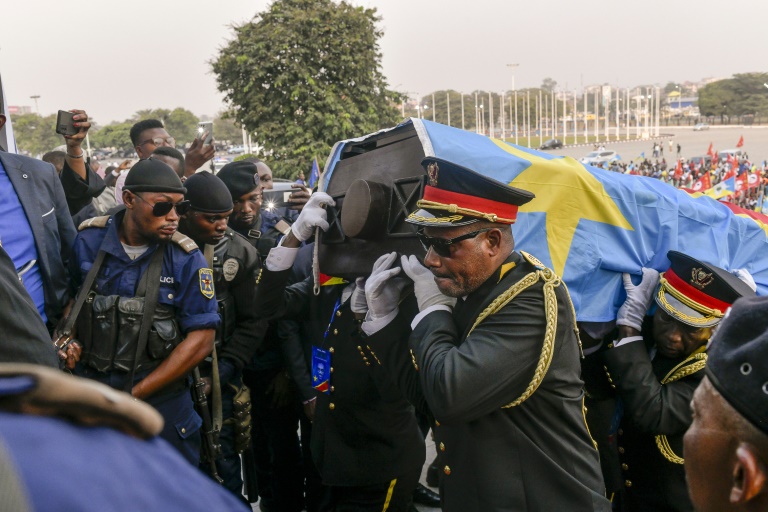
The scant remains of DR Congo’s fiery independence hero Patrice Lumumba were to be interred on Thursday after a pilgrimage that revived traumatic memories but also stirred national unity.

A single tooth is all that remains of the young nationalist who was murdered in January 1961 at the age of 35, just months after becoming Congo’s first post-colonial prime minister.

A coffin containing the remains was to be enshrined in a mausoleum in Kinshasa, in a ceremony hosted by President Felix Tshisekedi coinciding with the country’s 62nd anniversary.

Topped by a large statue of Lumumba, the mausoleum is located on a main avenue of the capital which also bears his name.

Lumumba was among the vanguard of pan-African leaders who led the charge to end colonialism in the late 1950s.

He rose to prominence in 1958 when he launched a political party, the Congolese National Movement (MNC), which called for independence and a secular Congolese state.

His party won national elections in May 1960, a month before independence from Belgium, leading him to be named first prime minister of the country when it became independent.

He stunned Belgium with a speech on independence day — attended by King Baudouin — that accused the exiting colonial masters of racism and “humiliating slavery” of the Congolese people.

Within three months, Lumumba was forced out by a coup fomented with the help of Belgium and the CIA, which also opposed the support he had requested from the Soviet Union.

In January 1961, Lumumba was handed over to the authorities in mineral-rich southeast Katanga province, which had seceded from the fledgling nation months earlier with Belgium’s support.

He was shot dead and his body was dissolved in acid, but a Belgian police officer involved in the killing kept one of his teeth as a trophy.

After years of campaigning by his family, Belgium returned the tooth on June 20, a move that followed a visit of reconciliation by Baudouin’s nephew and successor, King Philippe.

The remains were taken to Lumumba’s home area of Sankuru in the centre of the country, to his political stronghold of Kisangani in the northeast and finally to the place where he was murdered before being flown to Kinshasa.

Five former prime ministers joined a funeral vigil on Thursday alongside current government chief Jean-Michel Sama Lukonde.

“The figure of Patrice Lumumba is a prime symbol of national unity, transcending political differences,” said Evariste Mabi, a premier in the 1980s under Lumumba’s nemesis, dictator Mobutu Sese Seko.

“(He) embodies the people’s successful struggle for freedom.”

Sudan gears up for mass protest against generals

Activists in Sudan have called for mass rallies Thursday to demand the reversal of an October military coup that prompted foreign governments to slash aid, deepening a chronic economic crisis.

The protests come on the anniversary of a previous coup in 1989, which toppled the country’s last elected civilian government and ushered in three decades of iron-fisted rule by Islamist-backed general Omar al-Bashir.

They also come on the anniversary of 2019 protests demanding that the generals, who had ousted Bashir in a palace coup earlier that year, cede power to civilians.

Those protests led to the formation of the mixed civilian-military transitional government which was toppled in last year’s coup.

Security was tight in the capital Khartoum on Thursday despite the recent lifting of a state of emergency imposed after the coup.

Troops and police blocked off roads leading to both army headquarters, the site of anti-Bashir protests in 2019, and the presidential palace, witnesses said. 

Shops around the capital were largely shuttered. 

An AFP correspondent said internet and phone lines had been disrupted since the early hours, a measure the Sudanese authorities often impose to prevent mass gatherings.

Sudan has been roiled by near-weekly protests as the country’s economic woes have deepened since army chief Abdel Fattah al-Burhan seized power last year.

More than 100 people have been killed in protest-related violence, according to UN figures, as the military has cracked down on the anti-coup movement.

“June 30 is our way to bring down the coup and block the path of any fake alternatives,” said the Forces for Freedom and Change, an alliance of civilian groups whose leaders were ousted in the coup.

Activists have called for “million-strong” rallies to mark the “earthquake of June 30”.

Small-scale demonstrations took place in the run-up to call for a huge turnout on Thursday.

UN special representative Volker Perthes called on the security forces to exercise restraint.

“Violence against protesters will not tolerated,” he said in a statement, adding that nobody should “give any opportunity to spoilers who want to escalate tensions in Sudan”.

The foreign ministry criticised the UN envoy’s comments, saying they were built on “assumptions” and “contradict his role as facilitator” in troubled talks on ending the political crisis.

Alongside the African Union and east African bloc IGAD, the United Nations has been attempting to broker talks between the generals and civilians, but they have been boycotted by all the main civilian factions.

The UN has warned that the deepening economic and political crisis pushed one third of the country’s population of more than 40 million towards life-threatening food shortages.

Cairo's floating heritage risks being towed away by grand projects

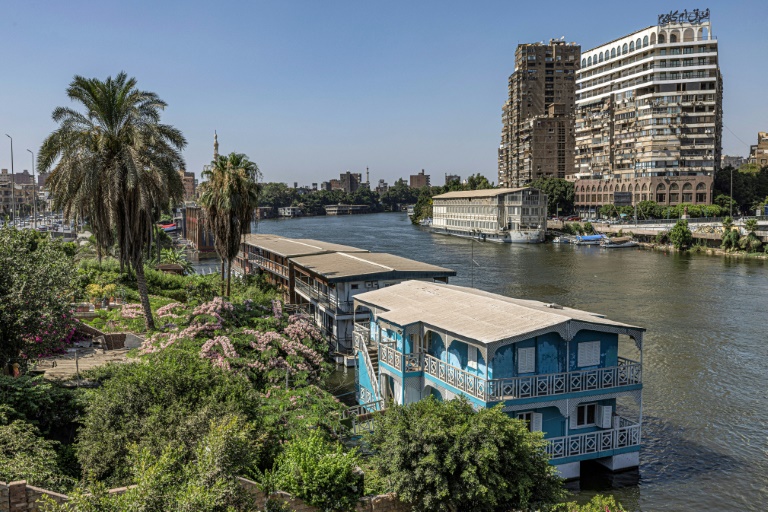
Dozens of vibrantly coloured floating homes have for decades dotted the banks of the River Nile, rare havens of leafy seclusion in the Egyptian capital’s hustle and bustle — but maybe not for much longer.

Residents of the 30 or so houseboats  that remain moored on the banks of the Nile last week received eviction orders, giving them less than two weeks before their homes are taken away to be demolished.

“Buying this houseboat was my dream,” celebrated British-Egyptian novelist Ahdaf Soueif told AFP. “I furnished it to accommodate my grandchildren and spend my last days here.”

The boats have long occupied a special place in the Egyptian collective consciousness, having been the centrepiece of conversations in Nobel Prize laureate Naguib Mahfouz’s “Chitchat on the Nile”, as well as various classics from the golden age of Egyptian cinema.

But while many have campaigned to protect the houseboats for their historic value, the authorities have argued they are an eyesore standing in the way of the state’s grand development plans.

Residents have been offered no alternative accommodation or compensation, unlike others who previously faced evictions, and many have nowhere else to go.

For Manar, a 35-year-old engineer who poured everything into buying her houseboat four years ago, it’s a devastating blow.

“I sold my apartment, my father sold his car, and we used my two retired parents’ severance pay,” said Manar, who did not wish to give her full name.

“People from the slums have been rehoused, the state even moved graves when it built a road through a cemetery, but for us, nothing.”

– ‘Uncivilised sight’ –

Barely a week after the eviction order, some boats have already been towed off and impounded in a state marina, despite petitions and campaigning, even by pro-government television pundits.

Soon, the sight of these houses, perched on metal caissons along the banks of the working-class neighbourhood of Imbaba opposite the upscale island of Zamalek, will only remain a memory.

The first warning came in 2020, when the governor of Cairo “suspended new houseboat parking authorisations”.

Residents had since received no news, until the eviction order came on June 20, leaving them “with no time to file an appeal”, according to one resident.

Adding to the pressures, authorities have been demanding parking and registration fees amounting to between 400,000 and one million pounds per residence ($21,000 to $53,000) — about 20 times more than previous annual fees.

Ayman Anwar, head of the state-affiliated Central Administration for the Protection of the Nile River in Cairo, said residents were given ample warning.

“In 2020, the state banned the use of barges as dwellings, because they are an uncivilised sight and pollute the Nile,” he said on a talk show this week.

The process echoes previous forced evictions and demolitions in Cairo’s central neighbourhoods, such as Bulaq and Maspero.

But while it may have started in poor informal settlements, the steamroller of development has now made its way into more affluent neighbourhoods and homes.

The only alternative appears to be to transform every houseboat into a commercial enterprise.

“At my age, to become a cafe manager?” exclaimed Soueif, who is in her 70s. “It’s forced eviction, no matter what you call it.”

– ‘A lost cause’ –

The banks of the Nile were once among the few public spaces where residents of Cairo –- a sprawling megalopolis of more than 20 million people –- could escape the din.

Dotted with cafes, visitors from across social strata would sip tea and juice by the water, for a modest price.

On the opposite bank of the Nile, the development Mamsha Ahl Masr (“the Egyptian people’s promenade” in Arabic) has drawn a lukewarm response.

The promenade is heralded by the state as one of many “megaprojects” launched by President Abdel Fattah al-Sisi and executed by the army, the crowning jewel of which is a sparkling new capital, rising out of the sands 50 kilometres (30 miles) east of Cairo.

“It’s a disaster,” Soueif said. “Every square inch must be profitable. There is no more public space, people can no longer be outside without paying.”

But the promenade, with its restaurants, a planned marina and open-air theatre, will “guarantee public access to the Nile”, the government insists.

Awad, who has lived with his family on their houseboat for 25 years, says “a square metre of commercial space is worth 1,000 pounds, so of course they’d rather rent the space out to cafes than keep us”.

“It’s tragic,” said Awad, who also did not wish to give his last name.

Now in his sixties, he laments the loss of “pieces of Cairo’s heritage” dating back to the times of the late King Farouk as well as Umm Kalthoum and Mounira al-Mahdiyya, iconic divas of the 20th century.

“It’s a lost cause. We can’t do anything, we are told that it’s a decision from above,” he said, cigarette in hand, gesturing towards the sky.

Young Arab artists dream of freedom in unique talent show

Young musicians, dancers, actors and comedians from across the Arab world took to the stage in Tunisia to express their visions of freedom, more than a decade after the Arab Spring uprisings.

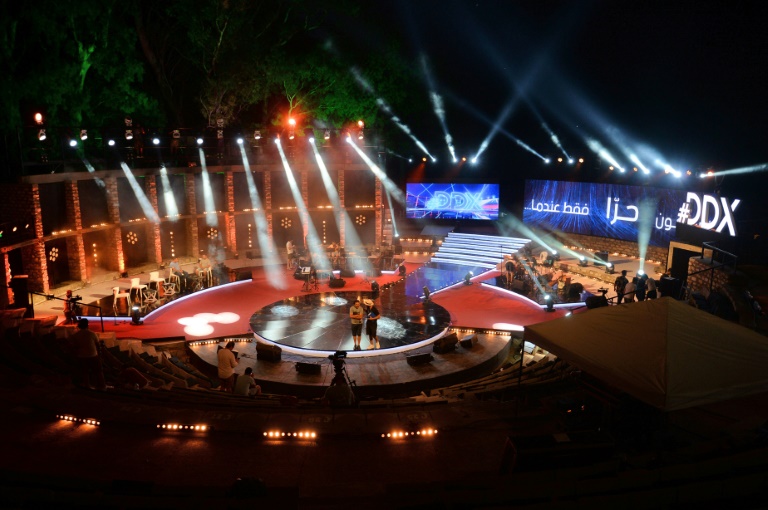
The show, performed under the stars at a seaside theatre in the resort of Hammamet and broadcast across the region, featured winners of an online video competition to complete the phrase: “I will only be free when…”

It was the latest in a string of talent and debate programmes organised by media action group Munathara (“debate”), which aims “to spark much-needed conversations about rights, freedoms and social change in the Arab world”, according to founder Belabbas Benkredda.

“Public debates even about fundamental rights can be very polarising, especially on social media,” the 43-year-old Algerian-German said.

Munathara was born in 2012, the year after the Arab Spring revolts, kicked off by the ouster of Tunisian dictator Zine El Abidine Ben Ali, which had sparked high hopes for democracy in a region with an overwhelmingly young population.

But ironically, as Munathara marked its 10th anniversary with the show in Hammamet on Saturday, it was overshadowed by President Kais Saied consolidating a power-grab that has sparked fears for Tunisia’s democratic gains.

Other countries in the region have seen the rise of even more repressive systems than before, while others have witnessed devastating civil wars.

– ‘Freedoms under attack’ –

Munathara was founded at “a time of great hope and aspiration — but the optimism has given way to cynicism, including among youth”, Benkredda said.

“The Arab world’s Gen Z came of age politically amid increasing despair and social division.”

Syrian refugee and stand-up comedian Mohamed al-Kurdi, one of the performers in Saturday’s show, said that today, “young people’s freedom is restricted, and not just in the Arab world”.

“All over the world freedoms are under attack,” the 23-year-old added, sitting at the edge of a stage bathed in spotlights during a break from rehearsals.

Kurdi, whose TikTok account “MidoKrdi” has over 2.3 million followers, said that rather than dealing with politics, he wanted to discuss “the limits we impose on ourselves: fear of failure, fear of success. These things rein in our freedom.”

For Saturday’s event, he teamed up with fellow comedian and actress Dana Ali Makki, 22, in a comedy act about an overbearing husband and his wife.

Makki, from the southern Lebanese region of Nabatiyeh, said she believed young Arabs had slightly more freedom than a few years ago.

“People can be a bit different from their parents and from the society and culture they grew up in,” she said. 

“There’s more subversion against customs, traditions, religion and society.”

Asked how she defined her own freedom, she said: “I’m free when I’m able to say whatever I want, loudly, without being afraid of anyone. Free of all the restrictions society imposes, especially on women.”

– ‘Learn to resist!’ –

The show, the fourth of its kind, also served as a showcase for up-and-coming talent, such as Ahmed al-Qrinawi from Gaza, a Palestinian enclave under Israeli blockade for the past 15 years.

He was a twice-published poet when he started teaching himself the oud — a kind of lute widely played in the Middle East — at the age of 22.

He would sit under a shelter he built on the family’s roof in Gaza City, to avoid the disapproving ears of his conservative family. 

To learn music theory, he used copies of music books borrowed from friends at a music school he couldn’t afford to attend.

Last weekend, three years later, he appeared on stage playing an unusual seven-stringed oud, home-made with the help of a carpenter friend.

He said he had only heard about the competition shortly after the deadline, and composed, recorded and submitted his song in just an hour.

Fortunately, judges accepted the entry, and he went on to become one of the winners and perform with a professional band.

“I will only be free when I have a normal country, where death doesn’t keep an eye on me,” runs the first line of his song.

“In Gaza there’s no freedom,” Qrinawi said. 

“Freedom’s not just about food and drink. You can get a bird and put it in a cage and bring it food, but it’s still in captivity.”

For Lebanese actress and comedian Makki, who has a tattoo on her forearm reading “resist”, the show was a chance to deliver another message.

“You can’t stay in your house with your hands tied or stay silent,” she said. 

“Learn to say no to oppression and repression.”

Alarm mounts over escalating Ethiopia-Sudan border tensions

Regional leaders voiced alarm Wednesday over escalating tensions between Ethiopia and Sudan in a disputed border area and appealed for dialogue to stem the crisis.

The calls by the African Union and another regional grouping followed claims by Khartoum that the Ethiopian army had executed seven Sudanese soldiers and a civilian during a clash in the volatile Al-Fashaqa area last week – allegations denied by Addis Ababa.

Sudan announced Monday it would recall its ambassador to Addis Ababa over the incident in Al-Fashaqa, a fertile strip of land that has long been a source of friction between the two states.

AU Commission chief Moussa Faki Mahamat “is following with deep concern the escalating military tension between the Federal Democratic Republic of Ethiopia and the Republic of Sudan and deeply regrets the loss of life at their common border,” the pan-African body said in a statement.

“The chairperson appeals for complete refrain from any military action whatever its origin and calls for dialogue between the two brotherly countries to solve any dispute.”

The AU’s concern was echoed by another regional bloc, the Intergovernmental Authority on Development (IGAD), which also called on the two countries “to actively seek diplomatic means to find a lasting and sustainable solution on the matter”.

– ‘Perfidious act’ –

Later Wednesday, Ethiopian Prime Minister Abiy Ahmed also called for restraint.

“We need to keep calm and show restraint… for the sake of our shared interests and good-neighbourliness,” he said in an Arabic-language statement addressed to the Sudanese and Ethiopian peoples.

Sudan on Monday accused Ethiopia of capturing the soldiers in Al-Fashaqa on June 22, announcing it was recalling its envoy and would lodge a complaint with the UN Security Council and regional organisations.

The army, which has been in power since a coup in October 2021, vowed that the “perfidious act will not pass”.

And on Wednesday, the military published photographs of the slain soldiers, along with their names and ranks.

But Addis Ababa has in turn claimed that Sudanese forces crossed into Ethiopian territory and that the casualties resulted from a skirmish with a local militia, denying its soldiers were in the area at the time.

The Ethiopian government said it rejected the “misrepresentation of facts” and that the incident was “deliberately concocted” to undermine relations.

The Sudan Tribune newspaper reported that the Sudanese army had launched an attack Tuesday on Ethiopian troops in the Al-Fashaqa area but this was denied by army spokesman Nabil Abdalla.

“We have not attacked anyone and we will not and we are not planning that. But we will not allow any armed force from another country that wants to cross our international border. It’s our right legally to deal with it,” he told AFP in Khartoum.

The report was also denied by the Ethiopian side, with an official saying on condition of anonymity: “This is not true, just unconfirmed and misinformation.”

– Land and water tensions –

On Monday, Sudan’s military leader Abdel Fattah al-Burhan visited Al-Fashaqa, where he instructed soldiers “to not allow any new movements or encroachments on Sudanese lands and against its citizens”.

Khartoum and Addis Ababa have been at odds for years over Al-Fashaqa.

The region, which lies close to Ethiopia’s war-torn northern region of Tigray, has long been cultivated by Ethiopian farmers but is claimed by Sudan.

The dispute has sparked sporadic clashes between the two sides, some fatal.

The rift feeds into wider tensions over land and water between the neighbours, particularly stoked by Ethiopia’s mega-dam on the Blue Nile.

Sudan and Egypt, both downstream countries, have been opposed to the Great Ethiopian Renaissance Dam and pushed for an agreement on the filling of its reservoir and the dam’s operations.

Tensions were heightened further after fighting erupted in Tigray in November 2020, sending tens of thousands of refugees fleeing into Sudan. 

Sudan has been roiled by economic and political turmoil since Burhan led the military coup that upended a transition to civilian rule following the 2019 ouster of president Omar al-Bashir. 

Senegal opposition calls off demos, election threat

Senegal’s main opposition on Wednesday said it would halt street protests and take part in upcoming elections that it had threatened to scuttle after a row erupted over its candidates.

Tensions have been rising in the West African state ahead of the July 31 legislative vote, seen as a key test for President Macky Sall.

Three people died in outlawed demonstrations on June 17, according to opposition figures, and the authorities slapped a ban on a further protest called by the opposition for Wednesday.

But hours later, the country’s leading opposition figure, Ousmane Sonko, said the protests were being halted “following appeals from the public, which expressed its concern over the (Muslim) festival of Tabaski” on July 10.

People were also worried about the risk of disruption for students taking important exams, he said.

“We have to shift resolutely towards preparing for the legislative elections of July 31,” Sonko told reporters in the capital Dakar.

The opposition coalition Yewwi Askan Wi “will join these elections,” fielding candidates in all 54 regional districts, he said.

The ballot is for the 165-seat National Assembly, where Sall supporters wield a majority.

“If Macky Sall loses, he won’t be talking about seeking a third term,” said Sonko, referring to opposition claims that the twice-elected president is seeking to extend his time in office.

Sall has remained vague on the subject.

Sonko came in third in the 2019 presidential elections and has already declared he will run in the 2024 ballot.

– Tensions –

Senegal has a general reputation for stability in a region where political turbulence is widespread.

But the country was shaken by several days of rioting in March last year, claiming around a dozen lives, after Sonko was accused of rape.

The political mood darkened again after Senegal’s paramount court on June 3, citing technical grounds, tossed out the first-choice election candidates submitted by Yewwi Askan Wi, whose name means “Free the People” in Wolof.

Declaring the move to be politically motivated, the group’s leaders called a protest on June 17.

In addition to the three deaths, around 200 people were arrested, the opposition said. 

Two lawmakers were among those detained, one of whom was handed a six-month suspended term on Monday, while the other was released.

Another protest, scheduled for Wednesday, was banned by the prefect of Dakar, who declared there were “real risks” that the rally would be infiltrated by troublemakers and public order and property could be at threat.

It also said the demonstration would breach laws banning “disguised” propaganda taking place within 30 days of the official start of an election campaign.

The official start of campaigning for the legislative poll is July 10.

– List problem –

With the exception of a small number of lawmakers chosen by the Senegalese diaspora, seats in parliament are chosen according to national lists of candidates and a majority vote among the country’s departments. 

The ban on Yewwi Askan Wi’s list applies specifically to first-choice candidates for seats contested by national lists, which included Sonko.

One of the names had been accidentally put down both as a first-choice candidate and as an alternate candidate, thus invalidating the list.

However, the coalition can still compete using the alternate candidates list.

Civil society campaigner Alioune Tine on Wednesday welcomed Sonko’s announcement, which he said had come after the state “made a gesture by releasing the members of parliament.”

“The conditions are now right for a political dialogue in the runup to the elections,” he told AFP.

Sonko also called on the public to go into the street or onto their balconies on Thursday and bang on saucepans or other kitchen utensils for 30 minutes to show their discontent.

Close Bitnami banner
Bitnami