Africa Business

Husband of slain Kenyan runner Tirop seeks plea bargain

The husband of slain Kenyan distance runner Agnes Tirop is seeking a plea bargain after initially denying a charge of murder, his lawyer said on Wednesday.

Tirop, a rising star in the world of athletics, was killed last October in her home in Iten, a high-altitude training hub in western Kenya for top runners.

Emmanuel Ibrahim Rotich was arrested after a dramatic late-night chase the day after Tirop’s body was found with stab wounds, and has been in custody ever since.

The 41-year-old denied a charge of murder at a November court appearance.

But in the latest twist in the legal saga, his lawyer Ngigi Mbugua told the Eldoret High Court that Rotich was willing to plead guilty to a lesser charge in the hope of attracting a more lenient sentence.

The prosecution said it was not against the idea of a plea bargain but wanted Tirop’s family to be involved in the process.

A hearing on Rotich’s request will take place on September 22.

Alarm mounts over escalating Ethiopia-Sudan border tensions

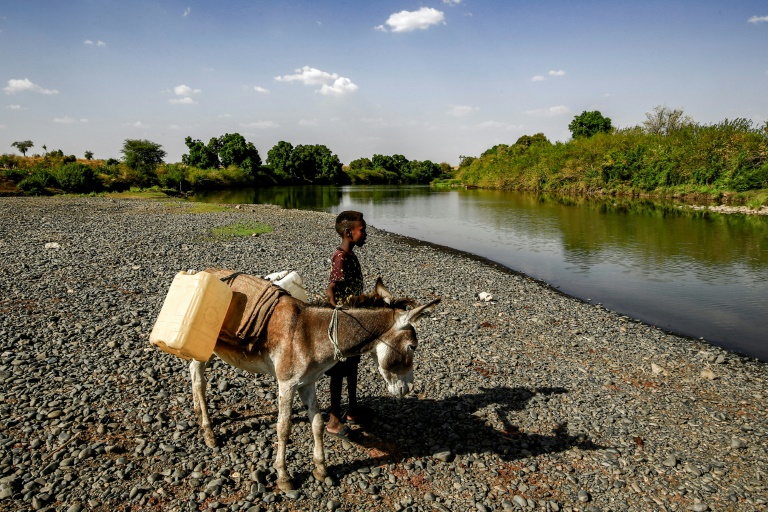
Regional leaders voiced alarm Wednesday over escalating tensions between Ethiopia and Sudan in a disputed border area and appealed for dialogue to stem the crisis.

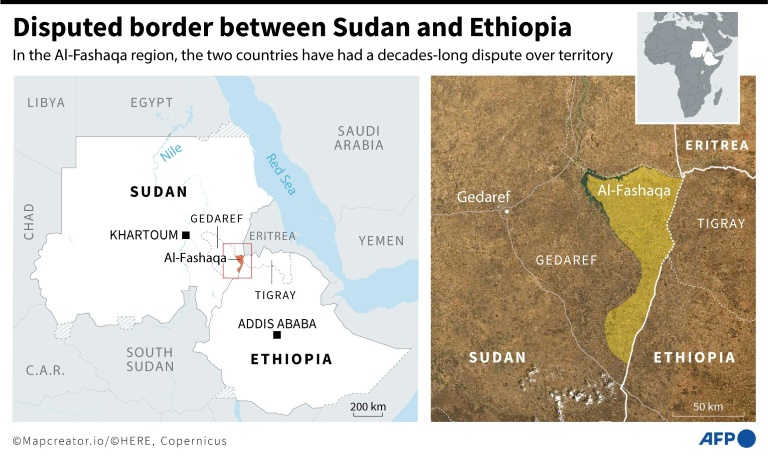
The calls by the African Union and another regional grouping followed claims by Khartoum that the Ethiopian army had executed seven Sudanese soldiers and a civilian during a clash in the volatile Al-Fashaqa area last week — allegations denied by Addis Ababa.

Sudan announced Monday it would recall its ambassador to Addis Ababa over the incident in Al-Fashaqa, a fertile strip of land that has long been a source of friction between the two states.

AU Commission chief Moussa Faki Mahamat “is following with deep concern the escalating military tension between the Federal Democratic Republic of Ethiopia and the Republic of Sudan and deeply regrets the loss of life at their common border,” the pan-African body said in a statement.

“The chairperson appeals for complete refrain from any military action whatever its origin and calls for dialogue between the two brotherly countries to solve any dispute.”

The AU’s concern was echoed by another regional bloc, the Intergovernmental Authority on Development (IGAD), which also called on the two countries “to actively seek diplomatic means to find a lasting and sustainable solution on the matter”. 

– ‘Perfidious act’ –

Sudan on Monday accused Ethiopia of capturing the soldiers in Al-Fashaqa on June 22, announcing it was recalling its envoy and would lodge a complaint with the UN Security Council and regional organisations.

The army, which has been in power since a coup in October 2021, vowed that the “perfidious act will not pass”.

And on Wednesday, the military published photographs of the slain soldiers, along with their names and ranks.

But Addis Ababa has in turn claimed that Sudanese forces had crossed into Ethiopian territory and that the casualties resulted from a skirmish with a local militia, denying its soldiers were in the area at the time.

The Ethiopian government said it rejected the “misrepresentation of facts” and that the incident was “deliberately concocted” to undermine relations.

The Sudan Tribune newspaper reported that the Sudanese army had launched an attack Tuesday on Ethiopian troops in the Al-Fashaqa area but this was denied by army spokesman Nabil Abdalla.

“We have not attacked anyone and we will not and we are not planning that. But we will not allow any armed force from another country that wants to cross our international border. It’s our right legally to deal with it,” he told AFP in Khartoum.

The report was also denied by the Ethiopian side, with an official saying on condition of anonymity: “This is not true, just unconfirmed and misinformation.”

On Monday, Sudan’s military leader Abdel Fattah al-Burhan visited Al-Fashaqa, where he instructed soldiers “to not allow any new movements or encroachments on Sudanese lands and against its citizens.”

Khartoum and Addis Ababa have been at odds for years over Al-Fashaqa.

The region, which lies close to Ethiopia’s war-torn northern region of Tigray, has long been cultivated by Ethiopian farmers but is claimed by Sudan.

The dispute has sparked sporadic clashes between the two sides, some fatal.

The rift feeds into wider tensions over land and water between the neighbours, particularly stoked by Ethiopia’s mega-dam on the Blue Nile.

Sudan and Egypt, both downstream countries, have been opposed to the Great Ethiopian Renaissance Dam and pushed for an agreement on the filling of its reservoir and the dam’s operations.

Tensions were heightened further after fighting erupted in Tigray in November 2020, sending tens of thousands of refugees fleeing into Sudan. 

Sudan has been roiled by economic and political turmoil since Burhan led the military coup that upended a transition to civilian rule following the 2019 ouster of president Omar al-Bashir. 

Kenya arrests 'fake policewoman' after TV appearance

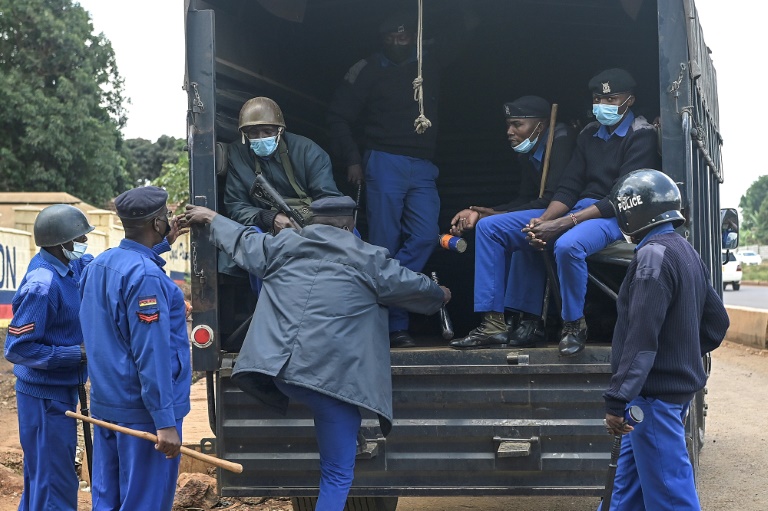
Kenyan investigators said Wednesday they had arrested a would-be MP for impersonating a police officer after she appeared in full regalia on a television programme where she talked about law and order. 

The woman, identified as Monica Wamaitha Gitau, was taken into custody after police were notified of her appearance on a local language TV station, the Directorate of Criminal Investigations (DCI) said on Twitter. 

Gitau, who is running for parliament in Kenya’s national elections in August, was asked about security and politics and provided responses dressed in the distinctive blue uniform of Kenya’s police force.

Police were less than convinced about her credibility, the DCI said. 

“She is currently assisting with investigations for the offence of impersonating a police officer.” 

According to a police report of the incident seen by AFP, when confronted Gitau claimed to have been a serving officer who retired in 2011.

“She couldn’t give a satisfactory account on why she wore the persian blue colour police uniform with full police badges,” the report said. 

In 2013, Kenya pledged to root out impostors in its police force after the high-profile arrest of a man accused of masquerading as a top provincial security official for a decade.

Under-equipped, badly paid and trained, the police force has a poor reputation in the East African country, where it is considered among the most corrupt organisations in the country, according to Transparency International.

Under Kenyan law, someone found guilty of impersonating a police officer can receive a prison sentence of up to 10 years, a fine of up to a million Kenyan shillings ($8,500), or both.

Security tight in Eswatini on protest anniversary

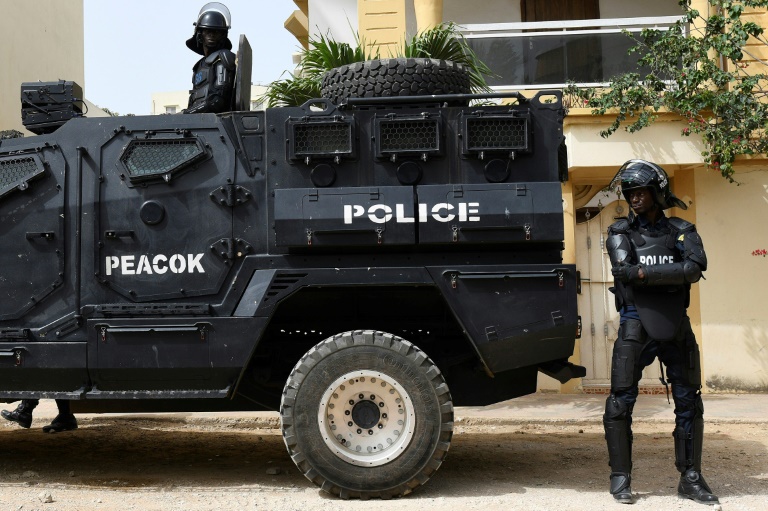
Police and troops deployed in force in Eswatini’s major cities on Wednesday on the anniversary of the start of bloody pro-democracy protests in the tiny kingdom.

Security forces patrolled throughout the night in the capital Mbabane and the city of Manzini 40 kilometres (25 miles) away as helicopters flew constantly overhead, local residents said.

Many stores were shuttered and the streets were virtually empty, while public transport was at a standstill, AFP reporters saw.

There was no sign of any incident but witnesses said some streets in outlying districts had been barricaded and they had seen burning tyres, after campaign groups called for a commemoration of the anniversary.

Demonstrations in the southern African monarchy broke out on June 29, 2021, led by young people clamouring for democratic reform.

Eight people died in clashes with the security forces, initiating protests over the following months that have since become sporadic.

According to the authorities, 37 people have died, while Human Rights Watch (HRW) puts the toll at 46.

Eswatini, previously known as Swaziland, is Africa’s last absolute monarchy.

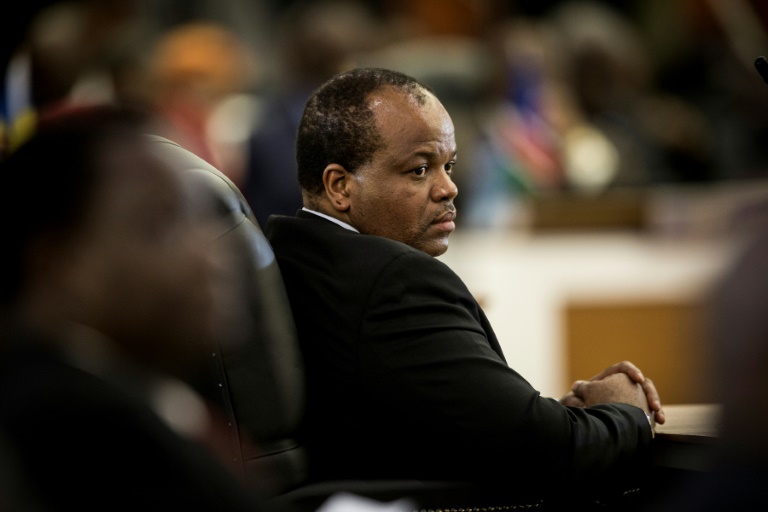
King Mswati III, who ascended to the throne in 1986 at the age of 18, appoints ministers and controls parliament under a convoluted electoral system. Political parties have been banned for nearly half a century.

Mswati has been widely criticised for his lifestyle, reputedly lavishing his 15 wives with millions of dollars a year while nearly 60 percent of the population of 1.2 million live on less than $1.90 a day.

AU urges restraint over 'escalating' Ethiopia-Sudan tensions

The head of the African Union Commission voiced concern on Wednesday over “escalating military tension” between Ethiopia and Sudan, calling for restraint and dialogue.

The comments by Moussa Faki Mahamat follow claims by Khartoum that the Ethiopian army had executed seven Sudanese soldiers and a civilian in an incident in a volatile border region last week — allegations denied by Addis Ababa.

Faki “is following with deep concern the escalating military tension between the Federal Democratic Republic of Ethiopia and the Republic of Sudan and deeply regrets the loss of life at their common border,” the AU said in a statement.

“The chairperson appeals for complete refrain from any military action whatever its origin and calls for dialogue between the two brotherly countries to solve any dispute.”

Sudan accused Ethiopia of capturing the soldiers on June 22 in Al-Fashaqa, a fertile strip at the centre of a bitter border dispute between the two neighbours.

Khartoum recalled its ambassador to Addis Ababa on Monday and vowed to lodge a complaint with the UN Security Council and regional organisations.

Addis Ababa said Tuesday that Sudanese forces had crossed into Ethiopian territory and the casualties resulted from a skirmish with a local militia, denying its soldiers were in the area at the time.

The Sudan Tribune newspaper reported that the Sudanese army had launched an attack Tuesday on Ethiopian troops in the Al-Fashaqa area but this was denied by army spokesman Nabil Abdalla.

“We have not attacked anyone and we will not and we are not planning that. But we will not allow any armed force from another country that wants to cross our international border. It’s our right legally to deal with it,” he told AFP in Khartoum.

Relations between Khartoum and Addis Ababa have soured over Al-Fashaqa, which is close to Ethiopia’s restive Tigray region.

Al-Fashaqa has long been cultivated by Ethiopian farmers but claimed by Sudan, and the dispute has sparked sporadic clashes between the Sudanese and Ethiopian sides, some fatal.

The rift over Al-Fashaqa feeds into wider tensions over land and water between the neighbours, particularly stoked by Ethiopia’s mega dam on the Blue Nile.

Sudan and Egypt, both downstream countries, have been opposed to the Great Ethiopian Renaissance Dam and pushed for an agreement on the filling of its reservoir and the dam’s operations.

Senegal bars new demo ahead of tense poll

Authorities in the Senegalese capital Dakar have banned a demonstration announced for Wednesday at a time of mounting tension in the runup to legislative polls.

A barred protest on June 17 led to clashes in which three people died and more than 200 were arrested, according to opposition figures. Two MPs were arrested, one of whom was handed a six-month suspended term on Monday.

A decree issued by the prefect of Dakar declared there were “real risks” that the rally would be infiltrated by troublemakers and public order and property could be at threat.

It also said the demonstration would breach laws banning “disguised” propaganda taking place within 30 days of the official start of an election campaign.

Legislative elections in Senegal, a country which generally has a good reputation for stability, are due to take place on July 31, and their official start is July 10.

The ballot is for the 165-seat National Assembly, where supporters of President Macky Sall wield a majority.

Leaders of an opposition coalition called Yewwi Askan Wi are incensed after Senegal’s paramount court threw out a list of their candidates on technical grounds.

The move effectively barred a leading opposition figure, Ousmane Sonko, who came in third in the 2019 presidential elections and has already declared he will run in the 2024 ballot.

The country was shaken by several days of rioting in March last year, claiming around a dozen lives, after Sonko was accused of rape.

Kenyan pilot project to put price on nature's treasure

The bird count gets underway — two members of the superb starling family, a Nubian woodpecker, and so on.

The census unfolding in the shadow of Mount Kilimanjaro is part of a project with a dual aim — using biodiversity to make money, which will then help to preserve natural resources and support local communities.

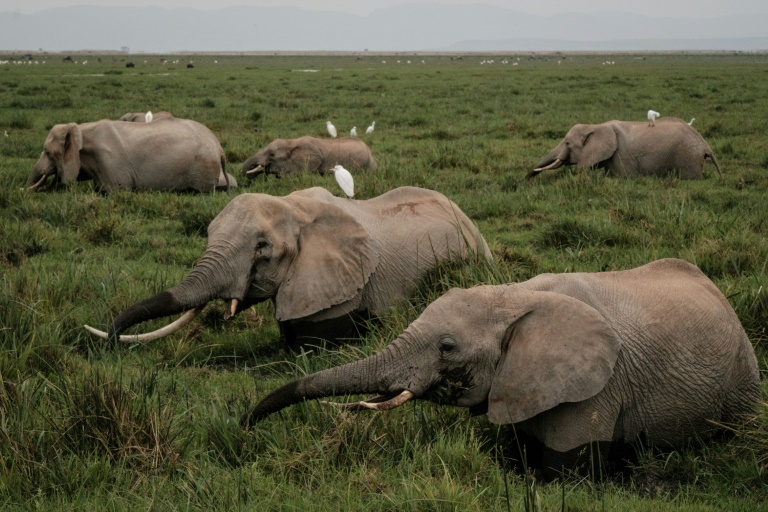
The 5,000-hectare (12,400-acre) terrain on the edge of Amboseli National Park in southern Kenya boasts elephants, giraffes, antelopes and lions.

The reserve’s owners are the Maasai people, and no fence separates the land from territory used by herders for their cows, sheep, goats and donkeys.

These days, well-heeled visitors are returning to the reserve after the Covid-19 pandemic, which had wrenching financial consequences.

“Tourism completely collapsed, and we realised that we need to find other ways of rising revenue and income to be able to continue paying the leases,” said Mohanjeet Brar, managing director of tour operator Gamewatchers Safaris, which rents Selenkay from the Maasai.

The reserve has an eye on the potential from carbon credits and planned biodiversity credits — mechanisms designed to channel funds to landowners who preserve natural hotspots for rare species and carbon storage.

– Data first –

For Selenkay, the first step towards realising these gains is to collect data — to make an inventory of the reserve’s treasure house.

Cameras and acoustic recorders are being used to give an idea of which animals are present on the reserve and in what numbers, and these are supplemented by human observations.

Over one month, morning and evening, team members are stationed at specific points to make a tally of all the animals seen and heard for 10 minutes.

“Is biodiversity higher in the conservancy than outside the conservancy and what’s driving that increase?” said Andrew Davies, an assistant professor at Harvard University in the United States, who is helping the research.

“Once we know that from a scientific perspective, we can begin thinking about making a credit to sell.”

Helped by a drone, the researchers are also getting a picture of the amount of carbon stored in trees and in the soil.

Tourism income from Brar’s company supports the local community in many ways, helping to provide water for people and livestock and generating jobs. All of the rangers and almost all of Selenkay’s staff are Maasai.

Even so, living conditions are still difficult, said Noolasho Keteko, one of the women from the Maasai village bordering the conservancy. 

The crop-haired mother of eight, adorned with colourful bead jewellery, also makes money from tourist visits to the mud-hut village and from selling jewellery.

But when Selenkay closes in April and May for the rainy season, the village needs assistance, she explained.

People in the district want to prevent the land from being sold, turned into fields and fenced off, preventing wildlife from moving freely. 

But a short distance from the reserve, a high fence already crosses the landscape to make way for fields.

Income from credits could ease the pressure on the environment, said one of the guides, Nicholas Koyieyo.

It would encourage herders to cut back on numbers of cattle, enabling grass and trees to regenerate, he said.

– Market question –

The big question is whether Selenkay’s resources can be adequately monetised.

“Kenya has a very fast-growing population — the land price is also high (and) there are many options for land use,” Brar said.

The market for carbon credits is well-established, although far from perfect.

Under it, carbon polluters can offset their greenhouse-gas emissions by “purchasing” emissions that are reduced or saved by other members in the scheme.

But the much-touted market for biodiversity credits has yet to be created. 

On Sunday, preparatory talks for a UN biodiversity summit due in December wound up in Nairobi after making scant progress.

“There’s no biodiversity trading market and we have to develop that,” said Davies.

“We need carbon as a first step to get the things going, to get trust from the landowners,” he said.

“A lot of money needs to go back to the community, so if we start to get money and giving it to the community then they will have faith in us.”

Mozambique still haunted by civil war as new conflict rages

As Mozambique battles a brutal Islamist insurgency, the legacy of a decades-long civil war still haunts the African nation where many former rebels refuse to disarm.

“It’s hard to live alone, with nothing, living without family nearby,” said Aurelio Capece Mudiua, who demobilised in 2020 after nearly four decades hiding around the Gorongosa mountains.

“Some of us had children, and they (the fighters) died here without getting to see them,” he said. “I want to tell the others, who are still in the mountains, come join us.”

This area of central Mozambique was a bastion of RENAMO, the rebel movement that battled the government for decades.

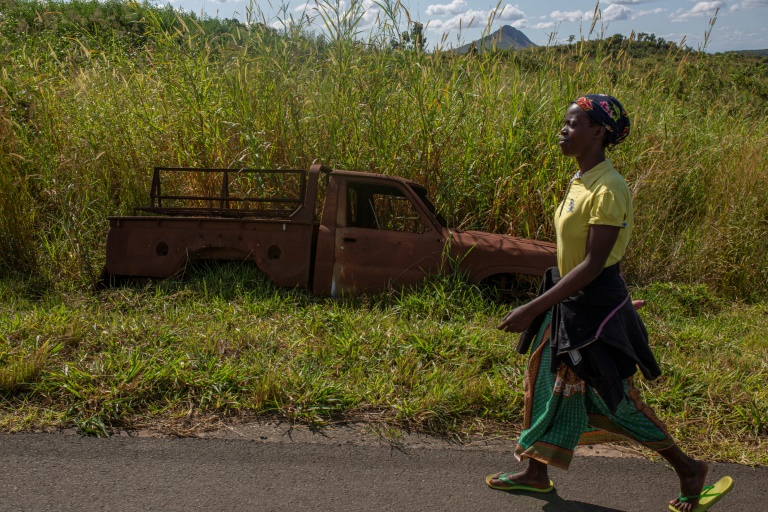
Burned-out carcasses of pickups, already overgrown with tall grass, still dot the landscape, vestiges of another time. 

Most of the current violence is about 1,000 kilometres (621 miles) to the north. When the Islamists took up arms in 2017, RENAMO was still at war with the government, led by the rival FRELIMO party.

Most of the RENAMO rebels are now too old to take up arms, with an average age of 55. But they face an uncertain future in one of the poorest countries in the world.

When Mozambique won independence in 1975, after a decade of fighting colonial master Portugal, the country was plunged into a civil war that served as a Cold War proxy battle.

The United States, apartheid South Africa, and white-ruled Rhodesia supported RENAMO, while the Soviets backed FRELIMO.

The war claimed a million lives, decimated the economy and left the nation littered with landmines.

– We ‘want peace’ –

After a 1992 peace deal, RENAMO turned into a political party but never won a national election. In 2013, they took up arms again, until a new deal was signed in 2019.

“There’s no one in RENAMO who doesn’t want peace,” said Antonio Muchanga, one of the party’s lawmakers.

Nearly two-thirds of RENAMO fighters have surrendered their weapons since 2020, and 11 of the movement’s 16 bases have been closed, according to official statistics.

But on the ground, observers say Mozambique suffers from problems experienced in many other post-war countries.

“The fighters have mostly turned in old hunting weapons,” said one humanitarian worker, who spoke on condition of anonymity.

Everyone who demobilised received about $2,000 to help them start a new life. Like most of the ex-fighters, Aurelio spent his payout quickly and yearns to receive a pension.

Under the peace deal, RENAMO fighters should receive the same pensions as their FRELIMO counterparts. But many are still waiting for them, which they see as a sign of the government’s bad faith.

“If the government gave me money, I would do my best to help my family, build a house, many things,” Aurelio said. 

“But the government still hasn’t given us money. The payout is finished and we are now waiting at home, with nothing.”

Disarmament “can’t work if people are only given money”, said Zenaida Machado, a researcher for Human Rights Watch. “They also need to be given the tools to reintegrate into their communities and to become self-sufficient.”

The real problem is simply financial, said Mirko Manzoni, the UN representative in Mozambique credited with crafting the latest peace deal.

“Mozambique’s government has a limited budget, with enormous needs. On top of that is a constant burden, the financing of the combatants’ pensions,” he said.

A new law is in the works to finance and harmonise the pensions.

“The discussions have taken two and a half years. The first ones who demobilised have already used up their packages a year ago already,” Manzoni said. 

He hopes the law will be approved before the end of the year.

“The combatants have to understand that not only do they have rights, but they also have a duty to share in the suffering of the rest of the population. Most Mozambicans have no pension,” Manzoni said.

Civilians are the forgotten victims of the war. Both sides committed horrific violence, but the peace deals offered a general amnesty, and the victims have practically no hope for justice.

“Both sides fought for a cause they believed to be just,” Manzoni said. “The best justice is development, within a system where people feel included.” 

Spain prosecutor opens probe into Melilla migrant deaths

Spanish public prosecutors said Tuesday they had opened an investigation into the deaths of at least 23 migrants during a mass attempt to cross from Morocco into Spain’s Melilla enclave. 

The announcement came a few hours before the United Nations denounced what it called “excessive force” by authorities on the border between Morocco and Spain and demanded an investigation into the migrants’ deaths.

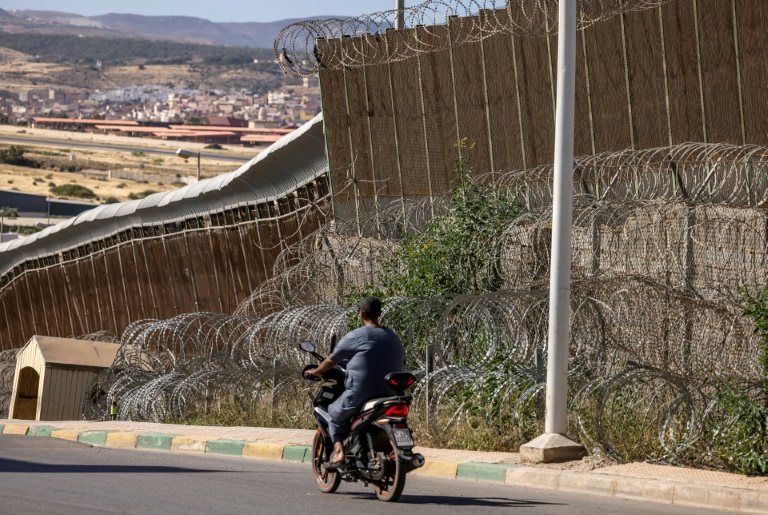
The tragedy happened at dawn on Friday when around 2,000 migrants, mostly from sub-Saharan Africa, tried to break through the fence from Morocco into the tiny Spanish enclave. 

Moroccan authorities said some had fallen while trying to scramble over the fence, giving an initial toll of 18 dead, but later raising it to 23 after another five migrants died of their injuries. 

They said 140 Moroccan police were wounded. 

Very few details about the incident were available, but Spanish media showed images of many people lying on the ground, some with bloodied hands and torn clothes. 

“We want to know what happened so we can explain it to the relatives of those who died,” said Ahmed, an Eritrean migrant who described Friday’s incident as “a massacre”.

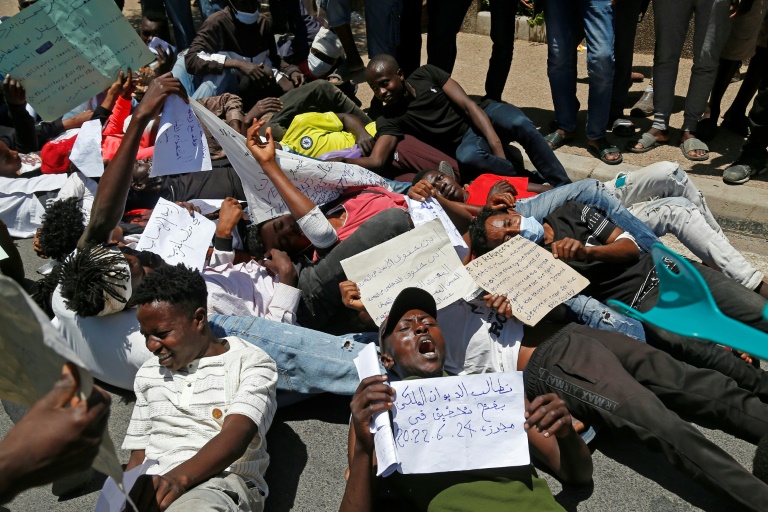
He was among around 50 migrants who held a protest on Tuesday in front of the UN refugee agency (UNHCR) headquarters in the Moroccan capital Rabat, some raising signs reading “stop killing us”.

“They beat us inhumanely,” said Omar, a migrant who said he was fleeing “war and prison” at home in Sudan.

“We don’t feel safe here, our lives are in danger,” he told AFP.

PASCOMS, an association for sub-Saharan migrants in Morocco, blamed the European Union, its member states and Morocco for what it called a “disaster”.

– ‘Migrants beaten with batons’ –

The death toll was by far the worst recorded in years of attempts by migrants to cross into Melilla, one of Spain’s two North African enclaves which have the EU’s only land borders with Africa, making them a magnet for migrants desperate to escape grinding poverty and hunger. 

In a statement, the Spanish prosecutors’ office said the decision was made by Attorney General Dolores Delgado in order “to clarify what happened at the Melilla border”, citing the “seriousness and gravity” of the incident.

UN Secretary-General Antonio Guterres’s spokesman, Stephane Dujarric, told reporters in New York that the “use of excessive force by the authorities” was “unacceptable” an should be investigated.

Earlier on Tuesday, the United Nations’ rights office had called for an independent investigation “as a first step towards establishing the circumstances of the deaths and injuries”, spokeswoman Ravina Shamdasani said. 

While it remained unclear how they had died, Shamdasani said the office had received reports of “migrants beaten with batons, kicked, shoved, and attacked with stones by Moroccan officials as they tried to scale the barbed-wire fence” which is between six and 10 metres high. 

Meanwhile Morocco, locked in a worse-than-usual standoff with neighbouring Algeria, blamed its regional rival for “deliberately lax” control of their shared border, according to a statement from its Madrid embassy carried by Spanish media.

Algerian diplomat Amar Belani, charged with the Western Sahara dossier that is at the heart of tensions between Rabat and Algiers, said Morocco was looking for “scapegoats to relieve itself of its responsibilities”.

The African Union has also called for an “immediate investigation”, with AU Commission chief Moussa Faki Mahamat expressing “deep shock and concern at the violent and degrading treatment” of migrants at the border.

In Morocco, prosecutors are moving to press charges against 65 migrants, mostly Sudanese, who tried to storm the border, a defence lawyer in Rabat said on Monday.

Spain prosecutor opens probe into Melilla migrant deaths

Spanish public prosecutors said Tuesday they have opened an investigation into the deaths of at least 23 migrants during a mass attempt to cross into Spain’s Melilla enclave. 

The announcement came a few hours before the United Nations denounced what it called “excessive force” by authorities on the border between Morocco and Spain and demanded an investigation into the migrants’ deaths.

The tragedy occurred at dawn on Friday when around 2,000 migrants, mostly from sub-Saharan Africa, tried to break through the fence from Morocco into the tiny Spanish enclave. 

Moroccan authorities said some had fallen while trying to scramble over the fence, giving an initial toll of 18 dead, but later raising it to 23 after another five migrants died of their injuries. 

They said 140 Moroccan police were wounded. 

There were very few details about the incident, but Spanish media showed images of many people lying on the ground, some with bloodied hands and torn clothes. 

The death toll is by far the worst recorded in years of attempts by migrants to cross into Melilla, one of Spain’s two North African enclaves which have the European Union’s only land borders with Africa, making them a magnet for migrants desperate to escape grinding poverty and hunger. 

In a statement, the Spanish prosecutors’ office said the decision was made by Attorney General Dolores Delgado in order “to clarify what happened at the Melilla border”, citing the “seriousness and gravity” of the incident and its impact on the individuals’ fundamental and human rights. 

“We saw the use of excessive force by the authorities, which needs to be investigated because it is unacceptable,” UN Secretary-General Antonio Guterres’s spokesman, Stephane Dujarric, told reporters in New York.

Earlier on Tuesday, the United Nations’ rights office called for an independent investigation “as a first step towards establishing the circumstances of the deaths and injuries”, spokeswoman Ravina Shamdasani said. 

While it remained unclear how the deaths had occurred, Shamdasani said the office had received reports of “migrants beaten with batons, kicked, shoved, and attacked with stones by Moroccan officials as they tried to scale the barbed-wire fence” which is between six and 10 metres high. 

The African Union has also called for an “immediate investigation,” with AU Commission chief Moussa Faki Mahamat expressing “deep shock and concern at the violent and degrading treatment of African migrants attempting to cross an international border from Morocco into Spain”.

In Morocco, prosecutors are moving to press charges against 65 migrants, mostly Sudanese, who took part in the storming of the border, a defence lawyer in Rabat said on Monday.

Close Bitnami banner
Bitnami