Africa Business

South Africa escalates power cuts to acute levels

South Africa, a country plagued by power shortages, on Tuesday imposed the  toughest electricity rationing in two and a half years after labour disputes disrupted production at several plants.

Highly unpopular power rationing to consumers was ramped up to so-called Stage 6 load-shedding to prevent countrywide blackouts.

Stage 6 means that South Africans will now experience multiple cuts per day, each lasting between two and four hours, on a rotational basis.

The power utility Eskom, which generates more than 90 percent of the country’s energy, has been hit by strike action over wages since last week.

“Eskom is in this position because of the industrial action which has meant that in many power stations up to 90 percent of the staff could not attend to the duties… because of intimidation,” State Enterprises Minister Pravin Gordhan told a media briefing shortly after the ramped-up rationing kicked in.

The blackouts are “causing huge amount of damage to South Africa’s reputation”, he said. 

Workers downed tools demanding a 15-percent pay hike.

Unions on Tuesday announced they have made “considerable progress” in wage negotiations, and urged Eskom workers in a statement “to normalise the situation”.

Africa’s leading industrialised country last experienced such drastic outages in December 2019. 

Power cuts are a major source of frustration and discontent in South Africa, where protests broke out near Eskom’s offices last year.

South Africa's Eskom announces further power cuts

South Africa, a country plagued by power shortages, on Tuesday imposed the the toughest electricity rationing in two and a half years after labour disputes disrupted production at several plants.

Power rationing to consumers was ramped up to so-called Stage 6 load-shedding to prevent countrywide blackouts.

Stage 6 means that South Africans will now experience multiple cuts per day, each lasting several hours.

Africa’s leading industrialised country last experienced such drastic outages in December 2019. 

“There is a high risk that the stage of load-shedding may have to change at any time, depending on the state of the plant,” power utility Eskom said in a statement.  

Power cuts are a major source of frustration and discontent in South Africa, where protests broke out near Eskom’s offices last year.

Zimbabwe issues arrest warrant for top author

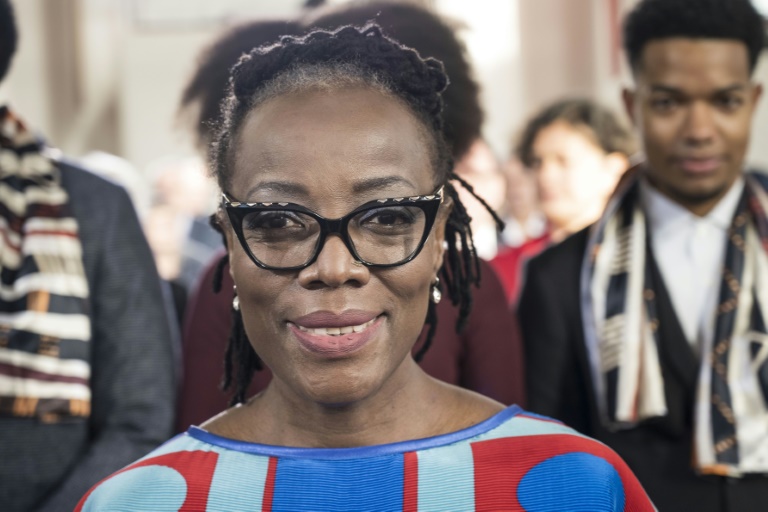
Zimbabwe has issued an arrest warrant for award-winning author and filmmaker Tsitsi Dangarembga after she failed to appear in court over charges of inciting violence, her lawyer said Tuesday.

Dangarembga, 63, is seeing her doctor in Germany and “missed court for medical reasons,” her lawyer Chris Mhike told AFP.

“We expect her to be well enough to return to Zimbabwe imminently, and to attend to the outstanding court processes.”

Dangarembga was arrested in July 2020 for staging an anti-government protest alongside her neighbour in the affluent Harare suburb of Borrowdale. 

Standing by the roadside, she held a banner that read “We want better — reform our institutions.”

Dangarembga was charged with inciting public violence and freed on bail the following day. 

Nearly two years on, the trial has still not started and Dangarembga has filed to have the case thrown out for lack of evidence.

A magistrate’s court on Monday was due to rule on her request, but issued the arrest warrant when she failed to show up.

Dangarembga will seek to have the warrant cancelled, said the lawyer.

The ruling on the application for discharge will now be handed down on August 4.

Dangarembga stepped into the international limelight in 1988 with her debut novel “Nervous Conditions,” the first book published in English by a black Zimbabwean woman. 

The work earned her the prestigious Commonwealth Writers’ Prize the following year.

The Berlin International Film Festival (Berlinale) last week called on the Zimbabwe government to clear Dangarembga “of all charges, or to drop the case.”

First ever 'Africa Fashion' exhibition opens in London

Britain’s most extensive exhibition of African fashion is set to open in London, showcasing designers past and present, as well as the continent’s diverse heritage and cultures.

“Africa Fashion”, at the Victoria and Albert (V&A) Museum from Saturday, is also the country’s first exhibition dedicated to the medium.

Project curator Elisabeth Murray said the show will provide a “glimpse into the glamour and politics of the fashion scene”.

“We wanted to celebrate the amazing African fashion scene today. So the creativity of all the designers, stylists, photographers, and looking at the inspiration behind that,” she told AFP.

Included in the exhibition are objects, sketches, photos and film from across the continent, starting from the African liberation years in the 1950s to 1980s to up-and-coming contemporary designers. 

Senior curator Christine Checinska has called it “part of the V&A’s ongoing commitment to foreground work by African heritage creatives”.

Global anti-racism movements, including Black Lives Matter, have forced Britain to reassess its divisive colonial past, from museum collections and public monuments to history teaching in schools.

The V&A was founded in 1852, as Britain under queen Victoria expanded its global empire, including, in the decades that followed, in Africa.

But Checinska said African creativity had “largely been excluded or misrepresented in the museum, owing to the historic division between art and ethnographic museums arising from our colonial roots and embedded racist assumptions”.

“The conversations and collaborations that have shaped the making of the Africa Fashion exhibition are a testbed for new equitable ways of working together that allow us to imagine and call into being the V&A of the future,” she added.

Displaying a diverse range of African designs, textiles and influences, the ambitious exhibition is a way to address that imbalance, she said.

– Celebration –

The scene is set with a section on “African Cultural Renaissance”, highlighting protest posters and literature from independence movements that developed in conjunction with fashion. 

“The Vanguard” is the central attraction, displaying iconic works by well-known African designers including Niger’s Alphadi, Nigeria’s Shade Thomas-Fahm and Kofi Ansah of Ghana.

A variety of African textiles and styles such as beadwork and raffia are employed in innovative designs with cross-cultural influences. 

Thomas-Fahm’s designs, for example, reinvented traditional African-wear for the “cosmopolitan, working woman”.

Other displays — with names such as “Afrotopia”, “Cutting-Edge” and “Mixology” — explore fashion alongside issues such as sustainability, gender, race and sexual identity.

One highlight is the centre-piece made by Moroccan designer Artsi especially for the exhibition. 

It is a piece inspired by the British trenchcoat and Muslim hijab, navigating how to “present Africa in England”, he told AFP.

Fashioning a “meditation on our common humanity”, Artsi emphasises the beauty of African fashion which “doesn’t come from a source of commercialised clothes”. 

“It comes from a source of heritage and celebrating culture,” he added.

Nigeria oil hub community in fight over waterfront home

Acres of slums line the creeks of Nigeria’s oil hub Port Harcourt, home to tight-knit communities with a population density more than twice that of Manhattan.

The tangle of 50 self-built waterfront settlements made of concrete, wood and corrugated sheets hosts half a million people, many reliant on the polluted creeks for their livelihoods.

Port Harcourt’s communities are now caught in a battle over their informal homes after Rivers State Governor Ezenwo Nyesom Wike ordered all the settlements to be demolished.

Wike and Rivers officials have described them as “dens of criminals” that needed cleaning up, offering no compensation for the homes destroyed and no development plan for the land.

Many residents lived there for decades. Their parents and grandparents built the land, filling the creeks with fibrous black mud cut from the mangroves.

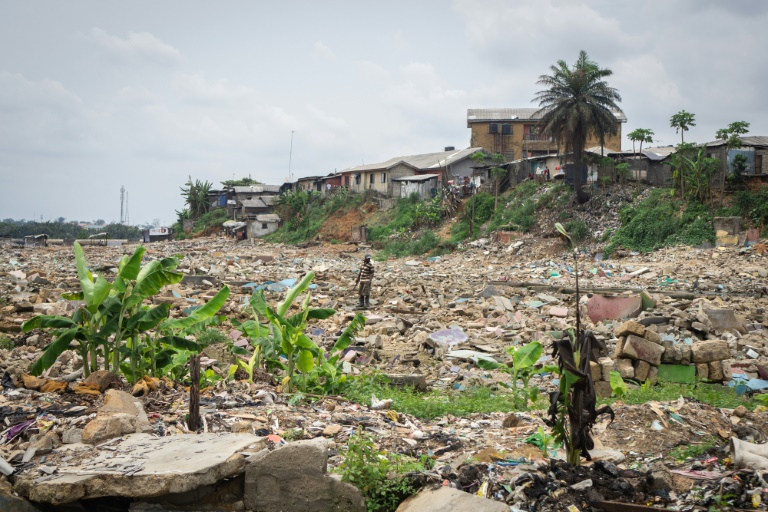
Since the demolitions began in January, half of the Diobu settlement in the southwest of the city has been destroyed. 

Up to 22,000 residents were made homeless in six days. Where there was a thriving community now sits 11 hectares of rubble.

“We were peacefully living here,” said Tamunoemi Cottrail, a local landlord and fish seller, recalling the start of the demolitions when officials arrived accompanied by armed men.

“As they came, they did not talk to anybody. They just came down the steps and begin to mark X on some buildings.”

Local government officials say the project will benefit the entire city and that demolitions of informal communities are necessary and legal.

The Port Harcourt land struggle illustrates the complex development of cities in Africa’s most populous country, which is estimated by the UN to become the third most populous in the world by 2050.

Most of that will be urban growth, and much of it in slums as Nigeria’s development plans largely ignore rapid informal urbanisation and adequate infrastructure.

Port Harcourt is Nigeria’s oil capital. But despite the petroleum revenues, its infrastructure is overwhelmed and many live in slum conditions.

“People don’t deliberately put themselves in informal settlements,” said Isa Sanusi of Amnesty International Nigeria.

“There shouldn’t be informal settlements in those kinds of places because the states are rich and they have the capacity to provide.”

⁃ Public backlash –

The demolitions began nearly three weeks after the governor announced his decision during a New Year’s speech.

Rivers State’s chief security officer arrived in Diobu waterfront on January 19, marking homes for demolition and telling residents they had seven days to pack up and leave.

As Diobu’s representative in the local governing body, Cottrail approached the officers, attempting to initiate a dialogue. But they refused to engage with him.

They came back at the end of January.

“There was no way to talk to them because they came with fully armed police officers and some civil defence officers,” Cottrail said.

“When they came, they started flogging people,” said Omobotare Abona, a local fisherman. “When people were like ‘You guys should wait — let us pack our things because it’s sudden’, they were like ‘Go out.'”

After some public backlash against the governor’s plan, his commissioner for information and communication, Paulinus Nsirim, took a harsher tone, emphasising the government’s push to “sanitise the waterfronts”.

He said that the communities had become “a den of thieves, flies in the face of rational analysis”.

“That is a lie,” said Abona, who has lived in the community most of his life. “There is nowhere they don’t have bad persons.”

For the state development authorities, the programme is about the legitimate use of land.

“The law allows (demolitions) so long as it is for public interest,” said one official from the Rivers State Housing and Property Development Authority.

“What he wants to do is for the… benefit of the state or for everybody.”

⁃ Living with relatives –

Many former Diobu residents have moved in with relatives elsewhere, now cut off from their water-related livelihoods. Others have their furniture and clothes piled on the pavements near the waterfront.

In one disused government compound close to the waterfront, women have squatted with their salvaged belongings and children.

Peace West, a school cook who now squats there with her four children, said she had paid a year’s rent upfront in October but now does not have the money to pay another.

Some residents are still sleeping in the rubble of their former homes, even though the rainy season has swung into full force.

The city’s waterfront communities help fuel the informal economy, which accounts for up to 65 percent of real economic activity.

But they live in extreme poverty, with little to no municipal services and a lack of political representation.

For residents like Abona it is hard to imagine living elsewhere than in his community, where he lives off the properties he built and fishing.

Although he relocated his wife and infant son to a relative’s house, he often returns to the demolition site, watching over his family’s land. He is waiting for the right time to rebuild.

“As a riverine man, I feel safe and I grew up here,” he said. “So I know everything here, at least. It’s my comfort zone.”

AU urges probe into deaths of Africans at Spain-Morocco border

The African Union Commission chief has voiced shock at the “violent and degrading” treatment of African migrants trying to cross from Morocco into Spain after 23 people died, and called for an investigation into the incident.

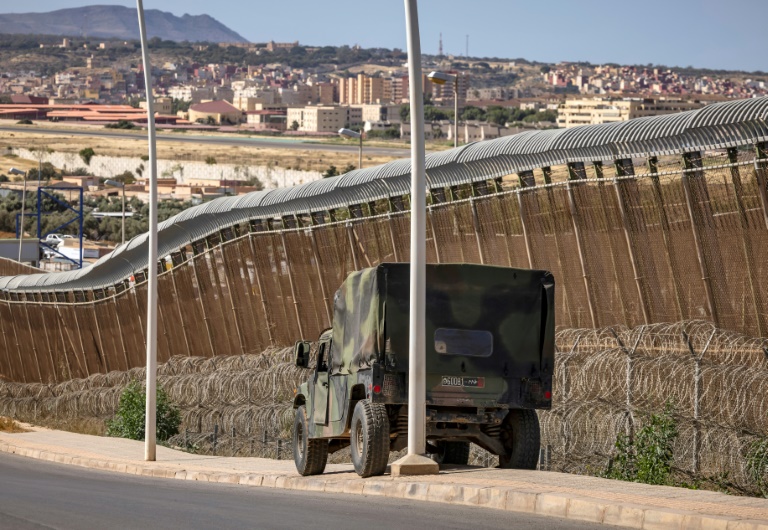
About 2,000 migrants stormed the heavily fortified border between the Moroccan region of Nador and the Spanish enclave of Melilla on Friday.

At least 23 migrants died and 140 police officers were wounded in the ensuing violence, according to Moroccan authorities. It was the heaviest toll in years from such attempts to cross the frontier at Melilla.

“I express my deep shock and concern at the violent and degrading treatment of African migrants attempting to cross an international border from Morocco into Spain,” AU Commission chief Moussa Faki Mahamat said in a statement on Twitter late Sunday.

“I call for an immediate investigation into the matter and remind all countries of their obligations under international law to treat all migrants with dignity and to prioritise their safety and human rights, while refraining from the use of excessive force.”

Kenya’s ambassador to the United Nations, Martin Kimani, said a UN Security Council meeting would be held behind closed doors to discuss the violence African migrants face in Melilla. According to diplomats, the session, originally planned for Monday, was postponed to Wednesday.

Kenya, Gabon and Ghana — the African non-permanent members of the Security Council — called for the meeting, Kimani added.

“Migrants are Migrants: whether from Africa or Europe, they do not deserve to be brutalised in this way,” he wrote on Twitter.

Speaking at a regular press briefing, UN chief Antonio Guterres’s spokesman Stephane Dujarric said: “We very much deplore this tragic incident and the loss of life.”

– ‘Tragic symbol’ –

Spain on Monday thanked Morocco for its “collaboration” in the defence of Spanish borders and once again blamed “international mafias that traffic human beings” for the incident.

But calls for a probe have increased, with around 50 migrant rights groups calling the Melilla deaths “the tragic symbol of European policies to externalise the European Union’s borders”.

“The death of these young Africans… alerts us to the deadly nature of the security cooperation on migration between Morocco and Spain,” they added.

Spain’s rights ombudsman said it accepted a complaint from several non-governmental groups on the incident and has requested information from the relevant administrative bodies.

Moroccan justice will prosecute 65 migrants, mostly Sudanese, who took part in the attempt to force their way into the Spanish enclave, a defence lawyer in Rabat said Monday.

The prosecutor’s office in Nador, which borders Melilla, has charged 37 migrants with “illegal entry into Morocco”, “violence against law enforcement officers”, “armed gathering” and “refusal to comply”, their lawyer Khalid Ameza told AFP. 

A second group of 28 migrants will be tried for “participation in a criminal gang with a view to organising and facilitating illegal immigration abroad”, Ameza added. 

The lawyer said the majority of the defendants were from Darfur, in western Sudan, which is in the grips of a food crisis and has seen recent violence that has left more than 125 people dead and 50,000 displaced. 

The others charged are Chadian, Malian and Yemeni. 

The migrant rush in Melilla came after Madrid and Rabat normalised their diplomatic relations following an almost year-long crisis centred on the disputed Western Sahara territory.

For Spain, the main objective of the diplomatic thaw was to ensure Morocco’s cooperation in controlling illegal immigration.

Spain’s enclaves in Morocco, Melilla and Ceuta are the only land borders the European Union shares with Africa.

S.Africa seeks clues after 21 teens die in packed bar

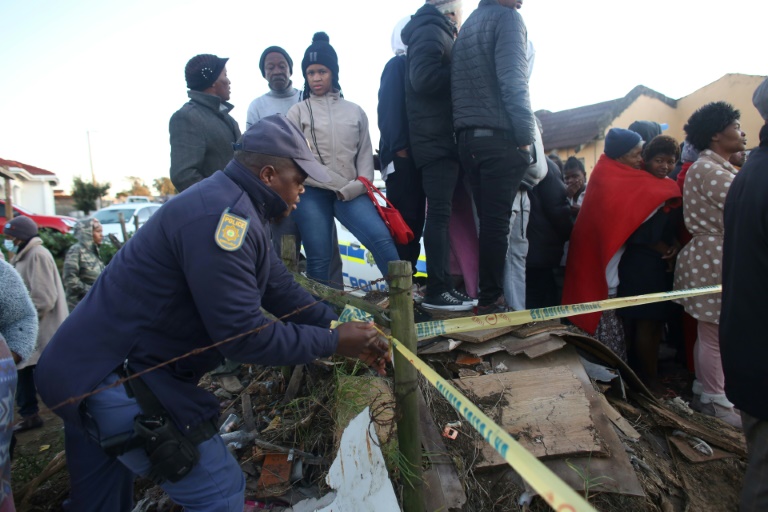
South African police were on Monday combing a township tavern where 21 teenagers mysteriously died as survivors described a battle to escape the jam-packed premises and one reported a suffocating smell.

Officials have ruled out a stampede as the cause of the deaths.

Most of the victims, some as young as 13, were found dead inside a popular bar in the southern coastal city of East London. 

Seventeen died inside the bar, while four died later in hospital. The victims included 13 boys and eight girls.

Thirty-one others were hospitalised with symptoms including backache, tight chests, vomiting and headache, officials said.

Most were discharged on Sunday, leaving two in hospital, they said.

The fatalities bore no visible signs of injury, sparking initial speculation among local officials and politicians that this was a case of underage drinking that had gone tragically wrong.

“But the suspicion is that it is something either they ingested through drinks, food, or something they inhaled,” Unathi Binqose, a government official on safety, told AFP.

Politicians expressed their shock at the deaths.

“It has never happened that our country loses children in this manner,” Elleck Nchabeleng, who chairs the parliamentary committee on education and technology, sports, arts and culture.

“This unfortunate and unprecedented incident underscores the importance of vigilance from parents.”

– ‘We are suffocating’ –

But new details emerged Monday as survivors spoke of a strong and suffocating smell in the jam-packed double-storey building.

Sinovuyo Monyane, 19, who was hired by the bar to promote an alcohol brand, said she was still “confused” but felt lucky to be alive.

She said she struggled to escape through a door gridlocked with people.

“We tried moving through the crowd, shouting ‘please let us through,’ and others were shouting ‘we are dying, guys,’ and ‘we are suffocating’ and ‘there are people who can’t breathe’,” she told AFP.

“I passed out at that moment. I was running out of breath and there was a strong smell of some type of spray on in the air. We thought it was pepper spray,” she said.

She later regained consciousness after someone sprayed water on her.

“I got up and realised that there were bodies lying around. I saw people being poured water, but those people did not even move,” she said in a phone interview.

“I could have died.”

A member of staff at the bar, Sifiso Promise Matinise, told AFP he sprinkled water on the unconscious people to revive them, thinking they were drunk, before realising what had happened.

“I saw two people collapse, they died,” he said.

Special investigators from Pretoria have been rushed to the scene but no arrests have been made so far.

“The investigators continue to search for possible clues and answers at Enyobeni Tavern,” regional police spokesman Thembinkosi Kinana said.

– ‘Traumatised’ –

Many of the victims are thought to have been students celebrating the end of their high-school exams, officials said.

Autopsies are being conducted to see if the deaths could be linked to poisoning.

Forensic analysis will be conducted this week.

“Samples were taken and were on (the) first flight today to Cape Town, where the tests will be conducted,” said Binqose.

Drinking in South Africa is permitted for over-18s.

But in township taverns which are often located cheek-by-jowl with family homes, safety regulations and drinking-age laws are not always enforced.

President Cyril Ramaphosa is among those who have voiced concern.

The teenagers reportedly “gathered at a venue which, on the face of it, should be off-limits to persons under the age of 18”, he said.

A resident DJ, Luhlemela Ulana, who was also celebrating his birthday on the night, spoke of a rush of revellers who forced their way into an already packed venue.

“We tried to close the door, but people kept pushing. The bouncers could not handle the crowd that was pushing from outside the entrance door. There were so many people,” the DJ said.

He turned off the music to try to discourage the revellers, but to no avail.

The crowd was just “unruly and could not be managed”, he said, adding he was “traumatised”.

About 100 mourners attended an emotional prayer service at the Assemblies of God church in the Scenery Park township, where local municipal councillor Monica Goci broke down on the pulpit with a microphone in her hand.

S.Africa seeks clues after 21 teens die in packed bar

South African police were on Monday combing a township tavern where 21 teenagers mysteriously died as survivors described a battle to escape the jam-packed premises and one reported a suffocating smell.

Officials have ruled out a stampede as the cause of the deaths.

Most of the victims, some as young as 13, were found dead inside a popular bar in the southern city of East London. 

Seventeen died inside the bar, while four died in hospital. The victims included 13 boys and eight girls.

Thirty-one others were hospitalised with symptoms including backache, tight chests, vomiting and headache, officials said.

Most were discharged on Sunday, leaving two in hospital, they said.

The fatalities bore no visible signs of injury, sparking initial speculation among local officials and politicians that this was a case of under-age drinking that went tragically wrong.

“But the suspicion is that it is something either they ingested through drinks, food, or something they inhaled,” Unathi Binqose, a government official on safety, told AFP.

New details also emerged Monday as survivors spoke of a strong and suffocating smell in the jam-packed double-storey building.

Sinovuyo Monyane, 19, who was hired by the bar to promote an alcohol brand, said she was still “confused” but felt lucky to be alive.

She said she struggled to escape through a door gridlocked with people.

“We tried moving through the crowd, shouting ‘please let us through,’ and others were shouting ‘we are dying, guys,’ and ‘we are suffocating’ and ‘there are people who can’t breathe’,” she told AFP.

“I passed out at that moment. I was running out of breath and there was a strong smell of some type of spray on in the air. We thought it was pepper spray,” she said.

She later regained consciousness after someone sprayed water on her.

“I got up and realised that there were bodies lying around. I saw people being poured water, but those people did not even move,” she said in a phone interview.

“I could have died.”

A member of staff at the bar, Sifiso Promise Matinise, told AFP he sprinkled water on the unconscious people to revive them, thinking they were drunk, before realising what had happened.

“I saw two people collapse, they died,” he said.

Special investigators from Pretoria have been rushed to the scene but no arrests have been made so far.

“The investigators continue to search for possible clues and answers at Enyobeni Tavern,” regional police spokesman Thembinkosi Kinana said.

– ‘Traumatised’ –

Many of the victims are thought to have been students celebrating the end of their high-school exams, officials said.

Autopsies are being conducted to see if the deaths could be linked to poisoning.

“Post-mortems (were) completed by last night and the bodies will be released to their families today,” said Yonela Dekeda, provincial spokeswoman for the health department.

Forensic analysis will be conducted this week.

“Samples were taken and were on (the) first flight today to Cape Town, where the tests will be conducted,” said Binqose.

Drinking in South Africa is permitted for over-18s.

But in township taverns which are often located cheek-by-jowl with family homes, safety regulations and drinking-age laws are not always enforced.

President Cyril Ramaphosa is among those who have voiced concern.

The teenagers reportedly “gathered at a venue which, on the face of it, should be off-limits to persons under the age of 18”, he said.

A resident DJ, Luhlemela Ulana, who was also celebrating his birthday on the night, spoke of a rush of revellers who forced their way into an already packed venue.

“We tried to close the door but people kept pushing. The bouncers could not handle the crowd that was pushing from outside the entrance door. There were so many people,” the DJ said.

He turned off the music to try to discourage the revellers, but to no avail.

The crowd was just “unruly and could not be managed”, he said, adding he was “traumatised”.

About 100 mourners attended an emotional prayer service at the Assemblies of God church in the Scenery Park township, where local municipal councillor Monica Goci broke down on the pulpit with a microphone in her hand.

Father of Moroccan facing death penalty in Ukraine appeals to Putin

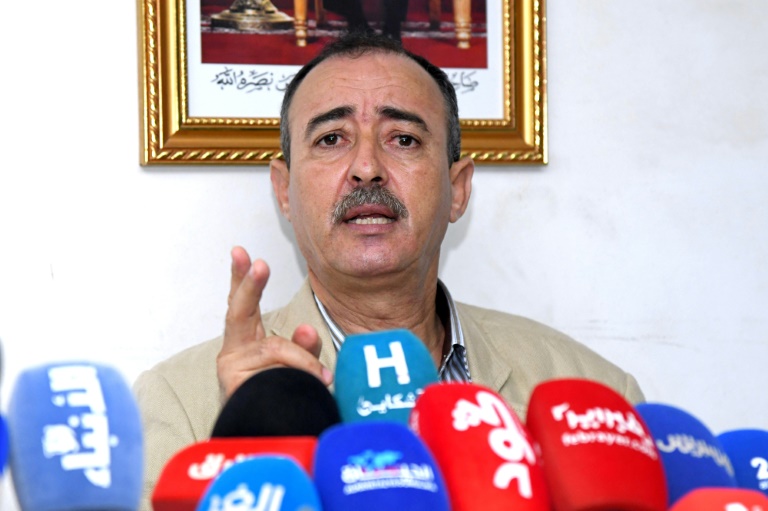
The father of a Moroccan facing a death sentence in a Russian-backed breakaway region of Ukraine on Monday urged Russia’s President Vladimir Putin to intervene to save his son.

Taher Saadoun made the appeal on behalf of Brahim Saadoun, who was sentenced to death alongside two British men by the unrecognised Donetsk People’s Republic (DNR) in early June.

“I call on Russian President Vladimir Putin to intervene, as a father and out of humanism, via humanitarian and unofficial channels,” Saadoun told a news conference in Rabat.

The three young men were condemned to death after being accused of serving as mercenaries for Ukraine following Russia’s invasion of its neighbour. 

His father has previously said his son, who obtained Ukrainian citizenship in 2020, “is not a mercenary”, calling him instead a “victim of manipulation”. 

He also appealed to the government of Moroccan Prime Minister Aziz Akhannouch to “do what is necessary to work on this case”.

The young man’s father, a retired investigator in the gendarmerie, told AFP the Moroccan authorities had not been in contact with his son. 

He was not aware if Rabat had contacted Moscow or the self-proclaimed authorities in Donetsk.

The Moroccan government had not commented on the case until June 13, saying through its embassy in Ukraine that Saadoun “was captured while wearing the uniform of the military of the state of Ukraine, as a member of a Ukrainian naval  unit”.

It said he was “imprisoned by an entity that is recognised by neither the United Nations nor Morocco”, without commenting further. 

His father said he had enrolled in the Ukrainian navy in 2021 and was following orders.

Moroccan rights groups have urged the government to intervene to save the young man, citing concerns over his health.

Ethiopia ruling party wants AU to broker any peace talks

Ethiopian Prime Minister Abiy Ahmed’s ruling party said Monday that only the African Union could broker potential peace talks with the Tigray People’s Liberation Front (TPLF) — a stance already rejected by the rebels.

Abiy for the first time two weeks ago raised the possibility of negotiations with the TPLF to try to end a brutal war that first erupted in northern Ethiopia in November 2020.

Justice Minister Gedion Timothewos said ruling Prosperity Party committees had drawn up guidelines for the “peaceful resolution” of the conflict, and warned that any breakdown in talks could lead to a resumption of hostilities.

“It has been decided that the peace process can only be led by the African Union,” said Gedion, a member of the party’s central committee, cited by state broadcaster EBC.

This process must, he said, “comply with the legal and constitutional framework and respect the essential interests of the country”.

Abiy had announced on June 14 that a committee would be set up to prepare for possible negotiations, after the government had declared a “humanitarian truce” in March that has led to a lull in the fighting.

The TPLF has however already effectively ruled out any negotiations led by the Addis Ababa-headquartered AU, protesting at the “proximity” of its envoy Olusegun Obasanjo, the former Nigerian president, to the Ethiopian leader.

Instead, the rebels said earlier this month they were ready for negotiations hosted by Kenyan President Uhuru Kenyatta, and that there was already an “existing agreement” among the rivals to meet in Nairobi.

But Gedion warned any failure in the negotiations would lead to renewed fighting. 

“The peace process can’t succeed if only one side wants it. If the process fails, instructions will have to be given to the security forces to respond appropriately,” he said. 

The conflict erupted in Tigray when Abiy — a Nobel Peace Prize laureate — sent troops in to topple the TPLF, a move he said came in response to rebel attacks on army camps. 

Untold numbers of people have since been killed in Tigray, as well as the neighbouring regions of Afar and Amhara.

Millions are also in the grip of a humanitarian crisis, with many in Tigray on the brink of famine and the region still without basic services such as electricity and communications.

Close Bitnami banner
Bitnami