Africa Business

More than 30 die in ethnic violence in Cameroon

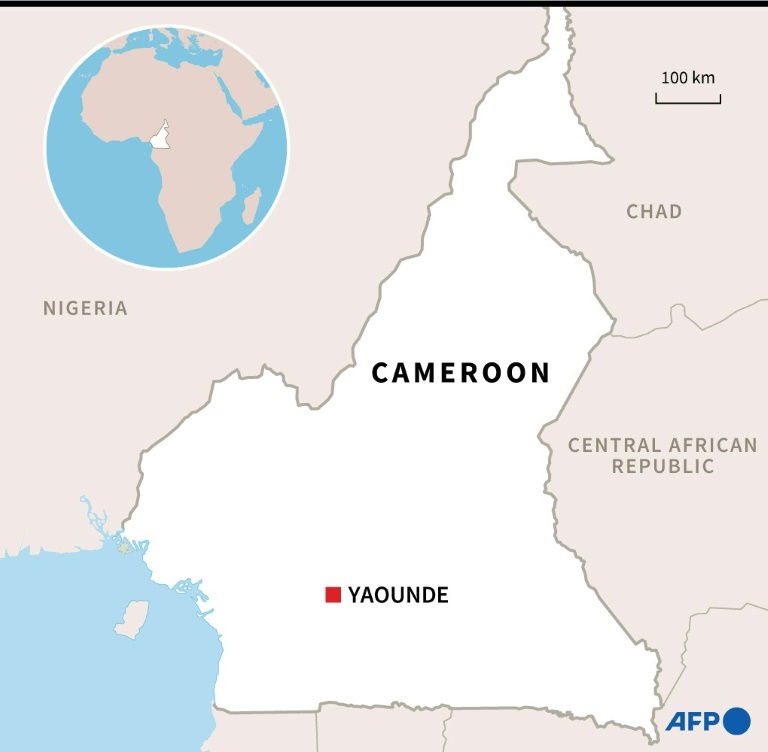
More than 30 villagers, including women and children, have been killed in an ethnic-related attack in western Cameroon, local sources said on Monday.

The massacre unfolded over the weekend at Bakinjaw near the Nigerian border, said Reverend Fonki Samuel Forba, the spokesman of the Presbyterian Church in Cameroon.

His account was confirmed by an NGO and a military source.

The attack was rooted in a land dispute between the Oliti and Messaga Ekol ethnic groups, Forba said in a statement sent to AFP.

“The Oliti people attacked and killed some Messaga Ekol people on their farms on the 29th April 2022 and the Messaga Ekol people retaliated,” he said. 

“The Oliti people then mobilized and got the backup of hired armed men and launched… very violent, inhuman and destructive attacks on the Messaga Ekol people.

“Over 30 people were killed including children, girls, men, women and old people. Some were beheaded. About five Nigerians were killed.”

The statement included pictures of about a dozen bodies, some of them children, lying on the ground. 

Some of the bodies had been mutilated or bore signs of burns.

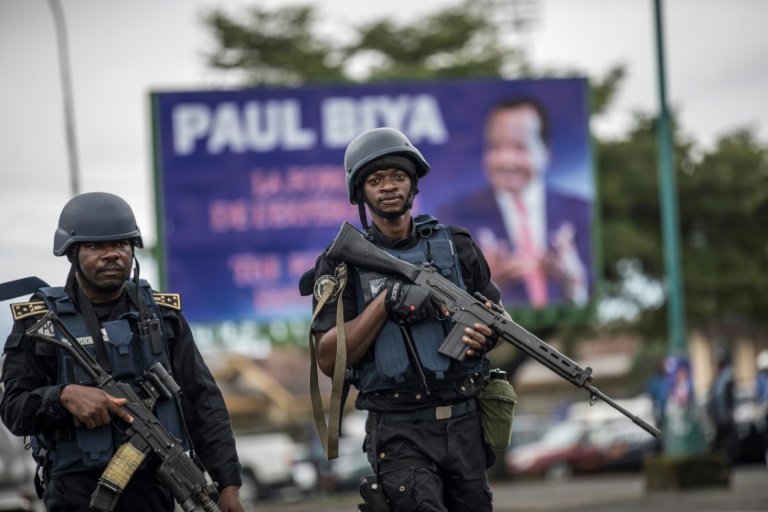
The bloodshed took place in the Akwaya area of the Southwest Region, which with the neighbouring Northwest Region is in the grip of a nearly five-year-old insurrection by anglophone separatists.

A local non-governmental organisation and a senior army officer in the region confirmed the details given by Forba, but said there was no known link between the massacre and the separatist violence.

“Some people were killed in their homes, and others as they were going to their fields,” the army source said.

– Long-running conflict –

The NGO source said that ethnic conflict in the Akwaya area had been going on “for years”.

“The Oliti, who live in the centre of Akwaya, are regularly attacked by neighbouring populations. They fought back, which led to the bloodbath,” the source said.

Ethnic conflicts in Cameroon, a former French colony in central Africa, are frequent, but killings on this scale typically occur in the Far North Region — the tongue of land lying between Nigeria and Chad.

Last December, 44 people were killed and 111 were injured in two weeks of clashes in the Far North between herding, fishing and farming communities.

In the deeply troubled Southwest and Northwest, violence erupted in 2017 after militants from Cameroon’s anglophone minority launched an armed campaign to secede from the majority French-speaking state.

Fighting has claimed more than 6,000 lives and displaced around a million people, according to the International Crisis Group (ICG) think tank.

Attacks have been committed by separatists and the security forces, rights monitors say.

On Monday, Human Rights Watch (HRW) said militants in the two anglophone regions had killed at least seven people and carried out scores of kidnappings since January.

bur-rek-jbk-dyg-gir/jhd/ri/imm
S.Africa seeks clues after 21 teens die in packed bar

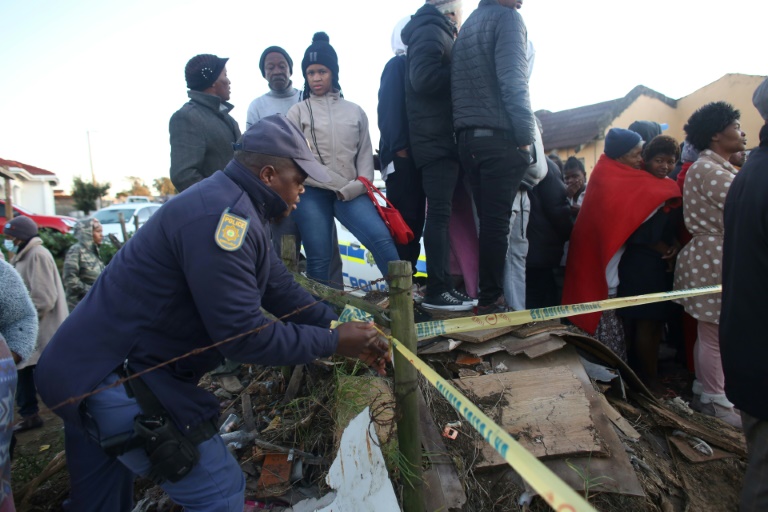
South African police were on Monday combing a township tavern where 21 teenagers mysteriously died as survivors described a battle to escape the jam-packed premises and one reported a suffocating smell.

Officials have ruled out a stampede as the cause of the deaths.

Most of the victims, some as young as 13, were found dead inside a popular bar in the southern city of East London. 

Seventeen died inside the bar, while four died in hospital. 

Thirty-one others were hospitalised with symptoms including backache, tight chests, vomiting and headache, officials said.

Most were discharged on Sunday, leaving two in hospital, they said.

The fatalities bore no visible signs of injury, sparking initial speculation among local officials and politicians that this was a case of under-age drinking that went tragically wrong.

“But the suspicion is that it is something either they ingested through drinks, food, or something they inhaled,” Unathi Binqose, a government official on safety, told AFP.

New details also emerged Monday as survivors spoke of a strong and suffocating smell in the jam-packed double-storey building.

Sinovuyo Monyane, 19, who was hired by the bar to promote an alcohol brand, said she was still “confused” but felt lucky to be alive.

She said she struggled to escape through a door gridlocked with people.

“We tried moving through the crowd, shouting ‘please let us through,’ and others were shouting ‘we are dying, guys,’ and ‘we are suffocating’ and ‘there are people who can’t breathe’,” she told AFP.

“I passed out at that moment. I was running out of breath and there was a strong smell of some type of spray on in the air. We thought it was pepper spray,” she said.

She later regained consciousness after someone sprayed water on her.

“I got up and realised that there were bodies lying around. I saw people being poured water, but those people did not even move,” she said in a phone interview.

“I could have died.”

Special investigators from Pretoria have been rushed to the scene.

“The investigators continue to search for possible clues and answers at Enyobeni Tavern,” regional police spokesman Thembinkosi Kinana said.

– ‘Traumatised’ –

Many of the victims are thought to have been students celebrating the end of their high-school exams, officials said.

Autopsies are being conducted to see if the deaths could be linked to poisoning.

“Post-mortems (were) completed by last night and the bodies will be released to their families today,” said Yonela Dekeda, provincial spokeswoman for the health department.

Forensic analysis will be conducted this week.

“Samples were taken and were on (the) first flight today to Cape Town, where the tests will be conducted,” said Binqose.

Drinking in South Africa is permitted for over-18s.

But in township taverns which are often located cheek-by-jowl with family homes, safety regulations and drinking-age laws are not always enforced.

President Cyril Ramaphosa is among those who have voiced concern.

The teenagers reportedly “gathered at a venue which, on the face of it, should be off-limits to persons under the age of 18”, he said.

A resident DJ, Luhlemela Ulana, who was also celebrating his birthday on the night, spoke of a rush of revellers who forced their way into an already packed venue.

“We tried to close the door but people kept pushing. The bouncers could not handle the crowd that was pushing from outside the entrance door. There were so many people,” the DJ said.

He turned off the music to try to discourage the revellers, but to no avail.

The crowd was just “unruly and could not be managed”, he said, adding he was “traumatised”.

About 100 mourners attended an emotional prayer service at the Assemblies of God church in the Scenery Park township where a local municipal councillor Monica Goci broke down on the pulpit with a microphone in her hand.

S.African police search bar for clues after 21 teens die

South African police were on Monday combing a township tavern where 21 teenagers mysteriously died as survivors described a battle to escape the jam-packed premises and one reported a suffocating smell.

Most of the victims, some as young as 13 years, were found dead inside a popular bar in the southern city of East London. 

Seventeen were died inside the bar, while four died in hospital. 

Thirty-one others were hospitalised with symptoms including backache, tight chests, vomiting and headache, official said.

Most were discharged on Sunday, leaving two in hospital, they said.

The fatalities bore no visible signs of injury, sparking initial speculation among local officials and politicians that this was a case of under-age drinking that went tragically wrong.

But new details emerged Monday as survivors spoke of a strong and suffocating smell in the jam-packed double-storey building.

Sinovuyo Monyane, 19, who was hired by the bar to promote an alcohol brand, said she was still “confused” but felt lucky to be alive.

She said she struggled to escape through a door gridlocked with people.

“We tried moving through the crowd, shouting ‘please let us through,’ and others were shouting ‘we are dying, guys,’ and ‘we are suffocating’ and ‘there are people who can’t breathe’,” she told AFP.

“I passed out at that moment. I was running out of breath and there was a strong smell of some type of spray on in the air. We thought it was pepper spray,” she said.

She later regained her consciousnesses after someone sprayed water on her.

“I got up and realised that there were bodies lying around. I saw people being poured water, but those people did not even move,” she said in a phone interview.

“I could have died.”

Special investigators from Pretoria have been rushed to the scene.

“The detectives will be resuming their work at the crime scene today,” regional police spokesman Thembinkosi Kinana told AFP.

– ‘Traumatised’ –

Many of the victims are thought to have been students celebrating the end of their high-school exams, officials said.

Autopsies are being conducted to see if the deaths could be linked to poisoning.

“Post-mortems (were) completed by last night and the bodies will be released to their families today,” said Yonela Dekeda, provincial spokeswoman for the health department.

Forensic analysis will be conducted this week.

“Samples were taken and were on first flight today to Cape Town, where the tests will be conducted,” said Unathi Binqose, a government official on safety.

Drinking in South Africa is permitted for over-18s.

But in township taverns which are often located cheek-by-jowl with family homes, safety regulations and drinking-age laws are not always enforced.

President Cyril Ramaphosa is among those who have voiced concern.

The teenagers reportedly “gathered at a venue which, on the face of it, should be off-limits to persons under the age of 18,” he said.

A resident DJ, who was also celebrating his birthday on the night, spoke of a rush of revellers who forced their way into an already packed venue.

“We tried to close the door but people kept pushing. The bouncers could not handle the crowd that was pushing from outside the entrance door. There were so many people,” the DJ said.

He turned off the music to try discourage revellers, but to no avail.

The crowd was just “unruly and could not be managed,” he said, adding he was “traumatised.”

In a tweet, African Union Commission chief Moussa Faki Mahamat expressed his thoughts and prayers “during this time of unspeakable grief and sorrow.”

Frustration and hope: the African migrants in limbo in Rwanda

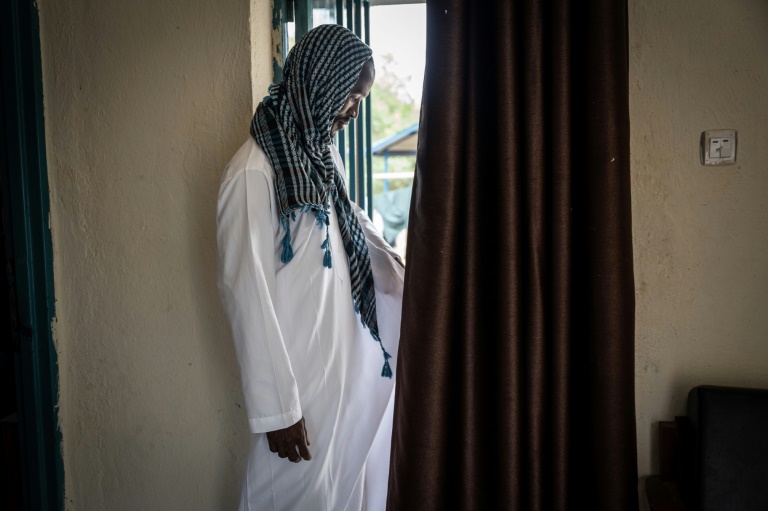
Ismail Hmdan Banaga says he’s had a “frustrating and fruitless” time waiting in vain in Rwanda for his Canadian asylum request to be approved.

The 33-year-old Sudanese told AFP he is so fed up he is considering a trek back to war-torn Libya to try to make it to Europe across the Mediterranean, a perilous voyage that has taken the lives of many. 

He is one of hundreds of Africans once stranded in Libya who are now in limbo at the Gashora Transit Centre on a dusty road outside the capital Kigali — but none want to stay in the country that gave them shelter.

Their fate has come under the spotlight since Britain hatched a controversal deal with Rwanda in April to deport unwanted asylum seekers to the East African country.

“I have done several interviews to go to Canada but there is no feedback. The officials are not being very clear about the way forward,” said Banaga, who has been at Gashora for almost a year. 

“The fact is I’m not going back to Sudan, and not staying here for life. I would rather go back to try and cross the sea.”

– ‘I regret coming’ –

Residents live in small brick maisonettes at Gashora, which has seen almost 1,100 people come through its doors since 2019 when Rwanda agreed to offer shelter to refugees from Libya.

It has a cafeteria, basketball/volleyball court and driving practice area — some say they want to become taxi drivers when they reach Europe — and a centre where people can learn skills such as weaving and hairdressing.  

“There’s freedom here at the camp to do whatever I like, way better than the conditions in Libya and I like it here, but the processing speed for asylum to leave is very slow,” Banaga said. 

Another refugee discussed his situation with AFP on condition of anonymity, saying he cannot speak freely in the presence of Rwandan and UN refugee agency officials for fear of reprisals. 

“I regret coming to Rwanda,” he said. “First, I left Sudan, leaving my children and my father behind under conditions of war… and looting and robbery everywhere.” 

He said he stayed in Libya for three years before arriving in Rwanda where he said he was initially greeted with kindness.

“It has been a year now in Rwanda and am not sure if I will get asylum or not. If it turns out that they abandoned me, then returning to Libya is more merciful than staying here in Rwanda under this humiliation.” 

– ‘Rwanda to the rescue’ –

But for Zemen Fesaha, a 26-year-old Eritrean, dreams of a new life are about to come true.

“Next week I will be flying to Canada. I am very excited,” he said, adding that he would like to find a job as a social worker there.

He recounted a horrific ordeal trying to make it out of Libya, paying $20,000 to traffickers to cross the Mediterranean. 

“One day the boat overturned and many people drowned and died. I swam for hours with some other survivors all the way to the shore and we got arrested by Libyan officials. They took us to jail and we stayed there for months until Rwanda came to the rescue.” 

More than 600 refugees have been resettled in third countries, but UNHCR and government officials say they have not had a single request to stay in Rwanda permanently.

“Our problem is that we come to Rwanda to go, not to stay here,” said Nyalada Gatkouth Jany from South Sudan.

Jany said she left her mother and brother behind, but ended up in a Libyan prison after trying four times to cross the Mediterranean: “I saw the death of people with my own eyes.”

Now Jany’s request for asylum in Finland for herself and her one-year-old son has been accepted.

“Here we are just sitting like this. We want to work because we want to support them.”

Tesfay, a 27-year-old Eritrean who declined to give his second name, echoed her view.

“Rwanda has been kind to me but I do not wish to stay here. It is a poor country with its own problems, so I cannot leave Eritrea and then resettle in Rwanda,” he said.

About 60 kilometres (40 miles) from Gashora, in the centre of the Rwandan capital, lies Hope Hostel — which once hosted orphans from the 1994 genocide but has now been booked out by the government.

The 50-room hostel will house the migrants Britain plans to ship to Rwanda if the arrangement goes ahead, after a first flight was halted by a European court order.

“When the deal failed, of course it was a blow but it is not over, so for us we are ready to welcome our guests whenever they come from the UK,” hostel manager Elisee Kalyango told AFP.

HRW accuses Cameroon anglophone rebels of fresh attacks

Anglophone separatists in Cameroon have killed at least seven people and carried out scores of kidnappings since January, Human Rights Watch (HRW) said on Monday, in a further condemnation of alleged abuses by the rebels.

“Armed separatist groups are kidnapping, terrorizing, and killing civilians across the English-speaking regions with no apparent fear of being held to account by either their own leaders or Cameroonian law enforcement,” Ilaria Allegrozzi, HRW’s senior central Africa researcher, said in a report.

A conflict in Cameroon’s Northwest Region and Southwest Region has raged for nearly five years, pitching government forces against anglophones campaigning to secede from the majority French-speaking state.

The rights watchdog said rebels had killed at least seven people, injured six more, raped a girl and kidnapped as many as 82 people since January “in an uptick of violence.”

The separatists have targeted schools, torching at least two facilities, and attacked a university, it said.

The allegations are based on interviews with several dozen victims and witnesses as well as medical records and visual evidence, HRW said.

In 2017, mounting anglophone resentment at perceived discrimination snowballed into the declaration of an independent state — the “Federal Republic of Ambazonia,” an entity that is not recognised internationally.

The country’s veteran president Paul Biya, 89, who has ruled with an iron fist for nearly 40 years, responded with a crackdown.

The violence has claimed more than 6,000 lives and displaced around a million people, according to the International Crisis Group (ICG) think tank.

Schools have been attacked or boycotted as perceived symbols of the state — a campaign that in 2019 left some 850,000 children without denied access to education, according to UNICEF figures.

“These abusive calls (for school boycotts) trample the basic rights of an already terrorized civilian population,” HRW said.

The UN and international NGOs have accused both sides of human rights abuses.

HRW renewed this allegation, saying government troops had committed rights violations including “extensive burning of villages, homes, and shops, killings, torture, mistreatment, incommunicado detention and rape of civilians.”

On June 1, soldiers in the Northwest Region killed nine civilians, including a baby, the defence ministry said, describing the deaths as a “grave and unfortunate incident.” 

S.African police seek clues after 21 teens die in bar

Police in South Africa were combing a township tavern for evidence on Monday after the mysterious death of 21 teenagers after a night out.

Most of the victims, some as young as 13 years, were found dead inside a popular bar in the southern city of East London. Some died later in hospital.

They bore no visible signs of injury, sparking speculation among local officials and politicians that this was a case of under-age drinking that went tragically wrong.

Special investigators from Pretoria have been rushed to the scene.

“The detectives will be resuming their work at the crime scene today,” regional police spokesman Thembinkosi Kinana told AFP.

Many of the victims are thought to have been students celebrating the end of their high-school exams, officials said.

Autopsies are being conducted to see if the deaths could be linked to poisoning.

“Post-mortems (were) completed by last night and the bodies will be released to their families today,” said Yonela Dekeda, provincial spokeswoman for the health department.

Forensic analysis will be conducted this week.

“Samples were taken and were on first flight today to Cape Town, where the tests will be conducted,” said Unathi Binqose, a government official on safety.

Drinking in South Africa is permitted for over-18s.

But in township taverns which are often located cheek-by-jowl with family homes, safety regulations and drinking-age laws are not always enforced.

President Cyril Ramaphosa is among those who have voiced concern.

The teenagers reportedly “gathered at a venue which, on the face of it, should be off-limits to persons under the age of 18,” he said.

Lumumba: Congolese anti-colonial icon who angered Belgian king

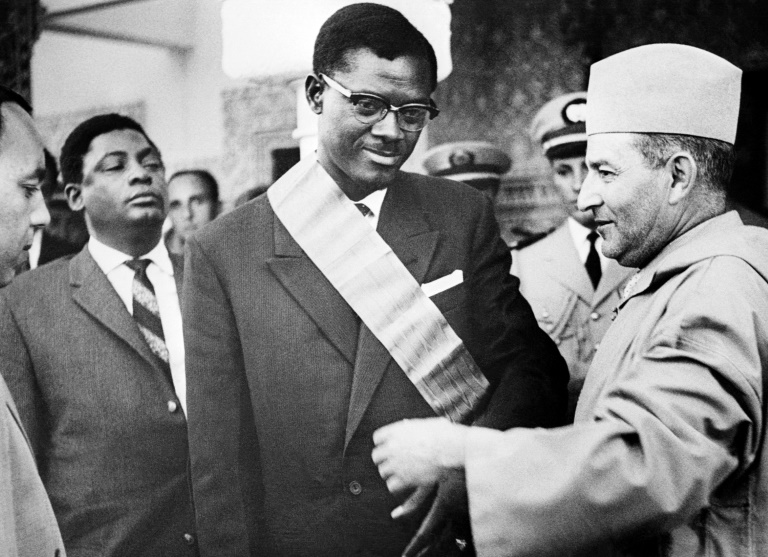
Patrice Emery Lumumba, whose remains were returned to the Democratic Republic of Congo last week, shot to fame on June 30, 1960 with a blistering independence speech against former colonial power Belgium.

In the presence of Belgium’s King Baudouin, the 34-year-old prime minister accused the former colonial masters of racist maltreatment and forcing “humiliating slavery” on the Congolese people, making him an instant hero of African independence movements.

“We experienced the slurs, the insults, the beatings that we had to undergo morning, noon and evening, because we were negroes,” he proclaimed.

It was a withering response to King Baudouin whose speech shortly before had saluted the work of his royal ancestor Leopold II, insisting that he was not a “conqueror” but had come on a “civilising mission”.

Lumumba was born on July 2, 1925 in the village of Onalua in the central province of Sankuru to parents from the Tetela minority ethnic group.

He first studied to become a nurse, then joined the colonial administration’s post office school, graduating to become a clerk at the mail service in the northeastern city of Stanleyville, which is now called Kisangani.

He was accused of embezzlement and sentenced to several months in jail in 1956.

“What did I do other than take back a little of the money the Belgians stole from Congo?” he is reported to have said at the time.

– ‘A nationalist’ –

“He never denied diverting funds,” said Congolese academic Emmanuel Kabongo, who has written extensively about Lumumba.

After coming out of prison “thanks to his ties to liberal Belgians”, he was employed as a commercial director of a brewery seeking to boost its beer sales in Leopoldville, a city now called Kinshasa, he said.

While at the post office he had only earned 3,000 Belgian francs, suddenly he was being paid 25,000 francs for his new job, Kabongo said.

In 1958 he launched a political party, the Congolese National Movement (MNC), which called for independence and a secular Congolese state.

His critics accused him of being a communist, but Congolese academic Jean Omasombo said he was not.

“He said several times he was a nationalist, not a communist,” he said.

For a month in early 1960, Lumumba took part in a roundtable on Congo’s independence in Brussels, alongside other Congolese politicians and traditional leaders.

His party won national elections in May 1960, a month before independence, leading him to be named first prime minister of the country when it became independent.

He was among the vanguard of pan-African leaders who led the charge to end colonialism in Africa in the late 1950s.

But, says Kabongo, “he was only head of government of the new state for two months and thirteen days”, from June 30 to September 12, 1960.

The charismatic young politician’s independence speech earned him Belgium’s resentment.

Western powers needed little else to see the 35-year-old firebrand as a threat, particularly after he sought support from the Soviet Union.

– ‘Disturbed American interests’ –

Aiming to quickly neutralise him, Belgium and the CIA exploited the ambitions of other Congolese leaders, documents show.

They succeeded with a young army chief-of-staff named Joseph-Desire Mobutu, who led a coup that overthrew Lumumba.

Later Mobutu would seize power in another coup and impose dictatorial rule from 1965-1997, renaming the nation Zaire and himself Mobutu Sese Seko.

After Lumumba was ousted, he was arrested and handed over for execution to the authorities in the mineral-rich southeast Katanga province, which seceded from the fledgling nation months earlier with Belgium’s support.

A plane landed at the airport of Katanga’s provincial capital Elisabethville — now called Lubumbashi — in early 1961.

He was driven out into the savannah, and shot dead at the foot of a tree by Katangese separatists and Belgian mercenaries along with two companions after nightfall on January 17, 1961.

He was just 35 years old.

His body was dissolved in acid, but a Belgian police officer involved in the killing kept one of his teeth as a trophy. Belgium finally returned it to his family on Monday last week.

Lumumba’s independence speech just months earlier “certainly sealed his fate”, said Kabongo.

“But his nationalism and closeness to (other) pan-African icons… had disturbed American interests in Congo,” he added.

Ailing oceans in the spotlight at major UN meet

A long-delayed UN conference on how to restore the faltering health of global oceans kicks off in Lisbon Monday, with thousands of policymakers, experts and advocates on the case.

Humanity needs healthy oceans. They generate 50 percent of the oxygen we breathe and provide essential protein and nutrients to billions of people every day.

Covering more than two-thirds of Earth’s surface, the seven seas have also softened the impact of climate change for life on land. 

But at a terrible cost.

Absorbing around a quarter of CO2 pollution — even as emissions increased by half over the last 60 years — has turned sea water acidic, threatening aquatic food chains and the ocean’s capacity to pull down carbon. 

And soaking up more than 90 percent of the excess heat from global warming has spawned massive marine heatwaves that are killing off precious coral reefs and expanding dead zones bereft of oxygen.

“We have only begun to understand the extent to which climate change is going to wreak havoc on ocean health,” said Charlotte de Fontaubert, the World Bank’s global lead for the blue economy.

Making things worse is an unending torrent of pollution, including a garbage truck’s worth of plastic every minute, according the UN Environment Programme (UNEP). 

On current trends, yearly plastic waste will nearly triple to one billion tonnes by 2060, according to a recent OECD report.

– Wild fish stocks –

Microplastics — found inside Arctic ice and fish in the ocean’s deepest trenches — are estimated to kill more than a million seabirds and over 100,000 marine mammals each year.

Solutions on the table range from recycling to global caps on plastic production. 

Global fisheries will also be under the spotlight during the five-day UN Ocean Conference, originally slated for April 2020 and jointly hosted by Portugal and Kenya. 

“At least one-third of wild fish stocks are overfished and less than 10 percent of the ocean is protected,” Kathryn Matthews, chief scientist for US-based NGO Oceana, told AFP.

“Destructive and illegal fishing vessels operate with impunity in many coastal waters and on the high seas.”

One culprit is nearly $35 billion in subsidies. Baby steps taken last week by the World Trade Organization (WTO) to reduce handouts to industry will hardly make a dent, experts said.

The conference will also see a push for a moratorium on deep-sea mining of rare metals needed for a boom electric vehicle battery construction.

Scientists say poorly understood seabed ecosystems are fragile and could take decades or longer to heal once disrupted.

Another major focus will be “blue food”, the new watchword for ensuring that marine harvests from all sources are sustainable and socially responsible.

– Protected areas –

Rising aquaculture yields — from salmon and tuna to shellfish and algae — are on track to overtake wild marine harvests in decline since the 1990s, with each producing roughly 100 million tonnes per year.

If properly managed, “wild ocean fish can provide a climate-friendly, micro-nutrient protein source that can feed one billion people a healthy seafood meal every day — forever,” said Matthews.

The Lisbon meet will see ministers and even a few heads of state, including French President Emmanuel Macron, but is not a formal negotiating session.

But participants will push for a strong oceans agenda at two critical summits later this year: the COP27 UN climate talks in November, hosted by Egypt, followed by the long-delayed COP15 biodiversity negotiations, recently moved from China to Montreal.

Oceans are already at the heart of a draft biodiversity treaty tasked with halting what many scientists fear is the first “mass extinction” event in 65 million years.

Nearly 100 nations support a cornerstone provision that would designate 30 percent of the planet’s land and ocean as protected areas.

For climate change, the focus will be on carbon sequestration: boosting the ocean’s capacity to soak up CO2, whether by enhancing natural sinks such as mangroves or through geoengineering schemes.

At the same time, scientists warn, a drastic reduction of greenhouse gases is needed to restore ocean health.

Egypt tries man over murder of student who refused advances

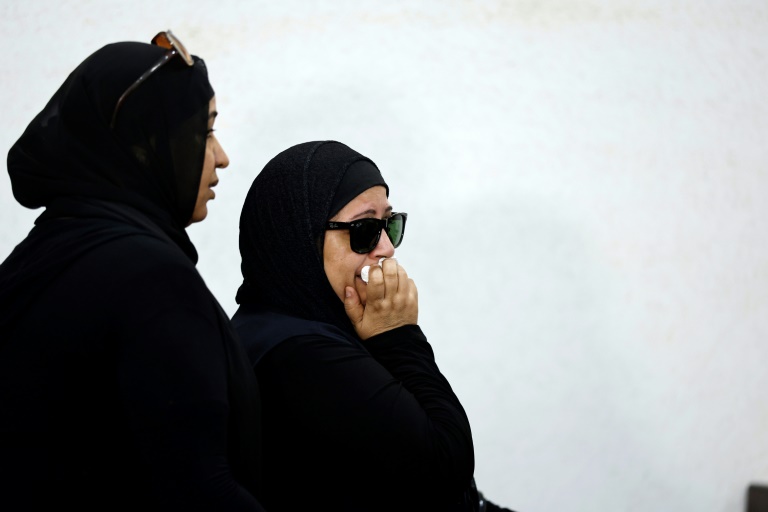
A trial began Sunday for an Egyptian man accused of stabbing a woman to death in a public street after she rejected his advances — a case that has sparked widespread outrage.

A video went viral last week appearing to show the victim, identified as student Nayera Ashraf, being stabbed by a young man outside her university.

The crime has triggered widespread anger both in Egypt and beyond, having been followed a few days later by a similar incident in which Jordanian student Iman Irshaid was shot dead on a university campus.

Social media users immediately drew comparisons between the two murders, decrying cases of femicide in the Arab world.

At the Mansoura Criminal Court, 130 kilometres (80 miles) north of Cairo, Mohamed Adel was accused of “premeditated murder”, after confessing to intentionally killing the victim, an AFP correspondent said.

Ashraf had previously reported the alleged perpetrator to the authorities, fearing that he would attack her, according to her father and witnesses.

The maximum penalty for murder is death in Egypt, which carried out the third highest number of executions in the world in 2021, according to Amnesty International.

“He stabbed her several times,” said the prosecution, which found “messages threatening to cut her throat” on the victim’s phone.

The next hearing is set for Tuesday, the defendant’s lawyer, Ahmed Hamad, told AFP.

In a rare occurrence among cases involving violence against women, authorities allowed television cameras to film the hearing on Sunday.

On social media, many Jordanian and Egyptian users called for the perpetrator to be sentenced to death, while others said men must “learn to take no for an answer”.

Egyptian preacher Mabrouk Attia sparked outrage last week after suggesting that the victim would not have met the same fate had she been veiled.

Nearly eight million Egyptian women were victims of violence committed by their partners or relatives, or by strangers in public spaces, according to a United Nations survey conducted in 2015.

Long road ahead to hammer out UN biodiversity blueprint

Delegates from almost 200 nations have made little progress towards hammering out a blueprint for a global pact to protect nature from human activity, after almost a week of difficult talks in Nairobi.

The meetings wrapping up Sunday were aimed at ironing out differences among the UN Convention on Biological Diversity’s (CBD) 196 members, with barely six months before a crucial COP15 summit in December.

The ambitious goal is to draw up a draft text outlining a global framework to “live in harmony with nature” by 2050, with key targets to be met by 2030.

Many hope the landmark deal, when finalised, will be as ambitious in its goals to protect life on Earth as the Paris agreement was for climate change.

A closing media release from the CBD said delegates had “achieved consensus on several targets”.

Elizabeth Maruma Mrema, the CBD’s executive secretary, acknowledged at the closing news conference that progress had been “limited”.

But she added: “We cannot afford to fail.”

“There’s a lot of work — lot more that what we thought,” said Basile van Havre, co-chair of the CBD. But he added: “That work is doable.”

– ‘Security issue for humanity’ –

“Most of the time was spent on technical bickering, with major decisions left unresolved and postponed for the COP,” Brian O’Donnell, director of the Campaign for Nature, told AFP earlier.

“It is now critically important that environment ministers and heads of state engage, take ownership and rescue this process.”

Delegates in Nairobi spent hours discussing formulations or seeking to introduce new elements, instead of reconciling differing viewpoints and refining rather than overhauling the text.

One delegate on Saturday night spoke of feeling “desperate”. Another described the Nairobi round as “a step” and voiced hope for further informal meetings before December.

“We need to continue with the dialogue with the intention to simplify and reduce the brackets (on the disputed issues) and alternatives,” said Vinod Mathur, head of India’s National Biodiversity Authority.

For that to happen, warned Francis Ogwal of Uganda, one of the two co-chairs of the Kenya negotiations, “there has to be a very big shift of mind in the way we are negotiating”.

Proposals include a global commitment to set aside at least 30 percent of both land and oceans as protected zones by the end of the decade, as well as efforts to cut plastic and agricultural pollution.  

But time is running out.

One million species are threatened with extinction and tropical forests are disappearing, while intensive agriculture is depleting the soil and pollution is affecting even the most remote areas of the planet.

“It’s not any longer an ecological issue only… It is increasingly an issue that affects our economy, our society, our health, our wellbeing,” Marco Lambertini, director general of WWF International, told a press conference.

“It is a security issue for humanity.”

– ‘Crucial’ to fix food system –

Lambertini accused some countries of using a “delaying tactic”, pointing the finger at Brazil in particular. Behind the scenes, Argentina and South Africa were also getting blamed.

One of the main stumbling blocks concerns agriculture, particularly targets for a reduction in pesticides and fertilisers.

The European Union wants to see the pesticide issue specifically mentioned in the text, but “there is little support” for that position, said one delegate.

Delegates from the Global South have highlighted the need to produce more, with much of the planet undergoing a major food security crisis, and reject any reference to agroecology, the use of ecological principles in farming.  

“Agriculture is currently responsible for 70 percent of biodiversity loss,” said Guido Broekhoven of WWF International, adding that it was “absolutely crucial” to fix a system where 30 percent of food goes to waste.

Countries are also divided on the issue of the funding needed to implement the biodiversity goals.

Brazil, backed by 22 countries including Argentina, South Africa, Cameroon, Egypt and Indonesia, renewed calls for rich countries to provide at least $100 billion a year until 2030 to help developing countries preserve their rich biodiversity. 

The African bloc is also asking for a fund dedicated to biodiversity, according to one country delegate.

Although leaders of 93 countries committed in September 2020 to ending the biodiversity crisis, the issue is struggling to gain as much traction on the international political agenda as climate change.

“There is also a need to see where our political leaders want us to be,” said Canada’s van Havre.

“We’re looking to see who’s going to step up to pick up that ball.”

Close Bitnami banner
Bitnami