Africa Business

Police investigate deaths of 21 teenagers at S. African tavern

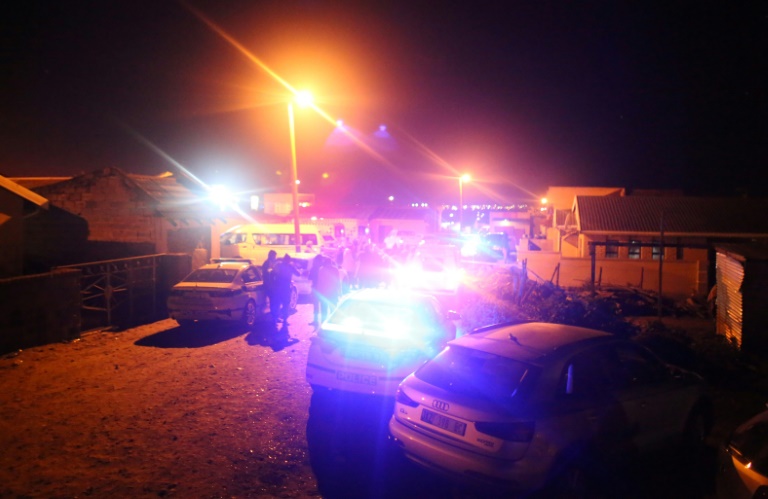
At least 21 teenagers died over the weekend after a night out at a township tavern in South Africa, officials said Sunday.

Although the cause of the deaths is still unclear, local officials and politicians said they feared this might have been a case of under-age drinking that went tragically wrong.

The provincial government of Eastern Cape said eight girls and 13 boys had died at the tavern, in a residential area called Scenery Park. Seventeen were found dead at the scene, while the rest died in hospital.

Empty bottles of alcohol, wigs and even a pastel purple “Happy Birthday” sash were found strewn on the dusty street outside the double-storey Enyobeni Tavern, said Unathi Binqose, a safety government official who arrived at the scene at dawn. 

Many of the victims are thought to have been students celebrating the end of their high-school exams on Saturday night, officials said.

There were no visible wounds on the bodies, but autopsies would determine if the deaths could be linked to poisoning, they added.

Among the senior government officials who rushed to the southern city was Police Minister Bheki Cele. 

He broke down in tears after emerging from a morgue where the bodies were being stored.

“It’s a terrible scene,” he told reporters.

“They are pretty young. When you are told they are 13 years, 14 years and you go there and you see them. It breaks (you).”

– Under-age drinking suspected –

Drinking is permitted for over-18s.

But in township taverns which are often situated cheek by jowl with family homes, safety regulations and drinking-age laws are not always enforced.

“We have a child that was there, who passed away on the scene,” said the parents of a 17-year-old girl.

“This child, we were not thinking was going to die this way. This was a humble child, respectful,” said grieving mother Ntombizonke Mgangala, standing next to her husband outside the morgue.

President Cyril Ramaphosa, who is attending the G7 summit in Germany, sent his condolences.

He voiced concern “about the reported circumstances under which such young people were gathered at a venue which, on the face of it, should be off-limits to persons under the age of 18”.

The authorities are now considering whether to revise liquor licensing regulations.

South Africa is among the countries in Africa where most alcohol is consumed.

Provincial prime minister Oscar Mabuyane condemned the “unlimited consumption of liquor”.

“You can’t just trade in the middle of society like this and think that young people are not going to experiment,” he said outside the tavern. 

– ‘No obvious signs of injury’ –

Commenting on the tragedy the tavern’s owner, Siyakhangela Ndevu, said: “It’s not something that as a businessman, I expected to have happened there, but things like this happen unexpectedly.”

There had been a rush to enter the bar by revellers despite warnings it was full, he told reporters.

He was called to the scene after 1:00 am (2300 GMT) as there were “too many people. Others want to go out and others …want to forcefully enter”.

But safety official Binquose ruled out a stampede as the cause of death.

“There are no visible open wounds,” he told AFP.

“Forensic (investigators) will take samples and test to see if there was any poisoning of any sort,” he said.

The regional liquor licensing agency said it was considering revoking the tavern’s licence and laying criminal charges against the owner for “blatant” contravention of the law that prohibits the sale of alcohol to under 18’s.

Local newspaper DispatchLive reported on its website bodies “lying strewn across tables, chairs and on the floor, with no obvious signs of injury”.

Some of the dead were students celebrating “pens down” parties held after the end of the mid-year exams.

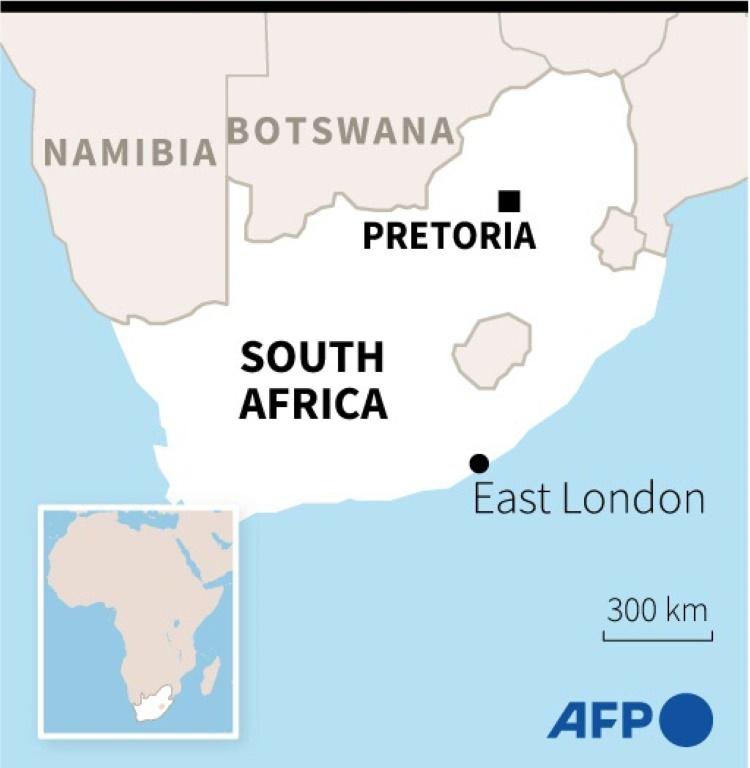
A crowd of people gathered outside the club in the city, which is located on the Indian Ocean coast, nearly 1,000 kilometres (620 miles) south of Johannesburg.

sn-strs/jj

21 teenagers die in mysterious circumstances in S. African tavern

At least 21 teenagers, the youngest possibly just 13, died at the weekend after a night out at a township tavern in South Africa, in a tragedy whose cause remains unclear.

Many are thought to have been students celebrating the end of their high-school exams on Saturday night, provincial officials said.

There were no visible wounds on the bodies. Officials have ruled out a stampede as a possible cause and said autopsies would determine if the deaths could be linked to poisoning.

Crowds of people, including parents whose children were missing, gathered on Sunday outside the tavern where the tragedy happened in the city of East London, while mortuary vehicles collected the bodies, an AFP correspondent saw.

Senior government officials rushed to the southern city. They included national Police Minister Bheki Cele, who broke down in tears after emerging from a morgue where the bodies were being stored.

“It’s a terrible scene,” he told reporters. “They are pretty young. When you are told they are 13 years, 14 years and you go there and you see them. It breaks (you).”

The provincial government of Eastern Cape said eight girls and 13 boys had died. Seventeen were found dead inside the tavern. The rest died in hospital.

Drinking is permitted for over-18s in township taverns, commonly known as shebeens, which are often situated cheek by jowl with family homes or, in some cases, inside the homes themselves.

But safety regulations and drinking-age laws are not always enforced.

“We have a child that was there, who passed away on the scene,” said the parents of a 17-year-old girl.

“This child, we were not thinking was going to die this way. This was a humble child, respectful,” said grieving mother Ntombizonke Mgangala, standing next to her husband outside the morgue.

President Cyril Ramaphosa, who is attending the G7 summit in Germany, sent his condolences.

He voiced concern “about the reported circumstances under which such young people were gathered at a venue which, on the face of it, should be off-limits to persons under the age of 18”.

The authorities are now considering whether to revise liquor licensing regulations. South Africa is among the countries in Africa where most alcohol is consumed.

“It’s absolutely unbelievable… losing 20 young lives just like that,” provincial prime minister Oscar Mabuyane said, visibly shocked.

He was speaking to reporters before the toll was updated to at least 21.

He condemned the “unlimited consumption of liquor”.

“You can’t just trade in the middle of society like this and think that young people are not going to experiment,” he said from outside the tavern, in a residential area called Scenery Park.

Empty bottles of alcohol, wigs and even a pastel purple “Happy Birthday” sash were found strewn on the dusty street outside the double-storey Enyobeni Tavern, according to Unathi Binqose, a safety government official who arrived at the scene at dawn.  

– ‘No obvious signs of injury’ –

Ruling out a stampede as the cause of death, Binqose told AFP: “There are no visible open wounds.”

“Forensic (investigators) will take samples and test to see if there was any poisoning of any sort,” he said, adding the bar was overcrowded.

Local newspaper DispatchLive reported on its website: “Bodies are lying strewn across tables, chairs and on the floor, with no obvious signs of injury.”

Parents and officials said they understood many of the dead were students celebrating “pens down” parties held after the end of high-school exams.

Local television showed police officers trying to calm down a crowd of parents and onlookers gathered outside the club in the city, which is located on the Indian Ocean coast, nearly 1,000 kilometres (620 miles) south of Johannesburg.

sn-strs/gil/imm

Violence at Spanish enclave sparks fear of worse to come

A massive attempt by migrants to storm the barrier between Morocco and the Spanish enclave of Melilla resulted in “unprecedented violence” that killed at least 23 sub-Saharan Africans and has sparked fears of worse to come.

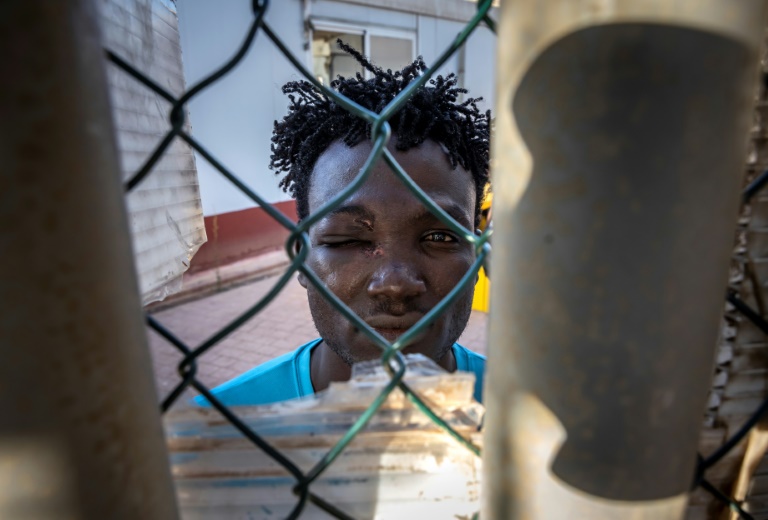
“It was like a war, we were holding rocks, little rocks, to fight the Moroccan military, who beat us by any means, with sticks,” said a 20-year-old Sudanese migrant at a detention centre inside Melilla.

“I climbed up the fence but a Moroccan guard hit my hands. I fell unconscious on the Spanish side, where I was beaten up by Spanish forces,” said another. 

They were among 2,000 migrants who on Friday stormed the heavily fortified border between the Moroccan region of Nador and the enclave of Melilla. 

At least 23 migrants died and 140 police officers were wounded, according to Moroccan authorities — the heaviest toll in years of such attempts.

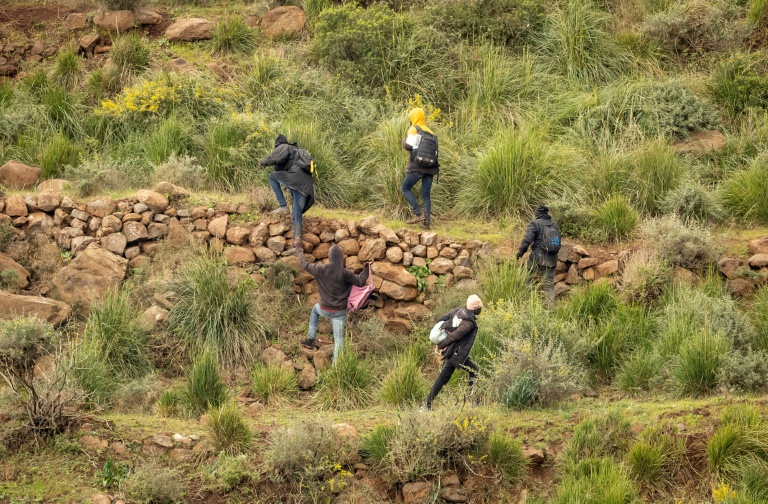
Many of the migrants, often from war-torn zones such as Sudan’s Darfur region, have spent months or even years under precarious, dangerous conditions in the nearby forest of Gourougou, braving beatings and arrests in multiple attempts to reach better lives in Spain.

But observers said the latest attempt was unprecedented in the level of violence.

“It’s the first time that we see this level of violence by migrants themselves against security forces,” said Omar Naji from the Nador office of the AMDH rights group.

The violence has heightened fears among Moroccans in the area.

“We’re terrorised by what happened,” said Issame Ouaaid, 24, from the border district of Barrio Chino.

“It’s the first time that we’ve seen migrants carrying iron rods to fight with the police.”

– Migrants treated ‘very harshly’ –

Naji linked the level of violence to a recent mending of ties between Spain and Morocco, leading to renewed cooperation against migrants and stricter enforcement.

Morocco, the only African country sharing a land border with the EU, is a key conduit for migrants fleeing war and poverty.

But the kingdom has also been accused — by Spain — of using migration flows as a tool to exert political pressure.

In May 2021, some 10,000 migrants surged across the border into Spain’s other enclave, Ceuta, as Moroccan border guards looked the other way, in what was widely seen as a punitive gesture by Rabat in a political row over the disputed territory of Western Sahara.

The two countries’ resumption of ties earlier this year after a convergence on Western Sahara has led to “an intensification of pressures” against migrants living rough in the forested hills near the border, Naji said.

Recent months have seen a fall in the numbers of migrants reaching Spanish territory, according to Madrid. 

“The Moroccan authorities treat migrants very harshly, raiding their camps,” Naji said.

“There’s no doubt that this pressure has generated the unprecedented violence we’re seeing.”

– Ceuta bid foiled –

Before Friday’s incident, Spanish media reported several clashes between migrants and security forces, who had chased away residents of camps and transferred some away from the border region.

For Othmane Ba, president of an association for sub-Saharan African migrants in Morocco, “the difficult conditions these migrants are facing condition them psychologically for violence”.

A majority of migrants arriving in Morocco are originally from Sudan, particularly the Darfur region where a new spike in violence has left 125 people dead and 50,000 displaced.

On their way to Morocco, many pass through Libya, notorious for rights abuses by armed groups against migrants.

Once they arrive in Morocco, many are willing to risk their lives to reach Europe.

“There are people here who have been waiting for two or three years” to get across, Naji said.

Moroccan authorities said Sunday they had foiled a plot by migrants to cross the border into Ceuta, making 59 arrests.

But, Naji said, “Morocco can’t totally close its borders and play the role of police force for Europe. That policy can only lead to more violence.”

isb-fs-kao-agr/par/hc

Long road ahead to hammer out UN biodiversity blueprint

Delegates from almost 200 nations have made little progress towards hammering out a blueprint for a global pact to protect nature from human activity, after almost a week of difficult talks in Nairobi.

The meetings wrapping up Sunday were aimed at ironing out differences among the UN Convention of Biological Diversity’s 196 members, with barely six months before a crucial COP15 summit in December.

The ambitious goal is to draw up a draft text outlining a global framework to “live in harmony with nature” by 2050, with key targets to be met by 2030.

Many hope the landmark deal, when finalised, will be as ambitious in its goals to protect life on Earth as the Paris agreement was for climate change.

But progress at the talks in the Kenyan capital was slow.

“Most of the time was spent on technical bickering, with major decisions left unresolved and postponed for the COP,” said Brian O’Donnell, director of the Campaign for Nature.

“It is now critically important that environment ministers and heads of state engage, take ownership and rescue this process,” he told AFP.

Delegates in Nairobi spent hours discussing formulations or seeking to introduce new elements, instead of reconciling differing viewpoints and refining rather than overhauling the text.

– ‘Security issue for humanity’ –

One delegate on Saturday night spoke of feeling “desperate”. Another described the Nairobi round as “a step” and voiced hope for further informal meetings before December.

“We need to continue with the dialogue with the intention to simplify and reduce the brackets (on the disputed issues) and alternatives,” said Vinod Mathur, head of India’s National Biodiversity Authority.

For that to happen, warned Francis Ogwal of Uganda, one of the two co-chairs of the Kenya negotiations, “there has to be a very big shift of mind in the way we are negotiating”.

Proposals include a global commitment to set aside at least 30 percent of both land and oceans as protected zones by the end of the decade, as well as efforts to cut plastic and agricultural pollution.  

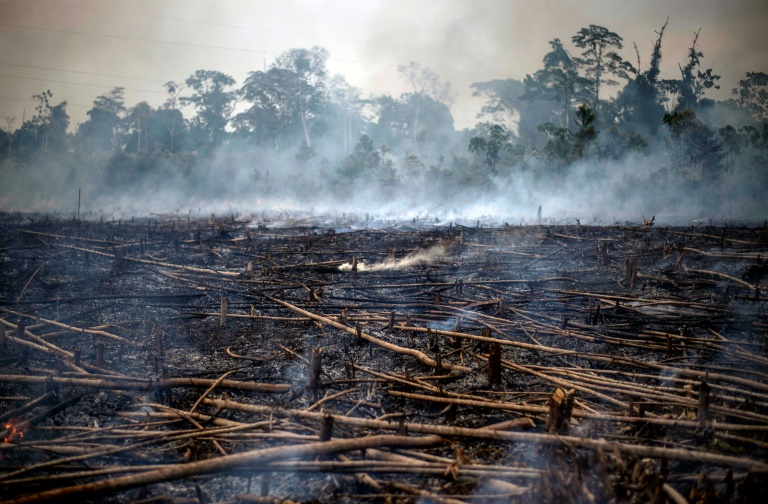
But time is running out, with one million species threatened with extinction and tropical forests disappearing, while intensive agriculture is depleting the soil and pollution is affecting even the most remote areas of the planet.

“It’s not any longer an ecological issue only… It is increasingly an issue that affects our economy, our society, our health, our wellbeing,” Marco Lambertini, director general of WWF International, told a press conference.

“It is a security issue for humanity.”

– ‘Crucial’ to fix food system –

Lambertini accused some countries of using a “delaying tactic”, pointing the finger at Brazil in particular. Behind the scenes, Argentina and South Africa were also getting the blame.

One of the main stumbling blocks concerns agriculture, particularly targets for a reduction in pesticides and fertilisers.

The European Union wants to see the pesticide issue specifically mentioned in the text, but “there is little support” for that position, according to one delegate.

Delegates from the Global South have highlighted the need to produce more, with much of the planet undergoing a major food security crisis, and reject any reference to agroecology, the use of ecological principles in farming.  

“Agriculture is currently responsible for 70 percent of biodiversity loss,” said Guido Broekhoven of WWF International, adding that it was “absolutely crucial” to fix a system where 30 percent of food goes to waste.

Countries are also divided on the issue of the funding needed to implement the biodiversity goals.

Brazil, backed by 22 countries including Argentina, South Africa, Cameroon, Egypt and Indonesia, renewed calls for rich countries to provide at least $100 billion a year until 2030 to help developing countries preserve their rich biodiversity. 

The African bloc is also asking for a fund dedicated to biodiversity, according to one country delegate.

Although leaders of 93 countries committed in September 2020 to ending the biodiversity crisis, the issue is struggling to gain as much traction on the international political agenda as climate change.

“There is also a need to see where our political leaders want us to be,” said Canada’s Basile van Havre, co-chair of the Kenyan talks.

“We’re looking to see who’s going to  step up to pick up that ball.”

20 people die in South African pub, cause unclear

At least 20 young people have died at a township pub in South Africa’s southern city of East London, but the cause of the deaths is still unclear.

Senior officials from the provincial government rushed to the scene, where at least six mortuary vehicles were lined up in the residential street waiting to collect the bodies, according to an AFP correspondent.

Drinking is permitted in South African township pubs, commonly known as taverns or shebeens which are sometimes located in family homes, where safety regulations are rarely enforced.

“The number has increased to 20, three have died in hospital. But there are still two who are very critical,” the head of the provincial government safety department Weziwe Tikana-Gxothiwe said on local TV.

A visibly shocked head of the Eastern Cape Province Oscar Mabuyane spoke from outside the scene, a building surrounded by houses in an area called Scenery Park.

“It’s absolutely unbelievable, we can’t understand it, losing 20 young lives just like that,” he told reporters, condemning “this unfortunate consumption, unlimited consumption of liquor”.

“You can’t just trade in the middle of society like this and think that young people are not going to experiment,” he said.

Empty bottles of alcohol, wigs and even a pastel purple “Happy Birthday” sash lay strewn on the dusty street outside the double-storey Enyobeni Tavern, according to Unathi Binqose, a safety government official who arrived at the scene at dawn.   

– ‘No obvious signs of injury’ –

Provincial police spokesman brigadier Thembinkosi Kinana told AFP that police were investigating the circumstances surrounding the incident.

He said the victims at Enyobeni Tavern were aged between 18 and 20 years, but provincial community and safety department official Binqose said some could be as young as 15.

Ruling out a stampede as the cause of death, Binqose told AFP “there are no visible open wounds to those dead”.

“Forensic (investigators) will take samples and test to see if there was any poisoning of any sort,” he said.

“One thing for sure, the place had a lot more people than it normally takes,” he added.

A local newspaper website, DispatchLive, reported that “bodies are lying strewn across tables, chairs and on the floor; with no obvious signs of injury”.

Binqose said he understood many of the patrons were students “celebrating pens down, a party held after writing (high school) exams”.

Local television showed police officers trying to calm down a crowd of parents and onlookers gathered outside the club in the city, which lies on the Indian Ocean coast, nearly 1,000 kilometres (620 miles) south of Johannesburg.

“Parents whose children did not sleep at home are gathered here and they want to enter the tavern to look for their loved ones,” said Binqose.

sn-strs/kjm

NATO summit host Spain seeks focus on southern security

Spain is lobbying for NATO to pay more attention to security threats on its southern flank when the military alliance gathers for a summit in Madrid later this week.

But with the war in Ukraine entering its fifth month, the priority for Spain’s NATO partners remains firmly on deterring Russian in the east.

When NATO leaders convene in Madrid on June 28-30 they are due to revamp the alliance’s strategic concept, which outlines its main security tasks and challenges but has not been revised since 2010.

Spanish Foreign Minister Jose Manuel Albares has been pushing for NATO to broaden its scope to help deal with non-military threats such as “the political use of energy resources and illegal immigration” in Africa.

“The threats are as much from the southern flank as from the eastern flank,” he told a Madrid news conference on Wednesday.

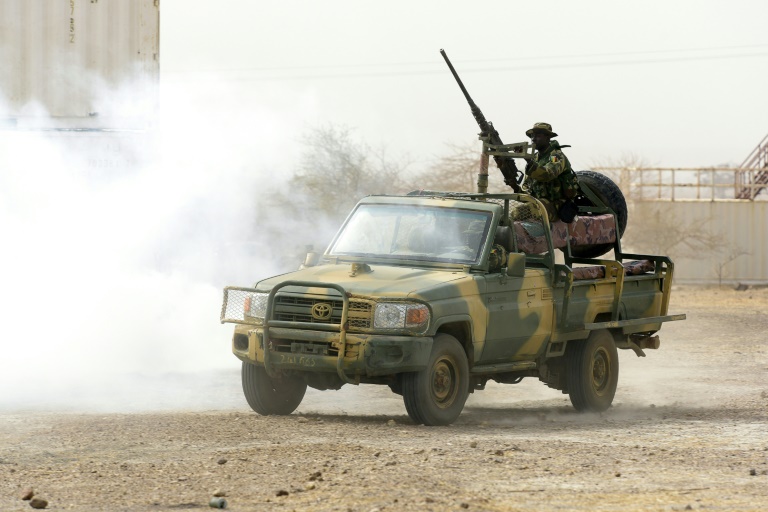
Madrid is also concerned about lawlessness and violent Islamist movements in the Sahel region, a vast territory stretching across the south of the Sahara Desert.

“We have this war in Europe, but the situation in Africa is really worrying,” said Spanish Defence Minister Margarita Robles.

The issue is particularly acute for Spain, a main gateway into Europe for irregular migration from Africa and a country which relies on Algeria for gas supplies.

Last year Morocco allowed thousands of migrants to enter Spain’s North African enclave of Ceuta during a diplomatic crisis over the disputed Western Sahara, prompting Madrid to accuse Rabat of “blackmail”.

Although the two countries recently normalised their relations after Spain ended its decades-long position of neutrality over Western Sahara to publicly support Morocco’s stance, the migration crisis hasn’t come to an end.

On Friday at dawn, around 2,000 African migrants tried to storm the border with Melilla, the other Spanish enclave on Morocco’s northern coast. At least 23 died in the incursion, making it the deadliest incident to occur at the borders of the two Spanish enclaves — the only borders between the EU and Africa. 

And earlier this month Morocco’s arch-rival Algeria suspended a co-operation treaty with Spain in response to Madrid’s U-turn over Western Sahara. 

– ‘Uphill struggle’ –

But with an active conflict on NATO’s eastern flank, it is going to be “an uphill struggle” to convince member states to make a commitment to the southern flank, said Sinan Ulgen, a NATO expert at the Carnegie Europe think-tank in Brussels.

“The war in Ukraine has changed the equation. The threat from Russia has become the main preoccupation for almost all the countries,” the former Turkish diplomat told AFP.

In Washington, US national security spokesman John Kirby said “the focus right now is on the eastern flank”.

“But there remains a continued effort to make sure we are also paying attention to the southern flank,” he added.

In an interview published Saturday by Spanish daily El Pais, NATO secretary-general Jens Stoltenberg said the Alliance would “strengthen (its) cooperation with southern countries”, mentioning Mauritania in particular.

Aside from Russia, Washington’s other major concern is China, which is expected to be mentioned in NATO’s strategic concept for the first time.

To try to convince its NATO allies, Spain has sounded the alarm over the growing presence of Russian mercenaries in African nations like Mali and the Central African Republic, arguing instability could increase African migration to Europe.

Madrid has also suggested that Russia was behind Spain’s recent diplomatic spat with Algeria.

“Unfortunately the threats from the south are increasingly Russian threats from the south,” Albares said.

– Different agendas –

Ulgen said that another difficulty is that while other southern European nations want a greater NATO engagement in Africa, they have different priorities, making it hard to set a common alliance-led strategy.

“Rome, Paris, Madrid, Ankara still assess the political and security challenges differently. That is the fundamental reason why there is not a stronger push for NATO to have a bigger role” in the southern flank, said Ulgen.

In addition, many top US policymakers believe NATO should focus on territorial defence, not non-conventional threats, said Angel Saz, the director of the Centre for Global Economy and Geopolitics at Spain’s Esade business school.

“And the only threat to territorial defence is Russia. The Sahel can destabilise Europe, but it will not conquer Spain or Italy,” he said.

Spain has “perhaps put too much emphasis” on the call for a greater NATO role in the southern flank and “it runs the risk of under accomplishing,” he added.

Kagame defends Rwanda on rights as Commonwealth expands

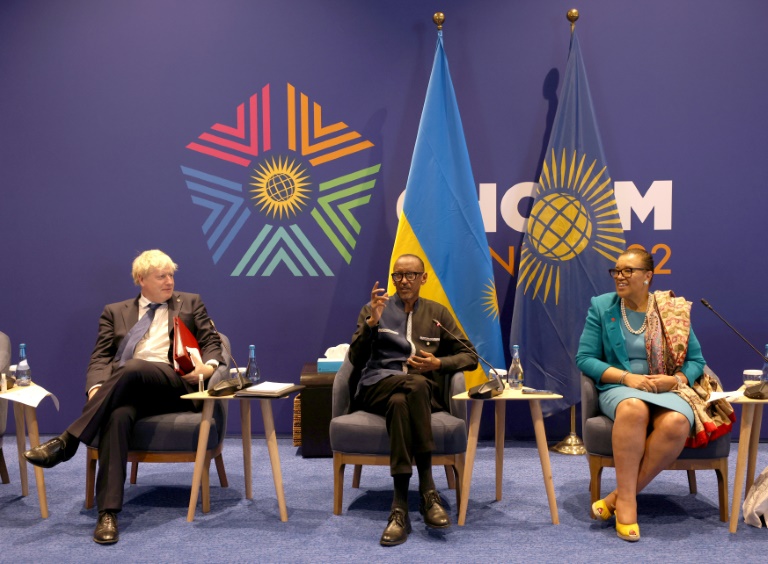
President Paul Kagame on Saturday fiercely defended Rwanda’s record on human rights and political freedoms as the curtains closed on a Commonwealth summit where his country came under intense scrutiny.

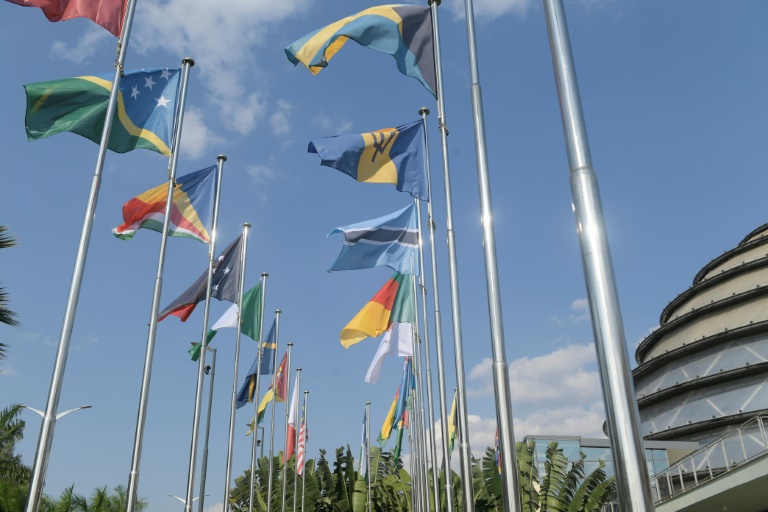
The Commonwealth also welcomed two new members into the fold at its summit in Kigali — the French-speaking West African states of Togo and Gabon that have no historic ties to Britain. 

The decision to hold the gathering in Rwanda was heavily criticised by rights watchdogs, which accused Commonwealth leaders of turning a blind eye to repression and the jailing of opponents in the host country.

Kagame, who has been de facto ruler since the end of the genocide in 1994, told reporters Rwanda was proud of its record and would not be lectured by outsiders.

“As far as values are concerned, we don’t need any lessons from BBC or from anyone,” Kagame said in an impassioned statement that lasted nearly 30 minutes.

“I want to assure you there is nobody… who (is) beholding values better than we do here in Rwanda,” he told the summit’s closing press conference. 

Ahead of the meeting attended by Prince Charles and around 30 leaders, rights groups warned that Kigali’s sparkling streets had been cleared of the homeless and street kids to maintain a glossy image for visitors. 

In an open letter, 23 civil society organisations said there was a “climate of fear” in Rwanda and urged Commonwealth leaders not to risk the body’s integrity by letting Kagame off the hook.

His government had presided over a crackdown on rights of assembly, enforced disappearances, arbitrary detention, torture and extrajudicial executions, they said.

Kagame rejected any suggestion his government detained opponents, saying some of his most vocal critics had been freed from prison by presidential pardon.

“There is nobody in Rwanda who is in prison that should not be there, because we have a justice system that is actually functional, and fair,” he said.

– ‘Historic moment’ –

Kagame also announced that Gabon and Togo had been admitted into the Commonwealth, the first new members since Rwanda in 2009.

“This is a historic moment! A new important page in the history of Gabon is opening 62 years after its independence,” Gabonese President Ali Bongo said in a statement.

Togo’s Foreign Minister Robert Dussey said membership opened the door to 2.5 billion consumers in the Commonwealth realm, offered new education opportunities, and tapped a “craze” for English among his countrymen.

Francophone states have also sought to join the Commonwealth in recent years to pivot away from former colonial ruler France, analysts said.

The admission of Gabon and Togo takes membership to 56 nations, and is a boon for the Commonwealth at a time of renewed discussion over its future relevance and modern profile.

Republican movements are taking root in a number of Commonwealth nations and some are seeking reparations for colonial-era injustices.

On Friday, Prince Charles told Commonwealth leaders the choice to become a republic or abandon Queen Elizabeth II as head of state was theirs alone and expressed “personal sorrow” at Britain’s legacy of slavery.

And British Prime Minister Boris Johnson said the interest from new members proved the organisation was alive and well.

– ‘Better together’ –

But the admission of Gabon and Togo could raise questions about the Commonwealth’s espoused commitment to good governance, respect of rights and democracy as fundamental values of its charter.

Both countries have been ruled by single families for over half a century, and elections have been marred by irregularities and violence.

“We are much better together than we ever will be apart,” said Patricia Scotland, who was re-elected in Kigali for another two years as Commonwealth secretary-general after a bruising and divisive campaign. 

Delegates at the Commonwealth Heads of Government Meeting (CHOGM) addressed issues including climate change, violence against women, mental health, vaccine equity, and urbanisation — to name a few.

A much-criticised deal to deport asylum-seekers from the UK to Rwanda dogged the meeting, however, with Johnson vigorously defending his policy.

Ahead of the summit it was reported that Charles — who takes over the Commonwealth when he becomes king — strongly opposed the migrant scheme.

The first transfer of asylum seekers scheduled this month was blocked in a European court, but Johnson insists the deal is not unlawful and he will pursue it.

Born out of the British Empire, the Commonwealth represents one-third of humanity in nations across Africa, Asia, Europe and the Americas.

The next Commonwealth meet will be in Samoa in 2024.

Spain says deadly migrant rush 'attack' on its territory

The Spanish prime minister on Saturday described a deadly migrant rush on the enclave of Melilla from Morocco as an attack on Spain’s “territorial integrity”, as human rights activists demanded an investigation.

At least 23 African migrants died in the latest drama on the doors of the European Union, when around 2,000 mostly sub-Saharan African migrants approached the Moroccan border with the tiny territory at dawn on Friday.

More than 500 people managed to enter a border control area after cutting a fence with shears, Melilla authorities said in a statement.

Moroccan officials on Friday said 18 migrants had died during the rush or succumbed to their injuries, some of which came from falling from the top of the barrier. On Saturday, they revised the toll upwards to 23 after five of those injured died.

More than 20 migrants and two security force personnel remain in hospital Saturday in the cities of Nador and nearby Oujda, they said.

Spanish Prime Minister Pedro Sanchez said the incident was a “violent and organised attack by mafias who traffic in human beings, against a Spanish territory”.

But Morocco’s AMDH human rights group said it was “a true catastrophe that shows the consequences of the latest Moroccan-Spanish entente”, just weeks after the two sides resolved a year-long diplomatic rift.

– ‘Investigate this tragedy’ –

The death toll is by far the worst recorded in years of attempts by migrants to cross into Melilla, one of Spain’s North African enclaves which have the EU’s only land borders on the continent.

Images on Spanish media on Friday showed exhausted migrants lying on the pavement in Melilla, some with bloodied hands and torn clothes.

By Saturday, calm had returned to the border area, with Moroccan security forces lightly deployed and no migrants to be seen.

The International Organization for Migration and the UN refugee agency expressed “grave concern at the lives lost and the number of injured”.

The agencies reminded member states of the “need in all circumstances to prioritise the safety of migrants and refugees, to avoid excessive use of force and to respect their fundamental rights.”

In Morocco, the AMDH demanded a “comprehensive, quick and serious enquiry”, while the Democratic Labour Organisation (ODT) trade union urged the government “to investigate this tragedy and do what is needed” both for migrants and police.

In Spain, Sanchez’s left-wing coalition partner Podemos also called for a probe.

– Residents fear attacks –

Residents of the Barrio Chino neighbourhood on the Moroccan side of the barrier said they were in shock.

“This is the most violent attempt to cross into Melilla that I’ve ever seen,” said Rachid Nejjari, a waiter in a cafe near the heavily fortified border fence.

“I saw migrants armed with sticks and iron bars… I was afraid of being attacked.”

Friday’s was the first mass incursion since Spain mended a year-long rift by backing Morocco’s autonomy plan for the disputed Western Sahara region, scrapping its decades-long stance of neutrality.

Sanchez then visited Rabat, and the two governments hailed a “new stage” in relations.

The row had begun when Madrid allowed Brahim Ghali, leader of Western Sahara’s pro-independence Polisario Front, to be treated for Covid-19 in a Spanish hospital in April 2021.

A month later, some 10,000 migrants surged across the Moroccan border into the Ceuta enclave as border guards looked the other way, in what was widely seen as a punitive gesture by Rabat.

Rabat wants Western Sahara to have autonomous status under Moroccan sovereignty but the Polisario insists on a UN-supervised referendum on self-determination as agreed in a 1991 ceasefire deal.

– Migration ‘security threat’ –

In the days just before Morocco and Spain patched up their ties, there were several attempted mass crossings of migrants into Melilla, including one involving 2,500 people, the largest such attempt on record. Nearly 500 made it across.

The mending of ties has meant a drop in migrant arrivals in Spain, notably in the Canary Islands.

The number of migrants who reached the Canary Islands in April was 70 percent lower than in February, government figures show. 

Sanchez said earlier this month that “Spain will not tolerate any use of the tragedy of illegal immigration as a means of pressure.”

Spain will seek to have “irregular migration” listed as one of the security threats on NATO’s southern flank when the alliance gathers for a summit in Madrid on June 29-30.

Over the years, thousands of migrants have attempted to gain entry to the Spanish enclaves by climbing the barriers, swimming along the coast or hiding in vehicles.

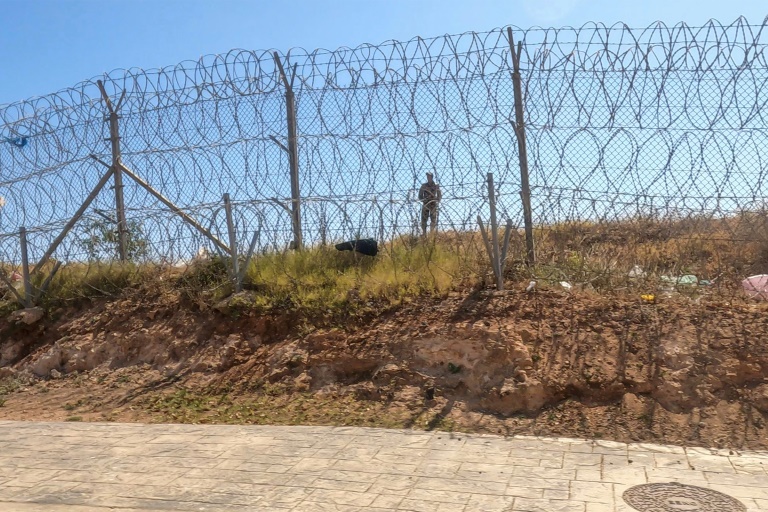
The two territories are protected by fences fortified with barbed wire, video cameras and watchtowers.

Spain says deadly migrant rush 'attack' on its territory

The Spanish prime minister on Saturday described a deadly migrant rush on the enclave of Melilla from Morocco as an attack on Spain’s “territorial integrity”, as human rights activists demanded an investigation.

At least 18 African migrants died in the latest drama on the doors of the European Union, when around 2,000 mostly sub-Saharan African migrants approached the Moroccan border with the tiny territory at dawn on Friday.

More than 500 managed to enter a border control area after cutting a fence with shears, Melilla authorities said in a statement.

Moroccan officials said 18 migrants had died during the rush or succumbed to their injuries, some of which came from falling from the top of the barrier.

Authorities said that 33 migrants and two security force personnel remained in hospital but in “stable condition” Saturday in the cities of Nador and nearby Oujda.

Spanish Prime Minister Pedro Sanchez said the incident was a “violent and organised attack by mafias who traffic in human beings, against a Spanish territory”.

But Morocco’s AMDH human rights group said it was “a true catastrophe that shows the consequences of the latest Moroccan-Spanish entente”, just weeks after the two sides resolved a year-long diplomatic rift.

The death toll, which could still rise, is by far the worst recorded in years of attempts by migrants to cross into Melilla, one of Spain’s North Africa enclaves which have the EU’s only land borders on the continent.

Images on Spanish media on Friday showed exhausted migrants lying on the pavement in Melilla, some with bloodied hands and torn clothes.

By Saturday, calm had returned to the border area, with Moroccan security forces lightly deployed and no migrants to be seen.

Mohamed Amine Abidar of the AMDH said migrants, who are often rounded up by authorities and taken to cities further south, had “probably moved away for fear of being displaced”.

The AMDH demanded a “comprehensive, quick and serious enquiry, while the Democratic Labour Organisation (ODT) trade union urged the Moroccan government “to investigate this tragedy and do what is needed” both for migrants and police.

In Spain, Sanchez’s left-wing coalition partner Podemos also called for a probe.

The mayor of Melilla, Eduardo de Castro, said the stampede had been “violent” but called the Moroccan response “disproportionate”.

– Residents fear attacks –

Residents of the Barrio Chino neighbourhood on the Moroccan side of the barrier said they were in shock.

“This is the most violent attempt to cross into Melilla that I’ve ever seen,” said Rachid Nejjari, a waiter in a cafe near the heavily fortified border fence.

“I saw migrants armed with sticks and iron bars… I was afraid of being attacked.”

Friday’s was the first mass incursion since Spain mended a year-long rift by backing Morocco’s autonomy plan for the disputed Western Sahara region, scrapping its decades-long stance of neutrality.

Sanchez then visited Rabat, and the two governments hailed a “new stage” in relations.

The row had begun when Madrid allowed Brahim Ghali, leader of Western Sahara’s pro-independence Polisario Front, to be treated for Covid-19 in a Spanish hospital in April 2021.

A month later, some 10,000 migrants surged across the Moroccan border into the Ceuta enclave as border guards looked the other way, in what was widely seen as a punitive gesture by Rabat.

Rabat wants Western Sahara to have autonomous status under Moroccan sovereignty but the Polisario insists on a UN-supervised referendum on self-determination as agreed in a 1991 ceasefire deal.

– Migration ‘security threat’ –

In the days just before Morocco and Spain patched up their ties, there were several attempted mass crossings of migrants into Melilla, including one involving 2,500 people, the largest such attempt on record. Nearly 500 made it across.

The mending of ties has meant a drop in migrant arrivals in Spain, notably in the Canary Islands.

The number of migrants who reached the Canary Islands in April was 70 percent lower than in February, government figures show. 

Sanchez said earlier this month that “Spain will not tolerate any use of the tragedy of illegal immigration as a means of pressure”.

Spain will seek to have “irregular migration” listed as one of the security threats on NATO’s southern flank when the alliance gathers for a summit in Madrid on June 29-30.

Over the years, thousands of migrants have attempted to gain entry to the Spanish enclaves by climbing the barriers, swimming along the coast or hiding in vehicles.

The two territories are protected by fences fortified with barbed wire, video cameras and watchtowers.

West African states Gabon and Togo join Commonwealth

Gabon and Togo joined the Commonwealth on Saturday, becoming the latest nations with no historic ties to Britain to enter the English-speaking club headed by Queen Elizabeth II. 

The 54-nation group of mostly former British colonies accepted Togo and Gabon’s application for membership on the final day of its leadership summit in Rwanda.

“We have admitted Gabon and Togo as new members, and we all welcome them to the Commonwealth family,” Rwandan President Paul Kagame said at the closing press conference.

The French-speaking West African states are the first new members to join the Commonwealth since Rwanda in 2009.

Togo’s Foreign Minister Robert Dussey said membership opened the door to 2.5 billion consumers in the Commonwealth realm, offered new education opportunities, and tapped a “craze” for English among his countrymen.

“Togo’s membership is motivated by the desire to expand its diplomatic, political, and economic network… as well as to get closer to the English-speaking world,” he told AFP.

It also allowed the small and developing nation of 8.5 million to redefine bilateral relations with the UK outside the European Union in the aftermath of Brexit, he added.

Francophone states have also sought Commonwealth membership in recent years to pivot away from France, analysts said.

Togolese political scientist Mohamed Madi Djabakate said the move would prove popular as French influence in Togo was often blamed for its economic woes.

“Togo joining the Commonwealth is better for many people than sharing the French language and culture, which at the end of the day has not promoted development,” he told AFP.

– ‘Making history’ –

Rwanda’s own membership came at a time of immense strain between Kigali and Paris, and the east African state has forged close ties with the UK in the years after its admission, including a controversial migrant deal agreed this year.

Gabonese President Ali Bongo said his country was “making history” by joining the group.

“Sixty-two years after its Independence, our country is getting ready to breakthrough with a new chapter,” Bongo said in a statement on Twitter. 

“It’s a world of opportunities for Gabon on the economic, diplomatic & cultural levels.” 

Their admission is a boon for the Commonwealth at a time of renewed discussion over its relevance and purpose.

British Prime Minister Boris Johnson said the interest from new members proved the organisation was alive and well.

But it could also raise questions about the Commonwealth’s espoused commitment to good governance and democracy as fundamental values of its charter.

Oil-rich Gabon, a former French colony on the Atlantic Ocean, has been ruled by the Bongo family for 55 years.

Ali Bongo took over after his father’s death and was returned to power in 2016 following an election marred by deadly violence and allegations of fraud.

Togo, a former German then French colony, has also been under dynastic rule for more than half a century.

General Gnassingbe Eyadema governed with an iron fist from 1967 until his death in 2005, upon which his son Faure Gnassingbe took power.

He was re-elected in polls that were all contested by the opposition.

Born out of the British Empire, the Commonwealth represents one-third of humanity and spans nations across Africa, Asia, Europe and the Americas.

Mozambique — a former Portuguese colony — became the first Commonwealth member without historic links to Britain when it joined in 1995.

Close Bitnami banner
Bitnami