Africa Business

Somalia parliament endorses new PM

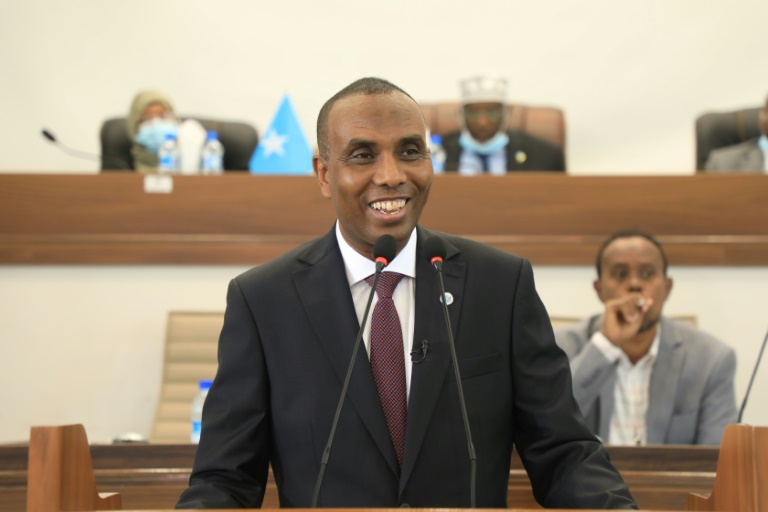
Somalia’s parliament on Saturday unanimously endorsed Hamza Abdi Barre as new prime minister, paving the way for the creation of a new government for the fragile Horn of Africa nation.

All 220 lawmakers present gave their blessing to Barre’s appointment, and he was then sworn in to office, the parliament speaker said.

Barre 48, told parliament he would form a government that would focus on “creating inclusive political stability (in line with) the president’s motto of a reconciled Somalia that is at peace with the world”.

Somalia’s new adminstration faces a raft of challenges including a looming famine and a grinding insurgency by the Al-Shabaab jihadist group.

“We shall form a capable government that pursues our nation’s developmental & humanitarian priorities reflecting our people’s needs,” Barre posted on Twitter.

A crippling drought across the Horn of Africa has left about 7.1 million Somalis — nearly half the population — battling hunger, with more than 200,000 on the brink of starvation, according to UN figures.

Al-Shabaab also continues to flex its muscles, waging an attack earlier this month that killed three soldiers in central Somalia, underscoring the difficult task ahead for the country’s new leaders.

Barre, an MP from the semi-autonomous state of Jubaland was chosen earlier this month by President Hassan Sheikh Mohamud, who was elected by parliament in May after a long-delayed and stormy voting process.

– ‘Move forward together’ –

“Our government has an ambitious policy programme which seeks to improve our security, strengthen our economy and deliver basic services for our people,” Mohamud said on Twitter after Barre was approved. 

“Let us move forward together.”

There are hopes that Mohamud’s presidency will draw the line under a seething political crisis that blighted the rule of his predecessor Mohamed Abdullahi Mohamed, better known as Farmajo, and threatened to plunge the country back into violent chaos.

Barre replaces Mohamed Hussein Roble, who was appointed in 2020 by Farmajo but then fell out with the former president over the delayed elections and other political and security issues.

The African Union’s peacekeeping mission in Somalia known as ATMIS offered its congratulations to Barre, as did Roble, who called on all Somalis to support his successor.

The 66-year-old president Mohamud did not appear at the parliamentary session after he said on Friday that he had tested positive for Covid-19.

He made the announcement on Twitter after returning from the United Arab Emirates, his first official trip abroad since his election, saying he had no symptoms but would continue to self-isolate.

Mohamud is a former academic and peace activist who was previously president from 2012-2017 but whose first administration was dogged by claims of corruption and infighting.
S.Africa's Zuma slams graft report as gossip, irrational

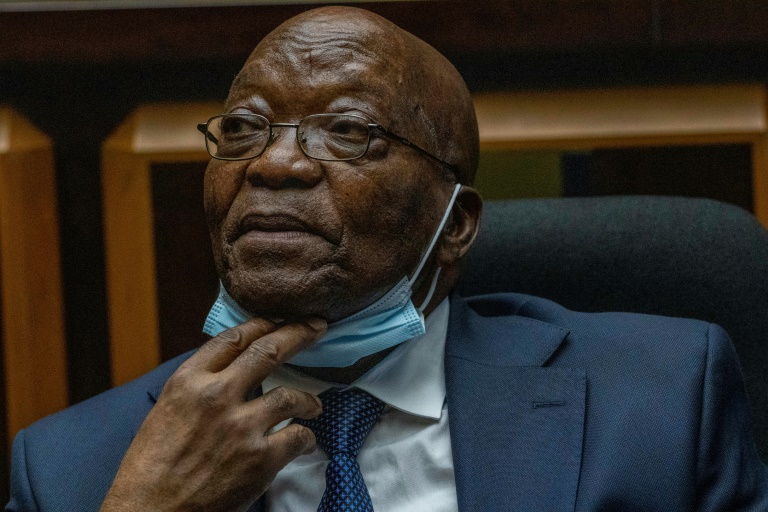
South Africa’s former president Jacob Zuma, accused of being a graft enabler, on Saturday rubbished as “unlawful” and “full of gossip” a judicial report detailing how rampant corruption gutted state coffers during his nine-year tenure.

He plans to challenge sections of the report, a product of a marathon four-year probe into what is known as state capture.

The web of corruption hollowed out state companies in the continent’s most advanced economy to the benefit of a few wealthy individuals and firms.

Zuma’s foundation spokesman Mzwanele Manyi told a media conference Zuma regarded the report as “unlawful and highly irrational”.

“It is predictably full of gossip, innuendo and conjecture. It is very short on concrete evidence,” said Manyi.

“The report is therefore a classical case of the fruits of a poisoned tree.”

Zuma set up the special probe panel himself, after a damning report by the national ombudswoman about corruption at state enterprises forced his hand.

The report accuses Zuma of being “a critical player” in the plan to pillage state firms through the Gupta family of business tycoons. 

The Guptas allegedly influenced top government cabinet appointments, including those of cabinet ministers, and secured business deals with giant state-owned companies on wildly favourable terms.

Two of the three Indian migrant brothers who fled the country the same year the corruption probe started four years ago were arrested earlier this month in Dubai pending extradition to South Africa.

– ‘Toothless inquiry’ –

Zuma’s office said the corruption investigators “dismally failed to find evidence beyond innuendo and conjecture to prove” that Zuma had abdicated his executive authority to the Guptas.

The ex-president briefly appeared before the investigators, but walked out and refused to return to answer questions.

His refusal to testify prompted a showdown at the Constitutional Court, which ordered his imprisonment in July 2021 for contempt.

Zuma’s incarceration sparked riots in which more than 350 people lost their lives — the deadliest unrest of the democratic era in South Africa. He was released after two months on medical parole.

Zuma had been billed to address the press conference, but his lawyers said they had advised him at the last minute to not attend to avoid violating his parole conditions.

It took the investigation, led by the now Chief Justice Raymond Zondo, nearly four years of hearing testimonies and reading through volumes of documents.

In more than 400 days of testimony, millions of pages of documents, and 300 witnesses, the inquiry incriminated 1,438 individuals and institutions, including Zuma. 

According to Zuma’s office, the probe was “a toothless inquiry investigating a phantom thing called ‘state capture'”.

President Cyril Ramaphosa estimates the corruption cost the country more than $30 billion.

The media conference was held at a small hotel near Liliesleaf Farm, a historical landmark in northern Johannesburg that served as a secret headquarters and nerve centre of the then banned African National Congress, which led the fight against apartheid.

Nelson Mandela also hid at the farm disguised as a farm worker.

Spain says deadly migrant rush 'attack' on its territory

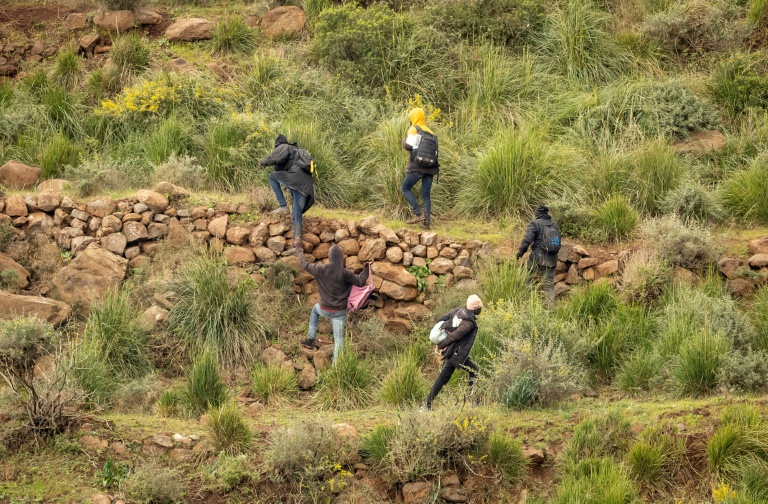
The Spanish prime minister on Saturday described a deadly migrant rush on the enclave of Melilla from Morocco as an attack on Spain’s “territorial integrity”, as human rights activists demanded an investigation.

At least 18 African migrants died in the latest drama on the doors of the European Union, when around 2,000 mostly sub-Saharan African migrants approached the Moroccan border with the tiny territory at dawn on Friday.

More than 500 managed to enter a border control area after cutting a fence with shears, Melilla authorities said in a statement.

Moroccan officials said late Friday that 13 migrants had died of injuries sustained in the incursion, in addition to five confirmed dead earlier in the day.

“Some fell from the top of the barrier” separating the two sides, a Moroccan official said.

Prime Minister Pedro Sanchez told journalists in Madrid that “if anyone is responsible for everything that happened at the border, it is the mafias that traffic in human beings.”

But Morocco’s AMDH human rights group said it was “a true catastrophe that shows the consequences of the latest Moroccan-Spanish entente”, just weeks after the two sides resolved a year-long diplomatic rift.

On Saturday, calm returned to the border area, with Moroccan security forces lightly deployed along the frontier.

In a forested area where migrants have been camping out for years, none were to be seen.

Mohamed Amine Abidar of the AMDH said migrants, who are often rounded up by authorities and taken to cities further south, had “probably moved away for fear of being displaced”.

Images on Spanish media on Friday showed exhausted migrants lying on the pavement in Melilla, some with bloodied hands and torn clothes.

The AMDH demanded a “comprehensive, quick and serious enquiry to determine responsibilities and shortcomings”, and warned against burying the migrants’ bodies until their deaths had been properly investigated.

– Residents fear attacks –

Residents of the Barrio Chino neighbourhood on the Moroccan side of the barrier said they were in shock.

“This is the most violent attempt to cross into Melilla that I’ve ever seen,” said Rachid Nejjari, a waiter in a cafe near the heavily fortified border fence.

“I saw migrants armed with sticks and iron bars… I was afraid of being attacked.”

Melilla and Ceuta, Spain’s other North African enclave, have the European Union’s only land borders on the African continent, making them a magnet for migrants.

Friday’s was the first such mass incursion since Spain mended a year-long rift by backing Morocco’s autonomy plan for the disputed Western Sahara region, scrapping its decades-long stance of neutrality.

Sanchez then visited Rabat, and the two governments hailed a “new stage” in relations.

The row had begun when Madrid allowed Brahim Ghali, leader of Western Sahara’s pro-independence Polisario Front, to be treated for Covid-19 in a Spanish hospital in April 2021.

A month later, some 10,000 migrants surged across the Moroccan border into Spain’s Ceuta enclave as border guards looked the other way, in what was widely seen as a punitive gesture by Rabat.

Rabat wants Western Sahara to have autonomous status under Moroccan sovereignty but the Polisario Front insists on a UN-supervised referendum on self-determination as agreed in a 1991 ceasefire deal.

– Migration ‘security threat’ –

In the days just before Morocco and Spain patched up their ties, there were several attempted mass crossings of migrants into Melilla, including one involving 2,500 people, the largest such attempt on record. Nearly 500 made it across.

The mending of ties has meant a drop in migrant arrivals in Spain, notably in the Canary Islands.

The number of migrants who reached the Canary Islands in April was 70 percent lower than in February, government figures show. 

Sanchez warned earlier this month that “Spain will not tolerate any use of the tragedy of illegal immigration as a means of pressure”.

Spain will seek to have “irregular migration” listed as one of the security threats on the NATO’s southern flank when the alliance gathers for a summit in Madrid on June 29-30.

Over the years, thousands of migrants have attempted to gain entry to the Spanish enclaves by climbing the barriers, swimming along the coast or hiding in vehicles.

The two territories are protected by fences fortified with barbed wire, video cameras and watchtowers.

Forest sign Nigeria striker Awoniyi from Union Berlin

Nottingham Forest have paid a club record fee of around £17 million ($20 million) to Nigeria striker Taiwo Awoniyi from Union Berlin.

Awoniyi agreed a five-year contract with Forest, who are preparing for their first season back in the Premier League since 1999.

The 24-year-old scored 20 goals in 43 games in all competitions in his last season in the Bundesliga.

He is Forest’s first senior signing since their victory over Huddersfield in the Championship play-off final.

“There’s been a lot of interest in Taiwo from other Premier League clubs and other clubs across Europe, so we’re delighted that he’s chosen Nottingham Forest,” Forest boss Steve Cooper said.

“He’s a player who we really believe in and we look forward to him going on to fulfil his potential and become a top Premier League striker with Nottingham Forest.”

Awoniyi began his professional career at Liverpool before leaving last July, but did not make a first-team appearance for the Reds and was sent on loan several times.

Liverpool are set to receive 10 per cent of the fee under the terms of his departure.

Awoniyi’s 15 goals in 31 Bundesliga matches helped Union Berlin secure a fifth-place finish and qualify for the Europa League for the first time since 2001-02.

“It’s always been my dream to play in the Premier League and, having spoken to Steve Cooper about our ambitions and looking at Forest with its great history, it’s a club that I want to be part of,” Awoniyi said.

Awoniyi won the first of his three caps for Nigeria against the Central African Republic last October and scored his first goal against Sudan in January at the African Cup of Nations.

Somalia parliament endorses new PM

Somalia’s parliament on Saturday unanimously endorsed Hamza Abdi Barre as new prime minister, paving the way for the creation of a new government for the troubled Horn of Africa nation.

All 220 lawmakers present gave their blessing to Barre’s appointment, and he was then sworn in to office, the parliament speaker said.

Barre 48, told parliament he would form a “quality” government that would focus on “creating inclusive political stability (in line with) the president’s motto of a reconciled Somalia that is at peace with the world”.

Somalia’s new adminstration faces a raft of challenges including a looming famine and a grinding insurgency by Al-Shabaab jihadists.

The MP from the semi-autonomous state of Jubaland was chosen earlier this month by President Hassan Sheikh Mohamud, who was elected by parliament in May after a long-delayed and stormy voting process.

“Our government has an ambitious policy programme which seeks to improve our security, strengthen our economy and deliver basic services for our people,” Mohamud said on Twitter after Barre was approved. 

“Let us move forward together.”

There are hopes that Mohamud’s presidency will draw the line under a seething political crisis that blighted the rule of his predecessor Mohamed Abdullahi Mohamed and threatened to plunge the country back into violent chaos.

Mohamud himself did not appear at the parliamentary session after he said on Friday that he had tested positive for Covid-19.

“So far, I have no symptoms but I will continue to self-isolate and serve the people of Somalia from home,” he said on Twitter after returning from the United Arab Emirates where he had made his first official trip abroad since his election on May 15. 

Mohamud is a former academic and peace activist who was previously president from 2012 to 2017 but whose first administration was dogged by claims of corruption and infighting.

Commonwealth talks unity as relevance under scrutiny

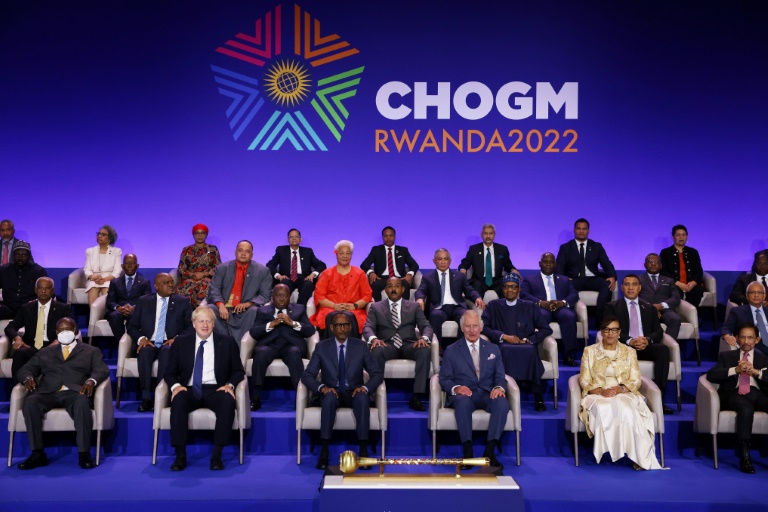
Prince Charles says Commonwealth nations are free to farewell the monarchy and become republics, acknowledging changes well under way in a colonial-era organisation trying to define its modern profile and purpose.

The 54-nation club meeting in Rwanda this week has faced pointed questions about its relevance, the future role of the royal family, and the legacy of its colonial past.

– Royals to republics –


Born out of the British Empire, and representing countries as diverse as tiny Tuvalu and behemoth India, the Commonwealth has been championed by Elizabeth II since she became queen in 1952.

At that time, all Commonwealth nations bar India were monarchies but the majority today are republics.

Of the 14 nations outside the UK where the queen is still head of state, republican movements are gaining traction.

Member state Barbados became the world’s newest republic last year, and other Caribbean nations are pushing to follow suit.

Charles — who inherits the Commonwealth leadership when he becomes king — told Commonwealth leaders on Friday: “Each member’s constitutional arrangement, as republic or monarchy, is purely a matter for each member country to decide.”

The royal family had been consistent on this point for decades, said Philip Murphy, Commonwealth expert at the Institute of Historical Research.

“What matters to them is not whether countries remain monarchies — that is up to them. It is that they remain in the Commonwealth,” the director of history and policy at the London-based institute told AFP.

– Fresh faces –

Membership has expanded to include nations with no historic ties to Britain, most recently Mozambique in 1995 and this year’s summit host Rwanda in 2009. 

Two further non-Anglophone countries — the west African states of Togo and Gabon — are expected to become the newest members this weekend.

“More and more countries want to join it. They see the value of it,” said British Prime Minister Boris Johnson.

Murphy said Commonwealth membership had become “almost a mark of international respectability” for countries with reputation problems or a desire to pivot away from France.

Togo, once a German then French colony, said membership would bring it closer to the English-speaking world and afford greater market access to 2.5 billion consumers.

“Togo joining the Commonwealth is better for many people than sharing the French language and culture, which at the end of the day has not promoted development,” said Togolese political analyst Mohamed Madi Djabakate.

– Blind eye –

The Commonwealth claims strength in diversity and calls itself a “family of nations” united by a commitment to good governance, respect of human rights, and democracy.

But it is not governed by a treaty and membership is voluntary, making it difficult to enforce decisions or take action against recalcitrant members.

Rights groups took particular umbrage with Rwanda — whose long-ruling leader Paul Kagame has presided over what critics say is a “climate of fear” — hosting the summit.

By doing so, critics said, Commonwealth leaders were turning a blind eye to Rwanda’s grim record on human rights and political freedoms, and damaging its own claim to defend these liberties in the process. 

The expected admission of Gabon and Togo — both countries ruled by a single family for more than 50 years — could also raise eyebrows.

– Tough questions –

Often accused of being a talk fest, delegates at the Commonwealth Heads of Government Meeting (CHOGM) in Kigali addressed climate change, violence against women, mental health, vaccine equity, and urbanisation — to name a few.

The spectre of colonialism went unmentioned until Charles expressed “sorrow” for the horrors of slavery and Britain’s involvement in it.

Despite its shared history of colonialism, Commonwealth nations were not rushing to pore over the painful past or broach uncomfortable topics such as reparations from Britain.

“The Commonwealth cannot be everything to everyone, and it cannot take every issue,” said Jamaican Foreign Minister Kamina Johnson Smith, who said the UN was a more appropriate arena for such matters.

Some say the Commonwealth could find new relevance by asking these difficult questions.

“It is a logical framework for discussing colonial legacy issues, because that’s the thing that pretty much all Commonwealth members have in common,” said Murphy.

Morocco activists seek probe after 18 migrants die in surge to enter Spain

Moroccan rights activists on Saturday demanded an investigation into the deaths of at least 18 African migrants who were among hundreds that tried a mass crossing into the Spanish enclave of Melilla.

The latest deadly drama on the doors of the European Union took place at dawn on Friday when around 2,000 migrants approached the Moroccan border with the tiny territory.

More than 500 managed to enter a border control area after cutting a fence with shears, Melilla authorities said in a statement.

Moroccan officials said late Friday that 13 migrants had died of injuries sustained in the incursion, in addition to five confirmed dead earlier in the day.

“Some fell from the top of the barrier” separating the two sides, a Moroccan official said.

On Saturday calm returned to the border area, with Moroccan security forces lightly deployed along the frontier, in a forested area where no migrants were to be seen.

A local resident said several buses had passed through to take migrants away.

Others “have probably moved away for fear of being displaced by the Moroccan authorities,” Mohamed Amine Abidar of the AMDH rights group told AFP.

The AMDH has demanded a “comprehensive, quick and serious enquiry to determine responsibilities and shortcomings”, and warned against burying the migrants’ bodies until their deaths had been properly investigated.

Images on Spanish media on Friday had showed exhausted migrants lying on the pavement in Melilla, some with bloodied hands and torn clothes.

Speaking in Brussels, Spanish Prime Minister Pedro Sanchez condemned the “violent assault”, which he blamed on “mafias who traffic in human beings”.

– Migrant magnet –

Melilla and Ceuta, Spain’s other tiny North African enclave, have the European Union’s only land borders with Africa, making them a magnet for migrants.

Friday’s was the first such mass incursion since Spain and Morocco mended diplomatic relations last month.

The AMDH said it was “a true catastrophe that shows the consequences of the latest Moroccan-Spanish entente”.

In March, Spain ended a year-long diplomatic crisis by backing Morocco’s autonomy plan for Western Sahara going back on its decades-long stance of neutrality.

Sanchez then visited Rabat, and the two governments hailed a “new stage” in relations.

The row began when Madrid allowed Brahim Ghali, leader of Western Sahara’s pro-independence Polisario Front, to be treated for Covid-19 in a Spanish hospital in April 2021.

A month later, some 10,000 migrants surged across the Moroccan border into Spain’s Ceuta enclave as border guards looked the other way, in what was widely seen as a punitive gesture by Rabat.

Rabat calls for the Western Sahara to have an autonomous status under Moroccan sovereignty but the Polisario Front wants a UN-supervised referendum on self-determination as agreed in a 1991 ceasefire agreement.

In the days just before Morocco and Spain patched up their ties, there were several attempted mass crossings of migrants into Melilla, including one involving 2,500 people, the largest such attempt on record. Nearly 500 made it across.

– ‘Means of pressure’ –

The mending of ties has meant a drop in migrant arrivals in Spain, notably in the Canary Islands.

The number of migrants who reached the Canary Islands in April was 70 percent lower than in February, government figures show. 

Sanchez warned earlier this month that “Spain will not tolerate any use of the tragedy of illegal immigration as a means of pressure”.

Spain will seek to have “irregular migration” listed as one of the security threats on the NATO’s southern flank when the alliance gathers for a summit in Madrid on June 29-30.

Over the years, thousands of migrants have attempted to cross the 12-kilometre (7.5-mile) border between Melilla and Morocco, or Ceuta’s eight-kilometre border, by climbing the barriers, swimming along the coast or hiding in vehicles.

The two territories are protected by fences fortified with barbed wire, video cameras and watchtowers.

Migrants sometimes use hooks and sticks to try to climb the border fence, and throw stones at police.

18 migrants die in mass attempt to enter Spain's Melilla

At least 18 African migrants died when a huge crowd tried to cross into the Spanish enclave of Melilla in northern Morocco, according to an update from Moroccan authorities.

Around 2,000 migrants approached Melilla at dawn Friday and more than 500 managed to enter a border control area after cutting a fence with shears, the Spanish government’s local delegation said in a statement.

Moroccan officials said late Friday that 13 migrants had died of injuries sustained in the incursion, in addition to five who were confirmed dead earlier in the day.

“Some fell from the top of the barrier” separating the two sides, a Moroccan official said, adding that 140 security personnel and 76 migrants were injured during the attempt to cross.

The Spanish Civil Guard, which monitors the other side of the fence, said it had no information on the tragedy and referred enquiries to Morocco.

The border of the Spanish enclave and the neighbouring Moroccan city of Nador were calm early Saturday, without police deployment, AFP journalists said.

Morocco had deployed a “large” number of forces to try to repel the assault on the border, who “cooperated actively” with Spain’s security forces, it said earlier in a statement.

Images on Spanish media showed exhausted migrants lying on the pavement in Melilla, some with bloodied hands and torn clothes.

Speaking in Brussels, Spanish Prime Minister Pedro Sanchez condemned the “violent assault”, which he blamed on “mafias who traffic in human beings”.

– Migrant magnet –

Melilla and Ceuta, Spain’s other tiny North African enclave, have the European Union’s only land borders with Africa, making them a magnet for migrants. 

On Thursday night migrants and security forces had “clashed” on the Moroccan side of the border, Omar Naji of Moroccan rights group AMDH told AFP. 

Several of them were hospitalised in Nador, he added.

The AMDH’s Nador chapter called for the opening of “a serious investigation to determine the circumstances of this very heavy toll” which shows that “the migration policies followed are deadly with borders and barriers that kill”.

It was the first such mass incursion since Spain and Morocco mended diplomatic relations last month.

In March, Spain ended a year-long diplomatic crisis by backing Morocco’s autonomy plan for Western Sahara going back on its decades-long stance of neutrality.

Sanchez then visited Rabat, and the two governments hailed a “new stage” in relations.

The row began when Madrid allowed Brahim Ghali, leader of Western Sahara’s pro-independence Polisario Front, to be treated for Covid-19 in a Spanish hospital in April 2021.

A month later, some 10,000 migrants surged across the Moroccan border into Spain’s Ceuta enclave as border guards looked the other way, in what was widely seen as a punitive gesture by Rabat.

Rabat calls for the Western Sahara to have an autonomous status under Moroccan sovereignty but the Polisario Front wants a UN-supervised referendum on self-determination as agreed in a 1991 ceasefire agreement.

In the days just before Morocco and Spain patched up their ties, there were several attempted mass crossings of migrants into Melilla, including one involving 2,500 people, the largest such attempt on record. Nearly 500 made it across.

– ‘Means of pressure’ –

Patching up relations with Morocco — the departure point for many migrants — has meant a drop in arrivals, notably in Spain’s Atlantic Canary Islands. 

The number of migrants who reached the Canary Islands in April was 70 percent lower than in February, government figures show. 

Sanchez earlier this month warned that “Spain will not tolerate any use of the tragedy of illegal immigration as a means of pressure”.

Spain will seek to have “irregular migration” listed as one of the security threats on the NATO’s southern flank when the alliance gathers for a summit in Madrid on June 29-30.

Over the years, thousands of migrants have attempted to cross the 12-kilometre (7.5-mile) border between Melilla and Morocco, or Ceuta’s eight-kilometre border, by climbing the barriers, swimming along the coast or hiding in vehicles.

The two territories are protected by fences fortified with barbed wire, video cameras and watchtowers.

Migrants sometimes use hooks and sticks to try to climb the border fence, and throw stones at police.

Mali says 50 jihadists 'neutralised'

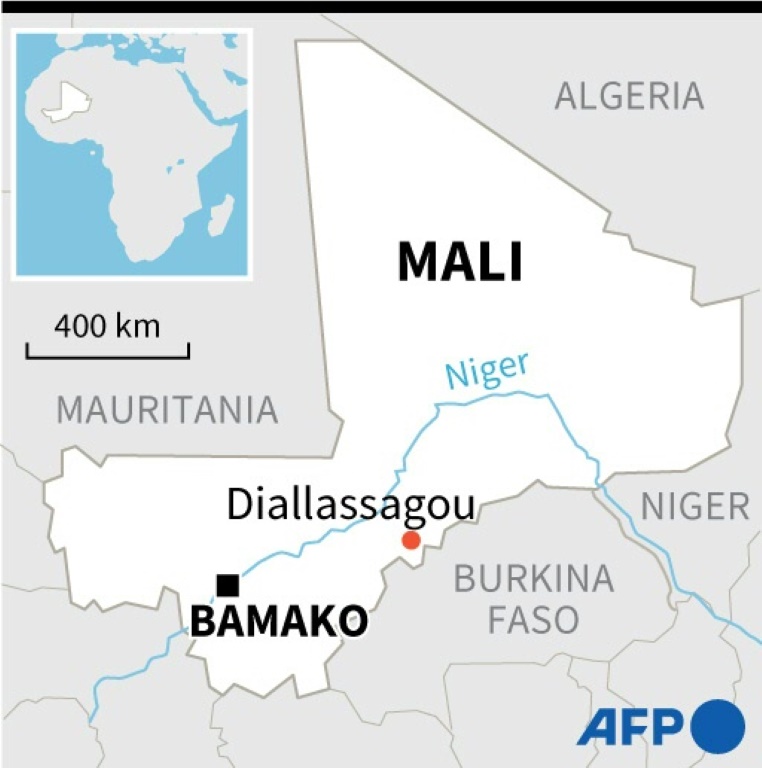
Mali’s army said it had “neutralised” 50 “jihadists” in an area in the centre of the country where more than 130 civilians were killed a week ago.

The government blamed Al-Qaeda-affiliated jihadists for the massacre of civilians in Diallassagou and two neighbouring villages last weekend, the latest mass killings in the Sahel region.

“Fifty jihadists (were) neutralised” in the Diallassougou area where “the operational priorities were directed following the terrorist attack against the populations on the night of June 18 to 19,” the army said in a press release late Friday.

The army also reported “two terrorist watchmen neutralised” in the central Mondoro area, in addition to “eight terrorist suspects arrested” in the south of the country during a separate operation.

The government has blamed Al-Qaeda-affiliated Macina Katiba jihadists for the killings of 132 civilians in the Diallassagou area in central Mali, one of the hotbeds of the violence that has plagued the Sahel for years.

The group denied carrying out the massacre in a statement, the SITE Intelligence monitoring group said Friday.

The Diallassagou bloodshed is one of the worst civilian killings Mali has seen in recent years.

The Sahel country has since 2012 been rocked by jihadist insurgencies. 

Violence began in the north and then spread to the centre and to neighbouring Burkina Faso and Niger.

18 migrants die in mass attempt to enter Spain's Melilla

The death toll following a mass attempt by a huge crowd of African migrants to cross from Morocco into Spain’s Melilla enclave climbed to 18 on Friday, according to a new Moroccan update.

Some 2,000 migrants approached Melilla at dawn and over 500 managed to enter a border control area after cutting a fence with shears, the Spanish government’s local delegation said in a statement.

Moroccan officials said late Friday that 13 migrants had died of their injuries sustained in the incursion, in addition to five who were confirmed dead earlier in the day. 

“Some fell from the top of the barrier” separating the two sides, a Moroccan official said, adding that 140 security personnel and 76 migrants were injured during the attempt to cross.

It was the first such mass incursion since Spain and Morocco mended diplomatic relations last month.

The Spanish government’s local delegation said only that 49 Spanish police officers were lightly injured.

Morocco had deployed a “large” number of forces to try to repel the assault on the border, who “cooperated actively” with Spain’s security forces, it said earlier in a statement.

Images on Spanish media showed exhausted migrants laying on the pavement in Melilla, some with bloodied hands and torn clothes.

Speaking in Brussels, Spanish Prime Minister Pedro Sanchez condemned the “violent assault” which he blamed on “mafias who traffic in human beings”.

– Migrant magnet –

Melilla and Ceuta, Spain’s other tiny North African enclave, have the European Union’s only land borders with Africa, making them a magnet for migrants. 

On Thursday night migrants and security forces “clashed” on the Moroccan side of the border, Omar Naji of Moroccan rights group AMDH told AFP. 

Several of them were hospitalised in Nador, he added.

In March this year, Spain ended a year-long diplomatic crisis by backing Morocco’s autonomy plan for Western Sahara going back on its decades-long stance of neutrality. 

Sanchez then visited Rabat, and the two governments hailed a “new stage” in relations.

The row began when Madrid allowed Brahim Ghali, leader of Western Sahara’s pro-independence Polisario Front, to be treated for Covid-19 in a Spanish hospital in April 2021.

A month later, some 10,000 migrants surged across the Moroccan border into Spain’s Ceuta enclave as border guards looked the other way, in what was widely seen as a punitive gesture by Rabat.

Rabat calls for the Western Sahara to have an autonomous status under Moroccan sovereignty but the Polisario wants a UN-supervised referendum on self-determination as agreed in a 1991 ceasefire agreement.

In the days just before Morocco and Spain patched up their ties, there were several attempted mass crossings of migrants into Melilla, including one involving 2,500 people, the largest such attempt on record. Nearly 500 made it across.

– ‘Means of pressure’ –

Patching up relations with Morocco — the departure point for many migrants — has meant a drop in arrivals, notably in Spain’s Atlantic Canary Islands. 

The number of migrants who reached the Canary Islands in April was 70 percent lower than in February, government figures show. 

Sanchez earlier this month warned that “Spain will not tolerate any use of the tragedy of illegal immigration as a means of pressure”.

Spain will seek to have “irregular migration” listed as one of the security threats on the NATO’s southern flank when the alliance gathers for a summit in Madrid on June 29-30.

Over the years, thousands of migrants have attempted to cross the 12-kilometre (7.5-mile) border between Melilla and Morocco, or Ceuta’s eight-kilometre border, by climbing the fences, swimming along the coast or hiding in vehicles.

The two territories are protected by fences fortified with barbed wire, video cameras and watchtowers.

Migrants sometimes use hooks and sticks to try to climb the border fence, and throw stones at police.

Close Bitnami banner
Bitnami