Africa Business

African economies see reasons for optimism despite crises

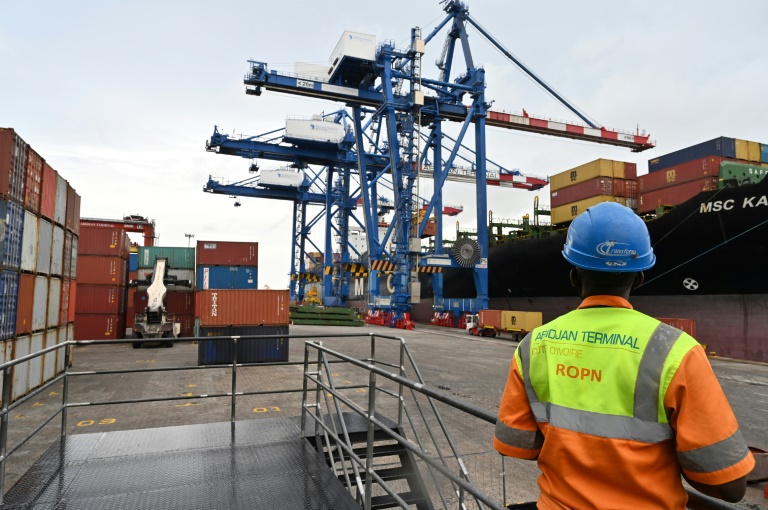
From Covid-19 to the war in Ukraine, external crises have put pressure on African economies, but many on the continent see opportunities to undertake radical reforms.

Africa already showed some resilience during the pandemic as its economic contraction was less severe than in the rest of the world, shrinking by two percent compared to 3.3 percent globally in 2020.

While Russia’s invasion of Ukraine is weighing on the world economy, Africa faces a better outlook again in 2022.

“Africa is headed towards growth of around 3.7 percent, while in North America and Europe there is a real risk of recession”, said economist Lionel Zinsou, formerly prime minister of Benin.

“We haven’t been the biggest victims of the pandemic, and we won’t be the biggest victims of the collateral consequences of the war in Ukraine”, added Zinsou.

The conflict in Europe has fuelled a surge in global inflation, but Zinsou said growing prices for raw materials will compensate for the higher costs of imports in Africa.

Another positive signal is that investor confidence in Africa is up to a higher level than that before the pandemic.

Of 190 business owners in Africa who were questioned, 78 percent voiced confidence about their development prospects — compared to 61 percent before the Covid crisis, according to a report by the Deloitte accountancy firm.

– ‘Opportunity to transform’ –

The fallout from the war in Ukraine, however, remains a threat as it has driven up prices for wheat and other key agricultural products, sparking fears of famine in some countries.

“We are concerned about the slowdown in global growth and the availability for Africa of certain products such as wheat or fertilisers”, Ivory Coast President Alassane Ouattara said during the Africa CEO Forum in Abidjan this month.

Makhtar Diop, general director of the International Finance Corporation (IFC), a branch of the World Bank, said African economies “have taken a hit and haven’t regained their pre-2019 growth rates”.

“The situation remains particularly difficult with inflation which disproportionally affects the poorest populations,” he added.

But some see the situation as a chance for African countries to map out new strategies. 

“We lose a good part of our crops each year due to lack of electricity and cold chain,” said Zinsou, referring to the transport of goods that need to be kept cool across the supply chain.

These losses could be reduced through infrastructure investment, he added.

For Diop, “every crisis is an opportunity to transform the situation structurally. There is potential for the economic transformation of African countries by increasing the added value created on the continent.”

– ‘Gain independence’ –

Some countries have stepped up the pace in recent years. Ivory Coast has built new cashew processing plants, while Nigeria is building a major oil refinery in Lagos. 

In Guinea, foreign companies have recently been tasked with building bauxite processing plants. 

“One of the consequences of the pandemic is that many groups wanted to depend less on foreign imports,” said Emmanuel Gadret, head of Deloitte in francophone Africa. 

Georges Wega, deputy director of international banking networks for the Africa region at France’s Societe Generale financial group, believes that Africa has “a lot of potential” to finance its essential projects.

“This is the time for Africa to gain its independence in many aspects. We need to rely more on funds raised on the continent versus external debt,” he said. 

The African Continental Free Trade Area (AfCFTA), which aims to harmonise customs tariffs across the continent, which is gradually happening, holds out hopes of boosting intra-African trade.

“Africa has been extraordinarily responsive (to the pandemic), financially and technically, and it will be again,” said Zinsou. 
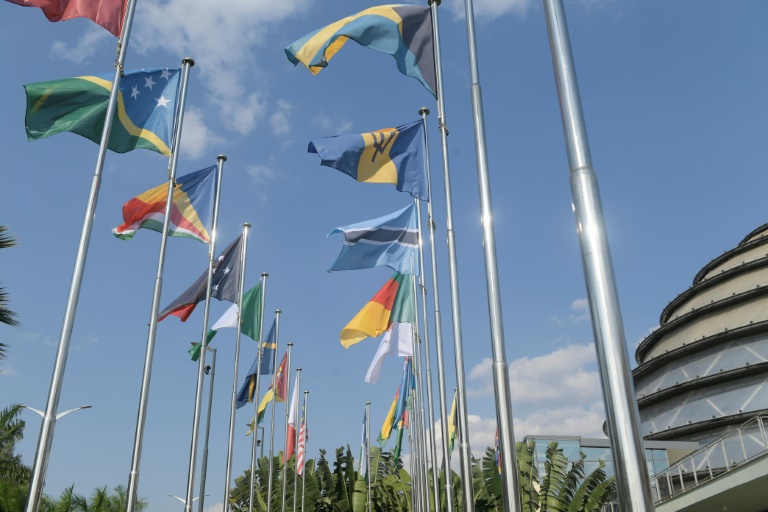
Games and good governance: What is the Commonwealth?

The Commonwealth, which holds its heads of government meeting in Kigali this week, spans much of the globe, looping in a third of the world’s population and a fifth of its landmass. 

Established more than 70 years ago, it has the stated aim of upholding democracy, rule of law and good governance around the world. 

Here are a few key things to know about it: 

– Key facts –

Full name: Commonwealth of Nations

Member states: 54

Head of the Commonwealth: Queen Elizabeth II (since 1952)

Secretary-General: Patricia Scotland (since 2016)

Population: 2.5 billion

Area: 30 million square kilometres

Foundation of modern Commonwealth: 1949

Headquarters: Marlborough House, London

Focus: Development, democracy, climate change

– Landmark events –

1926: Balfour Declaration. Declared the UK and the dominions as equal in status as members of “the British Commonwealth of Nations”.

1931: Statute of Westminster. Established legislative independence for the dominions and set the basis for the relationship between Commonwealth realms and the crown.

1949: London Declaration. Birth of the modern Commonwealth. Allowed republics as members, to allow independent India’s continued membership. “British” dropped from title.

1971: First Commonwealth Heads of Government Meeting in Singapore.

1991: Harare Declaration. Sets out Commonwealth’s core values.

2020: The Maldives becomes the Commonwealth’s 54th member after application for re-admission was approved.

– Population, area, GDP –

Countries drawn from: Africa (19), Caribbean and Americas (13), Pacific (11), Asia (8), Europe (3).

Biggest country by population: India (1.4 billion).

Smallest country by population: Tuvalu (11,000).

Biggest country by area: Canada (9,984,670 square kilometres).

Smallest country by area: Nauru (21 square kilometres).

Biggest GDP: UK, India, Canada, Australia, Nigeria.

Smallest GDP: Tuvalu, Kiribati, Tonga, Dominica, St Vincent and the Grenadines.

– Membership –

Criteria: Historic association with an existing member; compliance with Commonwealth principles; commitment to democracy, rule of law and good governance.

Members in 1949: Australia, Canada, Ceylon, India, New Zealand, Pakistan, South Africa, United Kingdom.

Latest first-time members: Rwanda (2009), Mozambique (1995) Cameroon (1995), Namibia (1990), Brunei (1984).

Countries that left and re-joined: South Africa (1961-1994), Pakistan (1972-1989), Fiji (1987-1997), The Gambia (2013-2018), The Maldives (2016-2020).

Countries that left and never returned: Ireland (1949), Zimbabwe (2003).

– Main events –

Summit: The Commonwealth Heads of Government Meeting, CHOGM, is held every two years. The event has not been hosted since 2018 due to the coronavirus pandemic.

Commonwealth Games: The Olympics-style multi-sport event is held every four years.

The last event was held on Australia’s Gold Coast in 2018, with the next scheduled for the English city of Birmingham in 2022.

Australia tops the all-time medals table ahead of England, Canada, India and New Zealand.

Commonwealth meets in shadow of migrant, rights row

A summit of Commonwealth leaders opens Friday in Rwanda as the host nation comes under scrutiny over its rights record and a migrant deal with Britain threatens to overshadow the meeting.

A bitter contest is also looming for the leadership of the 54-nation club of mainly former British colonies as it grapples with its changing identity and future relevance.

The Commonwealth represents one-third of humanity spanning parts of Africa, Asia, Europe and the Americas but some of its most prominent leaders are skipping the summit, sending envoys in their place.

Prince Charles, representing Queen Elizabeth II as head of the Commonwealth, made the first visit of any British royal to Rwanda for the gathering, which culminates in two days of leadership meetings.

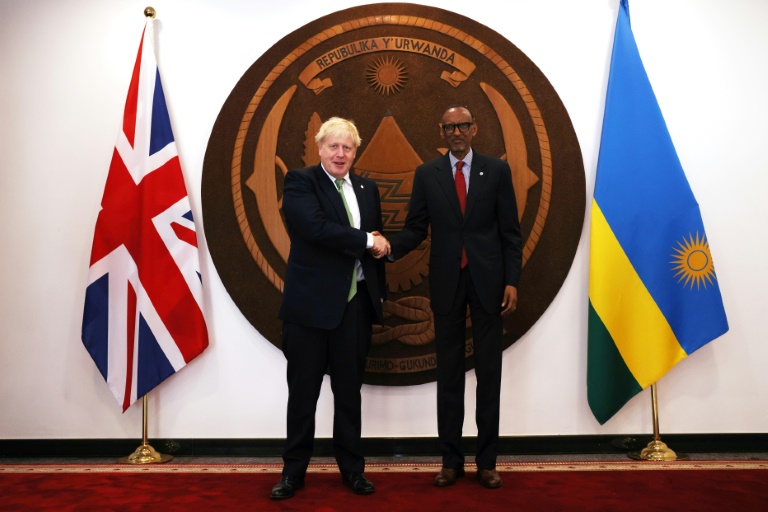
He will meet on the sidelines on Friday with British Prime Minister Boris Johnson, who has been promoting his much-criticised deal to expel migrants to Rwanda since arriving in Kigali Thursday.

The scheme involves Britain deporting asylum-seekers thousands of miles away to Rwanda and has been fiercely opposed by the church, rights groups and — reportedly — Charles himself.

Johnson — who discussed the plan with its other architect Paul Kagame at a meeting with the Rwandan president on Thursday — said he would defend the proposal to Charles and other critics.

“What the critics of the policy need to understand, and I have seen loads and loads of criticism, is that Rwanda has undergone an absolute transformation in the last couple of decades,” the British leader said.

– Rights scrutiny –

Johnson has vowed to press ahead with the deal, which has faced legal challenges in British and international courts, and loomed large ahead of the Commonwealth Heads of Government Meeting.

A first flight of asylum-seekers from the UK to Rwanda was due to take off last week but was halted following an intervention by the European Court of Human Rights.

Johnson also praised Kagame for the “leaps and bounds” achieved in Rwanda, despite widespread concerns over a lack of political freedom and civil liberties in the tiny African nation.

Rights groups have openly questioned the suitability of Rwanda hosting the Commonwealth, which has a charter that enshrines respect for democracy and human rights as core shared values.

More than 20 rights groups and civil society organisations have warned the Commonwealth risked credibility by staging the summit in Rwanda, where they said a “climate of fear” existed under long-ruling Kagame.

The Democratic Republic of Congo has also called on Britain to condemn Rwanda over its alleged “aggression” in the mineral-rich eastern Congo, where Kigali has been accused of stoking a rebellion.

– Leadership rumblings –

At least publicly these concerns have not been raised and a “ministerial action group” to scrutinise the behaviour of Commonwealth members released no statement after their meeting.

Forums ahead of the summit have addressed everything from trade and investment to malaria, climate change, and mental health.

The leaders’ meetings over the next two days behind closed doors will miss some heavyweights, including Narendra Modi of India, South Africa’s Cyril Ramaphosa and Australia’s Anthony Albanese.

Republican movements are taking root in some Commonwealth nations and there has been renewed discussion about the future role of the royal family in the club, and its broader purpose in a post-colonial world.

At the same time, the west African states of Togo and Gabon are set to become the latest members of the Commonwealth despite having no historic ties to Britain — like host Rwanda, which joined in 2009.

Friday will also bring to a head a tussle for the leadership of the Commonwealth that has turned ugly at times.

Kamina Johnson Smith is challenging Patricia Scotland for the post as secretary-general, despite Commonwealth convention dictating the incumbent should stand unopposed for a second term.

Smith, who is Jamaica’s foreign minister, has the backing of the UK, which has publicly expressed dissatisfaction with Scotland’s stewardship of the organisation.

Covid vaccines saved 20 million lives in first year: study

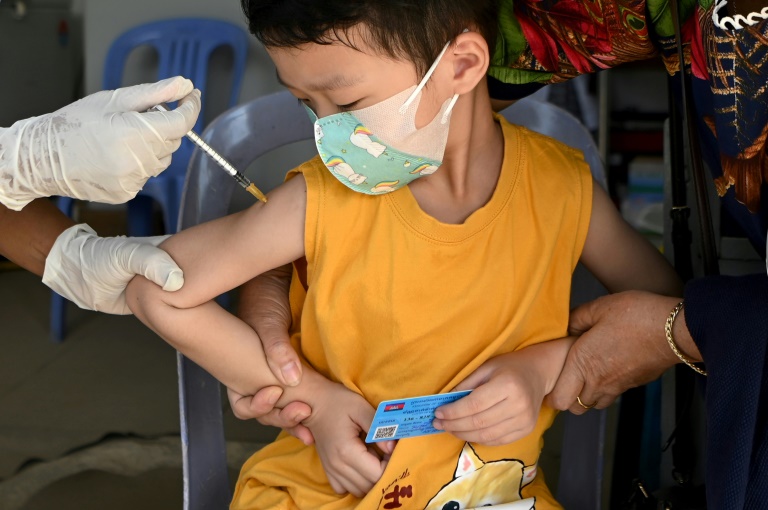
Covid vaccines prevented nearly 20 million deaths in the first year after they were introduced, according to the first large modelling study on the topic released Friday.

The study, published in The Lancet Infectious Diseases, is based on data from 185 countries and territories collected from December 8, 2020 to December 8, 2021. 

It is the first attempt to estimate the number of deaths prevented directly and indirectly as a result of Covid-19 vaccinations. 

It found that 19.8 million deaths were prevented out of a potential 31.4 million deaths that would have occurred if no vaccines were available.

It was a 63 percent reduction, the study found.  

The study used official figures — or estimates when official data was not available — for deaths from Covid, as well as total excess deaths from each country. 

Excess mortality is the difference between the total number of people who died from all causes and the number of deaths expected based on past data. 

These analyses were compared with a hypothetical alternative scenario in which no vaccine was administered. 

The model accounted for variation in vaccination rates across countries, as well as differences in vaccine effectiveness based on the types of vaccines known to have been primarily used in each country.  

China was not included in the study because of its large population and strict containment measures, which would have skewed the results, it said.

The study found that high- and middle-income countries accounted for the largest number of deaths averted, 12.2 million out of 19.8 million, reflecting inequalities in access to vaccines worldwide. 

Nearly 600,000 additional deaths could have been prevented if the World Health Organization’s (WHO) goal of vaccinating 40 percent of each country’s population by the end of 2021 had been met, it concluded.  

“Millions of lives have probably been saved by making vaccines available to people around the world,” said lead study author Oliver Watson of Imperial College London. 

“We could have done more,” he said.  

Covid has officially killed more than 6.3 million people globally, according to the WHO. 

But the organisation said last month the real number could be as high as 15 million, when all direct and indirect causes are accounted for. 

The figures are extremely sensitive due to how they reflect on the handling of the crisis by authorities around the world.

The virus is on the rise again in some places, including in Europe, which is seeing a warm-weather resurgence blamed in part on Omicron subvariants. 

Tunisia ex-PM Jebali arrested: lawyer

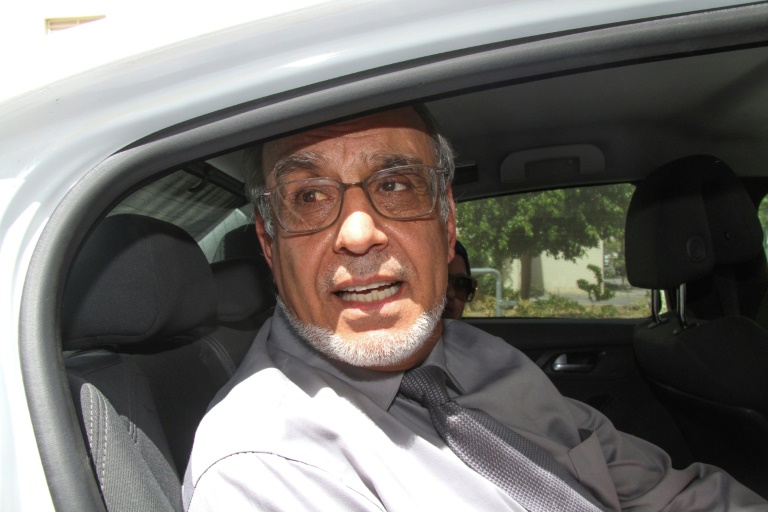
Tunisian police on Thursday arrested former prime minister Hamadi Jebali, an ex-senior figure in the Ennahdha party which is the nemesis of current President Kais Saied, Jebali’s lawyer said.

He could not say why Jebali was detained.

“The police arrested Mr Jebali in his car in Soussa, then took him to Tunis,” Zied Taher said.

For more than a month, Jebali has been under investigation over activities at his boiler factory in Soussa, a coastal city south of the capital, Taher said.

The arrest comes with civil society and Saied’s opponents fearing a slide back to the authoritarianism seen under long-time dictator Zine El Abidine Ben Ali, toppled in a 2011 revolution.

Ennahdha was the dominant force in a parliament dissolved by Saied after he sacked the government and seized wide-ranging powers last July.

Private radio station Mosaique FM said Jebali had been remanded in custody by anti-terrorist police “on suspicion of money-laundering”.

Jebali led the Tunisian government from December 2011, a year after the start of the country’s revolution, until his resignation in early 2013 following the murder of leftist activist Chokri Belaid. 

In 2014 he quit politics and left Ennahdha.

A solar engineer and former journalist, Jebali was sentenced to 16 years behind bars under Ben Ali as anti-Islamist repression intensified. 

He served a large part of his sentence in an isolation cell before being pardoned in 2006.

Ethiopia says Tigray fuel shortage 'a myth'

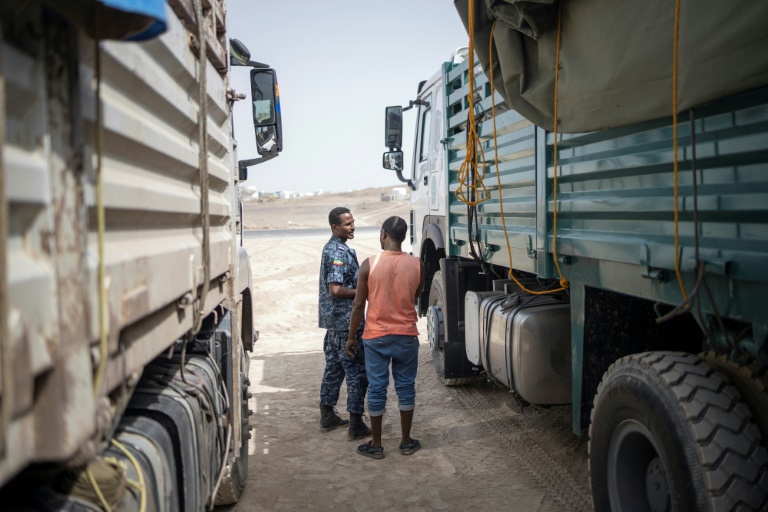
Ethiopia on Thursday described fuel shortages in the war-wracked Tigray region as a “myth” and accused Tigrayan rebels of seeking to launch a new offensive. 

Humanitarian agencies have said the fuel Addis Ababa is allowing them to deliver to the region was insufficient and warned that the shortages were crippling the distribution of emergency aid.

Tigrayans are in the grip of a humanitarian crisis, according to the UN, and have for months been without access to basic services such as electricity, telecommunications, internet and banking.

After a visit to Tigray’s capital Mekele, the European commissioner for crisis management Janez Lenarcic on Tuesday urged the government to lift “without delay” the restrictions on Tigray, particularly on the supply of fuel. 

On Thursday, Ethiopia’s government communications service said three tankers carrying more than 137,000 litres of fuel had arrived in Mekele last week. 

The total amount of fuel sent to the region stood at 920,309 litres since aid convoys resumed in April, it said on Twitter. 

“The myth of fuel shortage is a TPLF hidden agenda to enhance mobility of its army in preparation for another round of conflict,” it said, referring to the Tigray People’s Liberation Front.

The 19-month conflict between Prime Minister Abiy Ahmed’s government and the TPLF has driven hundreds of thousands of people to the brink of famine and left more than nine million in need of food aid, according to the United Nations.

After a three-month hiatus, the government in April authorised the delivery of desperately needed aid by land to Tigray, which has long been under what the UN has described as a de facto blockade.

“Humanitarian supplies have been flowing into Tigray since the government’s humanitarian truce was announced… but less than half the fuel needed has entered the region in recent weeks,” the WFP said on Thursday. 

Claire Nevill, a WFP spokeswoman in Ethiopia, told AFP that humanitarian operations in Tigray required two million litres of fuel each month, while one million litres had entered the region through WFP-led convoys. 

“Now we have a situation where humanitarian warehouses in Mekele are full, but people out there in the countryside are still hungry,” Lenarcic said on Tuesday. 

The situation in hospitals was especially critical, the EU envoy added, pointing to both the absence of electricity and the lack of fuel.

The conflict began in November 2020 when the government sent federal troops into Tigray to topple the TPLF, the region’s former ruling party, saying it was in response to rebel attacks on army camps.

After the TPLF mounted a shock comeback, retaking Tigray and then expanding into the neighbouring regions of Afar and Amhara, fighting intensified in the second half of 2021, before reaching a stalemate. 

Ogier pulls ahead in Safari Rally opener

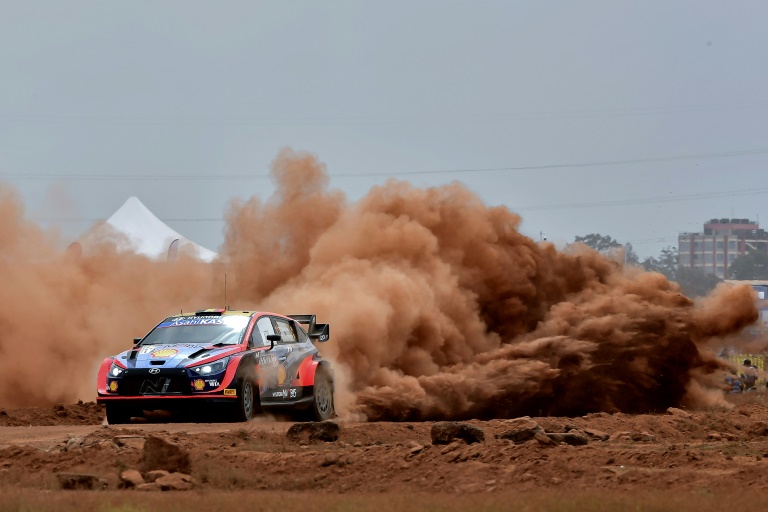
Sebastien Ogier took the lead after Thursday’s opening special as he looks to win a second straight Safari Rally, while championship leader Kalle Rovanpera suffered a puncture in Kenya.

Ogier, winner in 2021 when the race returned to the WRC following a 19-year absence, faced off against Ford’s Sebastien Loeb in the 4.84km two-at-a-time first special on the edge of the capital. 

The two Frenchmen have a total of 17 world titles between them over the last 18 years but are now both semi-retired.

“I came back for the people,” said Toyota driver Ogier. 

“It’s very colourful here and the people in this country give us amazing support. 

“The challenge is going to be big. It’s not the kind of rally I usually love because it’s going to be really rough but we will try to survive it.”

Belgian Thierry Neuville, who is second in the standings, finished the stage 0.6 seonds behind Ogier in second place.

Rovanpera spun off and finished in 11th place, 11.6 seconds behind Ogier. 

“It’s a shame. But fortunately it’s a long rally,” said the 21-year-old Finn who currently has a 55-point lead in the championship over Neuville after five races.

The Superspecial followed the ceremonial flagging off by Kenyan president Uhuru Kenya, who lauded the WRC for keeping the Safari rally in the calender until 2026.

The president said the event had boosted the country’s economy by injecting six billion shillings (£50 million) on its return to the WRC last year after the 19-year hiatus.

“The historic nature of the rally is undeniable,” said Uhuru.

“The rally was of great benefit to the country, injecting six billion shillings in our economy, with every sector sharing the pie, including players in the hospitality and transport sectors as well as micro, small and medium enterprises in Naivasha and its surrounding towns.” 

The rally continues on Friday with six stages, totalling 124km, around Lake Naivasha.

Standings

1. Sebastien Ogier – Benjamin Veillas (FRA/Toyota) in 3min 18.8sec, 2. Thierry Neuville – Martijn Wydaeghe (BEL/Hyundai) at 0.6sec, 3. Ott Tanak – Martin Jarveoja (EST/Hyundai) 1.1, 4. Elfyn Evans – Scott Martin (GBR/Toyota) 1.2, 5. Sebastien Loeb – Isabelle Galmiche (FRA/M-Sport Ford) 1.8

Selected: 11. Kalle Rovanpera – Jonne Halttunen (FIN/Toyota) 11.6

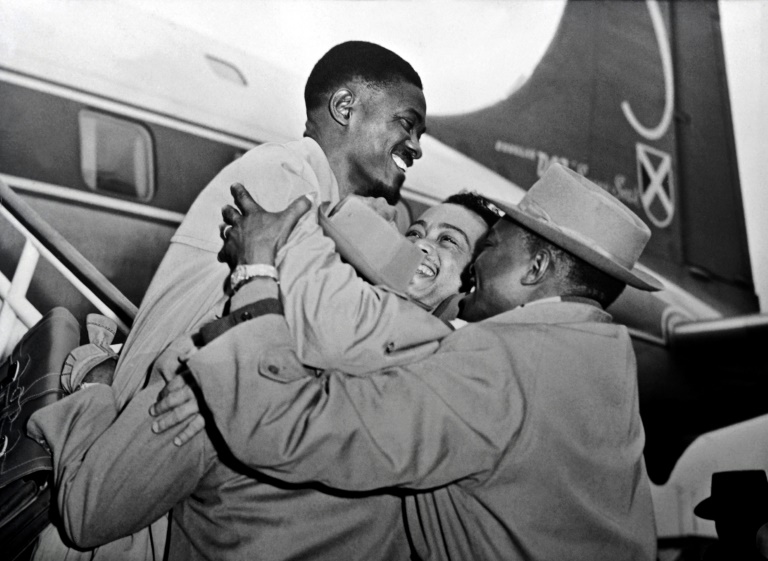
Old friend blames UN, Belgium for killing of Congolese hero Lumumba

Belgium and the United Nations are to blame for failing to prevent the assassination of Congolese independence hero Patrice Lumumba, an 89-year-old former friend has told AFP.

Jean Mayani will attend tributes next week to Lumumba, whose remains — a single tooth — Belgium has finally returned to the Democratic Republic of Congo.

Mayani is hard of hearing, his hands shake, and he needs a walking stick or a helping hand to move around, but he speaks clearly and has a piercing gaze.

From time to time, he briefly loses his train of thought, but then gathers himself and details historical events.

In May 1960, the Congolese National Movement fielded him and Lumumba as its candidates for the north-eastern district of Stanleyville, now called Kisangani, in the municipal and parliamentary elections respectively. They both won.

On June 30 the same year, the country became independent and Lumumba was named prime minister.

Mayani very briefly replaced Lumumba in the National Assembly.

But by September 12, the anti-colonial icon had been toppled.

Separatists from the southern region of Katanga and Belgian mercenaries executed him and two close supporters, Maurice Mpolo and Joseph Okito, on January 17 the following year.

“All the nationalists had to be eliminated,” Mayani recalled, bitterly.

He said the UN did nothing to prevent his friend from being killed.

“Before the Belgian mercenaries came to Congo, the Blue Helmets were here,” he said, referring to UN peacekeepers deployed to the African country in July 1960, following independence.

“Why didn’t the UN Secretary-General prevent these mercenaries from landing?

“He sat around doing nothing. He knew the mercenaries would destabilise Congo. He was complicit in the Belgian position and that of the United States, who through the CIA knew of these mercenaries’ mission in Congo.”

– ‘They broke my teeth’ –

Mayani said he believed the Belgians had decided to rid themselves of Lumumba from early 1960, during a meeting in the Belgian capital Brussels.

He said Lumumba had been unafraid to repeat his call for his country’s “immediate independence” in front of the Belgians.

Mayani said they were surprised and angered by his steadfastness, and “decided to eliminate him”.

Belgium then “did everything to prevent Congolese nationalists from reaching state power, under the indifferent gaze of the UN,” he said.

Mayani said this campaign continued even after Lumumba had been killed.

In a low voice, he described how in 1961 he was “arrested for having harboured two ministers from the central government who had escaped with Lumumba”.

“During the torture, they broke twelve of my teeth,” he said, removing a row of eight false teeth from his upper jaw. He said he wore another denture on his lower jaw to replace the other four he had lost.

The following year, Mayani was again arrested and held in Kinshasa’s Makala prison until 1964, when former Katanga secessionist leader and premier at the time Moise Tshombe declared an amnesty.

Mayani said that today his friend’s political legacy — everything the independence icon stood for — has been lost.

Today no one can “win elections without corruption”, he said.

“People in the DRC have made the choice that, to be elected, graft is necessary,” he added. 

“In our time, corruption was absolutely out of the question.”

UK's Johnson defends migrant deal on Rwanda visit

British Prime Minister Boris Johnson on Thursday defended his controversial deal to expel migrants to Rwanda, telling critics to “keep an open mind”.

On the first day of a trip to Kigali — which is hosting a Commonwealth summit this week — he also heaped praise on Rwandan President Paul Kagame and the achievements of his tiny African country, despite widespread concerns about its human rights record.

The London-Kigali scheme, which involves Britain deporting asylum seekers thousands of miles away to Rwanda, has provoked a storm of outrage.

But Johnson told reporters: “The critics need to keep an open mind about the policy.”

“What the critics of the policy need to understand, and I have seen loads and loads of criticism, is that Rwanda has undergone an absolute transformation in the last couple of decades,” said the British leader.

He held talks with Kagame about the deal and other issues, including the war in Ukraine, his office said. 

Rights groups, church leaders and the United Nations have strongly denounced the migrant arrangement, which has threatened to overshadow this week’s Commonwealth Heads of Government Meeting (CHOGM).

One of the harshest opponents is reportedly the British heir to the throne Prince Charles, who has been quoted by the British media as saying it was “appalling”.

Johnson said he would speak about the merits of the deal when he meets Charles, who is also in Rwanda as Queen Elizabeth II’s representative at the Commonwealth summit, on Friday.

– ‘Outdated stereotype’ –

The British leader said it was vital to resolve the problem of “illegal cross-Channel trafficking of people whose lives are being put at risk by the gangs”.

A first flight of a small group of asylum seekers had been due to take off from the UK last week but it was halted following a last-minute injunction by the European Court of Human Rights in Strasbourg.

And Britain — which left the EU last year — said Wednesday it will introduce legislation allowing it to ignore decisions by the ECHR, which is not part of the bloc.  

Johnson accused critics of the deportation policy of basing their concerns on “a perception, perhaps a stereotype, of Rwanda that is now outdated”.

The country of almost 13 million people has been indelibly marked by the 1994 genocide but now lays claim to being one of the most politically stable and economically developed countries in the region.

But in an open letter to Commonwealth leaders ahead of the summit, 23 rights groups and civil society organisations said there was a “climate of fear” in Rwanda.

“Commentators, journalists, opposition activists, and others speaking out on current affairs and criticising public policies continue to face abusive prosecutions, enforced disappearances or have at times died under suspicious circumstances,” the letter said.

It accused the 54-nation Commonwealth — made up of mainly former British colonies — of turning a blind eye to Rwanda’s rights record, saying it risked its credibility and integrity by holding the summit in Kigali.

The two-day summit opening Friday is expected to see a tussle for the leadership of the body, which represents some 2.5 billion people or a quarter of humanity, and renewed talk about its future role and relevance.

Johnson told a business forum that Britain aimed to forge trade deals across the Commonwealth where, he said, total GDP is forecast to rise by nearly 50 per cent to $19.5 trillion over the next five years.

He also announced that Britain will on July 6 launch a new preferential trade system for 65 developing countries, including Rwanda and 17 other Commonwealth members, that would get rid of “pointless tariffs”.

Meanwhile, Johnson welcomed Rwanda’s “moral stance” on the war in Ukraine, his Downing Street office said in a statement after his meeting with Kagame. 

The two men discussed ways to address the fallout from Russia’s invasion, including the sharp rise in food prices which has hit African countries hard.

Swahili smash for Osaka's new venture

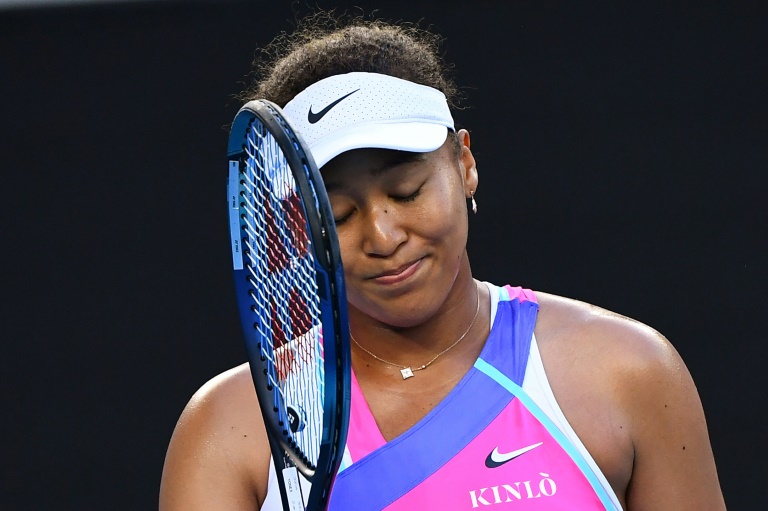
The name of Japanese tennis ace Naomi Osaka’s new venture Hana Kuma has raised eyebrows in Africa — as the term has a lewd meaning in Swahili.

The former world number one and four-time Grand Slam winner announced this week she was launching a media platform in partnership with NBA star LeBron James.

Hana Kuma means “flower bear” in Japanese. But in Swahili, it has a rather more explicit meaning — that a woman has no vagina.

The use of the phrase has triggered an online brouhaha in Kenya with many users calling on Osaka, whose father was born in Haiti and whose mother is Japanese, to reconsider.

“If you keep the name #hanakuma, the name will override the news and the stories you wish to share,” one Twitter user said.

“East Africans cannot say this even in whispers,” added another.

It has dominated trending topics since Wednesday with Citizen TV, Kenya’s most watched news outlet, saying on Twitter that Kenyans were “losing their heads” over the phrase.

Osaka said the media platform launched with James’ SpringHill company aimed to produce content “focused on stories that are culturally specific but universal”.

Swahili — a bantu language — is widely used in sub-Saharan Africa and is among the world’s 10 most spoken languages, with more than 200 million speakers.

Osaka, now ranked 43 in the world, tweeted a veiled rejoinder to the controversy on Wednesday, saying: “Prayers for all my overthinkers. We be going through it.”

Osaka’s tweet, although not specifically mentioning the Hana Kuma controversy specifically, was accompanied by an emoji of a pensive face.

In 2021, the 24-year-old became the world’s highest-earning sportswoman with a fortune of $57 million, according to Forbes.

On Saturday, she pulled out of Wimbledon for the second successive year, blaming an Achilles injury.

The UN cultural organisation UNESCO in 2021 designated July 7 as a world day for the Swahili language.

Close Bitnami banner
Bitnami