Africa Business

Tunisia trade unions chief rejects IMF reforms

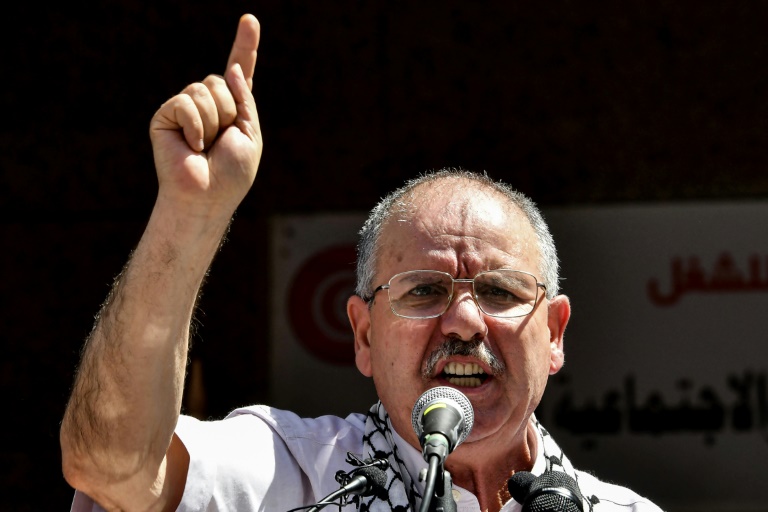
The head of Tunisia’s powerful UGTT trade union on Thursday rejected International Monetary Fund conditions for a new loan to bail out the country’s struggling economy and questioned the government’s authority to negotiate.

Noureddine Taboubi’s comment came a day after an IMF official said the global lender is ready to begin formal talks on a new financial aid package for Tunisia.

“We reject the conditions set by the IMF, given Tunisians’ low salaries, lack of means, rising poverty and unemployment,” Taboubi told reporters, a week after the UGTT staged a nation-wide public sector strike that saw flights cancelled, public transport halted and government offices closed.

The North African country, already heavily indebted and reeling from price hikes on imports like oil and wheat since Russia invaded Ukraine, is angling for a two billion-euro loan, according to a source with knowledge of preliminary talks.

The global lender has conditioned such a bailout on “ambitious reforms” to rein in public spending and reform Tunisia’s state-owned companies.

But on Thursday Taboubi rejected “the painful options they’re talking about”.

“We support reforms, but we don’t share the vision of reforms supported by this government,” he said.

The IMF’s regional chief Jihad Azour said Wednesday that the fund was set to begin formal talks on a new financial aid package “in the coming weeks”. 

Economic fallout from the Ukraine war made it ever more pressing, he said.

Tunisia “needs to urgently tackle its fiscal imbalances” including by “containing the large civil service wage bill, replacing generalized subsidies with transfers targeting the poor”, said Azour, a Lebanese economist and former minister.

He also urged it to open up its economy to private sector investment and “(reform) its loss-making state-owned enterprises”.

The UGTT has demanded guarantees that publicly owned firms will remain state property.

– Casting doubt –

During a visit to Tunisia this week, Azour met officials including President Kais Saied, and welcomed government plans to start tackling dire economic issues.

In Wednesday’s statement, he urged the government to discuss proposed reforms “with all stakeholders”, echoing previous comments by IMF officials indicating that UGTT consent was vital for a bailout deal.

Saied told Azour, during a meeting on Tuesday, that he “recognised the need to introduce major reforms” but insisted that such changes must “take social impacts into account”, according to a statement from the president’s office.

Taboubi cast doubt on the government’s mandate to negotiate a deal at all.

“This government was appointed temporarily, by decree,” he said.

“When there is a government produced by institutions and elections, it will have the legitimacy to start negotiations over reforms.”

Saied in July last year sacked the previous administration and suspended parliament in moves opponents have called a coup against the only democracy to emerge from the Arab Spring uprisings more than a decade ago.

The UGTT initially backed Saied’s moves but has become increasingly critical as Saied extended his power grab.

It has also turned down calls to take part in Saied’s “national dialogue” on the grounds that it excludes other key actors including political parties and much of civil society.

The union is not the president’s only domestic headache.

Judges across the country began a strike on June 6 to protest Saied’s sacking of 57 of their colleagues and what they called his “continued interference in the judiciary”.

Saied had in February scrapped an independent judicial watchdog and replaced it with a body under his own control, a move critics decried as his latest blow to democracy.

On Thursday, dozens of judges demonstrated outside the main courthouse in Tunis to demand their colleagues be reinstated.

Some held up placards demanding an end to “decree-laws and the destruction of the rule of law”.
UK's Johnson holds talks with Rwanda leader on migrant deal

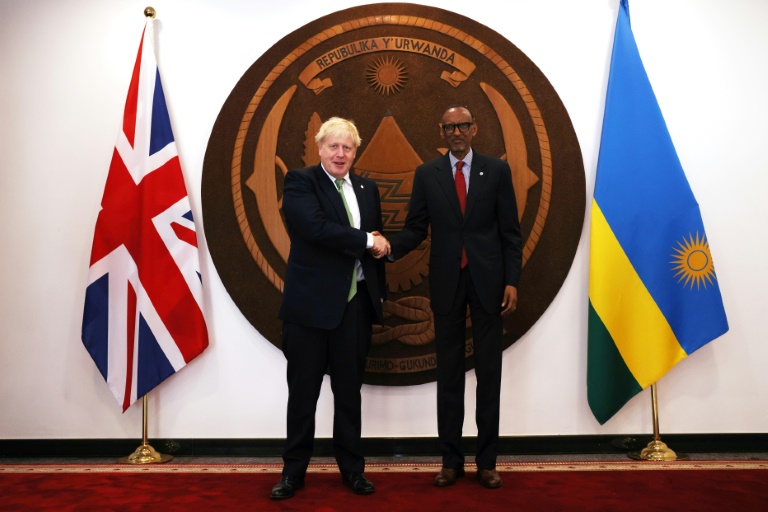
British Prime Minister Boris Johnson held talks with Rwanda’s President Paul Kagame on Thursday on their migrant deal that has provoked a storm of outrage.

Both countries have defended the scheme, which involves Britain deporting asylum seekers to the east African country located thousands of miles away from Britain.

The two leaders “praised the successful UK-Rwanda Migration and Economic Development Partnership, which is tackling dangerous smuggling gangs while offering people a chance to build a new life in a safe country”, Johnson’s Downing Street office said in a statement.

Their meeting on the sidelines of a gathering of Commonwealth nations followed talks in Kigali on Wednesday between Kagame and the British heir to the throne Prince Charles, who has reportedly described the migrant deal as “appalling”.

Rights groups, church leaders and the United Nations have also denounced the arrangement, which has threatened to overshadow the Commonwealth Heads of Government Meeting (CHOGM).

The UK said Wednesday it would introduce legislation allowing it to ignore certain decisions by the European Court of Human Rights after a judge in Strasbourg intervened to halt the first flight of asylum seekers to Rwanda that was due to take off last week.

The 54-nation Commonwealth club of mainly former British colonies has also been accused of turning a blind eye to Rwanda’s record on human rights under Kagame, with critics saying it risks its credibility and integrity by hosting the summit in Kigali.

But Johnson was gushing in his praise of Rwanda’s achievements.

“He congratulated President Kagame on Rwanda’s extraordinary social and economic development in just a few decades, noting how pleased he was to be in the beautiful city of Kigali,” the Downing Street statement said.

Johnson also welcomed Rwanda’s “moral stance” on the war in Ukraine, it said, adding that the two leaders discussed ways to address the fallout from Russia’s invasion, including the sharp rise in food prices which has hit African countries hard.

World 'sleepwalking' to Somalia famine catastrophe: charity

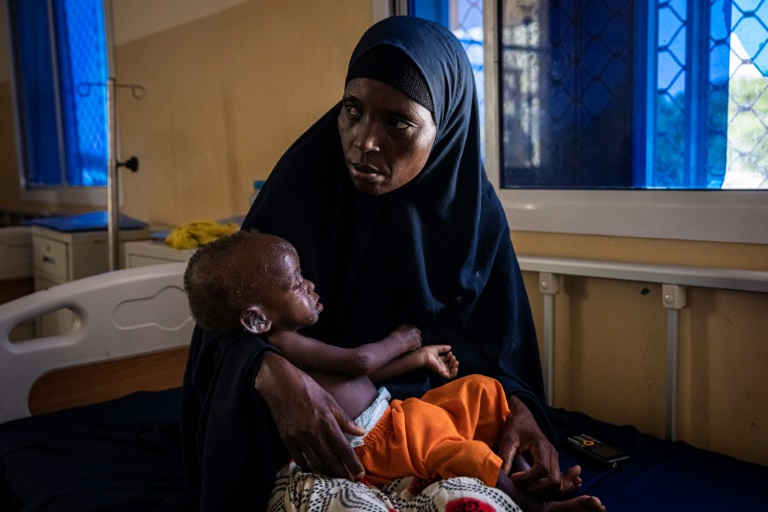
The international community is “sleepwalking” towards a catastrophic famine in Somalia, and children are dying because hospitals are at breaking point, the charity Save the Children warned on Thursday.

About 7.1 million Somalis — nearly half the population — are battling hunger, with more than 200,000 on the brink of starvation, according to UN figures issued earlier this month.

Somalia and its neighbours in the Horn of Africa including Ethiopia and Kenya are experiencing the worst drought in more than 40 years following four failed rainy seasons that have decimated crops and livestock.

But aid agencies say there is a dire lack of international funding for Somalia, with calls for donations so far raising less than 30 percent of the estimated $1.46 billion needed to tackle the crisis.

“The world is sleepwalking towards another catastrophic famine of the sort we promised would never happen again,” Save the Children’s country director Mohamud Mohamed Hassan said in a statement. 

“Famine is bearing down on Somalia and clinics for malnourished children are close to breaking point. Children are dying now and we’re in a race to stop that from happening.” 

Some 386,000 children face severe malnutrition, the UK-based charity said.

It said that last month, one of its facilities in the southern city of Baidoa, one of the hardest hit regions, admitted a record 324 children, nearly three times higher than in the same period last year. 

So far this year, 22 children have died at the centre, compared to a total of 23 for all of 2021, Save said.

The drought has also forced more than 800,000 people to flee their homes in search of help since January 2021, according to UN figures.

– ‘Fatal figures of shame’ –

Some aid groups are warning that the crisis could be worse than the 2011 famine in Somalia that killed 260,000 people — half of them children under the age of six. 

East Africa also endured a harrowing drought in 2017 but early humanitarian action averted a famine in Somalia.

One of the poorest countries on the planet, Somalia is plagued by the effects of climate change and has been badly affected by the war in Ukraine that has hit global grain supplies and sent prices of basic foods and fuel soaring.

Save the Children called on the Group of Seven club of the world’s richest nations meeting in Germany from this weekend to make tackling hunger and malnutrition in Somalia and across East Africa a priority. 

The appeal for international aid was echoed by Norwegian Refugee Council head Jan Egeland after a visit to Somalia. 

“Donors, including the neighbouring Gulf countries, need to dig deep and fast before the predictions of mass starvation become fatal figures of shame,” Egeland said in a statement Thursday.

Pfizer sets sights on elimination of blinding disease trachoma by 2030

Pfizer on Thursday said it would extend until 2030 a drug donation programme aimed at eliminating trachoma, an eye disease responsible for blinding or visually impairing nearly two million people worldwide.

The US pharmaceutical company co-founded the International Trachoma Initiative (ITI) in 1998, and has already donated nearly a billion doses of the antibiotic Azithromycin, contributing to a 90 percent reduction in the number of people impacted.

“We are so close to getting where we need to be with the elimination of this disease that we couldn’t give up now,” Pfizer chief sustainability officer and senior vice president Caroline Roan told AFP.

The announcement was made in Kigali, Rwanda at the Summit on Malaria and Neglected Tropical Diseases.

Trachoma is caused by infection with the bacterium Chlamydia trachomatis, and is spread through personal contact (such as through hands, clothes or bedding), and by flies that have been in contact with discharge from the eyes or nose of an infected person, according to the World Health Organization. 

Africa is the most affected continent, and women are blinded up to four times more often than men, likely as a result of greater contact with infants. Repeated infections draw the eyelashes inward where they rub against the eye, causing pain and permanent damage to the cornea, says the WHO.

Some 136 million people live in trachoma-endemic areas and are at risk.

The ITI had initially hoped to eliminate the disease by 2020, but is now setting its sights on 2030. Thanks to the progress already made, trachoma no longer represents a public health problem in 13 countries (including China, Morocco, Ghana and elsewhere). 

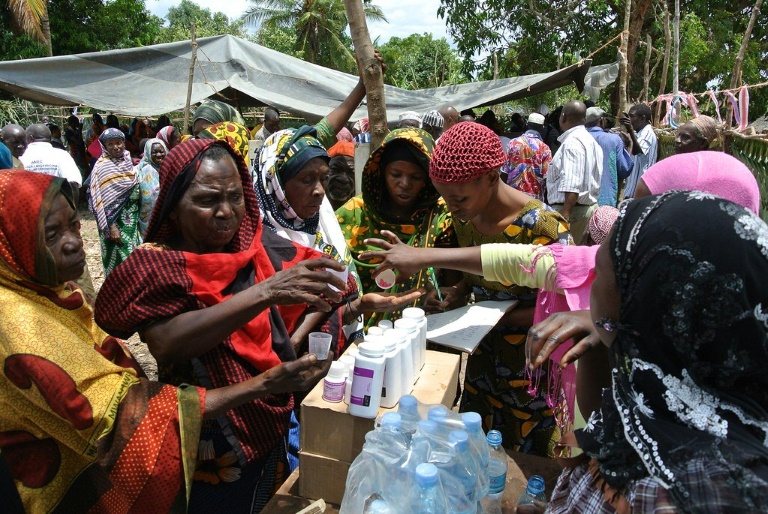
Individual districts are assessed and if more than 5 percent of the children are infected, then the antibiotic is offered to the entire local population, once a year, for both treatment and prevention.

“Some of the campaigns will literally treat 10 million people in a week, and that really knocks down that infectious reservoir,” ITI director Paul Emerson told AFP.

The challenge today is to reach isolated populations, including nomadic people, as well as combining the drug with the promotion of hygiene measures such as frequent washing of the face in areas where water may be scarce. 

Today, the disease persists in 44 countries.

“Conflicts are a big factor,” said Emerson. “In a perfect world, where there was no interruption in available funds, and there was no war, we probably could have eliminated trachoma by 2020.”

Of the new 2030 goal, Roan said: “We think it is realistic and ambitious.”

Tunisia trade unions chief rejects IMF reforms

The head of Tunisia’s powerful UGTT trade union confederation on Thursday rejected conditions set by the International Monetary Fund for a new loan to bail out the country’s struggling economy.

“We reject the conditions set by the IMF, given Tunisians’ low salaries, lack of means, rising poverty and unemployment,” Noureddine Taboubi told reporters.

The global lender has called for “ambitious reforms” to tackle the heavily indebted country’s public finances and reform its state-owned companies.

The IMF’s regional chief Jihad Azour said Wednesday that the fund was set to begin formal talks on a new financial aid package “in the coming weeks”, saying the economic fallout from the Ukraine war made it ever more pressing.

Azour had reiterated an IMF call for “swift implementation of ambitious reforms”, saying Tunisia “needs to urgently tackle its fiscal imbalances” including by replacing generalised subsidies with transfers targeting the poor.

But on Thursday Taboubi, whose union members last week staged a crippling public sector strike, said the UGTT rejected “the painful options they’re talking about”.

“We support reforms, but we don’t share the vision of reforms supported by this government,” he said.

He also indirectly criticised President Kais Saied, who in July last year sacked the previous administration and suspended parliament in moves opponents have called a coup against the only democracy to emerge from the Arab Spring uprisings.

The UGTT, a co-laureate of the Nobel Peace Prize for its efforts in a previous national dialogue following Tunisia’s 2011 revolution, initially backed Saied’s moves but has become increasingly critical as Saied extended his power grab.

On Thursday, Taboubi said: “When there is a government produced by institutions and elections, it will have the legitimacy to start negotiations over reforms.”

The IMF has previously conditioned any bailout deal on the union’s consent. 

Azour visited Tunisia this week, meeting with President Kais Saied and other officials, and welcomed government plans to start tackling dire economic issues exacerbated by the war in Ukraine.

Global food crisis 'will kill millions' by disease, health executive warns

The global food crisis sparked by the war in Ukraine will kill millions by leaving the hungriest more vulnerable to infectious diseases, potentially triggering the world’s next health catastrophe, the head of a major aid organisation has warned.

A Russian naval blockade of Ukraine’s Black Sea ports has stopped grain shipments from the world’s fourth-largest exporter of wheat and corn, raising the spectre of shortages and hunger in low-income countries.

The knock-on effects of the food shortages mean many will die not only of starvation but from having weaker defences against infectious diseases due to bad nutrition, Peter Sands, executive director of the Global Fund to Fight Aids, Tuberculosis and Malaria told AFP this week.

“I think we’ve probably already begun our next health crisis. It’s not a new pathogen but it means people who are poorly nourished will be more vulnerable to the existing diseases,” he said in an interview on the sidelines of a G20 health minister meeting in the Indonesian city of Yogyakarta.

“I think the combined impact of infectious diseases and the food shortages and the energy crisis… we can be talking about millions of extra deaths because of this,” he said.

World governments should minimise the impact of the food crisis by providing frontline healthcare to their poorest communities, who will be the most vulnerable, said the British former banker who now heads the $4 billion fund.

“That means focusing on primary healthcare so the healthcare that is delivered in the villages, in the communities. Hospitals are important but when you are faced with this kind of challenge, the most important thing is primary healthcare.”

– ‘Disaster’ –

The battle to contain the spread of coronavirus has taken resources away from the fight against tuberculosis, which killed 1.5 million people in 2020, according to World Health Organization data.

“It’s been a disaster for TB,” said Sands.

“In 2020 you saw globally 1.5 million people less getting treated for TB and tragically that means several hundreds of thousands of people will die but also that those people will infect other people.”

The health expert said solving the food crisis was now paramount in aiding the treatment of the world’s second-deadliest infectious disease.  

The West and Ukraine accuse Russia of trying to pressure them into concessions by blockading vital grain exports to increase fears of global famine.

Moscow has countered by saying that it is Western sanctions that are to blame for shortfalls in the Middle East and Africa.

Germany will host a meeting on the crisis on Friday under the title “Uniting for Global Food Security”, with US Secretary of State Antony Blinken among those attending.

“It is the poor person pandemic and because of that, it hasn’t attracted the same amount of investment in research and development,” Sands said, referring to tuberculosis. 

“This is a tragedy because this is a disease we know how to prevent, how to cure, we know how to get rid of.”

S.Africa's Ramaphosa should have acted against graft under Zuma: report

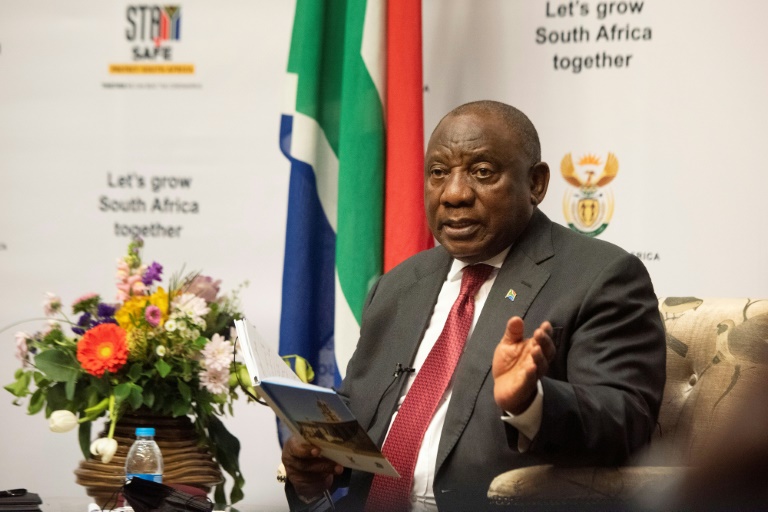
The last damning findings of a four-year probe into state corruption in South Africa under ex-leader Jacob Zuma, published Wednesday, suggested that President Ramaphosa could have acted against some of the allegations against his predecessor.

Receiving the report Ramaphosa, who was then deputy to Zuma, described the graft as an “assault on our democracy”.

The report was handed to Ramaphosa at his Pretoria offices by the head of the investigating panel and chief justice, Raymond Zondo.

The pillaging and mismanagement of South Africa’s state-owned enterprises during Zuma’s nine years in office, when Ramaphosa was his deputy, has been dubbed “state capture”.

In all, it took more than 400 days for an investigating panel to collect testimonies from around 300 witnesses, including Ramaphosa.

Ramaphosa’s answers to some questions about what he knew of the corrupt activities were “opaque” and “unfortunately leave some important gaps”, the report said. 

And whether he could have acted to curb the graft, “the wealth of evidence before this commission suggests that the answer is yes”, it said. 

“There was surely enough credible information in the public domain… to at least prompt him to inquire and perhaps act on a number of serious allegations.

“As the Deputy President, he surely had the responsibility to do so.” 

Ramaphosa did not immediately respond to the contents of the report, but said it “provides us with an opportunity to make a decisive break with the era of state capture”.

“State capture really was an assault on our democracy, it violated the rights of every man, woman and child in this country.”

The investigation was triggered by a 2016 report by the then corruption ombudswoman.

More than 1,430 individuals and institutions, including Zuma, were implicated. Zuma has previously denied any wrongdoing.

Ramaphosa now has four months to act on the panel’s recommendations.

The first volume of the report was published in January, and now the complete document runs to more than 5,600 pages. 

The report described Zuma as a “critical player” in the high-level plunder of state-owned enterprises that dogged his nine-year tenure, which ended unceremoniously in 2018 when he was forced to resign.

Zuma was last year slapped with a 15-month jail term for refusing to testify before the investigators.

He was granted parole just two months into his incarceration, but not before his jailing sparked riots last July that left more than 350 people dead.

– ‘Looting scheme’ –

The panel said “Zuma fled the commission because he knew there were questions” he would fail to answer, as it singled out his ally and ex-chairwoman of the struggling national carrier South African Airlines (SAA) of running down the airline.

The investigations revealed how Zuma’s friends, the wealthy Indian-born Gupta brothers, became enmeshed at the highest levels of government and the ruling African National Congress, including influencing ministerial appointments under Zuma.

Two of the three Gupta tycoons were arrested in Dubai earlier this month and face extradition to South Africa to face trial.

“The natural conclusion is that, during this period… the ANC under president Zuma, permitted, supported and enabled corruption and state capture,” said the report.

Taking over after Zuma was forced to resign over corruption, Ramaphosa came into office declaring anti-graft fight a priority of his administration. 

Ramaphosa in 2019 estimated that corruption, could have cost South Africa around 500-billion-rand ($31.4-billion), then an amount equivalent to about a tenth of the GDP of Africa’s most industrialised economy.

The publication of the final report comes as Ramaphosa is himself embroiled in a scandal following a robbery at his luxury game and cattle farm two years ago.

A former spy chief Arthur Fraser accused him of corruption alleging he hid millions of dollars in cash inside couches, and that he bribed the robbers to avoid scrutiny for keeping large sums of cash at home.

The scandal risks derailing Ramaphosa’s bid for a second term as ANC president ahead of the 2024 general election. He says he is a victim of “dirty tricks” and “intimidation” from those against his anti-graft fight.

S.Africa's Ramaphosa should have acted against graft under Zuma: report

The last damning findings of a four-year probe into state corruption in South Africa under ex-leader Jacob Zuma, published Wednesday, suggested that President Ramaphosa could have acted against some of the allegations against his predecessor.

Receiving the report Ramaphosa, who was then deputy to Zuma, described the graft as an “assault on our democracy”.

The report was handed to Ramaphosa at his Pretoria offices by the head of the investigating panel and chief justice, Raymond Zondo.

The pillaging and mismanagement of South Africa’s state-owned enterprises during Zuma’s nine years in office, when Ramaphosa was his deputy, has been dubbed “state capture”.

In all, it took more than 400 days for an investigating panel to collect testimonies from around 300 witnesses, including Ramaphosa.

Ramaphosa’s answers to some questions about what he knew of the corrupt activities were “opaque” and “unfortunately leave some important gaps”, the report said. 

And whether he could have acted to curb the graft, “the wealth of evidence before this commission suggests that the answer is yes”, it said. 

“There was surely enough credible information in the public domain… to at least prompt him to inquire and perhaps act on a number of serious allegations.

“As the Deputy President, he surely had the responsibility to do so.” 

Ramaphosa did not immediately respond to the contents of the report, but said it “provides us with an opportunity to make a decisive break with the era of state capture”.

“State capture really was an assault on our democracy, it violated the rights of every man, woman and child in this country.”

The investigation was triggered by a 2016 report by the then corruption ombudswoman.

More than 1,430 individuals and institutions, including Zuma, were implicated. Zuma has previously denied any wrongdoing.

Ramaphosa now has four months to act on the panel’s recommendations.

The first volume of the report was published in January, and now the complete document runs to more than 5,600 pages. 

The report described Zuma as a “critical player” in the high-level plunder of state-owned enterprises that dogged his nine-year tenure, which ended unceremoniously in 2018 when he was forced to resign.

Zuma was last year slapped with a 15-month jail term for refusing to testify before the investigators.

He was granted parole just two months into his incarceration, but not before his jailing sparked riots last July that left more than 350 people dead.

– ‘Looting scheme’ –

The panel said “Zuma fled the commission because he knew there were questions” he would fail to answer, as it singled out his ally and ex-chairwoman of the struggling national carrier South African Airlines (SAA) of running down the airline.

The investigations revealed how Zuma’s friends, the wealthy Indian-born Gupta brothers, became enmeshed at the highest levels of government and the ruling African National Congress, including influencing ministerial appointments under Zuma.

Two of the three Gupta tycoons were arrested in Dubai earlier this month and face extradition to South Africa to face trial.

“The natural conclusion is that, during this period… the ANC under president Zuma, permitted, supported and enabled corruption and state capture,” said the report.

Taking over after Zuma was forced to resign over corruption, Ramaphosa came into office declaring anti-graft fight a priority of his administration. 

Ramaphosa in 2019 estimated that corruption, could have cost South Africa around 500-billion-rand ($31.4-million), then an amount equivalent to about a tenth of the GDP of Africa’s most industrialised economy.

The publication of the final report comes as Ramaphosa is himself embroiled in a scandal following a robbery at his luxury game and cattle farm two years ago.

A former spy chief Arthur Fraser accused him of corruption alleging he hid millions of dollars in cash inside couches, and that he bribed the robbers to avoid scrutiny for keeping large sums of cash at home.

The scandal risks derailing Ramaphosa’s bid for a second term as ANC president ahead of the 2024 general election. He says he is a victim of “dirty tricks” and “intimidation” from those against his anti-graft fight.

Remains of independence hero Lumumba arrive home in DR Congo

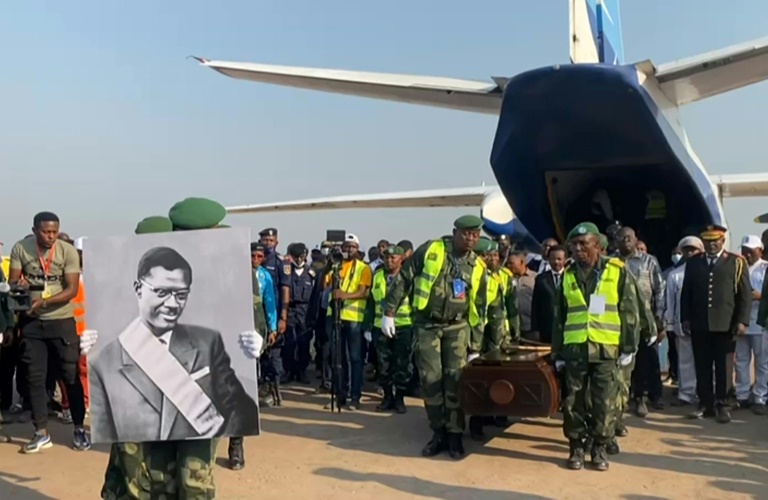
The coffin of slain Congolese independence hero Patrice Lumumba returned to his home on Wednesday for an emotionally charged tour and burial, more than six decades after his assassination.

A plane took Lumumba’s mortal remains — a tooth that ex-colonial power Belgium handed over to his family on Monday — from Brussels to Kinshasa for a nine-day trip around the Democratic Republic of Congo.

The coffin and an accompanying delegation then flew to the central province of Sankuru, where the country’s first post-independence leader was born in the village of Onalua in 1925.

“Mr first prime minister,” the DRC’s police and armed forces “are lined up to pay their respects to you on your return to your native village”, a police officer standing to attention solemnly said, in front of the coffin as it arrived at the aerodrome in the town of Tshumbe.

From there, it was taken 25 kilometres (15 miles) to Onalua, where two days of tributes are planned.

Transported by an army vehicle covered with a Congolese flag, the coffin arrived at the village square to the sound of tam-tam drums.

A podium in the national colours of yellow, blue and red, tents and banners bearing Lumumba’s face had been set up.

The remains will visit sites symbolically important to Lumumba’s life and be laid to rest in a mausoleum in the capital Kinshasa on June 30, following three days of national mourning.

“His spirit, which was imprisoned in Belgium, comes back here,” said Onalua Maurice Tasombo Omatuku, a traditional chief and nephew of Lumumba.

Finally able to mourn his uncle but knowing he was assassinated in 1961, Omatuku said he was feeling emotionally torn.

– ‘The son is returning’ –

Onalua has since 2013 been part of a commune named Lumumbaville in honour of the anti-colonial leader.

On Tuesday, ahead of the arrival home of its favourite son, a local resident pointed to a large, unfinished concrete house falling into dilapidation, with much of its roof missing.

“That’s the family plot where Lumumba was born,” he said.

Catherine Mbutshu said she felt joy at the idea that Lumumba’s “relic” was finally returning to the land of his forefathers.

“I’m old, my legs hurt, but I’m happy because the son is returning,” said the woman believed to have once known Lumumba.

“I spoke with him before his departure for Kisangani,” his political bastion in northeastern Congo, she said.

Lumumba earned his place in history as an anti-colonial icon when the DRC proclaimed independence from Belgium on June 30, 1960, delivering a fiery speech against settler racism.

He was overthrown that September before separatists from the southern region of Katanga and Belgian mercenaries executed him and two close supporters, Maurice Mpolo and Joseph Okito, on January 17, 1961.

– ‘Worthy burial’ –

Lumumba’s body was dissolved in acid and never recovered. 

Decades passed before human remains were discovered in Belgium, after a Belgian police officer who took part in Lumumba’s death boasted about his actions in the media. Belgian authorities seized the tooth from the officer in 2016.

In a solemn ceremony in Brussels on Monday, a casket containing the tooth was placed in a coffin that Belgium handed over to the Congolese authorities in the presence of Lumumba’s family.

“Father, we mourned your passing without performing the funeral prayer… our duty as descendants was to offer a worthy burial,” said his daughter Juliana.

Belgian Prime Minister Alexander De Croo apologised again for his country’s “moral responsibility” in Lumumba’s death.

Two weeks before, Belgium’s King Philippe on his first trip to the DRC reiterated his “deepest regrets for the wounds” inflicted by Belgian colonial rule. 

Historians say millions of people were killed, mutilated or died of disease as they were forced to collect rubber under Belgian rule.

The land was also pillaged for its mineral wealth, timber and ivory.

Prince Charles pays tribute to genocide victims in Rwanda

Prince Charles on Wednesday heard harrowing testimony of the genocide in Rwanda from survivors and perpetrators of the 1994 killings during the first visit to the country by a British royal.

The Prince of Wales also met face-to-face with President Paul Kagame, whose pact to resettle asylum seekers deported from the UK reportedly attracted strong disapproval from the British heir to the throne.

Charles is representing Queen Elizabeth II in Kigali at a Commonwealth summit she has championed since assuming the throne in 1952, as the organisation faces questions over its future role and relevance.

The prince and his wife Camilla arrived late Tuesday in Kigali for the 54-nation gathering that was twice postponed by Covid and takes place amid outrage over Britain’s migrant deal with Rwanda.

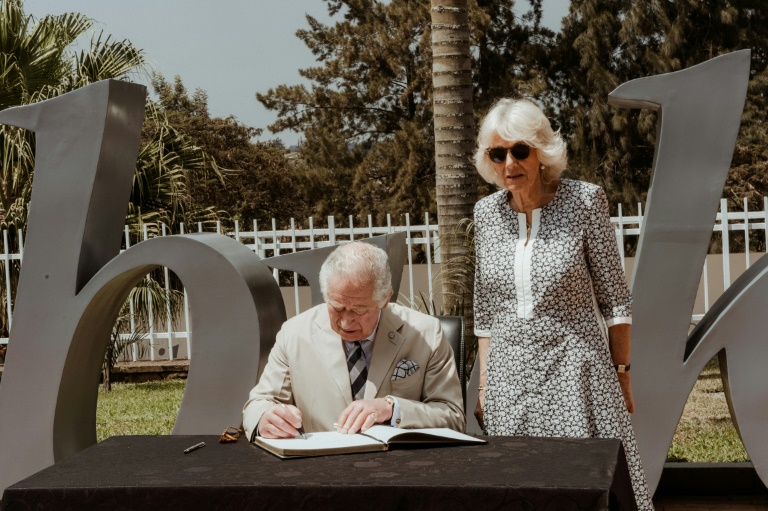
The royal couple began their visit with a sombre tour of the Kigali Genocide Memorial, the final resting place for over 250,000 victims of the massacres nearly three decades ago.

Housing skulls, bone fragments and shreds of clothing, the memorial is a testimony to the horrors of the genocide and a customary stop for foreign dignitaries visiting Rwanda.

The royals laid a wreath of white flowers and paused in silent tribute, before viewing a collection of photographs of victims and their possessions.

They also spoke with survivors of the genocide in which some 800,000 mainly Tutsi people were murdered by Hutu extremist forces between April and July 1994.

Later they visited a village outside Kigali where genocide perpetrators and survivors live side by side — sometimes even marrying — and heard stories of loss and reconciliation.

They also toured a nearby church-turned-memorial where tens of thousands were slaughtered and skulls unearthed from mass graves are kept on grim display.

“In special remembrance,” the prince wrote in a visitor book, according to photographs of the visit published by Rwandan state media.

– Migrant controversy –

The leaders of many Commonwealth nations including Britain’s Boris Johnson and Canada’s Justin Trudeau are expected in Kigali in the coming days for the meeting of mainly former British colonies.

Rwanda, a former German and Belgian colony, joined the Commonwealth in 2009 and has in recent years moved closer to the English-speaking world.

Charles and Camilla also met Kagame and First Lady Jeannette Kagame at the Rwandan leader’s official residence.

Earlier this month, Charles reportedly described the migrant deal as “appalling” and feared it would overshadow the summit.

Those criticisms, reported by The Times newspaper, threatened to make for an awkward meeting in Kigali.

The royals and their hosts gave little away, smiling for photographs flanked by the flags of their respective countries, before a closed-door meeting.

The UK said Wednesday it would introduce legislation allowing it to ignore certain decisions by the European Court of Human Rights after a judge in Strasbourg intervened to halt the first flight of asylum seekers to Rwanda.

Human rights groups and senior Christian leaders have denounced the plan, which supporters say breaks the business model of traffickers who smuggle migrants across the Channel.

The Commonwealth has been accused of turning a blind eye to Rwanda’s record on human rights, with critics saying it risks its credibility and integrity by hosting its summit in Kigali.

Charles has been anointed the next head of the Commonwealth when he becomes king, but there is increased discussion about a move away from the royal family as its ceremonial head, and republican movements are taking hold in some member states.

Close Bitnami banner
Bitnami