Africa Business

Children among five killed in Ivory Coast flooding

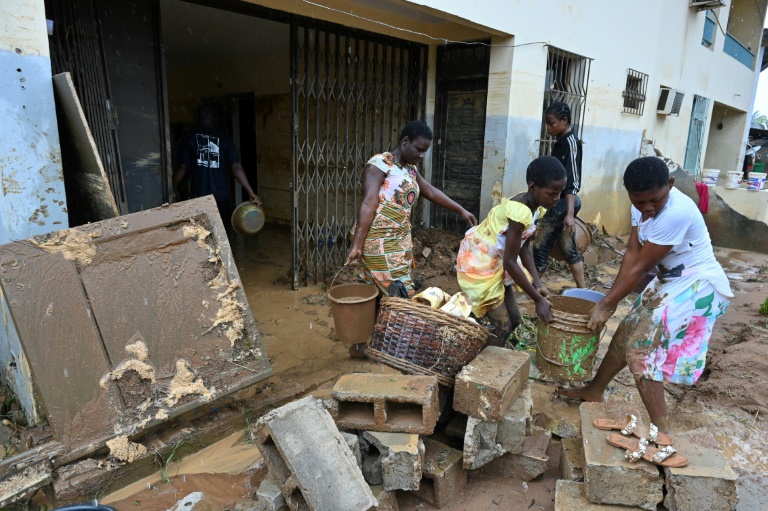
At least five people, including four children, have died after torrential rain overnight led to flooding in Ivory Coast’s economic capital Abidjan, the emergency services said Tuesday.

“We have been called upon since 0300 (GMT and local). Sadly five people, including four children, have been killed,” the head of the fire brigade, General Issa Sacko, told AFP.

“The children died in a landslip, and the adult was swept away by the water” in the city’s Bingerville neighbourhood.

He added that 85 people had been rescued and one taken to hospital, while a building threatening to collapse was evacuated.

Heavy rain fell through the night, flooding many neighbourhoods of Abidjan and leaving several key roads unusable.

In Bingerville, residents cleared out their homes after the water finally receded.

One inhabitant, Pricile Ziyahe, said she had lost everything in the flood.

“I have nothing left at home. The water swept it all away. We have nothing to wear or eat,” she said.

“All our documents and diplomas, everything’s gone.”

Cynthia Koffi, a medicine student, said the water rose so high it broke her home’s windows.

“At the neighbours’ opposite, you couldn’t even see the garage roof anymore,” she said.

Between Monday and midday Tuesday, some neighbourhoods in Abidjan received around 200 millimetres (eight inches) of rainfall, the equivalent of several weeks of rain, according to data from the Ivorian meteorological agency.

Residents posted images on social media showing the extent of the flooding in their homes or neighbourhoods and calling for help.

Last week, six people died after torrential rain triggered a landslip in the city’s western neighbourhood of Mossikro.

Landslips during the rainy season are a notorious risk in the fast-growing city of five million people, with flood-prone areas often inhabited by low-income citizens.

Previous accidents claimed 18 lives in June 2018 and 13 in June 2020.

EU urges Ethiopia to lift fuel restrictions to Tigray

The European Union on Tuesday urged Ethiopia’s government to lift restrictions on fuel supplies to the war-wracked Tigray region, warning that shortages were crippling the distribution of emergency aid.

The 19-month conflict between Prime Minister Abiy Ahmed’s government and Tigrayan rebels has driven hundreds of thousands of people to the brink of famine and left more than nine million in need of food aid, according to the United Nations.

After the government announced a “humanitarian truce” in March, aid convoys have slowly made their way to Tigray for the first time since mid-December.

But fuel shortages due to government restrictions have severely limited access to life-saving supplies, even as aid warehouses are full, the EU’s commissioner for crisis management, Janez Lenarcic, said after a visit to Tigray’s capital Mekele.

“More fuel is needed because without it, even this food assistance that comes to Mekele cannot reach rural areas, where the needs are highest,” the EU envoy told a press conference in Ethiopia’s capital Addis Ababa.

“Now we have a situation where humanitarian warehouses in Mekele are full, but people out there in the countryside are still hungry,” he added.

Tigrayans have spent several months without access to basic services such as electricity, telecommunications, internet and banking.

The situation in hospitals was especially critical, Lenarcic said, pointing to both the absence of electricity and the lack of fuel.

“You know what happens when life-saving machines do not operate because there’s no electricity and there is no fuel for generators,” he said.

“I fail to see the military rationale behind the blockade of electricity, banking services,” he said, urging the government to restore access immediately.

The conflict has driven a wedge between Ethiopia and Western nations, with the United States ending preferential trading status for its longtime ally.

The European Union announced in December 2020 that it was postponing some 90 million euros ($110 million) in aid to Ethiopia over its failure to grant full humanitarian access to Tigray.

Last week, Abiy said he was open to the possibility of peace negotiations with the Tigray People’s Liberation Front (TPLF).

The conflict began in November 2020 when the government sent federal troops into Tigray to topple the TPLF, the region’s former ruling party, saying it was in response to rebel attacks on army camps.

After the TPLF mounted a shock comeback, retaking Tigray and then expanding into the neighbouring regions of Afar and Amhara, fighting intensified in the second half of 2021, before reaching a stalemate. 

Malians march for state protection after massacre

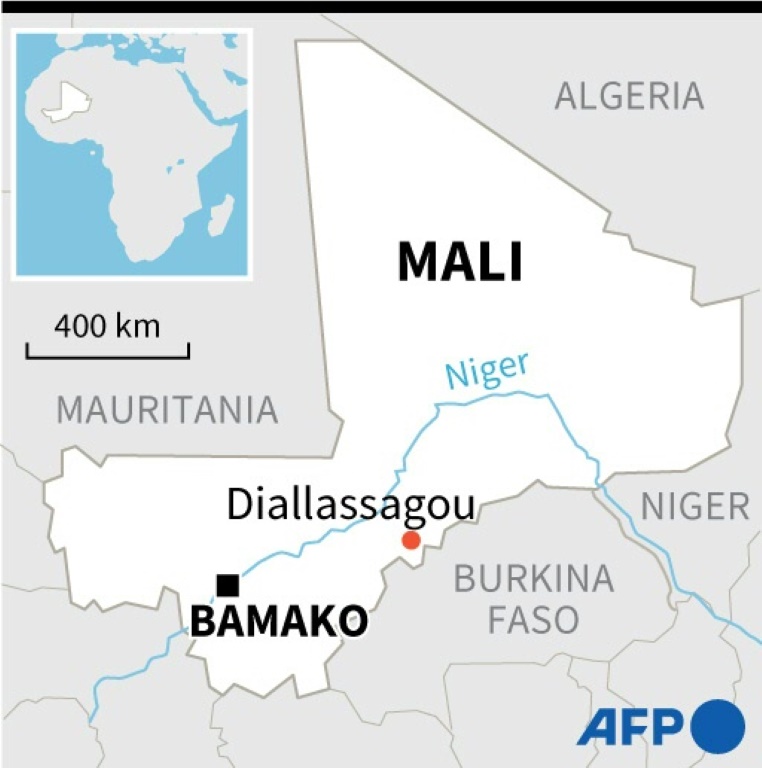
Dozens of Malians demonstrated Tuesday in the central town of Bankass to demand state protection after suspected jihadists massacred at least 132 civilians, and possibly many more, in nearby neighbouring villages.

The mass killing — the latest in a series of attacks across the Sahel — resulted in one of Mali’s highest civilian death tolls.

The government says fighters from the Fulani religious leader Amadou Koufa’s armed group, the Katiba Macina, killed 132 civilians in Diallassagou and two surrounding villages, a few dozen kilometres (miles) from Bankass.

A local official, speaking on condition of anonymity, said there were “more than 200 dead and missing”. 

“We have never seen anything like this in Mali — the state must do something,” he told AFP. 

A police official said more bodies had been found on Tuesday.

Junta leader Colonel Assimi Goita declared three days of mourning and the government on Tuesday sent a delegation of four ministers — led by Colonel Ismael Wague, a junta strongman — to the scene, some 500 kilometres (310 miles) northeast of Bamako.

They expressed their sympathy and stopped by the hospital in Mopti where some of the injured are being treated. 

“We gave them symbolic ‘envelopes’ from the president of the transition, Colonel Goita,” said Health Minister Dieminatou Sangare, who was also part of the delegation.

The junta — which seized power in 2020 after months of protests against the civilian government’s failure to end the violence racking the country — on Monday said the safety of Mali’s citizens remained its “absolute priority”. 

But that was not enough for the people of Bankass, the capital of the area where the massacre took place.

“We want the authorities to think about us,” a woman who did not give her name told reporters after a march to demand better security. 

“I lost my two children — I have nothing to live for. Look for yourselves, we are being martyred, raped, abandoned,” she added before bursting into tears. 

A collective that says it is made up of elected officials and civil society representatives has declared “civil disobedience” until further notice. 

“Apart from health, all public services have been blocked — almost no one has gone to work,” a youth leader said.

Political leaders in Bamako expressed sympathy while rallying around the armed forces.

But a group of political parties named the “Cadre d’echange”, or Exchange Framework, and the National Human Rights Commission urged the authorities to take measures to prevent such tragedies happening again.

– ‘Absolute priority’ –

Local officials said dozens of jihadists appeared on motorcycles, then rounded up and massacred dozens of men over the weekend.

They also said the armed men burned down shops, looted villages and stole cattle. 

The bloodbath is believed to have culminated on Saturday night, with many people fleeing their homes.

Central Mali has been plagued by violence since the Al-Qaeda-affiliated Katiba Macina emerged in 2015.

Much of the area is beyond state control and is prone to violence by self-defence militias and inter-community reprisals.

On March 23, 2019, more than 160 Fulani civilians were massacred in the village of Ogossagou.

Since 2012, Mali has been rocked by an insurgency by groups linked to Al-Qaeda and the so-called Islamic State group. 

Violence that began in the north has since spread to the centre and neighbouring Burkina Faso and Niger.

Thousands of civilians and combatants have died and hundreds of thousands have been displaced in one of the world’s poorest regions. 

Two thirds of Mali remains beyond state control.

The junta has recently turned away from Mali’s former military allies, including France, and towards the Russians.

– A ‘reprisal’ –

But Mali has seen a series of mass killings in recent months, including in the so-called three-border area on the border with Niger and Burkina Faso.

No one has claimed responsibility for the Diallassagou massacre.

Such mass killings are typically attributed to Islamic State-affiliated groups rather than Al-Qaeda-affiliated groups.

However, it is normally the Katiba Macina that operate in the Bankass area. 

Nouhoum Togo, a local elected official in Bankass, told AFP the attack was a reprisal against locals after the Malian army on June 10 carried out an operation there, in which it said it had “neutralised” six jihadists. 

Malians march for state protection after massacre

Dozens of Malians demonstrated Tuesday in the central town of Bankass to demand protection from the state after suspected jihadists massacred more than 130 civilians in nearby neighbouring villages.

The mass killing — the latest in a series of attacks across the Sahel — resulted in one of Mali’s highest civilian death tolls.

Villagers continued to search for the missing Tuesday, raising fears of an even greater toll.

The government says fighters from the Fulani religious leader Amadou Koufa’s armed group, the Macina Katiba, killed 132 civilians in Diallassagou and two surrounding villages, a few dozen kilometres (miles) from Bankass.

Junta leader Colonel Assimi Goita has declared three days of mourning and a government delegation was sent to the scene Tuesday.

Political leaders expressed compassion with the victims’ families, while rallying around the armed forces.

But a group of political parties named the “Cadre d’echange”, or Exchange Framework, demanded Goita make an in-person visit and said the authorities had a responsibility to take “the necessary measures so that such tragedies are not replicated”.

Residents of Bankass, the main town in the region, held a demonstration on Tuesday. 

Photos sent by a Dogon community association show several dozen people gathered in the street.

“We have gathered despite the rain to call for security, and to condemn the crimes,” Oumar Togo, a member of the Bankass youth association, told AFP by telephone. 

“The government must ensure our security.”

– ‘Absolute priority’ –

Local officials said dozens of jihadists appeared on motorcycles, then rounded up and massacred dozens of men over the weekend.

They also said the armed men burned down shops, looted villages and stole cattle. 

The bloodbath is believed to have culminated on Saturday night, with many people fleeing their homes.

Central Mali has been plagued by violence since the Al-Qaeda-affiliated Katiba Macina emerged in 2015.

Much of the area is beyond state control and is prone to violence by self-defence militias and inter-community reprisals.

On March 23, 2019, more than 160 Fulani civilians were massacred in the village of Ogossagou.

Since 2012, Mali has been rocked by an insurgency by groups linked to Al-Qaeda and the so-called Islamic State group. 

Violence that began in the north has since spread to the centre and neighbouring Burkina Faso and Niger.

Thousands of civilians and combatants have died and hundreds of thousands have been displaced in one of the world’s poorest regions. 

The military seized power in 2020 after months of protests against the civilian government’s failure to stop the deadly spiral.

Junta leaders on Monday said the safety of Mali’s citizens remained their “absolute priority”. 

They have recently turned away from Mali’s former military allies, including France, and towards the Russians.

– Local agreements –

But Mali has seen a series of mass killings in recent months, including in the so-called three-border area on the border with Niger and Burkina Faso. 

Burkina Faso experienced one of the worst massacres in its history earlier this month, with 86 civilians killed in Seytenga, in the north.

Civilians are often subjected to reprisals by jihadists who accuse them of collaborating with the enemy. 

Some areas of Mali, especially in the centre, have fallen under the jihadists’ control. 

Civilians are also frequently caught in the crossfire between armed groups, including those affiliated with Al-Qaeda and the Islamic State.

No one has claimed responsibility for the Diallassagou massacre.

Such mass killings are typically attributed to Islamic State-affiliated groups rather than Al-Qaeda-affiliated groups.

However, it is normally the Katiba Macina that operate in the Bankass area. 

Nouhoum Togo, a local elected official in Bankass, told AFP the attack was a reprisal against locals after the Malian army on June 10 carried out an operation there, in which it said it had “neutralised” six jihadists. 
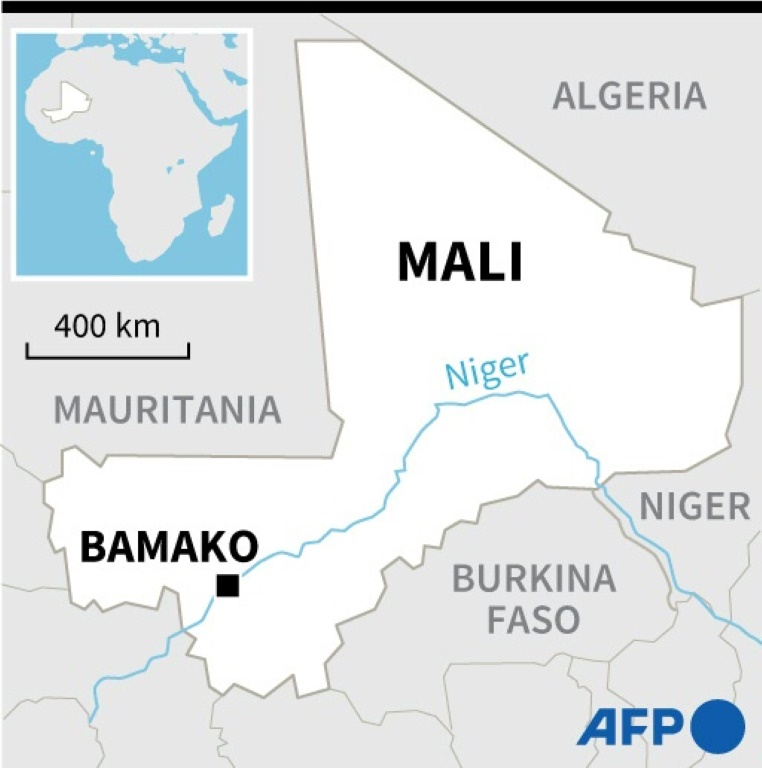
Two thirds of Mali remains beyond state control.

Tunisia's Saied confirms no state religion in new charter

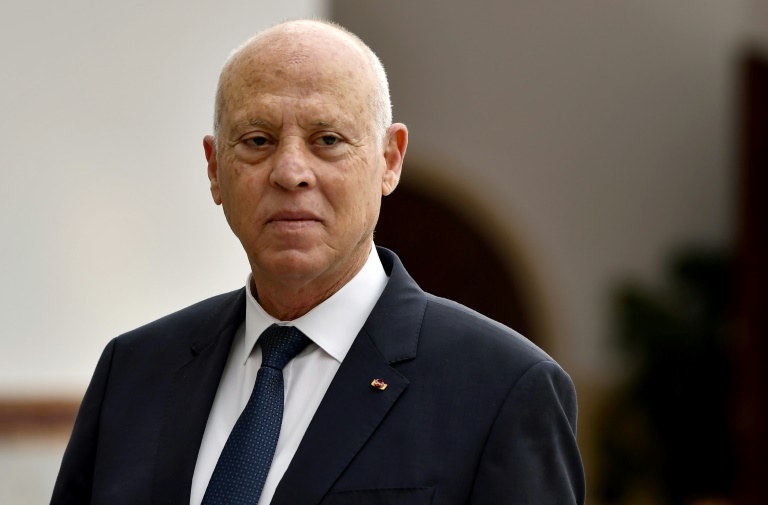
Tunisian President Kais Saied confirmed Tuesday that a draft constitution to be put to a referendum on July 25 will not enshrine Islam as the “religion of the state”.

“The next constitution of Tunisia won’t mention a state with Islam as its religion, but of belonging to an umma (community) which has Islam as its religion,” he told journalists at Tunis airport.    

“The umma and the state are two different things.”

Saied took delivery of the draft text on Monday, a key step in his drive to overhaul the Tunisian state after he sacked the government and seized far-reaching powers last July in moves opponents called a coup.

Sadeq Belaid, the legal expert who headed the drafting committee, had told AFP in an interview this month that he would remove all reference to Islam from the new document in a challenge to Islamist parties.

His comments, partly referring to Saied’s nemesis Ennahdha, an Islamist-inspired party which has dominated Tunisian politics since 2011, sparked a heated national debate.

The first article of Tunisia’s 2014 constitution — and its 1959 predecessor — defined the North African country as “a free, independent and sovereign state. Islam is its religion and Arabic is its language”.

The 2014 document was the product of a hard-won compromise between Ennahdha and its secular rivals three years after the revolt that overthrew dictator Zine El Abidine Ben Ali.

The new text, produced through a “national dialogue” excluding opposition forces and boycotted by the powerful UGTT trades union confederation, is meant to be approved by Saied by the end of June before being put to voters next month.

That is a year after the former constitutional law professor sacked the government, later consolidating his power grab by dissolving parliament and seizing control of the judiciary.

His moves have been welcomed by some Tunisians tired of the corrupt and often chaotic post-revolutionary system, but others have warned he is returning the country to autocracy.

Saied has long called for a presidential system that avoids the frequent deadlock seen under the mixed parliamentary-presidential system.

Asked about that issue on Tuesday, he said: “Whether the system is presidential or parliamentary is not the question. 

“What counts is that the people have sovereignty. There’s the legislative function, the executive function and the judicial function, and separation between them.”

Ivory Coast 'turns page' on refugee crisis: UNHCR

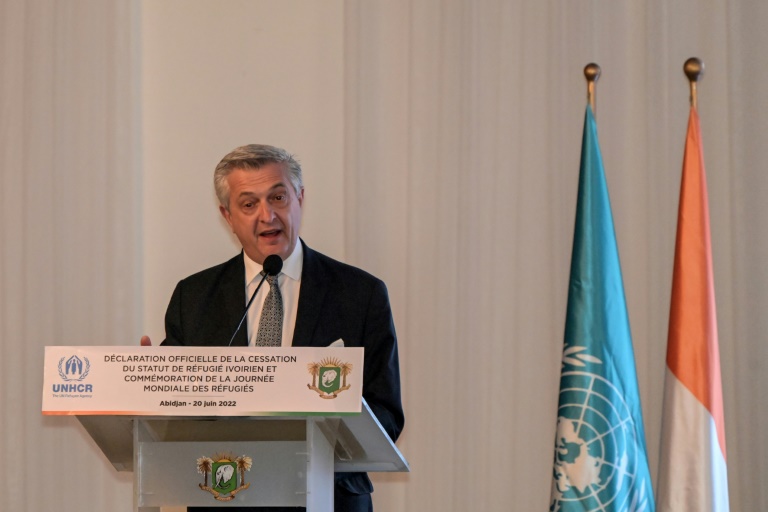
The UN High Commissioner for Refugees has officially declared an end to refugee status for nationals of Ivory Coast, stating that the country has “turned the page” on bitter conflicts.

“The cessation of (refugee) status is a gesture that has legal value because the people who stay abroad are no longer refugees. But it also has an important symbolic value, because it indicates that the country has turned the page,” Filippo Grandi told AFP on Monday during a visit to Ivory Coast.

Speaking on World Refugee Day, Grandi described the move as “the last act of the end” of the crises that have wracked the west African country, culminating in serious post-electoral clashes in 2010-2011, when incumbent president Laurent Gbagbo refused to admit defeat at the polls by challenger Alassane Ouattara.

Fighting rocked the commercial capital Abidjan, some 3,000 people were killed and at least half a million people fled to safety, according to official agencies.

The lifting of refugee status by the UNHCR will take effect on June 30 and concerns a few tens of thousands of refugees who sought refuge in neighbouring countries during the conflict, Grandi said.

The UNHCR estimated in September last year that Ivorians had, with some exceptions, no cause to benefit any longer from international protection. Of 325,000 refugees, 310,000 have already returned voluntarily to their country, the commissioner added.

“Everywhere in the world we see rather the opposite. I came here to show the exception and to say that it is possible to do it if there is a political will,” he said, at a time when the UNHCR has counted more than 100 million refugees or displaced people around the world.

Ivory Coast, the former economic hub of west Africa and still the world’s leading cocoa producer, is engaged in a reconciliation process, marked in June 2021 by Gbagbo’s return after the International Criminal Court acquitted him of crimes against humanity during the crisis.

Rwanda to host Commonwealth talks after migrants, rights row

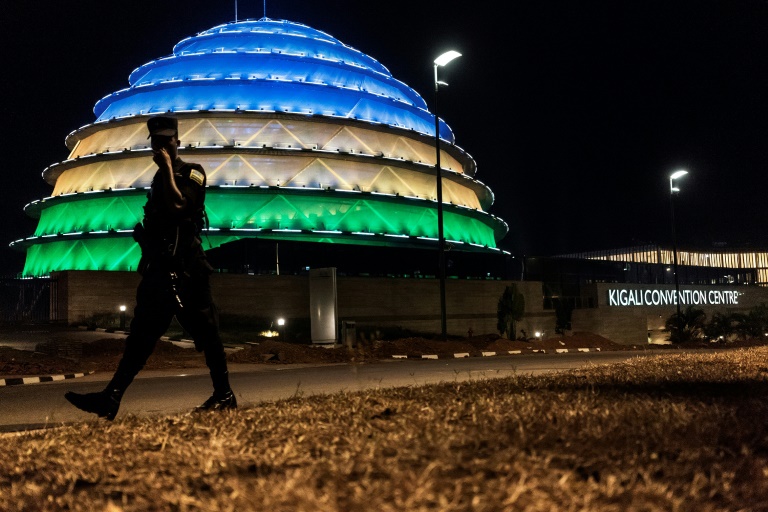
Leaders from the 54 Commonwealth countries gather in Rwanda under tight security this week for a long overdue but controversial summit that was twice postponed by Covid.

Flags, from the tiny Pacific island of Tuvalu to South Asian giant India, are flying at the airport and the palm tree-lined road leading to the city and the Kigali Convention Centre where the Commonwealth Heads of Government Meeting takes place Friday and Saturday.

Some $4.7 million has been spent sprucing up the capital, with President Paul Kagame keen to portray “the country of a thousand hills” in the best possible light.

But the event, which was supposed to have been held in June 2020, takes place amid outrage at Britain’s migrants settlement deal with Rwanda, and questions about the host’s human rights record.

A tussle for the leadership of the Commonwealth, which represents some 2.5 billion people or a quarter of humanity, is also expected, with renewed talk about the body’s future role and relevance.

– Tensions? –

The fall-out from the migrant deal potentially puts Queen Elizabeth II’s heir Prince Charles in a tricky spot, as he makes his first trip to the east African country as her representative.

The visit — also the first to Rwanda by a British royal — will notably see the 73-year-old prince meet survivors of the 1994 genocide.

But his reported criticisms of the planned migrant deportations as “appalling” could make for an awkward meeting with Kagame and UK Prime Minister Boris Johnson who back the scheme.

Britain’s Sunday Telegraph said the prince fears the row, which last week saw Europe’s top human rights court step in to halt the first flight, could mean the wider aims of the meeting are lost.

Amnesty International’s director for east and southern Africa, Deprose Muchena, called on Commonwealth leaders to take a “firm and clear stance” against the policy.

“Member states need to seize the opportunity in Kigali to denounce this inhumane arrangement and pressure the UK and Rwanda to end the deal,” he added.

– Rights –

Rwanda, currently locked in a spat with the neighbouring Democratic Republic of Congo over its alleged support for M23 rebels, has been a controversial choice as CHOGM host since it was announced in 2018.

This month, civil society organisations said there was a “climate of fear” in the country at odds with its glossy image abroad, including crackdowns on rights of assembly, enforced disappearances, arbitrary detention, torture and extrajudicial executions.

But they added: “The silence of the Commonwealth on Rwanda’s human rights record risk undermining the organisation’s human rights mandate, as well as its integrity and credibility.”

The Committee to Protect Journalists said two foreign journalists who had written critical articles about Rwanda were denied accreditation to cover the summit.

The head of Rwandan opposition Development and Liberty for All party told AFP “nothing has changed” since Rwanda joined the Commonwealth 12 years ago.

“Rwanda does not respect the values of the Commonwealth, democracy, the rule of law, respect for human rights, freedom of expression,” said Victoire Ingabire.

– Future – 

Charles has been anointed as the next head of the Commonwealth when he becomes king, taking over from his 96-year-old mother, who has championed the organisation since she came to the throne in 1952.

But there is increased discussion about a move away from the royal family as its ceremonial head.

At the same time, republican movements in some of the 14 Commonwealth countries outside the UK where the queen is head of state are gathering pace.

Member state Barbados became the world’s newest republic last year, and other Caribbean nations are pushing to follow suit.

Another member, Australia, has also appointed a minister for the republic, in a sign of constitutional change on the horizon.

Those questions loom large over the summit, and whether a diminished global reach for the British monarchy will even affect the Commonwealth’s existence.

Announcing his trip, Charles said the fact that two-thirds of the grouping’s population was aged under 30 can make the Commonwealth “an unparalleled force for good in our world”, particularly on issues such as tackling climate change.

But Commonwealth watchers said that young people, who have no emotional attachment to the royals, could determine its future, loosening Britain’s dominance of the organisation, many of whose members are former British colonies.

“The new generation wants to question and re-evaluate the history of the empire and that is a good thing,” the British economist and former Labour politician Meghnad Desai said recently.

burs-phz/jwp/gw

South Africa's latest hot export to China? Donkeys

Chinese demand for traditional medicines has sent poachers hunting for African animals from rhinos to pangolins. Now a humbler creature is threatened: donkeys.

Once prized by emperors, a gelatin called ejiao — made from donkey skins — is increasingly sought after by China’s middle class.

The health benefits are believed similar to products derived from rhino horns, from working as a blood thinner to acting as an aphrodisiac, which could ease pressure on endangered rhinos.

But as in countries from Burkina Faso to Kenya, South Africa is now seeing its donkey population plunge, threatening other businesses that make soaps and creams from donkey milk.

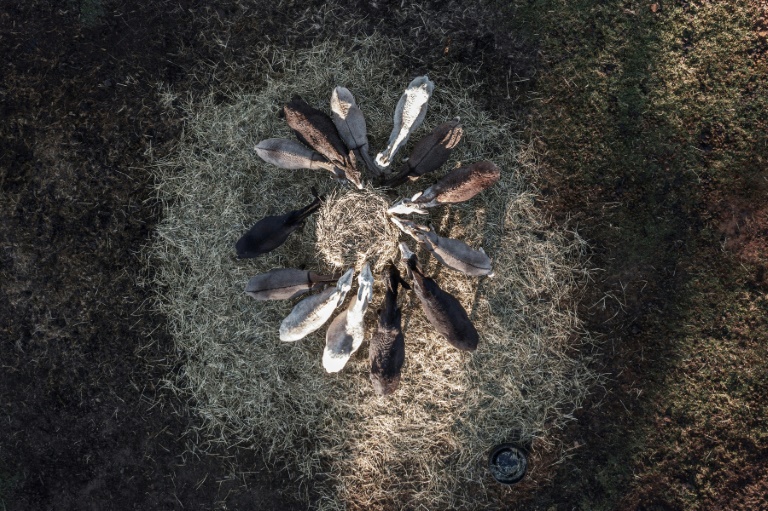
“In South Africa we have seen a rapid decline of the donkey population due to illegal slaughter to supply the Chinese skin trade,” said Jesse Christelis, co-founder of the Donkey Dairy. 

A recent study by researchers from the University of South Africa showed the donkey population shrank from 210,000 in 1996 to about 146,000 in 2019.

The shrinking supply has sent prices soaring. According to Christelis, a donkey would fetch about $30 at auction five years ago. Now they cost about $125 each.

That is still a relative bargain in China where donkey hides that sold for $473 in 2018 now sell for $1,160.

The ejiao produced from them can sell for up to $360 per kilogram.

South Africa legally exports about 10,500 donkey hides to China every year, but the real quantity is believed much higher as smugglers have tapped into the trade.

“This year, we intercepted two loads of donkeys that were going to Lesotho,” said Grace De Lange of the National Council of Societies for the Prevention of Cruelty to Animals.

– Donkey rustlers –

“On our farm there has been a big focus to go look for donkeys that have been placed in places of misery and we actually buy them out,” he told AFP.

“We sit often on most of the auctions whether it is online or a physical auction to out bid the kill-buyers who supply the trade with donkey skins.”

Theft of donkeys also hits small farmers who need the animals to transport their produce.

“Stock theft units need to be more proactive,” said Ashley Ness, an inspector at the Highveld Horse Care Unit, an equine welfare agency situated on the outskirts of Johannesburg.

“Instead of taking action after the cause, they should take leads from villages that get approached by suspicious agents.” 

The top agriculture official in the North West province, Manketsi Tlhape, said they are “investigating all the reported incidents”.

However, donkey farmers like Christelis have limited options to protect their herd from thieves.

“We have electric fences, alarms and our donkeys are also micro chipped in case they get stolen,” he said.

– Donkey Dairy –

There is scant information on the size of the ejiao market, but the Britain-based animal welfare group Donkey Sanctuary estimated that in 2019 China needed five million skins to supply to the trade.

In contrast, the market for products using donkey milk is still in its infancy. The size of the global donkey milk market is projected to reach just $16 million by 2026.

South Africa has two donkey dairies, but they may not be viable if prices for the animals keep rising.

Kenya banned donkey slaughter in 2020, after the populations there plunged due to the skin trade.

Donkey milk is believed to contain antioxidant, antimicrobial and antidiabetic properties.

“I think the donkey skin trade is definitely a threat to donkey dairies in South Africa and across Africa,” said Christelis, who owns 116 donkeys at his farm.

“The increased demand for donkey milk is mainly from people suffering from eczema, psoriasis,” he said. “Seeing the donkey population being depleted, we don’t know if the demand for donkey milk will be met.”

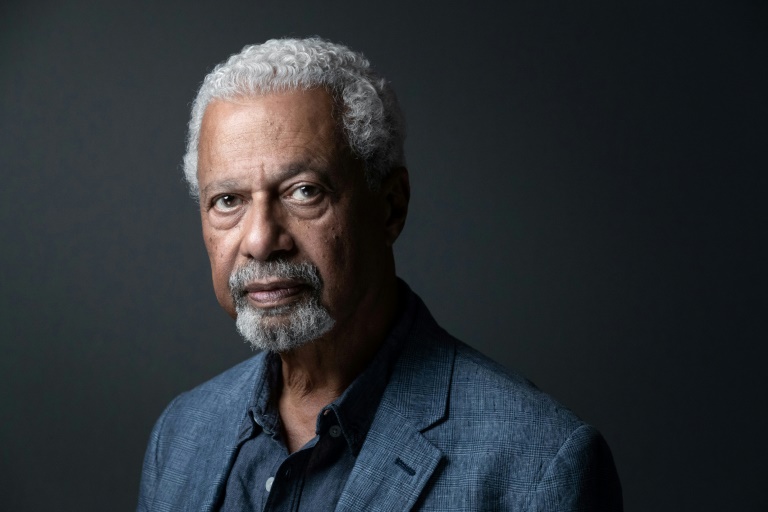
Nobel winner Abdulrazak Gurnah: 'It's good to make right-wingers cry'

Abdulrazak Gurnah, the British-Tanzanian Nobel-winning writer, has spent a lifetime confronting colonialism and racial politics — and welcomes a new generation keeping these issues alive.

The author has suddenly become a famous name in his 70s after winning last year’s Nobel Prize for Literature. 

Drawing on the brutal realities of colonialism in Africa and the dislocation and poverty he experienced when he came to England, novels such as “Paradise”, “Desertion” and “Gravel Heart” explore racism, exile and the legacy of European domination. 

Gurnah says his generation had a particularly complex relationship with colonialism. 

“For people of my father’s generation, colonialism was something they saw arriving, implanting itself, dominating. But they didn’t lose a sense of who they were,” he told AFP during a trip to Paris. 

“(My generation) couldn’t just brush it off. We could see that in fact much has been done — progress in medicine, technology, engineering… we are more urgently forced to try and engage and understand that relationship.”

He welcomes the recent wave of anti-colonial protests, often focused on statues and other symbols of the era. 

“I don’t care if they topple statues or not. But the symbolism is good,” he said.  

“And it provokes all these right-wingers to come out and start crying and complaining. Good. It means the issue is kept alive.”

– ‘A difficult time’ –

Gurnah grew up in Zanzibar, which became part of Tanzania after gaining independence from Britain in 1963. 

A year later, a Communist-inspired revolution led to problems for Gurnah’s Arab-origin family. 

His father came from a Yemeni family and his uncle was a wealthy trader of fish, dates and spices. 

They became targets when the Communists overthrew Zanzibar’s sultan and his mainly Arab government. 

“It was a difficult time for everybody, particularly people who the government considered to be foreigners. It was part of a racialisation process, quite unjust,” Gurnah recalled.

His family supported the Zanzibar Nationalist Party, which had tried to create a shared identity rather than focus on separate ethnicities. 

“We were saying: we’re Zanzibaris — we’re not Indians, Arabs, Africans. We don’t want to be racialised,” he said. 

“Of course the racial politics won, but I still want to adhere to: I’m a Zanzibari, I’m not a Yemeni, this or that, or an African.”

That debate found strange echoes after his Nobel victory, with Arabs seeking to claim him as one of their own. 

“The Arabs celebrated me as a Yemeni writer. I said well, fine, if you want. That’s not how I feel, but… it makes everybody happy, so why not?”

– ‘African literature’ –

Gurnah fled to Britain and spent years in poverty before managing to educate himself into a career as an academic and author.

With South Africa’s Damon Galgut winning the Booker Prize and Senegal’s Mohamed Mbougar Sarr becoming the first sub-Saharan African to win France’s Prix Goncourt, 2021 proved to be a landmark year for African literature.

Gurnah knows the label of “African literature” is far too vague since it encompasses such a vast and diverse continent, but he takes a relaxed attitude. 

“Those who use the term often already have a conception of African literature,” he said. “They might exclude white South Africans, or North Africans, or Ethiopians and Somalis.”

“(But) if we use it symbolically, it’s OK, I can live with that… and I don’t want to argue with anybody.”

Over 130 Malian civilians 'systematically' killed by suspected jihadists

Suspected jihadists massacred more than 130 civilians over the weekend in neighbouring central Mali towns, the latest mass killings in the Sahel region.

Local officials reported scenes of systematic killings by armed men in Diallassagou and two surrounding towns in the Bankass circle, a longtime hotbed of Sahelian violence.

“They have also been burning huts, houses, and stealing cattle — it’s really a free-for-all,” said a local official who for security reasons spoke on condition of anonymity.

He and another official, who like him had fled his village, said the death toll was still being counted on Monday.

Nouhoum Togo, head of a party in Bankass, the main town in the area, said the toll was even higher than the 132 announced by the government, which has blamed Al-Qaeda-affiliated jihadists for the killings. 

The national authorities broke their silence on Monday afternoon after alarming reports proliferated on social networks over the weekend.

Togo told AFP that army operations in the area two weeks ago had led to clashes with jihadists. On Friday, the jihadists returned on several dozen motorbikes to take revenge on the population, he added.

“They arrived and told the people, ‘You are not Muslims’ in Fulani, then took the men away, and a hundred people went with them,” he said. 

“Some two kilometres (1.2 miles) away, they systematically shot people.”

He said the bodies continued to be collected in the areas around Diallassagou on Monday.

– Blaming the Macina Katiba –

The government blamed the attack on Fulani religious leader Amadou Koufa’s armed group, the Macina Katiba. 

Central Mali has been plagued by violence since the Al-Qaeda-affiliated organisation emerged in 2015.

A large part of the area is beyond state control and is prone to violence by self-defence militias and inter-community reprisals.

Since 2012, Mali has been rocked by an insurgency by groups linked to Al-Qaeda and the so-called Islamic State group.

Violence that began in the north has since spread to the centre and neighbouring Burkina Faso and Niger.

Civilians are often subjected to reprisals by jihadists who accuse them of collaborating with the enemy.

Some areas of the country, especially in the centre, have fallen under the jihadists’ control. 

The military ousted the civilian government in 2020 over its inability to halt the violence, and has said the restoration of security is its priority.

But civilians still often find themselves caught in the crossfire between armed groups, including those affiliated with Al-Qaeda and the Islamic State.

– Deteriorating border situation –

Nearly 600 civilians were killed in Mali in 2021 in violence blamed mainly on jihadists, but also on self-defence militias and armed forces, according to a UN document published in March.

The UN has expressed alarm in Security Council documents at the deteriorating security situation in central Mali, as well as in the north and in the area along the borders of Burkina Faso and Niger.

Not far from those borders on Saturday, around 20 civilians were killed in the northern region of Gao — about 500 kilometres (311 miles) west of Bankass.

A UN spokesperson on Monday condemned “in the strongest terms the attacks perpetrated… near Goa and near Bankass”. 

Members of the UN Security Council “expressed their deepest sympathy and condolences to the families of the victims and to the transitional government of Mali”, the UN statement said. 

The number of civilians killed in attacks attributed to extremist groups has almost doubled since 2020 in the central Sahel, a coalition of West African NGOs said in a report released Thursday.

Last Wednesday, an armed group reported the death of 22 people in the Menaka region, right by Niger’s western border. 

In northern Burkina Faso, 86 people were killed in June in Seytenga. 

Mali’s junta leader Colonel Assimi Goita decreed three days of national mourning for the latest killings. 

Close Bitnami banner
Bitnami