Africa Business

East Africa leaders agree regional force for DRCongo, urge ceasefire

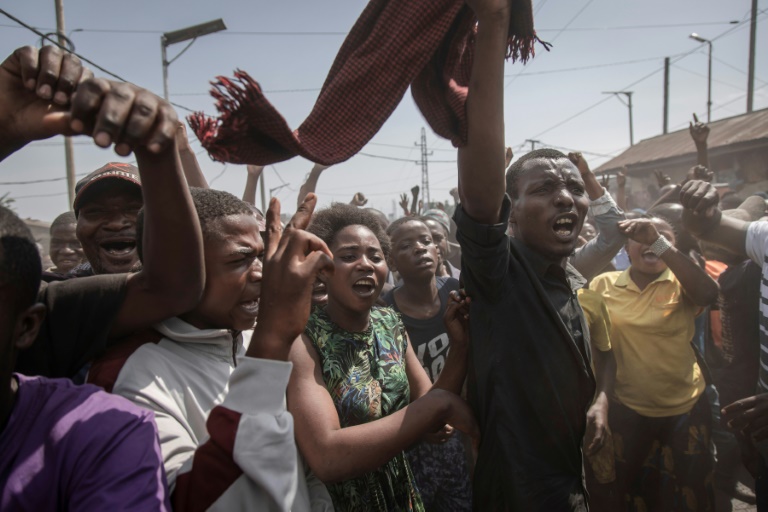
East African leaders agreed Monday to send in a regional force to try to end fighting in the east of the Democratic Republic of Congo, and called for an immediate ceasefire.

The move was announced by the Kenyan presidency after the seven-member East African Community held talks in Nairobi on an upsurge of violence in the volatile region that has ensnared neighbouring countries.

“The heads of state instructed that the regional force should, in cooperation with the military and administrative forces of the DRC, seek to stabilise and secure the peace in the DRC,” President Uhuru Kenyatta’s office said in a statement.

“The heads of state directed that an immediate ceasefire should be enforced and cessation of hostilities should commence immediately.”

The vast mineral-rich DRC is struggling to contain dozens of armed groups in the east, many of which are a legacy of two regional wars a quarter of a century ago.

A recent flare-up of heavy fighting in the east has revived decades-old animosities between Kinshasa and Kigali, with the DRC blaming neighbouring Rwanda for a resurgence of the M23 militia.

Rwanda has repeatedly denied backing the rebels, while both countries have accused each other of carrying out cross-border shelling.

The Kenyan statement did not say whether Rwandan troops would be involved in the regional force — but the government in Kinshasa insisted it would not accept their presence.

“Placed under the military command of Kenya, this force should be operational in the coming weeks and should not include within it elements of the Rwandan army,” the DRC presidency said on Twitter.

– ‘Collective approach’ needed –

Both DRC President Felix Tshisekedi and Rwanda’s Paul Kagame were at the meeting hosted by Kenyatta, along with the leaders of Burundi, South Sudan and Uganda, and Tanzania’s ambassador to Nairobi.

Kagame was in attendance even though Rwanda is hosting dozens of leaders from across the globe at the Commonwealth Heads of Government Meeting (CHOGM) later this week.

African Union Commission chief Moussa Faki Mahamat welcomed the outcome of the talks in a statement posted on Twitter.

“I urge the immediate implementation of their decisions in order to restore peace in Eastern DRC,” he added.

A primarily Congolese Tutsi militia, the M23 leapt to global prominence in 2012 when it captured the main eastern DRC city of Goma.

It was forced out shortly afterwards in a joint offensive by UN troops and the Congolese army.

But the militia has recently made a comeback, clashing with Congolese troops in violence that has inflamed tensions in central Africa and forced thousands of people to flee to neighbouring Uganda.

“The problems affecting the region like the crisis in Congo need a collective approach from all regional members of the East African Community,” Ugandan President Yoweri Museveni said on Twitter as the meeting got under way.

“We must insist on working together because these people have suffered a lot.”

– Call for pressure on Rwanda –

Museveni’s government has sent in troops to help Congolese forces fight the Allied Democratic Forces, a militia group blamed for thousands of deaths in eastern Congo and a string of bombings in the Ugandan capital Kampala.

After M23 rebels captured the border town of Bunagana a week ago, Kenyatta called for the deployment of an EAC force to restore peace, and military chiefs from the bloc’s seven member states met on Sunday.

Meanwhile, the M23 said it was reopening the Bunagana border post, a busy trading and transit centre for goods that lies not far from the front line.

Tshisekedi has accused Rwanda of seeking to “occupy our land,” which is rich in minerals such as gold, coltan and cobalt “for their own exploitation and profit”.

He has called on the international community, and Britain in particular, to “pressure Rwanda to withdraw its troops”, noting London’s controversial agreement to send asylum seekers to Kigali.

“Given the UK’s recent $150 million immigration deal struck with Rwanda, we hope that Prime Minister Boris Johnson will be able to leverage his influence,” Tshisekedi said.  

Relations between Kinshasa and Kigali have been strained since the mass arrival in the DRC of Rwandan Hutus accused of slaughtering Tutsis during the 1994 Rwanda genocide.  
Kenya records fewer youth for high-stakes August polls

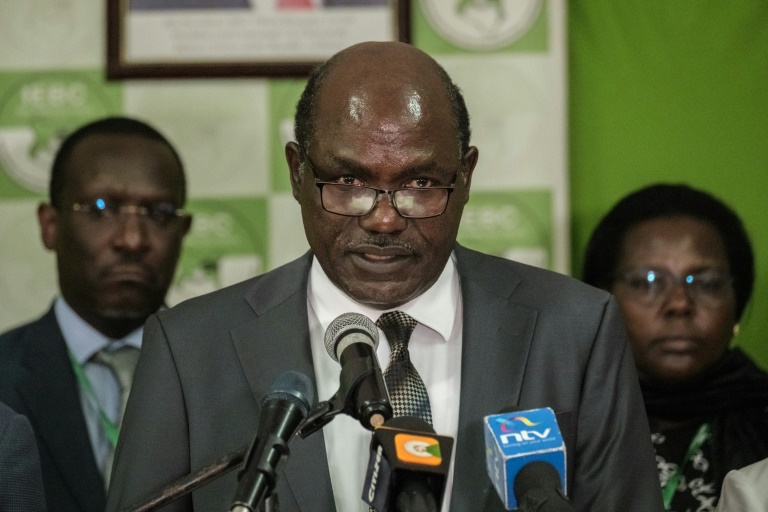
The number of young voters registered for Kenya’s August elections has dropped since the last poll five years ago, the election commission announced Monday, pointing to apathy among a youth disenchanted by economic hardship and widespread corruption. 

This is despite the total number of people who have signed up to cast their ballots increasing by more than 12 percent, the Independent Electoral and Boundaries Commission (IEBC) said after an audit of the voters’ roll.

There will be 22.1 million voters on the register — often seen as a key point at which an election can be rigged — up from 19.6 million five years ago.

“The number of youth registered to vote in 2022 stands at 39.84 percent which is a decline of 5.27 percent against 2017,” IEBC chairman Wafula Chebukati said. 

Under-35s account for three-quarters of Kenya’s population of about 50 million, according to government figures. 

Women were “still under-represented” in the voter register with their number accounting for 49 percent of the total, Chebukati said. 

– ‘Spirit of transparency’ –

The East African economic powerhouse will hold presidential and parliamentary elections on August 9, in the shadow of previous polls which have often been marred by ethnic violence.

With its diverse population and large ethnic voting blocs, Kenya has long suffered politically motivated communal violence around election time, notably after a 2007 poll when more than 1,100 people died.

Many young voters are showing little appetite for the election this year, disillusioned with a political elite widely seen as inept and corrupt. 

During the audit, more than 246,000 deceased voters were removed from the electoral roll, the IEBC said. 

Chebukati said the body was releasing the figures “in the spirit of transparency and commitment to public confidence in the register of voters”. 

This year’s presidential contest is shaping up to be a two-horse race between Deputy President William Ruto, 55, and 77-year-old Raila Odinga, a veteran politician and former prime minister. 

Two other candidates have been cleared to contest the race to succeed President Uhuru Kenyatta, who must stand down after serving the maximum of two five-year terms.

Ruto was initially anointed by Kenyatta as his successor but has found himself out in the cold after Kenyatta and Odinga forged an alliance in 2018.

Ruto is hoping his rags-to-riches journey from street hawker to top-ranking politician will resonate with Kenya’s youth, fashioning himself as a spokesman for “hustlers” trying to make ends meet in a country ruled by “dynasties”. 

The Kenyatta and Odinga families have dominated Kenyan politics since independence in 1963. 

China offers to mediate Horn of Africa disputes

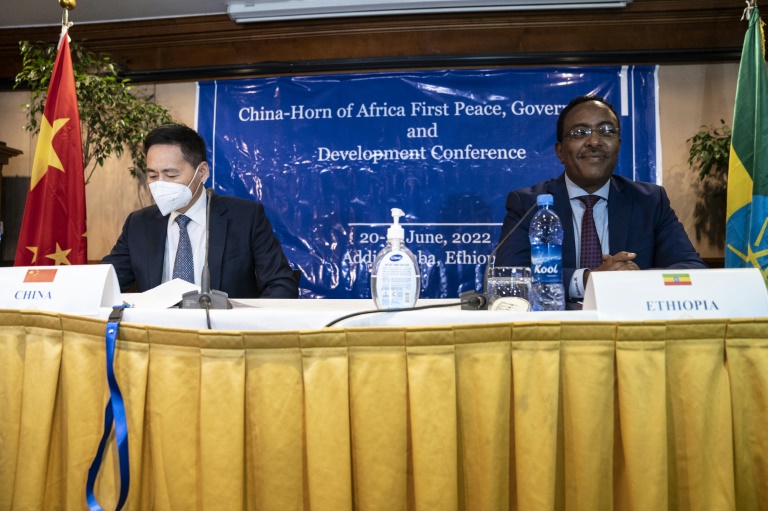
China on Monday offered to play the role of mediator to resolve disputes in the Horn of Africa, on the opening day of a regional gathering in the Ethiopian capital.

The China-Horn of Africa Conference on security, Governance and Development is the first of its kind and underscores Beijing’s determination to play a greater role in a region beset by conflict and security issues.

“I am ready to provide mediation for the peaceful settlement of disputes, based on the will of the countries in this region,” said Xue Bing, Beijing’s first special envoy for the Horn of Africa.

He said it was important to “respect countries’ sovereignty and territorial integrity, refrain from interfering in other countries’ internal affairs… reject abuse of unilateral sanctions”.

“China is convinced that countries in the Horn have… (the ability)… to resolve differences through dialogue and consultations,” Xue said.

Redwan Hussein, national security adviser to Ethiopian Prime Minister Abiy Ahmed, said China was playing a “supportive role” in the region and that solutions to the various crises “should come from within”.

Ethiopia itself has been wracked by conflict in the north between government forces and the Tigray People’s Liberation Front (TPLF) since November 2020 that has killed untold numbers of people and triggered a humanitarian crisis affecting millions.

Abiy last week for the first time signalled he was open to negotiate with the TPLF, with a lull in fighting since a truce in March, while the rebels have spoken of possible talks in the Kenyan capital Nairobi.

Xue was appointed to his role in February, shortly after a visit to Eritrea, Kenya and the Comoros by Foreign Minister Wang Yi.

The China-Horn conference, which wraps up on Tuesday, is being attended by representatives from Djibouti, Kenya, Somalia, South Sudan, Sudan and Uganda as well as Ethiopia and China — but with the notable exception of Eritrea.

China has a military base in Djibouti, its only one in Africa, as well as a port, aimed at securing its vast economic interests in the region.

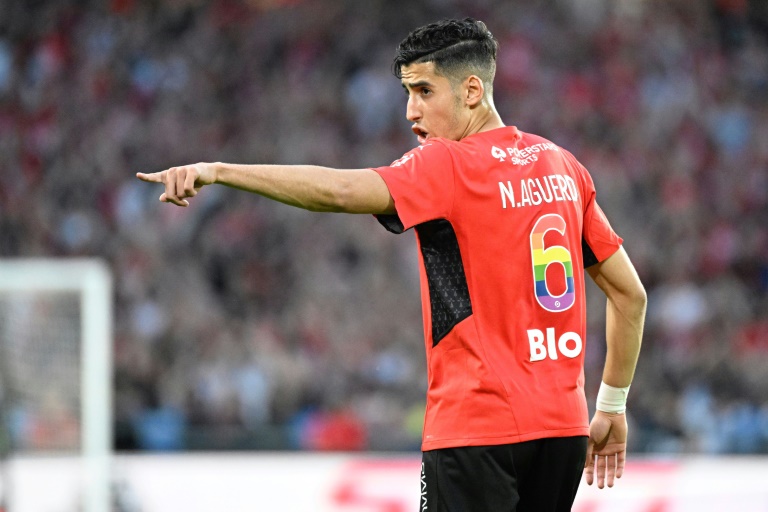
West Ham sign Rennes defender Nayef Aguerd

West Ham announced the signing of Rennes defender Nayef Aguerd on Monday in a deal worth a reported £30 million ($37 million) once add-ons are included.

The Morocco international, 26, who spent two seasons with the French Ligue 1 club, has signed a five-year contract with David Moyes’ side.

“I was really excited when I heard about West Ham United’s interest,” said the left-sided player.

“When I heard about it, I knew I needed to go to the Premier League, because it’s a dream for every player.

“West Ham is a historic club. I saw a few of their games this year, and I saw the fans and the atmosphere were fantastic.”

Moyes, whose side finished seventh in the Premier League last season, said Aguerd had been on the club’s radar for some time.

“I am delighted to welcome Nayef to West Ham United,” said the Hammers manager. “We have tracked his progress for some time and I’m very pleased that we have been able to complete the signing. He’s a great addition that will add to our defensive options.”

Belgium returns Lumumba tooth to family

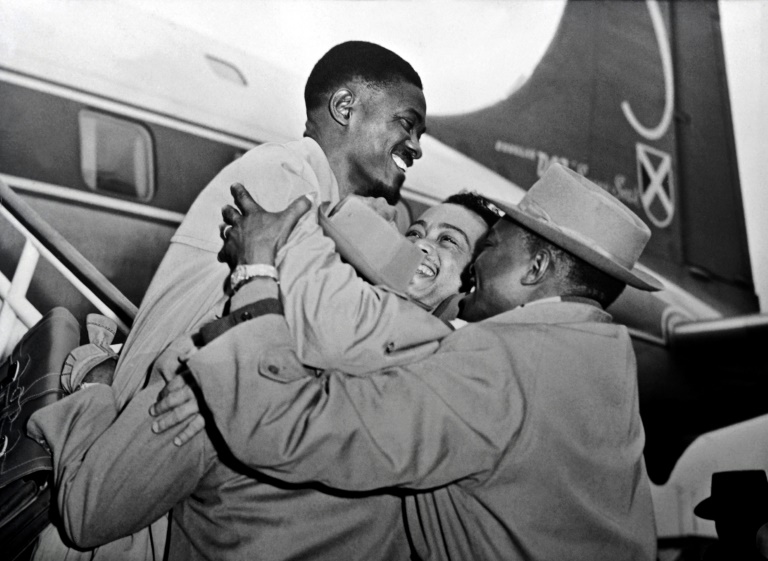
Belgium on Monday handed over the last remains of slain Congolese leader Patrice Lumumba — a tooth — to his family, turning a page on a grim chapter in its colonial past.

Chief prosecutor Frederic Van Leeuw gave the relatives a small, bright blue box containing the tooth in a televised ceremony, and said legal action they had taken to receive the relic had delivered “justice”.

The tooth was placed in a casket that was then draped in the flag of the Democratic Republic of Congo, which celebrates Lumumba, who was murdered by separatists and Belgian mercenaries in 1961, as an anti-colonial hero.

Lumumba’s assassination — and the brutal history of Belgian control of the Congo — have been enduring sources of pain between the two countries. 

Belgian Prime Minister Alexander De Croo reiterated that his country’s authorities bore a “moral responsibility” over the killing. 

“I would like, in the presence of his family, to present in my turn the apologies of the Belgian government,” he said.  

“A man was murdered for his political convictions, his words, his ideals.”

Lumumba’s son Francois told Belgium’s RTBF broadcaster that his relatives had been waiting “more than 60 years” for this event.

“I think it will provide solace for the family and the Congolese people,” he said. 

“We are opening a new page in history.”

A fiery critic of Belgium’s rapacious rule, Lumumba became his country’s first prime minister after it gained independence in 1960. 

But he fell out with the former colonial power and the United States and was ousted in a coup a few months after taking office. 

He was executed on January 17 1961, aged just 35, in the southern region of Katanga, with the support of Belgian mercenaries. 

His body was dissolved in acid and never found.

But the tooth was kept as a trophy by one of those involved, a Belgian police officer.

The tooth was seized by Belgian authorities in 2016 from the daughter of the policeman, Gerard Soete, after Lumumba’s family filed a complaint. 

– ‘National mourning’ –

The casket containing the tooth is set to be flown back to the DRC where it will be officially laid to rest at a memorial site. 

The country is set to hold three days of “national mourning” from 27 to 30 June — its 62nd anniversary of independence — to mark the burial ceremony.

Lumumba’s older son Francois filed a complaint in Belgium in 2011, pointing the finger of responsibility for his father’s killing at a dozen Belgian officials and diplomats.  

The investigation for “war crimes” is still ongoing but only two of the targeted officials are still alive. 

A Belgian parliamentary commission of enquiry in 2001 concluded that Belgium had “moral responsibility” for the assassination and the government presented the country’s “apologies” a year later. 

De Croo said Belgian officials “chose not to see, chose not to act” to stop the killing, even if they had not directly intended it to happen. 

Lumumba’s children were also received Monday by Belgium’s King Philippe, who this month travelled to DR Congo to express his “deepest regrets” over the colonial past. 

Historians say that millions of people were killed, mutilated or died of disease as they were forced to collect rubber under Belgian rule. The land was also pillaged for its mineral wealth, timber and ivory.

Judo helps fight xenophobia in South Africa

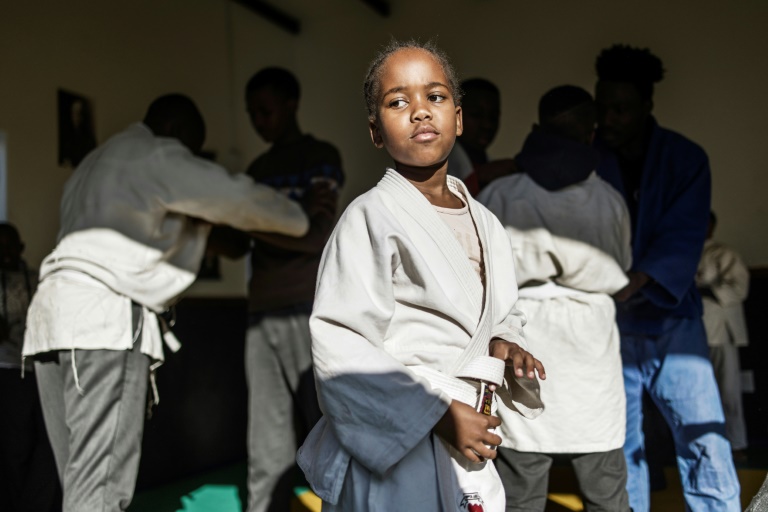
In a newly renovated white building in a South African township about 20 children in judogi and others in school uniforms tumble around on a tatami under the watchful eye of a coach.

They are from a nearby primary school and regularly gather for judo classes here in Alexandra township, north of the Johannesburg inner city and in the shadow of the financial hub of Sandton.

The project aims to “use judo as a vehicle for … refugees, migrants (and) South Africans to meet together”, said Judo for Peace coordinator Roberto Orlando. It’s a “platform to be all equal, to learn together and to develop skills and values all together”.

Alexandra is one of the poorest, most densely populated black townships in South Africa.

In 2008, more than 60 people — mostly migrant workers from other African countries — were killed in the country’s worst outbreak of xenophobic attacks since the end of apartheid. 

Fourteen years on, the scourge of xenophobia, which mainly targets black Africans, has not left the township. 

From time to time, violent attacks against African immigrants still occur in Alexandra and other townships where crime and unemployment is rife.

Such attacks are predominantly staged by jobless black South Africans. 

This year has seen tensions rise again in Alexandra. For several months a vigilante group called Operation Dudula — “push back” in Zulu language — has staged marches demanding the expulsion of illegal immigrants. 

Migrants especially from the Democratic Republic of Congo, Mozambique, Nigeria and Zimbabwe have borne the brunt of the anti-foreigner hostility. 

Orlando decided now, more than ever, was the best time to have a dojo in the township. It officially opened its doors last month. 

“Alexandra is one of the biggest, most densely populated areas in South Africa. It is an area where many xenophobic attacks happened and I think it is one of the areas that should be targeted when we talk about teaching people how to live together,” he said.

At the heart of his teaching philosophy are the principles of self-control, discipline, respect, honour, courage and friendship.

– ‘Live together’ – 

One of the coaches is Rudolph Ngala. He is from the Democratic Republic of Congo.

Having a migrant coach is strategic because “people can get used to seeing refugees as someone who brings skills to the country”, Orlando said. 

Ngala, 21, arrived in South Africa from Kinshasa in 2017 and immediately took up judo with Orlando. He has graduated to become a coach.

“Judo helped me a lot with (making) friends,” said Ngala. “In Alexandra, everybody who lives here is like my family. I am Congolese. I am black. I am African. We are all African”.

Standing and cracking jokes with two South Africans after competing at a weekend event for World Refugee Day on Monday, Denzel Shumba, 17, who moved to South Africa with his family 10 years ago from Zimbabwe, also took up judo.

“South Africa (is) a difficult place sometimes because there’s xenophobia,” he said. 

Shumba said taking up judo has helped him to become a calmer, more respectful and peaceful person, learn a valuable skill and make new friends. 

And that is exactly what Orlando wants to see. 

“South Africa is a bit of a showcase of what is happening in the world. We are all mixing up. People are migrating. More and more we need to learn from each other, to learn to live together, next to each other,” he said.

Orlando, athletic and with piercing blue eyes, is originally from Italy, but has worked in Ethiopia, Somalia, the Democratic Republic of Congo and now South Africa, setting up judo dojos to empower the youth and integrating people in disadvantaged communities.

Kenya's khat producers eager to resume exports to Somalia

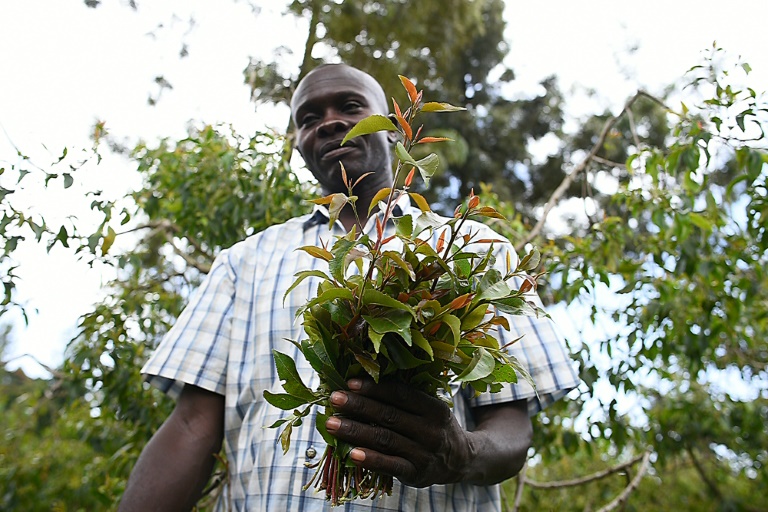
As the afternoon sun starts to dip over central Kenya, the town of Maua buzzes with activity as the khat harvest arrives.

For decades, over half a million people in this region have lived by the rhythms of khat, a mildly narcotic native shrub also known as miraa.

Trading here in khat is a well-established routine. 

Every day, young miraa shoots — instantly identifiable by their red stems — are bundled and wrapped in banana leaves, packed in bags and loaded onto pickup trucks.

Drivers then zip along roads at breakneck speed in an effort to ensure that the khat is fresh when it reaches consumers in northern and eastern Kenya, as well as the capital Nairobi, located 300 kilometres (200 miles) south.

But for the last two years and counting, no air shipments of Kenyan khat have made it to Somalia. 

The country is notoriously poor and unstable yet is one of the biggest markets for khat, which is chewed to provide a stimulant and suppress the appetite.

Mogadishu initially banned air cargo in March 2020 due to the coronavirus pandemic, but diplomatic tensions between Kenya and Somalia have kept the ban in place even as other Covid-19 restrictions have been lifted.

The election of President Hassan Sheikh Mohamud in Somalia last month raised hopes of a thaw in ties with Nairobi, and on June 10, Kenyan Agriculture Minister Peter Munya announced that Mogadishu had agreed to resume air shipments of khat.

The news has sparked cautious excitement in Maua, where people are increasingly impatient for change.

– ‘Like a rebirth’ –

Although Munya promised that air links would resume “within two weeks”, Somalia’s new government has maintained a conspicuous silence on the issue.

“The resumption (of trade) would be like a rebirth” for the region, said Kimathi Munjuri, chairman of the Nyambene Miraa Traders Association in central Kenya.

But he remained circumspect, noting that similar announcements in the past never materialised into facts on the ground.

Prior to the ban, around a third of the 150 tonnes of khat shipped daily went to Somalia, representing a loss of earnings of up to 16 million Kenyan shillings ($136,000), he said.

Somalia has been a crucial export market for Kenyan khat traders ever since the Netherlands and Britain imposed a ban in 2012 and 2014 respectively, joining the ranks of other Western nations which classify it as a drug. 

– ‘At a loss’ –

Khat grower David Muchoka is among those desperate to see the resumption of air links to Mogadishu. 

The ban saw his earnings plunge, he said, forcing the father-of-six to venture into dairy farming to pay the bills.

“Back in the days we could make up to 100,000 shillings ($850) in one month, but now we can only make around 6,000-10,000 a month,” the 53-year-old told AFP.

“We still sell miraa but at a loss, the returns can’t sustain the effort of maintaining the farm and paying school fees.”

The income from the trade irrigated the whole region, locals told AFP. 

“Most of the shops here have closed, vehicles that used to transport khat are idle, most of the people can no longer send their children to school,” said Alex Koome, a Maua resident.

– ‘Like a monopoly’ – 

Many here dream of a day when Maua will once again be in thrall to the frenzy of a trade which animated the town 24 hours a day. 

“Maua never slept… We want that vibrancy, that rush, that adrenaline again,” Munjuri told AFP with a smile.

From the early hours, traffic jams obstructed the city centre where khat farmers, dealers and transporters crossed paths. 

Dozens of pick-ups — carrying up to a tonne of cargo — honked their way across villages and towns as they hurtled down the road to their destination, sometimes travelling at speeds of up to 150 kilometres (nearly 95 miles) per hour.

For Joseph M’Eruaki, former director of social development at the non-profit Caritas in Meru County, where Maua is located, the ban has revealed a dangerous dependence on khat.

“We must diversify the livelihood sources if we don’t want the people to remain vulnerable,” he said, suggesting that farmers could instead grow crops like amaranth, sorghum, mango or avocados.

The entrepreneur, who is now running for MP in Kenya’s August elections, is also batting for more regulatory oversight of a trade that boasts an unsavoury reputation at times.

“Miraa is controlled by a few people who get the most benefits at the expense of farmers… They control the market, they control prices, they control the flow, it’s like a monopoly,” he said.

“It is a legal crop, it needs to be organised. Like the tea sector or the coffee sector,” he told AFP.

Helios in Talks with Africa Mobile Operators on Fintech Billions

(Bloomberg) – Helios Investment Partners LLP is in talks with African telecom operators and banks about ways the private-equity firm can help them cash in on their mobile-money and digital-payments platforms.Africa’s largest wireless carriers, including MTN Group Ltd. and Airtel Africa Plc, are among companies exploring how to unlock value from their multi-billion dollar fintech …

Helios in Talks with Africa Mobile Operators on Fintech Billions Read More »

Close Bitnami banner
Bitnami