
US Business

US inflation slows in November in smallest spike in year

US consumer inflation eased in November, according to government data released Tuesday, bringing some relief to policymakers with the smallest annual increase in nearly a year.

Officials are closely eying the monthly inflation report for signs that painfully high consumer prices are definitively moderating at last, as surging costs of living force households to dip into their savings.

The consumer price index (CPI), a closely-watched measure of inflation, jumped 7.1 percent from a year ago, down from 7.7 percent in October, according to Labor Department figures.

But the overall number is still about three times the pre-pandemic pace.

Prices ticked up 0.1 percent from October to November, a smaller-than-expected increase after a prior 0.4 percent jump, the latest data showed.

Meanwhile, core prices, which exclude the volatile food and energy segments, rose 0.2 percent in November, down from a 0.3 percent pick-up in October.

“The index for shelter was by far the largest contributor to the monthly all items increase, more than offsetting decreases in energy indexes,” the Labor Department said in a statement.

Food inflation nudged up as well, underscoring the financial squeeze that households are still experiencing.

While an improvement from before, the data likely reinforces official views that costs remain far too high, and US central bankers are poised to push on in their quest to cool the world’s biggest economy.

The Federal Reserve has raised the benchmark lending rate six times this year in hopes of lowering demand, walking a fine line between reining in prices and triggering a recession.

The lower inflation figure is likely to fuel optimism for easing in the Fed’s aggressive campaign as its policy-setting committee starts a two-day meeting Tuesday that is widely expected to culminate in a smaller rate hike.

– Right direction –

Consumer inflation remains much higher than the Fed’s longer-term goal of two percent, even as prices are “moving in the right direction,” said economist Rubeela Farooqi of High Frequency Economics Tuesday.

But “further sustained improvement” over the coming months could allow the Fed to slow its pace of rate hikes more, she added.

While goods prices are decelerating, they still contribute heavily to CPI changes and a reversal of the trend will take time, she warned in an earlier analysis.

Shelter inflation remains a key factor behind inflation, and James Knightley of ING told AFP that while the asking price for rents appears to be falling in many cities, most people are still paying “considerably more” than last year.

Analysts have also been watching price increases in services, given that quickly rising wages feed into this segment and “continue to run hot,” he noted.

“This is clearly an area of concern for the Fed,” he said.

US inflation slows in November in smallest spike in year

US consumer inflation eased in November, according to government data released Tuesday, bringing some relief to policymakers with the smallest annual increase in nearly a year.

Officials are closely eying the monthly inflation report for signs that painfully high consumer prices are definitively moderating at last, as surging costs of living force households to dip into their savings.

The consumer price index (CPI), a closely-watched measure of inflation, jumped 7.1 percent from a year ago, down from 7.7 percent in October, according to Labor Department figures.

But the overall number is still about three times the pre-pandemic pace.

Prices ticked up 0.1 percent from October to November, a smaller-than-expected increase after a prior 0.4 percent jump, the latest data showed.

Meanwhile, core prices, which exclude the volatile food and energy segments, rose 0.2 percent in November, down from a 0.3 percent pick-up in October.

“The index for shelter was by far the largest contributor to the monthly all items increase, more than offsetting decreases in energy indexes,” the Labor Department said in a statement.

Food inflation nudged up as well, underscoring the financial squeeze that households are still experiencing.

While an improvement from before, the data likely reinforces official views that costs remain far too high, and US central bankers are poised to push on in their quest to cool the world’s biggest economy.

The Federal Reserve has raised the benchmark lending rate six times this year in hopes of lowering demand, walking a fine line between reining in prices and triggering a recession.

The lower inflation figure is likely to fuel optimism for easing in the Fed’s aggressive campaign as its policy-setting committee starts a two-day meeting Tuesday that is widely expected to culminate in a smaller rate hike.

– Right direction –

Consumer inflation remains much higher than the Fed’s longer-term goal of two percent, even as prices are “moving in the right direction,” said economist Rubeela Farooqi of High Frequency Economics Tuesday.

But “further sustained improvement” over the coming months could allow the Fed to slow its pace of rate hikes more, she added.

While goods prices are decelerating, they still contribute heavily to CPI changes and a reversal of the trend will take time, she warned in an earlier analysis.

Shelter inflation remains a key factor behind inflation, and James Knightley of ING told AFP that while the asking price for rents appears to be falling in many cities, most people are still paying “considerably more” than last year.

Analysts have also been watching price increases in services, given that quickly rising wages feed into this segment and “continue to run hot,” he noted.

“This is clearly an area of concern for the Fed,” he said.
US inflation slows in November in smallest spike in year

US consumer inflation eased in November, according to government data released Tuesday, bringing some relief to policymakers with the smallest annual increase over the past year.

Officials are closely eying the monthly inflation report for signs that painfully high consumer prices are definitively moderating at last, as surging costs of living force households to dip into their savings.

The consumer price index (CPI), a closely-watched measure of inflation, jumped 7.1 percent from a year ago, down from 7.7 percent in October, according to Labor Department figures.

But the overall number is still about three times the pre-pandemic pace.

Prices ticked up 0.1 percent from October to November, a smaller-than-expected increase after a prior 0.4 percent jump, the latest data showed.

Meanwhile, core prices, which exclude the volatile food and energy segments, rose 0.2 percent in November, down from a 0.3 percent pick-up in October.

“The index for shelter was by far the largest contributor to the monthly all items increase, more than offsetting decreases in energy indexes,” the Labor Department said in a statement.

Food inflation nudged up as well, underscoring the financial squeeze that households are still experiencing.

While an improvement from before, the data likely reinforces official views that costs remain far too high, and US central bankers are poised to push on in their quest to cool the world’s biggest economy.

The Federal Reserve has raised the benchmark lending rate six times this year in hopes of lowering demand, walking a fine line between reining in prices and triggering a recession.

The lower inflation figure is likely to fuel optimism for easing in the Fed’s aggressive campaign as its policy-setting committee starts a two-day meeting Tuesday that is widely expected to culminate in a smaller rate hike.

– Right direction –

Consumer inflation remains much higher than the Fed’s longer-term goal of two percent, even as prices are “moving in the right direction,” said economist Rubeela Farooqi of High Frequency Economics Tuesday.

But “further sustained improvement” over the coming months could allow the Fed to slow its pace of rate hikes more, she added.

While goods prices are decelerating, they still contribute heavily to CPI changes and a reversal of the trend will take time, she warned in an earlier analysis.

Shelter inflation remains a key factor behind inflation, and James Knightley of ING told AFP that while the asking price for rents appears to be falling in many cities, most people are still paying “considerably more” than last year.

Analysts have also been watching price increases in services, given that quickly rising wages feed into this segment and “continue to run hot,” he noted.

“This is clearly an area of concern for the Fed,” he said.

US inflation slows in November in smallest spike in year

US consumer inflation eased in November, according to government data released Tuesday, bringing some relief to policymakers with the smallest annual increase over the past year.

Officials are closely eying the monthly inflation report for signs that painfully high consumer prices are definitively moderating at last, as surging costs of living force households to dip into their savings.

The consumer price index (CPI), a closely-watched measure of inflation, jumped 7.1 percent from a year ago, down from 7.7 percent in October, according to Labor Department figures.

But the overall number is still about three times the pre-pandemic pace.

Prices ticked up 0.1 percent from October to November, a smaller-than-expected increase after a prior 0.4 percent jump, the latest data showed.

Meanwhile, core prices, which exclude the volatile food and energy segments, rose 0.2 percent in November, down from a 0.3 percent pick-up in October.

“The index for shelter was by far the largest contributor to the monthly all items increase, more than offsetting decreases in energy indexes,” the Labor Department said in a statement.

Food inflation nudged up as well, underscoring the financial squeeze that households are still experiencing.

While an improvement from before, the data likely reinforces official views that costs remain far too high, and US central bankers are poised to push on in their quest to cool the world’s biggest economy.

The Federal Reserve has raised the benchmark lending rate six times this year in hopes of lowering demand, walking a fine line between reining in prices and triggering a recession.

The lower inflation figure is likely to fuel optimism for easing in the Fed’s aggressive campaign as its policy-setting committee starts a two-day meeting Tuesday that is widely expected to culminate in a smaller rate hike.

– Right direction –

Consumer inflation remains much higher than the Fed’s longer-term goal of two percent, even as prices are “moving in the right direction,” said economist Rubeela Farooqi of High Frequency Economics Tuesday.

But “further sustained improvement” over the coming months could allow the Fed to slow its pace of rate hikes more, she added.

While goods prices are decelerating, they still contribute heavily to CPI changes and a reversal of the trend will take time, she warned in an earlier analysis.

Shelter inflation remains a key factor behind inflation, and James Knightley of ING told AFP that while the asking price for rents appears to be falling in many cities, most people are still paying “considerably more” than last year.

Analysts have also been watching price increases in services, given that quickly rising wages feed into this segment and “continue to run hot,” he noted.

“This is clearly an area of concern for the Fed,” he said.

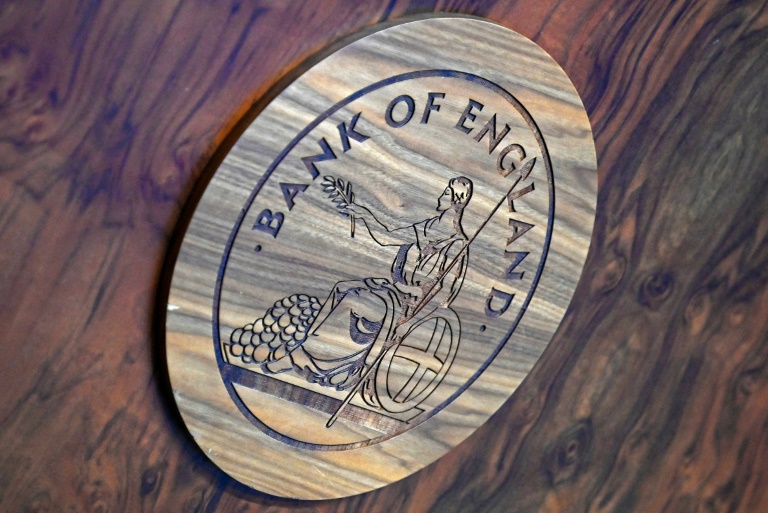
BoE to test 'shadow banking' after markets chaos

The Bank of England will test so-called shadow banking institutions such as pension funds, that played a key role in recent UK bond market chaos, it said Tuesday.

The BoE was forced to buy UK debt in September in an emergency intervention to avert financial catastrophe, after a controversial tax-slashing budget by the government caused bond yields to soar and sparked panic.

The crisis, which sparked the downfall of former Conservative prime minister Liz Truss, threw the spotlight on non-banking financial institutions (NBFIs) and their risk to stability, the BoE noted Tuesday. 

“There is a need to develop stress-testing approaches to understand better the resilience of NBFIs to shocks” and their links with commercial lenders and markets, it added in a report.

“The bank will run, for the first time, an exploratory scenario exercise focused on NBFI risks, to inform understanding of these risks and future policy approaches,” it revealed.

September’s turmoil, centred on the exposure of pension funds to UK debt market volatility, highlighted a “material risk” to stability, the BoE warned.

Some pension funds use Liability Driven Investments (LDIs), which are linked to financial derivatives and intended to help ensure that the income generated by the assets covers their long-term commitments.

However, the chaos caused the value of assets, notably government bonds, to tumble.

That forced pension funds to sell the bonds, known as gilts, to swiftly access liquidity, sending yields rocketing.

“The rapid and unprecedented increase in yields exposed vulnerabilities associated with LDI funds, in which many defined benefit pension schemes invest,” the BoE said.

“This led to a vicious spiral of collateral calls and forced gilt sales that risked leading to further market dysfunction, creating a material risk to UK financial stability.”

The BoE itself does not regulate LDIs, but wants pension fund watchdogs to ensure institutions have sufficient collateral in LDI funds to withstand further shocks.

Truss quit in October, replaced by Rishi Sunak and the new Conservative prime minister has reversed her unfunded budget that also sent the pound slumping to a record low against the dollar.

Ghana reaches $3 billion IMF deal

Ghana on Tuesday agreed on a $3 billion credit deal with the International Monetary Fund (IMF) as part of the country’s battle to end its worst economic crisis in decades.

The West African state is facing more than 40 percent inflation, a risky debt burden and a sharp decline in its cedi currency since the start of the year.

The IMF said Ghana’s government had committed to “a wide-ranging economic reform program” that will restore stability and debt sustainability.

“These are really grave times and in a really difficult economic environment,” Finance Minister Kenneth Ofori-Atta told reporters in Accra. 

“But this now today paves the way for the IMF management and executive board to approve Ghana’s programme request early, hopefully, next year.”

The three-year IMF loan agreement has yet to be approved by the fund’s board.

The programme also aims to reduce inflation, strengthen the economy’s resilience to external shocks and improve market confidence in the country, the IMF said. 

A top cocoa and gold producer, Ghana also has oil and gas reserves, but its debt has soared and like the rest of sub-Saharan Africa it has been hit hard by fallout from the Covid pandemic and the Ukraine war.

The crisis forced President Nana Akufo-Addo’s government to reverse its position earlier this year and seek IMF help as economists warned of a default on debt payments.

The government has already announced a domestic debt swap as part of the programme to ease a crunch in payments and is soon expected to release details about restructuring foreign debt.

– ‘Good news’ –

IMF mission chief Stephane Roudet said IMF board approval for the deal would come after Ghana’s creditors give assurances and the debt exchange programme is shown to be sufficient.

“What is very important for the IMF is that the government strategy as a whole be sufficient to put debt on a sustainable path and to bring debt sustainability over the medium term,” he said.

The government has already increased VAT by 2.5 percent and frozen state-sector hiring to help trim spending and boost domestic revenues. 

Officials say vulnerable groups will be protected, but critics are concerned the government programme will lead to more austerity.

“Ghana having reached a staff level deal with the IMF is quite good news, although we have yet to get the full details. But on the whole, it will facilitate the final approval,” Ghanaian economist Daniel Anim Amarteye said.

“The government really needs the bailout to bring about macroeconomic stability and credibility.”

Debt payments currently gobble up more than half of government revenues. A 50 percent slide in the cedi against the dollar has also increased Ghana’s debt values by $6 billion this year.

Major credit ratings agencies have downgraded their outlook on Ghana, reflecting market worries that the country risked missing debt payments.

The IMF negotiations came after a new tax on electronic transactions, known as the E-levy, faced resistence and failed to generate expected revenue levels for the government.

Stocks climb before US inflation data

Stock markets mostly climbed Tuesday before the release of key US inflation data later in the session.

The November consumer price index (CPI) figures follow Friday’s forecast-beating print on US wholesale inflation, which dented hopes the Federal Reserve would scale back the size of its next interest rate hikes.

The central bank is widely expected to lift interest rates 50 basis points Wednesday — a slowdown from the previous four 75-point hikes — but its post-meeting statement and comments from boss Jerome Powell will be closely followed.

While the general view is that policymakers will stop increasing borrowing costs next year, there is debate about how high they will peak and when they will start to come down.

“I think CPI will be important but not necessarily for this meeting, for which a 50 basis-point hike is well flagged, but rather it will help determine the extent of further tightening,” said Mitul Kotecha, of TD Securities.

“Don’t expect clearcut signals from the Fed… on what they expect to be doing at early 2023 meetings,” said National Australia Bank’s Ray Attrill.

Elsewhere, China’s shift away from its economically damaging zero-Covid policy continued to support sentiment as the world’s number two economy opens up.

Top Chinese officials are meeting this week to draw up their economic blueprint for re-emerging from Covid, with observers predicting more stimulus measures and pledges of support for the troubled property sector.

But there is also a worry among investors that the quick relaxation of containment measures such as mass testing and lockdowns might lead to a massive surge in infections that could overwhelm the healthcare system and weigh on the economy.

Still, the expected pick-up in demand in China boosted oil prices further, with both main contracts extending Monday’s strong gains.

“China’s reopening is coming, it won’t happen overnight, but it will provide a major boost to demand in the outlook next quarter,” said OANDA’s Edward Moya. 

Ahead of the Wall Street open, United Airlines unveiled an order of 100 new Boeing 787 Dreamliners with options for an additional 100 jets.

And the US Securities and Exchange Commission charged disgraced cryptocurrency tycoon Sam Bankman-Fried with defrauding customers of billions of dollars.

– Key figures around 1215 GMT –

London – FTSE 100: UP 0.4 percent at 7,475.26 points

Frankfurt – DAX: UP 0.8 percent at 14,421.53

Paris – CAC 40: UP 0.7 percent at 6,697.02

EURO STOXX 50: UP 1.0 percent at 3,959.22

Tokyo – Nikkei 225: UP 0.4 percent at 27,954.85 (close)

Hong Kong – Hang Seng Index: UP 0.7 percent at 19,596.20 (close)

Shanghai – Composite: DOWN 0.1 percent at 3,176.33 (close)

New York – Dow: UP 1.6 percent at 34,005.04 (close)

Euro/dollar: UP at $1.0541 from $1.0539 on Monday

Dollar/yen: DOWN at 137.41 yen from 137.66 yen

Pound/dollar: UP at $1.2290 from $1.2268

Euro/pound: UP at 85.96 pence from 85.78 pence

Brent North Sea crude: UP 0.6 percent at $78.47 per barrel

West Texas Intermediate: UP 0.4 percent at $73.49 per barrel

United Airlines announces huge Boeing 787 order

Betting on robust demand for international travel, United Airlines on Tuesday unveiled an order of 100 new Boeing 787 Dreamliners with options for an additional 100 jets.

The huge order, the largest by an American carrier for this class of aircraft, marks a victory for Boeing, which has targeted mid-decade as the period it expects to return to its pre-pandemic financial health after the 737 MAX scandal and other woes.

United Chief Executive Scott Kirby, who also announced a giant Boeing and Airbus order in June 2021 ahead of rivals, predicted the airline’s ambitious 787 plan would pay off for the carrier during a capacity-constrained period.

“United is really uniquely positioned to grow in a way that’s going to be a huge challenge for others,” Kirby told reporters.

United expects deliveries of the jets to take place between 2024 and 2032, aiming the new aircraft as a replacement for the 767 fleet that will be removed from service by 2030. 

The Dreamliner saves 25 percent of the carbon emission compared with the jets being retired.

United executives did not offer an estimate as to the total potential cost of the contracts, but projected that capital spending would rise to $9 billion in 2023 and $11 billion in 2024.

United said it also exercised options for an additional 44 737 MAX planes between 2024 and 2026, and ordered 56 more MAX jets for 2027 and 2028.

– Production ramp-up –

After the 737 MAX, the 787 Dreamliner — which flies transatlantic journeys as well as other international itineraries — has been Boeing’s other leading source of orders and deliveries.

United officials said beefing up the fleet of 787s made sense at a time when the carrier already flies the jet, making it an easy transition for pilots and helping the company add capacity quickly.

But United officials praised the A350, the rival widebody offering from European aerospace giant Airbus, and said they still plan to take delivery of 45 of the Airbus jets from 2030.

For Boeing, the United order signals a victory for the 787, for which production was slowed to a trickle while the company halted deliveries of new jets for more than a year while addressing production problems.

Boeing resumed 787 deliveries in August after getting the green light from the Federal Aviation Administration, which has heavily scrutinized Boeing processes in the aftermath of the 737 MAX crisis.

“This is an opportunity for Boeing to ramp up at Charleston, perhaps with two production shifts,” said Michel Merluzeau, director of aerospace and defense analysis at AIR consultancy.

In October 2020, Boeing consolidated manufacturing of the 787 to Charleston, ending production of the wide-body jet in Washington state in an efficiency move as it battled financial losses during the Covid-19 downturn.

At its investor day in November, Boeing officials outlined a plan to restore 787 production to 10 passenger jets per month. 

United Airlines announces huge Boeing 787 order

Betting on robust demand for international travel, United Airlines on Tuesday unveiled an order of 100 new Boeing 787 Dreamliners with options for an additional 100 jets.

The huge order, the largest by an American carrier for this class of aircraft, marks a victory for Boeing, which has targeted mid-decade as the period it expects to return to its pre-pandemic financial health after the 737 MAX scandal and other woes.

United Chief Executive Scott Kirby, who also announced a giant Boeing and Airbus order in June 2021 ahead of rivals, predicted the airline’s ambitious 787 plan would pay off for the carrier during a capacity-constrained period.

“United is really uniquely positioned to grow in a way that’s going to be a huge challenge for others,” Kirby told reporters.

United expects deliveries of the jets to take place between 2024 and 2032, aiming the new aircraft as a replacement for the 767 fleet that will be removed from service by 2030. 

The Dreamliner saves 25 percent of the carbon emission compared with the jets being retired.

United executives did not offer an estimate as to the total potential cost of the contracts, but projected that capital spending would rise to $9 billion in 2023 and $11 billion in 2024.

United said it also exercised options for an additional 44 737 MAX planes between 2024 and 2026, and ordered 56 more MAX jets for 2027 and 2028.

– Production ramp-up –

After the 737 MAX, the 787 Dreamliner — which flies transatlantic journeys as well as other international itineraries — has been Boeing’s other leading source of orders and deliveries.

United officials said beefing up the fleet of 787s made sense at a time when the carrier already flies the jet, making it an easy transition for pilots and helping the company add capacity quickly.

But United officials praised the A350, the rival widebody offering from European aerospace giant Airbus, and said they still plan to take delivery of 45 of the Airbus jets from 2030.

For Boeing, the United order signals a victory for the 787, for which production was slowed to a trickle while the company halted deliveries of new jets for more than a year while addressing production problems.

Boeing resumed 787 deliveries in August after getting the green light from the Federal Aviation Administration, which has heavily scrutinized Boeing processes in the aftermath of the 737 MAX crisis.

“This is an opportunity for Boeing to ramp up at Charleston, perhaps with two production shifts,” said Michel Merluzeau, director of aerospace and defense analysis at AIR consultancy.

In October 2020, Boeing consolidated manufacturing of the 787 to Charleston, ending production of the wide-body jet in Washington state in an efficiency move as it battled financial losses during the Covid-19 downturn.

At its investor day in November, Boeing officials outlined a plan to restore 787 production to 10 passenger jets per month. 

LED lightbulbs enter Ukrainian resistance fight

Taken for granted by most consumers in rich countries, the humble LED lightbulb was identified on Tuesday as a strategic ally for Ukraine as Kyiv seeks to resist Russian bombing of its power grid.

Ukrainian President Volodymyr Zelensky highlighted how replacing the country’s old-style incandescent bulbs by modern LED versions would help the country escape blackouts this winter. 

“It maybe doesn’t seem very important but fifty million LED lamps will allow us to save one gigawatt of power,” he told an international aid conference in Paris attended by around 70 states and international organisations. 

Large parts of Ukraine face blackouts and regular load-shedding as the country’s power grid buckles under repeated Russian air strikes.

Zelensky said the current power shortfall in the country was around 2.5 gigawatts per day, meaning 50 million LED lightbulbs would reduce this by 40 percent.

European Commission president Ursula von der Leyen immediately announced that the European Union would fund the purchase of 30 million LED lightbulbs for 30 million euros ($32 million).

They are 88 percent more efficient than traditional ones, she estimated.

“The savings are crucial to reduce the pressure that we have on the power grid now,” von der Leyen said.

“In these times of suffering and darkness, it is so important to bring light to Ukraine,” she added.

Zelensky estimated that Ukraine needed around 800 million euros in emergency aid in total for its energy sector in the face of Russia’s onslaught.

The country is desperately seeking spare parts to repair its power lines, as well as transformers, gas turbines and generators to keep the lights on.

French President Emmanuel Macron, who also championed the idea of LED lighting for Ukraine, condemned Russia’s “cynical” and “cowardly” attacks on civilian infrastructure. 

“These strikes… which Russia openly admits are designed to break the resistance of the Ukrainian people, are war crimes,” he said in an opening speech.

“They violate without any doubt the most basic principals of humanitarian law. These acts are intolerable and will not go unpunished.”

Close Bitnami banner
Bitnami