US Business

Hong Kong leader says Google has 'moral obligation' to remove wrong anthem

Google has a “moral obligation” to stop a democracy protest song appearing in search results, Hong Kong’s leader said Tuesday, as row over China’s national anthem widened to include the tech giant.

Hong Kong officials have been infuriated by a series of mistakes at international sporting events in recent weeks when a protest song has been played instead of China’s national anthem for the city’s athletes.

Their ire has increasingly focused on Google after it emerged that the protest song “Glory to Hong Kong” routinely appears at the top of the page when people search for Hong Kong’s anthem.

City leader John Lee told reporters on Tuesday that Google should ensure China’s national anthem — which the city’s athletes compete under — comes at the top of the search page. 

“If any company is in anyway responsible, it has that moral obligation,” he said. 

“There are ways to do it,” Lee added.

Lee’s comments came a day after Hong Kong’s security chief Chris Tang said Google had refused to change the search results, something he said was an issue of “great regret”. 

According to Tang, a former police chief, Google said its search engine results were governed by an algorithm, not human input.

Both Tang and Lee have countered that Google has been willing to amend search results to abide by local laws, including privacy laws in the European Union.

Lee said his administration would reach out again to Google to pursue the matter.

Google has not yet responded to requests for comment.

China’s national anthem is “March of the Volunteers”, a rousing song born out of the Communist Party’s struggle to liberate the country from Japanese occupation.

“Glory to Hong Kong” was penned during huge protests that swept Hong Kong in 2019 and became hugely popular within the city.

It is now all but illegal to sing the song or play its melody under a sweeping national security law that was imposed to crush those protests.

Disgraced crypto tycoon Bankman-Fried arrested in Bahamas

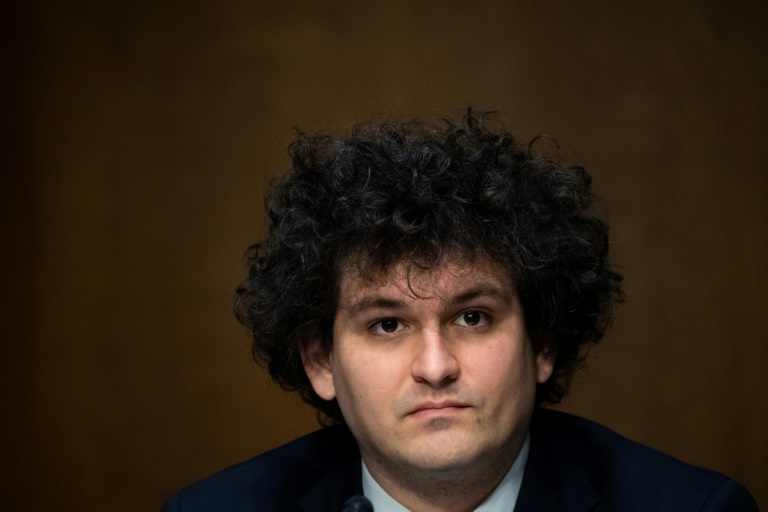
Disgraced cryptocurrency tycoon Sam Bankman-Fried was arrested Monday in the Bahamas at the request of the United States, according to US officials seeking to charge him after the spectacular collapse of his FTX platform.

The arrest comes on the eve of Bankman-Fried’s scheduled appearance at a US Congress hearing in which he was to testify under oath about the crypto exchange’s overnight demise.

The 30-year-old had in recent weeks defied legal advice and multiplied media appearances offering his version of his company’s sudden failure, usually by video link from the Bahamas where his company is headquartered.

“Earlier this evening, Bahamian authorities arrested Samuel Bankman-Fried at the request of the US Government, based on a sealed indictment filed by the southern district of New York,” said a tweeted statement from Damian Williams, lead prosecutor for the district.

“We expect to move to unseal the indictment in the morning and will have more to say at that time,” he added.

According to a press release from the attorney general’s office in the Bahamas, Bankman-Fried was to be held in custody before an expected request for his extradition by the United States. 

The Bahamas prime minister’s office shared news of the arrest, as well as a police statement saying Bankman-Fried was arrested in the early evening at his apartment complex in the capital Nassau.

He was taken into custody without incident, the statement said, and was to appear in court in Nassau on Tuesday.

As much as anyone, Bankman-Fried had embodied the apparent emergence of cryptocurrency as an above-board investment and no longer a frowned on get-rich-quick scheme shunned by the banking establishment. 

His FTX platform was plugged by celebrities in advertising campaigns and the cyber whiz kid became a regular presence in Washington where he donated tens of millions of dollars in political contributions.

But after reaching a valuation of $32 billion, FTX’s implosion was swift following a November 2 report on ties between FTX and Alameda, a trading company also controlled by Bankman-Fried.

The report exposed that Alameda’s balance sheet was heavily built on the FTT currency — a token created by FTX and with no independent value.

– ‘Grossly inexperienced’ –

The price of FTT plunged in early November, roiling both Alameda and FTX, where Alameda had large trading positions. 

Reeling from customer withdrawals and short some $8 billion, FTX and some 100 related entities filed for bankruptcy protection on November 11, inviting scrutiny from regulators, prosecutors and furious clients who had believed the hype about cryptocurrency. 

Among the revelations, FTX is suspected of fraud for propping up Alameda with billions of dollars in customer funds that are now likely lost forever.

Questions also linger over whether Bankman-Fried engaged in market manipulation, or illegally provided inside information to Alameda.

“If convicted he could be facing the rest of his life in prison, given the dollar amount of the fraud,” Jacob S. Frenkel, a former federal criminal prosecutor at Dickinson Wright, told AFP.

“We would not see an indictment if prosecutors were not absolutely convinced that they will win a conviction,” he added.

In his media interviews, Bankman-Fried has admitted to mistakes, but has denied intent to defraud his customers.

FTX CEO John Ray, who came to the company after the debacle, was to tell Congress on Tuesday that the problems arose because control was “in the hands of a very small group of grossly inexperienced and unsophisticated individuals.”

“Never in my career have I seen such an utter failure of corporate controls at every level of an organization, from the lack of financial statements to a complete failure of any internal controls or governance whatsoever,” Ray said in prepared remarks.

The fall of FTX has caused major doubts on the long term viability of cryptocurrency and heaped stress on other platforms and entities that rode the success of Bitcoin and other currencies.

Disgraced crypto tycoon Bankman-Fried arrested in Bahamas

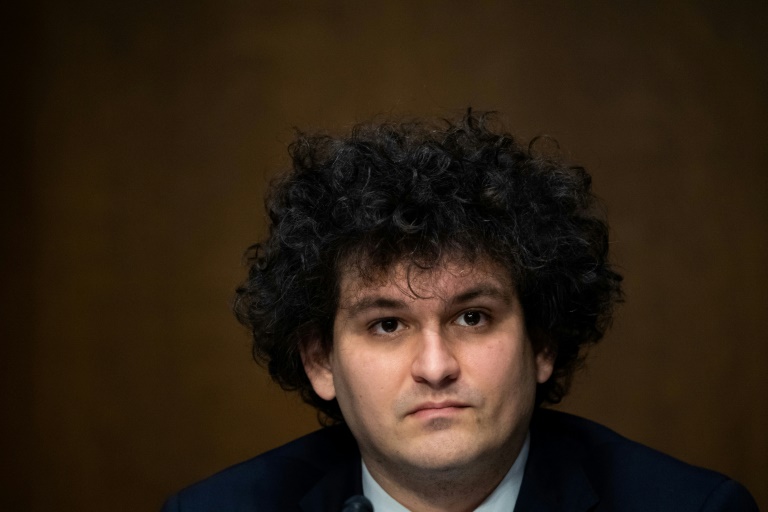
Disgraced cryptocurrency tycoon Sam Bankman-Fried was arrested Monday in the Bahamas at the request of the United States, according to US officials seeking to charge him after the spectacular collapse of his FTX platform.

The arrest comes on the eve of Bankman-Fried’s scheduled appearance at a US Congress hearing in which he was to testify under oath about the crypto exchange’s overnight demise.

The 30-year-old had in recent weeks defied legal advice and multiplied media appearances offering his version of his company’s sudden failure, usually by video link from the Bahamas where his company is headquartered.

“Earlier this evening, Bahamian authorities arrested Samuel Bankman-Fried at the request of the US Government, based on a sealed indictment filed by the southern district of New York,” said a tweeted statement from Damian Williams, lead prosecutor for the district.

“We expect to move to unseal the indictment in the morning and will have more to say at that time,” he added.

According to a press release from the attorney general’s office in the Bahamas, Bankman-Fried was to be held in custody before an expected request for his extradition by the United States. 

The Bahamas prime minister’s office shared news of the arrest, as well as a police statement saying Bankman-Fried was arrested in the early evening at his apartment complex in the capital Nassau.

He was taken into custody without incident, the statement said, and was to appear in court in Nassau on Tuesday.

As much as anyone, Bankman-Fried had embodied the apparent emergence of cryptocurrency as an above-board investment and no longer a frowned on get-rich-quick scheme shunned by the banking establishment. 

His FTX platform was plugged by celebrities in advertising campaigns and the cyber whiz kid became a regular presence in Washington where he donated tens of millions of dollars in political contributions.

But after reaching a valuation of $32 billion, FTX’s implosion was swift following a November 2 report on ties between FTX and Alameda, a trading company also controlled by Bankman-Fried.

The report exposed that Alameda’s balance sheet was heavily built on the FTT currency — a token created by FTX and with no independent value.

– ‘Grossly inexperienced’ –

The price of FTT plunged in early November, roiling both Alameda and FTX, where Alameda had large trading positions. 

Reeling from customer withdrawals and short some $8 billion, FTX and some 100 related entities filed for bankruptcy protection on November 11, inviting scrutiny from regulators, prosecutors and furious clients who had believed the hype about cryptocurrency. 

Among the revelations, FTX is suspected of fraud for propping up Alameda with billions of dollars in customer funds that are now likely lost forever.

Questions also linger over whether Bankman-Fried engaged in market manipulation, or illegally provided inside information to Alameda.

“If convicted he could be facing the rest of his life in prison, given the dollar amount of the fraud,” Jacob S. Frenkel, a former federal criminal prosecutor at Dickinson Wright, told AFP.

“We would not see an indictment if prosecutors were not absolutely convinced that they will win a conviction,” he added.

In his media interviews, Bankman-Fried has admitted to mistakes, but has denied intent to defraud his customers.

FTX CEO John Ray, who came to the company after the debacle, was to tell Congress on Tuesday that the problems arose because control was “in the hands of a very small group of grossly inexperienced and unsophisticated individuals.”

“Never in my career have I seen such an utter failure of corporate controls at every level of an organization, from the lack of financial statements to a complete failure of any internal controls or governance whatsoever,” Ray said in prepared remarks.

The fall of FTX has caused major doubts on the long term viability of cryptocurrency and heaped stress on other platforms and entities that rode the success of Bitcoin and other currencies.

Musk relaunches Twitter Blue after fake account fiasco

Elon Musk relaunched a Twitter subscription service on Monday after a first attempt saw an embarrassing spate of fake accounts that scared advertisers and cast doubt on the site’s future.

The first try last month came just 10 days after Musk’s $44 billion takeover of the platform and a mass round of layoffs that saw company staff levels halved, including teams of workers moderating content.

The relaunch of Twitter Blue in a handful of countries including the United States comes as the Tesla and SpaceX owner has stepped up his tweets endorsing right-wing causes, including opposition to the use of gender neutral pronouns and the US government’s response to Covid-19.

The subscription service costs $8 per month for users accessing Twitter on the web and $11 if signing up on an Apple device. 

The initial rollout of Twitter Blue caused an uproar when many fake accounts popped up pretending to be celebrities or companies and Musk’s team was forced to pull the plug on the scheme.

This time, the company beefed up its verification procedure with a review required by Twitter before receiving the coveted blue mark.

A blue checkmark on an account, which indicates it has been verified by Twitter, was previously free but reserved for organizations and public figures in an attempt to avoid impersonation and misinformation.

The relaunch came the same day as reports that Musk disbanded Twitter’s Trust and Safety Council — a body created six years ago that allows the company to tap into global experts for help shaping strategies around hate speech, child safety, civil rights and other sensitive issues.

An email sent to council members said Twitter is reevaluating how it brings “external insights” into its work and decided that the council is “not the best structure to do this,” The Washington Post and CNN reported, citing copies of the message.

Some members of the Trust and Safety Council had already resigned in protest, saying the wellbeing of Twitter users was declining with Musk in charge, CNN reported.

– Personal attacks – 

Since his takeover, content moderation has proved to be a major headache for Musk, who has described himself as a free-speech absolutist and vowed to let people tweet whatever they want, within the law.

But the billionaire’s commitment to unfettered comment has scared off major advertisers and caught the attention of regulators.

Musk believes that the previous ownership of Twitter held a strong left-wing and pro-LGBTQ bias and unfairly banned accounts, including that of former US president Donald Trump.

On Sunday he lashed out against the outgoing key advisor for the US response to the Covid-19 pandemic, Anthony Fauci, a frequent target of vitriol on right-wing media.

“My pronouns are Prosecute/Fauci,” Musk said, tauntingly playing on the growing practice for people to indicate their preferred gender pronouns.

By late Monday, trending comment on Twitter in response to Musk called for people to change their pronouns to Boycott/Tesla.

The White House blasted Musk for the tweets against Fauci calling them “disgusting” and “divorced from reality”.

“These are incredibly dangerous, these personal attacks that we are seeing,” said White House spokeswoman Karine Jean-Pierre.

CNN reported that Twitter’s former head of trust and safety had fled his home after baseless attacks on Twitter, endorsed by Musk.

Yoel Roth, who left the company in November, has been the subject of threats since Musk’s release of internal documents that play into unsubstantiated theories about collusion by some inside Twitter with the Democratic Party.

The attacks took a serious turn Sunday when Musk endorsed a tweet that accused Roth of being an apologist for pedophilia — a common trope used by conspiracy theorists to target opponents.

The South African-born billionaire’s embrace of right-wing talking points seemed to attract increasing scorn in politically liberal San Francisco, where Twitter is headquartered.

Musk was loudly booed by a crowd in the city late Sunday after he was invited on stage by comedian Dave Chappelle.

“It’s almost as if I’ve offended San Francisco’s unhinged leftists… but nahhh,” Musk tweeted after the event.

Carolina Milanesi, a tech analyst for Creative Strategies, warned that Musk’s political turn on Twitter could be problematic for the company going forward.

arp-gc-pmh-gc/des

Musk relaunches Twitter Blue after fake account fiasco

Elon Musk relaunched a Twitter subscription service on Monday after a first attempt saw an embarrassing spate of fake accounts that scared advertisers and cast doubt on the site’s future.

The first try last month came just 10 days after Musk’s $44 billion takeover of the platform and a mass round of layoffs that saw company staff levels halved, including teams of workers moderating content.

The relaunch of Twitter Blue in a handful of countries including the United States comes as the Tesla and SpaceX owner has stepped up his tweets endorsing right-wing causes, including opposition to the use of gender neutral pronouns and the US government’s response to Covid-19.

The subscription service costs $8 per month for users accessing Twitter on the web and $11 if signing up on an Apple device. 

The initial rollout of Twitter Blue caused an uproar when many fake accounts popped up pretending to be celebrities or companies and Musk’s team was forced to pull the plug on the scheme.

This time, the company beefed up its verification procedure with a review required by Twitter before receiving the coveted blue mark.

A blue checkmark on an account, which indicates it has been verified by Twitter, was previously free but reserved for organizations and public figures in an attempt to avoid impersonation and misinformation.

The relaunch came the same day as reports that Musk disbanded Twitter’s Trust and Safety Council — a body created six years ago that allows the company to tap into global experts for help shaping strategies around hate speech, child safety, civil rights and other sensitive issues.

An email sent to council members said Twitter is reevaluating how it brings “external insights” into its work and decided that the council is “not the best structure to do this,” The Washington Post and CNN reported, citing copies of the message.

Some members of the Trust and Safety Council had already resigned in protest, saying the wellbeing of Twitter users was declining with Musk in charge, CNN reported.

– Personal attacks – 

Since his takeover, content moderation has proved to be a major headache for Musk, who has described himself as a free-speech absolutist and vowed to let people tweet whatever they want, within the law.

But the billionaire’s commitment to unfettered comment has scared off major advertisers and caught the attention of regulators.

Musk believes that the previous ownership of Twitter held a strong left-wing and pro-LGBTQ bias and unfairly banned accounts, including that of former US president Donald Trump.

On Sunday he lashed out against the outgoing key advisor for the US response to the Covid-19 pandemic, Anthony Fauci, a frequent target of vitriol on right-wing media.

“My pronouns are Prosecute/Fauci,” Musk said, tauntingly playing on the growing practice for people to indicate their preferred gender pronouns.

By late Monday, trending comment on Twitter in response to Musk called for people to change their pronouns to Boycott/Tesla.

The White House blasted Musk for the tweets against Fauci calling them “disgusting” and “divorced from reality”.

“These are incredibly dangerous, these personal attacks that we are seeing,” said White House spokeswoman Karine Jean-Pierre.

CNN reported that Twitter’s former head of trust and safety had fled his home after baseless attacks on Twitter, endorsed by Musk.

Yoel Roth, who left the company in November, has been the subject of threats since Musk’s release of internal documents that play into unsubstantiated theories about collusion by some inside Twitter with the Democratic Party.

The attacks took a serious turn Sunday when Musk endorsed a tweet that accused Roth of being an apologist for pedophilia — a common trope used by conspiracy theorists to target opponents.

The South African-born billionaire’s embrace of right-wing talking points seemed to attract increasing scorn in politically liberal San Francisco, where Twitter is headquartered.

Musk was loudly booed by a crowd in the city late Sunday after he was invited on stage by comedian Dave Chappelle.

“It’s almost as if I’ve offended San Francisco’s unhinged leftists… but nahhh,” Musk tweeted after the event.

Carolina Milanesi, a tech analyst for Creative Strategies, warned that Musk’s political turn on Twitter could be problematic for the company going forward.

arp-gc-pmh-gc/des

Asian markets extend US rally ahead of inflation, Fed decision

Asian markets mostly rose Tuesday, with nervous investors sitting tight ahead of key US inflation data and a Federal Reserve policy decision but fresh pledges by China to open up from zero-Covid offering support.

The gains across the region came after Wall Street’s three main indexes raced out of the traps Monday, with analysts citing a survey by the central bank that showed inflation expectations falling.

The November consumer price index figures later in the day follow Friday’s forecast-beating print on wholesale inflation, which dented hopes the Fed could take a more dovish tilt in its monetary-tightening campaign.

The central bank is then widely expected to lift interest rates 50 basis points on Wednesday — a slowdown from the previous four 75-point hikes — but its post-meeting statement and comments from boss Jerome Powell will be closely followed.

While the general view is that policymakers will stop increasing borrowing costs next year, there is debate about how high they will end and when they will start to come down.

“It’s all going to depend on CPI numbers, whether the Fed is going to pivot or not,” Xi Qiao, at UBS Group AG, told Bloomberg Television.

“With the current inflation situation, a lot of the fundamental challenges that we have right now are going to go into 2023.”

But the Wall Street Journal reported that there were disagreements within the policy board about the way forward, with doves trying to limit the economic pain as they bring inflation down, while hawks want a tougher line on fighting prices by weakening the jobs market.

“In this light, don’t expect clearcut signals from the Fed… on what they expect to be doing at early 2023 (policy) meetings after a widely expected 50 basis points fund rate hike this week,” said National Australia Bank’s Ray Attrill.

In early Asian business, Hong Kong, Tokyo, Shanghai, Sydney, Seoul, Wellington, Taipei, Manila and Jakarta were all well up.

China’s shift away from its economically damaging zero-Covid policy continued to lift sentiment as the world’s number two economy opens up.

And on Monday, the country’s ambassador to the United States said: “In the near future I believe that measures will be further relaxed and international travel will become easier.”

Meanwhile, top Chinese officials are meeting this week to draw up their economic blueprint for re-emerging from Covid, with observers predicting more stimulus measures and pledges of support for the troubled property sector.

But there is also a worry among investors that the quick relaxation of containment measures such as mass testing and lockdowns might lead to a massive surge in infections that could overwhelm the healthcare system and weigh on the economy.

Still, the expected pick-up in demand in China boosted oil prices further, with both main contracts extending Monday’s strong gains.

“China’s reopening is coming, it won’t happen overnight, but it will provide a major boost to demand in the outlook next quarter,” said OANDA’s Edward Moya. 

– Key figures around 0230 GMT –

Tokyo – Nikkei 225: UP 0.4 percent at 27,946.09 (break)

Hong Kong – Hang Seng Index: UP 0.6 percent at 19,585.54

Shanghai – Composite: UP 0.1 percent at 3,183.39

Euro/dollar: UP at $1.0547 from $1.0539 on Monday

Dollar/yen: UP at 137.75 yen from 137.66 yen

Pound/dollar: UP at $1.2276 from $1.2268

Euro/pound: UP at 85.92 pence from 85.87 pence

West Texas Intermediate: UP 0.9 percent at $73.82 per barrel

Brent North Sea crude: UP 0.9 percent at $78.67 per barrel

New York – Dow: UP 1.6 percent at 34,005.04 (close)

London – FTSE 100: DOWN 0.4 percent at 7,445.97 (close) 

Europe's biggest port 'drowning in cocaine'

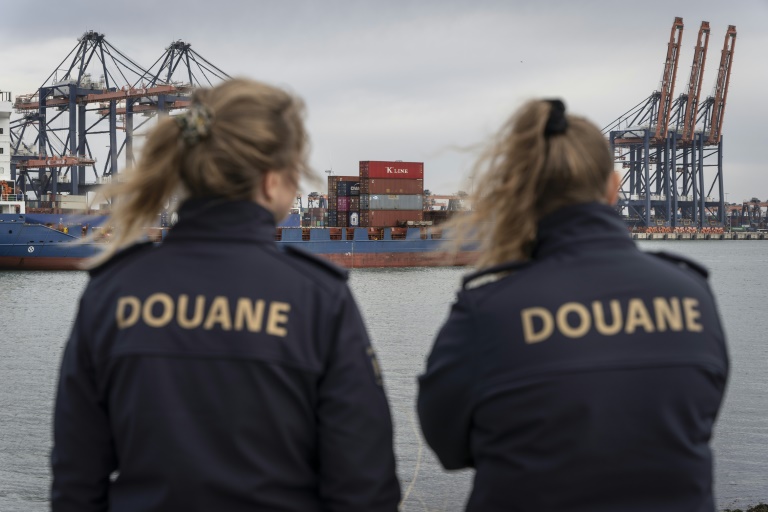
The millions of containers unloaded by Rotterdam’s giant cranes make it Europe’s largest port, but the Dutch city is also dealing with ever larger amounts of a less welcome cargo: cocaine.

A record of nearly 70 tonnes of the drug was intercepted in 2021, up 74 percent from a year before, said Ger Scheringa, who leads a team of armed customs officers at the port.

Rotterdam and Antwerp in neighbouring Belgium were the two main entry points used by a Dubai-based “super cartel” supplying a third of Europe’s cocaine, which Europol said it busted last month.

The cocaine is usually hidden in containers, or sometimes underneath ships in openings below the water line where they are then recovered by divers.

Pinpointing the reason for this jump in cocaine seizures is a “delicate question”, Scheringa told AFP. 

“It seems there are lots of buyers” in Europe, he said dryly.

“And if there is demand, it is supplied.”

Rotterdam has taken major steps to stop the white powder making its way into Europe, particularly by stepping up customs checks, the Dutchman said.

But he doesn’t expect Rotterdam’s record for seizures to be beaten in 2022, and admitted that he “doesn’t know if there is really a solution to the problem” as long as people keep taking cocaine.

– ‘Needle in a haystack’ –

Rotterdam mayor Ahmed Aboutaleb has deplored the fact that the port city is “drowning in cocaine”, and condemns the violence that accompanies the drug trade.

Aboutaleb wants port authorities to scan all containers arriving from Latin America.

But customs official Scheringa said the “biggest challenge is to find a good balance between the speed of logistics for the port, and checking everything you want.”

Gangs use sophisticated methods to send the cocaine through Rotterdam and then recover it afterwards, often relying on inside information, said Romilda Schaaf, a drugs specialist for the port police.

Maps on her computer show the dizzying scale of her patch, with tens of thousands of containers piling up at multiple terminals, meaning investigators need precise details to find smuggled drugs.

“It really is a question of finding a needle in a haystack,” she told AFP.

Young men, often from the deprived south of Rotterdam according to prosecutors, sometimes spend several nights in “container hotels” equipped with food and blankets, close to where a container with cocaine is expected.

They then move the drugs to different containers so there is less chance of them being checked, particularly if they come from South America.

More than 70 people have been arrested so far this year for trafficking-related offences in the port, said Scheringa, including gang members and even port employees.

As recently as December 6, Dutch police said a 43-year-old female officer from Rotterdam was arrested over allegations of corruption and involvement in drug trafficking.

Gangs pay dockers and officials up to 100,000 euros to help get big batches through, Scheringa said.

It’s easy money, said police official Schaaf, “but it leads to nothing. If you say yes once, you can’t say no… (so) don’t start in the first place!”

– Assassinations  –

Dutch customs officers insist that good contacts with “source” countries are important to stem the flood of cocaine, along with tackling efforts to corrupt port employees — and more checks.

A key part of the checks is risk assessment. Containers are singled out as suspect, often because of information from abroad, then scanned, unpacked and searched with sniffer dogs. 

Some ships are also inspected by diving teams.

The automation of some parts of the port, and therefore the elimination of the human factor, has also helped to curb corruption, according to two officials.

Violence linked to the cocaine trade has deeply touched Dutch society.

A famous Dutch journalist and a lawyer who were involved in the trial of an alleged drug lord were assassinated in 2019 and 2021, shocking the country and convincing authorities to allocate more resources to a crackdown.

“The aim is really to assure people that they can live in safety, and that no politician, lawyer or crime reporter should have to be under protection because this junk is coming into our country,” said Schaaf. 

China launches WTO dispute over US chip sanctions

China has filed a dispute with the World Trade Organization over US restrictions on chip exports, Beijing’s commerce ministry said in a statement late Monday, accusing Washington of threatening global supply chains.

The United States in October announced new export controls aimed at restricting China’s ability to buy and manufacture high-end chips with military applications, complicating Beijing’s push to further its own semiconductor industry and develop advanced military systems.

The moves include export restrictions on some chips used in supercomputing as well as stricter requirements on the sale of semiconductor equipment.

The aim is to prevent “sensitive technologies with military applications” from being acquired by China’s military, intelligence and security services, the US Commerce Department said in October.

But China’s Ministry of Commerce on Monday accused the United States of “obstructing normal international trade in products including chips and threatening the stability of the global industrial supply chain”, as well as violating international trade rules and engaging in “protectionist practices”.

The WTO dispute is intended to defend China’s “legitimate rights and interests”, the ministry said in its statement, urging Washington to “give up zero-sum thinking”.

The two superpowers have long faced off over a range of issues including technology, trade, Hong Kong, Taiwan and human rights.

Chinese leader Xi Jinping and US President Joe Biden pledged to repair frayed relations at a summit in Bali, Indonesia last month.

Days before the latest chip controls, the Pentagon added 13 more Chinese firms including drone manufacturer DJI and surveillance firm Zhejiang Dahua Technology to a blacklist of military-linked entities.

France hosts conference for 'urgent' Ukraine winter help

France hosts an international conference Tuesday designed to raise material and money to repair Ukraine’s damaged infrastructure as well as underline Paris’ ongoing support for Kyiv’s fight against Russia.

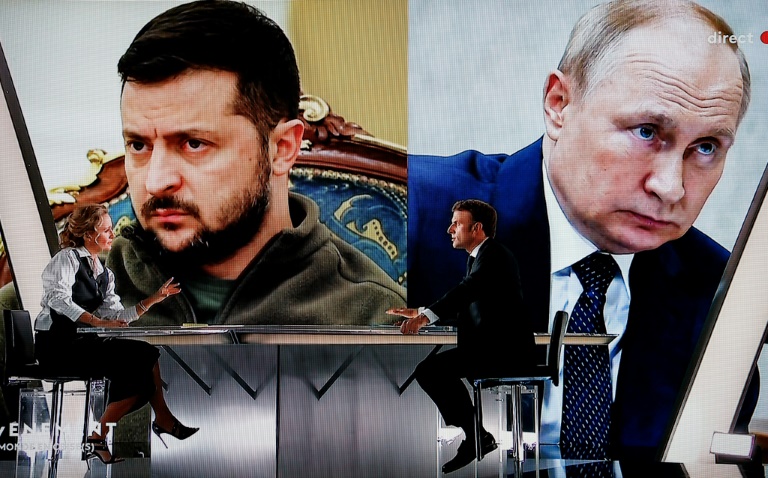
The gathering of politicians, blue-chip companies and aid agencies comes after fresh comments about the war from French President Emmanuel Macron which put him at odds with many in Ukraine.

Macron called for Russia to be offered “security guarantees” at the end of the war during an interview on December 3, drawing criticism from some Ukrainian and eastern European politicians.

A call between the French leader and Ukrainian counterpart Volodymyr Zelensky on Sunday cleared the air and saw the men discuss Tuesday’s conference.

Macron “reminded President Zelensky that Ukraine can count on France’s support for as long as is required to fully re-establish its sovereignty and national integrity,” according to the French presidency.

Both men will address the first part of the conference, called “Solidarity with the Ukrainian People” — Macron in person and Zelensky via videolink.

The event will focus on ways in which Ukraine’s Western allies can provide immediate support to keep the country’s civil infrastructure functioning amid incessant bombing from Russia.

Moscow has switched tactics since October when it began airstrikes targeting Ukraine’s energy network in particular, plunging millions into cold and darkness at the onset of winter.

Another 1.5 million people were left without power in southern Odessa over the weekend after drone attacks, according to Ukrainian authorities. 

“Our immediate objective is to ensure that Ukraine’s network does not collapse and lead to black-outs for several weeks,” an aide to Macron told journalists last Friday. “This is about urgent help.”

– Coordination – 

French organisers have stressed that the conference is different from other recent international gatherings in Lugano, Warsaw or Berlin dedicated to long-term reconstruction.

Instead, they hope donors will pledge help from engineering expertise to spare parts to carry out repairs. 

Another key outcome will be a new platform, agreed by G7 leaders Monday, that will enable donors to see Ukraine’s needs and coordinate their aid.

Western military aid is currently coordinated in this way, but nothing of the sort exists for civilian assistance, Macron’s office said.

“The goal is now to build this platform quickly with the participation of Ukraine, international financial institutions and other partners,” German Chancellor Olaf Scholz said after the leaders of the club of wealthy nations held online talks Monday.

Ukraine’s Prime Minister Denys Shmyhal and Zelensky’s wife Olena are both expected to be in Paris.

The second part of the event, called “The Franco-Ukrainian conference for Resilience and Reconstruction”, will see 500 French companies gather to discuss reconstruction contracts.

Even though the war is still raging, Western states and companies are already eyeing deals that are expected to be worth tens of billions of euros. 

“The Ukrainians wanted us to talk about reconstruction. There are already areas that have been evacuated by the Russian army which are ready to discuss reconstruction,” the French official said. 

The French economy ministry had already prepared a range of tools to encourage its companies, from insurance to export guarantees. 

– Out of context? –

Macron’s comments about providing security guarantees to Russia led to accusations he was focusing again on diplomatic compromises with Russian President Vladimir Putin.

Critics say it is too early to discuss arrangements with Putin and that Western leaders should focus uniquely on helping Ukraine roll back Russia’s occupation.

Macron has riled his Ukrainian allies in the past, most notably in June when he said “we must not humiliate Russia”.

The 44-year-old French leader initially tried to position himself as an intermediary between Ukraine and Russia, holding lengthy talks with Putin and Zelensky shortly before Moscow’s attack.

Macron’s office have played down any suggestion of tensions with Zelensky.

“There’s a gap between what some people say by taking part of a sentence out of context and the reality of the work that we are doing, which is going smoothly,” the aide said.

“The dialogue between the president (Macron) and President Zelensky is excellent.”

Nuclear fusion: harnessing the power of the stars

The US Department of Energy’s nuclear fusion laboratory says there will be a “major scientific breakthrough” announced Tuesday, as media report that scientists have finally surpassed an important milestone for the technology: getting more energy out than was put in.

The announcement has the scientific community abuzz, as nuclear fusion is considered by some to be the energy of the future, particularly as it produces no greenhouse gases, leaves little waste and has no risk of nuclear accidents.

Here is an update on how nuclear fusion works, what projects are underway and estimates on when they could be completed:

– Energy of the stars –

Fusion differs from fission, the technique currently used in nuclear power plants, by fusing two atomic nuclei instead of splitting one.

In fact, fusion is the process that powers the sun.

Two light hydrogen atoms, when they collide at very high speeds, fuse together into one heavier element, helium, releasing energy in the process.

“Controlling the power source of the stars is the greatest technological challenge humanity has ever undertaken,” tweeted physicist Arthur Turrell, author of “The Star Builders.”

– Two distinct methods –

Producing fusion reactions on Earth is only possible by heating matter to extremely high temperatures — over 100 million degrees Celsius (180 million Fahrenheit).

“So we have to find ways to isolate this extremely hot matter from anything that could cool it down. This is the problem of containment,” Erik Lefebvre, project leader at the French Atomic Energy Commission (CEA), told AFP.

One method is to “confine” the fusion reaction with magnets.

In a huge donut-shaped reactor, light hydrogen isotopes (deuterium and tritium) are heated until they reach the state of plasma, a very low density gas.

Magnets confine the swirling plasma gas, preventing it from coming into contact with the chamber’s walls, while the atoms collide and begin fusing.

This is the type of reactor used in the major international project known as ITER, currently under construction in France, as well as the Joint European Torus (JET) near Oxford, England.

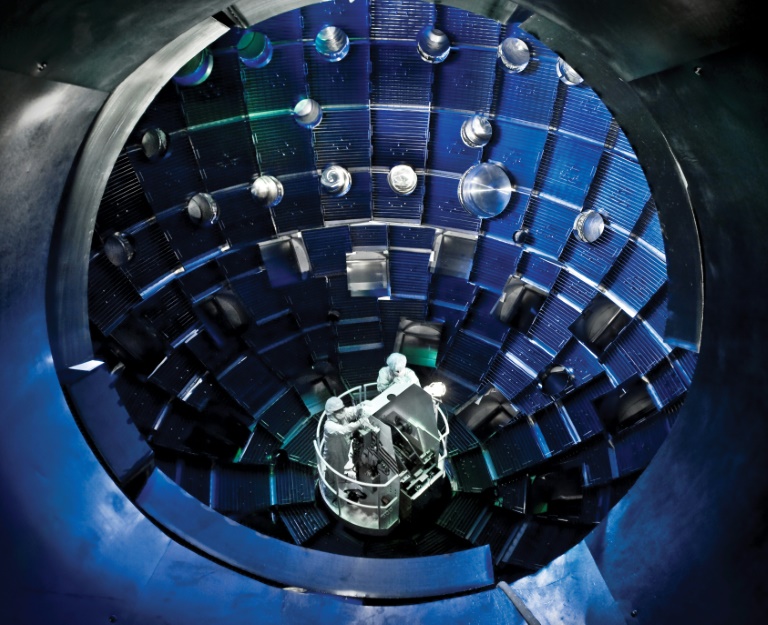
A second method is inertial confinement fusion, in which high energy lasers are directed simultaneously into a thimble-sized cylinder containing the hydrogen.

This technique is used by the French Megajoule Laser (LMJ), and the world’s most advanced fusion project, the California-based National Ignition Facility (NIF).

Inertial confinement is used to demonstrate the physical principles of fusion, while magnetic confinement seeks to mimic future industrial-scale reactors.

– State of research –

For decades, scientists have attempted to achieve what is known as “net energy gain” — that is, more energy is produced by the fusion reaction than it takes to activate it.

According to reports by the Financial Times and the Washington Post, that will be the “major scientific breakthrough” announced Tuesday by the NIF.

But Lefebvre cautions that “the road is still very long” before “a demonstration on an industrial scale that is commercially viable.”

He says such a project will take another 20 or 30 years to be completed. 

To get there, researchers must first increase the efficiency of the lasers and reproduce the experiment more frequently. 

– Fusion’s benefits –

The NIF’s reported success has sparked great excitement in the scientific community, which is hoping the technology could be a game-changer for global energy production.

Unlike fission, fusion carries no risk of nuclear accidents.

“If a few lasers are missing and they don’t go off at the right time, or if the confinement of the plasma by the magnetic field… is not perfect,” the reaction will simply stop, Lefebvre says.

Nuclear fusion also produces much less radioactive waste than current power plants, and above all, emits no greenhouse gases.

“It is an energy source that is totally carbon-free, generates very little waste, and is intrinsically extremely safe,” according to Lefebvre, who says fusion could be “a future solution for the world’s energy problems.”

Regardless of Tuesday’s announcement, however, the technology is still a far way off from producing energy on an industrial scale, and cannot therefore be relied on as an immediate solution to the climate crisis.

Close Bitnami banner
Bitnami