US Business

Britain stuck on recession path despite growth rebound

Britain’s economy remains on course for a long-lasting recession on fallout from the highest inflation in decades, analysts said on Monday, even if official data showed growth in October.

Gross domestic product rebounded 0.5 percent in the month, the Office for National Statistics (ONS) said. GDP had dropped 0.6 percent in September, in part owing to businesses closing for the funeral of Queen Elizabeth II.

ONS director of economic statistics, Darren Morgan, said the economy was helped in October especially by car sales which “rebounded after a very poor September, while the health sector also saw a strong month”.

Despite the rebound, Britain’s finance minister Jeremy Hunt spoke of “a tough road ahead”. 

“High inflation, exacerbated by (Russian President Vladimir) Putin’s illegal war, is slowing growth across the world, with the IMF predicting a third of the world economy will be in recession this year or next,” he said in a statement.

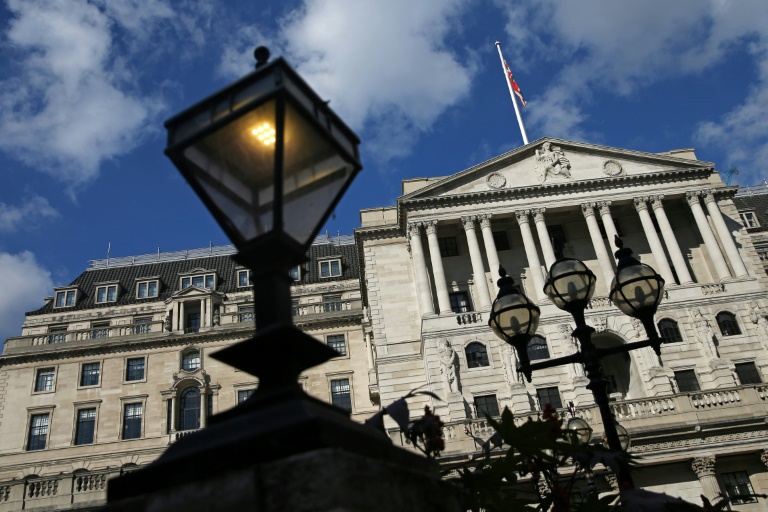
The UK government and Bank of England have each said they believe Britain is already in a recession that the BoE expects to last all next year. 

The main reason for the bleak outlook is fallout from British inflation, which at above 11 percent is the country’s highest level in more than 40 years.

Britons are seeing their wages squeezed, triggering mass strike action by public and private sector workers across the UK.  

Energy bills and food prices have rocketed this year on supply constraints caused by Russia’s invasion of Ukraine and the reopening of economies from pandemic lockdowns.

Britain’s economy has further been hit by recent political turmoil and surging interest rates to try and cool inflation.

– Rate hikes –

The Bank of England is on Thursday expected to raise its main interest rate for a ninth meeting in a row.

“The surprisingly strong rise (in October GDP) could tilt the Bank of England towards another bumper 75 basis-points interest rate hike… depending on the labour market and inflation data on Tuesday and Wednesday,” noted Ruth Gregory, senior economist at Capital Economics.

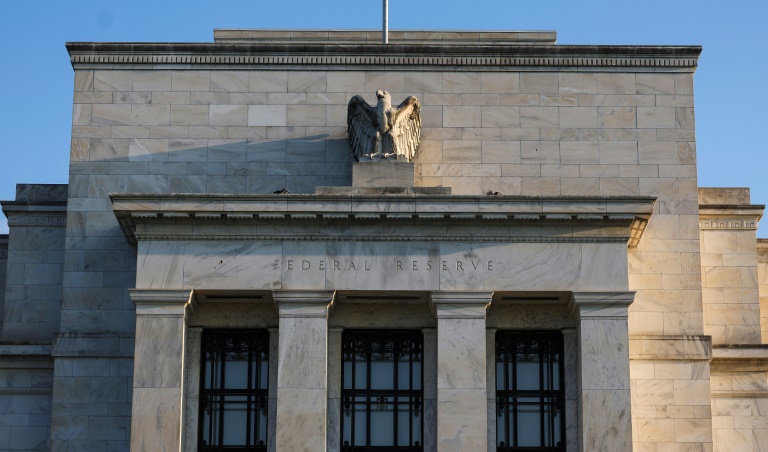
Analysts are forecasting the Federal Reserve and European Central Bank to announce smaller rate hikes at their meetings this week compared with recent decisions.

“Monetary policy conditions are set to tighten further, with the Bank of England likely to raise its policy rate by 50 basis points to 3.5 percent this week and then to a peak of 4.0 percent in February 2023,” forecast Raj Badiani, principal economist at S&P Global Market Intelligence.

“The return to growth in October was expected and supports our assessment that the anticipated recession is likely to be shallow at first before deepening in early 2023.” 

He added, however, that data showing “the economy faltering in the three months to October suggests the recession appeared to start in the third quarter of 2022, (and)… is expected to last for four quarters”.

The BoE has also said Brexit is hurting the UK economy, with the country’s departure from the European Union hitting trade.

burs-bcp/rfj/raz

Four children 'critical' in hospital as UK hit by Arctic weather

Four children were fighting for their lives on Monday, after being pulled from an icy lake as an Arctic blast sent temperatures tumbling across the UK.

The youngsters were reported to have been playing on frozen ice near Birmingham, central England, on Sunday afternoon, when it gave way and they fell in.

Emergency services said the children went into cardiac arrest when they were rescued and were taken to hospital in a critical condition.

The incident came as the UK was hit by heavy snow and freezing conditions, causing major travel disruption, on the eve of a national rail strike Tuesday that was already expected to bring the country to a grinding halt.

London Stansted airport warned of disruption. 

“Our runway is temporarily closed whilst we undertake snow clearing,” it added, with many flights cancelled early Monday.

The airport is a main hub of budget airline Ryanair, which also cautioned about disruption to its flights at Gatwick, south of London.

“Due to ongoing severe snowy weather across the UK, runaways at both Stansted and Gatwick have been temporarily closed tonight (11 December),  disrupting all flights scheduled to depart Stansted/Gatwick during this temporary closure period,” it said.

Both airports were open on Monday, but passengers were told to brace for delays.

Dozens of stranded passengers posted videos on social media showing snow-covered runways and planes stuck on the ground.

More than 50 flights were also cancelled on Sunday at Heathrow, the UK’s largest airport, due to freezing fog. 

Train and bus services in London were also severely affected after the dump of around four inches (10 centimetres) of snow overnight, which also forced the closure of parts of the M25 orbital route around the capital, the country’s busiest motorway.

Some schools were also shut.

The UK has been experiencing a cold snap for several days, with temperatures dropping to -10 Celsius degrees (14 Fahrenheit) in some areas, although the Met Office said the temperatures were “not unusual for this time of year”. 

The service has issued yellow alerts for snow, fog and frost in several areas, including southeast and southwest England, and the north of Scotland.

Stock markets track Wall St down on inflation fears

Equity markets dropped and the dollar edged up Monday after a forecast-beating US inflation reading dampened hopes for a more dovish tilt by the Federal Reserve in its battle against soaring prices.

The producer price index reading for November followed data showing the jobs market remained tight, suggesting the central bank would likely need to keep hiking interest rates.

Investors are now looking to the release later on Monday of key consumer price index figures, which comes ahead of the Fed’s next policy meeting.

A below-forecast print for October’s CPI sparked a rally on markets last month as investors bet on a shorter pace of rate hikes, though concerns about a recession continue to weigh on sentiment.

“An ominous feeling is consuming markets ahead of this week’s crucial CPI report and (Fed policy) meeting,” said Stephen Innes at SPI Asset Management.

“While headline inflation continues to drop, the top-side beat on PPI expectations suggests that while inflation might climb down the mountain, the slope remains very uncertain.”

Policy decisions in the United Kingdom, the European Union and several other economies are also due this week.

All three main indexes on Wall Street fell Friday, and Asia followed suit.

Hong Kong led the way down — shedding more than two percent — having surged last week, while Tokyo, Shanghai, Sydney, Seoul, Singapore, Taipei and Wellington were also in the red.

London opened lower even as data showed the UK economy grew more than expected in October. Paris and Frankfurt also slipped.

The dollar extended Friday’s gains against most of its peers, having surged for much of the year owing to the Fed’s sharp rate hikes.

Chris Weston, at Pepperstone Group, added that should core consumer prices go above 6.3 percent “then the US dollar should rally hard, and equity should find decent sellers”. 

“Conversely, a read below six percent would be a surprise and the US dollar bears should find comfort in that.”

Investors are also keeping an eye on developments in China as it moves away from the zero-Covid policy that has hammered its economy, the world’s second-largest.

The shift comes after widespread protests against the near three-year strategy, though there is concern about the expected spike in infections.

“One official was quoted as saying the mortality rate from Omicron is around 0.1 percent, similar to the common flu and that most people recover within 7-10 days,” said National Australia Bank’s Tapas Strickland.

“The change in language continues the tentative pivot from China over the past few weeks, both in rhetoric around the virus, and also in the easing of restrictions.”

– Key figures around 0820 GMT –

Tokyo – Nikkei 225: DOWN 0.2 percent at 27,842.33 (close)

Hong Kong – Hang Seng Index: DOWN 2.2 percent at 19,463.63 (close)

Shanghai – Composite: DOWN 0.9 percent at 3,179.04 (close)

London – FTSE 100: DOWN 0.3 percent at 7,353.72

Euro/dollar: DOWN at $1.0526 from $1.0534 on Friday

Dollar/yen: UP at 136.74 yen from 136.57 yen

Pound/dollar: DOWN at $1.2243 from $1.2262

Euro/pound: UP at 85.94 pence from 85.90 pence

West Texas Intermediate: UP 0.7 percent at $71.53 per barrel

Brent North Sea crude: UP 0.5 percent at $76.47 per barrel

New York – Dow: DOWN 0.9 percent at 33,476.46 (close)

Britain's GDP grows 0.5 percent in October: statistics office

Britain’s economy grew 0.5 percent in October, official data showed Monday, after a sharp fall the previous month in part because of the national holiday for Queen Elizabeth II’s funeral.

Gross domestic product fell 0.6 percent in September after businesses closed for the royal funeral, and Britain’s economy shrank by 0.2 percent in the third quarter, according to the Office for National Statistics (ONS).

Darren Morgan, ONS director of economic statistics, said the economy was helped especially by car sales which “rebounded after a very poor September, while the health sector also saw a strong month”.

The ONS said in its statement Monday that in the three months to October, the economy contracted by 0.3 percent.

Britain’s finance minister Jeremy Hunt said in a statement that despite the figures showing growth, “there is a tough road ahead”. 

“High inflation, exacerbated by (Russian President Vladimir) Putin’s illegal war, is slowing growth across the world, with the IMF predicting a third of the world economy will be in recession this year or next,” he said.

British inflation stands above 11 percent, the highest level in more than 40 years.

The Bank of England has predicted the UK economy would contract in the final quarter of 2022, meaning the economy was in a recession.

The technical definition of recession is two quarters of contraction in a row.

Sunlit Greece seeks to lure Europeans amid winter energy crisis

With most of Europe struggling with soaring energy costs, Greece has launched an initiative to put its mild winters to good use and attract sun-seeking travellers all year round.

The Mediterranean nation recorded November temperatures comfortably exceeding 20 degrees Celsius (68 degrees Fahrenheit) — quite a draw for Europeans eager to save on heating bills that have rocketed in the wake of the war in Ukraine.

The Greek government has earmarked 20 million euros ($21 million) for a poster campaign targeting mainly European pensioners that could boost an economy where the travel sector represents 25 percent of annual output.

“Wanna feel 20 again?” says the poster featuring an elderly pair nibbling watermelon and sipping drinks on a yacht.

“With warm winter temperatures up to 20 degrees Celsius, Greece is the place to be,” it adds.

Tourism Minister Vassilis Kikilias, fresh from a tour of several European capitals including Paris and Berlin to promote the initiative, told AFP the government was working “on a plan to campaign for Greece 12 months per year”.

With northern European countries facing much longer and bitterly cold winters, “energy-wise there are many more needs than here in the south where the winter is mild” and shorter, he added.

“You live a great one or two months here enjoying your vacation and spending less than you would have spent staying at home,” Kikilias said.

– The Florida of Europe? –

“In Greece, no German has to freeze,” top-selling German daily Bild wrote in September, while business daily Handelsblatt suggested the country could become “the Florida of Europe”.

Kikilias said there was a “tradition” among northern European travellers to winter in Spain and Portugal, but he urged holidaymakers eager for sun, sea and sand to “take a look at the eastern Mediterranean (too)”.

After two years of economically painful travel restrictions caused by the Covid-19 pandemic, arrivals in 2022 could finish near the all-time high of 33 million tourists recorded in 2019.

By the end of September, 23.7 million people had holidayed in Greece, and the number of French, German and British visitors even topped 2019 levels.

TUI, the world’s largest tourism operator, earlier this year brought forward the launch of the tourist season because of high demand.

But tour operators have yet to take the plunge in the winter months. 

For the time being, TUI does not offer organised trips to Greece from December to February, said Evangelos Georgiou, one of the company’s communications managers.

And German charter airline Condor only offers flights to Kalamata airport in the Peloponnese peninsula until the end of November.

Condor flights to Heraklion on the island of Crete and Rhodes will only resume at the beginning of April, according to spokeswoman Johanna Tillmann.

France bets on tech and transparency to beat Chinese caviar

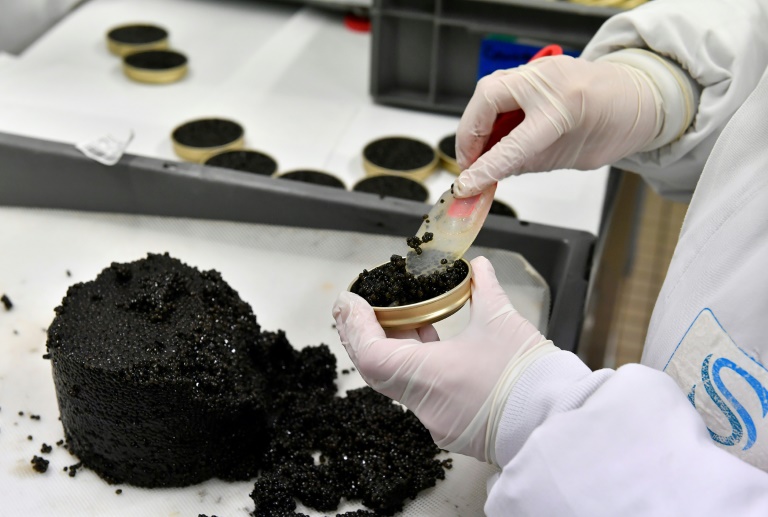
At the fish farm near Bordeaux, Christophe Baudoin is running an ultrasound device over the belly of a large sturgeon to check its eggs.

“Caviar!” he shouts as the monitor shows the right sparkle around each little round ball.

“Over-mature!” comes the next shout, indicating the fish’s pregnancy cycle has gone too far and the eggs have softened — losing the crucial crunch. It will go back in the lake to await another cycle in two years.

For the company, Sturia, it’s an incredibly laborious process — they ultrasound some 20,000 fish a year for a total of 300 tonnes of caviar — but climate change has made it vital.

Many fish are coming out “over-mature”, in part because warmer waters have accelerated the pregnancy cycle.

For the guys standing in the water, scooping up the huge fish for inspection, the winter days when 10 centimetres (four inches) of ice coated the lakes are not entirely missed. 

But the change is still shocking. 

“It’s been 10 years since we’ve seen any ice on these lakes,” said Baudoin.

One in five of the fish died in 2021 when water temperatures hit 30 degrees, five degrees above a sturgeon’s comfort zone. 

“You might not know each one by name, but it’s never nice to pull out a dead fish — and of course the cost for the group is enormous,” said Sturia boss Laurent Dulau. 

– Extinction threat –

Fished to the brink of extinction in the wild — including the once-rich Russian and Iranian waters of the Caspian Sea — sturgeon now exist almost exclusively in farms, most of them in China.

Sturgeon were fished in France’s Gironde river for centuries, but their eggs were given to children, old people and pigs until Russian nobles fleeing the Communist revolution a century ago showed locals their potential.

It became a delicacy in Paris after Armenian emigrants Melkoum and Mouchegh Petrossian convinced the Ritz Hotel in Paris to serve caviar in the 1920s. 

Farming only started in France in the 1990s, and since it takes up to a decade to raise a sturgeon, progress is painstaking. 

Unable to compete with China on quantity, French producers focus on sustainable and healthy farming. 

The ultrasound avoids unnecessary killing and Sturia sends the meat to be used for rillettes pate, the collagen-rich gonads for cosmetics, and the skin for leather and a specialist glue favoured by violin-makers.

– ‘Produce better’ –

Dulau said the focus on traceability and quality is rebuilding caviar’s image after the over-fishing crisis. 

“The idea is to produce less, but produce better,” he said. “People will eat less because it’s a lot more expensive, but it will be so good that they’ll be satisfied.”

But Michel Berthommier, of nearby Caviar Perlita, is frustrated that “nine out of 10, maybe 10 out of 10” French restaurants still source from China. He blamed middle-men for preferring the mark-up on foreign eggs.

“It’s bizarre at a time when restaurants are always saying they source their products locally. We sell more to Singapore than restaurants 10 kilometres down the road,” he said. 

But he said the transparency of French production will win over buyers. 

“There used to be a mystery around how these fish were raised and harvested. We have opened our books on how our fish live, how they are fed and selected. 

“We can’t be number one in production, but we can lead the way in creativity and science.”

Asian markets track Wall St down on inflation fears

Asian markets dropped and the dollar edged up Monday after a forecast-beating US inflation reading dampened hopes for a more dovish tilt by the Federal Reserve in its battle against soaring prices.

The producer price index reading for November followed data showing the jobs market remained tight, suggesting the central bank would likely need to keep hiking interest rates.

Investors are now looking to the release later in the day of key consumer price index figures, which comes ahead of the Fed’s next policy meeting.

A below-forecast print for October’s CPI sparked a rally on markets last month as investors bet on a shorter pace of rate hikes, though concerns about a recession continue to weigh on sentiment.

“An ominous feeling is consuming markets ahead of this week’s crucial CPI report and (Fed policy) meeting,” said Stephen Innes at SPI Asset Management.

“While headline inflation continues to drop, the top-side beat on PPI expectations suggests that while inflation might climb down the mountain, the slope remains very uncertain.”

Policy decisions in the United Kingdom, the European Union and several other economies are also due this week.

All three main indexes on Wall Street fell Friday, and Asia followed suit.

Hong Kong led the way down, having surged last week, while Tokyo, Shanghai, Sydney, Seoul, Taipei, Jakarta and Wellington were also in the red.

The dollar extended Friday’s gains against most of its peers, having surged for much of the year owing to the Fed’s sharp rate hikes.

Chris Weston, at Pepperstone Group, added that should core consumer prices go above 6.3 percent “then the US dollar should rally hard, and equity should find decent sellers”. 

“Conversely, a read below six percent would be a surprise and the US dollar bears should find comfort in that.”

Investors are also keeping an eye on developments in China as it moves away from the zero-Covid policy that has hammered its economy, the world’s second-largest.

The shift comes after widespread protests against the near three-year strategy, though there is concern about the expected spike in infections.

“One official was quoted as saying the mortality rate from Omicron is around 0.1 percent, similar to the common flu and that most people recover within 7-10 days,” said National Australia Bank’s Tapas Strickland.

“The change in language continues the tentative pivot from China over the past few weeks, both in rhetoric around the virus, and also in the easing of restrictions.”

– Key figures around 0230 GMT –

Tokyo – Nikkei 225: DOWN 0.3 percent at 27,821.12 (break)

Hong Kong – Hang Seng Index: DOWN 1.8 percent at 19,545.33 

Shanghai – Composite: DOWN 0.6 percent at 3,188.61

Euro/dollar: DOWN at $1.0511 from $1.0534 on Friday

Dollar/yen: UP at 136.88 yen from 136.57 yen

Pound/dollar: DOWN at $1.2221 from $1.2262

Euro/pound: UP at 86.00 pence from 85.90 pence

West Texas Intermediate: UP 0.5 percent at $71.36 per barrel

Brent North Sea crude: UP 0.3 percent at $76.32 per barrel

New York – Dow: DOWN 0.9 percent at 33,476.46 (close)

London – FTSE 100: FLAT at 7,476.63 (close)

ECB mulls rate hike slowdown on 'peak inflation' hopes

Growing hopes that the eurozone’s red-hot inflation is nearing its peak could prompt European Central Bank policymakers to opt for a smaller rate hike on Thursday, observers said.

Following two consecutive interest rate hikes of 75 basis points, markets are on tenterhooks to see whether the ECB will keep up the aggressive pace or downshift to 50 basis points as the region braces for a winter recession.

This week’s meeting of the ECB’s 25-member governing council in Frankfurt will be the final one of 2022, a year that will be remembered for unprecedented consumer price shocks as Russia’s war in Ukraine sent food and energy costs soaring.

Like other central banks, the ECB has fought back with a series of interest rate rises — walking a tightrope between raising borrowing costs enough to tame inflation, without dampening demand so much it triggers a deep economic downturn.

ECB governors may take heart from November’s eurozone inflation data, which showed prices slowing for the first time in 17 months on the back of cooling energy costs.

Inflation remains eye-wateringly high, however, at 10 percent — five times the ECB’s target — and president Christine Lagarde has repeatedly said further rate hikes are needed.

But the rare bit of good news has bolstered hopes that price pressures are finally easing in the 19-nation in currency club.

“I would be reasonably confident in saying that it is likely we are close to peak inflation,” the ECB’s chief economist Philip Lane said last week.

The early Christmas present could “take away some of the urgency to continue with jumbo rate hikes,” said ING bank economist Carsten Brzeski, even if a 75-basis-point hike is “still on the table”.

Andrew Kenningham, chief Europe economist at Capital Economics, said he expected the ECB “to slow the pace to 50 basis points”.

Observers may look across the Atlantic for clues on Wednesday, when the US Federal Reserve is set to announce its latest monetary policy decisions.

The Fed, which began hiking earlier and faster than the ECB, has signalled it could scale back the pace of its rate increases.

– Recession fears –

The ECB’s rate decision will be guided by the latest economic forecasts due to be unveiled on Thursday.

Analysts expect them to show that inflation will remain well above the two-percent target in 2023 before falling back in 2024 and 2025.

The eurozone economy is seen shrinking in the final quarter of 2022 and the first months of 2023, meeting the technical definition of a recession.

Berenberg Bank economist Holger Schmieding said he expected “a significant winter recession for the eurozone as consumers and businesses hold back”.

But with governments rolling out massive support packages and gas storage levels above average for this time of the year, “the region is better prepared for the cold season than expected”, he added.

Schmieding urged the ECB not to “overdo its response to inflation”, warning that aggressive rate hikes would make the recession “even more painful”.

– Bloated balance sheet –

As part of its monetary policy tightening, the ECB will on Thursday outline the next steps in its efforts to slim down the bank’s massive balance sheet.

It has already made changes to the terms of an ultra-cheap bank loan scheme, aimed at keeping credit flowing during the pandemic, in a bid to incentivise early repayment of the so-called TLTRO loans.

The move appears to be paying off, with eurozone lenders handing back nearly 750 billion euros ($790 billion) in TLTRO cash since October.

Analysts are also eager to hear how and when the ECB plans to start shrinking its five-trillion-euro bond portfolio, after years of hoovering up government and corporate debt.

The issue will be discussed at this week’s meeting, Lagarde has said.

The ECB has already indicated that the process of “quantitative tightening” — letting the bonds mature or actively selling them — would be gradual and predictable to avoid spooking financial markets.

Golden Globes to unveil nominations as censured awards eye comeback

Boycotted by A-listers and studios last year, the Golden Globes will attempt to rebuild their reputation as one of Hollywood’s top award shows with organizers unveiling this year’s nominees on Monday.

The Hollywood Foreign Press Association, which organizes the film and television awards, has scrambled to reform itself since long-harbored criticisms of the group’s practices went public in early 2021.

Tinseltown completely distanced itself from the Globes last January over voters’ lack of diversity, alleged corruption and lack of professionalism, and the show took place behind closed doors.

But broadcaster NBC has gambled that it is time to bring back the glitzy gala, which will take place in Beverly Hills on January 10.

Tinseltown is waiting to see which stars will show up. Much of that will depend on who is nominated.

Tom Cruise and Brendan Fraser are both seen as strong contenders this awards season for their lead roles in “Top Gun: Maverick” and “The Whale,” respectively.

But Cruise last year returned his three Golden Globes to the HFPA in protest at its behavior, and Fraser has said he will not attend the awards if he is nominated. 

“It’s because of the history that I have with them. And my mother didn’t raise a hypocrite,” Fraser told GQ last month.

Fraser has alleged that a former HFPA president, Philip Berk, sexually assaulted him at an industry event in 2003. Berk denies the incident, and has since been expelled from the group for calling Black Lives Matter a “racist hate movement.”

In response to last year’s controversy, HFPA expanded its voting body to include people with more diverse backgrounds, banned members from accepting gifts, and halted its in-person press conferences with stars, which were often derided for the improper behavior of some members.

“This is really not the old HFPA anymore,” president Helen Hoehne recently told The Hollywood Reporter.

“I respect Brendan Fraser’s decision… And I personally, sincerely hope there’s a way for us to move forward and we are able to regain Mr Fraser’s trust, along with the trust of the entire entertainment community,” she added.

Still, powerful Hollywood publicists remain divided over the Globes, with some expressing skepticism about the reforms — and a reluctance to return to the event with their stars.

A plan by US billionaire Todd Boehly to spin off the awards show into a for-profit entity and pay salaries to members has raised eyebrows.

– Spielberg leads pack –

The Golden Globes honor both film and television. Unlike the Oscars, the show divides its movies into “drama” and “comedy or musical” categories — hence boosting the star power by increasing the number of nominees.

Steven Spielberg’s deeply personal “The Fabelmans” is widely seen as the drama frontrunner.

Other contenders include Cruise’s long-awaited “Top Gun” sequel, Baz Luhrmann’s rock-and-roll biopic “Elvis,” and “Women Talking,” a book adaptation about sexual abuse in a religious colony.

“Everything Everywhere All At Once,” Michelle Yeoh’s highly original sci-fi set in a tax office, which became a word-of-mouth hit early in the year, is tipped in the comedy film categories. 

So are star-studded whodunnit sequel “Glass Onion: A Knives Out Mystery” and Irish black comedy “The Banshees of Inisherin.”

Fraser and Austin Butler, the 31-year-old actor who plays Presley in “Elvis,” are expected to land drama acting nominations, as is Cate Blanchett as a ruthless classical conductor in “Tar.”

On the comedy side, Yeoh and “Banshees” star Colin Farrell are among the favorites.

“Lopez vs. Lopez” stars George Lopez and Mayan Lopez will present the nominations for the 80th Golden Globes on NBC’s “Today” program from 1335 GMT Monday.

NASA capsule Orion splashes down after record-setting lunar voyage

NASA’s Orion space capsule splashed down safely in the Pacific on Sunday, completing the Artemis 1 mission — a more than 25-day journey around the Moon with an eye to returning humans there in just a few years.

After racing through the Earth’s atmosphere at a speed of 25,000 miles (40,000 kilometers) per hour, the uncrewed capsule floated down to the sea with the help of three large orange and white parachutes, as seen on NASA TV.

“I don’t think any one of us could have imagined the mission this successful,” said Artemis Mission Manager Mike Sarafin in a press conference.

“We now have a foundational deep space transportation system.” 

During the trip around Earth’s orbiting satellite and back, Orion logged well over a million miles and went farther from Earth than any previous habitable spacecraft.

“For years, thousands of individuals have poured themselves into this mission, which is inspiring the world to work together to reach untouched cosmic shores,” said NASA Administrator Bill Nelson.

“Today is a huge win for NASA, the United States, our international partners, and all of humanity,” he added.

After touchdown, helicopters flew over the floating spacecraft, which showed no evidence of damage.

Orion was recovered by a prepositioned US Navy ship off the coast of Mexico’s Baja California after some initial tests were run.

As it reentered the Earth’s atmosphere, the gumdrop-shaped capsule had to withstand a temperature of 2,800 degrees Centigrade (5,000 Fahrenheit) — about half that of the surface of the Sun.

The main goal of this mission was to test Orion’s heat shield — for the day when it carries astronauts.

Achieving success in this mission was key for NASA, which has invested tens of billions of dollars in the Artemis program due to take people back to the Moon and prepare for an onward trip, someday, to Mars.

A first test of the capsule was in 2014, but that time it stayed in Earth’s orbit, coming back into the atmosphere at a slower speed of around 20,000 miles per hour.

– Choppers, divers and boats – 

The USS Portland was positioned to recover the Orion capsule in an exercise NASA has been rehearsing for years. Helicopters and inflatable boats were also deployed.  

The falling spacecraft eased to a speed of 20 miles per hour as it finally hit the Pacific.

NASA let Orion float for several hours — a lot longer than if astronauts were inside — to collect data on temperatures inside the crew module.

Divers then attached cables to hoist Orion onto the USS Portland, an amphibious transport dock vessel whose stern was partly submerged. The water was then pumped out slowly so the spacecraft came to rest on a platform designed to hold it.

The Navy ship was then set to head for San Diego, California, where the spacecraft will be unloaded in the coming days.

Orion has now traveled 1.4 million miles since it took off from Florida on November 16, aided by the huge SLS rocket.

At its nearest point to the Moon, it flew less than 80 miles from the surface. And it broke the distance record for a habitable capsule from our planet, venturing 268,000 miles away at its farthest point.

– Artemis 2 and 3 –

Recovering the spacecraft will allow NASA to gather data that is crucial for future missions.

This includes information on the condition of the vessel after its flight, data from monitors that measure acceleration and vibration, and the performance of a special vest put on a mannequin in the capsule to test how to protect people from radiation while flying through space.

Some capsule components should be good for reuse in the Artemis 2 mission, already in advanced stages of planning.

That mission, planned for 2024, will take a crew toward the Moon but still without landing on it.

Artemis 3, scheduled for 2025, will see a spacecraft land for the first time on the south pole of the Moon, where they hope to find water in the form of ice. The space agency thereafter aims to launch one mission per year.

“We have hardware today in work around the world through Artemis 5, this isn’t just a one flight and we’re done,” said NASA Associate Administrator Jim Free.

As part of the Artemis missions, NASA is planning to send a woman and a person of color to the Moon for the first time.

Only 12 people — all of them white men — have set foot on the Moon. That was during NASA’s historic Apollo missions, which ended in 1972.

NASA hopes to establish a lasting human presence on the Moon, through a base on the surface as well as an orbiting space station.

Having people learn to live on the Moon should help engineers develop technologies for a years-long trip to Mars, possibly in the late 2030s.

Close Bitnami banner
Bitnami