US Business

NASA Moon capsule Orion due to splash down after record-setting voyage

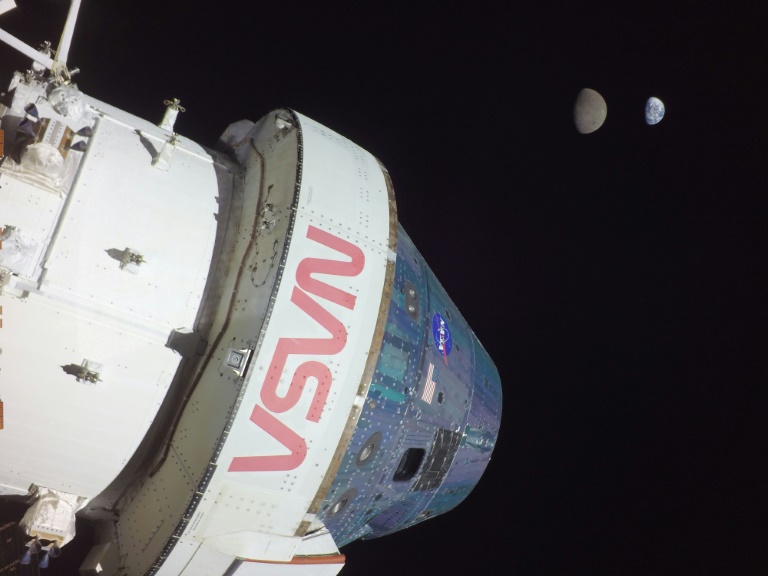
After making a close pass at the Moon and venturing further into space than any previous habitable spacecraft, NASA’s Orion capsule is due to splash down Sunday in the final test of a high-stakes mission called Artemis.

As it hurtles into Earth’s atmosphere at a speed of 25,000 miles (40,000 kilometers) per hour, the gumdrop-shaped traveler will have to withstand a temperature of 2,800 degrees Centigrade (5,000 Fahrenheit) — about half that of the surface of the sun.

Splashdown in the Pacific off the Mexican island of Guadalupe is scheduled for 1739 GMT (9:39 am local time).

Achieving success in this mission of just over 25 days is key for NASA, which has invested tens of billions of dollars in the Artemis program due to take people back to the Moon and prepare for an onward trip, someday, to Mars.

So far the first test of this uncrewed spacecraft has gone very well.

But it is only in the final minutes of this voyage that the true challenge comes: seeing if Orion’s heat shield, the biggest ever built, actually holds up.

“It is a safety-critical piece of equipment. It is designed to protect the spacecraft and the passengers, the astronauts on board. So the heat shield needs to work,” said Artemis mission manager Mike Sarafin. 

A first test of the capsule was carried out in 2014 but that time the capsule stayed in Earth’s orbit, so it came back into the atmosphere at a slower speed of around 20,000 miles per hour.

– Choppers, divers and boats – 

A US Navy ship, the USS Portland, has been positioned in the Pacific to recover the Orion capsule in an exercise that NASA has been rehearsing for years. Helicopters and inflatable boats will also be deployed for this task.  

The falling spacecraft will be slowed first by the Earth’s atmosphere and then a web of 11 parachutes until it eases to a speed of 20 miles (30 kilometers) per hour when it finally hits the blue waters of the Pacific.

Once it is there, NASA will let Orion float for two hours — a lot longer than if astronauts were inside — so as to collect data.

“We’ll see how the heat soaks back into the crew module and how that affects the temperature inside,” said Jim Geffre, NASA’s Orion vehicle integration manager.

Divers will then attach cables to Orion to hoist it onto the USS Portland, which is an amphibious transport dock vessel, the rear of which will be partly submerged. This water will be pumped out slowly so the spacecraft can rest on a platform designed to hold it.

This should all take about four to six hours from the time the vessel first splashes down.

The Navy ship will then head for San Diego, California where the spacecraft will be unloaded a few days later.

When it returns to Earth, the spacecraft will have traveled 1.4 million miles since it took off November 16 with the help of a monstrous rocket called SLS.

At its nearest point to the Moon it flew less than 80 miles (130 kilometers) from the surface. And it broke the distance record for a habitable capsule, venturing 268,000 miles (432,000 kilometers) from our planet.

– Artemis 2 and 3 –

Recovering the spacecraft will allow NASA to gather data that is crucial for future missions.

This includes information on the condition of the vessel after its flight, data from monitors that measure acceleration and vibration, and the performance of a special vest put on a mannequin in the capsule to test how to protect people from radiation while flying through space.

Some components of the capsule should be good for reuse in the Artemis 2 mission, which is already in advanced stages of planning.

This next mission planned for 2024 will take a crew toward the Moon but still without landing on it. NASA is expected to name the astronauts selected for this trip soon.

Artemis 3, scheduled for 2025, will see a spacecraft land for the first time on the south pole of the Moon, which features water in the form of ice.

Only 12 people — all of them white men — have set foot on the Moon. They did this during the Apollo missions, the last of which was in 1972.

Artemis is scheduled to send a woman and a person of color to the Moon for the first time.

NASA’s goal is to establish a lasting human presence on the Moon, through a base on its surface and a space station circling around it. Having people learn to live on the Moon should help engineers develop technologies for a years-long trip to Mars, maybe in the late 2030s.
US Fed poised for smaller rate hike with eye on wage growth

The US Federal Reserve is poised to slow its interest rate hikes next week, economists say, as central bankers’ most forceful moves in decades to fight inflation ripple through the economy.

But the half-point jump analysts expect to see in the Fed’s benchmark lending rate will still be a steep rise, as it struggles to cool demand in the United States to bring consumer costs down.

Households in the world’s biggest economy have been contending with red-hot prices, with conditions worsened by surging food and energy costs after Russia’s invasion of Ukraine.

To make borrowing more expensive, the Fed has raised interest rates six times this year, including four bumper 0.75-point increases, bringing the rate to between 3.75 percent and four percent.

“We think the stage is set for a (half-point) hike this month,” said Oren Klachkin of Oxford Economics, as sectors sensitive to interest rates like housing reel and inflation shows signs of easing.

The decision will be announced after a two-day meeting of the policy-setting Federal Open Market Committee (FOMC) starting Tuesday.

Policy makers are keeping a close eye on wage growth, given concerns that higher salaries will add to inflation pressures.

“The primary concern for the Fed here is really wage growth,” said Martin Wurm of Moody’s Analytics, adding that the Fed is unlikely to ease policy until there is consistent development on this front.

“That doesn’t necessarily mean it’s going to keep hiking forever, but it does mean that the rate will increase for a little bit and… stay elevated throughout the next year,” Wurm told AFP.

With a higher benchmark rate, it becomes more expensive to borrow funds for big-ticket purchases such as cars and property, or to expand businesses.

– ‘Signs of stress’ –

Despite the Fed’s forceful moves, consumer inflation stood at 7.7 percent in October while job gains remained robust, sending jitters through markets on worries that the central bank would prolong its aggressive campaign.

“The strong jobs market, rising wages and the strong household balance sheet… are key areas of support” for demand, said economist James Knightley of ING.

Household wealth has increased by $30 trillion since the start of the pandemic, he noted, allowing consumers to dip into their savings as the cost of living spiked.

“However, we are also seeing greater use of consumer credit and credit cards to fund spending, which could hint at some signs of stress and that household efforts to maintain their standard of living are starting to be exhausted,” Knightley told AFP.

– Smaller recession –

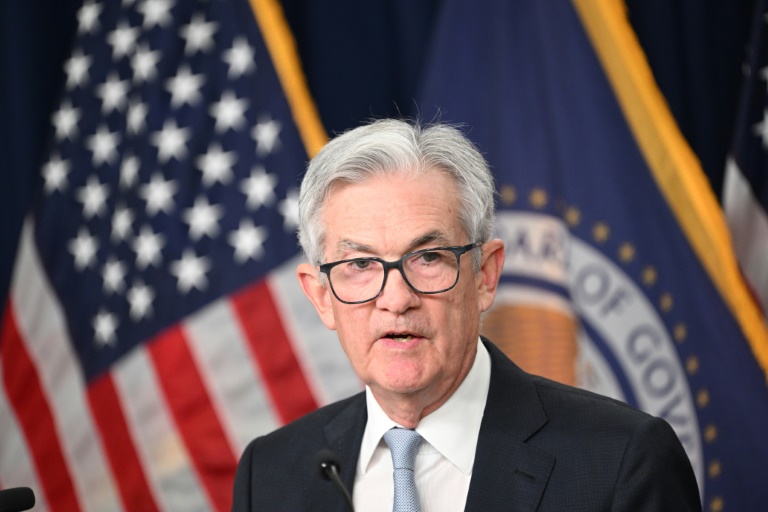
Fed Chair Jerome Powell has warned that monetary policy will likely have to remain tight “for some time,” even if the time to ease the pace of rate hikes may come as soon as in December.

The timing of this moderation is less significant than questions of how much more officials need to raise rates, and how long they should keep policy restrictive, he added in a speech.

While many economists believe there is about a 50-50 chance of recession, Wurm said, this will likely mean a small contraction in GDP.

“What we wouldn’t expect necessarily is a big financial crisis like 2008… the big sectors of the economy are still in pretty good shape,” he said.

The US economy rebounded strongly after Covid-19, boosting incomes, while the lockdown period raked in profits for American businesses as well — accounting for resilience seen despite the Fed’s sharp tightening.

Knightly of ING said policymakers maintain a mentality that the risk of doing too little outweighs that of doing too much.

“They will tolerate a recession to make sure inflation is defeated,” he added.

US Fed poised for smaller rate hike with eye on wage growth

The US Federal Reserve is poised to slow its interest rate hikes next week, economists say, as central bankers’ most forceful moves in decades to fight inflation ripple through the economy.

But the half-point jump analysts expect to see in the Fed’s benchmark lending rate will still be a steep rise, as it struggles to cool demand in the United States to bring consumer costs down.

Households in the world’s biggest economy have been contending with red-hot prices, with conditions worsened by surging food and energy costs after Russia’s invasion of Ukraine.

To make borrowing more expensive, the Fed has raised interest rates six times this year, including four bumper 0.75-point increases, bringing the rate to between 3.75 percent and four percent.

“We think the stage is set for a (half-point) hike this month,” said Oren Klachkin of Oxford Economics, as sectors sensitive to interest rates like housing reel and inflation shows signs of easing.

The decision will be announced after a two-day meeting of the policy-setting Federal Open Market Committee (FOMC) starting Tuesday.

Policy makers are keeping a close eye on wage growth, given concerns that higher salaries will add to inflation pressures.

“The primary concern for the Fed here is really wage growth,” said Martin Wurm of Moody’s Analytics, adding that the Fed is unlikely to ease policy until there is consistent development on this front.

“That doesn’t necessarily mean it’s going to keep hiking forever, but it does mean that the rate will increase for a little bit and… stay elevated throughout the next year,” Wurm told AFP.

With a higher benchmark rate, it becomes more expensive to borrow funds for big-ticket purchases such as cars and property, or to expand businesses.

– ‘Signs of stress’ –

Despite the Fed’s forceful moves, consumer inflation stood at 7.7 percent in October while job gains remained robust, sending jitters through markets on worries that the central bank would prolong its aggressive campaign.

“The strong jobs market, rising wages and the strong household balance sheet… are key areas of support” for demand, said economist James Knightley of ING.

Household wealth has increased by $30 trillion since the start of the pandemic, he noted, allowing consumers to dip into their savings as the cost of living spiked.

“However, we are also seeing greater use of consumer credit and credit cards to fund spending, which could hint at some signs of stress and that household efforts to maintain their standard of living are starting to be exhausted,” Knightley told AFP.

– Smaller recession –

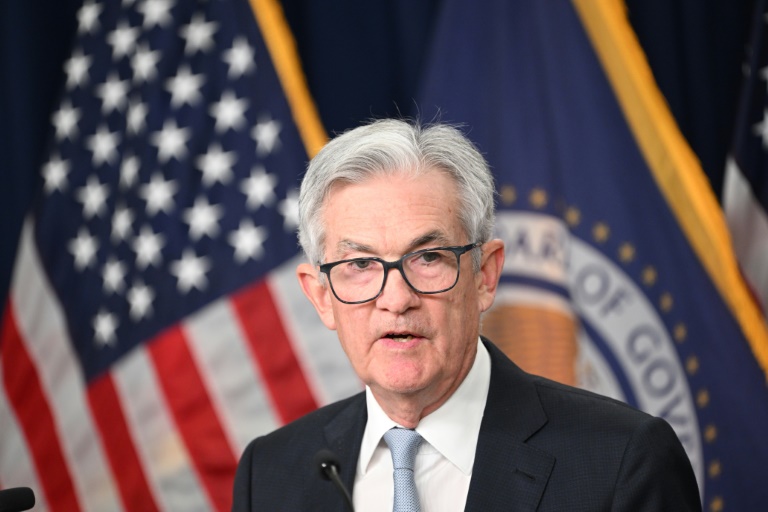
Fed Chair Jerome Powell has warned that monetary policy will likely have to remain tight “for some time,” even if the time to ease the pace of rate hikes may come as soon as in December.

The timing of this moderation is less significant than questions of how much more officials need to raise rates, and how long they should keep policy restrictive, he added in a speech.

While many economists believe there is about a 50-50 chance of recession, Wurm said, this will likely mean a small contraction in GDP.

“What we wouldn’t expect necessarily is a big financial crisis like 2008… the big sectors of the economy are still in pretty good shape,” he said.

The US economy rebounded strongly after Covid-19, boosting incomes, while the lockdown period raked in profits for American businesses as well — accounting for resilience seen despite the Fed’s sharp tightening.

Knightly of ING said policymakers maintain a mentality that the risk of doing too little outweighs that of doing too much.

“They will tolerate a recession to make sure inflation is defeated,” he added.

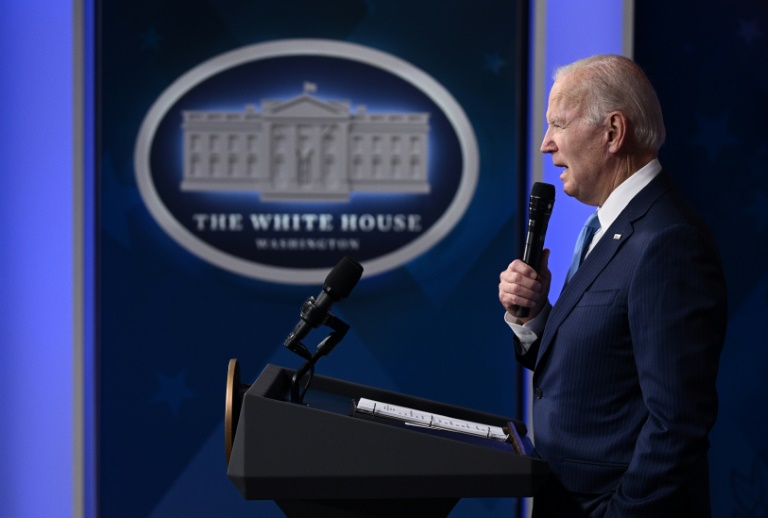
Biden tries to reboot US brand in Africa amid China, Russia inroads

When Barack Obama welcomed African leaders to Washington in 2014, many viewed the summit as historic, not just due to the US president’s background but for the pledges to make the partnership deeper and such events routine.

The sequel took eight years — the equivalent of two presidential terms — but on Tuesday, Joe Biden will host a second US-Africa summit.

Since 2014, China — viewed by Washington as its main long-term challenger — has consistently outpaced the United States as the largest investor in Africa and Russia has increasingly flexed its muscle, sending mercenaries to hotspots and trying to rally opinion to blunt Western pressure over Ukraine.

Biden’s three-day summit will feature announcements of new US investment and highlight food security — worsened by the invasion of Ukraine — but, unlike China, also focus on values such as democracy and good governance, as well as fighting climate change.

But the biggest message from Biden, a lover of backslapping face-to-face diplomacy, will be that the United States cares.

Since defeating Donald Trump, who made no secret of his lack of interest in Africa, Biden has thrown his support behind an African seat on the Security Council and at the Washington summit will call for the African Union to formally join the Group of 20 major economies, an aide said.

“We believe that this is a decisive decade. The way in which the world will be ordered will be determined in the coming years,” said Biden’s top Africa advisor, Judd Devermont.

Biden and Secretary of State Antony Blinken “believe strongly that African voices are going to be critical in this conversation,” he said.

African leaders have already been holding summits every three years with China and also have regular meetings with several US allies — France, Britain, Japan and the European Union.

– All, almost, welcome –

After a row over invitations distracted attention from his Western Hemisphere summit in Los Angeles in June, Biden has been open with the guest list from Africa.

The United States is inviting all African Union members in good standing — meaning not Burkina Faso, Guinea, Mali or Sudan — and with which Washington has full relations, which excludes authoritarian Eritrea.

One of the most closely watched leaders expected in Washington will be Ethiopian Prime Minister Abiy Ahmed, a onetime US ally whom the Biden administration has accused of backing widespread abuses in the Tigray conflict, which has subsided with a breakthrough November 2 agreement signed in South Africa.

Also in Washington will be the presidents of Rwanda and the Democratic Republic of Congo as Blinken leads international pressure on Rwanda over alleged support to rebels advancing in its giant neighbor.

Other presidents due at the summit include Egypt’s Abdel Fattah al-Sisi and Tunisia’s Kais Saied, who have both faced criticism on democratic rights, and Equatorial Guinea’s Teodoro Obiang Nguema Mbasogo, days after the United States called his latest election a sham. The foreign minister of Zimbabwe, which is under US sanctions, is also expected to attend.

“We’ve taken some criticism, I think it’s fair to say, from some who wonder why we invited this government or that government about which there are some concerns,” said Molly Phee, the top State Department official for Africa.

“But that reflects the commitment of President Biden and Secretary Blinken to having respectful conversations even where there are areas of difference.”

– ‘Robust’ debate on trade –

One key topic will be the fate of the African Growth and Opportunity Act, the 2000 deal that granted duty-free access to the US market for most products from sub-Saharan nations that meet standards on rights and democracy.

The pact expires in 2025, leading African leaders to seek clarity at a time that the United States has soured on trade deals.

“We regret that AGOA trade preferences have not been utilized to the maximum,” Phee said.

She expected a “robust discussion” and said the United States may look after 2025 to engage instead with a nascent continental free trade area.

Mvemba Phezo Dizolele, director of the Africa program at the Center for Strategic and International Studies, said the United States was entering the summit with a “trust deficit” from Africans due to the long wait since 2014.

“The summit presents great opportunities but it also poses some risks,” he said.

“This is an opportunity to show Africa that the US really wants to listen to them,” he added.

“But now that we have high expectations, the question will be, what will be different now?”

On-again, off-again Twitter subscription service to be relaunched

After several false starts, Twitter announced on Saturday it would relaunch its subscription service next week, including a system for authenticating accounts on the platform.

“We’re relaunching @TwitterBlue on Monday — subscribe on web for $8/month or on (Apple’s) iOS for $11/month to get access to subscriber-only features, including the blue checkmark,” the company tweeted.

A blue checkmark on an account, which indicates it has been verified by Twitter, was previously free but reserved for organizations and public figures in an attempt to avoid impersonation and misinformation.

After buying Twitter in October, billionaire entrepreneur Elon Musk announced his intention to diversify the company’s revenue stream beyond advertising, turning to new paying formulas for premium features.

A first version was launched 10 days after Musk took control in early November, but it caused an uproar when many fake accounts popped up pretending to be celebrities or companies. The version was quickly suspended.

Under the new offer, accounts seeking blue checkmarks will again be reviewed by Twitter, the company said.

The checkmark will become gold for businesses and, later in the week, gray for government organizations, it added.

Subscribers will also be able to access functions such as one to edit tweets after they are published and another to download higher quality videos.

“Thanks for your patience as we’ve worked to make Blue better,” the company tweet said.

Musk had promised the return of Twitter Blue by the end of November before indicating a few days later that the project had been postponed indefinitely, as experts sought to develop a system to prevent impersonation. 

Bad news piles up for candidate Trump

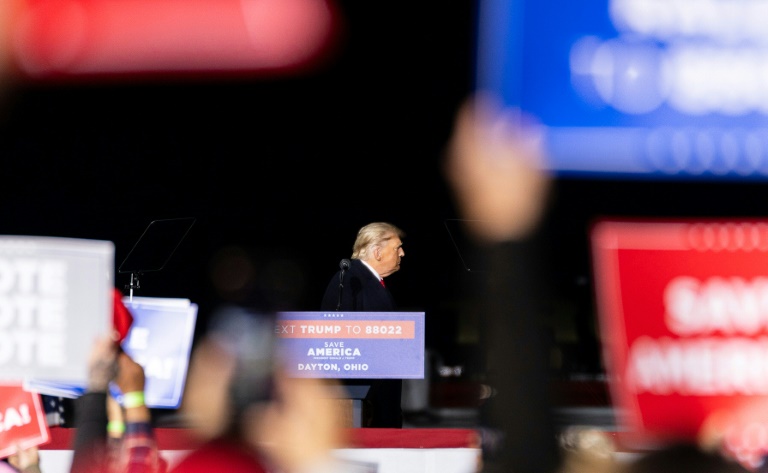
Having launched a new bid for the White House, Donald Trump has not been met with the energy he had been hoping for.

Quite the opposite, in fact.

“In all, it has been a truly terrible launch of a presidential campaign,” said Lara Brown, political science professor at George Washington University, noting that the one-term former US president has stumbled through “one scandal after another.”

Having hoped to ride a Republican “red wave” in the midterm elections last month, Trump instead found himself high and dry after most of the noteworthy candidates he backed were defeated.

Spurned by conservative heavyweights, the former president once again found himself the target of intense criticism last month after dining with rapper Kanye West, who has been accused of anti-Semitism, and a white supremacist. 

Many Republicans who had long been fearful of incurring their leader’s wrath now piled their scorn on the real estate mogul, calling the dinner “ridiculous,” “disgusting” and “scandalous.” 

Their efforts to distance themselves from the former president accelerated further when Trump — who falsely claims he won the 2020 election — issued calls to abandon the US Constitution. 

And the point was driven home yet again Tuesday, when one of Trump’s most famous protege candidates, former American football player Herschel Walker, lost a bid for a Senate seat in the state of Georgia. 

“Trump has also had a number of high-profile donors publicly state that they are not interested in supporting his 2024 campaign,” Brown told AFP. 

The billionaire, known for his inflammatory speeches to rallies of red-hatted supporters, has not held any campaign event outside his residence at the Mar-a-Lago golf club in Florida since declaring his candidacy in November. 

And while the 76-year-old has always thrived on political controversy, he is now the subject of myriad criminal and civil investigations, from his handling of classified documents to his financial affairs in New York.

– Assault on the Capitol –

Trump’s real troubles are likely only just beginning. 

For more than a year, the contentious Republican has been under investigation over allegations of exerting pressure on Georgia state officials during the 2020 presidential election, which could lead to an indictment. 

And a Congressional committee investigating his responsibility for the attack by his supporters at the US Capitol on January 6, 2021, is set to release a voluminous report in the coming weeks.

The panel has already indicated that it would recommend indictments, without specifying who could be targeted. 

The decision of whether or not to charge the former president will ultimately rest with Attorney General Merrick Garland, who in mid-November appointed a special prosecutor to independently investigate Trump. 

The courts have already found his family business guilty of tax evasion, a blow for the ex-businessman, although he himself has not been tried. 

– Hard core –

But with the 2024 presidential election nearly two whole years away, Trump still has plenty of time to stage a comeback.

When he was abandoned by some in the conservative movement after the Capitol riot, the former leader managed within a few months to regain almost total control of the party. 

Trump’s political demise has been predicted over and over again, but so far he has survived. The more scandals he accumulates, the less effect any individual incident seems to have on his power. 

After taking office in November 2016 in an unprecedented political upheaval that almost no one predicted, Trump may also be tempted to play the position of rebel candidate if the defections in his ranks continue. 

Polls show he is still a big favorite in a hypothetical Republican primary, a fact he likes to tout at every opportunity.

He can also still count on a steadfast base, which swears unfailing support to the former president and continues to flock to his rallies. 

But even those loyalists could eventually lose patience, predicted Brown. 

“While some in his base may rally to support him when he in the coming months claims to be a victim of a political witch hunt, for many, I imagine that act is getting old,” she said.

Thailand hits 10 million visitors in 2022 as tourism recovers

Thailand celebrated the arrival of its 10 millionth international visitor of 2022 on Saturday, according to the tourism authority, as the kingdom consolidated the recovery of its Covid-battered travel sector.

Thailand welcomed some 40 million people in 2019, but then the pandemic hit and travel was decimated as nations tightened border controls to contain the coronavirus.

With those restrictions easing worldwide Thailand’s travel numbers have begun a slow recovery and the government expects to generate nearly $16 billion in tourism revenue this year.

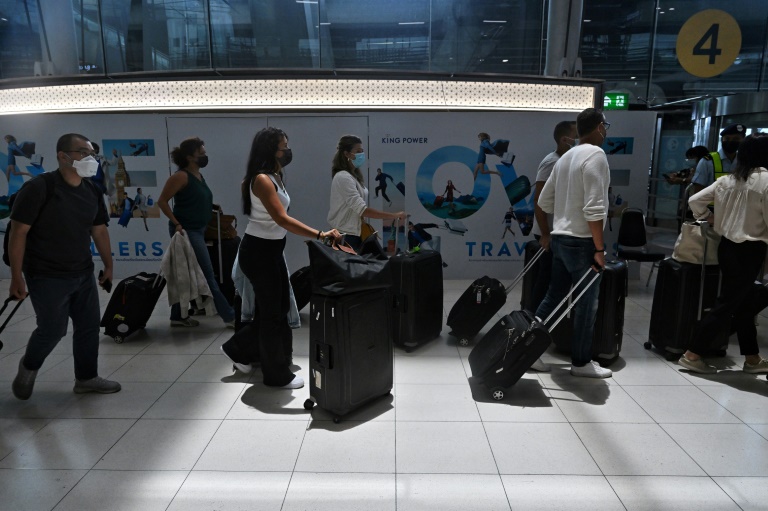
Traditional dancers and drummers at Bangkok’s Suvarnabhumi International Airport on Saturday welcomed passengers arriving on a Saudi Arabian Airlines flight that authorities believe clocked the 10-million milestone.

“The sky is open,” Thai Prime Minister Prayut Chan-O-Cha said in a speech at the airport.

“We would like to build confidence that Thailand is still one of the (top) tourist destinations of people around the world.”

Finance minister Arkhom Termpittayapaisith said this week that visitor numbers were expected to grow next year too.

Government figures suggest Thailand would welcome roughly 23 million tourists in 2023, while some analysts believe a full recovery in tourist numbers could happen in 2024.

Thai hotel owners and restauranteurs have breathed a sigh of relief as business has slowly picked up.

Marisa Sukosol, president of the Thai Hotels Association, welcomed the 10 million travellers milestone “after two years and a half of pain”.

“I think next year we will see continuous momentum of growth,” she said, pointing to the return of tourists from Russia and across the Asia-Pacific region.

But she cautioned against over-optimism — economic stagnation as well as lingering pandemic threats continue to impact the tourism sector.

While Thailand has benefited from the loosening of travel restrictions by other nations, its tourism industry has also been affected by the global economic slowdown and persistent inflation.

Recovery in the tourism sector is also heavily dependent on China relaxing international travel rules, Thai officials have said.

China was previously the biggest source of foreign tourists for Thailand. 

Kerry says US could 'tweak' green subsidies after EU anger

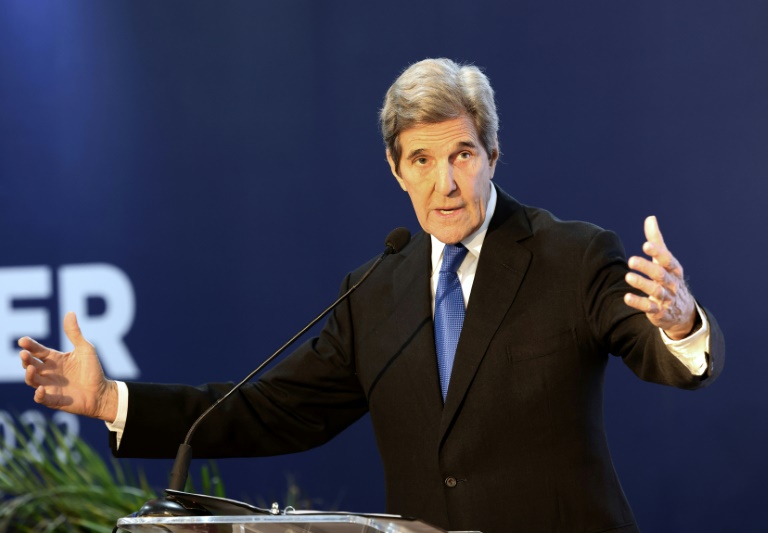
The United States is open to amending lucrative green subsidies that have drawn transatlantic anger for allegedly encouraging job losses in Europe, US climate envoy John Kerry said.

In a BBC interview from London, broadcast on Saturday, Kerry also signalled unease over the UK government’s decision to permit the opening of a coal mine despite ambitions to slash carbon emissions.

Several EU leaders including French President Emmanuel Macron, during a state visit to Washington, have said the US subsidies are enticing European companies to relocate to the United States.

Washington’s landmark Inflation Reduction Act contains around $370 billion in subsidies for green energy, as well as tax cuts for US-made electric cars and batteries.

“I don’t think you’re going to see it watered down,” Kerry said, insisting the measures were needed to kick-start the climate transition.

“But will you see, where it might be appropriate, if there were some tweak or adjustment that is fair, and not going to prejudice our own efforts? 

“I’m confident President (Joe) Biden would consider that,” he said.

Biden defended the act to Macron, but said it was never intended to disadvantage US allies, and has committed to understanding EU concerns.

Kerry also spoke out after Britain this week granted planning permission for a controversial new coal mine in northern England, the first in decades.

The go-ahead for the project in Cumbria was slammed by Greenpeace as “climate hypocrisy”, and Kerry said it risked antagonising other countries.

Richer countries had to abide by their own climate rhetoric or be portrayed as “do as we say, not as we do”, the US envoy said.

Kerry said he needed more information about the rationale for the mine, which is intended to supply coal for steel plants, including how its emissions might be offset.

“But obviously, we will hear people raise criticisms about it because in general, the idea of mining coal in any form whatsoever is the opposite direction from that which most people are advocating and most people are moving in,” he said.

Kerry conceded that the recent COP27 climate summit in Egypt lacked “collective ambition” to avert the worst-case models for rising temperatures.

But he defended the UN process overall.

“If you didn’t have that kind of a process, you’d have to invent it. Because you need to get every nation on the planet engaged in this dialogue and in this effort.”

Kerry says US could 'tweak' green subsidies after EU anger

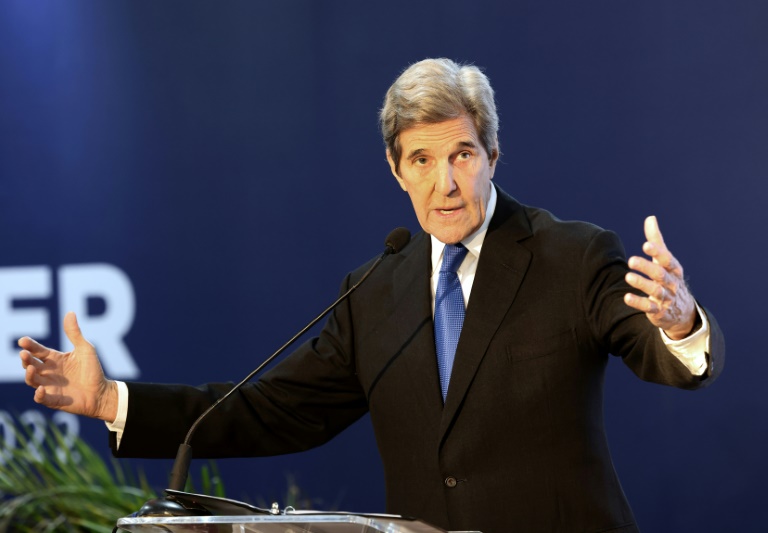
The United States is open to amending lucrative green subsidies that have drawn transatlantic anger for allegedly encouraging job losses in Europe, US climate envoy John Kerry said.

In a BBC interview from London, broadcast on Saturday, Kerry also signalled unease over the UK government’s decision to permit the opening of a coal mine despite ambitions to slash carbon emissions.

Several EU leaders including French President Emmanuel Macron, during a state visit to Washington, have said the US subsidies are enticing European companies to relocate to the United States.

Washington’s landmark Inflation Reduction Act contains around $370 billion in subsidies for green energy, as well as tax cuts for US-made electric cars and batteries.

“I don’t think you’re going to see it watered down,” Kerry said, insisting the measures were needed to kick-start the climate transition.

“But will you see, where it might be appropriate, if there were some tweak or adjustment that is fair, and not going to prejudice our own efforts? 

“I’m confident President (Joe) Biden would consider that,” he said.

Biden defended the act to Macron, but said it was never intended to disadvantage US allies, and has committed to understanding EU concerns.

Kerry also spoke out after Britain this week granted planning permission for a controversial new coal mine in northern England, the first in decades.

The go-ahead for the project in Cumbria was slammed by Greenpeace as “climate hypocrisy”, and Kerry said it risked antagonising other countries.

Richer countries had to abide by their own climate rhetoric or be portrayed as “do as we say, not as we do”, the US envoy said.

Kerry said he needed more information about the rationale for the mine, which is intended to supply coal for steel plants, including how its emissions might be offset.

“But obviously, we will hear people raise criticisms about it because in general, the idea of mining coal in any form whatsoever is the opposite direction from that which most people are advocating and most people are moving in,” he said.

Kerry conceded that the recent COP27 climate summit in Egypt lacked “collective ambition” to avert the worst-case models for rising temperatures.

But he defended the UN process overall.

“If you didn’t have that kind of a process, you’d have to invent it. Because you need to get every nation on the planet engaged in this dialogue and in this effort.”

US sports reporter dies after collapsing at Qatar World Cup

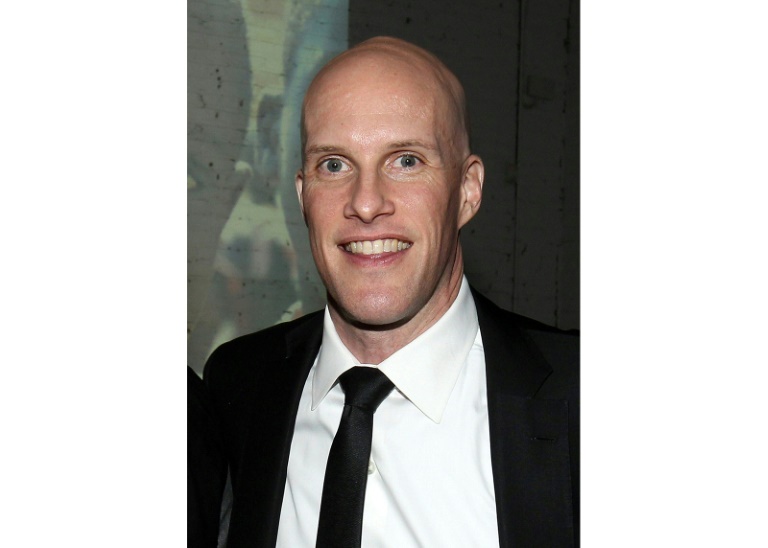
A leading American sports reporter, who last month had a run-in with Qatar’s World Cup organisers over a rainbow LGBTQ shirt, died while covering a tense quarter-final match Friday, his family said.

Grant Wahl, 48, helped build soccer’s popularity in the United States through his vivid reporting for Sports Illustrated, CBS Sports and other media.

Wahl collapsed in the press tribune during Friday’s Argentina-Netherlands game. The Wall Street Journal said he suffered a suspected heart attack.

Wahl’s wife Celine Gounder, a renowned epidemiologist, said on Twitter: “I’m in complete shock.” 

A Qatar organising committee spokesperson said “he received immediate emergency medical treatment on site, which continued as he was transferred by ambulance to Hamad General Hospital.” 

“We offer our deepest condolences to Grant’s family, friends and his many close colleagues in the media,” the statement added.

– World Cup ‘stress’ –

Organisers did not mention an incident just before the November 21 match between the United States and Wales when Wahl was stopped as he entered the stadium for wearing a rainbow shirt in support of LGBTQ rights.

Qatar criminalises homosexuality and Wahl said security guards told him the shirt was “political”.

Widespread tributes were paid to the journalist who had been covering his eighth World Cup, starting with the 1994 tournament in the United States.

“His love for football was immense and his reporting will be missed by all who follow the global game,” said FIFA president Gianni Infantino in a statement.

“Grant made soccer his life’s work, and we are devastated that he and his brilliant writing will no longer be with us,” US Soccer said.

The “entire US Soccer family is heartbroken,” it added. 

“Fans of soccer and journalism of the highest quality knew we could count on Grant to deliver insightful and entertaining stories about our game, and its major protagonists: teams, players, coaches and… many personalities that make soccer unlike any sport.”

Wahl said on his subscription newsletter earlier this week that he’d gone to a clinic at the media center in Qatar, “and they said I probably have bronchitis.”

“My body finally broke down on me. Three weeks of little sleep, high stress and lots of work can do that to you… I could feel my upper chest take on a new level of pressure and discomfort,” he wrote.

With some antibiotics and “some heavy duty cough syrup” Wahl said he was “feeling a bit better just a few hours later. But still: No bueno.”

Wahl joined Sports Illustrated, then the leading US sports publication, in 1996 to report on soccer. He remained at the magazine until 2020, joining CBS Sports a year later.

He also had a subscription email newsletter, and was posting to that during the World Cup. He was recently among journalists honoured by the International Sports Press Association (AIPS) for their work.

US State Department spokesman Ned Price tweeted: “We are deeply saddened to learn of the death of Grant Wahl” and added that US authorities have been “in close communication” with his family.

Close Bitnami banner
Bitnami