US Business

Equities boosted by China news before rate calls

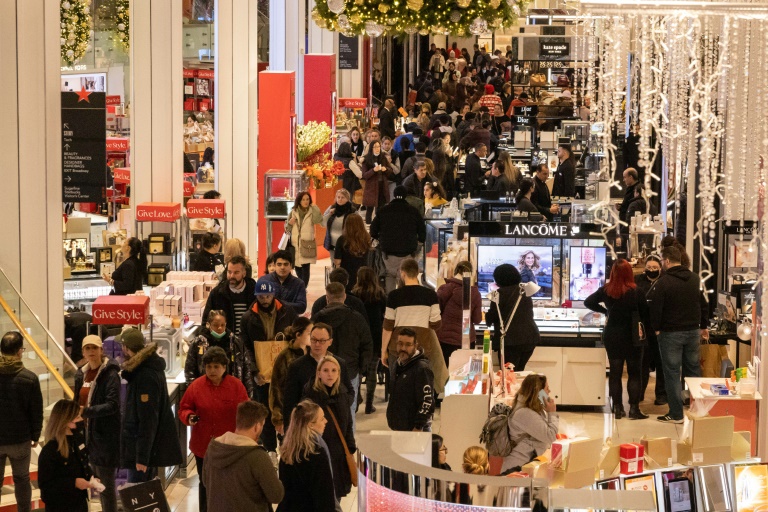
Global stocks rose Friday on China’s slowing inflation and economic reopening, alongside hopes of less aggressive interest rate hikes next week.

Sentiment brightened on China’s decision to shift away from its nearly three-year zero-Covid strategy of lockdowns and mass testing that slammed the economy.

After widespread protests across the country, leaders have decided to loosen their grip, fanning excitement that growth will pick up as activity returns to normal.

Investors were meanwhile hopeful that central banks in the United States, eurozone and UK will next week ease the pace of interest rate hikes despite inflation remaining at the highest levels in decades.

“Sentiment has been supported by China dropping its Zero Covid policy — and optimism that the sharp central bank policy tightening will become less aggressive,” City Index analyst Fawad Razaqzada told AFP.

“These factors have already been slowly priced in over the past few weeks… (which) means there is a risk we might see the markets drop, as the focus turns to worries over economic growth.”

Markets also rose on news that China’s consumer inflation slowed further in November, falling below two percent and providing authorities room to unveil fresh stimulus measures. 

– US inflation in sights –

Traders were setting their sights also on the release of two key US inflation reports ahead of the Federal Reserve’s final policy meeting of the year.

In light of data signalling that almost a year of interest rate hikes was beginning to impact prices, the US central bank is widely expected to announce a 50 basis point lift at the gathering, compared with the previous four straight 75-point increases.

But there remains some concern that the world’s top economy remains resilient and the jobs market too strong, meaning the Fed might have to keep tightening monetary policy longer than had been hoped.

That uncertainty has weighed on US markets, which have endured a tough December so far, and analysts warned of further pain.

The dollar dropped on Friday, having surged to record or multi-decade highs earlier this year owing to the Fed’s hawkish tilt and its use as a safe-haven hedge against volatility.

Oil prices rebounded slightly but remains down more than 10 percent this week as recession expectations weigh on the demand outlook.

– Key figures around 1200 GMT –

London – FTSE 100: UP 0.1 percent at 7,478.55 points

Frankfurt – DAX: UP 0.6 percent at 14,353.18

Paris – CAC 40: UP 0.3 percent at 6,667.93

EURO STOXX 50: UP 0.4 percent at 3,937.91

Tokyo – Nikkei 225: UP 1.2 percent at 27,901.01 (close)

Hong Kong – Hang Seng Index: UP 2.3 percent at 19,900.87 (close)

Shanghai – Composite: UP 0.3 percent at 3,206.95 (close)

New York – Dow: UP 0.6 percent at 33,781.48 (close)

Euro/dollar: DOWN at $1.0559 from $1.0560 on Thursday

Dollar/yen: DOWN at 135.88 yen from 136.61 yen

Pound/dollar: UP at $1.2267 from $1.2239

Euro/pound: DOWN at 86.08 pence from 86.24 pence

Brent North Sea crude: UP 0.1 percent at $76.24 per barrel

West Texas Intermediate: UP 0.6 percent at $71.91 per barrel
Kristen Stewart to lead Berlin film fest jury

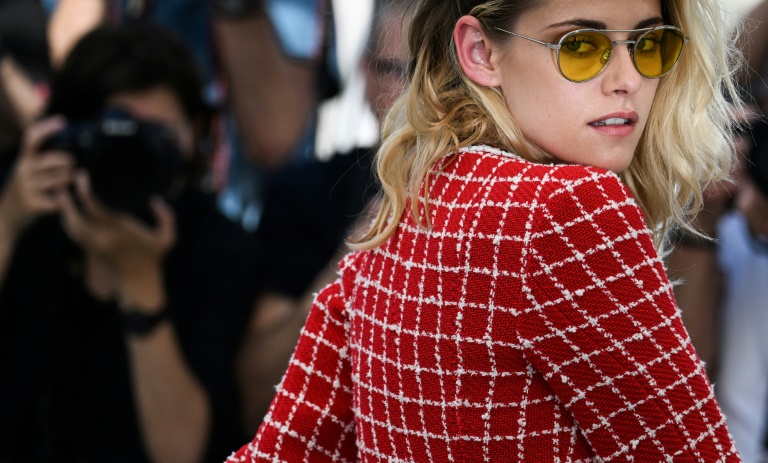
US actor Kristen Stewart will head up the jury in February at Berlin’s international film festival, Europe’s first major cinema showcase of the year, organisers said Friday.

The 73rd annual Berlinale, as the event is known, said the 32-year-old star of “Spencer” and the “Twilight” movies would lead the panel selecting the winners of the Golden and Silver Bear top prizes.

“We’re excited about Kristen Stewart taking on this distinguished task. She’s one of the most talented and multi-faceted actors of her generation,” festival chiefs Mariette Rissenbeek and Carlo Chatrian said in a statement.

“Young, shining and with an impressive body of work behind her, Kristen Stewart is the perfect bridge between US and Europe.”

Considered one of Hollywood’s major young talents, Stewart began her career as a child actor, starring alongside Jodie Foster in David Fincher’s “Panic Room”.

The five-part “Twilight” saga made her and Robert Pattinson global superstars. Both have harnessed their box office bankability to pursue projects with independent directors on each side of the Atlantic.

In 2015, Stewart became the first American to win France’s Cesar film award, for her role alongside Juliette Binoche in “Clouds of Sils Maria”.

Two years later she marked her directorial and screenwriting debut with the short film “Come Swim” and in 2018 served on the main jury at the Cannes film festival.

Last year she was nominated for an Academy Award as best actress for her turn as Princess Diana in Pablo Larraín’s drama “Spencer”.

The Berlinale, which will run February 16-26, ranks with Cannes and Venice among Europe’s top three film festivals and serves as an early annual launchpad for the industry.

Spanish director Carla Simon won the Golden Bear for best film this year for “Alcarras”, a Catalan drama about peach farmers.

Organisers announced last month that three-time Oscar winner Steven Spielberg, 75, would attend the event to pick up an Honorary Golden Bear prize for lifetime achievement.

China's Xi to hold Arab summits on Saudi trip

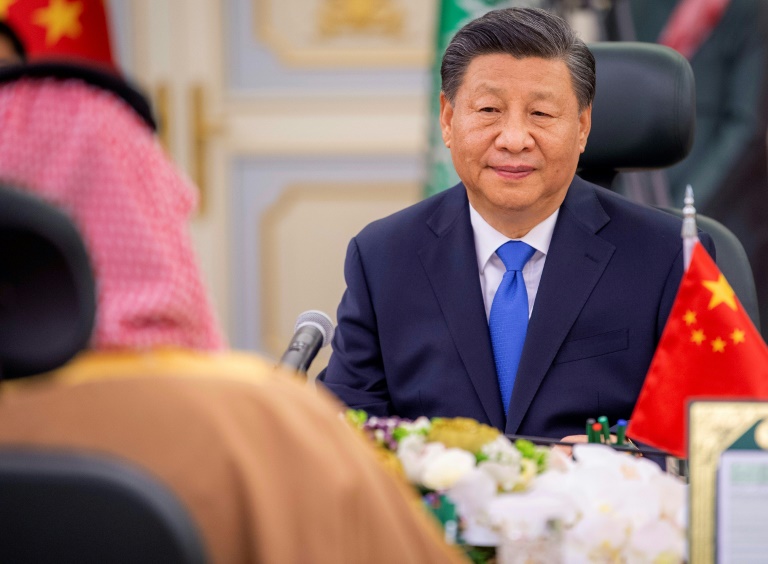
Chinese President Xi Jinping will meet Arab leaders at summits in Riyadh on Friday after striking a series of agreements with Saudi Arabia, strengthening ties as the top oil exporter quarrels with Washington.

The leader of the world’s second biggest economy will sit down with regional rulers on the third and final day of his trip, only his third journey outside China since the coronavirus pandemic began.

After talks with King Salman and his 37-year-old son Crown Prince Mohammed bin Salman, the de facto ruler, the two sides stressed “the importance of stability” in oil markets — a point of friction with the United States, which has urged the Saudis to raise production.

In a joint statement, they also spoke of “focusing on emissions rather than sources” in tackling climate change, the approach championed by the resource-rich Gulf monarchies. 

Forty-six agreements and memorandums of understanding were announced on everything from housing to Chinese language teaching. Both sides are seeking economic and strategic benefits by deepening cooperation.

However, few details were released despite a Saudi state media report on Thursday that about $30 billion in deals would be signed during Xi’s visit.

The two sides “stressed the importance of continuing joint action in all fields, deepening relations within the framework of the comprehensive strategic partnership between the two countries, and reaching new and promising horizons”, the statement said.

Xi’s visit comes at a time of tension between Saudi Arabia and the United States, its long-time partner and security guarantor, over oil production, human rights issues and regional security.

It follows US President Joe Biden’s trip to Jeddah in July, before mid-term elections, when he failed to persuade the Saudis to pump more oil to calm prices.

– ‘Prestige’ trade deals –

State television showed leaders from the six-country, resource-rich Gulf Cooperation Council — including the Qatari emir and Bahraini king — arriving at the conference venue in Riyadh on Friday.

Prince Mohammed addressed the group, briefly reiterating the kingdom’s positions on regional issues such as the war in Yemen. They met privately, to be joined later by Xi and his delegation.

A broader China-Arab summit will follow the China-GCC talks.

The Gulf countries, strategic partners of Washington, are bolstering ties with China as part of an eastward turn that involves diversifying their fossil fuel-reliant economies.

At the same time China, hit hard by its Covid lockdowns, is trying to revive its economy and widen its sphere of influence, notably through its Belt and Road Initiative which provides funding for infrastructure projects around the world.

Officials have provided few details about Friday’s agenda, but one potential area is a China-GCC free trade agreement that has been under discussion for nearly two decades. 

“China will want to draw the lengthy negotiations to a close, as FTAs with major trading blocs is a matter of prestige for Beijing,” said Robert Mogielnicki of the Arab Gulf States Institute in Washington.

“It’s not as simple for the GCC states, which seem to be more invested in advancing bilateral ties and are engaged in varying degrees of regional economic competition with their neighbouring member states.” 

A breakthrough on the trade pact could help Saudi Arabia, the Middle East’s biggest economy, diversify its economy in line with the Vision 2030 reform agenda championed by Prince Mohammed. 

China’s foreign ministry has described Xi’s trip as the “largest-scale diplomatic activity between China and the Arab world” since the People’s Republic of China was founded.

The visit has already earned a rebuke from the White House, which warned of “the influence that China is trying to grow around the world”. Washington called Beijing’s objectives “not conducive to preserving the international rules-based order”.

US basketball star Griner arrives home after Russia prisoner swap

American basketball star Brittney Griner arrived in the United States Friday morning after she was released from a Russian prison in exchange for an arms dealer known as the “Merchant of Death.”

Griner, 32, who was arrested in Russia in February on drug charges, was seen by an AFP reporter walking across a runway after her plane landed in San Antonio, Texas.

She was expected to be transferred to a nearby military facility for medical checks, US media reported.

Griner was exchanged in Abu Dhabi on Thursday for Viktor Bout, a 55-year-old Russian national who was serving a 25-year sentence in a US prison.

In footage released by Russian state media, Griner, shorn of her distinctive dreadlocks, and a relaxed and animated Bout could be seen crossing paths on the airport tarmac and heading towards the planes that would take them home.

President Joe Biden said on Thursday that he had spoken to her and that she was in “good spirits” after suffering “needless trauma.”

Griner, a two-time Olympic gold medalist, WNBA champion and LGBTQ trailblazer, was arrested at a Moscow airport against a backdrop of soaring tensions over Ukraine.

She was accused of possessing vape cartridges with a small quantity of cannabis oil and sentenced in August to nine years in prison.

Bout, who was accused of arming rebels in some of the world’s bloodiest conflicts, was detained in a US sting operation in Thailand in 2008, extradited to the United States and sentenced in 2012 to 25 years behind bars.

He landed in Russia on Thursday, state television said. “Don’t worry, everything is OK, I love you very much,” he told his mother Raisa.

While Griner’s family and friends celebrated her release, another American held in Russia, former US Marine Paul Whelan, detained since 2018 and accused of spying, was not part of Thursday’s exchange.

He told CNN he was “greatly disappointed.”

“I don’t understand why I’m still sitting here,” Whelan told CNN in a phone call from a Russian penal colony.

Biden pledged to obtain Whelan’s freedom, saying “we will never give up.”

“Sadly, for totally illegitimate reasons, Russia is treating Paul’s case different than Brittney’s,” he said.

As for Griner’s release, Biden said: “This is a day we’ve worked toward for a long time. It took painstaking and intense negotiations.”

– ‘Family is whole’ –

Biden announced Griner’s release on Thursday flanked by her wife, Cherelle Griner, Vice President Kamala Harris and Secretary of State Antony Blinken.

“I’m just standing here, overwhelmed with emotions,” Cherelle Griner said.

“Today my family is whole, but as you all are aware there’s so many other families who are not whole.”

The Griner family thanked President Biden and his administration in a statement, and said they “pray for Paul and for the swift and safe return of all wrongfully-detained Americans.”

WNBA commissioner Cathy Engelbert said there was a “collective wave of joy and relief” in the women’s professional league where Griner has been a star for a decade with the Phoenix Mercury.

Biden thanked the United Arab Emirates for helping “facilitate” Griner’s release and the UAE issued a joint statement with Saudi Arabia saying it was the result of “mediation efforts” by leaders of the two Arab nations.

White House Press Secretary Karine Jean-Pierre said, however, there was “no mediation involved” and “the only countries that negotiated this deal were the United States and Russia.”

– ‘Rescue our compatriot’ –

At the time of her arrest, Griner had been playing for a professional team in Russia, as a number of WNBA players do in the off-season.

She pleaded guilty to the charges against her, but said she did not intend to break the law or use the banned substance in Russia.

Griner testified that she had permission from a US doctor to use medicinal cannabis to relieve pain from her many injuries.

The use of medical marijuana is not allowed in Russia.

The Russian foreign ministry said it had been negotiating with Washington to secure Bout’s release “for a long time” and that initially the United States had “refused dialogue” on including him in any swap.

“Nevertheless, the Russian Federation continued to actively work to rescue our compatriot,” it said.

The 2005 film “Lord of War” starring Nicolas Cage was based in part on Bout’s arms trafficking, and he has been the subject of several books and TV shows.

Russia’s ambassador to the United States, Anatoly Antonov, told Bout in a video message that he was aware that the arms dealer had been subjected to “powerful physical and moral pressure” while in prison, Russian news agency TASS reported.

Asked about Bout’s release, a senior US defense official said “there is a concern that he would return to doing the same kind of work that he’s done in the past.”

Moscow said on Friday that ties with Washington remained in “crisis”.

“It is probably wrong to draw any hypothetical conclusions that this could be a step towards overcoming the crisis that we currently have in bilateral relations,” Kremlin spokesman Dmitry Peskov told the Izvestia newspaper.

Ties “continue to remain in a sad state.”

Global economic chiefs laud China's 'decisive' zero-Covid reversal

Global economic leaders on Friday hailed China’s move away from its hardline zero-Covid policy, with the IMF chief saying the “decisive actions” would help revive growth both in the country and globally.

The relaxation would help to shore up a world economy struggling with the impact of the pandemic and Russia’s invasion of Ukraine, the head of the World Trade Organization said after a conference in the eastern Chinese city of Huangshan hosted by outgoing Premier Li Keqiang. 

Beijing on Wednesday announced a loosening of its zero-tolerance approach to coronavirus outbreaks, ending large-scale lockdowns and allowing some positive cases to isolate at home following widespread protests against the restrictions.

The decision indicated that the world’s second-largest economy is finally shifting towards living with Covid after years of grinding curbs stifled growth.

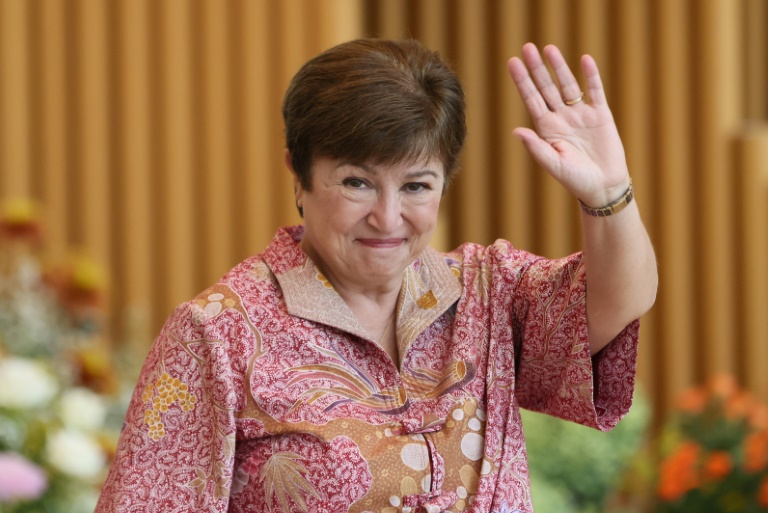
“We welcome very much the decisive actions taken by the Chinese authorities… to recalibrate the Covid policies so as to create a better impetus for the revival of growth in China,” International Monetary Fund managing director Kristalina Georgieva said at a press briefing with the heads of other major economic institutions.

The effort to boost vaccination rates and anti-viral treatments “is very good for the Chinese people, but also important for Asia and the rest of the world”, Georgieva added.

“China’s performance matters (not just) to China — it matters to the world economy as well.”

The global economy has been rocked this year, with Russia’s invasion of Ukraine adding to a stuttering post-pandemic recovery and a cost of living crisis in many countries.

The retreat from zero-Covid “will help remove one set of uncertainties” in a world reeling from the impacts of the pandemic, the war in Ukraine and climate change, said WTO Director-General Ngozi Okonjo-Iweala at the same briefing.

Secretary-general of the Organisation for Economic Co-operation and Development, Mathias Cormann, said the “adjustments will support the strength of the recovery both in China and globally”.

Beijing’s step back from zero-Covid has helped to prop up global stock markets fearful of a looming recession in the United States, but analysts have warned that China’s route to a full reopening remains bumpy.

– Further relaxations –

Long criticised for disrupting business operations and global supply chains, the zero-Covid policy has acted as a constraint on China’s economy, with analysts expecting Beijing to miss its stated annual growth target of 5.5 percent.

Public frustration with snap lockdowns and mass testing boiled over last month as protesters took to the streets in cities around the country, with some calling for greater political freedoms in China’s most widespread demonstrations since 1989.

On Friday, China rolled back more restrictions, with the culture and tourism ministry announcing that visitors will no longer be required to show “health codes” when entering a range of venues.

A spokesperson for the National Health Commission (NHC) said at a press briefing that hospitals must not refuse care to coronavirus-positive patients, state broadcaster CCTV reported.

The move marks a further pivot away from China’s longstanding strategy of isolating all those who test positive and treating them in state-run quarantine facilities.

Some of those facilities will now be transformed into “sub-designated hospitals… equipped with certain treatment faculties” including 10 percent of berths reserved for “observation and care”, CCTV quoted the NHC’s Jiao Yahui as saying.

Demand for home treatments and personal protective gear has surged along with concerns over possible large-scale outbreaks, even though official statistics have reported a decline in new cases in recent days.

China’s market regulator said Friday that it would crack down on price gouging after the retail price of a traditional flu treatment as much as quadrupled in the first few days of December.

Meanwhile, an iPhone megafactory in central China announced it was ending months of a virus-secure “closed loop” system that had hit production of the Apple gadgets.

The Foxconn facility in Zhengzhou was in effective lockdown for 56 days, with workers only allowed to travel between their dormitories and the factory floor on shuttle buses after infections were discovered in October.

Foxconn said in a social media post that employees could now return to work with a negative Covid test taken in the last 48 hours, in line with the “further lifting of China’s epidemic control measures”.

Madrid, Paris, Lisbon push ahead with hydrogen pipeline

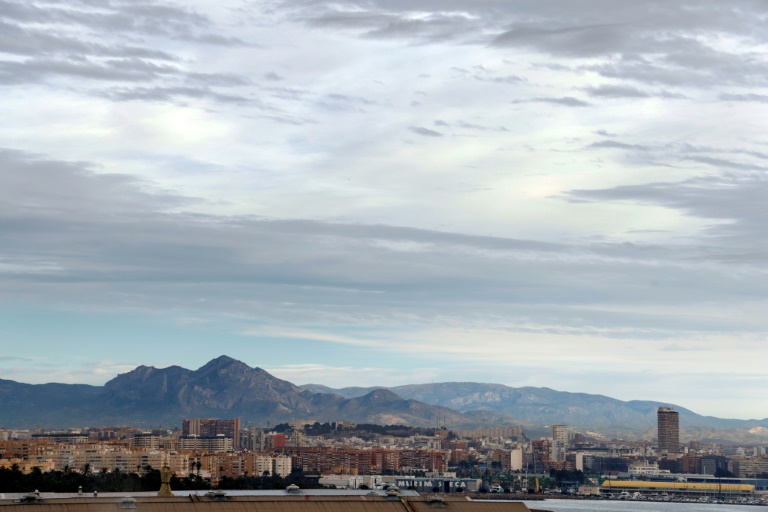
Spain, France and Portugal on Friday unveil details of their ambitious plan for an underwater pipeline to bring green hydrogen from the Iberian Peninsula to the rest of Europe.

Spanish Prime Minister Pedro Sanchez, French President Emmanuel Macron and Portuguese premier Antonio Costa were to formally sign off on the plans in the presence of EU chief Ursula Von der Leyen on the sidelines of a regional EU summit in southern Spain.

They were expected to outline both a roadmap and timeline for completing the so-called H2Med project which they are hoping will be partially covered by European funds. 

The pipeline project comes as Europe struggles to reduce its dependence on Russian energy following its February invasion of Ukraine.

Also known as BarMar for its planned route connecting Barcelona and Marseille, the submarine pipeline will carry green hydrogen, which is made from water via electrolysis in a process using renewable energy.

It will ultimately facilitate the EU’s transition to green energy, French and Spanish government officials say.

Energy ministers from all three countries will also be at the gathering in the southern city of Alicante to offer their outlook on “the feasibility of the infrastructure project, its funding and an initial timeline” for its construction, sources in Macron’s office said.

Announced at an EU summit in October, the pipeline offers an alternative to the defunct 2003 MidCat pipeline project which was to have carried gas across the Pyrenees from Spain to France. 

It was abandoned in 2019 over profitability issues and objections from Paris and environmentalists.

– H2Med: a $2-billion project –

H2Med aims to boost the decarbonisation of European industry, giving it large-scale access to clean energy from Spain and Portugal which are hoping to become world leaders in green hydrogen thanks to their numerous wind and solar power farms.

Initially, the idea was for the pipeline to carry gas from the Iberian peninsula to central Europe, given Spain and Portugal’s huge capacity for turning liquefied natural gas (LNG) that arrives in tankers back into gas form. 

But that idea has been dropped with the pipeline only slated to carry green hydrogen, Spanish and French sources said, in a move expected to free up European funding. 

France said H2Med could come online in 2030 with Spain offering slightly earlier estimates, with the vast project carrying an estimated price tag of two billion euros ($2.1 billion).

The three leaders will meet just before the start of the EuroMed 9 summit, at which they will be joined by six other southern European countries: Croatia, Cyprus, Greece, Italy, Malta and Slovenia. 

Spain’s Sanchez had planned to hold bilateral talks with Italy’s new far-right Prime Minister Giorgia Meloni but she pulled out due to illness early on Friday, Rome said. 

War of attrition: Russia's stubborn fight for Ukraine's Bakhmut

For months, Russian forces have attacked the eastern Ukrainian city of Bakhmut with frontal assaults, artillery barrages and air strikes in a stubborn battle for a settlement deemed strategically irrelevant by many observers.  

Nonetheless, they have pushed forward.

As Russia continues to hurl what is left of its offensive power at entrenched Ukrainian positions in and around the city, experts have wondered whether the losses in manpower and equipment will match the potential prize. 

“We are scratching our heads,” a Western official told AFP this week when asked about Russia’s focus on Bakhmut. “We don’t know the answer.”

With Ukrainian forces pressing forward with counteroffensives, Russian troops have largely dug in along the meandering front in an effort to hold the line as winter weather sets in.

Bakhmut, however, remains one of the few areas where the Kremlin’s forces have fought to advance.

To gain control of the city, Russia is believed to have relied on mercenaries, prison conscripts, and newly mobilised soldiers to send waves of attacks against Ukrainian positions, resulting in brutal trench warfare and artillery battles that have flattened large portions of the city and its surroundings. 

The assault follows a well-worn pattern eked out by Russian forces in eastern Ukraine, where cities are pummelled under withering assaults at great cost until the Ukrainian military retreats. 

“Russian efforts around Bakhmut indicate that Russian forces have fundamentally failed to learn from previous high-casualty campaigns concentrated on objectives of limited operational or strategic significance,” wrote the Institute for the Study of War, a US-based think tank.

“The costs associated with six months of brutal, grinding, and attrition-based combat around Bakhmut far outweigh any operational advantage that the Russians can obtain from taking Bakhmut.”

– ‘Every metre counts’ –  

The think tank went on to suggest that the continued fixation with Bakhmut along with the resources needed to capture it has effectively given Ukraine the ability to conduct counteroffensives elsewhere.  

“Russian efforts to advance on Bakhmut have resulted in the continued attrition of Russian manpower and equipment, pinning troops on relatively insignificant settlements for weeks and months at a time,” the institute concluded.

In the past week, Russian forces have made incremental gains in the outskirts of the city, as freezing temperatures across Ukraine have hardened the once muddy ground and paved the way for harder fighting in the east. 

On Wednesday, Ukrainian President Volodymyr Zelensky acknowledged the difficult inch-by-inch battle and other “hot spots” along the frontline in Donetsk. 

“There is a very tough confrontation, every metre counts,” the president said in his nightly address to the nation. 

“I thank all our guys who destroy the enemy there every day, every night, every hour.”

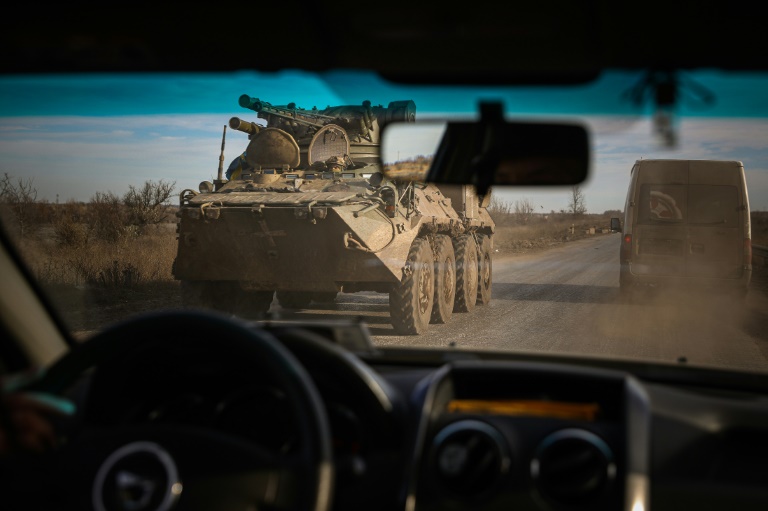
As seen by AFP reporters during a recent trip to Donetsk, Ukrainian forces continue to move large amounts of artillery around the area, while groups of reserve fighters are often visible along the roads leading to Bakhmut and the surrounding front.   

– ‘Meat grinder’ –

For some, the Kremlin appears desperate for a tangible victory on the battlefield following months of setbacks.

Russia’s last major victory in Ukraine came with the capture of the eastern cities of Severodonetsk and Lysychansk over the summer.

Since then they have steadily lost large swaths of ground.  

A lightning offensive in Kharkiv in early September shattered Russia’s northeastern flank followed by a retreat from Kherson in November, robbing Moscow of the only provincial capital they managed to capture during the course of the war. 

“Russians continue their offensive to shift the focus in the media from a series of Russian defeats this autumn,” said Mykola Bielieskov, a research fellow at National Institute for Strategic Studies in Kyiv, echoing similar assessments made by the Ukrainian high command.

Bakhmut also represents a small piece of a much larger political goal repeatedly stressed by the Kremlin — the capture of the entire Donbas region in eastern Ukraine.

“The Russian leadership wants control over Donetsk, and Bakhmut is the main gateway to Slovyansk/Kramatorsk,” Michael Kofman, the director of Russia studies at CNA, a US-based research institute, told AFP. 

Other voices in Russia have stressed that the fight for Bakhmut has little to do with the actual city. 

Yevgeny Prigozhin, the founder of Russia’s Wagner mercenary group that is helping lead the fight for Bakhmut, said his troops have primarily centred their efforts on demolishing the Ukrainian army there.

“Bakhmut is a large, well-fortified area with roads, suburbs, and water barriers,” said Prigozhin in a statement released last month by his company, Concord.

“Our task is not Bakhmut itself, but the destruction of the Ukrainian army and the reduction of its combat potential, which has an extremely positive effect on other areas, which is why this operation was dubbed the ‘Bakhmut meat grinder.'”

'My Kalashnikov is my pen': Ukraine artist wages war on Putin

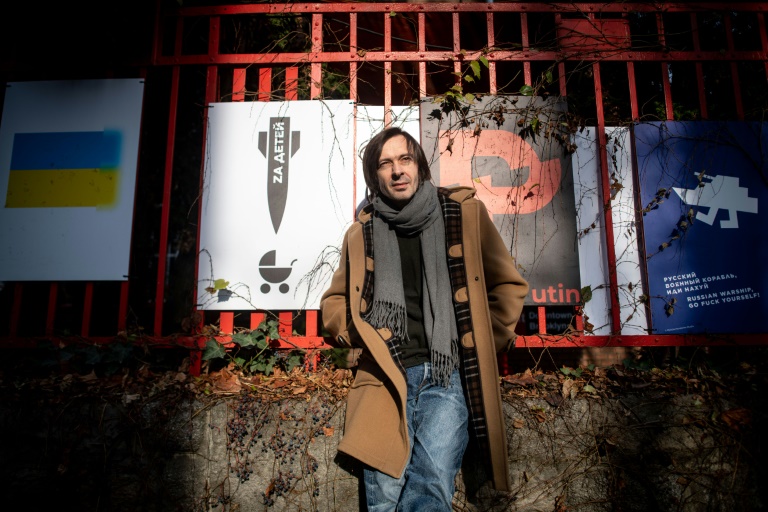
Every day Russia wages war on Ukraine, Mykola Kovalenko makes an anti-war poster.

The Ukrainian graphic artist has stuck to the pledge since Russian troops invaded in February.

Kovalenko uses simple shapes to create posters that pack a punch.

The 49-year-old, who has lived in Slovakia since 2015, said he initially wanted to take up arms against Russia.

“Then I realised that I can be more useful doing what I am good at. My Kalashnikov is my pen,” he said.

His mother and a sister still live in a part of the Zaporizhzhia region in southern Ukraine under Russian occupation.

“Maybe once a week they send me a text message saying they are still alive.

“Many of my friends are fighting the Russians, some of them have already been killed,” said Kovalenko, who was head designer at the Saatchi & Saatchi advertising agency in Ukraine before he moved away.

– ‘I would like to stop’ –

The award-winning artist’s posters include one to mark International Women’s Day on March 8 showing a bullet budding like a flower.

“This is the present Putin sent to Ukrainian women,” he said.

A stylised coffin partially revealing the Russian president’s name is one of his best-known posters.

Putin’s death “is surely one way to end the war,” he said, calling the president “a symbol of aggression and war all over the world.”

Kovalenko watches the news every morning, and he never lacks inspiration for his series.

One of his posters depicts a clenched fist resembling a flower, another a hand with three fingers missing and the remaining two showing a victory sign in Ukraine’s national colours.

“This is the price Ukraine has to pay for its victory,” Kovalenko said.

One of his first anti-war posters shows a Ukrainian flag partially vanishing.

He created the piece a couple of days before the start of the Russian invasion.

“This is how I felt about the situation,” he said.

He sells his art to raise money to support Ukraine and his posters are now exhibited throughout Slovakia.

But despite the posters’ success, he would rather not have to make any more and wants the war to end immediately.

“I would like to stop this series right now,” he said.

UK media returns fire at 'Harry the Nasty' over Netflix doc

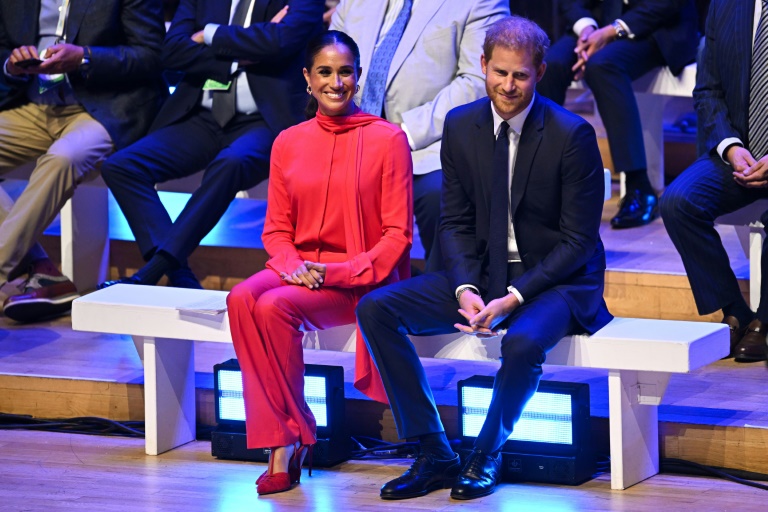
Britain’s media, the main focus of criticism so far in Netflix docuseries “Harry and Meghan”, on Friday hit back at the estranged prince and his wife, accusing them of lying and insulting Queen Elizabeth II.

The royal family was largely spared during the first three episodes of the show, which aired on Thursday, with the focus more on Harry’s early life and his resentment towards the media, which he blames of the death of his mother Diana.

But the prince did accuse the family of unconscious racial bias, and the royals will be braced for next week’s instalment, which threatens more revelations.

The saga dominated Friday’s newspaper front pages, which were largely critical of the Duke and Duchess of Sussex — Harry and Meghan’s formal titles.

“Harry the Nasty” said the headline of popular tabloid the Sun, which added the couple had “trashed the Queen’s legacy”, left Harry’s father King Charles III and his brother Prince William in a “state of sadness” and unfairly tarnished the whole country as racist.

The paper, along with many others, picked up on one scene in which Meghan performed a melodramatic curtsey as she recalled meeting Queen Elizabeth II for the first time.

“How low can you go?” asked the tabloid, adding that “mocking Meghan exaggerated a curtsey to poke fun at the royals — and compared their traditions to a tacky US medieval chain”.

– ‘Lies’ –

The Daily Mail, the right-wing newspaper that has clashed most often with the couple, led with the headline “palace anger at ‘assault on the Queen’s legacy’,” and carried almost 20 pages of coverage on the show.

Inside, one commentator took issue with their claim that Brexit had fuelled racism in the UK and contributed to their eventual split from the family, calling it “the most insulting distortion”.

Conservative MP Bob Seely said late Thursday that he plans to bring forward legislation to strip the couple of their royal titles. 

“There is a political issue,” he said. “As well as trashing his family and monetising his misery for public consumption, he is also attacking some important institutions in this country.”

The Mail also dedicated four pages to rebutting what it called the couple’s “fantasies and lies”, including their claims of an unrelentingly hostile media and stories about their first date and engagement.

It also claimed that the show had “cynically doctored” previous media interviews with the couple.

The broadsheets also dedicated their front pages to the show, with the centre-right Daily Telegraph also leading with the “‘direct hit’ on the queen’s legacy”.

The Times ran with the less polemic headline “Palace and Netflix clash over Sussexes soap opera”, although one commentator implored: “Please make it stop Netflix, I can’t take any more of this self-centred nonsense.”

The left-wing Guardian newspaper was more supportive of the couple, and focused on Prince Harry’s criticism that the royal family did not protect Meghan against racially charged reporting. 

The centre-left Daily Mirror, which is generally less critical of the couple than its right-wing counterparts, slammed the show, calling on its front-page to “stop this royal circus”.

“Just two months after our Queen died, Prince Harry is bemoaning his treatment again… Prince William is venting his fury again… Meanwhile, thousands of ordinary Brits are choosing between eating and heating.”

China's Xi to hold Arab summits on Saudi trip

Chinese President Xi Jinping will meet Arab leaders at summits in Riyadh on Friday after striking a series of agreements with Saudi Arabia, strengthening ties as the top oil exporter quarrels with Washington.

The leader of the world’s second biggest economy will sit down with regional rulers on the third and final day of his trip, only his third journey outside China since the coronavirus pandemic began.

After talks with King Salman and his 37-year-old son Crown Prince Mohammed bin Salman, the de facto ruler, the two sides stressed “the importance of stability” in oil markets — a point of friction with the United States, which has urged the Saudis to raise production.

In a joint statement, they also spoke of “focusing on emissions rather than sources” in tackling climate change, the approach championed by the resource-rich Gulf monarchies. 

Forty-six agreements and memorandums of understanding were announced on everything from housing to Chinese language teaching. Both sides are seeking economic and strategic benefits by deepening cooperation.

However, few details were released despite a Saudi state media report on Thursday that about $30 billion in deals would be signed during Xi’s visit.

The two sides “stressed the importance of continuing joint action in all fields, deepening relations within the framework of the comprehensive strategic partnership between the two countries, and reaching new and promising horizons”, the statement said.

Xi’s visit comes at a time of tension between Saudi Arabia and the United States, its long-time partner and security guarantor, over oil production, human rights issues and regional security.

It follows US President Joe Biden’s trip to Jeddah in July, before mid-term elections, when he failed to persuade the Saudis to pump more oil to calm prices.

– ‘Prestige’ trade deals –

On Friday, Xi is to hold talks with the six-country, resource-rich Gulf Cooperation Council and attend a broader China-Arab summit.

The Gulf countries, strategic partners of Washington, are bolstering ties with China as part of an eastward turn that involves diversifying their fossil fuel-reliant economies.

At the same time China, hit hard by its Covid lockdowns, is trying to revive its economy and widen its sphere of influence, notably through its Belt and Road Initiative which provides funding for infrastructure projects around the world.

Officials have provided few details about Friday’s agenda, but one potential area is a China-GCC free trade agreement that has been under discussion for nearly two decades. 

“China will want to draw the lengthy negotiations to a close, as FTAs with major trading blocs is a matter of prestige for Beijing,” said Robert Mogielnicki of the Arab Gulf States Institute in Washington.

“It’s not as simple for the GCC states, which seem to be more invested in advancing bilateral ties and are engaged in varying degrees of regional economic competition with their neighbouring member states.” 

A breakthrough on the trade pact could help Saudi Arabia, the Middle East’s biggest economy, diversify its economy in line with the Vision 2030 reform agenda championed by Prince Mohammed. 

Yet Mogielnicki said the significance of the announcements made during Xi’s trip would only be clear if the projects become reality.

“When it comes to China’s bilateral relations with the Gulf and broader Middle East, one must remember that signing MoUs and making investment pledges is much easier than actually committing capital,” he said. 

Xi’s trip has already earned a rebuke from the White House, which warned of “the influence that China is trying to grow around the world”. Washington called Beijing’s objectives “not conducive to preserving the international rules-based order”.

Close Bitnami banner
Bitnami