US Business

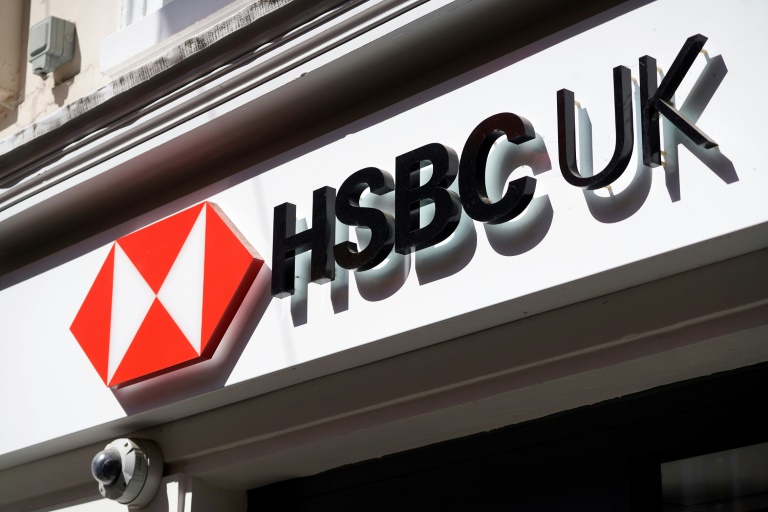
HSBC shuts more UK branches as banking goes online

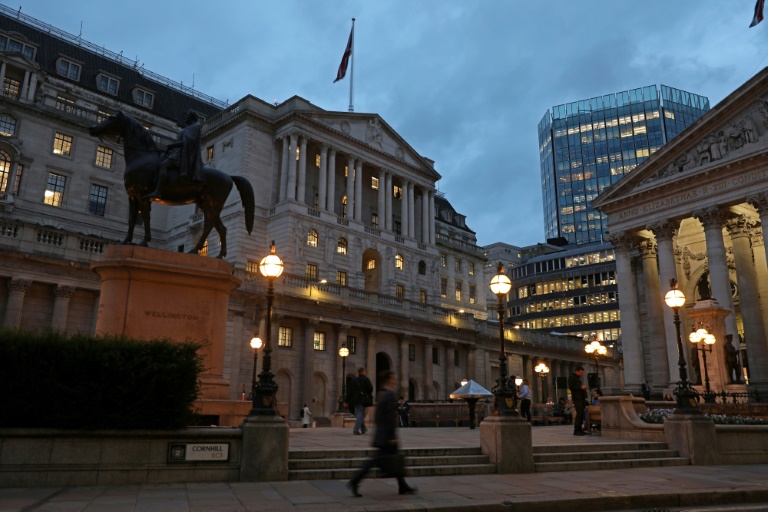
HSBC on Wednesday announced plans to permanently shut more than a quarter of its remaining bank branches in the UK as customers increasingly switch to making transactions online.

The global bank will from April close 114 branches, it said in a statement, having shut around 150 since last year.

Around 100 staff are expected to lose their jobs following the latest closures, mirroring action being taken by other high-street banks in the UK.

“People are changing the way they bank and footfall in many branches is at an all-time low, with no signs of it returning,” said the bank’s managing director of UK distribution, Jackie Uhi. 

“Banking remotely is becoming the norm for the vast majority of us.”

Consumer watchdog Which? said banks and building societies have closed or have scheduled to close more than 5,200 branches since the start of 2015 — at the rate of about 54 every month.

By the end of next year, the NatWest Group, which runs NatWest, Royal Bank of Scotland and Ulster Bank, will have shut more than 1,200.

More than 920 Lloyds, Halifax and Bank of Scotland branches — all part of the Lloyds Banking Group — will have gone in the next 12 months.

Barclays has closed or will have closed more than 960 branches by the end of this year, Which? said on Tuesday.

The closures have alarmed consumer groups who said the moves will hit those who predominantly still use cash, particularly the elderly.

The trend towards cashless payments and online banking has accelerated since the coronavirus pandemic.

German gas giant takes Gazprom to court over supply halts

German energy giant Uniper said Wednesday it was taking Gazprom to an international tribunal over the Russian company’s failure to deliver gas, saying it has so far cost them 11.6 billion euros ($12 billion).

After Moscow invaded Ukraine, Gazprom steadily dwindled pipeline supplies to Germany in apparent retaliation for Western sanctions on Russia, sending energy prices soaring. 

Germany’s biggest gas importer, Uniper was left facing bankruptcy, prompting the government to announce it would nationalise the firm over fears its failure could send shockwaves through Europe’s top economy.

The German company said it had begun legal action against Gazprom at a tribunal in Stockholm, claiming damages over gas that had not been delivered since June. 

“It is about gas volumes that were contractually agreed with Gazprom but not delivered and for which we had to procure replacements at extremely high market prices and still have to do so,” CEO Klaus-Dieter Maubach said in a statement.

Uniper has been forced to buy replacement gas at higher costs, which it said had so far cost 11.6 billion euros, with the figure set to continue growing until the end of 2024.

“We incurred these costs, but they are not our responsibility,” added Maubach.

Gazprom confirmed Uniper had launched legal action, adding that it “does not recognise the breach of contracts and the legitimacy of the claims for damages”, according to a statement carried by Russian news agencies.

Earlier this month, Uniper reported a 40-billion-euro net loss for the first nine months of the year, one of the biggest losses in German corporate history.

As part of the rescue deal, the government initially said it would pump eight billion euros into Uniper. 

But last week, the company said Berlin would need to spend an additional 25 billion euros to stave off the firm’s collapse.

The government will finance the rescue out of a 200-billion-euro fund designed to cushion the impact of the energy crisis on households and businesses.

Uniper will ask shareholders to formally approve the deal on December 19.

EU commission recommends funding freeze for Hungary

The European Commission recommended on Wednesday that 13 billion euros ($13 billion) in EU funds for Hungary be frozen because Budapest is falling short on its commitments to meet European rule of law.

The EU executive said Hungary had in particular failed to make good on promised reforms to ensure a fair judicial system when it comes to prosecutorial decisions.

EU member states will now have until December 19 to vote on whether to back, reject or change the commission recommendation.

“Hungary has not progressed enough in its reforms,” the commission said in a statement, noting that it had “failed to adequately implement” parts of the 17 remedial measures it had pledged to carry out by a deadline that ran out on November 19.

As a result, the commission upheld an earlier warning that it would suspend 65 percent of EU budget funding earmarked for Hungary, amounting to 7.5 billion euros.

Also, 5.8 billion euros from an EU coronavirus recovery fund was frozen until Hungary showed it was meeting 27 “super milestones” for its reforms, particularly on the judiciary issue.

“The ‘essential milestones’ must all be met in full before Hungary can submit its payment request,” commission Vice President Valdis Dombrovskis told a news conference.

“If they are not met, the entire payment would be blocked, and all subsequent ones too. In short: no funds will flow until the ‘essential milestones’ are properly implemented.”

Hungary’s chief negotiator with the commission, Tibor Navracsics, gave a relatively muted response to the commission announcement.

“We trust that we will implement the remaining requirements, and in 2023 we can convince the commission… that continued suspension of funds won’t be needed and that we can access 100 percent of the funds in 2023,” he told journalists in Budapest.

– Blocking tactics –

The commission’s blunt recommendation was foreshadowed, with Hungary under repeated criticism by Brussels for perceived backsliding on principles and practices underpinning EU standards of democracy and law.

EU officials, however, indicated they were aware of the risk that Hungary might continue to employ blocking tactics to derail or delay EU decisions requiring member state unanimity, a form of “blackmail” to try to ease the pressure from Brussels.

Budapest has already been standing in the way of efforts to extend sanctions on Moscow — with which it has good ties and energy dependency — over Russia’s war in Ukraine.

It is also holding up EU adoption on a 15-percent corporate tax rate worked out in the OECD.

Hungary denies that its obstructionism is linked to the tussle over rule of law.

Yet those stakes — and tactics — will be on the table when EU ministers and leaders hold previously scheduled meetings over the coming weeks.

In a carrot-and-stick approach, the commission gave a positive assessment of Hungary’s plan for the coronavirus recovery money, so that it can be unblocked — but only if member states sign off on it before the end of December.

If that doesn’t happen, under rules for that fund, Hungary would lose 70 percent of the grants set aside for it.

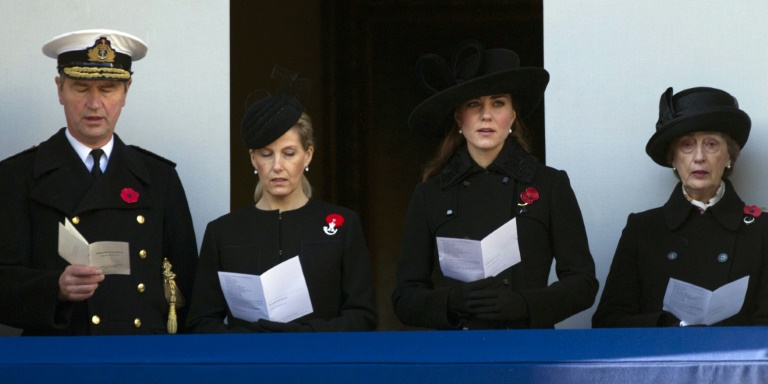
UK royals in new race row as William and Kate head to US

A senior member of the royal household resigned Wednesday for repeatedly asking a black British charity campaigner where she was “really” from, plunging Buckingham Palace into a fresh racism row.

The controversy erupted as Prince William and his wife Kate made their first visit in eight years to the United States, where his estranged brother Prince Harry and mixed-race wife Meghan live.

Susan Hussey, 83, a godmother to William, was named by UK media as the woman in question who has stepped down from her role as a courtier to Queen Consort Camilla.

Ngozi Fulani, the chief executive of the London-based Sistah Space group, recounted the exchange on Twitter, referring to her only as “Lady SH”.

Fulani is a prominent advocate for survivors of domestic abuse, and was attending a reception at the palace with other campaigners on Tuesday.

After saying she was born and raised in the UK, and was British, Fulani said “Lady SH” asked her: “Where do you really come from, where do your people come from?”

She was then asked: “When did you first come here?”

Fulani repeated that she was a British national born in the UK and was forced to say she was “of African heritage, Caribbean descent”.

The exchange, she said, left her with “mixed feelings” about the reception, which was hosted by Camilla to highlight violence against women and girls.

Buckingham Palace said it took the incident “extremely seriously” and called the comments “unacceptable and deeply regrettable”.

“We have reached out to Ngozi Fulani on this matter, and are inviting her to discuss all elements of her experience in person if she wishes,” a statement read.

“In the meantime, the individual concerned would like to express her profound apologies for the hurt caused and has stepped aside from her honorary role with immediate effect.

“All members of the Household are being reminded of the diversity and inclusivity policies which they are required to uphold at all times.”

Hussey was a long-serving “lady-in-waiting” to Queen Elizabeth II, and was described as one of the late monarch’s most trusted aides. 

Camilla has scrapped the formal roles of ladies in waiting, but Hussey, whose late husband was a former BBC chairman, was kept on as a royal retainer by Charles.

– East Coast rivalry –

The row threatens to cloud William and Kate’s three-day visit to Boston, where Charles’s heir will award the Earthshot Prize for initiatives to tackle climate change.

Last year, William insisted “we are very much not a racist family”, after Harry and Meghan alleged that an unidentified royal had asked what colour skin their baby would have.

William has since praised the “immense contribution” of the “Windrush” generation of Caribbean migrants, who helped Britain to rebuild after World War II.

Despite arriving legally, many were later wrongly detained and even deported under the Conservative government’s hardline immigration policies.

As William and Kate visit Boston, Harry and Meghan are due in New York for another awards ceremony, although the feuding brothers have reportedly no plans to meet.

Harry and Meghan quit royal life in early 2020 and moved to California, winning many fans among younger people and in the black community for taking on the British establishment.

The UK media, though, has repeatedly accused them of exaggerating their unhappy plight as members of the royal family but the couple may point to the latest allegations as vindication.

The palace was earlier this year accused of being tone deaf to calls from Caribbean countries which still have Charles as head of state to acknowledge Britain’s past role in slavery.

William and Kate’s visit to Jamaica was also criticised for smacking of colonialism.

Women’s Equality Party leader Mandu Reid, who witnessed Tuesday’s exchange, called it “grim” and like an “interrogation”.

She said it felt as if they were “not being treated as if we belong” or “as if we are British”.

Eurozone inflation falls for first time in 17 months

The eurozone annual inflation rate fell for the first time in 17 months in November as it slowed to 10 percent, official data showed Wednesday.

Boosted by soaring energy and food bills triggered by Russia’s war in Ukraine, the rate of price increases had hit a new historic record every month since November 21.

Analysts had expected the inflation rate in the single currency area to fall but the drop was steeper than predicted by Bloomberg and FactSet, who foresaw 10.4 percent.

Inflation had hit 10.6 percent in October.

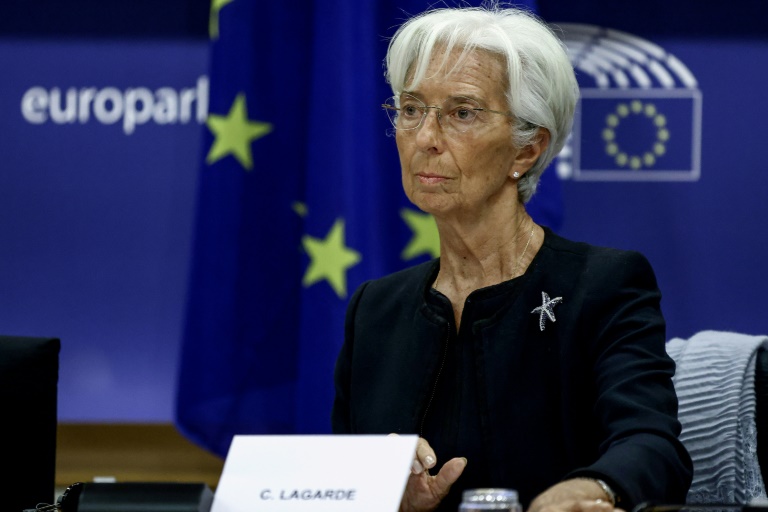
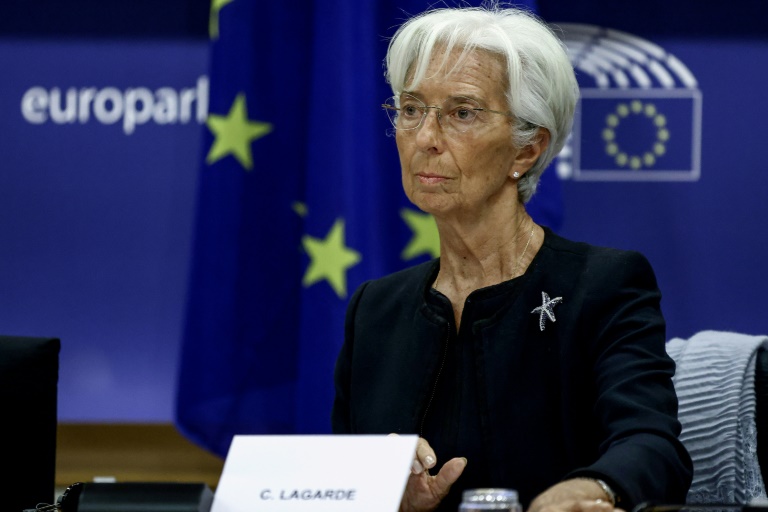
But the November figure may not convince the European Central Bank that it can stop raising interest rates, as its president Christine Lagarde has expressed scepticism that inflation has peaked.

As late as Monday, Lagarde warned: “I think that there is too much uncertainty … to assume that inflation has actually reached its peak. It would surprise me.”

Analysts said the reverse in the trend could see the bank go for a smaller 50-basis-point increase in rates next month rather than the expected 75-point bump.

“We were due some good news,” said Bert Colijn, senior eurozone economist at the ING bank. “The eurozone inflation rate ticked down after a few nasty upside surprises.”

– Food price inflation up –

Nevertheless, he cautioned that core inflation remained stable.

“Whether this is the peak in inflation remains to be seen,” he said. 

“Another episode in the energy crisis could easily push inflation back up again and core inflation usually proves to be sticky after a supply shock.”

Andrew Kenningham, chief Europe economist at Capital Economics, also sounded a note of caution.

“Eurozone headline inflation may now be past its peak but with core inflation unchanged in November and likely to stay well above 2 percent throughout next year, we expect the ECB to press on with another 50 basis point or even 75 basis point deposit rate hike in December,” he said.

An easing in the speed with which energy prices are rising was the main reason for the November fall in overall inflation, compensating for still accelerating food and drink costs.

Among the 19 countries that use the euro, Spain now has the lowest inflation rate, dropping to 6.6 percent compared to previous top performer France, now on 7.1.

Germany and Italy are still running high inflation rates, but both dropped slightly, the former down 0.3 percentage points to 11.3 percent and the latter down 0.1 points to 12.5 percent.

Stocks diverge ahead of next Fed rate signal

Stock markets fluctuated on Wednesday as eurozone inflation slowed for the first time in 17 months and investors awaited fresh signals about the US central bank’s interest rate plans.

Markets were also buoyed by hopes that China will further ease its strict Covid containment measures following widespread protests, though gains were tempered by leaders’ warnings of a crackdown on dissent.

Traders were awaiting a key speech by Federal Reserve chief Jerome Powell, with many expecting him to outline plans for future interest rate hikes to tackle high US consumer prices.

“Will he adopt a more hawkish-minded tone like he did after the last FOMC (Fed policy) meeting or will he have a less hawkish tone?” said Briefing.com analyst Patrick O’Hare.

“His tone is going to move the market’s thinking with respect to the path of monetary policy,” he said.

Powell was due to speak after government data on Wednesday showed that the US economy grew more than initially reported in the third quarter, reflecting upward revisions to retail spending and some forms of investment.

The London, Paris and Frankfurt stock markets were up in afternoon trading while Wall Street seesawed after the opening, with the Dow falling almost 0.3 percent.

The euro, meanwhile, rose against the dollar as eurozone inflation eased to 10 percent in November, the first drop in 17 months, according to official data.

But this may not lead to an easing of European Central Bank policy as ECB president Christine Lagarde has expressed scepticism that inflation has peaked.

“The ECB is still increasing (interest) rates and this is what traders are focused on,” AvaTrade analyst Naeem Aslam told AFP.

Inflation in the bloc had hit a record 10.6 percent in October, boosted also by soaring energy and food bills in the wake of Russia’s war in Ukraine.

“Euro area inflation figures surprised on the downside, providing an early indication that the record price pressures seen in recent months may have peaked,” added CEBR economist Karl Thompson.

However, he warned that “inflation is nonetheless likely to remain elevated throughout 2023” and forecast rising rates next month.

Global central banks, including the Fed, have ramped up borrowing costs this year in a bid to dampen red-hot inflation that was fuelled also as economies reopened from the pandemic.

– China protests –

In Asia, Asian stocks mostly rebounded as investors looked past weekend demonstrations in China after officials announced moves aimed at softening the zero-Covid strategy.

But in a sign that the leadership was determined to maintain its authority, the country’s top security body called for a “crackdown” against “hostile forces”.

New clashes broke out in China’s southern city of Guangzhou on Tuesday night and into Wednesday, according to witnesses and social media footage verified by AFP.

Data showing China’s factory activity shrank further in November underscored the impact the zero-Covid approach has had on the world’s second-biggest economy.

Elsewhere, oil prices jumped by more than three percent, with the international benchmark, Brent, reaching almost $87 per barrel.

– Key figures around 1435 GMT –

New York – Dow: DOWN 0.3 percent at 33,768.55 points

London – FTSE 100: UP 1.0 percent at 7,585.80 

Frankfurt – DAX: UP 0.2 percent at 14,386.13

Paris – CAC 40: UP 0.7 percent at 6,718.06

EURO STOXX 50: UP 0.7 percent at 3,960.49

Tokyo – Nikkei 225: DOWN 0.2 percent at 27,968.99 (close)

Hong Kong – Hang Seng Index: UP 2.2 percent at 18,597.23 (close)

Shanghai – Composite: UP 0.1 percent at 3,151.34 (close)

Euro/dollar: UP at $1.0384 from $1.0330 on Tuesday

Dollar/yen: UP at 139.31 yen from 138.63 yen

Pound/dollar: UP at $1.2012 from $1.1952

Euro/pound: UP at 86.44 pence from 86.42 pence

Brent North Sea crude: UP 3.1 percent at $86.82 per barrel

West Texas Intermediate: UP 3.4 percent at $80.89 per barrel

burs-lth/imm

Stocks diverge ahead of next Fed rate signal

Stock markets fluctuated on Wednesday as eurozone inflation slowed for the first time in 17 months and investors awaited fresh signals about the US central bank’s interest rate plans.

Markets were also buoyed by hopes that China will further ease its strict Covid containment measures following widespread protests, though gains were tempered by leaders’ warnings of a crackdown on dissent.

Traders were awaiting a key speech by Federal Reserve chief Jerome Powell, with many expecting him to outline plans for future interest rate hikes to tackle high US consumer prices.

“Will he adopt a more hawkish-minded tone like he did after the last FOMC (Fed policy) meeting or will he have a less hawkish tone?” said Briefing.com analyst Patrick O’Hare.

“His tone is going to move the market’s thinking with respect to the path of monetary policy,” he said.

Powell was due to speak after government data on Wednesday showed that the US economy grew more than initially reported in the third quarter, reflecting upward revisions to retail spending and some forms of investment.

The London, Paris and Frankfurt stock markets were up in afternoon trading while Wall Street seesawed after the opening, with the Dow falling almost 0.3 percent.

The euro, meanwhile, rose against the dollar as eurozone inflation eased to 10 percent in November, the first drop in 17 months, according to official data.

But this may not lead to an easing of European Central Bank policy as ECB president Christine Lagarde has expressed scepticism that inflation has peaked.

“The ECB is still increasing (interest) rates and this is what traders are focused on,” AvaTrade analyst Naeem Aslam told AFP.

Inflation in the bloc had hit a record 10.6 percent in October, boosted also by soaring energy and food bills in the wake of Russia’s war in Ukraine.

“Euro area inflation figures surprised on the downside, providing an early indication that the record price pressures seen in recent months may have peaked,” added CEBR economist Karl Thompson.

However, he warned that “inflation is nonetheless likely to remain elevated throughout 2023” and forecast rising rates next month.

Global central banks, including the Fed, have ramped up borrowing costs this year in a bid to dampen red-hot inflation that was fuelled also as economies reopened from the pandemic.

– China protests –

In Asia, Asian stocks mostly rebounded as investors looked past weekend demonstrations in China after officials announced moves aimed at softening the zero-Covid strategy.

But in a sign that the leadership was determined to maintain its authority, the country’s top security body called for a “crackdown” against “hostile forces”.

New clashes broke out in China’s southern city of Guangzhou on Tuesday night and into Wednesday, according to witnesses and social media footage verified by AFP.

Data showing China’s factory activity shrank further in November underscored the impact the zero-Covid approach has had on the world’s second-biggest economy.

Elsewhere, oil prices jumped by more than three percent, with the international benchmark, Brent, reaching almost $87 per barrel.

– Key figures around 1435 GMT –

New York – Dow: DOWN 0.3 percent at 33,768.55 points

London – FTSE 100: UP 1.0 percent at 7,585.80 

Frankfurt – DAX: UP 0.2 percent at 14,386.13

Paris – CAC 40: UP 0.7 percent at 6,718.06

EURO STOXX 50: UP 0.7 percent at 3,960.49

Tokyo – Nikkei 225: DOWN 0.2 percent at 27,968.99 (close)

Hong Kong – Hang Seng Index: UP 2.2 percent at 18,597.23 (close)

Shanghai – Composite: UP 0.1 percent at 3,151.34 (close)

Euro/dollar: UP at $1.0384 from $1.0330 on Tuesday

Dollar/yen: UP at 139.31 yen from 138.63 yen

Pound/dollar: UP at $1.2012 from $1.1952

Euro/pound: UP at 86.44 pence from 86.42 pence

Brent North Sea crude: UP 3.1 percent at $86.82 per barrel

West Texas Intermediate: UP 3.4 percent at $80.89 per barrel

burs-lth/imm
UK finance sector needs greater social mobility: study

Britain’s financial and professional services sector must boost socio-economic diversity in boardrooms, helping to bridge big differences in pay, a study commissioned by the government concluded Wednesday.

Having at least half of senior leaders in the sector coming from a “non-professional” background by 2030 would help to achieve the goal, said the report by the Socio-Economic Diversity Taskforce.

Around half of all employees in the sector are from non-professional backgrounds but these workers progress 25 percent slower than their “professional” peers, it added.

“It is vital that UK financial and professional services firms act now to enable talented people to rise to the top whatever their background,” said Catherine McGuinness, chair of the taskforce. 

“We need to break the ‘class’ ceiling — removing unfair barriers to progression is not only the right thing to do, it will enable firms to boost productivity, retention levels and innovation.”

The taskforce is led by the City of London Corporation, the authority running the British capital’s financial district.

It found that just over one-third of sector staff from non-professional backgrounds, described as working class and intermediate employees, have climbed the ladder to senior levels. 

Employees from non-professional backgrounds are also likely to earn up to £17,500 ($21,000) less per year. 

“The industry’s willingness to collaborate on tackling the barriers to promote people from lower socio-economic backgrounds into senior levels is unprecedented,” said taskforce co-chair Sandra Wallace.

“It marks a long-awaited shift in the priorities of our sector and recognises the business and moral imperative to change.”

In response, Louise Ashley from Queen Mary University of London said while the “taskforce report sets important goals”, improved social mobility “isn’t a conversation that financial and professional service firms really want to have”.

“Action is needed to address class pay and progression gaps, but this can’t just be a vague commitment to meritocracy and social mobility, offering an illusion of change while justifying the bumper rewards given to a select few.”

Ashley, a professor at the university’s business school, added that “social mobility is less likely in countries with steep inequalities of income and wealth”, such as the UK.

Macron tours Washington ahead of Biden talks on state visit

France’s President Emmanuel Macron underlines US-French cooperation with a tour of NASA headquarters Wednesday, but his state visit will veer into tougher territory when he meets his counterpart Joe Biden for the main part of a rare state visit.

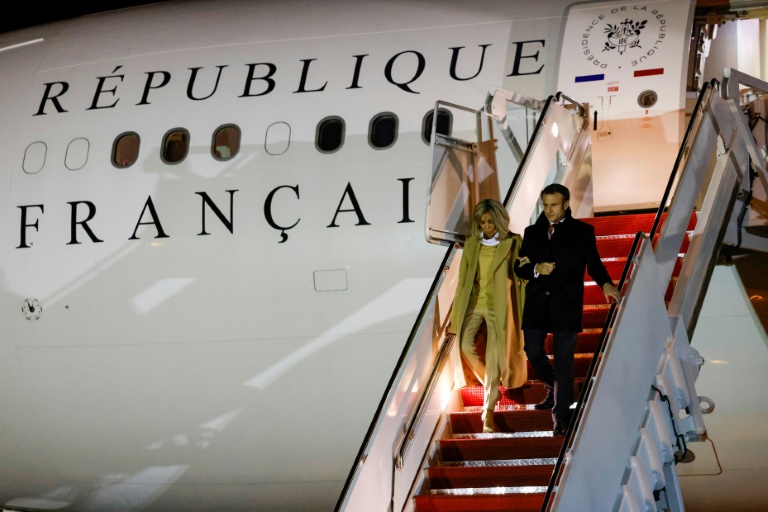
The French leader, who arrived late Tuesday with his wife Brigitte, will join Vice President Kamala Harris at the US space agency facility in Washington. He’ll stay in the high-tech sphere later when he attends a meeting on civilian nuclear energy.

The busy schedule, which also includes a working lunch to discuss biodiversity and clean energy, and a visit to the historic Arlington National Cemetery, illustrates the ambitions set for the trip — the first formal state visit by a foreign leader to Washington since Biden took office nearly two years ago.

The core of the visit will be Thursday, including a White House military honor guard, Oval Office talks with Biden, a joint press conference and a banquet where Grammy-award-winning American musician Jon Batiste will perform.

Compared to Macron’s edgy experience as the guest of Donald Trump in 2018, this trip will be a carefully choreographed display of transatlantic friendship.

– EU-US trade tensions –

But tensions are rising over trade as Europeans nervously watch the rollout of Biden’s signature green industry policy — the Inflation Reduction Act.

The IRA is set to pump billions of dollars into climate-friendly technologies, with strong backing for American-made products. A similar effort is being put into microchip manufacturing.

Europeans fear an unfair US advantage in the sectors just as they are reeling from the economic consequences of the war in Ukraine and Western attempts to end reliance on Russian energy supplies.

Talk in Europe is now increasingly on whether the bloc should respond with its own subsidies and championing of homegrown products, effectively starting a trade war.

Another gripe in Europe is the high cost of US liquid natural gas exports — which have surged to try and replace canceled Russian deliveries.

White House National Security Council spokesman John Kirby struck a cautious note, telling French reporters that “right now we’re in the mode of listening and making sure we understand concerns by our European partners.”

Kirby went out of his way to praise Macron, referring to his “experience and wisdom.”

– Strategizing on China, Ukraine –

The breadth of Macron’s entourage — including the foreign, defense and finance ministers, as well as business leaders and astronauts — illustrates the importance Paris has put on the visit.

At the White House, however, a senior official said the main goal is to nurture the “personal relationship, the alliance relationship” with France — and between Biden and Macron.

That more modest-sounding goal will include improving coordination on helping Ukraine to repel Russia and the even more vexing question of how to manage the rise of superpower China.

“We are not allies on the same page,” one adviser to Macron told AFP, forecasting “challenging” talks with Biden.

Despite his strong support for Kyiv, Macron’s insistence on continuing to maintain dialogue with Russian President Vladimir Putin has irked American diplomats.

The China question — with Washington pursuing a more hawkish tone and EU powers trying to find a middle ground — is unlikely to see much progress.

“Europe has since 2018 its own, unique strategy for relations with China,” tweeted French embassy spokesman Pascal Confavreux in Washington.

A senior US official said even if their approaches to China were “not identical,” they should be at least “speaking from a common script.”

US private hiring eases more than expected in November: survey

US employers eased their hiring pace in November, with job creation slowing the most since early 2021, as the central bank’s interest rate hikes trickle through the economy, payroll firm ADP said Wednesday.

Private employment rose by 127,000 jobs this month, much less than analysts expected and below the 239,000-job increase in October, with firms no longer in “hyper-replacement mode,” the survey showed.

As the Federal Reserve battles to tamp down surging inflation and cool the world’s biggest economy, one concern was an uptick in wages over the past year as companies competed to find and retain workers in a tight labor market.

But in November, job creation slowed by the most since January 2021, ADP said.

This was led by construction and other sectors sensitive to interest rate hikes, while consumer-facing segments such as health care and hospitality proved to be “bright spots.”

“Turning points can be hard to capture in the labor market, but our data suggest that Federal Reserve tightening is having an impact on job creation and pay gains,” said ADP chief economist Nela Richardson in a statement.

Richardson added that the post-pandemic recovery is also “stabilizing” with fewer people quitting their jobs.

Employees saw annual pay gains moderate further to 7.6 percent in November, according to ADP’s recently revamped report which includes wage data.

For those who changed jobs, the median change in annual pay was up 15.1 percent, but the report noted that job changers had the smallest increase in pay since January as well.

“Overall, the trend in job growth remains positive and the labor market remains tight. But there are some initial signs of softening,” said economist Rubeela Farooqi of High Frequency Economics in a note.

While she expects job growth to remain positive for now, the pace is “expected to slow further in response to Fed hikes, which will… slow demand and economic activity over time.”

The ADP data also comes before key employment figure is released by the Labor Department on Friday.

Close Bitnami banner
Bitnami