US Business

Equities, oil prices slide on China unrest

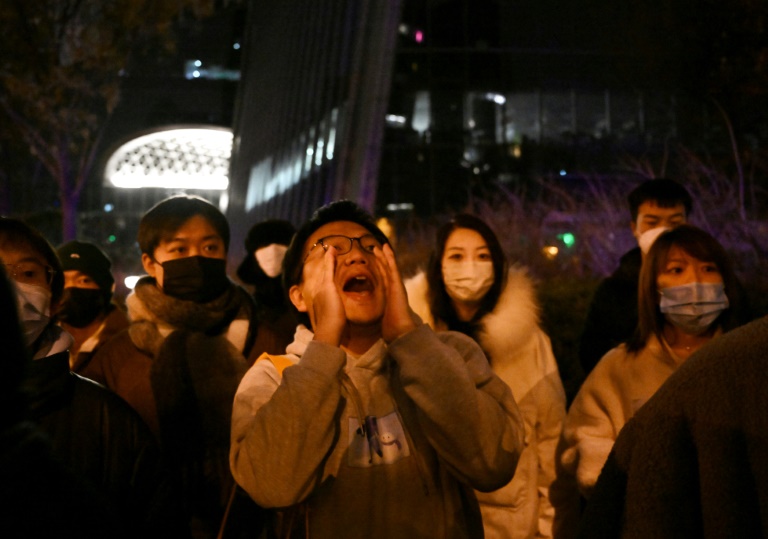
Stocks and oil prices fell Monday on concerns about protests across China calling for political freedoms and an end to the government’s hardline zero-Covid policy, fuelling uncertainty in the world’s number-two economy.

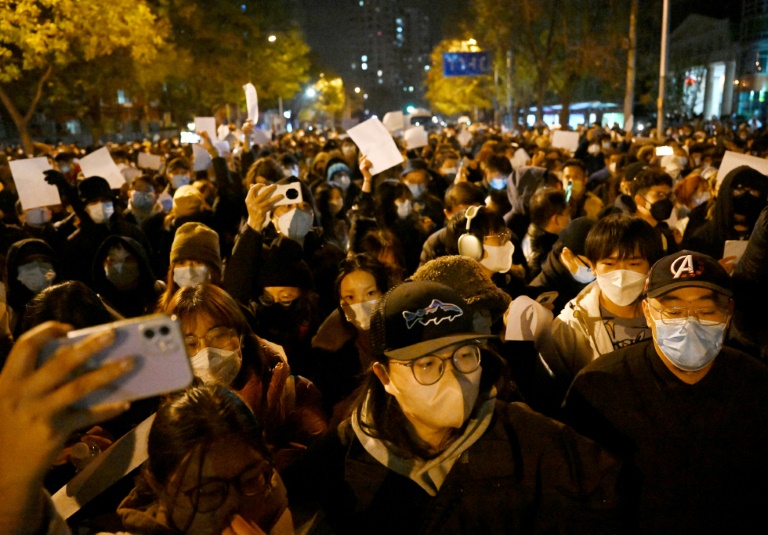
Hundreds of people took to the streets in China at the weekend in the country’s biggest demonstrations since pro-democracy rallies in 1989 were crushed.

“Unrest in major cities in China has destabilised risk-on markets including oil which is under pressure, pushing BP and Shell towards the bottom of the UK index,” noted Victoria Scholar, head of investment at Interactive Investor.

China-linked stocks took the brunt of selling in Asia, with Hong Kong’s Hang Seng Index closing down more than one percent and Shanghai off 0.8 percent. The yuan slipped by around one percent.

Paris, London and Frankfurt all ended in the red Monday while Wall Street also lost ground.

“Sentiment has turned sour as unrest across China grows,” said SPI Asset Management’s Stephen Innes. 

“Risk of the situation escalating from here and short-term volatility remains high.”

A deadly fire in the Xinjiang region Thursday served as the catalyst for the public anger in China, with many blaming virus lockdowns for hampering rescue efforts.

People have taken to the streets in Beijing, Shanghai, Guangzhou and Chengdu calling for an end to lockdowns, after an easing of some measures had fuelled hopes of a lighter pandemic approach.

Some demonstrators were even demanding the resignation of China’s President Xi Jinping, who was recently re-appointed to a precedent-breaking third term as the country’s leader.

The latest targeted containment measures have been introduced as the country sees record-high Covid infections.

China’s “zero covid policy means the threat of more growth-choking lockdowns are there. This is going to hold back the yuan and Chinese stocks, and potentially risk assets outside of China – not least crude oil, as we have seen”, City Index analyst Fawad Razaqzada said in a note.

The prospect of a hit to demand in the world’s biggest crude importer hammered oil prices.

The price of the Brent crude, the main international oil contract, was down 0.4 percent later Monday.

– Eyes on Fed boss –

The weakness “isn’t just about China. The reports out of China have also become a good excuse to take some money off the table following a big run by the market”, Briefing.com analyst Patrick J O’Hare said in a note.

The selling has taken a bit out of recent gains across markets sparked by hopes of a slowdown in the Federal Reserve’s interest rate hikes, with inflation finally showing signs of softening.

However, some observers said the protests could provide long-term benefits as they could force President Xi to shift away from his strict, economically damaging measures sooner.

Investors were also looking ahead to the release of US jobs data at the end of the week, which could provide clues about the Fed’s next moves, while speeches by central bank boss Jerome Powell and other key policymakers will also be pored over.

– Key figures around 1700 GMT –

New York – Dow: DOWN 0.7 percent at 34,096.43 points

London – FTSE 100: DOWN 0.2 percent at 7,474.02 (close)

Frankfurt – DAX: DOWN 1.1 percent at 14,383.36 (close)

Paris – CAC 40: DOWN 0.7 percent at 6,665.20 (close)

EURO STOXX 50: DOWN 0.7 percent at 3,935.51

Tokyo – Nikkei 225: DOWN 0.4 percent at 28,162.83 (close)

Hong Kong – Hang Seng Index: DOWN 1.6 percent at 17,297.94 (close)

Shanghai – Composite: DOWN 0.8 percent at 3,078.55 (close)

Euro/dollar: DOWN at $1.0377 from $1.0403 on Friday

Dollar/yen: DOWN at 138.82 yen from 139.03 yen

Pound/dollar: DOWN at $1.2020 from $1.2087

Euro/pound: UP at 86.32 pence from 86.03 pence

West Texas Intermediate: UP 0.7 percent at $76.84 per barrel

Brent North Sea crude: DOWN 0.4 percent at $83.31 per barrel

Argentina revives special 'soy dollar' to boost reserves

Argentinian soy farmers will be able to sell their product at a preferential exchange rate, as the country seeks to shore up its central bank reserves, according to a decree published Monday.

Argentina is one of the world’s largest exporters of soybeans and soy oil. However, with year-on-year inflation of 88 percent and constant fears of currency devaluation, farmers often hoard their supplies waiting for a better rate.

The plan is to “increase reserves so that the economy reaches the end of the year with $10 billion available,” Secretary of Industry Jose de Mendiguren told Futurok radio.

The incentive kicks off Monday and will last until December 30.

Instead of selling soy products for the tightly-controlled official rate of around 166 pesos per dollar, producers will receive a much higher 230 pesos.

A similar preferential soy rate was applied in September, when soybean sales earned the country almost $8 billion.

Argentina imposed a raft of exchange controls in 2019 in its constant battle to keep dollars in the country and fight low foreign exchange reserves.

These include blocking citizens from buying more than $200 in greenbacks per month.

This has led to a multitude of dollar exchange rates. Demand for scarce dollars is so high that they are exchanged for over 300 pesos at the “Blue Dollar” rate on the streets of Buenos Aires.

The “Qatar Dollar” imposes higher taxes on those using their credit cards abroad — such as those spending valuable dollars at the World Cup in Doha.

Meanwhile, the “Coldplay Dollar” was the name given to the higher rate applied to entrance tickets to international shows.

“Nobody wants various exchange rates, the economy must be normalized and stabilized. But it is a solution, a tool for the exceptional circumstances Argentina is experiencing,” De Mendiguren said.

Argentines have so little faith in their currency that many exchange it into dollars as fast as they can and store it in safes or under their mattresses.

Under an International Monetary Fund deal to refinance debt of more than $44 billion, Argentina must boost its international reserves and reduce its fiscal deficit.

US teen pleads guilty to racism-driven supermarket massacre

A self-declared white supremacist pleaded guilty Monday to shooting dead 10 Black people during a racist, live-streamed, rampage at a supermarket in the US state of New York earlier this year.

Payton Gendron, 19, will spend the rest of his life in prison after admitting one state charge of domestic terrorism motivated by hate over the massacre in Buffalo in May.

Erie County District Attorney John Flynn said Gendron had pleaded guilty to all charges, including 10 counts of murder in the first degree and three attempted murder charges.

“While justice has been accomplished, nothing will ever bring back the 10 beautiful people who lost their lives on that day,” Flynn told reporters.

“Hopefully the legal closure will provide the families and the victims some measure of relief,” he added.

Gendron had planned the attack for months, targeting Tops Friendly Market in Buffalo because of its large surrounding African-American population.

He drove from his hometown of Conklin, more than 200 miles (322 kilometers) away, with the intention of killing as many Black people as possible, prosecutors said.

Wearing heavy body armor and wielding an AR-15 assault rifle, Gendron shot four people in the store’s parking lot, three of them fatally, before entering the supermarket.

Among those killed inside was a retired police officer working as a security guard. He fired several shots at the assailant before being shot himself, police said.

Gendron wore a helmet with a video camera attached and live-streamed the attack on the platform Twitch.

He is the first person in New York to be convicted of the state’s domestic terrorism charge, which was introduced in 2020. It carries a penalty of life without parole.

Gendron still faces federal hate crime charges that could see him receive the death penalty.

He had initially pleaded not guilty to a single count of first-degree murder before state authorities later added the other charges.

Kim Kardashian 're-evaluating' Balenciaga ties after controversial ads

Reality show star and social media titan Kim Kardashian said she is “re-evaluating” her involvement with luxury fashion house Balenciaga, after it apologized for ads featuring children holding teddy bears wearing what critics called bondage gear.

The French brand, part of the luxury Kering group, last week withdrew the photos from the Spring/Summer 2023 advertising campaign. Two of them showed young children holding handbags in the shape of teddy bears, which were wearing black leather straps with silver studs.

Internet commentators noticed another photo from a Balenciaga-Adidas ad collaboration showed printed documents from a US Supreme Court ruling on child pornography, after the revelation of which Balenciaga filed a $25 million lawsuit against the company that produced the advertisements, according to reports. 

“As a mother of four, I have been shaken by the disturbing images,” Kardashian, a celebrity ambassador for the brand, wrote on Instagram Sunday night, adding that she had spent the last few days talking with the Balenciaga team “to understand for myself how this could have happened.”

“The safety of children must be held with the highest regard and any attempts to normalize child abuse of any kind should have no place in our society — period,” she wrote.

“As for my future with Balenciaga, I am currently re-evaluating my relationship with the brand,” the star posted to her account, which has 74 million followers.

Last week, Balenciaga posted an apology on its own Instagram account. 

“Our plush bear bags should not have been featured with children in this campaign. We have immediately removed the campaign from all platforms,” the post said. 

They then posted another apology, this time addressing the ad that featured the court documents referencing child pornography laws.  

“We apologize for displaying unsettling documents in our campaign. We take this matter very seriously and are taking legal action against the parties responsible for creating the set and including unapproved items for our Spring 23 campaign photoshoot,” the post said.

Balenciaga ended their partnership with Kardashian’s ex-husband, rapper and designer Kanye West, last month after West, also known as Ye, posted an anti-Semitic tweet and appeared at a Paris fashion show wearing a shirt with the slogan “White Lives Matter,” a rebuke to the Black Lives Matter racial equality movement.

Hawaii volcano, world's largest, erupts for first time in decades

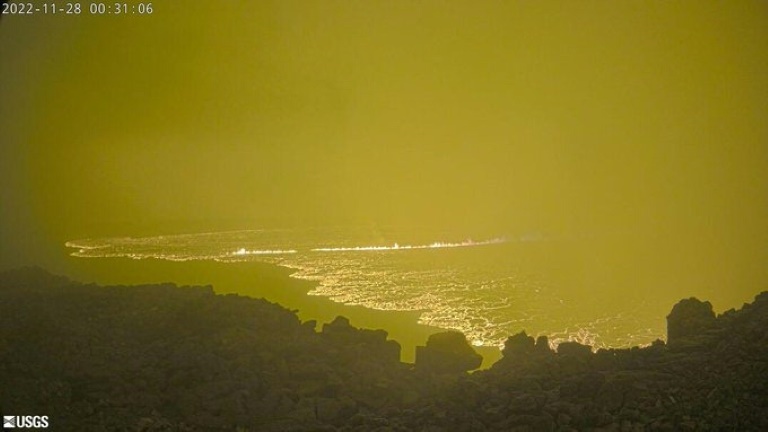
Hawaii’s Mauna Loa, the largest active volcano in the world, has erupted for the first time in nearly 40 years, US authorities said, spewing lava and ash Monday as emergency crews went on alert.

Flows of lava remained mostly contained within the summit’s massive caldera, but the eruption could pose a threat to nearby residents should conditions change, the United States Geological Survey reported at 11:45 pm local time Sunday (9:45 GMT Monday) some 15 minutes after the eruption inside Hawaii Volcanoes National Park.

Mauna Loa has been showing signs of building to an eruption for years, according to the USGS, which said the ongoing eruption was visible from Kona, a town on the west coast of Hawaii’s main island some 45 miles (72 kilometers) from the volcano.

“Lava is still erupting from the summit & is overflowing from the caldera,” the USGS said on its website, referring to the basin at the top of a volcano. While it added there were “no threats to populated areas currently,” it urged area residents to review preparedness procedures.

“If the eruptive vents migrate outside its walls, lava flows may move rapidly downslope,” according to the USGS.

The agency said the Hawaiian Volcano Observatory was in consultation with emergency management personnel and its staff would conduct an aerial reconnaissance over the 13,674-foot (4,168-meter) volcano as soon as possible.

Hawaii authorities said no evacuation orders have been given, although the summit area and several roads in the region were closed, and two shelters have been opened as a precaution.

An ashfall advisory has been issued for downwind of the volcano, with a light accumulation of ash expected on ships in ocean waters along the Big Island’s southeast.

A USGS webcam on Mauna Loa summit’s north rim showed long bright eruptive fissures within the volcanic crater, contrasted against the dark of night.

Robin George Andrews, a scientist and volcanologist, said a larger threat exists if magma begins to pour out of so-called rift zones along the volcano’s flanks.

While there is no evidence yet of this occurring now on Mauna Loa, “the fact that it is a hazardous mountain that hasn’t erupted since 1984 — the longest eruptive pause in its recorded history — is why we should all keep an eye on it,” Andrews posted on Twitter.

The largest volcano on Earth by volume, Mauna Loa, whose name means “Long Mountain,” covers half of the Big Island and is larger than the rest of the Hawaiian islands combined.

The volcano’s submarine flanks stretch for miles below sea level to the ocean floor, which in turn is depressed by Mauna Loa’s great mass — making its summit some 17 kilometers (55,700 feet) above its base according to the USGS.

One of six active volcanoes on the Hawaiian islands, Mauna Loa has erupted 33 times since 1843, according to USGS.

The most recent eruption, in 1984, lasted 22 days and produced lava flows which reached to within about seven kilometers (four miles) of Hilo, a city to the northeast which is home to about 44,000 people today.

Kilauea, a volcano on the southeastern flank of Mauna Loa, erupted almost continuously between 1983 and 2019, and a current minor eruption there has been ongoing for months.

Eurozone inflation hasn't peaked yet, says ECB's Lagarde

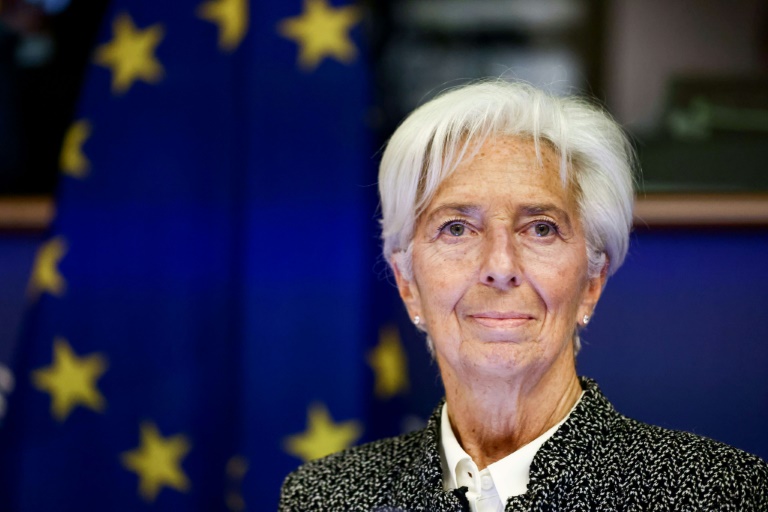
Eurozone inflation is running at a record high and has not yet peaked, European Central Bank President Christine Lagarde said Monday, signalling further interest rate hikes to come.

Consumer prices in the 19-nation euro region rose by 10.6 percent in October, fuelled by soaring food and energy costs in the wake of Russia’s war in Ukraine.

“I would like to see inflation having peaked in October but I’m afraid that I would not go as far as that,” Lagarde told European lawmakers in Brussels.

“I think that there is too much uncertainty — particularly in one component which is the pass-through of high energy costs at wholesale level into retail level — to assume that inflation has actually reached its peak. It would surprise me.”

The ECB has moved to tame inflation with a series of rate hikes, lifting its key interest rates by two percentage points since July.

Lagarde said the ECB has been hiking “at the fastest pace ever” and that more increases would be needed to bring inflation back down to the ECB’s two-percent target.

“We still have a way to go and we’re not done with inflation so, yes, we will continue to raise interest rates,” Lagarde said.

The ECB’s governing council is set to unveil the next increase in borrowing costs at its December 15 meeting, when policymakers will also be armed with new forecasts for inflation and economic growth.

In the United States, where the Federal Reserve began hiking rates earlier and more aggressively, policymakers have indicated that a slower pace of rate increases could “soon be appropriate”.

Houston under boil water order after treatment plant failure

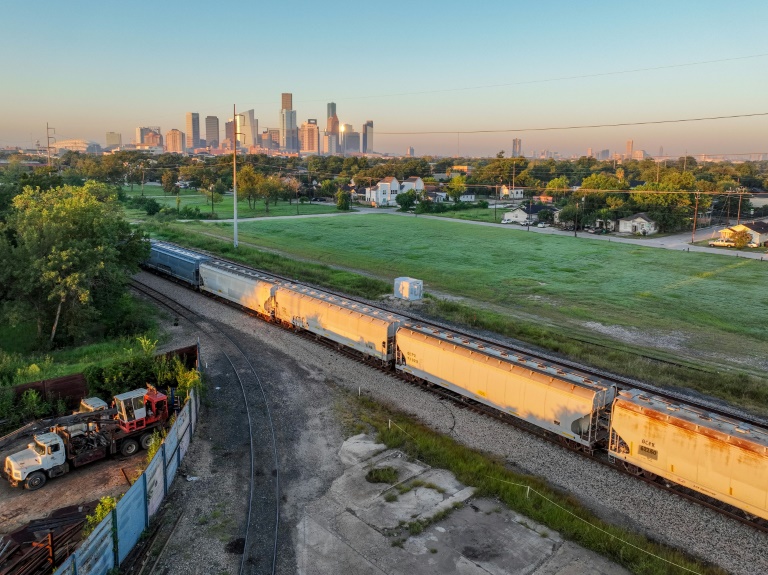
Authorities in the US city of Houston ordered residents to boil their water before drinking it after a power outage at a treatment plant, leaving classes and other activities canceled Monday.

Houston, the biggest city in Texas and the fourth-largest in the United States, is home to 2.2 million people and is an important base for the energy, aeronautics and health care industries.

“A boil water notice has been issued for the City of Houston,” the municipality posted on Twitter Sunday night.

“Everyone should boil the water before drinking, cooking, bathing, and brushing their teeth,” the city’s account said.

A power outage at three purification plants Sunday led to a drop in water pressure below the threshold allowed by the Texas Commission on Environmental Quality (TCEQ), Governor Greg Abbott’s office said, triggering the boil water notice and requiring safety testing of the city’s water supply. 

The cause and duration of the power outage are still under investigation, local officials said.

Following the order, Houston Independent School District said “schools, offices and facilities” were closed Monday, though several nearby suburban districts said most or all of their schools were unaffected and remained open. 

The office of Houston Mayor Sylvester Turner said in a tweet they “believe the water is safe but based on regulatory requirements when pressure drops below 20 psi we are obligated to issue a boil water notice.”

The TCEQ planned to sample and test water throughout the day Monday to determine whether the boil order could be lifted by Monday night or Tuesday morning, Turner’s office said.

“The State of Texas is immediately responding and deploying support to Houston as they work to get a safe supply of water back online,” Abbott said Sunday night. 

The boil order comes after a winter storm and subsequent cold spell in February 2021 saw pipes burst throughout Texas and left much of the state of nearly 30 million people without potable water for several days. 

The fellow southern US city of Jackson, Mississippi was without safe drinking water for several weeks earlier this year when floods disrupted operations at a critical treatment plant.

Irish regulator fines Meta 265 mn euros over data breach

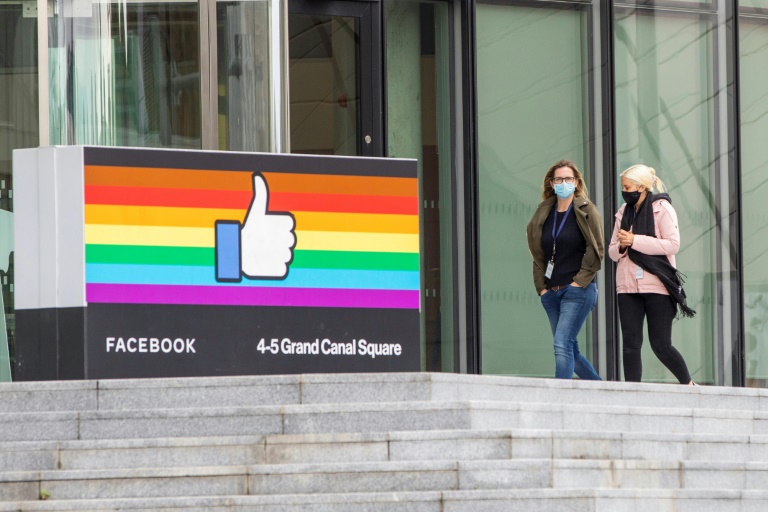
Ireland’s data regulator on Monday slapped Facebook owner Meta with a 265-million-euro ($275-million) fine after details of more than half a billion users were leaked on a hacking website.

The Data Protection Commission (DPC) said it had reached the decision following a “comprehensive inquiry process, including cooperation with all of the other data protection supervisory authorities within the EU”.

Meta’s European operations are based in Dublin, along with a number of other major global tech companies including Google, Apple and Twitter.

As a result, Ireland’s data protection agency is the lead regulator responsible for holding them to account. 

The watchdog found the social media behemoth led by Mark Zuckerberg had breached two articles of the EU’s data protection laws.

In addition to the fine, the DPC said it had “imposed a reprimand and an order” requiring the Facebook owner to “bring its processing into compliance by taking a range of specified remedial actions within a particular timeframe”.

In response to the fine, a Meta spokesperson said the firm had “cooperated fully” with the DPC on the issue.

The tech firm had previously said the data was “scraped” from the site by hackers in 2019, who took advantage of a feature designed to help people easily find friends using contact lists.

“We made changes to our systems during the time in question, including removing the ability to scrape our features in this way using phone numbers,” the spokesperson said.

“Unauthorised data scraping is unacceptable and against our rules and we will continue working with our peers on this industry challenge. We are reviewing this decision carefully,” they added.

– EU fears –

The Irish watchdog launched its probe in April 2021 to determine whether the EU-wide General Data Protection Regulation (GDPR) charter on data rights and the corresponding Irish legislation had been infringed.

Under the GDPR, which came into effect in 2018, social media users have a wider range of rights relating to their data.

The fine follows a landmark decision by the Irish watchdog to fine Meta a record 405 million euros in September after its Instagram platform was found to have breached regulations on the handling of children’s data.

In July 2019, Facebook was fined a record $5 billion by the US federal authorities over its privacy controls in the wake of the Cambridge Analytica scandal.

In September 2021, the DPC also fined WhatsApp — Meta’s instant messaging application — 225 million euros for failing to comply with its transparency rules for data transfers.

And in France, the CNIL national data watchdog fined Facebook 60 million euros in January 2022 for its use of online “cookies”, the digital trackers used to target advertising.

In recent weeks, the European Union has voiced its fears over a fall in standards in data privacy and content moderation amid widespread job losses in the tech sector.

Meta said earlier this month it planned to lay off more than 11,000 staff amid an advertising slump.

The micro-blogging platform Twitter has attracted similar criticisms following its acquisition by Elon Musk in October.

Tech entrepreneur Musk cut around half of Twitter’s 7,500-strong workforce, including many employees tasked with fighting disinformation, when he bought the firm.

Ukraine war increases chemical weapons threat: watchdog

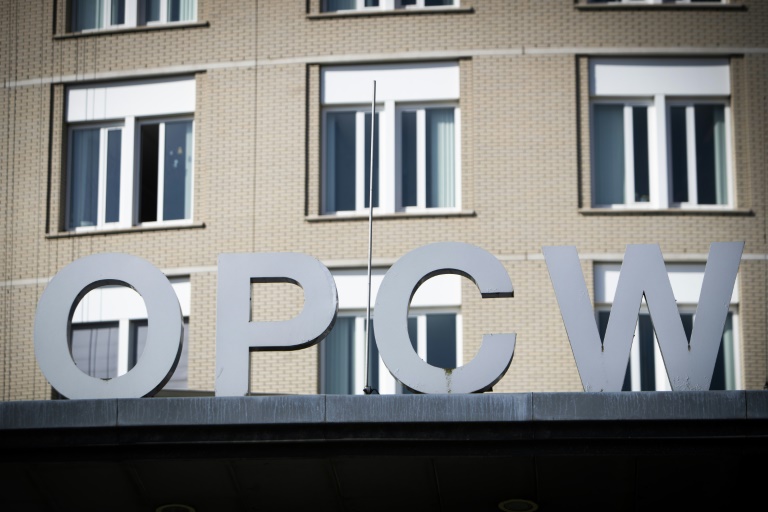
Russia’s invasion of Ukraine has increased the threat from weapons of mass destruction including chemical munitions, the head of the world’s toxic arms watchdog said on Monday.

The Organisation for the Prohibition of Chemical Weapons (OPCW) was closely monitoring the situation in Ukraine, its chief Fernando Arias told the regulator’s annual meeting.

“The situation in Ukraine has again increased the real threat posed by weapons of mass destruction, including chemical weapons,” Arias told the meeting in The Hague.

“It has exacerbated existing tensions to a point where unity of the international community on common global challenges related to international security and peace cannot be presumed.”

International disarmament bodies like the Nobel Peace Prize-winning OPCW “now have become places for confrontation and disagreement”, Arias lamented.

Threats and allegations about the possible use of nuclear, chemical and biological weapons have been traded since the war in Ukraine began in February, but with no evidence they have been deployed.

Arias reminded Russia and Ukraine that they were among 193 countries that have “solemnly and voluntarily committed never under any circumstances to… use chemical weapons”.

He said the OPCW “continues to closely monitor this serious situation and remains in contact with the permanent representations of the Russian Federation and Ukraine”.

The OPCW has provided Ukraine, at its request, with training for first responders for chemical attacks and for the detection of chemical leaks, Arias said.

– ‘Preposterous’ –

Russia’s ally Syria meanwhile remained in “serious failure to comply” with the watchdog on its chemical weapons, the director-general said.

Damascus had refused to give a visa to an OPCW inspector and had failed to complete any of the measures demanded by the regulator, said Arias.

Syria denies the use of chemical weapons and insists it has handed over its stockpiles under a 2013 deal, prompted by a suspected sarin gas attack that killed 1,400 in the Damascus suburb of Ghouta.

But Syria was stripped of its OPCW voting rights in 2021 after a probe blamed it for further poison gas attacks.

Western countries criticised both Russia and Syria at the meeting.

US under secretary of state for arms control and international security Bonnie Jenkins slammed Russia’s “preposterous, unfounded, and alarming” allegations about Ukrainian use or plans to use chemical arms.

Jenkins also accused Russia of chemical weapons use in the Novichok nerve agent attacks on former Russian spy Sergei Skripal in the English city of Salisbury in 2018 and Kremlin opponent Alexei Navalny in Russia in 2020.

Russia denies any involvement in either incident.

Syria meanwhile “has shown only contempt” for the OPCW, the US official said.

British junior defence minister Annabel Goldie said that “Russia’s war (in Ukraine) is not something we can ignore here in the OPCW”.

“We have seen this pattern of deceitful behaviour in Syria and now we are seeing it in Ukraine,” Goldie said.

Equities, oil prices slide on China unrest

Stocks and oil prices fell Monday on concerns about protests across China calling for political freedoms and an end to the government’s hardline zero-Covid policy, fuelling uncertainty in the world’s number-two economy.

Hundreds of people took to the streets in China at the weekend in the country’s biggest demonstrations since pro-democracy rallies in 1989 were crushed.

“Unrest in major cities in China has destabilised risk-on markets including oil which is under pressure, pushing BP and Shell towards the bottom of the UK index,” noted Victoria Scholar, head of investment at Interactive Investor.

China-linked stocks took the brunt of selling in Asia, with Hong Kong’s Hang Seng Index closing down more than one percent and Shanghai off 0.8 percent. The yuan slipped by around one percent.

The unrest also left Wall Street and European markets in a sea of red.

“Sentiment has turned sour as unrest across China grows,” said SPI Asset Management’s Stephen Innes. 

“Risk of the situation escalating from here and short-term volatility remains high.”

A deadly fire in the Xinjiang region Thursday served as the catalyst for the public anger in China, with many blaming virus lockdowns for hampering rescue efforts.

People have taken to the streets in Beijing, Shanghai, Guangzhou and Chengdu calling for an end to lockdowns, after an easing of some measures had fuelled hopes of a lighter pandemic approach.

Some demonstrators were even demanding the resignation of China’s President Xi Jinping, who was recently re-appointed to a precedent-breaking third term as the country’s leader.

The latest targeted containment measures have been introduced as the country sees record-high Covid infections.

China’s “zero covid policy means the threat of more growth-choking lockdowns are there. This is going to hold back the yuan and Chinese stocks, and potentially risk assets outside of China – not least crude oil, as we have seen”, City Index analyst Fawad Razaqzada said in a note.

The prospect of a hit to demand in the world’s biggest crude importer hammered oil prices, with both main contracts down more than two percent.

– Eyes on Fed boss –

The weakness “isn’t just about China. The reports out of China have also become a good excuse to take some money off the table following a big run by the market”, Briefing.com analyst Patrick J O’Hare said in a note.

The selling has taken a bit out of recent gains across markets sparked by hopes of a slowdown in the Federal Reserve’s interest rate hikes, with inflation finally showing signs of softening.

However, some observers said the protests could provide long-term benefits as they could force President Xi to shift away from his strict, economically damaging measures sooner.

Investors were also looking ahead to the release of US jobs data at the end of the week, which could provide clues about the Fed’s next moves, while speeches by central bank boss Jerome Powell and other key policymakers will also be pored over.

– Key figures around 1430 GMT –

London – FTSE 100: DOWN 0.3 percent at 7,467.53 points

Frankfurt – DAX: DOWN 0.8 percent at 14,424.03

Paris – CAC 40: DOWN 0.7 percent at 6,666.43

EURO STOXX 50: DOWN 0.6 percent at 3,938.64

New York – Dow: DOWN 0.2 percent at 34,272.70

Tokyo – Nikkei 225: DOWN 0.4 percent at 28,162.83 (close)

Hong Kong – Hang Seng Index: DOWN 1.6 percent at 17,297.94 (close)

Shanghai – Composite: DOWN 0.8 percent at 3,078.55 (close)

Euro/dollar: UP at $1.0443 from $1.0403 on Friday

Dollar/yen: DOWN at 138.59 yen from 139.03 yen

Pound/dollar: DOWN at $1.2046 from $1.2087

Euro/pound: UP at 86.66 pence from 86.03 pence

West Texas Intermediate: DOWN 2.3 percent at $74.50 per barrel

Brent North Sea crude: DOWN 2.7 percent at $81.35 per barrel

Close Bitnami banner
Bitnami