US Business

Inflation clouds 'Black Friday' kickoff of US holiday shopping season

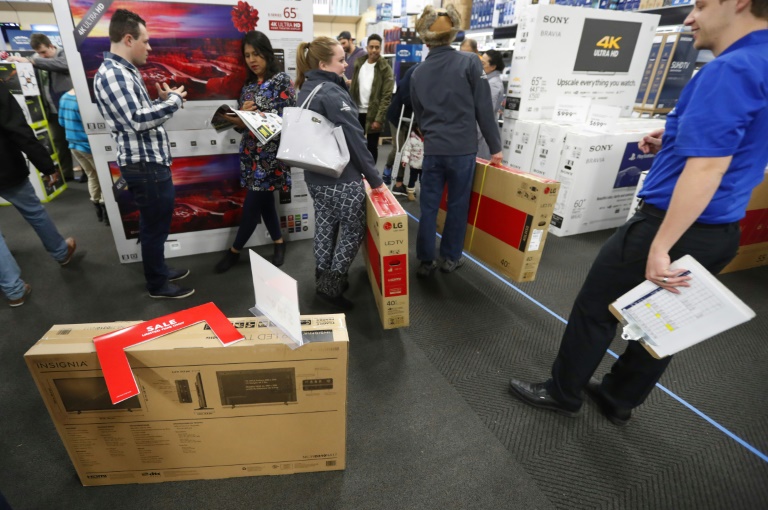
Retailers unveiled a trove of fresh seasonal promotions Friday, as they try to coax sales from reticent shoppers whose holiday cheer has been tempered by inflation and worries over a softening economy.

“Black Friday,” the unofficial start of the US holiday shopping season, announced itself with the annual day-after-Thanksgiving deluge of online promotions and early store openings.

But industry experts have been cautious about this year’s prospects, in light of price pressures that have exacerbated concerns about an oversupply of goods.  

A year ago, retailers faced product shortfalls in the wake of shipping backlogs and factory closures related to Covid-19. To avert a repeat, the industry front-loaded its holiday imports this year, leaving it vulnerable to oversupply at a time when consumers are cutting back.

“Supply shortages was yesterday’s problem,” said Neil Saunders, managing director for GlobalData Retail, a consultancy. “Today’s problem is having too much stuff.”

Saunders said retailers have made progress in reducing excess inventories, but oversupply will mean deep discounts in many categories, including electronics, home improvement and apparel.

Online shoppers spent $5.3 billion on Thanksgiving Day itself, according to an Adobe report early Friday, up 2.9 percent from a year ago.

Higher costs for gasoline and household staples like meat and cereal are a nationwide issue, and they do not burden everyone equally.

“The lower incomes are definitely hit worst by the higher inflation,” said Claire Li, senior analyst at Moody’s. “People have to spend on the essential items.” 

– Diminishing savings –

Leading forecasts from Deloitte and the National Retail Federation project a single-digit percentage rise in sales, but this is unlikely to exceed the inflation rate.

Adobe has forecast an overall holiday sales increase of 2.5 percent, less than a third of the level from last year. Besides inflation, Adobe cited higher Federal Reserve interest rates and an uptick in brick-and-mortar shopping as factors.

European countries like Britain and France have been marking Black Friday for a few years now too, but with soaring inflation, merchants there face a similar dilemma.

“Retailers are desperate for some spending cheer but the worry is that it could turn out to be more of a Bleak Friday,” said Hargreaves Lansdown analyst Susannah Streeter.

US shoppers have remained resilient throughout the pandemic, often spending more than expected even when consumer sentiment surveys suggest they are in a gloomy mood.

Part of the reason has been the unusually robust state of savings, with many households banking government pandemic aid payments at a time of reduced consumption due to virus restrictions.

But that cushion is starting to whittle away. After hitting $2.5 trillion in excess savings in mid-2021, the benchmark fell to $1.7 trillion in the second quarter, according to Moody’s.

Accompanying this drop has been a rise in credit card debt visible in Federal Reserve data and anecdotally described by chains that also report more purchases made with food stamps.

– Mixed picture –

Recent earnings reports from retailers paint a mixed picture on consumer health.

Target stood on the downcast side, pointing to a sharp decline in shopping activity in late October, potentially portending a weak holiday season.

The big-box chain expects a “very promotional” holiday season, said Chief Executive Brian Cornell.

“We’ve had a consumer who has been dealing with very stubborn inflation for quarter after quarter now,” Cornell said on a conference call with analysts.

He added that customers are “shopping very carefully on a budget.”

But Lowe’s, another big US chain specializing in home-improvement, offered a different view, describing the same late-October period as “strong.”

“We are not seeing anything that feels or looks like a trade down or consumer pullback,” said Lowe’s Chief Executive Marvin Ellison.

Consumers like Charmaine Taylor, who checks airline websites frequently, are staying vigilant.

Taylor, who works in child care, has had her travel plans thwarted due to exorbitant plane ticket prices — and she is unsure of how much she can spend on family this year.

“I’m trying to give them some little gifts,” she said at a park in Harlem earlier this week. “I don’t know if I’ll be able to. Inflation is hitting pretty hard.”

Carrefour still sells beef tied to Brazil deforestation: NGO

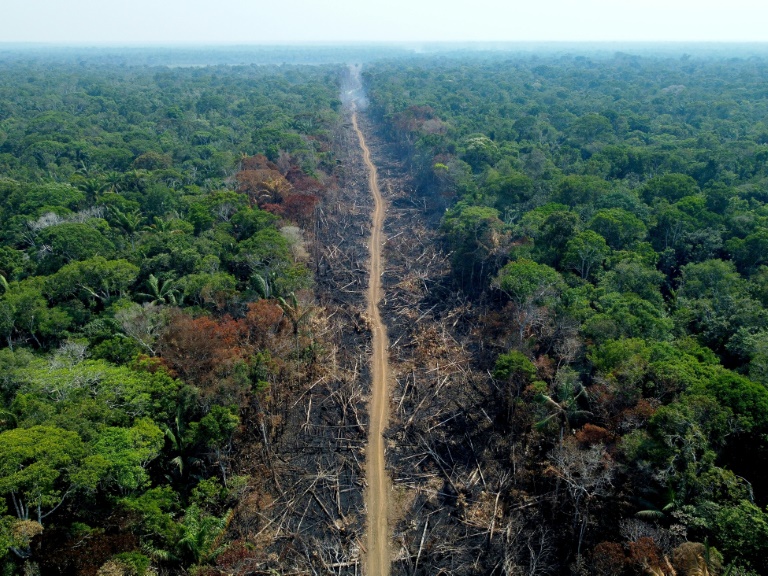
French retail giant Carrefour is still selling Brazilian beef products linked to destruction of the Amazon rainforest despite committing to end such sales, the US activist group Mighty Earth said Friday.

Carrefour suspended beef supplies from two slaughterhouses owned by the JBS company that were linked to deforestation in the Amazon after the NGO called on the supermarket chain to clean up its supply chains in September.

It said JBS would no longer supply its stores in Brazil.

Mighty Earth sought to verify this by analysing 310 products sold in the chain’s 10 stores in seven Brazilian cities in October.

“The results are implacable, Carrefour has not applied this suspension in all of its stores. Mighty Earth identified 12 products sold that came from the two slaughterhouses in four of the group’s shops”, including the Atacadao brand, the group said in a statement.

Carrefour acknowledged there had been a “failure in the suspension instructions”, in particular those relating to two stores that were transferred from the Maxxi brand belonging to Brazilian retailer Grupo BIG to Atacadao. Carrefour acquired Grupo Big earlier this year.

“We regret this and we are checking whether other stores, which source their supplies directly at the local level, are affected,” a Carrefour spokeswoman said.

She added that the retail giant was “making an enormous effort to resolve the issues on a case-by-case basis”.

Carrefour renewed its vow earlier this month to make sure the beef it sells is “deforestation-free” by 2026.

Mighty Earth said that after leftist Luiz Inacio Lula da Silva won the presidential election last month, Carrefour must commit to “zero deforestation and ensure the robustness of its implementation”, especially in its supply chains.

According to Brazil’s INPE space research institute, which measures the level of Amazon deforestation, 2022 is already a record year.

So far this year almost 9,500 square kilometres (2.3 million acres) have been destroyed, compared to 9,200 square kilometres in 2021.

Stocks mixed as China Covid spike offsets rosier US rate outlook

Stock markets traded mixed Friday, as fresh Covid lockdown fears in China offset hopes that the Federal Reserve would tone down US interest-rate hikes.

With Wall Street closed for the Thanksgiving break, trading was light with few catalysts to drive action on trading floors and investors looking ahead to the release of US jobs data next week.

Europe’s major stock markets rose nearing the half-way mark after Asian indices closed mixed.

The euro was also mixed against main rivals, as official data showed Germany’s economy grew more than previously thought in the third quarter despite high inflation and an energy crisis.

Oil prices firmed after heavy losses earlier in the week.

The mood across markets has picked up this month as a series of indicators suggested the US economy, the world’s largest, was showing signs of weakness after the Fed ramped up interest rates.

The standout reports were consumer and wholesale inflation, which came in much lower than forecast and provided the US central bank with room to row back on its hawkishness.

And while a selection of Fed officials lined up to warn there was more tightening to come, there is an expectation that the days of bumper 75 basis-point increases are gone.

That has slightly eased worries that the sharp rise in borrowing costs could tip the US economy into recession, though many observers still see a contraction coming.

SPI Asset Management’s Stephen Innes said there was a “market consensus bias to believe that US headline inflation will continue to ease substantially over the next month or two and that the tail risks around (more than five percent interest rates) have dropped sharply”.

“After all, a step down to 50 basis points in December would be an unambiguous signal that peak hawkishness has passed.”

Focus was also on fears about the spike in Covid cases in China, which authorities are trying to contain with a series of targeted measures in big cities including Beijing and Shanghai, though they are short of full-on lockdowns.

Still, Innes said there appeared to be less concern about the government’s reaction as it looks to ease parts of its strict Covid-zero strategy.

“Stock and currency market investors are tentatively looking through the current lockdown regime while betting on the more optimistic interpretation that China is hitting the limits of ‘Covid-zero’ and the authorities’ efforts to loosen restrictions will continue,” he added.

– Key figures around 1130 GMT –

London – FTSE 100: UP 0.3 percent at 7,487.76 points

Paris – CAC 40: UP 0.2 percent at 6,720.44

Frankfurt – DAX: UP 0.1 percent at 14,551.88

EURO STOXX 50: UP 0.2 percent at 3,969.84

Tokyo – Nikkei 225: DOWN 0.4 percent at 28,283.03 (close)

Hong Kong – Hang Seng Index: DOWN 0.5 percent at 17,573.58 (close)

Shanghai – Composite: UP 0.4 percent at 3,101.69 (close)

New York – Dow: Closed for a holiday

Euro/dollar: DOWN at $1.0401 from $1.0411 on Thursday

Dollar/yen: UP at 139.31 yen from 138.39 yen

Pound/dollar: DOWN at $1.2106 from $1.2131

Euro/pound: UP at 85.95 pence from 85.82 pence

Brent North Sea crude: UP 1.7 percent at $86.80 per barrel

West Texas Intermediate: UP 2.1 percent at $79.56 per barrel

India's Adani defends media bid after press freedom fears

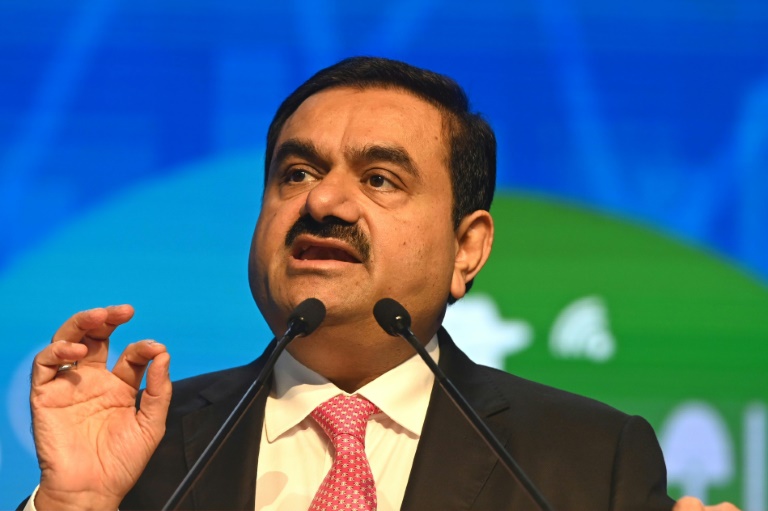
Indian tycoon Gautam Adani said Friday that media should have the “courage” to support the government when warranted, after his hostile takeover bid for one of the country’s top broadcasters sparked press freedom fears.

Adani, 60, is the world’s third-richest person, with an estimated net worth of $134 billion and interests ranging from Australian coal mines to India’s busiest ports.

He is also seen as a close acolyte of Hindu nationalist Prime Minister Narendra Modi, often publicly supporting his policies.

A company from his Adani Group revealed in August that it had indirectly bought 29 percent of NDTV, against the wishes of the broadcaster’s management, and is moving to buy a majority stake next month.

In a wide-ranging interview with the Financial Times, Adani said his foray into media was a “responsibility” rather than a business opportunity.

He added that it was time for India to have a global news conglomerate on par with Al Jazeera and said the channel should support the government when appropriate.

“Independence means if government has done something wrong, you say it’s wrong,” Adani told the British broadsheet.

“But at the same time, you should have courage when the government is doing the right thing every day. You have to also say that.”

NDTV’s two channels, one in Hindi and one in English, stand out among India’s myriad rolling news broadcasters for inviting on critics of the government as well as their hard-hitting reporting.

It has already been hit by a slew of legal cases that its owners said were a result of its reporting.

Under Modi, India has slipped 10 places in the Reporters Without Borders global press freedom ranking and is now 150 out of 180 surveyed countries. 

Critical reporters often find themselves behind bars and hounded on social media by supporters of Modi’s ruling Bharatiya Janata Party (BJP).

– Aggressive expansion –

Self-made billionaire Adani, 60, this year overtook fellow Indian Mukesh Ambani to become Asia’s richest man.

Like Modi, Adani hails from western Gujarat state, and his conglomerate has expanded aggressively in recent years, including into new areas like airports and renewable energy.

But its growth into capital-intensive businesses has raised alarm, with analysts from Fitch Group’s CreditSights warning in August that the group was “deeply overleveraged”.

On Friday, the group’s Adani Enterprises approved plans to raise $2.45 billion through a follow-on public offer — set to be India’s biggest ever, subject to regulatory approval.

The fresh funds will be key to reducing debt and fuelling further business expansion for the flagship entity, shares in which have surged nearly 1,000 percent over the past two years.

Musk announces gold, gray and blue badges for Twitter accounts

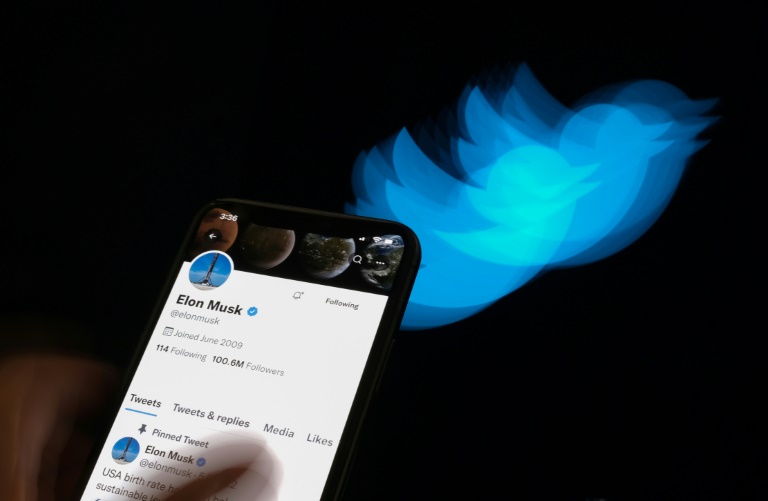
Twitter’s billionaire owner Elon Musk announced Friday that the platform would be launching differently colored badges to distinguish between accounts.

“Sorry for the delay, we’re tentatively launching Verified on Friday next week,” he tweeted. 

“Gold check for companies, grey check for government, blue for individuals (celebrity or not) and all verified accounts will be manually authenticated before check activates.”

In another tweet, Musk said that all verified individual accounts would have the same blue check, but some would eventually be able to display a “secondary tiny logo showing they belong to an org(anization) if verified as such by that org(anization)”.

The Tesla and SpaceX boss’ proposal for users to be able to pay to be “verified” and obtain a blue badge on their profiles has caused confusion since he acquired the social media giant last month.

Musk proposed a subscription fee of $8 a month to allow users to obtain the blue check — which was previously free but reserved for organizations and public figures in an attempt to avoid impersonation and misinformation. 

The first rollout of Musk’s subscription plan in early November quickly went south, with many accounts paying for the blue check and then impersonating world leaders, celebrities or companies.

Responding to the backlash, Musk initially postponed the launch date to November 29, before delaying it once more. It now appears the feature will launch on December 2. 

Musk has said that he wants to charge users for subscriptions to the social media platform to diversify its income stream. Twitter currently depends on advertising for 90 percent of its revenue.

Several major brands have withdrawn from advertising on the platform since Musk bought it, fearing that his promised relaxation of content moderation could open their companies up to being associated with objectionable content.

According to the NGO Media Matters, half of Twitter’s top 100 advertisers have announced that they are suspending or “have apparently suspended” their spending on the social network. 

Musk announces gold, gray and blue badges for Twitter accounts

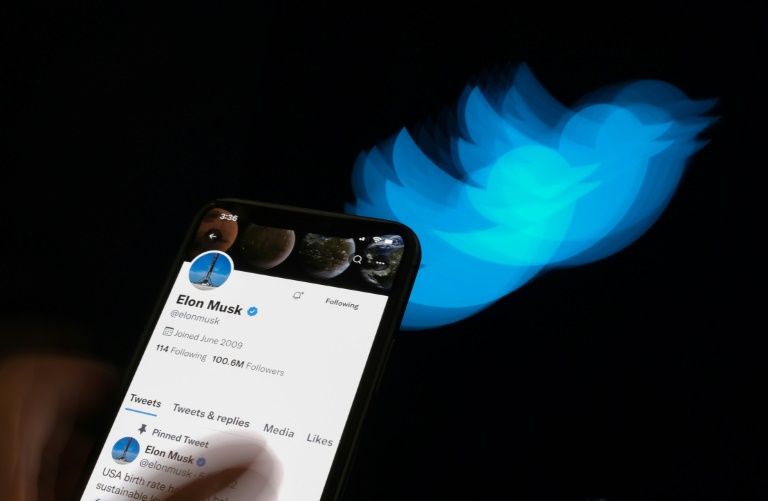
Twitter’s billionaire owner Elon Musk announced Friday that the platform would be launching differently colored badges to distinguish between accounts.

“Sorry for the delay, we’re tentatively launching Verified on Friday next week,” he tweeted. 

“Gold check for companies, grey check for government, blue for individuals (celebrity or not) and all verified accounts will be manually authenticated before check activates.”

In another tweet, Musk said that all verified individual accounts would have the same blue check, but some would eventually be able to display a “secondary tiny logo showing they belong to an org(anization) if verified as such by that org(anization)”.

The Tesla and SpaceX boss’ proposal for users to be able to pay to be “verified” and obtain a blue badge on their profiles has caused confusion since he acquired the social media giant last month.

Musk proposed a subscription fee of $8 a month to allow users to obtain the blue check — which was previously free but reserved for organizations and public figures in an attempt to avoid impersonation and misinformation. 

The first rollout of Musk’s subscription plan in early November quickly went south, with many accounts paying for the blue check and then impersonating world leaders, celebrities or companies.

Responding to the backlash, Musk initially postponed the launch date to November 29, before delaying it once more. It now appears the feature will launch on December 2. 

Musk has said that he wants to charge users for subscriptions to the social media platform to diversify its income stream. Twitter currently depends on advertising for 90 percent of its revenue.

Several major brands have withdrawn from advertising on the platform since Musk bought it, fearing that his promised relaxation of content moderation could open their companies up to being associated with objectionable content.

According to the NGO Media Matters, half of Twitter’s top 100 advertisers have announced that they are suspending or “have apparently suspended” their spending on the social network. 

Half of Kyiv residents still without electricity after strikes

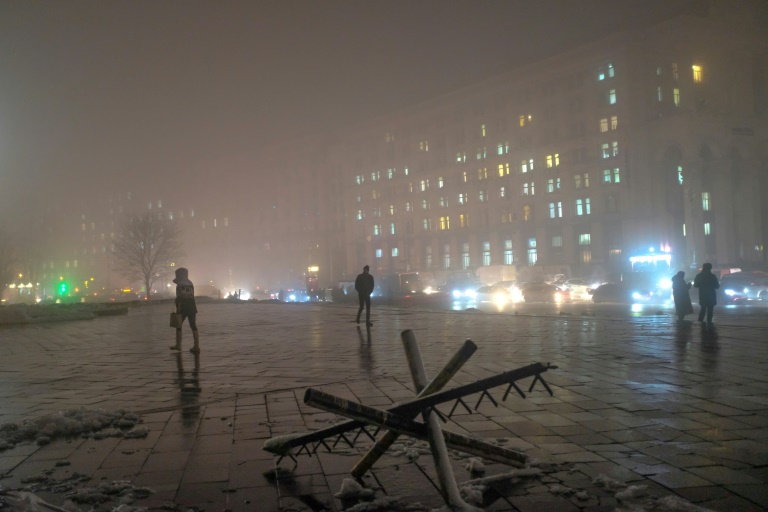
Nearly half of Kyiv residents were still without electricity on Friday as engineers battled to restore services two days after Russian strikes hammered the country’s energy grid.

Systematic and targeted Russian attacks for weeks have brought Ukraine’s energy infrastructure to its knees as the country careens towards a freezing winter, spurring fears of a health crisis and a further exodus, nine months into war.

Municipal workers struggled Friday to reconnect essential services such as heat and water as temperatures in Kyiv approached freezing and UK Foreign Secretary James Cleverly visited to announce a new aid package.

“Half of consumers are still without electricity,” Mayor Vitali Klitschko said. “A third of houses in Kyiv already have heating and specialists continue to restore it.”

“During the day, energy companies plan to reconnect electricity for all consumers on an alternating basis,” he wrote on Telegram.

Lines of cars queued outside petrol stations in Kyiv on Friday to stock up, AFP journalists said. Mobile networks in some areas were still experiencing disruptions.

Nationwide, repair work was ongoing, said Volodymyr Kudrytskyi, head of national electricity operator Ukrenergo, but insisted that “the most difficult stage” had passed.

Ukrenergo said that producers were providing more than 70 percent of the need across the country.

– ‘We live like this now’ –

Millions of Ukrainians have endured the cold without power since Russia fired dozens of missiles and launched drone attacks at water and electricity facilities on Wednesday.

“Yes, this is a difficult situation and yes, it can happen again. But Ukraine can cope,” presidential advisor Mykhailo Podolyak said on television.

With gas for cooking and heating disconnected in her Kyiv apartment, Albina Bilogub told AFP that she and her children all sleep in the same room to stay warm.

“In our building, very few people have gas, so we go to the woman that I work for — I change her clothes because she is disabled — and we cook there,” she said.

“This is our life. One sweater, a second, a third. We live like this now.”

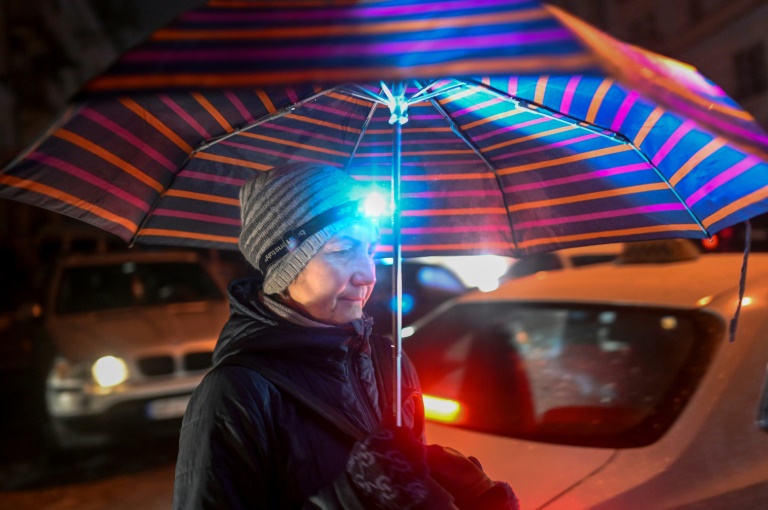
In northern Kyiv, a vet in blue scrubs and a face mask shone a light over an operating table in a darkened clinic as colleagues operated on an ailing dog late Thursday.

“We were in the middle of an operation and our lights turned off because a rocket fell not far away, so there was a power cut,” said Oleksiy Yankovenko.

“I had to finish the operation under the flashlights,” he added.

– ‘Brutal attacks’ –

Ukraine’s Western allies have denounced the Russian attacks on energy as a “war crime”, coming in the wake of a string of military setbacks for Russia on the frontlines.

Moscow insists it targets only military linked infrastructure and blamed Kyiv for the blackouts, saying Ukraine can end the suffering by agreeing to Russian demands.

Britain’s foreign minister announced new aid for Ukraine during his visit to Kyiv, including ambulances and support for victims of sexual violence by Russian soldiers.

“As winter sets in, Russia is continuing to try and break Ukrainian resolve through its brutal attacks on civilians, hospitals and energy infrastructure,” Cleverly said.

“Russia will fail,” he said, vowing UK support “will continue for as long as it takes”.

The attacks on Ukraine’s grid are Russia’s latest strategy designed to force Ukrainian capitulation after Moscow’s forces failed to topple the government and capture Kyiv nine months after launching their invasion.

Although they have captured swathes of territory in the south and east and the Kremlin claimed to annex four regions, Ukrainian troops are clawing back territory.

Russian forces have shelled the southern city of Kherson, from which they retreated earlier this month in their latest setback. The Ukrainian presidency said 11 people were killed and nearly 50 injured in the Kherson region on Thursday.

Nurses join other striking UK staff in two December walkouts

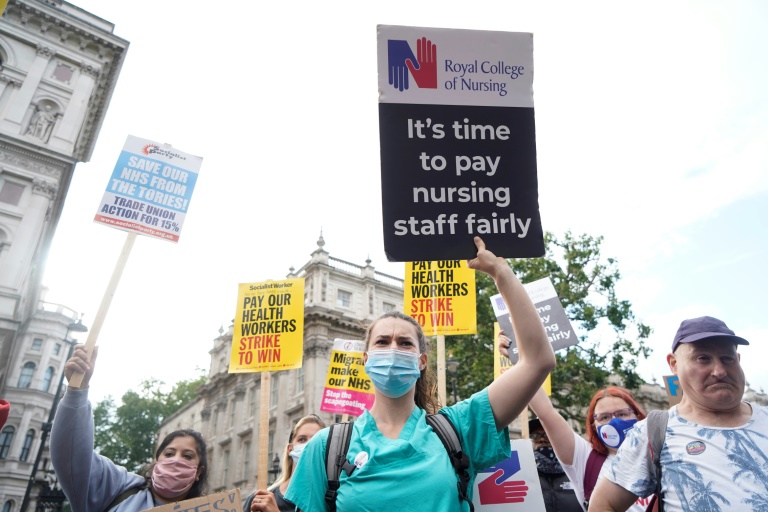
Nurses across most of Britain will hold the first strikes in their union’s 106-year history next month, joining a host of other workers taking industrial action over pay.

Staff in England, Wales and Northern Ireland — but not Scotland — will walk out on December 15 and 20, after the Royal College of Nursing (RCN) union said the government had turned down an offer of negotiations.

It will be the latest industrial action in Britain, where decades-high inflation and a cost-of-living crisis have prompted staff in various sectors to demand pay rises to keep up with spiralling prices.

RCN England director Patricia Marquis on Friday apologised to patients who would have operations or treatments cancelled.

But she said the strikes were about “nurses standing up for themselves but also critically for patients”.

The nurses’ strike will be sandwiched between the first of a series of two-day walkouts by national railway workers, while postal service employees will stage fresh stoppages in the run-up to Christmas.

Numerous other public and private sector staff, from lawyers to airport ground personnel, have also held strikes this year.

The Office for National Statistics said “well over half a million working days” were lost to strikes in August and September — the highest two-month total for more than a decade.

With more strikes expected, there are predictions that days lost to stoppages could reach levels not seen since the 1970s and 1980s.

Ambulance staff in Scotland are due to walk out on Monday.

Other health unions representing midwives, physiotherapists and junior doctors have or are planning to ballot their members.

“Nursing staff have had enough of being taken for granted, enough of low pay and unsafe staffing levels, enough of not being able to give our patients the care they deserve,” said RCN head Pat Cullen.

The union, which wants a pay rise significantly above inflation, announced earlier this month that a ballot of its more than 300,000 members had found a majority in favour of strikes.

Cullen said the union would set out details of which services would be exempt from strike action soon.

“What we will continue to provide is life-preserving services,” she told BBC radio adding that some cancer services would be exempt.

– ‘Challenging times ‘ –

UK inflation has surged to reach a 41-year high of 11.1 percent in October on soaring energy and food bills.

NHS bosses said in September that nurses were skipping meals to feed and clothe their children and were struggling to afford rising transport costs.

One in four hospitals had set up foodbanks to support staff, according to NHS Providers, which represents hospital groups in England.

The government says it has accepted independent pay recommendations, and given over one million NHS workers a pay rise of at least £1,400 ($1,590) this year. 

That follows on from a three percent increase last year when public sector pay was frozen.

But the RCN says this leaves experienced nurses worse off by 20 percent in real terms due to successive below-inflation awards since 2010.

In Scotland, the union paused announcing strike action after the devolved government in Edinburgh reopened pay talks.

The Scottish government said late Thursday it had made a “best and final offer” to unions of an average 7.5-percent increase, backdated to April if accepted.

UK health minister Steve Barclay said he was “hugely grateful for the hard work and dedication” of nurses and regretted the strikes.

The NHS had “tried and tested plans” to minimise disruption and ensure emergency services continue, he added.

“These are challenging times for everyone and the economic circumstances mean the RCN’s demands, which on current figures are a 19.2 percent pay rise, costing £10 billion a year, are not affordable,” he said.

Barclay said he was prepared to discuss better working conditions for nurses with the RCN — but not pay.

The union has questioned the UK government’s economic rationale, noting it spends billions of pounds on agency staff to plug workforce gaps.

It points to independent research it commissioned indicating that the finance ministry would recoup 81 percent of the initial outlay of a significant pay rise through higher tax receipts and savings on future recruitment and retention costs.

In the last year, 25,000 nursing staff left the Nursing and Midwifery Council register, it said. 

China's 'iPhone city' under Covid lockdown after violent clashes

Six million people were on Friday under Covid lockdown in a Chinese city home to the world’s largest iPhone factory, after clashes between police and workers furious over pay.

Authorities have ordered residents of eight districts in Zhengzhou, in the central province of Henan, not to leave the area for the next five days, setting up barriers around “high-risk” apartment buildings and checkpoints to restrict travel.

There have been only a handful of coronavirus cases in the city but under China’s zero-Covid policy even tiny outbreaks can spark gruelling lockdowns, travel restrictions and mass testing.

The lockdown in Zhengzhou follows protests by hundreds of employees over conditions and pay at Foxconn’s vast iPhone factory on the outskirts of the city, with images of fresh rallies emerging Friday.

Footage published on social media and geolocated by AFP showed a large group of people walking down a street in the east of the city, some holding signs.

“So many people,” a man can be heard saying. AFP was unable to verify precisely when the protests took place.

Workers previously told AFP the demonstrations had begun over a dispute over promised bonuses at the factory.

Scores of workers left the plant Thursday with payouts of 10,000 yuan ($1,400) from Foxconn.

On Friday posts on Chinese short-video apps said the Taiwanese tech giant was turning away many of thousands of people who had answered hiring ads from the firm after a raft of departures last month.

Some who arrived to take up newly vacant posts had been sent to quarantine hotels outside the plant despite in the end being refused a job, multiple workers told AFP.

“We are in a quarantine hotel, and have no way of going to the Foxconn campus,” one worker who asked to remain anonymous said.

Another employee said those turned away had been promised 10,000 yuan in compensation for being forced to quarantine, but had received only a fraction of that amount.

“They are not letting us start the job and we cannot return home,” one worker isolated in nearby Ruzhou city told AFP.

He added that there had been multiple small protests in other Henan cities by Foxconn workers made to quarantine and unable to start work.

– ‘Please share this’ –

Other videos posted online on Friday and geolocated by AFP showed angry workers knocking down furniture and swearing at police in the lobby of a hotel in Nanyang city, about 280 kilometres (174 miles) from Zhengzhou.

The workers appeared to have been quarantined in the hotel, with a man heard saying in one clip: “Everyone who’s online, please share this.”

The unrest in Zhengzhou comes against the backdrop of mounting public frustration over the government’s zero-tolerance approach to Covid.

China’s daily caseload stood at 33,000 on Friday — a record for the country of 1.4 billion although small by global standards.

The unrelenting zero-Covid push has sparked sporadic protests and hit productivity in the world’s second-largest economy.

In the southeastern manufacturing hub of Guangzhou, millions of people have been ordered not to leave their homes without a negative virus test.

Social media footage published on Friday and geolocated by AFP showed residents of the city’s Haizhu district dismantling barricades and throwing objects at police in hazmat suits.

“What are you doing? What are you doing?” one police officer holding a shield can be heard asking as he and his colleagues back away from the projectiles.

Half of Kyiv residents still without electricity after strikes

Nearly half of Kyiv residents were still without electricity Friday, the Ukrainian capital’s mayor said, two days after Russian strikes battered the country’s already struggling energy grid.

“A third of houses in Kyiv already have heating and specialists continue to restore it. Half of consumers are still without electricity,” Mayor Vitali Klitschko said.

“During the day, energy companies plan to reconnect electricity for all consumers on an alternating basis,” he wrote on Telegram, as temperatures approached freezing.

The head of national electricity operator Ukrenergo, Volodymyr Kudrytskyi, said repair work was ongoing across the country and that the grid had already “passed the most difficult stage” after the most recent attacks.

Millions of Ukrainians spent Thursday without power, after Russia earlier fired around 70 missiles and launched attack drones at water and electricity facilities across the country.

The systematic Russian attacks have been denounced by Ukraine’s allies as a “war crime” and come in the wake of a string of military setbacks for Russia on the frontlines.

Moscow has said it is only targeting military-linked infrastructure and blamed Kyiv for the impact the blackouts have had on civilians, saying Ukraine can end that suffering by agreeing to Russian demands.

Close Bitnami banner
Bitnami