US Business

European, US stocks up despite China Covid fears

European and US stocks rose and oil prices recovered from heavy losses on Tuesday despite fresh concern that China’s latest Covid-19 outbreaks could herald a global recession.

London, Paris and Frankfurt made modest progress in early afternoon deals after a mixed opening, while Wall Street opened in the green.

The optimism came after a mixed Asian showing, as worries grew over the economic fallout of Beijing’s efforts to contain rising infections in the world’s second-largest economy.

“China remains entirely polarising,” noted Stephen Innes of SPI Asset Management.

“Some investors are convinced that China’s reopening is a formality and will be catalysed by the WHO downgrading Covid to an endemic. We know China’s reopening will be laced with fits and starts,” he added.

“You cannot rule out more intermittent lockdowns in the near term, but in a more targeted way instead of widespread.”

Traders are fearful that Chinese authorities will revert to highly restrictive Covid containment measures that have already dealt a chilling blow to its economy this year.

“This isn’t just about China,” City Index analyst Fiona Cincotta told AFP. 

“Renewed crackdowns in the world’s second largest economy raise the prospect of a global recession.”

World oil prices also clawed back ground, having tumbled on Monday to lows unseen since January on forecasts of a hit to Chinese demand, although analysts warned the recovery could be limited.

“The upside potential is being limited by a general sense of uncertainty brought by China’s unclear demand prospects while also being impacted by the ongoing Russia-Ukraine conflict,” said Walid Koudmani, chief market analyst at XTB.

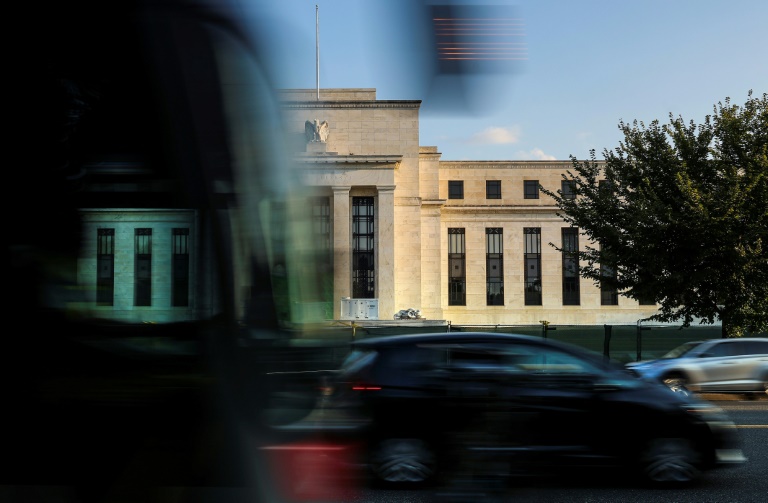
The dollar slid against main rivals ahead of minutes from the Federal Reserve’s latest policy meeting that saw it carry out another big hike to US interest rates.

Hopes that the central bank will begin to take its foot off the pedal were boosted earlier this month by figures showing US inflation slowed more than expected, suggesting a series of hikes were beginning to bite.

– ‘Serious headwinds’ –

The OECD forecast Tuesday that world economic growth will slow sharply from 3.1 percent this year to 2.2 percent next year on high inflation.

And it warned of “serious headwinds” including rising interest rates, surging energy prices and Russia’s war on Ukraine.

Global stock markets began November with a rally on easing inflation concerns and signs China was edging towards a looser approach to the disease.

However, the optimism has been given a massive jolt since the country announced its first virus deaths in six months.

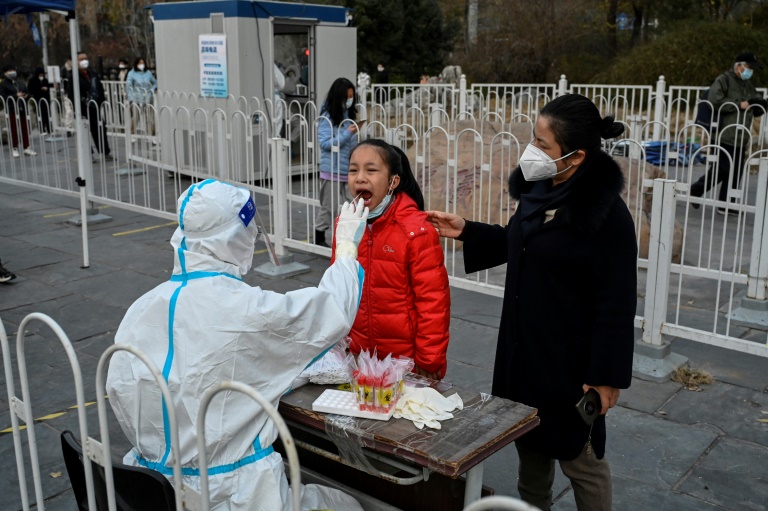
Case numbers have surged across China, with residents in Beijing worried that a record number of new infections will lead to lockdown measures similar to those seen earlier in the year in Shanghai, which lasted for months.

The flare-ups came just a week after China said it would begin rolling back some of the strict Covid rules that have been in place since the pandemic started in 2020, even as the rest of the world has moved on.

– Key figures around 1430 GMT –

London – FTSE 100: UP 0.6 percent at 7,419.67 points

Paris – CAC 40: UP 0.2 percent at 6,649.79

Frankfurt – DAX: UP 0.3 percent at 14,421.25

EURO STOXX 50: UP 0.4 percent at 3,923.14

New York – Dow: UP 0.6 percent at 33,910.82

Tokyo – Nikkei 225: UP 0.6 percent at 28,115.74 (close)

Hong Kong – Hang Seng Index: DOWN 1.3 percent at 17,424.41 (close)

Shanghai – Composite: UP 0.1 percent at 3,088.94 (close)

Euro/dollar: UP at $1.0264 from $1.0242 on Monday

Dollar/yen: DOWN at 141.41 yen from 142.14 yen

Pound/dollar: UP at $1.1878 from $1.1823

Euro/pound: DOWN at 86.43 pence from 86.63 pence

Brent North Sea crude: UP 1.5 percent at $88.79 per barrel

West Texas Intermediate: UP 1.5 percent at $81.25 per barrel
Shock in France over murder of tax inspector

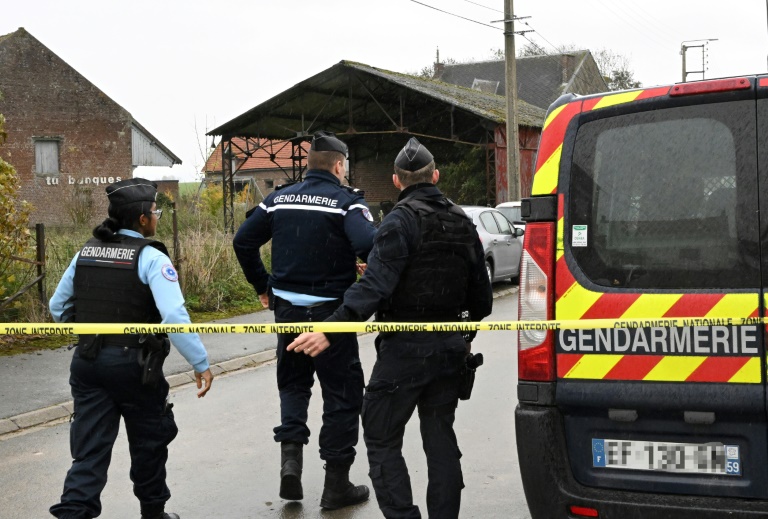
The French government on Tuesday expressed shock after a tax inspector was stabbed to death as he was trying to audit the books of a business owner in the north of the country. 

The murder victim, a 43-year old civil servant for the tax authorities, was found dead on Monday, killed “most likely by repeated stabbing”, the prosecutors’ office in the northern French city of Arras said.

The suspected killer, a 46-year-old antiquities dealer, was then believed to have killed himself with a firearm, it said.

The suspect, described by the local mayor as “an ordinary guy”, locked up the tax inspector and a female colleague during a tax audit of his business, it said.

“The republic is weeping for one of its own,” Budget Minister Gabriel Attal said.

He said it was “revolting” that a public servant was killed “because he did his job”.

The inspector arrived Monday afternoon at the antique dealer’s home, accompanied by a colleague, to check his accounts.

Attal said usually agents were sent on tax check missions on their own, but this time there was backup because there had been tensions during previous visits to the antique dealer’s business.

Prosecutors said the businessman tied them up and stabbed the inspector, leaving the colleague “terribly shocked” but otherwise unharmed, the prosecutors’ office said.

A union for tax officials said the case showed that its members had a “potentially dangerous” job.

The dealer, a divorced father of two, moved four years ago to the hamlet of Bullecourt, its mayor Eric Bianchin told AFP.

He bought a farm from where he sold bric-a-brac which he picked up at auctions and yard sales around the area.

He was “an ordinary guy”, the mayor said, describing him as “helpful, and well-integrated in the village” of some 250 people.

A neighbour, Geoffrey Fournier, described the presumed killer as “discreet” and “apparently hard-working”, whose business “seemed to be doing OK”.

burs/jh/sjw/rox

Russia unveils new icebreaker in push for energy markets

President Vladimir Putin on Tuesday oversaw the launch of a new nuclear-powered icebreaker as Russia pushes to develop the Arctic and seeks new energy markets amid sanctions over Ukraine. 

Addressing a Saint Petersburg ceremony for the launch of the Yakutia icebreaker by video link, Putin said such vessels were of “strategic” importance for Russia.

In addition to floating out the Yakutia, authorities also symbolically raised a flag on another nuclear-powered icebreaker, the Ural.

The Ural and the Yakutia are part of a fleet of nuclear-powered icebreakers that are meant to ensure Moscow’s dominance over the melting Arctic.

The Kremlin chief vowed to develop his country’s nuclear fleet despite current difficulties in Russia’s economy and production in an apparent reference to Western sanctions over Moscow’s offensive in Ukraine.

“We will increase the capabilities of our nuclear icebreaker fleet,” Putin said. 

He said this should be achieved “using domestic equipment and components”.

The Ural is expected to become operational in December, while the Yakutia will join the fleet in late 2024, Putin said.

The vessels are designed to resist extreme weather conditions in the Far North, have a length of 173 metres (568 feet) and can smash through ice up to 2.8 metres thick.

The Russian leader said the ships were part of Moscow’s efforts “to consolidate Russia’s status as a great Arctic power”.

He once again stressed the importance of developing the so-called Northern Sea Route, which allows ships to reach Asian ports up to 15 days faster than via the traditional Suez Canal. 

“This very important corridor will allow Russia to realise its export potential in full, and establish an effective logistics route to South-East Asia,” Putin said. 

Moscow has for years heavily invested in the route. 

But Putin’s military campaign in Ukraine and subsequent Western sanctions have given new urgency to plans to redirect energy exports to Asia.

Russian industries have struggled with production in recent months, deprived of key Western-produced parts due to sanctions. 

The vessels are expected to be a game changer for Russia’s use of the Arctic.

Transit in the eastern Arctic usually ends in November but Moscow is hoping the icebreakers will help it make use of the route — becoming more accessible due to climate change — year-round.

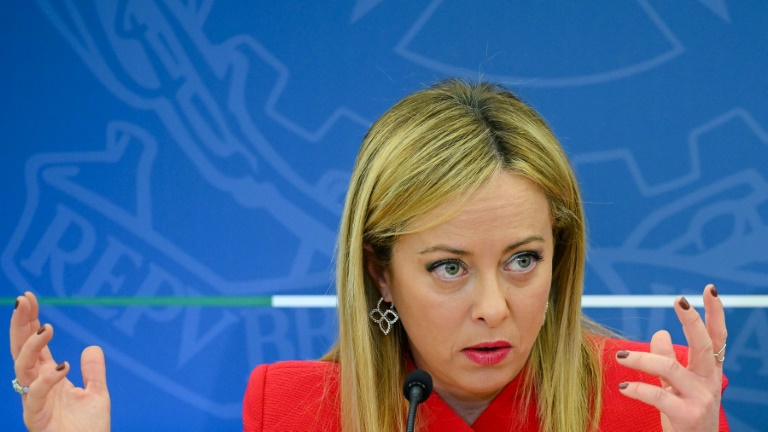
Italy's draft budget centres on energy aid, growth

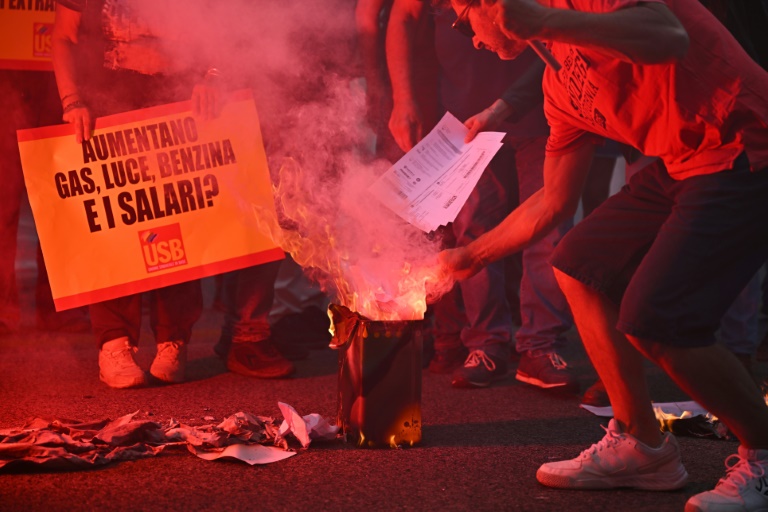
Italy’s new far-right government unveiled its first budget on Tuesday, with most of the nearly 35 billion euros in spending for 2023 going on the energy crisis rather than flashy electoral promises.

More than 21 billion euros ($21.5 billion) will go towards supporting households and businesses with sky-high gas and electricity bills, a major cause of the soaring inflation which risks tipping the eurozone’s third largest economy into recession next year.

“There are two big priorities, growth… and social justice, meaning a particular focus on families, those on the lowest incomes and the most fragile groups,” Prime Minister Giorgia Meloni told a press conference after her cabinet approved the budget in the early hours.

Meloni’s far-right Brothers of Italy party swept to power in elections in September, forming a coalition government with the anti-immigration League and Silvio Berlusconi’s right-wing Forza Italia.

They had promised sweeping tax cuts and more funds for pensioners and for families, sparking concerns about the impact on Italy’s already colossal debt.

But Meloni, whose party once called for Italy to abandon the euro single currency, has sought to present herself as a responsible leader at a time of global economic uncertainty.

Notably, the coalition’s flagship measure — extending a 15-percent flat tax for the self-employed — did not go as far as initially expected.

“It’s a prudent and responsible budget, in continuity” with the previous government under Mario Draghi, said Giuliano Noci, professor at Milan’s Politecnico school of management.

League leader Matteo Salvini told a joint press conference it was a budget that was “not miraculous but that brings more money to millions of Italian homes”.

The plan now heads to parliament, where it can be amended. It must then be adopted by both chambers by December 31.

– Pension reform –

Italy’s last populist government, led by the Five Star Movement and the League in 2018-19, clashed with the European Union over its failure to keep spending under control.

Italy raised its 2023 public deficit forecast earlier this month to 4.5 percent of gross domestic product (GDP), above the 3.4 percent forecast in September by Draghi’s government.

But the deficit is forecast to fall to 3.7 percent in 2024 and three percent in 2025, according to an economic roadmap adopted by Rome.

The coalition had promised to raise the annual income ceiling for the 15-percent tax rate for the self-employed from 65,000 euros ($66,700) to 100,000 euros, but the proposed budget puts it at 85,000.

Employees will benefit from tax reductions of two percent for incomes up to 35,000 euros per year, as under Draghi, and three percent for those on salaries below 20,000 euros. 

Companies hiring women and young people will benefit from tax exemptions, while tax amnesties, an election promise, will be offered to people owing less than 1,000 euros incurred before 2015. 

On cash payments in shops and businesses, the government raised the ceiling from 2,000 euros to 5,000 euros — despite warnings from opposition parties that the move would favour corruption.

It also adjusted pension rules so people who have worked for 41 years can retire at 62 years old, a move affecting an estimated 48,000 people.

The retirement age in Italy, known for its ageing population, had been set to rise from 64 to 67 in 2023.

“With the global economy slowing down and interest rates rising, it is forced to remain cautious” and carry out what electoral promises it can, a bit at a time, noted Lorenzo Codogno a former chief economist at the Treasury.

– Poverty relief measure –

The new measures will be financed in part by reforming the so-called citizens’ income, a poverty relief scheme introduced by the Five Star Movement.

The reform shortens the time those deemed fit to work can claim the benefit and the entire system will be overhauled by 2024.

The government is also set to raise new revenues from a windfall tax on energy companies.

The budget also includes the resurrection of a long-shelved plan to construct a bridge linking Sicily to mainland Italy.

Salvini said he would seek EU funds for the controversial plan for the Strait of Messina, either in launching a new tender or reopening the project ultimately shuttered in 2011.  

That year, the European Commission said the project — revived and cancelled by various previous governments — was not strategic for the development of transport in the EU. 

US secretary of state hits out at FIFA LGBTQ armband ban

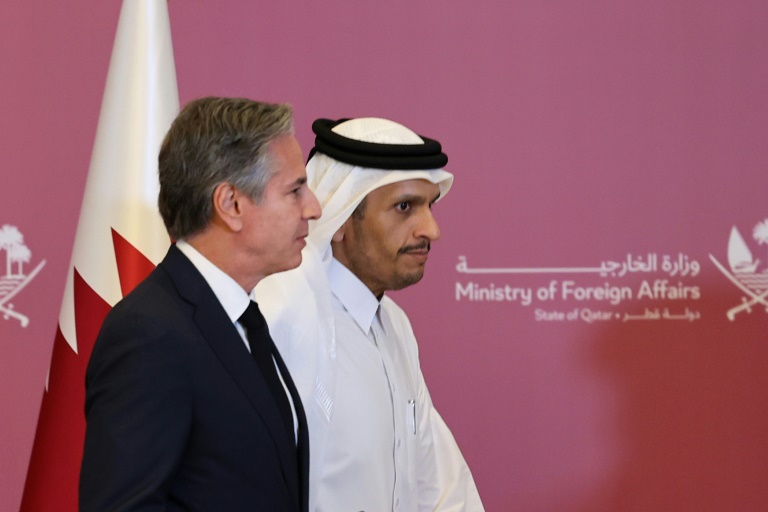
US Secretary of State Antony Blinken on Tuesday called FIFA’s ban on an armband promoting LGBTQ rights at the World Cup in Qatar “concerning”.

Speaking in Doha hours after watching the United States held to a 1-1 draw by Wales, Blinken told a press conference that no team should be forced to choose between “supporting his values” and playing.

England, Germany and five other European teams abandoned plans to wear rainbow-themed “Onelove” armbands at the World Cup because of the threat of FIFA disciplinary action.

The armbands had been viewed as a symbolic protest against laws in World Cup host Qatar, where homosexuality is illegal. FIFA’s move has been criticised in Europe.

Asked about the ban following talks with Qatari Foreign Minister Sheikh Mohammed bin Abdulrahman Al-Thani, Blinken said: “It is always concerning when we see any restrictions on freedom of expression, especially when the expression is diversity.

“No one on the football pitch should be forced to choose between supporting his values and playing,” he added.

Blinken, a football supporter, arrived in Doha on Monday for a 24-hour visit that included watching the United States give up a one goal lead in their opening World Cup game.

The Qatari minister said his country, which has spent more than $200 billion on infrastructure and other preparations for the World Cup, had been the victim of “pre-conceived ideas” about conditions in the emirate.

European stocks dented by China Covid fears

European equities attempted to rebound Tuesday but were dented by concern over China’s latest Covid-19 outbreaks.

London rose higher but Frankfurt and Paris shed earlier gains after a mixed Asian showing, as worries grew over Beijing’s efforts to contain rising infections.

Trading was lighter than normal on Wall Street owing to the upcoming Thanksgiving break.

World oil prices clawed back ground, having tumbled the previous day on forecasts of a hit to Chinese demand.

The dollar slid against main rivals ahead of minutes from the Federal Reserve’s last policy meeting that saw it carry out another big hike to US interest rates.

Hopes that the central bank will begin to take its foot off the pedal were boosted earlier this month by figures showing US inflation slowed more than expected, suggesting a series of hikes were beginning to bite.

“Stocks (in Europe) are attempting to push higher after closing in the red on Monday,” City Index analyst Fiona Cincotta told AFP.

“Fears of renewed mobility restrictions and tighter curbs are unnerving investors.”

Traders are fearful that Chinese authorities will revert to highly restrictive Covid containment measures that have already dealt a chilling blow to the world’s number two economy this year.

That could herald a new global economic downturn.

“This isn’t just about China,” warned Cincotta.

“Renewed crackdowns in the world’s second largest economy raise the prospect of a global recession.”

The OECD forecast Tuesday that world economic growth will slow sharply from 3.1 percent this year to 2.2 percent next year on high inflation.

And it warned of “serious headwinds” including rising interest rates, surging energy prices and Russia’s war on Ukraine.

Global stock markets began November with a rally on easing inflation concerns and signs China was edging towards a looser approach to the disease.

However, the optimism has been given a massive jolt since the country announced its first virus deaths in six months.

Case numbers have surged across China, with residents in Beijing worried that a record number of new infections will lead to lockdown measures similar to those seen earlier in the year in Shanghai, which lasted for months.

The flare-ups came just a week after China said it would begin rolling back some of the strict Covid rules that have been in place since the pandemic started in 2020, even as the rest of the world has moved on.

– Key figures around 1140 GMT –

London – FTSE 100: UP 0.6 percent at 7,418.43 points

Paris – CAC 40: DOWN 0.2 percent at 6,620.62

Frankfurt – DAX: FLAT at 14,376.42

EURO STOXX 50: FLAT at 3,908.16

Tokyo – Nikkei 225: UP 0.6 percent at 28,115.74 (close)

Hong Kong – Hang Seng Index: DOWN 1.3 percent at 17,424.41 (close)

Shanghai – Composite: UP 0.1 percent at 3,088.94 (close)

New York – Dow: DOWN 0.1 percent at 33,700.28 (close)

Euro/dollar: UP at $1.0278 from $1.0242 on Monday

Dollar/yen: DOWN at 141.14 yen from 142.14 yen

Pound/dollar: UP at $1.1874 from $1.1823

Euro/pound: DOWN at 86.56 pence from 86.63 pence

Brent North Sea crude: UP 1.4 percent at $88.65 per barrel

West Texas Intermediate: UP 1.3 percent at $81.07 per barrel

burs-rfj/bcp/imm

Kosovo pauses controversial Serbian car plate scheme

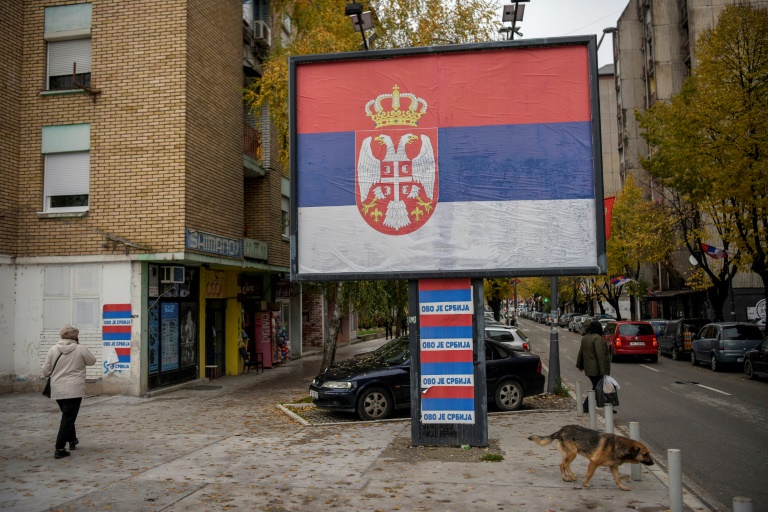
Kosovo’s prime minister, accused by Brussels of scuppering talks to resolve a row over a scheme to replace Serbian numberplates, said on Tuesday he had delayed the plan for two days.

The dispute erupted after Kosovo said the country’s ethnic Serbs would be penalised if they did not swap vehicle licence plates issued by Serbia for registration numbers issued by Pristina.

The underlying source of tension is Kosovo’s 2008 declaration of independence from Serbia. The latter does not recognise the move and has encouraged Kosovo’s Serb minority to remain loyal to Belgrade.  

Kosovar Prime Minister Albin Kurti said on Twitter early on Tuesday he had accepted a request from Washington “for a 48-hour postponement of the introduction of fines” for cars with Serbian plates.

The delay helped calm tensions in northern Kosovo, a day after EU-mediated negotiations between Belgrade and Pristina over the potentially explosive scheme failed to produce results.

“I am happy to work with the US and the EU to find a solution during the next two days,” Kurti tweeted.

The dispute has sounded alarm bells in the European Union, which has been seeking to normalise ties between Serbia and Kosovo and wants both to refrain from provocative gestures.

The US ambassador to Kosovo, Jeffrey Hovenier, also voiced concern over the failure to resolve the number plate row, which has the potential to trigger a regional crisis.

In the latest development this month, Serbs in northern Kosovo resigned from public institutions in protest over the scheme. 

Of Kosovo’s 120,000-strong minority, around 10,000 have Serbia-issued car registrations.

– Cooling-off period –

Washington had requested the two-day delay “to allow the EU and the United States to further engage the parties to find a solution”, Hovenier tweeted.

Police had been due to start issuing 150-euro ($154) fines to cars with Serbian plates from 8:00 am (0700 GMT) on Tuesday. A total ban is to come into force in April 2023.

The EU’s top diplomat, Josep Borrell, on Monday hosted negotiations in Brussels between Kurti and Serbian President Aleksandar Vucic.

Afterwards, Borrell said Vucic had been ready to accept an EU compromise proposal “that could have avoided this risky situation” but Kurti had not.  

Returning to Belgrade, Vucic said the situation was on the “verge of conflict”.

“There is an enormous anger among the Serbs in northern Kosovo,” he said in a public address. He added he would ask the latter to “try to preserve peace”.

Borrell urged Pristina not to implement its licence plate law and Belgrade not to issue new plates bearing Kosovar city initials. He said a cooling-off period would allow time and space for diplomacy to resume.  

Baidu revenue up 2% amid cost-cutting drive

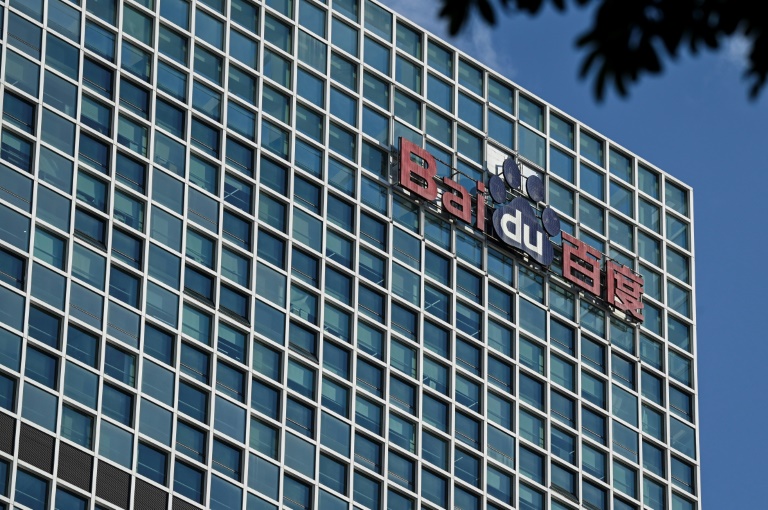
Chinese internet giant Baidu reported on Tuesday third-quarter revenues of 32.5 billion yuan ($4.6 billion), representing a year-on-year increase of 2 percent.

Its earnings report showed Baidu posted a net loss of 146 million yuan for the three months through September as it reined in costs and trimmed back far deeper losses from the equivalent quarter last year.

Chinese technology majors have struggled in recent months amid an economic slowdown, Covid-19 curbs that have hammered consumer sentiment, and tighter regulatory scrutiny.

Earnings reports from internet titans, including Alibaba and JD.com, have presented a mixed picture in recent weeks.

“Baidu Core delivered a solid set of financial and operational results in the third quarter, despite the continued challenges posed by the Covid-19 resurgence,” said CEO Robin Li.

The core business “resumed positive growth, driven by a gradual recovery of our online marketing business and the steady growth of our AI Cloud revenue”, Li said, hailing “significant progress in intelligent driving”.

“Looking ahead, we expect our mobile ecosystem to continue generating strong cash flow and fund our investment in AI Cloud and intelligent driving, which will help … drive long-term business growth,” he said.

Beijing-based Baidu reported a third-quarter loss of 16.6 billion yuan last year, despite revenues rising 63 percent year-on-year to 31.9 billion yuan at the time.

The company, which operates China’s biggest online search engine, has diversified in recent years into artificial intelligence, cloud computing and autonomous driving technologies as advertising revenue has remained sluggish.

– Mixed bag –

Beijing has wrought a sweeping crackdown on the tech industry since late 2020 as part of an effort to curb monopolistic practices and promote competition between internet platforms.

But the strategy of record fines, torched IPOs and probes into major firms have hit revenues and placed further strain on the ailing economy.

E-commerce titan Alibaba announced last week a third-quarter loss of 20.6 billion yuan, which it partly blamed on a “decrease in market prices of our equity investments in publicly traded companies”.

Rival JD.com reported a sales rise of 11 percent year-on-year, although neither platform released full revenue figures for the “Singles’ Day” shopping bonanza this month, considered a barometer of Chinese consumer sentiment.

Despite recently announcing the loosening of coronavirus policies, some Chinese authorities are persisting with a zero-tolerance strategy of snap lockdowns that have disrupted business operations in some areas. 

Italy's draft budget centres on energy aid

Italy’s new far-right government unveiled its 2023 draft budget on Tuesday, with most of the nearly 35 billion euros in spending going on the energy crisis rather than flashy electoral promises.

More than 21 billion euros will go towards supporting households and businesses in the face of soaring utility bills, leaving little left over for voter-pleasing pledges, such as large tax cuts.

The budget is “prudent and realistic” and “sustainable for public finances”, taking into account the economic situation, especially international, the government said. 

Among the measures are aid for the payment of electricity bills and fatter tax credits for companies whose energy costs have been rising steadily.

Prime Minister Giorgia Meloni, keen to dissociate her government from Italy’s 2018 experience of populist rule, has largely adopted the prudent approach of her predecessor, Mario Draghi.

The League party, Meloni’s coalition partner, has pressed for big spending. But Economy Minister Giancarlo Giorgetti — who hails from the party’s moderate wing — opted for fiscal responsibility.

Italy raised its 2023 public deficit forecast earlier this month to 4.5 percent of gross domestic product (GDP), above the 3.4 percent forecast in September by Draghi’s government.

But the deficit is forecast to fall to 3.7 percent in 2024 and three percent in 2025, according to an economic roadmap adopted by Rome.

The draft budget now heads to parliament, where it can be amended. It must then be adopted by both chambers by December 31.

“With the global economy slowing down and interest rates rising, it is forced to remain cautious” and carry out what electoral promises it can, a bit at a time, the former chief economist at the Treasury, Lorenzo Codogno, told AFP on Monday.

– Poverty relief –

The right-wing coalition’s flagship measure — the raising of the ceiling for a 15-percent flat-tax rate for the self-employed — does not go as far as initially expected.

Instead of upping the yearly salary cut-off point from 65,000 euros ($66,700) to 100,000 euros, it stops at 85,000 euros.

Employees will benefit from tax reductions of two percent for income up to 35,000 euros per year, as under Mario Draghi, and three percent for those salaries below 20,000 euros. 

In addition, companies hiring women aged under 36 will benefit from tax exemptions. 

Tax amnesties, another election promise, will be offered to people with tax debts of under 1,000 euros that were incurred before 2015. 

On cash payments, the government raised the limit from 2,000 euros to 5,000 euros — despite warnings from opposition parties that the move would favour corruption.

It also adjusted pension rules so people with 41 years of service can retire at 62 years old, a move affecting an estimated 48,000 people that is likely to be frowned upon in Brussels due to Italy’s ageing population.

The retirement age had been set to rise from 64 to 67 in 2023.

The new measures will be financed in part by reforming the so-called citizens’ income, a poverty relief scheme that Meloni has said will no longer go to adults able to work.

Those deemed fit to work will receive this income for only eight months in 2023, compared to 12 months for the others, and the system will be completely overhauled in 2024.

The government is also set to raise new revenues from a windfall tax on energy companies.

Asian markets mixed as China Covid worries grow

Growing fears about China’s latest Covid-19 outbreak on Tuesday rattled investors, who fear authorities will revert to highly restrictive containment measures that have already dealt a chilling blow to the world’s number two economy this year.

After starting November with a rally thanks to easing inflation concerns and signs China was edging towards a looser approach to the disease, the optimism has been given a massive jolt since the country announced its first virus deaths in six months.

Case numbers have surged across China, with residents in Beijing worried that a record number of new infections will lead to lockdown measures similar to those seen earlier in the year in Shanghai, which lasted for months.

The flare-ups came just a week after China said it would begin rolling back some of the strict Covid rules that have been in place since the pandemic started in 2020, even as the rest of the world has moved on.

Analysts said the latest developments highlight the long road ahead for China in emerging from the crisis as President Xi Jinping sticks solidly to a zero-Covid strategy that is widely blamed for the country’s economic troubles.

“Risk sentiment has been under pressure on questions around China reopening,” said SPI Asset Management’s Stephen Innes.

“Some investors are convinced that China’s reopening is a formality and will be catalysed by the (World Health Organization) downgrading Covid to an endemic (disease),” he added.

“We know that China’s reopening will be laced with fits and starts as the two-step-forward-one-step-back routine becomes the norm.”

Hong Kong, which thundered more than 10 percent higher in a three-day surge earlier this month, fell for a fifth straight day, while Seoul was also lower along with Wellington, Bangkok and Jakarta.

Still, there were gains in Tokyo, Shanghai, Sydney, Singapore, Taipei, Manila and Mumbai.

London and Paris rose but Frankfurt fell.

– Eyes on Fed minutes –

That came after a drop on Wall Street, where trading was lighter than usual owing to the Thanksgiving break at the end of the week.

Wednesday sees the release of minutes from the US Federal Reserve’s most recent policy meeting, which will be pored over for insight into officials’ thinking against the backdrop of four-decade-high inflation and signs of a slowing economy.

Hopes that the bank will begin to take its foot off the pedal were boosted earlier this month by figures showing inflation slowed more than expected, suggesting a series of hikes were beginning to bite.

Still, several members of the Fed’s top brass have warned against getting carried away and said more increases were needed to get on top of prices.

But JPMorgan Chase & Co’s Marko Kolanovic said markets would likely stumble into the new year and only pick up once the US central bank takes a more dovish stance on borrowing costs.

JPMorgan saw risk assets to trade “rangebound with a more pronounced downside risk”.

– Key figures around 0815 GMT –

Tokyo – Nikkei 225: UP 0.6 percent at 28,115.74 (close)

Hong Kong – Hang Seng Index: DOWN 1.3 percent at 17,424.41 (close)

Shanghai – Composite: UP 0.1 percent at 3,088.94 (close)

London – FTSE 100: UP 0.5 percent at 7,412.83

Euro/dollar: UP at $1.0261 from $1.0245 on Monday

Dollar/yen: DOWN at 141.86 yen from 142.10 yen

Pound/dollar: UP at $1.1844 from $1.1823

Euro/pound: UP at 86.64 pence from 86.58 pence

West Texas Intermediate: UP 0.7 percent at $80.62 per barrel

Brent North Sea crude: UP 0.9 percent at $88.22 per barrel

New York – Dow: DOWN 0.1 percent at 33,700.28 (close)

— Bloomberg News contributed to this story —

Close Bitnami banner
Bitnami