US Business

New wave of Russian strikes batter Ukraine grid as first snow falls

Fresh Russian strikes hit cities across Ukraine on Thursday, the latest in a wave of attacks that have crippled the country’s energy infrastructure as winter sets in and temperatures drop.

Repeated barrages have disrupted electricity and water supplies to millions of Ukrainians, but the Kremlin blamed civilians’ suffering on Kyiv’s refusal to negotiate, rather than on Russian attacks.

AFP journalists in several Ukrainian cities said the latest strikes coincided with the first snow this season, after officials in Kyiv warned of “difficult” days ahead.

The capital’s regional administration said, “Four missiles and five Shahed drones were shot down over Kyiv,” referring to Iranian-made suicide drones Moscow has been deploying in swarms against Ukraine targets.

The salvoes also came as Moscow and Kyiv confirmed the extension of an agreement allowing Ukraine to export grain through the Black Sea, which aims to help ease pressure on the global supply of food.

Ukraine has faced a series of strikes against its power grid following battlefield victories against Russia, the latest being Moscow’s retreat from the southern city of Kherson.

Ukrainian ombudsman Dmytro Lubynets on Thursday described the scale of torture uncovered in Kherson as “horrific”.

Since the Russians retreated last week following eight months of occupation, chilling accounts have started to emerge from Kherson.

Lubynets said the authorities had found “torture chambers” where dozens of people had been abused and killed.

On Thursday, Kherson residents were scrambling to stockpile aid such as food, blankets, diapers and winter clothing, with shouting matches and shoving erupting as volunteers tossed supplies into the crowds waiting for hours in freezing rain.

An earlier stage of the conflict engulfing the nation saw Malaysia Airlines flight MH17 brought down over Ukraine in 2014, killing all 298 people on board.

A Dutch court on Thursday sentenced two Russians and a Ukrainian to life in prison over the plane’s downing with a Russian-supplied missile, but none of the suspects were in court.

Ukrainian President Volodymyr Zelensky hailed the “important” ruling but said the people ultimately responsible must be brought to justice too.

Moscow dismissed the ruling as politically motivated from a court under “unprecedented pressure”.

The trial in the Netherlands could go down in history as “one of the most scandalous in the history of legal proceedings”, the foreign ministry said.

– ‘Difficult situation’ –

As Russia pursues the full-scale invasion of Ukraine, the head of the central region of Dnipropetrovsk, Valentyn Reznichenko, said strikes had hit the administrative centre of Dnipro. 

“An industrial enterprise has been hit. There is a big fire,” he said, later announcing that 23 people were injured, including a 15-year-old girl.

In the southern Odessa region, a Russian strike targeted infrastructure and the governor warned residents of the threat of a “massive” missile attack, urging them to seek shelter.

The eastern region of Kharkiv was also struck, governor Oleg Synegubov announced, adding that Russia hit “critical infrastructure” in strikes that injured at least three people.

Zelensky in response described Russia as a “terrorist state” and said Moscow “wants to bring Ukrainians only more pain and suffering”.

The Kremlin, however, said ultimately Kyiv was to blame for the fallout from the blackouts.

“The unwillingness of the Ukrainian side to settle the problem, to start negotiations, its refusal to seek common ground — this is their consequence,” Kremlin spokesman Dmitry Peskov said.

The largest wave of Russian missiles on cities across Ukraine earlier this week cut power to millions of homes, but supplies were largely restored within hours.

But Ukrainian energy company Ukrenergo said Thursday that the “cold snap” had brought increased demand in regions where electricity was recently restored, and Zelensky said more than 10 million people were without power after the fresh wave of strikes.

“We are doing everything to normalise the supply,” Zelensky added.

Government energy adviser Oleksandr Kharchenko told media that 50 percent of Ukrainians were experiencing disruptions.

– ‘Russia bears full responsibility’ –

Tensions spiked earlier this week after a missile landed in a Polish town on the border with Ukraine, and there was a flurry of accusations over who was responsible for the blast that killed two.

Zelensky, after previously saying a Russian missile was to blame, seemed to soften his comments on the incident that raised fears of a dangerous escalation.

“I don’t know what happened. We don’t know for sure. The world does not know,” Zelensky said.

Foreign Minister Dmytro Kuleba also appeared to roll back Kyiv’s position that it was a Russian missile that struck Poland following a call with US Secretary of State Antony Blinken.

“Our experts are already in Poland,” Kuleba tweeted. “We expect them to swiftly get access to the site in cooperation with Polish law enforcement.”

Webb observations point to a shorter cosmic dark age

The first galaxies may have formed far earlier than previously thought, according to observations from the James Webb Space Telescope that are reshaping astronomers’ understanding of the early universe.

Researchers using the powerful observatory have now published papers in the journal Astrophysical Journal Letters, documenting two exceptionally bright, exceptionally distant galaxies, based on data gathered within the first few days of Webb going operational in July.

Their extreme luminosity points to two intriguing possibilities, astronomers on a NASA press call said Thursday.

The first is that these galaxies are very massive, with lots of low-mass stars like galaxies today, and had to start forming 100 million years after the Big Bang which occurred 13.8 billion years ago. 

That is 100 million years earlier than the currently held end of the so-called cosmic dark age, when the universe contained only gas and dark matter.

A second possibility is that they are made up of “Population III” stars, which have never been observed but are theorized to have been made of only helium and hydrogen, before heavier elements existed. 

Because these stars burned so brightly at extreme temperatures, galaxies made of them would not need to be as massive to account for the brightness seen by Webb, and could have started forming later.

“We are seeing such bright, such luminous galaxies at this early time, that we’re really uncertain about what is happening here,” Garth Illingworth of the University of California at Santa Cruz told reporters.

The galaxies’ rapid discovery also defied expectations that Webb would need to survey a much larger volume of space to find such galaxies. 

“It’s sort of a bit of a surprise that there are so many that formed so early,” added astrophysicist Jeyhan Kartaltepe of the Rochester Institute of Technology.

– Most distant starlight –

The two galaxies were found to have definitely existed approximately 450 and 350 million years after the Big Bang.

The second of these, called GLASS-z12, now represents the most distant starlight ever seen.

The more distant objects are from us, the longer it takes for their light to reach us, and so to gaze at the distant universe is to see into the deep past.

As these galaxies are so distant from Earth, by the time their light reaches us, it has been stretched by the expansion of the universe and shifted to the infrared region of the light spectrum. 

Webb can detect infrared light at a far higher resolution than any instrument before it.

Illingworth, who co-authored the paper on GLASS-z12, told AFP disentangling the two competing hypotheses would be a “real challenge,” though the Population III idea was more appealing to him, as it would not require upending existing cosmological models.

Teams are hoping to soon use Webb’s powerful spectrograph instruments — which analyze the light from objects to reveal their detailed properties —  to confirm the galaxies’ distance, and better understand their composition.

The Atacama Large Millimeter/submillimeter Array (ALMA), a ground telescope in northern Chile, might also be able to help in weighing the mass of the two galaxies, which would help decide between the two hypotheses. 

“JWST has opened up a new frontier, bringing us closer to understanding how it all began,” summed up Tommaso Treu of the University of California at Los Angeles, principal investigator on one of the Webb programs.

Nancy Pelosi — master tactician who confronted Trump

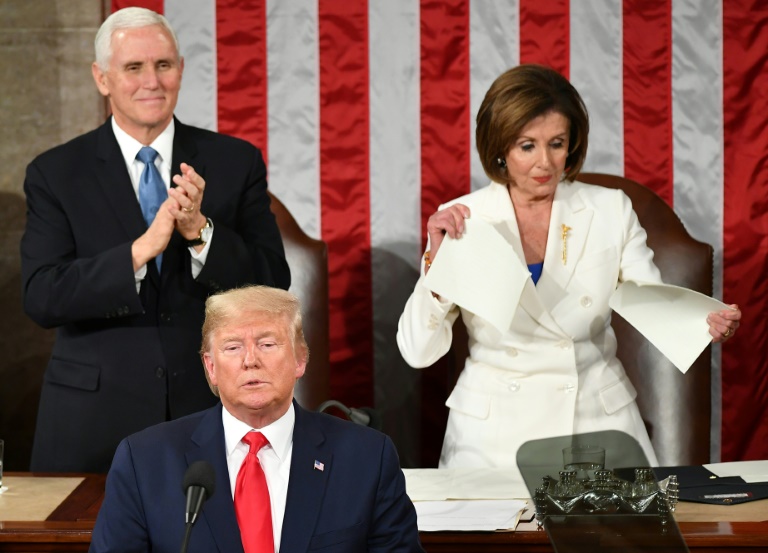
When Nancy Pelosi stunned the world by ripping up Donald Trump’s speech to Congress in 2020, the veteran lawmaker cemented the no-nonsense leadership style that made her perhaps the most effective US House speaker in history.

The longtime leader of Democrats in Washington has been a master strategist in the role, chastening the unbridled Trump and twice leading his impeachment, but also shepherding historic legislation as she navigated America’s bitter partisan divide.

As Pelosi announced she would be standing down from the leadership when Republicans take over the lower chamber, allies hailed her achievements as its first — and so far only — female speaker, while foes cheered her exit.

But there is little doubt the 82-year-old Californian has left an extraordinary mark over a career that established her as one of the most powerful, and polarizing, figures in American politics.

As a child, “never would I have thought that someday I would go from homemaker to House speaker,” Pelosi told fellow lawmakers Thursday, drawing applause from both sides of the aisle.

Come January, she said, it will be time to let “a new generation” take the reins.

– San Francisco liberal –

A San Francisco liberal and multimillionaire, Pelosi is far from universally popular.

She has long been a hate figure for the right — an animosity that seemed to reach shocking new levels when an intruder, apparently looking for the speaker, violently assaulted her husband in the runup to the November 8 midterms.

During the deadly 2021 assault on the US Capitol, supporters of then-president Trump ransacked her office, and a crowd baying for blood chanted “Where’s Nancy?” as they desecrated the halls of Congress.

The violence came after Trump refused to admit defeat and urged a rally to march on the Capitol to stop the certification of Joe Biden’s win.

Pelosi moved quickly after that to try to oust the man she called the “deranged, unhinged, dangerous president of the United States.”

Corralling Democrats with the tight grip she maintained on the party for two decades, she secured a second impeachment of the president days before he left office.

For as speaker, Pelosi was nothing if not effective.

She was instrumental in passing then-president Barack Obama’s key health care reforms as well as massive economic packages after both the 2008 financial crisis and the Covid-19 pandemic.

Pelosi’s goal may have been partisan but she succeeded thanks to cold-eyed realism, including working when needed with then-president George W. Bush even while fiercely opposing his invasion of Iraq.

Supporters believe she was vindicated on her anti-war stance and she was rewarded in 2007 when Democrats reclaimed the House and elected her speaker, making her the highest-ranking woman in US history until the inauguration of Vice President Kamala Harris in 2021.

“I want women to see that you do not get pushed around. You don’t run away from the fight,” Pelosi said in a 2018 interview — the year before she began her second term as speaker.

“If you’re effective as a woman, then they have to undermine you, because that’s a real threat.”

The one congressional job mentioned in the Constitution, the prestigious speaker position brings almost unfettered control over the day-to-day legislative process.

Pelosi had resisted Democratic calls to impeach Trump, the first time around, fearing the effects of overreach.

But she felt she had no choice after he was caught holding up US aid to Ukraine as he pressed a conspiracy theory about Biden.

That impeachment in 2019 poisoned her relationship with Trump, and as he wrapped up his State of the Union address later in the House chamber, Pelosi coolly tore up his speech — in an image that went instantly around the world.

Pelosi has often hit back at Trump rhetorically, and was captured on video reacting furiously to suggestions he might join his supporters during the Capitol insurrection.

“If he comes, I’m going to punch him out. I’ve been waiting for this,” she seethed.

“For trespassing on the Capitol grounds, I’m going to punch him out. And I’m going to go to jail, and I’m going to be happy.” 

– Steeped in politics –

The granddaughter of Italian immigrants, Pelosi was born in Baltimore where her father, Thomas D’Alesandro, was a mayor and congressman who schooled her in “retail politics” from a young age and staunchly backed Franklin Roosevelt’s New Deal.

Pelosi has said her family taught her two political lessons. “One is to know how to count — count your votes to win the election. The other is listen to your constituents.”

Pelosi attended her first Democratic National Convention before hitting her teens and was pictured with John F. Kennedy at his inaugural ball when she was 20.

She moved to San Francisco and raised five children with businessman Paul Pelosi while delving into Democratic politics before being elected to Congress at age 47.

Taking up causes important to a city with major LGBTQ and Asian-American communities, she fought to fund AIDS research and pressed human rights in China.

She remains a vocal ally of Tibet’s spiritual leader the Dalai Lama and won eternal antipathy from China’s communist leaders when, on a 1991 visit, she defiantly unfurled a banner in Tiananmen Square honoring pro-democracy students killed in a crushed uprising. 

While easily reelected to Congress every two years, the self-styled “mother, grandmother, dark chocolate connoisseur” became seen as a centrist by the standards of proudly left-wing San Francisco as she sought legislative compromise.

She will be stepping down at the end of a vexed congressional session in which she struggled to keep a lid on infighting between moderate and progressive Democrats.

This year she still managed to burnish her political legacy with a controversial trip to Taiwan — amid warnings from Beijing of “serious consequences.”

Defending the visit, she asked Americans to protect democracy worldwide and “make clear that we never give in to autocrats.”

And in her outgoing speech, Pelosi aimed once last barb at her presidential adversary. Saying she has “enjoyed working with three presidents,” Pelosi named George W. Bush, Obama and Biden — but left out Trump.

WWII veteran with US 101st Airborne Division dies at 101

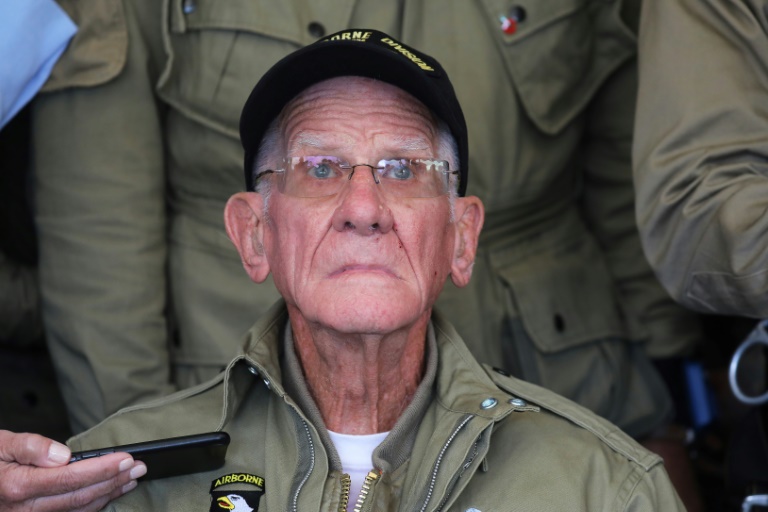
A US paratrooper who participated in the 1944 D-Day invasion, and lived to reenact the famed World War II landing 75 years later, has died aged 101, his unit — the 101st Airborne Division — announced Thursday.

“Today we say farewell to a 101st Airborne Legend, Tom Rice,” tweeted the US Army division.

In the night of June 5, 1944, Rice strapped himself with 110 pounds (50 kilograms) of weapons and supplies and joined his 9,000 comrades on a nighttime flight across the English Channel into Nazi-occupied Normandy.

His paratrooper division was tasked with securing the muddy roads around the village of Carentan, at the intersection of the Utah and Omaha beaches where Allied forces would land at daybreak.

Seventy-five years later and under much less clandestine circumstances, Rice made the jump again, as part of a series of anniversary commemorations.

Then 97-years-old, Rice waved a giant American flag as he descended, strapped to a parachutist who controlled their tandem jump.

“It feels great,” he said after landing to rapturous applause in a field outside Carentan. “I want to go back up and do it again!”

Rice told AFP that for years after the war, he was worried the local French would resent him and his fellow veterans for the destruction of towns and homes in the fight to defeat the Germans.

“We did a lot of damage. People were killed, artillery pock marks, stained glass windows destroyed,” said Rice, who became a history teacher in California after the war.

Jean-Pierre Lhonneur, Carentan’s mayor at the time, said, “All the veterans say that: ‘We destroyed your country.’

“They’re very surprised when we welcome them with open arms.”

The 101st Airborne, in its tweet, described Rice as “a humble man who just wanted to do his duty for his country.”

Trump fans dial down 'fraud' rhetoric after poll setback

False election fraud claims have not reached the fevered pitch widely expected after US midterm elections, with many conspiracy-peddling supporters of Donald Trump dialing back the rhetoric that observers say hurt Republican candidates.

Think tanks had warned of a prolonged post-election period of chaos and violence, especially after Trump supporters — who endorsed his “Big Lie” that the 2020 vote was rigged — seized on isolated poll glitches to make similar evidence-free claims.

But the misinformation drive appeared to lose steam after many of Trump’s handpicked candidates got a drubbing at the ballot box, with observers saying their vigorous “election denialism” may have put off voters.

There were nearly 600,000 mentions of voting fraud and similar ideas across Twitter in the week after the November 8 vote, according to Zignal Labs, which studies internet activity. 

That marked a significant drop compared to the 2020 election, when Zignal recorded more than 3.5 million such mentions in the same period.

This year, following a “surge” of the fraud narrative on election day when some tabulation machine glitches were reported in the swing state of Arizona, Zignal researchers found that such conversations tapered off 48 hours later.

Trump, who has regularly used his Truth Social platform to drum up support for the false narrative, himself appeared to steer clear of it when he announced Tuesday that he was entering the 2024 White House race.

In his fiery hour-long speech, he tore into his opponent President Joe Biden but barely touched upon fraud, after rumblings within his party that the former president’s “Big Lie” rhetoric had hurt them in the midterms.

– ‘New direction’ –

“Some part of the Republican party believes the embrace of these narratives demoralized the base, reduced turnout, and led to the selection of substandard candidates,” Michael Caulfield, a research scientist at the Center for an Informed Public at the University of Washington, told AFP.

“That part of the party needs to talk about the losses, because they want to make a case for a new party direction.”

Right-wing supporters and influencers were reeling in shock after the predicted Republican “red wave” did not materialize.

The party failed to wrest control of the Senate and took control of the House of Representatives with only a slim majority, in what was seen as a historically weak midterm performance.

A particular setback was the defeat of multiple Trump-backed candidates for secretary of state — critical posts that oversee elections — in battleground states where the former president tried to overturn his 2020 defeat.

“The public made clear with their votes that they did not want election deniers running elections, certainly in swing states where it was a possibility,” Pamela Smith, president of the nonpartisan nonprofit Verified Voting, told AFP.

The poor Republican showing has prompted some soul-searching even among far-right politicians in Arizona, where Trump-ally Kari Lake lost her race to be the governor of the state.

“We wonder now if we were in an echo chamber,” Republican state senator Wendy Rogers told a right-wing radio host, apparently alluding to her party’s messaging to voters.

“I’m just beginning to get some perspective,” added Rogers, who sparked an uproar earlier this year when she called for the execution of political enemies.

– ‘Winning strategy’ –

Kate Starbird, a disinformation researcher and assistant professor at the University of Washington, said it was “heartening” to see some right-wing influencers countering or shying away from unfounded voter fraud claims.

“They may be sensing that it isn’t a winning political strategy,” said Starbird.

But analysts cautioned that the impact of election denialism has not waned — and it could gather new momentum ahead of the 2024 presidential election.

On Thursday, Arizona’s Lake struck a defiant note after her defeat, posting a video on Twitter in which she railed against what she called the “broken election system” and “problems with tabulating machines” without offering evidence.

During the midterms, analysts say Trump’s election falsehoods did not get the expected traction in part because he remains banned on Twitter and Facebook.

That cut off his ability to reach the more than 100 million followers he once had, including major right-wing influencers.

His following on his own social network Truth Social is significantly smaller –- 4.5 million –- and while screenshots of his posts are often shared on other platforms, analysts say his reach is comparatively limited.

But even though the volumes of falsehoods ebbed, they did not disappear.

“The underlying (conspiracy) engine is still churning away, and if influencers decide to engage with it, we are instantly back where we started,” said Caulfield.

“Right now, many have decided the long term harm of engaging with the conspiracy engine isn’t worth the benefit. As Trump inserts himself into 2024, we’ll see if that holds.”

Starbucks staff go on strike in US stores over labor talks

Starbucks workers in the United States went on strike at multiple unionized locations Thursday, a move planned to affect over 100 stores in protest against the coffee giant’s approach in negotiating union contracts.

Dubbed the “Red Cup Rebellion,” the one-day strike led by Starbucks Workers United coincides with a popular event in which stores hand out reusable cups with certain purchases.

Instead of the branded cups, staff gave out red union cups to interested customers.

Employees could be seen protesting in the cold near Times Square in New York, chanting and holding signs of Starbucks Workers United, which represents nearly 7,000 employees across the United States.

“It’s something that is worth fighting for,” one of the staff, 18-year-old Jay Tosa, told AFP.

The action takes place in “response to Starbucks’ union-busting tactics and refusal to bargain,” Starbucks Workers United said in a statement.

The group added that workers wanted the right to organize a union free of intimidation.

“Unless Starbucks comes to the table and bargains in good faith for a fair contract, we can count on this to happen again,” the union said, raising concerns over salaries and a lack of consistent schedules.

– ‘A lot of support’ –

“During the morning rush hour, we got a lot of support from our regulars,” said another New York-based employee Hal Battjes.

Some commuters chose to give up their morning coffee, added the 21-year-old, who had been on the sidewalk with a megaphone since 5:30 am.

A Starbucks spokesperson said the company is “aware that union demonstrations are scheduled at a small number of our US company-owned stores.”

“We respect their right to engage in lawful protest activity,” the spokesperson said, adding that Starbucks continues to urge the union to meet representatives at the bargaining table.

Workers at two Starbucks cafes in Buffalo, New York, voted to set up a union in late 2021, marking the first at the coffee chain’s company-owned shops in the United States.

Now, Starbucks Workers United represents more than 260 locations — a fraction of around 10,200 stores that Starbucks manages in North America.

The company’s management has been accused of intimidation and being slow to start negotiations on collective agreements.

The National Labor Relations Board has issued dozens of complaints against Starbucks, according to Starbucks Workers United.

Beyond efforts at Starbucks, there has been a spread of union drives to a growing slate of corporations, including Apple, REI, Chipotle and Trader Joe’s.

Blizzard to pull popular games from China after license spat

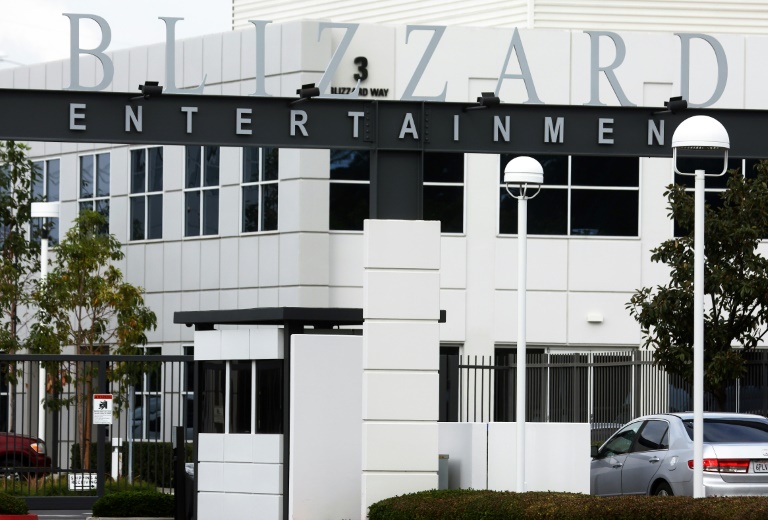
US gaming giant Blizzard Entertainment will suspend most of its services in China from January, the company said Thursday, after it failed to reach a licensing deal with local firm NetEase.

Producer of some of the best-known titles in video gaming, including “World of Warcraft” and “Overwatch”, Blizzard has operated since 2008 in China — the world’s biggest gaming market.

But the firm said it had failed to reach an agreement with Chinese publisher NetEase over an extension to their 14-year partnership.

“We will suspend new sales in the coming days and Chinese players will be receiving details of how this will work soon,” Blizzard Entertainment, a subsidiary of California-based Activision Blizzard, said in a statement.

Microsoft in January offered to buy Activision Blizzard for $69 billion, but the deal has yet to be finalised as anti-trust authorities examine it.

Negotiations with NetEase fell apart, the company said, after the two sides failed to strike a deal that is “consistent with Blizzard’s operating principles and commitments to players and employees”. It did not share further details.

Foreign companies require a license with Chinese publishers in order to sell their games. 

Activision Blizzard, for example, distributes its “Call of Duty” franchise through Tencent, the worlds’ biggest gaming company by revenue.

The break-up comes as Chinese gaming giants are expanding abroad, buying promising studios or expanding their ownership in major publishers in Europe.

– ‘Love and support’ –

Analysts said that the row with NetEase did not mean that Blizzard was leaving China and that the company was expected to find new ways to stay in the market, including through a possible tie-up with Tencent.

“It’s worth noting that this isn’t the first time that Blizzard has done something like this in China,” said Daniel Ahmad, a senior analyst at Niko Partners.

Before working with NetEase, Blizzard had a similar deal with a company called The9, before ending the partnership.

Ahmad said the news was reverberating across the gaming world in China and was a trending topic on Weibo, the Chinese version of Twitter.

Reactions poured in from gamers who were born in the 80s or 90s that grew up playing Blizzard video games as well as younger ones who had discovered the company on mobile, said Ahmad. 

Blizzard thanked local players for their “love and support”, saying it “sincerely looked forward to bringing Blizzard games back to you in the future”.

Upcoming releases for “World of Warcraft: Dragonflight”, “Hearthstone: March of the Lich King”, and season two of “Overwatch 2” will go ahead later this year, the company added.

NetEase’s Hong Kong-listed shares fell more than 9 percent on Thursday.

The Chinese gaming giant said the expiration of the licenses would have “no material impact on NetEase’s financial results”, in a stock exchange filing Thursday.

Blizzard to pull popular games from China after license spat

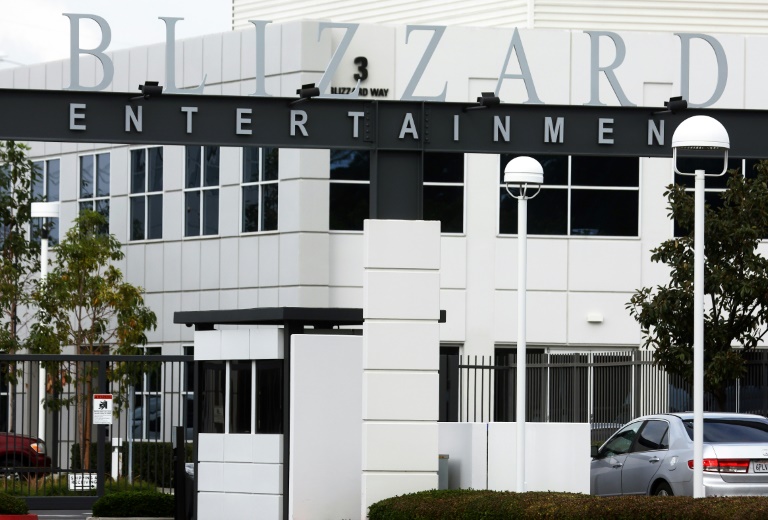
US gaming giant Blizzard Entertainment will suspend most of its services in China from January, the company said Thursday, after it failed to reach a licensing deal with local firm NetEase.

Producer of some of the best-known titles in video gaming, including “World of Warcraft” and “Overwatch”, Blizzard has operated since 2008 in China — the world’s biggest gaming market.

But the firm said it had failed to reach an agreement with Chinese publisher NetEase over an extension to their 14-year partnership.

“We will suspend new sales in the coming days and Chinese players will be receiving details of how this will work soon,” Blizzard Entertainment, a subsidiary of California-based Activision Blizzard, said in a statement.

Microsoft in January offered to buy Activision Blizzard for $69 billion, but the deal has yet to be finalised as anti-trust authorities examine it.

Negotiations with NetEase fell apart, the company said, after the two sides failed to strike a deal that is “consistent with Blizzard’s operating principles and commitments to players and employees”. It did not share further details.

Foreign companies require a license with Chinese publishers in order to sell their games. 

Activision Blizzard, for example, distributes its “Call of Duty” franchise through Tencent, the worlds’ biggest gaming company by revenue.

The break-up comes as Chinese gaming giants are expanding abroad, buying promising studios or expanding their ownership in major publishers in Europe.

– ‘Love and support’ –

Analysts said that the row with NetEase did not mean that Blizzard was leaving China and that the company was expected to find new ways to stay in the market, including through a possible tie-up with Tencent.

“It’s worth noting that this isn’t the first time that Blizzard has done something like this in China,” said Daniel Ahmad, a senior analyst at Niko Partners.

Before working with NetEase, Blizzard had a similar deal with a company called The9, before ending the partnership.

Ahmad said the news was reverberating across the gaming world in China and was a trending topic on Weibo, the Chinese version of Twitter.

Reactions poured in from gamers who were born in the 80s or 90s that grew up playing Blizzard video games as well as younger ones who had discovered the company on mobile, said Ahmad. 

Blizzard thanked local players for their “love and support”, saying it “sincerely looked forward to bringing Blizzard games back to you in the future”.

Upcoming releases for “World of Warcraft: Dragonflight”, “Hearthstone: March of the Lich King”, and season two of “Overwatch 2” will go ahead later this year, the company added.

NetEase’s Hong Kong-listed shares fell more than 9 percent on Thursday.

The Chinese gaming giant said the expiration of the licenses would have “no material impact on NetEase’s financial results”, in a stock exchange filing Thursday.

S. Korea, Saudi Arabia agree to boost energy and defence ties

The leaders of South Korea and Saudi Arabia agreed Thursday to boost ties in key sectors such as energy and defence, with the oil-rich kingdom signing a slew of deals including a $6.7 billion petrochemical agreement.

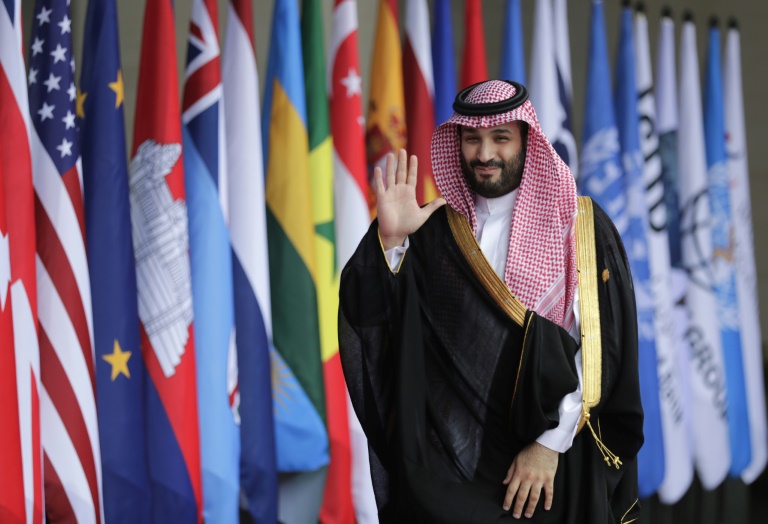
President Yoon Suk-yeol met with Saudi Arabia’s Crown Prince Mohammed bin Salman in the South Korean capital Thursday, announcing a plan to transform bilateral ties into a “strategic partnership”.

Bin Salman, the kingdom’s 37-year-old de facto ruler, often referred to as MBS, arrived in Seoul late Wednesday after attending the Group of 20 summit in Bali, Indonesia. 

Yoon and bin Salman agreed to elevate ties into a “future oriented strategic partnership,” Yoon’s office said in a statement.

The South Korean president wants to see local companies join key Saudi projects such as the futuristic mega-city known as NEOM, and boost cooperation in the defence and energy sectors.

Bin Salman “especially expressed his wish for a significant increase in cooperation in energy, defence and construction industries,” Yoon’s office said.

During the visit, the two governments and companies from both countries — including some of Seoul’s top conglomerates — signed about 20 deals in areas from agriculture to railways.

The Saudi investment ministry said the agreements were worth roughly $30 billion and covered sectors including energy, manufacturing, financial services and pharmaceuticals.

Among the agreements was Saudi investment for South Korean refiner S-OIL’s Shaheen project, which would build petrochemical production facilities in South Korea worth $6.7 billion, Yoon’s office said.

Bin Salman has tried to jumpstart efforts to diversify the economy of Saudi Arabia, the world’s biggest crude exporter, away from oil and to grow the private sector, and Saudi officials look to South Korea as a possible model. 

“Driven by the private sector, Korea’s successful economy and the global positioning of so many Korean companies, which are household names, are testament to Korea’s strategy’s success,” Saudi investment minister Khalid al-Falih said.

“The Korean model has been a benchmark for Saudi Arabia’s Vision 2030 and National Investment Strategy, which aim to increase the private sector’s contribution to the economy to 65 percent of GDP by the end of this decade.”

– Asia tour –

Bin Salman is on a multi-stop Asian tour in a bid to shore up the Gulf nation’s ties with its biggest energy market.

He left South Korea on Thursday for Bangkok, where he is scheduled to attend the Asia-Pacific Economic Cooperation (APEC) forum.

The trip comes as Riyadh feuds with Washington over the OPEC+ oil cartel’s October decision to cut production by two million barrels per day.

Bin Salman, who was officially made prime minister in September, has shaken up the ultraconservative oil titan with economic, social and religious reforms since his meteoric rise to power.

He gained global notoriety in connection with the 2018 killing of dissident Saudi journalist Jamal Khashoggi in the kingdom’s Istanbul consulate.

Last year, US President Joe Biden declassified an intelligence report that found bin Salman had approved the operation against Khashoggi, an assertion Saudi authorities deny.

FBI probing cases of bomb-laden drones in US

FBI Director Christopher Wray said Thursday the agency is investigating several cases in which people sought to fly drones equipped with home-made bombs within the United States.

“We are investigating, even as we speak, several instances within the US of attempts to weaponize drones with homemade IEDs,” Wray told a Senate hearing, referring to improvised explosive devices.

Wray said the threat of widely available drones has risen quickly with rapid technological advances “in terms of their visibility, the speed with which they can move, the distance with which they can move, and also the loads that they can carry.”

“These are extraordinarily sophisticated tools that can carry drugs that can launch weaponry, and we must be able to counter it,” he said. 

Wray, speaking in a hearing on domestic threats by the Senate Homeland Security Committee, did not provide any detail on the armed drone cases.

But the rapid increase in the use of armed unmanned aerial vehicles in the Ukraine war, including cheap hobbyist drones jury-rigged with grenades and mortar shells, has demonstrated how easy they are to make and deploy.

“That is the future that is here now,” Wray said, urging legislation to expand the powers of the FBI and other authorities to counter the security threat of private drones.

Close Bitnami banner
Bitnami