US Business

Nomadic Latino migrant labor aids Florida hurricane recovery

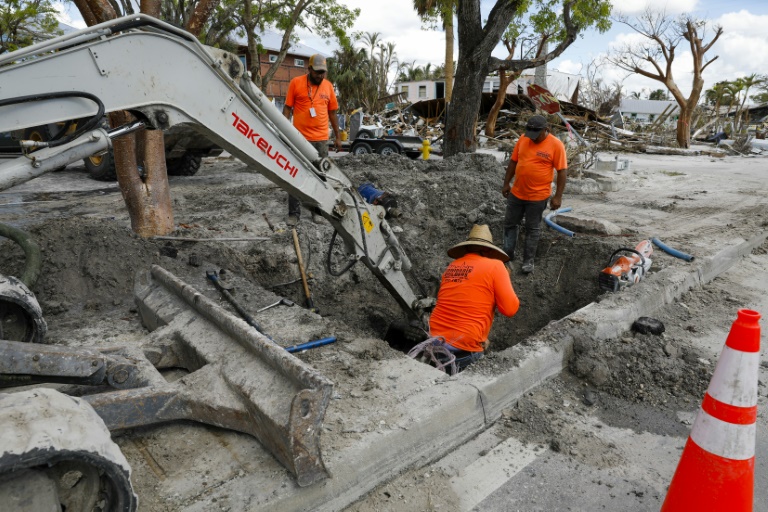
Hour by hour, day by day, hurricane-devastated southwest Florida is starting to get back on its feet — and the workers doing the hard labor are largely undocumented migrants.

They have names like Jael, Juan and Francisco Antonio, and they flooded into Florida from other Gulf Coast states, and even from Mexico, to take on work.

Many are perpetual nomadic workers, traveling from one natural disaster to another, toiling by day and sleeping in cars and trucks at night. 

Since Hurricane Ian smashed into southwest Florida on September 28, killing some 125 people and leaving tens of billions of dollars in damage, the workers have been busily tearing down damaged homes, clearing wreckage, repairing roofing and beginning reconstruction.

Ian was a dangerous Category 4 monster of a storm, and the reconstruction work has been intense and vital to recovery in a state led by Governor Ron DeSantis, who has sought to make a national name for himself as a crusader against the very immigrants now doing the rebuilding.

Little more than a week before the storm hit, the Republican governor chartered two planes to carry migrants from Texas to Martha’s Vineyard, a quaint vacation destination in the Democratic stronghold of Massachusetts.

The flights captured headlines and underscored the discontent of DeSantis and many other Republican leaders at how President Joe Biden, a Democrat, is handling a migrant crisis at the Mexican border. 

Francisco Antonio Rivera, a 46-year-old Honduran, doesn’t like DeSantis’s policies. But that didn’t stop him from traveling to Fort Myers, epicenter of the hurricane-damaged area, to offer his services as a mason. 

“Latinos are the heart of the United States. Nonetheless, they arrest us on coming here and treat us any way they like,” he said, resignation in his voice.

Rivera is undocumented and has lived for 17 years in New Orleans, Louisiana. He’s experienced at disaster recovery. He worked in Panama City, in the Florida Panhandle, after Hurricane Michael hit in 2018, and labored in Louisiana in 2021 after Hurricane Ida struck.  

– Critical workforce –

On a recent Wednesday, Rivera is not having any luck. No one has hired him for the day. So he waits, a cap on his head to protect him from the sun, seated on the open trunk to his car.

Around him, a dozen other Latinos pass the time with him, waiting in the parking lot of a hardware store. Homeowners and contractors come most days to places like this to hire day labor.

There’s no lack of work in Fort Myers Beach. More than a month after the storm, rubble lines streets of the barrier island where the hurricane ripped off roofs, knocked down walls and flooded countless homes with storm surge.

Thousands of migrants toil in Southwest Florida these days, said Saket Soni, director of Resilience Force, a nonprofit that helps US cities recover from disaster. 

This nomadic workforce, comprising mostly Latinos, is what “makes recovery possible” after natural disasters, Soni said. “They rebuild homes, schools and hospitals. They sort of help all the broken infrastructure come back together.”

They work under the sun and in the rain. They climb on roofs, handle chemical products, and then at night sleep in their cars because they have nowhere else to go, Soni said.

“When we go to work, we do so with enthusiasm and hopes of getting ahead,” says Jael Cruz, 44, a Honduran who traveled from Texas to Fort Myers. 

“When you come from a country like ours, you come in search of the American dream, and the American dream is to work.” 

– Vulnerable laborers –

But the desire to work without papers leaves the laborers exposed to potential abuse by employers, and sometimes they are stiffed of wages, given less than promised, and subjected to threats that they’ll be turned over to immigration authorities if they complain, Soni said.

Juan Martínez, a Mexican who asked to use a pseudonym for fear of immigration authorities, got a friendly visit from Resilience Force workers a few days ago. 

Since then, he carries a card that reminds him to “ask for an advance of the work to be done” and take “before and after photos of the work.” 

The 50-year-old Mexican traveled from his homeland to Fort Myers when he heard of news of Ian’s devastation. He’d made the same trip to do labor after hurricanes Michael and Ida, and knew that Florida would need help from masons like him.

He’d found work at several jobsites, and said so far that homeowners had treated him fairly.

He only hopes that his work — and that of other laborers — may change the outlook of authorities and residents of the region. 

“We need them, and they need us,” Martinez said. “I would like them to realize that we are here to help.” 
Nomadic Latino migrant labor aids Florida hurricane recovery

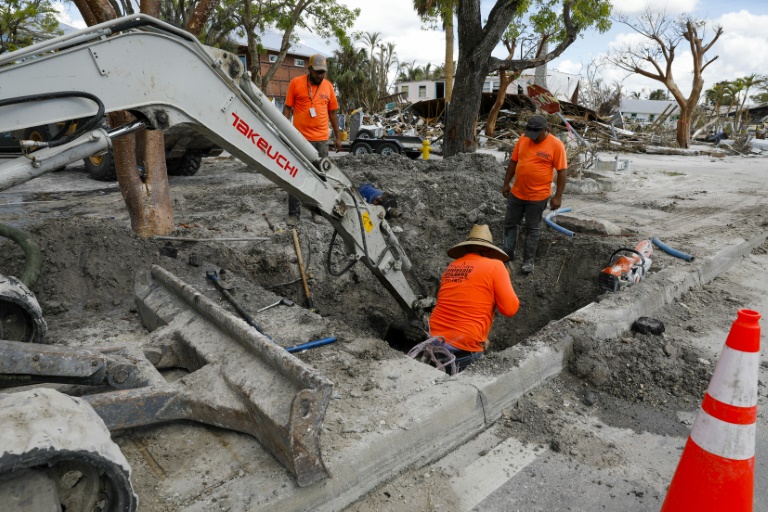
Hour by hour, day by day, hurricane-devastated southwest Florida is starting to get back on its feet — and the workers doing the hard labor are largely undocumented migrants.

They have names like Jael, Juan and Francisco Antonio, and they flooded into Florida from other Gulf Coast states, and even from Mexico, to take on work.

Many are perpetual nomadic workers, traveling from one natural disaster to another, toiling by day and sleeping in cars and trucks at night. 

Since Hurricane Ian smashed into southwest Florida on September 28, killing some 125 people and leaving tens of billions of dollars in damage, the workers have been busily tearing down damaged homes, clearing wreckage, repairing roofing and beginning reconstruction.

Ian was a dangerous Category 4 monster of a storm, and the reconstruction work has been intense and vital to recovery in a state led by Governor Ron DeSantis, who has sought to make a national name for himself as a crusader against the very immigrants now doing the rebuilding.

Little more than a week before the storm hit, the Republican governor chartered two planes to carry migrants from Texas to Martha’s Vineyard, a quaint vacation destination in the Democratic stronghold of Massachusetts.

The flights captured headlines and underscored the discontent of DeSantis and many other Republican leaders at how President Joe Biden, a Democrat, is handling a migrant crisis at the Mexican border. 

Francisco Antonio Rivera, a 46-year-old Honduran, doesn’t like DeSantis’s policies. But that didn’t stop him from traveling to Fort Myers, epicenter of the hurricane-damaged area, to offer his services as a mason. 

“Latinos are the heart of the United States. Nonetheless, they arrest us on coming here and treat us any way they like,” he said, resignation in his voice.

Rivera is undocumented and has lived for 17 years in New Orleans, Louisiana. He’s experienced at disaster recovery. He worked in Panama City, in the Florida Panhandle, after Hurricane Michael hit in 2018, and labored in Louisiana in 2021 after Hurricane Ida struck.  

– Critical workforce –

On a recent Wednesday, Rivera is not having any luck. No one has hired him for the day. So he waits, a cap on his head to protect him from the sun, seated on the open trunk to his car.

Around him, a dozen other Latinos pass the time with him, waiting in the parking lot of a hardware store. Homeowners and contractors come most days to places like this to hire day labor.

There’s no lack of work in Fort Myers Beach. More than a month after the storm, rubble lines streets of the barrier island where the hurricane ripped off roofs, knocked down walls and flooded countless homes with storm surge.

Thousands of migrants toil in Southwest Florida these days, said Saket Soni, director of Resilience Force, a nonprofit that helps US cities recover from disaster. 

This nomadic workforce, comprising mostly Latinos, is what “makes recovery possible” after natural disasters, Soni said. “They rebuild homes, schools and hospitals. They sort of help all the broken infrastructure come back together.”

They work under the sun and in the rain. They climb on roofs, handle chemical products, and then at night sleep in their cars because they have nowhere else to go, Soni said.

“When we go to work, we do so with enthusiasm and hopes of getting ahead,” says Jael Cruz, 44, a Honduran who traveled from Texas to Fort Myers. 

“When you come from a country like ours, you come in search of the American dream, and the American dream is to work.” 

– Vulnerable laborers –

But the desire to work without papers leaves the laborers exposed to potential abuse by employers, and sometimes they are stiffed of wages, given less than promised, and subjected to threats that they’ll be turned over to immigration authorities if they complain, Soni said.

Juan Martínez, a Mexican who asked to use a pseudonym for fear of immigration authorities, got a friendly visit from Resilience Force workers a few days ago. 

Since then, he carries a card that reminds him to “ask for an advance of the work to be done” and take “before and after photos of the work.” 

The 50-year-old Mexican traveled from his homeland to Fort Myers when he heard of news of Ian’s devastation. He’d made the same trip to do labor after hurricanes Michael and Ida, and knew that Florida would need help from masons like him.

He’d found work at several jobsites, and said so far that homeowners had treated him fairly.

He only hopes that his work — and that of other laborers — may change the outlook of authorities and residents of the region. 

“We need them, and they need us,” Martinez said. “I would like them to realize that we are here to help.” 
Will robots replace humans at Amazon?

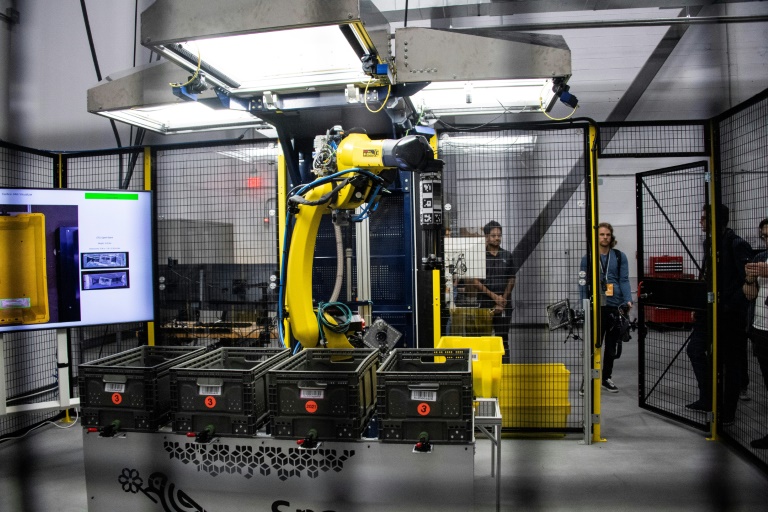
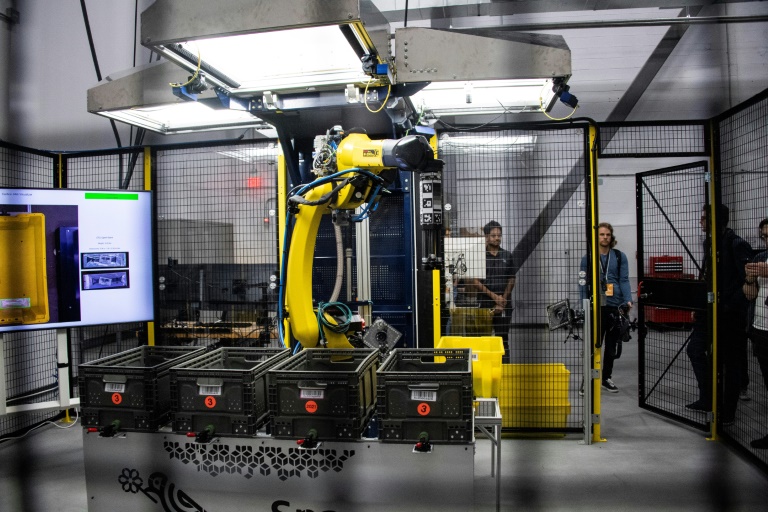
At Amazon’s robotics laboratory on the outskirts of Boston, Massachusetts, the company’s newest automaton “Sparrow” picks out items to be shipped to customers, displaying human hand-like dexterity.

It is the e-commerce giant’s most advanced robot yet and could soon do the job of the hundreds of thousands of Amazon employees who sort and send five billion packages annually.

The development of “Sparrow,” and other robots like “Robin” and “Cardinal,” are fueling fears that Amazon’s warehouses will one day be run by machines, leading to huge layoffs.

Amazon’s robotics chief Tye Brady plays down such concerns, which have been expressed by labor unions.

“It’s not machines replacing people,” he tells journalists during a tour of the laboratory, which opened in Westborough in October last year.

“It’s actually machines and people working together in order to collaborate to do a job.”

Equipped with cameras and cylindrical tubes, Sparrow can successfully detect and select an individual item from millions of products of different shapes and sizes.

It gently sucks up items that arrive on a conveyor belt and distributes them into the appropriate basket in front of it using its robotic arm.

Robin and Cardinal can only redirect entire packages, making Sparrow Amazon’s first robot to be able to handle individual products.

“Given the variety of materials we have in our warehouses, Sparrow is a significant accomplishment,” says Brady.

Working with the robotic trio is a small army of machines, including “Proteus,” which can carry hundreds of kilograms of items around warehouses.

The creations will free employees from repetitive tasks to focus on “more rewarding and interesting” activities while “improving safety,” Brady insists.

Amazon’s focus is ensuring that as little time as possible passes between the moment a customer orders an item and the moment it arrives at his or her door.

– Drones –

That goal has led some workers to accuse the company of treating them like “slaves” and of depriving them of food and toilet breaks.

In statements, Amazon has insisted it provides “a safe and positive workplace” for employees and, apart from one warehouse in New York, has resisted unionization.

Amazon’s desire to deliver items quicker is driving its investment in automation.

By the end of this year it will begin delivering packages weighing up to two kgs in less than an hour from warehouses in Lockeford, California and College Station, Texas.

The company aims to deliver 500 million packages by drone by the end of the decade, including in major US cities such as Boston, Atlanta and Seattle.

Around 75 percent of Amazon’s five billion annual orders is handled at some point by a robot, according to Joe Quinlivan, vice president of Amazon Robotics.

For decades the conventional wisdom was that increased automation destroys workforces.

Studies now suggest that moving towards robots in e-commerce will not lead to massive job losses in the short to medium term due to the huge growth in demand.

However, a 2019 study by the University of California’s Labor Center at Berkeley warned that while some technologies can alleviate arduous warehouse tasks, they could also contribute to increasing the “workload and pace of work.”

The researchers added that technological advancements might also contribute towards “new methods of monitoring workers,” and cited the Amazon’s MissionRacer video game “that pits workers against one another to assemble customer orders fastest.”

Amazon says its innovation has generated more than a million jobs and 700 new job categories, mainly in highly specialized engineering, but also as technicians and operators.

“I really think what we’re going to do in the next five years is going to dwarf anything we’ve done in the last ten years,” says Quinlivan.

Will robots replace humans at Amazon?

At Amazon’s robotics laboratory on the outskirts of Boston, Massachusetts, the company’s newest automaton “Sparrow” picks out items to be shipped to customers, displaying human hand-like dexterity.

It is the e-commerce giant’s most advanced robot yet and could soon do the job of the hundreds of thousands of Amazon employees who sort and send five billion packages annually.

The development of “Sparrow,” and other robots like “Robin” and “Cardinal,” are fueling fears that Amazon’s warehouses will one day be run by machines, leading to huge layoffs.

Amazon’s robotics chief Tye Brady plays down such concerns, which have been expressed by labor unions.

“It’s not machines replacing people,” he tells journalists during a tour of the laboratory, which opened in Westborough in October last year.

“It’s actually machines and people working together in order to collaborate to do a job.”

Equipped with cameras and cylindrical tubes, Sparrow can successfully detect and select an individual item from millions of products of different shapes and sizes.

It gently sucks up items that arrive on a conveyor belt and distributes them into the appropriate basket in front of it using its robotic arm.

Robin and Cardinal can only redirect entire packages, making Sparrow Amazon’s first robot to be able to handle individual products.

“Given the variety of materials we have in our warehouses, Sparrow is a significant accomplishment,” says Brady.

Working with the robotic trio is a small army of machines, including “Proteus,” which can carry hundreds of kilograms of items around warehouses.

The creations will free employees from repetitive tasks to focus on “more rewarding and interesting” activities while “improving safety,” Brady insists.

Amazon’s focus is ensuring that as little time as possible passes between the moment a customer orders an item and the moment it arrives at his or her door.

– Drones –

That goal has led some workers to accuse the company of treating them like “slaves” and of depriving them of food and toilet breaks.

In statements, Amazon has insisted it provides “a safe and positive workplace” for employees and, apart from one warehouse in New York, has resisted unionization.

Amazon’s desire to deliver items quicker is driving its investment in automation.

By the end of this year it will begin delivering packages weighing up to two kgs in less than an hour from warehouses in Lockeford, California and College Station, Texas.

The company aims to deliver 500 million packages by drone by the end of the decade, including in major US cities such as Boston, Atlanta and Seattle.

Around 75 percent of Amazon’s five billion annual orders is handled at some point by a robot, according to Joe Quinlivan, vice president of Amazon Robotics.

For decades the conventional wisdom was that increased automation destroys workforces.

Studies now suggest that moving towards robots in e-commerce will not lead to massive job losses in the short to medium term due to the huge growth in demand.

However, a 2019 study by the University of California’s Labor Center at Berkeley warned that while some technologies can alleviate arduous warehouse tasks, they could also contribute to increasing the “workload and pace of work.”

The researchers added that technological advancements might also contribute towards “new methods of monitoring workers,” and cited the Amazon’s MissionRacer video game “that pits workers against one another to assemble customer orders fastest.”

Amazon says its innovation has generated more than a million jobs and 700 new job categories, mainly in highly specialized engineering, but also as technicians and operators.

“I really think what we’re going to do in the next five years is going to dwarf anything we’ve done in the last ten years,” says Quinlivan.

Cryptocurrency platform FTX files for bankruptcy, boss resigns amid tumult

Crisis-struck cryptocurrency platform FTX has gone bankrupt in the United States and its chief executive Sam Bankman-Fried has resigned, it said Friday, the latest blow in a saga that has reverberated across the digital currency landscape.

The filing comes after the world’s biggest cryptocurrency platform Binance agreed to buy its rival earlier this week but backed out, leading market players to consider possible regulator responses.

FTX Group announced in a statement Friday that it filed for Chapter 11 bankruptcy proceedings, adding it has begun an “orderly process to review and monetize assets for the benefit of all global stakeholders.”

Chapter 11 is a US mechanism allowing a company to restructure its debts under court supervision while continuing to operate.

This week’s financial chaos at FTX has seen major cryptocurrencies, including bitcoin, plunge.

Bankman-Fried issued a “sincere” apology Thursday, adding FTX would do “everything we can to raise liquidity.”

The cash-strapped company added in its statement that it has appointed John J. Ray as chief executive with immediate effect.

“The immediate relief of Chapter 11 is appropriate to provide the FTX Group the opportunity to assess its situation,” said Ray in the statement.

“Stakeholders should understand that events have been fast-moving and the new team is engaged only recently.”

“Many employees of the FTX Group in various countries are expected to continue with the FTX Group and assist Mr. Ray and independent professionals in its operations during the Chapter 11 proceedings,” the statement said.

Binance agreed to buy FTX.com on Tuesday — before scrapping the takeover just a day later.

Binance chief executive Changpeng Zhao defended himself against accusations of any purposeful plot after the deal fell apart.

“FTX going down is not good for anyone in the industry. Do not view it as a win for us. User confidence is severely shaken,” he tweeted.

The platform’s collapse came as a shock even for an already turbulent industry.

Bankman-Fried, who worked as a broker on Wall Street before moving to Hong Kong in 2017, had cultivated friends in Washington and basked in glowing tributes when he stepped in to rescue other ailing crypto companies earlier in the year.

The turmoil at FTX, at one point valued at $32 billion, is a spectacular reversal of fortune for the founder and one-time cryptocurrency wunderkind.

“This is another black eye for the industry,” David Holt, a cryptocurrency industry expert at CFRA, said of FTX’s troubles.

The fall from grace even stretched to the world of sports where the Miami Heat announced its FTX Arena is set for a rename and the Mercedes Formula One team said it had suspended a sponsorship deal with FTX and removed the company’s logos from its cars ahead of this weekend’s Sao Paulo Grand Prix.

The Heat tweeted Friday that it and Miami-Dade County were “immediately taking action to terminate our business relationships with FTX,” including finding “a new naming rights partner for the arena.”

– Growing doubts –

Doubts had already been growing about the financial stability of FTX, despite Bankman-Fried’s good standing in Washington as a public face of crypto investing.

Attention had focused on the relationship between FTX and Alameda Research, a trading house also owned by Bankman-Fried that was taken down from the internet on Wednesday, reports said.

Specialist media site CoinDesk reported that 40 percent of Alameda’s balance sheet comprised FTX’s FTT tokens, raising concerns of a potential conflict of interest.

“We don’t know exactly what happened, but from all the reporting it looks like there was a lot of misconduct,” former US Securities and Exchange Commission (SEC) lawyer Howard Fischer said on the CNBC network Friday, predicting that some clients would sue in order to recover their investments.

The company is currently under investigation by the SEC, according to the New York Times, citing sources familiar with the matter.

The regulator, which does not usually comment on ongoing investigations, did not respond to AFP’s request for comment Friday, nor did the Department of Justice. 

Media reports suggest FTX had needed to find about $8 billion to plug a massive hole in its finances and escape bankruptcy.

Binance meanwhile axed its FTX takeover deal late on Wednesday and cited recent press reports about mismanagement of client funds and potential investigations.

Bankman-Fried, the son of Stanford Law School professors and a graduate of the elite Massachusetts Institute of Technology, has long been a vocal advocate for smoother access to the crypto market for the general public, particularly in the United States.

Kevin O’Leary, president of a venture capital firm and television personality who had invested in FTX, on Friday called for urgent regulations to safeguard the industry. 

“I lost money in the account, but I’m still going to invest on crypto,” he told CNBC. 

Cryptocurrency platform FTX files for bankruptcy, boss resigns amid tumult

Crisis-struck cryptocurrency platform FTX has gone bankrupt in the United States and its chief executive Sam Bankman-Fried has resigned, it said Friday, the latest blow in a saga that has reverberated across the digital currency landscape.

The filing comes after the world’s biggest cryptocurrency platform Binance agreed to buy its rival earlier this week but backed out, leading market players to consider possible regulator responses.

FTX Group announced in a statement Friday that it filed for Chapter 11 bankruptcy proceedings, adding it has begun an “orderly process to review and monetize assets for the benefit of all global stakeholders.”

Chapter 11 is a US mechanism allowing a company to restructure its debts under court supervision while continuing to operate.

This week’s financial chaos at FTX has seen major cryptocurrencies, including bitcoin, plunge.

Bankman-Fried issued a “sincere” apology Thursday, adding FTX would do “everything we can to raise liquidity.”

The cash-strapped company added in its statement that it has appointed John J. Ray as chief executive with immediate effect.

“The immediate relief of Chapter 11 is appropriate to provide the FTX Group the opportunity to assess its situation,” said Ray in the statement.

“Stakeholders should understand that events have been fast-moving and the new team is engaged only recently.”

“Many employees of the FTX Group in various countries are expected to continue with the FTX Group and assist Mr. Ray and independent professionals in its operations during the Chapter 11 proceedings,” the statement said.

Binance agreed to buy FTX.com on Tuesday — before scrapping the takeover just a day later.

Binance chief executive Changpeng Zhao defended himself against accusations of any purposeful plot after the deal fell apart.

“FTX going down is not good for anyone in the industry. Do not view it as a win for us. User confidence is severely shaken,” he tweeted.

The platform’s collapse came as a shock even for an already turbulent industry.

Bankman-Fried, who worked as a broker on Wall Street before moving to Hong Kong in 2017, had cultivated friends in Washington and basked in glowing tributes when he stepped in to rescue other ailing crypto companies earlier in the year.

The turmoil at FTX, at one point valued at $32 billion, is a spectacular reversal of fortune for the founder and one-time cryptocurrency wunderkind.

“This is another black eye for the industry,” David Holt, a cryptocurrency industry expert at CFRA, said of FTX’s troubles.

The fall from grace even stretched to the world of sports where the Miami Heat announced its FTX Arena is set for a rename and the Mercedes Formula One team said it had suspended a sponsorship deal with FTX and removed the company’s logos from its cars ahead of this weekend’s Sao Paulo Grand Prix.

The Heat tweeted Friday that it and Miami-Dade County were “immediately taking action to terminate our business relationships with FTX,” including finding “a new naming rights partner for the arena.”

– Growing doubts –

Doubts had already been growing about the financial stability of FTX, despite Bankman-Fried’s good standing in Washington as a public face of crypto investing.

Attention had focused on the relationship between FTX and Alameda Research, a trading house also owned by Bankman-Fried that was taken down from the internet on Wednesday, reports said.

Specialist media site CoinDesk reported that 40 percent of Alameda’s balance sheet comprised FTX’s FTT tokens, raising concerns of a potential conflict of interest.

“We don’t know exactly what happened, but from all the reporting it looks like there was a lot of misconduct,” former US Securities and Exchange Commission (SEC) lawyer Howard Fischer said on the CNBC network Friday, predicting that some clients would sue in order to recover their investments.

The company is currently under investigation by the SEC, according to the New York Times, citing sources familiar with the matter.

The regulator, which does not usually comment on ongoing investigations, did not respond to AFP’s request for comment Friday, nor did the Department of Justice. 

Media reports suggest FTX had needed to find about $8 billion to plug a massive hole in its finances and escape bankruptcy.

Binance meanwhile axed its FTX takeover deal late on Wednesday and cited recent press reports about mismanagement of client funds and potential investigations.

Bankman-Fried, the son of Stanford Law School professors and a graduate of the elite Massachusetts Institute of Technology, has long been a vocal advocate for smoother access to the crypto market for the general public, particularly in the United States.

Kevin O’Leary, president of a venture capital firm and television personality who had invested in FTX, on Friday called for urgent regulations to safeguard the industry. 

“I lost money in the account, but I’m still going to invest on crypto,” he told CNBC. 

Trump to announce 2024 presidential bid Tuesday, top aide confirms

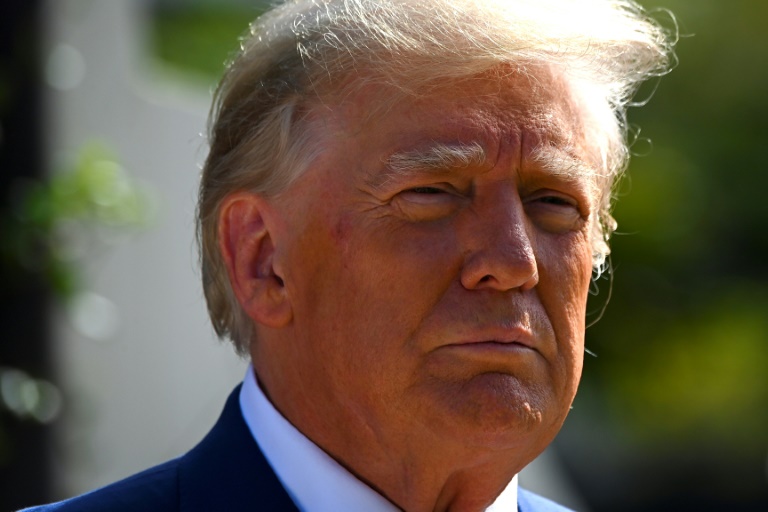
Donald Trump will announce next week that he is taking another shot at the presidency with a White House run in 2024, his longtime advisor Jason Miller said Friday.

The divisive former president, who will be 78 when the next election is held, has been hinting at another presidential run while campaigning for Republican candidates ahead of this week’s midterm elections, and has said he will make a “very big announcement” on Tuesday.

“President Trump is going to announce on Tuesday that he is running for president,” Miller told former Trump aide Steve Bannon on his popular “War Room” podcast.

“It’s gonna be a very professional, very buttoned-up announcement,” he added.

Miller said Trump told him, “there doesn’t need to be any question, of course I am running.”

Trump’s candidacy will mark his third shot at the presidency, including his loss to Joe Biden in 2020. Afterwards he promoted baseless claims of fraud, including those that led to an unprecedented riot at the US Capitol in Washington.

Trump’s big announcement in Florida comes after a disappointing run for several candidates he backed in the midterms. 

Some of his hand-picked favorites even lost Republican-held seats to Democrats.

In Pennsylvania, Democrats flipped a highly prized US Senate seat with constant attacks on Trump-endorsed celebrity doctor Mehmet Oz, who had never held public office before and lived mostly in New Jersey.

Trump had hoped to ride a Republican “red wave” that would prime him for another presidential run, however the party achieved a much smaller victory than had been predicted.

With 211 seats so far, Republicans appear poised to secure a slim majority in the 435-seat House of Representatives. However, control of the Senate may come down to an early December runoff in the southeastern state of Georgia.

The former president’s major media ally — the powerful media empire of conservative billionaire Rupert Murdoch — even turned on him in the wake of the polls.

Pointing to the party’s disappointing midterms showing, The Wall Street Journal, the flagship of Murdoch’s News Corp, declared in an editorial on Thursday that “Trump Is the Republican Party’s Biggest Loser.” 

The cover of the tabloid New York Post depicted Trump on a precarious wall as “Trumpty Dumpty” who “had a great fall.”

Nevertheless, more than 100 Republican candidates who challenged the 2020 presidential election results won their respective races.

Trump’s early entry into the race would appear designed in part to fend off possible criminal charges over taking top secret documents from the White House, his efforts to overturn the 2020 election and the attack on the US Capitol by his supporters on January 6 last year.

It may also be intended to undercut his chief potential rival for the Republican presidential nomination, Florida Governor Ron DeSantis, who emerged as one of the biggest winners in Tuesday’s midterms.

Twitter scrambles to curb spread of fake accounts

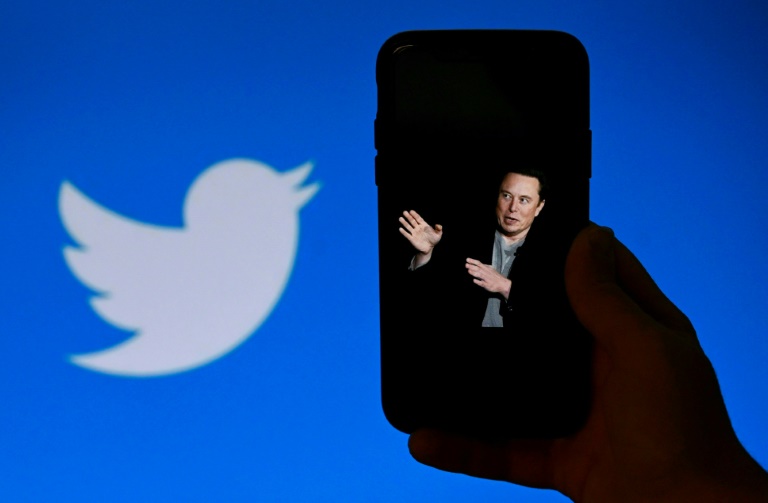
Twitter moved on Friday to curb fake accounts that have proliferated since Elon Musk’s takeover, suspending sign-ups for a new paid checkmark system and reinstating a gray “official” badge on some accounts.

The U-turn was the latest of a string of chaotic developments at the social network, which has lurched back and forth on the question of account verification since Musk’s $44 billion buyout late last month.

The @TwitterSupport account tweeted early Friday that a gray checkmark indicating an “official” account was coming back, only days after it was introduced — then almost immediately scrapped.

“To combat impersonation, we’ve added an ‘Official’ label to some accounts,” the profile announced.

The rollout of the label appeared inconsistent: it appeared briefly then disappeared from the network’s own account, @Twitter.

By Friday morning, the firm had also disabled sign-ups for Twitter Blue, the feature touted by free-speech proponent Musk as bringing “power to the people” by offering ordinary users a verified blue tick — until then reserved for prominent accounts — for $8 per month.

An internal memo for Twitter staff, obtained by US media including The Washington Post, confirmed the feature had been temporarily disabled to “help address impersonation issues.”

In introducing the paid blue-check verification system, Musk had warned that Twitter would suspend fake accounts not clearly marked as parody. 

But accounts impersonating public figures and businesses had continued to spread — with NBA star LeBron James and former British prime minister Tony Blair among those targeted. 

US drugmaker Eli Lilly was forced to issue an apology Thursday after a fake account — stamped with a purchased blue tick — tweeted that insulin was to be made available for free.

The fake account was removed, and the company put out a statement of apology.

The turmoil at Twitter has raised concerns about the potential for serious damage, should nefarious actors successfully pose as official representatives of powerful companies or government entities. 

And the disarray — which saw two more top security executives quit on Thursday — drew a rare warning from the Federal Trade Commission which said it was tracking the developments with “deep concern.”

The same day, Musk informed Twitter employees the site was burning through cash dangerously fast, raising the specter of bankruptcy if the situation was not turned around.

The warning came a week after he fired half of Twitter’s 7,500 employees.

Twitter scrambles to curb spread of fake accounts

Twitter moved on Friday to curb fake accounts that have proliferated since Elon Musk’s takeover, suspending sign-ups for a new paid checkmark system and reinstating a gray “official” badge on some accounts.

The U-turn was the latest of a string of chaotic developments at the social network, which has lurched back and forth on the question of account verification since Musk’s $44 billion buyout late last month.

The @TwitterSupport account tweeted early Friday that a gray checkmark indicating an “official” account was coming back, only days after it was introduced — then almost immediately scrapped.

“To combat impersonation, we’ve added an ‘Official’ label to some accounts,” the profile announced.

The rollout of the label appeared inconsistent: it appeared briefly then disappeared from the network’s own account, @Twitter.

By Friday morning, the firm had also disabled sign-ups for Twitter Blue, the feature touted by free-speech proponent Musk as bringing “power to the people” by offering ordinary users a verified blue tick — until then reserved for prominent accounts — for $8 per month.

An internal memo for Twitter staff, obtained by US media including The Washington Post, confirmed the feature had been temporarily disabled to “help address impersonation issues.”

In introducing the paid blue-check verification system, Musk had warned that Twitter would suspend fake accounts not clearly marked as parody. 

But accounts impersonating public figures and businesses had continued to spread — with NBA star LeBron James and former British prime minister Tony Blair among those targeted. 

US drugmaker Eli Lilly was forced to issue an apology Thursday after a fake account — stamped with a purchased blue tick — tweeted that insulin was to be made available for free.

The fake account was removed, and the company put out a statement of apology.

The turmoil at Twitter has raised concerns about the potential for serious damage, should nefarious actors successfully pose as official representatives of powerful companies or government entities. 

And the disarray — which saw two more top security executives quit on Thursday — drew a rare warning from the Federal Trade Commission which said it was tracking the developments with “deep concern.”

The same day, Musk informed Twitter employees the site was burning through cash dangerously fast, raising the specter of bankruptcy if the situation was not turned around.

The warning came a week after he fired half of Twitter’s 7,500 employees.

Texas woman gets death penalty for killing woman to extract unborn baby

A 29-year-old Texas woman has been sentenced to death for killing a pregnant acquaintance in October 2020 to extract and steal the fetus inside her womb.

Taylor Parker’s sentencing was handed down Wednesday in Texas, following several weeks of trial that began in September, according to court documents.

Over months Parker had told her boyfriend and her relatives that she was pregnant. She posted about it on social media and bought a fake silicone belly.

It was all a lie. The truth was that she had had a hysterectomy and could not have a child.

On October 9, 2020, Parker went to the home of Reagan Simmons-Hancock, a 21-year-old acquaintance in the final months of her pregnancy, and stabbed her more than 100 times.

After cutting open her stomach to take her fetus, she departed, leaving the victim’s 3-year-old daughter asleep in another room.

Parker was arrested shortly afterward at the wheel of her car about nine miles (15 kilometers) from the murder. The newborn was on her lap. She told authorities that she had just given birth. The baby was hospitalized but did not survive.

Parker was tried in the small town of New Boston, east of Dallas.

A few weeks before the murder, Parker had started searching for pregnant women in stores and maternity wards, according to police testimony at the trial. 

Shortly before the events, she had watched numerous videos of deliveries and Cesarean sections.

Close Bitnami banner
Bitnami