US Business

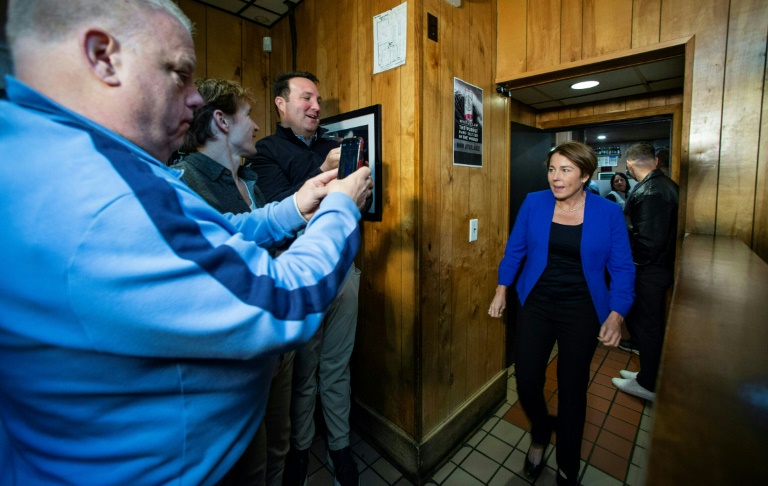
Maura Healey elected US's first openly lesbian governor

The US state of Massachusetts on Tuesday elected Democrat Maura Healey as America’s first openly lesbian governor, TV networks said.

Healey, 51, flipped the seat from the Republicans, comfortably defeating opponent Geoff Diehl, according to projections by NBC, Fox News and CNN.

She told cheering supporters at her election night party in Boston that she was “proud” of her historic victory.

“To every little girl and every LGBTQ person out there, you can be anything you want to be,” Healey said. 

LGBTQ+ rights group the Human Rights Campaign hailed her triumph.

“Massachusetts embraced a platform of equality and inclusion by electing a pro-equality champion,” the organization’s interim president Joni Madison, said in a statement.

Healey’s win returns the state’s governorship to Democrats after eight years of Republican leadership under Charlie Baker, who opted not to seek a third term.

She was on track to heavily beat Diehl, who had been endorsed by former president Donald Trump.

The result had been widely expected, with Healey — Massachusetts’ attorney general since 2014 — comfortably ahead in the polls in the runup to the vote.

Healey will also become Massachusetts’ first ever female governor. Her victory with running mate Kim Driscoll means that women will serve as both governor and lieutenant governor of a state for the first time, according to the Center for American Women and Politics at Rutgers University.

LGBTQ candidates are running in all 50 states and the capital Washington for the first time in this year’s midterm election, as the community becomes an increasingly powerful voting constituency.

Democrat Tina Kotek, who is also lesbian, was bidding to match Healey’s win in Oregon on Tuesday in a governor’s race regarded as a toss-up.

Almost 90 percent of the LGBTQ candidates who entered this year’s primary races are Democrats.

China factory gate prices fall for first time in nearly two years

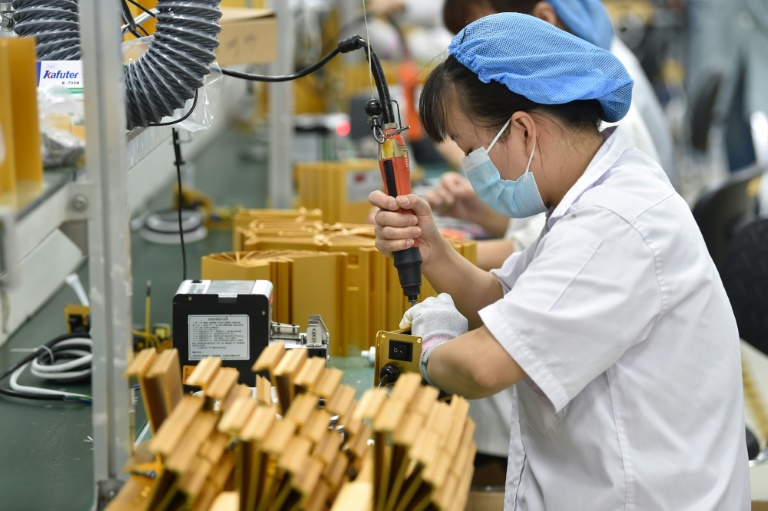
Factory gate prices in China were down for the first time in nearly two years last month, official data showed Wednesday, as falling global commodity prices made their mark on an economy ailing under strict Covid controls.

The producer price index (PPI) fell by 1.3 percent on-year in October, according to the National Bureau of Statistics (NBS), pushing it into negative territory for the first time since December 2020.

The figure represented a reduction from September’s 0.9 percent rise.

“In October, demand in some industries rose, and the national PPI rose slightly month-on-month,” said NBS statistician Dong Lijuan.

“But owing to the high comparison base from the same period last year, the year-on-year figure went from growth into decline.”

“Factory-gate inflation is likely to continue falling over the coming quarters due to a further decline in global commodity prices and a higher base for comparison,” said Julian Evans-Pritchard, senior China economist at Capital Economics.

“We expect it to stay in negative territory through the final months of the year and much of 2023.”

The consumer price index — the main gauge for retail inflation — rose by 2.1 percent on-year in October, the NBS said, moderating slightly from September’s two-year high of 2.8 percent.

Consumers in China have been largely spared the impact of a global surge in food and energy costs following Russia’s invasion of Ukraine.

“Under the impact of factors including a drop in consumer demand after the (National Day) holiday and last year’s high base of comparison, the rise in consumer prices somewhat fell back,” Dong said.

– Zero-Covid impact –

China is the last major economy wedded to a zero-Covid strategy, stamping out emerging outbreaks as they occur through snap lockdowns, mass testing and strict quarantines.

Authorities in areas where cases arise frequently invoke the policy to shut down businesses and confine people to their homes at short notice.

Much of the country also remains under a patchwork of travel restrictions, roiling international supply chains and hammering domestic demand.

The Chinese economy beat expectations to grow 3.9 percent in the third quarter, but analysts expect that it will fall well below this year’s official growth target of around 5.5 percent.

Elon Musk sells nearly $4bn in Tesla stock: SEC filing

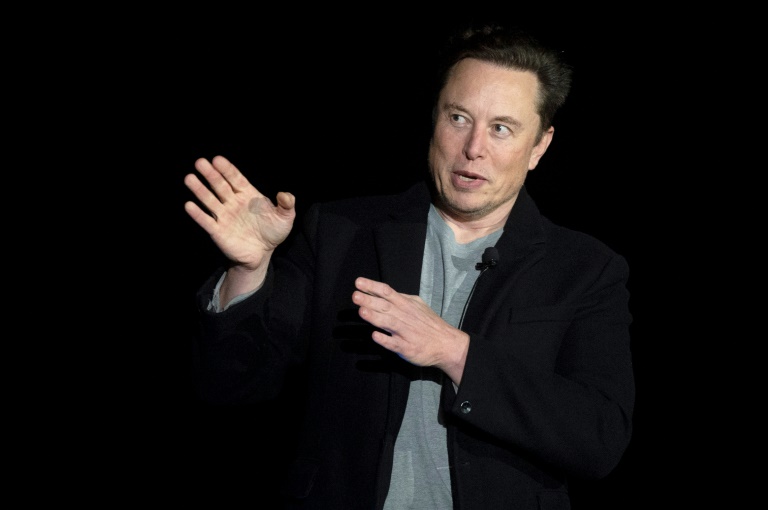
Tesla chief Elon Musk sold nearly $4 billion worth of shares in the electric car company, SEC filings showed Tuesday, more than a week after he closed his $44 billion acquisition of Twitter.

The US Securities and Exchange Commission documents show Musk, who financed much of his Twitter purchase with Tesla stock, sold more than 19 million shares worth in excess of $3.9 billion. 

Musk took control of Twitter and fired its top executives in late October after a drawn out back-and forth between the world’s richest person and the influential social media company.

He tried to step back from the Twitter deal soon after his unsolicited offer was accepted in April, and said in July he was canceling the contract because he was misled by Twitter over the number of fake “bot” accounts — allegations rejected by the company.

After Musk sought to terminate the sale, Twitter filed a lawsuit to hold the entrepreneur to the deal. But with a trial looming, he capitulated and revived his takeover plan.

Musk’s decision to pull Twitter off the stock market has allowed him to make major changes quickly, but it also took the company more heavily into debt, a risky choice for a money-losing business.

In early November, he announced an $8 per month charge to verify users’ accounts, arguing the plan would solve the platform’s issues with bots and trolls while creating a new revenue stream for the company.

Please don't lick psychedelic toads, warn US park officials

US park officials have asked visitors to stop licking psychedelic toads, warning that anyone seeking a hallucinogenic high from the wart-covered amphibians is more likely to end up seriously ill.

The National Park Service posted cautionary messages on social media last week against licking Sonoran Desert toads, a practice long depicted on popular animated television shows including “The Simpsons” and “Family Guy.”

“As we say with most things you come across in a national park, whether it be a banana slug, unfamiliar mushroom, or a large toad with glowing eyes in the dead of night, please refrain from licking,” said park officials.

The toads — among the largest in North America, at nearly seven inches (18 centimetres) long — secrete a potent toxin from their glands which “can make you sick if you handle the frog or get the poison in your mouth,” they wrote.

The messages did not indicate how many people have been seeking recreational highs by licking the slimy green creatures, also called Colorado River toads, which live in the southwestern United States and northwest Mexico.

To defend themselves from predators, the toads secrete a milky substance containing various toxins, among which is 5-MeO-DMT — a psychoactive compound that triggers hallucinogenic effects.

Smoking extracted 5-MeO-DMT induces a powerful, short psychedelic experience, and has become popular in recent years, including at expensive underground “toad ceremonies” in the US, where it is a controlled substance, and in Mexico.

Celebrities such as boxing champion Mike Tyson and podcaster Joe Rogan have discussed the use of the substance for therapeutic, recreational, and even spiritual purposes.

But the toad’s venom also contains other toxic substances which can be fatal when ingested.

Scientists have also warned that the growing demand for Sonoran Desert toads’ secretions could endanger the species.

Gen Z secures its first US House seat with 25-year-old's win

Generation Z will soon have its voice in Washington.

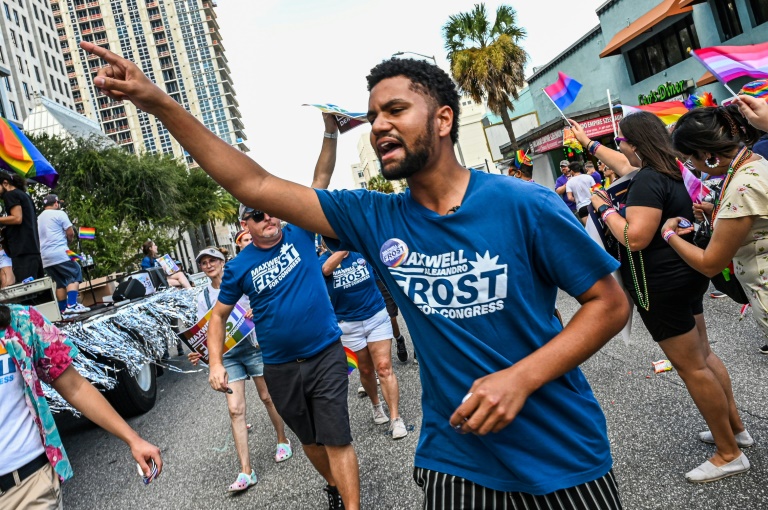
Florida Democrat Maxwell Frost, all of 25 years old, on Tuesday became the first Gen Z member-elect of Congress when he won a seat in the US House of Representatives.

As a candidate in a district that leans solidly Democratic, Frost’s victory over Republican Calvin Wimbish was called by US networks shortly after polls closed.

“WE WON!!!!” tweeted an exuberant Frost. “We made history for Floridians, for Gen Z, and for everyone who believes we deserve a better future.”

As a member of the generation comprising today’s teens and young adults, the African-American Frost, raised by an adoptive mother of Cuban descent, would stand out among the white faces and gray hair in the lower House, where the average age is a seasoned 58.

“We need that representation in Congress so that way we have a government that looks like the country and knows what the country is going through,” the candidate told AFP in Orlando last month on the campaign trail.

Frost, who was driving an Uber during the campaign to make ends meet, has aligned solidly with the Democratic party’s progressive wing, focusing on social justice and the fight against climate change. He has said he will use his position in Washington to seek solutions to gun violence in America.

Frost was just 15 in 2012 when, like so many fellow Americans, he was horrified by the mass shooting at Sandy Hook Elementary School, and he decided to get involved in civic activism.

Later he became a national representative of March For Our Lives, the student-led group that launched with a massive 2018 rally against gun violence.

In New Hampshire, another Gen Z candidate, 25-year-old Karoline Leavitt, is also running for Congress, although she hails from the opposite side of the political spectrum — and is in a more competitive race.

A proud supporter of former president Donald Trump, Leavitt advocates lower taxes and stricter border controls.

Republican Madison Cawthorn is currently the youngest member of Congress, at age 27.

Divided America awaits verdict on Biden

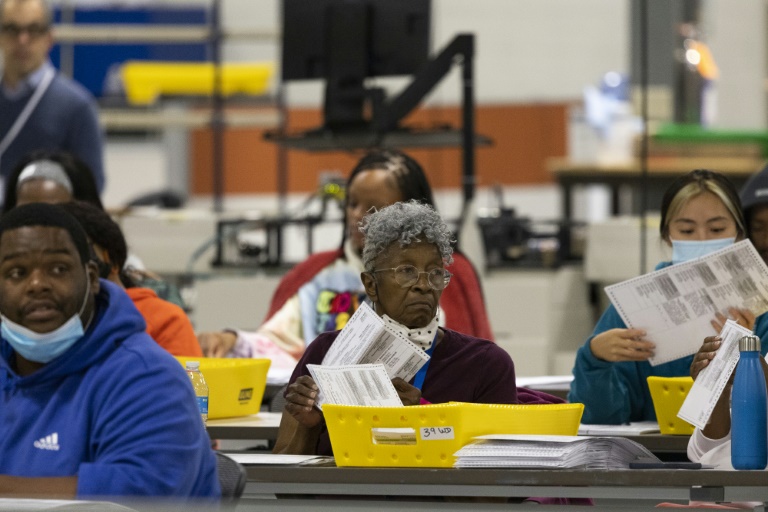
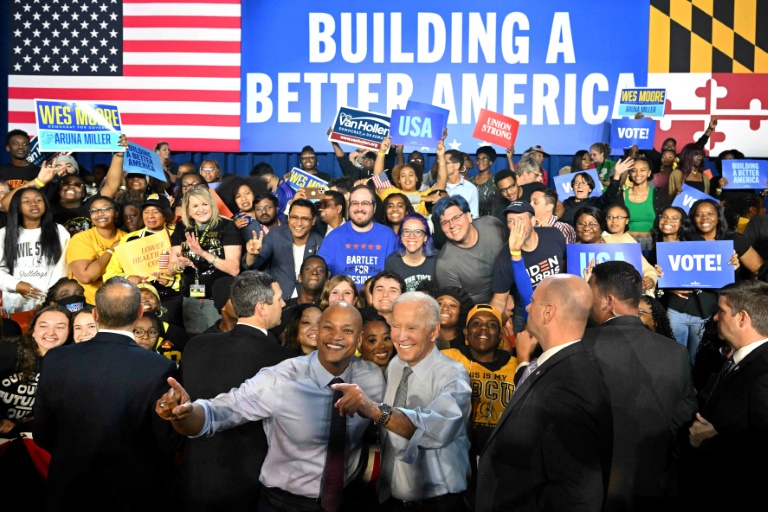
A sharply polarized United States on Tuesday braced for a tense night of election results and legal challenges ahead as control of Congress and the future of President Joe Biden’s agenda stood in the balance.

A Republican victory could pave the way for a White House comeback bid by Donald Trump — who returned to his playbook of airing unsubstantiated claims of fraud, after a campaign fought largely over economic issues.

Biden, whose Democrats face a steep climb to hang on to the House of Representatives and Senate, has warned that Republicans pose a dire threat to democracy with more than half their candidates repeating Trump’s debunked claims of cheating in the 2020 election.

With razor-thin margins in key races, a full picture may not be available for days or even weeks.

In Arizona, expected to be one of the closest states, Republicans filed a lawsuit to keep polls open after problems with ballot machines in the most populous county of Maricopa, although officials said no one was being prevented from voting.

“I hope it’s not malice,” said Kari Lake, the Trump-backed candidate for governor. “When we win, there’s going to be a come-to-Jesus for elections in Arizona.”

In his final pitch, Biden vowed that the Democrats would defend pensions, health care and the freedom to have an abortion, after a Supreme Court transformed by Trump rescinded the right to choose.

“It’s all on the ballot. This election is too important to sit out,” Biden tweeted in a last-minute bid to drive voters to the polls.

But the president’s party has traditionally lost seats in midterm elections and Biden’s favorability ratings are hovering in the low 40s, with Republicans hitting him hard over stubbornly high inflation as well as crime.

– Trump teases new bid –

Among early projections by US networks, rising Republican star Ron DeSantis won a second term as Florida governor. He is seen as one of few who could challenge Trump for the 2024 nomination after making a name with tough talk against Covid mitigation measures and transgender rights.

One voter in Florida is Trump himself, who went to the polls teasing an expected announcement next week of a presidential run, telling reporters that November 15 “will be a very exciting day for a lot of people.”

All eyes will be on a handful of closely fought Senate races including in Georgia, Pennsylvania, Nevada, Arizona, Wisconsin and Ohio, with a single seat enough to swing control of the Senate — now evenly divided and controlled by Democrats only through the tie-breaking vote of Vice President Kamala Harris.

The outcome may also determine whether Biden, who turns 80 this month and is the oldest president ever, will seek a second term in 2024.

The bitter political divide in the country was on the minds of many voters as they cast their ballots.

“Some of the candidates who have been up for office recently are into mudslinging and negative campaigns,” said Quonn Bernard, a 39-year-old software engineer in Union City, an Atlanta suburb. “I just don’t want those people representing me.”

Voting in Phoenix, Arizona, Kenneth Bellows, a 32-year-old law student, said runaway inflation is “hurting Americans who are just trying to get by.”

Biden has said he believed Democrats would hold the Senate but it would be “tough” to retain the House and his life may become “more difficult.”

If both the House and Senate flip, Biden’s legislative agenda would be paralyzed as Republicans launch aggressive investigations and oppose his spending plans.

That would raise questions over everything from climate policies, which the president will be laying out at the COP27 conference in Egypt this week, to Ukraine, where some Republicans are reluctant to maintain the current rate of US military support.

– Machine trouble in Arizona –

Despite facing criminal probes over taking top secret documents from the White House and trying to overturn the 2020 election, Trump has used the midterms to cement his status as the de facto Republican leader.

The 76-year-old Trump immediately began casting doubts on the midterm vote through his Truth Social platform on Tuesday, pointing to problems with voting machines in Arizona.

“Same thing is happening with Voter Fraud as happened in 2020???”

Officials in Maricopa County, which includes Phoenix, said about 20 percent of the 223 polling stations there were experiencing difficulties but it would not affect the probity of the vote.

The campaign was marred by scattered violence with an intruder espousing far-right beliefs breaking into the San Francisco home of House Speaker Nancy Pelosi and bludgeoning her husband with a hammer. 

Pelosi, who was the highest-ranking woman in US history at the time she first became speaker in 2007, said the Democrats hoped to prevail but would accept any election outcome.

Election Day is “a day where the sanctity of the vote is revered, where people vote, and we have to respect the results of that,” Pelosi told the PBS Newshour.

bur-sct/ec

Hackers leak Australian health records on dark web

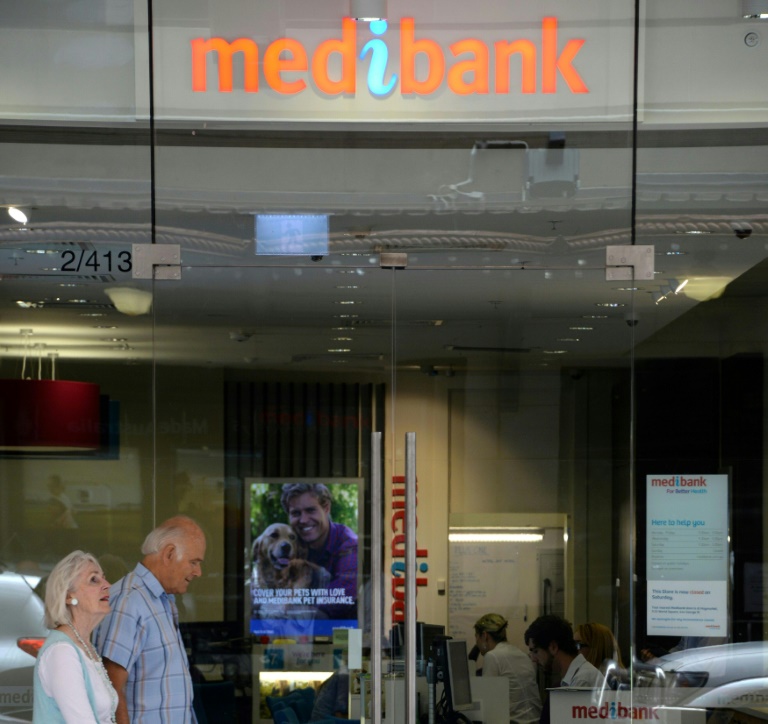
Hackers on Wednesday began leaking sensitive medical records stolen from an Australian health insurer with nearly 10 million customers, including the prime minister, after the firm refused to pay a ransom.

Medibank told investors that a “sample” of data from some 9.7 million clients had been posted on a “dark web forum” — and that more leaks were likely. 

Sensitive records were posted anonymously in the early hours of Wednesday and included names, birth dates, passport numbers and information on medical claims for hundreds of customers.

The victims were separated into a “naughty” list and a “nice” list. 

Some on the “naughty” list had numeric codes that appeared to link them to drug addiction, alcohol abuse and HIV.

For example, one record carried an entry that read: “p_diag: F122”. 

F122 corresponds with “cannabis dependence” under the International Classification of Diseases, published by the World Health Organisation.

Prime Minister Anthony Albanese, himself a Medibank customer, said the attack was a “wake-up call” for corporate Australia.

“I am a Medibank Private customer as well and it will be of concern that some of this information has been put out there,” he said.

The leaked data was posted on a dark web forum that cannot be found using conventional web browsers.

Medibank — which provides private health insurance to Australians wishing to supplement universal public healthcare — informed the Australian Securities Exchange about the leak shortly before the market opened. 

“The files appear to be a sample of the data that we earlier determined was accessed by the criminal,” the company said in a statement.

“We expect the criminal to continue to release files on the dark web.” 

The hackers were following through on an earlier threat to publish the data unless Medibank paid an undisclosed ransom. 

“P.S I recommend to sell Medibank stocks,” the purported hackers wrote on the forum about 24 hours before the first batch of data was released. 

With the political backing of Australia’s federal government, Medibank on Tuesday refused the demand — instead warning customers to remain “vigilant”. 

“Based on the extensive advice we have received from cybercrime experts we believe there is only a limited chance paying a ransom would ensure the return of our customers’ data and prevent it from being published,” Medibank boss David Koczkar said. 

– ‘Scumbags’ and ‘crooks’ –

The group also uploaded what they said were a series of exchanges between themselves and Medibank representatives.  

“We will do everything in our power to inflict as much damage as possible for you, both financial and reputational,” one message read. 

The security breach has already wiped hundreds of millions of US dollars off Medibank’s market value, with the company’s share price down over 20 percent since October, when news of the leak first emerged. 

AFP Assistant Commissioner Cyber Command Justine Gough said the “criminal or criminal groups” responsible for the hack could be operating outside of Australia. 

Australia’s assistant treasurer Stephen Jones said they were “scumbags” and “crooks”. 

“We shouldn’t be giving in to these fraudsters,” he told Sky News Australia. 

“The moment we fold, it sends a green light to scumbags like them throughout the world that Australia is a soft target.” 

As Medibank scrambles to contain the leak, it is also staring down the barrel of a potentially-costly class action lawsuit. 

Two law firms said Tuesday they had joined forces to investigate whether Medibank had breached its obligations to customers under the country’s Privacy Act.

The Medibank hack followed an attack on telecom company Optus in September that exposed the personal information of some nine million Australians.

Why I voted — Americans share what drew them to polls

For some, it was a sense of civic duty. For others, it was a chance to voice anger at inflation or high crime. Still more savored the opportunity to send a message to Washington.

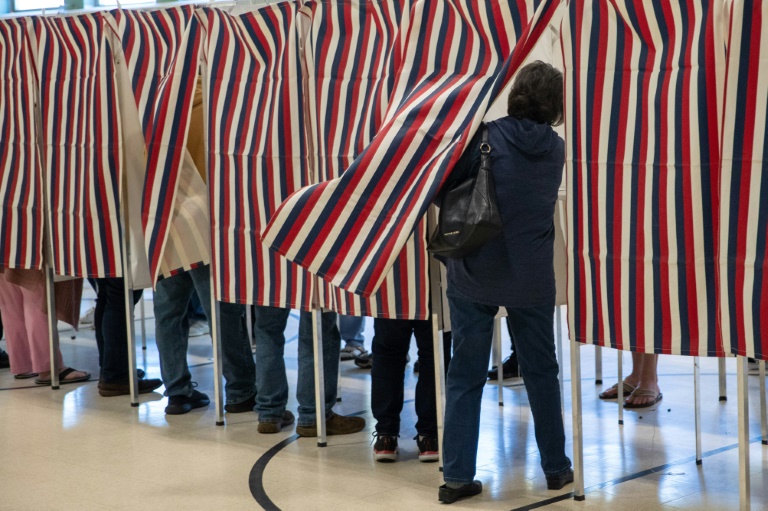
Voters on Tuesday thronged to polling stations across the United States to express themselves on a wide array of divergent concerns.

Their choices will decide the control of the US Congress, as well as many governorships, state legislatures and local offices.

Here’s what some voters said drew them to the polls.

– ‘Exercise democracy’ –

“I’ve tried to come first, make sure that I do my part, and then I can get to work,” said Robin Ghirdar, coffee in hand at a voting site in Pittsburgh, Pennsylvania.

“There’s so much polarization and misinformation that I’d like to make sure that my voice is heard.”

In Union City, a majority Black suburb of Atlanta, Georgia, 26-year-old attorney Kuanna Harris said history pulled her to the voting booth.

“A bunch of my ancestors, whether they were Black or women, were not able to vote, so I think God put me here at this particular time to carry on that torch for them.”

And on the opposite side of the country, in Los Angeles, Luciano Gamiz says he was thinking of authoritarian nations that “eliminate the voice of the little people.”

“As a first generation American, it’s an opportunity to just exercise my freedom and my right to vote, so I love it.”

– 2020 election denial –

At a polling site in Brooklyn, New York, retired police officer Kevin Flynn voted because of “the situation that happened on January 6th” 2021, when Donald Trump supporters stormed the US Capitol.

“Once an officer, always an officer… officers got injured” in the assault, said the 60-year-old. “It needs to be rectified.”

Voter Donald Newton, 82, told AFP in Arizona’s capital Phoenix that he believes Trump’s unfounded claims of massive election fraud are the “truth.”

He pointed to a discredited film’s conspiracy theory about people smuggling illegal votes.

“It explains it all. And if you go and watch that, you’ll be convinced this is the truth of what happened there: it was stolen, the election,” he said.

In contrast, 30-year-old lawyer Alexandra Ashley, in Pittsburgh, said that “some people are trying to undermine democracy. And it’s something that we can’t lose.”

And Susan Kwushue, a 50-year-old healthcare provider in Georgia, said having voted, she knew she “contributed in my own little way by voting to make sure that things get better.”

– Abortion rights –

Reproductive rights are a banner issue for many voters, after the US Supreme Court overturned the right to abortion.

In Brooklyn, sustainability consultant Helen Rubenstein said that her motivation for voting was “first and foremost, my female reproductive rights, which are a healthcare issue.”

Phoenix voter Mona Sablan, 56, said that for abortion, “it’s the decision for the woman.”

“I don’t think the state — I don’t think the local, (or) federal (government) should have anything to say about this.”

On the opposite side of the issue, 72-year-old Paul McMahon says he’s opposed to abortion beginning at conception.

“Life is the most important thing to me,” the retiree says outside a suburban Pittsburgh voting site.

– Toxic politics –

With growing political fissures in the United States, some voters said they are fed up with the hostility.

In Brooklyn, 39-year-old software engineer Quonn Bernard says “some candidates that have been up for office recently are into mud-slinging and negative campaigning.”

“I just don’t want those people representing me at the highest levels.”

Pennsylvania voter Kay Georgopolous says she’s opposed to Republican Senate candidate Mehmet Oz, whom she thinks is “just a salesman.”

“Politicians, a lot of them are playing games to keep us fighting amongst ourselves, the little people,” she said.

Joshua Beron in Ohio told AFP that “I really try to not think of myself as being part of one party but try to vote for the best candidate.”

Analysts have also warned of the threat of violence around the elections.

Donna Audritsh, a voter in the Washington suburb of Fairfax, Virginia, says she hopes that the country can “have a civil discourse about whatever the result is and that we can move forward instead of getting mired in fighting and arguing.”

One 64-year-old voter in McAllen, a city in Texas along the US border with Mexico, said he hopes that there will not be a repeat of 2020.

“My expectation is that everybody acts civilized, that… all the parties accept their winnings or defeats and that we all act as a country,” said Enrique Ayala.

Crypto kid Sam Bankman-Fried falls prey to Binance

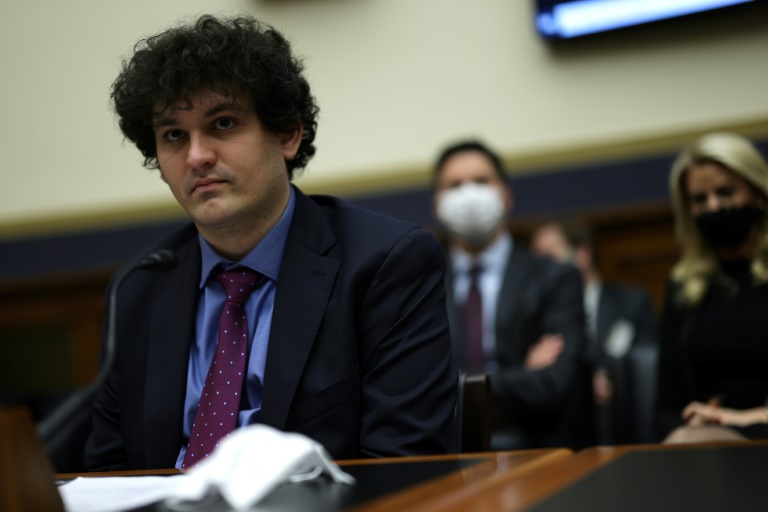
Sam Bankman-Fried has undergone a rapid transformation from top of the heap in the world of cryptocurrencies as chief of the FTX digital exchange to embattled executive forced to seek help from rival Binance.

The rapid about-face was a shock: Only Monday, Bankman-Fried insisted FTX was financially stable.

But in a tweet Tuesday, Changpeng Zhao, head of Binance, the world’s largest cryptocurrency platform, said the group had signed a non-binding letter of intent “to fully acquire FTX.com,” in response to the company’s request for help amid “a significant liquidity crunch”.

It was a stunning setback for the 30-year-old billionaire, known on social media as SBF, who was hailed by many for his meteoric rise. Fortune magazine went so far as to wonder in August if he was the new Warren Buffett.

After founding cryptocurrency investment fund Alameda Research in 2017, Bankman-Fried moved to Hong Kong and co-founded FTX.

The company was valued early this year at $32 billion, a capitalization which put it close to giants Coinbase and Binance. 

– Rapid rise –

Bankman-Fried, a vegan who sleeps four hours a night, had become a public face of crypto money, with a personal fortune estimated at nearly $25 billion, which according to Forbes magazine has since shrunk to $16.6 billion. 

The success of FTX allowed the platform to forge prestigious partnerships, notably with American football legend Tom Brady and former supermodel Gisele Bundchen, and it featured comedian Larry David in a Super Bowl television advertisement. 

Almost always appearing with a hoodie and a dark T-shirt, Bankman-Fried has pledged to donate almost all of his fortune to his favored causes, like animal welfare and the fight against global warming.

The son of Stanford Law School professors and a graduate of the elite Massachusetts Institute of Technology (MIT), he worked as a broker on Wall Street before turning to cryptocurrencies in 2017. 

Bankman-Fried moved the company to the Bahamas, where taxes are almost nonexistent, saying the Caribbean nation is “one of the few countries that has a comprehensive licensing regime for cryptocurrencies and cryptocurrency exchanges.” 

He has been a vocal advocate for smoother access to the crypto market for the general public, particularly in the United States. 

“It would be healthy for everyone involved if there was a regulatory pathway to getting licensed and bringing federal oversight,” he told AFP during a February interview.

– Stunned – 

In early July, as the virtual currency market took a nosedive, FTX came to the rescue of cryptocurrency lending company BlockFi, which was in the midst of its own liquidity crisis. FTX put up an option to buy it out for $240 million. 

A few days later, Voyager Digital, another specialist in cryptocurrency loans, revealed a debt totaling $75 million with Bankman-Fried’s investment fund. 

Described by his admirers as the white knight of a sector plunged into turmoil, SBF suddenly saw its star fade when Changpeng Zhao expressed doubts about the solvency of Bankman-Fried’s Alameda Research and decided to withdraw its capital.

Just over 24 hours after denying rumors of trouble, Bankman-Fried announced on Twitter that he had reached a “strategic transaction” with Binance. 

The decision that left many of its subscribers stunned. 

“Can someone explain to me what this means as if I were a 5-year-old child?” asked Sahil Bloom of the SRB investment fund.

Global stocks move higher as US voters cast ballots

Global stock markets mostly moved higher on Tuesday as Americans headed to the polls in critical midterm elections.

The dollar dipped against the euro, while Chinese demand concerns helped push oil prices down nearly one percent.

Europe’s main markets ended in the green after starting mixed, with Frankfurt adding 1.3 percent while London and Paris scored more modest gains.

Markets also climbed on Wall Street, with the Dow adding over 1.0 percent, while the broader S&P 500 and tech-heavy Nasdaq closed higher as well.

“Investors are hoping for a political gridlock. That would make it difficult to pass radical policy changes,” said Fawad Razaqzada market analyst with City Index and FOREX.com.

Polls opened Tuesday in crucial US elections that will shape the political fortunes of US President Joe Biden. 

Biden’s Democrats are facing a gargantuan struggle to hang onto control of Congress, after a race the president has cast as a “defining” moment for US democracy.

Polls show Republicans are likely to win at least one house of the legislature — and some see the prospect of split control in Washington as a scenario that lessens the risk of policy uncertainty.

“Consensus is that investors prefer political deadlock as it prevents any significant shifts in policy,” added Scope Markets analyst James Hughes.

“With that looking like a real possibility, the real market turbulence may appear later in the week.”

Politics aside, investors also are waiting on US inflation data due out Thursday for a pointer on the path for interest rates ahead.

In Asia, the Hong Kong and Shanghai stock markets sank as speculation about a rollback of China’s strict zero-Covid policies fueled market volatility, but Tokyo ended 1.3 percent ahead.

Elsewhere, in the world of crypto finance, Binance, the world’s biggest cryptocurrency platform, tweeted it has agreed to buy its financially-troubled rival FTX.com.

Binance chief executive Changpeng Zhao said the group had signed a non-binding letter of intent “to fully acquire FTX.com,” which is enduring “a significant liquidity crunch.”

– Key figures around 2130 GMT –

New York – Dow: UP 1.0 percent at 33,160.83 (close)

New York – S&P 500: UP 0.6 percent at 3,828.11 (close)

New York – Nasdaq: UP 0.5 percent at 10,616.20 (close)

London – FTSE 100: UP 0.1 percent at 7,306.14 (close)

Paris – CAC 40: UP 0.4 percent at 6,441.50 (close)

Frankfurt – DAX: UP 1.2 percent at 13,688.75 (close)

EURO STOXX 50: UP 0.8 percent at 3,739.28 (close)

Tokyo – Nikkei 225: UP 1.3 percent at 27,872.11 (close)

Hong Kong – Hang Seng Index: DOWN 0.2 percent at 16,557.31 (close)

Shanghai – Composite: DOWN 0.4 percent at 3,064.49 (close)

Pound/dollar: UP at $1.1544 from $1.1513 on Monday

Euro/dollar: UP at $1.0076 from $1.0023

Dollar/yen: DOWN at 145.58 from 146.68 yen

Euro/pound: UP at 87.26 pence from 87.03 pence

West Texas Intermediate: DOWN 3.1 percent at $88.91 per barrel

Brent North Sea crude: DOWN 2.6 percent at $95.36 per barrel

burs-cdw-bys/hs

Close Bitnami banner
Bitnami