US Business

Ghosn escape accomplices return to US, lawyer confirms

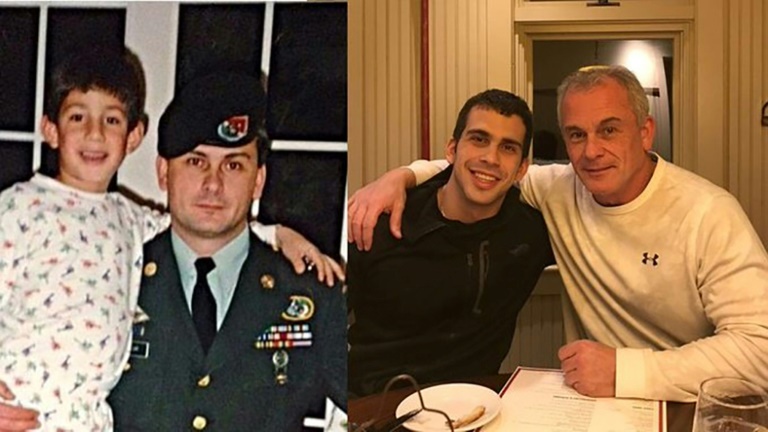
The American father and son duo who helped former Nissan chairman Carlos Ghosn dramatically escape from Japan have been returned to the United States after spending 20 months in Japanese jails, their lawyer said Monday.

Former Green Beret operative Michael Taylor, 62, was being held at a Los Angeles detention facility with a release date set for January 1, 2023, according to the Federal Bureau of Prisons, while son Peter Taylor was home with family in Massachusetts, their lawyer Paul Kelly told AFP, confirming reporting by The Wall Street Journal.

The Taylors’ return to America is the latest twist in the extraordinary Ghosn saga, which began with the former auto tycoon’s shock arrest in 2018 on financial misconduct allegations.

The men admitted helping smuggle Ghosn onto a private jet inside an audio equipment box in an audacious December 2019 escape from Japan while he was on bail.

Ghosn, who holds French, Lebanese and Brazilian passports, is now an international fugitive in Lebanon. The former chairman and chief executive of the Renault-Nissan-Mitsubishi alliance says he fled Japan because he did not believe he would receive a fair trial.

The Taylors were extradited from the United States to Japan in March 2021. In July that year Michael Taylor was sentenced to 24 months in prison and son Peter to 20 months, after apologising at previous hearings.

According to the prosecution, the Ghosn family paid the Taylors more than $860,000 for preparation and logistical costs, and $500,000 in cryptocurrency for lawyers’ fees.

Ghosn has always denied the charges against him, arguing they were cooked up by Nissan executives who opposed his attempts to more closely integrate the firm with French partner Renault.

Last March former Nissan executive Greg Kelly was handed a six-month suspended sentence by a Tokyo court over allegations he helped Ghosn attempt to conceal income.

Ghosn escape accomplices return to US, lawyer confirms

The American father and son duo who helped former Nissan chairman Carlos Ghosn dramatically escape from Japan have been returned to the United States after spending 20 months in Japanese jails, their lawyer said Monday.

Former Green Beret operative Michael Taylor, 62, was being held at a Los Angeles detention facility with a release date set for January 1, 2023, according to the Federal Bureau of Prisons, while son Peter Taylor was home with family in Massachusetts, their lawyer Paul Kelly told AFP, confirming reporting by The Wall Street Journal.

The Taylors’ return to America is the latest twist in the extraordinary Ghosn saga, which began with the former auto tycoon’s shock arrest in 2018 on financial misconduct allegations.

The men admitted helping smuggle Ghosn onto a private jet inside an audio equipment box in an audacious December 2019 escape from Japan while he was on bail.

Ghosn, who holds French, Lebanese and Brazilian passports, is now an international fugitive in Lebanon. The former chairman and chief executive of the Renault-Nissan-Mitsubishi alliance says he fled Japan because he did not believe he would receive a fair trial.

The Taylors were extradited from the United States to Japan in March 2021. In July that year Michael Taylor was sentenced to 24 months in prison and son Peter to 20 months, after apologising at previous hearings.

According to the prosecution, the Ghosn family paid the Taylors more than $860,000 for preparation and logistical costs, and $500,000 in cryptocurrency for lawyers’ fees.

Ghosn has always denied the charges against him, arguing they were cooked up by Nissan executives who opposed his attempts to more closely integrate the firm with French partner Renault.

Last March former Nissan executive Greg Kelly was handed a six-month suspended sentence by a Tokyo court over allegations he helped Ghosn attempt to conceal income.

Republican House will investigate Biden admin: McCarthy

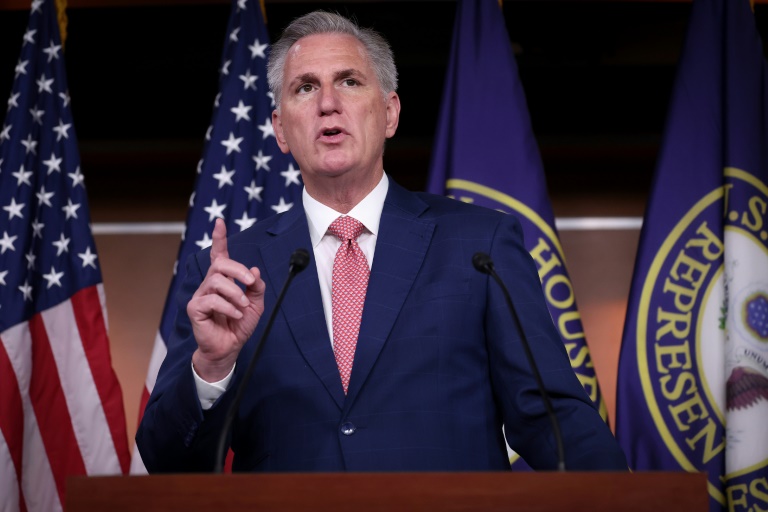
House Republicans will launch sweeping investigations of Democratic President Joe Biden’s administration if they recapture the chamber as expected in Tuesday’s midterm election, Republican Minority Leader Kevin McCarthy said.

McCarthy, in an interview with CNN, said potential probes included the US pullout from Afghanistan and the origins of the Covid-19 pandemic.

He also left the door open to an eventual impeachment effort, a move which has been advocated by some of the more extreme right-wing members of the party.

“We will never use impeachment for political purposes,” McCarthy said. “That doesn’t mean if something rises to the occasion, it would not be used at any other time.”

The 57-year-old congressman from California is expected to replace Democrat Nancy Pelosi as speaker of the House of Representatives if Republicans seize control of the chamber in the midterms.

McCarthy said he was confident Republicans will win enough seats to gain a majority and he believes his bid for the speaker’s gavel has the support of former president Donald Trump.

“I think Trump will be very supportive,” he said.

Trump was impeached twice by the Democratically-controlled House, but he was acquitted in the Senate and remains the Republican Party’s leading figure.

McCarthy also told CNN that securing the US-Mexico border, reining in inflation and cutting government spending would be priorities for a Republican-controlled House.

“The first thing you’ll see is a bill to control the border,” he said. “You’ve had almost two million people just this year alone coming across.”

Stocks mostly rise, oil steady tracking China lockdown policy

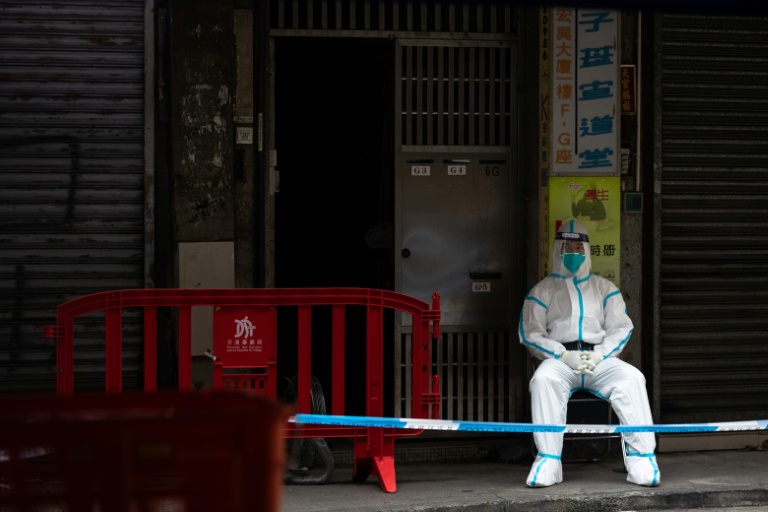
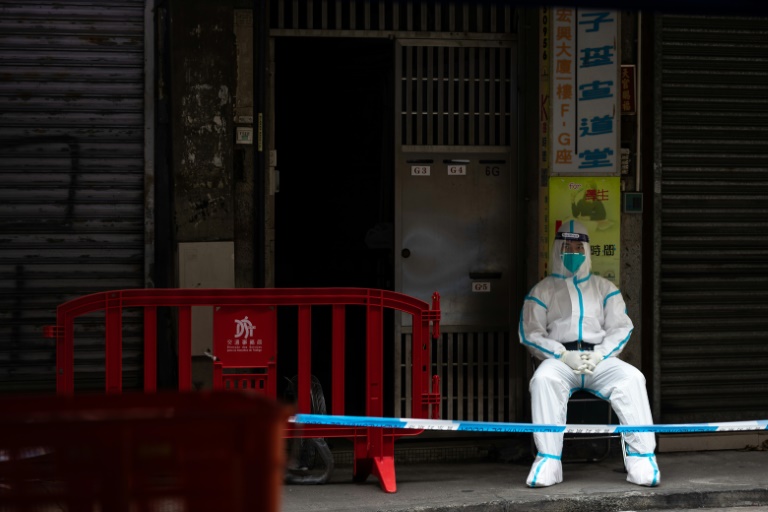
Global stock markets mostly rose Monday, extending last week’s strong gains, while oil prices steadied after China reaffirmed its commitment to an economically painful zero-Covid policy.

The dollar meanwhile was down against key rivals ahead of this week’s US midterm elections.

Global markets and oil prices were buoyant last week on hopes Beijing may begin to roll back policies aimed at stamping out coronavirus within its borders.

But on Saturday, the Chinese government said it would “unswervingly” stick to the current plan involving harsh lockdowns and strict quarantine and testing regimens for even the smallest clusters of cases.

Despite the official stance, “there are still hopes in the market” that Beijing may relax Covid-19 curbs in the coming months, Iris Pang, chief economist for Greater China at ING Wholesale Banking, told AFP.

“Traders believe that the Chinese government cannot permanently hold these existing Covid measures, and therefore the only direction is… looser Covid measures,” she said.

Ongoing large-scale events, such as the China International Import Expo in Shanghai, are also seen by investors as “a kind of water-testing” by Beijing, to see if cases and deaths rise significantly, Pang added.

Hong Kong’s Hang Seng index bounded 2.7 percent higher.

Shares in Europe were mostly higher in afternoon trading.

Wall Street stocks opened higher modestly higher, the day before US midterm elections.

US voters decide every two years who gets the majority in both chambers of Congress. The outcome will decide whether US President Joe Biden, who was swept to power two years ago in one of the most fraught elections Washington has witnessed, will be able to get any new policies passed or if the opposition will be able to frustrate his agenda.

“A divided government can be good for the market,” noted Neil Wilson, analyst at Markets.com. 

“A Republican clean sweep would likely take key Democrat legislation off the table — mainly positive for markets — whilst in the unlikely event that the Democrats retain both houses it could see them push on with fiscal stimulus, mainly negative since it might be inflationary.”

Meanwhile, shares in Apple slid 1.0 percent after the tech giant warned customers would face longer wait times for iPhones with the holiday season approaching.

This comes after Covid restrictions in central China “temporarily impacted” production at the world’s largest factory producing the smartphone.

Facebook-parent Meta will meanwhile become the latest tech firm to scale back its workforce, with plans to lay off thousands of employees this week, US media reported Sunday.

Shares in the firm jumped 3.6 percent at the start of trading.

On Friday, Wall Street equities ended a volatile session higher after US jobs data showed hiring remained resilient and wages continued to rise, though at a slower pace.

That raised hopes of a soft landing for the world’s biggest economy despite aggressive Fed rate hikes aimed at taming inflation.

“The bullish reversal in the markets suggests investors are perhaps happy to see signs that the US economy is holding its own rather well in terms of employment,” said market analyst Fawad Razaqzada at City Index and FOREX.com.

– Key figures around 1330 GMT –

London – FTSE 100: DOWN 0.3 percent at 7,314.76 points

Frankfurt – DAX: UP 0.7 percent at 13,549.75

Paris – CAC 40: UP 0.1 percent at 6,425.51

EURO STOXX 50: UP 0.6 percent at 3,712.07

New York – Dow: UP 0.4 percent at 32,533.21

Tokyo – Nikkei 225: UP 2.7 percent at 27,527.64 (close)

Hong Kong – Hang Seng Index: UP 2.9 percent at 16,595.91 (close)

Shanghai – Composite: UP 0.2 percent at 3,077.82 (close)

Euro/dollar: UP at $0.9998 from $0.9964 Friday

Pound/dollar: UP at $1.1476 from $1.1309

Dollar/yen: DOWN at 146.20 from 147.44 yen

Euro/pound: DOWN at 87.10 pence from 87.80 pence

West Texas Intermediate: DOWN less than 0.1 percent at $92.58 per barrel

Brent North Sea crude: DOWN less than 0.1 percent at $98.55 per barrel

burs/rl/ach 

Stocks mostly rise, oil steady tracking China lockdown policy

Global stock markets mostly rose Monday, extending last week’s strong gains, while oil prices steadied after China reaffirmed its commitment to an economically painful zero-Covid policy.

The dollar meanwhile was down against key rivals ahead of this week’s US midterm elections.

Global markets and oil prices were buoyant last week on hopes Beijing may begin to roll back policies aimed at stamping out coronavirus within its borders.

But on Saturday, the Chinese government said it would “unswervingly” stick to the current plan involving harsh lockdowns and strict quarantine and testing regimens for even the smallest clusters of cases.

Despite the official stance, “there are still hopes in the market” that Beijing may relax Covid-19 curbs in the coming months, Iris Pang, chief economist for Greater China at ING Wholesale Banking, told AFP.

“Traders believe that the Chinese government cannot permanently hold these existing Covid measures, and therefore the only direction is… looser Covid measures,” she said.

Ongoing large-scale events, such as the China International Import Expo in Shanghai, are also seen by investors as “a kind of water-testing” by Beijing, to see if cases and deaths rise significantly, Pang added.

Hong Kong’s Hang Seng index bounded 2.7 percent higher.

Shares in Europe were mostly higher in afternoon trading.

Wall Street stocks opened higher modestly higher, the day before US midterm elections.

US voters decide every two years who gets the majority in both chambers of Congress. The outcome will decide whether US President Joe Biden, who was swept to power two years ago in one of the most fraught elections Washington has witnessed, will be able to get any new policies passed or if the opposition will be able to frustrate his agenda.

“A divided government can be good for the market,” noted Neil Wilson, analyst at Markets.com. 

“A Republican clean sweep would likely take key Democrat legislation off the table — mainly positive for markets — whilst in the unlikely event that the Democrats retain both houses it could see them push on with fiscal stimulus, mainly negative since it might be inflationary.”

Meanwhile, shares in Apple slid 1.0 percent after the tech giant warned customers would face longer wait times for iPhones with the holiday season approaching.

This comes after Covid restrictions in central China “temporarily impacted” production at the world’s largest factory producing the smartphone.

Facebook-parent Meta will meanwhile become the latest tech firm to scale back its workforce, with plans to lay off thousands of employees this week, US media reported Sunday.

Shares in the firm jumped 3.6 percent at the start of trading.

On Friday, Wall Street equities ended a volatile session higher after US jobs data showed hiring remained resilient and wages continued to rise, though at a slower pace.

That raised hopes of a soft landing for the world’s biggest economy despite aggressive Fed rate hikes aimed at taming inflation.

“The bullish reversal in the markets suggests investors are perhaps happy to see signs that the US economy is holding its own rather well in terms of employment,” said market analyst Fawad Razaqzada at City Index and FOREX.com.

– Key figures around 1330 GMT –

London – FTSE 100: DOWN 0.3 percent at 7,314.76 points

Frankfurt – DAX: UP 0.7 percent at 13,549.75

Paris – CAC 40: UP 0.1 percent at 6,425.51

EURO STOXX 50: UP 0.6 percent at 3,712.07

New York – Dow: UP 0.4 percent at 32,533.21

Tokyo – Nikkei 225: UP 2.7 percent at 27,527.64 (close)

Hong Kong – Hang Seng Index: UP 2.9 percent at 16,595.91 (close)

Shanghai – Composite: UP 0.2 percent at 3,077.82 (close)

Euro/dollar: UP at $0.9998 from $0.9964 Friday

Pound/dollar: UP at $1.1476 from $1.1309

Dollar/yen: DOWN at 146.20 from 147.44 yen

Euro/pound: DOWN at 87.10 pence from 87.80 pence

West Texas Intermediate: DOWN less than 0.1 percent at $92.58 per barrel

Brent North Sea crude: DOWN less than 0.1 percent at $98.55 per barrel

burs/rl/ach 

World risks 'collective suicide', UN chief warns climate summit

UN chief Antonio Guterres warned world leaders at a climate summit in Egypt on Monday that humanity faces a stark choice between working together or “collective suicide” in the battle against global warming.

Nearly 100 heads of state and government are meeting for two days in the Red Sea resort of Sharm el-Sheikh, facing calls to deepen emissions cuts and financially back developing countries already devastated by the effects of rising temperatures.

“Humanity has a choice: cooperate or perish,” Guterres told the UN COP27 summit. 

“It is either a Climate Solidarity Pact or a Collective Suicide Pact,” Guterres said, urging the world to ramp up the transition to renewable energy and for richer polluting nations to come to the aid of poorer countries least responsible for heat-trapping emissions.

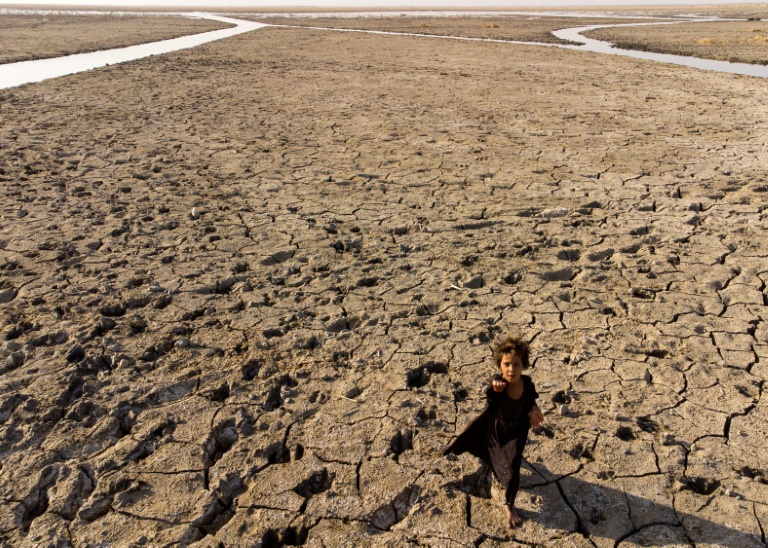
Nations worldwide are coping with increasingly intense natural disasters that have taken thousands of lives this year alone and cost billions of dollars — from devastating floods in Nigeria and Pakistan to droughts in the United States and Africa and unprecedented heatwaves across three continents.

“We have seen one catastrophe after another,” said Egyptian President Abdel Fattah al-Sisi. “As soon as we tackle one catastrophe, another one arises — wave after wave of suffering and loss.

“Is it not high time to put an end to all this suffering?”

But a multitude of other crises, from Russia’s war in Ukraine to soaring inflation and the lingering effects of the Covid pandemic, has raised concerns that climate change will drop down the priority list of governments. 

Guterres, however, told world leaders climate change could not be put on the “back burner”.

He called for a “historic” deal between rich emitters and emerging economies that would see countries double down on emissions reductions, holding the rise in temperatures to the more ambitions Paris Agreement target of 1.5 degrees Celsius above the pre-industrial era.   

Current trends would see carbon pollution increase 10 percent by the end of the decade and put the world on a path to heat up to 2.8C.

“We are on a highway to climate hell with our foot still on the accelerator,” Guterres said.

– ‘Moral imperative’ –

The UN secretary general said the target should be to provide renewable and affordable energy for all, calling on the United States and China in particular to lead the way.

He also said it was a “moral imperative” for richer polluters to help vulnerable countries.

Earlier Monday, French President Emmanuel Macron urged the United States, China and other non-European rich nations to “step up” their efforts to cut emissions and provide financial aid to other countries.

“Europeans are paying,” Macron told French and African climate campaigners on the sidelines of COP27. “We are the only ones paying.”

Chinese leader Xi Jinping, whose country is the world’s top emitter of greenhouse gases, is not attending the summit.

US President Joe Biden, whose country ranks second on the top-polluters list, will join COP27 later this week after midterm elections on Tuesday that could put Republicans hostile to international action on climate change in charge of Congress.

– ‘Loss and damage’ –

On Sunday, the heads of developing nations won a small victory when delegates agreed to put the controversial issue of compensation for “loss and damage” on the summit agenda.

Pakistan, which chairs the powerful G77+China negotiating bloc of more than 130 developing nations, has made the issue a priority.

The United States and the European Union have dragged their feet for years on the proposal, fearing it would create an open-ended reparations framework.

Guterres said COP27 must agree on a “clear, time-bound roadmap” for loss and damage that delivers “effective institutional arrangements for financing”.

“Getting concrete results on loss and damage is a litmus test of the commitment of governments to the success of COP27,” he said.

Mohamed Adow, director of the Power Shift Africa think tank, said there was no clearly-defined final outcome expected from the meeting on the issue of loss and damage.

“The historic polluters … must be made to pay for the harm they have caused,” he said. “We cannot have COP27 become a sham.”

Rich nations will also be expected to set a timetable for the delivery of $100 billion per year to help developing countries green their economies and build resilience against future climate change. 

The promise is already two years past due and remains $17 billion short, according to the Organisation for Economic Co-operation and Development.

COP27 is scheduled to continue until November 18 with ministers joining the fray during the second week.

Security is tight at the meeting, with Human Rights Watch saying authorities have arrested dozens of people and restricted the right to demonstrate in the days leading up to COP27.

French firm says to be charged over Qatar building sites

French construction firm Vinci said on Monday it expected to be charged this week by a magistrate investigating allegedly abusive work practices on its building sites in Qatar.

The group said its subsidiary Vinci Constructions Grands Projets had been summoned on Wednesday by a French magistrate investigating its infrastructure projects in Qatar “with a view to it being charged”.

Under French law, being charged implies the magistrate believes there is compelling evidence against the company, but the decision can be appealed and does not automatically mean the case will go to trial.

The Paris-based group said it regretted the development and denies the charges of using forced labour and taking part in human trafficking.

Two French NGOs — Sherpa and the Committee Against Modern Slavery — and seven former employees from India and Nepal who worked on Vinci building sites have filed a series of legal complaints against the company dating back to 2015.

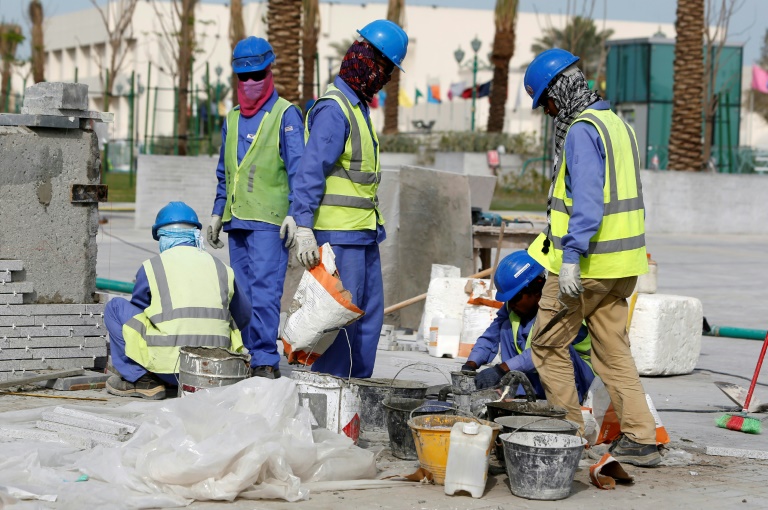
They allege that employees working on sites linked to the football World Cup laboured for 66 to 77 hours a week, had their passports confiscated and were forced to live in indecent accommodation.

In its statement on Monday, Vinci denied that the public transport sites in question were linked to the World Cup, saying they were awarded to the company before the football tournament was attributed to Qatar in 2010.

“We tried in vain to convince the magistrate that after seven and half years of investigation it was not a particularly good time to imagine laying charges a fortnight before the start of the World Cup,” Vinci lawyer Jean-Pierre Versini-Campinchi told AFP, adding that he feared a “media storm”.

Sherpa welcomed the possible deepening of the French investigation.

“If Vinci were to be charged, it would confirm that multinationals face increasing difficulties in hiding behind their supply chains, the idea that it’s ‘too complicated’ to act,” Sherpa said.

– Train lines – 

Investigators from the anti-corruption NGO first visited Qatar in 2014 where they say they met labourers on Vinci projects whose passports had been confiscated and who were required to work in temperatures above 45 degrees Celsius (113 degrees Fahrenheit).

The group alleged that some of the abuses took place among sub-contractors employed by third-party companies working for Vinci’s Qatar subsidiary, Qatari Diar Vinci Construction.

Qatari Diar Vinci Construction employed 11,000 people at its height and was responsible for building the 37-station Lusail Light Rail Transit system around Doha, as well as the Red Line of the Qatari capital’s underground metro system.

It also built the luxury Sheraton hotel in Doha.

The company unsuccessfully sued Sherpa for defamation after its first legal complaint in 2015. 

Qatar has faced a barrage of criticism over migrant worker deaths and its labour law since being named World Cup host.

It has introduced significant changes since the start of the French legal investigation, including ending its so-called “Kafala” labour system. 

This meant that a worker could not change jobs or leave the country without permission from their employer.

An audit of conditions for Vinci workers in Qatar was carried out by French trade union organisations in 2019 which concluded that the rights of labourers were being respected. 

Black marketeers grease the wheels in Central Africa's petrol crisis

The Tradex petrol station on Bangui’s Boganda avenue stands deserted, except for a lone goat wandering between the empty pumps.

It used to be a busy spot in the Central African Republic’s capital, but deliveries dried up seven months ago.

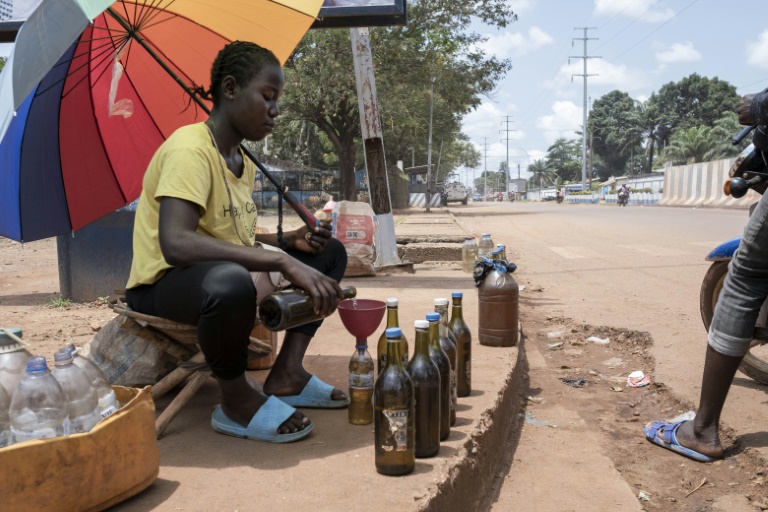
Just along the street, 18-year-old Princia Omah is lining up bottles full of petrol and fuel oil shaded from the hot sun by a multi-coloured umbrella.

“I sell petrol to make life easier for car owners,” she says.

Central Africa Republic (CAR) is the second least developed country in the world, according to the United Nations, and has often struggled to maintain oil supplies.

But since March the situation has become dramatically worse.

“It is a result of the war in Ukraine and the difficulty of shipping hydrocarbons because the country is landlocked,” Ernest Fortune Batta, director general of CAR’s Petroleum Products Storage Company (SOCASP), tells AFP.

Government majority-owned SOCASP has exclusive charge for the import and storage of oil products in the country.

– Black market –

For years the price of petrol has been blocked by the government at 865 CFA francs (1.32 euros) a litre. On the street, a bottle costs up to 40 percent more.

Petrol sellers buy on the black market where the product is often of poor quality from cheap additives.

“My father gets supplies from smugglers in the Muslim quarter,” says Omah. “It usually comes from Chad or Cameroon.”

Hundreds of petrol station workers around Bangui are out of a job and have been replaced by curbside sellers like Omah.

The petrol stations that still do manage to obtain a delivery quickly find themselves  under siege from long queues of impatient drivers.

“I have no choice, I have to get petrol from re-sellers so that I can do my shopping and go to work, even if the petrol is contaminated and can cause problems for the car,” says Cedric Banam, who tops up three times a week.

“We did not expect the crisis to get so bad,” admits Maurice Gbeza, aged 29, who has been supplying motorists illegally from the curbside for a year.

Transport costs have soared, provoking public anger.

Administrative secretary Pamela Mayevosson used to spend 1,000 CFA francs a day (1.5 euros) on transport.

“But now I need at least 2,000 francs for a day, it’s too much when our salaries have not gone up,” she says.

“The government should get a hold of the situation otherwise the country risks turning into a desert.”

“There is no answer in sight to sort out the situation,” rages Franck Ngaickom, head of the motorbike-taxi union.

“The government does not realise that the people are suffering. Many drivers have stopped work.”

– ‘Total drought’ –

Batta says the government “has contacted different suppliers to bring the crisis to an end”, but he offers no more detail.

The government did not answer several requests from AFP to explain the petrol shortage.

In mid-March, energy minister Arthur Bertrand Piri sought to reassure people with an announcement of the delivery of oil by trucks to re-supply the capital.

But since then things have become worse and worse.

“Three fuel trucks have just arrived to ease the situation, we still have a stock of fuel but deliveries are limited to stop us from running totally dry,” Batta notes.

“Come to mother M16, it’s 1,100 francs a bottle,” shouts Marguerite Goungbon, sitting on a plastic chair.

“When I saw that most of the stations were shut because of the crisis I started selling petrol,” says the former doughnut seller.

“When the crisis is over I’ll stop selling,” (petrol), adds the 52-year-old.

A bloody civil war has wracked Central Africa since 2013, even if the fighting has dropped off over the last four years.

And so, despite mineral resources such as gold, diamonds and potentially even plenty of oil reserves, the unstable nation at the heart of Africa has slipped to one of the absolute poorest.

The World Bank estimates that 71 percent of Central Africa’s six million people live below the international poverty line of $2.15 a day. 

Nearly half the population suffers from food insecurity and relies on international aid, the UN says.

Stocks mostly rise, oil falls tracking China lockdown policy

Stock markets mostly rose Monday, extending last week’s strong gains, while oil prices fell after China reaffirmed its commitment to its economically painful zero-Covid policy.

The dollar was down against key rivals ahead of this week’s US midterm elections.

Global markets and oil prices were buoyant last week on hopes Beijing may begin to roll back policies aimed at stamping out the disease within its borders.

But on Saturday, the Chinese government said it would “unswervingly” stick to its current plan, which involves harsh lockdowns and strict quarantine and testing regimens for even the smallest clusters of cases.

Despite the official stance, “there are still hopes in the market” that Beijing may relax Covid-19 restrictions in the coming months, Iris Pang, chief economist for Greater China at ING Wholesale Banking, told AFP.

“Traders believe that the Chinese government cannot permanently hold these existing Covid measures, and therefore the only direction is… looser Covid measures,” she said.

Ongoing large-scale events, such as the China International Import Expo in Shanghai, are also seen by investors as “a kind of water-testing” by Beijing, to see if cases and deaths rise significantly, Pang added.

All eyes will be on Apple when Wall Street reopens after the tech giant warned customers would face longer wait times for iPhones with the holiday season approaching.

This comes after Covid restrictions in central China “temporarily impacted” production at the world’s largest factory producing the smartphone.

Facebook-parent Meta will meanwhile become the latest tech firm to scale back its workforce, with plans to lay off thousands of employees this week, US media reported Sunday.

On Friday, Wall Street equities ended a volatile session higher after US jobs data showed hiring remained resilient and wages continued to rise, though at a slower pace.

That raised hopes of a soft landing for the world’s biggest economy despite aggressive Fed rate hikes aimed at taming inflation.

Meanwhile, two years since US President Joe Biden was swept to power in one of the most fraught elections Washington has witnessed, all eyes are on the next nationwide vote Tuesday.

US voters decide every two years who gets the majority in both chambers of Congress — and whether the president will get any new policies passed or if the opposition will be able to frustrate the agenda.

“A divided government can be good for the market,” noted Neil Wilson, analyst at Markets.com. 

“A Republican clean sweep would likely take key Democrat legislation off the table — mainly positive for markets — whilst in the unlikely event that the Democrats retain both houses it could see them push on with fiscal stimulus, mainly negative since it might be inflationary.”

– Key figures around 1130 GMT –

London – FTSE 100: DOWN 0.2 percent at 7,319.45 points

Frankfurt – DAX: UP 0.8 percent at 13,570.86

Paris – CAC 40: UP 0.1 percent at 6,420.16

EURO STOXX 50: UP 0.6 percent at 3,708.98

Tokyo – Nikkei 225: UP 2.7 percent at 27,527.64 (close)

Hong Kong – Hang Seng Index: UP 2.9 percent at 16,595.91 (close)

Shanghai – Composite: UP 0.2 percent at 3,077.82 (close)

New York – Dow: UP 1.3 percent at 32,403.22 (close)

Euro/dollar: UP at $0.9980 from $0.9964 Friday

Pound/dollar: UP at $1.1460 from $1.1309

Dollar/yen: DOWN at 146.71 from 147.44 yen

Euro/pound: DOWN at 87.11 pence from 87.80 pence

West Texas Intermediate: DOWN 0.2 percent at $92.46 per barrel

Brent North Sea crude: DOWN 0.1 percent at $98.52 per barrel

Stocks mostly rise, oil falls tracking China lockdown policy

Stock markets mostly rose Monday, extending last week’s strong gains, while oil prices fell after China reaffirmed its commitment to its economically painful zero-Covid policy.

The dollar was down against key rivals ahead of this week’s US midterm elections.

Global markets and oil prices were buoyant last week on hopes Beijing may begin to roll back policies aimed at stamping out the disease within its borders.

But on Saturday, the Chinese government said it would “unswervingly” stick to its current plan, which involves harsh lockdowns and strict quarantine and testing regimens for even the smallest clusters of cases.

Despite the official stance, “there are still hopes in the market” that Beijing may relax Covid-19 restrictions in the coming months, Iris Pang, chief economist for Greater China at ING Wholesale Banking, told AFP.

“Traders believe that the Chinese government cannot permanently hold these existing Covid measures, and therefore the only direction is… looser Covid measures,” she said.

Ongoing large-scale events, such as the China International Import Expo in Shanghai, are also seen by investors as “a kind of water-testing” by Beijing, to see if cases and deaths rise significantly, Pang added.

All eyes will be on Apple when Wall Street reopens after the tech giant warned customers would face longer wait times for iPhones with the holiday season approaching.

This comes after Covid restrictions in central China “temporarily impacted” production at the world’s largest factory producing the smartphone.

Facebook-parent Meta will meanwhile become the latest tech firm to scale back its workforce, with plans to lay off thousands of employees this week, US media reported Sunday.

On Friday, Wall Street equities ended a volatile session higher after US jobs data showed hiring remained resilient and wages continued to rise, though at a slower pace.

That raised hopes of a soft landing for the world’s biggest economy despite aggressive Fed rate hikes aimed at taming inflation.

Meanwhile, two years since US President Joe Biden was swept to power in one of the most fraught elections Washington has witnessed, all eyes are on the next nationwide vote Tuesday.

US voters decide every two years who gets the majority in both chambers of Congress — and whether the president will get any new policies passed or if the opposition will be able to frustrate the agenda.

“A divided government can be good for the market,” noted Neil Wilson, analyst at Markets.com. 

“A Republican clean sweep would likely take key Democrat legislation off the table — mainly positive for markets — whilst in the unlikely event that the Democrats retain both houses it could see them push on with fiscal stimulus, mainly negative since it might be inflationary.”

– Key figures around 1130 GMT –

London – FTSE 100: DOWN 0.2 percent at 7,319.45 points

Frankfurt – DAX: UP 0.8 percent at 13,570.86

Paris – CAC 40: UP 0.1 percent at 6,420.16

EURO STOXX 50: UP 0.6 percent at 3,708.98

Tokyo – Nikkei 225: UP 2.7 percent at 27,527.64 (close)

Hong Kong – Hang Seng Index: UP 2.9 percent at 16,595.91 (close)

Shanghai – Composite: UP 0.2 percent at 3,077.82 (close)

New York – Dow: UP 1.3 percent at 32,403.22 (close)

Euro/dollar: UP at $0.9980 from $0.9964 Friday

Pound/dollar: UP at $1.1460 from $1.1309

Dollar/yen: DOWN at 146.71 from 147.44 yen

Euro/pound: DOWN at 87.11 pence from 87.80 pence

West Texas Intermediate: DOWN 0.2 percent at $92.46 per barrel

Brent North Sea crude: DOWN 0.1 percent at $98.52 per barrel

Close Bitnami banner
Bitnami