US Business

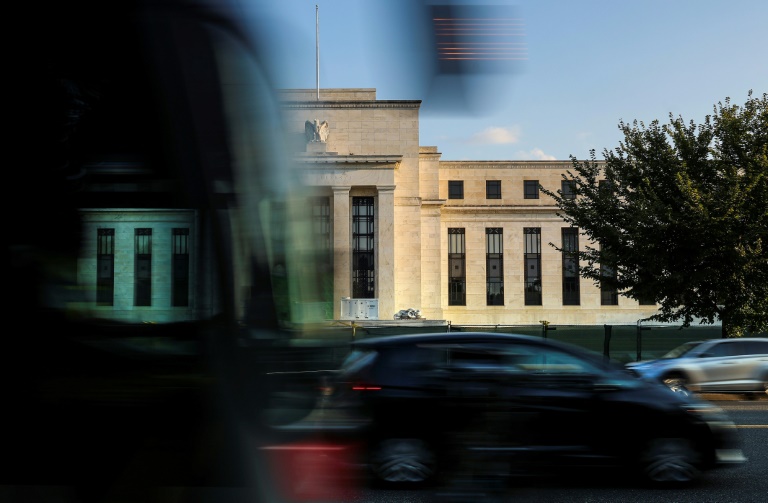
US Fed starts policy meeting with further rate hike expected

US central bankers started their two-day policy meeting Tuesday with persistently high inflation backing expectations of another rate hike — a fourth straight steep increase as price pressures fail to ease quickly enough.

American households are being squeezed by soaring consumer costs, which have picked up at the fastest pace in decades, prompting the Federal Reserve’s aggressive campaign to cool the economy.

While many analysts expect the Fed to adopt another three-quarter point hike on its benchmark lending rate this week, all eyes are on signals that it could pivot to a less hawkish stance in the coming months.

Recent data suggests that the interest rate hikes are “gradually exerting a controlled economic cooldown,” with consumption and business investment holding up amid slowing in the interest-sensitive housing sector, analysts at Moody’s Investors Service said this week.

But for now, “pricing pressures are not slowing fast enough,” Oanda analyst Edward Moya said, noting that the Fed’s preferred inflation gauge is not yet cooling.

To raise borrowing costs and cool demand, the US central bank has already cranked up the benchmark lending rate five times this year, including three straight 0.75 percentage point raises.

With persistently high inflation and a tight labor market supporting wages and spending, analysts say another 0.75 point hike is almost certain at central bankers’ next policy meeting.

This would bring the benchmark rate to a range between 3.75 percent and four percent.

The Fed’s policy-setting Federal Open Market Committee (FOMC) is expected to announce its decision on Wednesday.

Federal Reserve Chair Jerome Powell’s press conference after the meeting will be scrutinized for clues on how much further he thinks the Fed should go before it sees victory in the inflation fight.

Some officials have recently expressed concern about tightening policy too much, wanting to consider a slower pace of hikes, or pausing to assess the impact of current moves, analysts said.

But the Fed “needs to see inflation decline more materially” before shifting to a slower pace of hikes, meaning changes will likely depend on upcoming consumer price data this month, said Stephen Innes of SPI Asset Management.
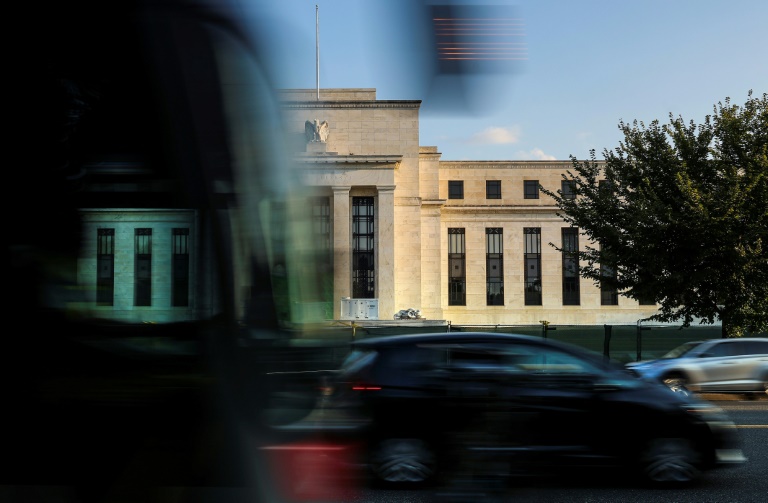

US Fed starts policy meeting with further rate hike expected

US central bankers started their two-day policy meeting Tuesday with persistently high inflation backing expectations of another rate hike — a fourth straight steep increase as price pressures fail to ease quickly enough.

American households are being squeezed by soaring consumer costs, which have picked up at the fastest pace in decades, prompting the Federal Reserve’s aggressive campaign to cool the economy.

While many analysts expect the Fed to adopt another three-quarter point hike on its benchmark lending rate this week, all eyes are on signals that it could pivot to a less hawkish stance in the coming months.

Recent data suggests that the interest rate hikes are “gradually exerting a controlled economic cooldown,” with consumption and business investment holding up amid slowing in the interest-sensitive housing sector, analysts at Moody’s Investors Service said this week.

But for now, “pricing pressures are not slowing fast enough,” Oanda analyst Edward Moya said, noting that the Fed’s preferred inflation gauge is not yet cooling.

To raise borrowing costs and cool demand, the US central bank has already cranked up the benchmark lending rate five times this year, including three straight 0.75 percentage point raises.

With persistently high inflation and a tight labor market supporting wages and spending, analysts say another 0.75 point hike is almost certain at central bankers’ next policy meeting.

This would bring the benchmark rate to a range between 3.75 percent and four percent.

The Fed’s policy-setting Federal Open Market Committee (FOMC) is expected to announce its decision on Wednesday.

Federal Reserve Chair Jerome Powell’s press conference after the meeting will be scrutinized for clues on how much further he thinks the Fed should go before it sees victory in the inflation fight.

Some officials have recently expressed concern about tightening policy too much, wanting to consider a slower pace of hikes, or pausing to assess the impact of current moves, analysts said.

But the Fed “needs to see inflation decline more materially” before shifting to a slower pace of hikes, meaning changes will likely depend on upcoming consumer price data this month, said Stephen Innes of SPI Asset Management.

Land-based climate plans 'unrealistic': report

The world needs to set aside an area bigger than the United States for tree planting and other measures to meet climate pledges, according to research published Tuesday that warned against “unrealistic” carbon-cutting plans.

Almost 200 nations will begin high-stakes UN climate talks in Egypt from November 6, as increasing damage from floods, heat waves and droughts are being felt across the world.

Recent UN assessments conclude that current policies and plans are not nearly enough to limit global warming and avoid catastrophic climate impacts.

They may also be unattainable, new research showed Tuesday on the planned use of land-based schemes such as tree planting to offset fossil fuel pollution.

An assessment of plans from 166 countries and the European Union, released by the University of Melbourne, estimated that the total area implied was almost 1.2 billion hectares (2.9 billion acres) — bigger than the United States, or four times the size of India.

“Servicing all of the land-based carbon removal pledges is unrealistic because it would require a land mass half the size of current global cropland, putting potential pressure on ecosystems, food security and indigenous peoples’ rights,” the report said.

The research looked at countries’ targets, particularly longer-term commitments, and if the land needed was not explicitly stated, they calculated using information about the types of activity as well as carbon removal data from UN climate experts.

They found that while over 550 hectares were earmarked for restoring degraded land and protecting primary forests, some 630 million hectares were estimated for carbon capture schemes, like tree planting.

“Land-based carbon removals have to be considered together with deep cuts in fossil fuel emissions, not as a replacement,” said Anne Larson, of the Center for International Forestry Research and World Agroforestry, who was a co-author of the report.

– ‘Dangerous overreliance’ –

Larson said governments might see tree planting as “easy, compared to other options”, but cautioned that these projects can cause their own problems. 

If there is no long-term management plan or if the species are not native, the trees can simply wither.

Tree plantations imposed on communities risk being “neglected, burned, cut down”, she said. 

Such expansion is also seen as incompatible with the rights of many indigenous peoples, who are increasingly being recognised as crucial custodians of nature, as the world faces a human-caused extinction crisis as well as climate change.

The Global Alliance of Territorial Communities, representing 35 million people living in forest territories in Asia, Africa and Latin America, on Tuesday said: “dangerous overreliance on land-based methods to capture carbon would gobble up much of our ancestral lands, which we desperately need for food production and nature protection”.

“Simply put, we cannot plant trees to escape climate disaster, there is not enough land. Instead, we need to protect and restore existing forests and you can only do that with us,” the alliance said.

UN climate scientists have said the world needs to slash carbon emissions 45 percent by 2030 in order to limit global heating to the more ambitious Paris Agreement goal of 1.5 degrees Celsius.

The Melbourne University report said any tree planting schemes would be simply unable to meet the urgent challenge of reducing greenhouse gas pollution.

“Countries need to reduce their expected reliance on land-based carbon removal in favour of stepping up emissions reductions from all sectors and prioritising ecosystem-based approaches,” the report said.

Worries mount in US over election violence

The shocking assault of top Democrat Nancy Pelosi’s husband at their home has heightened concerns that unconstrained disinformation and toxic political partisanship could spill over into violence around next week’s US midterm elections.

US security officials say unconstrained disinformation and political vitriol is volatile fuel for attacks, like the one in which a follower of right-wing conspiracy theories apparently sought to kidnap Nancy Pelosi over alleged election “lies.”

David DePape, who allegedly assaulted Pelosi’s 82-year-old husband Paul in their San Francisco home when he found she wasn’t there, posted conservative conspiracy theories on his website on election fraud, Covid vaccines, climate change, the Holocaust and trans people in schools.

The attack came one week before midterm congressional elections, as politicians and poll workers have reported a surge in threat messages and intimidation.

Those include, in Arizona, armed men patrolling ballot drop boxes, alarming people attempting to vote.

On Friday, the day of the Pelosi attack, US security agencies issued a warning that domestic violent extremists (DVE) pose “heightened threats” around the November 8 vote.

“Election-related perceptions of fraud and DVE reactions to divisive topics will likely drive sporadic DVE plotting of violence and broader efforts to justify violence in the lead up to and following the 2022 midterm election cycle,” the agencies said in a joint intelligence bulletin.

– Trump rhetoric –

Talk of political violence climbed after former president Donald Trump refused in November 2020 to accept his election defeat by Joe Biden, leading to the assault on the US Capitol by Trump supporters two months later, on January 6, 2021.

Since then the political rhetoric has not dampened, in part because Trump himself still dominates the Republican Party and tells supporters that Biden’s Democrats are bent on stealing the upcoming elections.

In Robstown, Texas last week, Trump urged voters not to trust the polls, called Pelosi “crazy” and said “Biden and the far left lunatics are waging war on Texas,” among other accusations made without evidence.

“Biden and his left wing handlers are turning America into a police state,” he asserted, repeating his unfounded claim that “January 6th was caused because of a crooked stolen election.”

– Democratic, Republican officials targeted –

Nothing like January 6 has recurred. But there are enough incidents and social media-fuelled disinformation to give officials cause for worry.

In June an armed man traveled to Supreme Court Justice Brett Kavanaugh’s home just outside Washington, unhappy about the high court’s opposition to abortion rights. 

In July a man with a gun threatened Democratic Representative Pramila Jayapal at her home in Seattle. 

The same month a military veteran, later described as suffering from alcoholism and PTSD, tried to knife Republican New York governor candidate Lee Zeldin. 

And Democratic Congressman Eric Swalwell has been the target of numerous violent threats.

Swalwell placed the blame directly on Trump’s fiery “Make American Great Again” movement.

“MAGA political violence is at peak level in America and it’s going to get someone killed,” he wrote in August, urging Republican leaders to denounce it.

–  Rampant disinformation –

In addition, poll workers have reported widespread threats after Trump and his followers blamed them for his 2020 election loss.

Some areas say they now cannot recruit enough poll workers.

In Arizona — where tensions over the allegedly “stolen” 2020 presidential election have been particularly high —  armed people wielding video cameras have shown up at ballot drop boxes.

Such actions “raise serious concerns of voter intimidation,” the Justice Department said in a filing to the Arizona federal district court, where a lawsuit has been filed over the issue.

Underpinning the worries of violence is an atmosphere of copious disinformation online that angers readers and can lead them to launch attacks, as with Pelosi’s attacker.

On Sunday the US government’s top cybersecurity official Jen Easterly said there was “a very complex threat environment helped by “rampant disinformation” and “threats of harassment, intimidation and violence against election officials, polling places and voters.”

Disinformation “can undermine confidence in election integrity and that can be used to incite violence,” Easterly said on CBS.

Global stocks rise on Fed optimism, China zero-Covid reports

Global stock markets rose sharply Tuesday, as traders looked ahead to the US Federal Reserve’s interest rate decision hoping it will signal a more dovish approach to fighting inflation.

The Fed is widely expected Wednesday to announce a fourth straight 75-basis-point rate hike as it tries to rein in runaway prices, leading to worries it will tip the world’s top economy into recession, sending stocks tumbling.

But recent reports have suggested officials are looking to dial down the pace of increases, which has sparked a rally in risk assets over the past week — helped by signs other central banks are also trying to take a step back.

“While a 75 basis point hike looks locked in tomorrow, the messaging is what investors are interested in,” said Craig Erlam, senior market analyst at OANDA.

The main indices in London and Paris were both up 1.6 percent in afternoon trading, with Frankfurt gaining 1.3 percent.

The Dow Jones gained 0.7 percent after opening in New York.

– Waiting game –

“The waiting game for the Fed is still on, with investors largely in the dark until the US central bank illuminates the path ahead for interest rate rises tomorrow,” said Hargreaves Lansdown analyst Susannah Streeter.

“In the interim they have been feeling their way to a more optimistic attitude, hopeful that economic indicators hinting that inflationary pressures are beginning to subside could lead to a softening in monetary policy.”

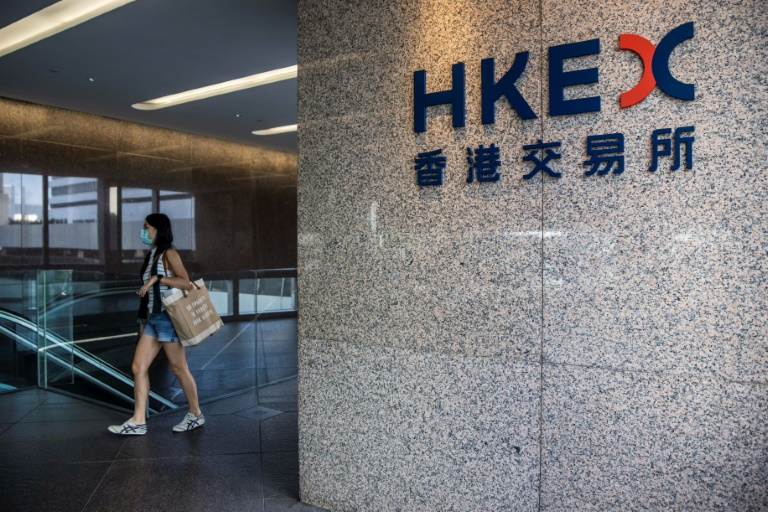
In Asia, Hong Kong led the rally following unconfirmed posts on Chinese social media saying officials were putting together a committee to discuss how to move the country away from its economically damaging zero-Covid policy.

Shares jumped more than five percent after the appearance of the unverified document, which ramped up hopes that the world’s number two economy could begin opening up again in the new year and ease the strict containment measures that have hammered productivity and markets.

However, neither Chinese state media nor government officials have suggested that the meeting actually took place, or that such a committee was established, raising questions about the veracity of the statement.

Nonetheless, Shanghai climbed more than two percent, while the yuan also rallied after recently falling to record lows against the dollar.

Sydney was also well up after the Australian central bank lifted rates by 0.25 percentage points to a near-decade high but brushed off calls for a bigger raise.

– Big earnings season –

Meanwhile positive results from multinational firms also helped lift equities.

Shares increased in London-listed oil giant BP after it reported that third-quarter profit had more than doubled on high commodity prices, to $8.2 billion.

It is the latest energy group to report bumper earnings in recent weeks after Chevron, Shell and TotalEnergies.

Also reporting Tuesday was US drugmaker Pfizer, which recorded an 83-percent surge in Covid-19 vaccine revenues in the United States in the most recent quarter.

Shares in Pfizer rose more than two percent.

Japanese conglomerate Sony raised its annual net profit and sales forecasts Tuesday, saying the weak yen had boosted sectors such as its massive global entertainment business, including PlayStation games.

And shares in British grocery delivery platform Ocado soared more than 35 percent after it announced a tie-up with South Korean conglomerate Lotte Shopping.

– Key figures around 1330 GMT –

London – FTSE 100: UP 1.6 percent at 7,204.71 points

Frankfurt – DAX: UP 1.3 percent at 13,431.58

Paris – CAC 40: UP 1.6 percent at 6,368.12

EURO STOXX 50: UP 1.6 percent at 3,674.66

New York – Dow: UP 0.7 percent at 32,952.24

Tokyo – Nikkei 225: UP 0.3 percent at 27,678.92 (close)

Hong Kong – Hang Seng Index: UP 5.2 percent at 15,455.27 (close)

Shanghai – Composite: UP 2.6 percent at 2,969.20 (close)

Euro/dollar: UP at $0.9938 from $0.9885 on Monday

Pound/dollar: UP at $1.1549 from $1.1465

Dollar/yen: DOWN at 147.25 yen from 148.72 yen

Euro/pound: DOWN at 86.05 pence from 86.20 pence

West Texas Intermediate: UP 3.0 percent at $89.15 per barrel

Brent North Sea crude: UP 2.7 percent at $95.32 per barrel

burs-rox/imm

Global stocks rise on Fed optimism, China zero-Covid reports

Global stock markets rose sharply Tuesday, as traders looked ahead to the US Federal Reserve’s interest rate decision hoping it will signal a more dovish approach to fighting inflation.

The Fed is widely expected Wednesday to announce a fourth straight 75-basis-point rate hike as it tries to rein in runaway prices, leading to worries it will tip the world’s top economy into recession, sending stocks tumbling.

But recent reports have suggested officials are looking to dial down the pace of increases, which has sparked a rally in risk assets over the past week — helped by signs other central banks are also trying to take a step back.

“While a 75 basis point hike looks locked in tomorrow, the messaging is what investors are interested in,” said Craig Erlam, senior market analyst at OANDA.

The main indices in London and Paris were both up 1.6 percent in afternoon trading, with Frankfurt gaining 1.3 percent.

The Dow Jones gained 0.7 percent after opening in New York.

– Waiting game –

“The waiting game for the Fed is still on, with investors largely in the dark until the US central bank illuminates the path ahead for interest rate rises tomorrow,” said Hargreaves Lansdown analyst Susannah Streeter.

“In the interim they have been feeling their way to a more optimistic attitude, hopeful that economic indicators hinting that inflationary pressures are beginning to subside could lead to a softening in monetary policy.”

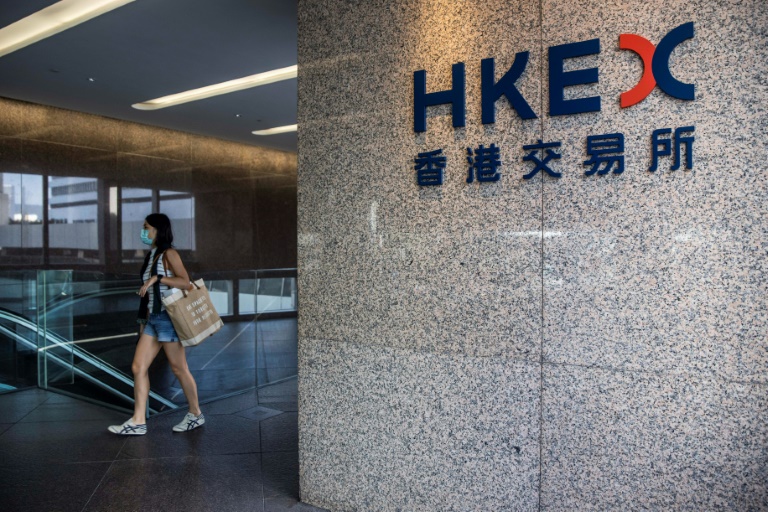
In Asia, Hong Kong led the rally following unconfirmed posts on Chinese social media saying officials were putting together a committee to discuss how to move the country away from its economically damaging zero-Covid policy.

Shares jumped more than five percent after the appearance of the unverified document, which ramped up hopes that the world’s number two economy could begin opening up again in the new year and ease the strict containment measures that have hammered productivity and markets.

However, neither Chinese state media nor government officials have suggested that the meeting actually took place, or that such a committee was established, raising questions about the veracity of the statement.

Nonetheless, Shanghai climbed more than two percent, while the yuan also rallied after recently falling to record lows against the dollar.

Sydney was also well up after the Australian central bank lifted rates by 0.25 percentage points to a near-decade high but brushed off calls for a bigger raise.

– Big earnings season –

Meanwhile positive results from multinational firms also helped lift equities.

Shares increased in London-listed oil giant BP after it reported that third-quarter profit had more than doubled on high commodity prices, to $8.2 billion.

It is the latest energy group to report bumper earnings in recent weeks after Chevron, Shell and TotalEnergies.

Also reporting Tuesday was US drugmaker Pfizer, which recorded an 83-percent surge in Covid-19 vaccine revenues in the United States in the most recent quarter.

Shares in Pfizer rose more than two percent.

Japanese conglomerate Sony raised its annual net profit and sales forecasts Tuesday, saying the weak yen had boosted sectors such as its massive global entertainment business, including PlayStation games.

And shares in British grocery delivery platform Ocado soared more than 35 percent after it announced a tie-up with South Korean conglomerate Lotte Shopping.

– Key figures around 1330 GMT –

London – FTSE 100: UP 1.6 percent at 7,204.71 points

Frankfurt – DAX: UP 1.3 percent at 13,431.58

Paris – CAC 40: UP 1.6 percent at 6,368.12

EURO STOXX 50: UP 1.6 percent at 3,674.66

New York – Dow: UP 0.7 percent at 32,952.24

Tokyo – Nikkei 225: UP 0.3 percent at 27,678.92 (close)

Hong Kong – Hang Seng Index: UP 5.2 percent at 15,455.27 (close)

Shanghai – Composite: UP 2.6 percent at 2,969.20 (close)

Euro/dollar: UP at $0.9938 from $0.9885 on Monday

Pound/dollar: UP at $1.1549 from $1.1465

Dollar/yen: DOWN at 147.25 yen from 148.72 yen

Euro/pound: DOWN at 86.05 pence from 86.20 pence

West Texas Intermediate: UP 3.0 percent at $89.15 per barrel

Brent North Sea crude: UP 2.7 percent at $95.32 per barrel

burs-rox/imm

Power, water restored in Kyiv after Russian strikes

Water and power supplies were fully restored in Kyiv on Tuesday a day after Russian missile strikes, as grain exports from Ukraine continued despite Moscow pulling out of a deal to let ships through.

Russian authorities meanwhile announced that tens of thousands more civilians would be “evacuated” from the Russian-occupied southern Ukrainian region of Kherson amid a counter-offensive by Kyiv.

Ukrainian presidential adviser Oleksiy Arestovich said Monday’s bombardment was “one of the most massive shellings of our territory by the army of the Russian Federation”.

Following the strikes, aerial views showed Kyiv plunged in darkness overnight, with the only lights coming from cars on the road.

In a town near Kyiv on Monday, the powerful explosions had woken up Mila Ryabova, 39. 

Ryabova told AFP that she and her family were “worrying and talking about opportunities to move abroad, because there is a cold winter ahead. We may not have electricity, heat supply.”

Monday’s shelling had left 80 percent of the capital’s consumers without water and 350,000 homes without electricity. 

On Tuesday, Kyiv mayor Vitali Klitschko said water and electricity supplies had been “fully restored” in the capital.

Klitschko warned that there would still be planned power cuts in the city “because of the considerable deficit in the power system after the barbaric attacks of the aggressor”.

Ukrainian energy operator Ukrenergo said it would limit supplies to all consumers in central and northern regions of the country to “reduce the pressure on the network”.

– ‘Help energy sector’ –

Ukrainian President Volodymyr Zelensky spoke to his French counterpart Emmanuel Macron Tuesday.

He thanked Macron for “specific decisions on strengthening Ukraine’s defence capabilities. Specific initiatives to restore the destroyed energy infrastructure.”

EU commissioner for energy Kadri Simson arrived in Kyiv “to help scale up support to the Ukrainian energy sector”, she said on Twitter.

The Ukrainian army said Russia launched 55 cruise missiles on Monday, mainly at energy infrastructure.

In a statement Tuesday, the Russian defence ministry claimed the “massive strikes… significantly disrupted the management and logistics of the Ukrainian armed forces”.

Russia has pivoted to systematically attacking Ukrainian energy infrastructure after setbacks on the battlefield, where the Russian army is facing pushbacks on the eastern and the southern fronts.

In the south, Kyiv’s forces are preparing for fierce battles to recapture the city of Kherson and its surrounding region.

Kherson is one of the four regions — along with Zaporizhzhia, Donetsk and Lugansk — that Moscow claims to have annexed but does not fully control. 

– New ‘evacuations’ from Kherson –

Russian occupation authorities in Kherson said Tuesday that tens of thousands more people would be “evacuated” from the region amid Kyiv’s counteroffensive. 

This comes after 70,000 people already left their homes in Kherson, Moscow-installed local authorities said last week.

The Russian-backed leader of the Kherson region, Vladimir Saldo, said Tuesday new resettlements were being carried out because of the risk of a “massive missile attack” by Ukrainian forces on a local dam.

But Ukraine said that Russian “occupiers are carrying out forced displacement of the civilian population”.

“Citizens living in premises along the banks of the Dnipro river are being forcibly evicted from their homes,” the General Staff of the Ukrainian Armed Forces said on Facebook on Tuesday. 

– Grain corridor –

Also on Tuesday, three more grain-loaded cargo ships left Ukrainian ports despite Russia’s decision to suspend its participation in a deal to allow grain exports to cross the Black Sea.

Russia announced the move after accusing Kyiv of a “massive” drone attack on its fleet on Saturday, which Ukraine labelled a “false pretext”.

Turkish President Recep Tayyip Erdogan, whose country brokered the July grain export agreement along with the United Nations, is to speak with his Russian and Ukrainian counterparts in the coming days with the aim of restoring the deal.

Kremlin spokesman Dmitry Peskov said it was “risky” to continue the exports without Russia’s consent.

In his evening address Monday, President Volodymyr Zelensky said the grain deal breakdown was “clear evidence that Russia will continue to oppose itself to the entire international community”, adding it was “very important now to prevent this global destabilisation”.

Rapper Takeoff, member of Migos, shot dead at 28: TMZ

The rapper Takeoff, a member of the Grammy-nominated hip hop trio Migos, was fatally shot at a bowling alley in Houston, Texas on Tuesday, according to entertainment outlet TMZ. He was 28 years old.

Born Kirshnik Khari Ball, he was playing dice with fellow Migos member Quavo at around 2:30 am, TMZ said. Houston police said they reported to a shooting overnight and one person was dead at the scene, but would not confirm the victim’s identity until the family had been notified.

Two other people were shot and taken to area hospitals in private vehicles, police said. 

According to TMZ, Quavo was not hurt. 

The entertainment outlet said Takeoff and Quavo were playing dice when “an altercation broke out and that’s when someone opened fire, shooting Takeoff.” 

A couple of hours prior to the shooting, Takeoff had posted a selfie from what appeared to be the bowling alley.

The venue, 810 Billiards & Bowling, said they would be closed on Tuesday.

Early tributes rolled in as news of the death spread on social media, including from Congressman Jamaal Bowman, who tweeted “Sending love to Takeoff’s loved ones. I’m tired of seeing young Black men die.”

– ‘Bad and Boujee’ –

Born in Lawrenceville, Georgia on June 18, 1994, Takeoff was best known for his membership in Migos along with Quavo, his uncle, and Offset, his cousin who today is married to fellow rapper Cardi B.

“Growing up, I was trying to make it in music. I was grinding, which is just what I loved doing,” Takeoff said in a 2017 interview with The Fader. “Just making something and creating for me.”

“I was getting my own pleasure out of it, because it’s what I liked doing. I’d wait for Quavo to get back from football practice and I’d play my songs for him.”

The Atlanta-based Migos soared to prominence off their viral 2013 song “Versace,” which Drake remixed.

It was 2016’s smash hit “Bad and Boujee” that first saw them hit number one. 

The trio, managed by hip hop powerhouse Coach K, is considered widely influential in bringing contemporary Southern trap, a popular and influential rap sub-genre, to the mainstream.

Following their debut album “Yung Rich Nation” in 2015, they debuted atop the Billboard top albums chart with their sophomore album “Culture.”

After inking a deal with Motown and Capitol Records in 2017, they followed up with “Culture II,” once again hitting the chart’s top spot.

In 2021, they completed the trilogy with “Culture III.”

Quavo and Takeoff, who have been performing as a duo, had recently released a new music video for the track “Messy.”

“I’m doing some melodic stuff. Even Quavo, he usually does the melodic things and I rap more, but we’re going back to the roots,” Takeoff had told the outlet Complex this fall.

Pfizer lifts 2022 forecast for Covid-19 vaccine sales as profits rise

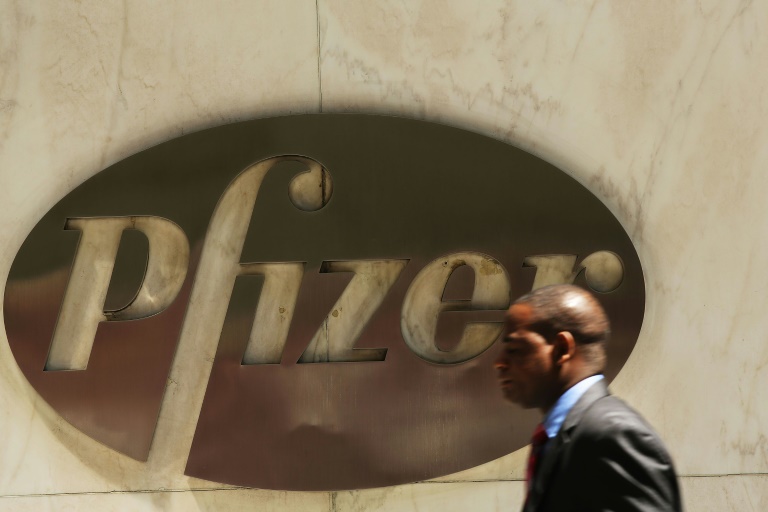
Pfizer reported higher quarterly profits Tuesday as it lifted its full-year forecast for coronavirus vaccine sales and predicted Covid-19 would yield billions more in revenues for the forseeable future.

The big US drugmaker now expects 2022 sales of the Comirnaty Covid-19 vaccine of $34 billion, up $2 billion from the prior outlook. 

Pfizer maintained its projection of $22 billion in annual sales for its Paxlovid therapeutic for Covid-19.

More than two years into the pandemic, Chief Executive Albert Bourla predicted revenues for Covid-19 products would persist even though they are likely to fall from their 2022 levels. 

“We believe our Covid-19 franchises will remain multi-billion revenue generators for the forseeable future, which should serve as a buffer for any unforeseen challenges with other products in our portfolio,” Bourla said in prepared remarks.

The most recent quarter included an 83 percent surge in Covid-19 vaccine revenues in the United States, driven by deliveries of the latest booster shot for the Omicron BA.4/BA.5-adapted bivalent vaccine.

Overall, Pfizer reported profits of $8.6 billion in the third quarter, up six percent from the year-ago period on a six percent drop in revenues to $22.6 billion.

Bourla said Pfizer was on track to launch up to 19 new products in the next year and a half. He highlighted potential “blockbuster” products for respiratory syncytial virus (RSV), Ulcerative colitis and Migraine.

Bourla said the product pipeline should alleviate “understandable” questions about Pfizer’s growth potential in the 2025 to 2030 given the loss of some $17 billion in revenues due to patent expirations.

Shares of Pfizer rose 3.5 percent to $48.20 in pre-market trading.

Pfizer lifts 2022 forecast for Covid-19 vaccine sales as profits rise

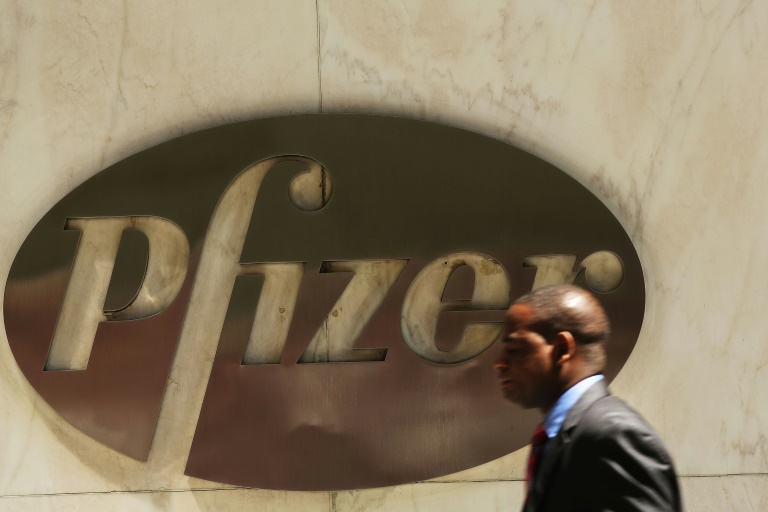
Pfizer reported higher quarterly profits Tuesday as it lifted its full-year forecast for coronavirus vaccine sales and predicted Covid-19 would yield billions more in revenues for the forseeable future.

The big US drugmaker now expects 2022 sales of the Comirnaty Covid-19 vaccine of $34 billion, up $2 billion from the prior outlook. 

Pfizer maintained its projection of $22 billion in annual sales for its Paxlovid therapeutic for Covid-19.

More than two years into the pandemic, Chief Executive Albert Bourla predicted revenues for Covid-19 products would persist even though they are likely to fall from their 2022 levels. 

“We believe our Covid-19 franchises will remain multi-billion revenue generators for the forseeable future, which should serve as a buffer for any unforeseen challenges with other products in our portfolio,” Bourla said in prepared remarks.

The most recent quarter included an 83 percent surge in Covid-19 vaccine revenues in the United States, driven by deliveries of the latest booster shot for the Omicron BA.4/BA.5-adapted bivalent vaccine.

Overall, Pfizer reported profits of $8.6 billion in the third quarter, up six percent from the year-ago period on a six percent drop in revenues to $22.6 billion.

Bourla said Pfizer was on track to launch up to 19 new products in the next year and a half. He highlighted potential “blockbuster” products for respiratory syncytial virus (RSV), Ulcerative colitis and Migraine.

Bourla said the product pipeline should alleviate “understandable” questions about Pfizer’s growth potential in the 2025 to 2030 given the loss of some $17 billion in revenues due to patent expirations.

Shares of Pfizer rose 3.5 percent to $48.20 in pre-market trading.

Close Bitnami banner
Bitnami