US Business

New potentially hazardous asteroid discovered

An international team of astronomers on Monday announced the discovery of a large asteroid whose orbit crosses that of Earth, creating a small chance far in the future of a catastrophic collision.

The 1.5 kilometer- (0.9 mile-) wide asteroid, named 2022 AP7, was discovered in area notoriously difficult to spot objects due to the glare from the Sun.

It was found along with two other near-Earth asteroids using a high-tech instrument on the Victor M. Blanco telescope in Chile that was originally developed to study dark matter.

“2022 AP7 crosses Earth’s orbit, which makes it a potentially hazardous asteroid, but it currently does not now or anytime in the future have a trajectory that will have it collide with the Earth,” said lead author of the findings, astronomer Scott Sheppard of the Carnegie Institution for Science.

The potential threat comes from the fact that like any orbiting object, its trajectory will be slowly modified due to myriad gravitational forces, notably by planets. Forecasts are therefore difficult on the very long term.

The newly-discovered asteroid is “the largest object that is potentially hazardous to Earth to be discovered in the last eight years,” said NOIRLab, a US-funded research group that operates multiple observatories.

2022 AP7 takes five years to circle the Sun under its current orbit, which at its closest point to Earth remain several million kilometers away.

The risk is therefore very small, but in case of a collision, an asteroid of that size “would have a devastating impact on life as we know it,” said Sheppard. He explained that dust launched into the air would have a major cooling effect, provoking an “extinction event like hasn’t been seen on Earth in millions of years.”

His team’s results were published in the scientific journal The Astronomical Journal. The two other asteroids pose no risk to Earth, but one is the closest asteroid to the Sun ever found.

Some 30,000 asteroids of all sizes — including more than 850 larger than a kilometer wide — have been catalogued in the vicinity of the Earth, earning them the label “Near Earth Objects” (NEOs). None of them threaten Earth for the next 100 years.

According to Sheppard, there are “likely 20 to 50 large NEOs left to find,” but most are on orbits that put them in the Sun’s glare.

In preparation for a future discovery of a more threatening object, NASA conducted a test mission in late September in which it collided a spacecraft with an asteroid, proving that it was possible to change its trajectory.

Germany's Scholz set for high-stakes China visit

German Chancellor Olaf Scholz makes a high-stakes trip to China this week, walking a tightrope between shoring up a key economic relationship and facing heightened concerns about over-reliance on authoritarian Beijing.

Scholz, accompanied by a delegation of business executives, will be the first European Union leader to visit the world’s second-biggest economy since 2019.

During the one-day trip on Friday, he will hold talks with President Xi Jinping and Premier Li Keqiang. 

But the visit has sparked controversy, coming as Berlin reels from an over-dependence on Russian energy imports that left it exposed when Moscow slashed supplies following its invasion of Ukraine.

That crisis has prompted soul-searching about whether German industry’s heavy reliance on China could again leave it vulnerable.

Surging tensions between the West and Beijing over issues ranging from Taiwan to human rights in Xinjiang have added to a worsening geopolitical climate, and even senior figures within Scholz’s coalition are raising concerns. 

Foreign Minister Annalena Baerbock said she feared mistakes made in the relationship with Russia could be repeated with China.

“We must prevent that,” Baerbock — from the Greens, a member of Scholz’s uneasy three-party ruling coalition — told broadcaster ARD at the weekend.

“I think it is extremely important that we never again make ourselves so dependent on a country that does not share our values.”

– ‘Minimise risks’ –

The sensitivity was highlighted when a row erupted last month about whether to allow Chinese shipping giant Cosco to buy a stake in a Hamburg port terminal. 

Ultimately, Scholz defied calls from six ministries to veto the sale over security concerns, instead permitting the company to acquire a reduced stake.

Some in government will view shoring up the economic partnership with China as crucial at a time Germany, battered by the energy crisis, is hurtling towards a recession.

Ahead of the trip, Scholz’s spokesman Steffen Hebestreit stressed the chancellor was not in favour of “decoupling” from China — but also wanted to “diversify, and minimise risks”.

For now, the German and Chinese economies remain deeply intertwined.

China is a major market for German goods, particularly for auto giants Volkswagen, BMW and Mercedes-Benz, and many jobs in Europe’s top economy depend directly on the relationship.

The worsening climate has rattled the nerves of German firms with investments in China. BASF chemicals giant boss Martin Brudermueller, who will accompany Scholz, last week urged an end to “China bashing”.

Still, the timing of the trip has raised eyebrows, coming so soon after Xi Jinping secured a historic third term as China’s leader. 

“The timing is extremely unfortunate,” Heribert Dieter, from the German Institute for International and Security Affairs, told AFP. 

Xi “has just been confirmed for another five years in office, and of course Chinese politicians see the German chancellor’s visit as confirmation of their policies”, he added. 

– ‘Follow its own path’ –

Hebestreit insisted the visit will “cover the entire spectrum of our relations with China”, including tensions in East Asia, and human rights.

He said the war in Ukraine would be on the agenda. While Germany has firmly condemned Russia’s invasion, China has steadfastly avoided criticising Moscow and instead blames the United States and NATO for the conflict. 

He also said that Scholz was in close contact with international partners in Europe, as well as the United States, about the visit. 

But some may see it as further evidence of Germany going it alone to look after its own interests.

Berlin has already raised hackles among fellow EU members by unveiling a 200-billion-euro ($198 billion) fund to shield consumers and businesses from surging energy prices, rather than acting together with the rest of the bloc.

“Western allies — of course in Paris but above all in Washington — see this trip very critically,” said Dieter.

“Germany is following its own path.”

US Republicans gain firm toehold a week out from Election Day

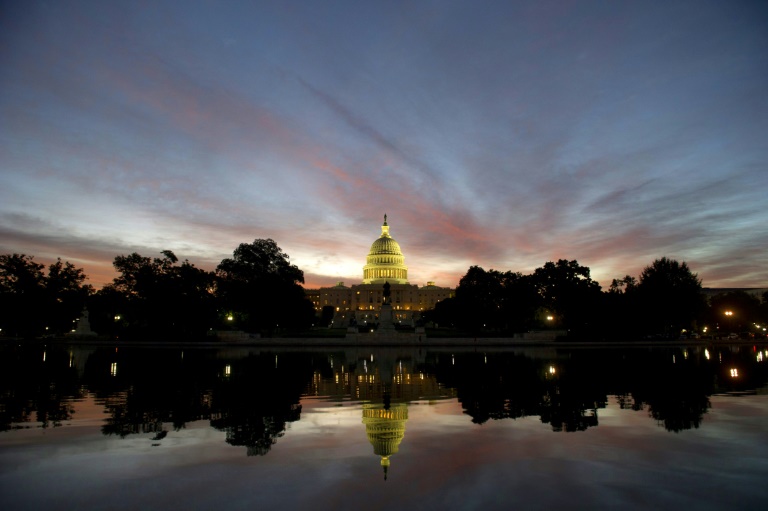
Candidates were making closing pitches Tuesday in the US midterm elections that decide control of Congress for the remainder of President Joe Biden’s term, with Republicans smelling blood in the water.

Polling is pointing to a re-emerging “red wave” that will likely see the party of Biden’s political foe Donald Trump dismantling the Democrats’ razor-thin majority in the House and possibly retaking the Senate.

Republicans are confident they can flip the one state they need for the upper chamber and are expecting gains in the House of 12 to 25 seats, easily enough to overcome the Democrats’ eight-member advantage.

“I think the Democrats are going to get a rude awakening on November 8 that high inflation, high crime, open borders is not what the American public wants,” National Republican Senatorial Committee chairman Rick Scott told ABC on Sunday.

With all 435 seats in the House of Representatives up for grabs alongside a third of the 100-member Senate and a slew of state posts, the economy is proving the biggest liability for Biden’s Democrats.

Inflation — up 8.2 percent in a year — is easily outranking abortion rights in voters’ priorities, forcing Democrats to recast their closing message to tout legislative wins they say will save Americans money.

They are also warning that Republicans want to curb entitlements, and have doubled down on threats to democracy they say extremist right-wingers pose, as well as Trump’s role in the 2021 attack on the US Capitol.

– ‘Reality is setting in’ –

Republicans meanwhile have zeroed in on urban violence, an issue that has helped the party make notable inroads in key swing states, portraying their colleagues across the aisle as soft on crime.

The story of the final days of the campaign has been Republican incursion into the Democrats’ back yard, with candidates eyeing opportunities for House seats that were once out of reach. 

Strategists from both parties are seeing districts across New York, Oregon and Connecticut that went for Biden by double digits in 2020 coming back into play. 

“We thought for a little bit that we could defy gravity, but the reality is setting in,” Sean McElwee, executive director of Data for Progress, a left-leaning polling firm, told The New York Times.   

The Republicans are also showing most of the late momentum in the Senate — where the Democrats currently rely for their majority on a tie-breaking vote from Vice President Kamala Harris.

Democrats are a nose in front but see their margins narrowing in Pennsylvania, Arizona and New Hampshire.

Republicans have taken the lead in Nevada, the country’s closest contest, and Wisconsin, while Georgia has edged back into the red column despite a tumultuous campaign by scandal-hit challenger Herschel Walker.

More than 21 million people across 46 states have already voted but the public is being warned that patience may be required on election night, with vote counting in some states expected to take days.

If Republicans win back either chamber, they have vowed to launch investigations into the Biden administration, with the targets ranging from the president himself to Homeland Security Secretary Alejandro Mayorkas.

– ‘Across the aisle’ –

For Biden, who turns 80 two weeks after the election, a comprehensive defeat could be a double-blow, threatening his agenda and chipping away at support for his bid to seek a second term.

The president — who voted early in Wilmington, Delaware on Saturday — heads this week to Florida, Pennsylvania, Maryland, New Mexico and California to make the case for Democratic government.

Former president Barack Obama, still comfortably the party’s biggest star, has been on a tour to reinvigorate support in tightening races that takes him to Nevada, Arizona and Pennsylvania this week.

“I understand why you might be worried about the course of the country. Sometimes it’s tempting just to tune out, watch football, watch ‘Dancing With The Stars,'” Obama said during a weekend blitz of swing states. 

“I’m here to tell you tuning out is not an option.”

Trump kicks off a series of rallies in Iowa, Florida and Pennsylvania on Thursday, shrugging off an array of legal investigations against him as he throws himself behind some of the dozens of candidates he has endorsed.

Some Republicans worry that their winning margins could be narrowed by the defeat of fringe Trump-backed hopefuls in moderate races, although most remain four-square behind the 76-year-old tycoon.

“Joe Biden has always talked about how he wants to be unified and work across the aisle,” Republican National Committee chairwoman Ronna McDaniel told Fox News on Sunday.

“Well, this is his chance, because this is going to be repudiation of the Democratic Party.”

Attempted murder charge in 'politically motivated' attack on Pelosi husband

The man accused of attacking US House Speaker Nancy Pelosi’s husband was charged on Monday with attempted murder and attempted kidnapping of a public official, with the assault now described by a lead prosecutor as politically motivated.

Suspect David DePape of California was arrested early Friday morning after he allegedly broke into Pelosi’s San Francisco mansion, intending to tie up the powerful politician and break her kneecaps with a hammer if she did not confess to Democratic “lies,” the US Justice Department said in a court filing.

DePape had tape, rope, zip ties and other materials with him, the Justice Department said, but he found only Pelosi’s husband Paul, whom he attacked, hitting him in the head with a hammer.

Federal authorities on Monday charged DePape, 42, with attempting to kidnap a US official and assaulting her family member over her actions in her job.

Hours later, San Francisco District Attorney Brooke Jenkins announced a slew of new state charges that she said include “attempted murder, residential burglary, assault with a deadly weapon, elder abuse, false imprisonment of an elder as well as threats to a public official and their family.”

If convicted on the state charges, DePape would face 13 years to life in prison, according to Jenkins.

She said the state and federal prosecutions will move forward in parallel, and that her office will seek to have DePape detained without bail when he is arraigned on Tuesday.

In a court affidavit, the FBI said DePape told them after his arrest that he viewed Nancy Pelosi as responsible for lies told by her Democratic Party.

He intended to hold Pelosi — who is second in line to the US presidency after the vice president — hostage and talk to her, the affidavit said.

“If Nancy were to tell DePape the ‘truth,’ he would let her go, and if she ‘lied,’ he was going to break ‘her kneecaps,'” the affidavit said.

Nancy Pelosi was not in San Francisco at the time of the attack.

Awakened by the break-in, Paul Pelosi dialed the 911 emergency number and meanwhile conversed with DePape, seeking to keep the situation calm until police arrived.

But when police came on the scene the two struggled over a hammer and DePape smashed Paul Pelosi’s head with it, leaving him unconscious, according to the affidavit.

Police subdued DePape and Pelosi, 82, was sent to a hospital where he underwent emergency surgery for a skull fracture and serious injuries to his right arm and hands.

DePape later told authorities that Paul Pelosi was “taking the punishment instead” of his wife, given her absence.

Nancy Pelosi said late Monday that her family has been deluged with thousands of messages of concern and warm wishes, and while a recovery was expected for her husband, she stressed he faced an extensive rehabilitation.

“Thanks to the excellent trauma care medical team at Zuckerberg San Francisco General Hospital, Paul is making steady progress on what will be a long recovery process.”

– Heightened tensions –

The assault and attempted kidnapping came amid heightened political tensions ahead of the November 8 midterm elections, with Democrats expected to lose their majority in the Pelosi-led House of Representatives. 

Asked about the motivations for the violence, District Attorney Jenkins said that based on DePape’s statements, and his remarks made in the Pelosi home, “this was politically motivated.”

On Friday, before details of the Pelosi attack were known, US security officials expressed concerns in a pre-election intelligence bulletin that disinformation could foment attacks by extremists.

DePape, who lived in a garage in nearby Richmond, California, was not a known extremist, but had in recent months posted and reposted unfounded claims that elections had been rigged, that climate science and Covid vaccines were bogus, that the Holocaust was fake, and other conspiracy theories.

Inti Gonzalez, whose mother was DePape’s partner for several years, said he had mental health issues and had recently turned to right-wing plot-mongering.

In addition to the state attempted murder charge, the federal kidnapping charge brings up to 20 years in prison and the assault charge a maximum of 30 years in prison.

Biden threatens tax hit for 'war profiteering' oil giants

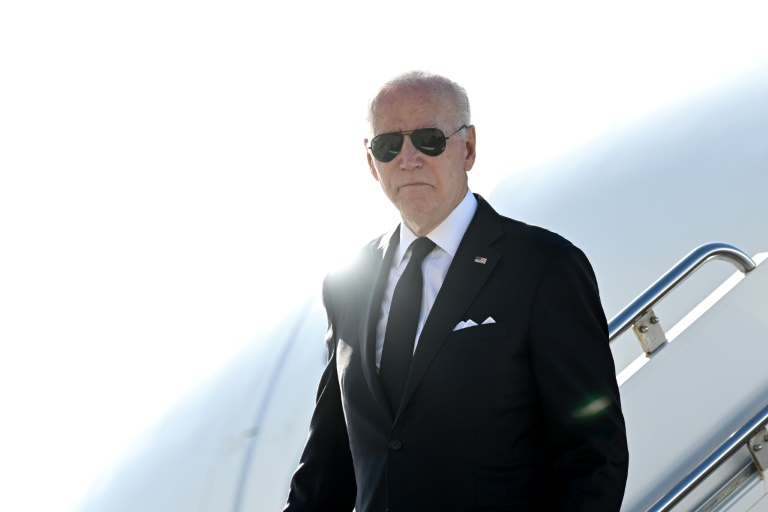
US President Joe Biden said Monday he plans to seek tax penalties for oil companies unless they invest their record profits in lowering consumer costs and boosting production, criticizing their “war profiteering.”

His comments came days after oil giants ExxonMobil and Chevron reported bumper earnings, reflecting how a surge in crude prices after Russia’s invasion of Ukraine has boosted the industry.

Natural gas costs have also risen, due to Europe’s mobilization to offset lost imports from Russia.

“Their profits are a windfall of war,” Biden told reporters on Monday, referring to energy businesses’ earnings.

Biden said companies have a “responsibility to act” beyond the narrow self-interest of executive shareholders, and to help consumers by raising production and their refining capacity.

If businesses do not act to lower prices, “they’re going to pay a higher tax on their excess profits and face other restrictions,” Biden said, adding that officials will work with Congress to look into the issue.

While oil and gas prices have recently cooled, they are still much higher than before Russia launched its invasion of Ukraine in February.

Hefty profits reported earlier by TotalEnergies and Shell have also reignited a European debate on windfall profits taxes.

“It’s time for these companies to stop war profiteering… give the American people a break and still do very well,” Biden said.

Beyond international developments, the energy sector has seen heightened refining margins, in part due to operational issues at some plants.

The strong margins have translated into higher gasoline prices, a sensitive issue for American voters as the November 8 midterm elections draw close.

– ‘Unacceptable’ –

On Saturday, Biden tweeted that oil companies made billions in profits this quarter and were “using these record profits to pay out their wealthy shareholders instead of investing in production and lowering costs for Americans.”

“It’s unacceptable,” he wrote, adding that it was time for oil giants to help lower prices for consumers.

American families have been squeezed by persistently high inflation, propelling the issue to the top among voter concerns.

In the third quarter, ExxonMobil scored a near tripling of profits to $19.7 billion, a company record, while Chevron profits surged 84 percent to $11.2 billion.

ExxonMobil Chief Executive Daren Woods, in response to criticism that the industry should return profits to Americans, said on Friday that this was what it was doing in the form of its quarterly dividend.

But this drew a response from the president, who said in another tweet that “giving profits to shareholders is not the same as bringing prices down for American families.”

Frustration and anger with negative economic issues like rising inflation is often directed at the president and the party in power.

Average prices at US pumps topped $5 per gallon in June, hitting an all-time high.

Biden threatens tax hit for 'war profiteering' oil giants

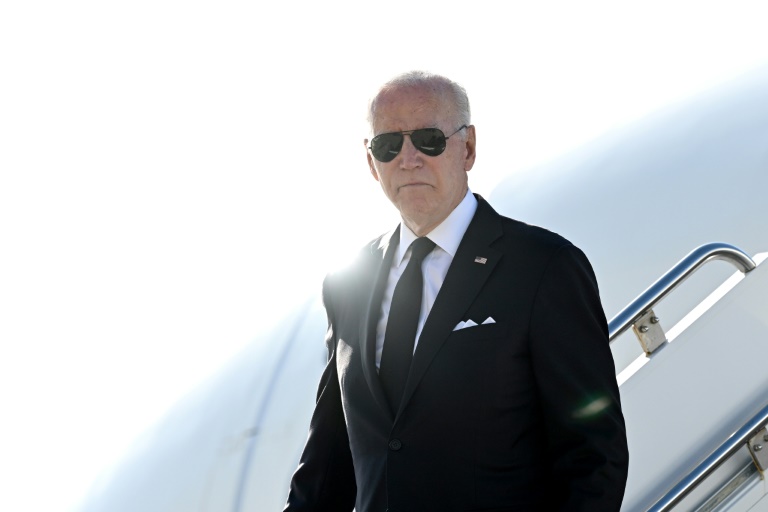
US President Joe Biden said Monday he plans to seek tax penalties for oil companies unless they invest their record profits in lowering consumer costs and boosting production, criticizing their “war profiteering.”

His comments came days after oil giants ExxonMobil and Chevron reported bumper earnings, reflecting how a surge in crude prices after Russia’s invasion of Ukraine has boosted the industry.

Natural gas costs have also risen, due to Europe’s mobilization to offset lost imports from Russia.

“Their profits are a windfall of war,” Biden told reporters on Monday, referring to energy businesses’ earnings.

Biden said companies have a “responsibility to act” beyond the narrow self-interest of executive shareholders, and to help consumers by raising production and their refining capacity.

If businesses do not act to lower prices, “they’re going to pay a higher tax on their excess profits and face other restrictions,” Biden said, adding that officials will work with Congress to look into the issue.

While oil and gas prices have recently cooled, they are still much higher than before Russia launched its invasion of Ukraine in February.

Hefty profits reported earlier by TotalEnergies and Shell have also reignited a European debate on windfall profits taxes.

“It’s time for these companies to stop war profiteering… give the American people a break and still do very well,” Biden said.

Beyond international developments, the energy sector has seen heightened refining margins, in part due to operational issues at some plants.

The strong margins have translated into higher gasoline prices, a sensitive issue for American voters as the November 8 midterm elections draw close.

– ‘Unacceptable’ –

On Saturday, Biden tweeted that oil companies made billions in profits this quarter and were “using these record profits to pay out their wealthy shareholders instead of investing in production and lowering costs for Americans.”

“It’s unacceptable,” he wrote, adding that it was time for oil giants to help lower prices for consumers.

American families have been squeezed by persistently high inflation, propelling the issue to the top among voter concerns.

In the third quarter, ExxonMobil scored a near tripling of profits to $19.7 billion, a company record, while Chevron profits surged 84 percent to $11.2 billion.

ExxonMobil Chief Executive Daren Woods, in response to criticism that the industry should return profits to Americans, said on Friday that this was what it was doing in the form of its quarterly dividend.

But this drew a response from the president, who said in another tweet that “giving profits to shareholders is not the same as bringing prices down for American families.”

Frustration and anger with negative economic issues like rising inflation is often directed at the president and the party in power.

Average prices at US pumps topped $5 per gallon in June, hitting an all-time high.

US Supreme Court's right wing skeptical of using race in college admissions

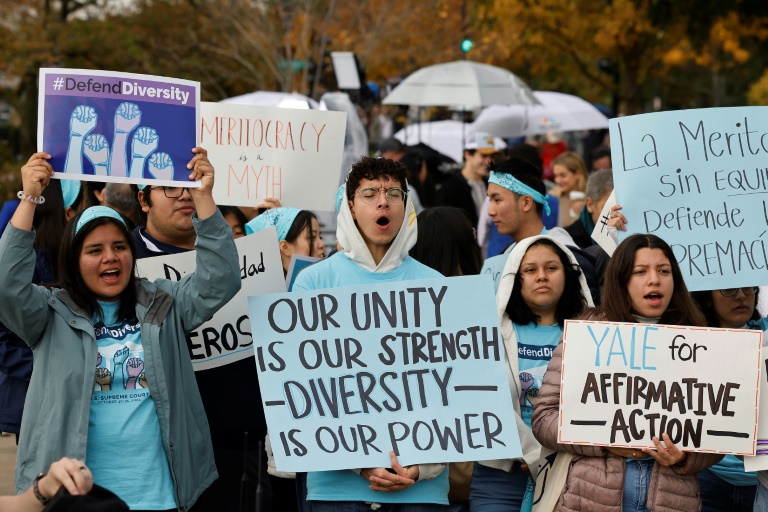
The conservative-majority US Supreme Court appeared poised on Monday to ban the use of race or ethnicity as a factor in deciding who gets into America’s elite universities.

The top US court heard nearly five hours of arguments on the use of race or ethnicity in admissions to Harvard and the University of North Carolina (UNC) — respectively the oldest private and public institutions of higher education in the country.

Harvard and UNC, like a number of other competitive US schools, consider an applicant’s race or ethnicity as a factor to ensure a diverse student body and representation of minorities, a policy known as “affirmative action.”

It emerged from the Civil Rights Movement in the late 1960s to help address the legacy of discrimination in higher education against African Americans.

The suits against Harvard and UNC were brought by a group known as Students for Fair Admissions, which claims that race-conscious admissions policies discriminate against equally qualified applicants of Asian American origin.

“The racial preference is operating to the disadvantage of Asian American applicants,” Patrick Strawbridge, attorney for Students for Fair Admissions, told the court.

“When you use race, you’re telling applicants that their race matters,” Strawbridge said, calling it “inherently divisive” and unconstitutional.

“It gets us further away from a world where the government treats race as irrelevant,” he said.

Strawbridge’s arguments appeared to get a sympathetic hearing from the conservative justices on the court, setting the stage for another potential historic reversal like in June, when the high court overturned its landmark 1973 “Roe v. Wade” decision guaranteeing a woman’s right to abortion.

Conservatives have a 6-3 majority on the court, which includes three justices nominated by former president Donald Trump, a Republican.

– ‘Don’t have a clue what it means’ –

Justice Clarence Thomas, a longtime opponent of affirmative action, said he could not think of another case “where the court deferred to the alleged discriminator.”

“I’ve heard the word diversity quite a few times and I don’t have a clue what it means,” he added. “It seems to mean everything for everyone.”

Conservative justices John Roberts, Brett Kavanaugh and Amy Coney Barrett repeatedly pressed the attorneys for Harvard and UNC about when there would be an “end point” to affirmative action and whether there were any “race-neutral” alternatives.

“Your position is that race matters because it’s necessary for diversity,” Roberts said. “It’s not going to stop mattering at some particular point.”

Justice Ketanji Brown Jackson, the first Black woman on the court, and the other two liberals pushed back against the arguments put forward by Students for Fair Admissions.

“You haven’t demonstrated or shown one situation in which all they look at is race,” Jackson said. “They are looking at the full person.”

Justice Elena Kagan said the court has previously “rightly recognized that student body diversity is a compelling interest that can justify limited consideration of race in university admissions.

“That holding recognizes a simple but profound truth — when students of all races and backgrounds come to college and live together and learn together they become better colleagues, better citizens and better leaders.

“In your view, it really wouldn’t matter if there was a precipitous decline in minority admissions,” Kagan said to Strawbridge. “Your brief says it just doesn’t matter if our institutions look like America.

“Doesn’t it?” she asked.

– ‘Cause racial diversity to plummet’ –

The administration of Democratic President Joe Biden and dozens of major American companies have weighed in on the side of the universities.

“A blanket ban on race-conscious admissions would cause racial diversity to plummet at many of our nation’s leading educational institutions,” US Solicitor General Elizabeth Prelogar told the court.

Previous courts have upheld affirmative action — in 2016 by a single vote — but the policy has been controversial from the start, and a number of white students have mounted legal challenges over the years, claiming “reverse discrimination.”

Nine states have banned affirmative action at public universities including California, where voters did so in a ballot proposition in 1996.

In a 1978 decision, the Supreme Court banned the use of quotas in university admissions as unconstitutional.

But it said race or ethnicity can be considered as one factor among others, in admitting students to ensure a diverse student body and combat historic discrimination. 

Jackson sat out the Harvard case because she has served previously on the Board of Overseers at the school, her alma mater.

The court is expected to deliver its decision by June.

Taylor Swift makes US song charts history with 'Midnights'

Taylor Swift made music history Monday, becoming the first artist ever to simultaneously nab all 10 spots on the top US song chart after the release of her album “Midnights.”

“Anti-Hero” led the charge, taking the Billboard Hot 100’s top spot.

It’s the first time in the chart’s 64-year history that a single artist has claimed the entire top 10, Billboard said.

The last artist to come close was Drake, who took nine of the coveted spots in September 2021.

“10 out of 10 of the Hot 100??? On my 10th album??? I AM IN SHAMBLES,” tweeted Swift, with a nod to her devoted fan base’s love of searching for hidden clues in her content including titles, numbers and dates.

Swift released the highly anticipated “Midnights” — her 10th studio album — on October 21, which also debuted at the top of Billboard’s main albums chart with the biggest week for a release since Adele’s “25” in 2015.

The release of “Midnights” crashed Spotify for hours, but it still set a record as the most-streamed album in a day, according to the platform.

The album’s 13 songs tell “the story of 13 sleepless nights scattered throughout my life,” Swift said.

Together, they form “a full picture of the intensities of that mystifying, mad hour.”

The three songs off “Midnights” not in the top 10 also charted, as did seven more tracks from the extended “3am edition.”

Swift’s latest album sees her returning to pop and recalling some of her earliest hits after two pandemic albums, “Folklore” and “Evermore,” leaned into folk.

It also drops as the 32-year-old makes good on her vow to re-record her first six albums so she can control their rights — a process she was contractually allowed to begin in November 2020.

She has released two of them thus far: “Fearless” and “Red.”

Taylor Swift first artist to claim entire top 10 on hot songs chart

Taylor Swift made music history Monday, becoming the first artist ever to simultaneously nab all ten of the top US song chart’s spots after the release of her album “Midnights.”

The total takeover saw her song “Anti-Hero” launch in the Billboard Hot 100’s top spot.

It’s the first time in the chart’s 64-year history that a single artist has claimed the entire top 10, Billboard said.

The last artist to come close was Drake, who took nine of the coveted spots in September 2021.

Swift released her highly anticipated album “Midnights” on October 21, also debuting at the top of Billboard’s top album’s chart with the biggest week for a release since Adele’s “25” in 2015.

Swift’s release of her 10th album crashed Spotify for hours, but “Midnights” still set a record as the most-streamed album in a day, according to the platform.

The album’s 13 songs tell “the story of 13 sleepless nights scattered throughout my life,” Swift said.

Together, they form “a full picture of the intensities of that mystifying, mad hour.”

Swift’s latest album sees her returning to pop and recalling some of her earliest hits after two pandemic albums, “Folklore” and “Evermore,” leaned into folk.

It also drops as the 32-year-old has found resounding success as she makes good on her vow to re-record her first six albums so she can control their rights.

She has released two re-records of her six albums thus far: “Fearless” and “Red.”

Swift still has four left, after she was contractually allowed to begin the process in November 2020.

Markets mixed on hopes Fed will take foot off pedal

World stocks were mixed on Monday before a key Federal Reserve policy meeting later in the week, with investors hoping for a less hawkish tilt in plans for interest rate hikes.

Equities in Europe mostly climbed through the day, although Paris sank on news of record high eurozone inflation and slowing economic growth and US indices were a sea of red.

“Market volatility is expected to remain high throughout the week as investors have a lot to digest,” said Pierre Veyret, analyst at ActivTrades.

Investors were hopeful on reports that the Fed could take its foot off the accelerator in its push to rein in decades-high inflation.

It is expected to announce a fourth successive 75 basis point hike on Wednesday, but it could hint that officials are open to dialling back the pace of increases.

The Dow Jones was trading down throughout Monday morning, after Wall Street enjoyed strong gains before the weekend thanks to a rally in tech firms after strong earnings from Apple.

The US gathering comes as other central banks recently indicated they are willing to ease up, with Canada raising rates less than expected last week.

The Bank of England is however expected to deliver another hefty rate hike on Thursday.

“Uncertainty sums up the feeling in the markets at the moment,” said Craig Erlam, senior market analyst at OANDA.

“There’s going to be a lot to take in this week… perhaps it’s not surprising to see some jitters creeping back in.”

– Better earnings than expected –

Concerns that rapidly rising borrowing costs will send economies into a recession have hammered markets globally this year.

Yet a better-than-expected earnings season has provided recent support.

More multinationals will report this week as the financial results season rolls on, including pharmaceutical giants Moderna and Pfizer, technology behemoth Sony, and car brands BMW, Toyota and Ferrari.

But investors remain on edge over red-hot inflation, as analysts warned a recession in the eurozone appeared to be on its way.

Economic growth in the bloc fell to 0.2 percent in the third quarter, as inflation hit another record high on the back of soaring energy prices, the EU’s statistics agency said on Monday.

“It is a matter of how deep the recession will be and not if there will be one,” Oxford Economics said in an analyst note.

Consumer prices jumped by a fresh record of 10.7 percent in October, stoked by an eye-watering 41.9 percent rise in energy costs, Eurostat said.

“Double-digit inflation and decade-high interest rates do not bode well for eurozone growth during the rest of this year and into 2023,” noted economist Benjamin Trevis at think-tank CEBR.

– ‘Salt to the wounds’ –

Asia mainly advanced through Monday, although Hong Kong and Shanghai sank on concerns over the economic impact of Chinese Covid restrictions.

Beijing reported a contraction in factory activity as sweeping pandemic restrictions paralysed major industrial cities.

That also weighed heavily on oil because China is a major global consumer.

“Although these data points are weaker than expected, it should be no surprise given those broad-based Covid-related restrictions,” said Stephen Innes, managing partner at SPI Asset Management.

“Negative news from the real estate sector is adding salt to the economic wounds.”

– Key figures around 1640 GMT –

New York – Dow: DOWN 0.4 percent at 32,720.04 points

EURO STOXX 50: UP 0.1 percent at 3,617.54

London – FTSE 100: UP 0.7 percent at 7,094.53 (close)

Frankfurt – DAX: UP 0.1 percent at 13,253.74 (close)

Paris – CAC 40: DOWN 0.1 percent at 6,266.77 (close)

Tokyo – Nikkei 225: UP 1.8 percent at 27,587.46 (close)

Hong Kong – Hang Seng Index: DOWN 1.2 percent at 14,687.02 (close)

Shanghai – Composite: DOWN 0.8 percent at 2,893.48 (close)

Euro/dollar: DOWN at $0.9888 from $0.9965 on Friday

Pound/dollar: DOWN at $1.1491 from $1.1615 

Dollar/yen: UP at 148.62 yen from 147.60 yen

Euro/pound: UP at 86.04 pence from 85.80 pence

West Texas Intermediate: DOWN 1.3 percent at $87.90 per barrel

Brent North Sea crude: DOWN 0.4 percent at $96.31 per barrel

burs-rox/raz

Close Bitnami banner
Bitnami