US Business

US woman who led female IS battalion faces up to 20 years in prison

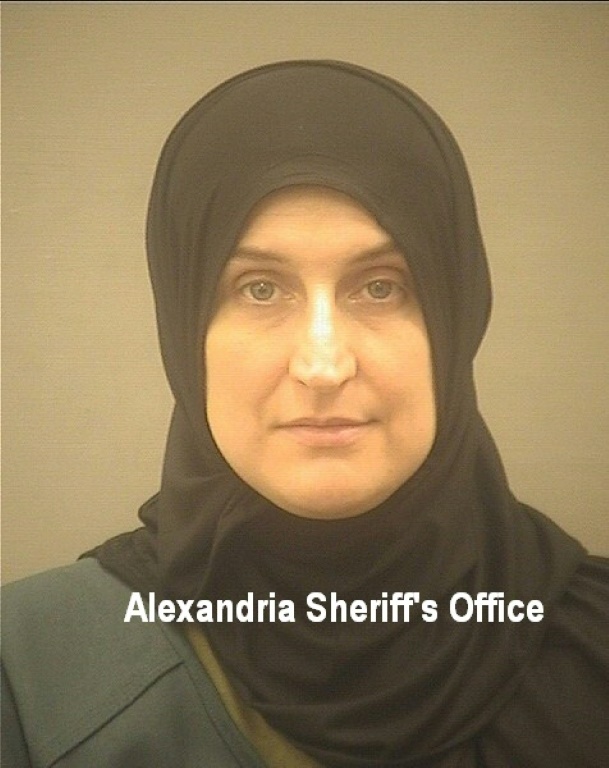
An American woman who grew up on a farm in Kansas, converted to Islam and joined the Islamic State in Syria, where she led an all-female military battalion, is to be sentenced Tuesday for providing support to a foreign terrorist group.

Allison Fluke-Ekren, 42, faces up to 20 years in prison after pleading guilty to terror charges in June in a US District Court in Alexandria, Virginia.

“For at least eight years, Fluke-Ekren committed terrorist acts on behalf of three foreign terrorist organizations across war zones in Libya, Iraq, and Syria,” US attorney Raj Parekh said in a pre-sentencing memo.

“Fluke-Ekren brainwashed young girls and trained them to kill,” Parekh said. “She carved a path of terror, plunging her own children into unfathomable depths of cruelty by physically, psychologically, emotionally, and sexually abusing them.”

Parekh, urging Judge Leonie Brinkema to impose the maximum 20-year sentence, traced Fluke-Ekren’s path from her upbringing on an 81-acre (33-hectare) farm in Kansas to her apprehension in Syria after the 2019 territorial defeat of IS.

While other Americans traveled to Syria and Iraq to join IS, most were men and Fluke-Ekren is the rare American woman who occupied a senior position in the ranks of the now defunct Islamic Caliphate.

Born Allison Brooks, she grew up in a “loving and stable home” in Overbrook, Kansas, and was considered a “gifted” student, the US attorney said.

She dropped out of high school in her sophomore year, however, and married a local man named Fluke, with whom she had two children.

Her son from that marriage testified anonymously about years of abuse inflicted on him and his siblings by their mother.

“My mother is a monster without love for her children, without an excuse for her actions,” said her son, who plans to attend Tuesday’s sentencing in Alexandria. “She has the blood, pain, and suffering of all of her children on her hands.”

After leaving her first husband, Fluke-Ekren attended the University of Kansas, where she married a fellow student named Volkan Ekren and became a Muslim. She later earned a teaching certificate from a college in Indiana.

They had five children together and adopted another after the child’s parents were killed as suicide bombers in Syria.

– ‘Extremist ideology and violence’ –

In 2008, the family moved to Egypt and in 2011 to Libya where, the US attorney said, “Fluke-Ekren’s dogged pursuit to obtain positions of power and influence to train young women in extremist ideology and violence began.”

They were in Benghazi in September 2012 when the Islamic militant group Ansar al-Sharia attacked the US mission and CIA office there, killing the US ambassador and three other Americans.

Fluke-Ekren, a fluent Arabic speaker, assisted Ansar al-Sharia by “reviewing and summarizing the contents of stolen US government documents.”

The family left Libya in late 2012 or early 2013 and moved around between Iraq, Turkey and Syria, becoming deeply involved with IS and living in the group’s Mosul stronghold for a time.

After Fluke-Ekren’s husband — the leader of an IS sniper unit — was killed in 2015 she forced their 13-year-old daughter to marry an IS fighter, according to the US attorney.

Fluke-Ekren, who adopted the nom de guerre Umm Mohammed al-Amriki after joining IS, would go on to marry three more times and have four more children.

Her fourth husband was an IS military leader who was responsible for the IS defense of Raqqa in 2017.

In 2017, Fluke-Ekren became the leader of a battalion of female IS members called “Khatiba Nusaybah,” which provided military training to more than 100 women and girls, according to the US attorney.

“During training sessions, Fluke-Ekren instructed the women and young girls on the use of AK-47 assault rifles, grenades, and explosive suicide belts” Parekh said.

“One of those children, some of whom were as young as 10 or 11-years-old, was her own daughter.”
US Supreme Court to address use of race in college admissions

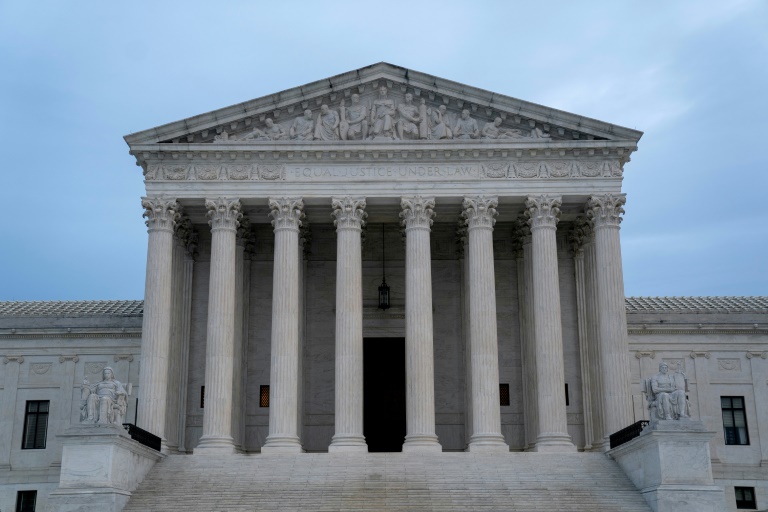
The US Supreme Court on Monday revisits the divisive question of whether race can be used as a factor in deciding who gets admitted to some of America’s elite universities.

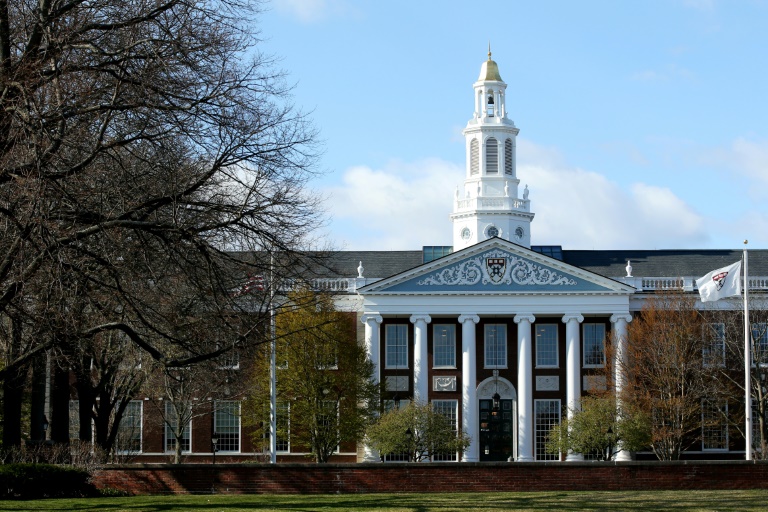
The court is to hear two hours of arguments on the use of race in admissions to Harvard and the University of North Carolina (UNC) — respectively the oldest private and public institutions of higher education in the country.

Harvard and UNC, like a number of other top US schools, use race as a factor in trying to ensure an adequate representation of minorities — historically African Americans — in the student body.

The policy, known as “affirmative action,” emerged from the Civil Rights Movement in the late 1960s to help address the country’s long legacy of discrimination in higher education.

Previous courts have upheld affirmative action — in 2016 by a single vote.

But the current conservative-dominated court may be poised to issue another historic reversal like it did in June, when it overturned the landmark 1973 “Roe v. Wade” decision guaranteeing a woman’s right to abortion.

“I suspect that the majority opinion will say that the use of race is never permissible in order to achieve diversity,” said Steven Schwinn, a law professor at the University of Illinois Chicago.

“This would be consistent with the court’s trend toward viewing racial identity or racial labelling alone — for any reason, including laudable reasons — as a violation of the Constitution.”

Affirmative action has been controversial from the start, and a number of white students have mounted legal challenges over the years, claiming “reverse discrimination.”

Nine states have banned affirmative action at public universities including California, where voters did so in a ballot proposition in 1996 and rebuffed an attempt to revive the policy in 2020.

In a 1978 decision — Regents of the University of California v. Bakke — the Supreme Court banned the use of quotas in university admissions as unconstitutional.

But the court said race or ethnic origin can be considered as one factor among others in admitting students to ensure a diverse student body and to combat previous discrimination that could have prevented marginalized students from being accepted to those schools. 

– ‘Uphold this precedent’ –

Conservatives currently enjoy a solid 6-3 majority on the Supreme Court, including three justices nominated by former president Donald Trump, a Republican.

The latest suits challenging affirmative action were brought by a group known as Students for Fair Admissions, which claims more than 20,000 members.

In 2014, the group filed suits against Harvard and UNC claiming that their race-conscious admissions policies discriminate against equally qualified applicants of Asian American origin.

Asian American students, they argued, are underrepresented at the schools, considering what they called their record of superior academic achievement.

After losing in lower courts, Students for Fair Admissions is seeking a ruling from the Supreme Court that the Constitution prohibits any form of discrimination.

Schwinn said a broad ruling in their favor could potentially impact areas beyond higher education and “ban all government use of race for any purpose,” in hiring or contracting, for example.

The administration of Democratic President Joe Biden, a number of major American companies and the American Civil Liberties Union (ACLU) have weighed in on the side of the universities.

“Race-conscious admissions practices help create a diverse student body that benefits the educational experiences of all students,” said ReNika Moore, director of the ACLU Racial Justice Program.

“Time and again, lower courts and the Supreme Court have recognized universities’ ability to consider race in the admissions process in order to help foster this,” Moore said. “The Supreme Court must uphold this precedent.”

The Supreme Court will hear one hour of argument in each case, with Ketanji Brown Jackson, the court’s first Black woman, sitting out the Harvard case because she has served previously on the Board of Overseers at the school.

Ukraine blames Russia for making grain export 'impossible'

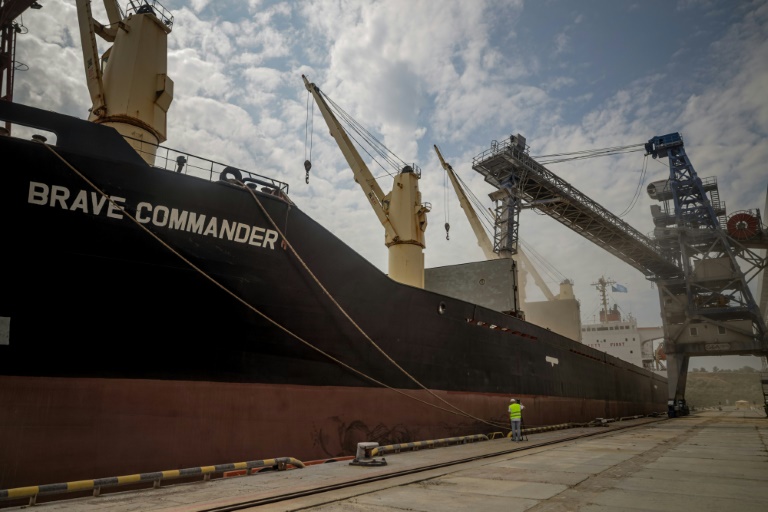
Russia’s blockade of grain exports makes it “impossible” for fully loaded ships to leave port, Ukraine charged Sunday after Moscow claimed drone attacks on its Crimea fleet had exploited the grain corridor safe zone.

Kyiv’s maritime grain exports were halted after Russia pulled out of a landmark agreement that allowed the vital shipments.

The July deal to unlock grain exports signed between warring nations Russia and Ukraine — and brokered by Turkey and the United Nations — is critical to easing the global food crisis caused by the conflict.

“(A) bulk carrier loaded with 40 tons of grain was supposed to leave the Ukraine port today,” Infrastructure Minister Oleksandr Kubrakov tweeted.

“These foodstuffs were intended for Ethiopians, that are on the verge of famine. But due to the blockage of the ‘grain corridor’ by Russia the export is impossible,” the Ukrainian minister said.

The agreement, which established a safety corridor through which vessels could travel to Istanbul for inspections, had already allowed more than nine million tonnes of Ukrainian grain to be exported and was due to be renewed on November 19.

Russia announced on Saturday it would pull out of the deal after accusing Kyiv of a “massive” drone attack on its Black Sea fleet, which Ukraine labelled a “false pretext”.

US President Joe Biden called the move “purely outrageous” while Secretary of State Antony Blinken said Moscow was “weaponising food”.

Russia’s defence ministry alleged Sunday the attack drones had “Canadian-made navigation modules”, and that they “were moving in the safe zone of the ‘grain corridor'”.

UN Secretary-General Antonio Guterres on Sunday expressed “deep concern” about the situation, his spokesman said, and delayed his departure for an Arab League Summit in Algiers by a day “to focus on the issue”.

The EU on Sunday urged Russia to “revert its decision”.

– Enough grain to ‘feed millions’ –

The centre coordinating the logistics of the deal said in a statement that no traffic would move through the safety corridor on Sunday.

“A joint agreement has not been reached… for the movement of inbound and outbound vessels on 30 October,” it said. “There are more than 10 vessels both outbound and inbound waiting to enter the corridor.”

Turkey’s defence ministry later Sunday said ships would not leave Ukraine “during this period” but Turkey would continue checks of ships in Istanbul carrying Ukrainian grain “today and tomorrow”.

It also said Russia had formally notified Turkey of its suspension but “Russian personnel remained at the coordination centre” in Istanbul.

The Istanbul-based Joint Coordination Center (JCC) announced later Sunday that Russia had also suspended its participation in the grain inspections.

Ninety-seven loaded ships were waiting for clearance off Istanbul’s coast Sunday, the United Nations, which coordinates the JCC, said in a statement, adding it was proposing reopening the “maritime humanitarian corridor” to 14 vessels on Monday.

In his evening address, Ukrainian President Volodymyr Zelensky said that “more than 2 million tons of food” were at sea, but stalled by Russia’s actions.

“This is an absolutely transparent intention of Russia to return the threat of large-scale famine to Africa and Asia,” he added.

– ‘Peddling false claims’ –

Sevastopol in Moscow-annexed Crimea has been targeted several times in recent months and serves as the Black Sea fleet’s headquarters and a logistical hub for operations in Ukraine.

Russia’s army claimed to have “destroyed” nine aerial drones and seven maritime ones in an attack on the port early Saturday. 

It alleged British “specialists” based in the southern Ukrainian city of Ochakiv had helped prepare and train Kyiv to carry out the strike. 

In a further singling out of the UK — which Moscow sees as one of the most unfriendly Western countries — Russia said the same British unit was involved in explosions on the Nord Stream gas pipelines last month.

Britain strongly rebutted both claims, saying “the Russian Ministry of Defence is resorting to peddling false claims of an epic scale”.

Moscow’s military said ships targeted at their Crimean base were involved in the grain deal.

– ‘Massive’ attack –

Russia had recently criticised the deal, saying its own grain exports have suffered due to Western sanctions. 

Mikhail Razvozhayev, the Moscow-installed governor of Sevastopol, said Saturday’s drone attack was the “most massive” the peninsula had seen. 

Attacks on Crimea, annexed by Moscow in 2014, have increased recently as Kyiv presses a counter-offensive in the south to retake territory held by Moscow. 

In early October, Moscow’s key bridge linking Crimea to the Russian mainland was damaged by a blast that President Vladimir Putin blamed on Ukraine.

Kyiv said Sunday its troops in the south are “holding their positions and hit the enemy in order to create conditions for further offensive actions.”

Moscow-installed authorities in Kherson, just north of Crimea, have vowed to turn the city into a fortress, preparing for an inevitable assault. 

burs/des/mlm

Twitter owner Musk tweets conspiracy theory, then deletes it

New Twitter owner Elon Musk tweeted an anti-LGBT conspiracy theory Sunday about what happened the night US Speaker Nancy Pelosi’s husband was attacked, then hours later deleted the post.

The seesaw action by Musk, a self-declared “free speech absolutist,” cast new uncertainty on the direction the social media platform will take under his new ownership. It also underscored the huge megaphone Musk now has at his disposal.

Musk early Sunday tweeted a response to Hillary Clinton, who posted a news story about the alleged attacker’s links to the far right.

“There is a tiny possibility there might be more to this story than meets the eye,” Musk told Clinton, attaching a link to the story, which is no longer accessible, by the conservative Santa Monica Observer.

Musk may have had second thoughts about the tweet because around noon a message appeared, “This Tweet was deleted by the Tweet author.” By then, Musk’s tweet had been liked 110,000 times, the online Semafor news site said.

The tweet was no longer visible Sunday afternoon on Musk’s feed.

The weekly outlet cited by Musk in his tweet has published other conspiracy theories in the past, including that a body double for Clinton was sent to a debate with Donald Trump during the 2016 election campaign, according to the Los Angeles Times.

Musk’s Sunday tweet swiftly became a focal point for critics who have been nervous about the direction in which he intends to take Twitter, the leading social media platform for global discourse and diplomacy.

Twitter’s communications department did not respond to an AFP request for comment about the tweet and whether Musk himself deleted it.

Musk, whose outspoken and controversial tweets have courted trouble in the past, has vowed to dial back content moderation, relying more on computer algorithms than human monitors. Conservatives say past moderation has unfairly targeted their views.

In a message meant to reassure jittery Twitter advertisers on his leadership, Musk said late last week that he realizes Twitter “cannot become a free-for-all hellscape where anything can be said with no consequences.”

But detractors warn that without standards, the world’s “digital town square” is at risk of becoming flooded with misinformation, with possibly perilous consequences for democracy and public health.

“Clinton: Conspiracy theories are getting people killed and we shouldn’t amplify them. Owner of Twitter: But have you considered this conspiracy theory?” wrote University of Denver political scientist Seth Masket after Musk’s Sunday tweet.

The former UN special rapporteur for freedom of expression, David Kaye, poked fun at the multiple hats Musk seems to want to wear. He wrote on Twitter: “troll elon should report this takedown to chief twit elon.” 

– Troll campaign tests Musk –

Nancy Pelosi, who is second in line to the US presidency, has said her family is “heartbroken and traumatized” after the intruder broke into the couple’s San Francisco home early Friday and attacked Paul Pelosi with a hammer, fracturing his skull.

The 82-year-old is recovering in hospital. 

President Joe Biden has said it appears the assault was “intended for Nancy,” and called out increasingly polarizing political rhetoric.

“The Republican Party and its mouthpieces now regularly spread hate and deranged conspiracy theories. It is shocking, but not surprising, that violence is the result,” Clinton said in her tweet.

Musk’s response came just hours after Twitter said the site was being targeted by a trolling campaign testing its moderation policies under the billionaire entrepreneur’s leadership.

“Twitter’s policies haven’t changed…. And we’re taking steps to put a stop to an organized effort to make people think we have,” tweeted the platform’s chief of safety and integrity, Yoel Roth.

Roth said a “small number of accounts” had posted “a ton” of hate content — including 50,000 tweets using a particular slur made by just 300 accounts.

“Nearly all” of the accounts are inauthentic, he said.

Roth also retweeted a Musk post in which the Tesla chief reiterated that “we have not yet made any changes to Twitter’s content moderation policies.”

Twitter owner Musk tweets conspiracy theory, then deletes it

New Twitter owner Elon Musk tweeted an anti-LGBT conspiracy theory Sunday about what happened the night US Speaker Nancy Pelosi’s husband was attacked, then hours later deleted the post.

The seesaw action by Musk, a self-declared “free speech absolutist,” cast new uncertainty on the direction the social media platform will take under his new ownership. It also underscored the huge megaphone Musk now has at his disposal.

Musk early Sunday tweeted a response to Hillary Clinton, who posted a news story about the alleged attacker’s links to the far right.

“There is a tiny possibility there might be more to this story than meets the eye,” Musk told Clinton, attaching a link to the story, which is no longer accessible, by the conservative Santa Monica Observer.

Musk may have had second thoughts about the tweet because around noon a message appeared, “This Tweet was deleted by the Tweet author.” By then, Musk’s tweet had been liked 110,000 times, the online Semafor news site said.

The tweet was no longer visible Sunday afternoon on Musk’s feed.

The weekly outlet cited by Musk in his tweet has published other conspiracy theories in the past, including that a body double for Clinton was sent to a debate with Donald Trump during the 2016 election campaign, according to the Los Angeles Times.

Musk’s Sunday tweet swiftly became a focal point for critics who have been nervous about the direction in which he intends to take Twitter, the leading social media platform for global discourse and diplomacy.

Twitter’s communications department did not respond to an AFP request for comment about the tweet and whether Musk himself deleted it.

Musk, whose outspoken and controversial tweets have courted trouble in the past, has vowed to dial back content moderation, relying more on computer algorithms than human monitors. Conservatives say past moderation has unfairly targeted their views.

In a message meant to reassure jittery Twitter advertisers on his leadership, Musk said late last week that he realizes Twitter “cannot become a free-for-all hellscape where anything can be said with no consequences.”

But detractors warn that without standards, the world’s “digital town square” is at risk of becoming flooded with misinformation, with possibly perilous consequences for democracy and public health.

“Clinton: Conspiracy theories are getting people killed and we shouldn’t amplify them. Owner of Twitter: But have you considered this conspiracy theory?” wrote University of Denver political scientist Seth Masket after Musk’s Sunday tweet.

The former UN special rapporteur for freedom of expression, David Kaye, poked fun at the multiple hats Musk seems to want to wear. He wrote on Twitter: “troll elon should report this takedown to chief twit elon.” 

– Troll campaign tests Musk –

Nancy Pelosi, who is second in line to the US presidency, has said her family is “heartbroken and traumatized” after the intruder broke into the couple’s San Francisco home early Friday and attacked Paul Pelosi with a hammer, fracturing his skull.

The 82-year-old is recovering in hospital. 

President Joe Biden has said it appears the assault was “intended for Nancy,” and called out increasingly polarizing political rhetoric.

“The Republican Party and its mouthpieces now regularly spread hate and deranged conspiracy theories. It is shocking, but not surprising, that violence is the result,” Clinton said in her tweet.

Musk’s response came just hours after Twitter said the site was being targeted by a trolling campaign testing its moderation policies under the billionaire entrepreneur’s leadership.

“Twitter’s policies haven’t changed…. And we’re taking steps to put a stop to an organized effort to make people think we have,” tweeted the platform’s chief of safety and integrity, Yoel Roth.

Roth said a “small number of accounts” had posted “a ton” of hate content — including 50,000 tweets using a particular slur made by just 300 accounts.

“Nearly all” of the accounts are inauthentic, he said.

Roth also retweeted a Musk post in which the Tesla chief reiterated that “we have not yet made any changes to Twitter’s content moderation policies.”

'Black Adam' stays atop N.America box office

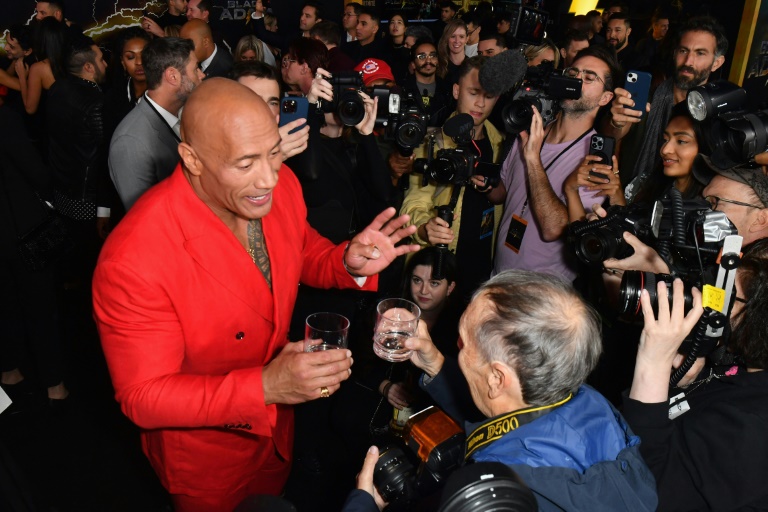
Warner Bros.’ film “Black Adam” remained atop competition for the second weekend running, hauling in a modest estimated $27.7 million in North American box office receipts, industry watcher Exhibitor Relations reported Sunday.

A feature that explores the origin story behind 2019’s “Shazam,” the DC Comics superhero, “Black Adam” stars Dwayne “The Rock” Johnson as a former slave bestowed with special powers.

Coming in second for the Friday-through-Sunday period was Universal’s “Ticket to Paradise,” a romantic comedy starring A-list stars George Clooney and Julia Roberts. The flick brought in $10 million. 

Horror films, though, scored more broadly at the box office in the run-up to Halloween.

“Four of the top 10 movies this weekend are horror films,” said David A. Gross of Franchise Entertainment Research.

“Prey for the Devil,” a Lionsgate flick, was in the number three spot, pulling in $7 million.

“This is an average opening for an original horror film … Reviews are poor,” Gross said.

Two other horror films, Paramount’s “Smile” at fourth and Universal’s “Halloween Ends” at fifth, brought in $5 million and $3.8 million respectively.

Overall, it was not a great weekend for Hollywood, with films earning an estimated $66 million, down from the $100 million from the previous weekend.

Rounding out the top 10 were

6) “Lyle, Lyle, Crocodile” ($2.8 million)

7) “Till” ($2.8 million)

8) “Terrifier 2” ($1.8 million)

9) “The Woman King” ($1.1 million)

10) “Tar” ($1 million)

Ukraine blames Russia for making grain export 'impossible'

Russia’s blockade of grain exports makes it “impossible” for fully loaded ships to leave port, Ukraine charged Sunday after Moscow claimed drone attacks on its Crimea fleet had exploited the grain corridor safe zone.

Kyiv’s maritime grain exports were halted after Russia pulled out of a landmark agreement that allowed the vital shipments.

The July deal to unlock grain exports signed between Russia and Ukraine and brokered by Turkey and the United Nations, is critical to easing the global food crisis caused by the conflict.

“(A) bulk carrier loaded with 40 tons of grain was supposed to leave the Ukraine port today,” Infrastructure Minister Oleksandr Kubrakov tweeted.

“These foodstuffs were intended for Ethiopians, that are on the verge of famine. But due to the blockage of the ‘grain corridor’ by Russia the export is impossible,” the Ukrainian minister said.

The agreement had already allowed more than nine million tonnes of Ukrainian grain to be exported and was due to be renewed on November 19.

Russia’s defence ministry alleged Sunday the attack drones had “Canadian-made navigation modules”, saying it had recovered debris from some of the weapons in the sea.  

Specialists had “conducted an examination of Canadian-made navigation modules installed on the marine unmanned vehicles”, the ministry said.

On Saturday Russia announced its suspension after accusing Kyiv of a “massive” drone attack on the Black Sea fleet, which Ukraine labelled a “false pretext”.

US President Joe Biden called the move “purely outrageous” while Secretary of State Antony Blinken said Moscow was “weaponising food”.

UN Secretary-General Antonio Guterres on Sunday expressed “deep concern” about the situation, his spokesman said, and delayed his departure for an Arab League Summit in Algiers by a day “to focus on the issue”.

The EU on Sunday urged Russia to “revert its decision”.

– Enough grain to ‘feed millions’ –

The centre coordinating the logistics of the deal said in a statement that no traffic was planned for Sunday.

“A joint agreement has not been reached at the JCC for the movement of inbound and outbound vessels on 30 October,” it said. “There are more than 10 vessels both outbound and inbound waiting to enter the corridor.”

Turkey’s defence ministry later Sunday said ships would not leave Ukraine “during this period” but Turkey would continue checks of ships in Istanbul carrying Ukrainian grain “today and tomorrow”.

It also said Russia had formally notified Turkey of its suspension but “Russian personnel remained at the coordination centre” in Istanbul.

Ukraine’s foreign minister said on Twitter that Russia was blocking “two million tons of grain on 176 vessels already at sea” that he said was “enough to feed seven million people.”

He accused Moscow of having planned to “resume its hunger games” in advance and said the Black Sea explosions were “220 kilometres away from the grain corridor”.

– ‘Peddling false claims’ –

Kyiv and the UN earlier urged that the agreement remain in force.   

Ukrainian President Volodymyr Zelensky called Russia’s move “an absolutely transparent intention of Russia to return the threat of large-scale famine to Africa and Asia”.

Sevastopol in Moscow-annexed Crimea has been targeted several times in recent months and serves as the Black Sea fleet’s headquarters and a logistical hub for operations in Ukraine.

Russia’s army claimed to have “destroyed” nine aerial drones and seven maritime ones in an attack on the port early Saturday. 

It alleged British “specialists” based in the southern Ukrainian city of Ochakiv had helped prepare and train Kyiv to carry out the strike. 

In a further singling out of the UK — which Moscow sees as one of the most unfriendly Western countries — Russia said the same British unit was involved in explosions on the Nord Stream gas pipelines last month.

Britain strongly rebutted both claims, saying “the Russian Ministry of Defence is resorting to peddling false claims of an epic scale”.

Moscow’s military said ships targeted at their Crimean base were involved in the grain deal.

– ‘Massive’ attack –

Russia had recently criticised the deal, saying its own grain exports have suffered due to Western sanctions. 

Mikhail Razvozhayev, the Moscow-installed governor of Sevastopol, said Saturday’s drone attack was the “most massive” the peninsula had seen. 

Attacks on Crimea, annexed by Moscow in 2014, have increased recently as Kyiv presses a counter-offensive in the south to retake territory held by Moscow. 

In early October, Moscow’s key bridge linking Crimea to the Russian mainland was damaged by a blast that President Vladimir Putin blamed on Ukraine. 

Kyiv said Sunday its troops in the south are “holding their positions and hit the enemy in order to create conditions for further offensive actions.”

Moscow-installed authorities in Kherson, just north of Crimea, have vowed to turn the city into a fortress, preparing for an inevitable assault. 

burs/raz/gw

Twitter owner Musk tweets conspiracy theory about violent Pelosi attack

New Twitter owner Elon Musk tweeted an anti-LGBT conspiracy theory Sunday about what happened the night US Speaker Nancy Pelosi’s husband was attacked, underscoring concerns about the platform’s future after he vowed it would not become a “free-for-all hellscape.”

Musk, a self-declared “free speech absolutist,” was responding to former Democratic presidential candidate Hillary Clinton, who had tweeted to draw a line between Republicans who promote baseless conspiracy theories and the violent attack on Paul Pelosi in San Francisco.

“There is a tiny possibility there might be more to this story than meets the eye,” Musk told Clinton, attaching a link to the story, which is no longer accessible, by the conservative Santa Monica Observer.

The weekly outlet has published other conspiracy theories in the past, including that a body double for Clinton was sent to a debate with Donald Trump during the 2016 election campaign, according to the Los Angeles Times.

Musk’s tweet swiftly became a focal point for critics who have been nervous about the direction in which he intends to take Twitter, the leading platform for global discourse and diplomacy.

Musk, whose outspoken and controversial tweets have courted trouble in the past, has vowed to dial back content moderation, relying more on computer algorithms than human monitors. Conservatives say past moderation has unfairly targeted their views.

In a message meant to reassure jittery Twitter advertisers on his leadership, Musk said earlier this week that he realizes Twitter “cannot become a free-for-all hellscape where anything can be said with no consequences.”

But detractors warn that without standards, the world’s “digital town square” is at risk of becoming flooded with misinformation, with possibly perilous consequences for democracy and public health.

“Clinton: Conspiracy theories are getting people killed and we shouldn’t amplify them. Owner of Twitter: But have you considered this conspiracy theory?” wrote University of Denver political scientist Seth Masket after Musk’s Sunday tweet.

Masket later tweeted a screenshot suggesting he had complained to Twitter about Musk’s tweet, adding: “Somehow I doubt much will come of this.”

– Troll campaign tests Musk –

Nancy Pelosi, who is second in line to the US presidency, has said her family is “heartbroken and traumatized” after the intruder broke into the couple’s San Francisco home early Friday and attacked Paul Pelosi with a hammer, fracturing his skull.

The 82-year-old is recovering in hospital. 

President Joe Biden has said it appears the assault was “intended for Nancy,” and called out increasingly polarizing political rhetoric.

“The Republican Party and its mouthpieces now regularly spread hate and deranged conspiracy theories. It is shocking, but not surprising, that violence is the result,” Clinton said in her tweet.

Musk’s response came just hours after Twitter said that the site was being targeted by a trolling campaign testing its moderation policies under the billionaire’s leadership.

“Twitter’s policies haven’t changed… And we’re taking steps to put a stop to an organized effort to make people think we have,” tweeted the platform’s chief of safety and integrity, Yoel Roth.

Roth said that a “small number of accounts” had posted “a ton” of hate content — including 50,000 tweets using a particular slur made by just 300 accounts.

“Nearly all” of the accounts are inauthentic, he said.

Roth also retweeted a Musk post in which the Tesla chief reiterated that “we have not yet made any changes to Twitter’s content moderation policies.”

Twitter owner Musk tweets conspiracy theory about violent Pelosi attack

New Twitter owner Elon Musk tweeted an anti-LGBT conspiracy theory Sunday about what happened the night US Speaker Nancy Pelosi’s husband was attacked, underscoring concerns about the platform’s future after he vowed it would not become a “free-for-all hellscape.”

Musk, a self-declared “free speech absolutist,” was responding to former Democratic presidential candidate Hillary Clinton, who had tweeted to draw a line between Republicans who promote baseless conspiracy theories and the violent attack on Paul Pelosi in San Francisco.

“There is a tiny possibility there might be more to this story than meets the eye,” Musk told Clinton, attaching a link to the story, which is no longer accessible, by the conservative Santa Monica Observer.

The weekly outlet has published other conspiracy theories in the past, including that a body double for Clinton was sent to a debate with Donald Trump during the 2016 election campaign, according to the Los Angeles Times.

Musk’s tweet swiftly became a focal point for critics who have been nervous about the direction in which he intends to take Twitter, the leading platform for global discourse and diplomacy.

Musk, whose outspoken and controversial tweets have courted trouble in the past, has vowed to dial back content moderation, relying more on computer algorithms than human monitors. Conservatives say past moderation has unfairly targeted their views.

In a message meant to reassure jittery Twitter advertisers on his leadership, Musk said earlier this week that he realizes Twitter “cannot become a free-for-all hellscape where anything can be said with no consequences.”

But detractors warn that without standards, the world’s “digital town square” is at risk of becoming flooded with misinformation, with possibly perilous consequences for democracy and public health.

“Clinton: Conspiracy theories are getting people killed and we shouldn’t amplify them. Owner of Twitter: But have you considered this conspiracy theory?” wrote University of Denver political scientist Seth Masket after Musk’s Sunday tweet.

Masket later tweeted a screenshot suggesting he had complained to Twitter about Musk’s tweet, adding: “Somehow I doubt much will come of this.”

– Troll campaign tests Musk –

Nancy Pelosi, who is second in line to the US presidency, has said her family is “heartbroken and traumatized” after the intruder broke into the couple’s San Francisco home early Friday and attacked Paul Pelosi with a hammer, fracturing his skull.

The 82-year-old is recovering in hospital. 

President Joe Biden has said it appears the assault was “intended for Nancy,” and called out increasingly polarizing political rhetoric.

“The Republican Party and its mouthpieces now regularly spread hate and deranged conspiracy theories. It is shocking, but not surprising, that violence is the result,” Clinton said in her tweet.

Musk’s response came just hours after Twitter said that the site was being targeted by a trolling campaign testing its moderation policies under the billionaire’s leadership.

“Twitter’s policies haven’t changed… And we’re taking steps to put a stop to an organized effort to make people think we have,” tweeted the platform’s chief of safety and integrity, Yoel Roth.

Roth said that a “small number of accounts” had posted “a ton” of hate content — including 50,000 tweets using a particular slur made by just 300 accounts.

“Nearly all” of the accounts are inauthentic, he said.

Roth also retweeted a Musk post in which the Tesla chief reiterated that “we have not yet made any changes to Twitter’s content moderation policies.”

'Deserve to be here': Harvard students defend minority admissions

Agustin Leon-Saenz assumes his ticket to Harvard University had something to do with the race-conscious admissions policy known as affirmative action.

But make no mistake, Leon-Saenz said, “I deserve to be here.”

The 19-year-old, a second-year science and engineering student at the Ivy League school in Cambridge, Massachusetts, was born in Ecuador.

He was seven years old when his family came to the United States and he did not speak a word of English.

Ahead of a Supreme Court hearing on Monday that could outlaw affirmative action as discriminatory, Leon-Saenz and other Harvard students and former students defended the policy.

Harvard, like other competitive US universities, takes race into account as it seeks to ensure a diverse student body and has programs specifically designed to attract minorities.

“I applied to Harvard as a result of outreach from the undergrad minority recruitment program,” Leon-Saenz said.

Before Harvard, he attended public schools made up of mostly Black or Hispanic students.

Leon-Saenz earned excellent grades in high school and received an email one day from Harvard encouraging him to get in touch with a student at the university who was also from Ecuador.

“That was really, like, the reason I applied to Harvard because otherwise I obviously didn’t know anyone from Harvard,” he said. “To see that there was at least one other person (from Ecuador) was enough for me.”

When his application to Harvard was accepted, Leon-Saenz said he “honestly did not believe it.”

“Coming to Harvard did not feel real, attainable,” he said.

– ‘Very jarring’ –

When he did step foot on the campus of America’s oldest private university, “the change was very jarring.”

At his high school in New Mexico, most of Leon-Saenz’ classmates were of Mexican origin while at Harvard less than 12 percent of the student body is of Hispanic descent.

Leon-Saenz is the only person of Ecuadoran origin in his class and he can sometimes feel out of place.

“Some of my peers, when they see me, they know I’m Latino, and don’t necessarily see me as equal academically,” he said.

“That is the reason why I relate more to the community of immigrants and first generation low-income students.”

But Leon-Saenz said he “worked hard in school” and like others who may have benefitted from race-conscious admissions policies “we deserve to be here.”

Kylan Tatum, who is studying literature at Harvard and uses they/them pronouns, is frustrated by the “question of who deserves to be here, who doesn’t deserve to be here?”

It ignores “social factors that are influencing the ability to have good grades, test scores and extracurricular opportunities,” they said.

Tatum, whose mother is African American and father of Vietnamese origin, said they are upset with the arguments being used to challenge affirmative action before the Supreme Court.

A group known as Students for Fair Admissions has filed suits against Harvard and the University of North Carolina claiming that their race-conscious admissions policies discriminate against equally qualified applicants of Asian-American origin.

Asian-American students are underrepresented at the schools considering their record of superior academic achievement, according to the complaints.

“I am someone who is both Black and Asian and seeing some of the tactics that have been used in this case is very alarming to me,” Tatum said, calling it “weaponization of Asian American socioeconomic and educational success against other minorities.”

– ‘They learned from me’ –

Margaret Chin, an American of Chinese origin who received a degree from Harvard in 1984, said affirmative action had benefitted both her personally and her community as a whole.

Chin, whose father was a waiter and mother a garment worker, only considered applying to the Ivy League school after attending a student fair in New York City’s Chinatown where Harvard had a booth.

“It took me a little bit to adjust,” Chin said.

“But I was very lucky in my room (assignment),” she said, sharing housing with a mixed group of young Black, white and Asian women from varying social backgrounds.

“I learned about other ways of living,” she said, “and they learned from me.”

Chin, 62, a professor of sociology at Hunter College/CUNY in New York, said many Americans grow up in segregated communities, making it all the more important that institutions of higher education have diverse student bodies.

“People don’t oftentimes see people of different races or even go to elementary, middle or high school together,” she said.

If the Supreme Court strikes down affirmative action, not only minorities would suffer but the “whole population” as well, Chin said.

Close Bitnami banner
Bitnami