US Business

Ukraine braces for more power cuts, as Russia hits call-up target

Four million people across Ukraine have been hit by power cuts due to Russia’s bombing campaign, President Volodymyr Zelensky said Friday, as officials in the capital Kyiv warned of “unprecedented” outages.

Zelensky was speaking hours after Russia said it had completed its call-up of 300,000 reservists to fight there.

The United States meanwhile announced fresh military aid to Ukraine — in part because of Russia’s attacks on the country’s civilian infrastructure.

In his evening address Friday, Zelensky stressed that the whole country was suffering the consequences of the Russian campaign.

“About 4 million Ukrainians face restrictions now” from the rolling blackouts, he said. “We are doing everything so that the state has the opportunity to reduce such blackouts.”

Russian forces have for weeks pummelled Ukraine with air strikes especially targeting energy infrastructure, destroying at least a third of the country’s power facilities ahead of winter.

As a result, energy company DTEK, the operator for the Kyiv region, warned Friday that Russian strikes meant it would have to introduce “unprecedented” power cuts there to prevent a complete blackout.

“More severe and longer blackouts will be implemented in the coming days,” it said.

– Call-up complete –

In Moscow meanwhile, Defence Minister Sergei Shoigu told President Vladimir Putin in a televised meeting that they had hit their call-up target of 300,000 soldiers.

The mobilisation, which led to some Russian men  dashing for the borders to avoid the fighting, was announced on September 21 to help turn the tide after Moscow suffered a series of defeats in Ukraine.

According to Shoigu, 82,000 recruits were already in Ukraine, 41,000 of them deployed to military units.

After making major gains in Ukraine’s east and south, Kyiv’s forces are now closing in on the key southern city of Kherson.

The announcement of the draft’s completion came as Moscow’s proxies said they had finished a pull-out of civilians from Kherson.

The city, which had a population of around 288,000 people before the fighting, was one of the first to fall to Moscow’s troops in the early days of the February offensive.

Retaking it would mark a major milestone for Kyiv.

Since mid-October, the occupation authorities have urged Kherson residents to cross the Dnipro River, deeper into Moscow-controlled territory and closer to regions of southern Russia. 

A Russian-installed official in Kherson, Vladimir Saldo, has said that at least 70,000 people had left their homes in the region in the space of a week.

Kyiv has compared the operation to Soviet-era “deportations”.

– Russian losses –

Kyiv’s army said Friday that the Russian command in Kherson was trying to “hide the real losses of servicemen” in order to “avoid panic”.

In one indication of Russian losses, Chechen leader Ramzan Kadyrov said late on Thursday that 23 of his fighters had been killed in battles around Kherson this week with dozens more wounded. 

“At the beginning of this week, one of the Chechen units was shelled in the Kherson region,” Kadyrov said on Telegram. The Kremlin ally, who rarely reveals defeats, admitted that losses were “big on that day”.

On Friday, Iranians living in Ukraine held a rally in central Kyiv against the alleged use of Iranian-made drones by Russian forces to carry out the strikes.

“The country where we were born and the regime currently in power sends drones to kill us and our friends,” 34-year-old Iranian architect Maziar Mian told AFP.

Iran has rejected these claims and Moscow has accused the West of using these accusations to put “pressure” on Tehran.

Partly in response to the strikes on Ukraine’s infrastructure, Washington announced another $275-million military aid package.

It includes ammunition for Himars precision rocket launchers, other ammunition and four satellite communications antennas, said Pentagon spokesman Sabrina Singh.

“We’re seeing Ukrainian infrastructure and electrical grids being targeted by the Russians and these antennas provide an additional capability on the ground at a critical time when Ukraine’s infrastructure is being hit,” Singh said.

– Fresh sanctions –

Canada on Friday announced fresh sanctions against 35 individuals and six companies in Russia’s energy sector, as a well as a bond issue to support Ukraine.

Those individuals named include National Hockey League player Alexander Frolov and chess grandmaster Anton Demchenko.

Ukraine has repeatedly urged its allies in the West to extend its sanctions to high-profile personalities who have publicly backed Russia’s invasion.

At the United Nations on Thursday, Adedeji Ebo, UN’s Deputy High Representative for Disarmament Affairs, said he was aware of a Russian complaint alleging biological weapons programme in Ukraine.

So far, he said, “the United Nations is not aware of any such biological weapons programme”.
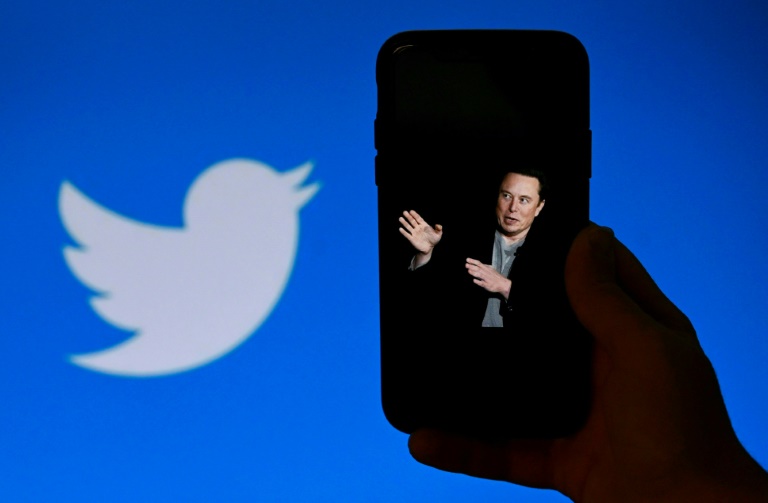
Twitter users test free speech limits in new Musk era

Twitter users wasted no time Friday testing the limits of free speech on the platform under new owner Elon Musk, with posts questioning transgender identity and masks.

Hours after Musk took total ownership of the platform, conservative voices celebrated what they said was their newly-reclaimed right to free speech.

Podcaster Buck Sexton (@BuckSexton) jumped straight in, tweeting: “BTW turns out men *CANT* get pregnant, Bring it, libs.”

The tweet sparked both support and derision, with those apparently in agreement replying with tweets like “Truth,” and “This is gonna be a great day.” 

Others opted to mock the familiar attempt to “own” liberal opponents.

“Turns out you CAN’T get laid,” tweeted @sawthrewit.

The masks that were widely adopted during the Covid-19 pandemic, and which proved divisive in the United States despite scientists recommending their use, were also a popular topic.

“Now that we can tell the truth here after Elon Musk officially took over, I’m just going to come out and say it: Masks don’t work,” tweeted @ianmSC.

Almost like it was 2020 all over again, the tweet sparked a number of supportive comments and videos showing steamy breath escaping from the side of masks.

It also provoked the expected replies from the other side of the debate.

“So if you need surgery you’d be okay with the medical staff not wearing masks? I mean since they don’t work, right?” tweeted @marynol51.

The world’s richest man, a self-declared “free speech absolutist,” finalised his will-he-won’t-he takeover of Twitter late Thursday.

The mercurial Tesla chief tweeted, “let the good times roll,” his latest lighthearted gesture signaling his tumultuous, $44 billion bid to take Twitter private was finally done.

Musk has vowed to dial back content moderation, which conservatives say unfairly targets their views.

But detractors warn that without standards, the world’s “digital town square” is at risk of becoming a free-for-all of misinformation, with possibly perilous consequences for democracy and public health.

In true Twitter fashion, the conservative-led effort to test boundaries on Friday generated a few tongue-in-cheek efforts.

“Since this platform is allowing free-speech again I would just like to say that cool ranch Doritos are better than nacho cheese,” tweeted @KFILE.

While @Alyssafarah looked to set the cat amongst the pigeons with an old saw that never fails to prove incendiary: “The Rolling Stones > the Beatles”

What will Elon Musk's Twitter look like?

After months of controversy, Elon Musk is now at the head of one of the most influential social networks on the planet, whose “tremendous potential” he has promised to unleash.

What changes can we expect for the platform from the multi-billionaire chief executive of Tesla and founder of SpaceX?

– New boss –

One of Musk’s first decisions was to sack Twitter chief executive Parag Agrawal, chief financial officer Ned Segal and head of legal affairs Vijaya Gadde, according to several US media outlets.

The billionaire entrepreneur will have to find replacements for them.

“Musk is in the unenviable position of convincing seasoned executives to work for him at a platform that he has publicly disparaged,” said Jasmine Enberg, an analyst for Insider Intelligence.

According to Bloomberg, Musk will assume the role of CEO of Twitter, at least initially. 

He’ll have to deal with concerned employees. Musk wants to cut the workforce by 75 percent (or about 5,500 employees), according to the Washington Post.

“The mood at Twitter is tense, with employees worried about layoffs,” Enberg said. “Product and even engineering teams could face a shakeup.”

– Freedom of speech –

A self-described “free speech absolutist,” Musk said on Thursday that he wants to turn Twitter into a platform that is “warm and welcoming to all” and not a “free-for-all hellscape.”

He has criticized what he sees as aggressive content moderation, which he contends results in the censorship of right and far-right voices.

“Experts we’ve spoken with have suggested around 600 people at Twitter itself and thousands more with third-party affiliations have worked on platform content moderation,” said Scott Kessler of Third Bridge.

“Musk has publicly advocated for these actions to be driven by algorithms instead of people,” he added.

The Tesla boss further hinted that former US president Donald Trump, who was suspended from the platform after the attack on Capitol Hill in early 2021, might be allowed to return.

Trump wrote on Friday on his own social network Truth Social that Twitter is “in good hands.”

One of Musk’s other pet peeves is the issue of fake accounts. He threatened to walk away from the deal over the inauthentic or “bot” accounts but has not revealed what he will do to fight them.

– ‘Unpalatable to advertisers’ –

Another challenge for Elon Musk is to improve the financial health of Twitter, which faces slow growth, even recording a net loss in the second quarter.

In April, Musk mentioned various options to generate more revenue: boosting paid subscriptions, monetizing the dissemination of popular tweets or paying content creators.

In a letter published Thursday, the entrepreneur called on Twitter advertisers to work together to “build something extraordinary,” stressing the importance of welcoming a wide diversity of opinions on the platform.

“Mr. Musk has indicated in his latest publicity stunt that he wants to throw the kitchen sink at Twitter to attract new users,” noted Susannah Streeter, senior investment and market analyst at Hargreaves Lansdown.

“But he is going to face a huge challenge of maintaining and building revenue, given that the controversial opinions he appears to want to give more of a free rein to in this ‘global town hall’ are often unpalatable to advertisers,” she said.

Some civic groups are also calling on major brands to use their influence to prevent Musk from providing a platform for the most radical speech.

“Considering that ads reportedly account for 90 percent of Twitter’s revenue, it is clear that the power to hold Musk accountable, if he rolls back the platform’s protections against harassment, abuse and disinformation, lies in the hands of Twitter’s top advertisers,” Media Matters for America, a nonprofit watchdog group, argued.

What will Elon Musk's Twitter look like?

After months of controversy, Elon Musk is now at the head of one of the most influential social networks on the planet, whose “tremendous potential” he has promised to unleash.

What changes can we expect for the platform from the multi-billionaire chief executive of Tesla and founder of SpaceX?

– New boss –

One of Musk’s first decisions was to sack Twitter chief executive Parag Agrawal, chief financial officer Ned Segal and head of legal affairs Vijaya Gadde, according to several US media outlets.

The billionaire entrepreneur will have to find replacements for them.

“Musk is in the unenviable position of convincing seasoned executives to work for him at a platform that he has publicly disparaged,” said Jasmine Enberg, an analyst for Insider Intelligence.

According to Bloomberg, Musk will assume the role of CEO of Twitter, at least initially. 

He’ll have to deal with concerned employees. Musk wants to cut the workforce by 75 percent (or about 5,500 employees), according to the Washington Post.

“The mood at Twitter is tense, with employees worried about layoffs,” Enberg said. “Product and even engineering teams could face a shakeup.”

– Freedom of speech –

A self-described “free speech absolutist,” Musk said on Thursday that he wants to turn Twitter into a platform that is “warm and welcoming to all” and not a “free-for-all hellscape.”

He has criticized what he sees as aggressive content moderation, which he contends results in the censorship of right and far-right voices.

“Experts we’ve spoken with have suggested around 600 people at Twitter itself and thousands more with third-party affiliations have worked on platform content moderation,” said Scott Kessler of Third Bridge.

“Musk has publicly advocated for these actions to be driven by algorithms instead of people,” he added.

The Tesla boss further hinted that former US president Donald Trump, who was suspended from the platform after the attack on Capitol Hill in early 2021, might be allowed to return.

Trump wrote on Friday on his own social network Truth Social that Twitter is “in good hands.”

One of Musk’s other pet peeves is the issue of fake accounts. He threatened to walk away from the deal over the inauthentic or “bot” accounts but has not revealed what he will do to fight them.

– ‘Unpalatable to advertisers’ –

Another challenge for Elon Musk is to improve the financial health of Twitter, which faces slow growth, even recording a net loss in the second quarter.

In April, Musk mentioned various options to generate more revenue: boosting paid subscriptions, monetizing the dissemination of popular tweets or paying content creators.

In a letter published Thursday, the entrepreneur called on Twitter advertisers to work together to “build something extraordinary,” stressing the importance of welcoming a wide diversity of opinions on the platform.

“Mr. Musk has indicated in his latest publicity stunt that he wants to throw the kitchen sink at Twitter to attract new users,” noted Susannah Streeter, senior investment and market analyst at Hargreaves Lansdown.

“But he is going to face a huge challenge of maintaining and building revenue, given that the controversial opinions he appears to want to give more of a free rein to in this ‘global town hall’ are often unpalatable to advertisers,” she said.

Some civic groups are also calling on major brands to use their influence to prevent Musk from providing a platform for the most radical speech.

“Considering that ads reportedly account for 90 percent of Twitter’s revenue, it is clear that the power to hold Musk accountable, if he rolls back the platform’s protections against harassment, abuse and disinformation, lies in the hands of Twitter’s top advertisers,” Media Matters for America, a nonprofit watchdog group, argued.

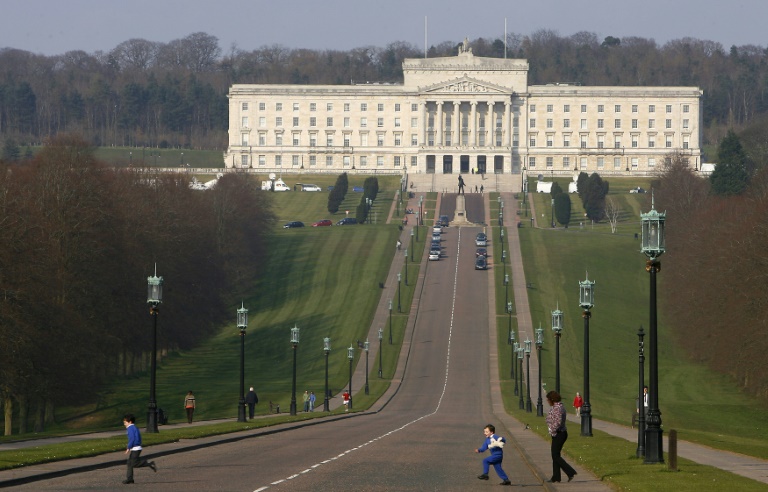
UK govt says will call N.Irish elections 'within 12 weeks'

The British government said on Friday it would call elections in Northern Ireland within 12 weeks, the second time since May, after UK and local lawmakers failed to resolve a standoff over post-Brexit trade rules.

Northern Ireland Secretary Chris Heaton-Harris confirmed that talks with the UK province’s fractious political parties had not yielded a breakthrough ahead of a Friday deadline to resume a power-sharing devolved government.

“As of earlier today, an executive can no longer form and I am duty-bound by law to call new elections to the Northern Ireland Assembly… as soon as practicably possible and within 12 weeks,” he said in a statement.

Heaton-Harris added he had met local election officials “to discuss operational considerations to inform my decision about the election date”, while telling reporters that he would say more next week.

The UK minister noted that political parties in Belfast were opposed to holding a second election in less than a year, but insisted that he had been left with no other option.

The province has been without a devolved government for nine months, after the pro-UK Democratic Unionist Party (DUP) collapsed power-sharing in February over its trenchant opposition to the so-called Northern Ireland Protocol governing post-Brexit trade rules.

It wants the pact, which effectively keeps Northern Ireland in the European Union’s single market and customs union, overhauled or scrapped entirely.

DUP leader Jeffrey Donaldson has defended his party’s stance, arguing the protocol “harms our economy, harms our people and prevents us getting access to medicines and other vital supplies”.

– ‘Perpetual standoff’ –

Three months after it began the boycott, pro-Irish party Sinn Fein won a historic first election, which is seen as further complicating the political situation.

Its leader Michelle O’Neill — who was set to become first minister if the executive had been restarted — has condemned the DUP’s “perpetual standoff with the public”, claiming it does not represent “the majority”.

Both leaders have said they are reluctantly ready to fight another election and on Friday criticised Heaton-Harris — only appointed to his role on September 6 — for appearing to leave the situation uncertain, with no fixed date for the fresh elections.

O’Neill decried the “dysfunction” in London — which has seen three prime ministers in two months.

“We have a situation tonight where people just don’t know what is going to happen next,” she added.

The province’s parties had made a last-ditch attempt to restart the joint executive between pro-Ireland nationalists and pro-UK unionists on Thursday.

But after reconvening for the first time in months for a brief, argumentative session, they failed to elect a speaker, so no new government could be created.

– ‘Deeply regrettable’ –

The DUP insists the protocol — agreed by London and Brussels as part of Britain’s 2019 Brexit deal — must be addressed before it will share power again.

“The government should focus its time and energy on ensuring the protocol problem is dealt with and Northern Ireland’s place in the UK internal market is restored,” Donaldson said.

Many unionists argue it also threatens the delicate balance of peace between the pro-Irish nationalist community and those in favour of continued union with Britain.

The protocol was agreed to avoid the return of a hard land border with the Republic of Ireland, which remains an EU member.

Eliminating that hard border was a key strand of the 1998 Good Friday Agreement, which ended three decades of sectarian violence in Northern Ireland.

Britain’s Conservative government has urged Brussels to agree to wholesale revisions of the protocol, which is being resisted in ongoing negotiations. London is also in the midst of passing contentious legislation to override it unilaterally.

That has sparked fears of a trade war and worsening relations with Europe — when the economic landscape is already gloomy.

Ireland’s foreign minister Simon Coveney called the imminent election “deeply regrettable” and blamed the DUP for blocking the resumption of power-sharing.

“I want to see an executive formed in Northern Ireland and, separately, I want to see early substantive progress in the EU-UK talks,” he added.

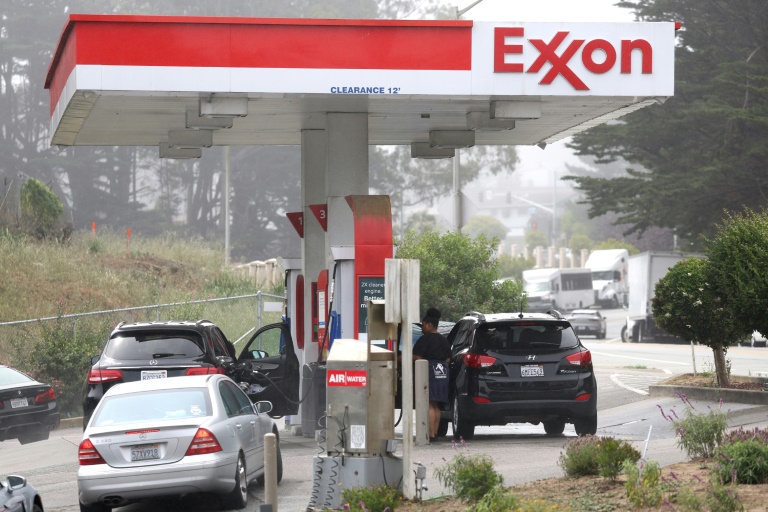
US oil giants report huge profits in tight energy market

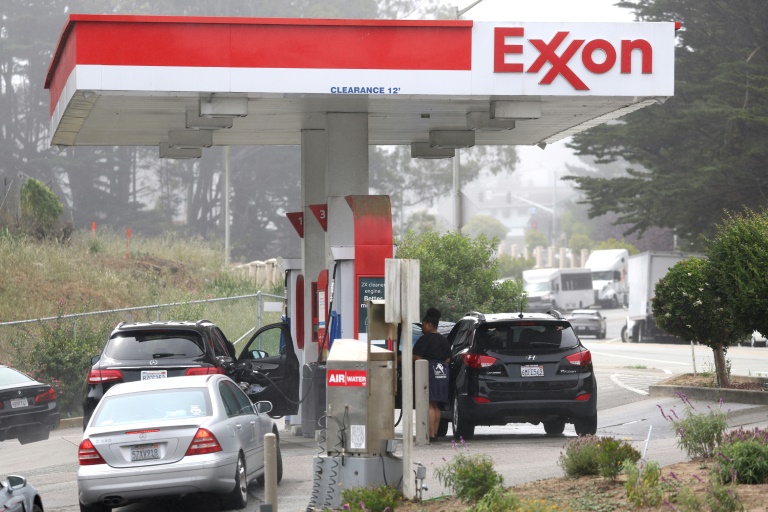
A day after blockbuster profits from European oil heavyweights, US oil giants ExxonMobil and Chevron reported another round of bumper earnings, prompting fresh attention from the White House.

ExxonMobil scored a near tripling of third-quarter profits to $19.7 billion, a company record, while Chevron profits surged 84 percent to $11.2 billion.

The eye-popping reports drew a new snipe from President Joe Biden and came on the heels of hefty profits reported earlier this week by TotalEnergies and Shell that have reignited a European debate on windfall profits taxes.

The results show how the surge in crude prices in the aftermath of Russia’s invasion of Ukraine has boosted the industry by lifting crude prices, as well as natural gas prices due to Europe’s mobilization to offset lost natural gas imports from Russia.

Another factor has been elevated refining margins, partly due to operational woes at some plants, as well as the shuttering of some refineries during the pandemic and repurposing of other plants for renewable fuel instead of gasoline.

The strong refining margins have translated into higher gasoline prices, a major point of focus in the midterm US elections roiled by rising inflation.

Prices at the pump stand at a national average of $3.76 per gallon, up about 11 percent from the year-ago level. Prices topped $5 in June, hitting an all-time high. 

Biden, who has alternated between slamming oil giants and prodding them to boost output, mocked a comment from ExxonMobil Chief Executive Daren Woods, who defended the industry’s practice of returning extra cash to shareholders. 

Woods, responding to criticism that the industry should return profits to the American people, said “that’s exactly what we’re doing in the form of our quarterly dividend,” according to prepared remarks Friday.

Biden rejected that argument.

“Can’t believe I have to say this but giving profits to shareholders is not the same as bringing prices down for American families,” Biden tweeted.

– Tight market –

Officials from ExxonMobil and Chevron have met with the Biden administration, but the companies have  maintained their spending policies, boosting production in the US Permian Basin and some other venues incrementally, but not opening the spigots towards massive new projects. The companies have continued to return cash to shareholders.

Chevron Chief Financial Officer Pierre Breber said the company planned for 2023 spending “near the top end of the range consistent with what our plans have been.” 

Chevron undertook a six percent dividend increase earlier this year and Chevron Chief Executive Mike Wirth said the company was currently at an “all time high rate” in terms of share repurchases.

Wirth described the global gasoline market as strained, saying the supply-demand balance constitutes a market “we really haven’t seen probably in my career in terms of overall tightness.”

Woods also described today’s energy market in general as constrained.

“I’m optimistic that with time… that markets will come back into balance,” Woods told Wall Street analysts. “But it’s a function of time.”

Woods vowed to maintain ExxonMobil’s policy of “capital discipline” and sharply criticized new taxes on the industry.

“If you look at some of the windfall taxes that are being talked about within Europe, that’s going to put additional pressure on refining margins,” Woods said, adding that passage of the measures would lead to more underinvestment in refining and “capacity coming out of the market.”

Shares of ExxonMobil rose 2.7 percent to $110.48 in afternoon trading, while Chevron gained 0.9 percent to $179.59.

US oil giants report huge profits in tight energy market

A day after blockbuster profits from European oil heavyweights, US oil giants ExxonMobil and Chevron reported another round of bumper earnings, prompting fresh attention from the White House.

ExxonMobil scored a near tripling of third-quarter profits to $19.7 billion, a company record, while Chevron profits surged 84 percent to $11.2 billion.

The eye-popping reports drew a new snipe from President Joe Biden and came on the heels of hefty profits reported earlier this week by TotalEnergies and Shell that have reignited a European debate on windfall profits taxes.

The results show how the surge in crude prices in the aftermath of Russia’s invasion of Ukraine has boosted the industry by lifting crude prices, as well as natural gas prices due to Europe’s mobilization to offset lost natural gas imports from Russia.

Another factor has been elevated refining margins, partly due to operational woes at some plants, as well as the shuttering of some refineries during the pandemic and repurposing of other plants for renewable fuel instead of gasoline.

The strong refining margins have translated into higher gasoline prices, a major point of focus in the midterm US elections roiled by rising inflation.

Prices at the pump stand at a national average of $3.76 per gallon, up about 11 percent from the year-ago level. Prices topped $5 in June, hitting an all-time high. 

Biden, who has alternated between slamming oil giants and prodding them to boost output, mocked a comment from ExxonMobil Chief Executive Daren Woods, who defended the industry’s practice of returning extra cash to shareholders. 

Woods, responding to criticism that the industry should return profits to the American people, said “that’s exactly what we’re doing in the form of our quarterly dividend,” according to prepared remarks Friday.

Biden rejected that argument.

“Can’t believe I have to say this but giving profits to shareholders is not the same as bringing prices down for American families,” Biden tweeted.

– Tight market –

Officials from ExxonMobil and Chevron have met with the Biden administration, but the companies have  maintained their spending policies, boosting production in the US Permian Basin and some other venues incrementally, but not opening the spigots towards massive new projects. The companies have continued to return cash to shareholders.

Chevron Chief Financial Officer Pierre Breber said the company planned for 2023 spending “near the top end of the range consistent with what our plans have been.” 

Chevron undertook a six percent dividend increase earlier this year and Chevron Chief Executive Mike Wirth said the company was currently at an “all time high rate” in terms of share repurchases.

Wirth described the global gasoline market as strained, saying the supply-demand balance constitutes a market “we really haven’t seen probably in my career in terms of overall tightness.”

Woods also described today’s energy market in general as constrained.

“I’m optimistic that with time… that markets will come back into balance,” Woods told Wall Street analysts. “But it’s a function of time.”

Woods vowed to maintain ExxonMobil’s policy of “capital discipline” and sharply criticized new taxes on the industry.

“If you look at some of the windfall taxes that are being talked about within Europe, that’s going to put additional pressure on refining margins,” Woods said, adding that passage of the measures would lead to more underinvestment in refining and “capacity coming out of the market.”

Shares of ExxonMobil rose 2.7 percent to $110.48 in afternoon trading, while Chevron gained 0.9 percent to $179.59.

Intruder attacks husband of top US Democrat with hammer

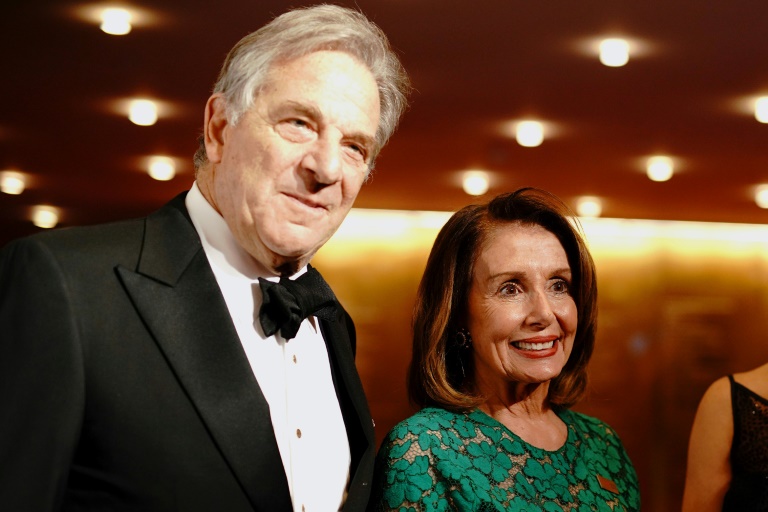
An intruder attacked the husband of the US House Speaker Nancy Pelosi with a hammer after breaking into their California home Friday, police said, leaving him needing hospital treatment.

US media reported that the intruder shouted “Where’s Nancy?” during the attack — suggesting that his motivation was political — but San Francisco police chief Bill Scott said a motive had not yet been determined.

Police said officers found the assailant at the couple’s home just before 2:30 am (0930 GMT), where he and Paul Pelosi were scuffling over a hammer.

The speaker, who is second in line to the presidency, was in Washington at the time.

“When the officers arrived on scene they encountered an adult male and Mrs. Pelosi’s husband, Paul,” chief Scott told reporters, declining to take questions.

“Our officers observed Mr. Pelosi and a suspect both holding a hammer. The suspect pulled the hammer away from Mr. Pelosi and violently assaulted him with it.”

The chief identified the assailant as 42-year-old David Depape and said he would be charged with attempted homicide, assault with a deadly weapon, burglary and other felonies. 

Nancy Pelosi’s spokesman Drew Hammill said in a statement that the speaker’s 82-year-old husband was “receiving excellent medical care and is expected to make a full recovery.”

President Joe Biden called Pelosi, also 82, to express his support over the “horrible attack” and was praying for her husband, the White House said.

“He is… very glad that a full recovery is expected. The president continues to condemn all violence, and asks that the family’s desire for privacy be respected,” Biden’s press secretary Karine Jean-Pierre said in a statement.

– ‘Disgusted’ –

The intruder broke in through a sliding-glass door, The Wall Street Journal reported, citing unnamed law enforcement officers, leaving him with wounds to the head and body.

He has taken extreme right-wing positions on social media, including conspiracy theories about Covid-19, one of the officers told the daily newspaper.

The attack comes during a tumultuous year for Pelosi’s venture capitalist husband, who was convicted of drink driving after an accident in May and sentenced to five days in jail.

With less than two weeks to go before the crucial US midterm elections, members of both parties have sounded the alarm about the possibility of political violence.

According to the Capitol Police, threats against lawmakers have more than doubled to more than 9,000 annually since 2017.

Members of both parties rallied to support the Pelosis on social media, with several suggesting the assault was the inevitable result of an increase in violent political rhetoric plaguing public discourse.

Adam Kinzinger, a Republican member of the House committee investigating the January 2021 attack on the US Capitol, blamed conspiracy theories spread by Donald Trump and his far right followers for radicalizing some supporters. 

“I want to be clear: when you convince people that politicians are rigging elections, drink babies blood, etc, you will get violence. This must be rejected,” he said.

Republican House whip Steve Scalise said he was “disgusted” by the attack.

“Violence has no place in this country. I’m praying for Paul Pelosi’s full recovery.”

Pioneering rocker Jerry Lee Lewis dead at 87

Jerry Lee Lewis, a kingpin of 1950s American rock and roll who played a pivotal role in shaping the genre’s sound, died on Friday. He was 87 years old.

Famous for his flowing blond locks, rowdy piano beats and outrageous stage presence, the star best known for his classic “Great Balls of Fire” died of natural causes, his publicist told AFP.

“He is ready to leave,” an accompanying statement quoted the artist’s wife Judith as saying.

The statement said Lewis suffered years of illnesses and injuries that finally took their toll.

“He had abused his body so thoroughly as a young man he was given little chance of lasting through middle age, let alone old age,” it read.

A friend and rival of Elvis Presley, Lewis’s career spanned more than half a century and generated a wealth of wild stories about his numerous wives — including a teenage cousin — drunken rampages and run-ins with the government over back taxes.

It also generated a string of indelible hits.

Born on September 29, 1935, in Ferriday, Louisiana, Lewis took to the ivories at age nine. The following year, his parents Elmo and Mamie mortgaged the family farm to buy him an upright piano.

Along with his cousins Mickey Gilley and Jimmy Swaggart — who would respectively go on to become an award-winning country musician and a scandal-tainted evangelist — Lewis spent hours perfecting his craft.

– Provocative lyrics  –

In 1956, Lewis struck out for Memphis, Tennessee — the southern American city famous as a cradle of soul, blues and rock — to link up with the producer Sam Phillips at Sun Records, who was instrumental in Presley’s astronomical rise.

Lewis, Presley and Johnny Cash got together with Carl Perkins at the studio for the “Million Dollar Quartet” jam session that year, which was released much later to acclaim.

Lewis soared to fame the next year with his breakout hit “Whole Lotta Shakin’ Goin’ On” — whose provocative lyrics shocked some radio stations that at first refused to play it.

“It was just another song to me,” he told The New York Times in 2006. “The girls went a little berserk, but that’s girls for you.”

– ‘The Killer’ –

His follow up, “Great Balls of Fire,” remains one of the best-selling singles of all time, and was also the name of a 1989 docudrama about Lewis that starred actor Dennis Quaid.

By the summer of 1958, Lewis — nicknamed “The Killer” — was rocketing to the top, with fans packing into shows, money flowing in, and a third hit, “Breathless,” working its way up the charts.

In an era when even the slightest lower body gyration by Presley caused a sensation, Lewis carried it further, thumping on the keys with hands and feet, and leaping atop his grand piano to squeals of delight.

“Who would have thought it would be me?” the publicist’s statement quoted the rocker as saying in his final days.

Lore has that Lewis even lit his piano on fire in an attempt to outshine guitarist Chuck Berry, who had snagged the closing slot on the same night.

– Scandal –

It all came crashing down, however, in 1958 when Lewis embarked on a tour of Britain — and the press there found out he had married his 13-year-old second cousin Myra.

“I knew it was bad, I knew it was wrong,” Lewis told The Washington Post later.

His stateside return also proved a rude awakening, as Lewis found himself blacklisted from radio and television.

He headed out on the road for one-night shows in bars and minor clubs.

“From 10,000 dollars a night to 250 dollars is a hell of a disappointment,” Lewis said.

For most of the 1960s, Lewis was on the margins, eclipsed by the next generation like The Beatles. 

His trailblazing legacy lived on, however. 

When they met in the early 1970s, John Lennon knelt down to kiss Lewis’ feet, telling him: “You are the man who made it possible for me to be a star in rock-n-roll music.”

“I just kind of froze,” Lewis told GQ of the moment.

– Music legacy –

Lewis jumped over to country music, searching for a fresh start. He also re-recorded some of his classic tunes.

In 1986, he was part of the first class inducted into the Rock and Roll Hall of Fame, alongside fellow greats including Presley, Berry, James Brown and Ray Charles.

He received a Grammy Award for lifetime achievement in 2005.

Late in life, he collaborated with Mick Jagger and Eric Clapton on his studio albums.

His personal life continued to prove stormy. After 14 years of marriage to Myra, the couple called it quits. 

Married twice before Myra, Lewis walked down the aisle four times after. He had six children. One died in a swimming pool accident as a toddler, and another died in a car accident.

In 1993, arguments with the US government over back taxes led officials to seize pianos, furniture and other personal items to cover his debt. 

Lewis was a notorious hard drinker, and at times was hooked on prescription pills.

He toured extensively late in life, though a stroke in 2019 curtailed his schedule.

“When they look back on me, I want them to remember me not for all my wives, although I’ve had a few, and certainly not for any mansions or high living money,” Lewis said.

“I want them to remember me simply for my music.”

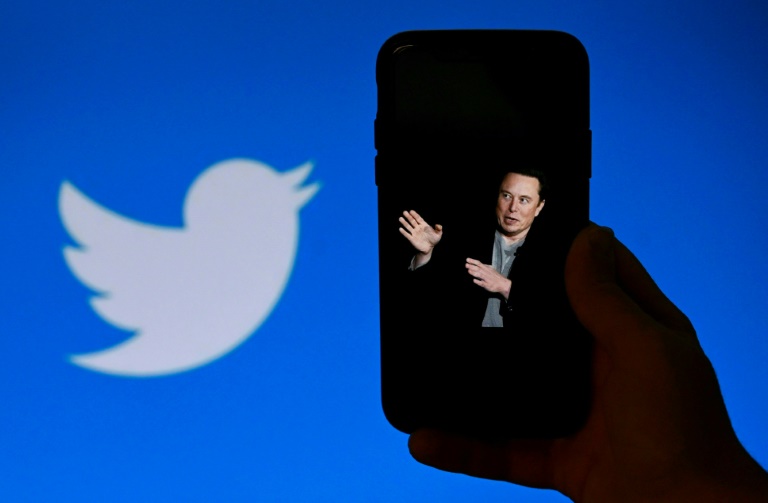
All eyes on Twitter as Musk era opens

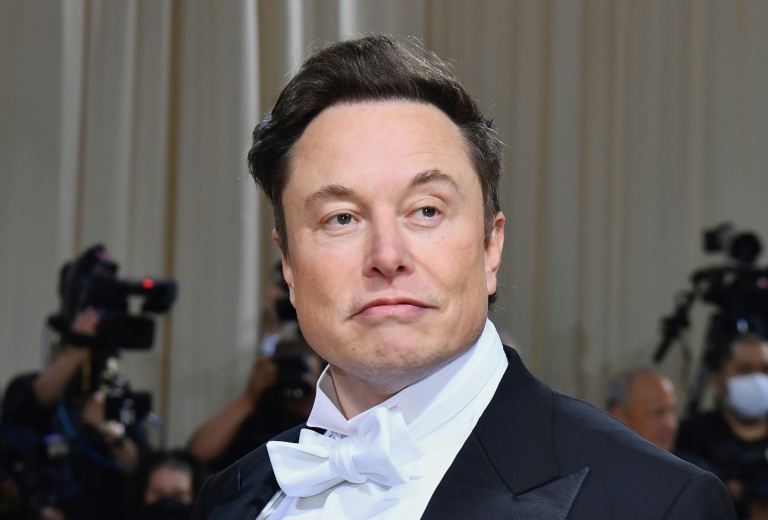
Elon Musk began Friday his first full day leading Twitter, with critics and fans anxious to see how the world’s richest man will run one of the most prominent social media platforms.

The mercurial Tesla chief tweeted, “let the good times roll,” his latest lighthearted gesture signaling his tumultuous, $44 billion bid to take Twitter private was finally done.

There was no trading on Twitter shares Friday after the New York Stock Exchange filed a delisting notice, informing US securities regulators that the merger between Twitter and X Holdings II, which is “wholly owned by Elon R. Musk became effective on October 27.”

Closure of the deal drew contrasting reactions, with former US president Donald Trump cheering the change of leadership on a platform that had banned him, while activists warned of a surge in harassment and misinformation.

European politicians were quick to signal to Musk that the continent had regulations for social media companies.

“In Europe, the bird will fly by our rules,” tweeted Thierry Breton, the EU internal market commissioner, in response to a Musk message early Friday that Twitter’s bird had been “freed,” in reference to the company’s logo.

Musk has vowed to dial back content moderation and was expected to clear the way for Trump to return to the platform.

The then-president was blocked over concerns he would ignite more violence like the 2021 deadly attack on the US Capitol to overturn his election loss.

Taking to his Truth Social platform, Trump said he was “very happy that Twitter is now in sane hands.”

Far-right users were quick to rejoice over the purchase on the network, posting comments such as “masks don’t work” and other taunts, under the belief that moderation rules would now be relaxed.

– ‘More careful’ –

Yale University philosophy professor Jason Stanley, who has characterized Trump’s rise as a sign of mounting fascism in the United States, said he would alter his approach to posting.

“For the moment I am staying on Twitter. But I am going to try to be much more careful about what I say now that Elon Musk is in charge. Cascading hate speech targeting can destroy your week.”

Right-wing political commentor Ben Shapiro said he gained 40,000 Twitter followers Friday, while the actor Mark Hamill, a liberal, said he had lost almost 6,000 followers over the last three days.

Among Musk’s first acts in power on Thursday were the reported firing of chief executive Parag Agrawal and other senior officials — though the company did not reply to AFP’s request for comment and Agrawal still listed himself as CEO on his Twitter profile.

But Ned Segal, Twitter’s chief financial officer since 2017, announced his departure early Friday, thanking ex-colleagues for the “most fulfilling” period of his career and wishing the website luck.

“At its best, (Twitter) democratizes communication and knowledge, ensuring accountability and equal distribution of info,” Segal said. “It’s a huge responsibility for everyone that shares in the work. I wish them strength, wisdom and foresight.”

Musk, who is using a combination of his own money, funds from wealthy investors and bank loans to finance the deal, has conceded he is overpaying for a company that has regularly posted eye-watering losses.

Twitter says it has 238 million daily users — dwarfed by the likes of Facebook’s nearly two billion — but has not been able to monetize in the same way as its rivals.

However, Twitter holds an outsized influence on public debate because it is the favored platform for many companies, politicians, journalists and other public figures.

Musk has expressed frustration at content moderation and critics fear his ownership will be seen as a greenlight for hate speech and misinformation.

Though he has vowed that Twitter will not become a “free-for-all hellscape,” Musk reportedly plans deep staff cuts that would gut teams that oversee content.

Media watchdog Media Matters for America sounded the alarm over the future of a Musk-led Twitter, particularly the impact on imminent elections.

The platform “is now on a glide path to becoming a supercharged engine of radicalization” and a “fever swamp of dangerous conspiracy theories, partisan chicanery, and operationalized harassment,” the organization’s head Angelo Carusone said in a statement.  

Musk is already the boss of car firm Tesla and rocket company SpaceX and it is not clear what his Twitter role might be, though unconfirmed reports suggested he might become interim CEO.

The closure of the deal marks the finale of a long back-and-forth between the billionaire and the social network that had culminated in a Twitter lawsuit seeking to hold Musk to the transaction.

Close Bitnami banner
Bitnami