US Business

Samsung Electronics says Q3 operating profit down 31% on-year

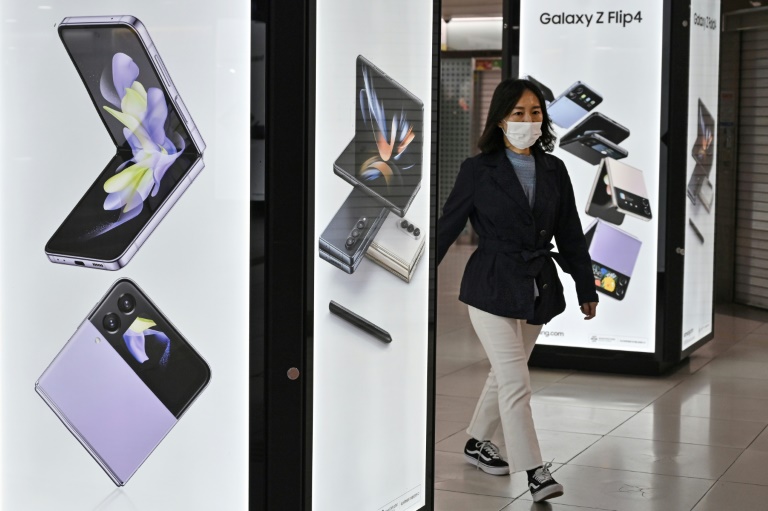
South Korean tech giant Samsung Electronics on Thursday said its third-quarter operating profits were down 31.39 percent year on year after a global economic downturn hit demand for consumer electronics.

Earnings in its crucial memory chips division dropped, the company said in a statement, adding that “demand for consumer products remained weak”.

Operating profit for July to September 2022 fell to 10 trillion won ($7 billion), down from 15.8 trillion won for the same period last year, the company said.

The results were released the same day the company announced de facto leader Lee Jae-yong — who received a presidential pardon in August over a fraud conviction — would be promoted to chairman of Samsung Electronics.

“Our survival depends on future technologies,” Lee said in a message posted on the company’s internal forum after his promotion, Yonhap reported. “We can turn this crisis into opportunity.”

The third-quarter results are the first year-on-year decline in profit in nearly three years for Samsung Electronics, the world’s biggest smartphone maker.

But the company said it had seen an increase in sales, which were up by 3.79 percent from the same period last year to 76 trillion won.

The world’s biggest memory-chip maker is the flagship subsidiary of the giant Samsung group, by far the largest of the family-controlled empires known as chaebols that dominate business in South Korea, Asia’s fourth-largest economy.

The conglomerate is crucial to the country’s economic health — its overall turnover is equivalent to a fifth of the national gross domestic product.

Until the second quarter of this year, Samsung, along with other tech companies, significantly benefited from strong demand for electronic devices — as well as chips that power them — during the pandemic.

But the global economy is now facing multiple challenges, including soaring inflation, rising interest rates and the growing threat of a broad debt crisis.

The situation has been exacerbated by Russia’s invasion of Ukraine — which has spurred a surge in energy prices and pushed global food prices up — along with China’s adherence to a strict zero-Covid policy.

“In 2023, demand is expected to recover to some extent, but macroeconomic uncertainties are likely to persist,” Samsung Electronics said.

“In the Memory Business, after a dampened first half, demand is expected to rebound centering on servers as data center installations resume,” it added.

Analyst Park Sung-soon of Cape Investment & Securities told AFP he did not expect consumer demand for tech products to recover until the second half of 2023. 

“So the focus for Samsung will be adjusting its supply rather than relying on demand recovering anytime soon,” he said.

Samsung also said it had benefited from the strength of the US dollar against the Korean won, “resulting in an approximately 1.0 trillion won company-wide gain in operating profit compared to the previous quarter”.

– Geopolitics –

The vast majority of the world’s most advanced microchips are made by just two companies — Samsung and Taiwan’s TSMC — both of which are running at full capacity to alleviate a global shortage.

The supply of memory chips has become an issue of global geopolitical significance recently, with leading governments scrambling to secure supplies.

That was demonstrated in May when US President Joe Biden kicked off a South Korea tour by visiting Samsung’s sprawling Pyeongtaek chip plant.

Russia’s invasion of Ukraine has “further spotlighted the need to secure our critical supply chains”, Biden said at the plant, underscoring the importance of bolstering technology partnerships among “close partners who do share our values”.

Samsung employs about 20,000 people in the United States and work is under way to build a new semiconductor plant in Texas, scheduled to open in 2024.

The US also recently introduced new measures to limit China’s access to high-end semiconductors with military uses, a move that has wiped billions from chip companies’ valuations worldwide.
Samsung Electronics says Q3 operating profit down 31% on-year

South Korean tech giant Samsung Electronics on Thursday said its third-quarter operating profits were down 31.39 percent year on year after a global economic downturn hit demand for consumer electronics.

Earnings in its crucial memory chips division dropped, the company said in a statement, adding that “demand for consumer products remained weak”.

Operating profit for July to September 2022 fell to 10 trillion won ($7 billion), down from 15.8 trillion won for the same period last year, the company said.

The results are the first year-on-year decline in profit in nearly three years for Samsung Electronics, the world’s biggest smartphone maker.

But the company said it had seen an increase in sales, which were up by 3.79 percent from the same period last year to 76 trillion won.

The world’s biggest memory-chip maker is the flagship subsidiary of the giant Samsung group, by far the largest of the family-controlled empires known as chaebols that dominate business in South Korea, Asia’s fourth-largest economy.

The conglomerate is crucial to the country’s economic health — its overall turnover is equivalent to a fifth of the national gross domestic product.

Until the second quarter of this year, Samsung, along with other tech companies, significantly benefited from strong demand for electronic devices — as well as chips that power them — during the pandemic.

But the global economy is now facing multiple challenges, including soaring inflation, rising interest rates and the growing threat of a broad debt crisis.

The situation has been exacerbated by Russia’s invasion of Ukraine — which has spurred a surge in energy prices and pushed global food prices up — along with China’s adherence to a strict zero-Covid policy.

“In 2023, demand is expected to recover to some extent, but macroeconomic uncertainties are likely to persist,” Samsung Electronics said.

“In the Memory Business, after a dampened first half, demand is expected to rebound centering on servers as data center installations resume,” it added.

Analyst Park Sung-soon of Cape Investment & Securities told AFP he did not expect consumer demand for tech products to recover until the second half of 2023. 

“So the focus for Samsung will be adjusting its supply rather than relying on demand recovering anytime soon,” he said.

Samsung also said it had benefited from the strength of the US dollar against the Korean won, “resulting in an approximately 1.0 trillion won company-wide gain in operating profit compared to the previous quarter”.

Parent company Samsung Group announced Thursday that heir and de facto leader Lee Jae-yong — who received a presidential pardon in August over a fraud conviction — would be promoted to chairman.

– Geopolitics –

The vast majority of the world’s most advanced microchips are made by just two companies — Samsung and Taiwan’s TSMC — both of which are running at full capacity to alleviate a global shortage.

The supply of memory chips has become an issue of global geopolitical significance recently, with leading governments scrambling to secure supplies.

That was demonstrated in May when US President Joe Biden kicked off a South Korea tour by visiting Samsung’s sprawling Pyeongtaek chip plant.

Russia’s invasion of Ukraine has “further spotlighted the need to secure our critical supply chains”, Biden said at the plant, underscoring the importance of bolstering technology partnerships among “close partners who do share our values”.

Samsung employs about 20,000 people in the United States and work is under way to build a new semiconductor plant in Texas, scheduled to open in 2024.

The US also recently introduced new measures to limit China’s access to high-end semiconductors with military uses, a move that has wiped billions from chip companies’ valuations worldwide.
Kanye West 'escorted' out of Skechers offices

Kanye West was “escorted” by two executives out of the Skechers corporate offices after the rapper showed up uninvited, the shoe company said in a statement Wednesday.

West — known formally as Ye — has made headlines in recent weeks for racist and anti-Semitic statements that have cost him several lucrative fashion collaborations.

He arrived “unannounced and without invitation” at the Los Angeles offices, Skechers said, adding that he was “engaged in unauthorized filming.”

The hip hop star appeared at a Paris fashion show this month wearing a shirt emblazoned with “White Lives Matter,” a slogan created as a backlash to the Black Lives Matter movement.

Days later, he was locked out of Twitter and Instagram for threatening to “Go death con 3 on JEWISH PEOPLE,” using a reference to US military readiness.

“Skechers is not considering and has no intention of working with West,” the company said Wednesday.

“We condemn his recent divisive remarks and do not tolerate anti-Semitism or any other form of hate speech.”

“Considering Ye was engaged in unauthorized filming, two Skechers executives escorted him and his party from the building after a brief conversation,” it added.

German sportswear giant Adidas on Tuesday announced it was ending its partnership with West, followed later that day by American apparel company Gap, which said it was taking “immediate” steps to remove his products.

Paris-based fashion house Balenciaga ended ties with West last week.

One of Hollywood’s biggest talent agencies, CAA, said on Monday it was dropping West, while film and TV producer MRC said it was shelving an already finished documentary about the artist.

West’s ex-wife Kim Kardashian posted a message condemning hate speech on social media this week without mentioning her former husband.

West, 45, has been outspoken about his struggles with mental health issues.

Kanye West 'escorted' out of Skechers offices

Kanye West was “escorted” by two executives out of the Skechers corporate offices after the rapper showed up uninvited, the shoe company said in a statement Wednesday.

West — known formally as Ye — has made headlines in recent weeks for racist and anti-Semitic statements that have cost him several lucrative fashion collaborations.

He arrived “unannounced and without invitation” at the Los Angeles offices, Skechers said, adding that he was “engaged in unauthorized filming.”

The hip hop star appeared at a Paris fashion show this month wearing a shirt emblazoned with “White Lives Matter,” a slogan created as a backlash to the Black Lives Matter movement.

Days later, he was locked out of Twitter and Instagram for threatening to “Go death con 3 on JEWISH PEOPLE,” using a reference to US military readiness.

“Skechers is not considering and has no intention of working with West,” the company said Wednesday.

“We condemn his recent divisive remarks and do not tolerate anti-Semitism or any other form of hate speech.”

“Considering Ye was engaged in unauthorized filming, two Skechers executives escorted him and his party from the building after a brief conversation,” it added.

German sportswear giant Adidas on Tuesday announced it was ending its partnership with West, followed later that day by American apparel company Gap, which said it was taking “immediate” steps to remove his products.

Paris-based fashion house Balenciaga ended ties with West last week.

One of Hollywood’s biggest talent agencies, CAA, said on Monday it was dropping West, while film and TV producer MRC said it was shelving an already finished documentary about the artist.

West’s ex-wife Kim Kardashian posted a message condemning hate speech on social media this week without mentioning her former husband.

West, 45, has been outspoken about his struggles with mental health issues.

'Overpaying' Musk on deadline to close Twitter deal

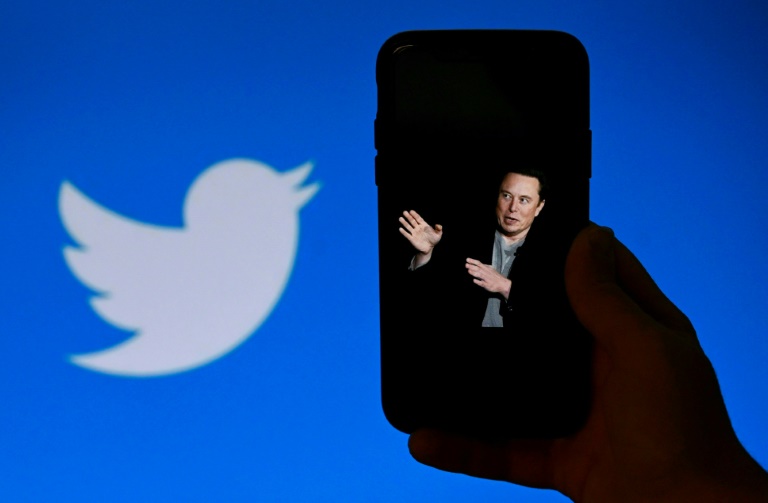
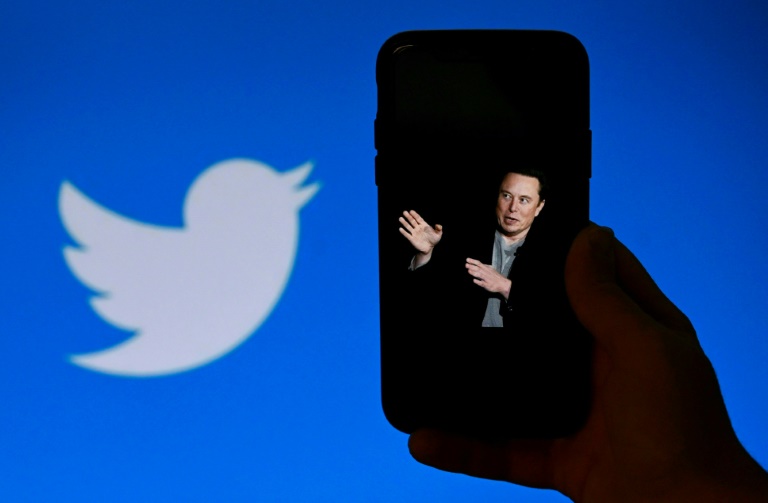
Elon Musk looks set to meet a Friday deadline to seal his on-again, off-again deal to buy Twitter, avoiding a trial over the $44 billion contract that he admits is overpriced.

After he sought to terminate the sale, Twitter filed a lawsuit to hold Musk to the agreement he inked in April to purchase the social media giant.

With a trial looming, the unpredictable billionaire capitulated and revived his takeover plan.

Musk signaled the deal was on track Wednesday by changing his Twitter profile to “Chief Twit” and posting a video of himself walking into the company’s California headquarters carrying a sink.

“Let that sink in!” he quipped.

“I think on Friday, we’ll get an announcement that says that Elon Musk has purchased Twitter,” University of California, Berkeley, law professor Adam Badawi told AFP.

Musk, the world’s richest man, has reportedly been lining up financing since Delaware Judge Kathaleen McCormick paused litigation on October 6.

If the buyout doesn’t close by the end of the business day, the judge will likely “bring the hammer down” and head quickly to trial, Badawi added.

Musk tried to step back from the Twitter deal soon after his unsolicited offer was accepted, and said in July he was canceling the contract because he was misled by Twitter over the number of fake “bot” accounts — allegations rejected by the company.

Twitter, in turn, sought to prove Musk, the head of the Tesla electric vehicle company, was contriving excuses to walk away simply because he changed his mind.

“I’m excited about the Twitter situation,” Musk said during a recent Tesla earnings call.

“I think it’s an asset that has just sort of languished for a long time but has incredible potential, although obviously myself and the other investors are overpaying for Twitter right now.”

– Twitter free-for-all? –

While pitching the deal to investors, Musk said he planned to get rid of nearly three-quarters of Twitter’s workers, according to a Washington Post report.

That report came as a shock in the Twitter workplace, where some employees who would prefer not to work for Musk have already left, said a worker who asked to remain anonymous in order to speak more freely.

“But a portion of people, including me, are willing to give him the benefit of the doubt for now,” the employee said of Musk.

“The more I hear about him the less I like him, but I do find it quite funny that he brought a sink to the headquarters just to make a joke.”

Musk’s stewardship of the site has sparked worry from activists who fear he could open the gates to more abusive and misinformative posts.

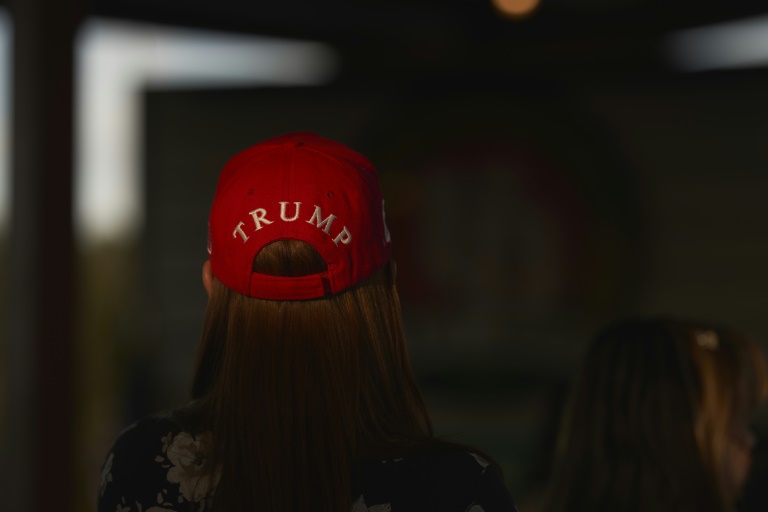
He has vowed to dial content moderation back to a bare minimum, and is expected to clear the way for former US president Donald Trump to return to the platform.

The then-president was blocked due to concerns he would ignite more violence like the deadly attack on the Capitol in Washington to overturn his election loss.

Once the deal is complete, Musk will essentially be handed the keys to Twitter and be in charge of the often-divisive global platform.

“The existing board of Twitter is probably going to get fired; Musk will put in directors who are friendly to him, he will put in management,” said Badawi.

He doubted Musk will want to be chief executive since he already runs Tesla, SpaceX, Neuralink and the Boring Company.

Trump now posts on his own, much-smaller, platform Truth Social, and has vowed not to return to Twitter even after Musk takes over.

The former president, who is considering another run at the White House in 2024, has 4.18 million followers at Truth Social, compared to the 88.8 million he had on Twitter.

'Overpaying' Musk on deadline to close Twitter deal

Elon Musk looks set to meet a Friday deadline to seal his on-again, off-again deal to buy Twitter, avoiding a trial over the $44 billion contract that he admits is overpriced.

After he sought to terminate the sale, Twitter filed a lawsuit to hold Musk to the agreement he inked in April to purchase the social media giant.

With a trial looming, the unpredictable billionaire capitulated and revived his takeover plan.

Musk signaled the deal was on track Wednesday by changing his Twitter profile to “Chief Twit” and posting a video of himself walking into the company’s California headquarters carrying a sink.

“Let that sink in!” he quipped.

“I think on Friday, we’ll get an announcement that says that Elon Musk has purchased Twitter,” University of California, Berkeley, law professor Adam Badawi told AFP.

Musk, the world’s richest man, has reportedly been lining up financing since Delaware Judge Kathaleen McCormick paused litigation on October 6.

If the buyout doesn’t close by the end of the business day, the judge will likely “bring the hammer down” and head quickly to trial, Badawi added.

Musk tried to step back from the Twitter deal soon after his unsolicited offer was accepted, and said in July he was canceling the contract because he was misled by Twitter over the number of fake “bot” accounts — allegations rejected by the company.

Twitter, in turn, sought to prove Musk, the head of the Tesla electric vehicle company, was contriving excuses to walk away simply because he changed his mind.

“I’m excited about the Twitter situation,” Musk said during a recent Tesla earnings call.

“I think it’s an asset that has just sort of languished for a long time but has incredible potential, although obviously myself and the other investors are overpaying for Twitter right now.”

– Twitter free-for-all? –

While pitching the deal to investors, Musk said he planned to get rid of nearly three-quarters of Twitter’s workers, according to a Washington Post report.

That report came as a shock in the Twitter workplace, where some employees who would prefer not to work for Musk have already left, said a worker who asked to remain anonymous in order to speak more freely.

“But a portion of people, including me, are willing to give him the benefit of the doubt for now,” the employee said of Musk.

“The more I hear about him the less I like him, but I do find it quite funny that he brought a sink to the headquarters just to make a joke.”

Musk’s stewardship of the site has sparked worry from activists who fear he could open the gates to more abusive and misinformative posts.

He has vowed to dial content moderation back to a bare minimum, and is expected to clear the way for former US president Donald Trump to return to the platform.

The then-president was blocked due to concerns he would ignite more violence like the deadly attack on the Capitol in Washington to overturn his election loss.

Once the deal is complete, Musk will essentially be handed the keys to Twitter and be in charge of the often-divisive global platform.

“The existing board of Twitter is probably going to get fired; Musk will put in directors who are friendly to him, he will put in management,” said Badawi.

He doubted Musk will want to be chief executive since he already runs Tesla, SpaceX, Neuralink and the Boring Company.

Trump now posts on his own, much-smaller, platform Truth Social, and has vowed not to return to Twitter even after Musk takes over.

The former president, who is considering another run at the White House in 2024, has 4.18 million followers at Truth Social, compared to the 88.8 million he had on Twitter.

Right-wing election 'army' sparks fear for US midterms

Influential right-wing campaigners who endorse Donald Trump’s false claims of election fraud are mobilizing a vigilante-style “army” of poll watchers for the US midterms, a move analysts say threatens chaos, intimidation and violence.

The campaigners, including some who tried to overturn Trump’s defeat in the 2020 election such as his former aide Steve Bannon, are weaponizing misinformation and so-called “election denialism” to encourage thousands of people to sign up as poll observers and challengers.

The mobilization has made the midterms, just two weeks away, the biggest test of the US democratic system since Trump’s debunked assertion that the last election was stolen from him.

On his popular podcast “War Room” this month, Bannon rallied for his audience to sign up as election workers, saying it was a political “call to arms.”

“It (the midterms) can’t be like 2020,” he told listeners.

Last week, Bannon was sentenced to four months in prison for refusing to testify in the congressional probe of the January 6, 2021 attack on the Capitol by Trump supporters.

He was allowed to remain free while he appeals.

“Steve Bannon’s early call for election deniers to sign up as poll workers and poll observers, along with disinformation questioning the integrity of the voting system… sows a real possibility for a chaotic election season,” Jennifer McCoy, professor of political science at Georgia State University, told AFP.

“We may potentially see tremendous confusion as some voters are prevented from voting, and many challenges during the vote count as these new poll workers and partisan observers challenge results they may not like.”

– ‘Army of citizens’ –

Bannon appeared on his podcast with Cleta Mitchell, a lawyer who also aided Trump’s effort to overturn the 2020 election and is now involved in assembling what she calls an  “army of citizens” to monitor elections.

She has said that her organization, the “Election Integrity Network,” has trained more than 20,000 people as poll watchers throughout the country, many of them in battleground states.

“The left has been counting and controlling the election process with no oversight from us for too long,” Mitchell wrote in a post earlier this year.

“Those days are over.”

A “guide” published on her organization’s website and distributed in nationwide training sessions called on citizens to be “ever present” in local polling offices, question election authorities and scrutinize voter eligibility.

It also urged them to identify whether officials in attorney general offices were “friend or foe.”

“In endorsing combative yet vague instructions and promoting the unjustified specter of widespread fraud, the unprecedented effort to organize an ‘army’ of citizens could lead to voter interference and intimidation, mass voter challenges, election security breaches, and other forms of lawbreaking in November,” Mekela Panditharatne, from the Brennan Center for Justice, wrote in an analysis.

– ‘Electoral autocracy’ –

Mitchell did not respond to AFP’s request for an interview.

Last week, Arizona election authorities said they were “deeply concerned” over voter safety after two armed individuals in tactical gear were found watching over a drop box for mail-in ballots.

The news came after at least two voters in Arizona filed official complaints of intimidation, a local TV station reported.

“It is one thing to observe the polling in a neutral fashion, and another to do so in a way that intimidates voters who may have opposing party affiliations,” Larry Diamond, a senior fellow at the Hoover Institution, told AFP.

“To the extent that pro-Trump extremists who deny the legitimacy of the 2020 election ‘observe’ the elections in a way that intimidates some voters, for example, people of color, or people in precincts with heavy Democratic registration, it could threaten the integrity of the elections.”

The mobilization of pro-Republican poll watchers appears to be well-funded.

Mitchell’s organization is part of the pro-Trump Conservative Partnership Institute, which, according to its annual report, raised $19.7 million last year.

According to the Federal Election Commission, a regulatory body, that includes a $1 million grant from Save America PAC –- which was created by Trump after he lost the 2020 election and has since raised millions.

Among other wealthy Trump supporters trying to rally poll watchers is election conspiracy theorist Patrick Byrne, the multimillionaire founder of the online retailer Overstock.

Byrne has sought to recruit “citizen election observers” through his nonprofit, the America Project.

With election denial rampant, the United States risks becoming what historian Ruth Ben-Ghiat called an “electoral autocracy.”

“They (Trump and his supporters) aim to delegitimize elections in the absolute,” Ben-Ghiat, a professor at New York University, told AFP.

“The goal is to associate voting with corruption to the point where the idea of relying on elections as a way to choose leaders is compromised in the public mind.”

ECB poised for bumper rate hike despite recession gloom

The European Central Bank is expected to roll out another super-size rate hike Thursday to combat runaway inflation, despite concerns higher borrowing costs could deepen the pain of a looming eurozone recession.

The ECB’s 25-member governing council is likely to lift its key interest rates by 75 basis points for the second consecutive time, economists say.

The Frankfurt institution is under pressure to rein in record-high inflation, driven by surging food and especially energy prices in the wake of Russia’s war in Ukraine.

Eurozone inflation stood at just under 10 percent in September, nearly five times the ECB’s two-percent target.

ECB president Christine Lagarde warned recently that inflation was “far too high” and more action was required to prevent price shocks from becoming “entrenched”.

Like other central banks, the ECB is fighting back with a series of rate hikes intended to dampen demand by making credit more expensive for households and businesses — at the risk of triggering an economic downturn.

“The 75 basis point rate hike looks like a done deal,” said ING economist Carsten Brzeski.

“The ECB has turned a blind eye on recession risks,” he added.

– Political pushback –

The outlook for the eurozone economy has darkened in recent weeks as the 19-nation region grapples with the fallout from the Ukraine war, soaring tensions with Moscow and pandemic-induced global supply chain woes.

If Russia completely cuts off gas flows to Europe, the eurozone economy could shrink by nearly one percent in 2023, ECB vice-president Luis de Guindos has warned.

That scenario has become more likely after Russia in late August shut down the crucial Nord Stream 1 pipeline to Europe’s economic powerhouse Germany.

The German economy is already forecast to shrink by 0.4 percent next year.

As European governments race to unveil multi-billion-euro support measures to help citizens through a cost-of-living crisis this winter, the ECB’s monetary policy tightening has come under scrutiny.

Italian Prime Minister Giorgia Meloni this week slammed the ECB’s “rash choice” to keep hiking rates, saying it created “further difficulties for member states that have elevated public debt”, Bloomberg News reported.

French President Emmanuel Macron has also expressed “concern” that the ECB was “shattering demand” in Europe.

The ECB has already increased rates twice since July, ending over a decade of ultra-low and even negative interest rates.

Lagarde has repeatedly urged governments not to fall into the trap of spending so much that they end up boosting inflation and working against the ECB.

In the United States inflation has been fuelled not by energy costs but by pandemic-era stimulus spending. 

The Federal Reserve has hiked rates faster and more aggressively, leaving the ECB open to criticism that it was slow to jump into action.

– Balance sheet in focus –

The ECB is also expected to use this week’s meeting to discuss bringing other monetary policy levers in line with its inflation-busting efforts.

Policymakers are likely to announce changes to the 2.1 trillion euros (dollars) in super cheap, long-term loans (TLTROs) offered to banks in recent years to help the eurozone through several crises — sometimes at negative rates.

As a consequence of the rate hikes, lenders can now make an easy profit by parking their excess TLTRO cash at the ECB and pocketing the new, higher deposit rate — prompting policymakers to look for ways to incentivise early repayment of the loans.

The ECB may also ponder how best to shrink the five-trillion-euros worth of bonds on its balance sheet, after years of hoovering up government and corporate debt to drive up stubbornly low inflation.

But given the uncertain outlook and the risk of rattling financial markets, analysts say the start of any “quantitative tightening” — letting the bonds mature or actively selling them — is some way off.

“The recent events in the UK, which forced the Bank of England into a major U-turn on bond purchases, could be viewed as a useful reminder that any aggressive withdrawal of liquidity risks being highly disruptive for the bond market and the transmission of monetary policy,” said Ducrozet.

Packing heat and pumping gas, Texas voter defends gun rights

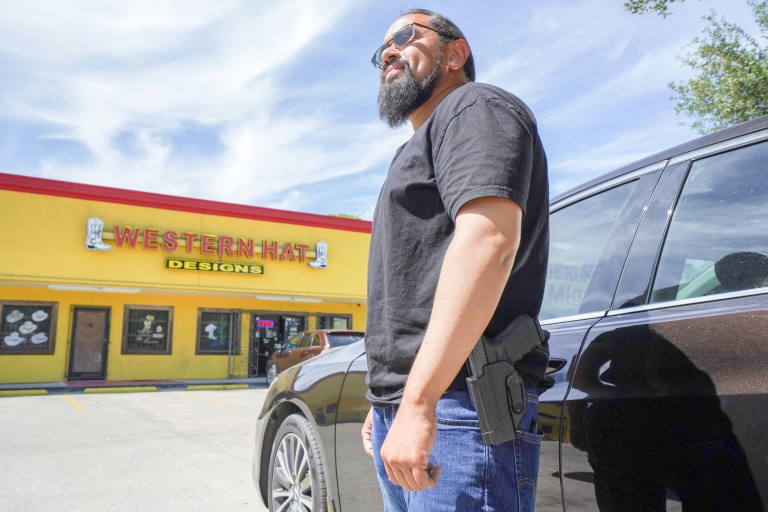
At a gas station in Houston, David Blanco fills up the tank of his car, a Glock 19 pistol clearly visible on his left hip. 

The Hispanic Texan says that in the crucial mid-term US elections coming up in less than two weeks, “the criteria that would mainly make me want to go out (and vote) is strictly firearms at the moment.”

Blanco, a serious-looking 33-year-old, had never been interested much in politics before, and didn’t normally vote.

But things changed, he said, when politicians “started threatening the Second Amendment, saying that, ‘Oh, we’re gonna ban AR-15s and high-capacity magazines.'”

“I was like, ‘You know what, maybe I should get involved now, maybe I should look more into it, and see who’s for protecting my rights that are guaranteed to me” under the US Constitution.

Blanco now scrutinizes the past of candidates for Congress, governor and county judge, among the positions contested in the November 8 elections, watching for any questioning of the right to bear arms which is so important to him.

The choice is not as clear-cut as it might seem. “There are some politicians on the Republican or conservative side that are anti-gun also,” he said, even if Republicans traditionally tend to favor gun rights.

In Texas, which has some of the most lax gun laws in the nation, the weapon is king — something no politician wishing to make a career here can afford to ignore.

But in Houston, a Democratic stronghold in a fiercely Republican state, seeing residents walking around armed is rare.

If Blanco wants to show off his firearm, he says it is to deter any would-be attacker. 

He has eight pistols and rifles, because “if anything bad happens, you can arm your neighbors and they can help you with, you know, any situation that happens to come along.”

He also uses them to practice shooting, his favorite hobby. 

– Suicide –

A city dweller of Hispanic origin, Blanco does not fit the typical profile of the American gun owner, who is generally white and rural. 

In 2021, 47 percent of white adults said they lived in a household with firearms, compared to just 26 percent of those of Hispanic origin, according to the Pew Research Center.

Blanco lives with a roommate in a neighborhood where shootings are not uncommon. 

It is also the area where he grew up, raised by a Mexican mother who always lived in fear of being robbed. 

He is constantly on guard. As a cyclist passes, he watches, wary he could be a thief on the prowl. 

Three events in his youth convinced him to carry a gun: a burglary at a friend’s place, a shooting in a neighboring house and, finally, Hurricane Ike, which plunged his neighborhood into darkness for several days in 2008.

During nights punctuated by regular gunshots, the family protected their house from looters with a rifle belonging to Blanco’s older brother, Humberto. The experience marked David deeply. 

He is, however, well placed to understand the tragedies that firearms cause.

Two years after Hurricane Ike, he heard his older brother handling his shotgun one day. 

Frightened, Blanco called the police, who on arrival discovered Humberto had committed suicide.

Gun violence is a national crisis in the United States, where mass shootings have become commonplace. In 2020, the most recent year with complete data available, more than 45,200 people died from gun-related injuries.

More than half of gun deaths in America are suicides, a fact regularly advanced by those who defend stricter gun control laws.

Blanco doesn’t see it that way. “He could have hanged himself,” he said of his brother.

– AR-15 –

In May, Texas was rocked by one of the worst school shootings in US history.

A young gunman killed 19 children and two teachers in an elementary school in Uvalde, using an AR-15 semi-automatic rifle, a type of weapon regularly used in this type of slaughter. 

“It’s very sad what happened,” said Blanco. But condemning the crime is not, in his opinion, the same thing as condemning the weapon. 

To those who say the average citizen doesn’t need such guns to defend themselves, he replies “there’s all kinds of situations that you could use an AR-15 for.”

He has two of them, and thinks this could allow him to respond more quickly to a possible threat. 

These are words that Greg Abbott, the current Texas governor and a candidate for re-election, would agree with. 

Last year, the Republican allowed almost all Texans to carry a gun openly, without training and without a license.

He is the big favorite against Democrat Beto O’Rourke, who is calling for tougher restrictions.

After the mass killing in Uvalde, O’Rourke stood out when he interrupted Abbott during a press conference, reproaching him for his inaction.

But even O’Rourke says on his web site he is “proud of Texas’ long tradition of responsible gun ownership.”

New York struggling with influx of asylum seekers

After a treacherous trip from his native Venezuela, Gustavo Mendez has survived two months in New York, finding work and a host family to live with on his path to a new future.

But he’s among the lucky ones to have a roof and a job in a city struggling to accomodate a recent influx of asylum seekers — 17,000 people since April — many of whom are being sent to makeshift tent camps.

Tens of thousands of Venezuelan migrants have been intercepted at the southern border over the past year, and in recent months several Republican-led border states started transferring asylum seekers north to Democratic stronghold cities — an explosive ploy ahead of the upcoming midterm vote.

Just weeks before that November 8 poll, which will see Democrats and Republicans fight for control of Congress, President Joe Biden limited the number of Venezuelan asylum seekers allowed to enter to 24,000.

The federal program offers a limited number of Venezuelans legal entry at US airports. But the Biden administration will expel those who attempt to cross via the land border, invoking a Donald Trump-era emergency health rule that denies them the right to apply for asylum, citing the need to quell Covid-19.

– Limited access to work –

Mendez can’t work legally but the cook and television technician did find a source of income a week after his arrival, at a restaurant in Queens that also sells refreshments out of a food truck at sporting events.

“I wanted to work as a cook or in television, and that’s what I came here for,” the 40-year-old told AFP.

He is making between $800 and $1,200 per week, a far cry from the $600 he took in monthly in his home country, where his two teenage children remain.

But Mendez is among the relatively fortunate.

Finding work is of singular importance for these migrants fleeing danger or persecution in their home countries.

But as things stand now, asylum seekers must wait 150 days after filing their initial application before they can request employment authorization.

“Since the middle of August, we have seen a large increase of asylum seekers,” Jay Alfaro, the manager of social services and partnerships at the Church of the Holy Apostles in Manhattan.

“The number one of questions here is, ‘Hey, do you know where to get a job?'”

The church provides food, legal services, housing counseling and medical assistance, operating one of the largest programs of its kind in the country.

Venezuelan Naisary Angulo, her husband and her three-year-old daughter came to the church seeking a rare warm meal.

After journeying for 50 days the 29-year-old and her family have been sleeping in one of the hotels set up by the mayor’s office.

– Work delays –

New York is the only city in the country obliged by law to offer shelter to anyone who asks for it.

For registered newcomers, the city is also to offer access to medical care, English language classes and skills training, as well as schooling for children.

But many asylum seekers say the process to gain legal work access is rife with delays; Mendez does not have an appointment with migration services until 2024.

Mayor Eric Adams, who has been open about his presidential ambitions, urged the federal government to pass legislation allowing asylum seekers to seek work “now, not in six months.”

Alongside the city’s shelters — originally meant to house its staggering homeless population — authorities have set up hotel rooms for asylum seekers.

Last week New York also began filling a gigantic tent set up on Randall’s Island in the East River, which can house 500 single men. 

There are also talks to set up a cruise ship to accommodate new arrivals.

– ‘Not sustainable’ –

At the moment those in these temporary shelter systems do not have limits to their stays.

Alfaro cited the overwhelming cost of rent in the city, which also has a housing shortage, in explaining the challenges faced by new arrivals.

According to a recent study published by the news outlet CNBC, a worker earning the city’s minimum wage of $15 dollars per hour would need to work 111 hours a week to pay for a one-bedroom apartment.

New York’s Mayor Adams has deemed the current situation “not sustainable,” with the city’s comptroller, Brad Lander, estimating the metropolis will spend between $500 million and $1 billion to temporarily house the influx of people.

Adams argues that all US cities should share the burden, saying that New York never made “any agreement to take on the job of supporting thousands of asylum seekers.”

Close Bitnami banner
Bitnami