US Business

GM confirms profit forecast despite 'challenging' environment

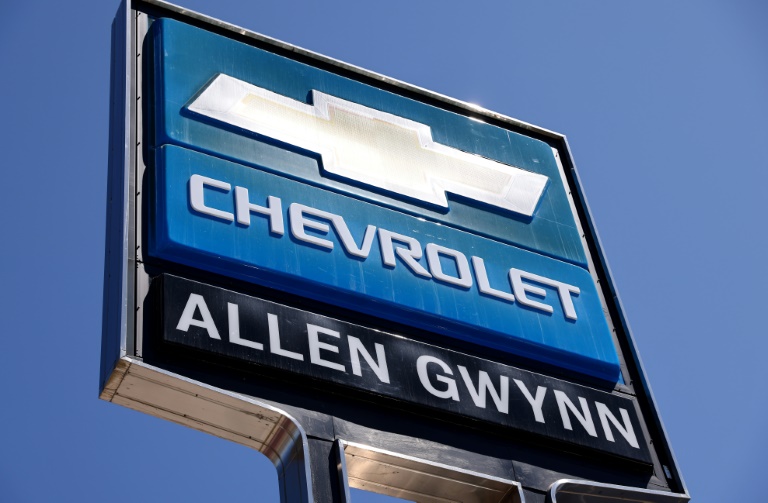
General Motors confirmed its full-year financial forecast Tuesday, lifting shares as it reported strong consumer demand in spite of a “challenging” environment with grinding inflation.

The big US automaker scored a 37 percent jump in third-quarter profits to $3.3 billion, bolstered by strong vehicle pricing in a market with historically low auto inventories. 

Revenues jumped 56 percent to $41.9 billion, a quarterly record.

GM Chief Financial Officer Paul Jacobson acknowledged rising worries about the drag from inflation on economic growth, but said the company was still seeing robust demand for its products.

“We haven’t seen any direct impact on our products. Pricing remains strong, demand remains strong for our product,” Jacobson said on a conference call with reporters.

“I think we can’t ignore what others are saying out there and what others are seeing out there,” he said. “So we’re going to continue to be agile, with both our cost investments as well as  our production.

“But we continue to see that strong demand so the best we can do is be prepared for it.” 

GM benefited from increased auto deliveries worldwide, including in North America where it shipped around 75 percent of the partially-built autos from the prior quarter that had been suspended due to shortages of key materials.

Like other automakers, GM’s operations have been constrained by limits on components, especially semiconductors.

The Detroit-based company pointed to “improvements” in the supply chain and semiconductor availability, but said it still faced “commodity and logistic challenges,” according to its earnings presentation.

“I wouldn’t say we’re completely out of it yet,” GM Chief Executive Officer Mary Barra said of the semiconductor issue. “It’s more volatile than I would expect at this point. But we’re continuing to work through the different challenges and quarter by quarter, we’re seeing it improve.”

In an interview with CNBC, Barra said GM was better positioned for a potential recession than in the past because inventories — while elevated compared with a few months ago — remain lower than historical averages.

“We have the ability right now because inventories are so low to really monitor the situation,” Barra said, adding that “we’re much better prepared to manage if we do move into a recession or have challenges from a demand-side perspective.”

The results translated into higher-than-expected profits per share, but revenues slightly lagged analyst expectations.

Shares rose 3.1 percent to $37.04 in pre-market trading.
GM confirms profit forecast despite 'challenging' environment

General Motors confirmed its full-year financial forecast Tuesday, lifting shares as it reported strong consumer demand in spite of a “challenging” environment with grinding inflation.

The big US automaker scored a 37 percent jump in third-quarter profits to $3.3 billion, bolstered by strong vehicle pricing in a market with historically low auto inventories. 

Revenues jumped 56 percent to $41.9 billion, a quarterly record.

GM Chief Financial Officer Paul Jacobson acknowledged rising worries about the drag from inflation on economic growth, but said the company was still seeing robust demand for its products.

“We haven’t seen any direct impact on our products. Pricing remains strong, demand remains strong for our product,” Jacobson said on a conference call with reporters.

“I think we can’t ignore what others are saying out there and what others are seeing out there,” he said. “So we’re going to continue to be agile, with both our cost investments as well as  our production.

“But we continue to see that strong demand so the best we can do is be prepared for it.” 

GM benefited from increased auto deliveries worldwide, including in North America where it shipped around 75 percent of the partially-built autos from the prior quarter that had been suspended due to shortages of key materials.

Like other automakers, GM’s operations have been constrained by limits on components, especially semiconductors.

The Detroit-based company pointed to “improvements” in the supply chain and semiconductor availability, but said it still faced “commodity and logistic challenges,” according to its earnings presentation.

“I wouldn’t say we’re completely out of it yet,” GM Chief Executive Officer Mary Barra said of the semiconductor issue. “It’s more volatile than I would expect at this point. But we’re continuing to work through the different challenges and quarter by quarter, we’re seeing it improve.”

In an interview with CNBC, Barra said GM was better positioned for a potential recession than in the past because inventories — while elevated compared with a few months ago — remain lower than historical averages.

“We have the ability right now because inventories are so low to really monitor the situation,” Barra said, adding that “we’re much better prepared to manage if we do move into a recession or have challenges from a demand-side perspective.”

The results translated into higher-than-expected profits per share, but revenues slightly lagged analyst expectations.

Shares rose 3.1 percent to $37.04 in pre-market trading.
Germany eyes reduced China stake in Hamburg port to end row

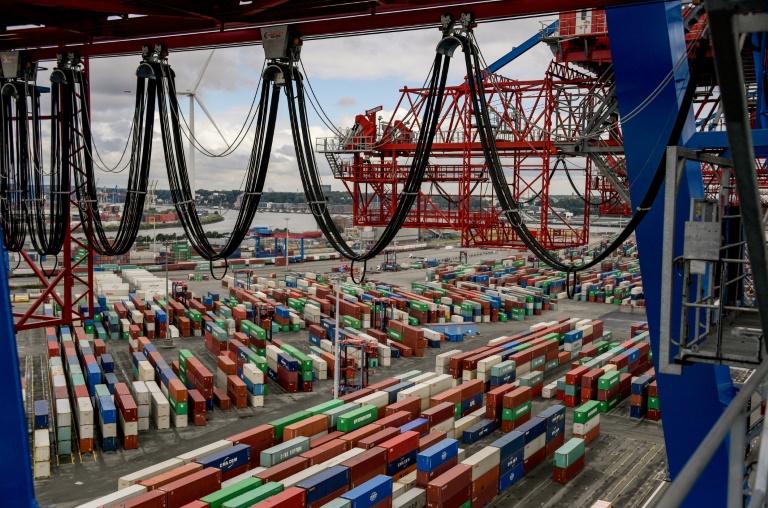
Germany’s government is eyeing a compromise that would allow a Chinese firm to take a smaller-than-planned stake in a Hamburg container terminal, after Chancellor Olaf Scholz rejected banning the sale outright.

Chinese shipping giant Cosco had sought a 35-percent stake and the deal would have automatically gone ahead despite opposition from several German ministries if an “emergency solution” was not found this week, a government source told AFP.

Under the proposed compromise, the government would greenlight a 24.9-percent sale, a big enough reduction to deprive China’s state-owned Cosco of any voting rights.

The fate of the Tollerort terminal at Hamburg’s port, Europe’s third busiest, has sparked fierce debate in Germany.

Badly burnt by its over-reliance on Russian energy, Germany has become increasingly wary of allowing foreign powers to gain hold of critical infrastructure.

Six German ministries, including the economy, defence and foreign offices, wanted to veto the Cosco deal, while former Hamburg mayor Scholz supported the sale.

“The emergency solution would prevent a strategic participation and reduce it to a purely financial participation,” the source said.

“Of course, this does not solve the actual concerns,” the source said, adding that the six ministries would still have preferred an outright ban.

The port controversy is the latest dispute to rattle Scholz’s three-way coalition government between his Social Democrats, the left-leaning Greens and the liberal FDP.

A standoff between the Greens and the FDP on whether to keep Germany’s nuclear plants operational for longer in Europe’s powerhouse economy only ended when Scholz stepped in earlier this month and pulled rank.

Scholz ordered all three remaining plants to stay online until mid-April to help counter a shortfall in Russian energy imports — including the Emsland plant the Greens had wanted to see decommissioned. 

The FDP meanwhile had hoped to keep all three plants running until 2024.

– EU concerns –

The Greens and the FDP were united however in their opposition to Cosco’s participation in Hamburg’s port.

“This is neither good for our economy nor for our security,” Green party co-leader Omid Nouripour told German media last week.

Michael Kruse, head of the FDP in Hamburg, called the project “dangerous”. 

The proposed sale has sent alarm bills ringing in Brussels too.

The European Commission warned Germany months ago against Chinese investment in Hamburg, a source close to the matter told AFP at the weekend.

The commission was worried that sensitive information about activity in the port could be relayed to China’s government, the source said.

Chinese firms already hold stakes in other European ports but the EU’s stance against Beijing has hardened since then.

Germany too has in recent years taken a closer look at Chinese investment in sensitive technologies and other areas, and reserves the right to veto acquisitions.

Scholz is due to visit China in early November, the first European Union leader to make the trip since November 2019.

Despite growing concerns at home and abroad about economic dependence on China, Scholz has repeatedly insisted that Germany should maintain strong business relations with the Asian giant.

“We do not have to decouple ourselves from some countries, we must continue doing business with individual countries — and I will say explicitly, also with China,” Scholz recently said.

China is a top trading partner for Germany, especially for its flagship automotive industry.

HSBC profits slide on bank impairment charges

Global bank giant HSBC on Tuesday announced tumbling profits for the third quarter on impairment charges linked to a weak economic outlook and its upcoming sale of French retail operations.

The London-headquartered bank’s share price was down nearly seven percent in early afternoon deals, making it the biggest faller on the British capital’s FTSE 100 index.

HSBC also announced a boardroom shake-up with the appointment of a new chief financial officer, as the Asia-focused lender faces headwinds in China and global recession prospects.

Net profit slumped 46 percent to $1.91 billion in June-September compared with the third quarter last year. Pre-tax profit slumped 40 percent, HSBC added in a statement.

The bank was hit by a $2.4-billion write-off from the planned disposal of its French business next year, offsetting gains made by soaring interest rates.

HSBC has meanwhile set aside provisions totalling $1.1 billion for loans expected to sour.  

“Macroeconomic headwinds, including higher inflation and a weaker outlook, continue to weigh on the global economy,” it said. 

The bank specifically cited global uncertainty sparked by Russia’s invasion of Ukraine, the fall of the British pound and China’s troubled real estate sector.

Stripping out the one-off hits, adjusted pre-tax profit jumped 18 percent to $6.5 billion, beating analyst expectations.

The bank’s net interest income, measuring what it makes from lending minus interest paid on deposits, came in at $8.6 billion — its best third quarter in more than eight years.

– China strains –

“We retained a tight grip on costs, despite inflationary pressures, and remain on track to achieve our cost targets for 2022 and 2023,” said chief executive Noel Quinn.

In a call with media, he welcomed stability returning to UK markets as former finance chief Rishi Sunak replaced Liz Truss as prime minister.

“It’s been a challenging few weeks. I am glad to see the market has stabilised.”

The bank announced its own shake-up, with HSBC senior executive Georges Elhedery next year stepping up as chief financial officer, replacing Ewen Stevenson who departs the group.

Senior HSBC executives are next week expected in Hong Kong for a bank summit after the city recently lifted mandatory quarantine for all international arrivals. 

It comes after Chinese leader Xi Jinping tightened his grip on power by securing a third five-year term in office, handing top jobs to a number of loyalists who back his strict zero-Covid strategy.

The policy of lockdowns and other strict measures have been a major cause of the country’s economic woes and the prospect of more upheaval has sent chills through trading floors.

HSBC has vowed to accelerate a multi-year pivot to Asia and the Middle East, with ambitions to lead Asia’s wealth management market.

But the lender is under pressure from Chinese financial giant and major shareholder Ping An to spin off its Asian operations to unlock shareholder value amid tensions between China and Western powers.

HSBC, which has rejected the calls, added Tuesday that it was “exploring the potential sale” of its Canadian division.

In midday deals, HSBC shares were down almost 7.0 percent at 442.45 pence.

“Rising interest rates may be good news for banks but it’s all the other stuff which is causing them headaches right now,” noted AJ Bell financial analyst Danni Hewson.

“Concern about the impact of a slowing economy on bad debts and growth in the loan book is being exacerbated at HSBC by the departure of well-respected finance director Ewen Stevenson and the deteriorating situation in China.”

She added that “Stevenson’s departure may also make HSBC more vulnerable to pressure from its largest shareholder Ping An to break up the bank.”

GM confirms profit forecast despite 'challenging' environment

General Motors confirmed its full-year financial forecast Tuesday, lifting shares as it reported strong consumer demand in spite of a “challenging” environment with grinding inflation.

The big US automaker scored a 37 percent jump in third-quarter profits to $3.3 billion, bolstered by strong vehicle pricing in a market with historically low auto inventories. 

Revenues jumped 56 percent to $41.9 billion, a quarterly record.

GM Chief Financial Officer Paul Jacobson acknowledged rising worries about the drag from inflation on economic growth, but said the company was still seeing robust demand for its products.

“We haven’t seen any direct impact on our products. Pricing remains strong, demand remains strong for our product,” Jacobson said on a conference call with reporters.

“I think we can’t ignore what others are saying out there and what others are seeing out there,” he said. “But we continue to see that strong demand so the best we can do is be prepared for it.”

GM benefited from increased auto deliveries worldwide, including in North America where it shipped around 75 percent of the partially-built autos from the prior quarter that had been suspended due to shortages of key materials.

Like other automakers, GM’s operations have been constrained by limits on components, especially semiconductors.

The Detroit-based company pointed to “improvements” in the supply chain and semiconductor availability, but said it still faced “commodity and logistic challenges,” according to its earnings presentation.

The results translated into higher-than-expected profits per share, but revenues slightly lagged analyst expectations.

Shares jumped 4.9 percent to $37.47 in pre-market trading.

Stocks mostly retreat on mixed earnings; pound up on new PM

Stock markets mostly fell Tuesday as traders reacted to mixed earnings, while Hong Kong steadied after the previous session’s rout triggered by China President Xi Jinping tightening his grip on power.

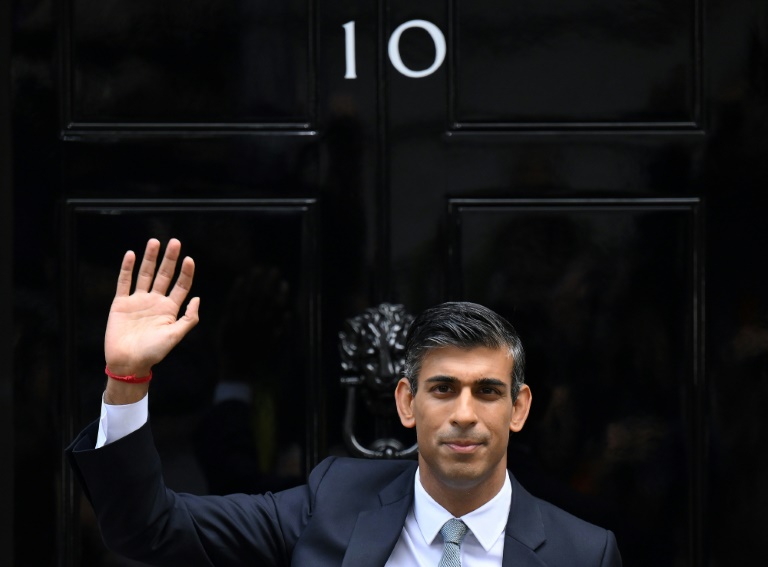
The pound climbed as markets welcomed the appointment of former finance chief Rishi Sunak as Britain’s prime minister.

Sunak on Tuesday promised to bring economic stability after the turmoil that forced predecessor Liz Truss out of Downing Street.

“Right now our country is facing a profound economic crisis,” he told the nation in a televised address.

He vowed to place “economic stability and confidence at the heart of this government’s agenda”.

“This will mean difficult decisions to come,” Sunak added.

In commodities trading meanwhile, oil and European gas prices slid further on weaker demand expectations.

Some market support came from reports suggesting the Federal Reserve could slow its pace of interest rate hikes.

The central bank’s policy of ramping up US borrowing costs to fight decades-high inflation has hammered global markets this year as investors worry that they will send the economy into recession.

“Investors are getting more confident that inflation will soften as the consumer rethinks massive purchases,” said Edward Moya, analyst at Oanda trading group.

“Fed rate hike expectations will remain volatile, but expectations are growing that a weaker economy will let the Fed pause their tightening after the February policy meeting.”

It comes as investors pore over earnings updates from some of the world’s biggest companies.

Shares in HSBC slumped 7.5 percent after the banking giant warned on bad loans owing to global economic headwinds.

Elsewhere, General Motors confirmed its full-year financial forecast despite a “challenging environment”, saying that consumer demand remained strong.

The big US automaker scored third-quarter profits of $3.3 billion on soaring revenues.

Earlier Tuesday, US tech giant Meta resolved a major WhatsApp outage that prevented its popular service from connecting or sending messages.

– Key figures around 1115 GMT –

London – FTSE 100: DOWN 0.8 percent at 6,961.25 points

Frankfurt – DAX: DOWN 0.9 percent at 12,820.86

Paris – CAC 40: UP 0.2 percent at 6,145.10

EURO STOXX 50: DOWN 0.1 percent at 3,523.07

Tokyo – Nikkei 225: UP 1.0 percent at 27,250.28 (close)

Hong Kong – Hang Seng Index: DOWN 0.1 percent at 15,165.59 (close)

Shanghai – Composite: FLAT at 2,976.28 (close)

New York – Dow: UP 1.3 percent at 31,499.62 (close)

Pound/dollar: UP at $1.1328 from $1.1281 on Monday

Dollar/yen: DOWN at 148.92 yen from 148.95 yen

Euro/dollar: DOWN at $0.9854 from $0.9876

Euro/pound: DOWN at 87.01 pence from 87.56 pence

West Texas Intermediate: DOWN 1.4 percent at $83.39 per barrel

Brent North Sea crude: DOWN 1.4 percent at $91.94 per barrel

burs/bcp/rl

Adidas cuts ties with Kanye West over anti-Semitic remarks

German sportswear giant Adidas said Tuesday it was ending its partnership with Kanye West after a series of anti-Semitic outbursts by the controversial rapper.

Recent comments by West — known formally as Ye — were “unacceptable, hateful and dangerous”, Adidas said in a statement. 

“After a thorough review, the company has taken the decision to terminate the partnership with Ye immediately.”

Adidas said it would “end production” of the highly-successful “Yeezy” line designed together with West and “stop all payments to Ye and his companies”.

The abrupt end to the collaboration between the sportswear brand and rapper would slash Adidas’s net income in 2022 by “up to 250 million euros ($246 million)”, it estimated.

Adidas is the latest brand to part ways with West following his recent outbursts. Paris-based fashion house Balenciaga ended ties with the rapper last week, saying it “no longer (has) any relationship nor any plans for future projects related to this artist.”

On Monday, one of Hollywood’s biggest talent agencies, CAA, also said it was dropping West, while film and TV producer MRC said it was shelving an already-finished documentary about the artist.

– T-shirt statement –

Adidas began a review of its relationship with West earlier this month after he appeared at a fashion show in Paris wearing a shirt with the slogan “White Lives Matter.”

The phrase is a dog whistle to right-wing groups in the United States and a reaction to the Black Lives Matter movement.

Days later he was locked out of Twitter and Instagram for threatening to “Go death con 3 on JEWISH PEOPLE.”

Comments made by West “violate the company’s values of diversity and inclusion, mutual respect and fairness”, Adidas said Tuesday.

The artist was associated with Nike for years but broke away in 2013, lending his name to Adidas as they launched their first Yeezy shoe together in 2015 — a partnership that went on to make him a billionaire. 

Along with Beyonce, Stella McCartney and Pharrell Williams, West’s has been one of the top names used by Adidas to boost sales, especially online.

– Inflammatory remarks –

Adidas had come under increasing pressure from rights campaigners and entertainment world figures to stop working with West.

, told the RND media group before Adidas’s announcement that West’s words could “not be tolerated”, urging the company to end its commercial relationship with the rapper.

Ari Emanuel, CEO of entertainment agency Endeavor, similarly called on all companies to cut ties with West.

“Those who continue to do business with West are giving his misguided hate an audience,” Emanuel wrote in the Financial Times. “There should be no tolerance anywhere for West’s anti-Semitism.”

West’s ex-wife Kim Kardashian appeared to be joining the pile-on, though her tweet did not mention the father of her children by name.

“Hate speech is never OK or excusable,” she wrote on Twitter and Instagram on Monday.

“I stand together with the Jewish community and call on the terrible violence and hateful rhetoric towards them to come to an immediate end.”

Rebuilding Ukraine a 'generational task' that begins now: Scholz

German Chancellor Olaf Scholz said on Tuesday that rebuilding Ukraine was a “generational task” that must start immediately, even as Russia’s invasion rages on.

Scholz as current head of the G7 club of wealthy nations said Ukraine could count on the support of the international community for decades to come as it seeks to repair and upgrade essential infrastructure.

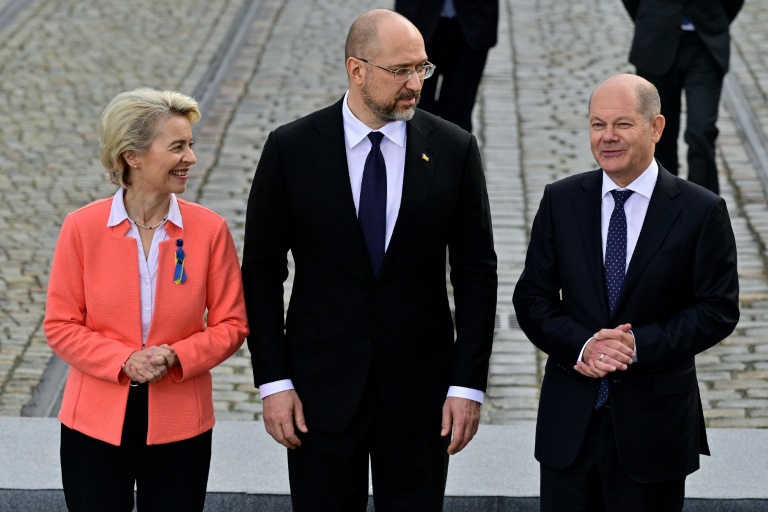
“What is at stake here is nothing less than creating a new Marshall Plan for the 21st century — a generational task that must begin now,” Scholz said as he opened an international reconstruction conference for Ukraine in Berlin.

Rebuilding Ukraine marks a “challenge for generations”, Scholz said, but one that also provided a chance to modernise its roads, bridges, schools, hospitals and transport links.

The task is “one that will require the combined strength of the entire international community but it is also an opportunity for generations to come if we get it right”, he said.

Speaking at the same event, European Commission chief Ursula von der Leyen called the scale of destruction in the war-ravaged country “staggering”, with the World Bank estimating the toll of the damage at 350 billion euros ($345 billion). 

“This is for sure more than one country or one union can provide alone,” she said. “We need all hands on deck.”

– ‘To be or not to be’ –

Ukrainian President Volodymyr Zelensky was also addressing the one-day conference, which brought together international organisations and private sector representatives as well as political leaders.

He appealed to international supporters to cover his country’s $38-billion budget hole for 2023, saying such assistance was essential if Ukraine is to get back on its feet.

“At this very conference we need to make a decision on assistance to cover the next year’s budget deficit for Ukraine,” he said, speaking to the event via video link.

“It’s a very significant amount of money.”

His prime minister Denys Shmyhal said funding was urgently needed “to help us survive this winter to save the people from humanitarian catastrophe”.

He said alleviating the crisis would also “save the European continent from the migration wave, from the immigration tsunami” that has already seen millions of Ukrainians fleeing to the EU.

Polish Prime Minister Mateusz Morawiecki urged Europe to stand strong against Russia as the war grinds on, warning against attempts to seek an end to the fighting at any cost.

“The policy of appeasing Russia is bankrupt and everyone who is still trying to enact it drags Europe down,” he said.

He insisted Europe was “much stronger than Russia” but the fact that Russian President Vladimir Putin remained unvanquished “only proves that (Europe) is to some extent or it was a paper tiger”.

“If we do not win the war with Russia we risk more than just losing Ukraine and its security — we risk marginalising the entire continent,” he warned.

Quoting Shakespeare, Morawiecki said it was a moment of truth for Europe to stand up for its purpose and values. 

“The world only deals with strong players — Europe must prove its strength. It is our ‘to be or not to be’ moment,” he said.

Meta says WhatsApp outage resolved

US tech giant Meta on Tuesday said it had resolved a major WhatsApp outage that prevented many of the billions of users of its popular service from connecting or sending messages.

Problems with the instant messaging app were reported by monitoring site Downdetector and user complaints on social media on Tuesday morning.

Downdetector said thousands of WhatsApp users had been reporting problems since 0717 GMT, with a sharp spike appearing on its dedicated chart covering the past 24 hours.

WhatsApp’s parent company Meta said it was working to restore the service “as quickly as possible” before resolving the problem later on Tuesday.

“We know people had trouble sending messages on WhatsApp today. We’ve fixed the issue and apologise for any inconvenience,” a Meta spokesman told AFP.

Social media users said they had been unable to connect to the app or send any messages, although some reported a restoration of the service at around 0850 GMT.

The hashtag #whatsappdown was one of the most trending on Twitter across the world on Tuesday, while millions of messages on Meta-owned photo-sharing platform Instagram also flagged the outage.

Some Twitter users tried to find a funny side to the technical trouble, joking that Twitter would seek to exploit the situation and gain a flurry of new connections in the coming hours. 

The origin of the outage is unclear.

– Meta outages –

Meta — formerly known as Facebook — suffered an unprecedented outage last year affecting its leading social media platforms including Facebook, Instagram, WhatsApp and Messenger.

The duration and scale of the disruption to the four services used by billions of people led to a major incident that Downdetector described as one of the largest ever observed.

At the time, Facebook acknowledged that the incident was due to an error on their part and was not a technical problem.

WhatsApp, a free messaging service, crossed the threshold of two billion users worldwide in February 2020 and is one of the most popular apps.

Facebook renamed itself Meta a year ago, to signal its pivot to building its vision for an interactive virtual and augmented reality world that it sees as the future.

But Meta has been undergoing a difficult period financially due to dropping advertising revenues and fierce competition from other platforms such as TikTok, whose popularity has exploded among social media users.

Meta says WhatsApp outage resolved

US tech giant Meta on Tuesday said it had resolved a major WhatsApp outage that prevented many of the billions of users of its popular service from connecting or sending messages.

Problems with the instant messaging app were reported by monitoring site Downdetector and user complaints on social media on Tuesday morning.

Downdetector said thousands of WhatsApp users had been reporting problems since 0717 GMT, with a sharp spike appearing on its dedicated chart covering the past 24 hours.

WhatsApp’s parent company Meta said it was working to restore the service “as quickly as possible” before resolving the problem later on Tuesday.

“We know people had trouble sending messages on WhatsApp today. We’ve fixed the issue and apologise for any inconvenience,” a Meta spokesman told AFP.

Social media users said they had been unable to connect to the app or send any messages, although some reported a restoration of the service at around 0850 GMT.

The hashtag #whatsappdown was one of the most trending on Twitter across the world on Tuesday, while millions of messages on Meta-owned photo-sharing platform Instagram also flagged the outage.

Some Twitter users tried to find a funny side to the technical trouble, joking that Twitter would seek to exploit the situation and gain a flurry of new connections in the coming hours. 

The origin of the outage is unclear.

– Meta outages –

Meta — formerly known as Facebook — suffered an unprecedented outage last year affecting its leading social media platforms including Facebook, Instagram, WhatsApp and Messenger.

The duration and scale of the disruption to the four services used by billions of people led to a major incident that Downdetector described as one of the largest ever observed.

At the time, Facebook acknowledged that the incident was due to an error on their part and was not a technical problem.

WhatsApp, a free messaging service, crossed the threshold of two billion users worldwide in February 2020 and is one of the most popular apps.

Facebook renamed itself Meta a year ago, to signal its pivot to building its vision for an interactive virtual and augmented reality world that it sees as the future.

But Meta has been undergoing a difficult period financially due to dropping advertising revenues and fierce competition from other platforms such as TikTok, whose popularity has exploded among social media users.

Close Bitnami banner
Bitnami