US Business

Truss budget fiasco shows power of the markets

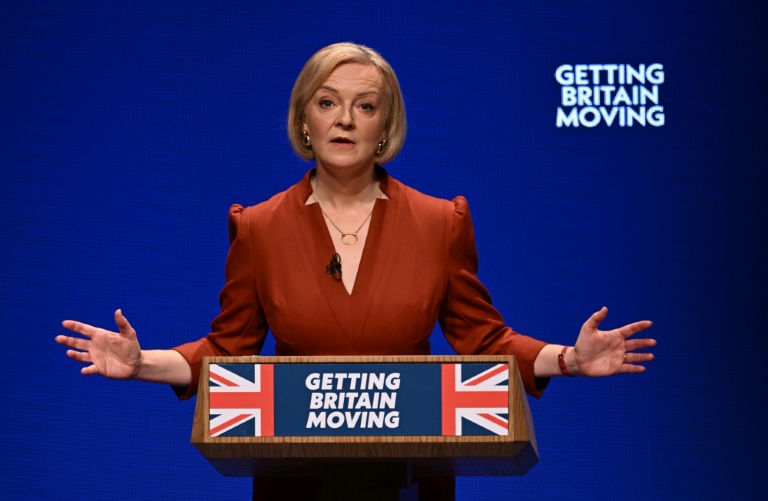
British Prime Minister Liz Truss’s humiliating budget U-turn shows how markets can wield influence over government fiscal policy.

The premier on Monday shredded her tax-slashing budget after it sparked markets chaos over rocketing state debt, as traders questioned the government’s credibility on public finances.

Truss was elected last month on a tax-cutting platform and her astonishing reversal prompted talk of a rebellion within the governing Conservative party.

The furore “is a rather extreme example of how markets react when a change in policy does not appear to be credible”, said economist Antoine Bouet at French economic forecaster CEPII.

– Not the first –

The Truss budget is not the first time that world governments have failed to overcome the verdict of markets.

Other examples include the pound’s exit from the gold standard in 1931 and from the Exchange Rate Mechanism in 1992, as well as the Asian financial crisis in 1997, analysts say.

Britain’s reversal has echoes of 1983 France, when socialist president Francois Mitterand switched to austerity in a major U-turn to restore market stability.

Truss’s flagship mini-budget on September 23 was aimed at boosting the recession-threatened economy and easing a cost-of-living crisis.

But her costly universal energy price freeze and tax cuts were financed by debt, fuelling fears of even higher inflation.

That sent UK government bond yields rocketing and the pound collapsing to a record dollar-low on debt concerns.

In reaction, the Bank of England launched an emergency bond-buying plan to help avert a financial catastrophe, while the International Monetary Fund urged a budget rethink amid a surge also in mortgage rates.

Three weeks later, Truss fired finance minister Kwasi Kwarteng and replaced him with Jeremy Hunt — who then axed most of the tax cuts, slashed the energy-price cap and warned of tough spending cutbacks.

“No government can control the markets but every government can give certainty about the sustainability of public finances,” Hunt said Monday as he took the axe to the budget.

– ‘Room for manoeuvre’ –

Bouet argued the markets did not dictate the political and economic policy, rather they reacted to it.

“There is a large amount of room for manoeuvre for governments, provided they do not go completely off the rails,” the economist told AFP.

The reaction would have been “on a smaller scale” if the UK had announced smaller tax cuts — or energy price assistance that was more targeted.

The market response was “brutal” because of “major inconsistencies”, Bouet said.

Truss’ budget was seen as adding to already sky-high inflation, which the Bank of England is struggling to bring down.

The BoE is set to deliver a super-sized interest rate hike next month after UK inflation hit a 40-year high of 10.1 percent in September.

Russ Mould, strategist at stockbroker AJ Bell, said the sheer size of bond and foreign exchange markets gave them a unique power to impact the UK economy.

– No ‘convincing plan’ –

“Financial markets can and will push governments around, especially if governments — or central banks — do something stupid,” Mould told AFP.

“Bond and currency markets are so large they can overwhelm almost anyone.”

Some have tried to take on markets, such as in 2012 when Mario Draghi — at the time head of the European Central Bank — vowed “to do whatever it takes” to save the euro. 

Draghi helped avert a eurozone debt crisis, although the euro weakened significantly.

“The EU debt crisis is a good example where markets lost confidence in debt sustainability in various southern European countries,” noted analyst Kay Neufeld at research group CEBR.

The Truss budget drama “showed what happens if you surprise markets — and don’t have a convincing plan on how to pay” for costly measures.
Methane in Turkey mine was below critical level: Erdogan

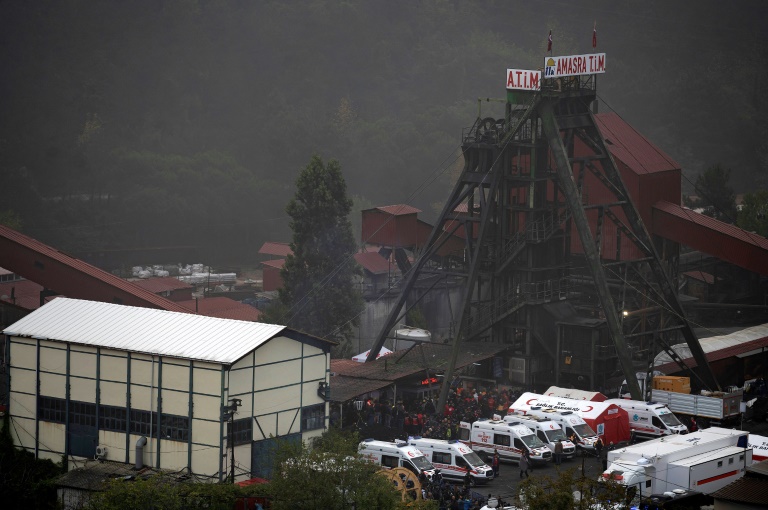
Turkish President Recep Tayyip Erdogan said Wednesday that the methane level in a mine in northwest Turkey was below the critical threshold before an explosion killed 41 people last week.

The blast ripped through the mine near the small coal town of Amasra on Turkey’s Black Sea coast shortly before sunset on Friday.

“According to measurements before the accident, the current was cut in the mine because of a methane level that reached 1.5 percent at 18:05 (15:05 GMT)”, or 10 minutes before the explosion, Erdogan told MPs belonging to his AKP Party.

“For methane to explode, its level in the air must reach at least five percent,” Erdogan said.

“We do not know yet how the explosion could have occurred despite all the precautions taken,” the president said. Erdogan visited the site of the disaster on Saturday.

Under Turkish law, mines are supposed to evacuate workers when the level of methane in the air reaches two percent in the tunnels.

Relatives of the dead told AFP and Turkish media that miners had complained of the smell of gas in the mine for about 10 days before the explosion.

“Everything that can be said will be speculation until we have a definitive accident report,” the head of state said.

– Opposition outcry –

The opposition has accused the government of failing to take the necessary measures to prevent the disaster.

“Mine accidents can happen anywhere in the world,” Erdogan said, alluding to an accident where 1,099 people had died in France. He did not specify that the Courrieres disaster happened in 1906.

“What century are we in?” opposition leader Kemal Kilicdaroglu asked Saturday. “Why are mining accidents always happening in Turkey?” 

Turkey suffered its deadliest coal mining disaster in 2014 when 301 workers died in a blast and ensuing fire that brought down a mining shaft in the western town of Soma.

Five mine managers were found guilty of negligence and handed jail terms of up to 22 years.

Turkey’s Supreme Court of Accounts said in its reports in 2019 and 2020 that there were irregularities in the Amasra mine, according to Turkish media.

Erdogan vowed Saturday that “nobody will be spared” if the accident report determines who is responsible.

But he also repeated his conviction that such accidents were a result of fate.

“If there are guilty people, they will be punished. But in doing this, we submit to fate, to the will of God. It’s indispensable for Muslims,” he said.

Putin declares martial law in annexed Ukraine regions

Russian President Vladimir Putin on Wednesday declared martial law in four regions of Ukraine recently annexed by Moscow as his proxy officials in a southern-held city pulled out with Ukraine troops advancing.

Putin’s decree to introduce military rule in the Moscow-controlled regions also gives additional power to authorities in Russian border areas and comes after a string of battlefield defeats.

“We are working on solving very complex large-scale tasks to ensure security and protect the future of Russia,” Putin said. 

The decree gives greater powers to limit movement to, from and within the areas and allows for the residents of those territories to be moved to “safe zones”.

Pro-Kremlin officials meanwhile said they were pulling out of the key southern Ukraine city of Kherson on Wednesday, as Kyiv’s forces advanced on territory in Russian hands since the war’s earliest days.

Kherson was the first major city to fall to Moscow’s troops since the February invasion began and retaking it would be a crucial prize in Ukraine’s counter-offensive.

“The entire administration is already moving today,” to the eastern bank of the Dnieper River, the Kherson region’s Moscow-installed head, Vladimir Saldo, told Russian state television.

But Andriy Yermak, the Ukrainian presidency’s chief of staff, called the moves a “propaganda show” and accused Russia of “trying to scare the people of Kherson”.

Ukrainian forces “do not fire at Ukrainian cities,” Yermak wrote on Telegram.

Kyiv’s recapturing of swathes of its territory in the east and parts of the south has however been followed by missile and drone strikes that have demolished large parts of Ukraine’s power grid ahead of winter.

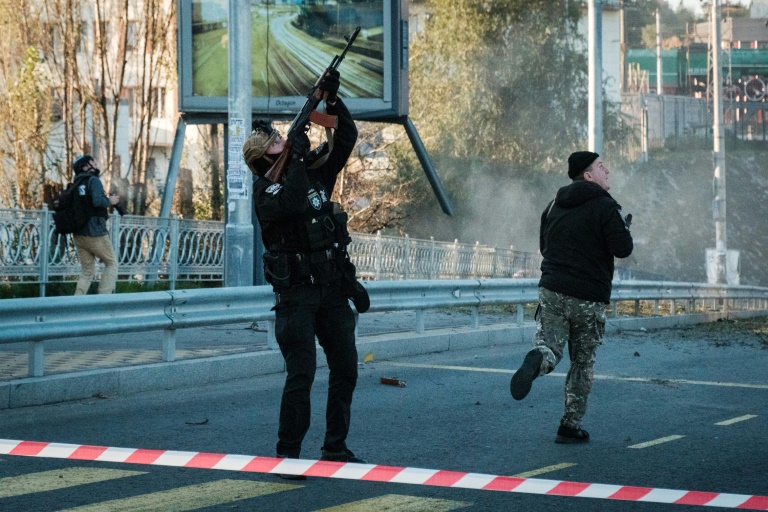
In a third day of attacks on the Ukrainian capital, Kyiv mayor Vitali Klitschko said “several Russian rockets” had been downed over the city after AFP reporters heard several loud explosions in the city centre.

– Evacuations by ferry –

Kherson is located on the western bank of the Dnieper, the same side where Ukrainian troops have been moving forward in a counter-offensive that began in August.

Saldo said the pull-out, along with the organised movement of civilians from the city, was a precaution and vowed that Russian forces would continue to fight against Ukraine.

Pro-Russian officials have said civilians would only be allowed to leave towards Russia or Russian-held parts of Ukraine.

However, Ukrainian forces have targeted bridges across the river to disrupt supply lines so Russian-installed officials said the evacuations were being done with ferries.

Russia’s Rossiya 24 state television channel showed images of people waiting to board ferries to cross the river.

Local officials said they were planning to move up to 60,000 civilians from the city of Kherson over a period of around six days.

Russia’s military commander for Ukraine operations, General Sergey Surovikin has said the Russian army will ensure “the safe evacuation of the population” from Kherson.

Speaking to Russian state TV on Tuesday, he accused Ukraine of strikes on civilian infrastructure in the region that “create a direct threat to the lives of residents”.

– Nuclear plant staff detained –

Ukraine has re-captured occupied territory in the east of the country in recent weeks.

Its advance in the south has been far slower but has been gaining momentum in recent days.

There have also been some Russian advances.

Russian forces on Tuesday claimed to have retaken territory from Ukrainian troops in the eastern Kharkiv region.

It was Moscow’s first announced capture of a village there since being nearly entirely pushed out of the region last month.

Moscow has also been building up its defences in the territory it still holds.

Russia’s Wagner mercenary group said it was working on building a fortified line of defence in Ukraine’s eastern Lugansk region.

“It is a multi-level and layered defence,” the group’s founder Yevgeny Prigozhin said on the social media of his company Concord.

Russian forces meanwhile continue to occupy the Zaporizhzhia nuclear power plant — Europe’s largest.

Petro Kotin, head of Ukraine’s nuclear energy agency Energoatom, told AFP on Wednesday that Russian forces were holding “about 50” plant employees in captivity.

– EU to sanction Iran –

Ukraine has scrambled to rebuild damaged energy facilities across the country following a series of Russian strikes.

The government has warned of the risk of blackouts, saying about 30 percent of Ukraine’s power stations have been destroyed.

Drones bombarded Kyiv on Monday, leaving five dead, in what the presidency described as an attack of Russian desperation after a string of battlefield losses.

An energy facility in the city was hit by strikes on Tuesday, leaving two people dead.

Kyiv and its Western allies have accused Moscow of using Iranian-made drones in the strikes, a move President Volodymyr Zelensky portrayed as a sign of Russia’s failure.

Ukraine said Wednesday it had shot down 223 Iranian-made drones since mid-September.

But the Kremlin has said it has no knowledge of its army using Iranian drones in Ukraine and Tehran has said the claims that it is providing Russia with weapons are “baseless”.

Nabila Massrali, spokeswoman for EU foreign policy chief Josep Borrell, said the EU has “sufficient evidence” that Tehran was supplying Russia with drones and would prepare fresh sanctions on Iran.

Empty shelves as German supermarkets resist price hikes

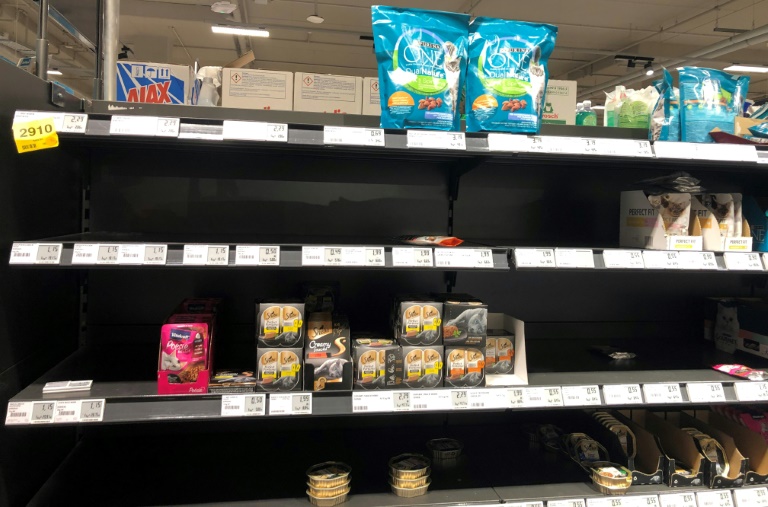
German shoppers are increasingly finding empty shelves where their favourite Kellogg’s cereal, Mars chocolate bar or rice brand used to be, as supermarkets square off against major food companies over price hikes.

“Dear customers: we are sorry to inform you that we can’t currently offer all the products of our supplier Mars GmbH,” reads a note in a sparsely stocked aisle at an Edeka supermarket in central Berlin.

With German inflation running at a record 10 percent, supermarket giants are pushing back against what they see as unreasonable price increases by some of the world’s best-known brands.

Food multinationals argue that their manufacturing costs have risen on the back of soaring energy and transport costs, in part because of the war in Ukraine.

But retailers in Europe’s top economy say they are protecting customers’ purchasing power at a difficult time, and that price hikes of up to 30 percent in some cases are overblown. 

“Many international brands are trying to take advantage of inflation to charge excessive prices in order to increase their profits,” an Edeka spokesman told AFP, calling Mars’s price demands “unjustified”.

Edeka and its rival Rewe, two of Germany’s biggest supermarket chains, have stopped getting delivery of around 300 products from the Mars company, known for its Twix and Snickers bars, Ben’s Original rice packets and Whiskas cat food.

They have also used the supermarket showdown to push their cheaper, own-brand products as alternatives.

– Coca-Cola court battle –

Mars for its part blames the “volatile context” and “inflationary pressure”.

Thomas Roeb, a retail expert at the Bonn-Rhein-Sieg University of Applied Sciences, said the battle of the brands was not new, and that items get pulled every year in spats between supermarkets and food companies.

“But this time it has gone a little less unnoticed, because Edeka and Rewe are affected at the same time,” Roeb told AFP.

At the Edeka in Berlin the absence of pet food, a sector where Mars dominates, is particularly glaring.

In a nearby Rewe, the rice aisle is half empty.

The cereal section is looking bare, too, after Rewe failed to reach a compromise with US company Kellogg’s — which according to German media was asking almost 30 percent more for its popular breakfast food.

Similar price wars are raging with other brands.

In some stores, tea and coffee products by Jacobs Douwe Egberts are missing from shelves. 

Discounters Aldi and Lidl aren’t stocking Danone, the world’s largest yoghurt maker.

Edeka and Coca-Cola are fighting out their row in court, with the supermarket appealing a recent ruling saying the drinks giant was within its rights to stop deliveries over the dispute.

– ‘Tastes the same’ –

“Food, drinks and even hygiene products are missing,” said Leana Kring, 24, outside a supermarket on Berlin’s Karl-Marx-Allee boulevard.

The supermarket woes add more strain for German consumers, who are already bracing for a grim winter amid high inflation and a deepening energy crisis following Russia’s cutoff of gas supplies. 

The German economy, usually a driver of European growth, is forecast to tip into recession next year.

A Rewe spokesman told AFP that supermarkets don’t want to see shoppers “unnecessarily penalised” during “these difficult times”.

But the retailers have also seized the opportunity to promote their store-brand products, which have grown in popularity as Germans try to watch their pennies.

“Astronomical prices from Mars? Then buy Netto,” read a recent tongue-in-cheek Instagram post from discounter Netto, owned by the Edeka group.

At a Rewe store at Berlin’s Friedrichstrasse station, the supermarket’s own “Ja” (Yes) cereals have already replaced the colourful rows of Kellogg’s boxes.

Own-brand sales accounted for 34.6 percent of revenues in German supermarkets in the first quarter of 2022, according to GfK pollsters, up 1.2 percentage points on a year earlier.

“It’s cheaper, and it tastes the same,” said Mirjam Branz, a 30-year-old Berlin resident, upon leaving Rewe.

Procter & Gamble earnings boosted by price hikes

Procter & Gamble turned in another solid quarter Wednesday as it pointed to indications that consumers are mostly sticking with  leading household brands despite higher prices.

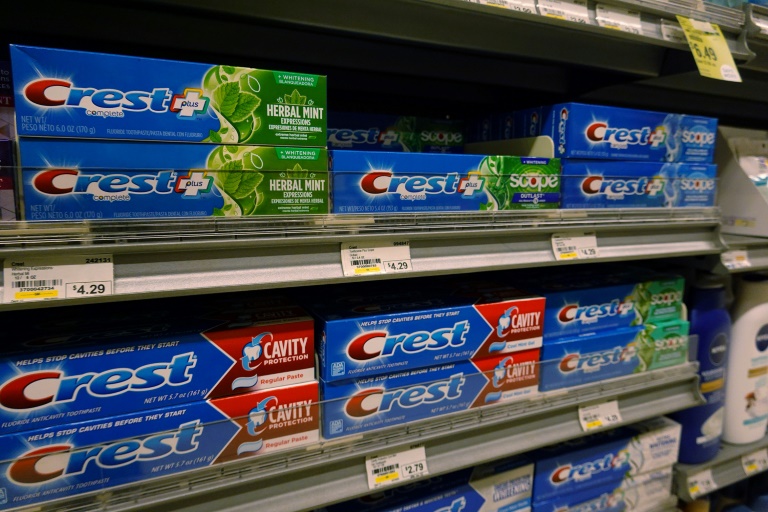
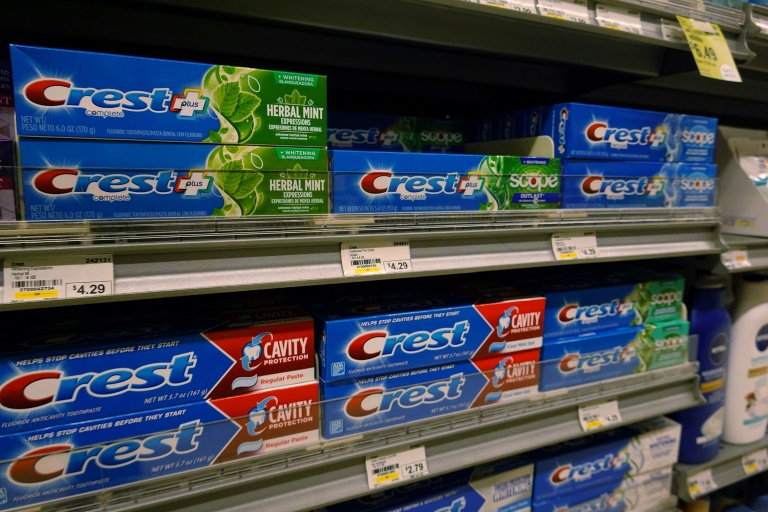
The maker of Crest toothpaste and Bounty paper towels, P&G saw a slight dip in profits due to cost pressures as it trimmed its sales forecast because of the strong dollar.

But results topped analysts; expectations as executives expressed confidence in the company’s ability to navigate what they described as a “very difficult” cost and operating environment.

“When we look at the aggregate picture, we feel very good about the consumers’ reaction to our price increases because we don’t see any major trade down,” Chief Financial Officer Andre Schulten said on a conference call with reporters.

Profits were $3.9 billion, down four percent from the year-ago period, while revenues increased one percent to $20.6 billion.

The company said its lower profit margins were the result of higher commodity and input material costs, as well as increased freight costs and spending on package reinvestment initiatives.

Offsetting these expenses were price increases across the P&G slate of goods, ranging from a six percent increase in health care to 11 percent in fabric and home care.

Overall, P&G’s prices rose nine percent, while product volumes decreased three percent.

Schulten said the breadth of P&G’s products allows it to meet consumers at “different value tiers,” meaning that wealthier consumers can opt for premium Pampers brand diapers, which are about twice the price of Luvs diapers.

In light of the strong dollar, P&G now expects sales to be down between one and three percent. In July, P&G projected fiscal 2023 sales of in-line to an increase of two percent. 

Shares of P&G rose 1.6 percent to $130.45 in pre-market trading.

Procter & Gamble earnings boosted by price hikes

Procter & Gamble turned in another solid quarter Wednesday as it pointed to indications that consumers are mostly sticking with  leading household brands despite higher prices.

The maker of Crest toothpaste and Bounty paper towels, P&G saw a slight dip in profits due to cost pressures as it trimmed its sales forecast because of the strong dollar.

But results topped analysts; expectations as executives expressed confidence in the company’s ability to navigate what they described as a “very difficult” cost and operating environment.

“When we look at the aggregate picture, we feel very good about the consumers’ reaction to our price increases because we don’t see any major trade down,” Chief Financial Officer Andre Schulten said on a conference call with reporters.

Profits were $3.9 billion, down four percent from the year-ago period, while revenues increased one percent to $20.6 billion.

The company said its lower profit margins were the result of higher commodity and input material costs, as well as increased freight costs and spending on package reinvestment initiatives.

Offsetting these expenses were price increases across the P&G slate of goods, ranging from a six percent increase in health care to 11 percent in fabric and home care.

Overall, P&G’s prices rose nine percent, while product volumes decreased three percent.

Schulten said the breadth of P&G’s products allows it to meet consumers at “different value tiers,” meaning that wealthier consumers can opt for premium Pampers brand diapers, which are about twice the price of Luvs diapers.

In light of the strong dollar, P&G now expects sales to be down between one and three percent. In July, P&G projected fiscal 2023 sales of in-line to an increase of two percent. 

Shares of P&G rose 1.6 percent to $130.45 in pre-market trading.

Trump to testify in defamation case against rape accuser

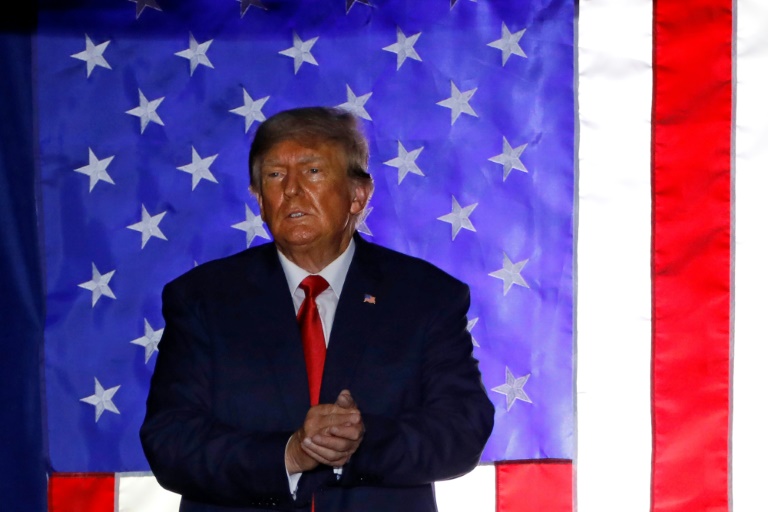
Former US president Donald Trump is expected to testify Wednesday in a defamation case pitting him against a prominent American columnist who says he raped her in the 1990s.

E. Jean Carroll, 78, alleges that Trump sexually assaulted her in a New York department store.

Last week, a New York federal court judge rejected a motion by Trump, who has denied the accusation, to further delay his deposition. 

Judge Lewis Kaplan ruled that Carroll’s and Trump’s depositions should be held on October 14 and 19, respectively.

It is not known if Carroll testified on Friday, and neither of the parties’ lawyers responded to comment requests from AFP.

Trump is expected to submit a sworn deposition from his Mar-a-Lago residence in Florida, The New York Times reported.

Carroll on Tuesday shared a photo of her lawyer Roberta Kaplan on Twitter captioned “Carroll versus Trump,” and wished Kaplan “GOOD LUCK FOR TOMORROW.” She later deleted the tweet.

Kaplan, who is unrelated to the case’s judge, is a co-founder of the Time’s Up movement that provides legal aid to victims of sexual assault.

Carroll, a former columnist for Elle magazine, sued then-president Trump for defamation in a New York civil court in November 2019.

In an excerpt of her book published by New York Magazine that year, Carroll said she was raped by Trump in the changing room at the luxury Bergdorf Goodman department store on Fifth Avenue in New York in the mid-1990s.

Trump denied the accusation, saying Carroll was “not my type” and that she was “totally lying,” which prompted the defamation suit.

The case has been delayed by procedural battles, including whether Trump should be represented by the US government, since he was president at the time he made the statements. 

According to several media outlets on Tuesday, Trump’s lawyers have always claimed their client was protected by his executive immunity, particularly for allegedly defamatory statements he made during his term.

Last week, Trump made new comments about the case on his right-wing Truth Social platform, mocking Carroll’s rape allegations. 

According to legal experts cited in a Vice News report, Carroll could argue that Trump defamed her again — this time as a private citizen. 

Judge Kaplan said last week that Carroll could claim damages from Trump for the alleged rape starting from November 24, after a New York state law comes into effect that allows survivors of sexual assault to file a civil suit regardless of the statute of limitations.

Kremlin proxies flee Kherson as Ukraine advances

Pro-Kremlin officials said they were pulling out of the key southern Ukraine city of Kherson on Wednesday, as Kyiv’s forces advanced on territory in Russian hands since the war’s earliest days.

Kherson was the first major city to fall to Moscow’s troops after the February invasion and retaking it would be a crucial prize in Ukraine’s ongoing counter-offensive.

Kyiv’s recapturing of swathes of its territory in the east and parts of the south has however been followed by missile and drone strikes that have demolished large parts of Ukraine’s power grid ahead of winter.

“The entire administration is already moving today,” to the eastern bank of the Dnieper River, the Kherson region’s Moscow-installed head, Vladimir Saldo, told Russian state television.

But the Ukrainian presidency’s chief of staff Andriy Yermak called the moves a “propaganda show” and accused Russia of “trying to scare the people of Kherson”.

Ukrainian forces “do not fire at Ukrainian cities,” Yermak wrote on Telegram.

The city is located on the western bank of the Dnieper, the same side where Ukrainian troops have been moving forward in a counter-offensive that began in August.

Saldo said the pull-out, along with the organised movement of civilians from the city, was a precaution and vowed that Russian forces would continue to fight against Ukraine.

Pro-Russian officials have said civilians would only be allowed to leave towards Russia or Russian-held parts of Ukraine.

However, Ukrainian forces have targeted bridges across the river to disrupt supply lines so Russian-installed officials said the evacuations were being done with ferries.

Russia’s Rossiya 24 state television channel showed images of people waiting to board ferries to cross the river.

Local officials said they were planning to move up to 60,000 civilians from the city of Kherson over a period of around six days.

Russia’s military commander for Ukraine operations, General Sergey Surovikin has said the Russian army will ensure “the safe evacuation of the population” from Kherson.

Speaking to Russian state TV on Tuesday, he accused Ukraine of strikes on civilian infrastructure in the region that “create a direct threat to the lives of residents”.

– ‘Safe evacuation’ –

Ukraine has re-captured occupied territory in the east of the country in recent weeks.

Its advance in the south has been far slower but has been gaining momentum in recent days.

There have also been some Russian advances.

Russian forces on Tuesday claimed to have retaken territory from Ukrainian troops in the eastern Kharkiv region.

It was Moscow’s first announced capture of a village there since being nearly entirely pushed out of the region last month.

Russia has also been building up its defences in the territory it still holds.

Russia’s Wagner mercenary group said it was working on building a fortified line of defence in Ukraine’s eastern Lugansk region.

“It is a multi-level and layered defence,” the group’s founder Yevgeny Prigozhin said on the social media of his company Concord.

Russian forces meanwhile continue to occupy the Zaporizhzhia nuclear power plant — Europe’s largest.

Petro Kotin, head of Ukraine’s nuclear energy agency Energoatom, told AFP on Wednesday that Russian forces were holding “about 50” plant employees in captivity.

– Warnings of power outages –

Ukraine meanwhile scrambled to rebuild damaged energy facilities across the country following a series of Russian strikes.

The government has warned of an emerging “critical” risk to its power grid after repeated Russian bombardments had destroyed one third of the country’s power facilities as winter approaches.

“It’s necessary for the whole country to prepare for electricity, water and heating outages,” Kyrylo Tymoshenko, deputy head of the Ukrainian president’s office, told Ukrainian television on Tuesday.

Drones also bombarded Kyiv on Monday, leaving five dead, in what the presidency described as an attack of Russian desperation after a string of battlefield losses.

Kyiv and its Western allies have accused Moscow of using Iranian-made drones in the strikes, a move President Volodymyr Zelensky portrayed as a sign of Russia’s failure.

Ukraine said Wednesday it had shot down 223 Iranian-made drones since mid-September.

But the Kremlin has said it has no knowledge of its army using Iranian drones in Ukraine and Tehran has said the claims that it is providing Russia with weapons are “baseless”.

Nabila Massrali, spokeswoman for EU foreign policy chief Josep Borrell, said the EU has “sufficient evidence” that Tehran was supplying Russia with drones and would prepare fresh sanctions on Iran.

Stocks stumble as inflation concerns offset positive earnings

Major stock markets stumbled Wednesday, as lingering concerns over sky-high inflation offset positive earnings.

In a sign of the uphill struggle in the battle against soaring prices, UK inflation jumped back above 10 percent last month.

London’s FTSE 100 shares index steadied and the pound fell following the data — and as Britain’s under-fire Prime Minister Liz Truss faced a grilling in parliament.

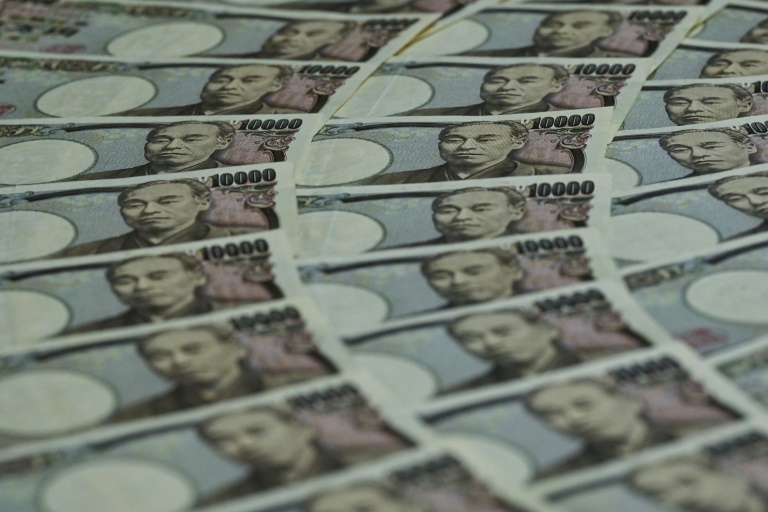
Foreign exchange traders were keeping tabs also on whether the dollar would reach 150 yen, which would be a fresh high for 32 years.

Japan’s currency is being hit hard as the country’s central bank holds off from hiking interest rates, in sharp contrast to its peers the world over which are aggressively hiking borrowing costs to try and cool decades-high inflation.

Asian stock markets diverged after Wall Street ended higher for a second session running Tuesday, heartened by forecast-beating results from Goldman Sachs and Johnson & Johnson.

They came on the heels of better-than-expected reports from banking giants Citi, JP Morgan and Wells Fargo.

Traders were given an extra boost by news that Netflix gained more than two million subscribers in July-September.

“Earnings season offers investors the opportunity to focus more on the actual earnings power of corporate America, and less on the machinations of the backward-looking economic data stream,” said Art Hogan, a strategist at B. Riley.

“A better-than-feared earnings season may well be the catalyst the market needs to see a break in the steady grind lower.”

In Europe, Nestle’s sales surged in the first nine months of the year as the maker of Nespresso capsules, Purina pet food and Haagen-Dazs ice cream raised its prices in response to soaring inflation.

On commodity markets, crude oil prices rose on renewed supply worries.

They had slumped Tuesday on bets that US President Joe Biden would order the release of more barrels from the country’s emergency reserves in order to keep fuel prices subdued heading into mid-term elections.

– Key figures around 1100 GMT –

London – FTSE 100: FLAT at 6,934.52 points

Frankfurt – DAX: UP 0.1 percent at 12,776.12

Paris – CAC 40: UP 0.4 percent at 6,090.48

EURO STOXX 50: UP 0.7 percent at 3,486.43

Tokyo – Nikkei 225: UP 0.4 percent at 27,257.38 (close)

Hong Kong – Hang Seng Index: DOWN 2.4 percent at 16,511.28 (close)

Shanghai – Composite: DOWN 1.2 percent at 3,044.38 (close)

New York – Dow: UP 1.1 percent at 30,523.80 (close)

Pound/dollar: DOWN at $1.1252 from $1.1332 on Tuesday

Dollar/yen: UP at 149.59 yen from 149.21 yen

Euro/dollar: DOWN at $0.9780 from $0.9862 

Euro/pound: DOWN at 86.97 pence from 87.01 pence

Brent North Sea crude: UP 1.1 percent at $91.03 per barrel

West Texas Intermediate: UP 1.5 percent at $84.04 per barrel

Hong Kong to 'trawl world for talent' in reboot attempt

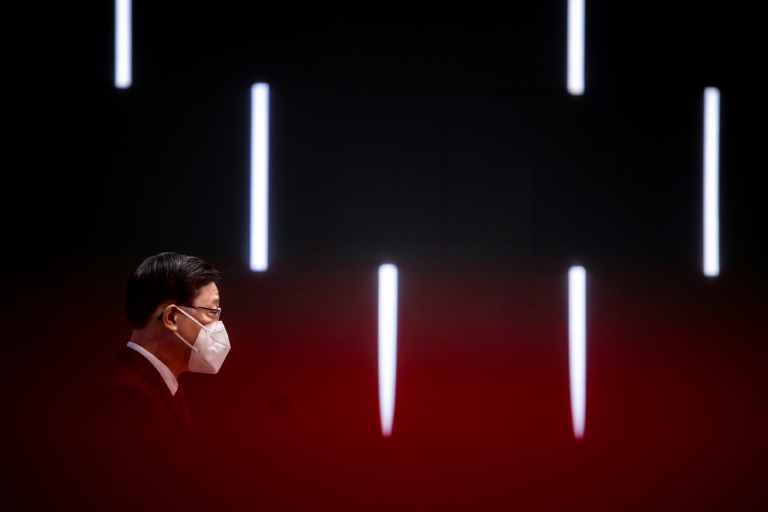
Hong Kong’s leader unveiled plans to resuscitate the business hub’s fortunes on Wednesday, hoping to lure back international expertise after an exodus of talent — but he vowed no let-up in a political crackdown that has transformed the city.

John Lee, a Beijing-anointed former security chief, gave a debut policy speech that prioritised the revival of an economy mired in recession and maintaining security while recognising that many had left a city that serves as a gateway to China.

“Over the past two years, the local workforce shrank by about 140,000,” he said. “Apart from actively nurturing and retaining local talent, the government will proactively trawl the world for talent.”

The former British colony has lately undergone its most tumultuous period since its 1997 handover to China. 

Huge and sometimes violent democracy protests three years ago were followed by a sweeping clampdown on dissent as well as some of the world’s strictest coronavirus pandemic rules, many of which remained in place long after rivals reopened.

The city, which only scrapped mandatory quarantine for international arrivals last month, has seen its deficit soar while the border with the Chinese mainland remains all but closed because of Beijing’s strict zero-Covid rules.

– Talent office –

Lee’s speech offered his blueprint for reversing that downturn, including a talent scouting office, a HK$30 billion ($3.8 billion) co-investment fund to attract overseas businesses and rules to make it easier to hire foreigners.

The city will give preferential treatment to “top talent”, described as people who earn HK$2.5 million or more annually and graduates from the top 100 universities around the world who have relevant work experience.

Even with investor-friendly measures, rebooting Hong Kong will be tough.

Lee took office in July at a time of rising global interest rates, fears for China’s zero-Covid economy, uncertainty sparked by Russia’s Ukraine invasion and dents in Hong Kong’s business-friendly reputation.

The reaction from investors and analysts was lukewarm. 

Hong Kong’s stock exchange, which has lost more than a quarter of its value since the start of the year, closed down 2.38 percent on Wednesday.

“The government still lacks the sense of crisis and understanding of the actual situation,” public affairs commentator Derek Yuen told AFP, saying Lee’s policy focused more on Hong Kong being a gateway to China and less on being a truly international business hub.  

“(Officials) may be aware of the competition from within the region like Singapore but they don’t understand what makes other countries tick,” he added.

Baptist University political scientist Kenneth Chan said there was little to reassure foreign talent about Hong Kong’s core values.

“For a lot of people who are looking at Hong Kong… it’s a new era with a lot of uncertain elements, mostly political elements. They have to think very carefully before making the move and commit,” he told AFP.

– ‘Stability is the prerequisite’ –

After nearly three years, Hong Kong is gradually moving away from its version of China’s zero-Covid policy, which failed to keep out the virus and has left the city internationally cut off.

Authorities have axed the unpopular hotel quarantine for incoming travellers and loosened some social-distancing rules.

But the pace of reopening still lags behind regional rivals such as Singapore — which has gone on its own charm offensive to lure talent and has roared back as a global transport hub.

Overseas arrivals to Hong Kong, for example, cannot enter bars and restaurants for the first three days and Lee’s speech gave no details on a clear timeline to lifting all virus curbs. 

Lee did stress that the government would press ahead with more national security legislation and possible new rules on “false information”. 

“The development of Hong Kong allows no delay. Social stability is the prerequisite for our development, and we have to get rid of any interference,” he said.

Beijing imposed a sweeping national security law on Hong Kong in 2020 after democracy protests the year before, flipping the city’s once outspoken vibe.

Most prominent local democracy activists either are in jail, are awaiting trial or have fled overseas while schools have been ordered to turn students into Chinese patriots.

Lee’s policy speech — which lasted two hours and 45 minutes — also included major infrastructure projects to boost the economy and plans to deliver more housing in a city with one of the world’s least affordable property markets, something successive Hong Kong administrations have failed to tackle.

Close Bitnami banner
Bitnami