US Business

US seeks six months in jail for ex-Trump aide Bannon

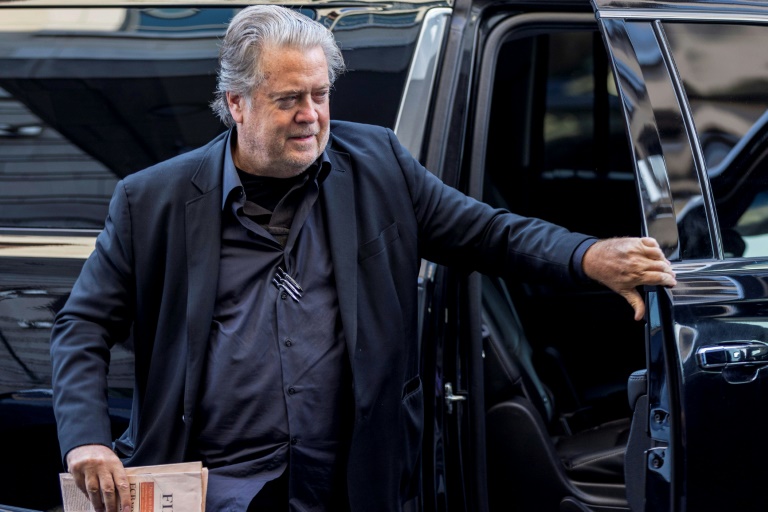
The US Justice Department asked a judge Monday to sentence Donald Trump’s former aide Steve Bannon to six months in prison for refusing to testify in Congress’s probe of the January 6, 2021 attack on the Capitol.

Bannon, a longtime political strategist and vocal advocate for the Republican former president, was found guilty in July on two counts of  contempt of Congress for defying a subpoena to testify.

The Justice Department said in a sentencing recommendation that the 68-year-old Bannon should receive the six-month sentence and pay a fine of $200,000 because he repeatedly sought to delay the proceedings by hinting he might cooperate.

Bannon “has pursued a bad-faith strategy of defiance and contempt,” the department said.

The investigation by a special House committee depicted Bannon last week as knowing in advance of the plan by hardline Trump supporters to attack the Capitol to prevent Democrat Joe Biden from being confirmed as the next president.

It also showed him advocating for Congress to block Biden — who defeated Trump in the November 2020 election — from becoming president.

“The rioters who overran the Capitol on January 6 did not just attack a building — they assaulted the rule of law upon which this country was built and through which it endures,” the department said.

“By flouting the Select Committee’s subpoena and its authority, the defendant exacerbated that assault.”

The maximum sentence for contempt of Congress is 12 months, and a $100,000 fine. 

The department’s recommendation of six months in prison is at the top end of the standard sentencing guidelines, a calculation based on the context of the crime and the defendant’s own justice record.

Sentencing is set for October 21.

But Bannon, who currently runs a streaming political commentary website,  “Bannon’s War Room,” could appeal the sentence, delaying its implementation well into next year. 

Drones spark gunfire, fearful cries before exploding in Kyiv

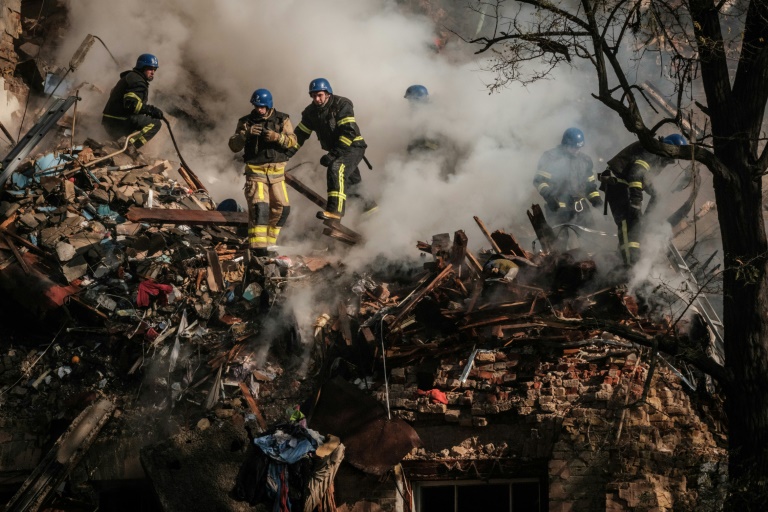
Buzzing like a lawn mower, a white arrow darts across the blue sky and drops obliquely toward its target in Ukraine’s capital as policemen crouching next to their patrol car open fire. 

When the kamikaze drone explodes along a street devoid of traffic, a thick plume of brown smoke rises high into the air, watched by a handful of bystanders moving skittishly on pavements or hugging buildings. 

The unmanned aerial vehicle strikes that officials said killed at least four people in Kyiv early on Monday trigger cries of alarm and send many residents rushing to shelters. 

Police officers try to keep their cool.

“We have been here for half an hour and four drones have fallen,” says officer Yaraslov, still nervous after firing his kalashnikov. 

“It’s a bit frightening but it’s our job. What can we do? It’s normal because it’s our work. We have to do it,” he adds.

It is 08:13 am (0513 GMT) in the centre of the Ukrainian capital. This is the second strike on the residential Shevchenkivsky district and at least the fourth attack since 06:30 am.

The drone strikes are the second Russian attack on Kyiv since missiles slammed into the city exactly one week ago as people were preparing for their new working week.

Yaroslav and his fellow officer block traffic at the intersection. Their patrol car is about 100 metres (yards) from where the first drone hit.

AFP journalists have been unable to identify the targets.

The mayor’s office said a residential building was partially destroyed and at least four people died.

– Heads turn skyward –

A few residents try to get a glimpse of the first target as brown smoke still trails upward.

Suddenly there are shouts and panic grips residents. Heads turn skyward, while a number of people run for shelter.

At first far off, the sound of a drone becomes clearer as the unmanned aircraft flies over the neighbourhood. 

Quite visible, even if it is dozens of metres above, the white dart-like craft flies over buildings.

Like other policemen and soldiers in the district, Yaroslav grabs his kalashnikov, kneels on the tarmac and starts firing at the object. 

The crackling of automatic weapons resounds with both long and short bursts throughout the area.

There is no sign the officers have hit the drone, which flies obliquely to its target 200 metres away. The explosion echoes in the streets.

Less than 10 minutes later, close to 8:20 am, the scene repeats itself in the same place — the third strike in a row.

The target is just a short distance from the building hit earlier.

AFP journalists hear no air raid sirens before the last two strikes. Some AFP journalists see a fireball when a drone has hit.

About 200 metres from the explosions, a group of elderly people — two women and a man — continue sheltering by the low wall of a building, next to a policeman.

They want to find a safer place.

– ‘We won’t be intimidated’ –

“Let’s go to the metro station. There’s a bomb shelter,” one of the women tells the others.

“When the guns begin to crackle, it means they (the drones) are flying somewhere. Can we leave now? We want to go to the park,” the woman asks the officer, who gives them the all-clear.

Sasha, a 22-year-old who lives in an apartment near where the drones struck, says anxiously that he was woken up by the first explosion at about 6:30 am.

“I’m afraid,” he says laconically, standing near the entrance of a building serving as a shelter.

Lessya, a woman of about 60 who lives in a building at the blocked-off crossroads, puts her faith in Ukraine’s security forces.

“We believe in our armed forces and we believe in our victory and we won’t be intimidated by these explosions,” she says.

“They don’t frighten us. We are used to it and still believe we will win, whatever happens. Yes, it’s scary … but they will never intimidate us. 

UK axes 'almost all' budget tax cuts in humiliation for Truss

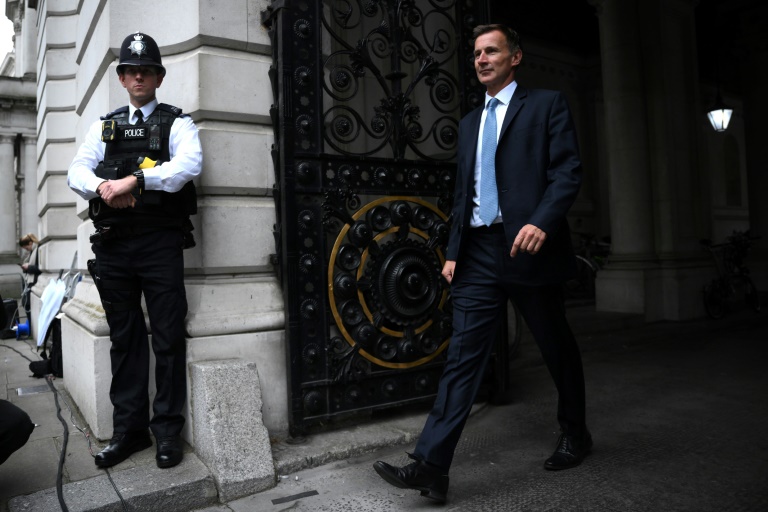
The British government on Monday axed almost all of its debt-fuelled tax cuts unveiled last month to avert fresh markets chaos, in a humiliating climbdown for embattled Prime Minister Liz Truss.

The shock move by new finance chief Jeremy Hunt, parachuted into the job on Friday to replace sacked Kwasi Kwarteng, leaves Truss’ position in a precarious state after a series of embarrassing U-turns.

Hunt estimated the tax changes would raise about £32 billion ($36 billion) per year, after economists estimated the government faced a £60-billion black hole. He also warned of tough spending cuts.

The chancellor of the exchequer said no government could control markets — but stressed his action would give certainty over public finances and help secure growth.

“We will reverse almost all the tax measures announced… three weeks ago,” Hunt said in a televised statement, conceding last month’s budget from his predecessor had harmed the public purse.

“The most important objective for our country right now is stability,” he added in a contrite statement, ahead of setting out further details in parliament later Monday.

– U-turns –

Hunt scrapped plans to axe the lowest rate of income tax, and curbed the government’s flagship energy price freeze — pulling the plug in April instead of late 2024.

After April, his department will “review” its energy support package, he said.

A proposed reduction in shareholder dividend tax was also binned, along with planned tax-free shopping for tourists and a freeze on alcohol duty.

The announcement comes as Truss’ governing Conservative party tanks in the opinion polls amid the reversals and Britain’s worsening cost-of-living crisis.

Truss fired her close friend Kwarteng on Friday after their recent tax-slashing budget sparked markets chaos — fuelling intense speculation over her political future one month after taking office.

“No government can control the markets but every government can give certainty about the sustainability of public finances,” Hunt added Monday.

His action sent the British pound jumping to $1.1346, while bond yields dipped.

Last month’s notorious budget had sent bond yields spiking and the pound collapsing to a record dollar-low on fears of rocketing UK debt.

– ‘Difficult decisions’ –

Tax reductions were the centrepiece of the ill-fated budget, but they were financed via huge borrowing.

Truss had already staged two embarrassing budget U-turns, scrapping tax cuts for the richest earners and on company profits.

“There will be more difficult decisions I am afraid, on both tax and spending, as we deliver our commitment to get debt falling as a share of the economy over the medium term,” Hunt added Monday.

“All departments will need to redouble their efforts to find savings, and some areas of spending will need to be cut.”

Hunt already stated that he was not taking anything off the table” amid speculation of cutbacks on areas like defence, hospitals and schools.

He met over the weekend with the governor of the Bank of England, Andrew Bailey, and the head of the Debt Management Office to discuss his plans.

In the wake of the earlier turmoil, the BoE launched emergency buying of UK government bonds — a policy that ended Friday.

The budget furore has reportedly sparked a plot to oust the prime minister.

UK media reported that senior Conservative members of parliament were plotting to unseat Truss, aghast at the party’s performance since she replaced scandal-hit Boris Johnson on September 6.

– ‘Death knell’ –

Monday’s latest massive U-turn comes after Truss was elected Tory leader on a tax-slashing platform that analysts dubbed “Trussonomics”.

“That sound you can hear is the death knell for Trussonomics, with the vast majority of her tax cutting plans now consigned to the bin,” said Laura Suter, head of personal finance at stockbroker AJ Bell.

“People have had yogurt in their fridge that’s lasted longer than some of the government’s planned tax cuts,” she added.

In two weeks’ time, Hunt will unveil his medium-term fiscal plan alongside independent economic forecasts from the Office for Budget Responsibility.

But the main opposition Labour party, riding high in the polls, said the ruling Tories had “lost all credibility”.

“All the chancellor’s statement underlines is that the damage has been done,” said its shadow finance minister Rachel Reeves.

BP to buy US renewable gas firm for $4.1 bn

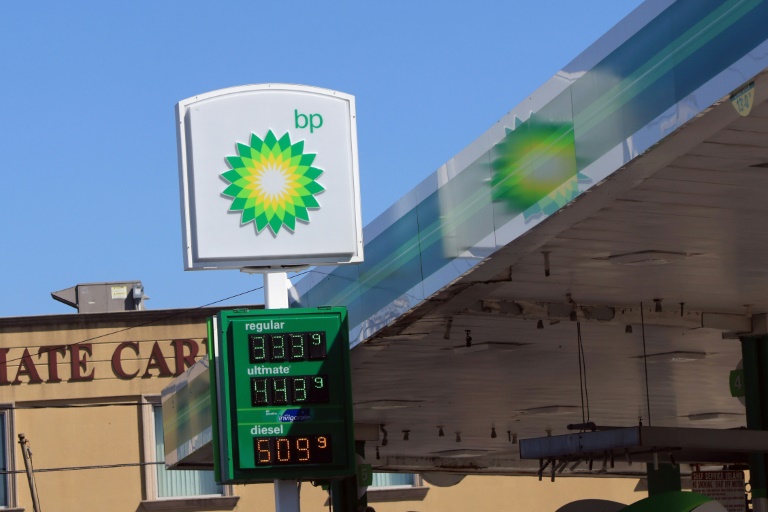
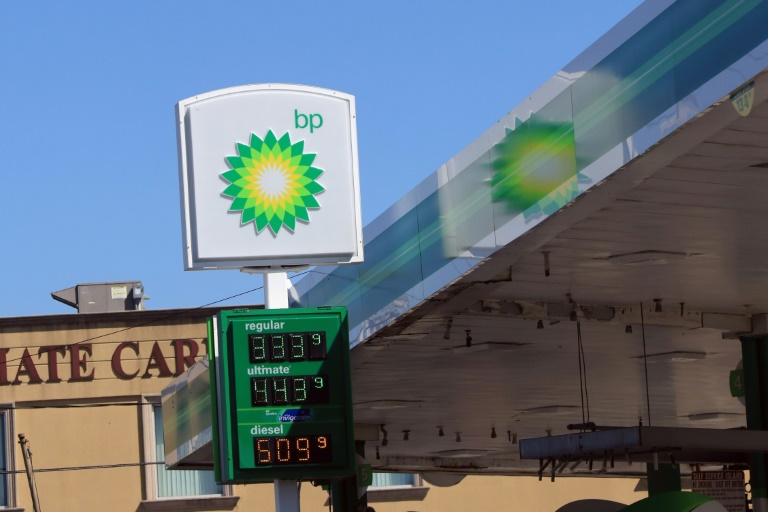
BP has agreed to buy US renewable gas producer Archaea for $4.1 billion to help the British oil giant reach net zero carbon emissions by 2050, the pair said Monday.

The London-listed energy major is flush with cash after recent surges in oil prices that have triggered calls for the cash-strapped UK government to massively enlarge a windfall tax on British energy giants.

Chief executive Bernard Looney said in a statement Monday that the acquisition of Archaea would create “a real leader in the biogas sector, and support our net zero ambition”.

Houston-based Archaea produces renewable natural gas equivalent in amount to about 6,000 barrels of oil per day.

BP will pay $3.3 billion in cash plus around $800 million in debt, while the purchase remains subject to regulatory and Archaea shareholder approvals.

The UK energy titan is attempting to pivot towards cleaner fuels to help tackle climate change.

In June, BP said it was taking a 40.5 percent stake in an Australian energy project being billed as one of the world’s largest renewable power stations.

But energy majors are often faced with charges of corporate greenwashing, especially by environmentalists.

Greenpeace UK policy director Doug Parr said Monday that with Britain’s new finance minister Jeremy Hunt U-turning on tax cuts to limit state debt, “why not consider a full and proper windfall tax on oil and gas?”.

He added: “This government has already made more U-turns than a battalion on parade — one more won’t hurt and it’s the right one.”

The government of previous UK Prime Minister Boris Johnson unveiled a windfall tax on the profits of British energy companies earlier this year but that was deemed as far too small.

Even the outgoing head of BP’s rival Shell recently indicated that governments should “probably” tax energy firms more to help protect the poorest from rocketing energy bills.

“One way or another, there needs to be government intervention… that somehow results in protecting the poorest,” Ben van Beurden told an energy conference earlier this month.

“And that probably means governments need to tax people in this room to pay for it — I think we just have to accept as a societal reality.”

So far, Prime Minister Liz Truss — a former Shell employee — has refused to extend the windfall tax.

Oil, gas and electricity prices have all surged this year after major economies reopened from pandemic lockdowns — and following the invasion of Ukraine from major energy producer Russia.

BP to buy US renewable gas firm for $4.1 bn

BP has agreed to buy US renewable gas producer Archaea for $4.1 billion to help the British oil giant reach net zero carbon emissions by 2050, the pair said Monday.

The London-listed energy major is flush with cash after recent surges in oil prices that have triggered calls for the cash-strapped UK government to massively enlarge a windfall tax on British energy giants.

Chief executive Bernard Looney said in a statement Monday that the acquisition of Archaea would create “a real leader in the biogas sector, and support our net zero ambition”.

Houston-based Archaea produces renewable natural gas equivalent in amount to about 6,000 barrels of oil per day.

BP will pay $3.3 billion in cash plus around $800 million in debt, while the purchase remains subject to regulatory and Archaea shareholder approvals.

The UK energy titan is attempting to pivot towards cleaner fuels to help tackle climate change.

In June, BP said it was taking a 40.5 percent stake in an Australian energy project being billed as one of the world’s largest renewable power stations.

But energy majors are often faced with charges of corporate greenwashing, especially by environmentalists.

Greenpeace UK policy director Doug Parr said Monday that with Britain’s new finance minister Jeremy Hunt U-turning on tax cuts to limit state debt, “why not consider a full and proper windfall tax on oil and gas?”.

He added: “This government has already made more U-turns than a battalion on parade — one more won’t hurt and it’s the right one.”

The government of previous UK Prime Minister Boris Johnson unveiled a windfall tax on the profits of British energy companies earlier this year but that was deemed as far too small.

Even the outgoing head of BP’s rival Shell recently indicated that governments should “probably” tax energy firms more to help protect the poorest from rocketing energy bills.

“One way or another, there needs to be government intervention… that somehow results in protecting the poorest,” Ben van Beurden told an energy conference earlier this month.

“And that probably means governments need to tax people in this room to pay for it — I think we just have to accept as a societal reality.”

So far, Prime Minister Liz Truss — a former Shell employee — has refused to extend the windfall tax.

Oil, gas and electricity prices have all surged this year after major economies reopened from pandemic lockdowns — and following the invasion of Ukraine from major energy producer Russia.

Russia's use of Iranian drones shows up domestic weakness

The use by Russia of Iranian drones in its war against Ukraine makes clear the weaknesses of its domestic industry and Tehran’s growing claim on the market for unmanned aircraft, experts say.

Washington believes Iran has delivered hundreds of drones, which Ukrainian officials say are now being used in strikes like those launched against cities and energy infrastructure on Monday.

– What drones has Iran delivered? –

So far two models of Iranian drone have been identified in Ukraine’s skies, built for two different purposes.

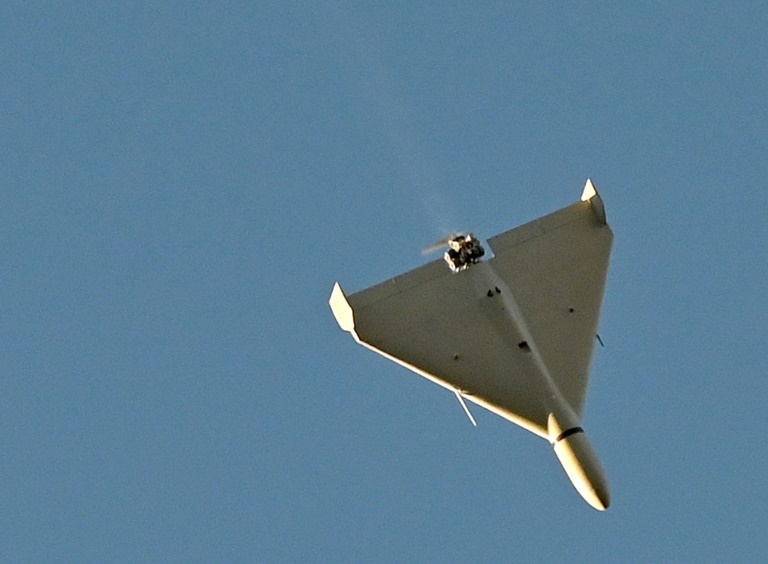
One of them, the Shahed 136, is a relatively low-cost “kamikaze drone” that can be programmed to fly automatically to a set of GPS coordinates with a payload of explosives.

“It flies quite low, striking a target that must be stationary at a range of a few hundred kilometres,” said Pierre Grasser, a researcher tied to Paris’ Sorbonne University.

One was photographed by an AFP journalist plunging into Kyiv early Monday.

The second type, the Mohajer-6, is “similar in size and functionality to the Bayraktar TB-2 drone from Turkey,” said Vikram Mittal, a professor at the US military academy in West Point.

The Turkish model’s missile strikes on Russian armour made the Bayraktar a symbol of successful Ukrainian resistance to invasion early in the war, with a propaganda song composed about them widely shared online.

Both drones belong to a type broadly referred to as MALE (Medium Altitude, Long Endurance) unmanned aircraft, like the US-made Predator used in Iraq, Afghanistan and elsewhere.

The TB-2 was also used by Azerbaijan in its 2020 war with neighbouring Armenia to retake part of the Azerbaijani region of Nagorno-Karabakh from Armenian control.

– Are Iranian drones effective? –

“Just like any armed drone or loitering munition, they’re very effective when the enemy has no way of protecting themselves or fighting back,” said Jean-Christope Noel, a researcher at the French Institute for International Relations.

Mittal said much of their initial success comes “from being a new weapon on the battlefield.”

“The Ukrainians will eventually shoot down or capture one of the drones, dissect it, and develop counter-drone systems,” he added, although that “could take months”.

For now, Kyiv’s forces could use shoulder-launched anti-aircraft missiles to attack the drones in daylight, or radar-equipped versions at night.

They could also attempt to use complex GPS jamming techniques to turn the Shahed 136 off course, as they have no backup system to reach their target without satellite guidance.

Such kamikaze drones are “a money-saving move for Russia, because it saves valuable cruise missiles worth $1.5 million to $2.0 million” per shot, Grasser said.

But “their main shortcoming is they can only hit stationary targets,” he added.

“They don’t pose any threat to troops in the field. The arrival of these drones therefore shouldn’t change the course of the fighting.”

– Is Russia’s industry failing? –

Russia is one of the world’s largest arms producers, but has still found itself forced to turn to Iran in this case.

“The defence ministry has worked out tactical and technical requirements for drones. And unfortunately most (Russian) manufacturers can’t meet them,” Russian colonel Igor Ischchuk recently told the country’s TASS news agency.

Although no Russian manufacturer offers long-range kamikaze drones like the Shahed 136, “they are supposed to have equipment along the lines” of the TB-2 or Mohajer MALE drones, Grasser said.

“The fact they’re taking Iranian drones is an admission of industrial failure… it shows (Russian industry) can’t keep up the pace,” he added.

Western sanctions over the invasion of Ukraine have hit a Russian industry already sapped by supply chain disruption during the Covid-19 pandemic.

Russia “no longer has access to Western technological components, and their attempts to mass-produce these types of devices have been fruitless,” Noel said.

– Iranian-Turkish rivalry? –

As drones become more fundamental to fighting wars, “there is likely somewhat of a mid-tier, cheap drone arms-race between the Iranians and Turks to try to gain control of the market and expand their country’s sphere of influence,” Mittal said.

While the US and Israel host the world’s top-of-the-line manufacturers, “the Turkish drones are a step down, but they are more reliable than the Iranian drones, which don’t seem very precise,” French drone expert Marianne Renaux said.

Tehran can already count on some buyers for its product in the Middle East in Yemen, Lebanon or Iraq, Noel said.

“But American sanctions against any customers make for a hard limit on the number of candidates who might like to arm themselves with this gear,” he added.

Britain junks budget tax measures as Truss hangs by thread

Britain’s new finance chief Jeremy Hunt on Monday axed debt-fuelled tax cuts to further calm market turmoil, in another major government U-turn that appears to leave Liz Truss’s position as prime minister in a precarious state.

Hunt estimated that the tax changes would raise about £32 billion ($36 billion) per year, after economists estimated the government faced a £60-billion black hole in the public finances. He also warned of spending cuts.

Chancellor of the Exchequer Hunt, parachuted into the job on Friday to replace sacked Kwasi Kwarteng, said no government could control markets — but stressed his action could give certainty over the health of public finances.

“We will reverse almost all the tax measures announced… three weeks ago,” Hunt said in a televised statement, conceding last month’s budget from his predecessor had harmed the public purse.

“The most important objective for our country right now is stability,” he added in a contrite statement. 

– Tax U-turns –

Hunt scrapped plans to axe the lowest rate of income tax, and curbed the government’s flagship energy price freeze — pulling the plug in April instead of late 2024.

After April, the government will “review” its energy support package, he said.

A proposed reduction in shareholder dividend tax was also binned, along with planned tax-free shopping for tourists and a freeze on alcohol duty.

The announcement comes as Truss’ governing Conservative party tanks in the opinion polls amid Britain’s worsening cost-of-living crisis.

Truss fired her close friend Kwarteng on Friday after their recent tax-slashing budget sparked markets chaos — fuelling intense speculation over her political future one month after taking office.

“No government can control the markets but every government can give certainty about the sustainability of public finances,” Hunt added Monday.

Britain’s fourth finance minister in as many months will address lawmakers over his plans at 1430 GMT.

His action sent the British pound briefly jumping to $1.1331, while bond yields dipped.

Last month’s notorious budget sent bond yields spiking and the pound collapsing to a record dollar-low on fears of rocketing UK debt.

– ‘Difficult decisions ahead’ –

Tax reductions were the centrepiece of the ill-starred budget, but they were financed via huge borrowing.

Truss had already staged two humiliating budget U-turns, scrapping tax cuts for the richest earners and on company profits.

Following his appointment, Hunt hit the ground running Saturday with a warning of tax hikes as he dramatically reversed course on Truss’s radical programme of economic reform.

“There will be more difficult decisions I am afraid, on both tax and spending, as we deliver our commitment to get debt falling as a share of the economy over the medium term,” he said Monday.

“All departments will need to redouble their efforts to find savings, and some areas of spending will need to be cut.”

Hunt already warned that he was not taking anything off the table” amid speculation of painful cutbacks on critical areas like defence, hospitals and schools.

Hunt met over the weekend with the governor of the Bank of England, Andrew Bailey, and the head of the Debt Management Office to discuss his plans.

In the wake of the earlier turmoil, the BoE launched emergency buying of UK government bonds — a policy that ended Friday.

The furore over the budget has reportedly sparked a plot to oust the prime minister.

UK media reported that senior Conservative members of parliament were plotting to unseat Truss, aghast at the party’s performance since she replaced scandal-hit Boris Johnson on September 6.

Party grandee and former leader William Hague said Truss’ premiership was “hanging by a thread” after Kwarteng was unceremoniously fired.

WHO seeking quick bucks from business via foundation

The World Health Organization is sourcing rapid response financing directly from companies to help tackle international crises, through the foundation it set up to bridge the shortfall from member states.

The WHO Foundation — set up in May 2020 as the UN health agency scrambled for resources to fight the Covid-19 pandemic — was created to marshal new resources from business and philanthropists.

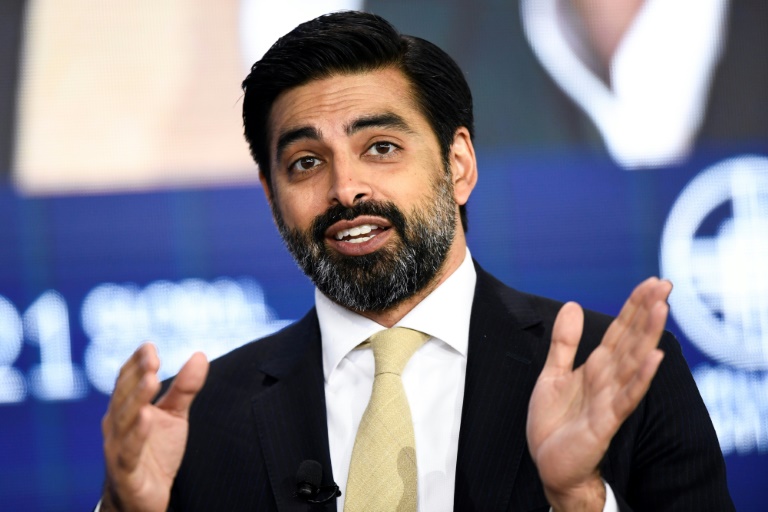
The foundation, which went live in January 2021, aims to “mobilise more support for the WHO, from the public, from businesses, from philanthropists,” its chief executive Anil Soni told AFP. 

“No organisation, no sector can solve the challenges that the world is facing alone,” the 46-year-old American said.

The WHO has a two-year budget of $5.8 billion but its financial independence has steadily declined. 

Its 194 member states provide barely 16 percent of the organisation’s financing through membership fees.

The rest comes from voluntary contributions, of which 88 percent are “specified”, meaning the money goes to projects earmarked by the donors.

And with national budgets tightening around the world, governments “are having to make tough decisions about where they give their money”, said Soni.

“That’s why we should do more with the private sector.”

– ‘Matchmaker’ –

The foundation says it exists because the WHO lacks sufficient resources to fulfil its mandate.

The list of health crises currently being combated by the WHO includes Covid-19, the cholera outbreak in Haiti, the war in Ukraine, the devastating floods in Pakistan, monkeypox and attempts to get aid into Ethiopia’s besieged Tigray region.

The foundation has raised $30 million since the start of 2021 — money which has mainly been focused on supporting the WHO’s emergency response to Covid-19 and the war in Ukraine.

“Part of our job is to be a matchmaker, is to make sure that we can facilitate dialogue and share information,” said Soni.

“So the WHO sees the benefit of working with the private sector, and the private sector sees the power of the WHO.”

The foundation has around 40 staff compared to more than 8,600 for the WHO, which is also based in Geneva.

– Innovation investments –

Soni admits that some — including within the WHO — fear the risk of private companies holding too much sway over the organisation, which makes decisions on the usage and approval of drugs, vaccines and treatments.

He insisted mechanisms were in place to prevent any company from influencing such decisions.

“But to close the door to all of the private sector — that doesn’t work,” he said.

On September 19, the WHO Foundation announced that it had partnered with venture capital firm OurCrowd to launch a $200 million investment fund focused on breakthrough health technologies.

OurCrowd will raise the money and a share of the profits will go to the WHO.

In addition, the companies in which the fund has invested will have to commit to ensuring fair access to their new technologies — one of the WHO’s chief gripes during the pandemic response, as poorer nations went to the back of the queue for Covid vaccines and treatments.

– Flexible friends –

On September 22, the foundation announced the launch of the Health Emergencies Alliance partnership — a vehicle for companies and philanthropists who want to support the WHO in tackling health emergencies on a regular basis.

The partnership, which is in its infancy, hopes to get financing to the front line swiftly and effectively.

The French laboratory pharmaceutical giant Sanofi was the first to sign up, said Soni, with discussions ongoing with other companies.

Those who join the programme will pay a set amount to the foundation each year, without the donation being earmarked for a particular situation, allowing the WHO to respond to emergencies flexibly.

And when a health emergency suddenly springs up, these companies will, within 24 hours, have the possibility of raising additional resources for the response, from their clients, employees and the company itself, capitalising while the emotion on breaking disasters is still strong.

The alliance should see companies being able to respond even more quickly to emergencies while offering greater funding flexibility to the WHO, Soni explained.

Climate protesters scale major UK bridge

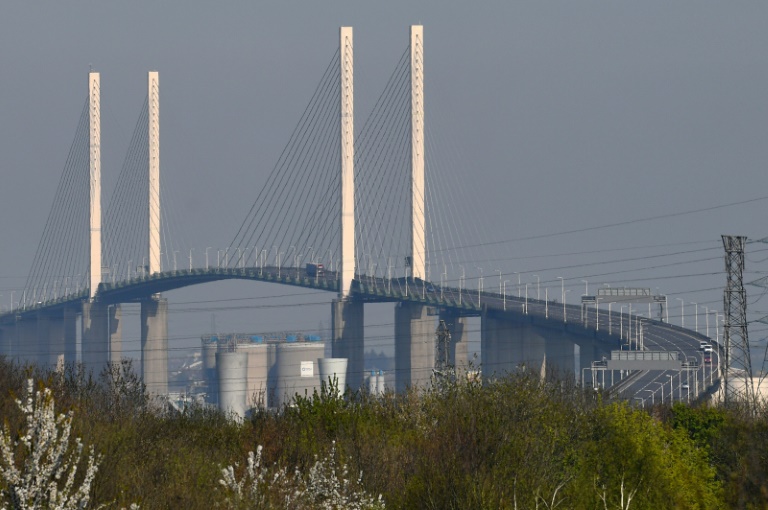
Two UK climate protesters scaled a major road bridge over the River Thames on Monday causing huge traffic delays, days after activists threw tomato soup over Vincent van Gogh’s “Sunflowers” masterpiece.

The Just Stop Oil protesters climbed more than 80 metres (260 feet) up one of the towers of the Queen Elizabeth II Bridge, which is used by an estimated 160,000 vehicles a day and links up to one of Europe’s busiest motorways.

One activist said he was protesting because government policies were accelerating the climate emergency.

The closure caused major delays for motorists for whom the bridge, known as the Dartford Crossing, is the only way to cross the Thames to the east of London.

“Two people climbed up onto high cables early this morning,” Essex Police said on Twitter.

“The QEII bridge is closed to allow us to resolve the situation as safely as possible.” 

One of the protesters, Morgan Trowland, posted on Twitter a clip of himself at the top of the bridge.

“I’m willing to do this ‘cos I’m not willing to sit back and see everything burn,” he wrote.

The 39-year-old, who said he was a bridge design engineer, said he felt compelled to take action because of government policies.

“Our government has enacted suicidal laws to accelerate oil production — killing human life and destroying our environment,” he said.

“I can’t challenge this madness in my desk job, designing bridges, so I’m taking direct action, occupying the QE2 bridge until the government stops all new oil.”

Another protester, identified as Marcus, a 33-year-old teacher, added: “Only direct action will now help to reach the social tipping point we so urgently need.”

Police said the bridge, which is used for southbound traffic, was closed before dawn. Traffic was diverted through a tunnel under the river, which is normally only used for northbound traffic.

“This incident may take some time to resolve due to the complexities of safely getting people down from height,” an Essex police spokesman added.

The bridge, 30 kilometres (18 miles) east of central London, connects directly at both ends with the M25 London Orbital route.

On Saturday, two protesters appeared in court a day after throwing tomato soup over the van Gogh painting at London’s National Gallery.

The painting itself was protected by a screen but damage was caused to the frame, according to the gallery in Trafalgar Square.

Also on Saturday, nearly 30 demonstrators from the group glued themselves to the tarmac when they blocked a major road in east London.

UK Home Secretary Suella Braverman has threatened a police clampdown on “direct-action” protests, including by Just Stop Oil.

Just Stop Oil says climate change poses an existential crisis for humanity and its direct tactics are justified.

China delays release of economic data during key political meeting

China said Monday it will delay the release of economic growth figures, as the country’s leadership gathers for a major meeting set to hand President Xi Jinping a historic third term in office.

The announcement comes a day before analysts had expected Beijing to publish some of its weakest quarterly growth figures since 2020 with the economy hobbled by Covid-19 restrictions and a real estate crisis.

The National Bureau of Statistics (NBS) said the release of growth figures for the third quarter along with a host of other economic data would be “postponed”, without specifying a reason or giving a new timeline.

The delay comes as officials from China’s ruling Communist Party meet in Beijing for their 20th Congress, which is set to rubber stamp Xi’s bid to rule for another term.

Zhao Chenxin, senior official at the National Development and Reform Commission, told reporters on Monday that “the economy rebounded significantly in the third quarter”.

“From a global perspective, China’s economic performance is still outstanding,” he said.

But many analysts expect the world’s second-largest economy to struggle to reach its growth target this year of around 5.5 percent, with the International Monetary Fund lowering its forecast for GDP expansion to 3.2 percent.

A panel of experts polled by AFP last week predicted an average of three percent growth in 2022 — a long way off the 8.1 percent seen last year.

That would be China’s weakest growth rate in four decades, excluding 2020 when the global economy was hammered by the emergence of the coronavirus.

The NBS said it would also postpone the release of monthly data on indicators including real estate and retail sales.

Last week customs authorities delayed the release of September trade figures without providing an explanation.

– China ‘in a bind’ –

Nick Marro, lead for global trade at the Economist Intelligence Unit, told AFP that signs point to “a really ugly Q3 data print, at a time when the party is focused on highlighting its policy achievements, while minimising any missteps”.

Alicia Garcia Herrero, chief economist at Natixis, said “nothing, not even GDP data release, can disturb the coronation of Xi Jinping”.

The delay “puts China in a bind”, Marro added.

“If it comes out with a rosier-than-expected data print, the national statistics bureau will inevitably face questions around data veracity,” he said.

China’s economy has been hit hard by the government’s strict zero-Covid policy.

The country is the last of the world’s major economies to continue to follow the strategy, which imposes tight travel restrictions, mass PCR testing and obligatory quarantines.

It also involves sudden and strict lockdowns — including of businesses and factories — that have disrupted production and weighed heavily on household consumption.

China is also battling an unprecedented crisis in its real estate sector — historically a major driver of growth that accounts for more than a quarter of GDP when combined with construction.

Following years of explosive growth fuelled by easy access to loans, Beijing launched a crackdown on excessive debt in 2020.

Property sales are now falling across the country, leaving many developers struggling and some owners refusing to pay their mortgages for unfinished homes.

Close Bitnami banner
Bitnami