US Business

From mediocre to medal-winning: Japan's koshu wine

Japanese food is famously paired with sake, but winemakers near Mount Fuji are on a mission to prove their bottles go just as well with crispy tempura and delicately sliced raw fish.

With its abundant rain and formidable summer humidity, Japan is far from ideal wine terroir, so producers have fine-tuned their craft to adapt to the challenges of the climate.

The result is an acclaimed wine called koshu: a light, dry white designed to complement the subtle flavours of Japanese cuisine that has scooped international awards.

Koshu has been produced in the mountainous region of Yamanashi since the first commercial vineyards were established there in the 1870s.

The thick-skinned grape variety grown for centuries in Yamanashi was seen as a hardy choice by early winemakers, who learned their techniques in France.

But the results were mediocre, even until two decades ago.

“We used to say koshu was not good for wine, or for eating — that it had no taste, no flavour, no colour,” Takayuki Tamura of Chateau Mercian, one of Yamanashi’s largest wine producers, told AFP.

Tamura, Mercian’s chief winemaker in the region, said the turning point for Koshu came in 2003, when a team of Japanese and French researchers from the University of Bordeaux discovered citrus notes in fermentation tests.

That “led to a re-think of agriculture methods and vinification techniques” to draw out these aromas, he explained.

Since then, winemakers in Yamanashi have invested heavily in koshu production, and it has paid off.

In 2021, two koshu vintages from the region’s wineries won the second-place platinum medal at the Decanter World Wine Awards, the world’s largest wine competition.

– Grape ‘umbrellas’ –

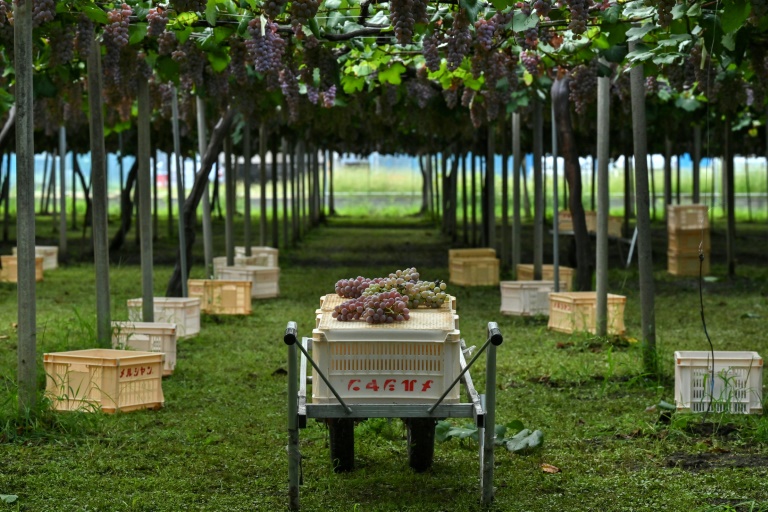
One of those award-winners was L’Orient Shirayuri Winery, a small family vineyard established in 1938, where workers inspect the dusky lilac grapes on their pergola under a low, stormy sky.

Growing on the structures “reduces the grapes’ exposure to humidity, and helps them dry in the wind”, said Keiya Uchida, general manager at Shirayuri.

To protect the fruit from the rain, each bunch is given a small umbrella-like hat made from a white material with a waxy surface.

“Foreign visitors often find that a bit mad” because of the time spent to attach the umbrellas, said the 28-year-old, who studied viticulture in France’s Burgundy.

But it’s an “essential” measure, as frequent downpours and high humidity “makes grapes fragile and prone to disease”.

Such efforts have transformed the fertile soils of Yamanashi, near Japan’s most famous peak, into the country’s premier wine region.

Around 90 producers compete to supply a burgeoning market for local wine, with many vineyards squeezed into rural corridors between built-up areas.

Imported wine, mainly from France, Chile and Italy, still makes up around two-thirds of the domestic market by volume, with prices ranging from cheap mass-produced plonk to eye-wateringly expensive vintages.

Most of the rest is produced in Japan, but using grapes from elsewhere.

However, in 2018, a special label was introduced to distinguish wine grown in the country, with the average price for a bottle around 2,000 to 3,000 yen ($13 to $20).

– ‘Renewed interest’ –

Such ‘made-in-Japan’ wine accounts for around five percent of the market, a share that is slowly increasing.

That could grow to 10 percent within five or six years thanks to the improving quality of koshu, said Mitsuhiro Anzo, director general at Chateau Mercian and president of the Yamanashi Prefecture Wine Manufacturers’ Association.

Marie Ishiyama, a 30-year-old Tokyo resident tasting the wines at Shirayuri, also believes demand is rising.

“Although foreign products are very popular, there’s a renewed interest for local, made-in-Japan products,” including wine, she told AFP.

Japan still sells very little wine abroad, with exports in 2021 worth 687 million yen (then $6.2 million) — compared with 46 billion yen ($420 million) for whisky and 40 billion yen for sake, its famous rice wine.

High labour costs, obstacles posed by Japan’s climate and limited farmland mean the nation will never produce and export wine at large volumes, said Frederic Cayuela, an instructor at Academie du Vin, a wine academy in Tokyo.

“So they have this really big focus on the quality rather than the quantity,” he told AFP.

Japan’s wine industry can grow a niche appeal by focusing on its unique tastes and how well the wine accompanies Japanese or fusion food, he said.

Anzo from Chateau Mercian, which is owned by drinks giant Kirin and picked up a gold medal for a koshu wine at the 2021 International Wine Challenge, is on the same wavelength.

“Twenty years ago, we were only trying to imitate foreign wine. But now, we have very specific varieties, like koshu,” he said.

“Many overseas consumers are interested in Japanese culture and cuisine, which is a good thing for Japanese wine.”
Asian markets track Wall St losses but sterling bounces

Asian equities dropped Monday, tracking a selloff on Wall Street as last week’s rally ran out of steam on fresh worries about rising interest rates and surging inflation.

The pound rose, however, after British Prime Minister Liz Truss replaced her finance minister and speculation swirled that she would row back on more of the debt-fuelled, tax-cutting budget that sent shivers through finance markets.

The healthy gains Asian markets enjoyed on Friday were largely wiped out in early trade as expectations about elevated prices and central bank moves to rein them in continued to fan recession fears.

Last week’s strong US inflation reading ramped up bets that the Federal Reserve will hike borrowing costs by 75 basis points twice more before the end of the year, stoking concerns the world’s top economy will flip into a recession.

All three main indexes on Wall Street finished sharply lower Friday, and Asia followed suit Monday.

Hong Kong shed more than one percent and Shanghai was also in the red, with Chinese President Xi Jinping at the weekend reasserting his commitment to the zero-Covid strategy of lockdowns that has hammered the economy this year.

There were also losses in Tokyo, Sydney, Seoul, Singapore, Taipei, Jakarta and Wellington.

Traders are also keeping tabs on looming earnings reports, with expectations that higher rates and prices will have eaten into companies’ bottom lines.

They will also be keeping a close eye on the United Kingdom as Truss battles for her political future just weeks after taking the keys to Number 10.

She sacked her finance minister Kwasi Kwarteng on Friday after coming under intense pressure following his controversial tax-cutting mini-budget.

His replacement, Jeremy Hunt, looked set to roll back several of the measures in a bid to reassure markets.

“It does indicate that they are moving back to some degree of fiscal probity and employing a slightly more prudent fiscal outlook,” said Peter Kinsella, of Union Bancaire Privee UBP SA. 

The pound was holding above $1.12 in Asian trade, having sunk Friday owing to the uncertainty in Westminster, while a news conference by Truss did very little to reassure nervous investors.

Eyes are also on Tokyo as the yen sits around a three-decade low against the dollar owing to US rate hike expectations and the Bank of Japan’s refusal to tighten monetary policy, citing a need to support the economy.

The yen is approaching 150 to the dollar for the first time since 1990, but while officials have said they are keeping tabs on developments, they have yet to intervene in markets for a second time, having done so last month.

– Key figures around 0230 GMT –

Tokyo – Nikkei 225: DOWN 1.4 percent at 26,703.00 (break)

Hong Kong – Hang Seng Index: DOWN 1.3 percent at 16,365.82

Shanghai – Composite: DOWN 0.2 percent at 3,065.88

Pound/dollar: UP at $1.1236 from $1.1180 Friday

Dollar/yen: DOWN at 148.59 yen from 148.72 yen

Euro/dollar: UP at $0.9747 from $0.9724

Euro/pound: DOWN at 86.76 pence from 86.93 pence

West Texas Intermediate: UP 0.8 percent at $86.31 per barrel

Brent North Sea crude: UP 0.9 percent at $92.41 per barrel

New York – Dow: DOWN 1.3 percent at 29,634.83 (close)

London – FTSE 100: UP 0.1 percent at 6,858.79 (close) 

Green future is cause for worry in S.Africa's coal belt

Miner Thokozani Mtshweni, 37, looks spent as he readies for a 12-hour shift huddled under a carport shelter to avoid the scorching sun. He fixes his belt weighed down by an oxygen tank and gas detecting tools. 

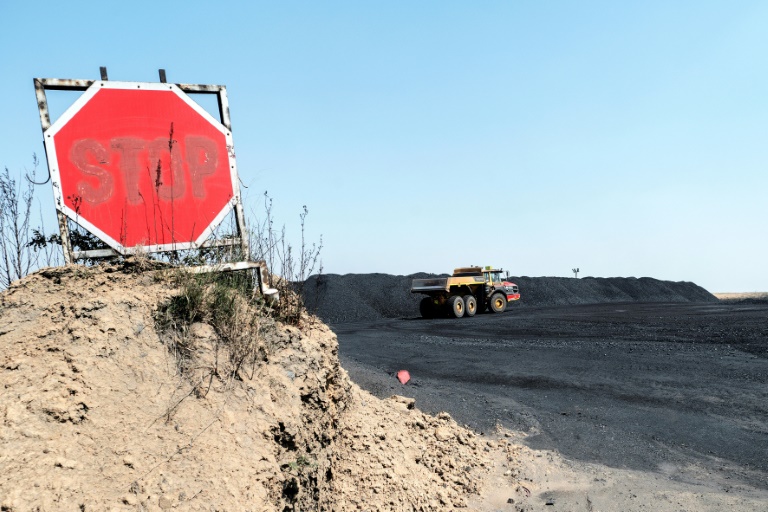
An hour’s drive from Johannesburg, Khutala Colliery is among more than 100 coal mines and a dozen coal-fired plants that dot the industrial landscape of the northeastern province of Mpumalanga, an area known as South Africa’s coal belt.

Workers kitted in soiled yellow overalls breathe in the hazy air as they wait to board trucks that will drive them to an underground shaft. 

“Closing these mines would affect our lives a lot,” Mtshweni tells AFP. “It would be chaos”.

Coal is a bedrock of South Africa’s economy, employing almost 100,000 people and accounting for 80 percent of electricity production. 

But the sector’s future is uncertain, as Africa’s most industrialised economy looks to wean itself off the carbon-emitting fuel in line with global efforts to tackle climate change. 

Last year, the government secured $8.5 billion in loans and grants from a group of rich nations to finance the transition to greener alternatives.

Fraught negotiations around how the money should be spent are expected to end before the COP27 climate summit in Egypt in November.

Supporters hope the money could act as a catalyst to transform the energy landscape in what is one of the world’s top 12 largest polluters. 

But questions remain over the country’s ability to make swift inroads towards its goal of reaching net-zero carbon emissions by 2050.

– Money and jobs –

“Significantly more funding” will be needed, said Daniel Mminele, who heads the finance task team of a climate commission set up by President Cyril Ramaphosa. 

A study by South Africa’s Stellenbosch University put the figure at $250 billion over the next 30 years. 

Recent studies suggest more jobs will be created than lost by going green, but analysts say the swap will not be painless. 

The coal industry is concentrated in Mpumalanga, which accounts for about 80 percent of all coal production.

“We need coal,” says Isaac Mahumapelo, a Khutala Colliery section manager, as piles of the black stuff are crushed behind him. 

“The cities, the towns in and around Mpumalanga have been established through the coal mines.”

Trade unions worry job losses will not be reabsorbed by the renewable sector. Unemployment is above 30 percent nationwide. 

“Wind and solar is not engineered in South Africa, it is fabricated elsewhere,” says energy analyst Tshepo Kgadima.

After a decade spent in the pits, Mtshweni, the miner, is among those fearing for their future.

“Everyone is dependent on this coal to provide for their loved ones,” he says. 

International pressure on South Africa to clean up its act is seen with antipathy by some. 

Europe’s renewed appetite for coal in the wake of the gas crisis sparked by Russia’s invasion of Ukraine is often cited as evidence of double standards.

“Coal will still be around for some time and whilst we wish to collaborate … Let’s have our own agenda that realistically recognises the socio-economic imperatives of South Africa,” says Mike Teke, CEO of Khutala Colliery’s operator, Seriti.

– No turning back –

Yet, things are starting to move.

Khutala Colliery lies near Kendal, an industrial town surrounded by coal silos and plumes of thick smoke.

The mine feeds a nearby power station — one of the world’s largest — operated by state energy firm Eskom. 

The plant and neighbouring mines are surrounded by maize and livestock farms.

Cattle graze under the grey polluted skies. Lumps of coal sit on the side of the road as trucks come and go. 

Still, Seriti recently set up a green energy branch to invest in wind and solar. 

“We need to diversify in line with what might be coming,” says Teke.  

Climate activists have tried to force the government to push the throttle forward by taking it to court. 

In a first victory this year, judges ordered authorities to reduce pollution in Mpumalanga — which Greenpeace says has some of the dirtiest air in the world. 

As Eskom’s ageing plants struggle to produce enough energy to keep the lights on, the government has laid out plans to ramp up renewables. 

Acting is a must, says Gaylor Montmasson-Clair, an economist at the Trade & Industrial Policy Strategies, a think tank, warning the cost of sticking to coal will be much higher in the long term.

The European Union is set to introduce a carbon tax on imports — a move that could be followed by other countries, and hit economies like South Africa hard, he warns. 

“If we do not decarbonise, job losses will be significant. We’ll lose our access to markets and finance,” he says. 

“Not transitioning is not an option. The consequences will be dire”.

World Cup boom pushes some Qatar residents out of homes

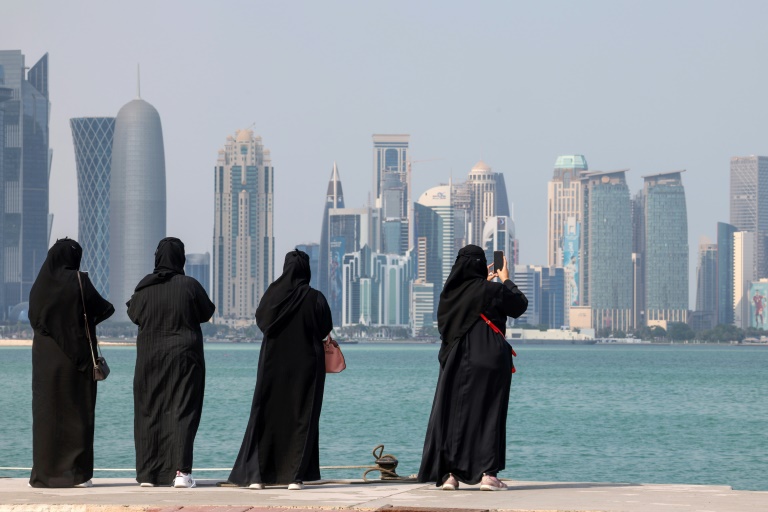
Qatari landlords eyeing profit from the looming World Cup have been kicking out a growing number of mostly foreign tenants, sometimes with just a few days’ notice.

More than one million football fans are expected to descend on the capital Doha during the November-December tournament, putting a strain on the tiny Gulf nation.

Landlords who have spotted an opening to increase rents “show no pity” and the market is dominated by “greed”, said a representative of a real estate company, speaking on condition of anonymity.

Reem, a foreigner working for a major Qatari company, was told she had a week to leave her apartment.

The woman, using a pseudonym to avoid blowback from her employer, told AFP the owner of the block wanted the dozens of apartments he has rented to her employers emptied so they could earn more during the World Cup.

“We felt humiliated,” Reem said.

The company has moved Reem and other employees into a hotel, but they can only stay there until November 15, five days before the tournament kicks off.

They were told they will then move into “temporary” apartments, she said.

“Leaving home with all our belongings in bags and boxes to go into a hotel room was a disaster.”

Other tenants in Doha told AFP they were similarly forced to choose between paying more on rent or leaving.

– Sky-high prices –

Properties in the tower where Reem used to live are advertised on booking.com for $1,700 a night during the World Cup with a minimum stay of 14 nights.

In the two years she had been in the apartment, Reem said rent was $2,500 a month.

Most fans will be staying in hotels, apartments, cruise ships and desert camps booked through the official World Cup portal.

Despite some concerns, organisers have insisted there will be enough accommodation for all fans in the emirate of just 2.8 million people.

To ease the crunch, FIFA recently released thousands of hotel rooms it had reserved, which experts have said could push prices down in the coming weeks.

Some World Cup visitors are turning to the open market for luxury apartments or better locations near specific stadiums, and the prices advertised for some Doha properties highlight owners’ sky-high hopes.

On Airbnb, apartments for two people go for $2,500 a night. 

A villa for the full 29 days of the World Cup will cost fans booking through the online platform at least $13,000 — but prices can go into the hundreds of thousands of dollars.

– ‘Very high’ demand –

Some Doha residents are putting their flats and houses up for rent and fleeing Qatar for the month.

Adel, who listed his small apartment on Airbnb for $900 a night, said that “demand was very high” when he first advertised it.

But he had to cancel the reservations after Airbnb asked him to provide a statement from his landlord approving the sublet.

Rents have also risen sharply for tenants coming to the end of their leases in recent months.

While Qatari law allows for an increase of up to 10 percent for a lease renewal, rents in some districts of Doha have risen by as much as 40 percent over the past year, according to Anum Hassan, head of research in Qatar at international consultancy firm Valustrat.

A Western diplomat in Doha said embassy staff have demanded increased salaries to meet their rent payments.

“Rents… will stay high for a while,” said Nabil Ghorra, a 59-year-old Lebanese-American who lives in Doha’s upscale Pearl district.

“I feel that there are people taking advantage of the situation, but this happens all over the world when there’s an event” like the World Cup.

Over a barrel, Biden faces tough options with Saudis

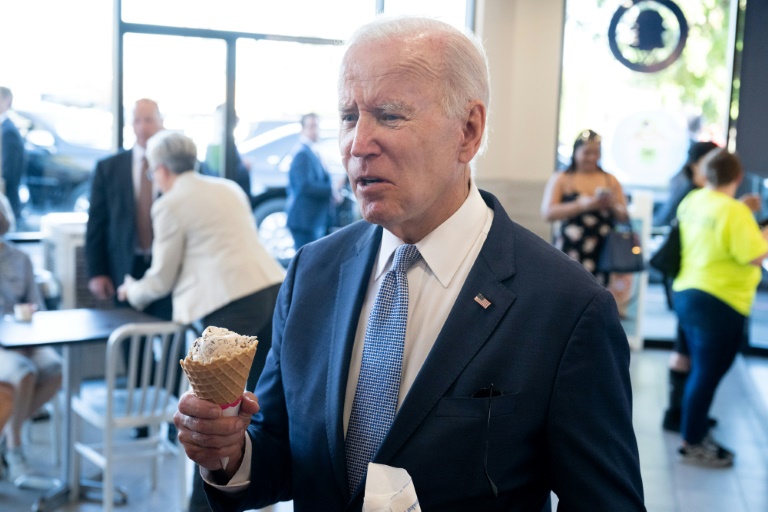
Joe Biden has vowed consequences for Saudi Arabia over its explosive slash in oil output but, like previous US presidents irked by the kingdom, he may find constraints as he assesses options.

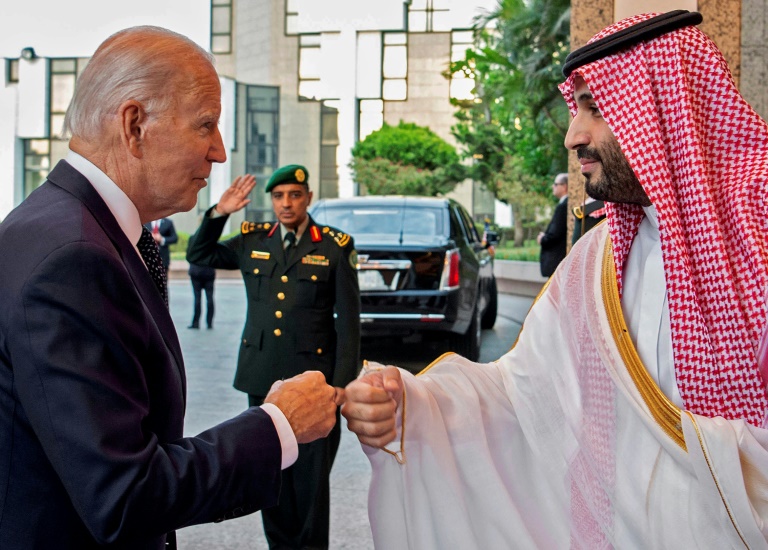
Biden endured criticism at home by traveling to Saudi Arabia in June and fist-bumping its de facto ruler, Crown Prince Mohammed bin Salman, despite earlier vowing to make him a pariah over human rights.

But Saudi Arabia reneged on the unstated reason for Biden’s visit, as the OPEC+ oil cartel led by the kingdom announced a production cut of two million barrels a day — raising much-needed revenue for Russia as it attacks Ukraine and hiking prices on US consumers weeks before congressional elections. 

The Biden administration has voiced openness to retaliatory measures in Congress by enraged fellow Democrats.

Senator Chris Murphy, a long-time critic of Saudi Arabia over its devastating war in Yemen, said the United States should suspend sales to the kingdom of medium-range air-to-air missiles and send them to Ukraine, as well as redeploy Patriot missile shields to Ukraine or NATO allies.

“These two steps would right-size our relationship with Saudi Arabia AND help Ukraine,” he said on Twitter.

Saudi Arabia’s backers warn that the United States could drive it into the arms of Russia or China, but many experts are doubtful the kingdom could easily do so after eight decades of partnership with the United States.

US National Security Advisor Jake Sullivan told CNN on Sunday that Biden would “act methodically, strategically” in re-evaluating US-Saudi relations, adding that the US leader had “no plans” to meet the crown prince at a November G20 summit in Indonesia.  

Russell Lucas, a Middle East expert at Michigan State University, said the Biden administration could at least slow down arms sales, especially resupplies to Saudi hardware.

“These cannot quickly be substituted by another arms supplier,” he said.

– Oil bonds –

But previous attempts to distance the United States from Saudi Arabia — including after mostly Saudi citizens carried out the September 11, 2001 attacks — have hit a major roadblock: oil.

Despite growing action on climate change, the United States is decades away from being insulated from high oil prices.

US officials are fond of noting that the United States has surpassed Saudi Arabia as the world’s top oil producer. But US output decisions are largely made by private firms; and oil extracted from shale, the heart of the US energy boom, is more difficult to scale up and down.

“This notion that just ramping up American capacity would protect us from these decisions of oil producers abroad is patently false,” said Annelle Sheline, a research fellow at the Quincy Institute for Responsible Statecraft, who supports a firmer approach with the Saudis.

“We will always remain dependent on these other countries as long as we remain dependent on oil,” she said.

But she added that Saudi Arabia was hurting its own case by no longer serving as America’s “predictable” source of oil.

– ‘Drama’ from the prince –

Saudi Arabia has insisted the OPEC+ decision was purely economic and said US weapons sales serve both countries’ interests.

The kingdom voted with the United States on Wednesday at the United Nations to condemn Russia’s annexations of Ukrainian territory.

But Bruce Riedel, a senior fellow at the Brookings Institution, said the oil hike was a clear act of electoral intervention by the crown prince, known by his initials MBS, on behalf of Donald Trump’s Republican Party.

The former president was a staunch supporter of the Saudis, boasting of saving MBS after US intelligence found that he authorized the killing and dismembering of a US-based journalist who criticized him, Jamal Khashoggi.

“One thing we know from the pattern of MBS’s behavior is he loves drama — and the more dramatic, the better,” Riedel said of the oil decision, adding that the prince was taking a page from Trump.

Riedel said the Saudis, if they wanted to improve relations, could ease pressure on Yemen or make gestures on human rights.

But one US option to reduce Saudi leverage — ending oil sanctions on its regional rival Iran — looks increasingly unlikely. 

Months of negotiations to restore a 2015 nuclear deal have stalemated, and the Biden administration is expected to be careful not to take action seen as benefiting the clerical leadership as it cracks down on mass protests sparked by the death of a young woman arrested by morality police.

Steven Cook, a senior fellow at the Council on Foreign Relations, said the United States should accept a “realist rapprochement” with Saudi Arabia that acknowledges the relationship is transactional.

“The United States still needs the Saudis, no matter how loathsome,” he said.

“In the meantime, the United States needs to get serious about an energy policy. If we had one for the last 40 or so years, we wouldn’t be in this position.”

Biden has 'no plans' to meet Saudi crown prince at G20 summit: US official

President Joe Biden has “no plans” to meet with Saudi Crown Prince Mohammed bin Salman at an upcoming G20 summit in Indonesia, US National Security Advisor Jake Sullivan said Sunday. 

Stormy US-Saudi relations have seen new strain over Riyadh’s recent support for oil production cuts, with Biden warning of unspecified “consequences.”

The move last week by OPEC+ — composed of the Riyadh-led OPEC cartel and an additional group of 10 exporters headed by Russia — would reduce global output by up to two million barrels per day from November.

It could send energy prices soaring amid an energy crisis triggered by the war in Ukraine, and as inflation-weary American voters prepare to cast ballots in midterm elections.

The move was widely seen as a diplomatic slap in the face, since Biden traveled to Saudi Arabia in July and met with the crown prince, despite vowing to make the kingdom an international “pariah” following the 2018 murder of journalist Jamal Khashoggi.

The Biden administration has voiced openness to retaliatory measures in Congress by enraged fellow Democrats. 

But Sullivan said Sunday the president would not “act precipitously.”

“He’s going to act methodically, strategically and take his time to consult with members of both parties, and also to have an opportunity for Congress to return so he can sit with them in person and work through the options,” he told CNN.

The White House has charged that OPEC+ was “aligning with Russia” on the cuts, saying they would boost Moscow’s revenue and undermine sanctions imposed over its invasion of Ukraine. 

Saudi officials have defended the move as motivated purely by economics, not politics.

The US-Saudi feud bled into talks by G20 finance ministers and central bankers in Washington, which closed on Thursday without a joint communique. The group was already divided over the conflict in Ukraine. 

G20 heads of state and government are due to meet next month in Bali, Indonesia, in a summit that could see Biden share the same venue as Russian President Vladimir Putin and another rival, Chinese leader Xi Jinping.

Aston Martin showroom hit as UK vows action on climate protests

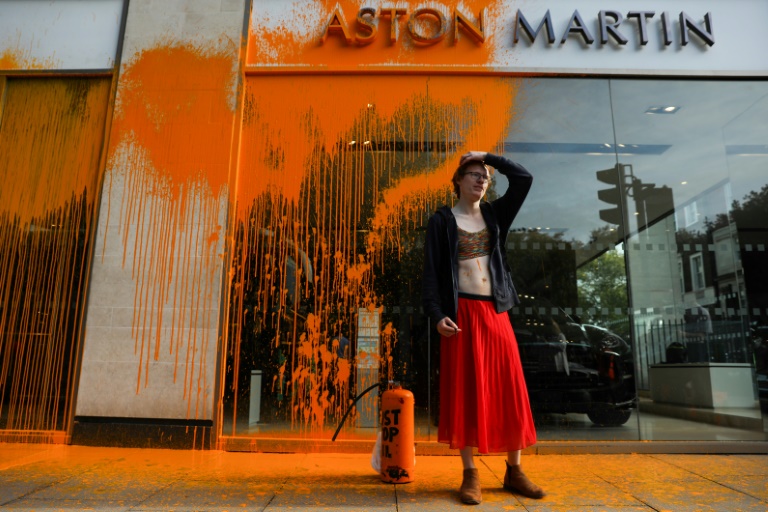
Climate activists on Sunday sprayed orange paint over an Aston Martin showroom in central London, as the government vowed new powers for police to halt an intensifying wave of “direct action” protests.

Members of the group Just Stop Oil also staged a sit-in protest on Park Lane where the sports carmaker’s store is located in an exclusive area of the British capital.

The action came after two Just Stop Oil activists hurled tomato soup over one of Vincent van Gogh’s “Sunflowers” paintings at London’s National Gallery on Friday.

Another spray-painting protest by the same group on Friday targeted the headquarters of London’s Metropolitan Police, who arrested 28 demonstrators.

Then on Saturday, Animal Rebellion protesters poured milk onto shop floors and displays at high-end retailers across Britain including Harrods in London, demanding the world end cattle farming.

Home Secretary Suella Braverman said she was introducing stronger legislation this week to counter citizen protests by groups such as Just Stop Oil and Extinction Rebellion.

Under the plan, the government would be able to apply for legal injunctions to outlaw such protests ahead of time, and make it easier for police to protect “essential” goods, services and infrastructure.

“I will not bend to protestors attempting to hold the British public to ransom,” the hardline Braverman said in a statement.

“This serious and dangerous disruption, let alone the vandalism, is not a freedom of expression, nor a human right. It must stop.” 

But outside the Aston Martin showroom, 19-year-old pregnant mother Chloe Thomas said she was fighting to protect the next generations of humanity.

“How do I explain to my daughter in the years to come where the animals went, where the culture went, where the beauty went, why there are no bees and why I can’t put food in her tummy?” she said.

Just Stop Oil has stepped up its campaign since the new UK government of Prime Minister Liz Truss vowed to allow new drilling for offshore fossil fuels, to counter a surge in energy prices triggered by Russia’s war in Ukraine.

UK's embattled Truss told: 'The game is up'

Britain’s Prime Minister Liz Truss on Sunday vied to reboot her economic programme, but Conservative critics warned the party faces electoral oblivion under her crippled leadership.

With even US President Joe Biden joining in attacks on her libertarian platform, Truss admitted it had been a “wrench” to fire her friend Kwasi Kwarteng as chancellor of the exchequer on Friday.

But writing in the Sun on Sunday newspaper, she said: “We cannot pave the way to a low-tax, high-growth economy without maintaining the confidence of the markets in our commitment to sound money.” 

That confidence was jeopardised on September 23 when Kwarteng and Truss unveiled a right-wing programme, inspired by 1980s US president Ronald Reagan, of £45 billion ($50 billion) in tax cuts financed exclusively by higher debt.

Markets tanked in response, driving up borrowing costs for millions of Britons, and the Conservatives’ poll ratings have similarly slumped, leading to open warfare in the governing party mere weeks after Truss succeeded Boris Johnson.

“I think the game is up, and it’s now a question as to how the succession is managed,” senior Tory MP Crispin Blunt said on Channel 4.

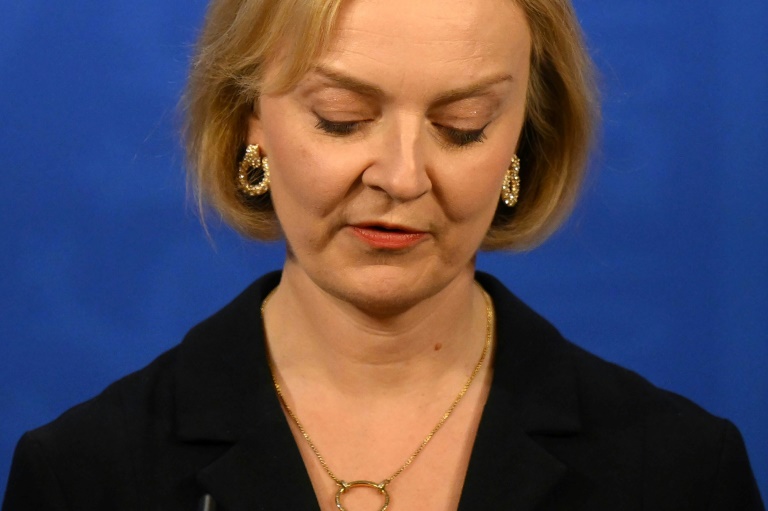
Truss has been forced into a screeching policy U-turn which cost Kwarteng his job. But she depressed the bond markets even more with a painful press conference on Friday, and the government was nervously awaiting the resumption of trading on Monday.

Bidding to placate investors, Kwarteng’s replacement Jeremy Hunt is now warning that taxes may in fact have to rise, and is pressing for spending restraint by his cabinet colleagues even as Britons endure a cost-of-living crisis.

Hunt met the prime minister at her country retreat on Sunday to thrash out a new budget plan which he is due to deliver on October 31, effectively demolishing the “Trussonomics” programme that brought her to power.

– Who’s in charge? –

“It’s going to be very, very difficult, and I think we have to be honest with people about that,” Hunt told the BBC — prompting a warning from trade unions of concerted strike action if he enforces painful cuts.

Hunt said he was “not taking anything off the table”, but also defended Truss.

“She’s been willing to do that most difficult of things in politics, and that is to change tack,” he said, adding: “The prime minister’s in charge.” 

But many questioned that verdict. “Truss has become a pointless prime minister — an empty vessel with no policies or power,” the Sunday Times editorialised.

The Treasury declined to confirm reports that Hunt plans to delay a planned cut to the basic rate of income tax, removing yet another headline measure announced by the new government last month.

Up to 100 letters expressing no confidence in Truss have been submitted by Tory MPs, the Sunday Times and Sunday Express said.

Opponents were said to be coalescing around Truss’s defeated leadership rival Rishi Sunak and another one-time foe, Penny Mordaunt, for a possible “unity ticket” to rebuild the stricken Tories.

Defence Secretary Ben Wallace could be another compromise candidate for leader, the Sunday Mirror reported.

– ‘Libertarian jihadists’ –

Tory MP Robert Halfon, who supported Sunak, likened Truss and Kwarteng to “libertarian jihadists” who had indulged in “ultra free-market experiments”.

“Of course, colleagues are unhappy with what is going on, with haemorrhaging in the opinion polls,” he told Sky News. “It’s inevitable that colleagues are… talking to see what can be done about it.”

Fellow Tory Alicia Kearns, newly elected as chair of the powerful foreign affairs committee in the House of Commons, also questioned Truss’s prospects for survival.

“We’ve had questions around our moral competency (under Johnson),” she told Times Radio. “We’ve now got questions around our fiscal competency.”

But Johnson loyalists — still seething at Sunak’s perceived disloyalty towards the scandal-tainted former leader — warned against a coronation that cuts out Tory grassroots members.

Any new leader would face strong pressure to call an early general election, and the opposition Labour party has streaked far ahead in the polls.

Justin Welby, the Archbishop of Canterbury, echoed Biden’s critique of Truss’s “trickle-down” economics.

In an interview with the Guardian newspaper, the spiritual head of the Anglican Church said he was “deeply sceptical” that tax cuts for the rich would benefit anyone else.

French PM threatens to force workers back as energy strikes continue

France’s prime minister warned striking oil industry workers Sunday that the government might once again use its requisition powers to force workers back to their posts to ease fuel shortages.

Left-wing leader Jean-Luc Melenchon meanwhile backed calls by some trade unions for a general strike on Tuesday.

Elisabeth Borne told TF1 television that if the situation remained tense Monday, then the authorities would proceed with more requisitions like the ones enforced last week.

About 30 percent of service stations were experiencing supply problems for one type of fuel or another, she said. “That’s too many.”

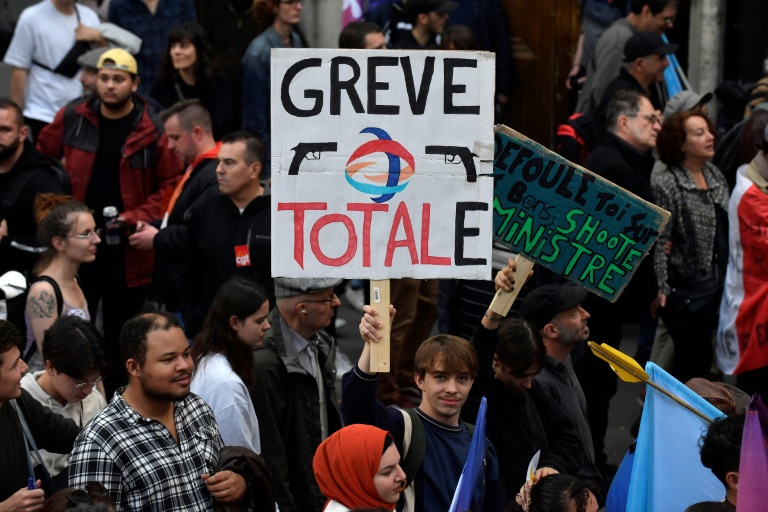
She appealed to those TotalEnergeies workers still on strike not to “block the country with all the difficulties that that creates”.

After three weeks of industrial action, three out of seven of the country’s oil refineries and five major fuel depots (of around 200) are affected, the government said.

Geoffroy Roux de Bezieux, president of the Medef business lobby group, told Radio J that another week of fuel shortages might have a real impact on the economy.

“This isn’t a normal strike,” he added. “The right to strike has limits.”

Farmers are struggling to find the fuel they need to plant their winter crops on time, particularly in the north of the country.

– ‘General strike’ –

Borne’s warning came after tens of thousands marched through Paris Sunday to protest the rising cost of living, and government inaction over climate change.

The demonstration was called by the left-wing political opposition and led by Melenchon, head of the France Unbowed (LFI) party.

While most of the march passed peacefully, security forces did fire teargas and launched baton charges on several occasions after being pelted with objects. On the fringes of the march, masked men dressed in black ransacked a bank.

Some protesters wore yellow florescent vests, the symbol of the often violent anti-government protests in 2018 that shook the pro-business government of President Emmanuel Macron.

“The people at the top are out of touch,” said Christopher Savidan, an LFI activist out of work for five years.

“We pay taxes — we don’t know why. Everything is going down the drain.”

Opponents of Macron are hoping to build on the momentum created by the refineries dispute, which began at the end of September.

“We’re going to have a week the likes of which we don’t see very often,” Melenchon told the crowd.

“Everything is coming together. We are starting it with this march, which is an immense success.”

Melenchon also called for a “general strike” Tuesday. Some but not all unions have already declared the date a national day of strikes targetting road transport, trains and the public sector.  

– Huge profits –

The huge profits made by energy groups due to record fuel prices have led to some sympathy for employees pushing for higher wages. 

But some drivers struggling to find fuel for their vehicles are losing patience. Many companies have cut back on travel and deliveries, and even emergency service vehicles face shortages.

A poll by the BVA polling group released Friday suggested that only 37 percent of people supported the stoppages.

The strikes and protests are being closely watched by the government, which is aiming to pass a highly controversial change to the pensions system in the next few months. 

Macron, who won re-election in April, has pledged to push back the retirement age from 62, with the reform scheduled before the end of the winter.

“I’m really worried,” one ruling party MP told AFP last week on condition of anonymity. “We need to find a route between the need for reforms and the fact that people are riled up and tired.” 

TotalEnergies announced on Friday that it had reached a pay deal with the two largest unions representing staff at its refineries, raising hopes of an end to the standoff. 

But the hardline CGT union has refused to accept it, with its members continuing to maintain picket lines.

'Halloween Ends' starts strong, topping N.America box office

Universal scarefest “Halloween Ends” scored a strong start this weekend, topping the North American box office with an estimated take of $41.3 million, industry watcher Exhibitor Relations reported Sunday.

The movie, ostensibly the last in a long string of profitable “Halloween” films, again stars Jamie Lee Curtis in a tale replete with throat-slashing, choking, fatal falls and a mysterious masked sewer-dweller. 

Analysts had predicted a somewhat higher number: $50 million or so. But given the film’s simultaneous release on the Peacock streaming service and its production cost of just $30 million, its take was “excellent,” said David A. Gross of Franchise Entertainment Research.

The weeks before Halloween always smile on horror films — and this weekend another gruesome film, Paramount’s “Smile,” placed second at $12.4 million. Sosie Bacon stars as a therapist whose grasp on reality is shaken by a horrifying event.

In third place for the Friday-through-Sunday period, down one spot from its release last weekend, was Sony’s live action/computer-animated musical comedy “Lyle, Lyle Crocodile,” at $7.4 million. Javier Bardem, Shawn Mendes and Constance Wu star.

Another Sony film, history-inspired “The Woman King,” held tight at fourth place, with $3.7 million in ticket sales. Viola Davis stars as the leader of an all-female army of African warriors.

And in fifth, dropping two spots, was 20th Century’s comedy thriller “Amsterdam,” at $2.9 million. It stars Christian Bale, Margot Robbie and John David Washington.

Rounding out the top 10 were:

“Don’t Worry Darling” ($2.2 million)

“Barbarian” ($1.4 million)

“Bros” ($920,000)

“Terrifier 2” ($850,000)

“Top Gun: Maverick” ($685,000)

Close Bitnami banner
Bitnami