US Business

French strikes spread as Macron's opponents push for 'confrontation'

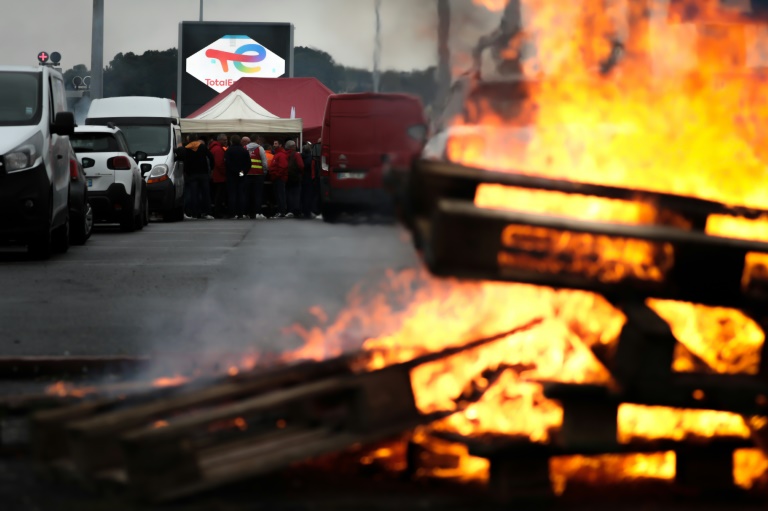
French railway workers and civil servants voted Thursday to join striking oil refinery staff with a walkout next week, raising fears that anger over the rising cost of living could spiral into a series of blockages.

Railway staff and civil servants represented by the hard-left CGT union, the biggest in the public sector, will stop work next Tuesday, with several labour groups calling for a national day of stoppages.

The famously militant CGT said it was pushing for higher wages for railway workers but also wanted to protest government efforts to break a strike by refinery workers that has caused nationwide fuel shortages.

“Railway workers want to press again for salary improvements and denounce the repression and attack against the right to strike,” said a union statement.

The government has resorted to emergency powers to compel some striking refinery workers to return to their jobs to release fuel stocks stuck inside blockaded facilities.

Six out of seven refineries have been affected by strikes that are now in their third week, causing huge tailbacks outside petrol stations and growing frustration among motorists.

“The time for a confrontation (with the government) has arrived,” left-wing opposition parliamentarian Clementine Autain from the France Unbowed party told France 2 television on Thursday.

A leading Greens lawmaker, Sandrine Rousseau, said Wednesday she hoped that the refinery standoff would be “the spark that begins a general strike”.

Not all unions have joined the call for strikes next Tuesday, however, with the country’s biggest, the CFDT, opting out.  

Left-wing political parties are to hold a protest rally against the policies of President Emmanuel Macron and the rising cost of living on Sunday.

– Sympathy and anger –

Until Tuesday, the government had been reluctant to inflame the pay dispute at French energy group TotalEnergies and US giant Esso-ExxonMobil whose refineries are affected.

TotalEnergies made a net profit of 5.7 billion dollars in the April-June period and is distributing billions to shareholders, sparking some sympathy for employees pushing for higher wages. 

But with 30 percent of French service stations with little or no fuel, particularly those in the Paris region and the north, the government began requisitioning some fuel depot workers on Tuesday, forcing them to return to work or risk prosecution.

After an ExxonMobil depot on Wednesday, a TotalEnergies site in northern France was requisitioned on Thursday, with the first laden fuel tankers protected by police seen leaving during the afternoon.

Prime Minister Elisabeth Borne’s office said the emergency measures were justified because of a “real economic threat” for northern France, which relies heavily on agriculture, fishing and industry.

Striking workers at an Esso-ExxonMobil refinery in Fos-sur-Mer, outside Marseille in the south, voted Thursday to lift their blockade after reaching a pay deal with management.

TotalEnergies also announced that it would hold talks with trade union representatives for the first time since the start of the strikes, raising hopes of a breakthrough.

The group has proposed a six-percent raise for next year, below the CGT’s demand for an immediate 10 percent hike, retroactive to January 1.

The company has come under increasing pressure from the government to reach an agreement.

Finance Minister Bruno Le Maire told RTL radio that given its huge profits this year, it had “the capacity… and therefore an obligation” to raise workers’ pay.


Netflix to debut subscription with ads

Netflix on Thursday said a subscription option subsidized by ads will debut in November in a dozen countries as the streaming service strives to jumpstart growth.

Basic with Ads subscriptions will be priced at $6.99 in the United States, three dollars less than a basic option without ads, Netflix chief operating officer Greg Peters said in a briefing.

“The timing is great because we really are at this pivotal moment in the entertainment industry and evolution of that industry,” Peters said.

“Now streaming has surpassed both broadcast and cable for total TV time in the United States.”

The ad-discounted tier, a first for Netflix, will roll out in Australia, Brazil, Britain, Canada, France, Germany, Italy, Japan, South Korea, Mexico, Spain and the United States.

Nearly all of the Netflix library will be available, with some offerings held back until licensing deals are renegotiated.

Video ads will be from 15 seconds to 30 seconds long.

“We are looking at a very light ad load with no more than four to five minutes of ads per hour, and including some very tight frequency caps so that members don’t see the same ad repeatedly,” Peters said.

After long shunning advertising, Netflix pushed ahead as competition in the streaming television market intensifies and as consumers recoil from soaring inflation.

With the launch of cheaper, ad-supported subscriptions, Netflix and Disney+ are expected to bite into the revenue of traditional television channels.

Netflix rival Disney+ is expected to launch its own ad-subsidized subscription soon.

“These launches are going to create the biggest premium advertising space in more than a generation,” said analytics company Samba TV senior vice president Dallas Lawrence.

“It’s going to be a major moment for advertisers.”

Netflix to debut subscription with ads

Netflix on Thursday said a subscription option subsidized by ads will debut in November in a dozen countries as the streaming service strives to jumpstart growth.

Basic with Ads subscriptions will be priced at $6.99 in the United States, three dollars less than a basic option without ads, Netflix chief operating officer Greg Peters said in a briefing.

“The timing is great because we really are at this pivotal moment in the entertainment industry and evolution of that industry,” Peters said.

“Now streaming has surpassed both broadcast and cable for total TV time in the United States.”

The ad-discounted tier, a first for Netflix, will roll out in Australia, Brazil, Britain, Canada, France, Germany, Italy, Japan, South Korea, Mexico, Spain and the United States.

Nearly all of the Netflix library will be available, with some offerings held back until licensing deals are renegotiated.

Video ads will be from 15 seconds to 30 seconds long.

“We are looking at a very light ad load with no more than four to five minutes of ads per hour, and including some very tight frequency caps so that members don’t see the same ad repeatedly,” Peters said.

After long shunning advertising, Netflix pushed ahead as competition in the streaming television market intensifies and as consumers recoil from soaring inflation.

With the launch of cheaper, ad-supported subscriptions, Netflix and Disney+ are expected to bite into the revenue of traditional television channels.

Netflix rival Disney+ is expected to launch its own ad-subsidized subscription soon.

“These launches are going to create the biggest premium advertising space in more than a generation,” said analytics company Samba TV senior vice president Dallas Lawrence.

“It’s going to be a major moment for advertisers.”

Russia to help people leave annexed Ukraine region as Kyiv advances

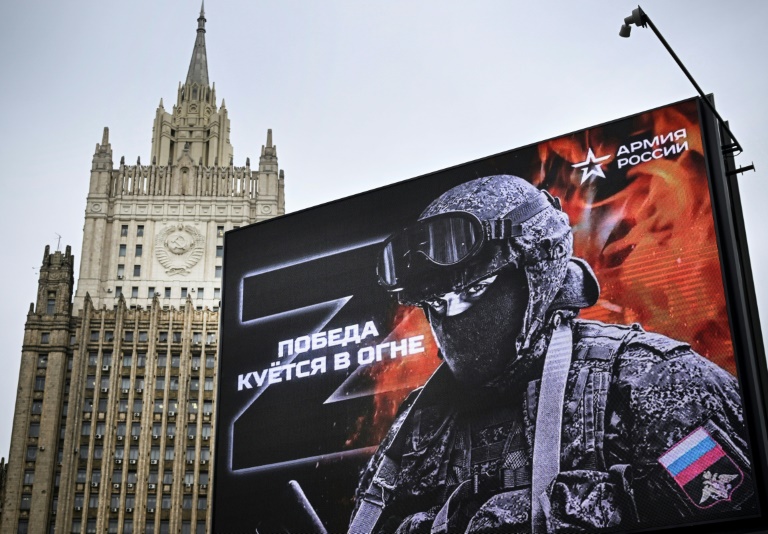
Russia agreed Thursday to help residents leave a region it has “annexed” in a new sign Kyiv’s counter-offensive is advancing, as a top EU official warned Moscow’s army would be “annihilated” by the West if the Kremlin uses nuclear weapons in the war.

Russia’s decision came a day after Kyiv said it had retaken five settlements in the southern Kherson region.

“The government took the decision to organise assistance for the departure of residents of the (Kherson) region,” Russian Deputy Prime Minister Marat Khusnullin said.

The Moscow-appointed head of the area in southern Ukraine — which Russia says it has annexed — had appealed for Russian intervention.

Vladimir Saldo suggested residents “leave to other regions to protect themselves from missile strikes”.

Kherson was being hit by an increasing amount of rockets causing “serious damage”, added Saldo, with civilian infrastructure being targeted.

Those departing would go to Crimea, a Ukrainian peninsula Moscow annexed in 2014, and southern Russian regions.

Kyiv, which announced its counter-offensive in the south in August, said it has already recaptured over 400 square kilometres (155 miles) in the Kherson region in under a week.

The city of Kherson, which lies near Crimea, was the first major Ukrainian city to fall to Russian forces after the February 24 invasion.

In Brussels, EU foreign policy chief Josep Borrell sent a strong message to the Kremlin after President Vladimir Putin’s veiled threats of resorting to nuclear weapons to stem growing battlefield losses.

“Putin is saying he is not bluffing. Well, he cannot afford bluffing, and it has to be clear that the people supporting Ukraine and the European Union and the Member States, and the United States and NATO are not bluffing neither,” Borrell said.

“Any nuclear attack against Ukraine will create an answer, not a nuclear answer but such a powerful answer from the military side that the Russian Army will be annihilated,” Borrell added.

The NATO alliance has stopped short of threatening to use its nuclear arsenal to respond as non-member Ukraine is not covered by its mutual self-defence clause.

The United States and NATO have steered clear of intervening militarily in the Ukraine conflict for fear of sparking a catastrophic nuclear conflict with Moscow.

– Booming trade –

In Ankara, President Recep Tayyip Erdogan defended Turkey’s booming trade ties with Moscow during an in-person meeting with Putin on the sidelines of a summit of regional leaders in Kazakhstan.

But Erdogan did not deliver an offer to mediate negotiations between Moscow and Kyiv — expected by the Kremlin.

Comments between the leaders made no mention of Ukraine and focussed instead on economic ties.

Putin proposed to create a “gas hub” in Turkey as Russia’s supplies to Europe have been disrupted by Ukraine-related sanctions.

NATO member Turkey has sought to retain dialogue with its Western allies as well as Moscow, and has not joined sanctions on Russia over its invasion of Ukraine.

Erdogan also refrained from commenting on mass Russian strikes on Ukraine earlier this week that mostly targeted energy infrastructure and left at least 20 dead. 

The attacks caused power and hot water cuts across the country, but the head of Ukraine’s energy operator Ukrenergo said Thursday the power grid had “stabilised”, reassuring users emergency power cuts would be unneccessary.

– Rebels push to Bakhmut –

On the battlefield, Russian-backed separatist forces in the eastern Donetsk region of Ukraine said they had captured two villages near the industrial city of Bakhmut, posting small gains against Kyiv’s counter-offensive.

The villages lie just south of Bakhmut, a wine-making and salt-mining city that used to be populated by some 70,000 people and which Russian forces have been pummelling for weeks to capture.

The reported gains came after Ukrainian troops had for weeks been clawing back large swathes of territory in the south and east of Ukraine — including Donetsk — controlled by Russian forces for months.

The Ukrainian military countered in an update that it had repelled attacks near several frontline villages.

– Boy pulled from rubble –

Ukraine troops told AFP this week near the frontline south of Bakhmut that they were still outgunned by Russian artillery on their section of the frontline. 

Russian supply lines from the part of Donetsk occupied since 2014 are still intact. 

AFP reporters in Yampil just outside the recently liberated town of Lyman on Thursday heard heavy exchanges of artillery fire to the southeast. 

A Ukrainian soldier returning from the frontline said positions in Torske village were under fire from Russian guns guided by spotter drones.

Also in the south, the town of Mykolaiv was again rocked by Russian bombardments.

The head of the city Oleksandr Sienkevych said on social media a five-storey residential building was hit, with two upper floors destroyed completely.

“An 11-year-old boy was recovered from under the rubble and another seven people may still be there,” he said, adding a security guard was killed at a sea rescue station.

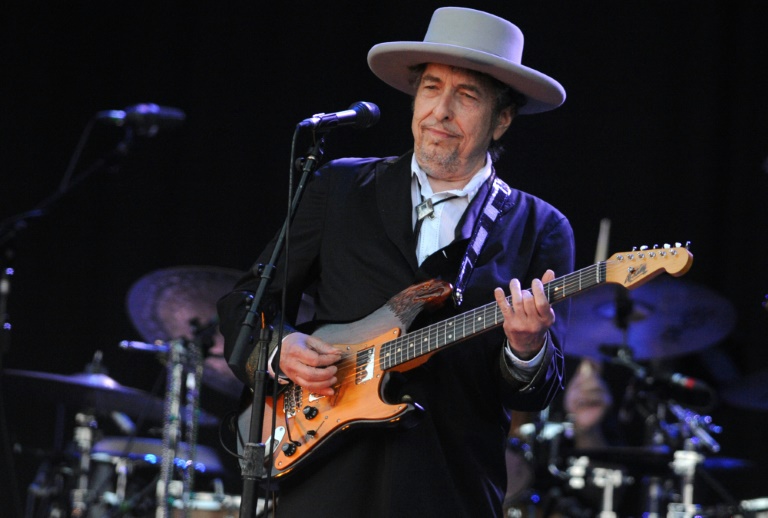
New glimpse into Bob Dylan book see artist riff on songwriting

Bob Dylan fans on Thursday got a glimpse into the nobel laureate and folk-rock legend’s new book, “The Philosophy of Modern Song,” set for publication next month.

The collection of essays is his first book of new writing since 2004, when he released “Chronicles, Volume One.”

The book exploring songwriting’s power is set for release on November 8 with the publisher Simon and Schuster.

Excerpts published in The New York Times offer musings from the beloved American poet and musician on Frank Sinatra’s “Strangers in the Night” and The Who’s anthem “My Generation.”

Many of the essays include “riffs” that see Dylan expand on his words with a shorter, looser piece where the artist waxes poetic on the track in question.

“Something in your vital spirit, your pulse, something that runs in the blood, tells you that you must have this tender feeling of love now and forever, this essence of devoted love held tightly in your grip — that it’s essential and necessary for staying alive and cheating death,” Dylan riffs on Sinatra.

The book is also set to include musings on artists including Hank Williams and Nina Simone.

Dylan says “My Generation,” the 1960s smash that’s one of The Who’s most recognizable songs, “does no favors for anyone, and casts doubt on everything.”

He says “fear” — of getting old, namely — “is perhaps the most honest thing about the song.”

“We all rail at the previous generation but somehow know it’s only a matter of time until we will become them ourselves.”

Dylan, who burst onto the folk scene in New York in the early 1960s, has sold more than 125 million records around the world.

Rumors of a “Chronicles, Volume Two” have swirled for years but fans will now have “Philosophy” to tide them over until — or if — that sequel is published.

The 81-year-old has maintained a rigorous touring schedule, and is currently on a global itinerary set to continue into 2024.

In 2020 he released his 39th studio album, “Rough and Rowdy Ways,” to critical acclaim.

He won the Nobel Prize for Literature in 2016 “for having created new poetic expressions within the great American song tradition.”

G20 meets amid Ukraine war, US-Saudi tensions

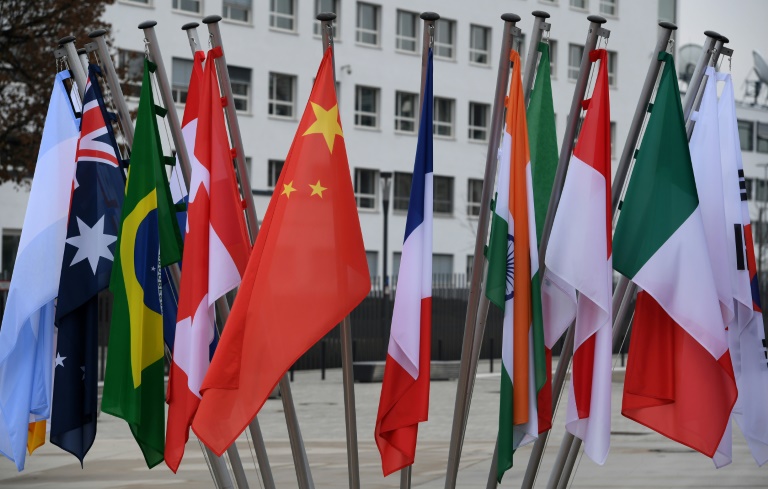
The G20 held talks in Washington on Thursday, but Russia’s presence in the club made any consensus unlikely despite the multiple crises facing the world.

Finance ministers and central bankers from the Group of 20 major economies are gathered in the US capital during annual meetings of the IMF and World Bank that have focused on Russia’s war in Ukraine, soaring inflation and a climate crisis.

But the G20 is unlikely to agree on many issues, with the group now facing tensions between Saudi Arabia and the United States over OPEC+ oil production cuts that Washington fears will further fuel inflation.

Despite the divisions, Western officials said the G20 remains a useful forum.

“Even if there are different opinions — including those that you don’t share, some even that you don’t understand — it’s still a good forum for a conversation,” said German Finance Minister Christian Lindner.

“It is better to have a forum to speak in than none,” he told reporters.

But the G20 is expected to close its meeting without a joint communique, as in its previous gatherings presided by Indonesia this year. A press conference is scheduled for later Thursday.

“We could do a communique that doesn’t mention the war in Ukraine, but we don’t want a communique that sweeps things under the rug,” a source close to the discussions told AFP.

– Saudi-US spat –

While Western nations have imposed unprecedented sanctions on Russia, other countries have maintained economic ties with Moscow, with India and China stepping up their purchases of Russian oil.

The Group of Seven wealthy democracies is now looking to cap the prices of Russian crude exports, a move aimed at stripping the country of a major source of funding for its war effort.

The G7 — which includes Britain, Canada, France, Germany, Italy, Japan and the United States — said Wednesday it had made “significant progress” in key parts of its proposal, noting that it had added Australia to its coalition.

Gaining broad global approval for a price cap is a key challenge for the proposal.

The Saudi-led OPEC group of oil exporters has angered the United States by agreeing on a drastic production cut with Russia and other allies, which could send energy prices soaring even higher.

Washington has accused OPEC+ of aligning itself with Moscow, and on Wednesday President Joe Biden threatened “consequences” for Saudi Arabia.

In a statement, the Saudi foreign ministry denied that the decision was “politically motivated against the United States” and expressed its “total rejection of these statements that are not based on facts.”

But US National Security Council spokesman John Kirby responded that Ryiadh knew the cut “would increase Russian revenues and blunt the effectiveness of sanctions. That is the wrong direction.”

The source close to the G20 discussions said Western nations explained at the meeting that they were “disappointed” and that it went against Saudi interests “because the risk for them is that they cause a recession.”

“It’s hard to understand,” the source said.

– ‘We’re cooked’ –

The G20 also discussed the state of the global economy and debt at a dinner on Wednesday. On Thursday they talked about the financial sector, regulating cryptocurrencies, a global minimum tax on corporations and how to follow through on pledges in climate financing, the source said.

Tensions within the G20 come as leaders are due to meet at a summit in Bali, Indonesia, next month that could see Biden share the same venue as Russian President Vladimir Putin and another rival, Chinese leader Xi Jinping.

The lack of consensus within the group also comes ahead of the United Nations’ COP27 climate summit in Egypt in November.

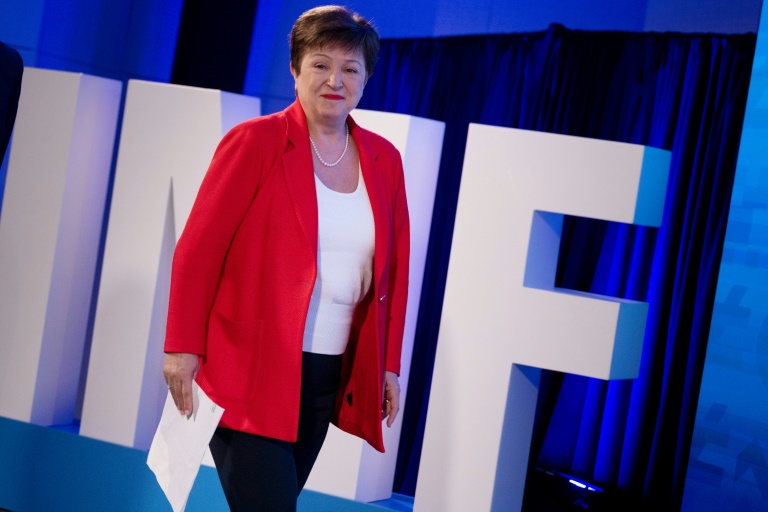
IMF Managing Director Kristalina Georgieva said Wednesday that the world has to invest up to $6 trillion per year if it is to meet the Paris agreement goal of reaching net-zero carbon emissions by 2050.

“If we do not shift our trajectory this decade, we’re cooked. If we don’t want to be cooked, then we should speed up,” Georgieva said Wednesday in talks on climate change.

G20 meets amid Ukraine war, US-Saudi tensions

The G20 held talks in Washington on Thursday, but Russia’s presence in the club made any consensus unlikely despite the multiple crises facing the world.

Finance ministers and central bankers from the Group of 20 major economies are gathered in the US capital during annual meetings of the IMF and World Bank that have focused on Russia’s war in Ukraine, soaring inflation and a climate crisis.

But the G20 is unlikely to agree on many issues, with the group now facing tensions between Saudi Arabia and the United States over OPEC+ oil production cuts that Washington fears will further fuel inflation.

Despite the divisions, Western officials said the G20 remains a useful forum.

“Even if there are different opinions — including those that you don’t share, some even that you don’t understand — it’s still a good forum for a conversation,” said German Finance Minister Christian Lindner.

“It is better to have a forum to speak in than none,” he told reporters.

But the G20 is expected to close its meeting without a joint communique, as in its previous gatherings presided by Indonesia this year. A press conference is scheduled for later Thursday.

“We could do a communique that doesn’t mention the war in Ukraine, but we don’t want a communique that sweeps things under the rug,” a source close to the discussions told AFP.

– Saudi-US spat –

While Western nations have imposed unprecedented sanctions on Russia, other countries have maintained economic ties with Moscow, with India and China stepping up their purchases of Russian oil.

The Group of Seven wealthy democracies is now looking to cap the prices of Russian crude exports, a move aimed at stripping the country of a major source of funding for its war effort.

The G7 — which includes Britain, Canada, France, Germany, Italy, Japan and the United States — said Wednesday it had made “significant progress” in key parts of its proposal, noting that it had added Australia to its coalition.

Gaining broad global approval for a price cap is a key challenge for the proposal.

The Saudi-led OPEC group of oil exporters has angered the United States by agreeing on a drastic production cut with Russia and other allies, which could send energy prices soaring even higher.

Washington has accused OPEC+ of aligning itself with Moscow, and on Wednesday President Joe Biden threatened “consequences” for Saudi Arabia.

In a statement, the Saudi foreign ministry denied that the decision was “politically motivated against the United States” and expressed its “total rejection of these statements that are not based on facts.”

But US National Security Council spokesman John Kirby responded that Ryiadh knew the cut “would increase Russian revenues and blunt the effectiveness of sanctions. That is the wrong direction.”

The source close to the G20 discussions said Western nations explained at the meeting that they were “disappointed” and that it went against Saudi interests “because the risk for them is that they cause a recession.”

“It’s hard to understand,” the source said.

– ‘We’re cooked’ –

The G20 also discussed the state of the global economy and debt at a dinner on Wednesday. On Thursday they talked about the financial sector, regulating cryptocurrencies, a global minimum tax on corporations and how to follow through on pledges in climate financing, the source said.

Tensions within the G20 come as leaders are due to meet at a summit in Bali, Indonesia, next month that could see Biden share the same venue as Russian President Vladimir Putin and another rival, Chinese leader Xi Jinping.

The lack of consensus within the group also comes ahead of the United Nations’ COP27 climate summit in Egypt in November.

IMF Managing Director Kristalina Georgieva said Wednesday that the world has to invest up to $6 trillion per year if it is to meet the Paris agreement goal of reaching net-zero carbon emissions by 2050.

“If we do not shift our trajectory this decade, we’re cooked. If we don’t want to be cooked, then we should speed up,” Georgieva said Wednesday in talks on climate change.

Florida school shooter avoids death penalty, gets life in prison

A US jury on Thursday rejected the death penalty for Nikolas Cruz, who shot and killed 17 people at his former Florida high school, opting instead for life imprisonment without the possibility of parole.

Cruz, 24, wearing a striped sweater and large glasses, stared down expressionless at the defense table as the verdict was read while several relatives of the victims in the gallery shook their heads in disbelief.

The jury deliberated for a full day Wednesday and briefly Thursday before deciding that Cruz should receive life in prison for the February 2018 murders of 14 students and three staff members at Marjory Stoneman Douglas High School in Parkland, Florida.

A death penalty recommendation needed to be unanimous and one or more of the 12 jurors found that it was not justified because of mitigating circumstances.

Several relatives of victims reacted angrily to the verdict.

“I could not be more disappointed in what happened today,” said Fred Guttenberg, whose 14-year-old daughter Jaime was one of the students killed in the Valentine’s Day attack.

“I’m stunned. I’m devastated,” Guttenberg said. “There are 17 victims that did not receive justice today. This jury failed our families today.”

Prosecutors and Cruz’s defense team gave their closing arguments on Tuesday after a three-month trial, during which the jury saw graphic footage of the attack and listened to harrowing testimony from survivors.

Michael Satz, the lead prosecutor, said Cruz, who pleaded guilty to the murders last year, planned and carried out a “systematic massacre” and the appropriate penalty was death.

The 80-year-old Satz, who came out of retirement to try the case, ended his closing arguments by reciting the names of the 17 people who died.

– ‘Brain-damaged, mentally-ill’ –

Melisa McNeill, a lawyer for Cruz, urged the jurors to show compassion.

McNeill said Cruz was a troubled young man born with fetal alcohol stress disorder to a mother who struggled with homelessness, alcoholism and drug addiction before putting him up for adoption.

“He was doomed from the womb and in a civilized, humane society, do we kill brain-damaged, mentally ill, broken people?” McNeill asked in her closing statement. “Do we? I hope not.”

Tony Montalto, whose 14-year-old daughter Gina was killed, dismissed those arguments.

“This shooter did not deserve compassion,” Montalto said. “Did he show compassion to Gina when he put the weapon against her chest and chose to pull that trigger?

“Do we want people who commit atrocious acts… to be punished to the fullest extent of the law?” he asked. “Or do we want to excuse them because they had a tough time growing up?”

– Gun control debate –

On February 14, 2018, the then-19-year-old Cruz walked into school carrying a high-powered semiautomatic rifle. He had been expelled a year earlier for disciplinary reasons.

In a matter of nine minutes, he killed 17 people and wounded over a dozen more.

Cruz fled by mixing in with people frantically escaping the gory scene, but was arrested by police shortly after as he walked along the street.

The shooting stunned the nation and reignited debate on gun control since Cruz had legally purchased the gun he used despite his mental health issues.

On March 24, 2018, nationwide marches inspired by school shooting survivors and parents of victims brought together 1.5 million people — the largest public turnout ever in defense of stricter gun control laws in America.

But the Parkland shooting prompted no significant reform by Congress and gun sales have continued to rise.

Thousands turned out for demonstrations organized following two other recent mass shootings: one at a Texas elementary school that killed 19 young children and two teachers, and another at a New York supermarket that left 10 Black people dead.

Those shootings helped galvanize support for the first significant federal bill on gun safety in decades.

President Joe Biden signed the bill into law in June. It included enhanced background checks for younger buyers and federal cash for states introducing “red flag” laws that allow courts to temporarily remove weapons from people who are considered a threat.

But the measure fell far short of steps Biden had called for, including an assault weapons ban.

The Justice Department reached a $127.5 million settlement in March with survivors and relatives of Parkland victims who had accused the FBI of negligence for failing to act on tips received prior to the attack that Cruz was dangerous.

At IMF, UK gets lecture on having 'coherent' fiscal policy

Britain has had its knuckles rapped over its controversial debt-fueled budget at the IMF’s annual meetings, with the crisis lender’s chief urging London on Thursday to maintain “coherent and consistent” policies.

British finance minister Kwasi Kwarteng was already under fire back home when he arrived in Washington for the annual gathering, which Bank of England Governor Andrew Bailey is also attending.

IMF officials — from the institution’s top economist to its managing director — have had their say about Britain’s fiscal choices this week after already warning last month that the measures would increase inequality.

IMF chief Kristalina Georgieva said she had a “very constructive” meeting with Kwarteng and Bailey.

“We discussed the importance of policy coherence and communicating clearly so there can be no — in this jittery environment — there could be no reasons for more jitters,” she said at a news conference.

The UK’s sovereign bonds and the pound have taken a beating on financial markets since Kwarteng and Prime Minister Liz Truss unveiled a “mini-budget” last month that included tax cuts in a bid to ease a cost-of-living crisis.

The move forced the Bank of England, which has been raising borrowing costs to tame inflation, to jump into bond markets to help protect financial stability.

Since then, Kwarteng axed his proposed tax cut for the richest earners and brought forward his debt-reduction plans and economic forecasts to October 31.

The British pound rallied against the dollar on Thursday on reports that the embattled leaders were mulling more U-turns, including on planned changes to corporation tax.

Kwarteng, however, insisted that his “position hasn’t changed.”

“I will come up with the medium-term fiscal plan on the 31st of October, as I said earlier in the week, and there’ll be more detail there,” he told reporters.

He added that Georgieva had told him on Wednesday that he was “quite right to focus on growth.”

– ‘Runaway train’ –

The International Monetary Fund has stressed throughout this week’s meetings of finance chiefs that the priority was for central banks to continue to tighten monetary policies to control inflation and for governments to keep their budgets tight.

“Our message to everybody, not just to the UK, to everybody at this time: fiscal policy should not undermine monetary policy,” Georgieva said.

This would make the task of monetary policy “only harder and it translates into the necessity for even further increase of rates and tightening financial conditions,” she said.

“So don’t prolong the pain and make sure that actions are coherent and consistent.”

While she called for consistency, Georgieva said it was “correct to be led by evidence, so if the evidence is that there has to be a recalibration, it is right for governments to do so.”

The IMF’s chief economist, Pierre-Olivier Gourinchas, said earlier this week that the divergence between BoE monetary policy and government’s fiscal plans was “not going to work very well.”

“It’s like having a car with two people in the front, and each of them is steering the wheel, and trying to steer the car in a different direction,” he said.

Georgieva used more analogies on Thursday as she warned that “we cannot allow inflation to become a runaway train.”

“I’m going to say it again because it is so important for this message to penetrate. When monetary policy puts a foot on the brakes, fiscal policy should not step on the accelerator,” she said.

– ‘A dressing-down’ –

European Central Bank chief Christine Lagarde made a veiled reference to Britain at an event on the sidelines of the IMF meetings where she called for cooperation between monetary and fiscal policies.

“We have seen good and bad examples of what cooperation or lack of cooperation can do,” she said at the annual meeting of the Institute of International Finance.

Susannah Streeter, senior investment and markets analyst at UK asset management firm Hargreaves Lansdown, said that “being given a dressing down by the IMF is never a good look.”

“Such international criticism doesn’t help stem evaporating confidence among investors about the government’s handling of the economy,” Streeter told AFP.

But, she added, it is likely to be “finger-pointing” domestically that would make the UK treasury reassess its tax cut policies.

Kenya denies defaulting on China railway debt

Kenya on Thursday denied it had defaulted on interest repayments on a loan advanced by China for the construction of a railway line from the port city of Mombasa that opened in 2017.

The $5 billion project, financed 90 percent by China, replaced the so-called “Lunatic Express” — a line built more than a century ago by colonial power Britain which was notorious for lengthy delays and breakdowns.

Kenya’s Business Daily reported that the government failed to repay interest on the loan in the financial year ended June, attracting a fine of 1.312 billion Kenyan shillings ($10.8 million). 

But Treasury Cabinet Secretary Ukur Yatani rejected the report as “misinformation”, saying the financial position of the East African economic powerhouse was “sound and robust”.

“We wish to state categorically that Kenya has never defaulted on its settlement of its debt service obligations to any of its creditors,” Yatani said in a statement. 

The Standard Gauge Railway (SGR) is Kenya’s biggest infrastructure project since independence from Britain in 1963 and was launched as a master plan by East African leaders to connect their nations by rail. 

Currently snaking from Mombasa via the capital Nairobi to the Rift Valley town of Naivasha, it is planned to eventually link Uganda, Rwanda, South Sudan, Burundi and Ethiopia.

The railway was to be managed by the Chinese contractor for five years before being handed over to the Kenyan government.

But it has posted losses, with analysts worrying the trend could continue after newly elected President William Ruto last month reversed a policy that made it mandatory for cargo to use the railway. 

China is Kenya’s second-largest lender after the World Bank and has funded a number of costly infrastructure projects that have raised concerns about Nairobi taking on more debt than it can afford.

The country’s public debt load in June stood at 8.6 trillion shillings ($71.1 billion), an 11.5 percent rise from a year earlier, according to government figures.

Loan interest repayments have however shot up in recent months as the value of the shilling rapidly loses ground against international currencies, trading at 121 to the dollar on Thursday.

Yatani said there was no cause for alarm as the country frequently undergoes independent sovereign rating reviews which are published widely. 

“At no time has Kenya been flagged as a country defaulting on its external debt obligations,” he added.

Close Bitnami banner
Bitnami