US Business

Climate unease leaves Aussie mines scrambling for staff

Australia’s world-beating mining firms are flush with cash and desperate for staff but green-minded workers are shunning the high-paying sector, causing serious staff shortages, the government warned Wednesday.

Australia’s Resources Minister Madeleine King — who oversees the more than US$200 billion-a-year industry — said the mining sector was “stretched” and badly needs to reform and shake its sooty image.

“There is a major problem in attracting and retaining skilled workers,” she told business people in mineral-rich Western Australia.

“A big barrier to attracting these workers is the attitude many young Australians hold towards the resources industry.”

Despite miners paying far more than comparable sectors, King said enrolments in relevant degrees were “dwindling”.

She urged the likes of Rio Tinto and BHP to “get more creative” in attracting young people, suggesting the industry turn “Minecraft-crazed kids” into the real-life miners of tomorrow.

A failure to attract new talent could risk an industry that, she said, “underpins our enviable standard of living”.

Heaving iron ore, coal and other mineral goodies out of the Earth’s lithosphere has been the mainstay of Australia’s economy for decades, helping to avoid numerous crises and recessions.

The country is the world’s largest exporter of iron ore — the main component in steel — and ships out vast amounts of coal, gas, lithium, gold, zinc, diamonds and other resources.

But this year the Australian Resources and Energy Employer Association warned the sector needed an extra 24,000 new workers over the next five years.

It recently described the lack of plant engineers, geologists, drillers, earthmover operators and other staff as “crippling”.

But critics say the industry needs more than an image makeover.

Mining firms have been at the centre of a string of scandals over vast amounts of Earth-warming emissions, allegations of rampant sexual harassment and the recent blowing up of a series of 46,000-year-old Aboriginal rock shelters.

King said sceptics should be reminded that mining was essential for developing green technologies.

“Without the resources sector, there is no net zero,” she said.

Prince, Andy Warhol feature in Supreme Court copyright case

Pop music and art converge on the US Supreme Court on Wednesday as it hears whether a photographer should be compensated for a picture she took of Prince used in a work by Andy Warhol.

The case, Andy Warhol Foundation for the Visual Arts v. Goldsmith, could have far-reaching implications for US copyright law and the art world.

It stems from a black-and-white picture taken in 1981 by celebrity photographer Lynn Goldsmith of Prince, a then up-and-coming young musician from Minneapolis.

In 1984, as Prince’s “Purple Rain” album was taking off, Vanity Fair asked Warhol to provide an image to accompany a story on the musician in the glossy magazine.

Warhol used one of Goldsmith’s photographs to produce a silk screen print image of Prince with a purple face in the familiar brightly colored style the artist made famous with his portraits of Marilyn Monroe.

Goldsmith received credit as the photographer and was paid $400 for the rights for one-time use.

After Prince died in 2016, The Andy Warhol Foundation, set up after the artist’s death in 1987, licensed another image of the musician made by Warhol from the Goldsmith photo to Vanity Fair publisher Conde Nast.

That portrait — Warhol had actually made 16 in total — featured Prince with an orange face rather than a purple face.

Conde Nast paid the Foundation a $10,250 licensing fee.

Goldsmith did not receive anything and is claiming that her copyright on the original photo was infringed.

“This time, no credit or payment to Goldsmith,” her lawyers said in a brief. “Copyright law cannot possibly prescribe one rule for purple silkscreens and another for orange ones.”

– Split rulings –

The Warhol Foundation countered by arguing that Warhol’s “Prince Series” is “transformative” is and therefore not infringing on any copyright.

“Goldsmith is asking for something remarkable here,” the Foundation said in its brief.

“She wants the Court to hold that the works of Andy Warhol — universally recognized as a creative genius who pioneered the twentieth century Pop Art movement — are not transformative, and therefore are illegal.”

Two lower courts issued split rulings, sending the case to the Supreme Court.

In 2019, a US District Court judge in Manhattan ruled in favor of the Warhol Foundation.

“The Prince Series works can reasonably be perceived to have transformed Prince from a vulnerable, uncomfortable person to an iconic, larger-than-life figure,” the judge said.

“The humanity Prince embodies in Goldsmith’s photograph is gone,” the judge said. “Moreover, each Prince series work is immediately recognizable as a ‘Warhol’ rather than as a photograph of Prince.”

An appeals court disagreed last year, however, saying “the district judge should not assume the role of art critic and seek to ascertain the intent behind or meaning of the works at issue.”

What counts, the court said, is whether the new work “remains both recognizably deriving from, and retaining the essential elements of, its source material.

It said the Warhol series “retains the essential elements of the Goldsmith photograph without significantly adding to or altering those elements.”

After hearing oral arguments on Wednesday, the nine judges on the Supreme Court will decide whether Warhol’s work is transformative, and deserving of protection, or infringing.

They will issue their ruling by June 30.

Despite disasters, climate is a taboo election issue in US coal country

Chase Hays says he is “torn.” After seeing floods ravage his hamlet in the mountains of eastern Kentucky, he filed a lawsuit against the mine that overlooks it, but the 34-year-old doesn’t want to be seen as an “enemy” of coal.

Like him, many in his Appalachian region are reluctant to question an industry that has long provided the only high-paying jobs.

And with the US midterm elections approaching, few candidates dare talk about climate change.

Yet the state has been devastated recently by extreme weather.

In December, tornadoes killed 80 people in western Kentucky, and in late July, unprecedented heavy rains left 40 residents dead in the east of the state.

Standing at the bottom of a remote valley on the banks of a small creek, Hays had never seen water come down so fast.

He barely had time to cut through a fence to escape with his family before the torrent washed away his porch, an above-ground pool, even a pig, and flooded the foundation of his house.

Even if he still cannot live there, he considers himself “one of the lucky ones in my neighborhood,” called River Caney, where about 20 houses were destroyed and two women swept away.

Moreover, he was insured, unlike his neighbors, some of whom are still sleeping in tents with no prospect of finding a roof before winter.

On behalf of those neighbors, he filed a complaint against the mining company that extracts coal above the hamlet.

Hays is convinced that one of the company’s retaining ponds broke when the rain intensified.

“A big part of the reason why the ponds (were) able to break was they were just blasting way too hard and probably cracked the ponds,” he said.

– Climate change and fossil fuels –

But Hays comes from a long line of miners, and is cautious about making generalizations.

“What happened here was the fault of (things) not being maintained and checked on,” he said.

About 50 neighbors have joined his lawsuit, including Christy White, a 57-year-old woman whose once well-kept home is now a damp shell.

A grandmother, White finds her voice quivering at mention of the floods.

“Eventually you start bombing and drilling and cutting into the corners, you know, something’s gonna happen eventually. It’s just common knowledge,” she said.

In recent years, mining companies in Appalachia have taken to mountaintop removal, known as strip mining, to gain easier access to coal seams.

Whether strip mining worsens flooding is uncertain, said William Haneberg, the state geologist of Kentucky and director of the Kentucky Geological Survey.

Mountaintop removals “expose a lot of bare rock and remove the trees and the natural vegetation,” he said, but the rubble is dumped into the valleys, and flattens terrain “and that might decrease the severity of floods.”

He acknowledged a “very strong consensus” among scientists that global warming is driven by the burning of fossil fuels.

“In that way, coal mines do tie into the recent events,” he said.

– ‘Long-simmering hostility’ –

Yet this conclusion is not one shared by many in Kentucky, which has 20 percent of the active coal mines in the United States.

Hays has heard the studies on global warming: “Around here, it’s not a nice subject to talk about, just because without coal, this place is dwindling.”

Luke Glaser, an independent city councilman in nearby Hazard who has been heavily involved in relief efforts, said that there is “long-simmering hostility towards climate-change initiatives” locally. 

“Appalachians… are very proud of the fact that the work they’ve done has powered the nation over centuries. So it feels like you’re not just attacking someone’s job but attacking someone’s values,” Glaser said.

The state, once contested by the two major political parties, has since the 1990s turned overwhelmingly Republican, partly due to energy and environmental issues, said Steve Voss, a political science professor at the University of Kentucky.

More recently, candidates from both parties are careful to “stress that they are friends of coal,” although some Democrats are starting to talk about climate, he said.

For locals like Hays, the climate change debate has little effect on elections, even with disastrous flooding. 

“We feel forgotten about here,” Hays said. “We’re just looked down on as uneducated and incapable people.”

As for White, an avid fan of former president Donald Trump, her damaged home occupies all her thoughts, and she hasn’t pondered the midterm elections at all.

As she sorted through her belongings, she cast doubt on whether global warming had anything to do with the disasters: “I just think it’s God’s will… God’s just trying to get us prepared for what’s to come.”

Japan space rocket ordered to self-destruct after failed launch

Japan’s space agency said it sent a self-destruct order to its Epsilon rocket after a failed launch on Wednesday because of a problem that meant the craft could not safely fly.

The unmanned rocket, on its sixth mission, was taking satellites into orbit to demonstrate “innovative” technologies.

“The rocket can’t continue a safe flight, because of the danger it would create if it falls on the ground,” a JAXA official said in televised comments.

“So we took measures to avoid such an incident, and we sent the signal (to destroy the rocket),” he said, adding that information on the cause of the issue was not immediately available.

It was Japan’s first failed rocket launch since 2003, and public broadcaster NHK said the self-destruct order was issued around 10 minutes after liftoff.

A JAXA livestream of the launch from Uchinoura Space Center in southern Japan’s Kagoshima was interrupted and presenters said there had been a problem, without giving details.

The solid-fuel Epsilon rocket has been in use since 2013.

It is smaller than the country’s previous liquid-fuelled model, and a successor to the solid-fuel “M-5” rocket that was retired in 2006 due to its high cost.

JAXA describes Epsilon as “a solid-fuel rocket designed to lower the threshold to space… and usher in an age in which everyone can make active use of space”.

A box-shaped satellite carried by the rocket, called RAISE-3, had been due to orbit the Earth for at least a year, according to a JAXA fact sheet about the mission that was named “Innovative Satellite Technology Demonstration-3”.

Universities, research institutions and companies had been invited to engineer new technologies to try out on RAISE-3.

They ranged from Tokyo Metropolitan University’s “pulsed-plasma thruster” to an experiment in “harvesting energy with (a) lightweight integrated origami structure”.

As well as RAISE-3, eight microsatellites were also being launched by the Epsilon rocket, the fact sheet said.

Japan’s last failed space rocket take-off was in 2003, when the country aborted the launch of a pair of spy satellites to monitor North Korea.

Resilient Russian economy surfs sanctions on oil boom

Russia’s economy may face multiple long-term challenges, but for now energy exports appear to be helping it ride out Western sanctions imposed over the offensive against Ukraine.

Moscow says inflation is easing and employment is virtually full, contradicting the predictions of a catastrophe from many financial experts.

The International Monetary Fund on Tuesday offered some support to Russia’s view, saying recession will be less severe than expected due to oil exports and relatively stable domestic demand.

The IMF forecast the Russian economy to contract just 3.4 percent over the whole year, after contracting 21.8 percent during the second quarter at a quarterly annualised rate.

It was only in June that the IMF forecast an annual drop of six percent.

“The contraction in Russia’s economy is less severe than earlier projected, reflecting resilience in crude oil exports and in domestic demand with greater fiscal and monetary policy support and a restoration of confidence in the financial system,” the IMF’s latest World Economic Outlook report said.

President Vladimir Putin had stated in September that the economic situation in the country was “normalising” and that the worst was over after the series of economic penalties that followed the military operation launched against Ukraine on February.

Unemployment had fallen to its lowest level of 3.8 percent, Putin said, with annual inflation down to 13.7 percent a year, after record highs during the spring when the early sanctions began to bite.

– Impact of first sanctions ‘over’ –

“We can consider that the impact of the first sanctions has passed, notably in the financial sector,” Elina Ribakova, deputy head of the Institute of International Finance, a trade group for the global financial services industry, told AFP.

The diplomatic and economic break with the West accelerated Moscow’s rapprochement with energy-hungry China, with which it shares a 4,000 kilometre (2,500-mile) border.

Almost excluded from the European market, Russian “companies have been forced to find alternatives in other markets, particularly in Asia and Turkey”, Moscow State University economist Natalya Zubarevich told AFP.

Russia and China have already announced their intention to settle gas and electricity contracts in rubles and yuan, a triumph for the Kremlin’s efforts to take the US dollar out of the economy.

Last week’s OPEC+ oil cartel’s decision to slash output again, despite Washington’s call to open the taps, was also warmly greeted by Moscow, which benefits from rising crude prices.

With the G7 rich nations club struggling to agree a ceiling price for Russian oil, a cap China and India appear reluctant to follow, Russia’s prospects do indeed appear to be improving.

And for 2023, the IMF now expects Russia’s economy will contract 2.3 percent, an improvement from the 3.5 percent it forecast in July.

However the Russian economy finds itself ever more dependent on energy exports and slipping further behind on many high value sectors.

– International isolation –

The promise of Russia developing its own hi-tech products once imported from abroad remains to be fulfilled, and it lacks domestic rivals to tech giants like Apple and Microsoft.

Firms dependent on cutting-edge foreign goods are having to face up to their isolation from international markets.

A glaring lack of spare parts has also hit car production.

Japanese manufacturer Toyota shut its Saint Petersburg factory in mid-September because of a lack of electronic components.

Nissan is selling its Russian assets, including a factory in the city, to the Russian government, after halting production in March.

“About half of the companies hit by sanctions are still having difficulties in finding alternative suppliers,” said Ribakova.

As a result, the government has eased safety and environmental standards for domestically built vehicles.

In a leaked document published recently in local media, trade and industry ministry officials sounded alarm bells over a 10-15 year gap for Russia’s technology industry, dependence on foreign goods and a lack of manpower.

A looming concern for Moscow is the European embargo on Russian oil due to start on December 5 ahead of a ban on refined oil products from February next year.

Over the first eight months of this year, more than 40 percent of federal income came from oil and gas, according to the finance ministry.

Zelensky pleads for Ukraine 'air shield' after Russian onslaught

Ukrainian leader Volodymyr Zelensky called on Tuesday for wealthy Western nations to help Kyiv create an “air shield” after a rash of deadly Russian aerial attacks.

Zelensky, who told the G7 club of rich nations “millions of people would be grateful” for help fending off attacks from the sky, warned Russia “still has room for further escalation” after Monday’s bloody missile salvoes across Ukraine.

Following the attacks, Washington pledged to up shipments of air defences to Ukraine, while Germany promised delivery “in the coming days” of the first Iris-T missile shield reportedly capable of protecting a city.

In a week of marked escalation in the war, G7 leaders said that Belarus’s plan to deploy joint forces with Russia constituted a new instance of “complicity” with Moscow, warning Minsk to “stop enabling” Russia’s invasion.

Following talks with Zelensky, G7 leaders said they would hold Russian President Vladimir Putin to account for the attacks but did not say how. 

Before the G7 meeting, the Kremlin had already said it expected “confrontation” with the West to continue.

Russia followed up the missile launches at the start of the week with further aerial attacks on Tuesday.

Officials in Ukraine’s western region of Lviv said at least three Russian missiles fired Tuesday targeted energy infrastructure, forcing Kyiv to ask people to cut their electricity usage and switch off appliances at night.

Russia’s defence ministry confirmed Tuesday’s renewed attacks, saying it had carried out massive strikes using long-range and high-precision weapons and that “all assigned targets were hit”.

– ‘Severe’ response –

In Lviv, the largest city in the region of the same name, the mayor said that one-third of homes were without power.

Monday’s attacks saw Russian missiles hit the Ukrainian capital Kyiv for the first time in months. 

The Ukrainian defence ministry said Monday that Russia had fired 83 missiles at Ukraine, of which its air defences shot down 52, among which were 43 cruise missiles.

Ukraine said 19 people died and more than 100 people were wounded in the strikes, while the UN said Russia’s bombardment may have violated the laws of war.

Residents across Ukraine expressed shock and rage after the onslaught.

Ksenia Ryazantseva’s suburb of Kyiv, a city of three million people that has largely been spared the violence seen on Ukraine’s southern and eastern fronts, was one of those targeted.

“We were sleeping and we heard the first explosion” by the crossroads, the language teacher, 39, told AFP.

“We woke up and went to check, then the second explosion occurred.”

Monday’s mass barrage came in apparent retaliation for an explosion at the weekend that damaged a key bridge linking Russia to Crimea, a peninsula Moscow annexed from Ukraine in 2014.

Putin blamed Ukraine for the bridge blast and warned of “severe” responses to any further attacks.

– ‘Just peace’ –

Ukrainian Foreign Minister Dmytro Kuleba said the strikes showed Moscow was “desperate” after a spate of embarrassing military setbacks, a sentiment echoed by NATO chief Jens Stoltenberg who said they were “a sign of weakness”.

Ukraine’s allies have been united in their public pledges of unwavering support for Kyiv in the wake of the strikes.

US President Joe Biden told CNN on Tuesday Putin had “miscalculated significantly” Russia’s ability to occupy Ukraine.

He also left open the possibility of talks with Putin on the sidelines of a November meeting of G20 nations — although he was clear there were no plans for talks on Ukraine. 

“Look, I have no intention of meeting with him,” Biden said. 

But, he added: “If he came to me at the G20 and said ‘I want to talk about the release of (jailed basketball star Brittney) Griner’, I’d meet with him. I mean, it would depend.”

Turkey on Tuesday called for a viable ceasefire between Russia and Ukraine “as soon as possible”, with Turkish President Recep Tayyip Erdogan expected to meet Putin in Kazakhstan this week.

Speaking in a televised interview, Turkish Foreign Minister Mevlut Cavusoglu also called for a “just peace” based on Ukraine’s territorial integrity. 

Turkey has earned plaudits for brokering deals between the sides, including a grain deal and prisoner swaps.

Another recent prisoner swap saw 32 Ukrainian soldiers freed and the body of an Israeli citizen recovered, the Ukrainian presidency said on Tuesday.

Ukrainian officials also announced the recovery of the remains of dozens of civilians found in mass graves in two towns in the eastern Donetsk region recently recaptured from Moscow’s forces.

Worsening weather is adding to the misery of residents in frontline communities in the region that have been under shellfire and without power or water for months, with basic goods and firewood scarce.

“We can’t do anything. And these explosions, we can’t stand them. When will it be over?” said Oleksandra Pylypenko, 67, who remains in the frontline town of Bakhmut.

Fighting around the Russian-controlled Zaporizhzhia nuclear plant in southern Ukraine for months has raised fears of a nuclear accident.

On Tuesday, Putin told the head of the UN’s nuclear energy watchdog Rafael Grossi that he was “open to dialogue” on the future of the facility.

Ukraine’s state nuclear energy agency on Tuesday accused Russian forces of detaining and mistreating another senior official at the Zaporizhzhia nuclear plant.

Idled plants fuel German angst about de-industrialisation

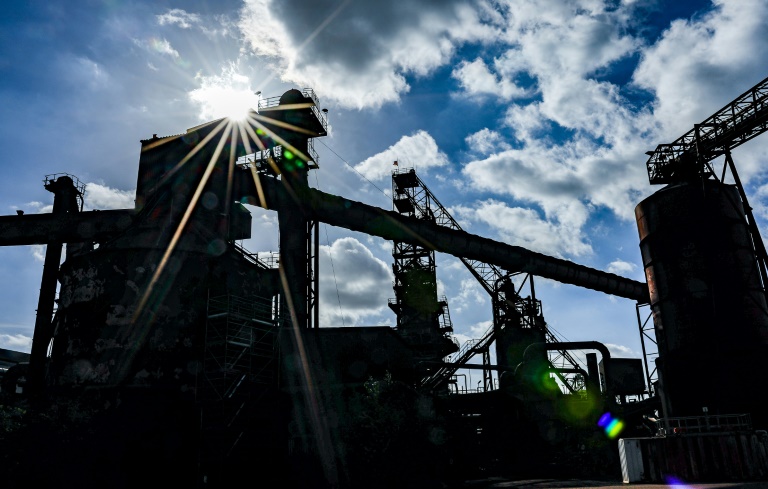
The familiar plume of smoke no longer billows from one of the two chimneys at ArcelorMittal’s massive steelworks in Hamburg’s harbour.

Soaring energy prices have forced operators to partially idle the plant, adding to fears that Germany’s industrial companies, the backbone of Europe’s biggest economy, are facing an existential threat.

Germany is already bracing for a recession as the energy crisis triggered by Russia’s war in Ukraine takes its toll, and the latest government forecasts on Wednesday will likely make grim reading. 

But some economists say the long-term impact could run far deeper and see entire manufacturing sectors trim production or relocate to countries where running costs are lower, fundamentally reshaping Germany’s industrial landscape.

In Hamburg, the 530 workers at the ArcelorMittal steelworks have been placed on reduced hours since early October.

“Gas plays a crucial role in the (iron ore) reduction process” carried out at the plant, said Uwe Braun, CEO of ArcelorMittal Hamburg.

But the energy bill has risen “seven-fold” since Russia’s February invasion of Ukraine, he told AFP at the site, where activity was subdued and helmet-clad workers were spread out around the imposing 1970s steelworks.

The steep price increase made it unaffordable to continue business as usual at the site, which on average consumes two terawatt-hours of gas and one terawatt-hour of electricity per year — enough to power a medium-sized city.

Similar steps to curb production have been taken at other European sites operated by ArcelorMittal, the continent’s biggest steelmaker.

In a September statement announcing the cost-saving measures, the company blamed the “exorbitant” rise in energy prices and weaker demand as the global economic outlook darkens.

– ‘Broken’ –

Germany in recent decades managed to avoid the waves of de-industrialisation that hit other European countries.

Industrial production remains a pillar of the country’s economy and accounts for around 22 percent of gross domestic product (GDP), compared with around 13 percent in neighbouring France.

“Germany’s business model in a nutshell is buying cheap energy from Russia, raw materials and intermediate products… make some outstanding cars and machines… and export them” to the United States and China, said LBBW bank economist Jens-Oliver Niklasch. 

“Now, some of the tiles on the roof are broken,” he told AFP.

Alarm bells are ringing across Germany’s energy-hungry sectors, from steel to chemicals, glass, paper and ceramics production.

Chancellor Olaf Scholz’s government has unveiled a 200-billion-euro ($198 billion) energy fund to cushion the impact of price shocks on households and businesses, including a temporary cap on gas prices from next year.

Despite those efforts many experts agree that because of the severed ties to Russian imports, European energy prices are unlikely to return to their cheap pre-war levels anytime soon, if ever.

“We’ll see in the months ahead who can still afford to manufacture in Germany,” Arndt Kirchhoff of the family-owned Kirchhoff car parts supplier recently told Der Spiegel weekly.

– America beckons –

Outside ArcelorMittal’s Hamburg plant, a mound of iron ore pellets is piled high, awaiting the steelworks’ full resumption.

Before the crisis, the site produced one million tonnes of steel annually, mainly for Germany’s flagship automobile sector.

If nothing is done to drastically bring down energy costs, “it’s clear that some parts of the production process will be relocated”, said Braun.

Analyst Niklasch said it was not unthinkable that German industry would have to say goodbye to “its most energy-intensive branches”.

The United States, where gas prices remain low thanks to abundant domestic production, could be an attractive alternative, according to Niklasch.

But Stefan Kooths, of the IfW Kiel economic institute, said he didn’t expect a widespread exodus of industrial companies from Germany.

“The price of gas should stabilise in the medium term, even if the cost will remain higher than before the crisis,” he reasoned.

Biden says he 'can beat' former US president Donald Trump again

US President Joe Biden on Tuesday voiced confidence that he could beat his predecessor Donald Trump in a 2024 rematch — even as he acknowledged the country could sink back into recession under his leadership.

The 79-year-old Democrat was asked if he’d be announcing a run for a second term after November’s midterm elections — and if Trump would be a factor in his decision.

“I believe I can beat Donald Trump again,” Biden responded, although he stopped short of confirming another tilt at the Oval Office in 2024.

Biden defeated Trump in both the state-by-state “electoral college” and the popular vote in 2020 — leading to relentless false claims of widespread voter fraud from the defeated president.

Biden indicated to reporters at a NATO summit in March that he would be happy for Trump to be his opponent again.

Biden’s popularity has taken a hit in the last year amid soaring inflation, rising violent crime in cities and a seemingly intractable migrant crisis at the southern border.

But his approval ratings still outrank the numbers seen in polling for Trump, who regularly mocks Biden — three years his senior — for his age.

CNN asked Biden what he would tell voters who consider him too old for reelection. 

“Name me a president in recent history that’s gotten as much done as I have in the first two years. Not a joke. You may not like what I got done, but the vast majority of the American people do like what I got done,” Biden replied.

“And so… it’s a matter of, can you do the job? And I believe I can do the job.”

In a wide-ranging interview that took in the war in Ukraine and Saudi-led oil production cuts that are expected to send gas prices soaring again, Biden was asked about fears for the economy amid gloomy growth projections.

Biden downplayed the likelihood of a recession but conceded a “slight” downturn is possible.

“I don’t think there will be a recession. If it is, it’ll be a very slight recession. That is, we’ll move down slightly,” he said.

Trump, 76, came to power during the longest economic expansion in US history, although the economy tumbled into recession in 2020 as the world was gripped by the Covid-19 outbreak.

Biden frequently takes questions from the media, but he has held few press conferences or one-to-one televised interviews.

He has been more visible recently as he takes to the road to talk up Democratic legislative achievements and slam “MAGA Republicans” — followers of former president Donald Trump’s “Make America Great Again” agenda — in the final weeks of the midterm election campaign. 

He also sat down with CBS in September, making headlines for declaring the pandemic over and confirming US commitment to defending Taiwan from a Chinese assault.

Stocks dive, dollar rallies as dazed traders gird for inflation data

Asian stocks sank again Wednesday while the dollar held gains against the yen and sterling as the volatility that has characterised markets for most of the year showed no sign of letting up.

Angst-ridden investors are struggling to find some solace as they navigate a range of crises that threaten the global economy, from soaring prices and bumper interest rate hikes to the Ukraine war and China’s Covid-induced growth slowdown.

The gloom was summed up by the International Monetary Fund, which on Tuesday highlighted the risks of inflation and the conflict in Europe as it slashed its global growth forecast and warned: “For many people 2023 will feel like a recession”.

Later, US President Joe Biden admitted there was a chance the country could suffer a “slight” recession.

The latest blow came Tuesday when the Bank of England announced it would stop its emergency bond-buying efforts on Friday, ignoring calls to extend the programme to allow markets to stabilise.

Officials were forced last month to step into financial markets to prevent a collapse in pension funds caused by a spike in bond prices after a debt-fuelled, tax-cutting mini budget by new finance minister Kwasi Kwarteng sparked fears of a surge in borrowing.

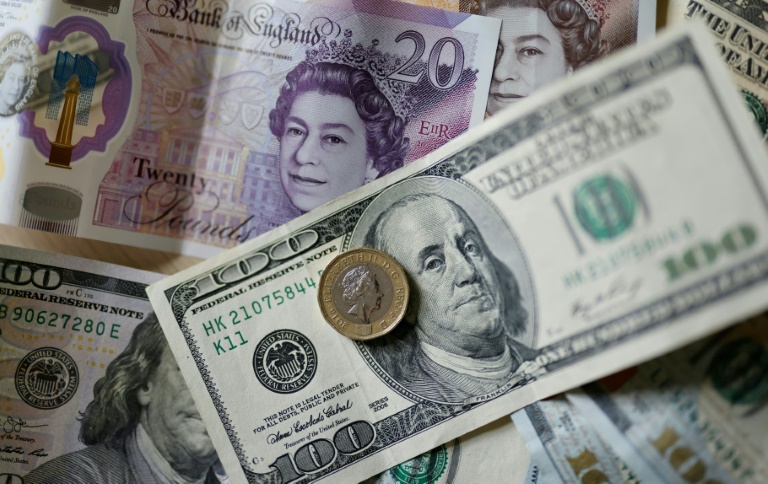
The move quelled the crisis — after the pound hit a record-low $1.0350 — but traders were spooked by the prospect of more selling when the BoE removes its support.

Sterling, which had recovered to as high as $1.15 last week, came back under pressure to drop back below $1.10 Tuesday where it remained the next day in Asian business.

Risk assets buckled after the announcement, with all three main indexes on Wall Street turning lower Tuesday, having been in positive territory earlier.

– Fresh volatility warning –

Most of Asia followed suit.

Hong Kong led losses, shedding more than two percent, while Tokyo, Sydney, Shanghai, Singapore, Seoul, Wellington, Jakarta and Taipei were also down. 

“And at least they did not allow the rug to get ripped from under pension funds,” said SPI Asset Management’s Stephen Innes. “But stepping away as the buyer of last resort is not great for risk or sterling.

“At the end of the day, UK economic issues, fiscal irresponsibility, and a hawkish Fed will linger. So do not be surprised by a pickup in pound volatility and for a continued move lower as well.”

Investors are now nervously looking ahead to Thursday’s US inflation report, with observers warning that a strong reading could spark another rout.

The desire to find a safe place to invest also pushed the greenback to a new 24-year high against the yen, breaking the level touched last week when Tokyo stepped into the market to support the Japanese unit.

Investors will be keeping a close eye on developments in Japan, to see if there is another cash injection, though analysts said the yen could strengthen naturally.

“There is so much tension that duration time (above 146 yen) will be short,” said Yoshio Iguchi, of Traders Securities. “The chicken race will continue with people wanting to test the upside but at the same time scared of being countered by intervention.”

And City Index’s Matt Simpson added: “Traders are confident that the yen will weaken, despite comments from government officials that they are watching forex markets very closely.

“But the reality is that the (Bank of Japan) wants a weaker currency, and (is) happy to let it slide so long as its demise is not too volatile.

“As of yet we’re yet to hear any comments from BoJ or (finance ministry) officials, but we suspect comments will surely follow — not that they seem to care.”

Recession fears and China’s Covid-linked economic woes also dragged oil prices back down, having surged last week on an outsized OPEC output cut, with many warning that demand will plunge as people refrain from spending.

– Key figures around 0230 GMT –

Tokyo – Nikkei 225: DOWN 0.1 percent at 26,364.25 (break)

Hong Kong – Hang Seng Index: DOWN 2.3 percent at 16,451.44

Shanghai – Composite: DOWN 0.9 percent at 2,952.74

Pound/dollar: DOWN at $1.0938 from $1.0972 Tuesday

Dollar/yen: UP at 146.34 yen from 145.83 yen

Euro/dollar: DOWN at $0.9688 from $0.9709

Euro/pound: UP at 88.57 pence from 88.46 pence

West Texas Intermediate: DOWN 1.1 percent at $88.40 per barrel

Brent North Sea crude: DOWN 0.9 percent at $93.43 per barrel

New York – Dow: UP 0.1 percent at 29,239.19 (close)

London – FTSE 100: DOWN 1.1 percent at 6,885.23 (close)

English winemakers toast summer heatwaves

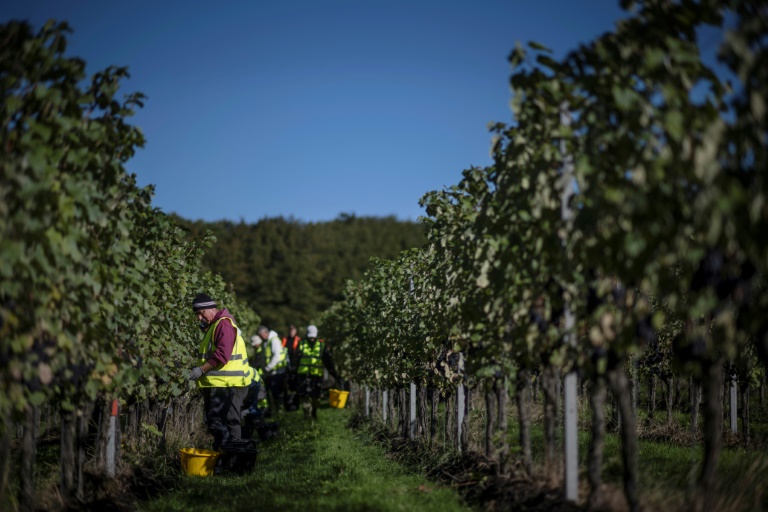
Under a blue sky, seasonal workers ran their secateurs along long rows of grapevines, harvesting a variety of pinot noir grown during the summer heatwave.

This was not a village in France, however, but Appledore in Kent in southern England, where high temperatures needed to grow the grape variety are no longer rare.

“At the moment, I think we have similar growing conditions to Champagne in the (19)70s and 80s,” said Charlie Holland, head winemaker and chief executive at Gusbourne Estate. 

“We’re seeing the same sort of growth conditions, the same ripening period” in England as back then in France, he added.

That is good news for Britain’s embryonic viticulture which is now able to produce a wide variety of still and sparkling wines from grape varieties including pinot noir, chardonnay and riesling that are traditionally more accustomed to France and Germany.

“It’s not so often that you see a new wine region appearing on the map,” said Holland.

“In England, now we can make an exceptional sparkling wine, we have a perfect climate, we have a very long growing season.”

– ‘Quite frightening’ –

At Gusbourne Estate, tractors were transporting baskets full of grapes to the winery. The fruit was immediately destemmed and pressed to begin the fermentation process.

During the harvest period, the estate is a beehive of 200 workers, more than half of them seasonal.

Holland was everywhere, darting between presses, vats and oak barrels as he inspected and tasted the produce.

Climate change may be helping England’s vineyards for now but the fast pace of transition risks major planning difficulties, warned Alistair Nesbitt, co-author of an outlook study on the country’s winemaking industry.

“That’s a really quite frighteningly short period of time to have such a transition of varietals suitability, and that really shows the pace of change that certain areas of the UK are starting to see as a result of climate change,” he noted.

“Hopefully the world will get (its) act together and we won’t see that continuing increase for too much longer, because that’s threatening to everyone, including producers in the UK,” added Nesbitt, who is chief executive of consultancy Vinescapes.

Nesbitt forecasts that beyond 2040, England’s vineyards could be working with grape varieties found further south in France, such as merlot and cabernet sauvignon. 

This assumes that climate change continues on its expected path amid global reductions in carbon emissions.

– ‘Niche producer’ –

Britain’s wine growers are planting grapes in droves to meet booming demand at home and abroad.

The surface area of vineyards in the country has doubled in eight years, according to industry organisation WineGB.

UK vineyards are however dwarfed on the international stage, covering a total of 3,800 hectares — or about one tenth of France’s champagne-producing region.

Britain “will likely remain a niche wine producer”, said Daniel Mettyear, research director at consultancy IWSR Drinks Market Analysis.

Despite the relatively high price — £45 ($50) for one of Gusbourne’s sparkling wines — demand is growing both in Britain and abroad for the drink.

“Quality has improved significantly in recent years,” added Mettyear, noting strong interest from North American and Nordic countries, as well as from Australia.

Gusbourne exports about one third of its wine to 28 nations worldwide, mostly to Norway but also to France.

Close Bitnami banner
Bitnami