US Business

Swiss franc's surge against the euro a boon for business

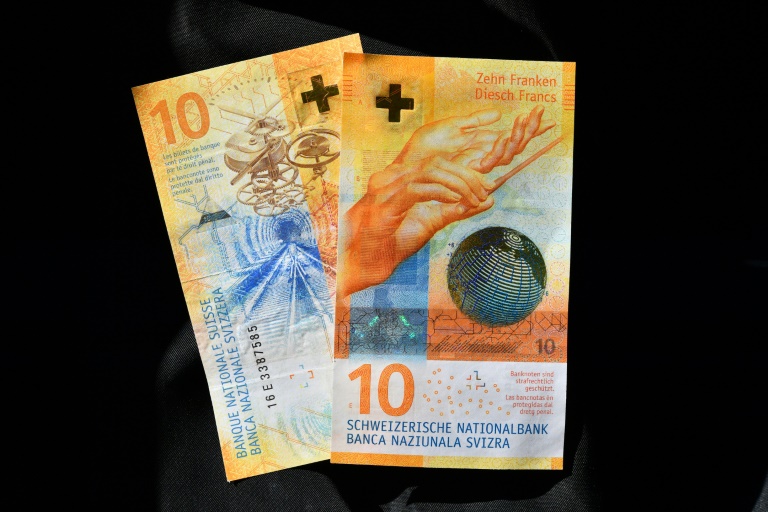
The Swiss franc is breaking records against the euro, giving the Swiss economy a temporary boost as central banks battle inflation — although experts remain cautious about the months ahead.

Seen as a safe haven, the Swiss currency briefly hit a high of 0.94 francs to the euro on Monday following the Italian general election.

While it has since eased back a little, it is nevertheless at the highest levels since the launch of the single currency more than 20 years ago, outside a brief flash crash in 2015.

“It’s more about the weakness of the euro than the strength of the Swiss franc,” Credit Suisse economist Maxime Botteron told AFP, citing the franc’s steadier performance against the US dollar.

“European growth is showing signs of running out of steam, even recession,” he said, noting that “these indicators come in a context where the Swiss National Bank (SNB) has changed its monetary policy”.

Switzerland’s central bank has abandoned the negative rate it has imposed since 2015 to combat the overvaluation of its currency.

Like other central banks, the SNB seeks to prevent inflation from taking root. But in the midst of soaring energy prices, the franc’s rise is providing it with welcome help in curbing price increases.

“In Switzerland, two-thirds of inflation is due to imports. An appreciation of the Swiss franc therefore reduces the rise of these goods a little,” said Botteron, adding that the SNB “therefore has less need to tighten monetary policy” than other central banks.

In August, inflation rose to 3.5 percent, its highest level in 29 years, but far behind the 9.1 percent recorded last month in the eurozone.

– Tourism boost – 

“There is a very clear strategy to shield Switzerland the against the rising inflation coming from the eurozone, the US and other trading partners,” said Thomas Flury, UBS bank’s global head of currency strategy.

The franc’s rise has not triggered panic, unlike in 2015 when exporters feared their production costs and export prices would explode.

“High inflation in the eurozone makes the real appreciation much less dramatic than in the past,” said Flury.

“Acceptance is coming because companies in Switzerland would rather have a stronger Swiss franc than discussions on wage rises that French or German companies will have to do, as well the cost pressures from imports.”

If this rise in the franc eases somewhat the pressure on their imports, Swiss companies, with well-filled order books, also have some leeway to increase their prices, said Botteron.

In tourism, another sector sensitive to the exchange rate, the franc’s rise has enabled Swiss hoteliers to increase their prices to a lesser degree than in neighbouring countries given the lower inflation, a spokesman for the Hotellerie Suisse hotel industry body told AFP.

“For hoteliers, this means that they should become even more competitive against foreign countries,” he explained.

As Switzerland nevertheless remains an expensive destination, the group remains cautious, fearing that “consumer budgets will tighten”.

However, this boost to the Swiss economy may only be short-lived.

“We’ll have to see how this develops over the winter,” said Flury.

Even if it is too early to guess how the exchange rate might develop, recession or weak growth in the European economy would hamper Swiss companies and the franc’s value may become a much more sensitive subject.

North Korea fires ballistic missile after US VP Harris tours DMZ

US Vice President Kamala Harris toured South Korea’s heavily fortified border with the nuclear-armed North on Thursday, part of a trip aimed at strengthening the security alliance with Seoul.

But hours after Harris’s plane left Osan Airbase, North Korea fired an “unidentified ballistic missile,” Seoul’s military said. 

Thursday night’s launch is Pyongyang’s third in less than a week, continuing a record-breaking blitz of weapons tests this year.

Earlier, speaking at the Demilitarized Zone (DMZ), Harris had emphasised that the US commitment to South Korea’s defence was “ironclad”, saying the allies were “aligned” in their response to the growing threat posed by the North’s weapons programmes.

Seoul and Washington want “a complete denuclearisation of the Korean peninsula” — but in the interim they are “ready to address any contingency”, she said.

South Korean and US officials have warned for months that Kim Jong Un is preparing to conduct another nuclear test, with Seoul’s spy agency saying it could come as soon as next month.

Harris decried North Korea’s “brutal dictatorship, rampant human rights violations and an unlawful weapons program that threatens peace and stability”.

At an observation post atop a steep hill overlooking North Korea, Harris peered through bulky binoculars as US and South Korean soldiers pointed out features, including defences, in the area.

“It’s so close,” she said.

Harris also visited the Panmunjom Truce Village — where then-US president Donald Trump met the North’s Kim Jong Un in 2019 — and talked to US soldiers at Camp Bonifas in the Joint Security Area.

On the North Korean side of the border at Panmunjom, guards in hazmat suits could be seen watching as Harris was shown the demarcation line between the two countries — which remain technically at war.

– Yoon talks –

Washington has about 28,500 troops stationed in South Korea to help protect it from the North, and the allies are conducting a large-scale joint naval exercise this week in a show of force.

Harris’ trip to the DMZ likely infuriated Pyongyang, which branded United States House Speaker Nancy Pelosi the “worst destroyer of international peace” when she visited the border in August.

Harris visited Seoul after a trip to Japan, where she attended the state funeral of assassinated former prime minister Shinzo Abe.

Earlier Thursday, Harris met President Yoon Suk-yeol for talks dominated by security issues — although Seoul also raised its concerns over a new law signed by US President Joe Biden that removes subsidies for electric cars built outside America, impacting Korean automakers such as Hyundai and Kia.

Harris, America’s first woman vice president, also met what the White House called “groundbreaking women leaders” of South Korea to discuss gender equality issues, a topic she said she raised with Yoon during their talks.

Yoon, who has pledged to abolish Seoul’s Ministry of Gender Equality, has faced domestic criticism for a lack of women in his cabinet.

– Nuclear test? –

On Wednesday, the South’s spy agency said North Korea’s next nuclear test could happen in the window between China’s upcoming party congress October 16 and the US midterms on November 7.

North Korea, which is under multiple UN sanctions for its weapons programmes, typically seeks to maximise the geopolitical impact of its tests with careful timing.

The isolated regime has tested nuclear weapons six times since 2006, most recently in 2017. Earlier this month it changed its laws, declaring itself an “irreversible” nuclear power.

“North Korea’s growing nuclear missile threat raises concerns in Seoul about the reliability of Washington’s defence commitments,” said Leif-Eric Easley, a professor at Ewha University in Seoul.

But sending the USS Ronald Reagan supercarrier and Harris to South Korea demonstrates both America’s military capabilities and political will, he added.

During President Yoon’s tenure, Seoul and Washington have boosted joint military exercises, which they insist are purely defensive. 

But North Korea sees them as rehearsals for an invasion.

Harris also raised the issue of Seoul working more closely with Japan on security issues during her trip.

Seoul announced Thursday it would hold trilateral anti-submarine drills with Japan and the US, the first such exercises since 2017. 

South Korean officials said this weekend they had detected signs Pyongyang could be preparing to fire a submarine-launched ballistic missile.

Macron government lays out reform timeline amid strike

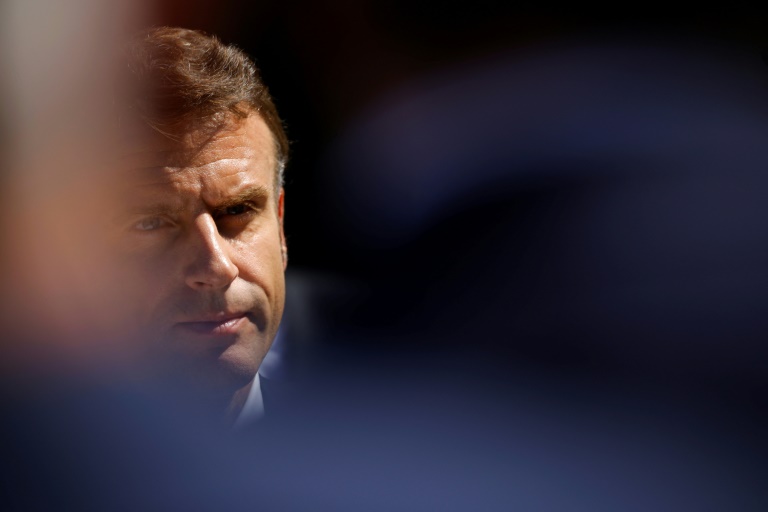
The French government vowed on Thursday to push through pension reform by the end of the winter despite fierce opposition from unions whose first major day of strikes failed to have much impact.

A nationwide day of stoppages called by the CGT union on Thursday — the first since President Emmanuel Macron was re-elected in April — caused some disruption, but was not widely followed.

Several unions, including the country’s biggest, did not take part, although all of them are gearing up for a months-long battle over efforts to raise the pension age.

Macron made raising the retirement age from its current level of 62 one of the key planks of his re-election campaign, arguing that the current system was unsustainable and too expensive.

“All the unions in France are against working up to 64 or 65 years. Because it’s stupid,” the head of the CGT union, Philippe Martinez, told France 2. 

Left-wing political parties have called their own separate rallies on October 16 to demand pay rises and an end to the planned pension changes.

Though known to be in a rush to push through the changes, Macron’s Prime Minister Elisabeth Borne announced Thursday that the government would spend another few months in consultations.

“There are important questions we want to open talks about” with other political parties, unions and employers’ groups, Borne told AFP.

“We’re starting from the assumption that we’ll be able to hold a dialogue,” she added.

A bill would be voted on “before the end of the winter”, she promised.

– Fresh elections? –

With deficits spiralling and public debt at historic highs, Macron views pushing back the pension age as one of the only ways the state can raise revenues without increasing taxes.

But his centrist party lost its majority in parliament in June, severely undermining his ability to make changes.

“If the president insists on declaring a social war on the people, we will respond with all the means at our disposal,” the parliamentary leader of the hard-left France Unbowed (LFI) party, Mathilde Panot, warned on Wednesday.

Labour Minister Olivier Dussopt said that the 44-year-old head of state would not hesitate to call fresh elections if opposition parties voted down the government over the reform.

“If all of the opposition comes together to adopt a vote of no-confidence and brings down the government, he (Macron) will let French people decide and say what sort of a majority they want,” Dussopt told the LCI channel. 

No opposition party has pledged to support the centrist minority government so far, but the conservative Republicans party might still be persuaded, observers say.

– Stoppages – 

The strike on Thursday was followed by about one in ten teachers, according to the education ministry, leading to school closures in some areas.

One in three railway workers also stopped work, according to the CGT, leading to major cancellations on key routes including Paris-Bordeaux.

The biggest of around 200 protests nationwide was expected to draw 3,000-6,000 people in Paris on Thursday afternoon, according to a police source.

Around 4,300 people marched in the southern city of Marseille. 

The strikes and demonstrations were small by historic French standards and even the last round of protests against pension reform in 2019. 

Hundreds of thousands marched in 2019 and a four-week strike on Paris transport crippled the metro system in what was the longest stoppage in decades.

“I don’t know anyone who wants to work for longer, but I don’t know anyone who thinks they are not going to work for longer,” a minister close to the president told AFP last week on condition of anonymity.

“Maybe I’m mistaken, but I’m not sure that the turnout will be as large as the unions and LFI are hoping for,” the minister said of Thursday’s day of action.

burs-adp/sjw/imm

Millions without power, major flooding in Florida hurricane

Hurricane Ian flooded cities, turned out the lights on millions, and left migrants from an overturned boat missing on Thursday as Florida assessed damage from one of the most intense US storms in years.

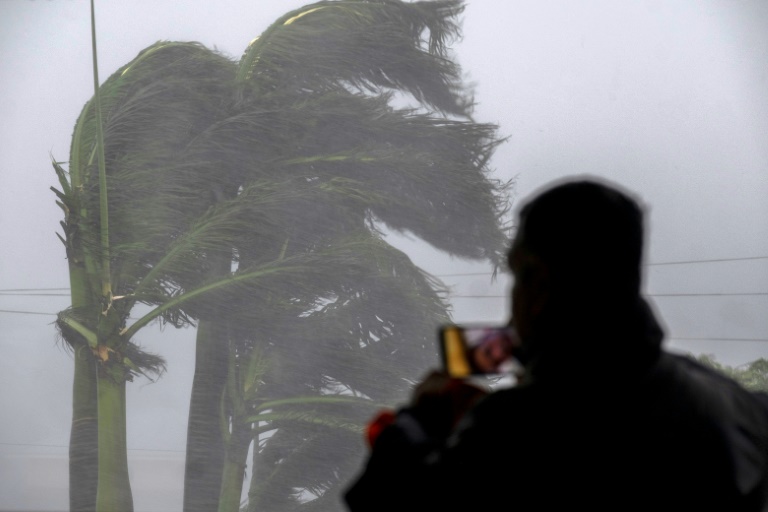
Officials readied a major emergency response to the deluge that laid waste to coastal Florida as the hurricane roared through beachfront towns and horizontal rain pounded communities for hours.

The National Hurricane Center (NHC) downgraded Ian to a tropical storm, but said it was causing “catastrophic flooding” and forecast further “life-threatening” floods, storm surge and high winds in Florida as well as Georgia and South Carolina.

The US Border Patrol said that a boat carrying migrants sank at sea during the hurricane, leaving 20 missing. Four Cubans swam to shore in the Florida Keys islands and the coast guard rescued three others.

Ian also menaced the city of Orlando and the nearby Disney theme parks, which were shuttered Wednesday and Thursday.

President Joe Biden declared a “major disaster” in Florida, a move that frees up federal funding for storm relief.

As dawn broke across the state’s west coast, residents got their first glimpse at the damage. 

Ian made landfall as an extremely powerful hurricane just after 3:00 pm Wednesday on the barrier island of Cayo Costa, west of the city of Fort Myers.

Dramatic television footage from the coastal city of Naples showed floodwaters surging into beachfront homes, submerging roads and sweeping away vehicles.

– ‘A lot of destruction’ –

Pete DiMara, chief of Naples Fire-Rescue, told CNN that a surge of four to six feet (up to two metres) swept through his station, leaving crews unable to respond to emergencies.

Many cell towers are down and “the surge has certainly caused a lot of destruction in the area,” DiMara said, urging residents to stay home until his crews can reach them.

To the north, some neighborhoods in Fort Myers, a city of 83,000, resembled lakes.

The NHC said Ian’s maximum sustained winds reached 150 miles (240 kilometers) per hour when it landed as a Category 4 hurricane — just shy of the maximum Category 5.

As a tropical storm, they had dropped to a maximum 65 miles per hour.

Some 2.6 million of Florida’s 11 million electricity customers were without power on Thursday, according to the PowerOutage tracking website.

Florida’s Governor Ron DeSantis said the state should brace for a “nasty, nasty day, two days.”

The town of Punta Gorda was in near-total darkness overnight after the storm wiped out power, save for the few buildings with generators.

Howling winds toppled trees, pulled chunks out of roofs, and turned debris into dangerous projectiles whipping through town.

Mandatory evacuation orders had been issued for about 2.5 million people in a dozen coastal Florida counties, with several dozen shelters set up.

Airports stopped all commercial flights, and cruise ship companies delayed departures or canceled voyages.

The storm was set to move off the east-central coast of Florida later Thursday and emerge into the Atlantic before blowing through Georgia and the Carolinas to the north.

“Some slight re-intensification is forecast, and Ian could be near hurricane strength when it approaches the coast of South Carolina on Friday,” according to the NHC.

– National Guard called up –

Ian had plunged all of Cuba into darkness Tuesday, after battering the country’s west as a Category 3 storm and downing the island’s power network.

At least two people died in Pinar del Rio province, state media in the country of more than 11 million reported.

By Wednesday power had been restored for some residents of Havana and another 11 provinces, but not in Cuba’s three worst-affected provinces.

In the United States, some 5,000 National Guard personnel were mobilized in Florida as DeSantis vowed an all-out rescue and recovery effort. 

“There will be thousands of Floridians who will need help rebuilding,” the governor said.

Last year, four hurricanes were among 20 separate weather incidents that cost the United States $1 billion or more, the second-most billion-dollar disasters recorded in a calendar year behind 2020, the National Oceanic and Atmospheric Administration said.

Human activity has caused life-threatening climate change resulting in more severe weather events across the globe.

European stocks drop, pound recovers

European equities sank Thursday on fears that rising interest rates will spark a global recession, while the pound clawed back ground one day after emergency bond-market intervention from the Bank of England.

German inflation accelerated sharply in September, official data showed Thursday in the latest indication that Europe’s biggest economy is buckling under the pressure from soaring energy prices.

Consumer prices spiked 10.0 percent compared to the same month a year earlier.

German Chancellor Olaf Scholz announced that the nation would plough 200 billion euros ($194 billion) into shielding households and businesses from skyrocketing energy costs in the wake of Russia’s invasion of Ukraine.

However, Frankfurt stocks accelerated losses to shed 1.6 percent in value, while Paris showed a similar drop.

London equities fell as the pound rebounded somewhat from earlier falls, one day after the BoE snapped up UK bonds to avert a risk to UK financial stability.

The BoE, the European Central Bank, the US Federal Reserve and many other counterparts are ratcheting up interest rates to fight decades-high inflation.

Oil prices dropped on the strong dollar, which makes US-priced commodities more expensive for buyers using weaker units.

– ‘Pessimistic’ investors –

“There’s a growing list of reasons why investors are pessimistic right now, with the prospect of an interest-rate recession being right up there,” Craig Erlam, analyst at trading platform OANDA, told AFP.

“But we are increasingly seeing pressures mounting and forcing responses from policymakers that are not normal. That started out as super-sized rate hikes, and now includes Japanese foreign-exchange interventions and the BoE intervening in bond markets.”

Stocks had also rallied Wednesday partly after the BoE’s surprise purchase, which came after Britain’s recent tax-cutting budget sparked soaring bond yields and sent the pound to a record dollar low on Monday. 

The BoE launched a two-week programme to buy long-term UK bonds, capped initially at £65 billion ($71 billion), as UK pension funds scrambled to sell investments to remain solvent.

Despite falling equities, the UK bond market was further soothed on Thursday.

The UK government’s 30-year sovereign bond yield retreated further to 3.97 percent, having briefly surged Wednesday to a 1998 peak at 5.14 percent.

Meanwhile, sentiment was also dented this week by leaks from the undersea Nord Stream pipelines running from Russia to Europe.

That sparked accusations of sabotage amid strained relations between the West and sanctions-hit Russia over the latter’s war on Ukraine.

– Key figures at around 1210 GMT –

London – FTSE 100: DOWN 1.2 percent at 6,922.60 points 

Frankfurt – DAX: DOWN 1.6 percent at 11,985.83

Paris – CAC 40: DOWN 1.4 percent at 5,683.07

EURO STOXX 50: DOWN 1.5 percent at 3,284.01

Tokyo – Nikkei 225: UP 1.0 percent at 26,422.05 (close)

Hong Kong – Hang Seng Index: DOWN 0.5 percent at 17,165.87

Shanghai – Composite: DOWN 0.1 percent at 3,041.20 (close)

New York – Dow: UP 1.9 percent at 29,683.74 (close)

Pound/dollar: UP at $1.0844 from $1.0689 on Wednesday

Euro/dollar: DOWN at $0.9710 from $0.9735

Euro/pound: UP at 89.53 pence from 89.40 pence

Dollar/yen: UP at 144.70 yen from 144.16 yen

Brent North Sea crude: UP 0.1 percent at $89.37 per barrel

West Texas Intermediate: UP 0.2 percent at $82.28 per barrel

burs-rfj/lth

USA to face Canada, Australia meet China in women's basketball World Cup semis

Connecticut Sun forward Alyssa Thomas nailed 13 points, 14 rebounds and seven assists as the United States close in on an 11th title after setting up a women’s basketball World Cup semi-final against Canada Thursday. 

Guard Kelsey Plum added a game-high 17 points in a 88-55 pummelling of Serbia, with the three-time defending champions strong on both offence and defence.

They will meet Canada in Sydney on Friday after the world number four swept past Puerto Rico 79-60 in their bid for a first medal since capturing bronze in 1986.

An impressive China battled past Olympic bronze medallists France 85-71 to make their first semi-final in 28 years and will face 2018 finalists Australia for a place in the gold medal match.

The host nation, one of only two teams other than USA or the former Soviet Union to win the World Cup, dominated Belgium 86-69 with veteran Lauren Jackson playing a pivotal role.

The US victory made it a 10th consecutive World Cup that they have gone undefeated before the last four, with coach Cheryl Reeve content despite a slow start.

“I thought Serbia executed their game plan and took us out of one of our largest identities in pool play, and that was scoring in the paint,” she said.

“But overall, I thought our response was really good. Once we got out of the first quarter, we adjusted a little bit and we found success … I thought our defence was really hard to play against.”

Little separated them in the first frame, with the US taking a narrow 25-23 lead, shooting 57 percent to Serbia’s 48 percent.

The US has been brutal in punishing errors, and they stepped up a gear to dominate around the board, building a 50-33 half-time lead on the back of a 12-0 run.

Serbia, ranked 10, was shooting just 30 percent from the field and were held to only seven points in the third quarter, before the Americans put another 22 points past them in the fourth to romp home.

– Accomplishment –

“Serbia really tested us, they played super physical,” said Plum. “I felt early on their pressure bothered us, but we were able to get it under control.”

It was never going to be easy for the Serbs, with the US on a 28-game unbeaten streak, their longest since winning 26 from 1994-2006.

They now meet a young Canadian team rejuvenated under coach Victor Lapena, coming through the group phase with just one narrow defeat, against Australia.

They were too strong for Puerto Rico, racing to a 44-23 half-time lead, successfully blunting the threat posed by dangerwoman Arella Guirantes.

The Puerto Ricans improved their defence and shooting percentage to come out on top of the third quarter as Guirantes found her stride, ending with 19 points. But it was too little too late.

“This is a great accomplishment for Canadian basketball,” said Kia Nurse, who downed 17 points. “It’s been a really long time coming.”

A superb China finished 4-1 in group play after only losing to the USA, but came into their clash with France having lost their previous three World Cup quarter-finals.

They made no mistakes this time to secure a first semi since 1994 with the twin towers of Han Xu and Li Yueru at the forefront and shooting guard Li Meng pouring in 23 points.

Nothing separated them in the 25-25 first quarter, but China assumed control in the second to move 50-39 in front. They took an eight-point lead into the final leg and held their nerve.

“Mentally our players have improved a lot and right now we are moving forward,” said China coach Zheng Wei.

Australia went on a 13-point run to take a 26-16 first quarter lead against Belgium and built to 52-37 at half-way, with 41-year-old Jackson in the heart of the action.

They took a massive 24-point advantage into the home run and the win was never in doubt. Jackson ended with 12 points and Cayla George 19.

Kremlin announces Ukraine annexation ceremony for Friday

Russia will formally annex four regions of Ukraine its troops occupy at a grand ceremony in Moscow on Friday, the Kremlin has announced, after it suggested using nuclear weapons to defend the territories.

The threats from senior Russian officials have not deterred a sweeping counter-offensive from Kyiv, which has been pushing back Russian troops in the east and is edging nearer the Donetsk region city of Lyman that Moscow’s forces battered for weeks to fully capture.

President Vladimir Putin’s spokesman Dmitry Peskov said the annexation would be formalised at a ceremony in the Kremlin. The Russian leader will make a “major” speech, he added.

“Tomorrow in Saint George’s Hall at the Grand Kremlin Palace at 15:00 (1200 GMT) a signing ceremony will take place on the incorporation of the new territories into Russia,” Peskov told reporters.

The Kremlin-installed leaders of the four regions were gathered in the Russian capital on Thursday, a day after pro-Moscow authorities had appealed to Putin directly to integrate the territories into Russia.

Their nearly simultaneous requests to the Kremlin came after the four regions claimed residents had unanimously backed the move in hastily organised referendums that were dismissed by Kyiv and the West as illegal, fraudulent and void.

– Ukraine advances in Donetsk –

Ukraine after the so-called referendums said the only appropriate response from the West was to hit Russia with more sanctions and to supply Ukrainian forces with more weapons to keep reclaiming territory.

“Ukraine cannot and will not tolerate any attempts by Russia to seize any part of our land,” President Volodymyr Zelensky said late Wednesday.

The four territories — Kherson and Zaporizhzhia in the south; Donetsk and Lugansk in the east — create a crucial land corridor between Russia and the Crimean peninsula, annexed by Moscow in 2014.

Together, all five make up around 20 percent of Ukraine, whose forces in recent weeks have been clawing back ground.

Kyiv’s army in particular has been showing progress in the eastern Kharkiv region and recapturing territory in Donetsk, and military observers say Kyiv’s forces are close to capturing Lyman.

“The enemy is carrying out regular attempts to encircle the city,” a pro-Russian official in the Donetsk region, Alexei Nikonorov, told state TV on Thursday.

“At the moment, our units manage to repel all attacks,” he claimed.

– ‘I don’t want to kill people’ –

Still, Russian forces are striking out along the entire frontline of Ukraine and officials in Kyiv said Thursday that Russian bombardments had killed three in the Dnipropetrovsk region, five in Donetsk and wounded seven in the Kharkiv region.

Along with threats to use nuclear weapons, Putin announced a mobilisation of hundreds of thousands of Russian men to bolster Moscow’s army in Ukraine, sparking demonstrations and an exodus of men abroad.

On a bright morning in Mongolia’s capital Ulaanbaatar, a young Russian fleeing Moscow’s first military call-up since World War II had a stark answer for why he had left: “I don’t want to kill people.”

“It was very difficult to leave everything behind — home, motherland, my relatives — but it’s better than killing people,” the man in his 20s told AFP, speaking on condition of anonymity.

The exodus from Russia into Mongolia follows a similar trend in ex-Soviet countries like Georgia, Kazakhstan and Armenia.

EU member Finland is also affected and announced Thursday it would be shuttering its border to Russians with Schengen tourist visas beginning the next day.

Russia’s move to annex the Ukrainian territories was met with the announcement from the United States of a new package of weapons and supplies worth $1.1 billion, including precision rocket systems, ammunition, armoured vehicles and radars.

And the European Commission proposed fresh sanctions targeting Russian exports worth seven billion euros, an oil price cap, an expanded travel blacklist and asset freezes.

UK's PM defends 'difficult' tax cuts despite market turmoil

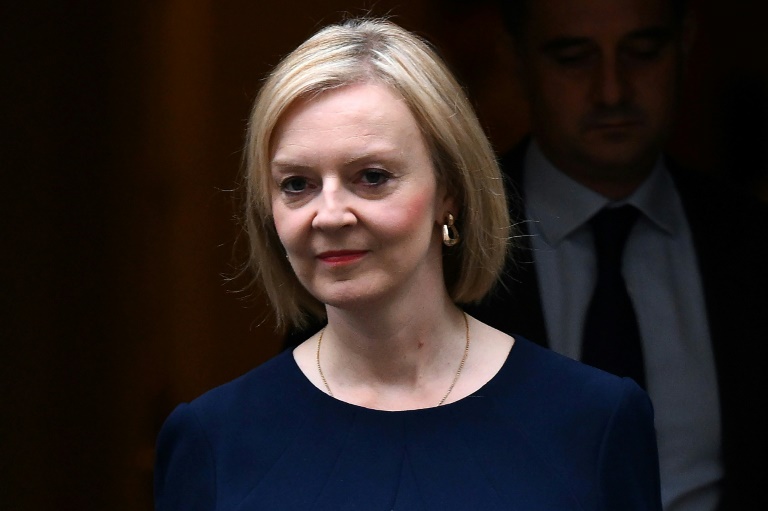
UK Prime Minister Liz Truss on Thursday defended her tax cutting policy after days of silence during which markets tanked and the Bank of England was forced into an emergency intervention.

“We had to take urgent action to get our economy growing, get Britain moving, and also deal with inflation,” she said in a round of local BBC radio interviews.

“And of course, that means taking controversial and difficult decisions, but I’m prepared to do that as prime minister,” she said in her first comments to UK media since the crisis sparked by Friday’s “mini-budget”. 

“It’s important the United Kingdom’s on the front foot, that we are pulling all the levers we can to drive economic growth. That is what we are pushing ahead with.” 

In power for less than a month, Truss is already under severe pressure after the markets reacted to her government’s tax cuts by sending the pound to an all-time low against the dollar.

UK markets remain highly volatile, with the central bank intervening on Wednesday to buy government bonds in order to prevent a “material risk” to stability.

The Bank of England announced a two-week programme to buy long-term UK bonds, capped initially at £65 billion ($71 billion), as UK pension funds scrambled to sell investments in order to remain solvent.

After sterling hit its dollar low early Monday, the bank said it would “not hesitate to change interest rates by as much as needed” to curb high inflation.

But it also signalled that it would wait until its next policy meeting on November 3 before fully assessing the impact of the government’s contentious plans.

Opposition leaders have demanded that Truss cancel her Conservative party’s annual conference starting on Sunday and recall parliament over the crisis.

– Truss v IMF –

Markets are concerned that Britain cannot fund its huge spending commitments, having announced a massive fuel subsidy package alongside the tax cuts.

Truss defended her fiscal policy, which includes a cut to the top rate of income tax, arguing the UK currently had its highest tax burden in 70 years. 

“We’ve reduced those taxes across the board. And of course people who are better off tend to pay more taxes,” she said.

The pound slipped again on Thursday, while former Bank of England chief Mark Carney said the government had “undercut” financial institutions. 

“Unfortunately having a partial budget, in these circumstances — tough global economy, tough financial market position, working at cross-purposes with the bank — has led to quite dramatic moves in financial markets,” he told the BBC. 

But Truss insisted she was working “very closely” with the central bank.

In a highly unusual intervention on Wednesday, the International Monetary Fund said it was “closely monitoring” developments and urged the UK government to change tack.

It noted that Truss and her finance minister, Kwasi Kwarteng, were trying to deal with the energy shock and boost growth.

“However, given elevated inflation pressures in many countries… we do not recommend large and untargeted fiscal packages at this juncture.” 

The IMF stressed the importance of fiscal policy not working “at cross purposes to monetary policy”.

Many central banks, including the Bank of England, are aggressively hiking interest rates in a bid to cool decades-high inflation. 

“There are many people with many different opinions, but what I think nobody is arguing with is that we had to take action to deal with what is a very, very difficult economic situation,” Truss retorted.

“My priority was making sure that we were supporting the British people in what is going to be a very difficult winter.”

Fourth leak detected at Russian gas pipeline to Europe

A fourth leak has been detected in undersea gas pipelines linking Russia to Europe, the Swedish Coast Guard said Thursday, after explosions were reported earlier this week in what NATO called “reckless” sabotage.

The Nord Stream 1 and 2 pipelines link Russia to Germany, and have been at the centre of geopolitical tensions as Russia cut gas supplies to Europe in suspected retaliation against Western sanctions following Moscow’s invasion of Ukraine.

The Swedish Coast Guard confirmed Thursday there were four leaks in total on the pipeline in the Baltic Sea — two on the Swedish side and two on the Danish side. Three leaks were previously reported. 

While the pipelines — operated by a consortium majority-owned by Russian gas giant Gazprom — are not currently in operation, they both still contained gas.

On Thursday, NATO declared that the damage was “the result of deliberate, reckless and irresponsible acts of sabotage”.

“These leaks are causing risks to shipping and substantial environmental damage,” the Western military alliance said in a statement. 

Russia has denied it was behind the explosions — as did the United States, saying Moscow’s suggestion it would damage the pipeline was “ridiculous”. 

Russia’s security service launched an “international terrorism” investigation into the gas leaks, saying the damage had caused “significant economic damage to the Russian Federation”.

It said Thursday suspects a foreign state of being behind the leaks.

The UN Security Council will meet Friday to discuss the matter.

– ‘Constant’ gas flow –

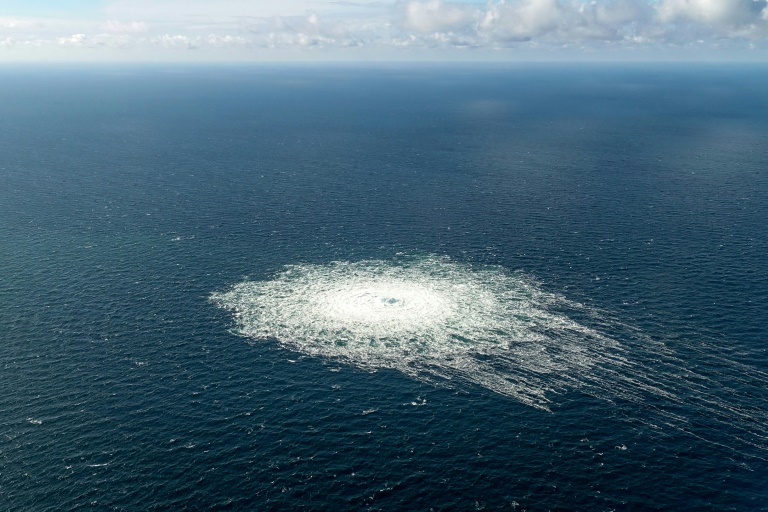
The vast leaks have caused underwater gas plumes, with significant bubbling at the surface of the sea several hundred metres wide, making it impossible to immediately inspect the structures. 

Seismic institutes on Tuesday reported they had recorded “in all likelihood” explosions in the area, prior to the leaks being detected.

A Swedish Coast Guard search and rescue vessel was patrolling the area.

“The crew reports that the flow of gas visible on the surface is constant,” the agency said in a statement. 

Danish authorities said the leaks will continue until the gas in the pipelines is exhausted, which is expected to occur on Sunday.

Fatih Birol, executive director of the International Energy Agency (IEA), said at a symposium in Paris that to him it was “very obvious” who was behind the leaks.

He said natural gas shortages in the wake of the war in Ukraine could make for a tough winter in Europe. 

“In the absence of a major negative surprise, I think Europe, in terms of natural gas, can survive this winter with a lot of bruises in our bodies in terms of prices, economy and social issues, but we can go through that,” Birol said. 

According to climate groups, Nord Stream 1 and 2 contained some 350,000 tonnes of natural gas — methane.

Greenpeace says the leaks could have the effect of almost 30 million tonnes of CO2, or more than two-thirds of the annual emissions of Denmark.

Porsche ignites blockbuster IPO, defying market turmoil

Luxury sports carmaker Porsche raced onto the Frankfurt stock exchange Thursday with one of Europe’s biggest listings in years, leveraging its brand power to defy global market turmoil.

Its shares rose to over 84.70 euros ($81.90) in morning trading, bettering the 82.50 euros price set by its parent company Volkswagen, and outperforming a weak Frankfurt market.

Even as markets worldwide suffer from surging inflation and mounting recession fears, the maker of the 911 sports car has pushed ahead with the bold flotation that gives Porsche a valuation of more than 76 billion euros.

The carmaker’s chief Oliver Blume said the listing was a “historic moment for Porsche”, as he rang the bell to mark the start of trading at the Frankfurt exchange. 

“A big, proud day for all of us… We are adding a new chapter to the unique history of Porsche,” added Blume, who is also the CEO of the wider German auto group Volkswagen.

Volkswagen is set to raise 9.4 billion euros ($9.2 billion) from the listing, with some to be ploughed into the group’s shift to electric vehicles that is bringing it into greater competition with US rival Tesla.

In terms of value of shares issued, Porsche’s is the biggest stock market debut in Germany since Deutsche Telekom’s in 1996, and the largest in Europe since the 2011 flotation of Switzerland-based commodities giant Glencore.

– ‘Crazy, cool’ –

Analysts have looked to the carmaker’s market entry for some cheer against a morose economic backdrop, with investment bank Berenberg saying it could “offer a catalyst in an industry sorely lacking positive surprises”.

It has generated buzz in Porsche’s home market of Germany, where top tabloid Bild described it as “crazy, cool, fast-paced”.

“Sports car icon Porsche goes full throttle and races onto the stock market,” read a column in the paper.

It has also drawn interest from major investors, including Qatar and Abu Dhabi’s public investment funds, Norway’s sovereign wealth fund and US asset management firm T. Rowe Price. 

The IPO has seen 113.9 million shares of “Porsche AG” issued.

While the carmaker’s valuation is below some earlier estimates, it still catapults it above rivals such as BMW, with a valuation of 47 billion euros, and Mercedes-Benz, with a 56-billion-euro capitalisation.

– Electric drive –

Porsche has joined the electric drive of the Volkswagen group, whose brands also include Audi and Skoda, in earnest. 

The electric “Taycan” has been the brand’s best-selling model since January, an electric version of the “Macan” is due in 2024, as well as the launch of a new SUV in the middle of the decade.

The electric strategy includes building battery factories across Europe and the US. Volkswagen announced this week it will work with Belgian group Umicore to produce battery materials. 

The IPO sees preferential shares sold to investors, which have no voting rights, while Volkswagen is also selling 25 percent of the carmaker to Porsche SE. 

The eponymous company is a listed holding controlled by the Porsche-Piech family, who in turn are the main shareholders in Volkswagen.

This means that Porsche SE will have a blocking minority that will allow it to steer the future of the company.

Volkswagen hopes that listing a minority stake in Porsche will push up its own stock market value, which is 85 billion euros — just a fraction of Tesla’s, at just over $900 billion.

While the Porsche IPO generated excitement, concerns surrounding governance have been brewing at Volkswagen.

The dual role of Blume  — who has kept the top job at Porsche, despite being recently appointed CEO of Volkswagen group — has in particular raised eyebrows.

Close Bitnami banner
Bitnami