US Business

In Spain, politicians wage tax war ahead of elections

With elections a year away, the battle lines have been drawn between Spain’s left-wing government and its right-wing regions who are tripping over themselves to unveil lower tax policies.

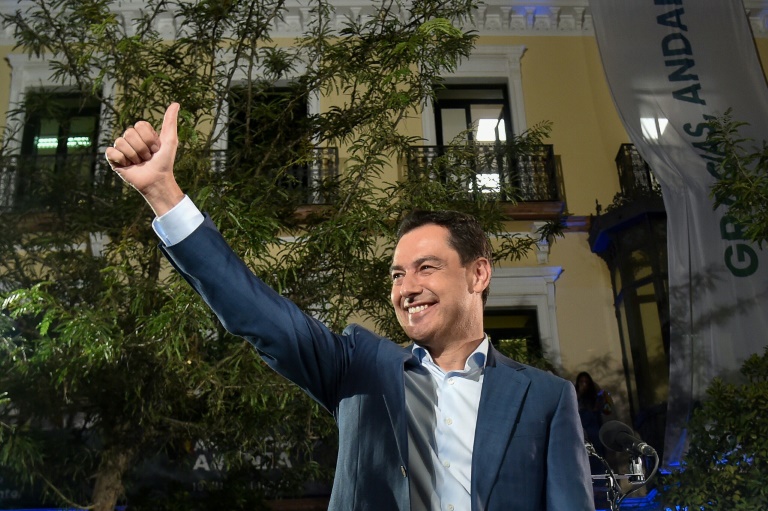
On the back burner for months, the tax issue hit the headlines last week after the leader of the southern Andalusia region decided to axe wealth tax and lower income tax in a bid to attract wealthy taxpayers.

“We were a tax hellhole but now we’re the region with the second lowest taxes in Spain,” boasted Juanma Moreno of the right-wing opposition Popular Party (PP) — his region trailing only Madrid, which is also held by the PP.

As one of the Western world’s most decentralised nations, Spain is divided into 17 regions, whose governments have considerable autonomy and are responsible for budget management. 

Moreno’s remarks opened the floodgates, with many other PP-run regions announcing cuts, including Murcia, which slashed income tax, and Galicia, which is rolling back its wealth tax.

– ‘Welcome to paradise’ –

This flurry of announcements was hailed by top figures within the PP, among them the party’s rising star, Madrid leader Isabel Diaz Ayuso.

“Welcome to paradise,” tweeted this champion of the tax war, who last year repealed some 15 local levies in her region. 

But the move has drummed up a storm of criticism within the government of Socialist Prime Minister Pedro Sanchez, which has denounced it as economic populism ahead of regional elections in May and a general election expected in late 2023.

And it has raised concerns about the impact of such measures on public service funding. 

Economy Minister Nadia Calvino didn’t mince her words, denouncing such moves as introducing an “irresponsible, incoherent and destructive dynamic that would affect the whole country” and demanding they be reversed. 

And Budget Minister Maria Jesus Montero warned it was “dangerous” to create “tax havens” within Spain. 

Even Sanchez weighed in, denouncing what he called “tax gifts to the minority” and pleading for “responsible tax policies”.

“There must be tax reforms that guarantee that those who have more contribute more to the public purse in order to have a much stronger welfare state,” he said. 

– Harmonisation –

On Thursday, the government said it would slap an “exceptional” tax on the country’s richest to help pay for measures aimed at easing the impact of spiralling inflation.

And it is in favour of a greater “tax harmonisation” between the regions. 

But it’s a sensitive subject in Spain where the Constitution requires a certain solidarity between the regions while also guaranteeing their robust fiscal and financial autonomy on top of extending them wide-ranging powers over issues such as health and education. 

“If some regions are lowering taxes, it’s because legally they can,” said Stella Raventos, head of AEDAF, the Spanish Association of Tax Advisors. 

“Not all regions have the same policies because they don’t have the same problems.”

But given the risks inherent in a wholesale policy of slashing duties, “a tax harmonisation policy could be a good idea”, as long as it was kept within “reasonable levels” and with upper limits, she said. 

For the PP, any such move would be crossing a red line. 

If there is any government “interference”, there will be “a robust legal response”, Andalusia’s Moreno vowed, warning against any move to “centralise” fiscal policy. 

For now, the government has no plans to encroach on the regions’ autonomy — although it is determined to fight any “fiscal dumping” within the framework of a huge reform package aimed at making Spain’s tax system more just and progressive. 

Details of the tax reform, which is required by Brussels in exchange for aid channelled through its post-pandemic recovery scheme, will be released early next year.
Ireland to unveil budget to tackle cost of living and energy crises

The Irish government will on Tuesday unveil its budget for the upcoming year and its plans to deal with widespread problems caused by the cost of living and energy crises.

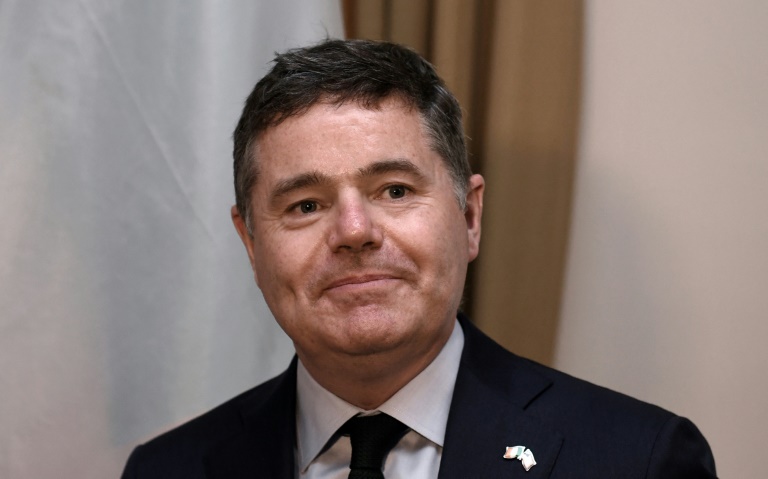
Finance minister for Ireland’s three-party governing coalition Paschal Donohoe will reveal the spending measures at about 1200 GMT in the Dail, the state’s lower house of parliament.

The date for the budget announcement was brought forward by two weeks because of the urgent need to deal with inflationary and supply chain pressures on households and businesses.

On top of a 6.7 billion-euro ($6.5 billion) package laid out in the government’s Summer Economic Statement, the Republic is set to introduce a one-off set of measures to alleviate the cost of living, reportedly of between 2-3 billion euros.

On Saturday, Donohoe reiterated the budget would “put money back in the pockets of people” but would stop short of raiding surplus funds.

“There will always be demands on us to do more and to spend more but we are in really uncertain times, we are dealing with a crisis caused by a huge war in Europe and we cannot be sure how long this will go on for,” he said.

The government has indicated surpluses in the state’s coffers would at least partially be held back to deal with uncertainties like the Covid-19 pandemic, Brexit and the war in Ukraine.

On the back of European Commission proposals for a windfall tax on energy firms, EU member Ireland has moved closer to implementing its own levy to offset rising energy costs on families and businesses.

Earlier this month, deputy premier Leo Varadkar, who will become prime minister in December as part of the coalition government’s rotation deal, told the Dail a backdated windfall tax had been agreed “in principle” and “will form part of the budget”.

But Donohoe has said he had ruled out an energy price cap.  

“Any measure that we bring in needs to be affordable and sustainable, and should not be a source of new risk, and we can see significant difficulties with a cap idea,” he said.

“You are in effect requiring the taxpayer to take on all of the cost regarding the price of something that is currently uncertain”.

Dollar softens after rally but Asian stocks struggle to recover

The dollar lost a little of its strength Tuesday after starting the week by surging against major peers, including a record high versus the pound, though equity traders struggled to claw back recent losses owing to recession fears.

While central banks around the world are ramping up interest rates to fight inflation, the main focus is on the US Federal Reserve’s increasingly hawkish tone that has seen it unveil three successive bumper hikes with a warning of more to come.

That has seen investors pile into the dollar, sending it to record or multi-decade peaks, which has rattled governments from Tokyo to Beijing and London.

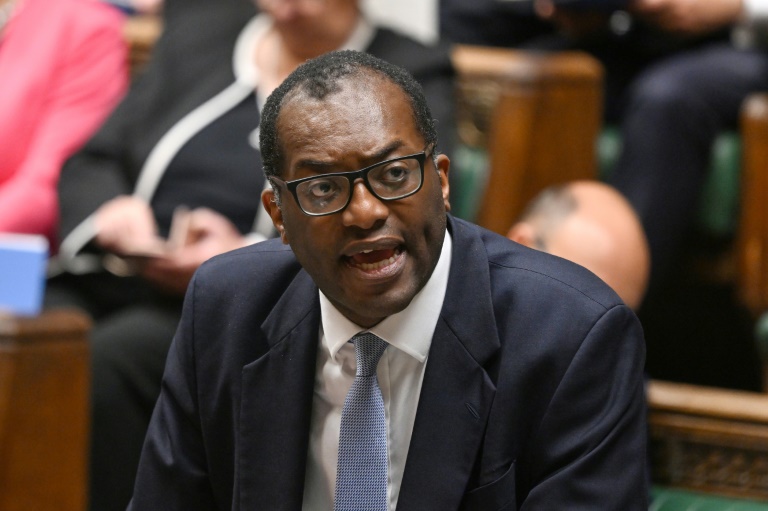
On Monday it hit its highest-ever level against the pound — touching $1.0350 after traders were spooked by a massive tax giveaway mini-budget by new UK finance minister Kwasi Kwarteng.

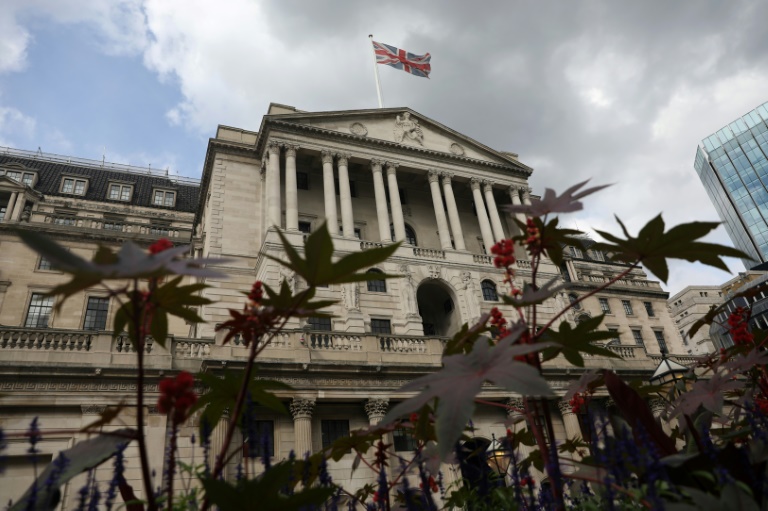
Sterling staged a small recovery but fell back again after traders were left disappointed by a lack of solid action from the Bank of England, with governor Andrew Bailey saying only it would not hesitate to increase rates by as much as needed.

The dollar’s rally against the pound was matched by advances across forex markets, with the euro hitting a new 20-year low and the yen pushing back to the level it hit when the government intervened to support the currency last week.

But the greenback surge ran out of steam Tuesday as a little stability returned to markets, though analysts warned that volatility would remain high as more global rate hikes were in the pipeline and geopolitical crises remained unresolved.

Added to that were concerns that inflation remained stubbornly high.

“The market is pricing in some Fed increases, but we’re a bit worried that it might not be pricing in everything,” Laila Pence, of Pence Wealth Management, told Bloomberg Television.

“We got whipsawed in August when inflation was up not down — everyone is nervous.”

Another selloff in Wall Street stocks saw the S&P 500 suffer its lowest close since December 2020, and Asia also struggled.

Tokyo, Shanghai and Sydney all rose but red was flashing up on screens in Hong Kong, Singapore, Seoul, Wellington, Taipei, Manila and Jakarta.

“Right now financial markets are a mess,” said OANDA’s Edward Moya.

“Wall Street is realising that we won’t be seeing a significant sign that inflation is easing fast enough in the next couple of months and that should make it tough to buy the dip just yet.”

Oil prices edged slightly higher, though both contracts remain wedged at their lowest levels since January owing to the stronger dollar and worries about demand caused by the expected recession.

And Moya added there appeared little chance the commodity will stage a near-term recovery, despite speculation that major producers could announce a fresh output cut.

“Chaos in the forex markets could keep crude prices heavy no matter what OPEC+ does over the short-term,” he wrote. “Forex volatility won’t let up anytime soon and that will send oil on a very long roller-coaster ride.”

– Key figures at around 0230 GMT –

Tokyo – Nikkei 225: Up 0.8 percent at 26,651.60 (break)

Hong Kong – Hang Seng Index: DOWN 0.6 percent at 17,755.57

Shanghai – Composite: UP 0.1 percent at 3,053.60

Pound/dollar: UP at $1.0761 from $1.0689 on Monday

Euro/dollar: UP at $0.9629 from $0.9611

Euro/pound: DOWN at 89.49 pence from 89.87 pence 

Dollar/yen: DOWN at 144.52 yen from 144.72 yen

West Texas Intermediate: UP 0.4 percent at $77.02 per barrel

Brent North Sea crude: UP 0.4 percent at $84.38 per barrel

New York – Dow: DOWN 1.1 percent at 29,260.81 (close)

London – FTSE 100: FLAT at 7,020.95 (close)

Dollar softens after rally but Asian stocks struggle to recover

The dollar lost a little of its strength Tuesday after starting the week by surging against major peers, including a record high versus the pound, though equity traders struggled to claw back recent losses owing to recession fears.

While central banks around the world are ramping up interest rates to fight inflation, the main focus is on the US Federal Reserve’s increasingly hawkish tone that has seen it unveil three successive bumper hikes with a warning of more to come.

That has seen investors pile into the dollar, sending it to record or multi-decade peaks, which has rattled governments from Tokyo to Beijing and London.

On Monday it hit its highest-ever level against the pound — touching $1.0350 after traders were spooked by a massive tax giveaway mini-budget by new UK finance minister Kwasi Kwarteng.

Sterling staged a small recovery but fell back again after traders were left disappointed by a lack of solid action from the Bank of England, with governor Andrew Bailey saying only it would not hesitate to increase rates by as much as needed.

The dollar’s rally against the pound was matched by advances across forex markets, with the euro hitting a new 20-year low and the yen pushing back to the level it hit when the government intervened to support the currency last week.

But the greenback surge ran out of steam Tuesday as a little stability returned to markets, though analysts warned that volatility would remain high as more global rate hikes were in the pipeline and geopolitical crises remained unresolved.

Added to that were concerns that inflation remained stubbornly high.

“The market is pricing in some Fed increases, but we’re a bit worried that it might not be pricing in everything,” Laila Pence, of Pence Wealth Management, told Bloomberg Television.

“We got whipsawed in August when inflation was up not down — everyone is nervous.”

Another selloff in Wall Street stocks saw the S&P 500 suffer its lowest close since December 2020, and Asia also struggled.

Tokyo, Shanghai and Sydney all rose but red was flashing up on screens in Hong Kong, Singapore, Seoul, Wellington, Taipei, Manila and Jakarta.

“Right now financial markets are a mess,” said OANDA’s Edward Moya.

“Wall Street is realising that we won’t be seeing a significant sign that inflation is easing fast enough in the next couple of months and that should make it tough to buy the dip just yet.”

Oil prices edged slightly higher, though both contracts remain wedged at their lowest levels since January owing to the stronger dollar and worries about demand caused by the expected recession.

And Moya added there appeared little chance the commodity will stage a near-term recovery, despite speculation that major producers could announce a fresh output cut.

“Chaos in the forex markets could keep crude prices heavy no matter what OPEC+ does over the short-term,” he wrote. “Forex volatility won’t let up anytime soon and that will send oil on a very long roller-coaster ride.”

– Key figures at around 0230 GMT –

Tokyo – Nikkei 225: Up 0.8 percent at 26,651.60 (break)

Hong Kong – Hang Seng Index: DOWN 0.6 percent at 17,755.57

Shanghai – Composite: UP 0.1 percent at 3,053.60

Pound/dollar: UP at $1.0761 from $1.0689 on Monday

Euro/dollar: UP at $0.9629 from $0.9611

Euro/pound: DOWN at 89.49 pence from 89.87 pence 

Dollar/yen: DOWN at 144.52 yen from 144.72 yen

West Texas Intermediate: UP 0.4 percent at $77.02 per barrel

Brent North Sea crude: UP 0.4 percent at $84.38 per barrel

New York – Dow: DOWN 1.1 percent at 29,260.81 (close)

London – FTSE 100: FLAT at 7,020.95 (close)

Far-right Trump supporters go on trial for Jan. 6 'sedition'

The leader and four members of the far-right Oath Keepers militia who joined the January 6, 2021 attack on the US Capitol go on trial Tuesday for the rare charge of sedition.

Stewart Rhodes, the eyepatch-wearing former soldier and Yale Law School graduate who plotted a military-style assault on the Capitol, and his followers are charged with taking up weapons against the United States in an effort to keep Donald Trump in the White House despite his election defeat.

The sedition charge is the toughest yet in the prosecutions of hundreds who took part in the January 6 rebellion, which aimed to reverse Joe Biden’s victory in the November 2020 election, and brings up to 20 years in prison.

Rhodes and eight Oath Keeper members in total have been charged with sedition; four of the eight will go on trial beginning November 29.

Rhodes and his followers conspired “to oppose by force the law transfer of presidential power,” the charges say.

At Rhodes’ direction “they coordinated travel across the country to enter Washington DC (and) equipped themselves with a variety of weapons, donned combat and tactical gear” for the attack, it said.

“We aren’t getting through this without civil war,” Rhodes told the Oath Keepers in a group chat weeks before the uprising, according to the indictment.

If Biden became president, he said, “It will be a bloody and desperate fight… That can’t be avoided.”

– Rarely used charge –

The nine Oath Keepers will be the first of some 870 charged in the Capitol attack to go on trial for seditious conspiracy.  

The majority have been charged with illegally entering the Capitol, illegally disrupting a session of the legislature — the confirmation of Biden as president-elect — and assault on law enforcement officers. 

The sedition charge is very rarely used by US prosecutors. The last time a conviction was obtained on the charge was against Ramzi Yousef, the planner of the 1993 World Trade Center bombing.

The charge of seditious conspiracy was used in that case in the absence of a domestic terrorism law, and was used to highlight Yousef’s intent to damage the US government.

In the January 6 case, the charge is being used against members of armed militia groups who took part and allegedly coordinated among themselves to lead the attack.

Members of the Proud Boys, another key player on January 6, were also charged with seditious conspiracy in June, but their case has not gone to court yet.

– Insurrection Act defense –

The Oath Keepers was launched in the early 2000s by Rhodes to bring together people, mostly former military, who believed the government was becoming repressive and that the time would come to rise up in an armed revolt.

The trial will focus on allegations that they planned a violent attack on January 6, positioning a stockpile of weapons at a hotel just a few miles (kilometers) from the Capitol, and moved together in a military-style “stack” formation to break through police lines and into the Capitol.

The FBI has collected communications between the group members and has photos and videos of their actions that day.

The group’s lawyers suggest they will defend themselves by saying they understood that Trump would invoke the 1807 Insurrection Act on that day and deputize the militias to lawfully prevent Biden from being confirmed as president.

That claim has raised expectations that the trial could reveal more about links between the Capitol attack and members of Trump’s administration or his personal advisors.

The first days of the trial will focus on jury selection, picking a panel of a dozen out of 120 candidates.

Cuba, Florida brace for Hurricane Ian

Cuba declared an emergency alert in multiple provinces Monday as fast-approaching Hurricane Ian strengthened rapidly, with Florida also ramping up preparations ahead of a likely hit.

Some 50,000 people in Cuba’s western Pinar del Rio province moved to safer locations, 6,000 of them to state-run shelters and the rest to the homes of relatives and friends, local authorities said.

The US National Hurricane Center (NHC) warned Ian was intensifying and could pass over western Cuba late Monday and early Tuesday.

“Maximum sustained winds are near 100 miles per hour (155 kilometers per hour) with higher gusts,” it said, making Ian a Category 2 storm on the Saffir-Simpson scale.

“Rapid strengthening is expected during the next day or so,” the NHC added.

– ‘Huge storm surge’ expected –

In Florida, the city of Tampa was under a hurricane watch, and Governor Ron DeSantis declared a state of emergency in all 67 counties as officials scrambled to prepare for the storm’s forecast landing on Wednesday or Thursday.

Ian “will bring heavy rains, strong winds, flash flooding, storm surge, along with isolated tornado activity along Florida’s Gulf Coast,” DeSantis said at a press conference in Tallahassee on Monday.

He warned people to prepare for power cuts.

“Even if the eye of the storm doesn’t hit your region, you’re going to have really significant winds, it’s going to knock over trees, it’s going to cause interruptions,” DeSantis said, warning of likely flooding.

The governor urged residents to stock up on food, water, medicine and fuel, and he activated 7,000 National Guard members to help with the effort.

Authorities in several Florida municipalities, including Miami, Fort Lauderdale and Tampa, started distributing free sandbags to residents to help protect their homes from the risk of flooding.

President Joe Biden approved emergency aid to 24 counties in Florida through the Federal Emergency Management Agency (FEMA).

NASA said it was rolling back its massive Moon rocket into its storage hangar at the Kennedy Space Center in Florida due to the hurricane.

– Fiona’s wake –

The Caribbean and parts of eastern Canada are still counting the cost of powerful storm Fiona, which tore through last week, claiming several lives.

When it arrived in eastern Canada, the storm packed intense winds of 80 miles per hour, bringing torrential rain and waves of up to 40 feet (12 meters).

Three people are believed to have died when Fiona barreled into Canada’s Atlantic provinces as a post-tropical cyclone early Saturday.

Prince Edward Island authorities confirmed the death of one person, while officials in Newfoundland said they found the body of a 73-year-old woman believed to have been swept from her home. She was apparently sheltering in her basement when waves broke through.

A third person has been reported missing in Nova Scotia — one of the hardest-hit provinces — and is presumed dead

“The devastation is immense,” Nova Scotia Premier Tim Houston told reporters. “The magnitude of the storm is incredible.”

Storm surges swept at least 20 homes into the sea in the town of Channel-Port aux Basques, on the southwestern tip of Newfoundland.

Around 200 residents had been evacuated before the storm hit.

“Some people have lost everything, and I mean everything,” Mayor Brian Button told CBC News.

'A new era': NASA strikes asteroid in key test of planetary defense

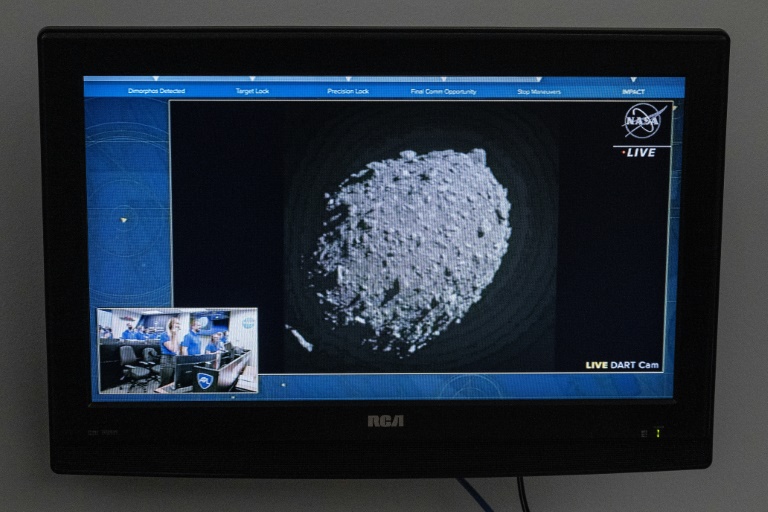
Bullseye: A NASA spaceship on Monday struck an asteroid seven million miles away in order to deflect its orbit, succeeding in a historic test of humanity’s ability to prevent a celestial object from devastating life on Earth.

The Double Asteroid Redirection Test (DART) impactor hit its target, the space rock Dimorphos, at 7:14 pm Eastern Time (2314 GMT), 10 months after blasting off from California on its pioneering mission.

“We’re embarking on a new era, an era in which we potentially have the capability to protect ourselves from something like a dangerous hazardous asteroid impact,” said Lori Glaze, director of NASA’s planetary science division.

Dimorphos — a 530-foot (160-meter) asteroid roughly comparable in size to an Egyptian pyramid — orbits a half-mile long big brother called Didymos. Never seen before, the “moonlet” appeared as a speck of light around an hour before the collision.

Its egg-like shape and craggy, boulder-dotted surface finally came into clear view in the last few minutes, as DART raced toward it at roughly 14,500 miles (23,500 kilometers) per hour.

NASA scientists and engineers erupted in applause as the screen froze on a final image, indicating that signal had been lost and impact had taken place.

To be sure, the pair of asteroids pose no threat to our planet as they loop the Sun every two of our years.

But NASA has deemed the experiment important to carry out before an actual need is discovered.

By striking Dimorphos head on, NASA hopes to push it into a smaller orbit, shaving 10 minutes off the time it takes to encircle Didymos, which is currently 11 hours and 55 minutes. 

Ground telescopes — which can’t see the asteroid system directly but can detect a shift in patterns of light coming from it — should provide a definitive orbital period in the coming days and weeks. 

The proof-of-concept has made a reality of what has before only been attempted in science fiction — notably in films such as “Armageddon” and “Don’t Look Up.” 

– Astronomy community abuzz –

Minutes after impact, a toaster-sized satellite called LICIACube, which already separated from DART a few weeks ago, was expected to make a close pass of the site to capture images of the collision and the ejecta — the pulverized rock thrown off by the strike.

LICIACube’s pictures will be sent back in the next weeks and months. 

Also watching the event: an array of telescopes, both on Earth and in space — including the recently operational James Webb — which might be able to see a brightening cloud of dust.

The mission has set the global astronomy community abuzz, with more than three dozen ground telescopes participating, including optical, radio and radar. 

“There’s a lot of them, and it’s incredibly exciting to have lost count,” said DART mission planetary astronomer Christina Thomas.

Finally, a full picture of what the system looks like will be revealed when a European Space Agency mission four years down the line called Hera arrives to survey Dimorphos’ surface and measure its mass, which scientists can currently only guess at.

– ‘Earthlings can sleep better’ –

Very few of the billions of asteroids and comets in our solar system are considered potentially hazardous to our planet, and none are expected in the next hundred years or so. 

But wait long enough, and it will happen.

We know that from the geological record — for example, the six-mile wide Chicxulub asteroid struck Earth 66 million years ago, plunging the world into a long winter that led to the mass extinction of the dinosaurs along with 75 percent of all species.

An asteroid the size of Dimorphos, by contrast, would only cause a regional impact, such as devastating a city, albeit with greater force than any nuclear bomb in history.

How much momentum DART imparts on Dimorphos will depend on whether the asteroid is solid rock, or more like a “rubbish pile” of boulders bound by mutual gravity — a property that’s not yet known.

If it had missed, NASA would have another shot in two years’ time, with the spaceship containing just enough fuel for another pass.

But its success marks the first step towards a world capable of defending itself from a future existential threat.

“I think Earthlings can sleep better, definitely I will,” said DART mission systems engineer Elena Adams.

'A new era': NASA strikes asteroid in key test of planetary defense

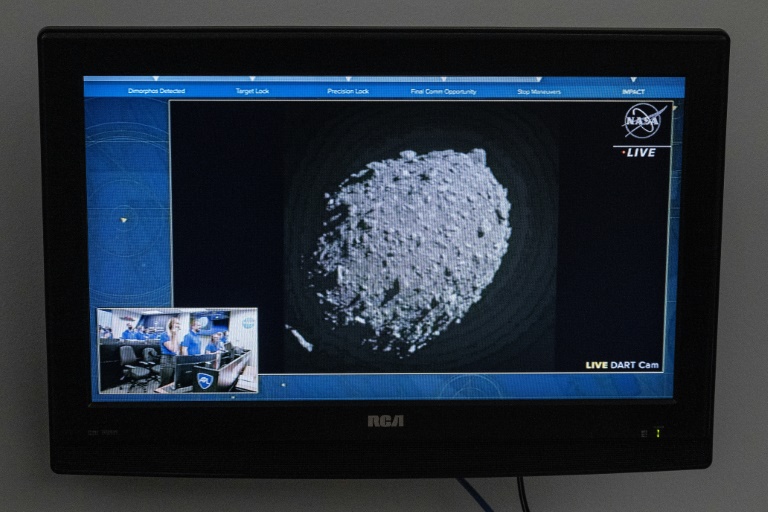
Bullseye: A NASA spaceship on Monday struck an asteroid seven million miles away in order to deflect its orbit, succeeding in a historic test of humanity’s ability to prevent a celestial object from devastating life on Earth.

The Double Asteroid Redirection Test (DART) impactor hit its target, the space rock Dimorphos, at 7:14 pm Eastern Time (2314 GMT), 10 months after blasting off from California on its pioneering mission.

“We’re embarking on a new era, an era in which we potentially have the capability to protect ourselves from something like a dangerous hazardous asteroid impact,” said Lori Glaze, director of NASA’s planetary science division.

Dimorphos — a 530-foot (160-meter) asteroid roughly comparable in size to an Egyptian pyramid — orbits a half-mile long big brother called Didymos. Never seen before, the “moonlet” appeared as a speck of light around an hour before the collision.

Its egg-like shape and craggy, boulder-dotted surface finally came into clear view in the last few minutes, as DART raced toward it at roughly 14,500 miles (23,500 kilometers) per hour.

NASA scientists and engineers erupted in applause as the screen froze on a final image, indicating that signal had been lost and impact had taken place.

To be sure, the pair of asteroids pose no threat to our planet as they loop the Sun every two of our years.

But NASA has deemed the experiment important to carry out before an actual need is discovered.

By striking Dimorphos head on, NASA hopes to push it into a smaller orbit, shaving 10 minutes off the time it takes to encircle Didymos, which is currently 11 hours and 55 minutes. 

Ground telescopes — which can’t see the asteroid system directly but can detect a shift in patterns of light coming from it — should provide a definitive orbital period in the coming days and weeks. 

The proof-of-concept has made a reality of what has before only been attempted in science fiction — notably in films such as “Armageddon” and “Don’t Look Up.” 

– Astronomy community abuzz –

Minutes after impact, a toaster-sized satellite called LICIACube, which already separated from DART a few weeks ago, was expected to make a close pass of the site to capture images of the collision and the ejecta — the pulverized rock thrown off by the strike.

LICIACube’s pictures will be sent back in the next weeks and months. 

Also watching the event: an array of telescopes, both on Earth and in space — including the recently operational James Webb — which might be able to see a brightening cloud of dust.

The mission has set the global astronomy community abuzz, with more than three dozen ground telescopes participating, including optical, radio and radar. 

“There’s a lot of them, and it’s incredibly exciting to have lost count,” said DART mission planetary astronomer Christina Thomas.

Finally, a full picture of what the system looks like will be revealed when a European Space Agency mission four years down the line called Hera arrives to survey Dimorphos’ surface and measure its mass, which scientists can currently only guess at.

– ‘Earthlings can sleep better’ –

Very few of the billions of asteroids and comets in our solar system are considered potentially hazardous to our planet, and none are expected in the next hundred years or so. 

But wait long enough, and it will happen.

We know that from the geological record — for example, the six-mile wide Chicxulub asteroid struck Earth 66 million years ago, plunging the world into a long winter that led to the mass extinction of the dinosaurs along with 75 percent of all species.

An asteroid the size of Dimorphos, by contrast, would only cause a regional impact, such as devastating a city, albeit with greater force than any nuclear bomb in history.

How much momentum DART imparts on Dimorphos will depend on whether the asteroid is solid rock, or more like a “rubbish pile” of boulders bound by mutual gravity — a property that’s not yet known.

If it had missed, NASA would have another shot in two years’ time, with the spaceship containing just enough fuel for another pass.

But its success marks the first step towards a world capable of defending itself from a future existential threat.

“I think Earthlings can sleep better, definitely I will,” said DART mission systems engineer Elena Adams.

Stocks volatile, pound hits record low

Wall Street stocks fell again Monday as recession fears brought volatility to financial markets, pushing the pound to an all-time low against the greenback and pressuring oil prices.

After last week’s rout, US indices climbed early in the session before tumbling back into the red.

Both the Dow and S&P 500 dropped more than one percent to finish at their lowest value of the year. The Dow also entered a “bear market,” defined as a 20 percent retreat from its last record.

London shares closed flat, paring earlier losses after the pound hit a record low against the dollar on surging fears about the ailing UK economy, before recovering ground.

“Investors are reacting to a really toxic brew of bad news that was made worse by what happened in the UK on Friday, which was the stimulus spending into an already bigger inflationary problem,” said Andy Kapyrin, co-chief investment officer at RegentAtlantic. 

“I’m not sure that we’ve seen the bottom here,” Kapyrin said. “But I think it does make sense for investors to dip their toe into the water, the stock market is materially cheaper than it started the year.”

Having extended losses in morning trading, Frankfurt and Paris edged higher by mid-afternoon, only to close the session in the red.

The pound on Monday struck an all-time low at $1.0350, days after new UK finance minister Kwasi Kwarteng’s inflation-fighting budget.

The Bank of England said it was paying close attention to financial markets and would “not hesitate to change interest rates by as much as needed” to curb inflation.

Economists expressed concerns that last week’s huge tax-cutting budget from the government of new Prime Minister Liz Truss — aimed at helping the recession-threatened economy — could actually spark massive borrowing and further fuel inflation.

Sterling has struggled in recent years as the UK fails to strike major trade deals following its exit from the European Union.

Prior to Monday’s crash, the pound suffered a series of 37-year lows against the greenback this month on UK recession fears propelled by sky-high inflation.

The euro has additionally come under heavy selling pressure against the dollar in recent months, as the Federal Reserve hikes interest rates more aggressively than the European Central Bank.

The euro struck a new 20-year low at $0.9554 on Monday before recovering.

A day after Eurosceptic populists swept to victory in Italy’s general election, the interest rates on 10-year government bonds hit their highest level for around a decade in France, Germany and Italy.

But the Italian stock market closed higher as markets assessed the future political landscape.

“Time will tell how successful the new government will prove to be but the prospect of some political stability appears to be generating a small relief rally today,” said Craig Erlam, analyst at trading platform OANDA.

Elsewhere, oil prices pulled back, with US benchmark West Texas intermediate ending at its lowest level since January, as the strong dollar weighed on the commodity, along with worries over petroleum demand.

– Key figures at around 2030 GMT –

Pound/dollar: DOWN at $1.0689 from $1.0859 on Friday

Euro/dollar: DOWN at $0.9611 from $0.9687

Euro/pound: UP at 89.87 pence from 89.29 pence 

Dollar/yen: UP at 144.72 yen from 143.31 yen

New York – Dow: DOWN 1.1 percent at 29,260.81 (close)

New York – S&P 500: DOWN 1.0 percent at 3,655.04 (close)

New York – Nasdaq: DOWN 0.6 percent at 10,802.92 (close)

London – FTSE 100: UP less than 0.1 percent at 7,020.95 (close)

Frankfurt – DAX: DOWN 0.5 percent at 12,227.92 (close)

Paris – CAC 40: DOWN 0.2 percent at 5,769.39 (close)

EURO STOXX 50: DOWN 0.2 percent at 3,342.56  (close)

Tokyo – Nikkei 225: DOWN 2.7 percent at 26,431.55 (close)

Hong Kong – Hang Seng Index: DOWN 0.4 percent at 17,855.14 (close)

Shanghai – Composite: DOWN 1.2 percent at 3,051.23 (close)

West Texas Intermediate: DOWN 2.6 percent at $78.71 per barrel

Brent North Sea crude: DOWN 2.4 percent at $84.06 per barrel

Putin grants Edward Snowden Russian citizenship

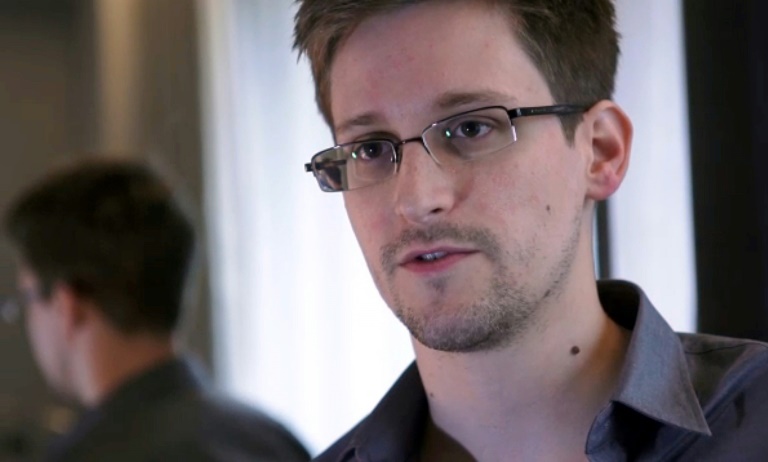
President Vladimir Putin on Monday granted Russian citizenship to US whistleblower Edward Snowden, who exposed massive surveillance by the US National Security Agency on Americans and then sought refuge in Russia.

A presidential decree published Monday included Snowden on a list of newly-minted Russian citizens, at a time when relations between Washington and Moscow are at historic lows over the conflict in Ukraine.

Kremlin spokesman Dmitry Peskov told news agencies that Snowden had received Russian citizenship as a result of his own request, made in 2020 to make it easier for his American wife Lindsay Mills to travel back and forth.

“After years of separation from our parents, my wife and I have no desire to be separated from our SONS,” Snowden wrote on Twitter.

“After two years of waiting and nearly ten years of exile, a little stability will make a difference for my family,” he said.

The former American intelligence contractor, 39, leaked secret documents to media outlets in 2013 revealing that the NSA was collecting massive amounts of communications metadata and other information on US citizens, in violation of their constitutional right to privacy.

The expose of the NSA’s secret spying program led to laws and regulations forbidding that activity.

After revealing those secrets, Snowden sought refuge in Russia. He married longtime girlfriend Mills in Moscow in 2017. 

Three years later they had a son, and Snowden said he would seek Russian citizenship to make it easier for his family to be together, especially given the travel restrictions related to the Covid-19 pandemic.

But he said he wanted to keep his US nationality.

“Lindsay and I will remain Americans, raising our son with all the values of the America we love — including the freedom to speak his mind. And I look forward to the day I can return to the States, so the whole family can be reunited,” he said at the time.

The couple had a second son earlier this year.

Snowden’s lawyer Anatoly Kucherena told Russian state news agency RIA Novosti that Mills would also now apply for Russian citizenship. 

– Dual US-Russian citizen –

US State Department spokesman Ned Price said Monday that Snowden, who has been charged with multiple felonies in US court, retains his American citizenship.

“I’m not aware of any change in his citizenship status,” Price said.

“The only thing that has changed is that as a result of his Russian citizenship, apparently now he may well be conscripted to fight in the reckless war” in Ukraine, he said.

Putin last week announced a mobilisation of 300,000 Russian reservists to contribute to the Russian army’s fight in Ukraine.

However, Kucherena said that Snowden would not be called up to serve given he had no prior experience in the Russian army.

The White House did not comment directly on Snowden’s Russian citizenship.

“Since I believe there have been criminal charges brought against him, we would point you to the Department of Justice for any specifics on this,” said White House Press Secretary Karine Jean-Pierre.

After he sought refuge in Russia, the US Justice Department filed a criminal complaint with three felony charges against Snowden: theft of government property, disclosing crucial US defense information, and providing classified materials to unauthorized persons.

“Mr Snowden should return to the United States where he should face justice as any other American citizen would,” said Price.

Close Bitnami banner
Bitnami