US Business

US charges Boeing with misleading investors on 737 MAX safety, fined $200 mn

US securities officials fined Boeing $200 million over the aviation giant’s misleading assurances about the safety of the 737 MAX airplane following two deadly crashes, regulators announced Thursday.

Boeing agreed to the penalty to settle charges it “negligently violated the antifraud provisions” of US securities laws, the Securities and Exchange Commission said in a statement, saying the company and its leader “put profits over people.”

Boeing’s former chief executive, Dennis Muilenburg, also agreed to pay $1 million to settle the same charges in a civil case.

The settlement is the latest hit to Boeing over the MAX following the Lion Air Crash in Indonesia in October 2018 and the Ethiopian Airlines crash in Ethiopia in March 2019, which together claimed nearly 350 lives.

One month after the first crash, a Boeing press release approved by Muilenburg “selectively highlighted certain facts,” implying that pilot error and poor aircraft maintenance contributed to the crash.

The press release also attested to the aircraft’s safety, not disclosing that Boeing knew a key flight handling system, the Maneuvering Characteristics Augmentation System (MCAS), posed safety issues and was being redesigned.

After the second crash, Boeing and Muilenburg assured the public that there was “no surprise or gap” in the federal certification of the MAX despite being aware of contrary information, the SEC said.

– Boeing ‘failed’ –

“In times of crisis and tragedy, it is especially important that public companies and executives provide full, fair, and truthful disclosures to the markets,” said SEC chair Gary Gensler in a press release.

“The Boeing Company and its former CEO, Dennis Muilenburg, failed in this most basic obligation. They misled investors by providing assurances about the safety of the 737 MAX, despite knowing about serious safety concerns.”

The SEC said both Boeing and Muilenburg, in agreeing to pay the penalties, did not admit or deny the agency’s findings.

Boeing said the agreement “fully resolves” the SEC’s inquiry and is part of the company’s “broader effort to responsibly resolve outstanding legal matters related to the 737 MAX accidents in a manner that serves the best interests of our shareholders, employees, and other stakeholders,” a company spokesman said.

“We will never forget those lost on Lion Air Flight 610 and Ethiopian Airlines Flight 302, and we have made broad and deep changes across our company in response to those accidents.”

Robert Clifford, a lawyer representing families of victims aboard the Ethiopian Airlines flight, called for “Muilenburg or anyone else who persuaded the government to keep the MAX 737 Boeing flying” to be “fully investigated for conduct that could be criminal in nature.”

US air safety authorities cleared Boeing’s 737 MAX to resume service in November 2020 following a 20-month grounding after the crashes.

A principal cause of the two crashes was identified as the MCAS, which was supposed to keep the plane from stalling as it ascended but instead forced the nose of the plane downward. The Federal Aviation Administration required Boeing to upgrade this system to address the flaw.

In January 2021, Boeing agreed to pay $2.5 billion to settle a US criminal charge over claims the company defrauded regulators overseeing the 737 MAX.
Poitier legacy tackled by Oprah in 'Sidney'

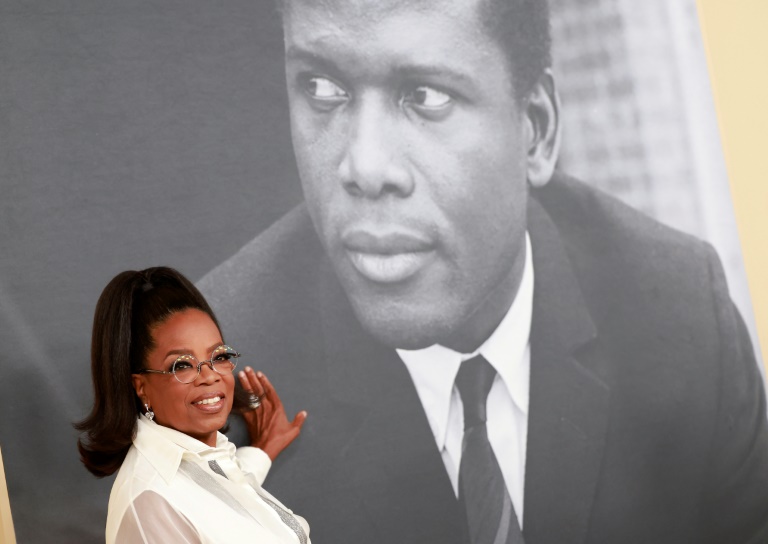
The late Sidney Poitier was at the peak of his Hollywood career when he came under fire from Black activists and intellectuals, accused of playing stereotypical, safe roles for white audiences just as the 1960s civil rights movement was exploding.

“Sidney,” the new Apple TV+ documentary out Friday, produced by Oprah Winfrey and featuring A-list talking heads from Denzel Washington and Morgan Freeman to Barbra Streisand and Robert Redford, sets out to show why they were wrong.

“The reality is, since the invention of cinema there had been these degrading images of Black people, and Sidney Poitier single-handedly destroyed those images, movie after movie after movie,” the film’s director Reginald Hudlin told AFP.

“He was a race warrior. Without him, you don’t have me, and you don’t have Oprah Winfrey, and you don’t have Barack Obama.”

It is one of several debates at the heart of “Sidney,” which features interviews Poitier gave to Winfrey years before his death in January at the age of 94.

The film addresses Poitier’s affair during his first marriage to Juanita Hardy — a potentially prickly topic as she and all three of their surviving daughters are interviewed for the documentary.

“When I first sat down with the family, to talk about the possibility of making the movie, I said, ‘Is anything off limits?’ And I specifically brought up that as an example,” said Hudlin.

“They were like, ‘No, no, no, we want to tell the whole truth.’ So I appreciate the fact that they were not interested in just doing a puff piece.”

The film also delves into terrifying moments of racist violence in Poitier’s life.

In 1964, Poitier and Harry Belafonte were pursued through Mississippi by gun-toting Ku Klux Klan members while delivering cash to a voting rights movement.

An earlier run-in with the Klan, and a white policeman who harassed a teenage Poitier at gunpoint, are presented as formative in his pioneering career and his often-overlooked activism.

“That’s what is amazing — he never dissolved into bitterness, he never let them break him,” said Hudlin.

“He just kept turning it into strength, into more determination, into more willpower.”

– ‘No precedent’ –

But perhaps the most contested part of Poitier’s legacy remains the suggestion he was too amenable or obedient to white audiences and Hollywood.

“Sidney” highlights a 1967 New York Times article entitled “Why Does White America Love Sidney Poitier So?” that accused Poitier of “playing essentially the same role, the antiseptic, one-dimensional hero.”

It described a “Sidney Poitier syndrome: a good guy in a totally white world, with no wife, no sweetheart, no woman to love or kiss, helping the white man solve the white man’s problem.”

Just three years earlier, Poitier had become the first Black actor to win an Oscar for “Lilies of the Field,” in which he played a traveling handyman who helps out and ultimately bonds with a community of white nuns.

Other roles, such as his beggar in “Porgy and Bess,” came to be seen as racist by critics. 

According to Hudlin, the backlash “was an inevitable byproduct of the work he was doing,” and Poitier — who “knew it was going to come” — was more interested in humanizing the Black experience.

“He kept it in a bigger context,” said Hudlin, noting that oppressed minorities were “suddenly fighting, and achieving their freedom,” and “having to figure this out in real time as it happened.”

“I think now we can look at it with a broader historical lens, and say that those decisions that Sidney Poitier made were right and helped the greater cause move forward.”

The documentary also underlines the groundbreaking nature of Poitier’s kiss with white actress Katharine Houghton in “Guess Who’s Coming to Dinner,” and the moment he slaps a white Southern aristocrat in “In The Heat of the Night.”

“There was no precedent for who he was and what he was doing,” said Hudlin.

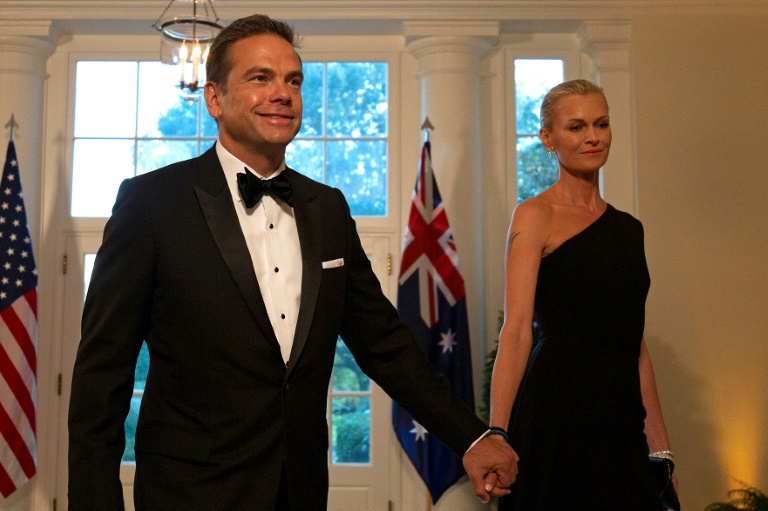
Lachlan Murdoch faces off with Crikey in defamation row

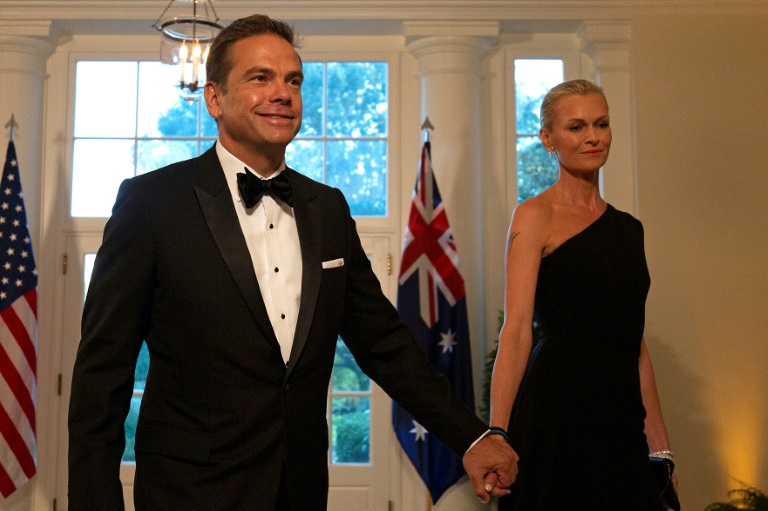
The high-stakes defamation battle between News Corp co-chairman Lachlan Murdoch and small Australian news outlet Crikey will go to trial beginning March 27 in Sydney.

Rupert Murdoch’s eldest son — who is also chief executive of Fox News parent Fox Corporation — is suing Crikey over an opinion piece that linked his family’s media empire to the January 6, 2021 storming of the US Capitol by supporters of then-President Donald Trump.

The media scion’s lawyers claimed their client was defamed over a dozen times in the article, which accused “the Murdochs and their slew of poisonous Fox News commentators” of being “unindicted co-conspirators” in the Capitol riot.

On Friday, Murdoch’s barrister — top defamation litigator Sue Chrysanthou — pushed for the earliest possible trial date, arguing Crikey had been “directing ridicule and hatred” towards her client.

She said Crikey was “publicly claiming martyrdom”, pointing to the outlet running billboard advertisements about the case and fundraising online for its defence.

In the past month, Crikey’s GoFundMe campaign has raised nearly A$500,000 (US$333,000) and garnered support from two former Australian Prime Ministers, Kevin Rudd and Malcolm Turnbull.

“Lachlan Murdoch owns boats that are worth more than Crikey,” Turnbull commented alongside his Aus$5,000 (US$3,400) donation.

– A very public fight –

The legal scuffle over the opinion piece burst into international headlines last month, when Crikey ran an advertisement in The New York Times daring Murdoch to sue.

The often pugilistic website said it welcomed the opportunity to “test this important issue of freedom of public interest journalism in a courtroom”.

Murdoch filed his lawsuit the next day.

The tussle pits an upstart website, with subscriber numbers in the low tens of thousands, against one of the world’s largest media empires.

Defamation expert David Rolph from the University of Sydney told AFP Murdoch’s case could be the first test of recent attempts to reform Australia’s notoriously tough defamation laws.

Australia has gained a reputation as “the defamation capital of the world” after a slew of lawsuits launched by high-profile figures, including actors and politicians.

Crikey’s defence, filed with the Federal Court Tuesday, denied it defamed Murdoch and flagged it would lean on two new defences created by the reforms.

“One is a serious harm threshold… the plaintiff now has to prove that they not only suffered some harm to reputation, but that it was serious harm to reputation,” Rolph explained.

Crikey will also seek to argue that the opinion piece, by writer Bernard Keane, was in the public interest.

“I suppose the difficulty here is that defence is entirely untested. This will be a test case of that,” Rolph said.

– Public interest fight –

In a statement issued Thursday, Crikey chief executive Will Hayward said his company was fighting the case because “there is an issue of fundamental public importance at stake”.

“We think it is important in an open, well-functioning society that the rich and powerful can be critiqued.”

While Murdoch has stayed quiet since launching the case, his statement of claim accused Crikey of using the legal saga to drive subscriptions.

He has asked the court to permanently ban Crikey from publishing anything suggesting he “illegally conspired with Donald Trump” around the events of January 6.

The case will be heard by Justice Wigney, who has overseen several closely-watched defamation trials — including actor Geoffrey Rush’s successful suit against another Australian media outlet.

Wigney said Friday that before the trial begins, he would seek to have the parties enter mediation where “cool commercial minds may prevail”.

Lachlan Murdoch faces off with Crikey in defamation row

The high-stakes defamation battle between News Corp co-chairman Lachlan Murdoch and small Australian news outlet Crikey will go to trial beginning March 27 in Sydney.

Rupert Murdoch’s eldest son — who is also chief executive of Fox News parent Fox Corporation — is suing Crikey over an opinion piece that linked his family’s media empire to the January 6, 2021 storming of the US Capitol by supporters of then-President Donald Trump.

The media scion’s lawyers claimed their client was defamed over a dozen times in the article, which accused “the Murdochs and their slew of poisonous Fox News commentators” of being “unindicted co-conspirators” in the Capitol riot.

On Friday, Murdoch’s barrister — top defamation litigator Sue Chrysanthou — pushed for the earliest possible trial date, arguing Crikey had been “directing ridicule and hatred” towards her client.

She said Crikey was “publicly claiming martyrdom”, pointing to the outlet running billboard advertisements about the case and fundraising online for its defence.

In the past month, Crikey’s GoFundMe campaign has raised nearly A$500,000 (US$333,000) and garnered support from two former Australian Prime Ministers, Kevin Rudd and Malcolm Turnbull.

“Lachlan Murdoch owns boats that are worth more than Crikey,” Turnbull commented alongside his Aus$5,000 (US$3,400) donation.

– A very public fight –

The legal scuffle over the opinion piece burst into international headlines last month, when Crikey ran an advertisement in The New York Times daring Murdoch to sue.

The often pugilistic website said it welcomed the opportunity to “test this important issue of freedom of public interest journalism in a courtroom”.

Murdoch filed his lawsuit the next day.

The tussle pits an upstart website, with subscriber numbers in the low tens of thousands, against one of the world’s largest media empires.

Defamation expert David Rolph from the University of Sydney told AFP Murdoch’s case could be the first test of recent attempts to reform Australia’s notoriously tough defamation laws.

Australia has gained a reputation as “the defamation capital of the world” after a slew of lawsuits launched by high-profile figures, including actors and politicians.

Crikey’s defence, filed with the Federal Court Tuesday, denied it defamed Murdoch and flagged it would lean on two new defences created by the reforms.

“One is a serious harm threshold… the plaintiff now has to prove that they not only suffered some harm to reputation, but that it was serious harm to reputation,” Rolph explained.

Crikey will also seek to argue that the opinion piece, by writer Bernard Keane, was in the public interest.

“I suppose the difficulty here is that defence is entirely untested. This will be a test case of that,” Rolph said.

– Public interest fight –

In a statement issued Thursday, Crikey chief executive Will Hayward said his company was fighting the case because “there is an issue of fundamental public importance at stake”.

“We think it is important in an open, well-functioning society that the rich and powerful can be critiqued.”

While Murdoch has stayed quiet since launching the case, his statement of claim accused Crikey of using the legal saga to drive subscriptions.

He has asked the court to permanently ban Crikey from publishing anything suggesting he “illegally conspired with Donald Trump” around the events of January 6.

The case will be heard by Justice Wigney, who has overseen several closely-watched defamation trials — including actor Geoffrey Rush’s successful suit against another Australian media outlet.

Wigney said Friday that before the trial begins, he would seek to have the parties enter mediation where “cool commercial minds may prevail”.

Asian markets suffer further losses as central banks turn screws

Asian markets fell again Friday as part of a global sell-off fuelled by recession fears after central banks around the world ramped up interest rates to fight decades-high inflation.

With price rises showing no solid sign of letting up, monetary policymakers have been forced to go on the offensive, warning that short-term hits to economies are less painful than the long-term effects of not acting.

The Federal Reserve’s decision Wednesday to lift borrowing costs 75 basis points for a third successive meeting was followed by a warning that more were in the pipeline and they would not likely come down until 2024.

That came along with similar moves by banks in several other countries including Britain, Sweden, Norway, Switzerland, the Philippines and Indonesia — all pointing to a dark outlook for equities.

“We see this new even-higher-for-longer rate path as associated with a substantially higher likelihood of a hard landing, and so not just unambiguously hawkish but unambiguously bad for risk,” Krishna Guha, vice chairman of Evercore ISI, said.

In a sign that recession expectations are rising, the yield on a 10-year US Treasury jumped to 3.7 percent, its highest level in a decade, while the S&P 500 sank to its weakest level since June and just above its 2022 lows.

There were also losses on the Nasdaq and Dow, while London, Paris and Frankfurt shed more than one percent apiece.

Asia largely followed suit, though bargain-buying provided a modicum of support.

Hong Kong, Shanghai, Sydney, Seoul, Singapore, Wellington, Taipei and Manila all dropped.

The dollar, which has surged to multi-decade highs against its major peers as well as emerging currencies, held its strength.

Traders are keeping a close eye on developments following the Japanese finance ministry’s intervention to support the yen, after it hit a new 24-year low of 146 against the dollar.

The first such intervention since 1998, it helped strengthen the yen to just above 140.

However, analysts warned the move was unlikely to have much long-term impact and the yen remained vulnerable owing to the Bank of Japan’s refusal to tighten policy — citing a need to boost the economy — as the Fed ramps up rates.

“Given the now even starker contrast between the (central bank’s) policy stance and central banks everywhere else in the world… (the) MoF will need to be in this intervention game for the long haul and in size if it is to have much hope of arresting yen weakness in an ongoing strong dollar environment,” said National Australia Bank’s Ray Attrill.

Oil markets remain subdued by concerns about a hit to demand caused by the expected recession.

Both main contracts fluctuated as speculation swirled that OPEC and other major producers could cut output as they fear prices are falling too fast.

The commodity has fallen about a third from highs seen soon after Russia’s February invasion of Ukraine, and is even below levels seen before the conflict.

“This is going to be a very, very volatile last quarter,” said Amrita Sen, of Energy Aspects, on Bloomberg Television. She added that there were “just too many different and contradictory factors driving prices right now”.

– Key figures at around 0230 GMT –

Hong Kong – Hang Seng Index: DOWN 0.5 percent at 18,066.14

Shanghai – Composite: DOWN 0.4 percent at 3,096.17

Tokyo – Nikkei 225: Closed for a holiday

Dollar/yen: DOWN at 142.13 yen from 142.35 yen Thursday

Pound/dollar: DOWN at $1.1239 from $1.1252

Euro/dollar: DOWN at $0.9829 from $0.9839

Euro/pound: UP at 87.46 pence from 87.40 pence 

West Texas Intermediate: FLAT at $83.47 per barrel

Brent North Sea crude: DOWN 0.1 percent at $90.40 per barrel

New York – Dow: DOWN 0.4 percent at 30,076.68 (close)

London – FTSE 100: DOWN 1.1 percent at 7,159.52 (close)

— Bloomberg News contributed to this story —

NASA gears up to deflect asteroid, in key test of planetary defense

Bet the dinosaurs wish they’d thought of this.

NASA on Monday will attempt a feat humanity has never before accomplished: deliberately smacking a spacecraft into an asteroid to slightly deflect its orbit, in a key test of our ability to stop cosmic objects from devastating life on Earth.

The Double Asteroid Redirection Test (DART) spaceship launched from California last November and is fast approaching its target, which it will strike at roughly 14,000 miles per hour (23,000 kph).

To be sure, neither the asteroid moonlet Dimorphos, nor the big brother it orbits, called Didymos, pose any threat as the pair loop the Sun, passing some seven million miles from Earth at nearest approach.

But the experiment is one NASA has deemed important to carry out before an actual need is discovered.

“This is an exciting time, not only for the agency, but in space history and in the history of humankind quite frankly,” Lindley Johnson, a planetary defense officer for NASA told reporters in a briefing Thursday.

If all goes to plan, impact between the car-sized spacecraft, and the 530-foot (160 meters, or two Statues of Liberty) asteroid should take place at 7:14pm Eastern Time (2314 GMT), and can be followed on a NASA livestream.

By striking Dimorphos head on, NASA hopes to push it into a smaller orbit, shaving ten minutes off the time it takes to encircle Didymos, which is currently 11 hours and 55 minutes — a change that will be detected by ground telescopes in the days that follow.

The proof-of-concept experiment will make a reality what has before only been attempted in science fiction — notably films such as “Armageddon” and “Don’t Look Up.” 

– Technically challenging –

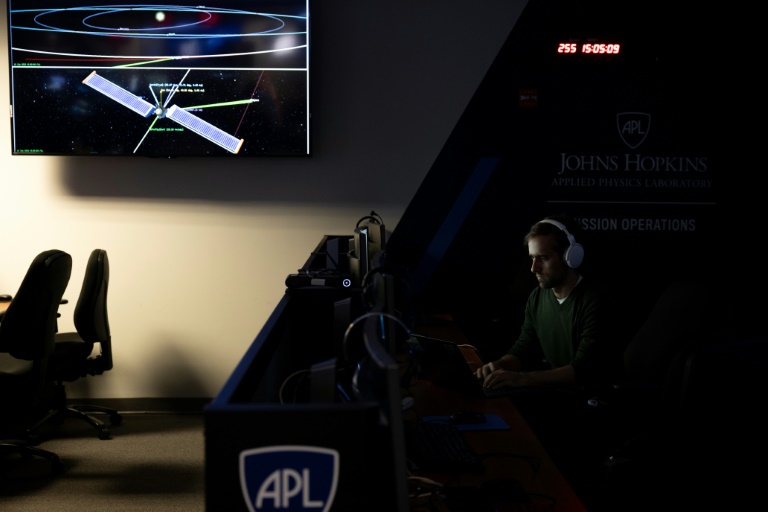
As the craft propels itself through space, flying autonomously for the mission’s final phase like a self-guided missile, its main camera system, called DRACO, will start to beam down the very first pictures of Dimorphos.

“It’s going to start off as a little point of light and then eventually it’s going to zoom and fill the whole entire field of view,” said Nancy Chabot of Johns Hopkins Applied Physics Laboratory (APL), which hosts mission control in a recent briefing.

“These images will continue until they don’t,” added the planetary scientist.

Minutes later, a toaster-sized satellite called LICIACube, which separated from DART a couple of weeks earlier, will make a close pass of the site to capture images of the collision and the ejecta — the pulverized rock thrown off by impact.

LICIACube’s picture will be sent back in the weeks and months that follow. 

Also watching the event: an array of telescopes, both on Earth and in space — including the recently operational James Webb — which might be able to see a brightening cloud of dust.

Finally, a full picture of what the system looks like will be revealed when a European Space Agency mission four years down the line called Hera arrives to survey Dimorphos’s surface and measure its mass, which scientists can only guess at currently.

– Being prepared –

Very few of the billions of asteroids and comets in our solar system are considered potentially hazardous to our planet, and none in the next hundred or so years. 

But “I guarantee to you that if you wait long enough, there will be an object,” said Thomas Zurbuchen, NASA’s chief scientist. 

We know that from the geological record — for example, the six-mile wide Chicxulub asteroid struck Earth 66 million years ago, plunging the world into a long winter that led to the mass extinction of the dinosaurs along with 75 percent of species.

An asteroid the size of Dimorphos, by contrast, would only cause a regional impact, such as devastating a city, albeit with a greater force than any nuclear bomb in history.

Scientists are also hoping to glean valuable new information that can inform them about the nature of asteroids more generally. 

How much momentum DART imparts on Dimorphos will depend on whether the asteroid is solid rock, or more like a “rubbish pile” of boulders bound by mutual gravity, a property that’s not yet known.

We also don’t know its actual shape: whether it’s more like a dog bone or a donut, but NASA engineers are confident DART’s SmartNav guidance system will hit its target.

If it misses, NASA will have another shot in two years’ time, with the spaceship containing just enough fuel for another pass.

But if it succeeds, then it’s a first step towards a world capable of defending itself from a future existential threat, said Chabot. 

'Safari for sound': New York Philharmonic fine-tunes new home

The New York Philharmonic is tuning up to open their brand-new performance space next month — and it’s not only the instruments that need to strike the perfect pitch.

The hall itself is getting trial runs, with the famed symphony testing their pieces as acousticians make adjustments to wall and ceiling panels to ensure warm, rich tones.

It’s “almost like you’re going on a safari for sound,” said Jaap van Zweden, the philharmonic’s music director since 2018. “It’s really to reinvent the sound of the orchestra.”

The Dutch-born conductor explained to AFP that for years, the former hall’s dated design did little to contribute to the acoustics created by the instruments.

But now, “they get a lot of sounds and beauty back, that’s a little new for them… this honeymoon between them and the hall needs some time.”

The $550 million overhaul of the space that first opened in 1962 accelerated after concerts shut down at David Geffen Hall in March 2020.

As halls across the country went dark, the philharmonic, in partnership with Lincoln Center — the arts complex on Manhattan’s Upper West Side — finally forged ahead on reconstructing their home, talks of which dated back to 1995.

More than 600 construction workers put in hours at any given time, six days a week with multiple shifts and overtime, to revamp the building into a state-of-the-art space with improved acoustics and more accessible design.

The renovation reduces capacity from 2,738 to 2,200, but visibility is improved for nearly every seat in the house. 

And some seating is now positioned behind the orchestra, whose stage is 24 feet (seven meters) forward from its previous spot against the wall, giving concerts a surround-sound feel.

The walls were carefully reconstructed and faced with beech wood, explained chief acoustician Paul Scarbrough, to support the room’s bass frequencies.

Another new feature is an adjustable acoustic canopy: “We were able to fine-tune how much energy is returned to the musicians on the platform so they can hear themselves and play together, versus how much is directed out to the audience,” Scarbrough said.

“So that they get a rich, enveloping experience of the orchestra.”

– New ‘energy’ –

In collaboration with Van Zweden, a team from the firm Akustiks selected a variety of works “that would bring out different colors, textures, timbres, layering of instrumentation,” Scarbrough said.

They then began making subtle adjustments to the room’s features to perfect the sound’s quality onstage and in the audience.

Violinist Yulia Ziskel called the experience and design “incredible,” describing how the orchestra members get to discuss the sound before changes will be made to the room, and five minutes later “things would be vastly different, suddenly different sounding.”

“This hall is so flexible to accommodate so many different options,” said the musician, who has played with the Phil for 22 seasons.

The hall’s tuning, which began in August, marks a homecoming for the philharmonic, which has been a nomadic symphony since March 2020.

The pandemic, and then the major renovation that turned their old venue into a skeleton of itself, meant that one of America’s oldest musical institutions reopened its subscription season last fall in temporary homes in Lincoln Center’s other spaces.

Ethan Bensdorf, a trumpet player about to start his 15th season with the company, said the return felt like “buying a new pair of jeans.”

“You’re really excited to wear the new jeans, they might feel a little stiff at first,” he said. “But the more you get used to it, the more they sort of mold to your body.”

The philharmonic’s public opening is set for October 8, and will feature a performances of Etienne Charles’ “San Juan Hill.” The subscription season then opens October 12 with the world premiere of Brazilian conductor Marcos Balter’s “Oya.”

“I can’t wait to see what the audience will see,” said musician Bensdorf. “That’s why we perform, that’s why we’re musicians, that’s what we get from live music, that’s why live music is so magical.”

“I’m really looking forward to that energy in the hall.”

US, China top diplomats to meet on high tensions on Taiwan

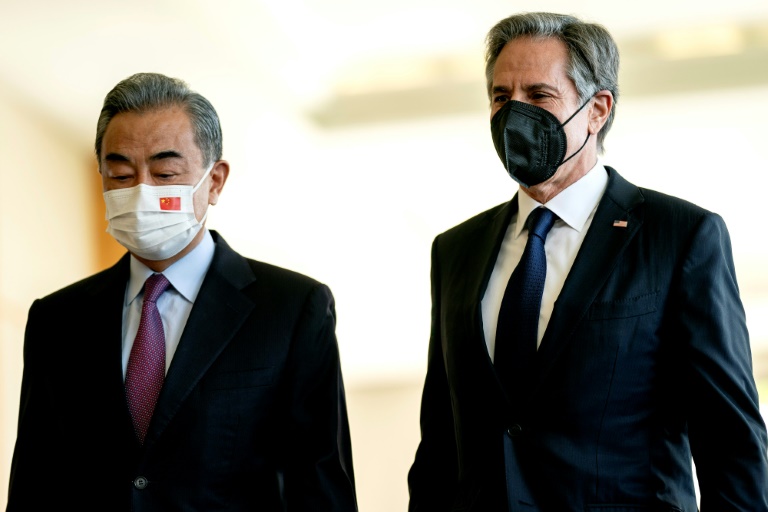
The top US and Chinese diplomats meet Friday in New York as soaring tensions show signs of easing, but Beijing issued a new warning against support for Taiwan.

Secretary of State Antony Blinken and Chinese Foreign Minister Wang Yi are set to meet on the sidelines of the annual United Nations summit, their first encounter since extensive talks in July in Bali where both sides appeared optimistic for more stability.

One month later, House Speaker Nancy Pelosi visited Taiwan, infuriating Beijing which staged exercises seen as a trial run for an invasion of the self-governing democracy.

President Joe Biden in an interview aired Sunday said he was ready to intervene militarily if China uses force, once again deviating from decades of US ambiguity.

In a sign of smoother ties, Wang said he met in New York with US climate envoy John Kerry despite China’s announcement after Pelosi’s visit that it was curbing cooperation on the issue, a key priority for Biden.

But in a speech before his talks with Blinken, Wang reiterated anger over US support for Taiwan, which China considers part of its territory.

“The Taiwan question is growing into the biggest risk in China-US relations. Should it be mishandled it is most likely to devastate bilateral ties,” he said at the Asia Society think tank.

“Just as the US will not allow Hawaii to be stripped away, China has the right to uphold the unification of the country,” he said.

He denounced the US decision to “allow” the Taiwan visit by Pelosi, who is second in line to the presidency after the vice president. The Biden administration, while privately concerned about her trip, noted that Congress is a separate branch of government.

– Arranging a summit –

But Wang was conciliatory toward Biden. The New York talks are expected to lay the groundwork for a first meeting between Biden and President Xi Jinping since they became their two countries’ leaders, likely in Bali in November on the sidelines of a summit of the Group of 20 economic powers.

Wang said that both Biden and Xi seek to “make the China-US relationship work” and to “steer clear of conflict and confrontation.”

“However, what has happened is that the US seems to have two different sets of musical scores. Their leaders’ political will for a stable bilateral relationship has yet to be translated into logical policies,” he said.

The US Congress is a stronghold of support for Taiwan, a vibrant democracy and major technological power.

Last week a Senate committee took a first step to providing billions of dollars in weapons directly to Taiwan to deter China, a ramp-up from decades of only selling weapons requested by Taipei.

Tensions have also risen over human rights with the United States accusing the communist state of carrying out genocide against the mostly Muslim Uyghur people.

Biden, like his predecessor Donald Trump, has viewed a rising China as the chief global competitor to the United States and vowed to reorient US foreign policy around the challenge.

Russia’s invasion in February of Ukraine quickly diverted the US focus to Europe but also heightened fears that Beijing could make good on years of threats to use force against Taiwan.

Yet US officials have also been heartened that China has shown some distance from Russia, nominally its close ally.

President Vladimir Putin at a meeting last week told Xi that he understood China’s “concerns” on Ukraine, while Wang, in a special Security Council session on Thursday, emphasized the need to end the war rather than support for Russia.

In line with the Biden administration’s focus on allies, Blinken met jointly Thursday with his counterparts from Japan and South Korea and immediately before his talks with Wang is expected to hold a meeting of the so-called Quad with Australia, India and Japan.

Britain unveils anti-inflation budget as recession looms

The UK’s new government unveils Friday multibillion-pound measures aimed at supporting households and businesses hit by decades-high inflation.

Finance minister Kwasi Kwarteng, fresh from being appointed by new Prime Minister Liz Truss, will deliver his mini-budget at 0830 GMT.

Kwarteng announced late Thursday he will scrap Truss’s predecessor Boris Johnson’s plan to hike taxes on salaries.

The news came after the Bank of England warned that Britain was slipping into recession, as rocketing fuel and food prices take their toll.

– Growing economy –

“Taxing our way to prosperity has never worked,” the Chancellor of the Exchequer said.

“To raise living standards for all, we need to be unapologetic about growing our economy.

“Cutting tax is crucial to this.”

He is similarly expected to reverse Johnson’s planned tax increase on company profits.

Kwarteng will also outline Friday the cost of a decision to cap energy bills.

He could axe a bankers’ bonus cap, which has been in place since 2014 and is a legacy of EU membership.

Truss took office on September 6, two days before the death of Queen Elizabeth II, after winning an election of Conservative party members on a tax-cutting platform.

While the tax reversals are not strictly cuts, the government could announce Friday reduced levies on home purchases.

Analysts from British bank Barclays estimate the cost of the government’s total package could hit £235 billion ($267 billion), far more than its jobs protection scheme during the pandemic.

– Capping energy bills –

Britain on Wednesday announced a six-month plan to pay about half of energy bills for businesses.

Truss had already launched a two-year household energy price freeze. The caps will not kick in, however, until Britons face another large hike in gas and electricity bills at the start of October.

The average household will have their annual energy bill capped at £2,500 until 2024 but many are expected to spend above that to keep homes warm over the winter.

Wholesale electricity and gas prices for firms — as well as charities, hospitals and schools — will be capped at half the expected cost on the open market.

UK energy companies including BP and Shell will not benefit from the cap, as they enjoy soaring profits after the invasion of Ukraine by major oil and gas producer Russia.

Britain’s main opposition Labour party has demanded that the government extends a windfall tax on energy companies that former finance minister Rishi Sunak launched earlier this year.

But Truss ruled out such a move, arguing that additional taxes will hinder economic recovery and efforts by energy groups to transition into greener companies.

Growth is at the heart of the new government’s policy, with Kwarteng on Wednesday outlining plans to shake up the welfare system.

Some 120,000 people in part-time work could face a benefit cut should they fail to take new steps to look for more work, he is set to confirm.

Kwarteng has described the policy as a “win-win”, pitching it as a way to fill 1.2 million UK job vacancies.

– Strikes, rate rises –

With prices rocketing, wage values are eroding, triggering some of the biggest strike action Britain has seen in more than 30 years. 

From the rail sector to postal services and even lawyers, tens of thousands of workers are carrying out industrial action aimed at securing bigger salaries.

In addition, soaring interest rates are hurting consumers and businesses.

The cost of government borrowing is also ballooning as a result.

The Bank of England on Thursday ramped up its key rate by another half-point to 2.25 percent to tackle high inflation, and warned the UK would slide into recession in the current third quarter.

Facebook whistleblower launches nonprofit to take on big tech

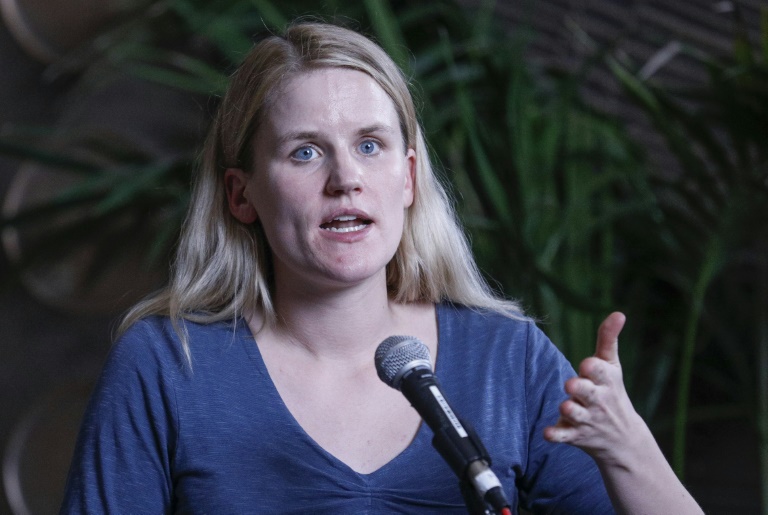
Whistleblower Frances Haugen — a former Facebook engineer who leaked documents suggesting the firm put profits before safety — on Thursday launched an organization devoted to fighting harm caused by social media.

The new Beyond the Screen nonprofit said that its first project will be to document ways big tech is failing in its “legal and ethical obligations to society” and help come up with ways to solve those problems.

“We can have social media that brings out the best in us, and that’s what Beyond the Screen is working toward,” Haugen said in a statement.

“Beyond the Screen will focus on tangible solutions to help users gain control of our social media experience.”

Haugen last year leaked reams of internal studies showing executives knew of their site’s potential for harm, prompting a renewed US push for regulation.

Haugen contended the tech titan, which has since rebranded itself as Meta, put profits over safety. Meta has fought back against the accusation.

Haugen’s nonprofit said it will collaborate with groups including Common Sense Media and Project Liberty that share a “commitment to supporting healthier social media.”

Beyond the Screen’s first project “represents a bold, inclusive, and much-needed effort to drive a seismic shift in how social media operates,” Project Liberty founder Frank McCourt said, according to Beyond the Screen’s statement.

“We look forward to working with Frances and her team to launch this new initiative and advance our shared goal of enabling healthier digital communities and stopping harmful business models.”

Since leaving Facebook in 2021, Haugen has advocated in the US and other countries for legislation meant to make social media platforms safer, particularly for young people.

Close Bitnami banner
Bitnami