US Business

US annual inflation eased in August – but likely not enough

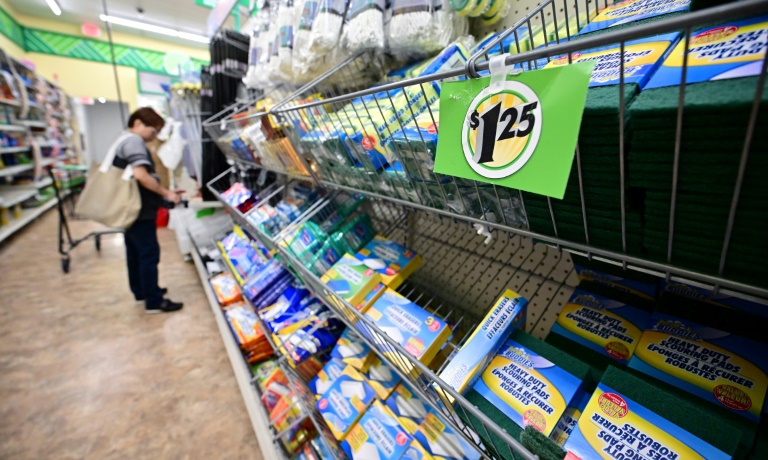
US annual inflation slowed in slightly in August, largely thanks to falling gasoline prices — but likely not enough to satisfy the Federal Reserve and President Joe Biden, as high prices continue inflicting pain on Americans. 

The consumer price index (CPI), a key measure of inflation, actually rose 0.1 percent in August compared to July, when prices were flat, the Labor Department said Tuesday, a disappointing result amid widespread expectations that inflation would fall in the month.

The annual inflation pace improved to 8.3 percent, higher than expected but slightly below the prior months and confirming a slowdown from the blistering 9.1 percent rate in June — the highest in 40 years.

Prices have been soaring for months, exacerbated by the Russian invasion of Ukraine, which has impacted energy and food costs, as well as ongoing supply chain snarls amid Covid lockdowns in China.

Inflation has become a hot political issue just weeks away from key midterm congressional elections, and Biden has made fighting high prices his top domestic priority.

But he acknowledged Tuesday that it will take longer to slow inflation pressures.

“Today’s data show more progress in bringing global inflation down in the US economy. Overall, prices have been essentially flat in our country these last two months,” Biden said in a statement.

However, “it will take more time and resolve to bring inflation down.”

While Americans will welcome relief at the pump — there has been a steady drop in gasoline prices, which fell 10.6 percent last month — costs for food and housing continue to rise, straining family budgets.

The food index increased 11.4 percent over the last year, the largest 12-month increase since the period ending May 1979, the report said.

Medical care also has been a key contributor, and auto prices have accelerated, rising 0.8 percent in the month, according to the report.

More worryingly, the report showed that — excluding volatile food and energy prices — “core” CPI rose 6.3 percent over the past 12 months, faster than the 5.9 percent pace seen in July and June. 

Core CPI jumped 0.6 percent in August, double the pace in July, the data showed.

– ‘Ugly’ data –

Jason Furman, a former White House economist said the data was “not pretty.”

The “ugly” core data show “Broad-based relief not coming,” he said on Twitter.

The Federal Reserve views inflation as the biggest risk to the world’s largest economy, and has moved aggressively to cool demand, increasing the benchmark lending rate four times this year — with a third consecutive three-quarter point hike widely expected next week.

The Fed actions increase the cost of borrowing for homebuyers and businesses, which tends to cool investment and spending.

Fed Chair Jerome Powell has said the central bank will do whatever it takes to ensure high prices do not become entrenched, even at the risk of tipping the economy into a recession.

“The clock is ticking,” Powell warned Friday, pledging to “keep at it until the job is done.”

Treasury Secretary Janet Yellen on Sunday acknowledged that there is “certainly a risk” of an economic downturn amid the rising lending costs, but she noted the US job market is “exceptionally strong” with nearly two vacancies for every worker looking for a job.

She cautioned that “we can’t have a strong labor market without inflation under control.”

The strong job market — the unemployment rate was 3.7 percent in August — provides some comfort to the Fed, giving policymakers room to maneuver, and potentially quell inflation without a steep increase in joblessness.

But the worker shortage remains a concern since it could fuel a dangerous wage-spiral.

Rubeela Farooqi of High Frequency Economics said the latest data confirm “inflation readings remain unacceptably high for policymakers.” 

“Coupled with a labor market that is still strong, the data seal the deal for another aggressive, 75-basis point, rate hike next week,” she said in an analysis.
US annual inflation eased in August – but likely not enough

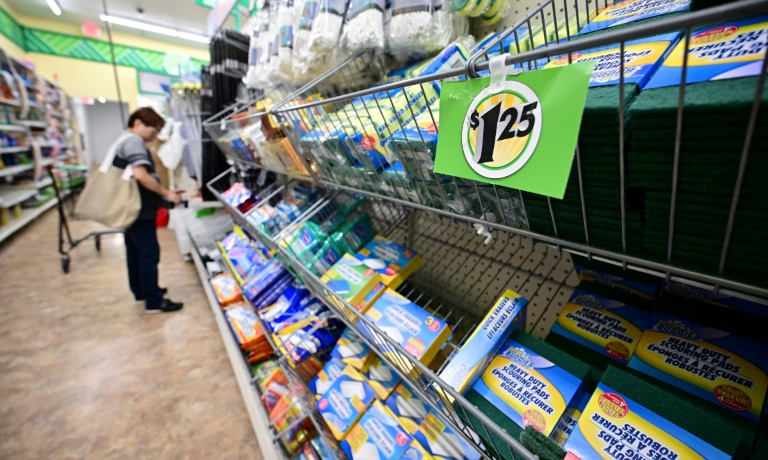
US annual inflation slowed in slightly in August, largely thanks to falling gasoline prices — but likely not enough to satisfy the Federal Reserve and President Joe Biden, as high prices continue inflicting pain on Americans. 

The consumer price index (CPI), a key measure of inflation, actually rose 0.1 percent in August compared to July, when prices were flat, the Labor Department said Tuesday, a disappointing result amid widespread expectations that inflation would fall in the month.

The annual inflation pace improved to 8.3 percent, higher than expected but slightly below the prior months and confirming a slowdown from the blistering 9.1 percent rate in June — the highest in 40 years.

Prices have been soaring for months, exacerbated by the Russian invasion of Ukraine, which has impacted energy and food costs, as well as ongoing supply chain snarls amid Covid lockdowns in China.

Inflation has become a hot political issue just weeks away from key midterm congressional elections, and Biden has made fighting high prices his top domestic priority.

But he acknowledged Tuesday that it will take longer to slow inflation pressures.

“Today’s data show more progress in bringing global inflation down in the US economy. Overall, prices have been essentially flat in our country these last two months,” Biden said in a statement.

However, “it will take more time and resolve to bring inflation down.”

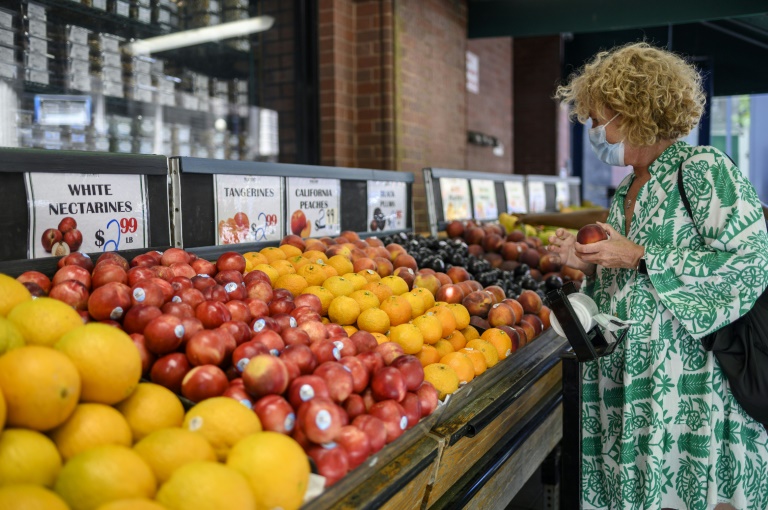
While Americans will welcome relief at the pump — there has been a steady drop in gasoline prices, which fell 10.6 percent last month — costs for food and housing continue to rise, straining family budgets.

The food index increased 11.4 percent over the last year, the largest 12-month increase since the period ending May 1979, the report said.

Medical care also has been a key contributor, and auto prices have accelerated, rising 0.8 percent in the month, according to the report.

More worryingly, the report showed that — excluding volatile food and energy prices — “core” CPI rose 6.3 percent over the past 12 months, faster than the 5.9 percent pace seen in July and June. 

Core CPI jumped 0.6 percent in August, double the pace in July, the data showed.

– ‘Ugly’ data –

Jason Furman, a former White House economist said the data was “not pretty.”

The “ugly” core data show “Broad-based relief not coming,” he said on Twitter.

The Federal Reserve views inflation as the biggest risk to the world’s largest economy, and has moved aggressively to cool demand, increasing the benchmark lending rate four times this year — with a third consecutive three-quarter point hike widely expected next week.

The Fed actions increase the cost of borrowing for homebuyers and businesses, which tends to cool investment and spending.

Fed Chair Jerome Powell has said the central bank will do whatever it takes to ensure high prices do not become entrenched, even at the risk of tipping the economy into a recession.

“The clock is ticking,” Powell warned Friday, pledging to “keep at it until the job is done.”

Treasury Secretary Janet Yellen on Sunday acknowledged that there is “certainly a risk” of an economic downturn amid the rising lending costs, but she noted the US job market is “exceptionally strong” with nearly two vacancies for every worker looking for a job.

She cautioned that “we can’t have a strong labor market without inflation under control.”

The strong job market — the unemployment rate was 3.7 percent in August — provides some comfort to the Fed, giving policymakers room to maneuver, and potentially quell inflation without a steep increase in joblessness.

But the worker shortage remains a concern since it could fuel a dangerous wage-spiral.

Rubeela Farooqi of High Frequency Economics said the latest data confirm “inflation readings remain unacceptably high for policymakers.” 

“Coupled with a labor market that is still strong, the data seal the deal for another aggressive, 75-basis point, rate hike next week,” she said in an analysis.
Stocks slump, dollar jumps as US inflation runs hot

Stock markets hit reverse while the dollar shot higher Tuesday after data showed that US inflation slowed less than expected.

Annual consumer price inflation slowed slightly in August to 8.3 percent from 8.5 percent in July, the Labor Department said in an anxiously-anticipated report that the Federal Reserve is watching closely

However, CPI rose 0.1 percent on a monthly comparison in August, after holding flat in July, according to government data Tuesday, a disappointing result amid widespread expectations that inflation would fall in the month.

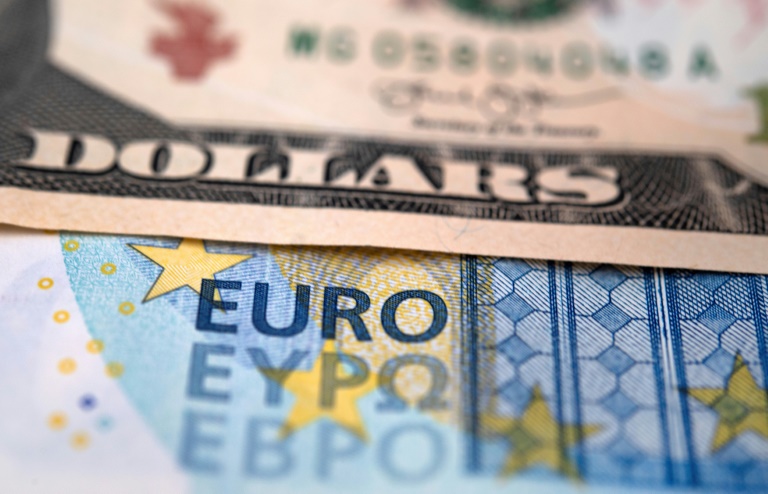
The dollar, which had fallen against its major rivals in anticipation of a significant slowdown in US inflation would lessen pressure on the Fed to continue aggressively raising interest rates, shot higher.

“Both headline and core US CPI were substantially hotter than expected in August, leading currency and fixed income markets to embark on a swift and dramatic reversal from recent price action, where traders and investors had largely positioned themselves for a softer inflation print,” said market analyst Jay Zhao-Murray at Monex.

He pointed to core inflation that excludes volatile energy and food prices, which is what Fed policymakers pay particular attention to. This rose by 0.6 percentage points month-on-month, compared to a 0.3-point gain in July.

While markets were already largely pricing in another 75-basis-point interest rate hike by the Fed at its next gathering, there had been hopes that having past the peak of inflation would allow the Fed to let up thereafter.

However, the inflation figures were “hotter than expected in August and put a chill on some of the peak inflation/peak hawkishness/soft landing chatter,” said analyst Patrick O’Hare at Briefing.com.

Stocks, which had rebounded in recent days on hopes that a peak in inflation would allow a rapid end to hawkish rate hikes and thus avoid a recession and attain a “soft” landing of the economy, abruptly turned lower.

Midday gains in Europe swiftly turned to losses and US futures shifted from green to red.

Wall Street opened sharply lower, with the Dow slumping 1.6 percent at the open. The S&P 500 fell more than two percent while the tech-heavy Nasdaq Composite shed more than three percent.

Fed boss Jerome Powell has indicated the rate increases would continue until inflation is tamed.

Zhao-Murray said that following the inflation data that market expectations regarding the Fed’s next rate hike had hardened. While previously there were some who where forecasting the possibility the Fed would drop to a half-percentage-point hike, now a 0.75-point hike is seen as the floor and some are forecasting a one-point increase. 

Inflation has soared around the globe this year owing to sky-high energy and food bills.

This has been caused to a large extent by supply constraints after economies reopened from pandemic lockdowns and in the wake of Russia’s invasion of Ukraine.

The dollar has soared as the Federal Reserve moved earlier and more aggressively to raise interest rates than central banks to contain inflation.

– Key figures at around 1330 GMT –

London – FTSE 100: DOWN 0.8 percent at 7,412.49 points

Frankfurt – DAX: DOWN 1.1 percent at 13,255.53

Paris – CAC 40: DOWN 0.9 percent at 6,277.24   

EURO STOXX 50: DOWN 1.2 percent at 3,602.39

New York – Dow: DOWN 1.6 percent at 31,850.30

Tokyo – Nikkei 225: UP 0.3 percent at 28,614.63 (close)

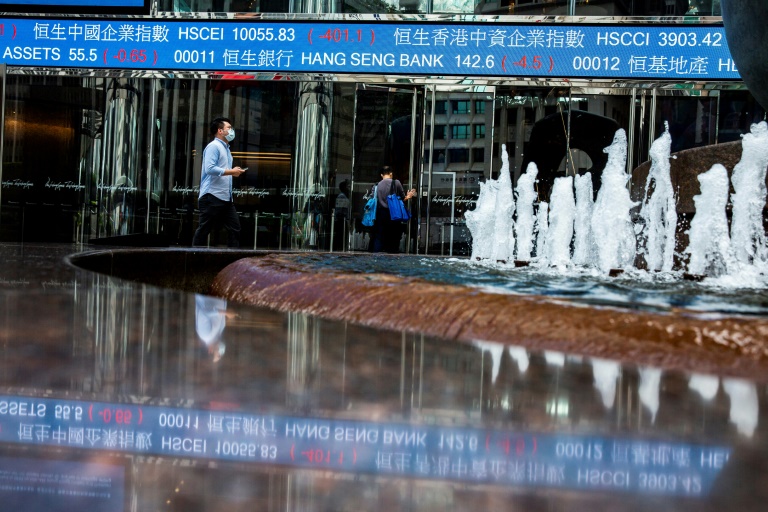
Hong Kong – Hang Seng Index: DOWN 0.2 percent at 19,326.86 (close)

Shanghai – Composite: UP 0.1 percent at 3,263.80 (close)

Euro/dollar: DOWN at $1.0029 from $1.0120

Pound/dollar: DOWN at $1.1550 from $1.1680 

Euro/pound: UP at 86.76 pence from 86.64 pence 

Dollar/yen: UP at 144.24 yen from 142.82 yen  

Brent North Sea crude: DOWN 0.5 percent at $93.49 per barrel

West Texas Intermediate: DOWN 0.4 percent at $87.44 per barrel

burs-rl/lth

In Nigeria, finding value in waste recycling

Mounds of waste scattered along roads and vast landfills are a Nigerian eyesore.

In Africa’s biggest economy and most populous country, collecting, sorting and recycling trash is despairingly rare.

But there is also good news. Some entrepreneurs are working hard to tackle the rubbish mountain, despite the many challenges.

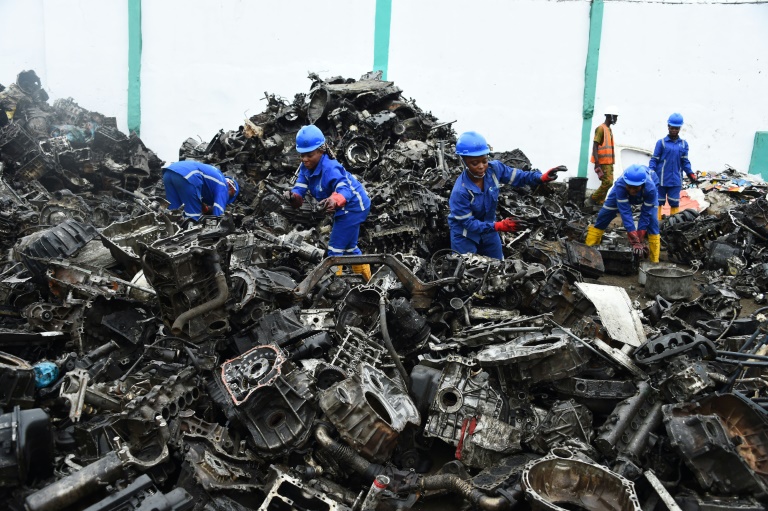
Romco Metals started recycling aluminium at its factory outside Lagos in 2015, drawn by global demand for the light, strong, flexible metal.

Buoyed by good results, it built a second facility outside Ghana’s capital Accra and now plans to open at least three new plants across Africa and triple production by 2025.

Aluminium is the world’s second most-used metal after steel and used widely in construction, medicine and car-making.

“Electric vehicles require more durable lighter material such as aluminium, and that’s where our materials end up,” said the company’s youthful founder, 32-year-old Raymond Onovwigun.

– Job creation –

A British-registered company, Romco melts down and recycles around 1,500 tonnes of discarded aluminium per month, out of a capacity of 3,000 tonnes.

It says it has created 450 direct jobs — 5,000 in total, in this labour-intensive sector — and plans to double that number within a year.

“Before… there was no work,” community leader Bankole Gbenga known as Chief Abore told AFP during a recent visit to the Lagos facility. 

Chief Abore says more than a hundred young people from his community alone now work for Romco in some capacity.

“Some are doing carpentry, some are welders… some of the youth are doing security,” said the 40-year-old.

Among those who have most benefited from Romco’s business are material suppliers like Mohammed Ashiru Madugu, who delivers several truckloads of metal scrap each week.

Madugu has a warehouse in northwestern Katsina, where suppliers from across the state and even neighbouring states bring him discarded metal.

He loads the goods onto trucks and sends them all the way to Lagos, more than a thousand kilometres (600 miles) away.

For one truck, he can get paid up to 26 million naira (about $60,000 dollars) although the price fluctuates.

The scrap supplier said those trips required escorts because of the risk of ambushes by criminal gangs on the road. 

Romco later told AFP that none of its suppliers need escorts and none had been involved in any attacks by criminals.

“We have had zero instances of anything of the sort,” it said in a statement.

– Vast problem –

Only a tiny fraction of waste is recycled in Nigeria, a country of some 210 million consumers.

Plastic, metal and glass that in advanced economies are routinely picked up and processed are mostly tossed out.

Each year, Nigeria disgorges 200,000 tonnes of plastic into the Atlantic, the UN Industrial Development Organisation reported last year.

In Lagos alone, a city of more than 20 million people, less than 10 percent total recyclables are currently collected, Ibrahim Adejuwon Odumboni, managing director of the Lagos State Management Agency told AFP.

By comparison, in the UK, more than 41 percent of waste picked up by local authorities was recycled last year, according to British statistics.

For Odumboni, recycling initiatives are to be commended but more should be done by the companies making aluminium beverage cans and other products.

“We need the manufacturers to invest in the collection system. In many parts of the world, a portion of what producers sell is going into the recovery of products. We currently don’t have that in Nigeria,” he said.

If companies selling aluminium products “are not held responsible (for collecting waste) then it doesn’t make any sense — we’re just going round and round in circle.”

He blames poor legislation but says an improved law on Extended Producer Responsibility (EPR) is currently being discussed in the state house of assembly.

EPR is an environmental policy in place in many countries that gives producers incentives to take responsibility for their products after they are used.

Another challenge for recyclers is carbon emissions from the energy they use to crush, shred or melt old materials.

Romco, for instance, uses compressed natural gas to turn the aluminium into ingots.

“(It) is still a fossil fuel but the best, most efficient fossil fuel. It doesn’t contain lead or sulphur,” said Onovwigun.

The company says, however, that it wants to be independent of fossil fuels and is “exploring the potential of using solar, green hydrogen, and biofuels.”

Russia announces 'massive strikes' across Ukraine front

Russia said Tuesday it was carrying out “massive strikes” across the Ukrainian front line and accused Ukrainian soldiers of abusing civilians in territories recaptured in a dramatic counter-offensive.

Moscow’s retaliation came after it was forced to pull back its troops from swathes of the northeast, particularly in the Kharkiv region, following Kyiv’s lightning assault to wrest back terrain.

The territorial shifts marked one of Russia’s biggest setbacks since its troops were repelled from Kyiv in the earliest days of the nearly seven-month war, yet Moscow signalled it was no closer to agreeing to a negotiated peace.

“Air, rocket and artillery forces are carrying out massive strikes on units of the Ukrainian armed forces in all operational directions,” the Russian defence ministry said in its daily briefing on the conflict.

“High-precision” strikes have also been launched on Ukrainian positions around Sloviansk and Konstantinovka in the eastern Donetsk region, it added.

The Kremlin accused Kyiv’s army of abusing civilians in territory it had recaptured.

President Vladimir Putin’s spokesman said that in the Kharkiv region, reports were emerging of “outrageous” treatment of civilians.

“There are a lot of punitive measures… people are being tortured, people are being mistreated and so on,” Dmitry Peskov told journalists.

Russia’s allegations came after Ukrainian authorities claimed to have found four bodies of civilians with “signs of torture” in the recaptured eastern village of Zaliznychne.

– ‘Too early to tell’ –

Residents reported that Russian troops had killed villagers, the regional prosecutor’s office said, announcing a war crime probe.

Ukrainian forces launched their counter-offensive in early September, seemingly catching Russia’s military off guard. 

Images posted by the Ukrainian military showed crates of munitions and military hardware scattered across territory abandoned by Russian forces.

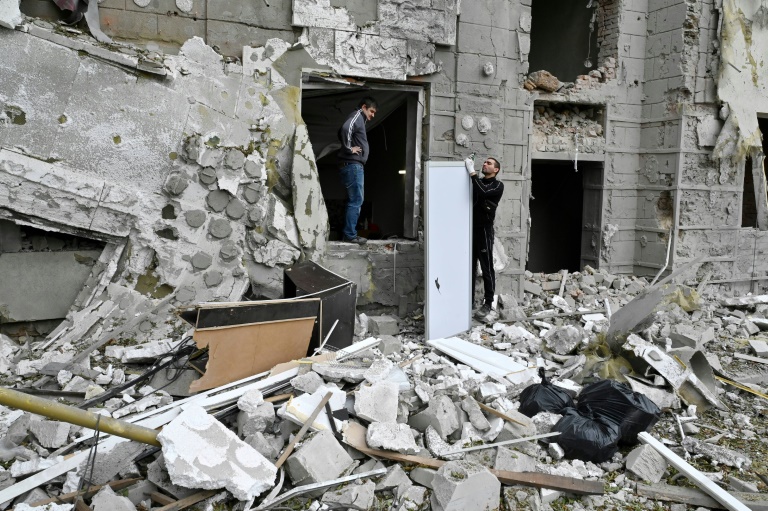
Around the north-eastern town of Balakliya, AFP journalists saw evidence of fierce battles, with buildings destroyed or damaged and streets mostly deserted.

By Monday, President Volodymyr Zelensky said that Ukraine’s forces have retaken a total of 6,000 square kilometres (2,320 square miles) from Russian control.

In the northeast, dozens of areas including the cities of Izyum, Kupiansk and Balakliya, have been retaken, Ukraine said.

Ukraine has also claimed significant gains in the southern Kherson region, where the Ukrainian army also said it had recaptured 500 square kilometres.

US Secretary of State Antony Blinken assessed that the Ukrainians had made “significant progress”, due to their resilience as well as US support.

“It’s too early to tell exactly where this is going. The Russians maintain very significant forces in Ukraine as well as equipment and arms and munitions. 

“They continue to use it indiscriminately against not just the Ukrainian armed forces but civilians and civilian infrastructure as we’ve seen,” Blinken said on Monday.

– ‘Turned the tide’ –

A US think tank, the Institute for the Study of War, tweeted: “Ukraine has turned the tide in its favour, but the current counter-offensive will not end the war.” 

Defence Minister Oleksii Reznikov told French daily Le Monde in a Monday interview that the war has entered a new phase with the help of Western weapons.

Kyiv nonetheless ramped up its calls for Western allies to rush more sophisticated weapons to help in its fight. 

“Weapons, weapons, weapons have been on our agenda since spring. I am grateful to partners who have answered our call: Ukraine’s battlefield successes are our shared ones,” Ukrainian Foreign Minister Dmytro Kuleba said.

But Germany was once again under the spotlight for failing to deliver Leopard battle tanks that Kyiv is seeking.

“Not a single rational argument on why these weapons cannot be supplied, only abstract fears and excuses,” said Kuleba, after Chancellor Olaf Scholz dodged a question on the issue on Monday, saying only that Germany would not “go-it-alone” on weapons deliveries.

Away from the battlefield, Ukraine’s allies were grappling with an energy crisis after Russia curtailed deliveries to the bloc. 

Finnish Prime Minister Sanna Marin appealed for EU unity in the face of Russian “blackmail” over energy supplies, and for more sanctions on Moscow.

Seeking emergency measures to bring down soaring energy prices, the Czech Republic, which holds the rotating presidency of the EU, called an extraordinary meeting on September 30. 

Major UK port set for fresh eight-day strike

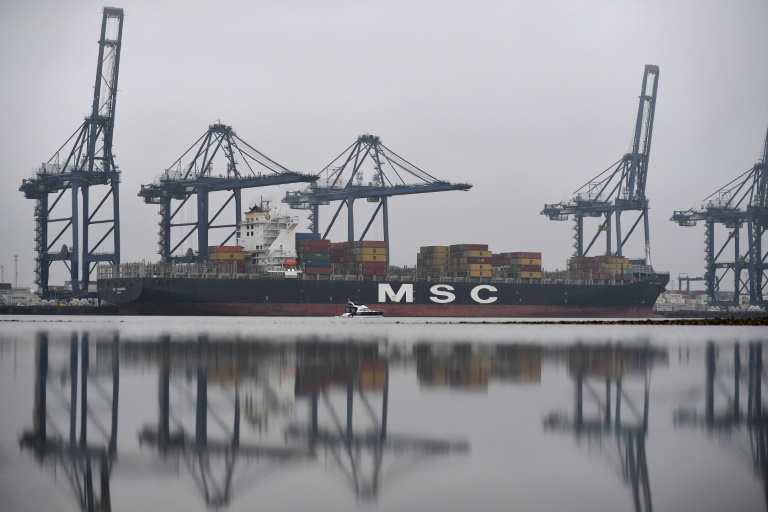
Workers at Britain’s largest container port, Felixstowe, are to strike for a further eight days, union bosses announced Tuesday, as the country suffers a cost-of-living crisis.

The walkout from September 27 until early October 5 comes after an initial eight-day stoppage over the summer as dockers and railway staff at the port in eastern England demand pay rises to keep up with decades-high inflation.

“The latest strike action is entirely of Felixstowe’s own making,” Bobby Morton of union Unite, said in a statement.

“Rather than seeking to negotiate a deal to resolve the dispute, the company instead tried to impose a pay deal.”

Morton said the new strikes “will inevitably lead to delays and disruption to the UK’s supply chain”.

Unite said the port is responsible for almost half of the UK’s container goods.

The union said management at the Felixstowe Dock and Railway Company had “unilaterally ended pay talks after refusing to improve its pay offer and instead announced that it was imposing a pay deal of seven percent”.

UK annual inflation stands above ten percent and is set to surge further before next year as energy and food bills soar.

Felixstowe port expressed disappointment at the new walkout, adding however there is “no prospect of agreement being reached with the union”.

Britain has experienced a summer of strikes, spearheaded by tens of thousands of railway workers carrying out their biggest stoppage in 30 years, as pay offers fail to keep up with soaring inflation.

Rail staff and postal workers have however postponed walkouts planned for this week following the death of Queen Elizabeth II.

Inflation has soared around the globe this year on supply constraints after economies reopened from pandemic lockdowns, and in the wake of Russia’s invasion of Ukraine.

Russia announces 'massive strikes' on Ukraine front

Russia said Tuesday it was carrying out “massive strikes” across the Ukrainian front line and accused Ukrainian soldiers of abusing civilians in territories recaptured in a dramatic counter-offensive.

Moscow’s retaliation came after it was forced to pull back its troops from swathes of the northeast, particularly in the Kharkiv region, following Kyiv’s lightning assault to wrest back terrain.

The territorial shifts marked one of Russia’s biggest setbacks since its troops were repelled from Kyiv in the earliest days of the nearly seven-month war, yet Moscow signalled it was no closer to agreeing to a negotiated peace.

“Air, rocket and artillery forces are carrying out massive strikes on units of the Ukrainian armed forces in all operational directions,” the Russian defence ministry said in its daily briefing on the conflict.

“High-precision” strikes have also been launched on Ukrainian positions around Sloviansk and Konstantinovka in the eastern Donetsk region, it added.

The Kremlin accused Kyiv’s army of abusing civilians in territory it had recaptured.

President Vladimir Putin’s spokesman said that in the Kharkiv region, reports were emerging of “outrageous” treatment of civilians.

“There are a lot of punitive measures… people are being tortured, people are being mistreated and so on,” Dmitry Peskov told journalists.

Russia’s allegations came after Ukrainian authorities claimed to have found four bodies of civilians with “signs of torture” in the recaptured eastern village of Zaliznychne.

– ‘Too early to tell’ –

Residents reported that Russian troops had killed villagers, the regional prosecutor’s office said, announcing a war crime probe.

Ukrainian forces launched their counter-offensive in early September, seemingly catching Russia’s military off guard. 

Images posted by the Ukrainian military showed crates of munitions and military hardware scattered across territory abandoned by Russian forces.

Around the north-eastern town of Balakliya, AFP journalists saw evidence of fierce battles, with buildings destroyed or damaged and streets mostly deserted.

By Monday, President Volodymyr Zelensky said that Ukraine’s forces have retaken a total of 6,000 square kilometres (2,320 square miles) from Russian control.

In the northeast, dozens of areas including the cities of Izyum, Kupiansk and Balakliya, have been retaken, Ukraine said.

Ukraine has also claimed significant gains in the southern Kherson region, where the Ukrainian army also said it had recaptured 500 square kilometres.

US Secretary of State Antony Blinken assessed that the Ukrainians had made “significant progress”, due to their resilience as well as US support.

“It’s too early to tell exactly where this is going. The Russians maintain very significant forces in Ukraine as well as equipment and arms and munitions. 

“They continue to use it indiscriminately against not just the Ukrainian armed forces but civilians and civilian infrastructure as we’ve seen,” Blinken said on Monday.

– ‘Turned the tide’ –

A US think tank, the Institute for the Study of War, tweeted: “Ukraine has turned the tide in its favour, but the current counter-offensive will not end the war.” 

Defence Minister Oleksii Reznikov told French daily Le Monde in a Monday interview that the war has entered a new phase with the help of Western weapons.

Kyiv nonetheless ramped up its calls for Western allies to rush more sophisticated weapons to help in its fight. 

“Weapons, weapons, weapons have been on our agenda since spring. I am grateful to partners who have answered our call: Ukraine’s battlefield successes are our shared ones,” Ukrainian Foreign Minister Dmytro Kuleba said.

But Germany was once again under the spotlight for failing to deliver Leopard battle tanks that Kyiv is seeking.

“Not a single rational argument on why these weapons cannot be supplied, only abstract fears and excuses,” said Kuleba, after Chancellor Olaf Scholz dodged a question on the issue on Monday, saying only that Germany would not “go-it-alone” on weapons deliveries.

Away from the battlefield, Ukraine’s allies were grappling with an energy crisis after Russia curtailed deliveries to the bloc. 

Finnish Prime Minister Sanna Marin appealed for EU unity in the face of Russian “blackmail” over energy supplies, and for more sanctions on Moscow.

Seeking emergency measures to bring down soaring energy prices, the Czech Republic, which holds the rotating presidency of the EU, called an extraordinary meeting on September 30. 

Paris to scale back monument lighting as energy bills bite

Paris will start switching off the ornamental lights that grace city monuments hours earlier than usual, plunging the Eiffel Tower and other landmarks in the dark to cope with surging electricity costs, officials said Tuesday.

Most monuments operated by the city will now go unlit from 10:00 pm, (2000 GMT), a potential disappointment for the tens of millions of tourists to the romantic City of Lights.

The Eiffel Tower, usually bathed in a warm glow until 1:00 am, and which comes ablaze with dazzling white lights every hour, will now go dark after the last visitor leaves, at 11:45 pm.

But streets lights will remain on for security, as will the illuminations of the city’s ornate bridges over the Seine river, Mayor Anne Hidalgo said at a press conference.

The “energy sobriety” plan aims to cut energy use by 10 percent, said Hidalgo, which could help soften the blow of rising costs by some 10 million euros ($10.2 million).

Hidalgo, a Socialist who played up her efforts to green Paris during a failed presidential run earlier this year, said she would also push the government to do the same for national monuments in the city, such as the Pantheon or the Arc de Triomphe.

In August, President Emmanuel Macron warned that high energy prices caused by the war in Ukraine could signal “the end of abundance,” widely interpreted as preparing public opinion for a difficult winter ahead.

Stocks climb, dollar down before US inflation data

Stock markets rose slightly and the dollar extended recent losses Tuesday with all eyes on the latest US inflation print.

While traders expect Tuesday’s data to show the pace of price rises cooling in the world’s biggest economy, they still expect the Federal Reserve to continue hiking US interest rates by sizeable amounts in the coming months.

The dollar, which has reached multi-year highs against the yen and pound in recent weeks, is reversing direction after investors priced in more aggressive tightening of American borrowing costs.

“The last few days have seen a notable improvement in market sentiment,” noted Craig Erlam, senior market analyst at Oanda trading group. 

“It’s not always easy to pinpoint what’s driving such a turnaround but the fact that it’s happening in the days leading up to the US inflation report is certainly interesting.”

Erlam said a drop in the inflation rate could “trigger a broader risk rebound in the markets. 

“It may not be enough to tip the Fed balance in favour of a more modest 50 basis point rate hike next week but it may slow the pace of tightening thereafter.”

Analysts’ consensus is for inflation to slow to eight percent, driven mostly by falling gasoline prices. US inflation hit a 40-year high in June, touching 9.1 percent.

Markets are largely pricing in another 75-basis-point interest rate hike by the Fed at its next gathering.

This after the US central bank has already made consecutive hikes of that amount, while Fed boss Jerome Powell has indicated the increases would continue until inflation is tamed.

The European Central Bank last week raised its key interest rate by 75 basis points, a record-amount for the eurozone.

Inflation has soared around the globe this year owing to sky-high energy and food bills.

This has been caused to a large extent by supply constraints after economies reopened from pandemic lockdowns and in the wake of Russia’s invasion of Ukraine.

– Key figures at around 1100 GMT –

London – FTSE 100: UP 0.4 percent at 7,499.19 points

Frankfurt – DAX: UP 0.7 percent at 13,492.77

Paris – CAC 40: UP 0.6 percent at 6,371.48   

EURO STOXX 50: UP 0.7 percent at 3,671.60 

Tokyo – Nikkei 225: UP 0.3 percent at 28,614.63 (close)

Hong Kong – Hang Seng Index: DOWN 0.2 percent at 19,326.86 (close)

Shanghai – Composite: UP 0.1 percent at 3,263.80 (close)

New York – Dow: UP 0.7 percent at 32,381.34 (close)

Euro/dollar: UP at $1.0178 from $1.0120

Pound/dollar: UP at $1.1729 from $1.1680 

Euro/pound: UP at 86.77 pence from 86.64 pence 

Dollar/yen: DOWN at 142.11 yen from 142.82 yen  

Brent North Sea crude: UP 1.2 percent at $95.17 per barrel

West Texas Intermediate: UP 1.2 percent at $88.83 per barrel

Asian stocks rally ahead of key US inflation data

Asian stocks largely continued a global rally on Tuesday, ahead of the release of key US consumer price data that is expected to show slightly slowing inflation in the world’s largest economy.

Stocks rose in Japan, Australia, Singapore and Taiwan, with South Korea and Shanghai also gaining after reopening following a public holiday. European stocks were steady at the open.

Hong Kong shares edged lower at the close, erasing modest gains made earlier in the day.

US consumer price index (CPI) data will be released on Tuesday, with analysts expecting inflation to slow to eight percent, driven mostly by falling gasoline prices. US inflation hit a 40-year high in June, touching 9.1 percent.

Easing inflation, however, is unlikely to slow the pace of the US Federal Reserve’s tightening of monetary policy, with another 75-basis-point interest rate hike expected at its meeting next week.

The Fed has already instituted two consecutive rate hikes of that amount, and in recent days bank chief Jerome Powell has indicated the increases will continue until inflation is tamed.

While the overall US inflation number is expected to slow, prices for food and housing are projected to have increased, raising the strain on household budgets.

“Risks remain skewed to the upside, due to an uncertain outlook for key inputs, including agricultural and energy commodities, as well as the pass-through of wage gains in a tight labour market,” according to Barclays US analysts Pooja Sriram and Jonathan Hill.

Last week, the European Central Bank also adopted a policy of monetary tightening, raising its key rate by a historic 75 basis points, with analysts expecting a similar-sized increase at the next policy meeting in October.

– ‘Locked in’ –

In Tokyo, stocks closed higher on Tuesday, with investors ending the session by tempering some of the gains with caution at the Nikkei’s rise over recent days.

Brokerage Okasan Online Securities said investors were looking “to square their positions” ahead of the US CPI data being released.

Seoul led the day’s gains in Asia, rising by 2.7 percent on Tuesday.

US stocks on Monday had ended bullish: the broad-based S&P 500 advanced 1.1 percent, continuing the upswing last week that snapped a three-week losing streak.

“Wall Street is locked into Tuesday’s inflation report that will likely show pricing pressure relief but will not change the Fed from maintaining an aggressive stance of tightening monetary policy,” said Edward Moya, senior market analyst at OANDA.

“Even if inflation falls below the 8 percent level, the Fed should still deliver a 75-basis-point rate hike at the September 21st policy decision.”

The euro stabilised to $1.0143 against the dollar on Tuesday, after a surge a day earlier that saw it gain 1.4 percent against the US currency and 1.6 percent against the yen, before paring those increases in later trading.

Oil prices climbed higher as Tuesday progressed — after an initial fall in the Asian morning — as a weaker dollar offset some of the concerns around demand destruction.

Other key data expected later this week includes US retail sales and industrial production on Thursday; China home and retail sales as well as industrial production on Friday; and Euro area CPI, also on Friday.

– Key figures at around 0815 GMT –

Tokyo – Nikkei 225: UP 0.3 percent at 28,614.63 (close)

Hong Kong – Hang Seng Index: DOWN 0.2 percent at 19,326.86 (close)

Shanghai – Composite: UP 0.1 percent at 3,263.80 (close)

New York – Dow: UP 0.7 percent at 32,381.34 (close)

London – FTSE 100: UP 0.1 percent at 7,480.97 points

Frankfurt – DAX: UP 0.3 percent at 13,437.53 points   

Paris – CAC 40: UP 0.6 percent at 6,369.77 points   

EURO STOXX 50: UP 0.5 percent at 3,664.98 points 

Euro/dollar: UP at $1.0143 from $1.0120  

Pound/dollar: UP at $1.1717 from $1.1680 

Euro/pound: DOWN at 86.57 pence from 86.64 pence 

Dollar/yen: DOWN at 142.28 yen from 142.82 yen  

Brent North Sea crude: UP 1 percent at $94.98 per barrel

West Texas Intermediate: UP 1.1 percent at $88.73 per barrel

Close Bitnami banner
Bitnami