US Business

Will take 'a few years' to get US inflation back to 2%: Fed official

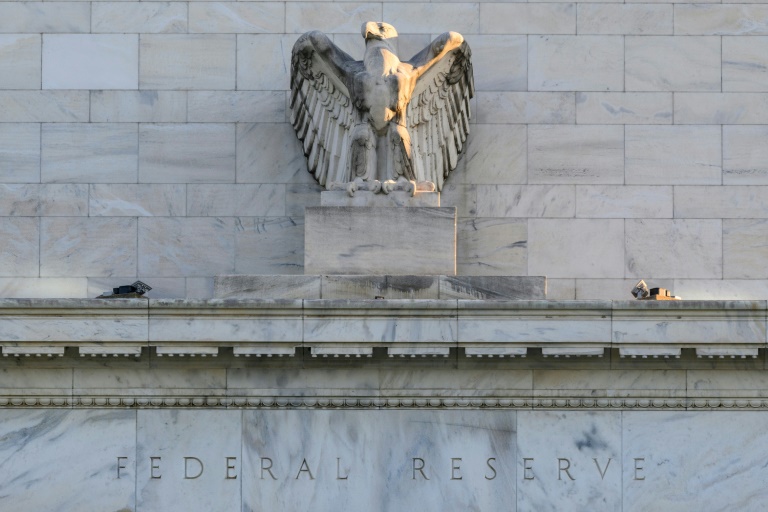
The Federal Reserve is committed to bringing soaring US inflation back down to two percent, but that will take “a few years,” a top central banker said Tuesday.

The Fed this year has moved aggressively to raise interest rates to try to rein in price surges that have hit American families, and central bankers, notably Fed chief Jerome Powell, have doused any hopes they would alter course anytime soon.

New York Federal Reserve Bank President John Williams echoed Powell’s tough comments, saying the benchmark lending rate will have to remain high for some time to bring demand back into line with supply.

US annual inflation ebbed slightly in July to a still-painfully high 8.5 percent, and Williams said the Fed is “absolutely committed” to achieving the two-percent goal.

“The situation is very challenging. Inflation is very high. The economy has a lot of crosscurrents. I do think it will take a few years, but we’re going to get that done,” Williams said in a discussion with The Wall Street Journal.

The Fed has increased the key lending rate four times this year, including two supersized 0.75 percentage point hikes in June and July, and Powell said Friday another similar increase is possible next month as well.

Inflation was already high at the start of the year and spiked globally following the Russian invasion of Ukraine, but gas prices at the pump have been moving down in recent weeks, taking some of the pressure off American consumers.

That in turn led to a jump in consumer confidence in August, according to The Conference Board’s monthly survey released Tuesday.

But the US labor market remains very strong, which the Fed fears will add fuel to the inflation fires as wages rise. 

New data from the Labor Department Tuesday showed that after dipping in June, job openings rebounded slightly in July, which means there are about two positions available for every unemployed person in the country.

The Fed on Friday will get a look at one more employment report before its September 20-21 policy meeting, and will look for a slowdown after the surprise surge in July.

Williams said the September policy decision will depend on the data, but added “it’s clear that we need to get interest rates significantly higher by the end of the year.”

Inflation is “far too high. And that’s really what we’re focusing on.”
Will take 'a few years' to get US inflation back to 2%: Fed official

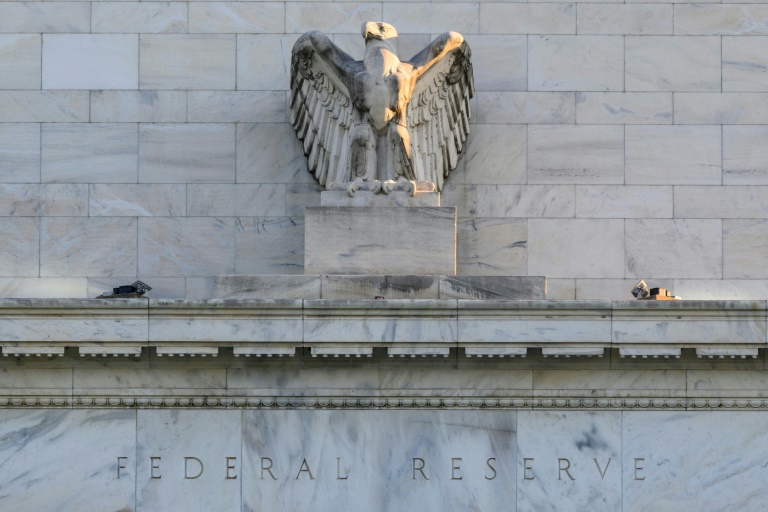
The Federal Reserve is committed to bringing soaring US inflation back down to two percent, but that will take “a few years,” a top central banker said Tuesday.

The Fed this year has moved aggressively to raise interest rates to try to rein in price surges that have hit American families, and central bankers, notably Fed chief Jerome Powell, have doused any hopes they would alter course anytime soon.

New York Federal Reserve Bank President John Williams echoed Powell’s tough comments, saying the benchmark lending rate will have to remain high for some time to bring demand back into line with supply.

US annual inflation ebbed slightly in July to a still-painfully high 8.5 percent, and Williams said the Fed is “absolutely committed” to achieving the two-percent goal.

“The situation is very challenging. Inflation is very high. The economy has a lot of crosscurrents. I do think it will take a few years, but we’re going to get that done,” Williams said in a discussion with The Wall Street Journal.

The Fed has increased the key lending rate four times this year, including two supersized 0.75 percentage point hikes in June and July, and Powell said Friday another similar increase is possible next month as well.

Inflation was already high at the start of the year and spiked globally following the Russian invasion of Ukraine, but gas prices at the pump have been moving down in recent weeks, taking some of the pressure off American consumers.

That in turn led to a jump in consumer confidence in August, according to The Conference Board’s monthly survey released Tuesday.

But the US labor market remains very strong, which the Fed fears will add fuel to the inflation fires as wages rise. 

New data from the Labor Department Tuesday showed that after dipping in June, job openings rebounded slightly in July, which means there are about two positions available for every unemployed person in the country.

The Fed on Friday will get a look at one more employment report before its September 20-21 policy meeting, and will look for a slowdown after the surprise surge in July.

Williams said the September policy decision will depend on the data, but added “it’s clear that we need to get interest rates significantly higher by the end of the year.”

Inflation is “far too high. And that’s really what we’re focusing on.”

Baltic nations to boost offshore wind energy seven-fold by 2030

Nations bordering the Baltic Sea agreed Tuesday to increase offshore wind energy  to 20 gigawatts by 2030, as Europe seeks to wean itself off Russian gas following Moscow’s invasion of Ukraine.

“We have agreed to increase offshore wind in the Baltic Sea seven-fold by 2030,” Danish Prime Minister Mette Frederiksen told reporters after hosting a meeting between Denmark, Estonia, Finland, Germany, Latvia, Lithuania, Poland and Sweden.

“We are the frontline of European energy security”, Frederiksen said.

Russia was the only Baltic Sea nation not in attendance at Tuesday’s meeting. 

“In this war Putin is using energy as a weapon and has put Europe, as we all know, on the brink of an energy crisis with skyrocketing energy prices”, Frederiksen said.

Twenty gigawatts would be enough to supply electricity to 20 million households, “more than the current wind offshore capacity in the whole of the EU today”, she added.

By 2050, the Baltic Sea’s wind energy capacity could be brought to 93 gigawatts, the countries said in a statement.

“Putin’s attempt to blackmail us with fossil fuels is failing”, European Commission President Ursula van der Leyen said.

“We’re accelerating the green transition. We are getting rid of the dependency on Russian fossil fuels,” she added.

The Commission said in March it wanted to reduce dependence on Russian gas by two-thirds this year, and completely by 2030.

It also unveiled a target to increase its share of renewable energy from 40 to 45 percent by 2030.

The EU also aims to reduce greenhouse gases by 55 percent by 2030 and to be carbon neutral by 2050.

On Monday, Denmark said it would increase its wind capacity off the Baltic Sea island of Bornholm from two to three gigawatts, and link this production to Germany’s electricity grid.

In May, Germany, Denmark, the Netherlands and Belgium announced a similar agreement to increase the North Sea’s wind power capacity tenfold to 150 gigawatts by 2050 to help the EU achieve climate goals and avoid Russian hydrocarbons.

Stocks extend Fed-induced sell-off into third day

Stock markets mostly tumbled again on Tuesday, extending losses that were sparked by last week’s Federal Reserve warning that more monetary tightening was on the way.

London’s FTSE 100 ended down after a public holiday closure the day before, while the Paris CAC 40 fell after staging a rally earlier in the day.

Wall Street indices started the morning in the green, only for the rebound to fizzle and dash analyst predictions of “Turnaround Tuesday”.

“US stocks turned negative after confidence and job opening data supported the argument for the Fed to stick to an aggressive stance with fighting inflation,” said Edward Moya, analyst at OANDA trading platform.

“Turnaround Tuesday disappeared faster than dessert does at the Moya household.”

The Frankfurt DAX bucked the trend to end the day up 0.5 percent.

Most markets have been slumping since Friday after Federal Reserve chief Jerome Powell warned of more interest rate hikes to fight runaway four-decade high inflation, even at the cost of economic pain.

A closely-watched US survey found Americans consumers to be happier about the state of the economy than expected, and more willing to spend.

The strong data will boost the idea that the US economy does not need extra help from the Fed, said Ipek Ozkardeskaya, Swissquote Bank analyst.

“Cherry on top: the consumer sentiment regarding the future is improving,” she added. 

“Hence, there is no reason for the Fed to soften its stance.” 

– Energy woes –

Central banks are scrambling worldwide to tame consumer prices that have surged higher since Russia invaded Ukraine in late February.

German inflation data showed consumer prices rose by 7.9 percent in the year to August as the ongoing energy crisis further stoked price pressures.

In Spain, the inflation rate slowed to 10.4 percent in August as fuel prices eased, but it remained elevated due to rising electricity and food prices.

The European Central Bank — which raised interest rates for the first time in over a decade in July — is expected to hike them again when it meets next week.

Energy prices retreated on Tuesday, however, with oil contracts tanking on fears about a major hit to demand from any global economic slowdown — and more Covid restrictions in key consumer market China.

Brent North Sea crude dipped below $100 per barrel.

Natural gas prices, which have soared this year over supply disruptions from key producer Russia, dipped in Europe as German Chancellor Olaf Scholz said government measures have left his country better prepared to cope with further delivery cuts in the winter.

Many European countries are facing severe supply problems as Moscow turns off the gas taps in response to EU military and diplomatic backing for Ukraine.

Russian energy giant Gazprom plans to suspend gas deliveries through the Nord Stream pipeline, which runs to Germany, for three days of “maintenance” work from Wednesday.

Elsewhere, Asian stocks indices diverged on Tuesday, winning limited support from bargain-buying.

A record 96 percent on-year drop in earnings from China’s largest developer Country Garden Holdings served as a grim reminder of the country’s beleaguered property sector.

Investors are also anxious about “flaring geopolitical tensions”, said Naeem Aslam of AvaTrade, especially as Taiwan and Beijing exchanged angry barbs over Chinese drone incursions at an outlying Taiwanese island.

– Key figures at around 1545 GMT –

London – FTSE 100: DOWN 0.9 percent at 7,361.63 points (close)

Frankfurt – DAX: UP 0.5 percent at 12,961.14 (close)

Paris – CAC 40: DOWN 0.2 percent at 6,210.22 (close)

EURO STOXX 50: DOWN 0.2 percent at 3,561.92 

New York – Dow: DOWN 0.8 percent at 31,838.l29

Tokyo – Nikkei 225: UP 1.1 percent at 28,195.58 (close)

Hong Kong – Hang Seng Index: DOWN 0.4 percent at 19,949.03 (close)

Shanghai – Composite: DOWN 0.4 percent at 3,227.22 (close)

Euro/dollar: UP at $0.9993 from $0.9972 on Monday

Pound/dollar: DOWN at $1.1636 from $1.1709

Euro/pound: UP at 85.89 pence from 85.38 pence

Dollar/yen: UP at 138.93 yen from 138.68 yen

West Texas Intermediate: DOWN 5.39 percent at $91.80 per barrel

Brent North Sea crude: DOWN 4.87 percent at $97.93 per barrel

burs-rox/lth

Nadal launches US Open bid, Swiatek, Raducanu head women's draw

Rafael Nadal opens his bid for a 23rd Grand Slam title at the US Open on Tuesday as world number one Iga Swiatek and defending champion Emma Raducanu headline the women’s draw.

After the searing emotion of Monday’s salute to Serena Williams, the Open was set to return to something like normal service as action on the court took center stage.

Nadal launches his latest Grand Slam title campaign in Tuesday’s night session, where he faces unheralded Australian Rinky Hijikata on Arthur Ashe Stadium.

The second-seeded Spaniard is chasing a fifth victory in New York to go along with titles won in 2010, 2013, 2017 and 2019.

The 36-year-old has already won the Australian Open and French Open titles this season, but was forced to withdraw before his Wimbledon semi-final with an abdominal injury.

Since that curtailed Wimbledon campaign, Nadal has played just once — a first-up loss to Borna Coric in Cincinnati earlier this month.

That has inevitably led to questions about whether Nadal’s creaking body can stand up to the punishing demands of a two-week campaign at Flushing Meadows.

Nadal acknowledged those concerns in a pre-tournament press conference, revealing that he had deliberately held himself back in Cincinnati to protect his injury.

“I take it very easy in the Cincinnati, too, in the practices. The match, I try my best without putting all the effort there on the serve,” Nadal said.

“I hope to be ready for the action. That’s the only thing that I can say.”

– Raducanu, Swiatek in action –

Injury concerns have also flared for Britain’s reigning champion Raducanu in the women’s draw.

The 19-year-old created a sensation last year when she emerged from qualifying to sweep to the title, the first qualifier ever to win a Grand Slam title.

However Raducanu has struggled to build on that success this season, suffering a trio of second round exits at the Australian Open, French Open and Wimbledon.

Raducanu, who faces French veteran Alize Cornet in Tuesday’s first round in a night match, was seen tearfully complaining about a problem with her right hand during practice last week but later brushed off the incident, insisting she was ready to defend her title.

“It’s just one of those weird days where you feel a bit like nothing… I don’t know. You just feel a bit out of it,” she said.

Elsewhere on Tuesday, women’s world number one and top seed Swiatek faces Jasmine Paolini in her opening game.

The 21-year-old two-time French Open champion was invincible during the early part of the season, going on a remarkable 37-match winning streak that netted six titles in a row, including her second Roland Garros crown.

But she has never been further than the fourth round in three previous appearances at the US Open, and freely admits that New York is not her preferred environment.

“I wouldn’t choose it as a place to live because I’m more of a person that needs a calm place with the proper environment to rest,” Swiatek said on the eve of the tournament.

“New York is kind of always alive. That’s not for sure my place. But, you know, the tournament is great. It’s a totally different atmosphere than any other tournament.”

Energy price hikes could force UK pubs to shut

British pubs could be forced to close because of massive increases in energy prices, leading industry figures said on Tuesday as they urged the government to step in.

Six of the country’s biggest pub and brewing firms said some pubs had seen a more than 300-percent hike in bills this year, as part of a wider cost of living crisis.

“In some instances, tenants are giving us notice since their businesses do not stack up with energy at these costs,” said William Lees Jones, managing director of the JW Lees pub group.

One pub tenant in the 2,700-strong Greene King group has seen a £33,000 ($38,600) increase in their energy bill this year, said chief executive Nick Mackenzie.

“While the government has introduced measures to help households cope with this spike in prices, businesses are having to face this alone, and it is only going to get worse come the autumn.

“Without immediate government intervention to support the sector, we could face the prospect of pubs being unable to pay their bills, jobs being lost and beloved locals across the country forced to close their doors,” he added. 

– Hospitality fears –

Britain’s cost-of-living crisis has seen inflation soar to 40-year highs, with a growing number of strikes over wages that fail to keep pace with rising prices.

Last week energy regulator Ofgem announced an eye-watering 80-percent increase in gas and electricity prices for the average household from October, with even higher bills expected from January.

But the energy price cap does not apply to businesses.

The brewers — Greene King, JW Lees, Carlsberg Marston’s, Admiral Taverns, Drake & Morgan and St Austell Brewery — urged the government in an open letter to extend the cap to businesses.

Independent restaurants and takeaways — from fish and chips shops to Indian takeaways and kebab houses — have also voiced concern.

On Monday, more than 750 outlets said the increased costs were making hospitality “unsustainable”.

Pubs — a mainstay of British social life for centuries — have faced a torrid few years due to the slump in business due to coronavirus lockdowns and social distancing restrictions.

The number of pubs in England and Wales plunged below 40,000 for the first time ever in the first six months of this year, down more than 7,000 in a decade.

The British Beer and Pub Association, an industry body, said energy price rises, caused by hikes in wholesale costs and a squeeze on supplies due to the war in Ukraine, could damage the sector more than the pandemic if nothing is done.

– Energy intensive –

Craft or micro-breweries, which have enjoyed a boom in the last 20 years due to smaller start-up costs and a tax break for producing less than 4,000 litres a year, could also feel the brunt of the hikes.

Last year there were more than 2,400 craft breweries — five times as many as in the early 2000s — with companies such as Beavertown and Brewdog now household names.

But supply chain issues and inflation threaten to turn the tide. While 200 craft establishments opened in Britain last year, up to 60 closed, after some 160 were forced to shut due to the pandemic.

“These breweries haven’t been doing a massive amount of money, just enough to get by,” Nik Antona, chairman of the Campaign for Real Ale (CAMRA), told AFP.

“Unfortunately brewing is quite a high energy intensive industry. You have to boil water. We’re going to see massive rises in energy bills.”

Supplies have also been squeezed by the war in Ukraine, one of the world’s leading producers of wheat and barley.

Josh Walker, production manager at the Exale craft brewery in Walthamstow, northeast London, is trying to remain positive.

SMEs such as his got creative during the pandemic, developing their online presence and launching home-brewing kits for those stuck at home.

Since the lifting of the lockdown, they have organised events to attract customers. Walker said Exale and others like it were still protected from inflation by forward contracts fixing prices of raw materials.

“A lot of our beer is sold at retail price in our tap room. That will protect us more than those selling only wholesale,” he added.

But Antona warned: “There’s going to be a limit on what you can pass on (to the customer).”

UN raises alarm on Red Sea oil tanker 'time-bomb'

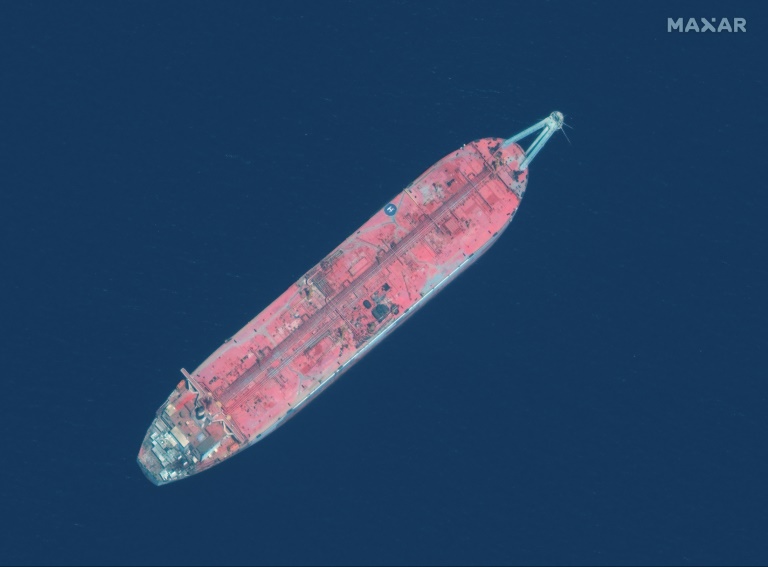
The UN appealed Tuesday for the last $14 million needed to try and prevent a stricken oil tanker from triggering a disaster off Yemen that could cost $20 billion to clean up.

The decaying 45-year-old FSO Safer, long used as a floating storage platform and now abandoned off the rebel-held Yemeni port of Hodeida, has not been serviced since Yemen was plunged into civil war more than seven years ago. 

If it breaks up, it could unleash a potentially catastrophic spill in the Red Sea.

David Gressly, the United Nations’ resident and humanitarian coordinator in Yemen, leads UN efforts on the Safer.

“Less then $14 million is now needed to reach the $80 million target to start the emergency operation to transfer oil from the Safer to a safe vessel,” said Gressly’s communications advisor Russell Geekie.

“We’re deeply concerned. If the FSO Safer continues to decay, it could break up or explode at any time,” he told reporters in Geneva, via video-link from Sanaa.

“The volatile currents and strong winds from October to December will only increase the risk of disaster. If we don’t act, the ship will eventually break apart and a catastrophe will happen. It’s not a question of if, but when.”

He said the result would potentially be the fifth largest oil spill from a tanker in history, with the clean-up costs alone reaching $20 billion.

The Safer contains four times the amount of oil that was spilled by the 1989 Exxon Valdez disaster, one of the world’s worst ecological catastrophes, according to the UN.

“It would unleash an environmental, economic and humanitarian catastrophe,” said Geekie.

The ship contains 1.1 million barrels of oil. The UN has said a spill could destroy ecosystems, shut down the fishing industry and close the lifeline Hodeida port for six months.

The Safer is unusable, is fit only for scrappage and nothing on it works, said Geekie.

“This is a ticking time bomb,” he warned.

“You don’t want to go and smoke a cigarette on the deck, I can tell you that much.”

Afghan family rebuilds far from home after US drone strike

The damage inflicted by a United States drone that killed 10 members of Aimal Ahmadi’s family in the Afghan capital can still be seen in the courtyard of his home a year after the strike.

The 32-year-old, whose daughter was among those killed, left Afghanistan with some of his family members, moving to a refugee camp in Qatar from where they now expect to be evacuated to the US for a future far from home.

“I don’t wish that any human being would go through what we went through, it’s terrible, unimaginable”, Ahmadi told AFP from Qatar.

On August 29, 2021, Ahmadi’s three-year-old daughter Malika, his brother Ezmarai, who had worked for an American charity, and several of his nephews and nieces were killed in the strike. 

The 10 family members, including seven children, were near a family car when they were mistakenly targeted by a US drone.

The family were the last civilian deaths linked to US forces recorded in the chaotic days before American troops left Afghanistan on August 30 last year, allowing the Taliban to fully take control of the country.

A few days after the drone strike the Pentagon acknowledged that it had made a “mistake” in wrongly identifying the family’s white Toyota as an Islamic State (IS) target.

The Pentagon did not punish the service members involved in the incident.

“There was not a strong enough case to be made for personal accountability,” said Pentagon spokesman at that time, John Kirby.

The US administration is currently helping relocate members of the family, Ahmadi said.

The drone hit came three days after an IS suicide bomb attack at Kabul airport killed more than 150 people — including 13 US troops — significantly raising tensions in the last days of US withdrawal.

An estimated 188 civilians have been killed by US forces by mistake in Afghanistan since 2018, according to the American military.

– Compensation-

A year after the strike, the modest two-storey house on a narrow street in the Khwaja Bughra neighbourhood in the north of Kabul is now inhabited by only a dozen distant relatives. 

Several other relatives of the victims fled the scene of the tragedy, which still bears the scars of the attack.

Blown out by the explosion, the windows have now been repaired, the walls of the courtyard rebuilt and others repainted. 

But on the floor, tiles are still missing where the drone strike hit. 

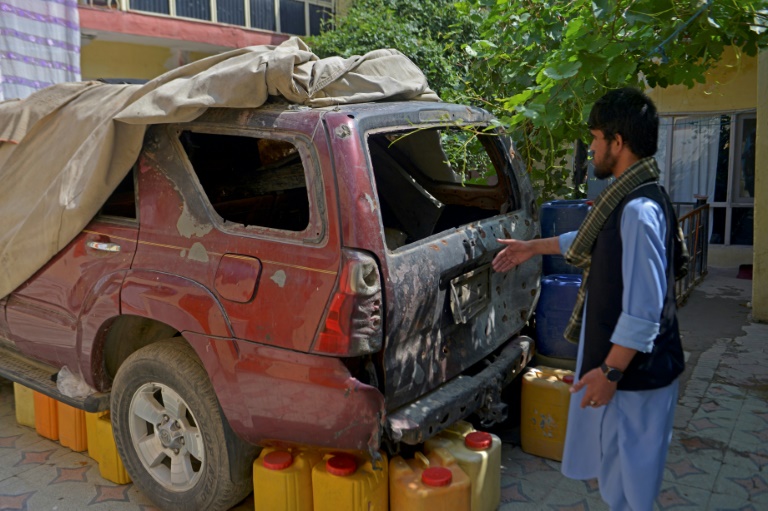
The family’s second vehicle -– almost completely burned by the blast -– still lies in the middle of the yard under a tarp.

“We didn’t want to get rid of it in memory of the victims and because it saved lives by protecting the women inside the house from the shrapnel,” said Ahmadi’s 20-year-old nephew, Nasratullah Malikzada, who is now in charge of maintaining the house.

As he passed a gate where portraits of the 10 victims have been hung, the young Afghan said the situation is “very sad”.

“It is God’s will, what has happened has happened, we can’t go back. God will punish those responsible in the afterlife,” he said.

Washington’s announcement that it would pay the family compensation sparked interest in the family and among relatives, given the economic distress felt across the country.

Following the drone strike, Ahmadi lost his job working with foreign companies and one of his two other brothers was threatened by strangers who had heard about the expected compensation.

But to this day, the family has not received any money from the US and they have hired a lawyer to defend their interests, Ahmadi said.

The lawyer was not reachable for comment.

In an exhausted tone, Ahmadi said he is confident that the US government will compensate his family.

As soon as he completes the paperwork for his evacuation, he hopes to join his two brothers who are already in the US.

His ailing sister, who remains in Afghanistan and is also hoping to be evacuated, has left home for a safe place in Kabul.

“I hope that a better future awaits me,” said Ahmadi.

In shadow of abandoned US airbase, Bagram's economy withers

For years, the sprawling military base at Bagram, just north of Kabul, was a potent symbol of the United States’ two decades of war in Afghanistan.

The sprawling complex included an air base that was the linchpin of the US invasion; a prison where rights groups allege widespread violations occurred; and a residential area that featured swimming pools, cinemas and spas.

But weeks before Washington officially ended its military presence in Afghanistan last August, US troops left the airbase in the dead of night.

Today, the military base is occupied by the Taliban, who took over the country in a swift offensive as US forces were exiting.

The US departure from Bagram has also seen the collapse of the economy in the nearby town of the same name, an illustration of how Afghanistan’s fortunes were so heavily tied to the war and foreign aid.

“Today, I’m jobless. I don’t know much about politics, but the exit of US forces from the base is a big economic loss,” said Saifulrahman Faizi, one of the town’s 80,000 residents.

Faizi earned $30 a day when he was employed at the base, at a time when hundreds would queue for hours outside the compound in the hope of getting work.

“Now, nobody goes there. Everything has just crashed, everybody is struggling”, he said.

– Shuttered shops –

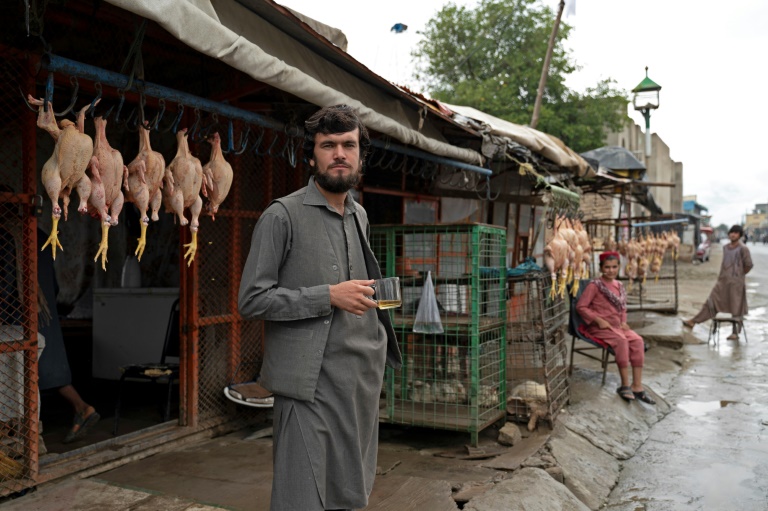
Nowhere is the town’s economic collapse more evident than in the main market.

It is marked by rows of shuttered shops and warehouses, and those that remain open have seen sales plummet. 

Shah Wali, a 46-year-old grocery store keeper, said he used to earn an income of between 20,000 and 30,000 Afghanis ($230 and $340). 

Today, he can barely pay his rent.

“With the Islamic Emirate (Taliban) coming to power, peace has returned but business has gone,” Wali told AFP, clutching his prayer beads.

At the peak of the US invasion, Bagram was home to tens of thousands of troops and contractors, with the town serving as a hub for tons of supplies that would service the base.

The airfield was first built by the Americans for their Afghan ally during the Cold War in the 1950s.

The Soviet Union vastly expanded it after the Red Army invaded Afghanistan in 1979.

After their withdrawal, the base was controlled by the Moscow-backed government, and later by the shaky mujahideen administration during the 1990s civil war.

With the Taliban seizing power last year, the airfield is now under their control.

– ‘Empty town’ –

When the US military pulled out, it took much of its military hardware home, but tons of civilian equipment was left behind. 

For several months, the town managed to thrive on a booming scrap business, but residents say that now that, too, is dying.

Shops that sold used gym equipment, generators, air conditioners and spare car parts are either shut or receive few orders.

Several houses are now deserted, their residents having moved to Kabul or elsewhere in search of work.

Many who had worked at the base have also fled the country, fearing reprisals from the Taliban.

“Half the people have gone, the town feels so empty,” said Faizi.

In shadow of abandoned US airbase, Bagram's economy withers

For years, the sprawling military base at Bagram, just north of Kabul, was a potent symbol of the United States’ two decades of war in Afghanistan.

The sprawling complex included an air base that was the linchpin of the US invasion; a prison where rights groups allege widespread violations occurred; and a residential area that featured swimming pools, cinemas and spas.

But weeks before Washington officially ended its military presence in Afghanistan last August, US troops left the airbase in the dead of night.

Today, the military base is occupied by the Taliban, who took over the country in a swift offensive as US forces were exiting.

The US departure from Bagram has also seen the collapse of the economy in the nearby town of the same name, an illustration of how Afghanistan’s fortunes were so heavily tied to the war and foreign aid.

“Today, I’m jobless. I don’t know much about politics, but the exit of US forces from the base is a big economic loss,” said Saifulrahman Faizi, one of the town’s 80,000 residents.

Faizi earned $30 a day when he was employed at the base, at a time when hundreds would queue for hours outside the compound in the hope of getting work.

“Now, nobody goes there. Everything has just crashed, everybody is struggling”, he said.

– Shuttered shops –

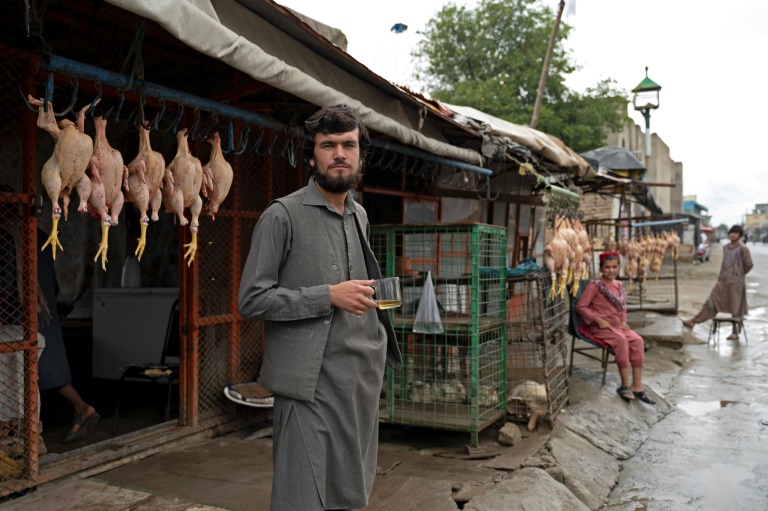
Nowhere is the town’s economic collapse more evident than in the main market.

It is marked by rows of shuttered shops and warehouses, and those that remain open have seen sales plummet. 

Shah Wali, a 46-year-old grocery store keeper, said he used to earn an income of between 20,000 and 30,000 Afghanis ($230 and $340). 

Today, he can barely pay his rent.

“With the Islamic Emirate (Taliban) coming to power, peace has returned but business has gone,” Wali told AFP, clutching his prayer beads.

At the peak of the US invasion, Bagram was home to tens of thousands of troops and contractors, with the town serving as a hub for tons of supplies that would service the base.

The airfield was first built by the Americans for their Afghan ally during the Cold War in the 1950s.

The Soviet Union vastly expanded it after the Red Army invaded Afghanistan in 1979.

After their withdrawal, the base was controlled by the Moscow-backed government, and later by the shaky mujahideen administration during the 1990s civil war.

With the Taliban seizing power last year, the airfield is now under their control.

– ‘Empty town’ –

When the US military pulled out, it took much of its military hardware home, but tons of civilian equipment was left behind. 

For several months, the town managed to thrive on a booming scrap business, but residents say that now that, too, is dying.

Shops that sold used gym equipment, generators, air conditioners and spare car parts are either shut or receive few orders.

Several houses are now deserted, their residents having moved to Kabul or elsewhere in search of work.

Many who had worked at the base have also fled the country, fearing reprisals from the Taliban.

“Half the people have gone, the town feels so empty,” said Faizi.

Close Bitnami banner
Bitnami