US Business

Asian markets mixed as traders steel for more rate hikes

Asian markets were mixed Tuesday with confidence at a premium as traders contemplate the prospect of more Federal Reserve interest rate hikes and a possible recession.

Wall Street suffered another day in the red after Friday’s capitulation in response to a warning from US central bank boss Jerome Powell that more tightening was needed to bring inflation down from four-decade highs.

Bets on a third successive three-quarter-point increase next month have surged since his comments, which blew a hole in a recent rally across markets from their June lows.

Now there is a growing fear that the Fed’s priority of beating inflation at any cost will damage the world’s top economy, which is already in a technical recession following two straight quarters of contraction.

“The markets are spooked because they are afraid that the Fed could create a hard landing — that they’ll raise rates into a recession, and that will be really painful for the economy and for corporate profits,” Terri Spath, of Zuma Wealth, told Bloomberg Television.

After Monday’s retreat, Asian equities fared a little better, though sentiment remained weak.

Tokyo, Sydney, Seoul, Singapore, Jakarta and Wellington all rose, but Hong Kong, Shanghai and Manila sank.

In light of the sell-off in response to the Powell speech, Minneapolis Fed President Neel Kashkari said it appeared traders had now accepted the fact that policymakers were focused on fighting price rises.

“People now understand the seriousness of our commitment to getting inflation back down to two percent,” he said.

But while central banks around the world commit to lifting rates to fight inflation, a major driver of the gains continues to cause a headache.

A warning from OPEC kingpin Saudi Arabia that it could cut output has put fresh upward pressure on the commodity, offsetting concerns about a hit to demand from any economic slowdown.

Waning optimism about an imminent Iran nuclear deal, fresh unrest in Libya and China’s economic travails were adding to the oil market’s strength.

“A combination of fresh supply risks from Libya, along with uncertainty over the upcoming OPEC+ meeting, has provided a boost,” Warren Patterson, of ING Groep NV, said. 

But he added that “fundamentally, the market is in a more comfortable state, and in the absence of a large supply disruption or OPEC+ intervention, it is difficult to see significant upside in the short term”.

– Key figures at around 0230 GMT –

Tokyo – Nikkei 225: UP 1.0 percent at 28,162.52 (break)

Hong Kong – Hang Seng Index: DOWN 1.8 percent at 19,669.45

Shanghai – Composite: DOWN 0.6 percent at 3,220.96

Euro/dollar: DOWN at $0.9985 from $0.9998 on Monday

Pound/dollar: DOWN at $1.1692 from $1.1703

Euro/pound: DOWN at 85.40 pence from 85.42 pence 

Dollar/yen: DOWN at 138.59 yen from 138.73 yen

West Texas Intermediate: DOWN 0.3 percent at $96.68 per barrel

Brent North Sea crude: DOWN 0.7 percent at $104.38

New York – Dow: DOWN 0.6 percent at 32,098.99 (close)

London – FTSE 100: Closed for public holiday
China arrests hundreds over banking scandal that sparked rare protests

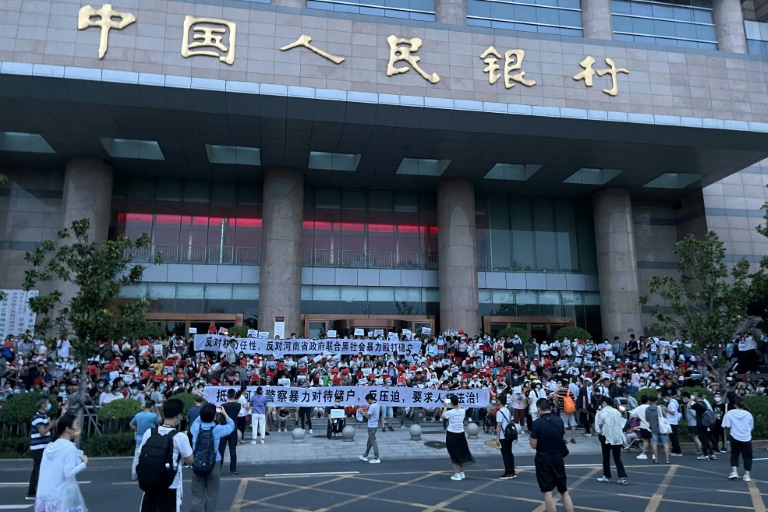
Chinese police have arrested more than 200 suspects linked to one of the country’s biggest-ever banking scandals, which triggered rare mass protests.

Four banks in central China’s Henan province suspended cash withdrawals in April as regulators cracked down on mismanagement, freezing the funds of hundreds of thousands of customers and sparking protests that at times ended in violence.

Police said Monday they had now arrested 234 people in connection with the scandal and that “significant progress” was being made in recovering stolen funds.

“A criminal gang… illegally controlled four village and town banks… and was suspected of committing a series of serious crimes,” police in the city of Xuchang said in a statement on Monday.

China’s rural banking sector has been hit hard by Beijing’s efforts to rein in a property bubble and spiralling debt in a financial crackdown that has had ripple effects across the world’s second-largest economy.

Regulators have been gradually offering repayments to depositors since mid-April. 

On Monday, the Henan banking and insurance regulator promised to repay those who had deposited between 400,000 and 500,000 yuan ($57,900 to $72,300) starting this week. 

Depositors who owed smaller amounts were repaid earlier.

The size and scale of the fraud dealt an unprecedented blow to public confidence in China’s financial system, analysts have said, with the banks involved allegedly operating illegally for more than a decade.

A July 10 mass demonstration by depositors in Henan’s provincial capital, Zhengzhou, was violently quashed, with demonstrators forced onto buses by police and beaten, according to eyewitness accounts given to AFP and verified photos on social media.

Musk subpoenas Twitter whistleblower in buyout battle

Elon Musk has formally subpoenaed a Twitter whistleblower to share information about spam accounts at the social network, as the billionaire fights in court to back out of a massive buyout deal.

Musk has tried to pull out of the $44 billion agreement by saying Twitter misled him on the number of false accounts, or bots, prompting strong denials and a lawsuit from the social media firm.

The Tesla boss hopes that allegations made by the former Twitter security chief Peiter Zatko, about major security gaps and problematic practices at the firm, will bolster his case.

According to court documents made public on Monday, Musk’s attorneys served Zatko with a subpoena Saturday demanding he share any documents or messages regarding the impact of spam and false accounts on Twitter’s activity, dating back to January 2019.

Zatko was also ordered to answer questions on the record for Musk lawyers on September 9.

His lawyers told AFP that their client would comply with the subpoena — but said that his appearance at the deposition would be “involuntary”. 

“He did not make his whistleblower disclosures to the appropriate governmental bodies to benefit Musk or to harm Twitter, but rather to protect the American public and Twitter shareholders,” the lawyers said in a statement.

Musk’s attempt to back out of buying Twitter has struggled for momentum in court.

Twitter won some early battles in the case, including a fast-track trial date, and its stock had risen as analysts predicted the platform would prevail over the mercurial Musk.

But a US judge last week told Twitter to surrender more data to Musk on the key issue of fake accounts, and the billionaire hopes Zatko’s whistleblower complaint could further turn the tide in its favor.

While Twitter has pointed out that Musk opted not to perform due diligence typically seen in merger deals, the billionaire’s attorney Alex Spiro told the Delaware judge he had trusted the firm’s filings with the Securities and Exchange Commission (SEC).

The market watchdog was one of the recipients of Zatko’s complaint, which accuses Twitter of issuing untrue statements on account numbers because “if accurate measurements ever became public, it would harm the image and valuation of the company.”

Musk subpoenas Twitter whistleblower in buyout battle

Elon Musk has formally subpoenaed a Twitter whistleblower to share information about spam accounts at the social network, as the billionaire fights in court to back out of a massive buyout deal.

Musk has tried to pull out of the $44 billion agreement by saying Twitter misled him on the number of false accounts, or bots, prompting strong denials and a lawsuit from the social media firm.

The Tesla boss hopes that allegations made by the former Twitter security chief Peiter Zatko, about major security gaps and problematic practices at the firm, will bolster his case.

According to court documents made public on Monday, Musk’s attorneys served Zatko with a subpoena Saturday demanding he share any documents or messages regarding the impact of spam and false accounts on Twitter’s activity, dating back to January 2019.

Zatko was also ordered to answer questions on the record for Musk lawyers on September 9.

His lawyers told AFP that their client would comply with the subpoena — but said that his appearance at the deposition would be “involuntary”. 

“He did not make his whistleblower disclosures to the appropriate governmental bodies to benefit Musk or to harm Twitter, but rather to protect the American public and Twitter shareholders,” the lawyers said in a statement.

Musk’s attempt to back out of buying Twitter has struggled for momentum in court.

Twitter won some early battles in the case, including a fast-track trial date, and its stock had risen as analysts predicted the platform would prevail over the mercurial Musk.

But a US judge last week told Twitter to surrender more data to Musk on the key issue of fake accounts, and the billionaire hopes Zatko’s whistleblower complaint could further turn the tide in its favor.

While Twitter has pointed out that Musk opted not to perform due diligence typically seen in merger deals, the billionaire’s attorney Alex Spiro told the Delaware judge he had trusted the firm’s filings with the Securities and Exchange Commission (SEC).

The market watchdog was one of the recipients of Zatko’s complaint, which accuses Twitter of issuing untrue statements on account numbers because “if accurate measurements ever became public, it would harm the image and valuation of the company.”

Georgia criminal probe poses greatest threat to Trump

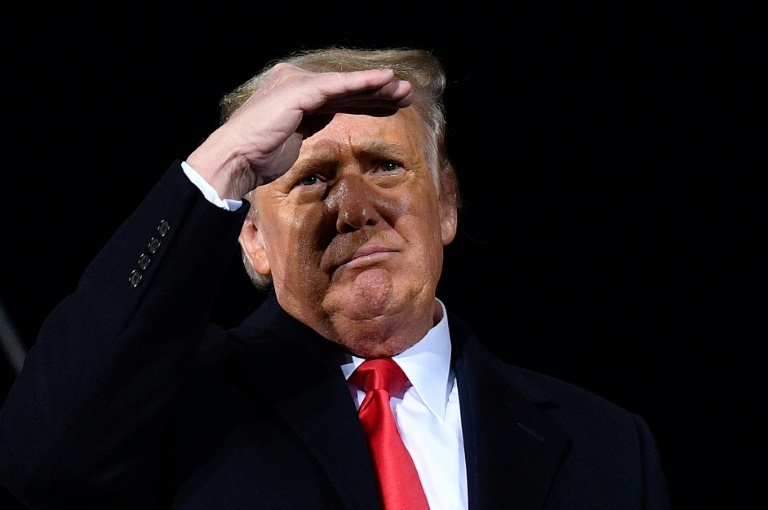
Prime-time congressional hearings and an unprecedented FBI raid on his home have ramped up legal pressures on Donald Trump, but analysts say a slow-moving, lower key investigation in Georgia could be the case that finally brings him down.

Scrutiny of the former president’s effort to overturn the 2020 election in the state he lost to Joe Biden by fewer than 12,000 votes is intensifying as he eyes a third run for the White House in 2024.

The 76-year-old former reality TV star immediately cried foul after becoming the first Republican presidential candidate to lose Georgia in almost three decades.

But after three presidential ballot counts and the failure of numerous lawsuits, no evidence of significant voter fraud surfaced in the critical swing state.

Trump nevertheless meddled repeatedly in Georgia politics, pushing for secretary of state Brad Raffensperger in a now-infamous taped phone call to “find” enough votes to overturn Biden’s victory.

A group of Brookings Institution legal experts wrote in October last year that Trump’s post-election conduct in the state “leaves him at substantial risk of possible state charges predicated on multiple crimes.”  

In May, Fulton County’s top prosecutor Fani Willis assembled a special grand jury to investigate attempts by Trump and his allies to overturn Georgia’s election results.

– ‘Legal exposure’ –

A potentially year-long process, the probe could end in Trump facing a raft of solicitation and conspiracy charges connected to election fraud and interference, according to legal experts.

The former president — who denies all wrongdoing — could also face prosecution under Georgia’s Racketeer Influenced and Corrupt Organizations (RICO) statute, which is usually used to nail down mob figures.

Willis has already amassed significant testimony from Trump’s inner circle, including his former personal lawyer Rudy Giuliani, who has been informed he is the target of criminal investigators.

Georgia Governor Brian Kemp — whom Trump berated repeatedly for certifying the 2020 election results, his duty under the law — was ordered by a judge Monday to testify after November’s midterm elections.

Raffensperger and Georgia attorney general Chris Carr, who was also pushed by Trump to contest the state’s vote count, have already appeared before the grand jury. 

Meanwhile Trump’s ex-White House chief of staff Mark Meadows is fighting his own summons, as is the former president’s Senate ally Lindsey Graham, who denies accusations that he improperly suggested that Georgia toss out lawful mail-in ballots. 

“Willis seeking testimony from additional Donald Trump allies, including Mark Meadows, is a sign of how serious this investigation is — and how concerned Trump should be about his own legal exposure,” Noah Bookbinder, president of Citizens for Responsibility and Ethics in Washington, posted on Twitter on Friday.

Former assistant US attorney Kevin O’Brien, a seasoned trial lawyer specializing in white-collar criminal defense, cautioned that a high-profile witness list does not necessarily equate to a nailed-on prosecution. 

– ‘Big freaking deal’ –

State prosecutors generally have less expertise for white-collar investigations than the federal justice department, O’Brien told AFP, advocating for a “wait-and-see attitude” to the potential for charges. 

“(The) proof will be in the pudding,” he added. “Trump has thus far escaped all accountability for his actions, whether in Georgia or elsewhere.”

Other experts say, however, that the Georgia investigation differs from the federal probes in key ways that may make prosecution more likely than an indictment from the federal justice department.

David French, a former attorney turned conservative commentator, believes Trump faces criminal exposure over the 2021 insurrection, but has long held the view that Trump’s primary risk was in Georgia.

“You can take some criminal statutes — both Georgia and federal — and just pretty much match it up with his conduct,” he said on a recent episode of current affairs podcast The Fifth Column. 

“Let me put it this way: if he was a small-town sheriff, and he had called a local county election commissioner and said, ‘I need 50 more votes or, you know, you might find yourself arrested,’ he’d probably already be indicted.

“But he’s the former president of the United States. That’s a big, big freaking deal to indict him. And I don’t know if that will happen, but Georgia to me has always been a greater risk for him.”

Energy price hikes could force UK pubs to shut

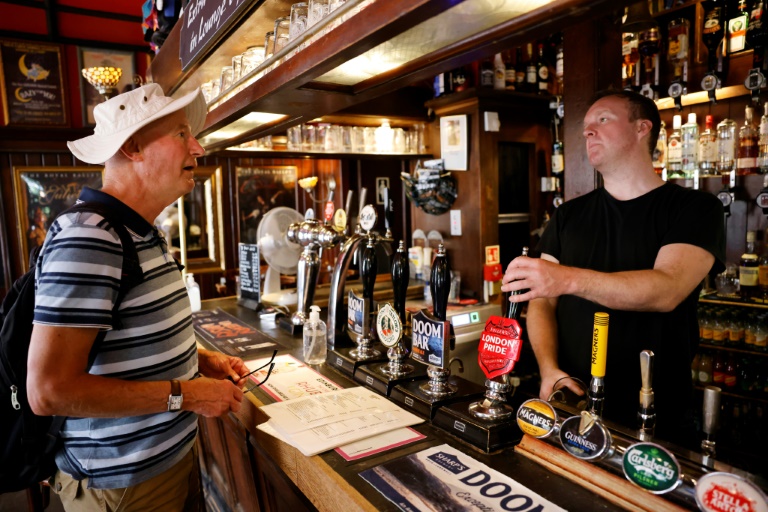
British pubs could be forced to close because of massive increases in energy prices, leading industry figures said on Tuesday, urging the government to step in.

Six of the country’s biggest pub and brewing firms said some pubs had seen a more than three-fold hike in bills this year, as part of a wider cost of living crisis.

“We have publicans who are experiencing 300-percent-plus increases in energy costs and some energy companies are refusing to even quote for supply,” said William Lees Jones, managing director of the JW Lees pub group.

“In some instances, tenants are giving us notice since their businesses do not stack up with energy at these costs.”

One pub tenant in the 2,700-strong Greene King group has seen a £33,000 ($38,600) increase in their energy bill this year, said chief executive Nick Mackenzie.

“While the government has introduced measures to help households cope with this spike in prices, businesses are having to face this alone, and it is only going to get worse come the autumn.

“Without immediate government intervention to support the sector, we could face the prospect of pubs being unable to pay their bills, jobs being lost and beloved locals across the country forced to close their doors, meaning all the good work done to keep pubs open during the pandemic could be wasted.”

Britain’s cost of living crisis has seen inflation soar to 40-year highs, with a widening number of strikes over pay offers that fail to keep pace with rising prices.

Last week energy regulator Ofgem announced an eye-watering 80-percent increase in gas and electricity prices for the average household from October, with even higher bills expected from January.

But the energy price cap does not apply to businesses.

The companies — Greene King, JW Lees, Carlsberg Marston’s, Admiral Taverns, Drake & Morgan and St Austell Brewery — urged the government in an open letter to extend the cap to businesses.

– Hospitality fears –

Pubs — a mainstay of British social life for centuries — have faced a torrid few years, with a slump in business due to coronavirus lockdowns and social distancing restrictions.

The number of pubs in England and Wales plunged below 40,000 for the first time ever in the first six months of this year, down more than 7,000 in a decade.

The British Beer and Pub Association, an industry body, said energy price rises, caused by hikes in wholesale costs and a squeeze on supplies due to the war in Ukraine, could damage the sector more than the pandemic if nothing is done.

Independent restaurants and takeaways including those selling another British mainstay — fish and chips — have also voiced concern.

The war in Ukraine has forced up the price of the deep-fried delicacy, because of increased tariffs on the import of white fish from Russia and a reduction in the supply of vegetable oil from Ukraine.

On Monday, more than 750 outlets signed an open letter to the government warning that food price and energy inflation, as well as a lack of staff and supply chain delays, were now making hospitality “unsustainable”.

“If we lose these our local favourites, we risk losing part of what makes us British,” they added. 

The British Takeaway Campaign said some shops were now being quoted an eightfold increase in energy prices. 

It called for grants for small businesses, a temporary cut in sales tax (VAT) and business rates plus a freeze on the introduction of new regulations bringing increased red tape.

US regulators sue firm selling sensitive location data

US regulators on Monday filed a lawsuit to stop data broker Kochava from selling smartphone location information that could help trace visits to “sensitive locations” like reproductive health clinics.

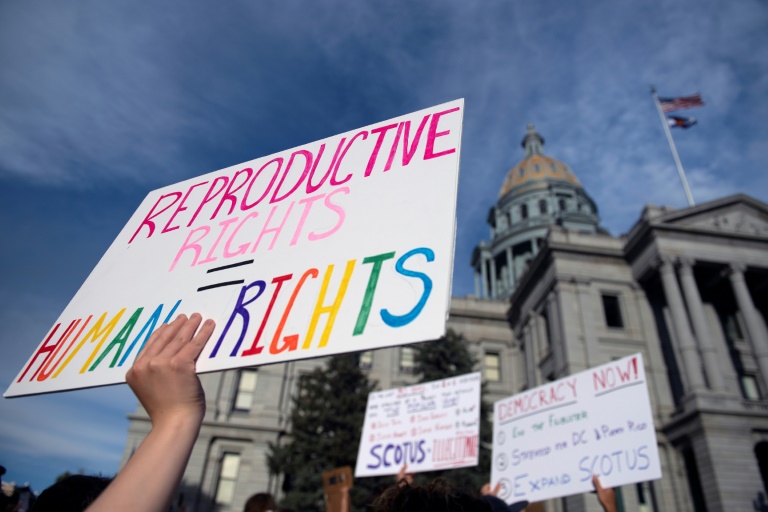
The action by the Federal Trade Commission comes as privacy rights advocates fear that massive troves of information collected from people’s smartphone or internet use could serve to track down women seeking abortion care.

Geolocation data purchased by Idaho-based Kochava comes from hundreds of millions of mobile devices, and could be used to trace people’s movements to or from health clinics, places of worship, drug-addiction centers, or domestic violence shelters, the FTC said in a press release.

“Where consumers seek out health care, receive counseling, or celebrate their faith is private information that shouldn’t be sold to the highest bidder,” Samuel Levine, head of the FTC’s bureau of consumer protection said in a press release.

The FTC lawsuit argues that Kochava is making it possible to identify people based on their health care decisions or religion, then exposing them to “threats of stigma, stalking, discrimination, job loss and even physical violence.”

The FTC is asking a federal court in Idaho to order Kochava to stop selling sensitive geolocation data and to delete whatever data of that kind it has collected.

Kochava did not immediately respond to a request for comment.

Kochava buys location information gathered from mobile devices, then packages it in ways that can identify specific devices and show precisely where they were at given times, according to the FTC.

“For example, the location of a mobile device at night is likely the user’s home address and could be combined with property records to uncover their identity,” the FTC said.

People are typically unaware that their location data is being bought and sold by Kochava, according to the suit.

Privacy advocates have called on internet firms to stop collecting data on users that could be demanded by prosecutors or others out to prosecute women for reproductive health care decisions.

The lawsuit comes just months after the Supreme Court overturned the landmark 1973 Roe v. Wade ruling that guaranteed women’s right an abortion.

US regulators sue firm selling sensitive location data

US regulators on Monday filed a lawsuit to stop data broker Kochava from selling smartphone location information that could help trace visits to “sensitive locations” like reproductive health clinics.

The action by the Federal Trade Commission comes as privacy rights advocates fear that massive troves of information collected from people’s smartphone or internet use could serve to track down women seeking abortion care.

Geolocation data purchased by Idaho-based Kochava comes from hundreds of millions of mobile devices, and could be used to trace people’s movements to or from health clinics, places of worship, drug-addiction centers, or domestic violence shelters, the FTC said in a press release.

“Where consumers seek out health care, receive counseling, or celebrate their faith is private information that shouldn’t be sold to the highest bidder,” Samuel Levine, head of the FTC’s bureau of consumer protection said in a press release.

The FTC lawsuit argues that Kochava is making it possible to identify people based on their health care decisions or religion, then exposing them to “threats of stigma, stalking, discrimination, job loss and even physical violence.”

The FTC is asking a federal court in Idaho to order Kochava to stop selling sensitive geolocation data and to delete whatever data of that kind it has collected.

Kochava did not immediately respond to a request for comment.

Kochava buys location information gathered from mobile devices, then packages it in ways that can identify specific devices and show precisely where they were at given times, according to the FTC.

“For example, the location of a mobile device at night is likely the user’s home address and could be combined with property records to uncover their identity,” the FTC said.

People are typically unaware that their location data is being bought and sold by Kochava, according to the suit.

Privacy advocates have called on internet firms to stop collecting data on users that could be demanded by prosecutors or others out to prosecute women for reproductive health care decisions.

The lawsuit comes just months after the Supreme Court overturned the landmark 1973 Roe v. Wade ruling that guaranteed women’s right an abortion.

IMF approves revival of massive Pakistan loan program

The IMF board on Monday approved an agreement to revive a massive loan program for Pakistan, as the country grapples with devastating monsoon flooding that has worsened an economic crisis.

The Washington-based crisis lender will release $1.1 billion to the country immediately, and has added an additional $500 million to the total size of the package, bringing it to about $6.5 billion.

In addition, the International Monetary Fund agreed to the government’s request to extend the package through June 2023.

The original $6 billion bailout package was signed by former prime minister Imran Khan in 2019, but repeatedly stalled when his government reneged on agreed reforms on subsidies and failed to significantly improve tax collection.

The aid comes as “Pakistan’s economy has been buffeted by adverse external conditions, due to spillovers from the war in Ukraine, and domestic challenges,” said IMF Deputy Managing Director Antoinette Sayeh in a statement.

“Steadfast implementation of corrective policies and reforms remain essential to regain macroeconomic stability, address imbalances and lay the foundation for inclusive and sustainable growth,” she said.

The government reached an agreement with IMF staff last month to restart the suspended aid package.

The new agreement follows months of deeply unpopular belt-tightening by the government of Shehbaz Sharif, who took power in April and has effectively eliminated fuel subsidies and introduced new measures to broaden the tax base.

Finance Minister Miftah Ismail, announcing the approval on Twitter, applauded Sharif “for taking so many tough decisions and saving Pakistan from default.”

The latest disbursement brings the total received under the IMF Extended Fund Facility to about $4 billion.

– Desperate for aid –

Pakistan is desperate for international support for its economy, which suffers from poor revenue collection and dwindling foreign reserves to pay its crippling debt.

The new government has slashed a raft of subsidies to meet the demands of global financial institutions, but risks the wrath of an electorate already struggling under double-digit inflation.

Sharif’s new coalition government has said it will make the tough decisions needed to turn the economy around.

Successive administrations have blamed their predecessors for the country’s economic woes, but analysts say the malaise stems from decades of poor management and a failure to tackle endemic corruption and widespread tax avoidance.

In a bid to secure the IMF loan, Sharif has imposed three fuel price hikes — cumulatively totalling 50 percent — and raised the cost of electricity to effectively end the subsidies introduced by Khan.

Ismail told the national assembly last month that the steps were “essential” to preserve the country from default.

“We knew it would damage our political reputation, but still we did it,” he said. 

The latest budget has earmarked 3.95 trillion rupees ($18.8 billion) just to service the country’s whopping debt of $128 billion.

Sayeh welcomed the government’s intention to achieve a small budget surplus in 2023.

“Containing current spending and mobilizing tax revenues are critical to create space for much-needed social protection and strengthen public debt sustainability,” she said.

She also called recent interest rate increases a “necessary step” to rein in inflation.

Under the deal agreed with the IMF, policy priorities included steadfast implementation of the budget to reduce the need to borrow.

Pakistan also agreed to continue power sector reforms, tighten monetary policy to tackle inflation, strengthen governance, combat corruption and improve the social security net.

IMF approves revival of massive Pakistan loan program

The IMF board on Monday approved an agreement to revive a massive loan program for Pakistan, as the country grapples with devastating monsoon flooding that has worsened an economic crisis.

The Washington-based crisis lender will release $1.1 billion to the country immediately, and has added an additional $500 million to the total size of the package, bringing it to about $6.5 billion.

In addition, the International Monetary Fund agreed to the government’s request to extend the package through June 2023.

The original $6 billion bailout package was signed by former prime minister Imran Khan in 2019, but repeatedly stalled when his government reneged on agreed reforms on subsidies and failed to significantly improve tax collection.

The aid comes as “Pakistan’s economy has been buffeted by adverse external conditions, due to spillovers from the war in Ukraine, and domestic challenges,” said IMF Deputy Managing Director Antoinette Sayeh in a statement.

“Steadfast implementation of corrective policies and reforms remain essential to regain macroeconomic stability, address imbalances and lay the foundation for inclusive and sustainable growth,” she said.

The government reached an agreement with IMF staff last month to restart the suspended aid package.

The new agreement follows months of deeply unpopular belt-tightening by the government of Shehbaz Sharif, who took power in April and has effectively eliminated fuel subsidies and introduced new measures to broaden the tax base.

Finance Minister Miftah Ismail, announcing the approval on Twitter, applauded Sharif “for taking so many tough decisions and saving Pakistan from default.”

The latest disbursement brings the total received under the IMF Extended Fund Facility to about $4 billion.

– Desperate for aid –

Pakistan is desperate for international support for its economy, which suffers from poor revenue collection and dwindling foreign reserves to pay its crippling debt.

The new government has slashed a raft of subsidies to meet the demands of global financial institutions, but risks the wrath of an electorate already struggling under double-digit inflation.

Sharif’s new coalition government has said it will make the tough decisions needed to turn the economy around.

Successive administrations have blamed their predecessors for the country’s economic woes, but analysts say the malaise stems from decades of poor management and a failure to tackle endemic corruption and widespread tax avoidance.

In a bid to secure the IMF loan, Sharif has imposed three fuel price hikes — cumulatively totalling 50 percent — and raised the cost of electricity to effectively end the subsidies introduced by Khan.

Ismail told the national assembly last month that the steps were “essential” to preserve the country from default.

“We knew it would damage our political reputation, but still we did it,” he said. 

The latest budget has earmarked 3.95 trillion rupees ($18.8 billion) just to service the country’s whopping debt of $128 billion.

Sayeh welcomed the government’s intention to achieve a small budget surplus in 2023.

“Containing current spending and mobilizing tax revenues are critical to create space for much-needed social protection and strengthen public debt sustainability,” she said.

She also called recent interest rate increases a “necessary step” to rein in inflation.

Under the deal agreed with the IMF, policy priorities included steadfast implementation of the budget to reduce the need to borrow.

Pakistan also agreed to continue power sector reforms, tighten monetary policy to tackle inflation, strengthen governance, combat corruption and improve the social security net.

Close Bitnami banner
Bitnami