US Business

US responds to Iran on nuclear deal as momentum builds

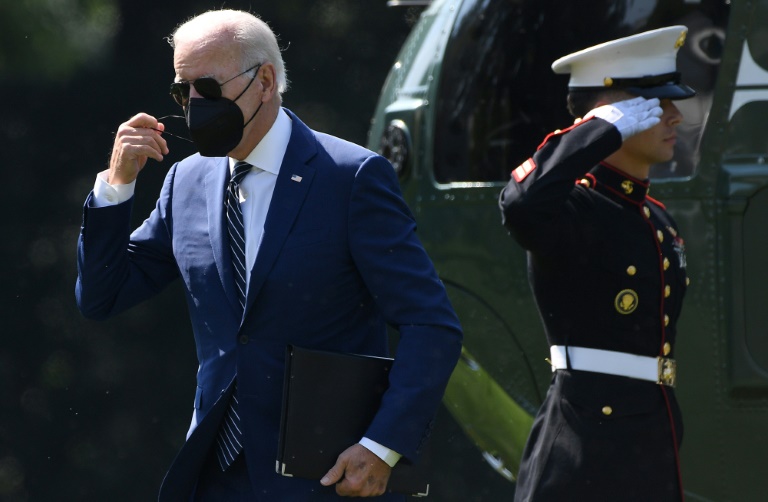
The United States on Wednesday responded to Iran’s suggestions on reviving a 2015 nuclear deal as momentum builds to bring back the landmark agreement trashed by former president Donald Trump.

Just weeks after the deal looked dead, the European Union put forward on August 8 what it called a final text to restore the agreement, in which Iran would see sanctions relief and be able to sell its oil again in return for severe limits on its nuclear program.

Iran came back last week with a series of proposed changes, to which the United States formally responded on Wednesday, a day after Tehran accused its arch-enemy of stonewalling.

Iran, the United States and the European Union all confirmed the US response, but none immediately discussed it in depth.

“As you know, we received Iran’s comments on the EU’s proposed final text through the EU,” State Department spokesman Ned Price said.

“Our review of those comments has now concluded. We have responded to the EU today.”

In Tehran, Iranian foreign ministry spokesman Nasser Kanani said Tehran received the response “on the outstanding issues in the negotiations to lift sanctions” from the European Union late Wednesday local time.

“The process of carefully reviewing the US opinions has begun and the Islamic Republic of Iran will announce its opinion in this context to the coordinator after it completes its review,” Kanani added.

With signs that the agreement will reach the finish line, Iran’s arch-rival Israel stepped up pressure on Western nations to block it.

“On the table right now is a bad deal. It would give Iran $100 billion a year,” Israeli Prime Minister Yair Lapid told journalists Wednesday.

The money would be used by Iran-backed militant groups Hamas, Hezbollah and Islamic Jihad to “undermine stability in the Middle East and spread terror around the globe,” he added.

Lapid, however, has promised to preserve cooperation with the United States, Israel’s crucial ally, and has avoided the confrontational stance of former prime minister Benjamin Netanyahu, who openly joined then-president Barack Obama’s Republican rivals to campaign against the deal when it was reached.

Israel’s National Security Advisor Eyal Hulata was holding talks in Washington. His counterpart Jake Sullivan told him Tuesday that the United States was committed to “preserve and strengthen” Israel’s defenses and “ensure that Iran never acquires a nuclear weapon.”

– Syria strikes —

President Joe Biden took office with a goal of restoring the agreement, believing it was the best way to constrain Iran’s nuclear program and that Trump’s withdrawal had done nothing but lead Iran to accelerate its nuclear work.

But a year and a half of diplomacy trudged along slowly in Vienna, where Iran pressed hard and insisted on dealing only indirectly with US envoy Rob Malley, with EU mediators shuttling between hotels.

With the agreement bitterly opposed by Israel, US Republicans and some Iranian hardliners, both Washington and Tehran have gone into spin mode to present the other side as offering concessions.

The United States says that Iran has backed down on a key sticking point — that Biden undo Trump’s blacklisting of the powerful Islamic Revolutionary Guard Corps as a terrorist group.

Biden refused to do so and just Tuesday ordered air strikes in Syria said to target paramilitary fighters linked to the Revolutionary Guards, the clerical regime’s elite ideological unit.

The US Central Command (CENTCOM) said the strikes destroyed infrastructure including ammunition storage in a bid to avoid attacks on the small contingent of US troops in Syria, as witnessed on August 15.

CENTCOM said it purposely avoided casualties. Iran’s foreign ministry denounced the attack as “terrorist” and denied the targeted groups were linked to Tehran.

Under a reported compromise worked out by the European Union, the United States will keep the terrorist designation but limit actions against outside actors that deal with the Revolutionary Guards, who have vast influence across the Iranian economy.

EU foreign policy chief Josep Borrell, in an interview Tuesday with Spanish television, indicated that other nations in the agreement — Britain, China, France, Germany and Russia — were fine with the suggestions offered by Iran.

burs-sct/wd
Biden announces relief for indebted US university grads

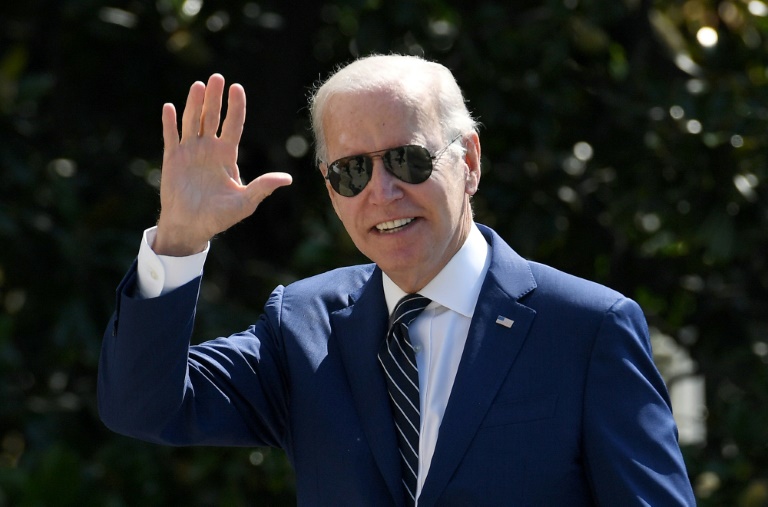
President Joe Biden on Wednesday announced that most US university graduates still trying to pay off student loans will each get $10,000 in relief, addressing a decades-old headache of massive educational debt across the country.

“In keeping with my campaign promise, my administration is announcing a plan to give working and middle class families breathing room,” Biden said in a statement issued less than three months before midterm congressional elections, where the issue is seen as a vote winner for Democrats.

The proposed debt relief falls far short of some Democrats’ goal of securing complete forgiveness, but is opposed by Republicans who argue that shaving any amount from graduates’ loans is unfair to those who have spent years saving to pay off their own debts.

US colleges can often cost anywhere between $10,000 and $70,000 a year, leaving graduates with crushing debt as they enter the workforce. According to government estimates, the average debt for US college students when they graduate is $25,000, a sum many spend years or even decades to pay back.

In total, some 45 million borrowers nationwide owe a collective $1.6 trillion, according to the White House.

Under the relief plan, $10,000 will be cut from all loans owed by people earning a salary of less than $125,000. For former students who went to university with need-based government assistance known as Pell grants, the relief will be $20,000.

– ‘Giant step forward’ –

Meanwhile, a moratorium on loan repayments that was instituted during the Covid pandemic will be extended to the end of the year, with installments restarting on December 31.

The plan was announced after months of consideration in the White House on how to thread the needle on an issue that has bedeviled successive administrations. Among the worries is that the program will feed already rampant inflation in the wake of the Covid-19 shutdown and subsequent economic recovery.

But Biden has been under heavy pressure for months from the senior Senate Democrat, Majority Leader Chuck Schumer, and lawmakers from the left of the party to take action.

“With the flick of a pen, President Biden has taken a giant step forward in addressing the student debt crisis by cancelling significant amounts of student debt for millions of borrowers. The positive impacts of this move will be felt by families across the country, particularly in minority communities,” said a joint statement by Schumer and leading liberal Senator Elizabeth Warren.

Republican National Committee chair Ronna McDaniel called the plan a “bailout for the wealthy. As hardworking Americans struggle with soaring costs and a recession, Biden is giving a handout to the rich.”

“Biden’s bailout unfairly punishes Americans who saved for college or made a different career choice, and voters see right through this short-sighted, poorly veiled vote-buy,” she said.

New York, cartoonist Sempe's spiritual home

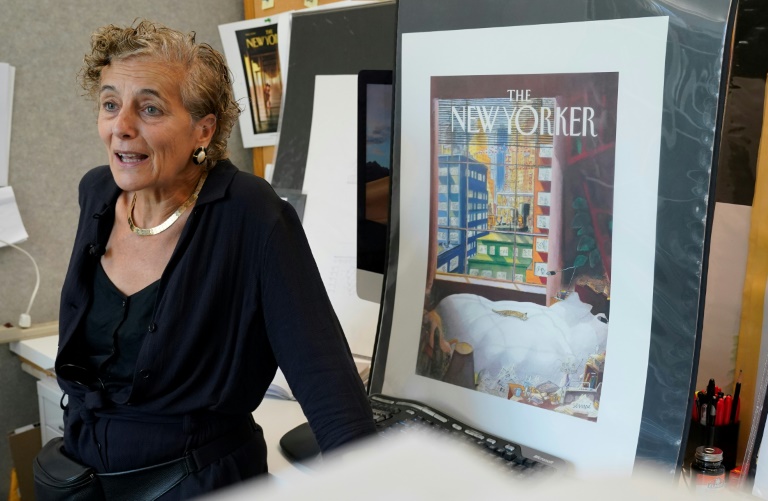
Over the course of his storied career, Jean-Jacques Sempe became a fixture on the newsstands of New York, illustrating more than 100 covers of the prestigious New Yorker magazine.

After republishing one of those iconic covers on an inner page this week, the magazine will reuse one of his drawings on the cover of its September 5 edition, said the periodical’s art editor Francoise Mouly.

This week’s drawing by Sempe — who died on August 11 at age 89 — depicts a tiny person carrying a briefcase as he walks a red carpet into the heart of the city, surrounding by enormous skyscrapers.

It’s a theme Sempe toyed with for much of his career: normal people navigating the mundanities of life, dwarfed by the world’s gigantism.

The cultural weekly founded in 1925 is known as much for its covers that showcase artists as it is for its investigative reports, commentaries and satires.

Sempe worked with The New Yorker from 1978 to 2019.

Mouly, a French woman who worked with Sempe for 30 years and has been the magazine’s art editor since 1993, told AFP it “will be the 114th cover” from the beloved illustrator.

– 114 covers –

Both New York City and the esteemed New Yorker were childhood dreams of Sempe, who suffered a difficult childhood, dropping out of school at age 14 before lying about his age to join the army.

In the 1970s, he met the American illustrator Ed Koren, who took him around Manhattan, Brooklyn and Queens, introducing him to the magazine’s journalists and editors.

In August 1978, the French artist signed his first cover, which showed a bird in business casual at the edge of an open window, hesitating to take flight.

With his 113 covers, Sempe traced his love for New York, which he traveled on foot and by bike, amazed by the Big Apple’s colors, energy, cats, green spaces, music, and tiny humans traversing great swaths of urbanity.

“Jean-Jacques was a very modest man, very humble,” said Mouly, who is married to cartoonist Art Spiegelman, who wrote the renowned “Maus.”

Sempe “was expelled from school, from the army — he was self-taught and found it marvelous to be published in an American magazine,” the 66-year-old editor and graphic artist said.

– At home in New York –

For Mouly, Sempe “always felt like himself in New York.”

Much of his popularity stemmed from his depiction of “individuals, a man, a woman, alone in the city — half of my colleagues would say to me, ‘That’s me, that’s me!” said Mouly with a smile.

“Like me, I thought this morning on my bike, ‘I’m the drawing of Sempe, the little old lady on her bike heading to work.'”

Sempe even has his place on the city’s walls.

At the intersection of 47th Street and Ninth Avenue in Manhattan stands a giant mural signed by the illustrator behind the beloved “Little Nicolas” series of children’s books — a man carrying a woman on a bicycle, trailed by a boy on two wheels.

In 2009, the publisher Denoel put out a book of Sempe drawings entitled “Sempe in New York.”

Another book, “Sempe in America,” is planned for September, according to Mouly.

“The New York of Sempe will live on,” she said.

Equities drift higher ahead of US Fed chair speech

European and US equities mostly advanced on Wednesday as investors awaited signals on the next US interest rate hikes.

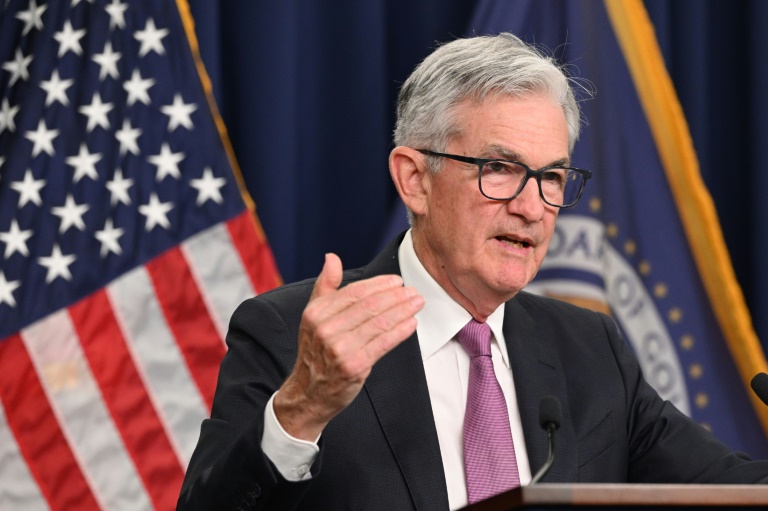
With the Jackson Hole meeting of central bankers this week, focus is on what US Federal Reserve chief Jerome Powell will say Friday about plans to tackle high prices.

Many fear higher borrowing costs could send the world’s biggest economy into recession in its battle to rein in inflation.

The euro fell close to a two-decade low against the dollar before rebounding to parity, and the greenback struck a two-year peak against China’s yuan.

European gas prices soared to more than 300 euros per megawatt hour just as equity markets closed, as another temporary cut off of Russian deliveries via pipeline to Germany approached.

– Losing momentum –

“European markets have traded in a lacklustre manner today as higher gas prices serve to contain any attempt to push strongly higher,” said market analyst Michael Hewson at CMC Markets UK.

“Markets seem to have lost their momentum,” noted AJ Bell investment director Russ Mould.

“Investors have become nervous once again, with all eyes on Powell and what he says this coming Friday.” 

Expectations have been building ahead of Powell’s speech.

“Those expectations range from fear of a resolutely hawkish speech to hope of a tempered rate-hike outlook,” said analyst Patrick O’Hare at Briefing.com.

Central banks face a delicate balancing act between battling inflation — with Russia’s war in Ukraine sending energy prices soaring — and avoiding recession.

Yet concerns are growing that spiking energy costs could still prompt a worldwide downturn.

Key markets in Asia slid on Wednesday.

In Europe, London shed 0.2 percent but both Frankfurt and Paris posted modest gains.

On Wall Street, the Dow added 0.4 percent in late morning trading.

– Rollercoaster ride –

The foreign exchange market has faced a rollercoaster ride so far this week.

The euro tumbled on Tuesday to $0.9901 — a new two-decade low — but later clawed back losses as the greenback was hit by poor US economic data.

The dollar had strengthened this week ahead of Powell’s speech, as markets speculate that the Fed will continue to tighten its monetary policy.

Higher interest rates boost the American currency as they make dollar-denominated debt more attractive to investors.

But the euro also has been weighed down by a gloomy outlook for the eurozone economy, amid fears of a halt to Russia’s gas deliveries.

Oil prices wobbled following recent gains on talk of an OPEC output cut, with Brent crude hovering just below $100 per barrel.

“While this may simply be a case of Saudi Arabia talking up the price, for now, the prospect of the group taking such action effectively removes two of the biggest downside risks for prices,” said OANDA analyst Craig Erlam.

Oil prices fell back under $100 per barrel this month on worries of a global economic slowdown and the possibility of Iran reaching a deal on its nuclear programme that would end international sanctions on its crude exports.

– Key figures at around 1530 GMT –

New York – Dow: UP 0.4 percent at 33,051.10 points

EURO STOXX 50: UP 0.3 percent at 3,669.85

London – FTSE 100: DOWN 0.2 percent at 7,471.51 (close) 

Frankfurt – DAX: UP 0.2 percent at 13,220.06 (close) 

Paris – CAC 40: UP 0.4 percent at 6,386.76 (close)

Tokyo – Nikkei 225: DOWN 0.5 percent at 28,313.47 (close)

Hong Kong – Hang Seng Index: DOWN 1.2 percent at 19,268.74 (close)

Shanghai – Composite: DOWN 1.9 percent at 3,215.20 (close)

Euro/dollar: UP at 0.9975 from 0.9970 on Tuesday

Pound/dollar: DOWN at 1.1804 from 1.1836

Euro/pound: UP at 84.48 pence from 84.23 pence

Dollar/yen: UP at 136.85 yen from 136.36 yen

West Texas Intermediate: DOWN 0.7 percent at $93.11 per barrel

Brent North Sea crude: DOWN 0.9 percent at $99.35

Marijuana use on the rise among young Americans: study

Marijuana use by young Americans reached record levels last year and the use of hallucinogens is also on the rise, according to a new study.

Forty-three percent of the 5,000 young adults between 19 and 30 years old surveyed reported past-year marijuana use in 2021, up from 34 percent in 2016 and 29 percent in 2011, the Monitoring the Future study by the University of Michigan found.

Twenty-nine percent reported using marijuana in the past month in 2021, up from 21 percent in 2016 and 17 percent in 2011.

Daily marijuana use rose from six percent in 2011 to eight percent in 2016 to 11 percent in 2021.

The authors of the study, funded by the National Institutes of Health, said the 2021 figures for marijuana use were the “highest levels ever recorded since these trends were first monitored in 1988.”

As for hallucinogens, eight percent of the young adults reported using LSD, MDMA, mescaline, peyote, “shrooms” or PCP in the past year, up from five percent in 2016 and three percent in 2011.

Nearly 82 percent of those surveyed reported drinking alcohol in the previous 12 months, down slightly from 83.5 percent in 2016 and 83.8 percent in 2011.

The study did not cite any reasons for the rise in marijuana use among young adults, but recreational cannabis is now legal in nearly 20 US states.

Ukraine leader vows fight 'until the end' on 6-month war anniversary

British Prime Minister Boris Johnson was in Kyiv on Wednesday, hailing Ukraine’s six-month long resistance to the Russian invasion as his counterpart President Volodymyr Zelensky vowed the fight would continue “until the end”.

Wednesday marks half a year since Russian President Vladimir Putin ordered the large-scale invasion of Ukraine, as well as the day the nation annually celebrates its 1991 independence from the Soviet Union.

During a surprise visit to the Ukrainian capital — hounded by air raid sirens throughout the day — Johnson said Putin had failed to account for the “strong will of Ukrainians to resist”.

“You defend your right to live in peace, in freedom, and that’s why Ukraine will win,” he said in front of reporters during the afternoon.

Johnson — who has less than two weeks left in office — warned against relaxing sanctions or normalising relations with Putin. 

“It is not the time to advance some flimsy plan for negotiation with someone that is simply not interested,” he told a press conference with Zelensky.

The Ukrainian leader had issued his own defiant morning video address, declaring: “We don’t care what army you have, we only care about our land. We will fight for it until the end.”

Referring to Russia he vowed Ukraine “will not try to find an understanding with terrorists”.

“For us Ukraine is the whole of Ukraine,” he said. “All 25 regions, without any concession or compromise.”

– Fresh aid –

Meanwhile on Wednesday, the US announced $3 billion in fresh military aid.

The new tranche of American funding will help Kyiv acquire more weaponry, ammunition and other supplies for its armed forces, locked in a grinding war of attrition with Russian troops in the east and south with neither side advancing significantly in weeks.

Johnson also unveiled his own £54 million ($64 million) package of aid, including 2000 “state-of-the-art drones” as well as anti-tank munitions.

The White House announcement came as Washington warned Moscow could be planning a surge in strikes on civilian targets coinciding with Independence Day observations.

Gatherings have been banned in the capital Kyiv and Zelensky has urged citizens to be on guard against “Russian terror”.

Nevertheless the leader and his wife marked a minute of silence for fallen Ukrainian soldiers and laid yellow and blue floral bouquets at a memorial in central Kyiv, the president’s office said.

– European support –

Johnson’s visit was accompanied by other messages of support from Ukraine’s allies.

United Nations Secretary-General Antonio Guterres  called the anniversary of the start of Russia’s war in Ukraine a “sad and tragic milestone”.

European Commission President Ursula von der Leyen said the EU has been standing with Ukraine “from the very beginning” and “will be for as long as it takes”.

But in an absurd message, the authoritarian leader of Belarus — which offered its territory as a staging ground for Russia’s invasion — gave congratulations to Ukraine on its Independence Day.

“I am convinced that today’s contradictions will not be able to destroy the centuries-old foundation of sincere good neighbourly ties between the peoples of our two countries,” Alexander Lukashenko said.

– Muted anniversary –

In the early days and weeks of Russia’s invasion, Kyiv was under siege by Russian troops which reached the suburbs of the capital.

Moscow’s offensive quickly faltered, and its forces withdrew in late March to regroup for assaults on Ukraine’s east and south.

But in the capital, Ukrainians were sombre about the anniversary after a half-year of death and destruction. 

“Six months, the peace of life has been broken in every family,” Nina, an 80-year-old pensioner, said at Independence Square in central Kyiv, on Tuesday.

“How much destruction, how many dead, how can we relate to it?” she asked.

The capital city’s administration said it would shut public service centres on Wednesday and Thursday, and shopping malls said they would close for the anniversary for safety concerns. 

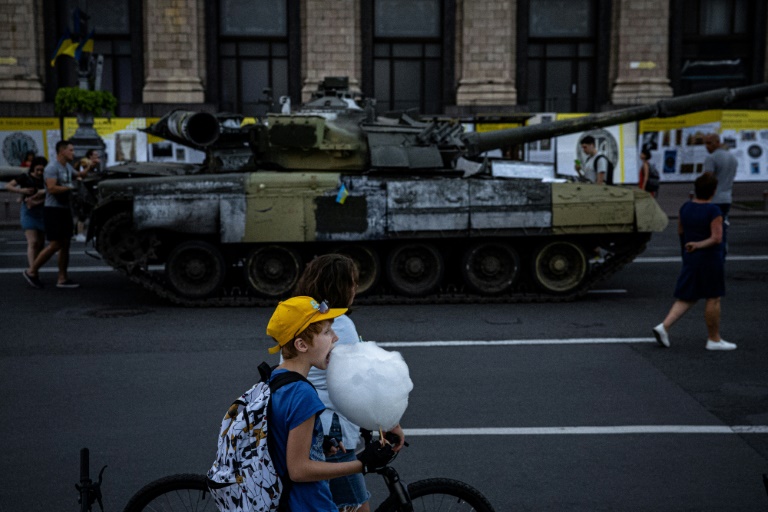
However in central Kyiv trailing crowds of people gathered in a surreal atmosphere to inspect dozens of disabled Russian tanks, trucks and armoured vehicles installed near the government quarter to showcase Ukraine’s military prowess.

Cotton candy vendors plied trade to pedestrians, who peered down tank barrels and posed for selfies, draped in the Ukrainian flag. 

– Threatened nuclear plant –

Meanwhile, discussions continued on how to protect the Zaporizhzhia nuclear plant in southern Ukraine, occupied by Russian troops and threatened by shelling, which Moscow blames on Kyiv.

The two sides traded accusations at a Tuesday meeting of the UN Security Council on Zaporizhzhia, with Ukraine and its allies demanding Russia pull its troops out of the plant — Europe’s largest nuclear facility — and agree to a demilitarised zone.

Zelensky told the  Security Council Wednesday via video link that Russia “should unconditionally stop nuclear blackmail” and “completely withdraw” from the plant.

The Russian and French foreign ministers spoke on Tuesday by telephone about an expected visit to the plant by inspectors from UN nuclear watchdog the International Atomic Energy Agency (IAEA), amid worries over the high risk of a radiation accident.

And on Wednesday the head of Russia’s state nuclear energy agency met the IAEA chief to follow up on the expected inspection.

London bus drivers latest UK workers to strike over pay

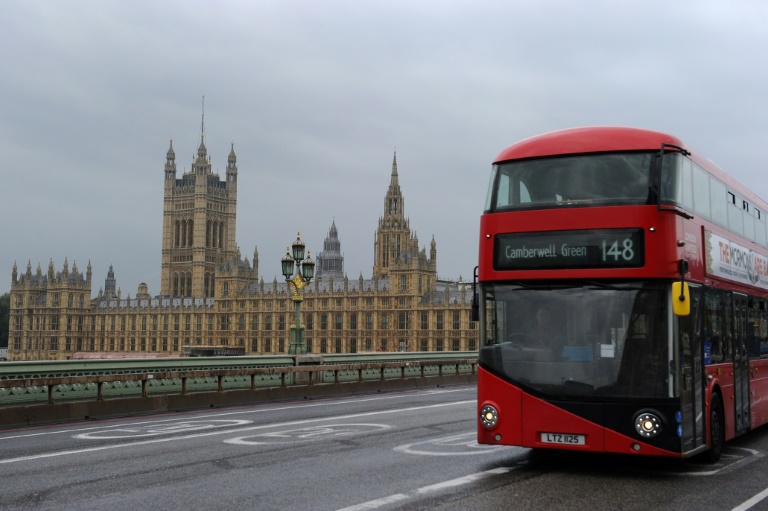
Bus drivers in London are set to strike over pay for two days this weekend, their union announced on Wednesday, as decades-high inflation prompts walkouts across Britain’s ailing economy.

Around 1,600 drivers from the London United bus company will stage the stoppage on Sunday and Monday over the traditional end-of-summer long weekend, the union Unite said.

The strike, which will affect only a portion of London’s famous red buses, could hinder people trying to reach the annual Notting Hill Carnival, which will take place on both days and typically draws up to two million people.

Unite accused French company RATP, which owns London United, of offering the drivers a “real terms pay cut” in negotiations over pay.

It said the firm was offering an increase of 3.6 percent for 2022 and 4.2 percent in 2023, despite Britain’s inflation rate reaching double figures last month for the first time since 1982.

“It (RATP) can fully afford to pay its workers a decent pay increase, but it is refusing to do so,” Unite general secretary Sharon Graham said.

A spokesperson for RATP said it remained “committed to resolving the dispute as soon as possible and we urge Unite to reconsider our invitation to return to the negotiating table”.

The stoppage is the latest by public and private sector workers in the UK, as the spiralling cost of living has led employees to seek salary hikes to keep up with their surging bills.

London Underground and national railway staff have held a series of walkouts in recent months, while the unrest has hit numerous other industries and sectors.

They range from dock workers at Felixstowe — the country’s biggest container port — and refuse collectors in Scotland, to criminal lawyers across England and Wales.

Win for pro-choice Democrats cools talk of US midterm Republican romp

Democrats celebrated victory Wednesday in a US special election seen as the last bellwether of the public mood on abortion ahead of November’s midterms, as the party seeks to make reproductive rights a key issue in the campaign.

Iraq veteran Pat Ryan narrowly beat career politician Marc Molinaro in upstate New York’s 19th District late Tuesday, defying expectations that the seat would flip to the Republicans.

Pundits have focused on the Hudson Valley swing district — won at least once by each of the last three presidents — as a trial run of the parties’ general election messages. 

Democrats said the key to victory was anger over the Supreme Court’s hugely contentious decision — known as “Dobbs v. Jackson Women’s Health Organization” — ending the federally-protected right to abortion.

Ryan hammered his pro-abortion rights message during the campaign, declaring loudly and often that “choice is on the ballot,” while Molinaro focused on inflation and crime. 

The 40-year-old victor said he had run because “the foundations of our democracy were and remain under direct threat,” according to his local paper, the Times Union.

“When the Supreme Court ripped away reproductive rights, access to abortion rights, we said: ‘This is not what America stands for.'”

Ryan hadn’t led in any poll and even the Democratic Congressional Campaign Committee had his opponent eight points ahead in a survey released just ahead of the vote.

– Democrats ‘more engaged’ –

Yet, as with the other three special House elections held since the June 24 high court ruling, the Democratic candidate bettered President Joe Biden’s 2020 performance. 

Biden carried the district by fewer than two points in 2020, after Donald Trump took it by about seven points in 2016 and Barack Obama won there by a similar amount in 2012.

Democrats are now arguing that the race provides the most encouraging sign yet that November’s midterm election might not be the bloodbath many have been anticipating. 

“Lots of focus on Dems being more engaged/energetic post-Dobbs, which is undeniably true,” election analyst Dave Wasserman of The Cook Political Report tweeted.

“But to me, the GOP/Trump base appears less engaged than it was last November, which is just as big a part of the story.”

US voters will decide control of Congress in the midterm elections, with all 435 House seats up for grabs, as well as 35 of the 100 Senate seats and the governor’s mansion in 36 out of 50 states.

Democratic strategists say enthusiasm and energy among liberals has shot up since Dobbs, pointing to research from political data firm Target Smart showing women outpacing men in new voter registrations in numerous states.

The data shows four Democrats registering for every Republican in the key battleground of Pennsylvania.  

“This isn’t just a blue state phenomena. In fact, it is more pronounced in states where choice is more at risk, or has been eliminated by the decision,” TargetSmart CEO Tom Bonier tweeted last week.

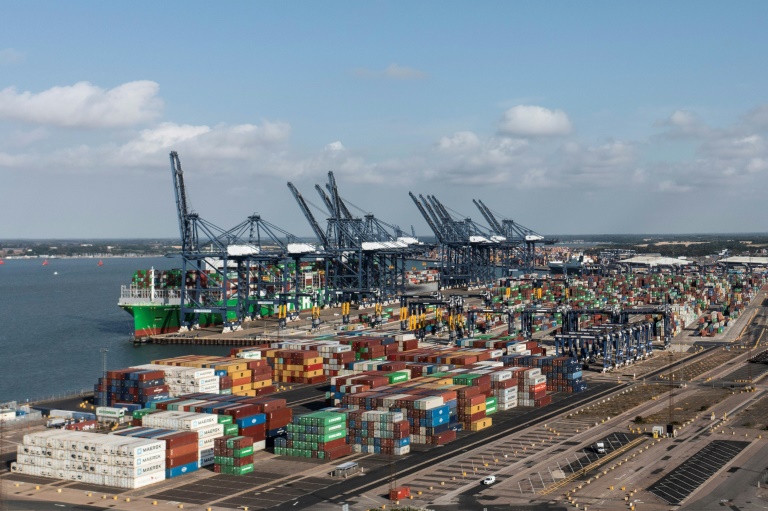
UK port strike threatens to deepen supply chain and price woes

A strike over pay at Britain’s largest container port threatens to spark fresh delays and rising costs for companies and consumers alike, but logistics experts say there should be no product shortages.

Workers at Felixstowe port in southeastern England on Sunday began an eight-day strike, the first in 30 years, as decades-high inflation intensifies a cost-of-living crisis.

UK workers are striking in vast numbers as runaway inflation erodes wages at a record pace and is set to plunge the economy into recession.

“The strikes at Felixstowe are set to send some British businesses into a spin,” said Ed Winterschladen, executive vice president at Proxima, a logistics consultancy.

“The port is not just Britain’s largest, it is the largest by quite some margin as the port of entry for almost half of ocean freight into the UK,” he said, warning that delays “will have a sustained pricing impact in an already inflationary market”.

The dockers’ walkout mirrors similar action at the UK activities of US online giant Amazon and British postal operator Royal Mail. 

Those three strikes will together have a £1-billion ($1.2-billion) impact on trade and cause severe delays, according to delivery firm ParcelHero.

“The triple whammy of industrial actions at ports, postal networks and e-commerce giants means serious disruption,” said David Jinks, ParcelHero head of consumer research.

“Home deliveries will be affected, as will retailers waiting for new stock and manufacturers needing key components.

“Someone will have to foot the bill for all these increased transport costs and history tells us that it is usually the consumer.”

Felixstowe takes daily deliveries from nations such as China and Japan, with containers transporting everything from bicycles and frozen food to household appliances like fridges and washing machines.

They also carry key parts for manufacturers, so any major hold-ups could potentially worsen the nation’s post-Brexit supply-chain crunch.

– ‘Enough stock’ –

However, industry body the British International Freight Association (BIFA) insisted that it was “too early” to assess the impact of the port strike.

Some companies are far more flexible after increasing inventory levels in the face of supply-chain problems sparked by the pandemic.

However, BIFA conceded that past Felixstowe disruption has had a knock-on impact on freight transport and international supply chains.

Jonathan Owens, logistics expert at the University of Salford, gave an upbeat assessment barring any escalation in the dispute.

“The strike is a week and may not cause too much disruption as Felixstowe is not a ‘just-in-time’ delivery port. In general, everything arriving is scheduled in advance,” Owens told AFP.

“There should be enough stock in the supply chain to cope with key products.

“Should the strike progress go on beyond the current time or more disruption planned quickly after this strike period, then alternative inbound supply routes will be found.”

Many retailers have developed such contingency plans to reroute container ships or switch to other transportation, the British Retail Consortium (BRC) said.

Fresh food imports would not be affected because these tend to pass through the port of Dover, the BRC noted.

Nevertheless, the Felixstowe row presents a major headache for international freight.

Shipping giant Maersk said three of its ships have so far been diverted to other North European ports, before seeking to transfer cargo back to Britain.

“For affected export cargo from UK we have been offering our customers alternative ports and routings as far as possible,” a Maersk spokesman told AFP.

“It is hard for us to say whether any specific products will be missing in the supermarkets, etc.”

– Impasse –

Back in Felixstowe, discussions appear at an impasse between management and trade unions.

Nearly 2,000 unionised employees at the port in eastern England, including crane drivers, machine operators and stevedores, are involved in the first strike there since 1989.

Dockers want a 10-percent pay rise with inflation currently running at a 40-year high of 10.1 percent. 

The Port of Felixstowe described as “fair” its offer of salary increases of an average eight percent.

“The port regrets the impact this action will have on UK supply chains,” it added.

Markets mark time ahead to US Fed chair speech

European and US equities moved sideways on Wednesday as investors awaited signals on the next US interest rate hikes.

With the Jackson Hole meeting of central bankers this week, focus is on what US Federal Reserve chief Jerome Powell will say Friday about plans to tackle high prices — with many fearing higher borrowing costs could send the world’s biggest economy into recession in its battle to rein in inflation.

The euro held close to a two-decade low against the dollar, and the greenback struck a two-year peak against China’s yuan.

European gas prices rose close to record intraday prices.

– Losing momentum –

“Markets seem to have lost their momentum,” noted AJ Bell investment director Russ Mould.

“Investors have become nervous once again, with all eyes on Powell and what he says this coming Friday.” 

Analyst Patrick O’Hare at Briefing.com said a mountain of expectations were building ahead of Powell’s speech.

“Those expectations range from fear of a resolutely hawkish speech to hope of a tempered rate-hike outlook,” he said.

Central banks face a delicate balancing act between battling inflation, with Russia’s war in Ukraine sending energy prices soaring, and avoiding recession.

Yet concerns are growing that spiking energy costs could still prompt a worldwide downturn.

“Investor anxiety is growing that a combination of central banks raising rates and higher energy prices will tip the global economy into a long recession,” said CMC Markets analyst Michael Hewson.

Key markets in Asia slid on Wednesday.

In Europe, London shed 0.5 percent but Frankfurt and Paris were broadly steady.

Wall Street opened narrowly mixed, with the Dow dipping 0.1 percent.

– Rollercoaster ride –

The foreign exchange market has faced a rollercoaster ride so far this week.

The euro tumbled on Tuesday to $0.9901 — a new two-decade low — but later clawed back losses as the greenback was hit by poor US economic data.

The dollar had strengthened this week ahead Powell’s speech, as markets speculate that the Fed will continue to tighten its monetary policy.

Higher interest rates boost the American currency as they make dollar-denominated debt more attractive to investors.

But the euro also has been weighed down by a gloomy outlook for the eurozone economy amid fears of a halt to Russia’s gas deliveries.

Oil was steady following talk of an OPEC output cut, with Brent crude hovering just above $100 per barrel.

“While this may simply be a case of Saudi Arabia talking up the price, for now, the prospect of the group taking such action effectively removes two of the biggest downside risks for prices,” said OANDA analyst Craig Erlam.

Oil prices fell back under $100 per barrel this month on worries of a global economic slowdown and the possibility of Iran reaching a deal on its nuclear programme that would end international sanctions on its crude exports.

– Key figures at around 1330 GMT –

London – FTSE 100: DOWN 0.5 percent at 7,454.51 points

Frankfurt – DAX: DOWN 0.1 percent at 13,179.98 

Paris – CAC 40: UP less than 0.1 percent at 6,364.87

EURO STOXX 50: UP less than 0.1 percent at 3,654.51

New York – Dow: DOWN 0.1 percent at 32,867.49

Tokyo – Nikkei 225: DOWN 0.5 percent at 28,313.47 (close)

Hong Kong – Hang Seng Index: DOWN 1.2 percent at 19,268.74 (close)

Shanghai – Composite: DOWN 1.9 percent at 3,215.20 (close)

Euro/dollar: DOWN at 0.9925 from 0.9970 on Tuesday

Pound/dollar: DOWN at 1.1763 from 1.1836

Euro/pound: UP at 84.38 pence from 84.23 pence

Dollar/yen: UP at 137.04 yen from 136.36 yen

West Texas Intermediate: UP less than 0.1 percent at $93.80 per barrel

Brent North Sea crude: UP less than 0.1 percent at $100.26

Close Bitnami banner
Bitnami