US Business

Facebook use plunges among US teens: survey

US teens have left Facebook in droves over the past seven years, preferring to spend time at video-sharing venues YouTube and TikTok, according to a Pew Research Center survey data out Wednesday.

TikTok has “emerged as a top social media platform for US teens” while Google-run YouTube “stands out as the most common platform used by teens,” the report’s authors wrote.

Pew’s data comes as Facebook-owner Meta is in a battle with TikTok for social media primacy, trying to keep the maximum number of users as part of its multi-billion dollar ad-driven business.

The report said some 95 percent of the teens surveyed said they use YouTube, compared with 67 percent saying they are TikTok users.

Just 32 percent of teens surveyed said they log on to Facebook — a big drop from the 71 percent who reported being users during a similar survey some seven years ago.

Once the place to be online, Facebook has become seen as a venue for older folks with young drawn to social networks where people express themselves with pictures and video snippets.

About 62 percent of the teens said they use Instagram, owned by Facebook-parent Meta, while 59 percent said they used Snapchat, researchers stated.

“A quarter of teens who use Snapchat or TikTok say they use these apps almost constantly, and a fifth of teen YouTube users say the same,” the report said.

In a bit of good news for Meta’s business, its photo and video sharing service Instagram was more popular with US teens than it was in the 2014-2015 survey.

Meanwhile, less than a quarter of the teens surveyed said they ever use Twitter, the report said.

The study also confirmed what casual observers may have suspected, 95 percent of US teens say they have smartphones, while nearly as many of them have desktop or laptop computers.

And the share of teens who say they are online almost constantly has nearly doubled to 46 percent when compared to survey results from seven years ago, researchers noted.

The report was based on a survey of 1,316 US teens, ranging in age from 13 years old to 17 years old, conducted from mid-April to early May of this year, according to Pew.
Biden signs bill aiding veterans exposed to toxins

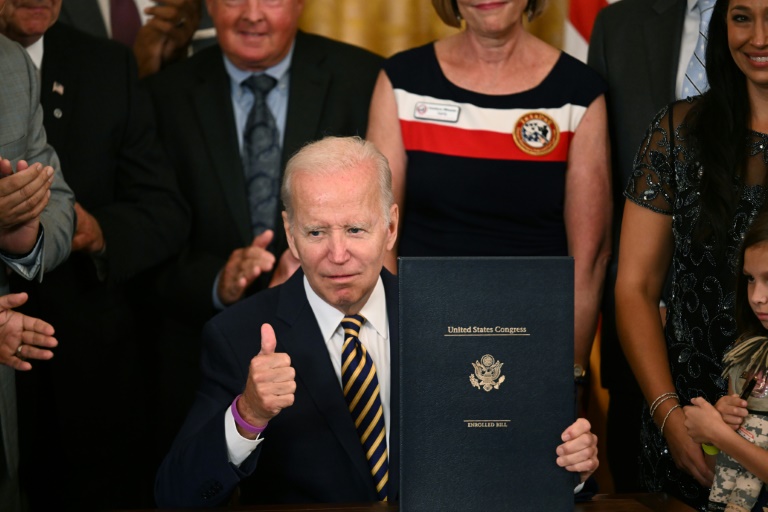
US President Joe Biden on Wednesday signed into law a bill boosting benefits for veterans exposed to toxic fumes, a cause close to his own heart after his son died of brain cancer.

Burn pits, lit up with jet fuel, were commonly used to dispose of waste in military camps during the years of the US wars in Afghanistan and Iraq. 

They exposed large numbers of servicemen and women to potentially harmful toxins, although there is not always a proven link between the exposure and later illnesses.

The PACT Act, passed by the US Senate earlier this month after fierce lobbying by veterans and celebrity comedian Jon Stewart, will formalize new rules for ensuring access to medical treatment.

“Sometimes military service can result in increased health risks for our veterans and some injuries and illnesses, like asthma, cancer and others, can take years to manifest,” the White House said.

“These realities can make it difficult for veterans to establish a direct connection between their service and disabilities resulting from military environmental exposures such as burn pits — a necessary step to ensure they receive the health care they earned.”

It described the bill as the “most significant expansion of benefits and services for toxic exposed veterans in more than 30 years.”

Biden believes the pits are at the root of the brain cancer that claimed the life of his son Beau, who served in Iraq and died in 2015 at age 46.

Recounting his own many visits to US troops in Iraq as a senator and vice president, Biden described seeing “burn pits the size of football fields” filled with the “incinerated waste of war.”

Subjected to “toxic smoke,” many of the “fittest and best warriors that we sent to war” came home and “were not the same,” encountering symptoms as varied as headaches and numbness, as well as serious diseases, Biden said.

“My son Beau was one of them.”

US inflation eases in July amid falling oil prices

US inflation eased slightly in July, according to official data Wednesday, potentially taking pressure off the Federal Reserve to hike interest rates sharply while bringing a much-needed boost to President Joe Biden just months before crucial midterm elections.

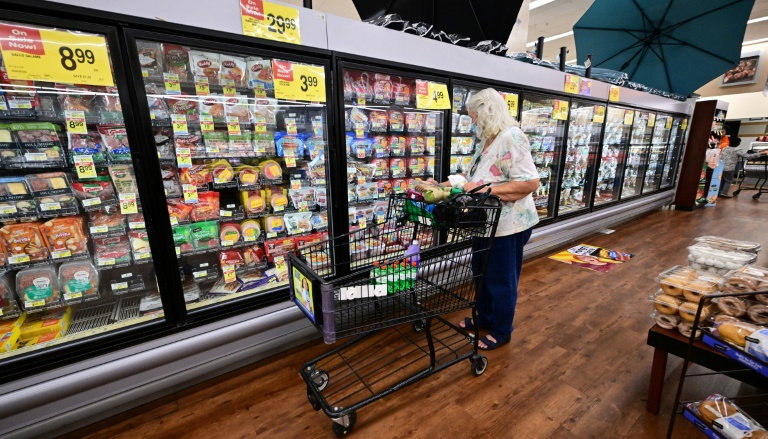
With energy costs dropping in recent weeks, the consumer price index dipped to an annual rate of 8.5 percent last month, the Labor Department reported, lower than markets were projecting.

Fueled by aggressive consumer spending of pandemic savings, global supply chain snarls, domestic worker shortages and Russia’s war on Ukraine, inflation soared 9.1 percent on-year in June, the highest in 40 years.

But the CPI was unchanged compared to June, a dramatic shift from the big increase in the prior month and defying expectations of a modest rise.

“Today we received news that our economy had zero percent inflation in the month of July. Zero percent,” Biden said at a White House event. 

“We are seeing signs that inflation may be beginning to moderate,” he said, although he acknowledged that the global challenges remain and the economy could face “additional headwinds.”

When volatile food and energy prices are excluded from the calculation, the so-called core CPI rate rose just 0.3 percent — the smallest in four months, according to the report.

Soaring prices have continued to climb in the United States, squeezing family budgets and, by extension, Biden’s popularity.

Biden’s opponents accuse the president of precipitating inflation with a gigantic $1.9 trillion coronavirus relief package, enacted in March last year shortly after assuming office.

And Republicans renewed their criticism of Biden’s economic policy, warning that Sunday’s passage in the Senate of his massive climate and health care bill titled the “Inflation Reduction Act,” would do the opposite of its stated purpose.

But the president said his economic policies are working.

In addition to cooling inflation “jobs are booming” and wages are rising “That’s what happens when you build an economy from the bottom up from the middle out,” he said

“Our work is far from over… (but) the economic plan is working.”

– Devil in the details –

Still, the devil is in the details. 

Economists caution against taking too much solace from a single good report, and they worry that the inflation slowdown linked to the drop in gasoline prices could be outweighed by rising rent and real estate prices.

The question now facing Washington is whether it will be possible to bring inflation down without plunging the world’s largest economy into recession, after two quarters of economic contraction in the first half of the year.

In a bid to tamp down inflation, the Fed has already hiked the interest rate four times to a range of 2.25 to 2.5 percent, including two consecutive 75-basis-point increases.

Fed officials have made it clear that a third jumbo rate increase remains on the table at next month’s policy meeting.

“One month’s data is too volatile to call a peak in inflation,” said Joseph Gagnon of the Peterson Institute for International Economics.

“If August data are the same, it takes 75 basis points off the table for September,” Gagnon, a former Fed economist, said on Twitter.

Wall Street soared in early trading, with the benchmark Dow gaining nearly 500 points.

But the robust jobs market, which pushed the July unemployment rate to the pre-pandemic level of 3.5 percent, has a downside. There are still nearly two jobs open for every available worker, and labor costs have risen sharply, which pushes wages up and fuels more inflation.

Rubeela Farooqi of High-Frequency Economics cautioned that despite the slower pace of increases last month, “prices remain uncomfortably high.”

“Coupled with strength in job growth and wages, the data support the case for another aggressive rate hike in September,” she said in an analysis.

US inflation eases in July amid falling oil prices

US inflation eased slightly in July, according to official data Wednesday, potentially taking pressure off the Federal Reserve to hike interest rates sharply while bringing a much-needed boost to President Joe Biden just months before crucial midterm elections.

With energy costs dropping in recent weeks, the consumer price index dipped to an annual rate of 8.5 percent last month, the Labor Department reported, lower than markets were projecting.

Fueled by aggressive consumer spending of pandemic savings, global supply chain snarls, domestic worker shortages and Russia’s war on Ukraine, inflation soared 9.1 percent on-year in June, the highest in 40 years.

But the CPI was unchanged compared to June, a dramatic shift from the big increase in the prior month and defying expectations of a modest rise.

“Today we received news that our economy had zero percent inflation in the month of July. Zero percent,” Biden said at a White House event. 

“We are seeing signs that inflation may be beginning to moderate,” he said, although he acknowledged that the global challenges remain and the economy could face “additional headwinds.”

When volatile food and energy prices are excluded from the calculation, the so-called core CPI rate rose just 0.3 percent — the smallest in four months, according to the report.

Soaring prices have continued to climb in the United States, squeezing family budgets and, by extension, Biden’s popularity.

Biden’s opponents accuse the president of precipitating inflation with a gigantic $1.9 trillion coronavirus relief package, enacted in March last year shortly after assuming office.

And Republicans renewed their criticism of Biden’s economic policy, warning that Sunday’s passage in the Senate of his massive climate and health care bill titled the “Inflation Reduction Act,” would do the opposite of its stated purpose.

But the president said his economic policies are working.

In addition to cooling inflation “jobs are booming” and wages are rising “That’s what happens when you build an economy from the bottom up from the middle out,” he said

“Our work is far from over… (but) the economic plan is working.”

– Devil in the details –

Still, the devil is in the details. 

Economists caution against taking too much solace from a single good report, and they worry that the inflation slowdown linked to the drop in gasoline prices could be outweighed by rising rent and real estate prices.

The question now facing Washington is whether it will be possible to bring inflation down without plunging the world’s largest economy into recession, after two quarters of economic contraction in the first half of the year.

In a bid to tamp down inflation, the Fed has already hiked the interest rate four times to a range of 2.25 to 2.5 percent, including two consecutive 75-basis-point increases.

Fed officials have made it clear that a third jumbo rate increase remains on the table at next month’s policy meeting.

“One month’s data is too volatile to call a peak in inflation,” said Joseph Gagnon of the Peterson Institute for International Economics.

“If August data are the same, it takes 75 basis points off the table for September,” Gagnon, a former Fed economist, said on Twitter.

Wall Street soared in early trading, with the benchmark Dow gaining nearly 500 points.

But the robust jobs market, which pushed the July unemployment rate to the pre-pandemic level of 3.5 percent, has a downside. There are still nearly two jobs open for every available worker, and labor costs have risen sharply, which pushes wages up and fuels more inflation.

Rubeela Farooqi of High-Frequency Economics cautioned that despite the slower pace of increases last month, “prices remain uncomfortably high.”

“Coupled with strength in job growth and wages, the data support the case for another aggressive rate hike in September,” she said in an analysis.

US inflation eases slightly to 8.5% in July as fuel prices dip

US inflation eased slightly in July, official data showed Wednesday, taking pressure off the Federal Reserve to hike interest rates sharply while bringing a much-needed boost to President Joe Biden just months before crucial midterm elections.

With energy costs dropping in recent weeks, the CPI dipped to an annual rate of 8.5 percent last month, the Labor Department reported.

Fueled by aggressive consumer spending of pandemic savings, global supply chain snarls, domestic worker shortages and Russia’s war on Ukraine, the consumer price index had soared 9.1 percent on-year in June, the highest in 40 years.

But July’s consumer price index was unchanged compared to the month before, well below a forecasted increase, while CPI excluding volatile food and energy goods rose just 0.3 percent — the smallest in four months — the figures showed.

Consumer prices have continued to climb in the United States, squeezing family budgets and, by extension, Biden’s popularity.

His opponents accuse the president of precipitating inflation with his gigantic $1.9 trillion coronavirus relief package, which he enacted in March last year shortly after assuming office.

And Republicans renewed their criticism of Biden’s economic policy, warning that Sunday’s passage in the Senate of his massive climate and healthcare bill titled the “Inflation Reduction Act,” would do the opposite of its stated purpose.

But the devil is in the details. 

Experts worry that the inflation slowdown linked to the drop in gasoline prices could be outweighed by rising rent and real estate prices.

“The larger issue is what happens to home ownership costs & rents,” Diane Swonk, chief economist for KPMG, wrote on Twitter.

The question now facing Washington is whether it will be possible to bring inflation down sustainably, without plunging the world’s largest economy into recession, after two quarters of economic contraction.

In a bid to tamp down inflation, the Fed has already hiked the interest rate four times to a range of 2.25 to 2.5 percent, including 75-basis-point increases at each of the past two meetings.

Fears that Wednesday’s reading would come in above forecasts, pushing the central bank to unveil another jumbo hike, weighed on equities in Asia and Europe, with most markets in the regions falling into the red. 

On the bright side, the US labor market remains dynamic and in July the unemployment rate fell to the pre-pandemic level of 3.5 percent.

But there are still nearly two jobs open for every available worker, which pushes wages up and contributes to inflation.

US inflation eases slightly to 8.5% in July as fuel prices dip

US inflation eased slightly in July, official data showed Wednesday, taking pressure off the Federal Reserve to hike interest rates sharply while bringing a much-needed boost to President Joe Biden just months before crucial midterm elections.

With energy costs dropping in recent weeks, the CPI dipped to an annual rate of 8.5 percent last month, the Labor Department reported.

Fueled by aggressive consumer spending of pandemic savings, global supply chain snarls, domestic worker shortages and Russia’s war on Ukraine, the consumer price index had soared 9.1 percent on-year in June, the highest in 40 years.

But July’s consumer price index was unchanged compared to the month before, well below a forecasted increase, while CPI excluding volatile food and energy goods rose just 0.3 percent — the smallest in four months — the figures showed.

Consumer prices have continued to climb in the United States, squeezing family budgets and, by extension, Biden’s popularity.

His opponents accuse the president of precipitating inflation with his gigantic $1.9 trillion coronavirus relief package, which he enacted in March last year shortly after assuming office.

And Republicans renewed their criticism of Biden’s economic policy, warning that Sunday’s passage in the Senate of his massive climate and healthcare bill titled the “Inflation Reduction Act,” would do the opposite of its stated purpose.

But the devil is in the details. 

Experts worry that the inflation slowdown linked to the drop in gasoline prices could be outweighed by rising rent and real estate prices.

“The larger issue is what happens to home ownership costs & rents,” Diane Swonk, chief economist for KPMG, wrote on Twitter.

The question now facing Washington is whether it will be possible to bring inflation down sustainably, without plunging the world’s largest economy into recession, after two quarters of economic contraction.

In a bid to tamp down inflation, the Fed has already hiked the interest rate four times to a range of 2.25 to 2.5 percent, including 75-basis-point increases at each of the past two meetings.

Fears that Wednesday’s reading would come in above forecasts, pushing the central bank to unveil another jumbo hike, weighed on equities in Asia and Europe, with most markets in the regions falling into the red. 

On the bright side, the US labor market remains dynamic and in July the unemployment rate fell to the pre-pandemic level of 3.5 percent.

But there are still nearly two jobs open for every available worker, which pushes wages up and contributes to inflation.

Trump to be deposed in New York civil probe

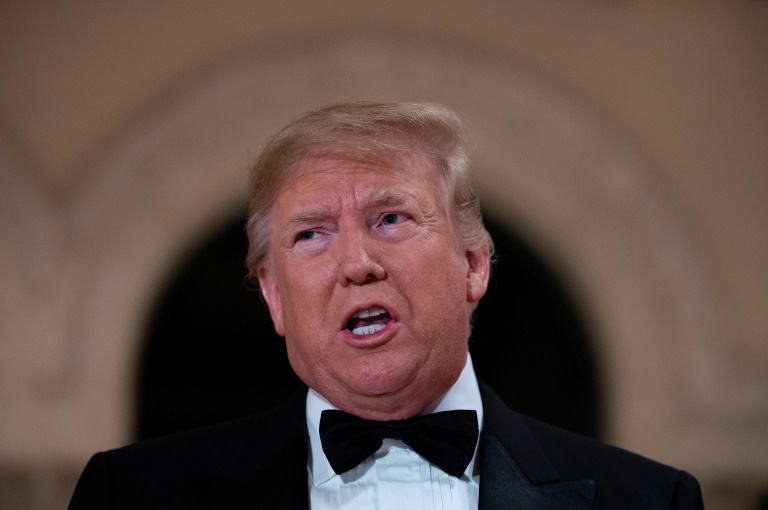
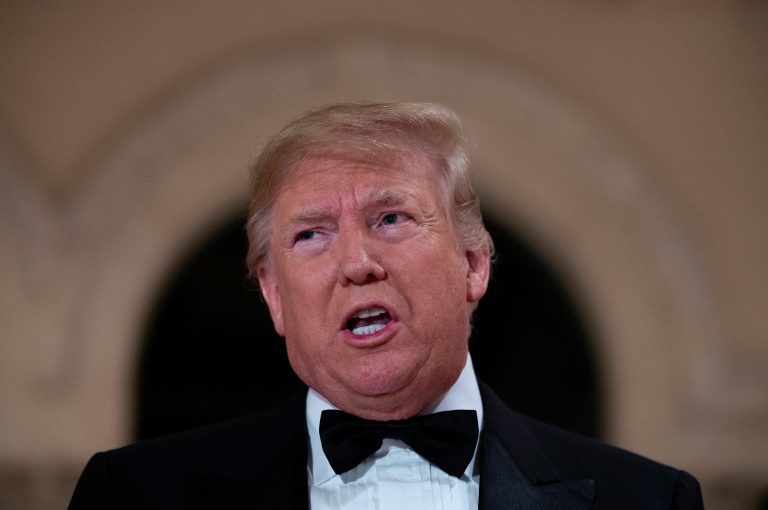
Donald Trump looks set to be deposed Wednesday in New York as part of the state attorney general’s civil probe into alleged fraud at his family business, the ex-president said on his social media network.

“In New York City tonight,” Trump posted on his Truth Social just after midnight. 

“Seeing racist N.Y.S. Attorney General tomorrow, for a continuation of the greatest Witch Hunt in U.S. history!” he added. “My great company, and myself, are being attacked from all sides. Banana Republic!”

New York Attorney General Letitia James suspects the Trump Organization fraudulently overstated the value of real estate properties when applying for bank loans, while understating them with the tax authorities in order to pay less in taxes.

Trump and his eldest children, Donald Jr and Ivanka, had been due to start testifying under oath in July but the depositions were postponed due to the death of the former president’s first wife.

The Trumps have denied any wrongdoing, and the former Republican leader has charged that the probe is politically motivated.

If James, an African-American Democrat, finds any evidence of financial misconduct, she can sue the Trump Organization for damages but can not file criminal charges, as it is a civil investigation.

James’s probe is one of several legal battles in which Trump is embroiled, threatening to complicate any bid for another run for the White House in 2024.

The deposition comes on the heels of a Federal Bureau of Investigation raid on Trump’s Florida residence in an escalation of legal probes into the 45th president that has set off a political firestorm.

The FBI declined to provide a reason for the raid, but US media outlets said agents were conducting a court-authorized search related to the potential mishandling of classified documents that had been sent to Mar-a-Lago after Trump left the White House in January 2021.

Trump to be deposed in New York civil probe

Donald Trump looks set to be deposed Wednesday in New York as part of the state attorney general’s civil probe into alleged fraud at his family business, the ex-president said on his social media network.

“In New York City tonight,” Trump posted on his Truth Social just after midnight. 

“Seeing racist N.Y.S. Attorney General tomorrow, for a continuation of the greatest Witch Hunt in U.S. history!” he added. “My great company, and myself, are being attacked from all sides. Banana Republic!”

New York Attorney General Letitia James suspects the Trump Organization fraudulently overstated the value of real estate properties when applying for bank loans, while understating them with the tax authorities in order to pay less in taxes.

Trump and his eldest children, Donald Jr and Ivanka, had been due to start testifying under oath in July but the depositions were postponed due to the death of the former president’s first wife.

The Trumps have denied any wrongdoing, and the former Republican leader has charged that the probe is politically motivated.

If James, an African-American Democrat, finds any evidence of financial misconduct, she can sue the Trump Organization for damages but can not file criminal charges, as it is a civil investigation.

James’s probe is one of several legal battles in which Trump is embroiled, threatening to complicate any bid for another run for the White House in 2024.

The deposition comes on the heels of a Federal Bureau of Investigation raid on Trump’s Florida residence in an escalation of legal probes into the 45th president that has set off a political firestorm.

The FBI declined to provide a reason for the raid, but US media outlets said agents were conducting a court-authorized search related to the potential mishandling of classified documents that had been sent to Mar-a-Lago after Trump left the White House in January 2021.

European stocks steady, dollar down before US inflation data

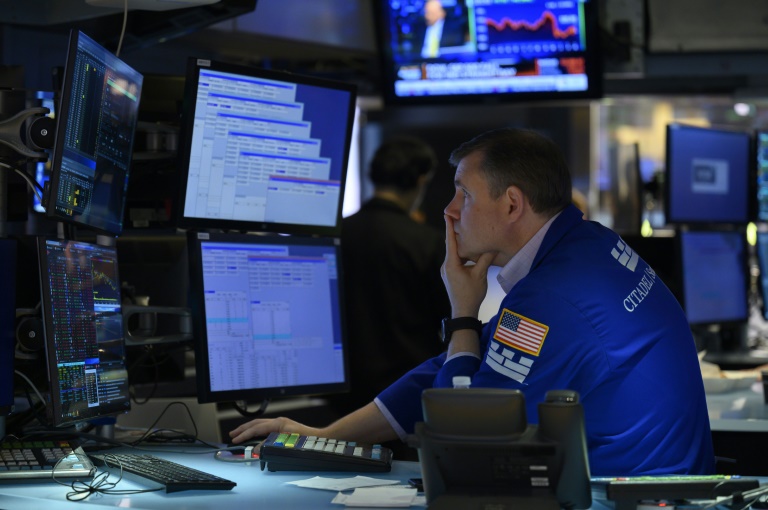
European stock markets and the dollar fell Wednesday ahead of a crucial US inflation report that could help set the the pace of future interest rate hikes by the US Federal Reserve. 

Analysts warn that if the reading exceeds forecasts, it could increase the possibility of further monetary policy tightening by the Fed, reinforcing expectations for a possible recession. 

The US central bank has said its decision on the timing and magnitude of the rate hikes will depend on data, as it attempts to tread a fine line between bringing down inflation from four-decade highs and not choking off recovery. 

Recent indicators showing a slowdown in activity had fuelled hopes that the Fed would be less hawkish. 

But a bigger-than-predicted jump in US jobs last month revived talk of a third straight three-quarter-point hike in September.

The Fed “will need to make sure inflation moves back towards target sustainably before contemplating pausing its tightening cycle”, said Carol Kong at Commonwealth Bank of Australia.

“A strong inflation outcome today will likely reinforce the (Fed) is still some way away from that point yet, and see markets re-adjust higher their expectations for US interest rates.”

The data on Wednesday come at a sensitive time for world markets, which have been buffetted by the war in Ukraine, supply chain snarls and rising China-US tensions over Taiwan.

While the latest earnings season has been less painful than feared, there are increasing signs that the economic slowdown is beginning to impact companies, with some major firms — including Apple and Amazon — providing downbeat outlooks.

Chip-maker Micron became the latest, saying revenue would likely come in at the low end of its forecasts in the fourth quarter owing to weak demand.

A day before, rival Nvidia unveiled disappointing results.

Elsewhere, oil prices remain stuck around six-month lows, even after news that supplies from Russia to three European countries through Ukraine had been halted as sanctions prohibited the processing of the transit payment.

Crude oil prices have essentially wiped out all the gains seen since Russia’s invasion of its neighbour in February as expectations of a recession hit demand forecasts.

But Edward Moya, analyst at Oanda trading group, said the market would not likely weaken further.

“Whatever crude demand destruction that occurs from a weakening global economy won’t be able to drag down oil prices much lower given how low the supply outlook remains,” he said. 

– Key figures at around 1100 GMT –

London – FTSE 100: UP 0.1 percent at 7,491.60 points

Frankfurt – DAX: UP 0.1 percent at 13,553.42

Paris – CAC 40: DOWN 0.1 percent at 6,484.03

EURO STOXX 50: DOWN 0.1 percent at 3,712.82

Tokyo – Nikkei 225: DOWN 0.7 percent at 27,819.33 (close)

Hong Kong – Hang Seng Index: DOWN 2.0 percent at 19,610.84 (close)

Shanghai – Composite: DOWN 0.5 percent at 3,230.02 (close)

New York – Dow: DOWN 0.2 percent at 32,774.41 (close)

Euro/dollar: UP at $1.0237 from $1.0213 Tuesday

Pound/dollar: UP at $1.2091 from $1.2071

Euro/pound: UP at 84.66 pence from 84.57 pence

Dollar/yen: DOWN at 134.97 yen from 135.12 yen

West Texas Intermediate: DOWN 1.3 percent at $89.35 per barrel

Brent North Sea crude: DOWN 1.2 percent at $95.12 per barrel

13 killed in Russian strikes near nuclear plant

Ukraine on Wednesday accused Russia of rocket strikes that killed 13 civilians in areas near a Russian-held power plant, where renewed fighting has raised fears of a nuclear disaster.

The overnight strikes in the Dnipropetrovsk region in central Ukraine also injured 11 people, with five reported to be in a serious condition.

“It was a terrible night, regional governor Valentin Reznichenko wrote on Telegram, urging residents to shelter when they hear air raid sirens.

“I am asking and begging you… Don’t let the Russians kill you,” he wrote, adding that Russia had fired a total of 80 rockets at the area.

Most of the casualties were in the town of Marganets, just across the Dnieper River from the Zaporizhzhia nuclear power plant, Europe’s biggest.

Regional council head Mykola Lukashuk said the strikes had hit a local power line, leaving thousands of people without electricity.

Ukraine and Russia have accused each other of recent shelling around the plant itself.

Ukraine says Russia has stationed hundreds of troops and stored ammunition at the plant.

The tensions have brought back memories of the 1986 Chernobyl nuclear disaster in then Soviet Ukraine, which killed hundreds of people and spread radioactive contamination over much of Europe.

The plant was captured by Russian troops on March 4 after a battle with Ukrainian forces.

– Beachgoers fleeing –

The strikes came a day after major blasts at the Saki airfield, a key military base on the Russian-annexed Crimea peninsula.

Dramatic amateur footage on social media appeared to show panicked holidaymakers fleeing a Crimean beach with young children, as ballooning clouds of grey smoke rose over the horizon.

Russia annexed Crimea in 2014 and has used the region as a staging ground for its attacks, but it has rarely been a target for Ukrainian forces.

Moscow insisted that the explosions were caused by detonating ammunition rather than Ukrainian fire.

Ukraine’s army, which for months pleaded for long-range artillery from Western allies, has been hitting targets deeper in Russian-held territory since some started arriving in recent weeks. 

Kyiv has also taken credit for several acts of sabotage inside Russian-held territory.

– New buyer for Ukraine grain? –

The war has severely hampered grain supply from Ukraine, leading to an international food crisis as it is one of the world’s biggest producers.

But some ships have been able to leave Ukrainian ports in recent days after a deal with Russia brokered by the United Nations and Turkey.

The first grain shipment to leave on the Sierra Leone-flagged vessel Razoni departed the Ukrainian port of Odessa on August 1 and had been expected to dock in the Lebanese port of Tripoli at the weekend.

But the Ukrainian embassy said a new buyer for the shipment was being sought after the original Lebanese buyer cancelled the order.

A five-month delay after Russia’s invasion “prompted the buyer and the shipping agent to reach agreement on the cancellation of the order,” the Ukraine embassy said in a statement late Tuesday.

It is currently anchored off the Turkish port of Mersin.

Close Bitnami banner
Bitnami