US Business

US calls on Russia to stop military activity at nuclear sites

The White House called on Russia on Monday to cease all military operations around nuclear facilities in Ukraine.

“Fighting near a nuclear plant is dangerous,” White House spokeswoman Karine Jean-Pierre told reporters aboard Air Force One during a flight to Kentucky, where President Joe Biden is to tour flood-damaged areas.

“And we continue to call on Russia to cease all military operations at or near Ukrainian nuclear facilities and return full control to Ukraine,” Jean-Pierre said.

Zaporizhzhia — Europe’s largest atomic power complex — was occupied by Russia early in its invasion and recent fighting there has raised fears of a nuclear accident.

Jean-Pierre said the United States is continuing to “closely monitor” the situation at the facility and radiation sensors have “thankfully” not shown any indications of an increase or abnormal radiation levels.

“We are also aware of the reports of mistreatment of the (plant) staff and we applaud the Ukrainian authorities and operators for their commitment to nuclear safety and security under trying circumstances,” she said.

The White House spokeswoman said the United States supports the efforts of the UN’s nuclear watchdog, the International Atomic Energy Agency, to assist Ukraine with nuclear safety and security measures.

Kyiv called on Monday for the establishment of a demilitarised zone around the nuclear power station in eastern Ukraine.

In recent days, it has been the scene of strikes that have damaged several structures, forcing the shutdown of a reactor.

“What needs to be done is to remove occupying forces from the station and to create a de-militarised zone on the territory of the station,” said Petro Kotin, president of Ukraine’s nuclear energy company, Energoatom.

The recent fighting at the plant has prompted the IAEA to warn of “the very real risk of a nuclear disaster.”

The Kremlin on Monday accused Ukrainian forces of firing on the Zaporizhzhia plant, warning of potential “catastrophic consequences” for Europe.
US not trying to 'outdo' world powers in Africa, says Blinken

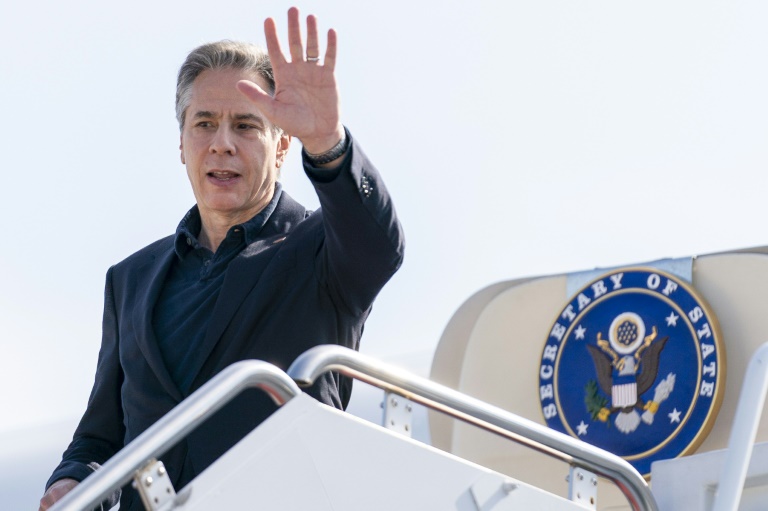
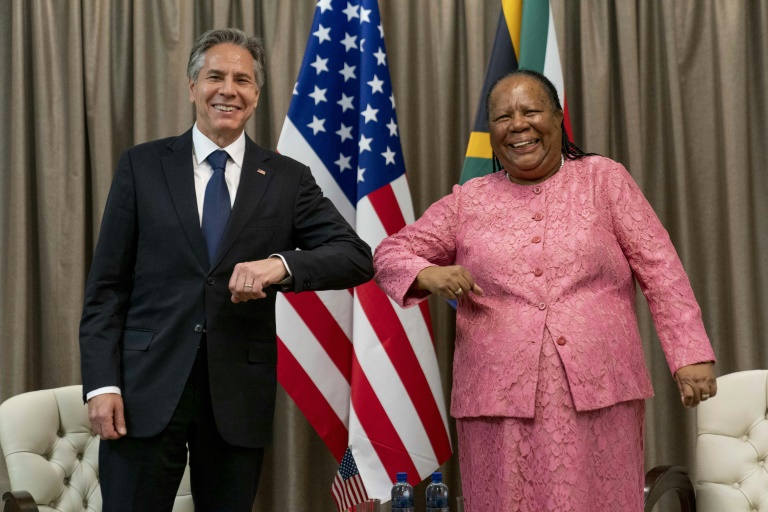
The United States is seeking a “true partnership” with Africa and not trying to “outdo” other world powers in vying for influence on the continent, US Secretary of State Antony Blinken said on Monday.

Blinken arrived in South Africa for an official visit on Sunday during a three-nation African trip which follows hot on the heels of an extensive tour of the continent by Russian Foreign Minister Sergei Lavrov.

Speaking in the South African capital Pretoria on Monday, Blinken said the United States did not see the region as the “latest playing field in a competition between great powers”. 

“That is fundamentally not how we see it. It’s not how we will advance our engagement here,” Blinken told a press briefing alongside his local counterpart Naledi Pandor. 

“Our commitment to a stronger partnership with Africa is not about trying to outdo anyone else.” 

For his first stop, the US top diplomat chose South Africa, a leader in the developing world which has remained neutral in the Ukraine war.

Pretoria has refused to join Western calls to condemn Moscow, which had opposed apartheid before the end of white-minority rule in 1994.

“What we seek most of all is a true partnership between the United States and Africa. We don’t want an imbalanced or transactional relationship,” Blinken said. 

Pandor described Russia as a “negligible economic partner” for South Africa but added she was glad the United States was not asking her country to take sides.

However, there had been “a sense of patronising bullying” from other partners in Europe and elsewhere, she said.

– New Africa policy –

Blinken’s comments came ahead of a policy announcement on the US government’s new Africa strategy, which the Secretary of State was expected to lay out in a speech at the University of Pretoria on Monday. 

White House officials told reporters on Sunday that the new strategy will actively engage the region’s leaders on issues from climate change to pandemic recovery to food insecurity, while thinking “more holistically” about military engagement on the continent.

Their comments in a background briefing come at the end of an extended policy review by President Joe Biden’s administration. 

Some critics say a US focus on fighting extremist groups in Africa militarily has borne little fruit, even while China and Russia have made continued inroads on the huge continent by aggressively using diplomatic and economic tools.

In its policy paper outlining the new US strategy, the Biden administration argues that a push for greater openness and democracy in sub-Saharan Africa will help “counter harmful activities” by China, Russia and other actors.

The new policy paper suggests that Beijing sees the region as an “arena to challenge the rules-based international order, advance its own narrow commercial and geopolitical interests… and weaken US relations with African peoples and governments”.

It says Russia views the region as a “permissive environment” for actors including “private military companies, often fomenting instability for strategic and financial benefit”.

– ‘Open season’ –

Vulnerable countries in Africa and elsewhere in the world have been hard hit by the fallout from the Ukraine war that has sent prices of fuel and food soaring.

Powerhouse South Africa belongs to a group of emerging economies called BRICS.

In June, Russian President Vladimir Putin urged BRICS countries — Brazil, Russia, India, China and South Africa — to cooperate in the face of “selfish actions” from the West.

On Monday, commenting on Russia’s invasion of Ukraine, Blinken said the United States did not seek conflict anywhere but that it was important to stand up to challenges to the international order. 

“If we allow a big country to bully a smaller one, to simply invade and take its territory, then it’s going to be open season, not just in Europe, but around the world,” he said. 

On tensions with China over Taiwan, Blinken said it was “deeply unfortunate” that Beijing had chosen to suspend cooperation with Washington on issues including climate change. 

“That’s not punishing the United States, that’s punishing the entire world,” he said, adding that developing nations, notably in Africa, stood to lose the most.

Pfizer to acquire sickle cell drugmaker GBT for $5 bn

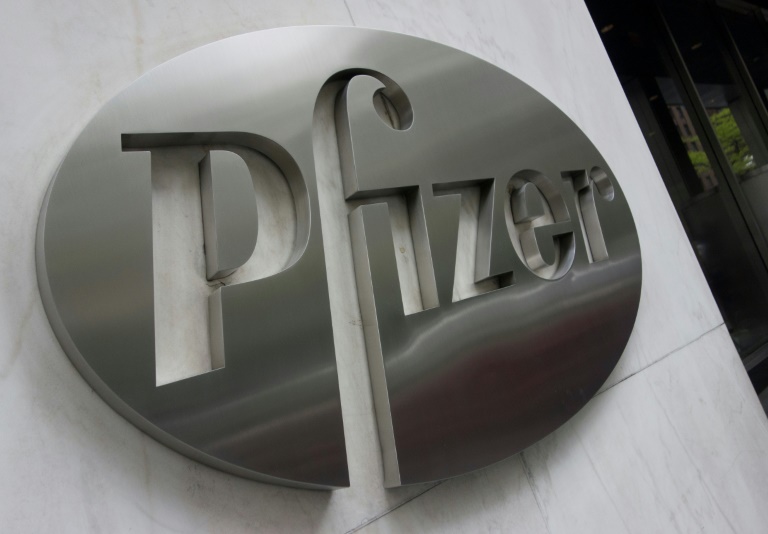
American drugmaker Pfizer announced a deal on Monday to acquire Global Blood Therapeutics, makers of a recently approved treatment for sickle cell disease, for $5.4 billion.

With the agreement, Pfizer, one of the top makers of Covid-19 vaccines, acquires GBT’s Oxbryta to treat the potentially fatal blood disorder that primarily affects people of African, Middle Eastern or South Asian descent.

The drug was authorized for those over 12 years old in 2019 but gained federal approval in December for children aged four to 11. 

“We are excited to welcome GBT colleagues into Pfizer and to work together to transform the lives of patients, as we have long sought to address the needs of this underserved community,” Pfizer Chairman and CEO Albert Bourla said in a statement. 

Net sales for Oxbryta were approximately $195 million in 2021, and Pfizer said GBT’s suite of SCD treatments have the potential to generate more than $3 billion in worldwide sales. 

Bourla said the merger will help “accelerate innovation for the sickle cell disease community and bring these treatments to patients as quickly as possible.”

Sales of Oxbryta helped GBT generate first-quarter turnover of $55 million (up 41 percent), while the company registered a net loss of $81.4 million.

The San Francisco-based firm is due to publish its second-quarter numbers on Monday, but will not hold a previously scheduled call to discuss the earnings report.

Pfizer’s second-quarter turnover jumped 47 percent — to a record $27.74 billion — boosted by sales of its Covid vaccine and pills.

Its net profit soared by 78 percent, to $9.9 billion.

Following the merger announcement, GBT shares rose 4.4 percent in early trading Monday, while Pfizer shares slipped 0.7 percent.

Pfizer to acquire sickle cell drugmaker GBT for $5 bn

American drugmaker Pfizer announced a deal on Monday to acquire Global Blood Therapeutics, makers of a recently approved treatment for sickle cell disease, for $5.4 billion.

With the agreement, Pfizer, one of the top makers of Covid-19 vaccines, acquires GBT’s Oxbryta to treat the potentially fatal blood disorder that primarily affects people of African, Middle Eastern or South Asian descent.

The drug was authorized for those over 12 years old in 2019 but gained federal approval in December for children aged four to 11. 

“We are excited to welcome GBT colleagues into Pfizer and to work together to transform the lives of patients, as we have long sought to address the needs of this underserved community,” Pfizer Chairman and CEO Albert Bourla said in a statement. 

Net sales for Oxbryta were approximately $195 million in 2021, and Pfizer said GBT’s suite of SCD treatments have the potential to generate more than $3 billion in worldwide sales. 

Bourla said the merger will help “accelerate innovation for the sickle cell disease community and bring these treatments to patients as quickly as possible.”

Sales of Oxbryta helped GBT generate first-quarter turnover of $55 million (up 41 percent), while the company registered a net loss of $81.4 million.

The San Francisco-based firm is due to publish its second-quarter numbers on Monday, but will not hold a previously scheduled call to discuss the earnings report.

Pfizer’s second-quarter turnover jumped 47 percent — to a record $27.74 billion — boosted by sales of its Covid vaccine and pills.

Its net profit soared by 78 percent, to $9.9 billion.

Following the merger announcement, GBT shares rose 4.4 percent in early trading Monday, while Pfizer shares slipped 0.7 percent.

Stocks rise, dollar eases as investors focus on US inflation

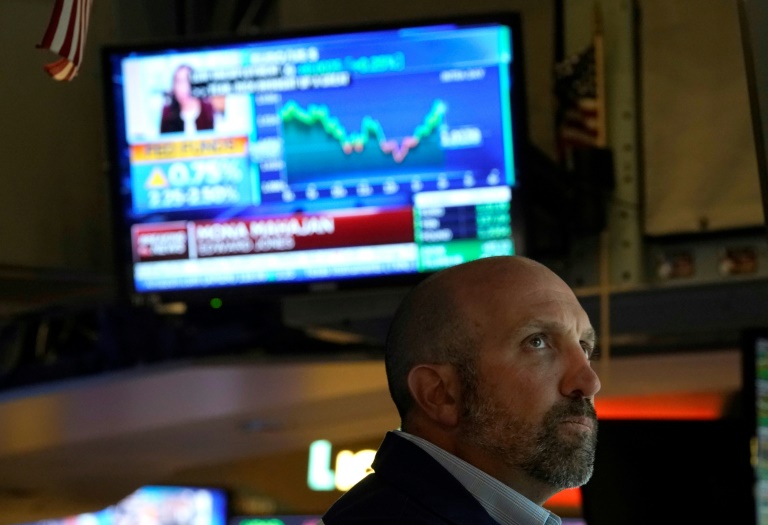
Stock markets rose and the dollar retreated Monday as investors turned their attention to US inflation data later this week and weigh the prospect of further monetary policy tightening.

The dollar was weaker as investors took profit on the strong gains notched up last week on speculation that the US Federal Reserve will announce a third successive rate increase of three-quarters of a percentage point in September.

“The macro calendar is quiet this week with US inflation data being the main highlight,” said Forex.com analyst Fawad Razaqzada. 

“This will keep the dollar… in focus after a very strong US jobs report on Friday rekindled the possibility of a hat trick of 75-basis-point rate hikes in September.” 

Data due Wednesday is expected to show inflation in the world’s biggest economy slowed slightly in July, but remained close to the four-decade highs seen in recent months.

The reading “seems very unlikely to offer compelling evidence of a slowdown needed for the Fed to pull away from its aggressive inflation-fighting mode”, said SPI Asset Management analyst Stephen Innes.

Oil prices retreated on expectations of weaker demand amid a cost-of-living crisis.

A rise in US crude stockpiles was partly responsible for a 10-percent drop in prices last week.

Both main oil contracts have lost all the gains seen in the wake of Russia’s invasion of Ukraine, which led the United States and Europe to ban imports of Russian crude, hammering already thin supplies.

A blockbuster US jobs report last week “highlighted how strong the economy remains although traders are now increasingly nervous about more aggressive tightening sending the economy into a deeper recession further down the road”, said OANDA analyst Craig Erlam.

“The resumption of Iran nuclear talks today is one potential downside risk for the oil price, given the ability of the country to quickly ramp up production if a deal is struck.”

Iran on Sunday demanded that the UN nuclear watchdog, the International Atomic Energy Agency, “completely” resolve outstanding issues, as talks resume to revive a 2015 deal to rein in Tehran’s nuclear ambitions.

Iranian sources have suggested that one of the key sticking points is a probe by the IAEA into traces of nuclear material found at undeclared Iranian sites.

– Key figures at around 1345 GMT –

New York – Dow: UP 0.7 percent at 33,038.85 points

London – FTSE 100: UP 0.9 percent at 7,504.26

Frankfurt – DAX: UP 1.2 percent at 13,734.97

Paris – CAC 40: UP 1.4 percent at 6,560.62

EURO STOXX 50: UP 1.4 percent at 3,775.84

Tokyo – Nikkei 225: UP 0.3 percent at 28,249.24 (close)

Hong Kong – Hang Seng Index: DOWN 0.8 percent at 20,045.77 (close)

Shanghai – Composite: UP 0.3 percent at 3,236.93 (close)

Euro/dollar: UP at $1.0210 from $1.0184 Friday

Pound/dollar: UP at $1.2132 from $1.2075

Euro/pound: DOWN at 84.15 pence from 84.32 pence

Dollar/yen: DOWN at 134.65 yen from 135.00 yen

West Texas Intermediate: DOWN 0.6 percent at $88.52 per barrel

Brent North Sea crude: DOWN 0.3 percent at $94.68 per barrel

Ukraine 'optimistic' after arrival of first grain shipment

The first cargo ship to reach its final destination after departing from Ukraine under a deal between Moscow and Kyiv docked in Turkey Monday, Kyiv said, while a consignment due in Lebanon reported delays.

Ukraine, one of the world’s largest grain exporters, was forced to halt almost all deliveries after Russia’s invasion, but Black Sea exports recently restarted under a deal brokered by the UN and Turkey.

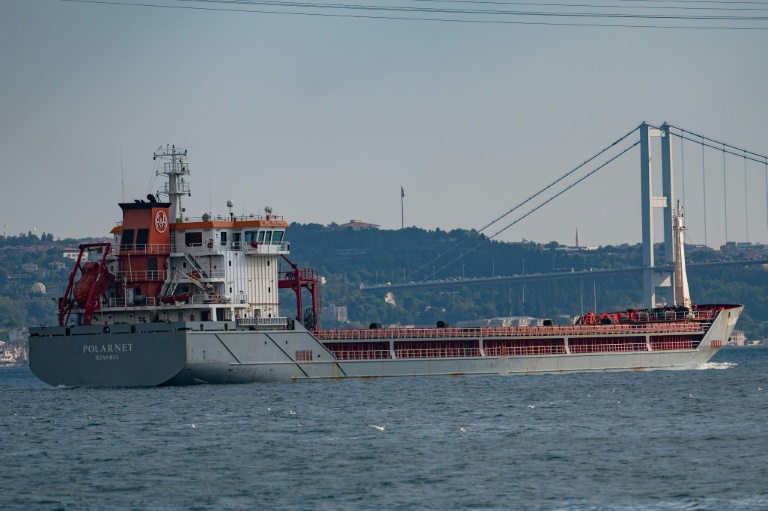
The Turkish cargo ship — the Polarnet — that reached its final destination left the Ukrainian port of Chornomorsk last week carrying 12,000 tonnes of corn.

It arrived in Turkey as scheduled after being inspected by the Joint Coordination Center (JCC) established in Istanbul under the international agreement signed last month, Kyiv said.

“This first successful completion of the implementation of the ‘grain deal’ means it is possible to be optimistic about future transportation,” Infrastructure Minister Oleksandr Kubrakov was quoted as saying in a statement by the ministry.

The statement did not give the ship’s destination, but the website vesselfinder.com gave its location as the port of Derince, Turkey.

The deal brokered by Turkey and the UN lifted a Russian blockade of Ukraine’s ports and set terms for millions of tonnes of wheat and other grain to start flowing from silos and ports.

The Razoni was the first ship to leave Ukraine under the deal.

It left the port of Odessa on August 1 carrying 26,000 tonnes of corn and was expected in Tripoli in Lebanon this weekend but has yet to reach the destination.

The Ukrainian embassy in Lebanon explained on social media that the consignment was delayed after the original buyer refused delivery, citing a five-month delay in shipment.

“The sender is therefore looking for another recipient. This may be in Lebanon or in another country,” it added in a statement on Twitter.

Eight ships have left Ukrainian ports since the agreement was signed, Kyiv said Monday, and it hoped that between three and five ships would be able to depart daily within two weeks.

US says new Africa strategy will engage leaders, rethink military role

The White House on Monday unveiled broad new policy goals for sub-Saharan Africa, with administration officials seeking to tie the region’s democratic, economic and security progress to US national security.

Officials in President Joe Biden’s administration told reporters that the new “U.S. Strategy Toward Sub-Saharan Africa” will actively engage the region’s leaders on issues from climate change to pandemic recovery to food insecurity, while thinking “more holistically” about military engagement on the continent.

Their comments in a background briefing on Sunday come at the end of an extended policy review by the Biden administration, and as US Secretary of State Antony Blinken undertakes a three-nation African trip. He is set to deliver a major policy speech in Pretoria, South Africa on Monday.

The rethinking also comes as some critics say a US focus on fighting extremist groups in Africa militarily has borne little fruit, even while China and Russia have made continued inroads on the huge continent by aggressively using diplomatic and economic tools.

In its policy paper outlining the new US strategy, the Biden administration argues that a push for greater openness and democracy in sub-Saharan Africa will help “counter harmful activities by the People’s Republic of China, Russia and other actors.”

The administration hopes its sharpened focus will culminate in a US-African summit in Washington this December.

The new policy paper suggests that Beijing sees the region as an “arena to challenge the rules-based international order, advance its own narrow commercial and geopolitical interests… and weaken US relations with African peoples and governments.”

It says Russia “views the region as a permissive environment for parastatals and private military companies, often fomenting instability for strategic and financial benefit.”

The administration officials, speaking on the condition of anonymity, expressed considerable concern about the activities in Africa of the shadowy Russian mercenary organization known as the Wagner Group. 

“We’re incredibly concerned about the role of Russian mercenaries,” said one official, adding that the group had committed abuses. “It’s a disturbing trendline.”

The policy paper said that while nearly 70 percent of Africans express strong support for democracy, a string of military coups and the rise of autocrats has left the region with fewer countries classed as free — just eight — than any time in 30 years.

The updated US strategy also intends to increase efforts at fighting terrorism through non-military approaches, though it says the United States will continue to use its “unilateral capability” — read military — against terrorist targets, but “only where lawful and where the threat is most acute.”

Supporting the region’s recovery from the pandemic’s severe health and economic impact “is a prerequisite to regaining Africa’s trust in US global leadership,” while increasing trade and creating jobs, the paper argues.

It also promises assistance for Africa in dealing with the global climate crisis.

Stocks rise, oil falls tracking recession risks

Stock markets largely rose and oil prices retreated Monday as investors mulled the prospect of recession in the United States and elsewhere and central banks seek to tame soaring inflation with aggressive interest rate hikes.

The dollar, which had surged on Friday on the prospect of further large increases in US borrowing costs, fell back on profit-taking at the start of the new week. 

Speculation is growing that the US Federal Reserve will announce a third successive rate increase of three-quarters of a percentage point following a blockbuster US jobs report last week.

This week, all eyes will turn to the release of US July inflation data, which are expected to show a slight slowdown, but still not far from the four-decade highs seen in recent months.

The latest reading “seems very unlikely to offer compelling evidence of a slowdown needed for the Fed to pull away from its aggressive inflation-fighting mode”, said SPI Asset Management analyst, Stephen Innes.

Oil prices retreated further on expectations of weaker demand amid a cost-of-living crisis.

A rise in US crude stockpiles was partly responsible for a 10-percent drop in prices last week.

Both main oil contracts have lost all the gains seen in the wake of Russia’s invasion of Ukraine, which led the United States and Europe to ban imports of Russian crude, hammering already thin supplies.

The US jobs report last week “highlighted how strong the economy remains although traders are now increasingly nervous about more aggressive tightening sending the economy into a deeper recession further down the road”, said Oanda analyst Craig Erlam.

“The resumption of Iran nuclear talks today is one potential downside risk for the oil price, given the ability of the country to quickly ramp up production if a deal is struck.”

Iran on Sunday demanded that the UN nuclear watchdog, the International Atomic Energy Agency, “completely” resolve outstanding issues, as talks resume to revive a 2015 deal to rein in Tehran’s nuclear ambitions.

Iranian sources have suggested that one of the key sticking points is a probe by the IAEA into traces of nuclear material found at undeclared Iranian sites.

– Key figures at around 1100 GMT –

London – FTSE 100: UP 0.5 percent at 7,479.12 points

Frankfurt – DAX: UP 0.7 percent at 13,674.28

Paris – CAC 40: UP 0.9 percent at 6,533.50

EURO STOXX 50: UP 0.9 percent at 3,759.44

Tokyo – Nikkei 225: UP 0.3 percent at 28,249.24 (close)

Hong Kong – Hang Seng Index: DOWN 0.8 percent at 20,045.77 (close)

Shanghai – Composite: UP 0.3 percent at 3,236.93 (close)

New York – Dow: UP 0.2 percent at 32,803.47 (close)

Euro/dollar: UP at $1.0194 from $1.0184 Friday

Pound/dollar: UP at $1.2104 from $1.2075

Euro/pound: DOWN at 84.20 pence from 84.32 pence

Dollar/yen: DOWN at 134.86 yen from 135.00 yen

West Texas Intermediate: DOWN 1.0 percent at $88.09 per barrel

Brent North Sea crude: DOWN 1.1 percent at $93.88 per barrel

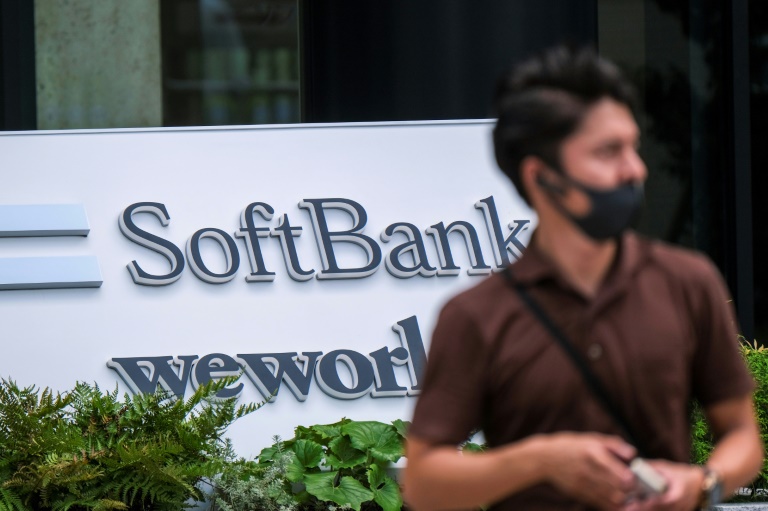
Japan's SoftBank reports record quarterly net loss

Japan’s SoftBank Group on Monday reported a record quarterly net loss of $23.4 billion, after interest rate hikes tanked tech shares.

The telecom firm-turned-investment behemoth posted a net loss of 3.16 trillion yen, nosediving from a net profit of 761.5 billion yen in the same April-June period the previous year.

“Global stock declines and the rapid depreciation of the yen” contributed to the slump, CEO Masayoshi Son told reporters.

A company statement elaborated, blaming the “global downward trend in share prices due to growing concerns over economic recession driven by inflation and rising interest rates”.

SoftBank’s big stakes in global tech giants and volatile new ventures have made for unpredictable earnings, and it has lurched between record highs and lows in recent years.

The portfolio companies that suffered large losses for the quarter included South Korean e-commerce giant Coupang and US meal delivery platform DoorDash, SoftBank Group said.

The outspoken Son said he wanted to reflect and learn from the huge losses suffered by SoftBank’s technology-focused Vision Fund, which suffered even worse declines than the tech-rich Nasdaq.

“All sorts of things can be used as excuses, such as the bad market environment, the war and the pandemic. But if we had been a bit more selective and made proper investments, we wouldn’t have suffered so much pain,” he said.

“I don’t know how long this winter will continue,” he added, referring to the challenging global situation for business.

“It could be three months. It could be three years,” Son said, joking that his “worries are reflected on his hair”.

– ‘Long-term’ lens –

Japanese media outlets including Kyodo News said the Q1 result was the largest quarterly loss the country has ever seen.

In May, SoftBank reported its worst-ever full-year net loss — and a then-record quarterly loss for Q4 — after a bruising 2021-22 that saw its assets hit by a US tech stocks rout and a regulatory crackdown in China.

That came after logging Japan’s biggest-ever annual net profit in 2020-21, when people moved their lives online during the pandemic and sent tech stocks soaring.

And in 2019-20, SoftBank Group reported a then-record annual net loss of 961.6 billion yen, as the emergence of Covid-19 compounded woes caused by its investment in troubled office-sharing firm WeWork.

SoftBank “faces a very tough situation in the immediate term”, Hideki Yasuda, senior analyst at Toyo Securities, told AFP before the earnings announcement.

“They have to wait for the market to rebound. You have to look at the company through the lens of long-term investment. It may experience one or two bad years, but over a decade or more, the world economy will keep growing and it could grow further.”

The US Federal Reserve and many other central banks have announced aggressive rate increases aimed at battling sky-high inflation linked to the Ukraine war and Covid-related supply chain woes.

But going against the grain, the Bank of Japan has stuck to its long-held monetary easing policies because it sees the latest price hikes as temporary.

This has pushed Japan’s currency down to 24-year lows against the dollar in recent months, driving down the yen value of SoftBank’s investments.

On Monday, Son also announced a new 400 billion yen share buyback, effectively extending its current trillion-yen buyback scheme.

Markets mixed as strong US jobs data fans Fed rate hike bets

Markets were mixed Monday and the dollar held big gains as a blockbuster US jobs report ramped up bets that the Federal Reserve will announce more sharp interest rate hikes as it tries to tame runaway inflation.

While the employment reading — which was more than twice as high as expected — indicated the world’s top economy remained resilient despite rising prices and borrowing costs, it will complicate the central bank’s plans to tighten monetary policy.

Traders have hoped that with several indicators pointing to a slowdown, including GDP figures showing a technical recession, policymakers could begin to ease back on their pace of rate hikes.

Now, speculation is growing that the Fed will have to announce a third successive 75 basis-point increase next month, particularly as officials have said their decisions will be data-dependent.

“Friday’s payroll report indicates an overheated labour market that continues to tighten further,” said SPI Asset Management’s Stephen Innes.

“Hence at minimum, the markets expect another 100 basis points of Fed funds rate increases over the next three meetings… with risks skewed towards significant increases.”

All eyes are now on the release this week of US July inflation data, which is expected to show a slight slowdown from June but still at four-decade highs.

The “report seems very unlikely to offer ‘compelling evidence’ of a slowdown needed for the Fed to pull away from its aggressive inflation-fighting mode”, Innes added.

The jobs figures left Wall Street’s main indexes mixed Friday, and Asia followed suit with markets fluctuating in early trade.

However, there was some relief that tensions had calmed since US House Speaker Nancy Pelosi’s visit to Taiwan last week sparked a furious reaction from China, including live-fire military drills around the island that continued Monday.

Hong Kong fell, with little excitement generated by news that the city will cut the amount of time incoming travellers must spend in hotel quarantine.

Singapore, Taipei, Bangkok, Jakarta and Wellington were also down, but Tokyo, Sydney, Seoul, Mumbai and Manila edged up.

Shanghai was boosted by better-than-expected Chinese trade data, though the gains were tempered by fresh worries about Covid lockdowns in the country that threaten the economic recovery.

London, Frankfurt and Paris rose in the morning.

– Oil demand concerns –

The prospect of higher interest rates sent the dollar surging, and it held on to those gains in Asia.

Oil rose but bets on a recession across leading economies continued to fuel concerns about demand — figures last week indicated Americans were driving less now than in summer 2020 at the height of the pandemic.

A rise in US stockpiles was partly responsible for a 10 percent drop in the commodity last week, pushing WTI below $90 for the first time since February.

Both main contracts have lost all the gains seen in the wake of Vladimir Putin’s invasion of Ukraine, which led the United States and Europe to ban imports of Russian crude, hammering already thin supplies.

Fresh talks on Iran’s nuclear programme were being followed.

“The resumption of Iran nuclear talks… is one potential downside risk for the oil price, given the ability of the country to quickly ramp up production if a deal is struck,” said OANDA’s Craig Erlam.

“Not to mention its reportedly large oil and gas reserves. A deal could apparently be struck within days, although we have heard that a lot at times this year.”

– Key figures at around 0810 GMT –

Tokyo – Nikkei 225: UP 0.3 percent at 28,249.24 (close)

Hong Kong – Hang Seng Index: DOWN 0.8 percent at 20,045.77 (close)

Shanghai – Composite: UP 0.3 percent at 3,236.93 (close)

London – FTSE 100: UP 0.2 percent at 7,451.24

Euro/dollar: UP at $1.0205 from $1.0184 Friday

Pound/dollar: UP at $1.2113 from $1.2075

Euro/pound: DOWN at 84.26 pence from 84.32 pence

Dollar/yen: UP at 135.07 yen from 135.00 yen

West Texas Intermediate: UP 0.5 percent at $89.45 per barrel

Brent North Sea crude: UP 0.5 percent at $95.38 per barrel

New York – Dow: UP 0.2 percent at 32,803.47 (close)

Close Bitnami banner
Bitnami