US Business

First Ukrainian grain shipment sails through Istanbul

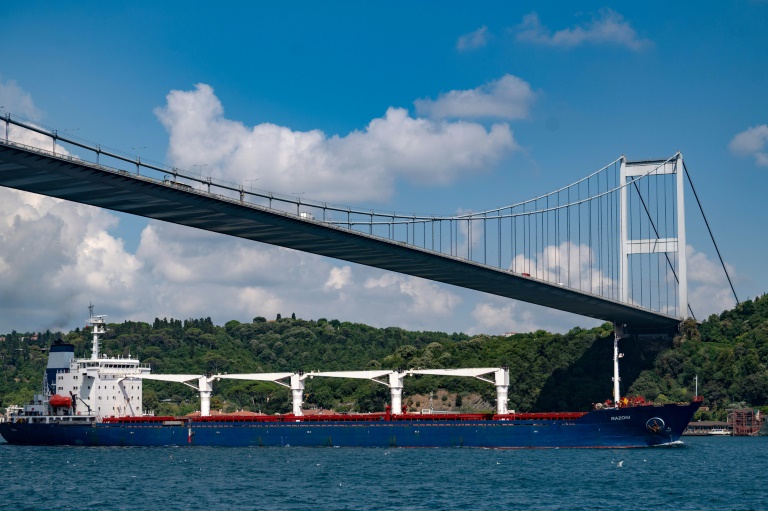
The first shipment of grain from Ukraine since the Kremlin’s invasion five months ago sailed through Istanbul on Wednesday under a landmark deal designed to help alleviate a global food crisis sparked by the war.

The Sierra Leone-flagged Razoni’s voyage from the Black Sea port of Odessa to Lebanon is being watched closely for signs of how the first agreement signed by Moscow and Kyiv since Russia invaded its pro-Western neighbour holds.

A deal brokered by Turkey and the United Nations last month lifted a Russian naval blockade of Ukraine’s Black Sea cities and set terms for millions of tonnes of wheat and other grain to start flowing from filled silos and ports.

Ukraine exports roughly half of the sunflower oil used on the world market and is a major grain supplier.

An almost complete halt to its exports helped push up global food prices and make imports prohibitively expensive in some of the world’s poorest countries.

The Razoni took 26,000 tonnes of maize through a specially designated corridor in the mine-infested waters of the Black Sea before reaching the northern edge of the Bosphorus Strait on Tuesday.

A team of 20 inspectors from the two warring parties and the UN and Turkey strapped on orange helmets and boarded the ship early Wednesday for a mandated inspection that officials said lasted less than 90 minutes.

– More ships –

The ship’s passage is being overseen by an international team that includes Russian and Ukrainian officials in Istanbul.

“This marks the conclusion of an initial ‘proof of concept’ operation to execute the agreement” between Russian, Turkey, Ukraine and the United Nations, the team said after the ship was cleared to pass through Istanbul.

The 186-metre (610-foot) long vessel now moves on to the Sea of Marmara and the Aegean before it is set to reach the coast of Lebanon in the coming days.

Kyiv says at least 16 more grain ships are waiting to depart.

But it also accuses Russia of stealing Ukrainian grain in territories seized by Kremlin forces, then shipping it to allied countries such as Syria.

Turkish hopes that the deal could help build trust and lead to ceasefire talks have so far been disappointed.

Turkish President Recep Tayyip Erdogan is expected to push for direct ceasefire negotiations when he meets Vladimir Putin at the Russian leader’s Black Sea retreat in Sochi on Friday.

“We discussed if the grain agreement can be an occasion for a sustainable ceasefire,” Turkish Foreign Minister Mevlut Cavusoglu said after meeting Russian counterpart Sergei Lavrov in Cambodia on Wednesday.

Yet Russia continues to pound southern Ukrainian cities near the Black Sea with missiles and press on with its grinding ground assault across the east.

Moscow said on Wednesday that it had also destroyed a foreign arms depot in a region near Poland that is further removed from the war.

The attack coincided with a visit to Kyiv by Polish Foreign Minister Zbigniew Rau.

– Counter-offensive –

Kyiv has launched mandatory evacuations from the eastern Donetsk region — now bearing the brunt of Russia’s offensive — because the government does not expect to be able to provide it with heat in the cold winter months.

Ukrainian forces have been pressing a counter-offensive to drive out the Russians from the southern Kherson region that they seized in the first days of war, near the Kremlin-annexed peninsula of Crimea.

The Ukrainian presidency said it had “liberated” seven more villages in the southern region while 53 remained under Russian control.

Ukraine has been bolstered by more supplies of Western weapons — particularly long-range rockets — ahead of the planned push to retake Kherson city.

These include longer-range ammunition for increasingly important HIMARS rocket launchers and artillery pieces.

Ukraine is using the HIMARS and similar Western systems to smash Russian arms depots and break down its lines of ground communication across the war zone.

– Energy wars –

The Russians have been unable to seize any major village or city since gaining full control of the Donbas war zone’s smaller Lugansk region in early July.

Ukrainian leader Volodymyr Zelensky told US President Joe Biden in a message that “the word ‘HIMARS’ has become almost synonymous with the word ‘justice’ for our country”.

Russia has responded by sharply reducing natural gas supplies to Europe and stepping up its propaganda battle against the West and Kyiv.

Its energy giant Gazprom on Wednesday said the delivery of a turbine needed to keep gas flowing to Europe via the Nord Stream 1 pipeline was “impossible” due to sanctions on Moscow, increasing fears of further gas cuts.

The latest Russian reduction along the Nord Stream pipeline to Germany has forced Berlin to reassess its plans to wean itself off nuclear energy in the wake of the 2011 Fukushima disaster in Japan.

Chancellor Olaf Scholz on Wednesday said extending the lifetime of Germany’s three remaining nuclear power plants “can make sense”.
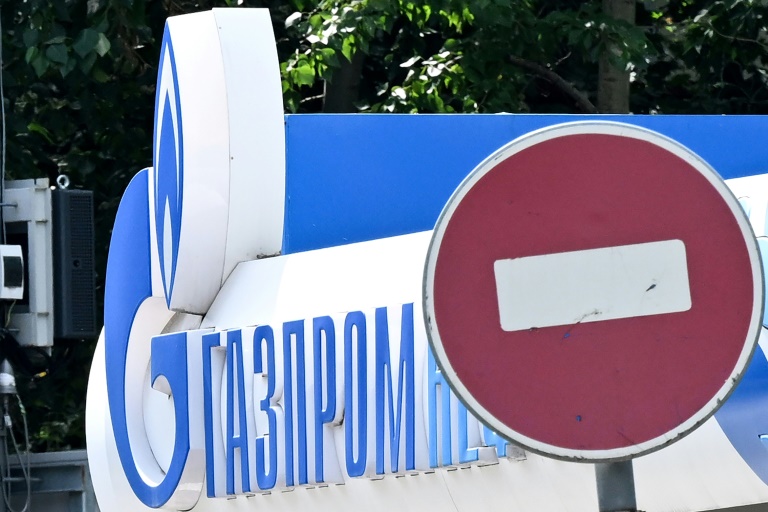
Gazprom says gas turbine delivery to Russia 'impossible' due to sanctions

Russian energy giant Gazprom said Wednesday that delivery of a turbine needed to keep gas flowing to Europe via the Nord Stream 1 pipeline was “impossible” due to sanctions on Moscow.

“Sanctions regimes in Canada, in the European Union and in Britain, as well as the inconsistencies in the current situation concerning the contractual obligations of (turbine maker) Siemens make the delivery impossible,” Gazprom said in a statement.

The statement risks further increasing concern in European countries who suspect Moscow is looking for an excuse to delay the turbine’s return to Russia and further reduce its gas deliveries.

Earlier on Wednesday, German Chancellor Olaf Scholz accused Russia of blocking the delivery of the key turbine to throttle gas supplies to Europe, as he raised the possibility of keeping nuclear plants going.

The continent’s biggest economy has been scrambling for energy sources to fill a gap left by a reduction in gas supplies from Moscow. 

The delayed return of the turbine from Canada, where the unit was being serviced, was behind an initial reduction in gas deliveries via the Nord Stream 1 gas pipeline in June, according to Gazprom.

Supplies via the energy link were further reduced to around 20 percent of capacity in late July, after Gazprom halted the operation of one of the last two operating turbines due to the “technical condition of the engine”.

UN chief slams 'excessive' profits of oil, gas firms amid Ukraine war

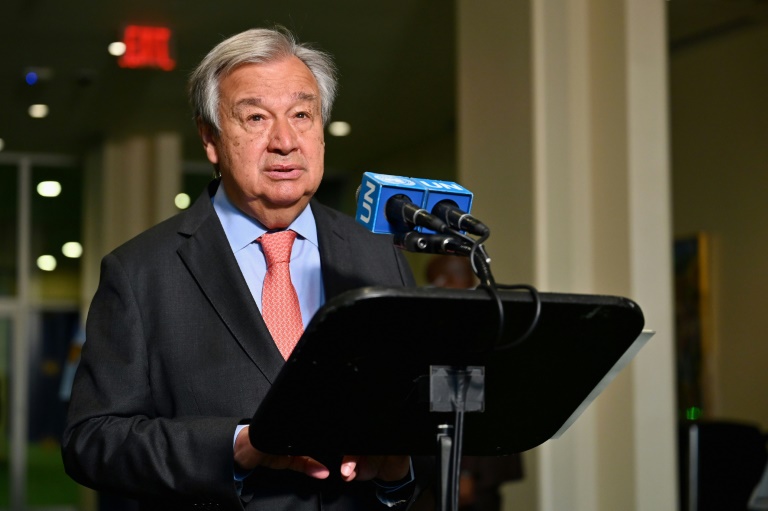
UN Secretary-General Antonio Guterres on Wednesday accused oil and gas companies of making “excessive” profits from the energy crisis sparked by the war in Ukraine, calling it “immoral.”

Guterres, releasing a UN report on the consequences of Russia’s invasion of Ukraine, urged governments to tax the companies’ earnings.

“It is immoral for oil and gas companies to be making record profits from this energy crisis on the backs of the poorest people and communities and at a massive cost to the climate,” the UN chief told reporters.

“I urge all governments to tax these excessive profits and use the funds to support the most vulnerable people through these difficult times,” Guterres said.

“And I urge people everywhere to send a clear message to the fossil fuel industry and their financiers that this grotesque greed is punishing the poorest and most vulnerable people, while destroying our only common home, the planet,” he said.

Guterres said the combined profits of the largest energy companies in the first quarter of the year were nearly $100 billion.

With the rise in oil and gas prices, BP, ExxonMobil, Chevron and Shell also reported enormous profits in the second quarter.

The UN chief said that between now and the end of the year, 345 million people will be “acutely food insecure” or at “at a high risk of food insecurity” in 82 countries, an increase of 47 million due to the impact of the war in Ukraine.

Guterres warned that “many developing countries are drowning in debt, without access to finance, and struggling to recover from the Covid-19 pandemic and could go over the brink.”

“We are already seeing the warning signs of a wave of economic, social and political upheaval that would leave no country untouched,” he said.

OPEC+ agrees small oil output rise despite Biden plea

The OPEC+ oil cartel agreed to a tiny increase in production Wednesday, an amount analysts say will disappoint US President Joe Biden after he personally lobbied Saudi leaders for help to tame soaring energy prices.

The cartel led by Saudi Arabia and Russia decided to raise production by 100,000 barrels per day for September, much lower than previous increases, according to a statement issued after a ministerial videoconference.

Oil prices seesawed following the announcement, rising before falling more than two percent in afternoon trading, with the main international contract, Brent, slipping under $100 per barrel. Traders were also reacting to data showing US crude inventories had unexpectedly risen last week.

“The smallest increase in OPEC+ history will do little to help the ongoing global energy crisis,” Edward Moya, analyst at OANDA trading platform, told AFP.

“The Biden administration will not be happy and this will be a setback in improving US-Saudi relations,” said Moya, who expects oil prices to remain stuck around $100.

With energy prices soaring following Russia’s war in Ukraine, Biden made a controversial trip to Saudi Arabia in July in part to convince the kingdom to loosen the production taps to stabilise the market and curb rampant inflation.

The US president met Crown Prince Mohammed bin Salman despite his promise to make the kingdom a “pariah” in the wake of the 2018 killing of journalist Jamal Khashoggi.

Biden said after his meetings with Saudi officials that he was “doing all I can” to increase the oil supply.

“A 100,000 barrel per day output hike is a pittance,” said Han Tan, chief market analyst at Exinity.

“It’s likely that the Biden administration will feel let down, considering its overtures to Saudi Arabia have yielded scant results, at least this time around,” Tan said.

– ‘Token gesture’ –

Saudi Arabia faced a balancing act between its old ally, Washington, and its OPEC+ partner Moscow, which has been hit by Western sanctions over the Ukraine invasion.

“The increase was a token gesture to appease US President Joe Biden,” said Stephen Brennock, analyst at PVM Energy.

The OPEC+ statement emphasised the “value and importance of maintaining consensus as essential to the cohesion” of the group, which includes the 13-member Organization of the Petroleum Exporting Countries and 10 allies including Russia.

Russia’s deputy prime minister in charge of energy, Alexander Novak, said OPEC+ made a “cautious” decision due to “uncertainties in the market”.

He noted that Covid cases are rising.

“We see uncertainties associated with the disruption of transport and logistics chains due to restrictions being introduced, including for Russian oil and oil products,” Novak said.

Peter McNally, analyst at research firm Third Bridge, said OPEC+ was expected “to take more of a wait-and-see approach to adding material amounts of supply in the months ahead for several reasons”.

“The basis for the restraint are uncertainty around the future of Russian production and the cloudier outlook in demand,” he said, pointing to China’s Covid lockdowns and high fuel prices in the United States affecting demand.

– Western lobbying –

Biden is not the only Western leader to have lobbied bin Salman.

French President Emmanuel Macron hosted him last week in Paris, with Macron’s office saying the two leaders agreed to work “to ease the effects” of the Ukraine war.

Before announcing he would resign as British prime minister, Boris Johnson had also visited bin Salman in Riyadh in March to plead for higher oil production.

After cutting production in 2020 in response to falling prices during the Covid pandemic, OPEC+ agreed to raise its quotas last year as demand rebounded.

OPEC+ began to add around 400,000 barrels per day to the market last year, renewing the policy every month until June. It upped production by almost 650,000 bpd in July and August.

Its output is supposed to have returned to pre-Covid levels after cuts totalling 9.7 million bpd — but only on paper, as some members of the 23-nation group have struggled to meet their quotas.

Monkeypox vaccine availability and effectiveness

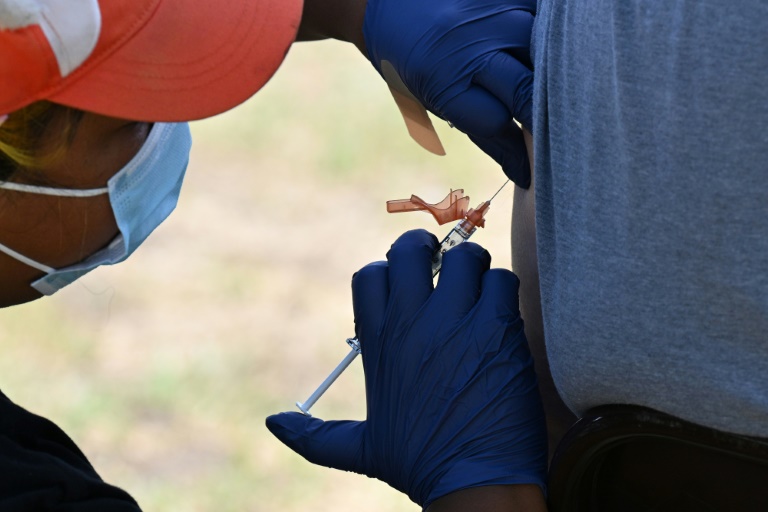
A smallpox vaccine shown to protect against monkeypox has come under huge global demand, leading health authorities to warn against repeating the unequal distribution seen during the Covid pandemic.

While monkeypox had long been endemic in parts of West and Central Africa, since May there have been outbreaks across the world.

It has caused a scramble for doses of the only authorised vaccine against monkeypox worldwide, which is produced by Danish drug maker Bavarian Nordic. 

Here is the current state of play about the vaccine’s effectiveness and availability.

– 85% protection ‘approximate’ – 

Called MVA-BN and marketed under the name Jynneos in the United States and Imvanex in Europe, the vaccine was originally developed to fight smallpox.

Both viruses are part of the orthopoxvirus family.

Olivier Schwartz, head of the virus and immunity unit at France’s Pasteur Institute, said that the virus proteins for monkeypox and smallpox were 90-95 percent similar.

“So using a very similar vaccine to block it is a proven strategy,” he said.

While there is not yet large-scale data on the protection of Bavarian Nordic’s vaccine against monkeypox, previous research has suggested it is highly effective.

“The vaccine protection figure of 85 percent dates from field studies in the 1980s and 1990s in DR Congo and is quite approximate,” Schwartz said.

He added that studies on healthcare workers in 2018 and experiments on macaques had indicated the vaccine can be effective even after a patient has contracted monkeypox.

And people who had a smallpox vaccine dose before 1980 also have some immunity from monkeypox, though its extent and duration remain uncertain.

Schwartz said that studies during the 2000s found that around 30 percent of those vaccinated two decades earlier still had antibodies against smallpox.

He added that a booster dose would “reactivate cellular immunity, even after 20 to 40 years”.

But Yannick Simonin, a virologist at the University of Montpellier, warned that immunity “decreases over time and the persistence of neutralising antibodies against monkeypox has never been evaluated”.

– 350,000 doses to ‘undisclosed’ nation –

Bavarian Nordic partnered with the US health authorities in 2003 and has already delivered 30 million doses to the country.

Since monkeypox started spreading outside of Africa in May, the company has said it will deliver seven million more doses to the United States.

There is a total of around 16 million doses of the vaccine worldwide, mostly in bulk form, meaning it will be months before they are ready to use, according to the World Health Organization.

It has been difficult to determine the exact number of stocks held by countries, which have sometimes declined to reveal numbers — angering some non-governmental organisations and politicians.

Bavarian Nordic, which can produce up to 30 million doses a year, has also been reticent to reveal where it is sending them. 

On Wednesday the company announced it would supply 350,000 doses to an “undisclosed” country in the Asia-Pacific region.

Two other smallpox vaccines, ACAM2000 and LC16, are currently being studied to determine their effectiveness against monkeypox.

The United States currently has more than 100 million doses stockpiled of ACAM2000, but it is believed to cause more side effects than newer-generation vaccines.

Emergent BioSolutions, which makes ACAM2000, told AFP that it can currently produce more than 18 million doses a year — and could ramp up to 40 million annually if needed.

– ‘We want equity’ – 

Despite being the continent that has long battled monkeypox, Africa has yet to receive any vaccine doses.

There have been more than 3,000 confirmed monkeypox cases in Africa this year, while doctors say around 70 deaths have been linked to the disease.

The WHO has called on countries that do have vaccines to share, urging the world not to repeat the inequality of access to Covid vaccines between rich and poor nations.

Meg Doherty, director of the WHO’s global HIV, hepatitis and sexually transmitted infection programmes, said on Sunday that 35 countries have requested access to the monkeypox vaccine.

She told a meeting at the International AIDS Conference in Montreal there was “quite a possible risk” that it was rich countries requesting the doses.

“We want equity,” she added.

Stock markets rise after Pelosi's Taiwan trip

Global stocks mostly rose on Wednesday as investor concerns over US-China tensions eased following House Speaker Nancy Pelosi’s trip to Taiwan.

Oil prices, meanwhile, dropped after the OPEC+ oil cartel, led by Saudi Arabia and Russia, agreed a small increase in production and official data showed US crude stockpiles surprisingly rose last week.

The OPEC+ decision to raise production by 100,000 barrels per day for September is likely to disappoint US President Joe Biden, who travelled to Saudi Arabia last month to lobby for help to tame soaring energy prices, analysts said.

Analyst Edward Gardner, of Capital Economics, warned however that “as has become increasingly glaring recently, though, an increase in quotas is not the same as an increase in production”.

Output is supposed to have returned to pre-Covid levels, but only on paper, as some members of the 23-nation group have struggled to meet their quotas.

The main contracts were down more than two percent, with Brent — the international benchmark — falling back under $100.

– ‘Rollercoaster ride’- 

Traders also nervously watched for reactions to Pelosi’s visit to Taiwan, which China considers a part of its territory.

“What China didn’t do has seemingly been the focal point,” said Patrick O’Hare, at Briefing.com.

“China didn’t take any action that would necessitate a military response from the US. That understanding has sparked a measure of relief for investors as Speaker Pelosi heads to South Korea,” he said.

The highest profile trip to Taiwan in 25 years by a US politician was met with condemnation from Beijing, which vowed “punishment”.

“This week was already shaping up to be another rollercoaster ride and Pelosi’s trip just added another layer of event risk for the markets,” Craig Erlam, an analyst at OANDA, said.

News of the visit had sent shivers on Tuesday through trading floors that were already on edge over the Ukraine war, surging inflation, rising interest rates and slowing economic growth.

However, most equity markets edged upwards on Wednesday.

“There has been a lot of fear but no material effect,” AvaTrade analyst Naeem Aslam told AFP, when asked about the markets impact of Pelosi’s visit.

European markets closed higher, with Paris and Frankfurt both up around one percent and London’s FTSE 100 rising by 0.5 percent.

Wall Street indices were also up in midday trading following positive economic data and another round of corporate earnings that included good results from Starbucks and CVS Health.

The ISM non-manufacturing purchasing managers index showed growth in services activity accelerated in July for the first time in four months.

Investors are also keeping a close eye on moves by central banks to rein in inflation.

The Bank of England is expected to follow other major central banks with an aggressive interest rate hike to tackle surging inflation on Thursday.

The half-percentage-point increased would be the biggest in more than a quarter century.

– Key figures at around 1545 GMT –

New York – Dow: UP 1.0 percent at 32,707.35 points

EURO STOXX 50: UP 1.3 percent at 3,732.54

London – FTSE 100: UP 0.5 percent at 7,445.68 (close)

Frankfurt – DAX: UP 1.0 percent at 13,587.56 (close)

Paris – CAC 40: UP 1.0 percent at 6,472.06 (close)

Tokyo – Nikkei 225: UP 0.5 percent at 27,741.90 (close)

Hong Kong – Hang Seng Index: UP 0.4 percent at 19,767.09 (close)

Shanghai – Composite: DOWN 0.7 percent at 3,163.67 (close)

Taipei – TAIEX: DOWN 0.2 percent at 14,777.02 (close)

Dollar/yen: UP at 134.24 yen from 133.10 yen Tuesday

Euro/dollar: DOWN at $1.0138 from $1.0166

Pound/dollar: DOWN at $1.2126 from $1.2170

Euro/pound: UP at 83.62 pence from 83.57 pence

Brent North Sea crude: DOWN 2.3 percent at $98.21 per barrel

West Texas Intermediate: DOWN 2.4 percent at $92.16 per barrel

burs/lth/raz

Kansas abortion vote rocks US midterms outlook

The surprise vote in Republican-heavy Kansas to repudiate a push for abortion bans fired shockwaves through the US political landscape ahead of November’s midterm elections, with President Joe Biden’s Democrats now seeing a glimmer of hope that they may avoid their predicted drubbing.

Ever since the Supreme Court overturned the nationwide right to terminate a pregnancy in June, US conservatives have been nervously asking whether their triumphant push to severely restrict access to the procedure — a decades-long dream — has gone too far in the run-up to the midterms.

In Kansas, they got an answer.

The state is a Republican stronghold, but in Tuesday’s referendum, a bid to remove abortion rights from the Kansas constitution was rejected by 59 to 41 percent, with unusually heavy turnout.

Given this was the first time Americans had an opportunity to vote on the issue since the conservative-dominated Supreme Court ruled to overturn the half-century-old Roe v. Wade decision enshrining abortion rights, Democrats are rejoicing — and say the backlash is only beginning.

“Tonight’s overwhelming defeat of the ballot referendum in Kansas shows the massive support for abortion rights among voters, and serves as a clear warning to anti-abortion politicians across the country: their time is up,” said Planned Parenthood, which lobbies for abortion access.

“As the first state to vote on abortion rights following the fall of Roe v. Wade, Kansas is a model for a path to restoring reproductive rights across the country through direct democracy,” said the group’s president Alexis McGill Johnson, who also leads the Planned Parenthood Action Fund. 

“We have the opportunity to protect abortion access at the ballot box in November. We know that Kansas will not be our last fight or our last victory.”

Or, as former Democratic senator Claire McCaskill told MSNBC after the vote: “This should be a big flashing signal to every Democratic candidate out there.”

– Trump card –

The November midterms, which will decide which party controls Congress for the last two years of Biden’s first term, is shaping up as rough for Democrats who even now only control the legislature by a few votes.

Blamed by voters for soaring inflation — at a four-decade high — and widespread pessimism in the messy aftermath of the Covid-19 pandemic, Democrats are forecast to lose at least the House of Representatives and maybe the Senate. 

This would likely make Biden a lame duck, turning Washington into an even uglier political battlefield than it is today.

And abortion is not the only reason the midterms campaign will bring ideological tensions to a boil.

Donald Trump is pushing hardline right-wing candidates to boost his brand and possibly set the stage for his own attempted White House comeback in 2024.

Several candidates endorsed by Trump won primary votes held around the United States on Tuesday at the same time as the Kansas referendum, signaling that the disgraced ex-president remains a force.

In Michigan, one of the handful of House Republicans who dared join Democrats in impeaching Trump as president was tossed out, replaced by a former Trump administration official.

Trump’s candidate for the Senate, Blake Masters, won the Republican primary in the swing state of Arizona.

And Trump’s candidate for the sensitive post of Arizona secretary of state, a key figure in running elections, also won. Mark Finchem, a supporter of Trump’s lie that the 2020 presidential election was stolen, has ties to a far-right militia.

Increasingly, Democrats are seeking to link that Trump surge and the abortion dispute, arguing that the midterms will be a battle not just between two parties but generally between political moderates and growing extremism.

Across the country, Democrats have even gone so far as to pay for advertising boosting Trump’s primary candidates — the theory being that they will be easier to beat in November than more moderate Republicans.

For example, according to The New York Times, the Democratic side spent about $627,000 on advertising in Maryland to help Trump-endorsed candidate Dan Cox — another 2020 election lie supporter — win his Republican gubernatorial primary.

First Ukrainian grain shipment sails through Istanbul

The first shipment of grain from Ukraine since the Kremlin’s invasion five months ago sailed through Istanbul on Wednesday under a landmark deal designed to help alleviate a global food crisis sparked by the war.

The Sierra Leone-flagged Razoni’s voyage from the Black Sea port of Odessa to Lebanon is being watched closely for signs of how the first agreement signed by Moscow and Kyiv since Russia invaded its pro-Western neighbour holds.

A deal brokered by Turkey and the United Nations last month lifted a Russian naval blockade of Ukraine’s Black Sea cities and set terms for millions of tonnes of wheat and other grain to start flowing from filled silos and ports.

Ukraine exports roughly half of the sunflower oil used on the world market and is one of the world’s main suppliers of grain.

An almost complete halt to its exports helped push up global food prices and make imports prohibitively expensive in some of the poorest countries in the world.

The Razoni took 26,000 tonnes of maize through a specially designated corridor in the mine-infested waters of the Black Sea before reaching the northern edge of the Bosphorus Strait on Tuesday.

A team of 20 inspectors from the two warring parties and the UN and Turkey strapped on orange helmets and boarded the ship early Wednesday for a mandated inspection that officials said lasted less than 90 minutes.

– More ships –

The ship’s passage is being overseen by an international team that includes Russian and Ukrainian officials in Istanbul.

“This marks the conclusion of an initial ‘proof of concept’ operation to execute the agreement between the Russian Federation, Turkey, Ukraine and the United Nations,” the team said after the ship was cleared to pass through Istanbul.

The 186-metre (610-foot) long vessel now moves on to the Sea of Marmara and the Aegean before it is set to reach the coast of Lebanon in the coming days.

Kyiv says at least 16 more grain ships are waiting to depart.

But it also accuses Russia of stealing Ukrainian grain in territories seized by Kremlin forces, then shipping it to allied countries such as Syria.

Turkish hopes that the deal could help build trust and lead to ceasefire talks have so far been disappointed.

Turkish President Recep Tayyip Erdogan is expected to push for direct ceasefire negotiations when he meets Vladimir Putin at the Russian leader’s Black Sea retreat in Sochi on Friday.

“We discussed if the grain agreement can be an occasion for a sustainable ceasefire,” Turkish Foreign Minister Mevlut Cavusoglu said after meeting Russian counterpart Sergei Lavrov in Cambodia on Wednesday.

Yet Russia continues to pound southern Ukrainian cities near the Black Sea with missiles and press on with its grinding ground assault across the east.

Moscow said on Wednesday that it had also destroyed a foreign arms depot in a region near Poland that is the further removed from the war.

The attack coincided with a visit to Kyiv by Polish Foreign Minister Zbigniew Rau.

– Counter-offensive –

Kyiv has launched mandatory evacuations from the eastern Donetsk region — now bearing the brunt of Russia’s offensive — because the government does not expect to be able to provide it with heat in the cold winter months.

Ukrainian forces have been pressing a counter-offensive to drive out the Russians from the southern Kherson region that they seized in the first days of war, near the Kremlin-annexed peninsula of Crimea.

The Ukrainian presidency said it had “liberated” seven more villages in the southern region while 53 remained under Russian control.

Ukraine has been bolstered by more supplies of Western weapons — particularly long-range rockets — ahead of the planned push to retake Kherson city.

The United States announced a new tranche of weapons worth $550 million for Ukraine’s forces.

These include longer-range ammunition for increasingly important HIMARS rocket launchers and artillery pieces.

Ukraine is using the HIMARS and similar Western systems to smash Russian arms depots and break down its lines of ground communication across the war zone.

– Energy wars –

The Russians have been unable to seize any major village or city since gaining full control of the Donbas war zone’s smaller Lugansk region in early July.

Ukrainian President Volodymyr Zelensky told US President Joe Biden in a message that “the word ‘HIMARS’ has become almost synonymous with the word ‘justice’ for our country”.

Russia has responded by sharply reducing natural gas supplies to Europe and stepping up its propaganda battle against the West and Kyiv.

The latest Russian reduction along the Nord Stream pipeline to Germany has forced Berlin to reassess its plans to wean itself off nuclear energy in the wake of the 2011 Fukushima disaster in Japan.

Chancellor Olaf Scholz on Wednesday said extending the lifetime of Germany’s three remaining nuclear power plants “can make sense”.
Moscow’s propaganda campaign has included a decision to label Ukraine’s Azov regiment, which fought the Russians in devastated Mariupol, a “terrorist” organisation.

Its members were among 50 Ukrainian servicemen killed last week in an attack on a jail holding prisoners of war in Russian-occupied territory.

Ukraine accuses Moscow of deliberately executing the detainees.

bur-zak/lcm

OPEC+ agrees small oil output rise despite Biden plea

The OPEC+ oil cartel agreed to a tiny increase in production Wednesday, an amount analysts say will disappoint US President Joe Biden after he personally lobbied Saudi leaders for help to tame soaring energy prices.

The cartel led by Saudi Arabia and Russia decided to raise production by 100,000 barrels per day for September, much lower than previous increases, according to a statement issued after a ministerial videoconference.

Oil prices seesawed following the announcement, rising before falling more than one percent in afternoon trading, with the main international contract, Brent, slipping under $100 per barrel.

“The smallest increase in OPEC+ history will do little to help the ongoing global energy crisis,” Edward Moya, analyst at OANDA trading platform, told AFP.

“The Biden administration will not be happy and this will be a setback in improving US-Saudi relations,” said Moya, who expects oil prices to remain stuck around $100.

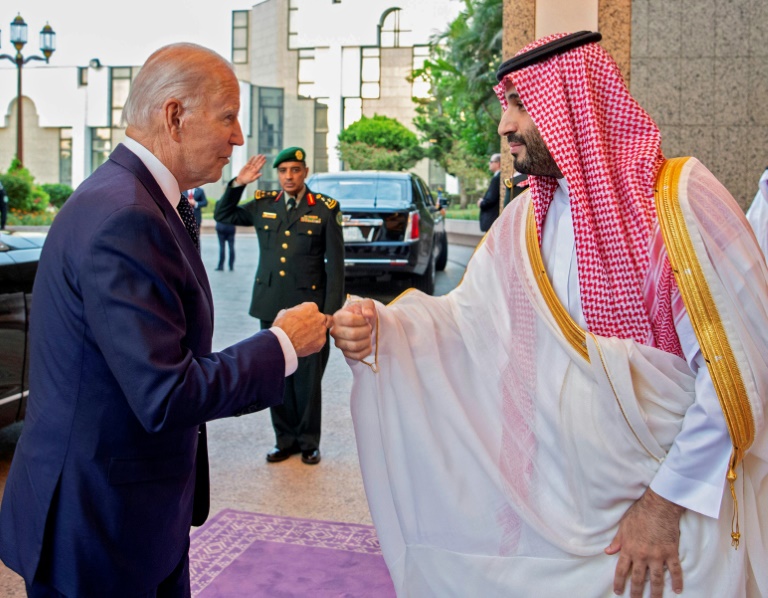
With energy prices soaring following Russia’s war in Ukraine, Biden made a controversial trip to Saudi Arabia in July in part to convince the kingdom to loosen the production taps to stabilise the market and curb rampant inflation.

The US president met Crown Prince Mohammed bin Salman despite his promise to make the kingdom a “pariah” in the wake of the 2018 killing of journalist Jamal Khashoggi.

Biden said after his meetings with Saudi officials that he was “doing all I can” to increase the oil supply.

“A 100,000 barrel per day output hike is a pittance,” said Han Tan, chief market analyst at Exinity.

“It’s likely that the Biden administration will feel let down, considering its overtures to Saudi Arabia have yielded scant results, at least this time around,” Tan said.

– ‘Token gesture’ –

Saudi Arabia faced a balancing act between its old ally, Washington, and its OPEC+ partner Moscow, which has been hit by Western sanctions over the Ukraine invasion.

“The increase was a token gesture to appease US President Joe Biden,” said Stephen Brennock, analyst at PVM Energy.

The OPEC+ statement emphasised the “value and importance of maintaining consensus as essential to the cohesion” of the group, which includes the 13-member Organization of the Petroleum Exporting Countries and 10 allies including Russia.

Russia’s deputy prime minister in charge of energy, Alexander Novak, said OPEC+ made a “cautious” decision due to “uncertainties in the market”.

He noted that Covid cases are rising.

“We see uncertainties associated with the disruption of transport and logistics chains due to restrictions being introduced, including for Russian oil and oil products,” Novak said.

– Western lobbying –

Biden is not the only Western leader to have lobbied bin Salman.

French President Emmanuel Macron hosted him last week in Paris, with Macron’s office saying the two leaders agreed to work “to ease the effects” of the Ukraine war.

Before announcing he would resign as British prime minister, Boris Johnson had also visited bin Salman in Riyadh in March to plead for higher oil production.

After cutting production in 2020 in response to falling prices during the Covid pandemic, OPEC+ agreed to raise its quotas last year as demand rebounded.

OPEC+ began to add around 400,000 barrels per day to the market last year, renewing the policy every month until June. It upped production by almost 650,000 bpd in July and August.

Its output is supposed to have returned to pre-Covid levels after cuts totalling 9.7 million bpd — but only on paper, as some members of the 23-nation group have struggled to meet their quotas.

Taiwan defiant as China readies military drills over Pelosi visit

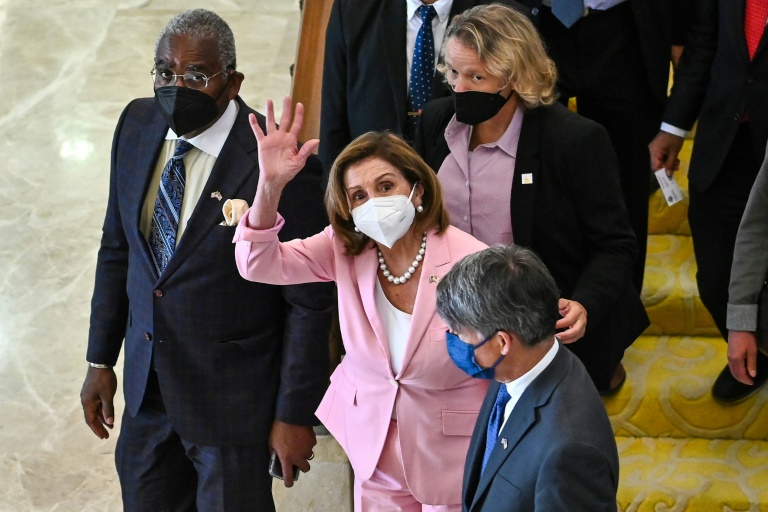
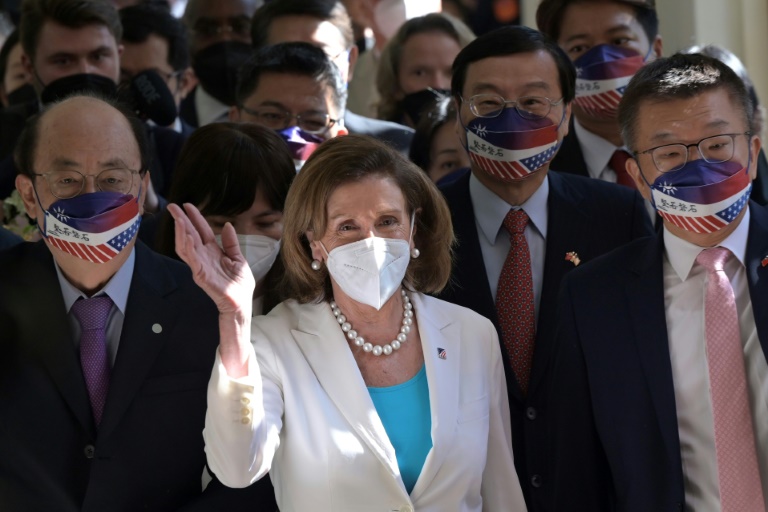
Taiwan struck a defiant tone Wednesday as it hosted US House Speaker Nancy Pelosi, with a furious China gearing up for military exercises dangerously close to the island’s shores in retaliation for the visit.

Pelosi landed in Taiwan late Tuesday despite a series of increasingly stark threats from Beijing, which views the island as its territory and warned it would consider the visit a major provocation.

China responded swiftly, announcing what it said were “necessary and just” military drills in the seas just off Taiwan’s coast — some of the world’s busiest waterways.

“In the current struggle surrounding Pelosi’s Taiwan visit, the United States are the provocateurs, China is the victim,” Beijing’s foreign ministry said.

But Taiwanese President Tsai Ing-wen said the island of 23 million would not be cowed. 

“Facing deliberately heightened military threats, Taiwan will not back down. We will… continue to hold the line of defence for democracy,” Tsai said at an event with Pelosi in Taipei.

She also thanked the 82-year-old US lawmaker for “taking concrete actions to show your staunch support for Taiwan at this critical moment”.

China tries to keep Taiwan isolated on the world stage and opposes countries having official exchanges with Taipei.

Pelosi, second in line to the presidency, is the highest-profile elected US official to visit Taiwan in 25 years.

“Today, our delegation… came to Taiwan to make unequivocally clear we will not abandon our commitment to Taiwan,” she said at the event with Tsai.

She added her group had come “in peace to the region”.

Before leaving Taiwan, Pelosi also met with several dissidents who have previously been in the crosshairs of China’s wrath — including Tiananmen protest student leader Wu’er Kaixi. 

“We are in high agreement that Taiwan is in the frontline (of democracy),” Wu’er said. 

“Both the United States and Taiwan governments need to… conduct more in defending human rights.”

Pelosi’s delegation left Taiwan on Wednesday evening en route to South Korea, her next stop in an Asia tour that has included stops in Singapore and Malaysia. She will wrap up her trip in Japan.

– Crossing the median line –

After her departure, Taiwan’s defence ministry announced late Wednesday that 27 Chinese warplanes had entered the island’s air defence identification zone (ADIZ).

Over the last two years, Beijing has ramped up military incursions into Taiwan’s ADIZ — which is not the same as the island’s territorial airspace, but includes a far greater area. 

The ministry published a map that showed 16 Su-30s and 6 J-11s had crossed the so-called “median line” of the Taiwan Strait — an unofficial boundary in the narrow waterway, which separates the island from the mainland and straddles vital shipping lanes.

Chinese jets also crossed over the so-called “median line” during two high-level visits by US officials in 2020 during Donald Trump’s presidency.

Nevertheless, that is still a relatively rare occurrence. 

– ‘High alert’ –

President Joe Biden’s administration said in the run-up to Pelosi’s visit that US policy towards Taiwan remained unchanged.

This means support for its government while diplomatically recognising Beijing over Taipei, and opposing a formal independence declaration by Taiwan or a forceful takeover by China.

Beijing summoned US Ambassador Nicholas Burns over Pelosi’s visit, while the Chinese military declared it was on “high alert” and would “launch a series of targeted military actions in response” to the visit.

The drills will include “long-range live ammunition shooting” in the Taiwan Strait.

The zone of Chinese exercises will be within 20 kilometres (12 miles) of Taiwan’s shoreline at some points, according to coordinates released by the Chinese military.

Taiwan’s defence ministry spokesman Sun Li-fang said Wednesday that some of the areas of China’s drills “breach into… (Taiwan’s) territorial waters”. 

“This is an irrational move to challenge the international order.”

But a source with the Chinese military told AFP that the exercises would be staged “in preparation for actual combat”. 

“If the Taiwanese forces come into contact with the PLA on purpose and accidentally fires a gun, the PLA will take stern countermeasures, and all the consequences will be borne by the Taiwanese side,” the source warned. 

Taiwan’s Mainland Affairs Council, which sets the government’s China policies, accused Beijing of “vicious intimidation” and called for democratic countries to “unite and take a solemn stand to punish and deter” Beijing.

– ‘We shouldn’t be too worried’ –

Beijing has long used diplomatic, military and economic pressure on Taiwan.

China has announced curbs on the import of fruit and fish from Taiwan — citing the detection of pesticide residue and the coronavirus. It also halted shipments of sand to the island.

Outside the Taiwanese parliament, 31-year-old computer programmer Frank Chen shrugged off the Chinese warnings over Pelosi’s visit.

“I think China will take more threatening actions and ban more Taiwanese products, but we shouldn’t be too worried,” he told AFP.

There was a small group of pro-China demonstrators outside parliament as well.

“The United States uses Taiwan as a pawn in its confrontation with China, to try to drag China down,” Lee Kai-dee, a 71-year-old retired researcher, told AFP.

“If the United States continues to act this way, Taiwan will end up like Ukraine.”

China has vowed to annex self-ruled, democratic Taiwan one day, by force if necessary.

Russia’s invasion of Ukraine in February heightened fears in Taiwan that China may similarly follow through on its threats to annex the island.

Close Bitnami banner
Bitnami