US Business

Caterpillar profits rise but says supply chain still messy

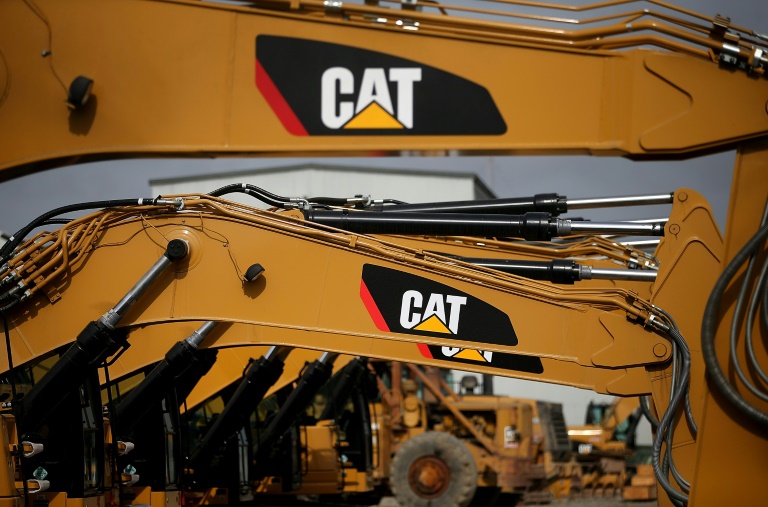
Strong industrial demand in most leading markets lifted Caterpillar’s results in the latest quarter, but the US heavy equipment maker said Tuesday it faced persistent supply chain problems.

With the exception of China, where Covid-19 restrictions constrained activity, Caterpillar saw “healthy demand across most of our end markets,” Chief Executive Jim Umpleby said in a statement.

Price hikes “more than offset” elevated manufacturing costs,” Umpleby told analysts on a conference call, as the company reported higher sales across all three operating divisions: construction industries, resources and energy, and transportation. 

Profits rose 18 percent to $1.7 billion on an 11 percent increase in revenues to $14.2 billion.

Umpleby said the company still had seen no appreciable improvement in the supply chain, and the state of key materials and components remains unpredictable.

“It’s still hand-to-hand combat,” Umpleby told analysts.

“It changes from component to component. One day, it’s one issue. One day, it’s another issue. But at the macro level, we have not seen an improvement.”

And he said Caterpillar had yet to see any benefit from the pullback in metals and energy prices, which have retreated somewhat from their peaks earlier in the spring shortly after the Russian invasion of Ukraine.

“We’re still dealing with an inflationary environment and we have not seen a decrease from our suppliers as a result of commodity price reductions,” Umpleby said. “It takes a while for those kind of changes to work their way through the supply chain.”

Caterpillar’s results translated into better-than-expected earnings-per-share, but lower revenues than analysts projected.

The company’s shares fell 3.6 percent in mid-morning trading to $187.82.

Uber reports loss, but beats income expectations

Uber reported better-than-expected revenue on Tuesday, fueled by strong demand for the San Francisco-based company’s ride-hailing and food delivery services that sent its shares upward.

Revenue more than doubled to $8.1 billion in the three months through June, a 105 percent increase, at a time when many tech companies are struggling to navigate global economic turbulence.

Still, the firm posted a net loss of $2.6 billion, but investors shrugged it off and shares were up about 13 percent in early trading on Wall Street.

Uber primarily attributed the loss to the falling value of its investments in financially-strapped companies such as Singapore’s VTC Grab, US self-driving vehicle start-up Aurora and Indian food delivery service Zomato.

The ride hailing giant posted $1.8 billion in revenue from its freight operations, and said income figures got a boost from a change in how it accounts for its rides business in Britain. 

Uber also notched gains in monthly active platform consumers, gross bookings and trips compared with a year ago, reflecting higher demand but also a higher number of drivers for its signature ride service and food delivery operations.

– Inflation attracts new drivers –

“We continue to benefit from an… increase in the on-demand transportation of people and things,” Uber CEO Dara Khosrowshahi said. “We intend to continue capitalizing on these growth tailwinds.”

Analysts noted that the relatively robust earnings were well above expectations, a relief during an earnings season buffeted by inflation, economic uncertainty and the ongoing impact of the coronavirus pandemic.

“Consumers are still moving to the Uber platform especially as travel, shifting to the office, and other post-pandemic trends take hold globally,” wrote analyst Dan Ives.

Uber reported it now has nearly five million drivers and couriers on its platform, a 31 percent increase from last year. 

“We saw an acceleration in both active and new driver growth in the quarter,” Khosrowshahi. “Against the backdrop of elevated gas prices globally, this is a resounding endorsement.”

Uber noted that some 70 percent of drivers coming to the platform said inflation played a part in their decision, as people look for additional income to offset price increases.

The latest earnings season has been marked both by investors being relieved when results weren’t as bad as feared, but also backing away from companies with less clear futures.

Facebook owner Meta and messaging app Snapchat’s parent company both saw shares fall after results showed their ad-driven models were vulnerable to the current economic uncertainty.

But giants like Apple and Amazon reassured markets last week with better than expected results on strong demand and sales.

Uber reports loss, but beats income expectations

Uber reported better-than-expected revenue on Tuesday, fueled by strong demand for the San Francisco-based company’s ride-hailing and food delivery services that sent its shares upward.

Revenue more than doubled to $8.1 billion in the three months through June, a 105 percent increase, at a time when many tech companies are struggling to navigate global economic turbulence.

Still, the firm posted a net loss of $2.6 billion, but investors shrugged it off and shares were up about 13 percent in early trading on Wall Street.

Uber primarily attributed the loss to the falling value of its investments in financially-strapped companies such as Singapore’s VTC Grab, US self-driving vehicle start-up Aurora and Indian food delivery service Zomato.

The ride hailing giant posted $1.8 billion in revenue from its freight operations, and said income figures got a boost from a change in how it accounts for its rides business in Britain. 

Uber also notched gains in monthly active platform consumers, gross bookings and trips compared with a year ago, reflecting higher demand but also a higher number of drivers for its signature ride service and food delivery operations.

– Inflation attracts new drivers –

“We continue to benefit from an… increase in the on-demand transportation of people and things,” Uber CEO Dara Khosrowshahi said. “We intend to continue capitalizing on these growth tailwinds.”

Analysts noted that the relatively robust earnings were well above expectations, a relief during an earnings season buffeted by inflation, economic uncertainty and the ongoing impact of the coronavirus pandemic.

“Consumers are still moving to the Uber platform especially as travel, shifting to the office, and other post-pandemic trends take hold globally,” wrote analyst Dan Ives.

Uber reported it now has nearly five million drivers and couriers on its platform, a 31 percent increase from last year. 

“We saw an acceleration in both active and new driver growth in the quarter,” Khosrowshahi. “Against the backdrop of elevated gas prices globally, this is a resounding endorsement.”

Uber noted that some 70 percent of drivers coming to the platform said inflation played a part in their decision, as people look for additional income to offset price increases.

The latest earnings season has been marked both by investors being relieved when results weren’t as bad as feared, but also backing away from companies with less clear futures.

Facebook owner Meta and messaging app Snapchat’s parent company both saw shares fall after results showed their ad-driven models were vulnerable to the current economic uncertainty.

But giants like Apple and Amazon reassured markets last week with better than expected results on strong demand and sales.

Ferrari lifts annual target after record orders

Luxury Italian carmaker Ferrari raised its financial targets for the year on Tuesday after reporting record orders in the second quarter.

The iconic firm delivered a total of 3,455 cars worldwide in the second three months of 2022, up 28.7 percent on the previous year, according to a statement.

“The quality of the first six months and the robustness of our business allows us to revise upward the 2022 guidance on all metrics,” said chief executive Benedetto Vigna.

“Also the net order intake reached a new record level in the quarter.”

Turnover jumped 24.9 percent to 1.29 billion euros ($1.3 billion), while net profit rose 22 percent to 251 million euros.

For 2022, the group is targeting revenues of 4.9 billion euros, compared to 4.8 billion previously.

Europe, the Middle East and Africa remained Ferrari’s biggest market in the second quarter, although deliveries spiked 116 percent in the region of China, Hong Kong and Taiwan.

Markets drop over China-US tensions

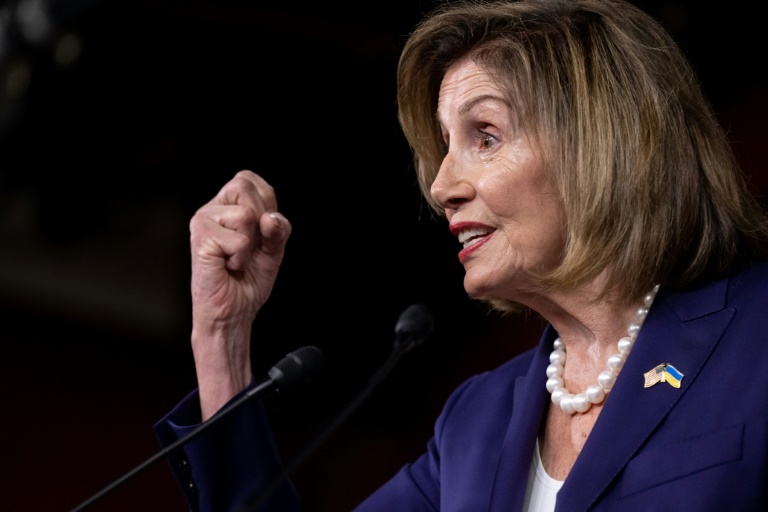
Stock markets fell Tuesday as investors dumped risky equities on spiking US-China tensions over a possible visit by House Speaker Nancy Pelosi to Taiwan.

Traders were already skittish after a string of data showed economies beginning to take a hit from surging inflation and central bank interest rate hikes aimed at taming prices.

A possible meeting between Pelosi and Taiwanese President Tsai Ing-wen is sure to anger Beijing, which views the island as its territory and has said the White House was playing “with fire”.

While observers do not think the move will spark a conflict, US officials said China was preparing possible military provocations that could include firing missiles in the Taiwan Strait or “large-scale” incursions into Taiwan’s airspace.

Heightened tensions between the world’s two superpowers have sent shivers through trading floors, compounding worries that Russia’s invasion of Ukraine could escalate into a wider war.

– Investors ‘very nervous’ –

“We’re seeing more risk aversion as Nancy Pelosi’s trip to Taiwan generates numerous unsettling headlines at a time of strained ties between the US and China,” said OANDA analyst Craig Erlam.

“Pelosi’s proposed visit has been met with numerous threats from Beijing including an unspecified military response,” he said, adding that the reported trip was “making investors very nervous”.

Reports of the visit hit US stocks, with all three main indexes dropping at the start of trading Tuesday.

Asian stocks also fell earlier, though some markets recovered as the day wore on.

Hong Kong and Shanghai led losses, shedding more than two percent, while Taipei was off more than one percent along with Tokyo.

In Europe, Frankfurt was down 0.2 percent and Paris by 0.2 percent, while only London was up 0.1 percent after oil giant BP announced soaring profits.

“Objectively, given the potential seriousness of some kind of confrontation with China, the market is not reacting with abject fear about the outcome,” said market analyst Patrick O’Hare at Briefing.com.

The safe-haven yen jumped to a two-month high against the dollar.

The Taiwan dollar meanwhile sank to its lowest since April 2020 before bouncing back.

– Rising rates –

The flare-up in tensions comes less than a week after US President Joe Biden and Xi Jinping held phone talks during which the Chinese leader warned the United States not to “play with fire”.

The market selloff comes as investors try to assess the outlook for the global economy as leaders try to bring down sky-high inflation by lifting rates while at the same time maintaining growth.

Australia’s central bank raised its central interest rate for a fourth time by another 50 basis points Tuesday.

The Bank of England is also under pressure to make a more aggressive rate hike of 50 basis points this Thursday.

Oil prices extended Monday’s steep losses that were fuelled by falling demand expectations.

– Key figures at around 1330 GMT –

London – FTSE 100: UP 0.1 percent at 7,427.40 points

Frankfurt – DAX: DOWN 0.2 percent at 13,448.47

Paris – CAC 40: DOWN 0.2 at 6,418.47

EURO STOXX 50: DOWN 0.5 percent at 3,687.71

New York – Dow: DOWN 0.5 percent at 32,625.40

Tokyo – Nikkei 225: DOWN 1.4 percent at 27,594.73 (close)

Hong Kong – Hang Seng Index: DOWN 2.4 percent at 19,689.21 (close)

Shanghai – Composite: DOWN 2.3 percent at 3,186.27 (close)

Taipei – TAIEX: DOWN 1.6 percent at 14,747.23 (close)

Dollar/yen: DOWN at 131.05 yen from 131.61 yen Monday

Euro/dollar: DOWN at $1.0234 from $1.0262

Pound/dollar: DOWN at $1.2236 from $1.2255

Euro/pound: UP at 83.62 pence from 83.70 pence

Brent North Sea crude: DOWN 0.1 percent at $99.84 per barrel

West Texas Intermediate: DOWN 0.1 percent at $93.74.28 per barrel

burs-raz/lth

Kansas votes on abortion rights in US test case

Voters headed to the polls in the Midwestern US state of Kansas Tuesday to weigh in on the first major ballot on abortion since the Supreme Court ended the national right to the procedure in June.

The vote is heavy with consequences for Kansans themselves, who will decide whether to remove the right to terminate a pregnancy from the traditionally conservative state’s constitution.

But it is also being seen as a test case for abortion rights nationwide, as Republican-dominated legislatures rush to impose strict bans on the procedure following the Supreme Court’s decision to overturn Roe v. Wade.

Other states including California and Kentucky are set to vote on the issue in November, at the same time as Congressional midterm elections in which both Republicans and Democrats hope to mobilize their supporters nationwide around the question of abortion.

In Kansas, where polling stations opened at 7:00 am (1200 GMT), the ballot centers on a 2019 ruling by the state’s supreme court that guarantees access to abortion — currently up to the 22-week stage of pregnancy. 

In response, the Republican-dominated state legislature introduced an amendment known as “Value Them Both” that would scrap the constitutional right — with the stated aim of handing regulation of the procedure back to lawmakers.

In the opposing camp, activists see the campaign as a barely masked bid to clear the way for an outright ban — one state legislator has already introduced a bill that would ban abortion without exceptions for rape, incest, or the life of the mother. 

For Ashley All, spokeswoman for pro-abortion rights campaign Kansans for Constitutional Freedom, the amendment would deal a blow to “personal autonomy.”

Activists also complain that the phrasing of the ballot question is counterintuitive, and potentially confusing: voting “Yes” to the amendment means abortion rights being curbed, while people who wish to keep those rights intact must vote “No.” 

– All eyes on Kansas –

Abortion rights advocates in Kansas are looking nervously to neighboring Oklahoma and Missouri, which are among at least eight states to have passed near-total bans — the latter making no exceptions for rape or incest — while Midwestern Indiana adopted its own rigid ban on Saturday.

Kara Miller Karns, a voter in Leawood, Kansas, said she planned to vote for the status quo on Tuesday, saying it was “not acceptable” for her daughters to grow up with fewer rights than she did. 

But in the same neighborhood, 43-year-old Christine Vasquez said she planned to back the constitutional amendment — in hope it would clear the way for a future vote on an abortion ban.

“I believe that life starts at conception,” she told AFP ahead of the ballot.

The outcome in Kansas could mean a boost or a blow to either side of the highly charged US abortion debate.

Kansas leans heavily toward the Republican Party, which favors stricter abortion regulations, but a 2021 survey from Fort Hays State University found that fewer than 20 percent of Kansas respondents agreed that abortion should be illegal even in cases of rape or incest.

British Airways halts short-haul Heathrow flight sales

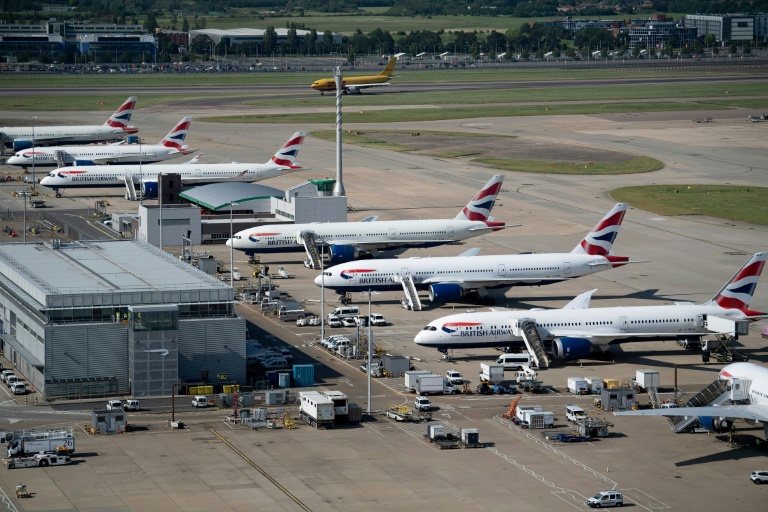
British Airways on Tuesday suspended ticket sales for short-haul London Heathrow flights until at least Monday, in order to meet the hub’s request to cap flights due to staff shortages.

The carrier has been among the worst affected by sector-wide turmoil, as airlines eye recovery after the lifting of Covid pandemic travel restrictions.

BA has already axed thousands of short-haul flights this year as it struggles to meet strengthening demand with sufficient staff.

“As a result of Heathrow’s request to limit new bookings, we’ve decided to take responsible action and limit the available fares on some Heathrow services to help maximise rebooking options for existing customers,” BA said in a statement on Tuesday.

The carrier, which is owned by airline conglomerate IAG, added it took the decision “given the restrictions imposed on us and the ongoing challenges facing the entire aviation industry”.

BA has already been operating a pared-down flights schedule.

In early July, it cut 10,300 short-haul flights up to the end of October.

That brought total flight cancellations to 13 percent of its entire summer schedule.

Separately, BA had last month avoided a strike by its Heathrow ground staff after making an improved pay offer.

Tuesday’s news came after IAG announced last week that it flew back into profit for the first time since the start of the pandemic, boosted by a strong recovery in demand.

IAG logged net profit of 133 million euros ($135 million) in the second quarter, after a loss of 981 million euros a year earlier.

The conglomerate also owns Ireland’s Aer Lingus, as well as Spain’s Iberia and Vueling.

Airlines and airports are struggling to recruit staff after sacking thousands of workers as the world entered Covid lockdowns.

Uber posts quarterly loss, but revenue exceeds expectations

Uber on Tuesday reported better-than-expected revenue in the second quarter, fueled by strong demand for the San Francisco-based company’s ride-hailing and food delivery services.

Revenue more than doubled to $8.1 billion in the three months through June — a 105 percent increase. Though it still posted a net loss of $2.6 billion, investors reacted positively: shares shot up more than 12 percent, to $27.58, in pre-market trading.

The company posted $1.8 billion in revenue from its freight operations. It also said the boost in revenue was partially explained by a change in how it accounts for its rides business in Britain. 

Uber notched gains in monthly active platform consumers, gross bookings and trips compared with a year ago, reflecting higher demand but also a higher number of drivers for its signature ride service and food delivery operations.

Uber CEO Dara Khosrowshahi said both consumers and earners were at “all-time highs.”

“Last quarter I challenged our team to meet our profitability commitments even faster than planned — and they delivered,” Khosrowshahi said in a statement.

Uber primarily attributed its loss to the falling value of its investments in financially strapped companies such as Singapore’s VTC Grab, US self-driving vehicle start-up Aurora and Indian food delivery service Zomato.

US basketball star Griner 'hoping' to go home: lawyer

US basketball star Brittney Griner is “hoping” to return home from Russia where she is standing trial on drug smuggling charges, her lawyer said Tuesday, amid talk of a prisoner exchange with Washington. 

Griner, a two-time Olympic basketball gold medallist and Women’s NBA champion who had played in Russia, was detained in February, just days before Moscow launched its military intervention in Ukraine.

The 31-year-old athlete was charged with drug smuggling for possessing vape cartridges with cannabis oil and is on trial in the town of Khimki just outside Moscow.

Griner appeared in court Tuesday wearing a khaki T-shirt, looking down as she walked in and was placed in a defendants’ cage, an AFP journalist reported.

She remained solemn as two narcotics experts gave testimony during the hearing.

“Of course, she heard the news so she is hoping that sometime she could be coming home, and we hope so too,” one of Griner’s lawyers, Maria Blagovolina, told reporters in English.

Blagovolina said Griner’s legal team was “not involved in any of the negotiations” on a possible prisoner swap.

She added, however, that Griner would be eligible for an exchange after the verdict that “will be very soon”. 

US Secretary of State Antony Blinken on Friday held his first talks with Russian counterpart Sergei Lavrov since Moscow sent troops to Ukraine on February 24.

Blinken said he “pressed the Kremlin” to accept a proposal from Washington for the release of Griner and Paul Whelan, a US citizen jailed in Russia on espionage charges. 

Griner was detained when she came to Russia to play club basketball with UMMC Ekaterinburg during the US off-season — a common path for American stars seeking additional income.

At a previous hearing, Griner said she did not intend to break the law or use the banned substance in Russia. 

Griner has pleaded guilty and faces up to ten years in prison. 

The next hearing will take place on Thursday.

Natural disaster losses hit $72 bn in first half 2022: Swiss Re

Total economic losses caused by natural disasters hit an estimated $72 billion in the first half of 2022, fuelled by storms and floods, Swiss reinsurance giant Swiss Re estimated Tuesday.

Though the figure is lower than the $91 billion estimate for the first six months of 2021, it is close to the 10-year average of $74 billion, and the weight is shifting towards weather-induced catastrophes.

“The effects of climate change are evident in increasingly extreme weather events, such as the unprecedented floods in Australia and South Africa,” said Martin Bertogg, Swiss Re’s head of catastrophe perils.

The Zurich-based group, which acts as an insurer for insurers, said the losses were also propelled by winter storms in Europe as well as heavy thunderstorms on the continent and in the United States.

So-called secondary natural disasters like floods and storms — as opposed to major disasters such as earthquakes — are happening more frequently, the reinsurer said.

“This confirms the trend we have observed over the last five years: that secondary perils are driving insured losses in every corner of the world,” Bertogg said.

“Unlike hurricanes or earthquakes, these perils are ubiquitous and exacerbated by rapid urbanisation in particularly vulnerable areas,” he said.

“Given the scale of the devastation across the globe, secondary perils require the same disciplined risk assessment as primary perils such as hurricanes.”

Swiss Re said floods in India, China and Bangladesh confirm the growing loss potential from flooding in urban areas.

Man-made catastrophes such as industrial accidents added on a further $3 billion of economic losses to the $72 billion from natural disasters, taking the total to $75 billion — which is down on the $95 billion total for the first half of 2021.

– Insured losses at $38 bn –

Total insured losses stood at $38 billion: $3 billion worth of man-made disasters and $35 billion worth of natural catastrophes — up 22 percent on the 10-year average, said the Swiss reinsurer, warning of the effects of climate change.

February’s storms in Europe cost insurers $3.5 billion, according to Swiss Re estimates.

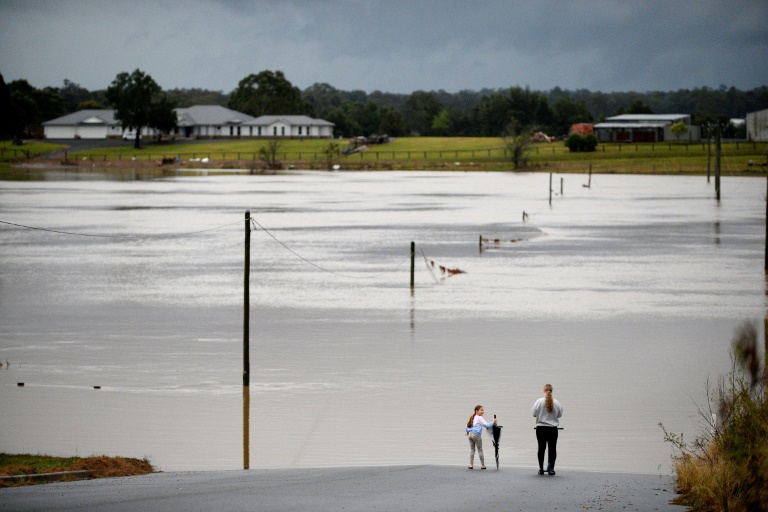
Australia’s floods in February and March set a new record for insured flood losses in the country at so far close to $3.5 billion — one of the costliest natural catastrophes ever in the country.

Severe weather and hailstorms in France in the first six months of the year have so far caused an estimated four billion euros ($4.1 billion) of insured market losses.

The Swiss group also mentioned the summer heatwaves in Europe, which resulted in fires and drought-related damage, without providing estimates at this stage.

A warming climate is likely to exacerbate droughts and thereby the likelihood of wildfires, causing greater damage where urban sprawl grows into the countryside, Swiss Re said.

“Climate change is one of the biggest risks our society and the global economy is facing,” said the group’s chief economist Jerome Jean Haegeli.

“With 75 percent of all natural catastrophes still uninsured, we see large protection gaps globally exacerbated by today’s cost-of-living crisis.”

Close Bitnami banner
Bitnami