US Business

Hong Kong economy tips into technical recession

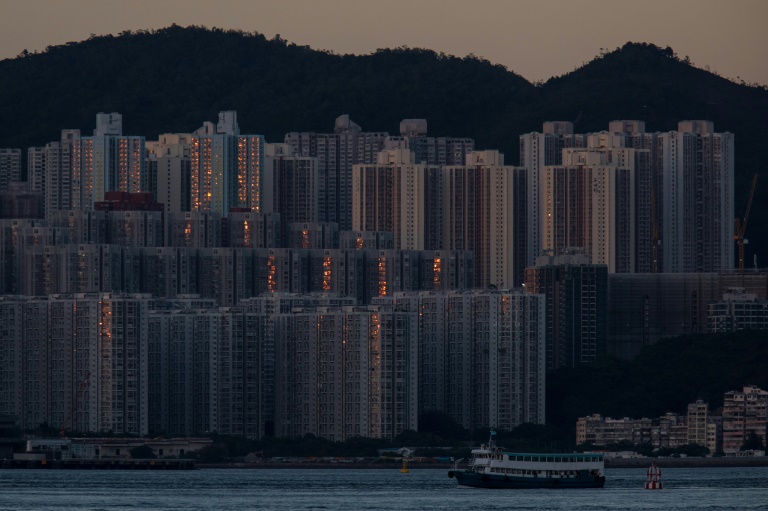
Hong Kong has tipped back into a technical recession, new government figures showed Monday, weighed down by mounting interest rates, weakened global trade and the city’s continued adherence to strict coronavirus controls.

Following a year-on-year decrease of 3.9 percent in the first quarter of 2022, the city’s GDP again reported decline in the second quarter on Monday — but with a narrower margin of 1.4 percent — according to advance estimates released by the Census and Statistics Department. 

The downturn is reversing last year’s recovery when the economy enjoyed a 6.3 percent annual growth after the slowdown in 2019 and 2020, when the city was first upended by months of huge, sometimes violent pro-democracy protests, and then the pandemic.

The Hong Kong government said the economic improvement was smaller than expected due to weak performance in external trade.

Official statistics released last month showed the value of total exports of goods in the second quarter decreased by 4.2 percent compared with the preceding quarter. 

For the first half of 2022, a visible trade deficit of $206.1 billion, equivalent to 8.2 percent of the value of imports of goods, was recorded.

“Weakened global demand and continued disruptions to cross-boundary land cargo flows between the mainland and Hong Kong weighed heavily on Hong Kong’s exports,” the government said Monday.

Monetary policy tightening by major central banks around the world is expected to dampen global economic growth significantly while quarantine-free travel between Hong Kong and mainland China is yet to have a clear timetable under Beijing’s strict adherence to its zero covid policy.

The financial hub’s new leader John Lee said his government would soon announce further shortening of mandatory hotel quarantine for overseas arrivals, according to an interview with the Hong Kong Economic Journal published on Monday.  

“Connecting with the world and with the mainland, we shall do both and they are not contradictory,” Lee told the newspaper. 

“I understand that one of Hong Kong’s competitiveness lies in its international connections.” 

In following China’s zero covid policy, Hong Kong has been largely cut off from the rest of the world for more than two years. 

It still has some of the world’s strictest restrictions, including week-long quarantine for arrivals and a ban on group gatherings with more than four people.

Local media recently reported that the government was mulling resuming quarantine-free travel for overseas arrivals in November, when the city is hoping to resuscitate its international image with a finance summit and the Hong Kong Rugby Sevens. 

'Good to be back': Hugs and tears as Tonga reopens borders

Families embraced and cried tears of joy Monday as they reunited at Tonga’s airport — the inaugural arrivals to the Pacific nation after it lifted Covid restrictions for the first time since the pandemic struck.

After Tonga shut its borders in March 2020, the government had tightly controlled a select list of people who were approved to fly into the kingdom — leaving over 3,000 Tongans stuck overseas.

But with restrictions lifted, Monday’s first batch of tourists and returning Tongans — greeted with colourful garlands and serenaded by a band at the Fua’amotu International Airport — will not have to undergo quarantine. 

The first plane to land was an Air New Zealand flight from Auckland carrying around 200 passengers.

“It’s good to be back,” said ‘Etu Palu, eager to see family again with his mother Finau Palu, who said it was “good to visit the motherland!”

Another passenger, Siosaia Filikitonga, said this was his first visit to Tonga in more than two years because of the pandemic.

“I am happy and emotional. Once Tonga announced the border re-opening, I booked to come,” Filikitonga told AFP.

Amid the reunions, Sione Moala Mafi, CEO of Tonga’s Ministry of Tourism, said the visitors bring an important boost to the Pacific Kingdom’s economy.

“I’m so glad that the border’s open and that facilitates the travel between Tonga and the outside world, especially, New Zealand,” he said.

“I can see there are a lot of foreign visitors are arriving on the flight as well as Tongans.”

More flights, one from New Zealand and one from Australia, are expected later this week with planes from Fiji also due Tuesday and Saturday.

“We are happy to welcome them,” Moala Mafi added.

– No super yachts –

Despite its reopening, Tonga is taking a cautious staged approach by limiting the number of incoming flights this month under a framework announced by the Prime Minister’s Office on July 22.

They will review the number of flights and cruise ships for September and October, and all incoming passengers must be vaccinated and have negative COVID-19 tests before departure and three to five days after arrival.

Currently the government’s National Emergency Management Committee has set the current level to “orange”, but Moala Mafi said it looks like “we are progressing towards” going “green”.

“Orange now and it has to be reviewed at the end of this month,” he said.

So far, yachts and super yachts are not included in the border re-opening, much to the frustration of tourism operators, who say July, with its fantastic weather, is the peak season in Tonga.

“I’ve got 20 boats sitting in Tahiti that want to come to Tonga. Big boats, I’m not talking about little yachts, because they won’t let the yachts come back in here and I don’t know why,” said David Hunt, owner of Super Yacht Services Tonga.

He was waiting at the airport to meet a yacht owner who had not seen his yacht moored in Vava’u —  one of Tonga’s islands — for over three years.

“Before the pandemic, we were averaging about 30 to 35 yachts a year between operators, but it could be much more this year,” he said.

“They’ve got all these boats coming down to the Pacific they don’t want to be in Ukraine, in the Mediterranean.”

Moala Mafi said the government is still undecided on yachts in Tongan waters.

“We are still finalising the policy framework for the cruise ships,” he said. “We don’t forget them, but they are in the pipeline.”

Pelosi's Asia tour kicks off under Taiwan cloud

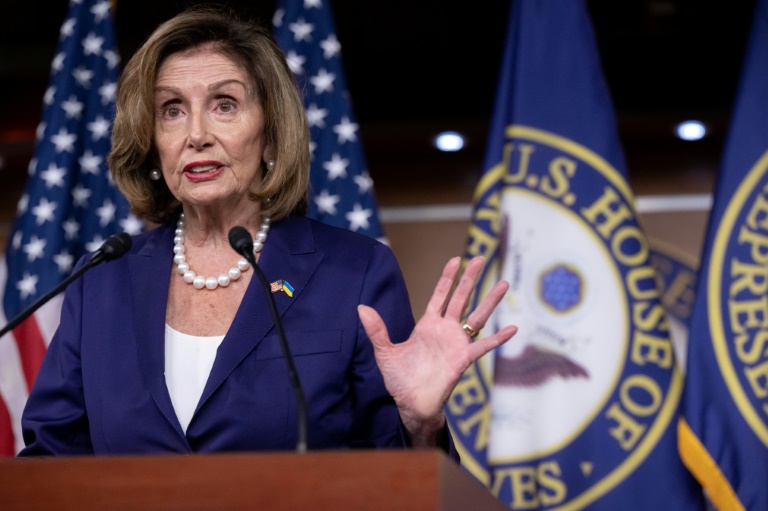
US House Speaker Nancy Pelosi on Monday kicked off an Asia tour that has been shrouded in secrecy following an escalation in tensions with China over Taiwan.

With no word if Pelosi will visit the island, she stopped first in Singapore, where Prime Minister Lee Hsien Loong urged her at a meeting to strive for “stable” ties with Beijing.

Her itinerary also includes Malaysia, South Korea and Japan, but a possible Taiwan visit has dominated attention in the run-up.

Reports about a plan to visit the island have enraged Beijing and caused unease in the White House with President Joe Biden trying to lower the temperature.

Beijing considers self-ruled Taiwan its territory — to be seized one day, by force if necessary — and said it would regard a Pelosi visit as a major provocation.

Pelosi’s office confirmed her Asia trip in a statement Sunday once her plane was in the air, following days of US media speculation and the speaker refusing to confirm her itinerary.

“The trip will focus on mutual security, economic partnership and democratic governance in the Indo-Pacific region,” it said, referring to the Asia-Pacific.

The statement did not mention Taiwan. But visits by US officials there are usually kept secret until delegations land.

– ‘Powder keg’ –

The Global Times, China’s state-run tabloid, suggested that Pelosi might use “emergency excuses like an aircraft fault or refuelling” to land at a Taiwanese airport.

“If she dares to stop in Taiwan, it will be the moment to ignite the powder keg of the situation in the Taiwan Straits,” Hu Xijin, a former Global Times editor and now commentator, tweeted.

Beijing’s foreign ministry on Monday, warned a visit would “seriously threaten the peace and stability” of the Taiwan Strait if it goes ahead.

“If House Speaker Nancy Pelosi visits Taiwan, China will take resolute and strong countermeasures to defend its sovereignty and territorial integrity,”spokesman Zhao Lijian said.

“As to what measures, if she dares to go, then let’s wait and see.”

Taiwan’s 23 million people have long lived with the possibility of an invasion but the threat has intensified under Chinese President Xi Jinping.

The United States maintains a policy of “strategic ambiguity” over whether it would militarily intervene were China to invade.

While it diplomatically recognises Beijing over Taipei, it also backs Taiwan’s democratic government and opposes any forced change to the island’s status.

American officials often make discreet visits to Taiwan to show support but a Pelosi trip would be higher-profile than any in recent history.

Taiwan’s government has remained silent on the prospect of a Pelosi visit and there has been minimal local press coverage. 

“I really hate what the Chinese are doing,” Hsu Ching-feng, a fruit vendor in Taipei, told AFP.

“But there’s nothing us common folks can do about it but ignore them. I will just ignore them.”

– ‘Wrong target’ –

As House speaker, Pelosi is third in line to the US presidency and one of the country’s most powerful politicians.

The last House speaker to visit was Newt Gingrich in 1997.

Biden and Xi had a tense phone call last week clouded by disagreements over Taiwan.

Xi issued an oblique warning to the United States not to “play with fire” over the island.

Speculation about Pelosi’s Taiwan plans has coincided with an uptick in military activity across the region.

US officials have sought to downplay the significance of a Pelosi visit, urging calm from Chinese leaders.

Kharis Templeman, a Taiwan expert at the Hoover Institution, said Beijing “misread US politics and screwed their signalling up” with its intense reaction.

“They picked the wrong target. Biden doesn’t control the Speaker or any other member of Congress,” he tweeted Sunday.

“They’ve drawn the line at the Speaker of the House, on a visit rich in symbolism but of limited practical value. And now it will be politically costly for either Pelosi not to go, or Xi not to respond with something dramatic.”

In Taiwan, there have been mixed views about the prospect of Pelosi visiting, but figures from both the ruling party and the main opposition have said the island should not cave to Chinese pressure.

“If Pelosi were to cancel or postpone the trip, it would be a victory for the Chinese government and for Xi as it would show that the pressure it has exerted has achieved some desired effects,” Hung Chin-fu, from Taiwan’s National Cheng Kung University, told AFP. 

Japan's top airline ANA reports first net profit in 10 quarters

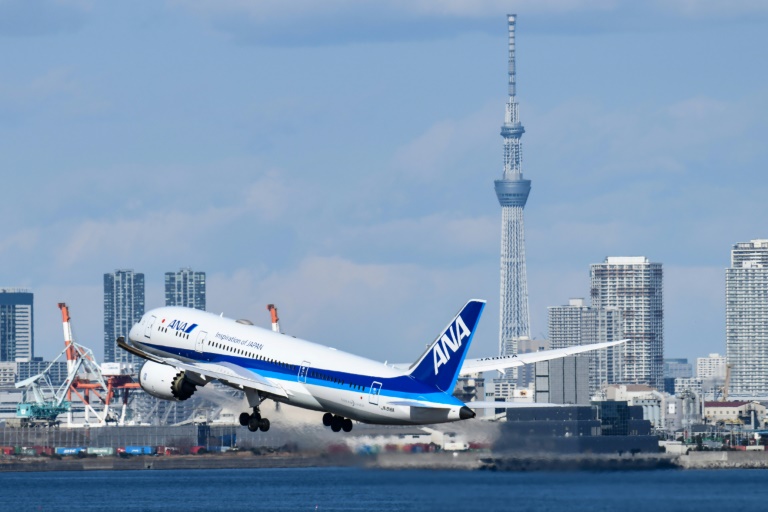
Japan’s biggest airline ANA on Monday posted a quarterly net profit for the first time in two and a half years as the sector recovers from the financial pain of the pandemic.

The relaxation of Covid-19 measures in Japan and various other countries increased demand for domestic and international travel, ANA said, with a cheaper yen also providing a boost.

In April-June, the company logged a net profit of one billion yen ($7.6 million), following nine consecutive quarters of losses beginning in January-March 2020, when the virus started to cause havoc worldwide.

However, it was still only around a tenth of the airline’s net profit in April-June 2019, when Japanese tourism was booming.

Although fuel prices and other expenses were higher, “disciplined cost management” and efforts to rein in fixed costs led to a “significant improvement” in profitability, ANA said.

Revenue for the first quarter was up 76 percent on-year at 350 billion yen, but the airline still suffered an operating loss and maintained its annual net profit forecast of 21 billion yen.

Rival Japan Airlines on Monday logged a net loss of 19.56 billion yen for April-June, but echoed ANA in saying demand for flights was recovering as pandemic restrictions eased.

“There still exists various uncertain external environments including the Russia-Ukraine situation or price hike of raw materials including fuel,” JAL warned.

The carrier kept its full-year net profit estimate at 45 billion yen, unchanged from the previous quarter.

Asian markets rise as traders weigh rates outlook, China data

Asian markets mostly rose Monday and oil fell as investors brushed off both weak data from China and comments indicating the Federal Reserve is wedded to its anti-inflation rate hike campaign.

Strong earnings from Wall Street titans Amazon and Apple had helped US markets end last week with healthy gains and eased concerns about the impact on consumers of surging inflation and rising borrowing costs.

That came after investors took Fed chief Jerome Powell’s comments Wednesday after a policy meeting to indicate the central bank could start slowing down monetary tightening, providing a much-needed boost to stocks.

However, analysts warned that inflation would take time to come down from its four-decade highs and that there were undoubtedly more rate hikes to come.

Officials backed that up at the weekend, with Minneapolis Fed chief Neel Kashkari telling The New York Times that he was “surprised by markets’ interpretation” of the latest Fed meeting statement.

“I think we’re going to continue to do what we need to do until we are convinced that inflation is well on its way back down to two percent,” he said. “We are a long way away from that.”

And Atlanta Fed president Raphael Bostic said he did not think the economy was in recession owing to ongoing jobs growth but that inflation remained too high and he was “convinced” more must be done.

Still, Treasuries continued to fall, with the 10-year yield at 2.67 percent, well down from June’s peak near 3.50 percent, suggesting expectations for future rates are easing.

Inflation pressure could get some relief following news that the first shipment of Ukrainian grain left the port of Odessa on Monday under a deal aimed at relieving a global food crisis following the Russian invasion.

– Weak China data –

Asian markets opened the day cautiously as investors struggled to extend Wall Street’s lead, but they picked up in the afternoon.

Hong Kong and Shanghai recovered after sinking in reaction to another disappointing reading on the Chinese economy.

The closely watched Purchasing Managers’ Index of manufacturing activity shrank in July on the back of weak demand and the strict zero-Covid measures imposed in parts of the country.

While sweeping curbs have eased in major hubs such as Shanghai and Beijing, sporadic lockdowns in other cities and towns have kept businesses and consumers worried with few signs of the policy easing.

OANDA’s Craig Erlam said there was a positive to be taken from “the improvement in supply chain conditions, which should aid the inflation fight around the world”.

“Of course, it is more than just a supply chain problem at this point but every little helps.”

Hong Kong tech was weighed, however, by the news that US authorities had put market heavyweight Alibaba on a list of firms threatened with a New York delisting if they did not comply with disclosure rules.

Tokyo, Sydney, Seoul, Mumbai, Singapore, Bangkok, Jakarta and Wellington edged up, though Taipei and Manila edged slightly lower.

London opened slightly higher but Paris and Frankfurt dipped.

The data out of China revived demand concerns on oil markets, sending both main contracts down Monday, following a bounce last week.

Investors are now eyeing a meeting of OPEC and other major producers this week where they will discuss their deal to raise output slowly.

US President Joe Biden had called on Saudi Arabia to open the taps further when he visited last month as he tried to address a crucial driver of inflation around the world.

But the kingdom does not appear to have made any such moves so far, with oil having lost almost all the gains made since Russia’s Ukraine invasion.

“The US has expressed optimism about the potential for an OPEC+ supply response,” said SPI Asset Management’s Stephen Innes.

“However, it seems highly unlikely there will be much appetite for a significant increase in production.”

– Key figures at around 0810 GMT –

Tokyo – Nikkei 225: UP 0.7 percent at 27,993.35 (close)

Hong Kong – Hang Seng Index: UP 0.1 percent at 20,165.84 (close)

Shanghai – Composite: UP 0.2 percent at 3,259.96 (close)

London – FTSE 100: UP 0.3 percent at 7,448.17

Euro/dollar: UP at $1.0232 from $1.0228 Friday

Pound/dollar: UP at $1.2202 from $1.2189 

Euro/pound: DOWN at 83.85 pence from 83.89 pence

Dollar/yen: DOWN at 132.60 yen from 133.25 yen

West Texas Intermediate: DOWN 1.1 percent at $97.55 per barrel

Brent North Sea crude: DOWN 0.4 percent at $103.52 per barrel

New York – Dow: UP 1.0 percent at 32,845.13 (close)

Macau to reopen after Covid sinks gaming revenue to record low

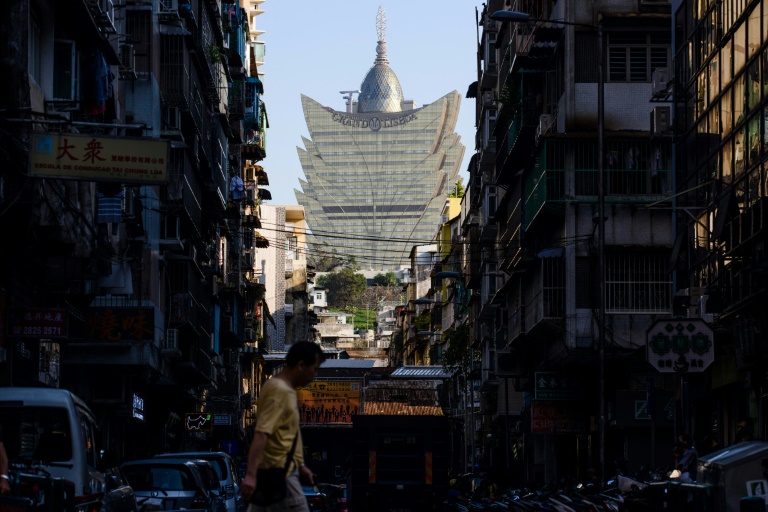
Macau was set to remove most coronavirus restrictions on Tuesday after the casino hub’s gaming revenue hit its lowest level on record.

The former Portuguese colony is the only territory in China where casinos are allowed, and its multi-billion-dollar gaming industry was until recently bigger than Las Vegas.

But the sector has taken a kicking in recent years, not only from the coronavirus pandemic but also from a Beijing-directed anti-corruption crackdown.

Gross gaming revenue fell to 398 million patacas (US$49 million) in July, the lowest since records began in 2009, according to the city’s Gaming Inspection and Coordination Bureau.

It was slightly better than analyst expectations, according to Bloomberg, but was still down 98 percent from pre-pandemic levels.

Macau’s casinos were ordered to shut down for 10 days in July as the city was placed under three weeks of “static management” modelled after the Covid-19 lockdowns in mainland China.

Public services and commercial activities were suspended, and residents were not allowed to leave home except to take a mandatory Covid test or to buy essentials.

Most restrictions will be removed on Tuesday,  with the city having recorded no new infection for nine days, the government announced on Monday.

Official departments will resume full operations, as will commercial activities — on the condition that customers present a negative Covid test from the previous 72 hours.

Though the casinos reopened more than a week ahead of other businesses, getting out of the slump will depend on Macau resuming quarantine-free travel from mainland China — its largest source of revenue.

Under China’s strict zero-Covid policy, Macau will have to stay nearly infection-free to reopen its border.

“You are stuck in this zero-Covid situation where it’s unclear when the government’s actually going to do anything about it,” Sanford C. Bernstein analyst Vitaly Umansky told Bloomberg.

“The reality is right now there’s nobody in Macau.”

The city recently started the bidding process for six gaming licences after a legal reform to slash concession periods from 20 years to 10, and to boost local ownership and government supervision.

First grain shipment leaves Ukraine as southern city pounded

The first shipment of Ukrainian grain left the port of Odessa on Monday morning, Turkey announced, as Kyiv said the “brutal” shelling by Moscow of the southern city Mykolaiv had killed an agriculture tycoon.

The blockage of deliveries from warring Russia and Ukraine — two of the world’s biggest grain exporters — has contributed to soaring food prices, hitting the world’s poorest nations especially hard.

Last month both sides signed a landmark deal with Turkey and the United Nations aimed at relieving the global food crisis.

“The ship Razoni has left the port of Odessa bound for Tripoli in Lebanon,” the Turkish ministry said in a statement. 

“It is expected in Istanbul on August 2. It will then continue its journey after it has been inspected in Istanbul,” the statement added.

Other convoys would follow, respecting the maritime corridor and the agreed formalities, it said.

The Joint Coordination Centre, the organisation overseeing the grain exports, said the Razoni is carrying “over 26,000 metric tonnes” of maize. 

– Tycoon killed –

While the much needed grain exports will be welcomed, the war in Ukraine rages on. 

AFP journalists witnessed intense Russian bombardment of the eastern town of Bakhmut after Ukrainian President Volodymyr Zelensky called for civilians to leave the frontline Donetsk region bearing the brunt of the Kremlin’s offensive.

Authorities in Mykolaiv said Sunday that widespread Russian bombardments overnight killed at least two civilians.

“Today, one of the most brutal shellings of Mykolaiv and the region over the entire period of the full-scale war took place. Dozens of missiles and rockets,” Zelensky said in an address.

“I want to thank every resident of Mykolaiv for their indomitability.”

Ukrainian agricultural magnate Oleksiy Vadatursky, 74, and his wife Raisa were killed when a missile struck their house, authorities said.

Vadatursky owned major grain exporter Nibulon and was previously decorated with the prestigious “Hero of Ukraine” award.

Zelensky offered condolences and paid tribute to Vadatursky in his Sunday address.

Mykolaiv — which has been attacked frequently — is the closest Ukrainian city to the southern front where Kyiv’s forces are looking to launch a major counter-offensive to recapture territory lost after Russia’s February invasion. 

– Drone attack –

Russian authorities in the Crimean Black Sea peninsula — seized by Moscow from Ukraine in 2014 — said a small explosive device from a commercial drone, likely launched nearby, hit the navy command in Sevastopol.

The local mayor blamed “Ukrainian nationalists” for the attack that forced the cancellation of festivities marking Russia’s annual holiday celebrating the navy.

But Ukraine’s navy accused Russia of staging the attacks as a pretext to cancel the festivities.

The claim and counterclaim came as the dispute over which side struck a jail holding Ukrainian prisoners of war in Kremlin-controlled Olenivka rumbled on. 

Russia’s defence ministry said Sunday it had invited the International Committee of the Red Cross (ICRC) and the United Nations to visit the site “in the interests of an objective investigation”. 

But the ICRC said Sunday it had yet to receive approval to enter the site.

Russia’s military said 50 Ukrainian servicemen died, including troops who had surrendered after weeks of resisting the bombardment of the Azovstal steelworks in the port city of Mariupol.

Ukraine says Russia was behind the attack, with Zelensky accusing Moscow of the “deliberate mass murder of Ukrainian prisoners of war”.

– Intense bombardments –

AFP journalists on Sunday saw one wounded man collected by an ambulance after a ferocious bombardment of the town of Bakhmut in the Donetsk region.

Zelensky warned on the weekend that thousands of people, including children, were still in Donetsk’s battleground areas.

He urged people to leave the besieged region, echoing calls from the authorities in recent weeks to evacuate.

“Leave, we will help,” Zelensky said. “At this stage of the war, terror is the main weapon of Russia.”

Official Ukrainian estimates put the number of civilians still living in the unoccupied area of Donetsk at between 200,000 and 220,000.

A mandatory evacuation notice posted Saturday evening said the coming winter made it a matter of urgency, particularly for the more than 50,000 children.

Kateryna Novakivska, a deputy commander of a Ukrainian unit, said she was fighting so her comrades could be reunited with their families.

“The morale of our servicemen is at a high level now, but everyone wants to visit their homes, see their relatives and loved ones,” she said.

First grain shipment leaves Ukraine as southern city pounded

The first shipment of Ukrainian grain left the port of Odessa on Monday morning, Turkey announced, as Kyiv said the “brutal” shelling by Moscow of the southern city Mykolaiv had killed an agriculture tycoon.

The blockage of deliveries from warring Russia and Ukraine — two of the world’s biggest grain exporters — has contributed to soaring food prices, hitting the world’s poorest nations especially hard.

Last month both sides signed a landmark deal with Turkey and the United Nations aimed at relieving the global food crisis.

“The ship Razoni has left the port of Odessa bound for Tripoli in Lebanon,” the Turkish ministry said in a statement. 

“It is expected in Istanbul on August 2. It will then continue its journey after it has been inspected in Istanbul,” the statement added.

Other convoys would follow, respecting the maritime corridor and the agreed formalities, it said.

The Joint Coordination Centre, the organisation overseeing the grain exports, said the Razoni is carrying “over 26,000 metric tonnes” of maize. 

– Tycoon killed –

While the much needed grain exports will be welcomed, the war in Ukraine rages on. 

AFP journalists witnessed intense Russian bombardment of the eastern town of Bakhmut after Ukrainian President Volodymyr Zelensky called for civilians to leave the frontline Donetsk region bearing the brunt of the Kremlin’s offensive.

Authorities in Mykolaiv said Sunday that widespread Russian bombardments overnight killed at least two civilians.

“Today, one of the most brutal shellings of Mykolaiv and the region over the entire period of the full-scale war took place. Dozens of missiles and rockets,” Zelensky said in an address.

“I want to thank every resident of Mykolaiv for their indomitability.”

Ukrainian agricultural magnate Oleksiy Vadatursky, 74, and his wife Raisa were killed when a missile struck their house, authorities said.

Vadatursky owned major grain exporter Nibulon and was previously decorated with the prestigious “Hero of Ukraine” award.

Zelensky offered condolences and paid tribute to Vadatursky in his Sunday address.

Mykolaiv — which has been attacked frequently — is the closest Ukrainian city to the southern front where Kyiv’s forces are looking to launch a major counter-offensive to recapture territory lost after Russia’s February invasion. 

– Drone attack –

Russian authorities in the Crimean Black Sea peninsula — seized by Moscow from Ukraine in 2014 — said a small explosive device from a commercial drone, likely launched nearby, hit the navy command in Sevastopol.

The local mayor blamed “Ukrainian nationalists” for the attack that forced the cancellation of festivities marking Russia’s annual holiday celebrating the navy.

But Ukraine’s navy accused Russia of staging the attacks as a pretext to cancel the festivities.

The claim and counterclaim came as the dispute over which side struck a jail holding Ukrainian prisoners of war in Kremlin-controlled Olenivka rumbled on. 

Russia’s defence ministry said Sunday it had invited the International Committee of the Red Cross (ICRC) and the United Nations to visit the site “in the interests of an objective investigation”. 

But the ICRC said Sunday it had yet to receive approval to enter the site.

Russia’s military said 50 Ukrainian servicemen died, including troops who had surrendered after weeks of resisting the bombardment of the Azovstal steelworks in the port city of Mariupol.

Ukraine says Russia was behind the attack, with Zelensky accusing Moscow of the “deliberate mass murder of Ukrainian prisoners of war”.

– Intense bombardments –

AFP journalists on Sunday saw one wounded man collected by an ambulance after a ferocious bombardment of the town of Bakhmut in the Donetsk region.

Zelensky warned on the weekend that thousands of people, including children, were still in Donetsk’s battleground areas.

He urged people to leave the besieged region, echoing calls from the authorities in recent weeks to evacuate.

“Leave, we will help,” Zelensky said. “At this stage of the war, terror is the main weapon of Russia.”

Official Ukrainian estimates put the number of civilians still living in the unoccupied area of Donetsk at between 200,000 and 220,000.

A mandatory evacuation notice posted Saturday evening said the coming winter made it a matter of urgency, particularly for the more than 50,000 children.

Kateryna Novakivska, a deputy commander of a Ukrainian unit, said she was fighting so her comrades could be reunited with their families.

“The morale of our servicemen is at a high level now, but everyone wants to visit their homes, see their relatives and loved ones,” she said.

OPEC+ walks 'fine line' between US and Russia

The OPEC+ group of oil exporters are set to hammer out a new strategy at their meeting Wednesday, with all eyes on how they will react to soaring crude prices.

The 13 core members of OPEC, led by Saudi Arabia, and the 10 further states in OPEC+ — chief among them Russia — find themselves at a crossroads.

After the drastic output cuts they agreed to in spring 2020 in reaction to the plunge in demand caused by the coronavirus pandemic, the member states of the alliance are once again producing at pre-virus levels — at least on paper.

In normal times they would perhaps have stopped at that but faced with runaway prices and pressure from Washington, this scenario is viewed as unlikely.

– Biden’s controversial voyage –

US President Joe Biden travelled to Saudi Arabia in mid-July despite his promise to make the country a “pariah” in the wake of the 2018 killing of journalist Jamal Khashoggi.

Part of the reason for the controversial trip was to convince Riyadh to continue loosening the production taps to stabilise the market and curb rampant inflation.

Wednesday’s meeting will reveal whether his efforts were successful.

“The US administration appears to be anticipating some good news but it’s hard to know whether that’s based on assurances during Biden’s trip or not,” Craig Erlam, analyst at Oanda, told AFP.

“It wouldn’t be a surprise to see the Saudis announce something that Biden could tout as a win to voters at home,” according to Stephen Innes of SPI Asset Management.

– Sceptical market –

According to the London-based research institute Energy Aspects, OPEC+ could adjust its current agreement in order to keep raising crude production volumes.

However, analysts warn against expecting any drastic increases.

OPEC+ has to take into account the fact that the interests of Russia — a key player in the alliance — are diametrically opposed to those of Washington.

“Saudi Arabia has to walk a fine line,” says Tamas Varga, analyst at PVM Energy. 

The task will be to allow the United States to save face while also placating Moscow in order to ensure the stability of the alliance.

Any decision on Wednesday will have to be unanimous, which may lead to a longer meeting than normal.

The videoconference meeting is due to start at around 1300 GMT on Wednesday (or 3 pm at the cartel’s Vienna headquarters).

“Any new OPEC+ deal aimed at further ramping up supplies is likely to be met with market scepticism, considering the supply constraints already evident within the alliance,” says Han Tan at Exinity. 

The alliance already regularly fails to fill the production quotas already allotted and has struggled to get back to pre-pandemic volumes.

Pelosi's Asia tour set to kick off under Taiwan cloud

US House of Representative Speaker Nancy Pelosi was due on Monday to kick off an Asia tour that has been shrouded in secrecy following an escalation in tensions with China over Taiwan.

With no word yet if Pelosi will make a stop on the island, AFP journalists saw a motorcade believed to be carrying her in Singapore, where she is scheduled to meet the prime minister and the president.

The American Chamber of Commerce in Singapore also has Pelosi listed as attending a cocktail reception later on Monday.

Her Asia itinerary also includes Malaysia, South Korea and Japan, but a possible Taiwan visit has dominated attention in the run-up.

Reports about a plan to visit the island have enraged Beijing and caused unease even in the White House with President Joe Biden trying to lower the temperature with China.

Beijing considers self-ruled Taiwan its territory — to be seized one day, by force if necessary — and has made increasingly stark warnings that it would regard a visit by Pelosi as a major provocation.

Pelosi’s office finally confirmed her Asia trip in a statement on Sunday once her plane was in the air, following days of US media speculation and the speaker refusing to confirm her itinerary.

“The trip will focus on mutual security, economic partnership and democratic governance in the Indo-Pacific region,” it said, referring to the Asia-Pacific.

“Our delegation will hold high-level meetings to discuss how we can further advance our shared interests and values.”

The statement did not mention Taiwan.

But visits by US politicians and officials to Taiwan are usually kept secret until delegations land because of sensitivities with Beijing.

Pelosi is accompanied by Chairman of the House Foreign Affairs Committee Gregory Meeks, as well as members of the House Permanent Select Committee on Intelligence and the House Armed Services Committee.

Separately, thousands of Indonesian and American troops began a two-week joint military exercise on Monday.

Washington has said the drills are not aimed at any country, though the United States and its allies have expressed growing concern about China’s increasing assertiveness in the Pacific.

– ‘The wrong target’ –

Taiwan’s 23 million people have long lived with the possibility of an invasion but that threat has intensified under Chinese President Xi Jinping.

The United States maintains a policy of “strategic ambiguity” over whether it would intervene militarily were China to invade.

While it diplomatically recognises Beijing over Taipei, it also backs Taiwan’s democratic government and opposes any forced change to the island’s status.

American officials often make discreet visits to Taiwan to show support but a Pelosi trip would be higher-profile than any in recent history.

As the House speaker, she is third in line for the US presidency and one of the country’s most powerful politicians.

The last House speaker to visit was Newt Gingrich in 1997.

Biden and Xi had a tense phone call last week that was clouded by disagreements over Taiwan.

Xi issued an oblique warning to the United States not to “play with fire” over the island.

The feverish speculation about Pelosi’s Taiwan plans has coincided with an uptick in military activity across the region, highlighting the combustibility of the issue.

US officials have sought to play down the significance of a Pelosi visit, urging calm from Chinese leaders.

Kharis Templeman, a Taiwan expert at the Hoover Institution, said Beijing “misread US politics and screwed their signalling up” with its intense reaction.

“They picked the wrong target. Biden doesn’t control the Speaker or any other member of Congress,” he tweeted Sunday.

“They’ve drawn the line at the Speaker of the House, on a visit rich in symbolism but of limited practical value. And now it will be politically costly for either Pelosi not to go, or Xi not to respond with something dramatic.”

In Taiwan, there have been mixed views about the prospect of Pelosi visiting, but figures from both the ruling party and the main opposition have said the island should not cave to Chinese pressure.

“If Pelosi were to cancel or postpone the trip, it would be a victory for the Chinese government and for Xi as it would show that the pressure it has exerted has achieved some desired effects,” Hung Chin-fu, from Taiwan’s National’s Cheng Kung University, told AFP. 

Close Bitnami banner
Bitnami