US Business

Moscow, Kyiv trade blame over POW jail bombing that killed dozens

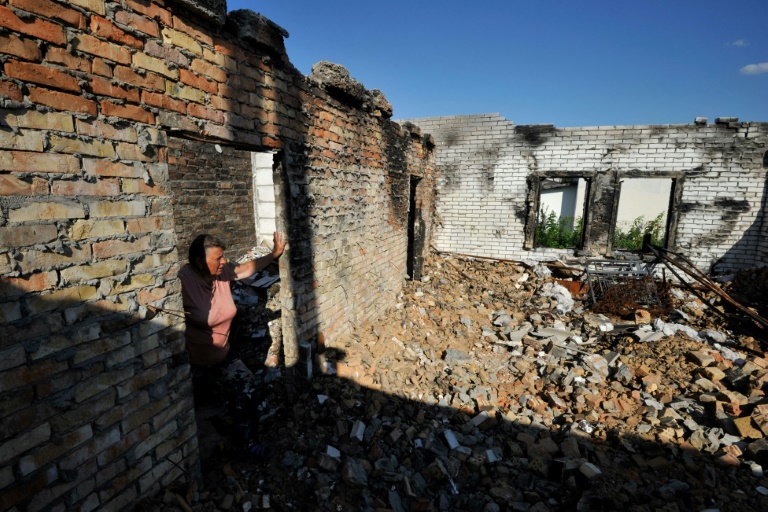
Moscow and Kyiv on Friday accused each other of bombing a jail holding Ukrainian prisoners of war in Russian-held territory, with Ukrainian President Volodymyr Zelensky saying more than 50 were killed and calling the attack a war crime.

Russia’s defence ministry alleged that the strikes were carried out by Ukraine with US-supplied long-range missiles, in an “egregious provocation” designed to stop soldiers from surrendering.

It said that among the dead were Ukrainian forces that had laid down their arms after weeks of fighting off Russia’s brutal bombardment of the sprawling Azovstal steel works in Mariupol.

But Zelensky laid the blame squarely on Russia.

“This was a deliberate Russian war crime, a deliberate mass murder of Ukrainian prisoners of war,” Zelensky said in his daily address to the nation late Friday. “Over 50 are dead.”

Zelensky said an agreement for the Azovstal fighters to lay down their arms, brokered by the United Nations and the International Committee of the Red Cross, included guarantees for their health and safety and called on those two organizations to intervene, as guarantors.

Zelensky also urged the international community, especially the United States, to have Russia officially declared as a state sponsor of terrorism.

“A decision is needed, needed right now,” he said.

– Annexation ‘will not be accepted’ – 

In a sign of Washington’s continued support of Kyiv, US Secretary of State Antony Blinken spoke to his Russian counterpart Sergei Lavrov for the first time since the beginning of the war Friday, urging Moscow against annexing any more Ukrainian territory occupied by Russian forces.

“It was very important that the Russians hear directly from us that that will not be accepted — and not only will it not be accepted, it will result in additional significant costs being imposed upon Russia if it follows through,” Blinken told reporters in Washington.

Earlier in the day, Zelensky visited a port in southern Ukraine to oversee a ship being loaded with grain for export under a UN-backed plan aimed at getting millions of tonnes of Ukrainian grain stranded by Russia’s naval blockade to world markets.

Ukraine’s presidency released footage of Zelensky standing in front of Turkish ship Polarnet in the port of Chornomorsk on a visit to inspect grain being loaded. Ukraine’s presidency said exports could start in the “coming days.”

In Paris, French President Emmanuel Macron and Saudi Crown Prince Mohammed bin Salman agreed to work together to limit the impact of the war during talks, the French presidency said.

Macron took the meeting with the prince despite fierce criticism from rights groups in a bid to get major crude producer Saudi Arabia to up its production.

– Tangled beds –

Following the strike on the prison, Russian state-television showed what appeared to be destroyed barracks and tangled metal beds, but no casualties could be seen.

Ukraine’s military also denied carrying out the attack saying its forces “did not launch missile and artillery strikes in the area of Olenivka settlement” in the eastern region of Donetsk.

It instead blamed Russia’s invading forces for “a targeted artillery shelling” on the detention facility, saying it was being used to “accuse Ukraine of committing ‘war crimes’, as well as to hide the torture of prisoners and executions”.

Ukraine’s forces in May ended a weeks-long defence of Azovstal, with around 2,500 combatants surrendering after calling a halt to their resistance. 

Moscow’s state media has reported that some officers — including those from the controversial Azov regiment — have been taken to Russia. 

Kyiv meanwhile says it has captured thousands of Russian troops during the invasion and has begun putting some on trial for alleged war crimes. 

A Ukrainian court on Friday reduced the life sentence handed to a Russian soldier in May for pre-meditated murder in the country’s first war crimes trial, instead jailing the serviceman for 15 years.

– Mykolaiv strikes –

Russian strikes elsewhere in Ukraine killed five people and wounded seven more on Friday in the heavily bombed city of Mykolaiv near the country’s southern frontline, the regional governor said.

“They shot at another area near a public transport stop,” governor Vitaliy Kim said in a statement on social media.

Mykolaiv, near the Black Sea, has seen roughly half of its estimated pre-war population of nearly 500,000 people leave and the city has been shelled daily for weeks.

It is the largest Ukrainian-controlled urban hub near the frontlines in the Kherson region, where Kyiv’s army has launched a counter-offensive to regain control of the economically and strategically important coastal territory.

In a separate development, S&P Global Ratings on Friday cut Ukraine’s long-term debt grade by three notches, saying a recently announced plan to defer payments means a default is “a virtual certainty.”

A group of Western countries last week gave their green light to Kyiv’s request to postpone interest payments on its debt and called on other creditors to do so as well.

burs-jbr-acl/md/bfm
US sentences Canadian who narrated IS videos to life in prison

A Canadian jihadist said to be a key player in the Islamic State group’s propaganda production and who narrated multiple violent videos was sentenced Friday to life in prison, the US Department of Justice said.

Mohammed Khalifa, who was born in Saudi Arabia, pleaded guilty in December to conspiring to provide material support to IS resulting in death.

According to the Department of Justice (DOJ) indictment, he left Canada in 2013 to join the IS group in Syria, where he quickly took on a leading role in the self-proclaimed “caliphate” that straddled that country and Iraq.

Khalifa, now 39, quickly began serving in “prominent roles” within the IS group and by 2014 had become a key member of a propaganda cell, the DOJ said, due in particular to his mastery of both English and Arabic.

That cell was notably behind the production of videos of foreign hostages being executed, including US journalists James Foley and Steven Sotloff, who were decapitated in 2014.

Khalifa additionally provided the English voiceover for two of the most “exceptionally violent” IS videos, from 2014 and 2017, in which he is seen executing Syrian soldiers, the DOJ said.

He is also the alleged narrator of recruitment videos showing IS attacks in France and Belgium, which urge others to take part in similar acts of violence.

In January 2019, he was captured during a firefight by Kurdish-dominated Syrian forces allied with the United States.

In an interview the same year with Canada’s CBC from his Syrian prison, Khalifa showed no regret for his actions. He said he wanted to return to Canada with his wife and their three children, but on the condition that he would not be tried there.

However, he was entrusted in 2021 to American authorities and ultimately transferred to the United States.

US House passes assault rifle ban, likely doomed in Senate

The US House of Representatives, spurred by a series of horrific mass shootings, passed a bill on Friday that would ban assault weapons for the first time in decades.

The legislation was approved by a 217 to 213 vote in the Democratic-majority House and now goes to the Senate — where it is likely doomed to fail.

Gun reform remains deeply divisive in the United States — despite the deadly scourge of mass shootings — with only two Republicans joining Democrats to back the assault weapons ban in the House.

In the 100-member Senate, Democrats have just 50 seats and 10 Republican votes are needed to bring a measure to the floor for consideration.

Congress passed a 10-year ban on assault rifles and certain high-capacity magazines in 1994 but lawmakers let it expire in 2004 and sales of the weapons have soared since then.

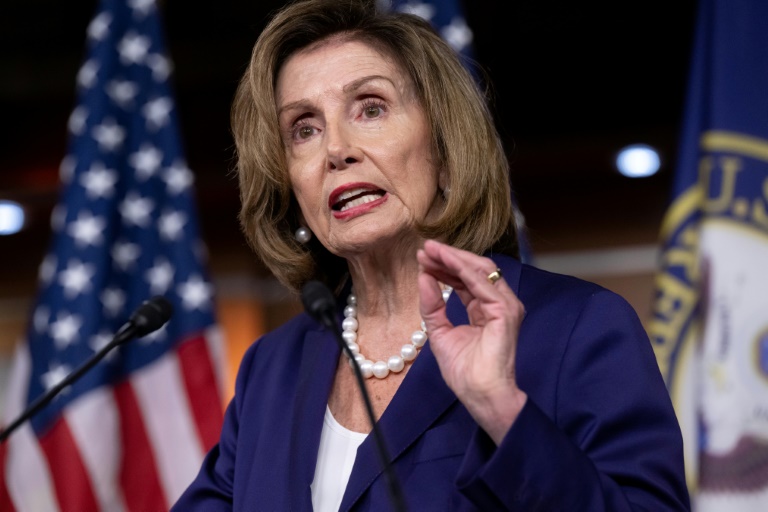
Democratic House Speaker Nancy Pelosi called the latest bill a “crucial step in our ongoing fight against the deadly epidemic of gun violence in our nation.”

It would ban the sale, import, manufacture or transfer of certain semi-automatic weapons such as those used in recent mass shootings in Buffalo, New York, Uvalde, Texas, and Highland Park, Illinois.

An avowed white supremacist shot dead 10 African Americans at a supermarket in Buffalo in May.

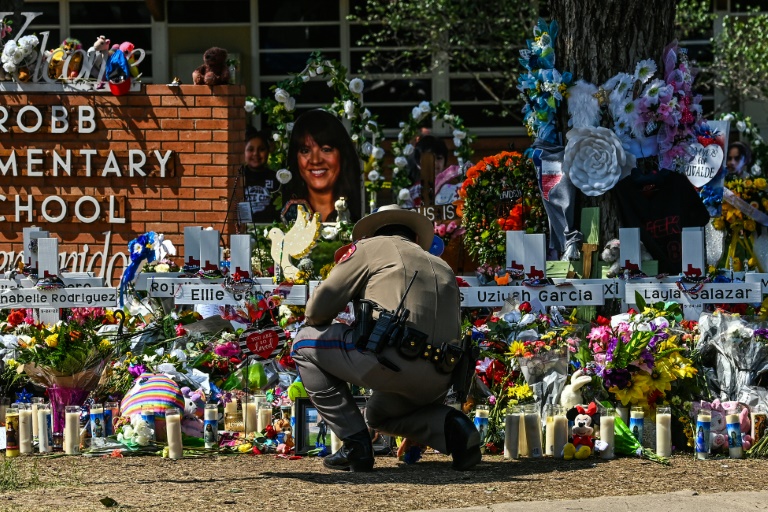
Nineteen schoolchildren and two teachers were killed by an 18-year-old man at an elementary school in Uvalde that same month and seven people were shot dead at a July 4 parade in Highland Park.

After the Uvalde massacre, President Joe Biden appealed to lawmakers to again ban assault rifles or at least raise the minimum age for buying them from 18 to 21.

But Republican lawmakers, who see such a restriction as going against the constitutional right to bear arms, have refused to go along.

In a statement, Biden said “40,000 Americans die from gunshot wounds every year and guns have become the top killer of children in the United States.

“We know an assault weapons and large-capacity magazine ban will save lives,” he said.

A House committee, in a report released this week, said US gun makers earned $1 billion in the past decade from sales of AR-15-style semiautomatic weapons.

“The gun industry has flooded our neighborhoods, our schools and even our churches and synagogues with these deadly weapons and has gotten rich doing it,” Democratic Representative Carolyn Maloney said.

“They are choosing their bottom line over the lives of their fellow Americans,” the New York lawmaker said at a hearing attended by relatives of victims of gun violence.

Republican lawmakers pushed back against their Democratic colleagues.

“Gun manufacturers do not cause violent crime,” said Representative James Comer of Kentucky. “Criminals cause violent crime.”

“We’ll continue to protect the rights of all law-abiding gun owners who safely use, store and carry firearms including the AR-15,” Comer said.

Uber courts drivers by letting them pick rides

Uber on Friday said it will let drivers in the United States see trip details before deciding whether to accept them — a new feature long sought by drivers.

A common lament by drivers at the app-summoned ride platform has been that they have to accept a request before learning where trips will take them, or how profitable they will be.

“Our new trip request screen makes it easier for drivers to decide if a trip is worth their time and effort by providing all the details — including exactly how much they’ll earn and where they’re going — upfront,” chief executive Dara Khosrowshahi said in a blog post.

Revealing details only once a driver had accepted a trip was seen as a way to ensure riders would get picked up promptly, and not be snubbed because they were headed to locations deemed undesirable by drivers.

But Khosrowshahi said drivers have made it clear that they want more flexibility and choice.

Uber said the new feature, called Upfront Fares, was tested in several cities and was a success with drivers while resulting in shorter wait times for passengers.

The ride-sharing firm will also shift from sending drivers a single ride request at a time, to letting them pick from a list of detailed passenger requests in an area.

Uber is engaged in a long-term effort to prove that its business model is socially and economy viable.

The “gig economy” — which uses temporary independent contractors for short-term tasks — has grown rapidly since Uber’s launch in 2009 and is promoted as a flexible way for people to earn money without the constraints of a full-time job.

But there has been growing backlash in countries around the world about the conditions and dangers gig workers face.

Uber driver ranks — which shrank during the Covid-19 pandemic — have not rebounded as quickly as demand for rides, and soaring fuel costs have made the gigs less attractive.

The firm in March announced a surcharge on both rides and Uber Eats meal deliveries that would go directly to drivers to help offset high fuel prices.

Uber courts drivers by letting them pick rides

Uber on Friday said it will let drivers in the United States see trip details before deciding whether to accept them — a new feature long sought by drivers.

A common lament by drivers at the app-summoned ride platform has been that they have to accept a request before learning where trips will take them, or how profitable they will be.

“Our new trip request screen makes it easier for drivers to decide if a trip is worth their time and effort by providing all the details — including exactly how much they’ll earn and where they’re going — upfront,” chief executive Dara Khosrowshahi said in a blog post.

Revealing details only once a driver had accepted a trip was seen as a way to ensure riders would get picked up promptly, and not be snubbed because they were headed to locations deemed undesirable by drivers.

But Khosrowshahi said drivers have made it clear that they want more flexibility and choice.

Uber said the new feature, called Upfront Fares, was tested in several cities and was a success with drivers while resulting in shorter wait times for passengers.

The ride-sharing firm will also shift from sending drivers a single ride request at a time, to letting them pick from a list of detailed passenger requests in an area.

Uber is engaged in a long-term effort to prove that its business model is socially and economy viable.

The “gig economy” — which uses temporary independent contractors for short-term tasks — has grown rapidly since Uber’s launch in 2009 and is promoted as a flexible way for people to earn money without the constraints of a full-time job.

But there has been growing backlash in countries around the world about the conditions and dangers gig workers face.

Uber driver ranks — which shrank during the Covid-19 pandemic — have not rebounded as quickly as demand for rides, and soaring fuel costs have made the gigs less attractive.

The firm in March announced a surcharge on both rides and Uber Eats meal deliveries that would go directly to drivers to help offset high fuel prices.

Profits at ExxonMobil, Chevron skyrocket with oil prices

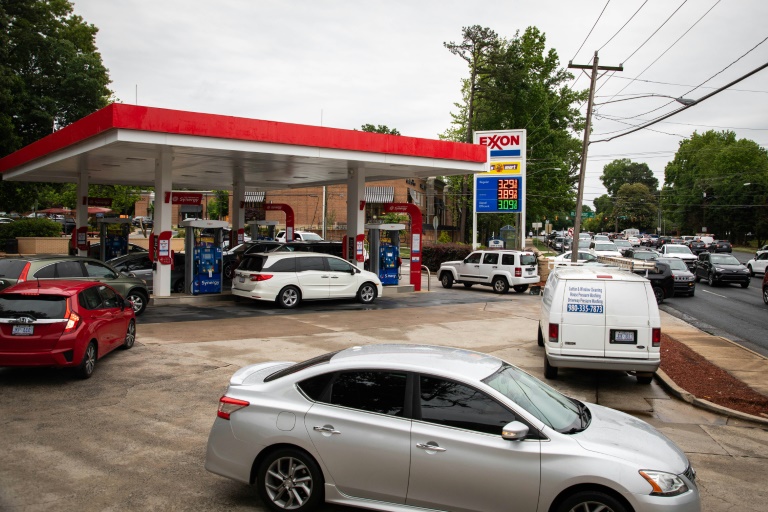
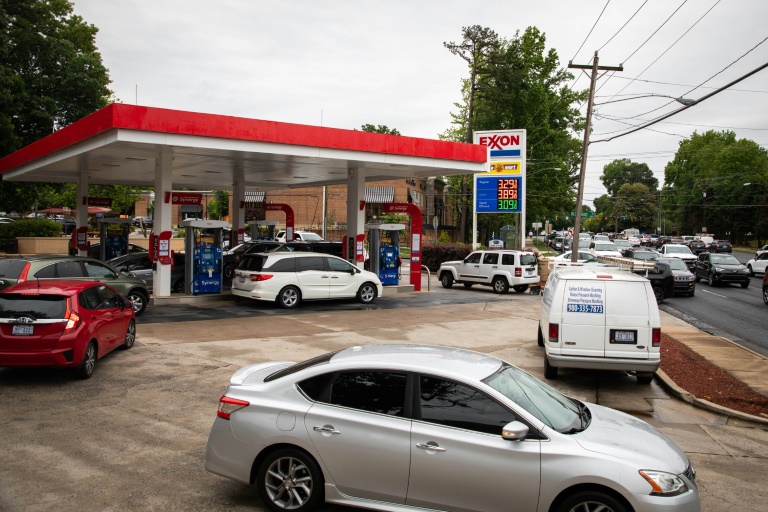
US oil giants ExxonMobil and Chevron — targets of White House criticism over soaring gasoline costs — reported record quarterly profits Friday amid the war in Ukraine that sparked a steep rise in energy prices.

With crude surging above $100 a barrel shortly after the Russian invasion, and refining margins climbing due to tight global capacity, ExxonMobil scored $17.9 billion in profits and Chevron $11.6 billion in the just-finished second quarter.

The results come on the heels of similarly jaw-dropping figures from European petroleum heavyweights, with Shell reporting $18 billion in profits, TotalEnergies $5.7 billion and Eni $3.8 billion.

ExxonMobil Chief Executive Darren Woods said the strong results “reflect our focus on the fundamentals and the investments we put in motion several years ago and sustained through the depths of the pandemic.”

Chevron Chief Executive Mike Wirth said the company is “increasing energy supplies to help meet the challenges facing global markets.”

Although gas prices at the pump have dropped in the past month, the massive profits drew criticism from advocacy group Public Citizens, which said on Twitter that “corporate greed is suffocating the working class.” 

Progressive US Senator Bernie Sanders of Vermont called for a windfall profits tax.

“While you were feeling pain at the pump, Shell, Exxon and Chevron raked in $46 billion in profits over the last three months and said they would spend up to $47 billion on stock buybacks after spending $18.8 billion so far this year,” sanders said.

– More buybacks –

The latest three months have proved a heady period for the oil industry.

Crude prices traded between $95 and $120 a barrel during the quarter, as the war and the wave of sanctions on Moscow lifted the oil market back to levels last seen in 2008. 

The ensuing surge in US gasoline prices to an all-time high in mid-June has squeezed American families and pressured President Joe Biden, who has had a fractious relationship with ExxonMobil and Chevron and the oil industry more generally.

In June, Biden notoriously said “Exxon made more money than God this year” as he ripped the industry for spending excess cash on share buybacks instead of significantly boosting capital spending.

On Friday, both companies reported higher oil and natural gas volumes in the United States, with ExxonMobil boosted by an increased 130,000 barrels of oil-equivalent in the Permian Basin in Texas and New Mexico, and Chevron notching a three percent rise in US volumes.

ExxonMobil plans to add 250,000 barrels per day of refining capacity at its Beaumont, Texas plant in the first quarter of 2023, representing “the industry’s largest single capacity addition in the US since 2012,” Woods said in a news release.

Both companies reported big increases in revenues, with ExxonMobil’s jumping 71 percent to $115.7 billion and Chevron 83 percent to $69 billion.

But the two companies, which suffered significant financial losses early in the Covid-19 pandemic as petroleum demand tanked, have not used the mountains of cash from higher prices to significantly lift capital spending, which remains below the level prior to the pandemic.

Instead, the companies have been steering funds to shareholders. ExxonMobil paid out $7.6 billion in distributions during the quarter, while Chevron lifted the top end of its annual share repurchase range to $15 billion from $10 billion.

Shares of ExxonMobil jumped 4.6 percent to end the day at $96.93, while Chevron leaped 8.9 percent higher to $163.78.

Profits at ExxonMobil, Chevron skyrocket with oil prices

US oil giants ExxonMobil and Chevron — targets of White House criticism over soaring gasoline costs — reported record quarterly profits Friday amid the war in Ukraine that sparked a steep rise in energy prices.

With crude surging above $100 a barrel shortly after the Russian invasion, and refining margins climbing due to tight global capacity, ExxonMobil scored $17.9 billion in profits and Chevron $11.6 billion in the just-finished second quarter.

The results come on the heels of similarly jaw-dropping figures from European petroleum heavyweights, with Shell reporting $18 billion in profits, TotalEnergies $5.7 billion and Eni $3.8 billion.

ExxonMobil Chief Executive Darren Woods said the strong results “reflect our focus on the fundamentals and the investments we put in motion several years ago and sustained through the depths of the pandemic.”

Chevron Chief Executive Mike Wirth said the company is “increasing energy supplies to help meet the challenges facing global markets.”

Although gas prices at the pump have dropped in the past month, the massive profits drew criticism from advocacy group Public Citizens, which said on Twitter that “corporate greed is suffocating the working class.” 

Progressive US Senator Bernie Sanders of Vermont called for a windfall profits tax.

“While you were feeling pain at the pump, Shell, Exxon and Chevron raked in $46 billion in profits over the last three months and said they would spend up to $47 billion on stock buybacks after spending $18.8 billion so far this year,” sanders said.

– More buybacks –

The latest three months have proved a heady period for the oil industry.

Crude prices traded between $95 and $120 a barrel during the quarter, as the war and the wave of sanctions on Moscow lifted the oil market back to levels last seen in 2008. 

The ensuing surge in US gasoline prices to an all-time high in mid-June has squeezed American families and pressured President Joe Biden, who has had a fractious relationship with ExxonMobil and Chevron and the oil industry more generally.

In June, Biden notoriously said “Exxon made more money than God this year” as he ripped the industry for spending excess cash on share buybacks instead of significantly boosting capital spending.

On Friday, both companies reported higher oil and natural gas volumes in the United States, with ExxonMobil boosted by an increased 130,000 barrels of oil-equivalent in the Permian Basin in Texas and New Mexico, and Chevron notching a three percent rise in US volumes.

ExxonMobil plans to add 250,000 barrels per day of refining capacity at its Beaumont, Texas plant in the first quarter of 2023, representing “the industry’s largest single capacity addition in the US since 2012,” Woods said in a news release.

Both companies reported big increases in revenues, with ExxonMobil’s jumping 71 percent to $115.7 billion and Chevron 83 percent to $69 billion.

But the two companies, which suffered significant financial losses early in the Covid-19 pandemic as petroleum demand tanked, have not used the mountains of cash from higher prices to significantly lift capital spending, which remains below the level prior to the pandemic.

Instead, the companies have been steering funds to shareholders. ExxonMobil paid out $7.6 billion in distributions during the quarter, while Chevron lifted the top end of its annual share repurchase range to $15 billion from $10 billion.

Shares of ExxonMobil jumped 4.6 percent to end the day at $96.93, while Chevron leaped 8.9 percent higher to $163.78.

16 dead in Kentucky flooding, toll expected to rise

Search and rescue teams were using boats and helicopters on Friday to look for survivors of flash floods caused by torrential rains which killed at least 16 people in the Appalachia region of eastern Kentucky.

Andy Beshear, governor of the south-central US state, warned that the death toll from the severe flooding was likely to “get a lot higher.”

Beshear said six of the 16 confirmed dead were children including four from the same family.

Kentucky National Guard helicopters, Fish and Wildlife boats and a flotilla of volunteers were scouring flood-hit areas on Friday for residents stranded on rooftops and even clinging on to trees.

Hundreds of people have been rescued by boat since the flooding began Wednesday evening and there have been about 50 aerial rescues using National Guard helicopters, he said.

With many roads washed out “we still can’t get to a lot of people,” the governor said.

“The current is so strong it’s not safe for some of those water rescues that we need to do.”

The impoverished Appalachia region of eastern Kentucky has had flash flooding previously, Beshear noted, “but we’ve never seen something like this.”

“Folks who deal with this for a living, who have been doing it for 20 years, have never seen water this high,” he said.

“Some people’s houses were completely swept away in the middle of the night while they were sleeping.”

Some areas reported receiving more than eight inches (20 centimeters) of rain in a 24-hour period.

The water level of the North Fork of the Kentucky River at Whitesburg rose to a staggering 20 feet within hours, well above its previous record of 14.7 feet.

The weather forecast for the next several days calls for a brief respite over the weekend with heavy rain predicted to resume on Monday.

– Disaster declaration –

Many roads resembled rivers and mangled cars and trucks littered the landscape or floated in muddy brown floodwaters.

Some houses were almost completely submerged in low-lying areas with just their rooftops visible.

Kayla Brown, 29, and Joe Salley Jr., 56, residents of Perry County, told the Lexington Herald-Leader that the fast-rising flood waters trapped them in their mobile home.

“It was like a wave coming at you out of the ocean,” Salley said.

Neighbors came to their rescue after their trailer was knocked off its foundations.

Four young children ranging in age from one and a half to eight years old were swept away from their parents in hard-hit Knott County, the Herald-Leader reported. 

Brittany Trejo, the siblings’ cousin, told the newspaper their parents were rescued after clinging to a tree for eight hours.

“They managed to get to a tree and… held the children a few hours before a big tide came and washed them all away,” Trejo said.

The eastern Kentucky flooding is the latest in a series of extreme weather events that scientists say are an unmistakable sign of climate change.

Nearly 60 people were killed in western Kentucky by a tornado in December 2021.

President Joe Biden has issued a disaster declaration for the Kentucky flooding, allowing federal aid to supplement state and local recovery efforts.

Deanne Criswell, head of the Federal Emergency Management Agency, took an aerial tour of flood-hit areas with the governor on Friday and will report back to the president.

US seeks to dampen China fury on Pelosi's potential Taiwan trip

President Joe Biden’s administration tried Friday to defuse heated Chinese warnings against a possible trip to Taiwan by US House Speaker Nancy Pelosi, as Beijing announced live-fire military drills in the Taiwan Strait.

Pelosi is reportedly about to leave on an Asian tour that would include Taiwan — although she pointedly refused to confirm Friday that she would visit the self-ruled island citing travel security considerations.

China sees any such stop by the speaker as a provocation, upsetting the tense status quo under which Washington formally recognizes China’s sovereignty claim over the island — while backing the democratic Taiwanese government.

“We have many differences when it comes to Taiwan, but over the past 40-plus years, we have managed those differences and done it in a way that has preserved peace and stability and has allowed the people on Taiwan to flourish,” Secretary of State Antony Blinken said.

“It would be important as part of our shared responsibility to continue to manage this in a wise way that doesn’t create the prospect for conflict and keeping open lines of communication on this issue.” 

The temperature has been steadily rising in Beijing over the prospect of a Pelosi trip.

A day after Chinese leader Xi Jinping told Biden in a lengthy phone call that the United States shouldn’t “play with fire” when it comes to Taiwan, the communist country’s state-run media announced drills in the region Saturday.

“Live ammunition will be fired… between 8:00 am and 9:00 pm (0000-1300 GMT) and any entry (into these waters) will be prohibited”, said a government statement.

The statement did not mention Pelosi. Also, the location of the exercise is just off mainland China’s shore, rather than out at sea in the straits nearer to Taiwan.

However, there appears to be little doubt in the messaging.

While US officials often make discreet visits to the island in a show of support for its democratic self-ruling government, Pelosi is second in line to the US presidency and one of the country’s most powerful politicians.

Pelosi, who would be traveling on US military aircraft during her Asia tour, told reporters Friday that she planned the trip because of the Biden administration’s “strong emphasis” on the Asia-Pacific region.

But she continued to refuse to confirm or deny plans for a stop in Taiwan. “I don’t ever talk about my travels, because some of you know, it’s a security issue,” she said.

– ‘Shoot them down’ –

What China might actually do remains unclear.

A spokesman for the Chinese foreign ministry said “a visit to Taiwan by Speaker Pelosi would challenge China’s red line, and any challenge to our red line will no doubt be met with resolute countermeasures.”

In his comments to Biden, reported by Chinese state media, Xi made an equally heated, but vague statement, saying “those who play with fire will eventually get burned.”

The area where Saturday’s Chinese maneuvers are set to take place is located on Pingtan island, which is in the Taiwan Straits, but about 120 kilometers (75 miles) from the actual Taiwanese coast.

However, a commentator for the state-run Global Times newspaper urged intercepting Pelosi’s plane.

“If US fighter jets escort Pelosi’s plane into Taiwan, it is invasion. The PLA has the right to forcibly dispel Pelosi’s plane and the US fighter jets, including firing warning shots and making tactical movement of obstruction. If ineffective, then shoot them down,” wrote Hu Xijin.

John Kirby, spokesman for Biden’s National Security Council, played down what he called “bellicose rhetoric.”

“We’ve seen no physical, tangible indications of anything untoward with respect to Taiwan,” he said.

Stressing there was no change in the US policy of acknowledging Beijing’s legal sovereignty over Taiwan, Kirby also said “there’s no need” for China to react so harshly.

While Pelosi is a close political ally of fellow Democrat Biden, her diplomatic foray has put the president in a tricky position as he tries managing an increasingly high-stakes relationship with China.

Despite the tension, however, Biden and Xi agreed in their call Thursday to set up a first in-person summit at a still to be decided date.

“The president believes it’s really important to keep open lines of communication,” Kirby said.

European, US stocks rise despite latest inflation data

Despite fresh data showing the persistence of inflation, European stocks advanced following a better-than-expected GDP report, while Wall Street stock were boosted by solid earnings from Amazon, ExxonMobil and others.

The EU’s official data agency said the 19-country eurozone’s economy grew by 0.7 percent in the second quarter, far stronger than expected by analysts.

While Eurostat data also showed that inflation in the single-currency area hit yet another new record of 8.9 percent in July, markets were cheered by the growth figure.

Frankfurt rose 1.5 percent and Paris climbed 1.7 percent. 

Countries reliant on tourism showed better-than-expected resilience, with growth in France and Spain gaining strength as visitors took advantage of unrestricted travel to the world’s top destinations.

Nevertheless, analysts warned that the tourism boost would be short-lived and said all countries faced a huge challenge to sustain growth in the second half of the year.

“The stronger-than-expected GDP data… do not alter the fact that a deepening energy crisis, soaring inflation and rising interest rates are likely to push the region into recession later this year,” said Andrew Kenningham, economist at Capital Economics.

Wall Street stocks, meanwhile, rallied for a third straight day.

The broad-based S&P 500 finished at 4,130.29, up 1.4 percent for the day and 4.3 percent for the week.

Investors shrugged off the latest indicator of US inflation, as government data showed the personal consumption expenditures price index jumped 1.0 percent in June compared to May, outpacing income gains, which rose just 0.6 percent.

Stocks have risen the last three days, digesting the Federal Reserve’s second straight 75 basis point increase and negative GDP data suggesting a heightened risk of a US recession. 

“The Fed has a clear path to continue with aggressive hikes, but many are still thinking they’ll be inclined to go at only a half point in September,” said Oanda’s Edward Moya.

Investors were cheered by several better-than-expected earnings reports that led to outsized gains by some of the world’s biggest companies.

Amazon surged 10.4 percent after impressing analysts with strong online sales and a good performance in its web services business.

Apple also climbed, winning 3.3 percent after reporting better-than-expected results on continued strength of iPhones.

ExxonMobil jumped 4.6 percent and Chevron soared 8.9 percent after both companies reported quarterly earnings records on the rise in energy prices following the Russian invasion of Ukraine.

Market analyst Michael Hewson at CMC Markets said investors are “taking comfort from earnings numbers that have by and large been better than expected, despite concerns about the growth outlook.”

– Key figures at around 2030 GMT –

New York – Dow: UP 1.0 percent at 32,845.13 (close)

New York – S&P 500: UP 1.4 percent at 4,130.29 (close)

New York – Nasdaq: UP 1.9 percent at 12,390.69 (close)

London – FTSE 100: UP 1.1 percent at 7,423.43 (close)

Frankfurt – DAX: UP 1.5 percent at 13,484.05 (close)

Paris – CAC 40: UP 1.7 percent at 6,448.50 (close)

EURO STOXX 50: UP 1.5 percent at 3,708.10 (close)

Tokyo – Nikkei 225: DOWN 0.1 percent at 27,801.64 (close)

Hong Kong – Hang Seng Index: DOWN 2.3 percent at 20,156.51 (close)

Shanghai – Composite: DOWN 0.9 percent at 3,253.24 (close)

Euro/dollar: UP at $1.0228 from $1.0197 Thursday

Pound/dollar: UP at $1.2189 from $1.2180 

Euro/pound: UP at 83.89 pence from 83.72 pence

Dollar/yen: DOWN at 133.25 yen from 134.27 yen

Brent North Sea crude: UP 2.7 percent at $110.01 per barrel

West Texas Intermediate: UP 2.3 percent at $98.62 per barrel

burs-jmb/hs

Close Bitnami banner
Bitnami